Tuesday, November 14, 2023

Astronomers carry out largest ever cosmological computer simulation


The background image shows the present-day distribution of matter in a slice through the largest FLAMINGO simulation, which is a cubic volume of 2.8 Gpc (9.1 billion light years) on a side. The luminosity of the background image gives the present-day distribution of dark matter, while the colour encodes the distribution of neutrinos. The insets show three consecutive zooms centred on the most massive cluster of galaxies; in order, these show the gas temperature, the dark matter density, and a virtual X-ray observation (from Figure 1 from Schaye et al. 2023).Credit:Josh Borrow, the FLAMINGO team and the Virgo Consortium.
https://ras.ac.uk/media/1463

Licence type: Attribution (CC BY 4.0)


An international team of astronomers has carried out what is believed to be the largest ever cosmological computer simulation, tracking not only dark but also ordinary matter (such as planets, stars and galaxies), giving us a glimpse into how our Universe may have evolved. The FLAMINGO simulations calculate the evolution of all components of the universe - ordinary matter, dark matter, and dark energy - according to the laws of physics. As the simulation progresses, virtual galaxies and clusters of galaxies emerge. Three papers have been published in Monthly Notices of the Royal Astronomical Society: one describing the methods, another presenting the simulations and the third examining how well the simulations reproduce the large-scale structure of the Universe.

Facilities such as the Euclid Space Telescope recently launched by the European Space Agency (ESA) and NASA’s JWST collect impressive amounts of data on galaxies, quasars, and stars. Simulations such as FLAMINGO play a key role in the scientific interpretation of the data by connecting predictions from theories of our universe to the observed data.

According to the theory, the properties of our entire universe are set by a few numbers called 'cosmological parameters' (six of them in the simplest version of the theory). The values of these parameters can be measured very precisely in various ways. One of these methods relies on the properties of the cosmic microwave background (CMB), a faint background glow left over from the early Universe. However, these values do not match those measured by other techniques that rely on the way in which the gravitational force of galaxies bends light (lensing). These ‘tensions’ could signal the demise of the standard model of cosmology – the cold dark matter model.

The computer simulations may be able to reveal the cause of these tensions because they can inform scientists about possible biases (systematic errors) in the measurements. If none of these prove sufficient to explain away the tensions, the theory will be in real trouble.

So far, the computer simulations used to compare to the observations only track cold dark matter. “Although the dark matter dominates gravity, the contribution of ordinary matter can no longer be neglected,” says research leader Joop Schaye (Leiden University), “since that contribution could be similar to the deviations between the models and the observations.”

The first results show that both neutrinos and ordinary matter are essential for making accurate predictions, but do not eliminate the tensions between the different cosmological observations.

Simulations that also track ordinary, baryonic matter (also known as baryonic matter) are much more challenging and require much more computing power. This is because ordinary matter - which makes up only sixteen per cent of all matter in the universe - feels not only gravity but also gas pressure, which can cause matter to be blown out of galaxies by active black holes and supernovae far into intergalactic space. The strength of these intergalactic winds depends on explosions in the interstellar medium and is very difficult to predict. On top of this, the contribution of neutrinos, subatomic particles of very small but not precisely known mass, is also important but their motion has not been simulated so far.

The astronomers have completed a series of computer simulations tracking structure formation in dark matter, ordinary matter, and neutrinos. PhD student Roi Kugel (Leiden University) explains: “The effect of galactic winds was calibrated using machine learning, by comparing the predictions of lots of different simulations of relatively small volumes with the observed masses of galaxies and the distribution of gas in clusters of galaxies.”

The researchers simulated the model that best describes the calibration observations with a supercomputer in different cosmic volumes and at different resolutions. In addition, they varied the parameters of the model, including the strength of galactic winds, the mass of neutrinos, and the cosmological parameters in simulations of slightly smaller but still large volumes.

The largest simulation uses 300 billion resolution elements (particles with the mass of a small galaxy) in a cubic volume with edges of ten billion light years. This is believed to be the largest cosmological computer simulation with ordinary matter ever completed. Matthieu Schaller (Leiden University): “To make this simulation possible, we developed a new code, SWIFT, which efficiently distributes the computational work over 30 thousand CPUs.”

The FLAMINGO simulations open a new virtual window on the universe that will help make the most of cosmological observations. In addition, the large amount of (virtual) data creates opportunities to make new theoretical discoveries and to test new data analysis techniques, including machine learning. Using machine learning, astronomers can then make predictions for random virtual universes. By comparing these with large-scale structure observations, they can measure the values of cosmological parameters. Moreover, they can measure the corresponding uncertainties by comparing with observations that constrain the effect of galactic winds.

Submitted by Robert Masse


Media contacts:

Leighton Kitson
Communications and Engagement Manager (External)
Durham University
Tel: +44(0)191 334 8623

leighton.kitson@durham.ac.uk

Marieke Baan
Head of Communications
Netherlands Research School for Astronomy NOVA
Mob: +31614322627

H.M.Baan@uva.nl

Dr Robert Massey
Royal Astronomical Society
Mob: +44 (0)7802 877699

press@ras.ac.uk


Science contacts:

Prof. Dr Joop Schaye, Leiden Observatory, Leiden University

schaye@strw.leidenuniv.nl

Roi Kugel, PhD candidate at Leiden Observatory, Leiden University
kugel@strw.leidenuniv.nl

Dr Matthieu Schaller, Assistant Professor at Leiden Observatory, Leiden University
schaller@strw.leidenuniv.nl

Prof. Dr Ian McCarthy, Liverpool John Moores University
I.G.McCarthy@ljmu.ac.uk


Further information

FLAMINGO is a project of the VIRGO consortium for cosmological supercomputer simulations. The acronym stands for Full-hydro Large-scale structure simulations with All-sky Mapping for the Interpretation of Next Generation Observations. The FLAMINGO team is led by Joop Schaye (Leiden University) and within the team, scientists mainly from the Netherlands and the UK collaborate. The computer simulations were carried out with the DiRAC COSMA8 computer in Durham, UK.

FLAMINGO project website with images, videos, and interactive visualisations.

The FLAMINGO project: cosmological hydrodynamical simulations for large-scale structure and galaxy cluster surveys”, J. Schaye et al., Monthly Notices of the Royal Astronomical Society, 2023.

FLAMINGO: Calibrating large cosmological hydrodynamical simulations with machine learning”, R. Kugel et al, Monthly Notices of the Royal Astronomical Society, 2023.

The FLAMINGO project: revisiting the S8 tension and the role of baryonic physics”, I. McCarthy et al., Monthly Notices of the Royal Astronomical Society, 2023.


Notes for editors

The Royal Astronomical Society (RAS), founded in 1820, encourages and promotes the study of astronomy, solar-system science, geophysics and closely related branches of science. The RAS organises scientific meetings, publishes international research and review journals, recognises outstanding achievements by the award of medals and prizes, maintains an extensive library, supports education through grants and outreach activities and represents UK astronomy nationally and internationally. Its more than 4,000 members (Fellows), a third based overseas, include scientific researchers in universities, observatories and laboratories as well as historians of astronomy and others.

The RAS accepts papers for its journals based on the principle of peer review, in which fellow experts on the editorial boards accept the paper as worth considering. The Society issues press releases based on a similar principle, but the organisations and scientists concerned have overall responsibility for their content.


Monday, November 13, 2023

A Supermassive Black Hole’s Strong Magnetic Fields are Revealed in a New Light


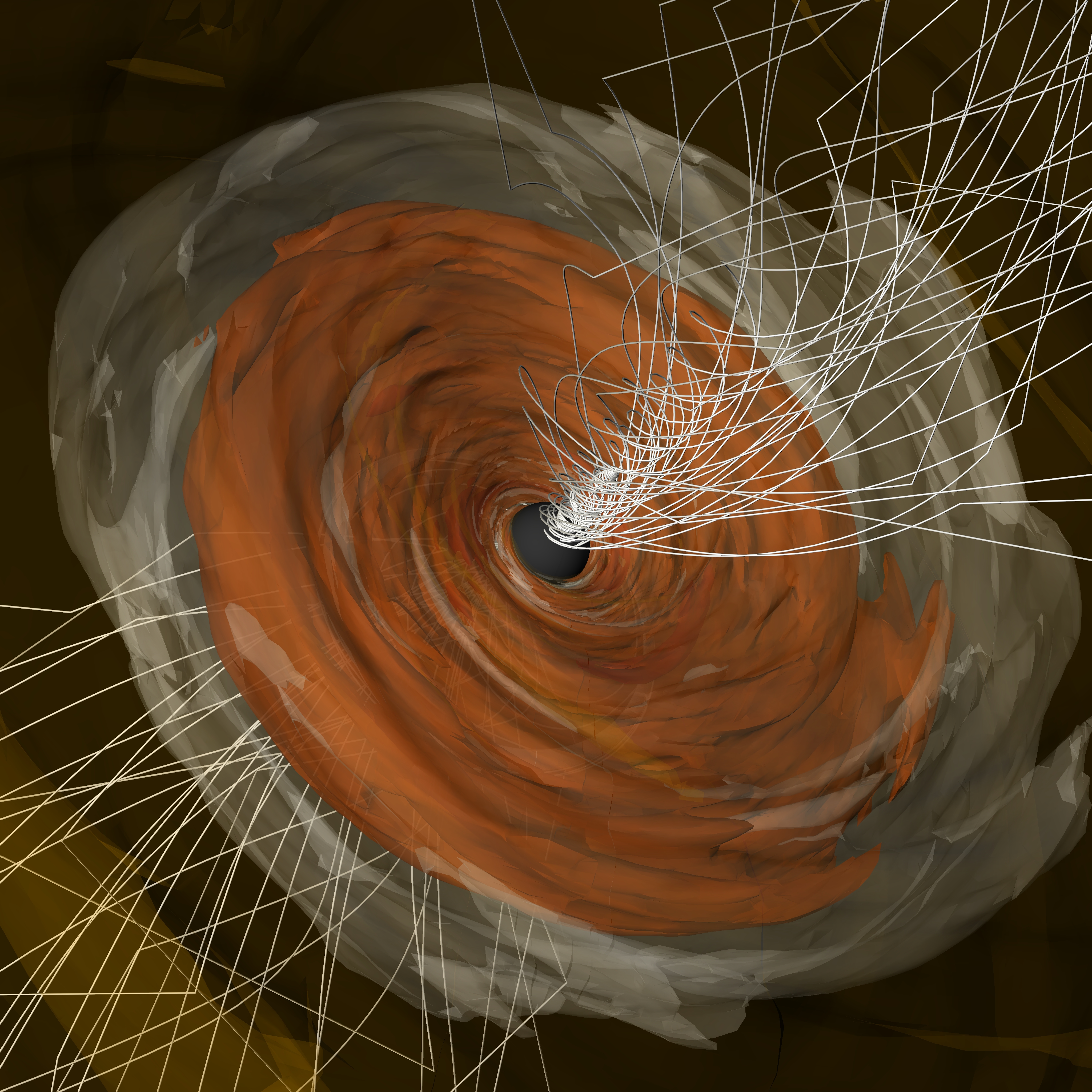
A computer simulation of a disk of plasma around the supermassive black hole at the center of the M87 galaxy. A new analysis of the circularly polarized, or spiraling light, in EHT observations shows that magnetic fields near the black hole are strong. These magnetic fields push back on infalling matter and help launch jets of matter at velocities near the speed of light out. Credit: George Wong.
Hi-Res File

The Event Horizon Telescope (EHT) collaboration has published new results that describe for the first time how light from the edge of the supermassive black hole M87* spirals as it escapes the black hole’s intense gravity, a signature known as circular polarization. The way light’s electric field prefers to rotate clockwise or counterclockwise as it travels carries information about the magnetic field and types of high-energy particles around the black hole. The new paper, published today in Astrophysical Journal Letters, supports earlier findings from the EHT that the magnetic field near the M87* black hole is strong enough to occasionally stop the black hole from swallowing up nearby matter.

The Atacama Large Millimeter/submillimeter Array (ALMA) is the world’s most powerful millimeter/ submillimeter telescope, and a key instrument for the EHT. The spiraling light at the heart of this research is actually made up of low frequency radio waves—light that can’t be seen by the human eye or optical telescopes, but can be observed by the many radio telescopes, including ALMA, working together across the EHT.

“Circular polarization is the final signal we looked for in the EHT’s first observations of the M87 black hole, and it was by far the hardest to analyze,” says  Andrew Chael, an associate research scholar at the Gravity Initiative at Princeton University, who coordinated the project.  “These new results give us confidence that our picture of a strong magnetic field permeating the hot gas surrounding the black hole is the right one. The unprecedented EHT observations are allowing us to answer long-standing questions about how black holes consume matter and launch jets outside their host galaxies.”

In 2019, the EHT released its first image of a ring of hot plasma close to the event horizon of M87*.  In 2021, EHT scientists released an image showing the directions of the oscillating electric fields across the image. Known as linear polarization, this result was the first sign that the magnetic fields close to the black hole were ordered and strong. The new measurements of the circular polarization – which indicate how light’s electric fields spiral around the linear direction from the 2021 analysis – provide yet more conclusive evidence for these strong magnetic fields.

ALMA provided both data and calibration for these results, and served as the array reference antenna for the EHT. Without the much greater sensitivity of ALMA as the reference antenna, circular polarization could not have been detected.


About ALMA & NRAO

The Atacama Large Millimeter/submillimeter Array (ALMA), an international astronomy facility, is a partnership of the European Organisation for Astronomical Research in the Southern Hemisphere (ESO), the U.S. National Science Foundation (NSF) and the National Institutes of Natural Sciences (NINS) of Japan in cooperation with the Republic of Chile. ALMA is funded by ESO on behalf of its Member States, by NSF in cooperation with the National Research Council of Canada (NRC) and the Ministry of Science and Technology (MOST) and by NINS in cooperation with the Academia Sinica (AS) in Taiwan and the Korea Astronomy and Space Science Institute (KASI).

ALMA construction and operations are led by ESO on behalf of its Member States; by the National Radio Astronomy Observatory (NRAO), managed by Associated Universities, Inc. (AUI), on behalf of North America; and by the National Astronomical Observatory of Japan (NAOJ) on behalf of East Asia. The Joint ALMA Observatory (JAO) provides the unified leadership and management of the construction, commissioning and operation of ALMA.

The National Radio Astronomy Observatory (NRAO) is a facility of the National Science Foundation, operated under cooperative agreement by Associated Universities, Inc.
 

Sunday, November 12, 2023

NASA's Webb, Hubble Combine to Create Most Colorful View of Universe

MACS 0416 (Hubble ACS and WFC3 + Webb NIRCam Image)
Credits: Image: NASA, ESA, CSA, STScI, Jose M. Diego (IFCA), Jordan C. J. D'Silva (UWA), Anton M. Koekemoer (STScI), Jake Summers (ASU), Rogier Windhorst (ASU), Haojing Yan (University of Missouri)

MACS 0416 Mothra Pullout (Hubble ACS and WFC3 + Webb NIRCam Image)
Credits: Image: NASA, ESA, CSA, STScI, Jose M. Diego (IFCA), Jordan C. J. D'Silva (UWA), Anton M. Koekemoer (STScI), Jake Summers (ASU), Rogier Windhorst (ASU), Haojing Yan (University of Missouri)

MACS 0416 (Hubble and Webb Compared)
Credits: Image: NASA, ESA, CSA, STScI

NASA’s James Webb Space Telescope and Hubble Space Telescope have united to study an expansive galaxy cluster known as MACS0416. The resulting panchromatic image combines visible and infrared light to assemble one of the most comprehensive views of the universe ever taken. Located about 4.3 billion light-years from Earth, MACS0416 is a pair of colliding galaxy clusters that will eventually combine to form an even bigger cluster.

The image reveals a wealth of details that are only possible by combining the power of both space telescopes. It includes a bounty of galaxies outside the cluster and a sprinkling of sources that vary over time, likely due to gravitational lensing – the distortion and amplification of light from distant background sources.

This cluster was the first of a set of unprecedented, super-deep views of the universe from an ambitious, collaborative Hubble program called the Frontier Fields, inaugurated in 2014. Hubble pioneered the search for some of the intrinsically faintest and youngest galaxies ever detected. Webb’s infrared view significantly bolsters this deep look by going even farther into the early universe with its infrared vision.

“We are building on Hubble’s legacy by pushing to greater distances and fainter objects,” said Rogier Windhorst of Arizona State University, principal investigator of the PEARLS program (Prime Extragalactic Areas for Reionization and Lensing Science), which took the Webb observations.

What the Colors Mean

To make the image, in general the shortest wavelengths of light were color-coded blue, the longest wavelengths red, and intermediate wavelengths green. The broad range of wavelengths, from 0.4 to 5 microns, yields a particularly vivid landscape of galaxies.

Those colors give clues to galaxy distances: The bluest galaxies are relatively nearby and often show intense star formation, as best detected by Hubble, while the redder galaxies tend to be more distant as detected by Webb. Some galaxies also appear very red because they contain copious amounts of cosmic dust that tends to absorb bluer colors of starlight.

“The whole picture doesn’t become clear until you combine Webb data with Hubble data,” said Windhorst.

Christmas Tree Galaxy Cluster

While the new Webb observations contribute to this aesthetic view, they were taken for a specific scientific purpose. The research team combined their three epochs of observations, each taken weeks apart, with a fourth epoch from the CANUCS (CAnadian NIRISS Unbiased Cluster Survey) research team. The goal was to search for objects varying in observed brightness over time, known as transients.

They identified 14 such transients across the field of view. Twelve of those transients were located in three galaxies that are highly magnified by gravitational lensing, and are likely to be individual stars or multiple-star systems that are briefly very highly magnified. The remaining two transients are within more moderately magnified background galaxies and are likely to be supernovae.

“We’re calling MACS0416 the Christmas Tree Galaxy Cluster, both because it’s so colorful and because of these flickering lights we find within it. We can see transients everywhere,” said Haojing Yan of the University of Missouri in Columbia, lead author of one paper describing the scientific results.

Finding so many transients with observations spanning a relatively short time frame suggests that astronomers could find many additional transients in this cluster and others like it through regular monitoring with Webb.

A Kaiju Star

Among the transients the team identified, one stood out in particular. Located in a galaxy that existed about 3 billion years after the big bang, it is magnified by a factor of at least 4,000. The team nicknamed the star system “Mothra” in a nod to its “monster nature,” being both extremely bright and extremely magnified. It joins another lensed star the researchers previously identified that they nicknamed “Godzilla.” (Both Godzilla and Mothra are giant monsters known as kaiju in Japanese cinema.)

Interestingly, Mothra is also visible in the Hubble observations that were taken nine years previously. This is unusual, because a very specific alignment between the foreground galaxy cluster and the background star is needed to magnify a star so greatly. The mutual motions of the star and the cluster should have eventually eliminated that alignment.

The most likely explanation is that there is an additional object within the foreground cluster that is adding more magnification. The team was able to constrain its mass to be between 10,000 and 1 million times the mass of our Sun. The exact nature of this so-called “milli-lens,” however, remains unknown.

“The most likely explanation is a globular star cluster that’s too faint for Webb to see directly,” stated Jose Diego of the Instituto de Física de Cantabria in Spain, lead author of the paper detailing the finding. “But we don’t know the true nature of this additional lens yet The Yan et al. paper is accepted for publication in The Astrophysical Journal. The Diego et al. paper has been published in Astronomy & Astrophysics.

The Webb data shown here were obtained as part of PEARLS GTO program 1176.

The James Webb Space Telescope is the world's premier space science observatory. Webb is solving mysteries in our solar system, looking beyond to distant worlds around other stars, and probing the mysterious structures and origins of our universe and our place in it. Webb is an international program led by NASA with its partners, ESA (European Space Agency) and the Canadian Space Agency.

The Hubble Space Telescope is a project of international cooperation between NASA and ESA. NASA's Goddard Space Flight Center in Greenbelt, Maryland, manages the telescope. The Space Telescope Science Institute (STScI) in Baltimore, Maryland, conducts Hubble and Webb science operations. STScI is operated for NASA by the Association of Universities for Research in Astronomy, in Washington, D.C.


About This Release

Credits:

Media Contact:

Christine Pulliam
Space Telescope Science Institute, Baltimore, Maryland

Permissions: Content Use Policy

Contact Us: Direct inquiries to the News Team.

Related Links and Documents

The science paper by H. Yan et al.
The science paper by J.M. Diego et al.
University of Missouri press release


Saturday, November 11, 2023

When amateur astronomers point the way

A spiral galaxy, seen face-on from Earth. The spiral arms of the galaxy are bright but not well defined, merging into a swirling disc with a faint halo of dimmer gas around it. The core glows brightly in a lighter colour and has a bit of faint dust crossing it. Two redder, visually smaller galaxies and a bright star are prominent around the galaxy, with more tiny objects in the background. redit: ESA/Hubble & NASA, C. Kilpatrick

This image features the spiral galaxy NGC 941, which lies about 55 million light-years from Earth. The data used for this image were collected by Hubble’s Advanced Camera for Surveys (ACS). The beautiful NGC 941 is undoubtedly the main attraction in this image; however, this hazy-looking galaxy was not the motivation for the data being collected. That distinction belongs to an astronomical event that took place in the galaxy years before: the supernova SN 2005ad. The location of this faded supernova was observed as part of a study of multiple hydrogen-rich supernovae, also known as type II supernovae, in order to better understand the environments in which certain types of supernovae take place. Whilst the study was conducted by professional astronomers, SN 2005ad itself owes its discovery to a distinguished amateur astronomer named Kōichi Itagaki, who has discovered over 170 supernovae.

This might raise the question of how an amateur astronomer could spot something like a supernova event before professional astronomers — who have access to telescopes such as Hubble. The answer is in part that the detection of supernovae is a mixture of skill, facilities and luck. Most astronomical events happen over time spans that dwarf human lifetimes, but supernova explosions are extraordinarily fast, appearing very suddenly and then brightening and dimming over a period of days or weeks. Another aspect is that professional astronomers often do not spend that much time actually observing. There is a great deal of competition for time on telescopes such as Hubble, and then data from a few hours of observations might take weeks, months, or sometimes even years to process and analyse to their full potential. Amateur astronomers can spend much more time actually observing the skies, and sometimes have extremely impressive systems of telescopes, computers and software that they can put to use.

So many supernovae are spotted by skilful amateurs such as Itagaki that there is actually an online system set up for reporting them (the Transient Name Server). This is a big help to professional astronomers, because with supernova events time is truly of the essence. After the discovery of SN 2005ab was reported, professional astronomers were able to follow up with spectroscopic studies and confirm it as a type II supernova, which eventually led to its location being included in this study with Hubble. Such a study wouldn’t be possible without a rich library of previous supernovae, built with the keen eyes of amateur astronomers.

Links

Friday, November 10, 2023

Hubble finds bizarre explosion in unexpected place

PR Image heic2309a
Artist’s Concept of Luminous Fast Blue Optical Transient

PR Image heic2309b
Hubble image of a Luminous Fast Blue Optical Transient (LFBOT)

PR Image heic2309c
Hubble image of a Luminous Fast Blue Optical Transient (LFBOT) - annotated


A very rare, strange burst of extraordinarily bright light in the universe just got even stranger – thanks to the eagle-eye of the NASA/ESA Hubble Space Telescope. The phenomenon, called a Luminous Fast Blue Optical Transient (LFBOT), flashed onto the scene where it wasn’t expected to be found, far away from any host galaxy. Only Hubble could pinpoint its location. The Hubble results suggest astronomers know even less about these objects than previously thought by ruling out some possible theories.

Luminous Fast Blue Optical Transients (LFBOT) are among the brightest known visible-light events in the universe – going off unexpectedly like camera flashbulbs. Only a handful have been found since the first discovery in 2018. Presently, LFBOTS are detected about once per year.

After its initial detection, the latest LFBOT was observed by multiple telescopes across the electromagnetic spectrum, from X-rays to radio waves. Only Hubble’s exquisitely sharp resolution could pinpoint its location. Designated AT2023fhn and nicknamed ‘the Finch,’ the transitory event showed all the tell-tale characteristics of an LFBOT. It shined intensely in blue light and evolved rapidly, reaching peak brightness and fading again in a matter of days, unlike supernovae which take weeks or months to dim.

But unlike any other LFBOT seen before, Hubble found that the Finch is located in apparent isolation between two neighbouring galaxies – about 50,000 light-years from a nearby spiral galaxy and about 15,000 light-years from a smaller galaxy – a baffling locale for celestial objects previously thought to exist within host galaxies.

The Hubble observations were really the crucial thing. They made us realise that this was unusual compared to the other ones like that, because without the Hubble data we would not have known,” said Ashley Chrimes, lead author of the Hubble paper reporting the discovery in an upcoming issue of the Monthly Notices of the Royal Astronomical Society (MNRAS). He is also a European Space Agency Research Fellow, formerly of Radboud University, Nijmegen in the Netherlands.

While these awesome explosions have been assumed to be a rare type of supernova (called core-collapse supernovae), the gargantuan stars that turn into supernovae are short-lived by stellar standards. Therefore, the massive progenitor stars to supernovae don’t have time to travel very far from their birthing place – a cluster of newborn stars. All previous LFBOTs have been found in the spiral arms of galaxies where star birth is ongoing.

The more we learn about LFBOTs, the more they surprise us,” said Chrimes. “We’ve now shown that LFBOTs can occur a long way from the centre of the nearest galaxy, and the location of the Finch is not what we expect for any kind of supernova.”

The Zwicky Transient Facility – an extremely wide-angle ground-based camera that scans the entire northern sky every two days – first alerted astronomers to the Finch on 10 April 2023. Once it was spotted, the researchers triggered a pre-planned program of observations that had been on standby, ready to quickly turn their attention to any potential LFBOT candidates that arose.

Spectroscopic measurements made with the Gemini South telescope in Chile found that the Finch is a scorching 20,000 degrees Celsius. Gemini also helped determine its distance from Earth so its luminosity could be calculated. Together with data from other observatories including the Chandra X-ray Observatory and the Very Large Array radio telescope, these findings confirmed the explosion was indeed an LFBOT.

The LFBOTs could be the result of stars being torn apart by an intermediate-mass black hole (between 100 to 1,000 solar masses). The NASA/ESA/CSA James Webb Space Telescope’s high resolution and infrared sensitivity might eventually be used to find that the Finch exploded inside a globular star cluster in the outer halo of one of the two neighbouring galaxies. A globular star cluster is the most likely place an intermediate-mass black hole could be found.

To explain the unusual location of the Finch, the researchers are considering the alternative possibility that it is the result of a collision of two neutron stars, travelling far outside their host galaxy, that have been spiralling toward each other for billions of years. Such collisions produce a kilonova – an explosion 1,000 times more powerful than a standard nova. However, one very speculative theory is that if one of the neutron stars is highly magnetised – a magnetar – it could greatly amplify the power of the explosion even further to 100 times the brightness of a normal supernova.

The discovery poses many more questions than it answers,” said Chrimes. “More work is needed to figure out which of the many possible explanations is the right one.”

Because astronomical transients can pop up anywhere and at any time, and are relatively fleeting in astronomical terms, researchers rely on wide-field surveys that can continuously monitor large areas of the sky to detect them and alert other observatories like Hubble to do follow-up observations.

A larger sample is needed to converge on a better understanding of the phenomenon, say researchers. Upcoming all-sky survey telescopes may be able to detect more, depending on the underlying astrophysics.


More information

The Hubble Space Telescope is a project of international cooperation between ESA and NASA.

The international team of astronomers in this study consists of A. A. Chrimes, (Radboud University, The Netherlands), P. G. Jonker (Radboud University and Netherlands Institute for Space Research, The Netherlands), A. J. Levan (Radboud University, The Netherlands; University of Warwick, United Kingdom), D. L. Coppejans (University of Warwick, United Kingdom), N. Gaspari (Radboud University, The Netherlands), B. P. Gompertz (University of Birmingham, United Kingdom), P. J. Groot (Radboud University, The Netherlands; University of Cape Town and South African Astronomical Observatory, South Africa), D. B. Malesani (Radboud University, The Netherlands; Cosmic Dawn Center (DAWN) and University of Copenhagen, Denmark), A. Mummery (Oxford Astrophysics, United Kingdom), E. R. Stanway (University of Warwick, United Kingdom) and K. Wiersema (University of Hertfordshire, United Kingdom).

Image credit: NASA, ESA, NSF's NOIRLab, M. Garlick , M. Zamani


Links


Contacts:

Ashley Chrimes
European Space Agency
Email:
Ashley.Chrimes@esa.int

Bethany Downer
ESA/Hubble Chief Science Communications Officer
Email:
Bethany.Downer@esahubble.org


Thursday, November 09, 2023

NASA's Webb Findings Support Long-Proposed Process of Planet Formation

Two Protoplanetary Disks (Artist Concept)
Credits: Illustration: NASA, ESA, CSA, Joseph Olmsted (STScI)

Water Abundance (MIRI Emission Spectrum)
Credits: Illustration: NASA, ESA, CSA, Leah Hustak (STScI))

Pebble Drift Infographic
Credits: Illustration: NASA, ESA, CSA, Joseph Olmsted (STScI)


Scientists using NASA’s James Webb Space Telescope just made a breakthrough discovery in revealing how planets are made. By observing water vapor in protoplanetary disks, Webb confirmed a physical process involving the drifting of ice-coated solids from the outer regions of the disk into the rocky-planet zone.

Theories have long proposed that icy pebbles forming in the cold, outer regions of protoplanetary disks — the same area where comets originate in our solar system — should be the fundamental seeds of planet formation. The main requirement of these theories is that pebbles should drift inward toward the star due to friction in the gaseous disk, delivering both solids and water to planets.

A fundamental prediction of this theory is that as icy pebbles enter into the warmer region within the "snowline" — where ice transitions to vapor — they should release large amounts of cold water vapor. This is exactly what Webb observed.

“Webb finally revealed the connection between water vapor in the inner disk and the drift of icy pebbles from the outer disk,” said principal investigator Andrea Banzatti of Texas State University, San Marcos, Texas. “This finding opens up exciting prospects for studying rocky planet formation with Webb!”

“In the past, we had this very static picture of planet formation, almost like there were these isolated zones that planets formed out of,” explained team member Colette Salyk of Vassar College in Poughkeepsie, New York. “Now we actually have evidence that these zones can interact with each other. It's also something that is proposed to have happened in our solar system.”

Harnessing the Power of Webb

The researchers used Webb’s MIRI (the Mid-Infrared Instrument) to study four disks — two compact and two extended — around Sun-like stars. All four of these stars are estimated to be between 2 and 3 million years old, just newborns in cosmic time.

The two compact disks are expected to experience efficient pebble drift, delivering pebbles to well within a distance equivalent to Neptune’s orbit. In contrast, the extended disks are expected to have their pebbles retained in multiple rings as far out as six times the orbit of Neptune.

The Webb observations were designed to determine whether compact disks have a higher water abundance in their inner, rocky planet region, as expected if pebble drift is more efficient and is delivering lots of solid mass and water to inner planets. The team chose to use MIRI’s MRS (the Medium-Resolution Spectrometer) because it is sensitive to water vapor in disks.

The results confirmed expectations by revealing excess cool water in the compact disks, compared with the large disks.

As the pebbles drift, any time they encounter a pressure bump — an increase in pressure — they tend to collect there. These pressure traps don’t necessarily shut down pebble drift, but they do impede it. This is what appears to be happening in the large disks with rings and gaps.

Current research proposes that large planets may cause rings of increased pressure, where pebbles tend to collect. This also could have been a role of Jupiter in our solar system — inhibiting pebbles and water delivery to our small, inner, and relatively water-poor rocky planets.


Solving the Riddle

When the data first came in, the results were puzzling to the research team. “For two months, we were stuck on these preliminary results that were telling us that the compact disks had colder water, and the large disks had hotter water overall,” remembered Banzatti. “This made no sense, because we had selected a sample of stars with very similar temperatures.”

Only when Banzatti overlaid the data from the compact disks onto the data from the large disks did the answer clearly emerge: The compact disks have extra cool water just inside the snowline, at about ten times closer than the orbit of Neptune.

“Now we finally see unambiguously that it is the colder water that has an excess,” said Banzatti. “This is unprecedented and entirely due to Webb’s higher resolving power!”

The team’s results appear in the Nov. 8 edition of the Astrophysical Journal Letters.

The James Webb Space Telescope is the world's premier space science observatory. Webb is solving mysteries in our solar system, looking beyond to distant worlds around other stars, and probing the mysterious structures and origins of our universe and our place in it. Webb is an international program led by NASA with its partners, ESA (European Space Agency) and the Canadian Space Agency.


About This Release

Credits:

Media Contact:

Ann Jenkins
Space Telescope Science Institute, Baltimore, Maryland

Christine Pulliam
Space Telescope Science Institute, Baltimore, Maryland

Permissions:
Content Use Policy

Contact Us: Direct inquiries to the News Team.

Related Links and Documents

The science paper by A. Banzatti et al.


Wednesday, November 08, 2023

How to Model the Strongest Material in the Universe

Artist's impression of a pulsar, the core of a massive star that has exploded as a supernova.
Credit:
ESO/L. Calçada; CC BY 4.0

The strongest material in the universe isn’t graphene or spider silk or diamonds — it’s the crystalline crust of a dead star’s core. New research explores how to adapt our fluid dynamics models to simulate this exotic material.

A Material Unlike Any Other

Nearly all of the visible matter in our universe is in the form of plasma, which researchers excel at simulating with fluid dynamics models. Solid objects often require a different modeling treatment, since solids have a property that plasmas lack: material strength, or the ability to resist cracking or deformation. Material strength is a critical property for the crusts of neutron stars, which are made of ions arranged in a crystal lattice. Neutron star crust is the strongest material in the universe, and a teaspoon of this superlative matter would weigh 5 tons if brought to Earth’s surface. This immense strength means that neutron star crusts can’t be modeled with typical fluid dynamics models that don’t take material strength into account. In a recent research article, Irina Sagert (Los Alamos National Laboratory) and collaborators tackle the problem of modeling neutron star crusts with fluid dynamics models, allowing us to study this extreme material with greater accuracy.

Snapshots of the colliding rubber rings. The color scale shows the particle velocity.
Credit: Sagert et al. 2023

Making a Solid Model

Sagert’s team used a smoothed-particle hydrodynamics code called FleCSPH to model waves in a neutron star’s crust. These waves are thought to explain some of the features observed in X-ray flares from neutron stars, and they might affect the gravitational-wave signal produced when neutron stars spiral toward a collision. While previous studies have used smoothed-particle hydrodynamics to explore the behavior of neutron stars, these simulations treated the stars as fluid through and through, including their solid crusts, which made probing these waves impossible. Sagert’s team’s model includes a solid crust atop a fluid core.

Before applying their model to neutron stars, the team first modeled several test setups: two rubber rings colliding, compressing, and rebounding off one another; an imploding spherical metal shell; and a cylindrical metal rod striking a solid surface. While these scenarios seem far removed from the crust of a dead star’s core, these tests show the model’s ability to capture the behavior of solids under various stresses. The model passed each test, allowing the team to advance to the main event.

Model of a toroidal oscillation in a neutron star’s crust.
Credit: Sagert et al. 2023

Challenges and Paths Forward

The team applied their model to the problem of toroidal waves in a neutron star’s crust. This presented several challenges:

1. The crust makes up just a tiny fraction of a neutron star’s total volume, so most of the computational power goes toward simulating the star’s fluid interior rather than its crust.

2. In the simplest case, in which the neutron star has no magnetic field, there should be no friction between the crust and the core. Because of the way a smoothed-particle hydrodynamics model performs its calculations, though, there will always be some effective friction between the crust and the core in simulations.

3. Despite its extreme density and strength, neutron star crust shares something in common with gelatin: it’s much more resistant to being compressed on all sides than it is to being torn apart by shearing. This property means that small numerical fluctuations in the crust’s density can grow large unless suppressed.

The team explored several way of overcoming these challenges, and the resulting model output showed promising agreement with analytical models. The quest to model neutron star crusts isn’t yet over, but Sagert and collaborators see a clear path ahead. Incorporating relativistic physics will open the door to accurate modeling of neutron star mergers and allow researchers to study neutron star collisions and enormous X-ray flares from cracking neutron star crusts more precisely than ever before.

By Kerry Hensley

Citation

“Modeling Solids in Nuclear Astrophysics with Smoothed Particle Hydrodynamics,” I. Sagert et al 2023 ApJS 267 47. doi:10.3847/1538-4365/acdc94


Tuesday, November 07, 2023

ALMA Observations Unveil Gas Recycling Process Near a Supermassive Black Hole


The distributions of carbon monoxide (CO, reflecting the presence of medium-density molecular gas), atomic carbon (C, reflecting the presence of the atomic gas), hydrogen cyanide (HCN, reflecting the presence of high-density molecular gas), and the hydrogen recombination line (H36α; reflecting the presence of ionized gas), are shown in red, blue, green, and pink, respectively. There is an active galactic nucleus at the center. This galaxy is known to have a tilted structure from the outer to the inner regions, with the central region resembling a nearly edge-on disk. The size of the central dense gas disk (green) is approximately six light-years: this has been observed thanks to the high resolution of ALMA (see the inset for the zoom-up view). The plasma outflow travels almost perpendicular to the central dense disk. Credit: ALMA (ESO/NAOJ/NRAO), T. Izumi et al.


An illustration depicting the distribution of interstellar medium in the active galactic nucleus based on the results of this observation. High-density molecular gas flows from the galaxy towards the black hole along the plane of the disk. The material accumulated around the black hole generates a tremendous amount of energy, causing the molecular gas to be destroyed and transformed into atomic and plasma phases. Most of these multiphase gases are expelled away via outflows from the nucleus (including plasma outflows primarily occurring in the direction above the disk and atomic or molecular outflows mainly occurring diagonally). Still, most of these outflows will fall back to the disk, acting like a gas fountain. Credit: ALMA (ESO/NAOJ/NRAO), T. Izumi et al.


In a scientific breakthrough, an international team of scientists has delved into the heart of the Circinus Galaxy's active galactic nucleus using the Atacama Large Millimeter/submillimeter Array (ALMA). Achieving an unprecedented resolution of about one light-year, the research, spearheaded by Assistant Professor Takuma Izumi from the National Astronomical Observatory of Japan (NAOJ), has illuminated the intricate dance of gas flows around the galaxy's supermassive black hole, encompassing plasma, atomic, and molecular phases. Notably, the team has elucidated the accretion flow—driven by a mechanism termed "gravitational instability"—that feeds the black hole. Intriguingly, not all this gas contributes to the black hole's growth. A significant fraction is ejected as atomic or molecular outflows, only to return and again be drawn towards the black hole in a cyclical pattern reminiscent of a water fountain. This profound discovery paves the way for a more holistic grasp of the growth dynamics of supermassive black holes.

At the centers of many massive galaxies, there exist "supermassive black holes" with masses exceeding a million times that of the Sun. How are these supermassive black holes formed? One of the crucial growth mechanisms proposed by previous research is "gas accretion" onto the black hole. This refers to how gas in the host galaxy somehow falls toward the central black hole.

The gas that gathers very close to supermassive black holes is accelerated at high speeds due to the gravity of the black hole. Due to intense friction between gas particles, this gas heats up to several million degrees and emits brilliant light. This phenomenon is known as an active galactic nucleus (AGN), and its brightness can sometimes surpass the combined light of all the stars in the galaxy. Interestingly, a portion of the gas that falls towards the black hole (accretion flow) is thought to be blown away by the immense energy of this active galactic nucleus, leading to outflows.

Both theoretical and observational studies have provided detailed insights into gas accretion mechanisms from the 100,000 light-year scale of the galaxies down to a scale of a few hundred light-years at the center. However, the gas accretion within a much smaller region, especially within a few dozen light-years from the galactic center, has remained unclear due to its minimal spatial scale. For instance, to quantitatively comprehend the growth of black holes, it is necessary to measure the accretion flow rate (how much gas is flowing in) and to determine the amounts and types of gases (plasma, atomic gas, molecular gas) that are expelled as outflows at that small scale. Unfortunately, observational understanding in this regard has not progressed significantly until now.

An international research team led by Takuma Izumi, an assistant professor at the National Astronomical Observatory of Japan (affiliated with NAOJ and Tokyo Metropolitan University at the time of this study), has achieved a world-first success by quantitatively measuring gas flows and their structures for all phases (plasma, atomic, and molecular) at a tiny spatial scale of just a few light-years around a supermassive black hole, by using the Atacama Large Millimeter/submillimeter Array (ALMA). Observations of multiphase gases can provide a more comprehensive understanding of the distribution and dynamics of matter around a black hole. The observed object was the Circinus Galaxy, a representative active galactic nucleus in the nearby Universe. The achieved resolution was approximately one light-year. This marks the highest resolution achieved for multiphase gas observations in an active galactic nucleus.

In this study, the research team initially succeeded in capturing, for the first time, the accretion flow heading towards the supermassive black hole within the high-density gas disk extending over several light-years from the galactic center. Identifying this accretion flow had long been a challenging task due to the small scale of the region and the complex motions of gas near the galactic center. However, in this instance, the research team pinpointed where the foreground molecular gas was absorbing the light from the background brightly shining, active galactic nucleus. This identification was made possible through high-resolution observations with ALMA. Detailed analysis revealed that this absorbing material is moving in the direction away from us. Since the absorbing material always exists between the active galactic nucleus and us, the team has successfully captured the accretion flow towards the active galactic nucleus.

Furthermore, the research team has also elucidated the physical mechanism responsible for inducing this gas accretion. The observed gas disk exhibited a gravitational force so substantial that it could not be sustained by the pressure calculated from the motion of the gas disk. When this situation arises, the gas disk collapses under its weight, forming complex structures and becoming incapable of maintaining stable motion at the galactic center. As a result, the gas rapidly falls towards the central black hole. ALMA has revealed this physical phenomenon known as "gravitational instability" at the galaxy's heart.

In addition, this study has significantly advanced the quantitative understanding of gas flows around the active galactic nucleus. The accretion rate at which gas is supplied to the black hole can be calculated from the density of the observed gas and the velocity of the accretion flow. Surprisingly, this rate was found to be 30 times greater than what is required to sustain the activity of this active galactic nucleus. In other words, most of the accretion flow at the 1-light-year scale around the galactic center was not contributing to the growth of the black hole. So, where did this surplus gas go? This study also unravels this mystery—high-sensitivity observations of all phase gases with ALMA-detected outflows from the active galactic nucleus. Quantitative analysis revealed that most of the gas that flowed toward the black hole was expelled as atomic or molecular outflows. However, due to their slow velocities, they couldn't escape from the gravitational potential of the black hole and eventually returned to the gas disk. There, they were recycled back into an accretion flow towards the black hole, akin to a fountain, thus completing a fascinating gas recycling process at the galactic center.

Regarding the achievements of this study, Takuma Izumi states, "Detecting accretion flows and outflows in a region just a few light-years around the actively growing supermassive black hole, particularly in a multiphase gas, and even deciphering the accretion mechanism itself, are indeed monumental achievements in the history of supermassive black hole research." He emphasizes the significance of this accomplishment. Looking ahead to the future, he also continues, "To comprehensively understand the growth of supermassive black holes in cosmic history, we need to investigate various types of supermassive black holes located farther away. This requires high-resolution and high-sensitivity observations, and we have high expectations for the further use of ALMA and for upcoming large radio interferometers in the next generation."


Additional information

These observation results were published by Takuma Izumi et al., "Supermassive black hole feeding and feedback observed on sub-parsec scales" in Science on November 3rd, 2023 (DOI: 10.1126/science.adf0569).

This work is supported by NAOJ ALMA Scientific Research Grant No. 2020-14A, 2022-21A, ALMA Japan Research Grant for the NAOJ ALMA Project Code NAOJ-ALMA-271, a Grant-in-Aid from the Japan Society for the Promotion of Science (JP20K14531, JP21H04496, JP17H06130, JP21K03632, JP19K03937, JP20K14529, JP20H00181, JP22H00158, JP22H01268).


The National Astronomical Observatory of Japan (NAOJ), an ALMA partner on behalf of East Asia, released the original press release.

The Atacama Large Millimeter/submillimeter Array (ALMA), an international astronomy facility, is a partnership of the European Organisation for Astronomical Research in the Southern Hemisphere (ESO), the U.S. National Science Foundation (NSF) and the National Institutes of Natural Sciences (NINS) of Japan in cooperation with the Republic of Chile. ALMA is funded by ESO on behalf of its Member States, by NSF in cooperation with the National Research Council of Canada (NRC) and the National Science and Technology Council (NSTC) in Taiwan and by NINS in cooperation with the Academia Sinica (AS) in Taiwan and the Korea Astronomy and Space Science Institute (KASI).

ALMA construction and operations are led by ESO on behalf of its Member States; by the National Radio Astronomy Observatory (NRAO), managed by Associated Universities, Inc. (AUI), on behalf of North America; and by the National Astronomical Observatory of Japan (NAOJ) on behalf of East Asia. The Joint ALMA Observatory (JAO) provides the unified leadership and management of the construction, commissioning and operation of ALMA.


Contacts:

Valeria Foncea
Education and Public Outreach Manager
Joint ALMA Observatory Santiago - Chile
Phone: +56 2 2467 6258
Cel: +56 9 7587 1963
Email:
valeria.foncea@alma.cl

Naoko Inoue
EPO officer, ALMA Project
National Astronomical Observatory of Japan (NAOJ)
Email:
naoko.inoue@nao.ac.jp

Bárbara Ferreira
ESO Public Information Officer
Garching bei München, Germany
Phone: +49 89 3200 6670
Email:
pio@eso.org

Jill Malusky
Public Information Officer
NRAO
Phone: +1 304-456-2236
Email:
jmalusky@nrao.edu


Monday, November 06, 2023

Magnetic fields in multiphase gas: A turbulent tango

Space is filled with gases of vastly different temperatures and it is important to understand how these interact. A group of scientists at MPA has now looked into the mixing of gases with and without magnetic fields. Surprisingly, they find that the outcome depends on whether turbulence is already present at the beginning. Without turbulence, magnetic fields can suppress the mixing by suppressing turbulence, while if the turbulence is already present, magnetic fields have a marginal effect.

From the Milky Way and Andromeda in our neighbourhood to the farthest observed galaxy JADES-GS-z13-0, galaxies are islands in the vast expanse of space. But, they are not isolated. They accrete gas from their surroundings, churn and compress it to form stars, before throwing it out again when those stars explode as supernovae. This expulsion of gas from the galactic disk creates gigantic galactic outflows. Such outflows can drain the galaxy of the gas that could have fuelled future star formation, leading to a period of low star formation rate, which is also called “quenching” of the galaxy. However, it is believed that the gas that is thrown out as galactic outflows can later be recycled and accreted back into the galactic disk to fuel further star formation. This cyclic expulsion and accretion of the baryonic gas in and out of the galaxy is called the “Baryon cycle” and is a crucial part of the evolution of galaxies.

The gas as the main ingredient of this cycle can exist in different phases: extremely hot gas (with millions of degrees) along with pockets of much colder gas (of only thousands of degrees). Understanding how these gases of different temperatures mingle and mix is important to our knowledge of the Baryon cycle and the many related astrophysical processes.

Turbulent mixing is a well-studied field, as it is important in a lot of applied areas like meteorology, pollutant transport, combustion engines, etc. But in astrophysics there’s a catch: magnetic fields fill interstellar and circumgalactic space, too. Do these invisible fields affect the mixing among the vastly different phases of gas? Scientists have dived into such questions using computer simulations and found that in some cases magnetic fields can suppress mixing. This can pose a problem to the multiphase nature of the gas. Still, this combination of turbulent, magnetised and multiphase gas remains an enigma. In this study, we investigate how the presence of magnetic fields affects the mixing and the interaction between hot and cold gases.

The researchers at MPA, using computer simulations, first mimic a very simple setup called a mixing layer: hot and cold gases are next to each other with a single interface and a relative velocity between them. First, the gases mix without any magnetic field. In this case, turbulence efficiently stirs and mixes the gases. Next, the team introduces magnetic fields and finds that the mixing is suppressed. The magnetic fields stabilize the boundary between the hot and cold gases, preventing turbulence (see first video). However, in a second, more realistic simulation called a turbulent box, turbulence is already present at the beginning. In this case, the magnetic fields do not affect the mixing.


Mixing gases with magnetic fields


These videos show how two gases with different temperatures (indicated by the colour scale) mix with and without the presence of a magnetic field.

The left-most column shows the case without any magnetic fields. The middle and right columns show the case with different orientations (along each of the major axes, indicated at the top) and with different strengths of the magnetic fields (middle: relatively strong, right: relatively weak).

This is a puzzling outcome, as the mixing layer setup was expected to exist within the bigger turbulent box setup. Why should the magnetic fields make a big difference in the first case, where there is only a marginal effect in the second? Until now, mixing layer simulations were thought to be zoomed-in versions of the turbulent box simulations, to situations similar to the mixing-layer-setup at each cold-gas/hot-gas interface. So, a big effect on mixing in these was hypothesised to have an equally big effect on mixing in the turbulent boxes.

To resolve this dilemma, the team had to examine the root cause of mixing, which is turbulence. The mixing depends only on the turbulent motions and not on how this turbulence formed originally. In mixing layers, the presence of magnetic fields hinders the generation of turbulence; in a turbulent box, the turbulence already exists. If the turbulence in a setup is unchanged by magnetic fields, the mixing remains unchanged, which means that there is no effect on the growth and survival of cold gas.

Even though in the more realistic turbulent box simulations, the magnetic fields do not change the overall mixing of the different phases, magnetic fields still leave their fingerprints. Magnetic fields affect the structure of the cold gas, which is very evident from the evolution in simulations: in the presence of magnetic fields, the gas becomes more elongated and filament-like (see second video). The researchers also examined how these changes in the cold gas structure can affect observations. Mock quasar line-of-sight observations were created from the simulations with and without magnetic fields, and in both cases follow the observed relation between number of spectral features and their strengths – but almost no observable difference could be found between the two cases.


Evolution of the structure of mixing gases


These two videos show the mixing of a cold, dense cloud in a hot turbulent environment with and without magnetic fields. The structure in the two cases looks very different: without magnetic fields (left) the gas remains clumpy, while it becomes more elongated and filament-like with magnetic fields (right).

In conclusion, these numerical experiments show that magnetic fields can inhibit turbulence and a mixing of gases, if there is a shear between layers of hot and cold gas. However, if turbulence is already present in the gas, the magnetic fields become just bystanders and do not affect the efficiency of the mixing. These findings can help better understand the complex multiphase nature of observed astrophysical gases.


Author:

Hitesh Kishore Das
PhD
student
2239

hitesh@mpa-garching.mpg.de

Original publication

Hitesh Kishore Das, Max Gronke Magnetic Fields in Multiphase Turbulence: Impacts on Dynamics and Structure MNRAS, 12 October 2023


DOI


Friday, November 03, 2023

Astronomers discover infant 'escaping star'


(a) Mid-infrared image of G352.63-1.07. (b) Molecular lines at the core center and outside, with the shaded areas indicating the two velocity components. (c) to (g): molecular line image of the two velocity components. (h) H13CO+ line emission slice for the two components along the major extension of the cloud, with the white line denoting their total intensity. Credit: NAOC


Stars escape from their birth place and eventually become dispersed across the galaxy. This is an important process in galactic evolution. Theoretical studies suggest two possible reasons why stars escape. First, stars may be ejected due to interactions in young multiple star systems. Second, they can also obtain kinetic energy during the collapse or interactions of molecular clouds or clumps.

Stars with relatively clear trajectories have usually fully separated from their birth place. In contrast, infant protostars are usually deeply embedded in molecular clouds, making it difficult to measure their kinematical features. As a result, observational data on escaping stars are still very incomplete.

Now, however, a joint team of researchers from the National Astronomical Observatories (NAOC) of the Chinese Academy of Sciences (CAS), the Shanghai Observatory (SHAO) of CAS, and Guangzhou University, using high-resolution molecular spectral lines, has discovered for the first time a protostar leaving its birthplace, thus providing new observational evidence for the initial state of escaping stars.

The study was published in The Astrophysical Journal.

The researchers used the Atacama Large Millimeter/submillimeter Antenna Array (ALMA) to carry out observations towards a large sample of young star-forming regions.

In the star-forming region G352.63-1.07, they found a protostellar core with a noticeable velocity shift. The core was observed in a number of molecular lines, all indicating that the protostar had a different velocity than its parental cloud. At the same time, the molecular lines all closely trace the dense core, thus providing a unique opportunity for measuring the stellar motion.

According to the spectral velocity of the molecular lines, the protostar has a significant blue shift of –2.3 km/s relative to its parental filamentary molecular cloud. At the same time, the core is rightly located at the central dip of the parental cloud, suggesting that the core used to be an internal part of the cloud.

The escape velocity (–2.3 km/s) and the spatial offset (0.025 light years) of the core show that the escape occurred less than 4,000 years ago, with a kinetic energy up to 1045 ergs. This makes the core escape in G352.63-1.07 one of the youngest and most energetic events in the star-forming regions of the Milky Way.

In addition, although the escape velocity of the central star is much lower than that of high-speed ejection stars produced in star clusters, it is actually comparable to the average dispersing velocity of young stars. This suggests that cloud collapse should be the major mechanism for driving escaping stars.

"Stars are giant nuclear fusion reactors in our universe. The escaping star discovered this time is still in its infancy," said Prof. Li Di, the chief scientist of the Interstellar Medium Group of NAOC and co-author of the article. "This work has snapshotted the initial moment of the stellar escaping motion in nearby active star-forming regions such as Orion Molecular cloud. It enriches the picture of stellar origins and raises a series of challenges."

In the future, the researchers will conduct more in-depth analyses of multi-star interactions and explosive gas expansion in G352.63-1.07. 
 
by Liu Jia,
Source: Physic.org


More information: Zhiyuan 致远 Ren 任 et al, A High-mass, Young Star-forming Core Escaping from Its Parental Filament, The Astrophysical Journal (2023). DOI: 10.3847/1538-4357/aced54

Journal information: Astrophysical Journal

Thursday, November 02, 2023

The dancer in Dorado


A spiral galaxy. The entire galaxy is displayed, centred and face-on to the viewer. It has two spiral arms that each make only a half-turn from start to finish, resembling the shape of a comma. Lanes of dark dust follow the arms into the centre, and split into many fibres that swirl around the glowing galactic core. Bright pink blooms along the arms show areas of new star formation; Credit: ESA/Hubble & NASA, D. Calzetti and the LEGUS team, R. Chandar

This vibrant and dynamic-looking image features the spiral galaxy NGC 1566, which is sometimes informally referred to as the ‘Spanish Dancer Galaxy’. Like the subject of another recent Hubble Picture of the Week, NGC 1566 is a weakly-barred or intermediate spiral galaxy, meaning that it does not have either a clearly present or a clearly absent bar-shaped structure at its centre. The galaxy owes its nickname to the vivid and dramatic swirling lines of its spiral arms, which could evoke the shapes and colours of a dancer’s moving form. NGC 1566 lies around 60 million light-years from Earth in the constellation Dorado, and is also a member of the Dorado galaxy group.

Galaxy groups are assemblages of gravitationally bound galaxies. Groups differ from galaxy clusters in size and mass: galaxy clusters may contain hundreds of galaxies, whereas groups might contain several tens of galaxies. That said, there is not a precise delineation between the definition of a galaxy group and a galaxy cluster. Some astronomers have proposed that the definitions be sharpened up, with one suggestion that galaxy aggregations with less mass than 80 trillion Suns should qualify as galaxy groups.

The Dorado group has had a fluctuating membership over the past few decades, with various scientific papers changing its list of constituent galaxies. As an example of why it is so challenging for astronomers to pin down members of groups such as the Dorado group, we can imagine a photograph of an adult human and a large oak tree. We have foreknowledge of the approximate size of the person and the tree, so if we were to see a photo where the person appeared roughly the same size as the tree, then we would be able to guess that, in reality, the person was positioned much closer to the camera than the tree was, giving the false impression that they were the same size. When working out members of a galaxy group, astronomers are not necessarily equipped with the knowledge of the size of the individual galaxies, and so have to work out whether galaxies really are relatively close together in space, or whether some of them are actually much closer or much further away. This has become easier with more sophisticated observation techniques, but still sometimes presents a challenge.


Wednesday, November 01, 2023

The Crab Nebula Seen in New Light by NASA's Webb

Crab Nebula (NIRCam and MIRI Image)
Credits> Image: NASA, ESA, CSA, STScI, Tea Temim (Princeton University)

Crab Nebula (Webb and Hubble Comparison)
Credits: Image: NASA, ESA, CSA, STScI, Jeff Hester (ASU), Allison Loll (ASU), Tea Temim (Princeton University)


NASA’s James Webb Space Telescope has gazed at the Crab Nebula, a supernova remnant located 6,500 light-years away in the constellation Taurus. Since the recording of this energetic event in 1054 CE by 11th-century astronomers, the Crab Nebula has continued to draw attention and additional study as scientists seek to understand the conditions, behavior, and after-effects of supernovae through thorough study of the Crab, a relatively nearby example.

Using Webb’s NIRCam (Near-Infrared Camera) and MIRI (Mid-Infrared Instrument), a team led by Tea Temim at Princeton University is searching for answers about the Crab Nebula’s origins.

“Webb’s sensitivity and spatial resolution allow us to accurately determine the composition of the ejected material, particularly the content of iron and nickel, which may reveal what type of explosion produced the Crab Nebula,” explained Temim.

At first glance, the general shape of the supernova remnant is similar to the optical wavelength image released in 2005 from NASA’s Hubble Space Telescope : In Webb’s infrared observation, a crisp, cage-like structure of fluffy gaseous filaments are shown in red-orange. However, in the central regions, emission from dust grains (yellow-white and green) is mapped out by Webb for the first time.

Additional aspects of the inner workings of the Crab Nebula become more prominent and are seen in greater detail in the infrared light captured by Webb. In particular, Webb highlights what is known as synchrotron radiation: emission produced from charged particles, like electrons, moving around magnetic field lines at relativistic speeds. The radiation appears here as milky smoke-like material throughout the majority of the Crab Nebula’s interior.

This feature is a product of the nebula’s pulsar, a rapidly rotating neutron star. The pulsar’s strong magnetic field accelerates particles to extremely high speeds and causes them to emit radiation as they wind around magnetic field lines. Though emitted across the electromagnetic spectrum, the synchrotron radiation is seen in unprecedented detail with Webb’s NIRCam instrument.

To locate the Crab Nebula’s pulsar heart, trace the wisps that follow a circular ripple-like pattern in the middle to the bright white dot in the center. Farther out from the core, follow the thin white ribbons of the radiation. The curvy wisps are closely grouped together, outlining the structure of the pulsar’s magnetic field, which sculpts and shapes the nebula.

At center left and right, the white material curves sharply inward from the filamentary dust cage’s edges and goes toward the neutron star’s location, as if the waist of the nebula is pinched. This abrupt slimming may be caused by the confinement of the supernova wind’s expansion by a belt of dense gas.

The wind produced by the pulsar heart continues to push the shell of gas and dust outward at a rapid pace. Among the remnant’s interior, yellow-white and green mottled filaments form large-scale loop-like structures, which represent areas where dust grains reside.

The search for answers about the Crab Nebula’s past continues as astronomers further analyze the Webb data and consult previous observations of the remnant taken by other telescopes . Scientists will have newer Hubble data to review within the next year or so from the telescope’s reimaging of the supernova remnant. This will mark Hubble’s first look at emission lines from the Crab Nebula in over 20 years, and will enable astronomers to more accurately compare Webb and Hubble’s findings.

Want to learn more? Through NASA’s Universe of Learning, part of NASA’s Science Activation program, explore images of the Crab Nebula from other telescopes, a 3D visualization, data sonification, and hands-on activities. These resources and more information about supernova remnants and star lifecycles can be found at NASA’s Universe of Learning.

The James Webb Space Telescope is the world’s premier space science observatory. Webb is solving mysteries in our solar system, looking beyond to distant worlds around other stars, and probing the mysterious structures and origins of our universe and our place in it. Webb is an international program led by NASA with its partners, ESA (European Space Agency) and the Canadian Space Agency. NASA’s Universe of Learning materials are based upon work supported by NASA under cooperative agreement award number NNX16AC65A to the Space Telescope Science Institute, working in partnership with Caltech/IPAC, Center for Astrophysics | Harvard & Smithsonian, and Jet Propulsion Laboratory.


About This Release

Credits:

Media Contact:

Abigail Major
Space Telescope Science Institute, Baltimore, Maryland

Christine Pulliam
Space Telescope Science Institute, Baltimore, Maryland

Science: Tea Temim (Princeton University)

Permissions: Content Use Policy

Contact Us: Direct inquiries to the
News Team.