Showing posts with label protoplanetary disks. Show all posts

Monday, July 28, 2025

Escaping the Dust Trap: Simulations of Dust Dynamics in Protoplanetary Disks

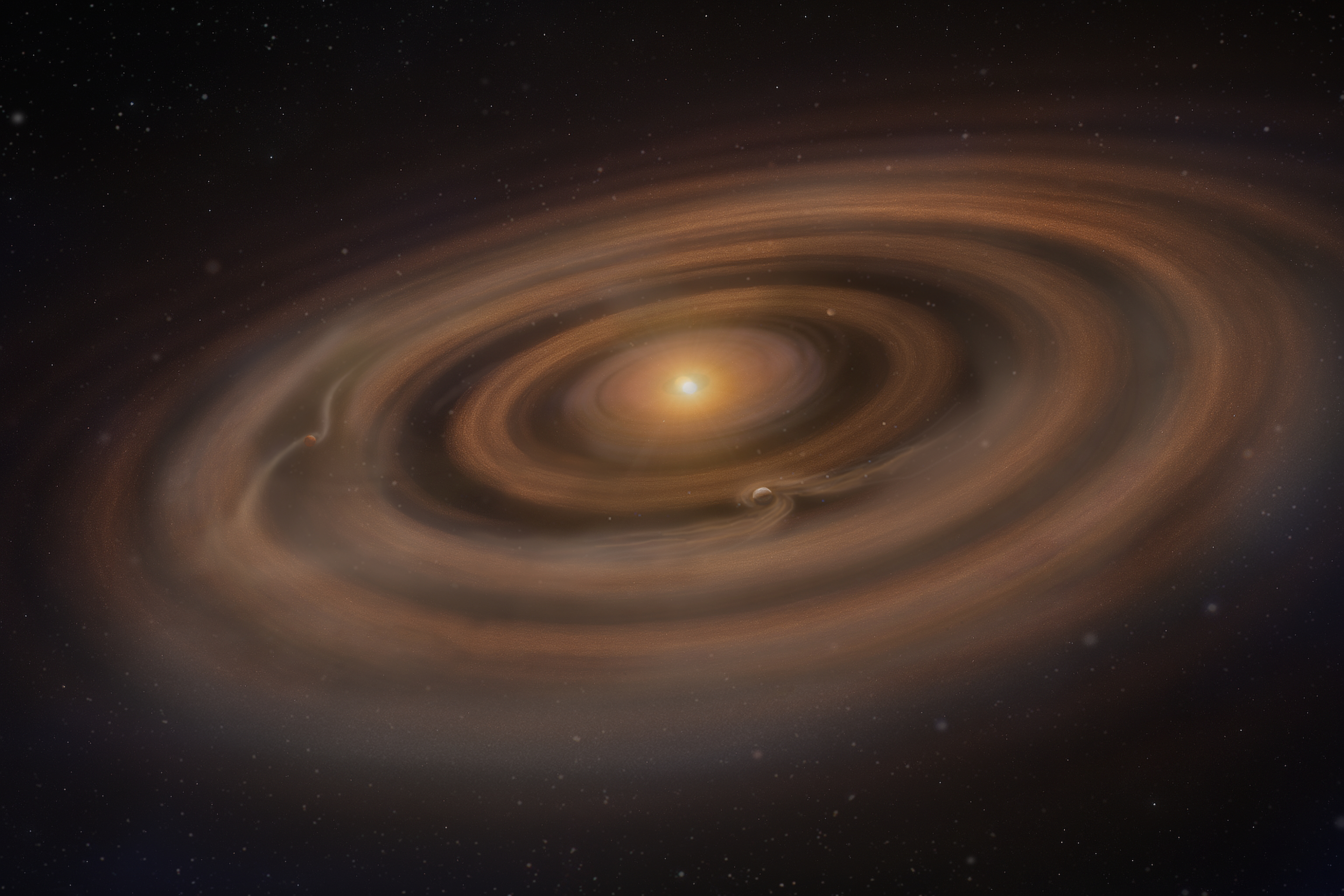
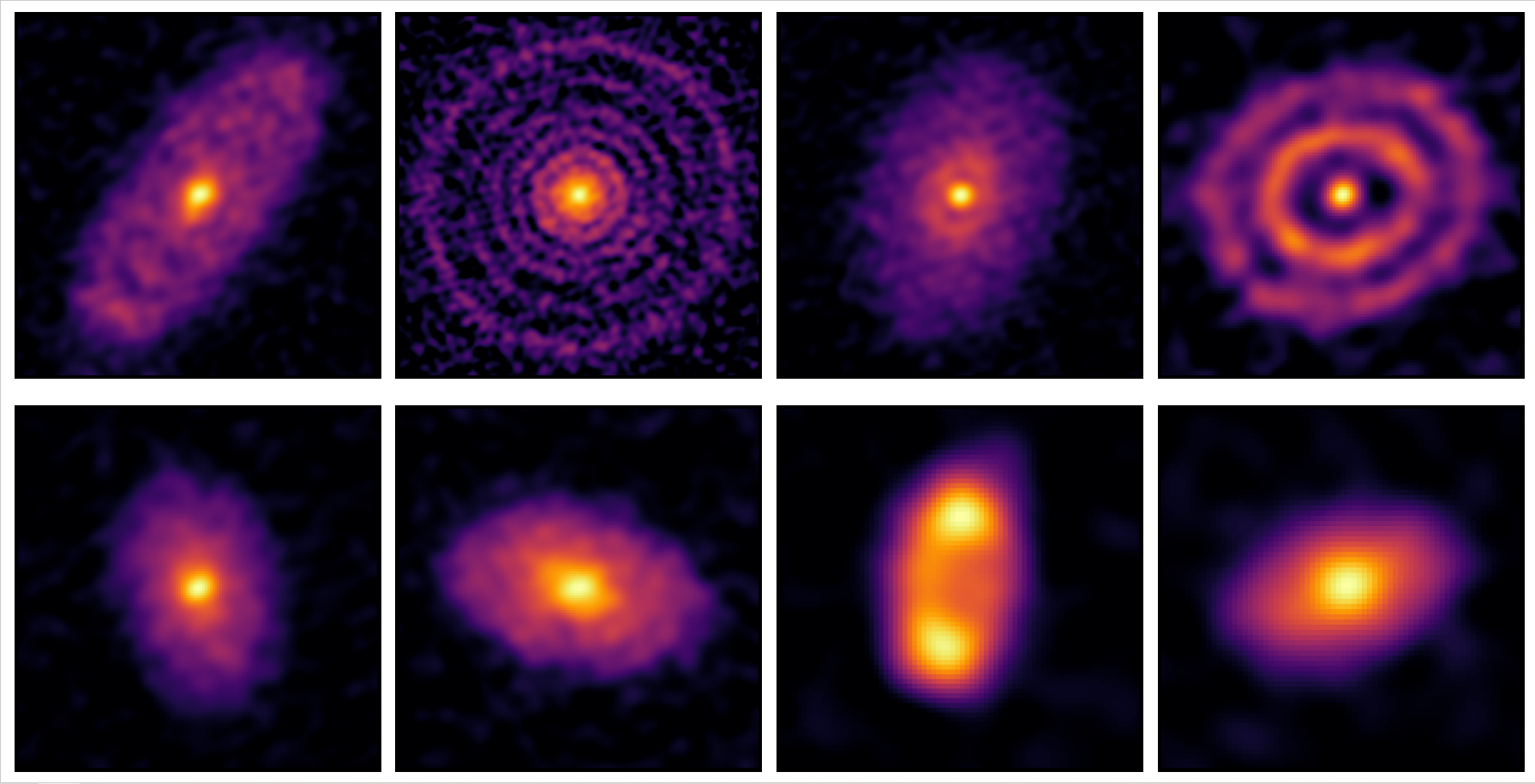
Radio images of protoplanetary disks where planets form around newly born stars.
Credit:
ALMA (ESO/NAOJ/NRAO), S. Andrews et al.; NRAO/AUI/NSF, S. Dagnello; CC BY 4.0

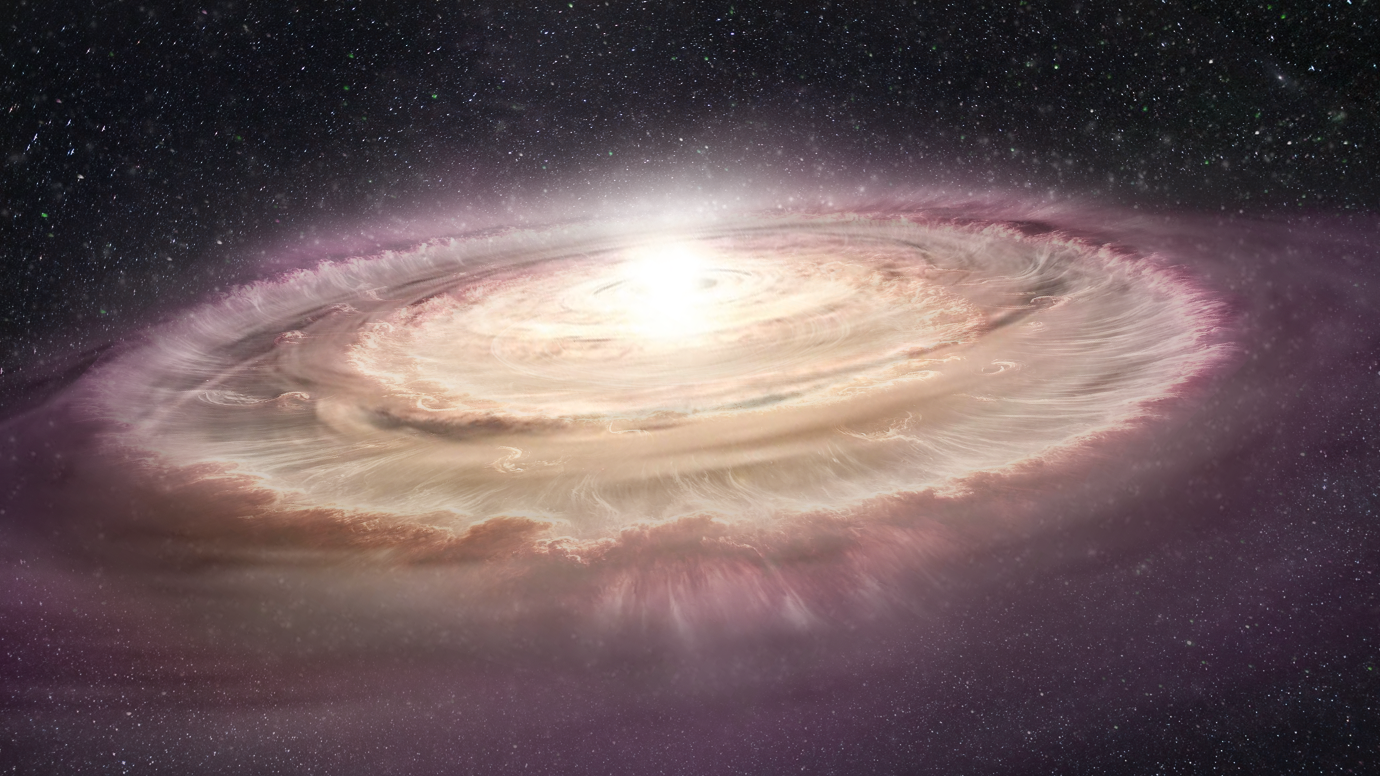
Through detailed simulations of gas and dust, a recent study revealed that the behavior of dust within protoplanetary disks is a bit more complex than previously assumed.

Dust Traps in Protoplanetary Disks

As a planet forms within a protoplanetary disk — dust and gas orbiting a new star — tidal interactions between the budding body and the dusty material surrounding it can create pressure bumps where dust builds up. These dust traps appear as rings in observations of protoplanetary disks.

Dust traps are thought to play a critical role in the disk’s evolution and the early stages of planet formation. Dust traps may prevent solid material from migrating inward, starving the inner disk and impeding planet growth interior to the trap. These reservoirs may also serve as a chemical barrier, keeping volatile materials like water from moving to the inner regions of a disk.

While a perfect dust trap completely isolates material from the rest of the disk, recent observations and 2D simulations have shown that dust traps may be a bit more permeable — leaking smaller sized grains, mixing material, and changing the disk’s appearance. However, these results only account for two dimensions of the complex three-dimensional environment in which dust traps reside. Thus, 3D hydrodynamical simulations are necessary to provide more realistic details of dust dynamics within planet-hosting protoplanetary disks.

Z-axis averaged dust–gas density ratios (top) and dust–gas surface density ratios for the 3D simulations after 1,500 orbits. For the simulations with higher diffusion and lower planet mass, there is clear leaking of dust beyond the dust trap ring (edges marked with dotted red lines). Click to enlarge. Credit: Huang et al 2025


Dusty Simulations

In a recent study, Pinghui Huang (Chinese Academy of Sciences; University of Victoria) and collaborators performed multiple 2D and 3D numerical simulations of gas and dust within a protoplanetary disk with a forming planet. The simulations varied the mass of the planet and the level of turbulent diffusion — how well material and energy flow and mix within the gas. These variations allowed the authors to explore how dust traps behave within different types of systems.

The simulations showed that the embedded planet will perturb the gas and dust, producing density shocks that create gaps and, subsequently, pressure bumps where dust traps coalesce. From their analysis, the authors found that dust traps become leakier at higher levels of diffusion and when the embedded planet is lower in mass. Essentially, if the gas flows and mixes more efficiently, the perturbations of the planet are erased more quickly, and if the planet is sufficiently small, its ability to disrupt the disk is much weaker. Dust remains coupled to the gas, flowing through these weak traps without becoming stuck. Additionally, the 3D simulations show higher amounts of leakage compared to the 2D simulations, which the authors attributed to the asymmetric and complex vertical geometry of the disk.

Flux-trapping ratio (left) and mass-trapping ratio (right) as a function of time for the 2D (top) and 3D (bottom) simulations. The higher-mass planet in Model A causes more flux and mass-trapping than the lower-mass planets and more turbulent systems. Additionally, the 3D simulations show significantly lower flux and mass-trapping than the 2D simulations. Click to enlarge. Credit: Huang et al 2025

Implications and Comparison to Observations

What then are the consequences of leaky dust traps? In planet formation theory, dust traps determine the mass at which a planet creates a sufficient pressure bump that isolates small pebbles and dust exterior to its orbit. For perfect dust traps, this isolation of material from the planet and inner disk creates a clear chemical distinction between the inner and outer disk. However, as shown by the 3D simulations, dust traps are imperfect, allowing small particles to filter through; the authors suggest this may mean that the growing planet slows but does not stop the migration of solid materials in a disk.

Recent observations of protoplanetary disks reveal the presence of larger volatiles within the inner disk. Specifically, the disk PDS 70 shows water emission in its inner disk despite having two confirmed giant planets orbiting in the outer disk. Without leaky dust traps, volatiles like water would be trapped in the pressure bumps created by these planets. However, as the authors have shown, the complex reality of dust dynamics within protoplanetary disks allows heavier elements to leak through, enriching the inner disk. Further observations and detailed 3D simulations will allow astronomers to understand the extent of leaky dust traps and reveal the realistic conditions driving early planet formation.

By Lexi Gault

Citation

“Leaky Dust Traps in Planet-embedded Protoplanetary Disks,” Pinghui Huang et al 2025 ApJ 988 94.

doi:10.3847/1538-4357/addd1f


Thursday, May 08, 2025

ALMA Inspires New Models for the Evolution of Planet-Forming Disks

This image shows the 15 brightest protoplanetary disks in Ophiuchus (observed by the ODISEA project and DSHARP), in which one can observe the presence of rings and grooves of different sizes that indicate the presence of bodies in formation. Credit: Orcajo, S. et al. (2025)

The top panel shows the models of each evolutionary stage of planet-driven substructures proposed by Cieza et al. (2021). The bottom panels show authentic ALMA images of disks representing each stage. Credit: Orcajo, S. et al. (2025)

This table presents the 15 protoplanetary disks considered by the ODISEA project (ten disks in the Ophiuchus system observed by ODISEA, and five observations from the DSHARP survey) and their corresponding classifications (in the top row) according to the evolutionary sequence proposed by Cieza et al. (2021). Credit: Orcajo, S. et al. (2025)

This video showcases the comparison between the structure of the protoplanetary disks predicted in the simulations and the disks observed in ODISEA. Credit: Orcajo, S. et al. (2025)


By combining ALMA observations and simulations, the ODISEA team traces how planets may form and reshape their disks

Ever since ALMA captured the striking image of HL Tau in 2014, revealing intricate rings and gaps in a disk around a newborn star, astronomers have sought to understand how such complex structures could emerge so early. The surprise deepened in 2018 when the DSHARP survey showed these features were common across many protoplanetary disks, sparking debate over whether planets were behind them.

Now, using data from the Atacama Large Millimeter/submillimeter Array (ALMA) and advanced simulations, a research team led by Santiago Orcajo from the Instituto de Astrofísica de La Plata in Argentina (CONICET and Universidad Nacional de La Plata) in collaboration with researchers from the YEMS Millennium Nucleus (Chile) has presented a new model that traces the evolution of these disks through five distinct stages. The results strongly support a planet-driven origin of these substructures and offer new insights into how planets interact with the disks in which they form.

Protoplanetary disks are the birthplaces of planetary systems, and understanding their evolution is crucial for comprehending planet formation processes. The surprising image of HL Tau captured by ALMA in 2014 prompted astronomers to ask: How could a young protostar system already show such well-defined rings and gaps?

In 2018, the Disk Substructures at High Angular Resolution Project (DSHARP) showed that rings and gaps are widespread in most protoplanetary disks. These findings further challenged our understanding of the planet formation process and generated significant skepticism about their planetary origin.

By using ALMA observational data and PlanetaLP and Radmc-3D simulations, an international scientific team led by Orcajo has now been able to reproduce each one of the stages of the evolutionary sequence proposed by the Ophiuchus Disk Survey Employing ALMA (ODISEA) project in 2021, providing strong evidence in support of the planet formation scenario. This could also confirm the mechanisms by which giant planets affect dust dynamics and the formation of substructures such as gaps and rings.

"In science, we look for patterns and similarities and search for the simplest explanation that might account for many observations. We realized that the disks could be organized in several groups, and each group showed distinct properties that may be linked to distinct stages of a single underlying process: planet formation," said Lucas Cieza about the evolutionary sequence proposed in 2021.

The ODISEA sequence proposes categorizing protoplanetary disks into five distinct stages, each characterized by specific features related to planet formation. Observations indicate that young disks (Stage I1) exhibit minimal substructure. At the same time, as protoplanets grow, they begin to carve gaps and create rings (Stages II2 and III3) due to their gravitational interactions with the surrounding material. These gaps indicate the presence of giant planets, which can form within approximately 1 million years or less at significant distances from their host stars. Large central dust cavities become clear as the disks evolve (Stages IV4 and V5), marking advanced evolution due to the interactions between the disk and forming planets.

Giant planets significantly influence dust dynamics within protoplanetary disks by creating gaps and pressure bumps that alter the distribution of gas and dust. As a giant planet forms, it generates a deep gap in the disk, redistributing gas density and accumulating millimeter-sized dust at the edges of these gaps. This process drives the evolution of dust within the disk and facilitates the formation of ring-like structures. Simulations using models like PlanetaLP have demonstrated how these gravitational effects lead to observable features in the disk, which can be directly compared with high-resolution ALMA observations.

"Working on this study, we found that the PlanetaLP evolution simulation code allows us to find possible configurations of planets (of different masses and orbits) that form disks with gap and ring structures after thousands of years of evolution, like those we see with ALMA observations. In several tests, we noticed that planets' existence extends the inner disk's lifetime. While the possibilities are endless, planets affect the disk morphology. The first motivation was to recreate the Elias 2-24 disk from simulations. Still, we then realized that our code could reproduce the entire evolutionary sequence," concluded the main author, Santiago Orcajo.

The implications of this work are significant, especially for interpreting the original HL Tau image. "This kind of study is deeply relevant to ALMA because it supports one of the array's most iconic discoveries," said Antonio Hales, an ALMA astronomer and co-author of the study. "By showing that these structures are likely caused by forming planets, we're not just observing disks—we're watching the process of planet formation unfold in real-time. ALMA becomes not just a disk imager, but a powerful tool for planet detection."

The findings also highlight current challenges in explaining how massive planets can form so quickly and far from their host stars. As research continues, detecting minor, rocky planets in fainter disks remains a promising and ambitious goal to understand the origins of planetary systems like our own.


Additional Information

The results of the study are published in the Astrophysical Journal Letters in the following scientific article by Orcajo et al.: "The Ophiuchus DIsk Survey Employing ALMA (ODISEA): A Unified Evolutionary Sequence of Planet-Driven Substructures Explaining the Diversity of Disk Morphologies."

The research team is composed of young researchers from the Institute of Astrophysics of La Plata (CONICET and National University of La Plata, Argentina) and the Millennium Nucleus for the Study of Young Exoplanets and their Moons (YEMS, Chile), a research center funded by the National Agency for Research and Development of Chile (ANID) through its Millennium Scientific Initiative program, and housed at the Diego Portales University, the University of Santiago de Chile, the Pontifical Catholic University of Chile and the University of Concepción.

The Atacama Large Millimeter/submillimeter Array (ALMA), an international astronomy facility, is a partnership of the European Southern Observatory (ESO), the U.S. National Science Foundation (NSF), and the National Institutes of Natural Sciences (NINS) of Japan in cooperation with the Republic of Chile. ALMA is funded by ESO on behalf of its Member States, by NSF in cooperation with the National Research Council of Canada (NRC) and the National Science and Technology Council (NSTC) in Taiwan, and by NINS in cooperation with the Academia Sinica (AS) in Taiwan and the Korea Astronomy and Space Science Institute (KASI).

ALMA construction and operations are led by ESO on behalf of its Member States; by the National Radio Astronomy Observatory (NRAO), managed by Associated Universities, Inc. (AUI), on behalf of North America; and by the National Astronomical Observatory of Japan (NAOJ) on behalf of East Asia. The Joint ALMA Observatory (JAO) provides the unified leadership and management of ALMA's construction, commissioning, and operation.


Foot Notes

  1. Stage I: Very young disks with shallow or no obvious substructures, corresponding to an epoch in which protoplanets are not massive enough to carve noticeable gaps in the disks. ↩︎
  2. Stage II: Disks with relatively narrow, but clear gaps and rings, indicating the growth of protoplanets ↩︎
  3. Stage III: A rapid widening of the gaps due to the sudden growth in the mass of some planets when they acquire their gaseous envelopes. This stage includes the rapid accumulation of dust at the outer edges of the gaps (the inner rims of the outer disks) due to the strong “pressure bumps” caused by the giant planets that recently formed, which stops the inward drift of dust. ↩︎
  4. Stage IV: Dust filtration at the edges of the cavities, resulting in dust-depleted inner disks. The millimeter dust from the outer disks efficiently drifts in and accumulates at the edges of the gaps. ↩︎
  5. Stage V: Eventually, the dusty inner disks drain completely onto the stars, and the outer disks become narrow rings (or collections of narrow rings). ↩︎


Contacts:

Nicolás Lira
Education and Public Outreach Coordinator
Joint ALMA Observatory, Santiago - Chile
Phone:
+56 2 2467 6519
Cel: +56 9 9445 7726
Email: nicolas.lira@alma.cl

Bárbara Ferreira
ESO Media Manager
Garching bei München, Germany
Phone:
+49 89 3200 6670
Email: press@eso.org

Jill Malusky
Public Information Officer
NRAO
Phone:
+1 304-456-2236
Email: jmalusky@nrao.edu

Yuichi Matsuda
ALMA EA-ARC Staff Member
NAOJ
Email:
yuichi.matsuda@nao.ac.jp


Thursday, May 01, 2025

exoALMA Gives Astronomers A New Look At How Planets Are Formed

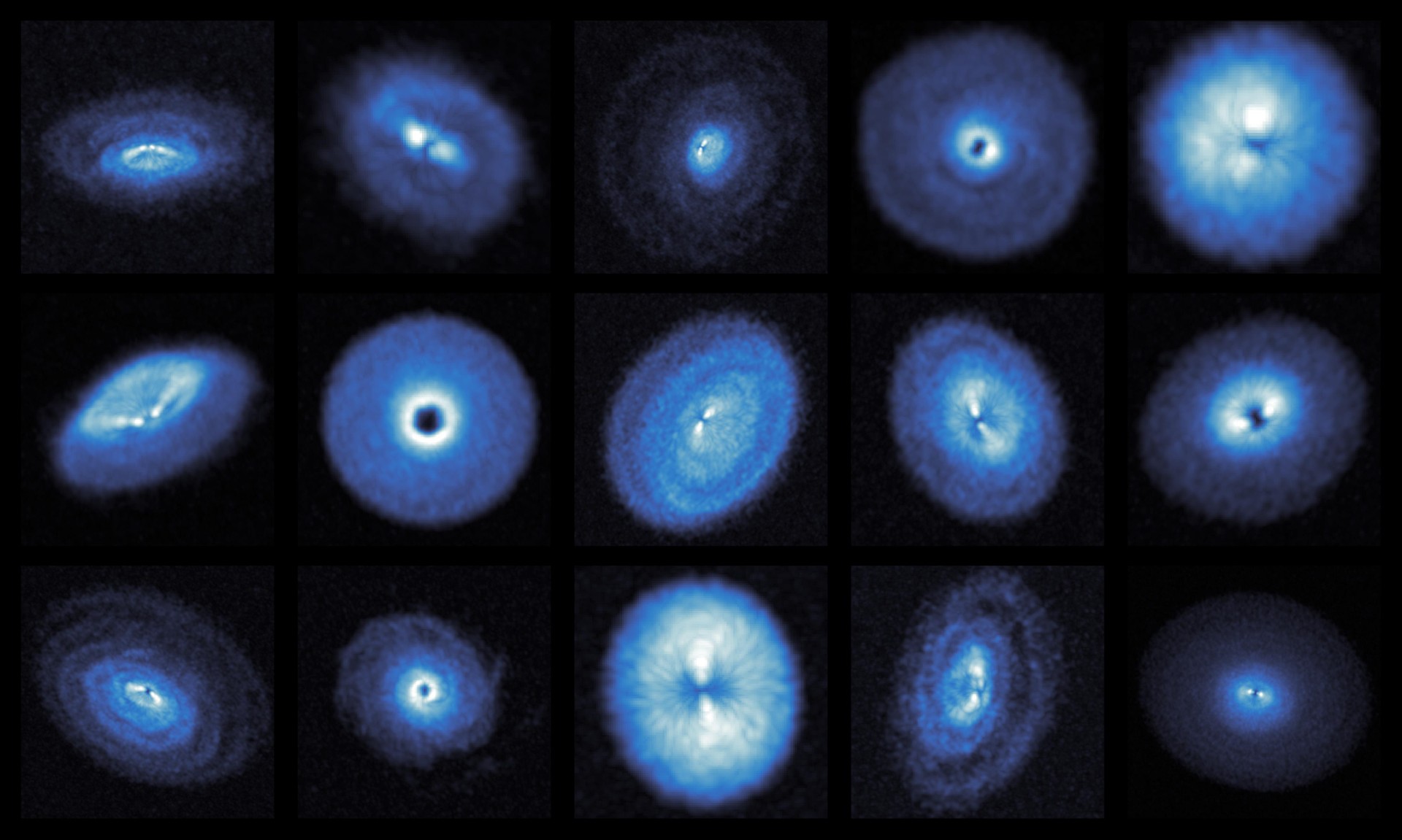
Deep ALMA observations of 12CO emission from fifteen protoplanetary disks reveal a stunning range of structures in the gas morphology including gaps, rings and spirals. Credit: Richard Teague and the exoALMA Collaboration.
Hi-Res File

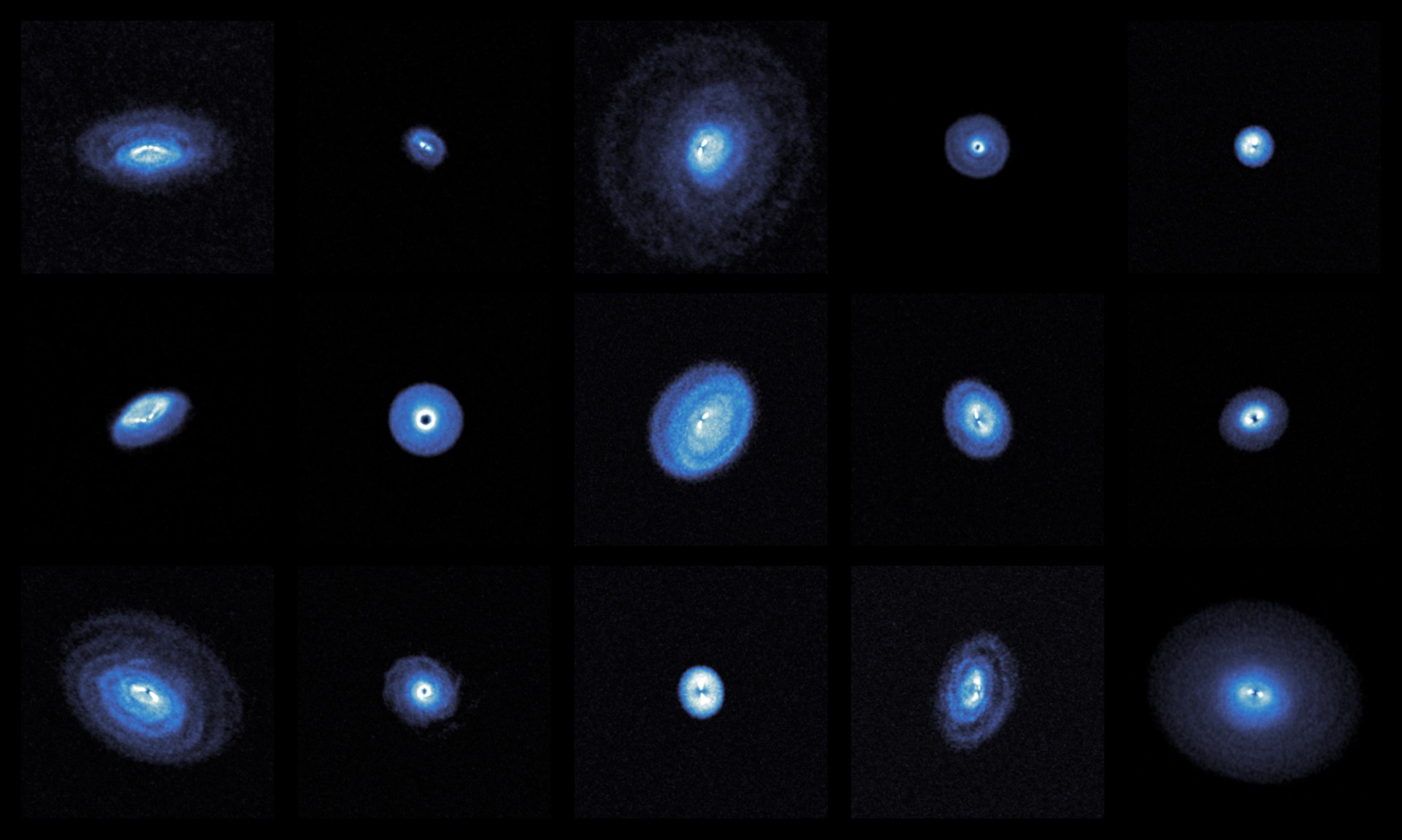
Deep ALMA observations of 12CO emission, (all sources are to scale to emphasize size differences) from fifteen protoplanetary disks reveal a stunning range of structures in the gas morphology including gaps, rings and spirals. Credit: Richard Teague and the exoALMA Collaboration.
Hi-Res File

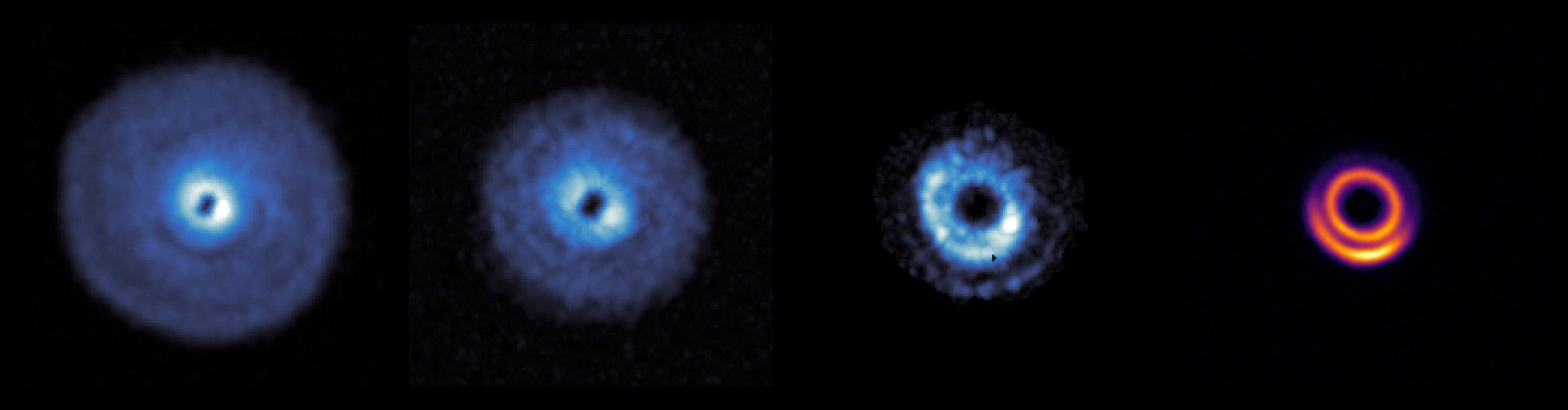
Four faces of HD 135344B: the 12CO, 13CO, CS and continuum emission form this protoplanetary disk all show a complex morphology suggestive of a vortex. Credit: Richard Teague and the exoALMA Collaboration.
Hi-Res File

An artist's impression of new data collected by the exoALMA large program, which studied young star systems to map the motions of gas to uncover the processes that form planetary systems and identify signs of infant planets, including gaps and rings in the dust disks around stars, swirling motions in the gas caused by a planet's gravity, and physical changes in the disk that might signal a planet's presence. Credit: NSF/AUI/NSF NRAO/S.Dagnello.
Hi-Res File


Beyond planet hunting, this survey will reveal the mechanics behind planet forming discs

A team of international astronomers have embarked on an exciting new project to hunt for planets forming around young stars. The exoALMA project, using the powerful Atacama Large Millimeter/submillimeter Array (ALMA) in Chile, is peering into the dusty disks where planets are born. Thanks to newly developed advanced imaging techniques, exoALMA has revealed the most exquisite images of young solar systems, never before seen by astronomers. This research project involved 17 papers published in a special issue of the Astrophysical Journal of Letters, with several more coming this summer. ALMA is supported in part by the U.S. National Science Foundation through the NSF National Radio Astronomy Observatory (NSF NRAO).

“The new approaches we’ve developed to gather this data and images are like switching from reading glasses to high-powered binoculars—they reveal a whole new level of detail in these planet-forming systems,” said Richard Teague, PI of the exoALMA project. “We’re seeing evidence of hugely perturbed and dynamic disks, highly suggestive of young planets shaping the disks they’re born in.” The team targeted 15 young star systems to map the motions of the gas in detail in order to uncover the processes that form planetary systems, and, in certain cases, identify the telltale signs of infant planets, including gaps and rings in the dust disks around stars, swirling motions in the gas caused by a planet’s gravity, and physical changes in the disk that might signal a planet’s presence.

Unlike traditional planet-hunting methods that look for a young planet’s direct light, exoALMA is searching for the effects planets have on their surroundings. This approach allows astronomers to potentially detect much younger planets than ever before. “It’s like trying to spot a fish by looking for ripples in a pond, rather than trying to see the fish itself,” adds Christophe Pinte, an astrophysicist at the Institute of Astrophysics and Planetology of Grenoble, Monash University, and co-PI of the exoALMA team.

The team emphasized the technical challenges involved in processing the massive amounts of data to produce such sharp images. “We developed new techniques to precisely align observations taken at different times and remove unwanted noise and distortions,” explained Dr. Ryan Loomis, a scientist with the U.S. National Science Foundation National Radio Astronomy Observatory, who led the data processing publication, “We had to carefully combine and clean up the data to reveal all the subtle details.”

These new calibration approaches and the development of tailored data-processing and analysis techniques from the exoALMA project will improve astronomers’ ability to map out the planet formation process in several key ways.

  • Higher resolution and sensitivity: The observations provide an unprecedented combination of high angular (100 mas, or 14 au at the typical distances of the sources) and spectral (26 m/s) resolution data of gas emission from protoplanetary disks, allowing astronomers to detect subtle structures and motions that reveal key processes of planet formation.
  • Multiple molecular tracers: By observing 12CO, 13CO, and CS emission simultaneously, astronomers can probe different vertical layers and physical conditions within the disks.
  • Improved imaging and calibration techniques: The careful alignment, self-calibration, and imaging procedures developed allow for higher fidelity images with fewer artifacts, enabling more confident detection of real disk features.
  • Development and validation of numerical and analytical methods: The refinement of new analysis techniques alongside comprehensive benchmarking efforts ensure all information is accurately extracted from the data while simulations offer robust predictions to be tested.
 
“It is through this joint analysis of the gas and dust which is shedding light on the processes which are active within a protoplanetary disk and which may be responsible for exciting the structure so commonly observed,” comments Stefano Facchini, co-PI of exoALMA based at the University of Milan.

Looking ahead, the exoALMA project promises to revolutionize scientists’ understanding of how planets interact with their natal environments, and tackle the challenge of highly asymmetric sources, as revealed by the complex 2-dimensional kinematical pattern in these disks. The first exoALMA findings are published in a series of papers in The Astrophysical Journal Letters. All of the data and images will be made publicly available to support further scientific discoveries.


About NRAO

The National Radio Astronomy Observatory (NRAO) is a facility of the U.S. National Science Foundation, operated under cooperative agreement by Associated Universities, Inc.


About ALMA

The Atacama Large Millimeter/submillimeter Array (ALMA), an international astronomy facility, is a partnership of the European Southern Observatory (ESO), the U.S. National Science Foundation (NSF) and the National Institutes of Natural Sciences (NINS) of Japan in cooperation with the Republic of Chile. ALMA is funded by ESO on behalf of its Member States, by NSF in cooperation with the National Research Council of Canada (NRC) and the National Science and Technology Council (NSTC) in Taiwan and by NINS in cooperation with the Academia Sinica (AS) in Taiwan and the Korea Astronomy and Space Science Institute (KASI).

ALMA construction and operations are led by ESO on behalf of its Member States; by the National Radio Astronomy Observatory (NRAO), managed by Associated Universities, Inc. (AUI), on behalf of North America; and by the National Astronomical Observatory of Japan (NAOJ) on behalf of East Asia. The Joint ALMA Observatory (JAO) provides the unified leadership and management of the construction, commissioning and operation of ALMA.


Thursday, February 06, 2025

Webb investigates a dusty and dynamic disc

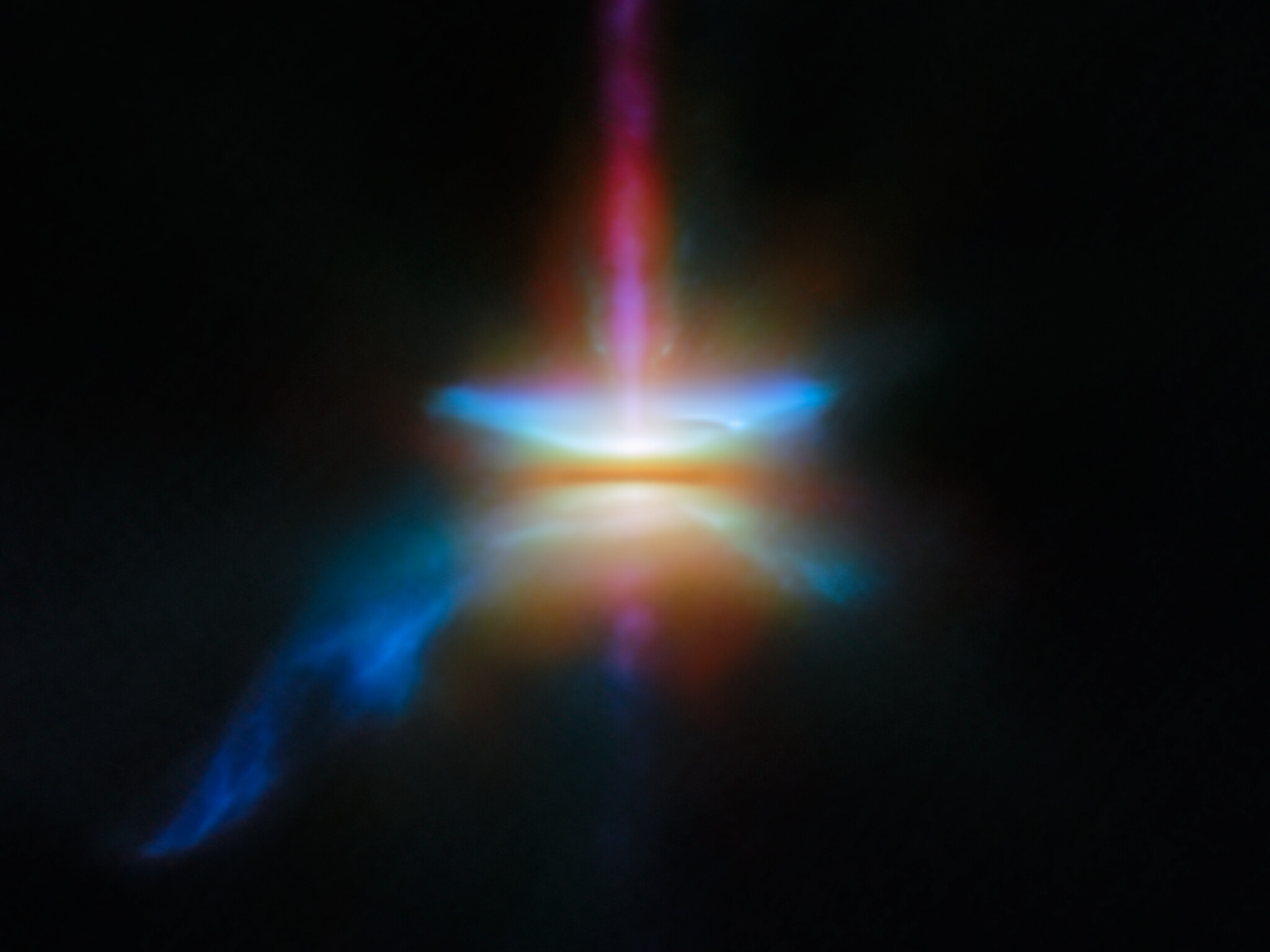
A close-in image of a protoplanetary disc around a newly formed star. Many different wavelengths of light are combined and represented by separate and various colours. A dark line across the centre is the disc, corresponding to the densest parts of the disc, made of opaque dust: the star is hidden in here and creates a strong glow in the centre. A band going straight up is a jet, while other outflows above and below the disc, and a tail coming off to one side. Credit: ESA/Webb, NASA & CSA, Tazaki et al.


This new NASA/ESA/CSA James Webb Space Telescope Picture of the Month presents HH 30 in unprecedented resolution. This target is an edge-on protoplanetary disc that is surrounded by jets and a disc wind, and is located in the dark cloud LDN 1551 in the Taurus Molecular Cloud.

Herbig-Haro objects are small nebulae found in star formation regions, marking the locations where gas outflowing from young stars is heated into luminescence by shockwaves. HH 30 is an example of where this outflowing gas takes the form of a narrow jet. The source star is located on one end of the jet, hidden behind an edge-on protoplanetary disc that the star is illuminating.

HH 30 is of particular interest to astronomers. In fact, the HH 30 disc is considered the prototype of an edge-on disc, thanks to its early discovery with the NASA/ESA Hubble Space Telescope. Discs seen from this view are a unique laboratory to study the settling and drift of dust grains.

An international team of astronomers have used Webb to investigate the target in unprecedented detail. By combining Webb’s observations with those from the Hubble Space Telescope and the Atacama Large Millimeter/submillimeter Array (ALMA), the team was able to study the multiwavelength disc appearance of the system.

The long-wavelength data from ALMA trace the location of millimetre-sized dust grains, which are found in a narrow region in the central plane of the disc. The shorter-wavelength infrared data from Webb reveal the distribution of smaller dust grains. These grains are only one millionth of a metre across — about the size of a single bacterium. While the large dust grains are concentrated in the densest parts of the disc, the small grains are much more widespread.

These Webb observations were taken as part of the Webb GO programme #2562 (PI F. Ménard, K. Stapelfeldt), which aims to understand how dust evolves in edge-on discs like HH 30. Combined with the keen radio-wavelength eyes of ALMA, these observations show that large dust grains must migrate within the disc and settle in a thin layer. The creation of a narrow, dense layer of dust is an important stage in the process of planet formation. In this dense region, dust grains clump together to form pebbles and eventually planets themselves.

In addition to the behaviour of dust grains, the Webb, Hubble, and ALMA images reveal several distinct structures that are nested within one another. Emerging at a 90-degree angle from the narrow central disc is a high-velocity jet of gas. The narrow jet is surrounded by a wider, cone-shaped outflow. Enclosing the conical outflow is a wide nebula that reflects the light from the young star that is embedded within the disc. Together, these data reveal HH 30 to be a dynamic place, where tiny dust grains and massive jets alike play a role in the formation of new planets.

The annotated verision of this image can be seen here.


Links


Wednesday, November 20, 2024

ALMA Reveals Planets Can Form ALMA Reveals Planets Can Form Under Harsh RadiationUnder Harsh Radiation

Images captured by ALMA's most extended antenna configuration reveal surprisingly rich disk structures in the sigma Ori cluster. Credit: ALMA (ESO/JAO/NAOJ/NRAO), J. Huang et. al. Hi-Res File

Artist concept of planet formation occuring in harsh stellar environments.
Credit: NSF/AUI/NSF NRAO/S.Dagnello.
Hi-Res File


International team of astronomers reveal high-resolution look at protoplanetary disks in extreme environment

New observations from the Atacama Large Millimeter/submillimeter Array (ALMA) suggest that planet formation can occur even in harsh stellar environments previously thought to be inhospitable.

An international team of astronomers used ALMA to capture high-resolution images of eight protoplanetary disks in the Sigma Orionis cluster, which is irradiated by intense ultraviolet light from a massive nearby star. To their surprise, they found evidence of gaps and rings in most of the disks—structures commonly associated with the formation of giant planets, like Jupiter.

“We expected the high levels of radiation in this cluster to inhibit planet formation in the outer regions of these disks,” said lead author Jane Huang. “But instead, we’re seeing signs that planets may be forming at distances of tens of astronomical units from their stars, similar to what we’ve observed in less harsh environments.”

Previous studies had focused on disks in regions with low ultraviolet radiation. This new research provides the ALMA’s highest resolution look at disks in a more extreme environment. “These observations suggest that the processes driving planet formation are quite robust and can operate even under challenging circumstances,” Huang noted. “This gives us more confidence that planets may be forming in even more places throughout the galaxy, even in regions we previously thought were too harsh.”

The findings have implications for understanding the formation of our own Solar System, which likely evolved in a similarly high-radiation environment. They also motivate future studies of disks in even more extreme stellar neighborhoods.

The research team used ALMA’s most extended antenna configuration to obtain unprecedented detail in their disk images, achieving a resolution of about 8 astronomical units. This allowed them to resolve multiple distinct gaps and rings in several of the disks. While the exact nature of these disk structures is still debated, they are thought to be either conducive to planet formation or a consequence of interactions between forming planets and the disk material.

This study demonstrates the power of ALMA to probe planet formation in diverse environments across the galaxy. As astronomers build a more complete picture of how planets form under different conditions, they come closer to understanding the origins of Earth and the prevalence of planets around other stars.

This research was published in the Astrophysical Journal.


About ALMA

The Atacama Large Millimeter/submillimeter Array (ALMA), an international astronomy facility, is a partnership of ESO, the U.S. National Science Foundation (NSF) and the National Institutes of Natural Sciences (NINS) of Japan in cooperation with the Republic of Chile. ALMA is funded by ESO on behalf of its Member States, by NSF in cooperation with the National Research Council of Canada (NRC) and the National Science and Technology Council (NSTC) in Taiwan and by NINS in cooperation with the Academia Sinica (AS) in Taiwan and the Korea Astronomy and Space Science Institute (KASI).

ALMA construction and operations are led by ESO on behalf of its Member States; by the National Radio Astronomy Observatory (NRAO), managed by Associated Universities, Inc. (AUI), on behalf of North America; and by the National Astronomical Observatory of Japan (NAOJ) on behalf of East Asia. The Joint ALMA Observatory (JAO) provides the unified leadership and management of the construction, commissioning and operation of ALMA.

About NRAO

The National Radio Astronomy Observatory (NRAO) is a facility of the U.S. National Science Foundation, operated under cooperative agreement by Associated Universities, Inc.

Link: Scientific Paper


Sunday, October 27, 2024

Searching Five Million Stars for Disks, Debris, and Dyson Spheres

This image combines data from the Hubble Space Telescope and the Spitzer Space Telescope to show the center of the Milky Way at infrared wavelengths. Credit: Hubble: NASA, ESA, and Q.D. Wang (University of Massachusetts, Amherst); Spitzer: NASA, Jet Propulsion Laboratory, and S. Stolovy (Spitzer Science Center/Caltech)

Main-sequence stars with brighter than expected mid-infrared emission can signal the presence of a debris disk, rubble from planetary collisions, or even a theorized sign of a technologically advanced civilization. New research demonstrates a data-driven method to identify mid-infrared excesses in main-sequence stars.

This image combines observations from the Hubble Space Telescope and the Atacama Large Millimeter/submillimeter Array to show the dusty debris disk surrounding the star Fomalhaut.  Credit:
ALMA (ESO/NAOJ/NRAO). Visible light image: the NASA/ESA Hubble Space Telescope A. Fujii/Digitized Sky Survey 2. Acknowledgment: Davide De Martin (ESA/Hubble); CC BY 4.0

An Excess of Emission

Young stars swaddled in gas and dust are known to shine extra brightly in the mid-infrared, but as stars age, this mid-infrared exuberance is expected to fade. When it doesn’t, that signals something interesting. Extreme debris disks resulting from collisions between planets or planetesimals provide one explanation for excess infrared light from mature stars; as rubble and dust billow from the collision, the dust captures and reprocesses the star’s light, re-emitting it in the mid-infrared and causing a potentially detectable excess. Only a handful of extreme debris disk candidates have been identified.

Mid-infrared excesses are hypothesized to signal something even wilder: the presence of a Dyson sphere — a hypothetical artificial structure created by an advanced civilization to harness the power of their home star. Similar to dust and rubble, the components of a Dyson sphere would collect starlight and re-emit it at infrared wavelengths, potentially producing a mid-infrared bump.

Regardless of the cause, excess mid-infrared emission from mature Sun-like stars is something to investigate. But how do we find stars with this feature?

Difference between observed and predicted magnitude in the WISE W1 and W2 bands (3.4 and 4.6 microns, respectively)
Adapted from Contardo & Hogg 2024

Taking Cues from Data

Gabriella Contardo (International School for Advanced Studies, Italy) and David Hogg (New York University; Flatiron Institute; Max Planck Institute for Astronomy) began their search for mid-infrared excesses with an expansive set of observations from the Gaia spacecraft, the Two Micron All Sky Survey, and the Wide-field Infrared Survey Explorer (WISE). After trimming these data sets down to include only main-sequence Sun-like stars, and to exclude objects that might be contaminated by close neighbors or are too dusty, they reduced the number of stars in their sample from 18,751,187 to 4,898,812.

To identify mid-infrared excesses in this sample, the team needed an estimate of what the mid-infrared fluxes of these stars should be. Rather than using models, which can be computationally intensive and require making assumptions about the objects, Contardo and Hogg let the data lead the way.

Their data-driven method involves splitting the five million stars into eight sub-samples, each of which is used to train a separate random forest algorithm. Each algorithm “learns” what the mid-infrared emission “should” be from the stars in its sample, then predicts the mid-infrared emission of the stars in the other seven sub-samples. When a star’s actual mid-infrared emission is brighter than predicted, it gets flagged.

Locations of the 53 stars in the final mid-infrared excess sample
Credit: Contardo & Hogg 202

To Be Continued

This analysis yielded a preliminary sample of 127 objects with mid-infrared excess. Ultimately, after applying additional cuts to remove crowded objects, duplicate sources, and other complications, Contardo and Hogg landed on a sample of 53 objects with interesting infrared behavior. These objects’ mid-infrared emission ranged from 0.5% to 10% higher than expected, spanning the values predicted for extreme debris disks and rubble left over from planetary collisions. In fact, one of the 53 objects has already been highlighted by previous work as an extreme debris disk candidate.

What happens now? To identify the stars that are the most promising hosts of extreme debris disks, Contardo and Hogg listed ways to pin down the ages of the stars in their sample, which may rule out stars whose mid-infrared excess is due to their youth. They also proposed to compare the mid-infrared behavior of their stellar sample to Dyson sphere models, exploring whether the observed stellar behavior matches the predictions for these hypothetical structures.

By Kerry Hensley

Citation

“A Data-Driven Search for Mid-infrared Excesses Among Five Million Main-Sequence FGK Stars,” Gabriella Contardo and David W. Hogg 2024 AJ 168 157. doi:10.3847/1538-3881/ad6b90


Friday, May 10, 2024

A Vampire’s Sandwich Filled with Gas and Dust Jennifer Chu | MIT News

These images show the serendipitously discovered protoplanetary disk named Dracula's Chivito
Adapted from Breghea et al. 2024


The observations suggest some of earliest “monster” black holes grew from massive cosmic seeds.

Title: Dracula’s Chivito: Discovery of a Large Edge-On Protoplanetary Disk with Pan-STARRS
Authors: Ciprian T. Berghea et al.
First Author’s Institution: US Naval Observatory
Status: Accepted to ApJL

Where Planets Are Born

Studying protoplanetary disks helps us understand how planets, including those in our solar system, are born. These disks are vast and flared structures, consisting of dust and gas orbiting a young star. Protoplanetary disks contain the remnants of the stellar birth process, in which a collapsing molecular cloud gives rise to a central star surrounded by a swirling disk of material. Protoplanetary disks are vital to observe as they are the birth sites of planets. The tiny dust particles come together, sticking to each other and forming larger bodies. This process, influenced by gravity, gas, and radiation, leads to the birth of planets in developing planetary systems.

Meet the Vampire Sub

This research article features a large edge-on protoplanetary disk that was stumbled upon when going through images from the Pan-STARRS research project as a part of a study of active galactic nucleus candidates. This disk is one of the largest known disks in the sky and is oriented edge on, completely obscuring its central star. Associated with a source of infrared light in the same region of the sky, IRAS 23077+6707, the disk spans approximately 11″ in apparent size, with a very faint structure in the disk’s northern part extending out to about 17″. It is possibly the largest protoplanetary disk (by angular extent) discovered to date. The structure of this disk is reminiscent of the popular Gomez’s Hamburger, which is not associated with any star-forming region, just like the subject of this article. The similarity to a sandwich, along with the fang-like structures in the northern part of the disk as seen in the images in Figure 1, earned the IRAS 23077+6707 protoplanetary disk the name “Dracula’s Chivito” (chivito is a type of sandwich and the national dish of Uruguay, where one of the co-authors is from).

Decoding DraChi

Analysis: Images of Dracula’s Chivito (henceforth referred to as DraChi) were obtained in the grizy filters of Pan-STARRS (Figure 1). These images and data from the Galaxy Evolution Explorer (GALEX) (ultraviolet), the Two Micron All-Sky Survey (2MASS) (infrared), the Infrared Astronomical Satellite (IRAS) (infrared), and AKARI (infrared) were used for photometric analysis, i.e., flux or brightness measurements. These data were used to construct the spectral energy distribution of the disk (Figure 2), together with a radiative transfer model generated using the code HOCHUNK3D. Radiative transfer models help us understand the disk geometry and how light is scattered by the dust grains in the disk. This light, which we see along our line of sight, is plotted as a spectral energy distribution. Spectral energy distributions give information about how much energy an object gives off at different wavelengths.

Figure 2: The spectral energy distribution of the disk, using photometric data from the image, the model, and other sources as mentioned in the article. Brightness is plotted as a function of wavelength. The data (colored dots) match the model (the solid red line shows the model without extinction, and the dashed red line shows the model with extinction) in most places except in near- and mid-infrared wavelengths, which could be due to discrepancies between instruments or possible variability in the disk’s luminosity. Berghea et al. 2024

Distance: It is hard to estimate DraChi’s distance because it is not associated with a known star-forming region. Accurate distances to local molecular clouds are vital to locating protoplanetary disks and comprehending planet formation processes. Therefore, using the Gaia DR3 data for nearby stars, the extinction of the disk was estimated to find the distance to the nearest interstellar clouds, and DraChi is hence estimated to be 978 light-years away.

Basic Properties: The spectral energy distribution suggests that the host star of the disk is a pre-main-sequence star of type A with a temperature of about 6500–8500K. The images of the disk and the resultant radiative transfer model constrain the disk inclination to be between 80° and 84°. The scale height of the disk is about 25–50 au at a radius of 500 au (astronomical units), where 1 au is the distance from Earth to the Sun. Using the distance and the angular extent of the disk in the sky, the disk’s radius is estimated to be 1,650 au. The radiative transfer model, based on the scattering of the light, quantifies the mass of the disk to be about 0.2 times that of the Sun.

The Fangs: The authors noticed two “fang-like” features in the northern part of the disk, and these features were also reproduced in the model of the disk. The “fangs” closely resemble the “edge” of the shadow created by the disk in the bright surrounding envelope. They could be filaments due to a possible outflow from the central part of the disk, which is characteristic of a young disk at the end of the Class I phase (~0.5 million years old). It is possible that the fangs are present in the south, but this region is likely obscured in the images from Pan-STARRS and could be perhaps seen in infrared (longer-wavelength) imaging.

Is DraChi the Only One?

The short answer is no. DraChi is certainly different from most other protoplanetary disks, given its size and large distance from any known star-forming regions. But the existence of Gomez’s Hamburger proves there are more such disks awaiting discovery. A disk as young as DraChi is vital to understanding planet formation in its earlier stages, and its large size makes for interesting future observations using more sensitive instruments.

Original astrobite edited by Kylee Carden and Jessie Thwaites.


About the author, Maria Vincent:

Maria is a PhD candidate in astronomy at the Institute for Astronomy, University of Hawai’i at Manoa. Her research focuses on adaptive optics and high-contrast imaging science and instrumentation with ground-based telescopes. Driven by a fascination with planet formation and the intricate processes shaping our solar system, she uses the Subaru Coronagraphic Extreme Adaptive Optics suite to observe and study morphological features of protoplanetary disks in near-infrared wavelengths, aiming to understand disk structure and processes governing planet formation. On the instrumentation side, she is working on designing and constructing an optical testbed to test and characterize a new deformable mirror as part of the upcoming High-order Advanced Keck Adaptive Optics upgrade. Outside of work, she enjoys blogging, mystery, historical and science fiction literature and cinemedia, photography, hiking, and travel.


Editor’s Note: Astrobites is a graduate-student-run organization that digests astrophysical literature for undergraduate students. As part of the partnership between the AAS and astrobites, we occasionally repost astrobites content here at AAS Nova. We hope you enjoy this post from astrobites; the original can be viewed at astrobites.org.


Monday, November 20, 2023

ALMA Demonstrates Highest Resolution Yet


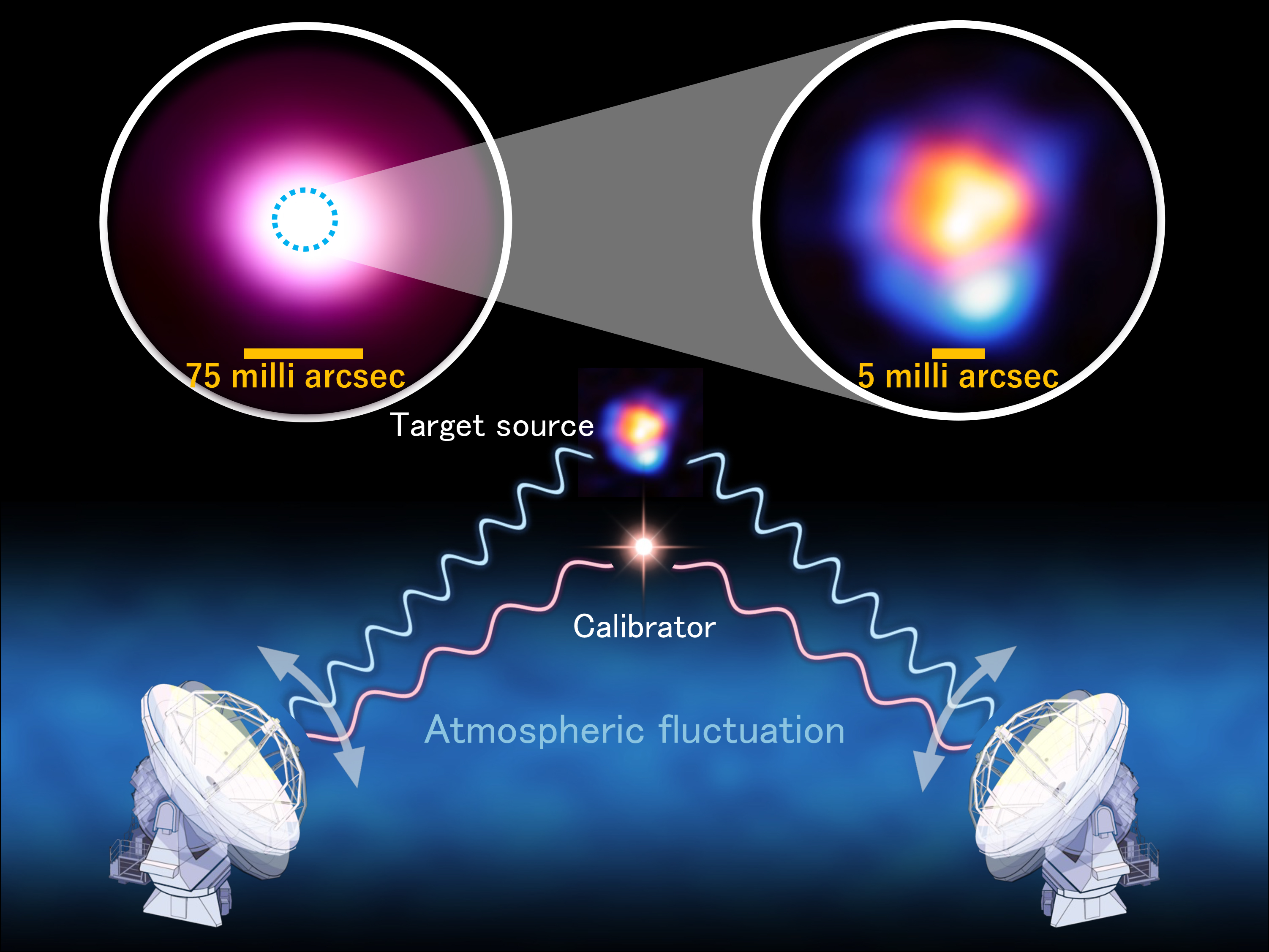
The Band-to-band (B2B) method demonstrated this time to achieve the highest resolution with ALMA. In the B2B method, atmospheric fluctuations are compensated for by observing a nearby calibrator in low frequency radio waves, while the target is observed with high frequency radio waves. The top right inset image shows the ALMA image of R Leporis that achieved the highest resolution of 5 milli-arcsec. Submillimeter-wave emissions from the stellar surface are shown in orange and hydrogen cyanide maser emissions at 891 GHz are shown in blue. The top left inset image shows a previous observation of the same star using a different array configuration with less distance between the antennas and without the B2B method, resulting in a resolution of 75 milli-arcsec. The previous resolution is too coarse to specify the positions of each of the two emission components. (Credit: ALMA (ESO/NAOJ/NRAO), Y. Asaki et al.)
Download image (1.3MB)

ALMA (Atacama Large Millimeter/submillimeter Array) has demonstrated the highest resolution yet with observations of an old star. The observations show that the star is surrounded by a ring-like structure of gas and that gas from the star is escaping to the surrounding space. Future observations with the newly demonstrated high resolution are expected to elucidate, not only the end of a star’s life, but also the beginning, when planets are still forming.

ALMA is a radio interferometric array telescope, in which individual antennas work together to observe a celestial object. ALMA’s resolution, the ability to see small details, is determined by the maximum separation between the antennas and the frequency of the observed radio waves. In this research, an international team comprised mainly of astronomers from the Joint ALMA Observatory, National Astronomical Observatory of Japan (NAOJ), National Radio Astronomy Observatory, and European Southern Observatory used ALMA’s maximum antenna separation of 16 km and highest frequency receivers (known as Band 10, up to 950 GHz) to achieve the best resolution possible. Pushing ALMA’s resolution to new limits also required a new calibration technique to correct for fluctuations in Earth’s atmosphere above the antennas. The calibration technique the team used, known as “band-to-band (B2B),” was originally tested in the 1990s at Nobeyama Radio Observatory of NAOJ for future millimeter/submillimeter interferometers.

For their demonstration observations, the team chose R Leporis, a star in the final stage of stellar evolution, located approximately 1,535 light-years away from Earth. The team succeeded in observing R Leporis with the best resolution ever, 5 milli-arcsec, which is the equivalent of being able to see a single human hair two and a half miles away. The observations show the surface of the star and a ring of gas around the star. The team also confirmed that gas from the star is escaping to the surrounding space.

This newly demonstrated high resolution capability can now be applied to young stars with protoplanetary disks where planets are forming. Future high-resolution observations will provide new insights into how planets, particularly Earth-like planets, form.


Detailed Article(s)


Release Information

Researcher(s) Involved in this Release

Yoshiharu Asaki (Associate Professor @ National Astronomical Observatory of Japan)

Coordinated Release Organization(s)

National Astronomical Observatory of Japan
Joint ALMA Observatory

Paper(s)

Yoshiharu. Asaki et al. “ALMA High-frequency Long Baseline Campaign in 2021: Highest Angular Resolution Submillimeter Wave Images for the Carbon-rich Star R Lep”, in The Astrophysical Journal, DOI: 10.3847/1538-4357/acf619

Luke T. Maud et al. “ALMA High-frequency Long-baseline Campaign in 2019: Band 9 and 10 In-band and Band-to-band Observations Using ALMA’s Longest Baselines” in The Astrophysical Journal Supplement Series, DOI: 10.3847/1538-4365/acd6f1


Thursday, November 09, 2023

NASA's Webb Findings Support Long-Proposed Process of Planet Formation

Two Protoplanetary Disks (Artist Concept)
Credits: Illustration: NASA, ESA, CSA, Joseph Olmsted (STScI)

Water Abundance (MIRI Emission Spectrum)
Credits: Illustration: NASA, ESA, CSA, Leah Hustak (STScI))

Pebble Drift Infographic
Credits: Illustration: NASA, ESA, CSA, Joseph Olmsted (STScI)


Scientists using NASA’s James Webb Space Telescope just made a breakthrough discovery in revealing how planets are made. By observing water vapor in protoplanetary disks, Webb confirmed a physical process involving the drifting of ice-coated solids from the outer regions of the disk into the rocky-planet zone.

Theories have long proposed that icy pebbles forming in the cold, outer regions of protoplanetary disks — the same area where comets originate in our solar system — should be the fundamental seeds of planet formation. The main requirement of these theories is that pebbles should drift inward toward the star due to friction in the gaseous disk, delivering both solids and water to planets.

A fundamental prediction of this theory is that as icy pebbles enter into the warmer region within the "snowline" — where ice transitions to vapor — they should release large amounts of cold water vapor. This is exactly what Webb observed.

“Webb finally revealed the connection between water vapor in the inner disk and the drift of icy pebbles from the outer disk,” said principal investigator Andrea Banzatti of Texas State University, San Marcos, Texas. “This finding opens up exciting prospects for studying rocky planet formation with Webb!”

“In the past, we had this very static picture of planet formation, almost like there were these isolated zones that planets formed out of,” explained team member Colette Salyk of Vassar College in Poughkeepsie, New York. “Now we actually have evidence that these zones can interact with each other. It's also something that is proposed to have happened in our solar system.”

Harnessing the Power of Webb

The researchers used Webb’s MIRI (the Mid-Infrared Instrument) to study four disks — two compact and two extended — around Sun-like stars. All four of these stars are estimated to be between 2 and 3 million years old, just newborns in cosmic time.

The two compact disks are expected to experience efficient pebble drift, delivering pebbles to well within a distance equivalent to Neptune’s orbit. In contrast, the extended disks are expected to have their pebbles retained in multiple rings as far out as six times the orbit of Neptune.

The Webb observations were designed to determine whether compact disks have a higher water abundance in their inner, rocky planet region, as expected if pebble drift is more efficient and is delivering lots of solid mass and water to inner planets. The team chose to use MIRI’s MRS (the Medium-Resolution Spectrometer) because it is sensitive to water vapor in disks.

The results confirmed expectations by revealing excess cool water in the compact disks, compared with the large disks.

As the pebbles drift, any time they encounter a pressure bump — an increase in pressure — they tend to collect there. These pressure traps don’t necessarily shut down pebble drift, but they do impede it. This is what appears to be happening in the large disks with rings and gaps.

Current research proposes that large planets may cause rings of increased pressure, where pebbles tend to collect. This also could have been a role of Jupiter in our solar system — inhibiting pebbles and water delivery to our small, inner, and relatively water-poor rocky planets.


Solving the Riddle

When the data first came in, the results were puzzling to the research team. “For two months, we were stuck on these preliminary results that were telling us that the compact disks had colder water, and the large disks had hotter water overall,” remembered Banzatti. “This made no sense, because we had selected a sample of stars with very similar temperatures.”

Only when Banzatti overlaid the data from the compact disks onto the data from the large disks did the answer clearly emerge: The compact disks have extra cool water just inside the snowline, at about ten times closer than the orbit of Neptune.

“Now we finally see unambiguously that it is the colder water that has an excess,” said Banzatti. “This is unprecedented and entirely due to Webb’s higher resolving power!”

The team’s results appear in the Nov. 8 edition of the Astrophysical Journal Letters.

The James Webb Space Telescope is the world's premier space science observatory. Webb is solving mysteries in our solar system, looking beyond to distant worlds around other stars, and probing the mysterious structures and origins of our universe and our place in it. Webb is an international program led by NASA with its partners, ESA (European Space Agency) and the Canadian Space Agency.


About This Release

Credits:

Media Contact:

Ann Jenkins
Space Telescope Science Institute, Baltimore, Maryland

Christine Pulliam
Space Telescope Science Institute, Baltimore, Maryland

Permissions:
Content Use Policy

Contact Us: Direct inquiries to the News Team.

Related Links and Documents

The science paper by A. Banzatti et al.


Wednesday, October 11, 2023

Dawn of Planet Formation Unveiled by ALMA Observations


High-resolution ALMA imagery of the protoplanetary disk surrounding DG Taurus at a 1.3 mm wavelength. The smooth appearance, absent of ring-like structures, indicates a phase shortly preceding planet formation. Credit: ALMA (ESO/NAOJ/NRAO), S. Ohashi, et al.


The top panel displays the radio wave strength maps of the DG Tau disk across three wavelengths: 0.87 mm, 1.3 mm, and 3.1 mm. Accompanying these are the polarization strength maps for 0.87 mm and 3.1 mm wavelengths, showcasing the radio waves scattered by the dust. The bottom panel presents the optimal simulation, aligning with the observed results. This multifaceted view offers a deeper understanding of the processes taking place in the disk. Credit: ALMA (ESO/NAOJ/NRAO), S. Ohashi, et al.


An international research team has harnessed the power of the Atacama Large Millimeter/submillimeter Array (ALMA) to illuminate the beginnings of planet formation. Led by Project Assistant Professor Satoshi Ohashi from the National Astronomical Observatory of Japan (NAOJ), the team focused their study on a protostar named DG Taurus (DG Tau), which displayed a smooth and unblemished protoplanetary disk, revealing the conditions just before planets begin to form.

Scientists believe that planets emerge from the interstellar dust and gas in a protostar's surrounding disk. However, the onset of this transformative process has remained enigmatic. While many disks observed with ALMA display ring-like structures—hinting at planet presence—finding a pristine disk without such signatures has been elusive.

The team's observations of DG Tau, a relatively young protostar, have offered a breakthrough. Using ALMA, they discerned a uniformly smooth disk devoid of the characteristic ring patterns often found in older protostars. This observation underscores the belief that DG Tau might be on the brink of planet formation. Deciphering the origins of Earth-like planets is pivotal for understanding the beginnings of life.

Extending their research, the team observed the disk across different wavelengths, obtaining insights into dust size and distribution. The findings intriguingly suggest the disk's outer regions as the potential starting point for planet formation, challenging previously held beliefs that the inner disk was the primary inception point. Notably, the midplane of the disk exhibited a high dust-to-gas ratio, hinting at the disk's readiness for planet formation soon.

"ALMA has so far succeeded in capturing a wide variety of disk structures and has revealed the existence of planets. On the other hand, to answer the question, 'How does planet formation begin?', it is important to observe a smooth disk with no signature of planet formation. We believe that this study is very important because it reveals the initial conditions for planet formation," commented Professor Satoshi Ohashi on its significance.


Additional Information

This research was published in The Astrophysical Journal on August 28, 2023, as "Dust Enrichment and Grain Growth in a Smooth Disk around the DG Tau Protostar Revealed by ALMA Triple Bands Frequency Observations" (DOI: 10.3847/1538-4357/ace9b9).

This project is also supported by Grants-in-Aid from the Japan Society for the Promotion of Science (KAKENHI: Nos. JP18H05441, JP19K23469, JP20K04017, JP20K14533, JP20H00182, JP22H01275, JP23H01227), the RIKEN pioneering project of Evolution of Matter in the Universe, the DFG-Grant "INSIDE: The INner regions of protoplanetary disks: SImulations anD obsErvations" (project No. 465962023), the EC H2020 research and innovation program for the project "Astro-Chemical Origins" (ACO, No. 811312) and the PRIN-MUR 2020 MUR BEYOND-2p (Astrochemistry beyond the second-period elements, Prot. 2020AFB3FX).

The National Astronomical Observatory of Japan (NAOJ), an ALMA partner on behalf of East Asia, released the original press release.

The Atacama Large Millimeter/submillimeter Array (ALMA), an international astronomy facility, is a partnership of the European Organisation for Astronomical Research in the Southern Hemisphere (ESO), the U.S. National Science Foundation (NSF) and the National Institutes of Natural Sciences (NINS) of Japan in cooperation with the Republic of Chile. ALMA is funded by ESO on behalf of its Member States, by NSF in cooperation with the National Research Council of Canada (NRC) and the National Science and Technology Council (NSTC) in Taiwan and by NINS in cooperation with the Academia Sinica (AS) in Taiwan and the Korea Astronomy and Space Science Institute (KASI).

ALMA construction and operations are led by ESO on behalf of its Member States; by the National Radio Astronomy Observatory (NRAO), managed by Associated Universities, Inc. (AUI), on behalf of North America; and by the National Astronomical Observatory of Japan (NAOJ) on behalf of East Asia. The Joint ALMA Observatory (JAO) provides the unified leadership and management of the construction, commissioning and operation of ALMA.


Contacts:

Nicolás Lira
Education and Public Outreach Coordinator
ALMA Observatory, Santiago - Chile
Phone: +56 2 2467 6519
Cel:
+56 9 9445 7726
Email: nicolas.lira@alma.cl

Naoko Inoue
EPO officer, ALMA Project
National Astronomical Observatory of Japan (NAOJ)
Email:
naoko.inoue@nao.ac.jp

Jill Malusky
Public Information Officer
NRAO
Phone:
+1 304-456-2236
Email: jmalusky@nrao.edu
Bárbara Ferreira
ESO Public Information Officer
Garching bei München, Germany
Phone: +49 89 3200 6670
Email:
pio@eso.org


Friday, January 13, 2023

Model-Independent Method to Weigh Protoplanetary Disks


Observational image of the protoplanetary disk around TW Hydrae showing the distributions of solid particles (red), carbon monoxide (blue), and dense gas (white). Credit: T. Yoshida, T. Tsukagoshi et al. - ALMA (ESO/NAOJ/NRAO).
Original size (158KB)

Astronomers have found a way to directly measure the amount of gas in protoplanetary disks without needing to make assumptions about the relative amounts of different types of gas, making this method more accurate and robust than previous methods.

Planets form in protoplanetary disks of gas and dust around young stars. Scientists study protoplanetary disks by looking at their spectra, the wavelengths of radio waves emitted by components of the disk. Hydrogen gas is the main constituent of protoplanetary disks, but it is difficult to measure directly because it doesn’t emit radio waves efficiently. Carbon monoxide is often used as a proxy, but the ratio of hydrogen to carbon monoxide can differ depending on the environment, leading to large uncertainties in estimates of the total mass.

A team led by Tomohiro Yoshida, a graduate student at the Graduate University for Advanced Studies in Japan, searched the Atacama Large Millimeter/submillimeter Array (ALMA) archival data for observations of the nearest protoplanetary disk, around the star TW Hydrae. From this, they produced a radio image 15 times more sensitive than previous studies, allowing them to examine not only the wavelengths of the spectral lines, but also their shapes.

From the shape of the carbon monoxide lines, the team was able to measure the gas pressure near the center of the disk. This pressure reveals the total mass of gas near the center, without needing to make any assumptions about the ratio of hydrogen to carbon monoxide. The team found that despite being near the end of the planet formation process, there is still enough gas in the inner region of the TW Hydrae system to make a Jupiter sized planet.

Yoshida, the lead author of this study, says “We would like to apply this novel technique to other disks and investigate the amount of gas in planet-forming disks with various characteristics and at various ages to clarify the gas dissipation process and the formation process of planetary systems.”

These results appeared as Yoshida et al. “Discovery of Line Pressure Broadening and Direct Constraint on Gas Surface Density in a Protoplanetary Disk” in The Astrophysical Journal Letters on September 22, 2022.

Related Links