Showing posts with label Neutron Stars. Show all posts

Thursday, November 19, 2026

NASA Data Clinches First-of-Its-Kind Stellar Merger

In December 2025, observations from NASA’s James Webb Space Telescope provided the final evidence that allowed researchers to fully reconstruct what happened before, during, and after the merger of a binary star system nicknamed Bao in the Andromeda galaxy. Credit Image: NASA, ESA, CSA, STScI, Viraj Karambelkar (Columbia), Kishalay De (Columbia); Image Processing: Alyssa Pagan (STScI); Acknowledgment: DSS, Robert Gendler

Top to bottom, left to right: In this artist’s concept, the stars are surrounded by a dust shell pre-merger; the stars brightened and the companion star’s orbit began to slow as the larger star engulfed it; the eruption occurred; dust freely expands at the poles after the merger.Credit Illustration: NASA, ESA, CSA, STScI, Leah Hustak (STScI); Science: Viraj Karambelkar (Columbia)


Researchers recently identified a first of its kind: A star slightly less massive than the Sun spiraled into and merged with a puffy supergiant star at the outskirts of our neighboring Andromeda galaxy. They nicknamed the newly single, potentially “rejuvenated” star Bao. Their NASA-funded discovery was then bolstered by quick-turn observations from NASA’s James Webb Space Telescope that were carefully cross-referenced with extensive data from telescopes in space and on the ground.

“Stellar mergers are very, very difficult to observe in real time because they are hard to predict,” said Viraj Karambelkar, the first author of a new paper in Nature published Wednesday and a NASA Hubble Fellow at Columbia University in New York. “However, we noticed something unusual was going on in 2023 and continued to monitor the system to see what it would do. Then, in 2025, it erupted! Webb observed Bao only 47 days after the stars’ eruption peaked, the earliest ever follow-up of an event like this. The telescope’s data helped us characterize what the system looked like before, during, and immediately after the merger, which is absolutely mind-blowing.”

Before their transformation, the two stars spent millennia placidly orbiting one another as a binary pair. But once the smaller star came into contact with the surface of the giant star, their “unification” happened after only seven orbits (about seven years). Other known binary star mergers, featuring two smaller stars, occurred after thousands of orbits.

“We thought an outburst from a such an extended star would take years,” said co-author Nadia Blagorodnova, an associate professor at the University of Barcelona in Spain. “One day, its brightness started rising and within a week, it peaked!”

“When a companion star begins to interact with the outer surface of the primary star, it produces a subtle effect — a slow brightening, which we clearly saw in Bao’s data,” said co-author Kishalay De, an assistant professor at Columbia University in New York. “As the companion continues its orbit, it keeps peeling off the primary star’s outer layers, and that gas flows away into the surrounding space.”

This is the beginning of a high-stakes showdown some binary stars go through, known as a common envelope evolution. The gas between the stars at this stage is known as a common envelope because its outer layer is shared between them. In this system, the primary star engulfed the smaller star and the companion plummeted, spiraling through the envelope as it was robbed of orbital energy by drag. While Webb’s data proved the stars merged, a merger wasn’t the only possible outcome for this system.

In other systems, both stars survive the process — shedding a lot of mass along the way, but remaining independent in tight orbits. Over time, such surviving pairs can transform into neutron stars and black holes, explode as supernovae, produce ripples in space-time known as gravitational waves, and create millisecond pulsars.

Hitting “replay”

The team reconstructed what happened to Bao by updating their ongoing simulations. They found the model that matched Webb’s mid-infrared observations, which detailed the dust shed by the more massive primary star over centuries.

The team concluded that prior to the eruption, Bao’s primary star dwarfed the Sun: It was seven times as massive, 350 times the radius, and 18,000 times brighter — making “Big Bao” an appropriate nickname.

“It was an absolute beast of a star, completely outshining its companion in the data,” said co-author Karel Temmink, a Ph.D. student at Radboud University in Nijmegen, Netherlands, who led the simulations.

Their modeling resulted in the first mass estimate for the smaller, now demolished, companion. Compared to our Sun, they found that “Little Bao” was likely less massive (about 0.7 solar masses), with a slightly smaller radius and fainter.

After revealing the masses of the pair, the model showed there might be leftover energy for Little Bao to “flee” the scene. However, further analysis determined that Little Bao was dragged into Big Bao's core. Their encounter was “almost like a bomb exploding inside a living star,” De said.

What does the new star — now simply Bao — look like today? Only future observations will identify how its “heft” settles.

Reconstructing what happened

While Webb’s data allowed the team to measure how much mass was ejected during this process and how efficient the process of common envelope evolution was, Karambelkar’s team also used observations that span ultraviolet, visible, and near-infrared light from several telescopes to watch the events, often as they unfolded. (In fact, they published their first paper right before the eruption in 2025.)

Bao first caught the team’s attention in February 2023, when they saw an unusual variable star in data from NASA’s retired NEOWISE (Near-Earth Object Wide-Field Infrared Survey Explorer) mission. Before 2018, the object had a consistent luminosity. Observations from the Wide-field Infrared Transient Explorer (WINTER) in September 2024 showed that Bao was not only beginning to brighten, but also spew dust.

When NASA’s SPHEREx (Spectro-Photometer for the History of the Universe, Epoch of Reionization and Ices Explorer) serendipitously saw Bao fade rapidly in visible light and brighten in infrared light during a routine survey in July 2025, the researchers knew it was an indicator of unusual activity. The Zwicky Transient Facility detected the eruption on Oct. 17, 2025, watching the stars rapidly brighten and radically heat up.

In November 2025, the team received fast-turn observations from NASA’s now-retired Neil Gehrels Swift Observatory and NOIRLab’s Gemini North telescope in Hawaii. Webb’s observations were taken on Dec. 24, 2025, as part of a just-in-time Director’s Discretionary Time program.

New path for future research

The team’s analysis of Bao, formally known as AT 2025abao, offers an approach to reconstructing the events: They conducted their analysis and made observations of the stars’ merger in real time. That allowed them to measure how efficient common envelope evolution is. In other cases, astronomers have worked to carefully reverse-engineer events that may have happened hundreds or even millions of years ago.

The new finding comes about just as NASA’s recently launched Nancy Grace Roman Space Telescope is about to conduct vast publicly available surveys. Its Galactic Bulge Time-Domain Survey will yield a huge number of new transient events that could benefit from similar analyses. “There’s going to be a large influx of similar discoveries just ahead,” Karambelkar said.

This work is funded in part by a grant from NASA’s Astrophysics Data Analysis Program.

The James Webb Space Telescope is the largest and most powerful observatory ever sent to space, serving thousands of astronomers worldwide. Webb is solving mysteries in our solar system, looking beyond to distant worlds around other stars, and probing the mysterious structures and origins of our universe and our place in it. Webb is an international program led by NASA with its partners, ESA (European Space Agency) and CSA (Canadian Space Agency).


Details:

Last Updated: Nov 18, 2026
Location:
NASA Goddard Space Flight Center

Contact Media:

Laura Betz
NASA’s Goddard Space Flight Center
Greenbelt, Maryland

laura.e.betz@nasa.gov

Claire Blome
Space Telescope Science Institute
Baltimore, Maryland

Christine Pulliam
Space Telescope Science Institute
Baltimore, Maryland


Thursday, September 03, 2026

A Busy Month in the Galactic Center

A deep X-ray image of the Galactic center taken with the Chandra observatory, with low-, intermediate-, and high-energy X-rays colored in red, green, and blue respectively. It shows thousands of point sources, all powered by accreting white dwarfs, neutron stars, or black holes, embedded in large clouds of hot gas. Sources from this enormous population will frequently go into outburst, prompting astronomers to trigger target-of-opportunity observations to track their evolution. Image credit: NASA/CXC/UMass/D. Wang et al. Download Image


It has been a busy month for the NuSTAR observatory. NuSTAR has in the past performed on average six Target of Opportunity (ToO) observations each month, but the numbers have been steadily increasing over the summer, in part because the Sun has moved away from the position on the sky of the Galactic center, a particularly active part of the sky. So far this month there have been 22 ToO submissions to NuSTAR, five of which were ToO proposals from the Guest Observer (GO) program, and a further five approved Director's Discretionary Time proposals—a new record for time-domain observation requests! More than half of these have been requests to observe transient sources within 5 degrees of the Galactic center, including observations for three GO programs of a bright, previously unknown transient X-ray source, MAXI J1750-327, coordinated with NASA's IXPE mission. Other ToO requests have taken advantage of the new policy allowing short NuSTAR exposures, either splitting up GO observations to increase the number of visits or performing brief monitoring visits to well-known X-ray binaries to keep track of their behavior and to alert the community when an expected outburst begins. Up until recently, the Swift mission has performed the majority of this kind of monitoring. The increase in NuSTAR time domain observations will help to cover some of this lost capability, but it will not be able to replace the key role Swift has played in the X-ray astronomy ecosystem. We salute the Swift team for their extraordinary work over the past decades and the great teamwork the Swift and NuSTAR observatories have been able to achieve together, and wish them the best in their final months of operations.

Author: Karl Forster (NuSTAR Science Operations Lead, Caltech)


Monday, May 11, 2026

NASA's Roman Poised to Transform Hunt for Elusive Neutron Stars

This artist’s concept shows an isolated neutron star as an ultra-dense stellar remnant, packing more mass than the Sun into a city-sized sphere and radiating energy as it slowly cools in the depths of space.

NASA’s upcoming Nancy Grace Roman Space Telescope will search for, and could measure the mass of, isolated neutron stars using astrometric microlensing. Credits Illustration: NASA, STScI, Ralf Crawford (STScI)


Astronomers have long known that neutron stars, the crushed cores left behind after massive stars explode, should be scattered throughout the Milky Way galaxy. However, most of them are effectively invisible. A new study published in Astronomy and Astrophysics suggests NASA’s upcoming Nancy Grace Roman Space Telescope could spot them anyway.

Using detailed simulations of the Milky Way and Roman’s future observations, researchers showed the flagship observatory may be able to identify and characterize dozens of isolated neutron stars through a subtle effect called gravitational microlensing.

“Most neutron stars are relatively dim and on their own,” said Zofia Kaczmarek of Heidelberg University in Germany, who led the study. “They are incredibly hard to spot without some sort of help.”

Finding what’s invisible

Neutron stars pack more mass than the Sun into a sphere about the size of a city. Studying them helps us understand how stars live, die, and spread heavy elements throughout the universe. They also provide a chance to study what happens under the most extreme conditions (pressures and densities) imaginable.

Yet, unless they are pulsars that beam in radio wavelengths or glow in X-rays, they can remain hidden from even the most powerful telescopes.

Roman can search for them in a different way. When a massive object like a neutron star moves in front of a distant background star, its intense gravity warps spacetime and deflects the background star’s light. This microlensing effect briefly makes the background star brighter and appear offset from its true position in the sky.

While many telescopes can detect the temporary brightening, Roman can measure both the brightening (photometry) and the tiny positional shift (astrometry) of the lensed star with exceptional precision.

Because neutron stars are relatively massive, they produce a larger astrometric signal than lighter objects, allowing missions like Roman to not only detect them, but also weigh them in some cases, something that is nearly impossible with photometry alone.

“What’s really cool about using microlensing is that you can get direct mass measurements,” said paper co-author Peter McGill of Lawrence Livermore National Laboratory. “Photometry tells us that something passed in front of the star, but it’s the amount the star’s position shifts that tells us how massive that object is. By measuring that tiny deflection on the sky, we can directly weigh something that is otherwise unseen.”

Roman’s measurements could help astronomers determine whether there is a true gap between the masses of neutron stars and black holes and how fast neutron stars are moving.

Scientists are particularly interested in understanding the powerful “kicks” neutron stars receive when they are born in supernova explosions. These kicks can send them racing through the galaxy at hundreds of miles per second.

Huge surveys, high chance of payoff

The research team will utilize Roman’s future Galactic Bulge Time Domain Survey, which will monitor millions of stars at a time in vast images of the sky, taken at a high frequency.

“We’re going to get to work as soon as the data start coming in,” said McGill. “Even in the first months after commissioning, we expect to start identifying promising events.”

Even a relatively small number of confirmed detections could significantly improve models of stellar explosions and extreme matter.

“We don’t know the mass distribution of neutron stars, black holes, or where one ends and the other begins with any certainty,” McGill said. “Roman will really be a breakthrough in that.”

Although only a few thousand neutron stars have been detected so far, mostly as pulsars, scientists estimate there could be tens of millions to hundreds of millions in the Milky Way. Additionally, to date, researchers have only been able to measure the masses of neutron stars in binary pairings.

“We’re seeing a small sample that’s not representative of the big picture,” Kaczmarek said. “Even a single mass measurement would be very powerful. If we found just one isolated neutron star, it would already be incredibly stimulating to our research.”

Looking ahead

The study also highlights a creative use of the mission’s capabilities. While Roman’s survey is designed primarily to find exoplanets using photometric microlensing, its powerful astrometric capabilities open the door to entirely new discoveries with astrometric microlensing.

“This wasn’t part of the original plan,” said McGill. “But it turns out Roman’s astrometric capability is really good at detecting neutron stars and black holes, so we can add a whole new kind of science to Roman’s surveys.”

If the predictions hold true, the mission could provide the first large sample of isolated neutron stars discovered through their gravity alone, revealing a hidden population that has remained out of reach until now. Roman is expected to transform the study of microlensing and the hidden populations of objects in our galaxy, from rogue exoplanets to stellar remnants like neutron stars.

The Nancy Grace Roman Space Telescope is managed at NASA’s Goddard Space Flight Center in Greenbelt, Maryland, with participation by NASA’s Jet Propulsion Laboratory in Southern California; Caltech/IPAC in Pasadena, California; the Space Telescope Science Institute in Baltimore; and a science team comprising scientists from various research institutions. The primary industrial partners are BAE Systems Inc. in Boulder, Colorado; L3Harris Technologies in Rochester, New York; and Teledyne Scientific & Imaging in Thousand Oaks, California.


About This Release

Credits:

Media Contact:

Hannah Braun
Space Telescope Science Institute, Baltimore

Christine Pulliam
Space Telescope Science Institute, Baltimore

Permissions:
Content Use Policy


Thursday, April 02, 2026

An Impostor Explosion

An artist's impression of a collision between two neutron stars releasing gravitational and electromagnetic waves.
Credit:
NASA's Goddard Space Flight Center/CI Lab

These images from the Hubble Space Telescope show the fading light of the kilonova associated with the gravitational wave event GW170817. Credit: NASA and ESA Acknowledgment: A. Levan (U. Warwick), N. Tanvir (U. Leicester), and A. Fruchter and O. Fox (STScI)

Over many centuries of observing the night sky, astronomers have found only a single visible afterglow of a collision between neutron stars. For a few days in the summer of 2025, it seemed like observers may have found another of these treasured but elusive prizes; unfortunately, the promising candidate turned out to be a supernova in disguise.

A Rare Prize

When two neutron stars (the ultra-dense remnants of massive stellar explosions) spiral together and collide, the cataclysm is energetic enough to release strong gravitational waves, forge heavy elements, and briefly glow across the electromagnetic spectrum. These events are called kilonovae, and they’re quite rare; while we may have detected a handful at high energies, there is only one event for which astronomers managed to record both gravitational waves and an optical transient.

That one kilonova, found back in 2017, taught astronomers much about how heavy elements are formed and left the scientific community hungry for more data. Since then, each time a gravitational wave detector like LIGO reports that it may have spotted a neutron star merger, telescopes across the world scramble to look in the probable region of the sky, hoping to find the short-lived electromagnetic counterpart.

Too Good to Be True

On 18 August 2025, the LIGO/Virgo/KAGRA collaboration sent out an alert that it may have detected a neutron star–neutron star merger. The odds that their signal was real weren’t great, and the researchers gave it just a 29% chance of being a genuine astrophysical signal. Still, given the potential payoff of finding the next kilonova, several telescopes quickly began searches for the optical counterpart. The gravitational wave signal suggested that the event likely came from a curved patch of sky delightfully referred to as the “northern banana,” and after trawling that region for a few nights, astronomers hauled in 47 new transients. Any one of these could have been the kilonova, and all of them received extensive follow-up observations.

A team led by James Gillanders (University of Oxford) recently summarized some of these follow-up observations carried out with the Pan-STARRS and ATLAS telescopes. In the initial exciting few days after the alert went out, one candidate transient stood out as the most promising. Named AT2025ulz, it was first spotted by the Zwicky Transient Facility and initially started fading rapidly and changing colors, just as models of kilonovae predict. For four days, it seemed like the world may have witnessed its second-ever kilonova. But then the telescopes began their fifth night of observations.

The light curve of SN2025ulz. Note that the source appeared to grow brighter again after about 5 days.
Credit: Gillanders et al. 2025

Supernova Unmasked

A scatter plot showing a rapidly fading, then reversing and spiking, light curve.

The light curve of AT2025ulz, after fading steadily in the preceding days, suddenly turned upwards; in other words, whatever was causing the transient got brighter. Models of kilonova evolution predict no such brightening, but Type IIb supernovae are known to follow just this behavior. AT2025ulz showed itself to be another run-of-the-mill stellar explosion, not the sought-after fireworks of two neutron stars slamming together.

Frustrating as this particular result may be, the effort was far from wasted. The team could use their non-detection of the true kilonova to place limits on its timing and peak magnitude, assuming it existed in the first place. And, as gravitational wave detectors grow more sensitive and alerts like this more common, hindsight will likely frame this scramble as a dress rehearsal for an ultimately successful kilonova recovery effort. Until then, astronomers will keep searching, and will keep their guard up against cosmic impostors.

By Ben Cassese

Citation

“Pan-STARRS Follow-Up of the Gravitational-Wave Event S250818k and the Light Curve of SN2025ulz,” J. H. Gillanders et al 2025 ApJL 995 L27. doi: 10.3847/2041-8213/ae2125


Sunday, March 29, 2026

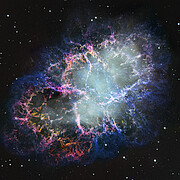
NASA’s Hubble Revisits Crab Nebula to Track 25 Years of Expansion

PR Image heic2607a
Crab Nebula (2024 Hubble image)

PR Image heic2607b
Crab Nebula (new image from 1999/2000 data)

PR Image heic2607c
Crab Nebula (2024 Hubble image, annotated)

PR Image heic2607d
Crab Nebula (new image from 1999/2000 data, annotated)


Videos

The Crab Nebula
PR Video heic2607a
The Crab Nebula

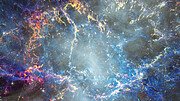
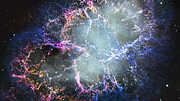
Pan Video: The Crab Nebula (2024 Hubble image)
PR Video heic2607b
Pan Video: The Crab Nebula (2024 Hubble image)

Pan Video: The Crab Nebula (new Hubble image from 1999/2000 data)
PR Video heic2607c
Pan Video: The Crab Nebula (new Hubble image from 1999/2000 data)


Nearly a millennium ago, astronomers witnessed a brilliant new star blazing in the sky — a supernova so bright it was visible in daylight for weeks. Today, its expanding remnant, the Crab Nebula, continues to evolve 6,500 light-years away. First linked to historical records by Edwin Hubble, the nebula has since been studied in exquisite detail by the NASA/ESA Hubble Space Telescope, which has now revisited this ancient explosion to trace its ongoing expansion and transformation.

A quarter-century after its first observations of the full Crab Nebula, the Hubble Space Telescope has taken a fresh look at the supernova remnant. The Crab Nebula is the aftermath of SN 1054, located 6,500 light-years from Earth in the constellation Taurus.

The result is an unparalleled, detailed look at the aftermath of a supernova and how it has evolved over Hubble’s long lifetime. A paper detailing the new Hubble observation is published in The Astrophysical Journal.

The supernova remnant was discovered in the mid-18th century, and in the 1950s Edwin Hubble was among several astronomers who noted the close correlation between Chinese astronomical records of a supernova and the position of the Crab Nebula. The discovery that the heart of the Crab contained a pulsar — a rapidly rotating neutron star — that was powering the nebula’s expansion finally aligned modern observations and ancient records.

In its new image of the nebula, Hubble has captured extraordinary details of its filamentary structure, as well as the considerable outward movement of those filaments over 25 years, at a pace of 5.5 million kilometres per hour. Hubble is the only telescope with the combination of longevity and resolution capable of capturing these detailed changes.

For better comparison with the new image, Hubble’s 1999 image of the Crab was re-processed. The variation of colors in both of the Hubble images shows a combination of changes in local temperature and density of the gas as well as its chemical omposition.

The science team has noted that the filaments around the periphery of the nebula appear to have moved more compared to those in the centre and that rather than stretching out over time, they appear to have simply moved outward. This is due to the nature of the Crab as a pulsar wind nebula powered by synchrotron radiation, which is created by the interaction between the pulsar’s magnetic field and the nebula’s material. In other well-known supernova remnants, the expansion is instead driven by shockwaves from the initial explosion, eroding surrounding shells of gas that the dying star previously cast off.

The new, higher-resolution Hubble observations are also providing additional insights into the 3D structure of the Crab Nebula, which can be difficult to determine from a 2D image. Shadows of some of the filaments can be seen cast onto the haze of synchrotron radiation in the nebula’s interior. Counterintuitively, some of the brighter filaments in the latest Hubble images show no shadows, indicating they must be located on the far side of the nebula.

According to the science team, the real value of Hubble’s Crab Nebula observations is still to come. The Hubble data can be paired with recent data from other telescopes that are observing the Crab in different wavelengths of light. The NASA/ESA/CSA James Webb Space Telescope released its infrared-light observations of the Crab Nebula in 2024. Comparison of the Hubble image with other contemporary multiwavelength observations will help scientists put together a more complete picture of the supernova’s continuing aftermath, centuries after astronomers first wondered at a new little star twinkling in the sky.


More information

The Hubble Space Telescope is a project of international cooperation between ESA and NASA.

Image Credit: NASA, ESA, STScI, W. Blair (JHU). Image Processing: J. DePasquale (STScI)


Links


Contacts

Bethany Downer
ESA/Hubble Chief Science Communications Officer
Email:
Bethany.Downer@esahubble.org


Sunday, March 22, 2026

NuSTAR Hunts for the Source of a Gamma-Ray Burst

Gamma-ray bursts are thought to be mostly associated with the explosion of stars or the merger of compact objects to form black holes. In the explosion, two jets of very fast-moving material are ejected, as depicted in this artist’s illustration. If a jet happens to be aimed at Earth, we see a brief but powerful gamma-ray burst. Image credit: ESO/A. Roquette.  Download Image

A little over a week ago, a rare and exceptionally bright gamma-ray burst (GRB) illuminated NuSTAR’s shields and imaging detectors. Typically associated with the collapse of massive stars or the merger of compact objects like neutron stars, GRBs are the most luminous explosions in the Universe. They allow us to investigate the origin of heavy elements, test general relativity in extreme environments, and even constrain the Hubble constant. This event, dubbed GRB 260226A, is particularly significant as it was only the second GRB in 17 years to trigger the onboard algorithm of the Large Area Telescope on NASA’s Fermi Gamma-ray Space Telescope. NuSTAR’s shields are primarily designed to reject background due to charged particles, but bright GRBs can show up as a signal in the shields, so they are continuously monitored by the NuSTAR Search for INteresting Gamma-ray Signals (SINGS) team to hunt for such events and occasionally they can be bright enough to show up on the detectors themselves.

Despite intensive search campaigns by several ground-based optical telescopes across the world, the exact location of GRB 260226A remains a mystery. However, the spectacular detection of this GRB in NuSTAR’s broadband imaging detectors allowed the SINGS team to collaborate with the InterPlanetary Network and narrow the sky localization of the burst. The team is now going a step beyond by leveraging NuSTAR’s deep imaging sensitivity and wide field-of-view to precisely locate the source. This week, NuSTAR is conducting a Director’s Discretionary Time observation to scan the localization region and identify the elusive counterpart. Pinpointing the location will enable the broader astronomical community to perform deep, multi-wavelength follow-up of this rare event, further demonstrating NuSTAR’s vital and evolving role in high-energy time-domain astrophysics.

Author: Gaurav Waratkar (Postdoctoral Scholar, Caltech)


Tuesday, March 17, 2026

NASA Discovers Crash of Extreme Stars in Unexpected Site

GRB 230906A
Credit: X-ray: NASA/CXC/Penn State Univ./S. Dichiara; IR: NASA/ESA/STScI; Illustration: ERC BHianca 2026 / Fortuna and Dichiara, CC BY-NC-SA 4.0; Image Processing: NASA/CXC/SAO/P. Edmonds


  • Astronomers have spotted a collision between two neutron stars in an environment unlike any other seen before.

  • This event called GRB 230906A is likely seen in a tiny galaxy in a stream of gas located about 4.7 billion light-years from Earth.

  • The discovery of this neutron star collision may explain the presence of gold and platinum in intergalactic space.

  • To find this event and identify its true nature, astronomers used multiple telescopes including Chandra, Fermi, Swift, and Hubble.


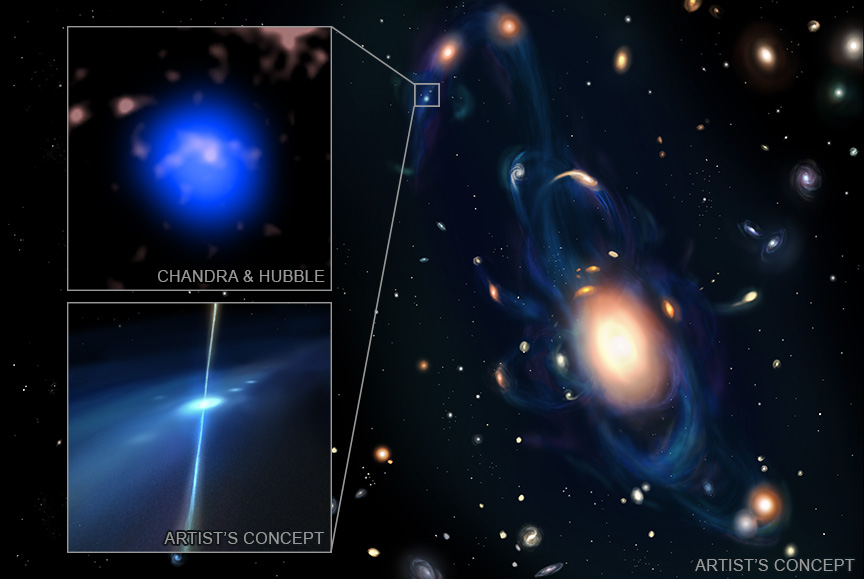
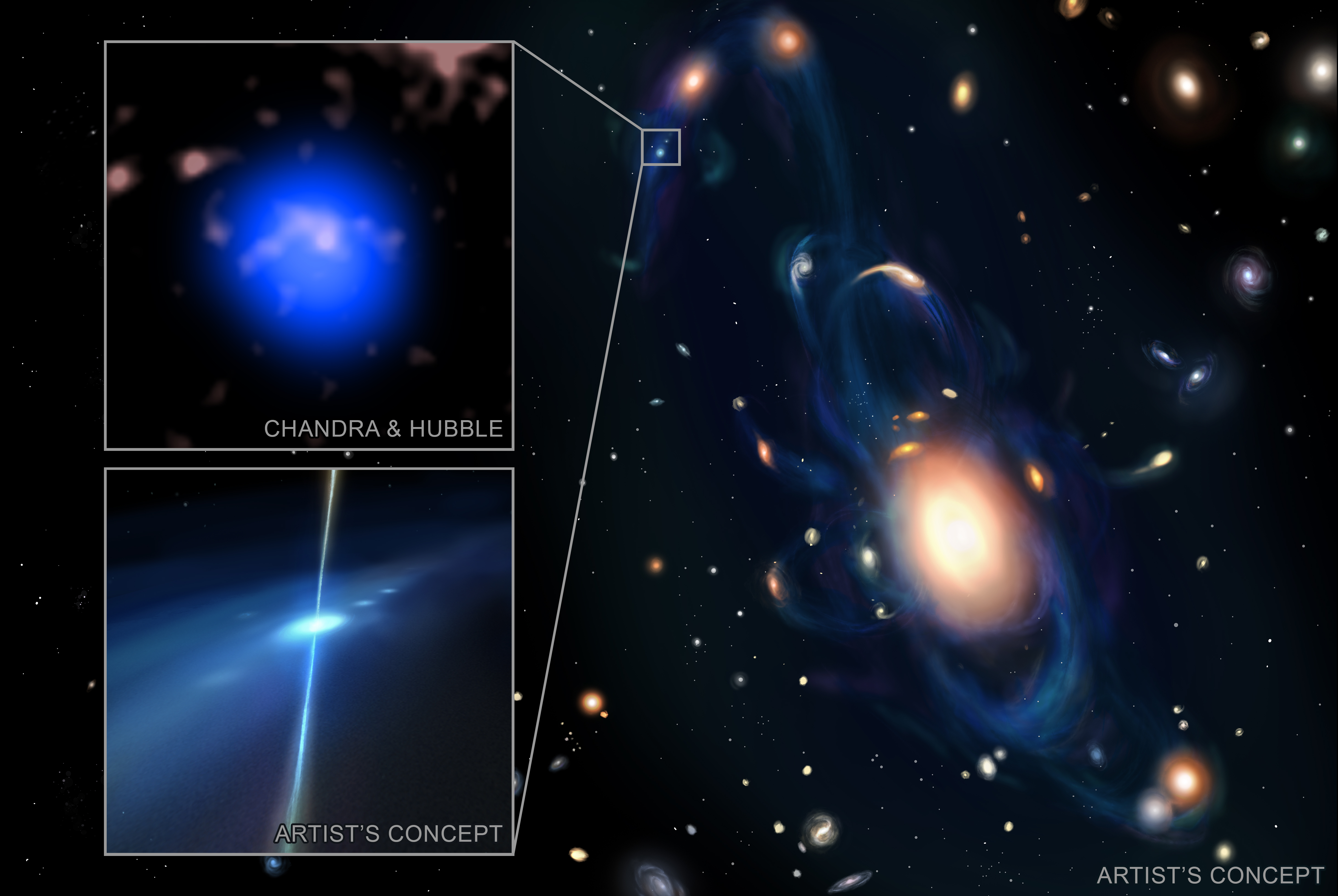
This graphic depicts the likely discovery of a collision between two neutron stars, made by NASA’s Chandra X-ray Observatory and other telescopes, in a tiny galaxy buried in a huge stream of gas, as described in our latest press release. This is the first time that a neutron star collision has been spotted in such a setting.

Neutron stars are the ultra-dense remnants left behind after massive stars collapse. When neutron stars occasionally collide with one another, they can produce important elements like gold and platinum and generate gravitational waves that ripple across space. This latest discovery may help solve open questions as to how those precious elements are sometimes outside galaxies as well as how some gamma-ray bursts mysteriously do not appear to be associated with a known galaxy.

Two artist’s illustrations — one in the main panel and the other on the bottom left — depict what astronomers think is happening in the event. Known as GRB 230906A, this event was first picked up by NASA’s Fermi Gamma-ray Space Telescope in September 2023. Astronomers then used the Neil Gehrels Swift Observatory to provide a more accurate position followed by observations with Chandra and the Hubble Space Telescope.

The Chandra data, shown in the inset to the upper left of the graphic, gave the researchers an even more accurate position for the GRB, and once Chandra told them exactly where to look, the researchers then used Hubble to reveal a tiny, extremely faint galaxy at that position.

The tiny galaxy that hosted this neutron star collision is located about 4.7 billion light-years away, embedded within a stream of gas that stretches some 600,000 light-years long. (For context, our Milky Way galaxy is about 100,000 light-years across.) This stream was likely created when a group of galaxies collided hundreds of millions of years ago, stripping gas and dust from the galaxies and tossing it into intergalactic space. The artist’s illustration in the main panel shows members of the galaxy group in yellow and orange and tidal streams around the galaxies in blue.

Once these galaxies collided, it likely triggered a wave of star formation that, over hundreds of millions of years, led to the birth and eventual collision of these neutron stars. The artist’s illustration in the inset to the lower left shows a view from the side of what the aftermath of a neutron star collision might look like. The GRB was detected by viewing it down the barrel of the jet.

The unusual location of GRB 230906A may also help explain how astronomers have spotted elements like gold and platinum in stars at relatively large distances from the centers of galaxies. Such stars are generally expected to be older and to have formed from gas that had less time to be enriched in heavy elements from supernova explosions.

Through a chain of nuclear reactions, a collision between two neutron stars can produce heavy elements like gold and platinum, which astronomers witnessed in a much closer collision seen in 2017. Events like GRB 230906A could generate elements like these and spread them throughout the outskirts of galaxies, eventually appearing in future generations of stars.

An alternative identity for the explosion is that it is in a much more distant galaxy that is behind the galaxy group. The team considers this to be a less likely explanation than the tiny galaxy idea.

A paper describing these results has been accepted in The Astrophysical Journal Letters. The authors of the paper are Simone Dichiara (Penn State University), Elena Troja (University of Rome, Italy), Brendan O’Connor (Carnegie Mellon University), Yu-Han Yang (University of Rome), Paz Beniamini (University of Israel), Antonio Galvan-Gamez (National Autonomous University of Mexico), Takanori Sakamoto (Aoyama Gakuin University, Japan), Yuta Kawakubo (Aoyama Gakuin), and Jane Charlton (Penn State).

NASA's Marshall Space Flight Center in Huntsville, Alabama, manages the Chandra program. The Smithsonian Astrophysical Observatory's Chan.dra X-ray Center controls science operations from Cambridge, Massachusetts, and flight operations from Burlington, M,brassachusetts.


Visual Description:

This release features two artist's concepts and a composite image depicting two cosmic collisions that began hundreds of millions of years ago.

At the center of the large artist's concept is a brilliant glowing ball with a nearly white core, and golden orange outer layers. This brilliant ball represents the brightest galaxy in a collision between two groups of galaxies, which began hundreds of millions of years ago. Gas and dust from that collision were tossed into intergalactic space in long tidal streams. In the illustration, the tidal streams resemble swooping blue streaks shooting off the brilliant ball. Near the end of each swooping tidal stream is a glowing orange streak, or ellipse. These glowing shapes are smaller individual galaxies, some of which are revealed to have spiraling arms when examined closely.

One of the tidal streams shoots toward our upper left, then begins to hook back down, passing two glowing orange galaxies along its path. Near the end of this tidal stream is a tiny galaxy and an X-ray source presented in the middle of a close-up insert. In the center of the composite insert, Hubble observations in orange reveal the tiny, faint galaxy buried in the tidal stream. A pool of neon blue haze shows X-rays detected by Chandra from the collision of two ultra-dense neutron stars.

Astronomers believe that the tiny galaxy was born from gas and dust along the 600,000 light-year-long tidal stream, created by the initial collision of the galaxy groups. Over hundreds of millions of years, that material contributed to the birth of many stars within the tiny galaxy. Two of those stars collapsed into neutron stars, and ultimately collided, producing important elements like gold and platinum, and gravitational waves that rippled across space.

The artist's concept in the other insert shows a close-up view from the side of what the aftermath of a neutron star collision might look like. A burst of gamma rays was originally detected by viewing it down the barrel of the jet, which triggered follow-up X-ray observations with Chandra and other X-ray telescopes.


Fast Facts for GRB 230906A:

Credit: X-ray: NASA/CXC/Penn State Univ./S. Dichiara; IR: NASA/ESA/STScI; Illustration: ERC BHianca 2026 / Fortuna and Dichiara, CC BY-NC-SA 4.0; Image Processing: NASA/CXC/SAO/P. Edmonds
Release Date: March 10, 2026
Scale: Image is about 5 arcsec (95,000 light-years) across.
Category: Neutron Stars/X-ray Binaries
Coordinates (J2000): RA 5h 19m 1.8s | Dec -47° 53´ 34.9"
Constellation: Pictor
Observation Dates: September 11, 2023
Observation Time: 18 hours 30 minutes
Obs. ID: 26630
Instrument: ACIS
References: Dichiara, S. et al., 2025, ApJ Letters, Accepted
Color Code: X-ray: blue; Infrared: red
Distance Estimate: About 4.7 billion light-years (z~0.453) from Earth.


Tuesday, December 09, 2025

Massive stars make their mark

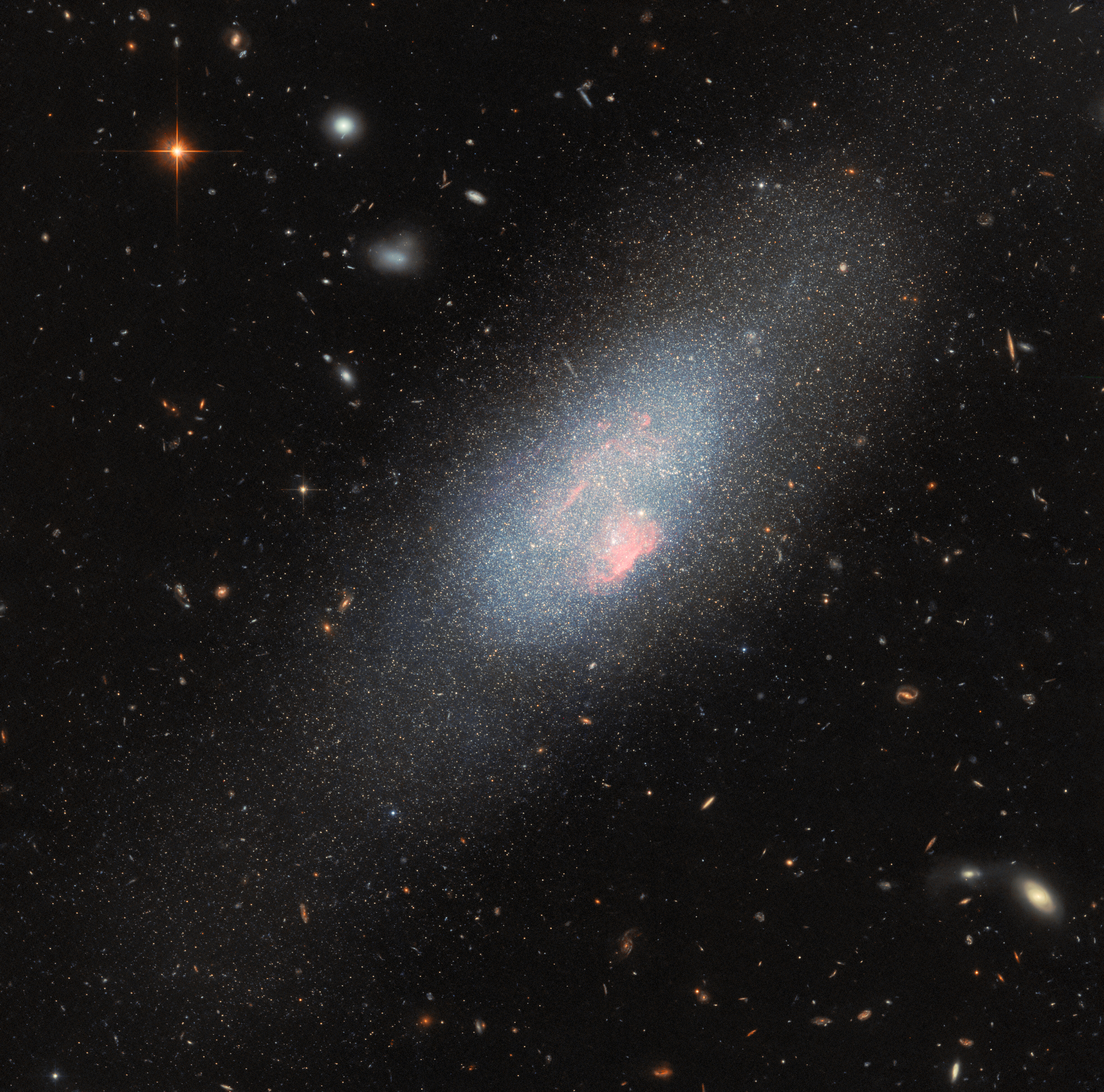
A pale blue dwarf galaxy seen on the black backdrop of space with some faraway galaxies. The galaxy itself resembles a fuzzy cloud of tightly-packed stars, with a broad halo of stars dispersed around it. Several small, glowing patches of gas are spread across the galaxy’s core, where very hot stars are concentrated. Credit: ESA/Hubble & NASA, F. Annibali, S. Hong

This glittering blue galaxy and subject of today’s ESA/Hubble Picture of the Week is a blue compact dwarf galaxy called Markarian 178 (Mrk 178). This galaxy, which is substantially smaller than our own Milky Way, lies 13 million light-years away in the constellation Ursa Major (The Great Bear).

Mrk 178 is one of more than 1500 Markarian galaxies. These galaxies get their name from the Armenian astrophysicist Benjamin Markarian, who compiled a list of galaxies that were surprisingly bright in ultraviolet light.

While the bulk of the galaxy is blue owing to an abundance of young, hot stars with little dust shrouding them, Mrk 178 gets a red hue from a collection of massive stars, which are especially concentrated in the brightest, reddish region near the galaxy’s edge. This azure cloud is home to a large number of rare objects called Wolf–Rayet stars. Wolf–Rayet stars are massive stars that are casting off their atmospheres through powerful winds. Because Mrk 178 contains so many Wolf–Rayet stars, the bright emission lines from these stars’ hot stellar winds are etched upon the galaxy’s spectrum. Particularly ionised hydrogen and oxygen appear as a red colour to Mrk 178 in this photo, observed using some of Hubble’s specialised light filters.

Massive stars enter the Wolf–Rayet phase just before they collapse into black holes or neutron stars. Because Wolf–Rayet stars last for only a few million years, researchers know that something must have triggered a recent burst of star formation in Mrk 178. At first glance, it’s not clear what could be the cause — Mrk 178 doesn’t seem to have any close galactic neighbours that could have stirred up its gas to form new stars. Astronomers believe that it was triggered by the interaction with a smaller satellite, as revealed by the presence of low surface brightness tidal features detected around Mrk178 in deep imaging acquired with the Large Binocular Telescope. Future high resolution Hubble data will be crucial to study the detailed star formation history of Mrk 178.


Friday, October 24, 2025

Are we ready for the next gravitational-wave observing runs?

Fig. 1: The illustration shows the distribution of galaxies in the sky that could host gravitational-wave sources and the measured sky location for three future gravitational-wave observatories – shown using contours – if inaccurate models are used. All three observatories miss the true host galaxy—shown in yellow—which is important for an accurate estimation of the universe's expansion rate and age. © A. Dhani (Max Planck Institute for Gravitational Physics)


A study by AEI researchers reveals how even the most advanced waveform models can introduce systematic errors when used to measure key properties of black holes.

To the point:
  • Researchers use state-of-the-art waveform models to infer the masses, spins, and location of black holes from simulated gravitational-wave events in order to prepare for future observations.

  • The models often misestimate these values, particularly when one or both black holes are processing similar to a spinning top, or when their masses differ significantly.

  • These inaccuracies can mislead our understanding of how black hole systems form and evolve, and they may affect measurements used to estimate the expansion rate of the Universe.

Gravitational waves from binary black hole coalescences can help answer important astrophysical, cosmological, and fundamental physics questions. How are black holes born, and how do they evolve? How fast is our Universe expanding? Is Einstein’s theory of general relativity still valid in the strong gravity regime?

When analyzing data from these coalescences, researchers employ the most advanced waveform models to simulate the complex dynamics of these systems and match them to observational data. But how do scientists know their waveform models are accurate and which parameters influence the models’ accuracy? As detectors become more sensitive, researchers have to rely more than ever on the high accuracy of their waveform templates to correctly interpret the data. As they prepare for future observing runs of facilities such as LIGO, Virgo, KAGRA and the upcoming Cosmic Explorer and Einstein Telescope, the reliability of these models becomes increasingly important.

In a new study, researchers from the Max Planck Institute for Gravitational Physics (Albert Einstein Institute, AEI) in the Potsdam Science Park found that state-of-the art approximate gravitational waveform models used to infer the properties of coalescing black holes and neutron stars can introduce systematic errors that significantly skew estimates of key astrophysical parameters. These parameters include the masses, spins, and distances of merging objects, as well as the inferred value of the Hubble constant, which is a fundamental measure of how fast the Universe is expanding. The study shows that, although the cutting-edge waveform models are trying to capture the complexity of real astrophysical systems, they still don’t provide an accurate enough description for the very precise observations we expect to make in the future.

“Even the most advanced models are not sufficiently accurate for upcoming observing runs,” says Arnab Dhani, a postdoctoral scientist in the Astrophysical and Cosmological Relativity department at the AEI and the lead author of the study. “Biased estimates of black hole properties occur, in particular, when the component masses in a binary are highly unequal and one or both black holes are rapidly spinning. Such biases can mislead our understanding of how black hole systems form and evolve,” he adds. "Reliably predicting these biases across state-of-the-art waveform models required crucial improvements to existing data analysis techniques,"says Sebastian Völkel, also a postdoctoral scientist from the same department and co-author of the study.

Impact on cosmology

The biases also can have profound implications for the so-called “Hubble tension” – the growing discrepancy between different, independent measurements of the Hubble constant. Some methods based on the cosmic microwave background suggest a slower expansion rate than methods using supernovae. Observations of gravitational-wave standard sirens provide a third independent measurement, enticing the possibility of resolving the conflict. However, it requires accurate measurements of the distance and the location of the event in the sky to identify the galaxy hosting the event. The researchers demonstrate, using an example, how current waveform models can lead to inaccurate localization of the event impacting our measurement (see figure 1).

These results imply that errors in gravitational-wave modeling could significantly contribute to the Hubble tension, which could undermine the credibility of the standard siren method. “The standard siren method in gravitational-wave astronomy holds immense promise for cosmology, but its success depends on the accuracy of our waveform models,” explains Alessandra Buonanno, co-author of the publication and director of the Astrophysical and Cosmological Relativity department. “If we don’t account for spin, tidal deformations, or asymmetric mass ratios, we’re not just making small errors – we’re potentially misreading the expansion history of the Universe.”

Neutron stars or black holes?

Biased gravitational-wave observation may also impact nuclear physics. Neutron star mergers are the only astrophysical phenomena in which scientists have observed the formation of heavy elements such as gold and uranium. An accurate measurement of the maximum neutron star mass would expand our understanding of nuclear matter at densities that cannot be attained in human experiments on Earth. The researchers found that inaccurate measurements of masses can lead to black holes being identified as neutron stars, thereby misleading our understanding of nuclear matter.

Testing Einstein’s theory

Binary black hole mergers provide one of the most extreme conditions in which to test Einstein’s theory of general relativity. The theory precisely predicts the amount of energy released in such collisions, as well as the mass of the remaining black hole. However, the researchers found that model inaccuracies can lead to incorrect predictions of these quantities, resulting in apparent inconsistencies with the observed data. Quantifying the relevance of systematic effects is crucial for assessing whether possible future tests claiming deviations from general relativity are really due to new physics beyond Einstein’s theory, which would be revolutionary.

More accurate waveform models for future observing runs

Future observing runs at current facilities, such as LIGO, Virgo, and KAGRA are expected to detect thousands of binary black hole mergers. Next-generation observatories, such as the Cosmic Explorer and Einstein Telescope, will detect almost all stellar-origin binary black hole merger in the Universe, totaling millions. Accurately estimating black hole properties is essential to achieve the promising scientific goals of gravitational-wave astronomy. By identifying the most problematic regions in black hole parameter space, the researchers provide a roadmap for improving waveform accuracy in the future. The ERC Synergy Grant “Making Sense of the Unexpected in the Gravitational-Wave Sky” aims to address this accuracy challenge, making it possible to infer properties of gravitational-wave sources limited only by measurement uncertainty.


Media contact:

Dr. Elke Müller
Press Officer AEI Potsdam, Scientific Coordinator
Tel:
+49 331 567-7303
elke.mueller@aei.mpg.de

Science contacts:

Prof. Dr. Alessandra Buonanno
Director
Tel:
+49 331 567-7220
Fax: +49 331 567-7298
alessandra.buonanno@aei.mpg.de

Dr. Arnab Dhani
Junior Scientist/Postdoc
Tel:
+49 331 567-7236
arnab.dhani@aei.mpg.de

Dr. Héctor Estellés
Research Scientist

hestelles@ice.csic.es
Institute of Space Sciences, Barcelona

Dr. Jonathan Gair
Group Leader
Tel:
+49 331 567-7306
Fax: +49 331 567-7298
jonathan.gair@aei.mpg.de

Prof. Harald Pfeiffer
Group Leader
Tel:
+49 331 567-7328
Fax: +49 331 567-7298
harald.pfeiffer@aei.mpg.de

Dr. Lorenzo Pompili
Research Fellow

Lorenzo.Pompili@nottingham.ac.uk
University of Nottingham, School of Mathematical Sciences

Dr. Alexandre Toubiana
Assistant Professor

alexandre.toubiana@unimib.it
University of Milano-Biccoca

Dr. Sebastian Völkel
Senior Scientist/Leibniz Fellow
Tel:
+49 331 567-7199
sebastian.voelkel@aei.mpg.de


Publication:

Arnab Dhani, Sebastian H. Völkel, Alessandra Buonanno, Hector Estelles, Jonathan Gair, Harald P. Pfeiffer, Lorenzo Pompili, and Alexandre Toubiana
Systematic Biases in Estimating the Properties of Black Holes Due to Inaccurate Gravitational-Wave Models
Phys. Rev. X 15, 031036 (2025)


Source | DOI

Further information:

Homepage of the “Astrophysical and Cosmological Relativity” department GWSky
GWSky is an ERC Synergy Grant project led by Enrico Barausse (SISSA), Zvi Bern (University of California, Los Angeles (UCLA), Alessandra Buonanno (AEI), and Maarten van de Meent (NBI).


Monday, September 15, 2025

Ten Years Later, LIGO is a Black-Hole Hunting Machine

This plot shows gravitational-wave signals recorded by the LIGO Hanford detector almost ten years apart. The top shows data from LIGO's first-ever detection of gravitational waves, an event called GW150914, captured in 2015. The bottom shows the signal known as GW250114, captured in 2025. Both events involve colliding black holes about 1.3 billion light-years away with masses between 30 to 40 times that of our Sun. The purple line shows the data, which are a combination of the signal plus background detector noise. The noise comes from a variety of sources, including seismic motions that jiggle giant mirrors inside LIGO. The green line shows the best-fit prediction from general relativity for each signal. The much lower noise seen today is thanks to cutting-edge improvements made to the LIGO detectors that hush unwanted noise. Credit: LIGO/J. Tissino (GSSI)/R. Hurt (Caltech-IPAC)

This video compares a newly detected gravitational-wave signal called GW250114 with the first gravitational-wave signal ever detected, GW150914, in 2015. Both signals came from colliding black holes, each between 30 to 40 times the mass of the Sun. The video converts the signals to sounds (called "chirps") and plays each detection twice. The first round is played at the original frequencies, in which the gravitational-wave frequencies have been converted directly into sound waves. In the second round, the pitch has been increased by 30 percent to make the chirps easier to hear.

A numerical relativity simulation of the recently observed GW250114 event. The blue and white surface shows a two-dimensional slice of the gravitational waves spiraling outward as the black holes orbit one another. Throughout this inspiral, the gravitational waves grow in magnitude, peaking as the black holes merge, and then decreasing rapidly as the newly formed remnant black hole settles. Credit: Deborah Ferguson, Derek Davis, Rob Coyne (URI) / LIGO / MAYA Collaboration. Simulation performed with NSF's TACC Frontera supercomputer.

This artwork imagines the ultimate front-row seat for GW250114, a powerful collision between two black holes observed in gravitational waves by the US National Science Foundation LIGO. It depicts the view from one of the black holes as it spirals toward its cosmic partner. Ten years after LIGO's landmark detection of gravitational waves, the observatory's improved detectors allowed it to "hear" this celestial collision with unprecedented clarity. The gravitational-wave data enabled scientists to distinguish multiple subtle tones ringing out like a cosmic bell across the universe (imagined here as intertwining musical threads spiraling toward the center). Credit: Aurore Simonnet (SSU/EdEon)/LVK/URI

Infographic explaining the significance of "overtones" detected by LIGO during a black hole merger. Credit: Lucy Reading-Ikkanda/Simons Foundation

Caltech professors Barry Barish, Kip Thorne, and Fiona Harrison with Caltech President Tom Rosenbaum at a press conference for the 2017 Nobel Prize in Physics.


LIGO, Virgo, and KAGRA celebrate anniversary, announce verification of Stephen Hawking's Black Hole Area Theorem

On September 14, 2015, a signal arrived on Earth, carrying information about a pair of remote black holes that had spiraled together and merged. The signal had traveled about 1.3 billion years to reach us at the speed of light—but it was not made of light. It was a different kind of signal: a quivering of space-time called gravitational waves first predicted by Albert Einstein 100 years prior. On that day 10 years ago, the twin detectors of the US National Science Foundation Laser Interferometer Gravitational-wave Observatory (NSF LIGO) made the first-ever direct detection of gravitational waves, whispers in the cosmos that had gone unheard until that moment.

The historic discovery meant that researchers could now sense the universe through three different means. Light waves, such as X-rays, optical, radio, and other wavelengths of light, as well as high-energy particles called cosmic rays and neutrinos, had been captured before, but this was the first time anyone had witnessed a cosmic event through the gravitational warping of space-time. For this achievement, first dreamed up more than 40 years prior, three of the team's founders won the 2017 Nobel Prize in Physics: MIT's Rainer Weiss, professor of physics, emeritus (who recently passed away at age 92); Caltech's Barry Barish, the Ronald and Maxine Linde Professor of Physics, Emeritus; and Caltech's Kip Thorne, the Richard P. Feynman Professor of Theoretical Physics, Emeritus.

Today, LIGO, which consists of detectors in both Hanford, Washington and Livingston, Louisiana, routinely observes roughly one black hole merger every three days. LIGO now operates in coordination with two international partners, the Virgo gravitational-wave detector in Italy and KAGRA in Japan. Together, the gravitational-wave-hunting network, known as the LVK (LIGO, Virgo, KAGRA), has captured a total of about 300 black hole mergers, some of which are confirmed while others await further analysis. During the network's current science run, the fourth since the first run in 2015, the LVK has discovered more than 200 candidate black hole mergers, more than double the number caught in the first three runs.

LIGO Hanford in Washington and LIGO Livingston in Louisiana.

The dramatic rise in the number of LVK discoveries over the past decade is owed to several improvements to their detectors—some of which involve cutting-edge quantum precision engineering. The LVK detectors remain by far the most precise rulers for making measurements ever created by humans. The space-time distortions induced by gravitational waves are incredibly miniscule. For instance, LIGO detects changes in space-time smaller than 1/10,000 the width of a proton. That's 700 trillion times smaller than the width of a human hair. "Rai Weiss proposed the concept of LIGO in 1972, and I thought, 'This doesn't have much chance at all of working,'" recalls Thorne, an expert on the theory of black holes. "It took me three years of thinking about it on and off and discussing ideas with Rai and Vladimir Braginsky [a Russian physicist], to be convinced this had a significant possibility of success. The technical difficulty of reducing the unwanted noise that interferes with the desired signal was enormous. We had to invent a whole new technology. NSF was just superb at shepherding this project through technical reviews and hurdles."

MIT's Nergis Mavalvala, the Curtis and Kathleen Marble Professor of Astrophysics and dean of the School of Science, says that the challenges the team overcame to make the first discovery are still very much at play. "From the exquisite precision of the LIGO detectors to the astrophysical theories of gravitational-wave sources, to the complex data analyses, all these hurdles had to be overcome, and we continue to improve in all of these areas," Mavalvala says. As the detectors get better, we hunger for farther, fainter sources. LIGO continues to be a technological marvel."

This chart plots discoveries made by the LIGO-Virgo-KAGRA (LVK) network since LIGO's first detection, in 2015, of gravitational waves emanating from a pair of colliding black holes. The detections consist mainly of black hole mergers, but a handful involve neutron stars (either black hole-neutron star collisions or neutron star-neutron star collisions). Credit: LIGO/Caltech/MIT/R. Hurt (IPAC)

The Clearest Signal Yet

LIGO's improved sensitivity is exemplified in a recent discovery of a black hole merger referred to as GW250114 (the numbers denote the date the gravitational-wave signal arrived at Earth: January 14, 2025). The event was not that different from LIGO's first-ever detection (called GW150914)—both involve colliding black holes about 1.3 billion light-years away with masses between 30 to 40 times that of our Sun. But thanks to 10 years of technological advances reducing instrumental noise, the GW250114 signal is dramatically clearer.

"We can hear it loud and clear, and that lets us test the fundamental laws of physics," says LIGO team member Katerina Chatziioannou, Caltech assistant professor of physics and William H. Hurt Scholar, and one of the authors of a new study on GW250114 published in the Physical Review Letters.

By analyzing the frequencies of gravitational waves emitted by the merger, the LVK team provided the best observational evidence captured to date for what is known as the black hole area theorem, an idea put forth by Stephen Hawking in 1971 that says the total surface areas of black holes cannot decrease. When black holes merge, their masses combine, increasing the surface area. But they also lose energy in the form of gravitational waves. Additionally, the merger can cause the combined black hole to increase its spin, which leads to it having a smaller area. The black hole area theorem states that despite these competing factors, the total surface area must grow in size.

Later, Hawking and physicist Jacob Bekenstein concluded that a black hole's area is proportional to its entropy, or degree of disorder. The findings paved the way for later groundbreaking work in the field of quantum gravity, which attempts to unite two pillars of modern physics: general relativity and quantum physics.

In essence, the LIGO detection allowed the team to "hear" two black holes growing as they merged into one, verifying Hawking's theorem. (Virgo and KAGRA were offline during this particular observation.) The initial black holes had a total surface area of 240,000 square kilometers (roughly the size of Oregon), while the final area was about 400,000 square kilometers (roughly the size of California)—a clear increase. This is the second test of the black hole area theorem; an initial test was performed in 2021 using data from the first GW150914 signal, but because that data was not as clean, the results had a confidence level of 95 percent compared to 99.999 percent for the new data.

Thorne recalls Hawking phoning him to ask whether LIGO might be able to test his theorem immediately after he learned of the 2015 gravitational-wave detection. Hawking died in 2018 and sadly did not live to see his theory observationally verified. "If Hawking were alive, he would have reveled in seeing the area of the merged black holes increase," Thorne says.

The trickiest part of this type of analysis had to do with determining the final surface area of the merged black hole. The surface areas of pre-merger black holes can be more readily gleaned as the pair spiral together, roiling space-time and producing gravitational waves. But after the black holes coalesce, the signal is not as clear-cut. During this so-called ringdown phase, the final black hole vibrates like a struck bell.

In the new study, the researchers precisely measured the details of the ringdown phase, which allowed them to calculate the mass and spin of the black hole and, subsequently, determine its surface area. More specifically, they were able, for the first time, to confidently pick out two distinct gravitational-wave modes in the ringdown phase. The modes are like characteristic sounds a bell would make when struck; they have somewhat similar frequencies but die out at different rates, which makes them hard to identify. The improved data for GW250114 meant that the team could extract the modes, demonstrating that the black hole's ringdown occurred exactly as predicted by math models based on the Teukolsky formalism—devised in 1972 by Saul Teukolsky, now a professor at Caltech and Cornell.

Another study from the LVK, submitted to Physical Review Letters today, places limits on a predicted third, higher-pitched tone in the GW250114 signal, and performs some of the most stringent tests yet of general relativity's accuracy in describing merging black holes.

Visualization of the binary black hole merger called GW250114. The animation shows the inspiral and merger of the two black holes, then continues a few milliseconds into the ringdown phase. At that point the gravitational waves are separated into the two modes of the ringing remnant black hole that were identified in the observation. A predicted third tone (that the data place limits on) is also shown. Credit: H. Pfeiffer, A. Buonanno (Max Planck Institute for Gravitational Physics), K. Mitman (Cornell University)

"A decade of improvements allowed us to make this exquisite measurement," Chatziioannou says. "It took both of our detectors, in Washington and Louisiana, to do this. I don't know what will happen in 10 more years, but in the first 10 years, we have made tremendous improvements to LIGO's sensitivity. This not only means we are accelerating the rate at which we discover new black holes, but we are also capturing detailed data that expand the scope of what we know about the fundamental properties of black holes."

Jenne Driggers, detection lead senior scientist at LIGO Hanford, adds, "It takes a global village to achieve our scientific goals. From our exquisite instruments, to calibrating the data very precisely, vetting and providing assurances about the fidelity of the data quality, searching the data for astrophysical signals, and packaging all that into something that telescopes can read and act upon quickly, there are a lot of specialized tasks that come together to make LIGO the great success that it is."

Pushing the Limits

LIGO and Virgo have also unveiled neutron stars over the past decade. Like black holes, neutron stars form from the explosive deaths of massive stars, but they weigh less and glow with light. Of note, in August 2017, LIGO and Virgo witnessed an epic collision between a pair of neutron stars—a kilonova—that sent gold and other heavy elements flying into space and drew the gaze of dozens of telescopes around the world, which captured light ranging from high-energy gamma rays to low-energy radio waves. The "multi-messenger" astronomy event marked the first time that both light and gravitational waves had been captured in a single cosmic event. Today, the LVK continues to alert the astronomical community to potential neutron star collisions, who then use telescopes to search the skies for signs of kilonovae.

"The LVK has made big strides in recent years to make sure we're getting high quality data and alerts out to the public in under a minute, so that astronomers can look for multi-messenger signatures from our gravitational-wave candidates," Driggers says.

"The global LVK network is essential to gravitational-wave astronomy," says Gianluca Gemme, Virgo spokesperson and director of research at the National Institute of Nuclear Physics in Italy. "With three or more detectors operating in unison, we can pinpoint cosmic events with greater accuracy, extract richer astrophysical information, and enable rapid alerts for multi-messenger follow-up. Virgo is proud to contribute to this worldwide scientific endeavor."

Other LVK scientific discoveries include the first detection of collisions between one neutron star and one black hole; asymmetrical mergers, in which one black hole is significantly more massive than its partner black hole; the discovery of the lightest black holes known, challenging the idea that there is a "mass gap" between neutron stars and black holes; and the most massive black hole merger seen yet with a merged mass of 225 solar masses. For reference, the previous record holder for the most massive merger had a combined mass of 140 solar masses.

Even in the decades before LIGO began taking data, scientists were building foundations that made the field of gravitational-wave science possible. Breakthroughs in computer simulations of black hole mergers, for example, allow the team to extract and analyze the feeble gravitational-wave signals generated across the universe.

LIGO's technological achievements, beginning as far back as the 1980s, include several far-reaching innovations, such as a new way to stabilize lasers using the so-called Pound–Drever–Hall technique. Invented in 1983 and named for contributing physicists Robert Vivian Pound, the late Ronald Drever of Caltech (a founder of LIGO), and John Lewis Hall, this technique is widely used today in other fields, such as the development of atomic clocks and quantum computers. Other innovations include cutting-edge mirror coatings that almost perfectly reflect laser light; "quantum squeezing" tools that enable LIGO to surpass sensitivity limits imposed by quantum physics; and new AI methods that could further hush certain types of unwanted noise.

"What we are ultimately doing inside LIGO is protecting quantum information and making sure it doesn't get destroyed by external factors," Mavalvala says. "The techniques we are developing are pillars of quantum engineering and have applications across a broad range of devices, such as quantum computers and quantum sensors."

In the coming years, the scientists and engineers of LVK hope to further fine tune their machines, expanding their reach deeper and deeper into space. They also plan to use the knowledge they have gained to build another gravitational-wave detector, LIGO India. Having a third LIGO observatory would greatly improve the precision with which the LVK network can localize gravitational-wave sources.

Looking farther into the future, the team is working on a concept for an even larger detector, called Cosmic Explorer, which would have arms 40 kilometers long (the twin LIGO observatories have 4-kilometer arms). A European project, called Einstein Telescope, also has plans to build one or two huge underground interferometers with arms more than 10 kilometers long. Observatories on this scale would allow scientists to hear the earliest black hole mergers in the universe.

"Just 10 short years ago, LIGO opened our eyes for the first time to gravitational waves and changed the way humanity sees the cosmos," says Aamir Ali, a program director in the NSF Division of Physics, which has supported LIGO since its inception. "There's a whole universe to explore through this completely new lens and these latest discoveries show LIGO is just getting started."

The LIGO-Virgo-KAGRA Collaboration

LIGO is funded by the US National Science Foundation and operated by Caltech and MIT, which together conceived and built the project. Financial support for the Advanced LIGO project was led by NSF with Germany (Max Planck Society), the United Kingdom (Science and Technology Facilities Council), and Australia (Australian Research Council) making significant commitments and contributions to the project. More than 1,600 scientists from around the world participate in the effort through the LIGO Scientific Collaboration, which includes the GEO Collaboration. Additional partners are listed at my.ligo.org/census.php.

The Virgo Collaboration is currently composed of approximately 1,000 members from 175 institutions in 20 different (mainly European) countries. The European Gravitational Observatory (EGO) hosts the Virgo detector near Pisa, Italy, and is funded by the French National Centre for Scientific Research, the National Institute of Nuclear Physics in Italy, the National Institute of Subatomic Physics in the Netherlands, The Research Foundation – Flanders, and the Belgian Fund for Scientific Research. A list of the Virgo Collaboration groups can be found at: https://www.virgo-gw.eu/about/scientific-collaboration/. More information is available on the Virgo website at https://www.virgo-gw.eu.

KAGRA is the laser interferometer with 3-kilometer arm length in Kamioka, Gifu, Japan. The host institute is the Institute for Cosmic Ray Research of the University of Tokyo, and the project is co-hosted by the National Astronomical Observatory of Japan and the High Energy Accelerator Research Organization. The KAGRA collaboration is composed of more than 400 members from 128 institutes in 17 countries/regions. KAGRA's information for general audiences is at the website gwcenter.icrr.u-tokyo.ac.jp/en/. Resources for researchers are accessible from gwwiki.icrr.u-tokyo.ac.jp/JGWwiki/KAGRA.

Written by Whitney Clavin

Source: Caltech/News


Contact:

Whitney Clavin
(626) 395‑1944

wclavin@caltech.edu