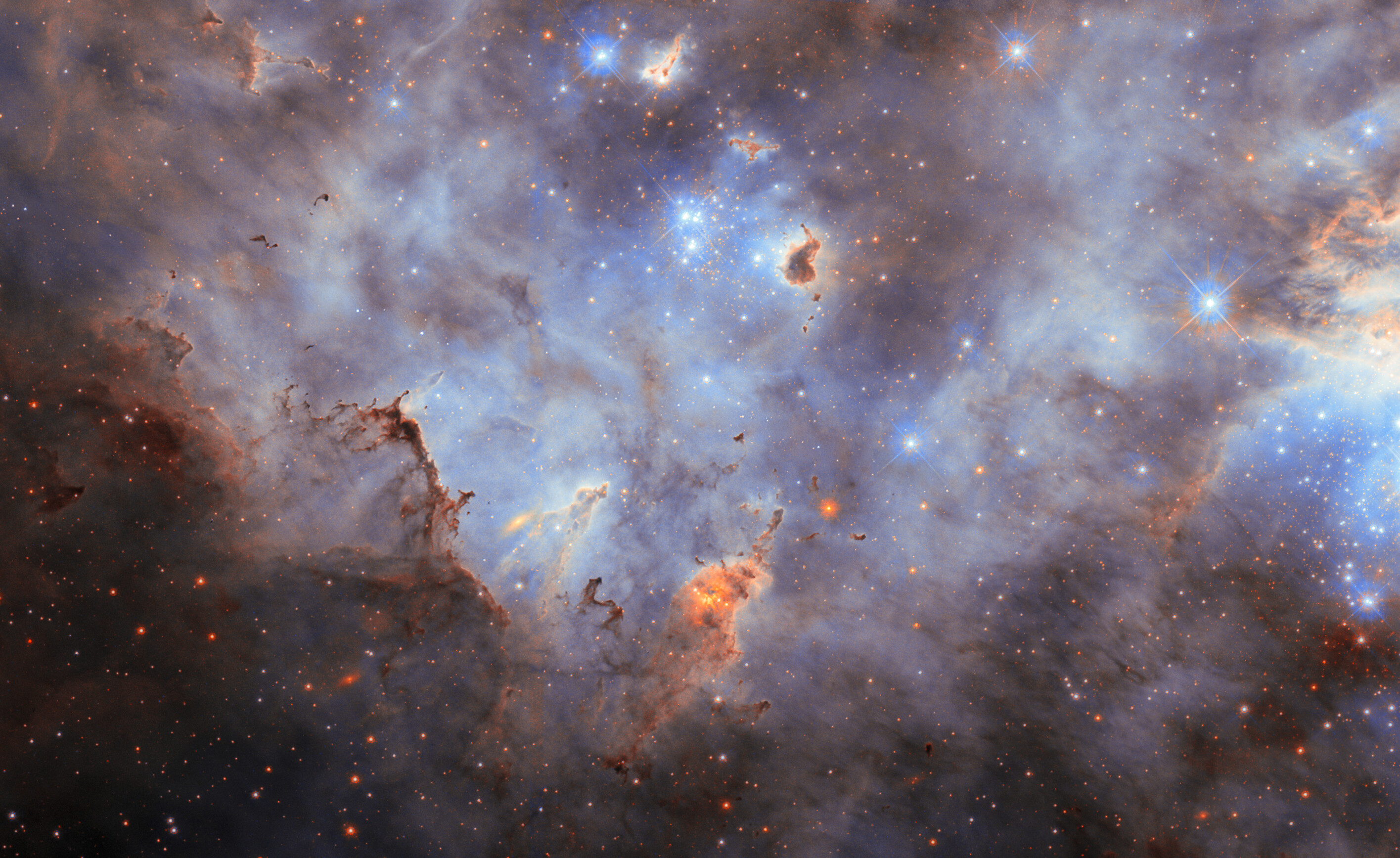
Showing posts with label Star-forming region. Show all posts

Sunday, September 14, 2025

NASA’s Webb Observes Immense Stellar Jet on Outskirts of Our Milky Way

NASA's James Webb Space Telescope recently imaged an extremely large and symmetric protostellar jet at the outskirts of our Milky Way galaxy in the forming cluster Sh2-284. From tip to tip, this protostellar jet is 8 light-years across, about double the distance from our Sun to its closest neighboring star system, Alpha Centauri.

Its detection provides evidence that protostellar jets scale with the mass of their parent star—the more massive the stellar engine driving the plasma, the larger the resulting jet—and thus for a universal mechanism for star formation from low to high masses. Credits/Image: NASA, ESA, CSA, STScI, Yu Cheng (NAOJ) - Image Processing: Joseph DePasquale (STScI)

This image of the protostellar jet in Sh2-284, captured by NASA’s James Webb Space Telescope’s NIRCam (Near-Infrared Camera), shows compass arrows, scale bar, and color key for reference.

The north and east compass arrows show the orientation of the image on the sky. Note that the relationship between north and east on the sky (as seen from below) is flipped to the direction arrows on a map of the ground (as seen from above).

The scale bar is labeled in light-years, which is the distance that light travels in one Earth-year, and arcsec (It takes 1.1 years for light to travel a distance equal to the length of the scale bar.) One light-year is equal to about 5.88 trillion miles or 9.46 trillion kilometers.

This image shows invisible near-infrared wavelengths of light that have been translated into visible-light colors. The color key shows which NIRCam filters were used when collecting the light. The color of each filter name is the visible light color used to represent the infrared light that passes through that filter. Credits/Image: NASA, ESA, CSA, STScI, Yu Cheng (NAOJ) - Image Processing: Joseph DePasquale (STScI)

This video shows the relative size of two different protostellar jets imaged by NASA’s James Webb Space Telescope. The first image shown is an extremely large protostellar jet located in Sh2-284, 15,000 light-years away from Earth. The outflows from the massive central protostar, which weighs 10 times our Sun, span about 8 light-years across. In comparison, a jet imaged by Webb in the nearby low-mass star-forming region of Rho Ophiuchi is just one light-year long. Credits/Image: NASA, ESA, CSA, STScI, Yu Cheng (NAOJ) - Animation: Joseph DePasquale (STScI)


A blowtorch of seething gasses erupting from a volcanically growing monster star has been captured by NASA’s James Webb Space Telescope. Stretching across 8 light-years, the length of the stellar eruption is approximately twice the distance between our Sun and the next nearest stars, the Alpha Centauri system. The size and strength of this particular stellar jet, located in a nebula known as Sharpless 2-284 (Sh2-284 for short), qualifies it as rare, say researchers.

Streaking across space at hundreds of thousands of miles per hour, the outflow resembles a double-bladed dueling lightsaber from the Star Wars films. The central protostar, weighing as much as ten of our Suns, is located 15,000 light-years away in the outer reaches of our galaxy.

The Webb discovery was serendipitous. “We didn’t really know there was a massive star with this kind of super-jet out there before the observation. Such a spectacular outflow of molecular hydrogen from a massive star is rare in other regions of our galaxy,” said lead author Yu Cheng of the National Astronomical Observatory of Japan.

This unique class of stellar fireworks are highly collimated jets of plasma shooting out from newly forming stars. Such jetted outflows are a star’s spectacular “birth announcement” to the universe. Some of the infalling gas building up around the central star is blasted along the star’s spin axis, likely under the influence of magnetic fields.

Today, while hundreds of protostellar jets have been observed, these are mainly from low-mass stars. These spindle-like jets offer clues into the nature of newly forming stars. The energetics, narrowness, and evolutionary time scales of protostellar jets all serve to constrain models of the environment and physical properties of the young star powering the outflow.

“I was really surprised at the order, symmetry, and size of the jet when we first looked at it,” said co-author Jonathan Tan of the University of Virginia in Charlottesville and Chalmers University of Technology in Gothenburg, Sweden.

Its detection offers evidence that protostellar jets must scale up with the mass of the star powering them. The more massive the stellar engine propelling the plasma, the larger the gusher’s size.

The jet’s detailed filamentary structure, captured by Webb’s crisp resolution in infrared light, is evidence the jet is plowing into interstellar dust and gas. This creates separate knots, bow shocks, and linear chains.

The tips of the jet, lying in opposite directions, encapsulate the history of the star’s formation. “Originally the material was close into the star, but over 100,000 years the tips were propagating out, and then the stuff behind is a younger outflow,” said Tan.

Outlier

At nearly twice the distance from the galactic center as our Sun, the host proto-cluster that’s home to the voracious jet is on the periphery of our Milky Way galaxy.

Within the cluster, a few hundred stars are still forming. Being in the galactic hinterlands means the stars are deficient in heavier elements beyond hydrogen and helium. This is measured as metallicity, which gradually increases over cosmic time as each passing stellar generation expels end products of nuclear fusion through winds and supernovae. The low metallicity of Sh2-284 is a reflection of its relatively pristine nature, making it a local analog for the environments in the early universe that were also deficient in heavier elements.

“Massive stars, like the one found inside this cluster, have very important influences on the evolution of galaxies. Our discovery is shedding light on the formation mechanism of massive stars in low metallicity environments, so we can use this massive star as a laboratory to study what was going on in earlier cosmic history,” said Cheng.

Unrolling Stellar Tapestry

Stellar jets, which are powered by the gravitational energy released as a star grows in mass, encode the formation history of the protostar.

“Webb’s new images are telling us that the formation of massive stars in such environments could proceed via a relatively stable disk around the star that is expected in theoretical models of star formation known as core accretion,” said Tan. “Once we found a massive star launching these jets, we realized we could use the Webb observations to test theories of massive star formation. We developed new theoretical core accretion models that were fit to the data, to basically tell us what kind of star is in the center. These models imply that the star is about 10 times the mass of the Sun and is still growing and has been powering this outflow.”

For more than 30 years, astronomers have disagreed about how massive stars form. Some think a massive star requires a very chaotic process, called competitive accretion.

In the competitive accretion model, material falls in from many different directions so that the orientation of the disk changes over time. The outflow is launched perpendicularly, above and below the disk, and so would also appear to twist and turn in different directions.

“However, what we’ve seen here, because we’ve got the whole history – a tapestry of the story – is that the opposite sides of the jets are nearly 180 degrees apart from each other. That tells us that this central disk is held steady and validates a prediction of the core accretion theory,” said Tan.

Where there’s one massive star, there could be others in this outer frontier of the Milky Way. Other massive stars may not yet have reached the point of firing off Roman-candle-style outflows. Data from the Atacama Large Millimeter Array in Chile, also presented in this study, has found another dense stellar core that could be in an earlier stage of construction.

The paper has been accepted for publication in The Astrophysical Journal.

The James Webb Space Telescope is the world’s premier space science observatory. Webb is solving mysteries in our solar system, looking beyond to distant worlds around other stars, and probing the mysterious structures and origins of our universe and our place in it. Webb is an international program led by NASA with its partners, ESA (European Space Agency) and CSA (Canadian Space Agency).


About This Release

Credits:

Media Contact:

Ray Villard
Space Telescope Science Institute, Baltimore

Christine Pulliam
Space Telescope Science Institute, Baltimore

Permissions: Content Use Policy

Contact Us: Direct inquiries to the News Team.

Related Links and Documents


Tuesday, September 09, 2025

Cloudy cluster

Stars in a star cluster shine brightly blue, with four-pointed spikes radiating from them. The centre shows a small, crowded group of stars while a larger group lies out of view on the left. The nebula is mostly thick, smoky clouds of gas, lit up in blue tones by the stars. Clumps of dust hover before and around the stars; they are mostly dark, but lit around their edges where the starlight erodes them. Credit: ESA/Hubble & NASA, C. Murray, J. Maíz Apellániz.
Large JPEG

This new NASA/ESA Hubble Space Telescope Picture of the Week features a cloudy starscape from an impressive star cluster. This scene is located in the Large Magellanic Cloud, a dwarf galaxy situated about 160 000 light-years away in the constellations Dorado and Mensa. With a mass equal to 10–20% of the mass of the Milky Way, the Large Magellanic Cloud is the largest of the dozens of small galaxies that orbit our galaxy.

The Large Magellanic Cloud is home to several massive stellar nurseries where gas clouds, like those strewn across this image, coalesce into new stars. Today’s image depicts a portion of the galaxy’s second-largest star-forming region, which is called N11. (The most massive and prolific star-forming region in the Large Magellanic Cloud, the Tarantula Nebula, is a frequent target for Hubble.) We see bright, young stars lighting up the gas clouds and sculpting clumps of dust with powerful ultraviolet radiation.

This image marries observations made roughly 20 years apart, a testament to Hubble’s longevity. The first set of observations, which were carried out in 2002–2003, capitalised on the exquisite sensitivity and resolution of the then-newly-installed Advanced Camera for Surveys. Astronomers turned Hubble toward the N11 star cluster to do something that had never been done before at the time: catalogue all the stars in a young cluster with masses between 10% of the Sun’s mass and 100 times the Sun’s mass.

The second set of observations came from Hubble’s newest camera, the Wide Field Camera 3. These images focused on the dusty clouds that suffuse the cluster, bringing a new perspective on cosmic dust.


Saturday, April 05, 2025

Monthly Roundup: News from the High-Energy Universe

The star-forming region 30 Doradus shines in this multiwavelength image from the Chandra X-ray Observatory, the Hubble Space Telescope, the Spitzer Space Telescope, and the Atacama Large Millimeter/submillimeter Array. This is the deepest X-ray image ever made of this region. Credit:
X-ray: NASA/CXC/Penn State Univ./L. Townsley et al.; Infrared: NASA/JPL-CalTech/SST; Optical: NASA/STScI/HST; Radio: ESO/NAOJ/NRAO/ALMA; Image Processing: NASA/CXC/SAO/J. Schmidt, N. Wolk, K. Arcand

Gamma-ray flux as a function of time since the neutrino’s arrival for different intergalactic magnetic field strengths. Stronger magnetic fields lead to lower flux and later arrival times. The gray lines show the five-sigma detection limits of different instruments. Credit: Fang et al. 2025

This Monthly Roundup covers three investigations of the high-energy universe, from a hunt for a cosmic particle accelerator in the Milky Way to an examination of a fading quasar in the distant past.

Investigating the Most Energetic Neutrino Ever Detected

In February 2023, the Cubic Kilometre Neutrino Telescope (KM3NeT) — a neutrino telescope at the bottom of the Mediterranean Sea — detected a particle called a muon with an energy of roughly 100 petaelectronvolts (a hundred quadrillion electronvolts). The muon was likely produced by an incoming neutrino with an energy of 220 petaelectronvolts — the highest-energy neutrino ever observed.

The orientation of the event suggests an astrophysical origin, but the source of this neutrino is unknown. One possibility is that the neutrino arose in a transient event that produced extremely high-energy cosmic rays: relativistic charged particles like protons, electrons, and atomic nuclei. Cosmic rays could produce neutrinos and gamma rays through interactions with photons of the cosmic microwave background. The neutrinos zip off into space, unhindered by intervening gas or magnetic fields, while the cosmic rays can be waylaid for thousands of years, caught up in the magnetic fields that lace the space between galaxies. Gamma rays fall in between the two extremes, slowed slightly by interactions with the photons of the extragalactic background. Repeated interactions between the gamma rays and background photons create a cascade of gamma rays across a range of energies.

Detecting this gamma-ray cascade would provide a valuable clue in the search for the origin of the ultra-high-energy neutrino detected in 2023. In a recent research article, Ke Fang (Wisconsin IceCube Particle Astrophysics Center) and collaborators estimated the flux of gamma rays that would be associated with this high-energy neutrino. The team’s estimates accounted for varying distances to the source as well as different strengths of the intergalactic magnetic field. The stronger the magnetic field, the weaker the gamma-ray flux when it arrives at Earth, and the later the arrival time at Earth.

For weak magnetic fields, the gamma-ray cascade should have arrived at Earth hours or days after the neutrino was detected in 2023. These gamma rays are potentially detectable as long as the magnetic field is weaker than 3 × 10-13 Gauss. For magnetic field strengths greater than 3 × 10-13 Gauss, the gamma rays wouldn’t arrive until more than a decade later, and they would likely be too faint to detect. If no gamma rays are detected, the non-detection could be used to place a lower limit on the strength of the intergalactic magnetic field.

LHAASO’s Water Cherenkov Detector Array (left) and Kilometer Square Array (right) observations of the region around the gamma-ray source HESS J1858+020. Black solid circles and black crosses represent extended and pointlike sources, respectively, resolved in this work. Dashed circles show sources resolved by LHAASO in previous work. The cyan symbols show the locations of gamma-ray sources identified by other facilities. Credit: LHAASO Collaboration 2025

The Hunt for a Galactic PeVatron

Across the universe, charged particles are being accelerated to near the speed of light, achieving energies in the petaelectronvolt, or PeV, range. The sources of these particles are called PeVatrons, and observations have revealed that these cosmic particle accelerators exist in the Milky Way. Supernovae, massive stars, pulsars, and pulsar wind nebulae are all candidate PeVatrons. To find out more, astronomers look to gamma rays, which can be produced when cosmic rays interact with dense matter.

Recently, the Large High Altitude Air Shower Observatory (LHAASO) collaboration investigated a possible galactic PeVatron called G35.6−0.4. G35.6−0.4 is a radio source that is thought to be associated with the gamma-ray source HESS J1858+020. Observations of this region show a supernova remnant and an H II region containing multiple X-ray point sources.

To learn more about the origins of the gamma rays from this complex region, the collaboration used data from LHAASO, a ground-based gamma-ray and cosmic-ray observatory. Data from two of LHAASO’s detectors show five gamma-ray sources throughout the region, one of which may be associated with the previously detected gamma-ray source HESS J1858+020. The team also amassed data from other sources, pulling together a picture of the molecular and atomic gas and massive stars present in the region.

Because of the crowded nature of this area, this investigation wasn’t able to clearly point to the source of the gamma rays. The authors outlined three possible sources for the gamma rays: 1) winds from hidden massive stars or outflows from protostars within the H II region, 2) particles escaping from the supernova remnant and interacting with nearby molecular clouds, and 3) an as-yet-undetected pulsar wind nebula. While none of these scenarios is a clear front-runner, neither could any of them be ruled out (though the supernova remnant scenario faces the greatest feasibility challenges). Future searches for massive stars or pulsar wind nebulae in this region may provide further clues.

JWST spectrum of the quasar HSC J2239+0207 (blue line)
Credit: Lyu et al. 2025

Fading Light from a Quasar at Cosmic Dawn

For the third and final article, we’re looking back into the distant past at one of the most powerful objects in the universe: a quasar. Quasars are extraordinarily luminous galactic centers in the early universe, powered by accretion of gas onto a growing black hole. Because of their extreme brightness, quasars are visible from billions of light-years away, giving researchers a glimpse into the early evolution of supermassive black holes.

Jianwei Lyu (吕建伟; University of Arizona) and collaborators investigated HSC J2239+0207, a quasar located at a redshift of z = 6.2498, when the universe was roughly 900 million years old. This redshift places the quasar near the end of the epoch of reionization, when the formation of the first stars and galaxies ionized the universe’s abundant neutral hydrogen gas. This quasar is an intriguing target because previous observations have shown that the black hole that powers it is roughly 15 times more massive than expected for the stellar mass of its host galaxy. The quasar’s accretion rate is low, indicating that the black hole may be nearing the end of its growth spurt.

Lyu’s team analyzed JWST spectra of this quasar, estimating the black hole’s mass to be roughly 300 million solar masses (about 75 times more massive than the Milky Way’s supermassive black hole) and its accretion rate to be just 40% of the theoretical limit. This is unusual, since quasars at this point in the universe’s history typically have accretion rates at or above the theoretical limit. The unexpectedly low accretion rate for HSC J2239+0207 could mean that the black hole’s growth is slowing down. However, the authors caution that it could be a temporary slowdown caused by a lack of fuel rather than a permanent shutdown.

The team also investigated a gas cloud located one arcsecond from the quasar. This object could be several things: an isolated high-redshift galaxy, a galaxy falling toward the quasar host galaxy, tidally disrupted material stripped from a galaxy passing nearby, or material blown out of the quasar host galaxy by the quasar itself. The authors favor this final scenario, which is indicative of black hole feedback at work.

Feedback may be the reason that this black hole is so massive compared to the stellar mass of its host galaxy. Powerful radiation and winds from the black hole could have suppressed the rate of star formation as the black hole grew. With the black hole’s activity winding down, star formation should have a chance to ramp up, bringing the galaxy into alignment with the expected stellar mass–black hole mass relation.

By Kerry Hensley

Citation

“Cascaded Gamma-Ray Emission Associated with the KM3NeT Ultrahigh-Energy Event KM3-230213A,” Ke Fang et al 2025 ApJL 982 L16. doi:10.3847/2041-8213/adbbec

“An Enigmatic PeVatron in an Area Around H II Region G35.6−0.5,” Zhen Cao et al 2025 ApJ 979 70. doi:10.3847/1538-4357/ad991d

“Fading Light, Fierce Winds: JWST Snapshot of a Sub-Eddington Quasar at Cosmic Dawn,” Jianwei Lyu et al 2025 ApJL 981 L20. doi:10.3847/2041-8213/adb613


Friday, January 24, 2025

A Tarantula’s outskirts

A section of a nebula, made up of layers of coloured clouds of gas, of varying thickness. In the background are bluish, translucent and wispy clouds; on top of these are stretches of redder and darker, clumpy dust, mostly along the bottom and right. In the bottom left corner are some dense bars of dust that block light and appear black. Small stars are scattered across the nebula. Credit: ESA/Hubble

Today’s NASA/ESA Hubble Space Telescope Picture of the Week features a dusty yet sparkling scene from one of the Milky Way’s satellite galaxies, the Large Magellanic Cloud. The Large Magellanic Cloud is a dwarf galaxy situated about 160 000 light-years away in the constellations Dorado and Mensa.

Despite being only 10–20% as massive as the Milky Way galaxy, the Large Magellanic Cloud contains some of the most impressive star-forming regions in the nearby Universe. The scene pictured here is on the outskirts of the Tarantula Nebula, the largest and most productive star-forming region in the local Universe. At its center, the Tarantula Nebula hosts the most massive stars known, which weigh in at roughly 200 times the mass of the Sun.

The section of the nebula shown here features serene blue gas, brownish-orange dust patches and a sprinkling of multicoloured stars. The stars within and behind the dust clouds appear redder than those that are not obscured by dust. Dust absorbs and scatters blue light more than red light, allowing more of the red light to reach our telescopes and making the stars appear redder than they are. This image incorporates ultraviolet and infrared light as well as visible light. Using Hubble observations of dusty nebulae in the Large Magellanic Cloud and other galaxies, researchers will study these distant dust grains, helping to understand the role that cosmic dust plays in the formation of new stars and planets.


Friday, December 20, 2024

NASA's Webb Finds Planet-Forming Disks Lived Longer in Early Universe

Protoplanetary Disks in NGC 346 (NIRCam Image)
Credits/Image: NASA, ESA, CSA, STScI, Olivia C. Jones (UK ATC), Guido De Marchi (ESTEC), Margaret Meixner (USRA)

Protoplanetary Disks in NGC 346 Spectra (NIRSpec)
Credits/Illustration: NASA, ESA, CSA, Joseph Olmsted (STScI)

Credits/Image: NASA, ESA, CSA, STScI, Olivia C. Jones (UK ATC), Guido De Marchi (ESTEC), Margaret Meixner (USRA), Antonella Nota (ESA)


NASA’s James Webb Space Telescope just solved a conundrum by proving a controversial finding made with the agency’s Hubble Space Telescope more than 20 years ago.

In 2003, Hubble provided evidence of a massive planet around a very old star, almost as old as the universe. Such stars possess only small amounts of heavier elements that are the building blocks of planets. This implied that some planet formation happened when our universe was very young, and those planets had time to form and grow big inside their primordial disks, even bigger than Jupiter. But how? This was puzzling.

To answer this question, researchers used Webb to study stars in a nearby galaxy that, much like the early universe, lacks large amounts of heavy elements. They found that not only do some stars there have planet-forming disks, but that those disks are longer-lived than those seen around young stars in our Milky Way galaxy.

“With Webb, we have a really strong confirmation of what we saw with Hubble, and we must rethink how we model planet formation and early evolution in the young universe,” said study leader Guido De Marchi of the European Space Research and Technology Centre in Noordwijk, Netherlands.

A Different Environment in Early Times

In the early universe, stars formed from mostly hydrogen and helium, and very few heavier elements such as carbon and iron, which came later through supernova explosions.

“Current models predict that with so few heavier elements, the disks around stars have a short lifetime, so short in fact that planets cannot grow big,” said the Webb study’s co-investigator Elena Sabbi, chief scientist for Gemini Observatory at the National Science Foundation’s NOIRLab in Tucson. "But Hubble did see those planets, so what if the models were not correct and disks could live longer?"

To test this idea, scientists trained Webb on the Small Magellanic Cloud, a dwarf galaxy that is one of the Milky Way’s nearest neighbors. In particular, they examined the massive, star-forming cluster NGC 346, which also has a relative lack of heavier elements. The cluster served as a nearby proxy for studying stellar environments with similar conditions in the early, distant universe.

Hubble observations of NGC 346 from the mid 2000s revealed many stars about 20 to 30 million years old that seemed to still have planet-forming disks around them. This went against the conventional belief that such disks would dissipate after 2 or 3 million years.

“The Hubble findings were controversial, going against not only empirical evidence in our galaxy but also against the current models,” said De Marchi. “This was intriguing, but without a way to obtain spectra of those stars, we could not really establish whether we were witnessing genuine accretion and the presence of disks, or just some artificial effects.”

Now, thanks to Webb’s sensitivity and resolution, scientists have the first-ever spectra of forming, Sun-like stars and their immediate environments in a nearby galaxy.

“We see that these stars are indeed surrounded by disks and are still in the process of gobbling material, even at the relatively old age of 20 or 30 million years,” said De Marchi. “This also implies that planets have more time to form and grow around these stars than in nearby star-forming regions in our own galaxy.”

A New Way of Thinking

This finding refutes previous theoretical predictions that when there are very few heavier elements in the gas around the disk, the star would very quickly blow away the disk. So the disk’s life would be very short, even less than a million years. But if a disk doesn't stay around the star long enough for the dust grains to stick together and pebbles to form and become the core of a planet, how can planets form?

The researchers explained that there could be two distinct mechanisms, or even a combination, for planet-forming disks to persist in environments scarce in heavier elements.

First, to be able to blow away the disk, the star applies radiation pressure. For this pressure to be effective, elements heavier than hydrogen and helium would have to reside in the gas. But the massive star cluster NGC 346 only has about ten percent of the heavier elements that are present in the chemical composition of our Sun. Perhaps it simply takes longer for a star in this cluster to disperse its disk.

The second possibility is that, for a Sun-like star to form when there are few heavier elements, it would have to start from a larger cloud of gas. A bigger gas cloud will produce a bigger disk. So there is more mass in the disk and therefore it would take longer to blow the disk away, even if the radiation pressure were working in the same way.

“With more matter around the stars, the accretion lasts for a longer time,” said Sabbi. "The disks take ten times longer to disappear. This has implications for how you form a planet, and the type of system architecture that you can have in these different environments. This is so exciting.”

The science team’s paper appears in the Dec. 16 issue of The Astrophysical Journal.

The James Webb Space Telescope is the world's premier space science observatory. Webb is solving mysteries in our solar system, looking beyond to distant worlds around other stars, and probing the mysterious structures and origins of our universe and our place in it. Webb is an international program led by NASA with its partners, ESA (European Space Agency) and CSA (Canadian Space Agency).

The Hubble Space Telescope has been operating for over three decades and continues to make ground-breaking discoveries that shape our fundamental understanding of the universe. Hubble is a project of international cooperation between NASA and ESA (European Space Agency). NASA's Goddard Space Flight Center in Greenbelt manages the telescope and mission operations. Lockheed Martin Space, based in Denver also supports mission operations at Goddard. The Space Telescope Science Institute in Baltimore, which is operated by the Association of Universities for Research in Astronomy, conducts Hubble science operations for NASA.


About This Release

Credits:

Media Contact:

Ann Jenkins
Space Telescope Science Institute, Baltimore, Maryland

Christine Pulliam
Space Telescope Science Institute, Baltimore, Maryland

Permissions: Content Use Policy

Contact Us: Direct inquiries to the News Team.

Related Links and Documents


Sunday, December 15, 2024

Featured Image: Gamma Rays from Massive Stars

Gamma Rays from Massive Stars

This image shows the star-forming region RCW 38, which is located 5,500 light-years from Earth. At less than a million years old — and possibly as young as 100,000 years — RCW 38 is the youngest super star cluster in the Milky Way. In the image above, infrared light from the Spitzer Space Telescope is shown in red, X-rays from the Chandra X-ray Observatory are in green, and gamma rays from the Fermi Gamma-ray Space Telescope are in blue. Paarmita Pandey (The Ohio State University) and coauthors recently observed this cluster in order to test the hypothesis that the outflowing winds of massive stars are a source of cosmic rays: charged particles traveling near the speed of light. Cosmic rays might be generated when winds from several stars crash into one another or into the gas of the interstellar medium. Pandey’s team hoped to find evidence for this process in the form of gamma rays, which are produced when cosmic rays collide with other particles. Using data from Fermi, the team found clear evidence of gamma rays coming from the region, adding to the small but growing number of young star clusters that are known to be associated with gamma-ray production. To learn more about this work, be sure to check out the full study linked below.


Citation

“Constraining the Diffusion Coefficient and Cosmic-Ray Acceleration Efficiency Using Gamma-Ray Emission from the Star-Forming Region RCW 38,” Paarmita Pandey et al 2024 ApJ 976 98. doi:10.3847/1538-4357/ad83bc


Sunday, November 03, 2024

Polar Ring Galaxy NGC 660


NGC 660 is a polar ring galaxy located in the constellation Pisces. It features a large, extended ring structure surrounding the central spiral galaxy at a near-perpendicular angle. The ring emits blue light from active star-forming regions within it. The dark lanes in the ring and the galactic disk intersect, highlighting its complicated structure. This ring structure is thought to have been formed through the gravitational interaction of the central galaxy with another galaxy.

Distance from Earth: About 44 million light-years
Instrument: Hyper Suprime-Cam (HSC)


Sunday, October 20, 2024

Polar Ring Galaxy NGC 660


NGC 660 is a polar ring galaxy located in the constellation Pisces. It features a large, extended ring structure surrounding the central spiral galaxy at a near-perpendicular angle. The ring emits blue light from active star-forming regions within it. The dark lanes in the ring and the galactic disk intersect, highlighting its complicated structure. This ring structure is thought to have been formed through the gravitational interaction of the central galaxy with another galaxy.

Distance from Earth: About 44 million light-years
Instrument: Hyper Suprime-Cam (HSC)


Tuesday, September 10, 2024

Cloudy with a chance of explosions

A spiral galaxy, seen up close and face-on. It is coloured yellow and glowing brightly at the oval-shaped centre, showing older and cooler stars, and it becomes bluer out to the edge of the disc where the stars are younger and hotter. It has a number of somewhat patchy spiral arms curling around, with sparkling areas where stars form. The black background can just be seen at the corners. Credit: ESA/Hubble & NASA, C. Kilpatrick

The subject of this Hubble Picture of the Week is a spiral galaxy in the constellation Virgo named NGC 5668. It is relatively near to us at 90 million light-years from Earth and quite accessible for astronomers to study with both space- and ground-based telescopes. At first blush, it doesn’t seem like a remarkable galaxy. It is around 90 000 light-years across, similar in size and mass to our own Milky Way galaxy, and its orientation nearly face-on to us shows open spiral arms made of cloudy, irregular patches.

One noticeable difference between the Milky Way galaxy and NGC 5668 is that this galaxy is forming new stars 60% more quickly. This fact belies a galaxy with churning clouds and flows of gas, inclement weather that forms excellent conditions for the formation of new stars! Two main drivers of star formation have been identified by astronomers. Firstly, this high-quality Hubble snapshot reveals a bar at the centre; it might look more like a slight oval shape than a real bar, but it appears to have impacted the galaxy’s star formation rate, as central bars do in many spiral galaxies. Secondly, high-velocity clouds of hydrogen gas have been tracked moving vertically between the disc of the galaxy and the spherical, faint halo which surrounds it. These can be produced by the strong stellar winds of hot, massive stars, and they contribute gas to new star-forming regions.

The enhanced star formation rate in NGC 5668 comes with a corresponding abundance of supernova explosions. Three have been spotted in the galaxy, in 1952, 1954 and 2004. In this image, Hubble was used to examine the surroundings of the Type II SN 2004G, seeking to study the kinds of stars that end their lives as this kind of supernova.


Friday, November 03, 2023

Astronomers discover infant 'escaping star'


(a) Mid-infrared image of G352.63-1.07. (b) Molecular lines at the core center and outside, with the shaded areas indicating the two velocity components. (c) to (g): molecular line image of the two velocity components. (h) H13CO+ line emission slice for the two components along the major extension of the cloud, with the white line denoting their total intensity. Credit: NAOC


Stars escape from their birth place and eventually become dispersed across the galaxy. This is an important process in galactic evolution. Theoretical studies suggest two possible reasons why stars escape. First, stars may be ejected due to interactions in young multiple star systems. Second, they can also obtain kinetic energy during the collapse or interactions of molecular clouds or clumps.

Stars with relatively clear trajectories have usually fully separated from their birth place. In contrast, infant protostars are usually deeply embedded in molecular clouds, making it difficult to measure their kinematical features. As a result, observational data on escaping stars are still very incomplete.

Now, however, a joint team of researchers from the National Astronomical Observatories (NAOC) of the Chinese Academy of Sciences (CAS), the Shanghai Observatory (SHAO) of CAS, and Guangzhou University, using high-resolution molecular spectral lines, has discovered for the first time a protostar leaving its birthplace, thus providing new observational evidence for the initial state of escaping stars.

The study was published in The Astrophysical Journal.

The researchers used the Atacama Large Millimeter/submillimeter Antenna Array (ALMA) to carry out observations towards a large sample of young star-forming regions.

In the star-forming region G352.63-1.07, they found a protostellar core with a noticeable velocity shift. The core was observed in a number of molecular lines, all indicating that the protostar had a different velocity than its parental cloud. At the same time, the molecular lines all closely trace the dense core, thus providing a unique opportunity for measuring the stellar motion.

According to the spectral velocity of the molecular lines, the protostar has a significant blue shift of –2.3 km/s relative to its parental filamentary molecular cloud. At the same time, the core is rightly located at the central dip of the parental cloud, suggesting that the core used to be an internal part of the cloud.

The escape velocity (–2.3 km/s) and the spatial offset (0.025 light years) of the core show that the escape occurred less than 4,000 years ago, with a kinetic energy up to 1045 ergs. This makes the core escape in G352.63-1.07 one of the youngest and most energetic events in the star-forming regions of the Milky Way.

In addition, although the escape velocity of the central star is much lower than that of high-speed ejection stars produced in star clusters, it is actually comparable to the average dispersing velocity of young stars. This suggests that cloud collapse should be the major mechanism for driving escaping stars.

"Stars are giant nuclear fusion reactors in our universe. The escaping star discovered this time is still in its infancy," said Prof. Li Di, the chief scientist of the Interstellar Medium Group of NAOC and co-author of the article. "This work has snapshotted the initial moment of the stellar escaping motion in nearby active star-forming regions such as Orion Molecular cloud. It enriches the picture of stellar origins and raises a series of challenges."

In the future, the researchers will conduct more in-depth analyses of multi-star interactions and explosive gas expansion in G352.63-1.07. 
 
by Liu Jia,
Source: Physic.org


More information: Zhiyuan 致远 Ren 任 et al, A High-mass, Young Star-forming Core Escaping from Its Parental Filament, The Astrophysical Journal (2023). DOI: 10.3847/1538-4357/aced54

Journal information: Astrophysical Journal

Thursday, October 12, 2023

NASA’s Webb Captures an Ethereal View of NGC 346

NGC 346 (MIRI Image)
Credits: Image: NASA, ESA, CSA, STScI, Nolan Habel (NASA-JPL)
Image Processing: Patrick Kavanagh (Maynooth University)


One of the greatest strengths of NASA’s James Webb Space Telescope is its ability to give astronomers detailed views of areas where new stars are being born. The latest example, showcased here in a new image from Webb’s Mid-Infrared Instrument (MIRI), is NGC 346 – the brightest and largest star-forming region in the Small Magellanic Cloud.

The Small Magellanic Cloud (SMC) is a satellite galaxy of the Milky Way, visible to the unaided eye in the southern constellation Tucana. This small companion galaxy is more primeval than the Milky Way in that it possesses fewer heavy elements, which are forged in stars through nuclear fusion and supernova explosions, compared to our own galaxy.

Since cosmic dust is formed from heavy elements like silicon and oxygen, scientists expected the SMC to lack significant amounts of dust. However the new MIRI image, as well as a previous image of NGC 346 from Webb’s Near-Infrared Camera released in January, show ample dust within this region.

In this representative-color image, blue tendrils trace emission from material that includes dusty silicates and sooty chemical molecules known as polycyclic aromatic hydrocarbons, or PAHs. More diffuse red emission shines from warm dust heated by the brightest and most massive stars in the heart of the region. An arc at the center left may be a reflection of light from the star near the arc’s center. (Similar, fainter arcs appear associated with stars at lower left and upper right.) Lastly, bright patches and filaments mark areas with abundant numbers of protostars. The research team looked for the reddest stars, and found 1,001 pinpoint sources of light, most of them young stars still embedded in their dusty cocoons.

By combining Webb data in both the near-infrared and mid-infrared, astronomers are able to take a fuller census of the stars and protostars within this dynamic region. The results have implications for our understanding of galaxies that existed billions of years ago, during an era in the universe known as “cosmic noon,” when star formation was at its peak and heavy element concentrations were lower, as seen in the SMC.

The James Webb Space Telescope is the world's premier space science observatory. Webb is solving mysteries in our solar system, looking beyond to distant worlds around other stars, and probing the mysterious structures and origins of our universe and our place in it. Webb is an international program led by NASA with its partners, ESA (European Space Agency) and the Canadian Space Agency.


About This Release

Credits:

Media Contact:

Christine Pulliam
Space Telescope Science Institute, Baltimore, Maryland

Permissions: Content Use Policy

Contact Us: Direct inquiries to the News Team.

Related Links and Documents


Wednesday, April 26, 2023

Hubble Celebrates 33rd Anniversary with a Peek into Nearby Star-Forming Region

NGC 1333
Credits: Science: NASA, ESA, STScI
Image Processing: Varun Bajaj (STScI), Joseph DePasquale (STScI), Jennifer Mack (STScI)


Release Images | Release Videos


Astronomers are celebrating NASA's Hubble Space Telescope's 33rd launch anniversary with an ethereal photo of a nearby star-forming region, NGC 1333. The nebula is in the Perseus molecular cloud, and located approximately 960 light-years away.

Hubble's colorful view, showcased through its unique capability to obtain images from ultraviolet to near-infrared light, unveils an effervescent cauldron of glowing gasses and pitch-black dust stirred up and blown around by several hundred newly forming stars embedded within the dark cloud. Hubble just scratches the surface because most of the star birthing firestorm is hidden behind clouds of fine dust – essentially soot – that are thicker toward the bottom of the image. The blackness in the image is not empty space, but filled with obscuring dust.

To capture this image, Hubble peered through a veil of dust on the edge of a giant cloud of cold molecular hydrogen – the raw material for fabricating new stars and planets under the relentless pull of gravity. The image underscores the fact that star formation is a messy process in our rambunctious universe.

Ferocious stellar winds, likely from the bright blue star at the top of the image, are blowing through a curtain of dust. The fine dust scatters the starlight at blue wavelengths.

Farther down, another bright, super-hot star shines through filaments of obscuring dust, looking like the Sun shining through scattered clouds. A diagonal string of fainter accompanying stars looks reddish because dust is filtering starlight, allowing more of the red light to get through.

The bottom of the picture presents a keyhole peek deep into the dark nebula. Hubble captures the reddish glow of ionized hydrogen. It looks like a fireworks finale, with several overlapping events. This is caused by pencil-thin jets shooting out from newly forming stars outside the frame of view. These stars are surrounded by circumstellar disks, which may eventually produce planetary systems, and powerful magnetic fields that direct two parallel beams of hot gas deep into space, like a double light saber from science fiction films. They sculpt patterns on the hydrogen cocoon, like laser-light-show tracings. The jets are a star's birth announcement.

This view offers an example of the time when our Sun and planets formed inside such a dusty molecular cloud, 4.6 billion years ago. Our Sun didn't form in isolation but was instead embedded inside a mosh pit of frantic stellar birth, perhaps even more energetic and massive than NGC 1333.

Hubble was deployed into orbit around Earth on April 25, 1990, by NASA astronauts aboard the Space Shuttle Discovery. To date, the legendary telescope has taken approximately 1.6 million observations of nearly 52,000 celestial targets. This treasure trove of knowledge about the universe is stored for public access in the Mikulski Archive for Space Telescopes , at the Space Telescope Science Institute in Baltimore, Maryland.

The Hubble Space Telescope is a project of international cooperation between NASA and ESA. NASA's Goddard Space Flight Center in Greenbelt, Maryland, manages the telescope. The Space Telescope Science Institute (STScI) in Baltimore, Maryland, conducts Hubble and Webb science operations. STScI is operated for NASA by the Association of Universities for Research in Astronomy, in Washington, D.C.


About This Release:

Credits:

Release: NASA, ESA, STScI

Media Contact:

Ray Villard
Space Telescope Science Institute, Baltimore, Maryland

Permissions: Content Use Policy

Contact Us: Direct inquiries to the News Team.

Related Links and Documents:


Tuesday, January 18, 2022

1,000-Light-Year wide bubble surrounding Earth is source of all nearby, young stars


Artist's illustration of the Local Bubble with star formation occurring on the bubble's surface. Scientists have now shown how a chain of events beginning 14 million years ago with a set of powerful supernovae led to the creation of the vast bubble, responsible for the formation of all young stars within 500 light-years of the Sun and Earth. Credits: Illustration: CfA, Leah Hustak (STScI)


The Earth sits in a 1,000-light-year-wide void surrounded by thousands of young stars — but how did those stars form?

In a paper appearing today in Nature, astronomers at the Center for Astrophysics | Harvard & Smithsonian (CfA) and the Space Telescope Science Institute (STScI) reconstruct the evolutionary history of our galactic neighborhood, showing how a chain of events beginning 14 million years ago led to the creation of a vast bubble that’s responsible for the formation of all nearby, young stars.

"This is really an origin story; for the first time we can explain how all nearby star formation began," said astronomer and data visualization expert Catherine Zucker, who completed the work during a fellowship at the CfA.

The paper's central figure, a 3D spacetime animation, reveals that all young stars and star-forming regions — within 500 light-years of Earth — sit on the surface of a giant bubble known as the Local Bubble. While astronomers have known of its existence for decades, scientists can now see and understand the Local Bubble's beginnings and its impact on the gas around it.

The Source of Our Stars: The Local Bubble

Using a trove of new data and data science techniques, the spacetime animation shows how a series of supernovae that first went off 14 million years ago pushed interstellar gas outwards, creating a bubble-like structure with a surface that's ripe for star formation.

Today, seven well-known star-forming regions or molecular clouds — dense regions in space where stars can form — sit on the surface of the bubble.

"We've calculated that about 15 supernovae have gone off over millions of years to form the Local Bubble that we see today," said Zucker who is now a NASA Hubble Fellow at STScI. The oddly-shaped bubble is not dormant and continues to slowly grow, the astronomers note.

"It's coasting along at about 4 miles per second," Zucker said. "It has lost most of its oomph though and has pretty much plateaued in terms of speed."

The expansion speed of the bubble, as well as the past and present trajectories of the young stars forming on its surface, were derived using data obtained by Gaia, a space-based observatory launched by the European Space Agency.

"This is an incredible detective story, driven by both data and theory," said Harvard professor and Center for Astrophysics astronomer Alyssa Goodman, a study co-author and founder of glue, data visualization software that enabled the discovery. "We can piece together the history of star formation around us using a wide variety of independent clues: supernova models, stellar motions and exquisite new 3D maps of the material surrounding the Local Bubble."

Bubbles Everywhere?

"When the first supernovae that created the Local Bubble went off, our Sun was far away from the action," said co-author João Alves, a professor at the University of Vienna. "But about five million years ago, the Sun's path through the galaxy took it right into the bubble, and now the Sun sits — just by luck — almost right in the bubble's center."

Today, as humans peer out into space from near the Sun, they have a front row seat to the process of star formation occurring all around on the bubble's surface.

Astronomers first theorized that superbubbles were pervasive in the Milky Way nearly 50 years ago. "Now, we have proof — and what are the chances that we are right smack in the middle of one of these things?" asks Goodman. Statistically, it is very unlikely that the Sun would be centered in a giant bubble if such bubbles were rare in our Milky Way Galaxy, she explained.

Goodman likens the discovery to a Milky Way that resembles very hole-y swiss cheese, where holes in the cheese are blasted out by supernovae, and new stars can form in the cheese around the holes created by dying stars.

Next the team, including co-author and Harvard doctoral student Michael Foley, plans to map out more interstellar bubbles to get a full 3D view of their locations, shapes and sizes. Charting out bubbles, and their relationship to each other, will ultimately allow astronomers to understand the role played by dying stars in giving birth to new ones, and in the structure and evolution of galaxies like the Milky Way.

Zucker wonders, "Where do these bubbles touch? How do they interact with each other? How do superbubbles drive the birth of stars like our Sun in the Milky Way?"

Additional co-authors on the paper are Douglas Finkbeiner and Diana Khimey of the CfA; Josefa Groβschedl and Cameren Swiggum of the University of Vienna; Shmuel Bialy of the University of Maryland; Joshua Speagle of the University of Toronto; and Andreas Burkert of the University Observatory Munich.

The articles, analyzed data (on the Harvard Dataverse) and interactive figures and videos are all freely available to everyone through a dedicated website.

The results were presented at a press conference of the American Astronomical Society (AAS) on Wednesday, January 12, 2022. The public can watch a recording of the conference here.

The Center for Astrophysics | Harvard & Smithsonian is a collaboration between Harvard and the Smithsonian designed to ask—and ultimately answer—humanity’s greatest unresolved questions about the nature of the universe. The Center for Astrophysics is headquartered in Cambridge, Massachusetts, with research facilities across the U.S. and around the world.

The Space Telescope Science Institute is expanding the frontiers of space astronomy by hosting the science operations center of the Hubble Space Telescope, the science and operations center for the James Webb Space Telescope, and the science operations center for the future Nancy Grace Roman Space Telescope. STScI also houses the Barbara A. Mikulski Archive for Space Telescopes (MAST) which is a NASA-funded project to support and provide to the astronomical community a variety of astronomical data archives, and is the data repository for the Hubble, Webb, Kepler, K2, TESS missions and more. STScI is operated by the Association of Universities for Research in Astronomy in Washington, D.C.

Credits:

Media Contact:

Christine Pulliam
Space Telescope Science Institute, Baltimore, Maryland

Nadia Whitehead
Center for Astrophysics | Harvard & Smithsonian, Cambridge, Massachusetts


Contact us: Direct inquiries to the
News Team.

Related links and documents:


Thursday, December 23, 2021

ESO telescopes help uncover largest group of rogue planets yet

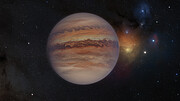
Artist’s impression of a rogue planet in Rho Ophiuchi 
 
The faint red glow of a rogue planet
 
PR Image eso2120c
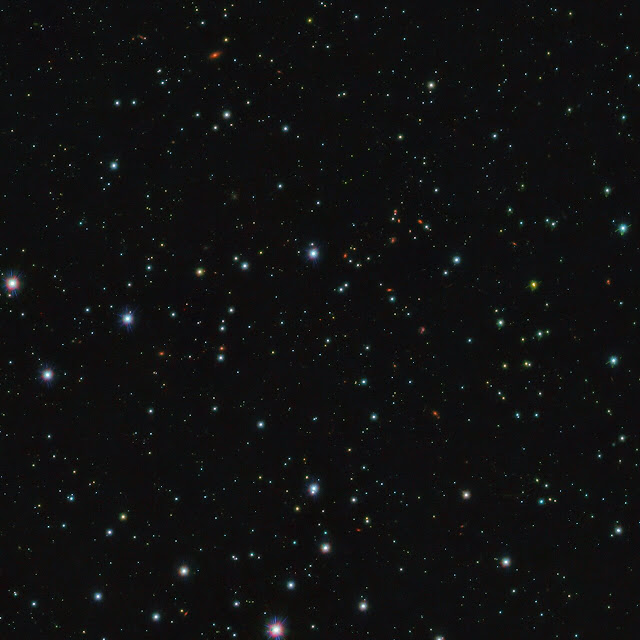
Locations of the rogue planets found


Videos

Rogue planets uncovered (ESOcast 249 Light)
Rogue planets uncovered (ESOcast 249 Light) 
 
Artist’s animation of a rogue planet in Rho Ophiuchi
Artist’s animation of a rogue planet in Rho Ophiuchi 
 
Zooming into a rogue planet


Rogue planets are elusive cosmic objects that have masses comparable to those of the planets in our Solar System but do not orbit a star, instead roaming freely on their own. Not many were known until now, but a team of astronomers, using data from several European Southern Observatory (ESO) telescopes and other facilities, have just discovered at least 70 new rogue planets in our galaxy. This is the largest group of rogue planets ever discovered, an important step towards understanding the origins and features of these mysterious galactic nomads.

“We did not know how many to expect and are excited to have found so many,” says Núria Miret-Roig, an astronomer at the Laboratoire d’Astrophysique de Bordeaux, France and the University of Vienna, Austria, and the first author of the new study published today in Nature Astronomy.

Rogue planets, lurking far away from any star illuminating them, would normally be impossible to image. However, Miret-Roig and her team took advantage of the fact that, in the few million years after their formation, these planets are still hot enough to glow, making them directly detectable by sensitive cameras on large telescopes. They found at least 70 new rogue planets with masses comparable to Jupiter’s in a star-forming region close to our Sun, located within the Scorpius and Ophiuchus constellations [1].

To spot so many rogue planets, the team used data spanning about 20 years from a number of telescopes on the ground and in space. “We measured the tiny motions, the colours and luminosities of tens of millions of sources in a large area of the sky,” explains Miret-Roig. “These measurements allowed us to securely identify the faintest objects in this region, the rogue planets.”

The team used observations from ESO’s Very Large Telescope (VLT), the Visible and Infrared Survey Telescope for Astronomy (VISTA), the VLT Survey Telescope (VST) and the MPG/ESO 2.2-metre telescope located in Chile, along with other facilities. “The vast majority of our data come from ESO observatories, which were absolutely critical for this study. Their wide field of view and unique sensitivity were keys to our success,” explains Hervé Bouy, an astronomer at the Laboratoire d’Astrophysique de Bordeaux, France, and project leader of the new research. “We used tens of thousands of wide-field images from ESO facilities, corresponding to hundreds of hours of observations, and literally tens of terabytes of data.”

The team also used data from the European Space Agency’s Gaia satellite, marking a huge success for the collaboration of ground- and space-based telescopes in the exploration and understanding of our Universe.

The study suggests there could be many more of these elusive, starless planets that we have yet to discover. “There could be several billions of these free-floating giant planets roaming freely in the Milky Way without a host star,” Bouy explains.

By studying the newly found rogue planets, astronomers may find clues to how these mysterious objects form. Some scientists believe rogue planets can form from the collapse of a gas cloud that is too small to lead to the formation of a star, or that they could have been kicked out from their parent system. But which mechanism is more likely remains unknown.

Further advances in technology will be key to unlocking the mystery of these nomadic planets. The team hopes to continue to study them in greater detail with ESO’s forthcoming Extremely Large Telescope (ELT), currently under construction in the Chilean Atacama Desert and due to start observations later this decade. “These objects are extremely faint and little can be done to study them with current facilities,” says Bouy. “The ELT will be absolutely crucial to gathering more information about most of the rogue planets we have found.”


Notes

[1] The exact number of rogue planets found by the team is hard to pin down because the observations don’t allow the researchers to measure the masses of the probed objects. Objects with masses higher than about 13 times the mass of Jupiter are most likely not planets, so they cannot be included in the count. However, since the team didn’t have values for the mass, they had to rely on studying the planets’ brightness to provide an upper limit to the number of rogue planets observed. The brightness is, in turn, related to the age of the planets themselves, as the older the planet, the longer it has been cooling down and reducing in brightness. If the studied region is old, then the brightest objects in the sample are likely above 13 Jupiter masses, and below if the region is on the younger side. Given the uncertainty in the age of the study region, this method gives a rogue planet count of between 70 and 170. 


More Information

This research was presented in the paper “A rich population of free-floating planets in the Upper Scorpius young stellar association” to appear in Nature Astronomy (DOI: 10.1038/s41550-021-01513-x). It has received funding from the European Research Council (ERC) under the European Union’s Horizon 2020 research and innovation programme (grant agreement No 682903, P.I. H. Bouy), and from the French State in the framework of the ”Investments for the Future” Program, IdEx Bordeaux, reference ANR-10-IDEX-03-02.

The team is composed of Núria Miret-Roig (Laboratoire d’Astrophysique de Bordeaux, Univ. Bordeaux, CNRS, France [LAB]; University of Vienna, Department of Astrophysics, Austria), Hervé Bouy (LAB), Sean N. Raymond (LAB), Motohide Tamura (Department of Astronomy, Graduate School of Science, The University of Tokyo, Japan; Astrobiology Center, National Institutes of Natural Sciences, Tokyo, Japan [ABC-NINS]), Emmanuel Bertin (CNRS, UMR 7095, Institut d’Astrophysique de Paris,France [IAP]; Sorbonne Université, IAP, France) David Barrado (Centro de Astrobiología [CSIC-INTA], Depto. de Astrofísica, ESAC Campus, Spain), Javier Olivares (LAB), Phillip Galli (LAB), Jean-Charles Cuillandre (AIM, CEA, CNRS, Université Paris-Saclay, Université de Paris, France), Luis Manuel Sarro (Depto. de Inteligencia Artificial, UNED, Spain) Angel Berihuete (Depto. Estadística e Investigación Operativa, Universidad de Cádiz, Spain) & Nuria Huélamo (CSIC-INTA).

The European Southern Observatory (ESO) enables scientists worldwide to discover the secrets of the Universe for the benefit of all. We design, build and operate world-class observatories on the ground — which astronomers use to tackle exciting questions and spread the fascination of astronomy — and promote international collaboration in astronomy. Established as an intergovernmental organisation in 1962, today ESO is supported by 16 Member States (Austria, Belgium, the Czech Republic, Denmark, France, Finland, Germany, Ireland, Italy, the Netherlands, Poland, Portugal, Spain, Sweden, Switzerland and the United Kingdom), along with the host state of Chile and with Australia as a Strategic Partner. ESO’s headquarters and its visitor centre and planetarium, the ESO Supernova, are located close to Munich in Germany, while the Chilean Atacama Desert, a marvellous place with unique conditions to observe the sky, hosts our telescopes. ESO operates three observing sites: La Silla, Paranal and Chajnantor. At Paranal, ESO operates the Very Large Telescope and its Very Large Telescope Interferometer, as well as two survey telescopes, VISTA working in the infrared and the visible-light VLT Survey Telescope. Also at Paranal ESO will host and operate the Cherenkov Telescope Array South, the world’s largest and most sensitive gamma-ray observatory. Together with international partners, ESO operates APEX and ALMA on Chajnantor, two facilities that observe the skies in the millimetre and submillimetre range. At Cerro Armazones, near Paranal, we are building “the world’s biggest eye on the sky” — ESO’s Extremely Large Telescope. From our offices in Santiago, Chile we support our operations in the country and engage with Chilean partners and society.


Links
Contacts:

Núria Miret-Roig
Department of Astrophysics, University of Vienna
Vienna, Austria
Tel: +43 1427753845
Email:
nuria.miret.roig@univie.ac.at

Hervé Bouy
Laboratoire d'Astrophysique de Bordeaux, Université de Bordeaux
Pessac, France
Tel: +33 5 40 00 32 94
Email:
herve.bouy@u-bordeaux.fr

Bárbara Ferreira
ESO Media Manager
Garching bei München, Germany
Tel: +49 89 3200 6670
Cell: +49 151 241 664 00
Email:
press@eso.org


Source: ESO/News