Showing posts with label Dark Matter. Show all posts

Sunday, August 16, 2026

Scientists Release Biggest 2D Map of the Universe

PR Image noirlab2620a
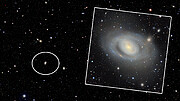
Messier 96 as Seen with DESI Legacy Survey

PR Image noirlab2620b
Copeland Septet group of galaxies

PR Image noirlab2620c
Sunset over Kitt Peak National Observatory

PR Image noirlab2620d
CTIO on the Edge of the World


Videos

Pan on Messier 96
PR Video noirlab2620a
Pan on Messier 96

Zoom into Messier 96
PR Video noirlab2620b
Zoom into Messier 96


The new DESI Legacy Imaging Surveys map serves as the foundation for the largest-ever 3D map of the Universe, used to investigate dark energy

Hold on to your telescopes: the DESI Legacy Imaging Surveys team has released the largest-ever 2D map of the Universe. The 5.6-trillion-pixel map contains nearly four billion celestial objects, including stars, galaxies, black holes, and asteroids. The data are available for all to use and are publicly viewable through the Legacy Survey Sky Viewer.

for rare phenomena like gravitational lenses, observe fleeting events like supernovae, and investigate two of physics’ biggest mysteries: dark matter, the invisible substance that accounts for most of the mass in our Universe, and dark energy, the force driving our Universe’s accelerating expansion.

The new map builds on earlier versions from the DESI Legacy Imaging Surveys that have already proved invaluable. To date, more than 1800 science papers have been published referencing the Legacy Surveys’ data.

“It’s part of the fabric of astronomy research now,” says David Schlegel, a co-lead of the Legacy Surveys and scientist at the Department of Energy’s Lawrence Berkeley National Laboratory (Berkeley Lab). “When you're working with astronomical objects today, you often start by pulling up the Legacy Imaging Viewer to see what you’re looking at.”;

Covering roughly 75% of the sky in visible and near-infrared light, the updated map provides a deep view of the extragalactic Universe not blocked by the dust and stars of our own Milky Way. Researchers expect it will remain the most comprehensive 2D map of our Universe for years to come.

More than 160 scientists contributed to data collection for the project, and a team of 20 produced the final dataset released today. It was built by combining 263,407 telescope exposures from three ground-based sky surveys:

  • The Dark Energy Camera Legacy Survey (DECaLS), conducted by the 570-megapixel Department of Energy-fabricated Dark Energy Camera (DECam), mounted on the U.S. National Science Foundation (NSF) Victor M. Blanco 4-meter Telescope at NSF Cerro Tololo Inter-American Observatory (CTIO), a Program of NSF NOIRLab.
  • The Mayall z-band Legacy Survey (MzLS), conducted by the NSF Nicholas U. Mayall 4-meter Telescope at NSF Kitt Peak National Observatory (KPNO), a Program of NSF NOIRLab.
  • The Beijing-Arizona Sky Survey (BASS) at the University of Arizona’s Steward Observatory, conducted with the UA Bok 2.3-meter Telescope at KPNO and supplemented by years of data from NASA’s Wide-field Infrared Survey Explorer (WISE) satellite mission.

In addition to the extended file collection, the DESI Legacy Surveys’ full catalog of data is made available as a searchable database via the Astro Data Lab at the Community Science and Data Center (CSDC), a Program of NSF NOIRLab. These services are accessible to the entire astronomy community to facilitate data access and analysis.

“Explorations of our Universe always start with images of the night sky. The DESI Imaging Legacy Surveys are just one step in this venerable human tradition,” says Arjun Dey, co-lead of the Legacy Surveys and an astronomer at NSF NOIRLab. “For our team, these data are fundamental to the investigation of the expansion history of the Universe and the formation of our galaxy. But the skies belong to everyone, and this survey gives everyone the chance to marvel at their wonders.”

The DESI Legacy Imaging Surveys were originally conducted to prepare for the Dark Energy Spectroscopic Instrument (DESI) survey. The Legacy Surveys’ 2D map is essentially a deep photograph of the sky; it records where galaxies and stars appear and how bright they appear. This crucial step enables DESI to select objects and measure their light in different wavelengths to determine their distances, building the largest high-resolution 3D map ever made. Scientists use this map to study the way galaxies have clustered at different ages of the Universe to track dark energy over time.

In April 2026, DESI completed its original five-year survey ahead of schedule and with vastly more objects than expected. The early results have shown surprising hints that dark energy’s impact may be weakening over time — a paradigm shift that could potentially shape the predicted fate of our Universe. DESI expects to publish improved results using its first five years of data in 2027 and is continuing observations into 2028.

Beyond supporting DESI, the Legacy Surveys will be a foundational reference for the next generation of telescopes. As new observatories like NSF–DOE Vera C. Rubin Observatory, jointly funded by the NSF and DOE’s Office of Science (DOE/SC), and NASA’s Nancy Grace Roman Space Telescope come online, researchers can compare their observations with one of the deepest and most comprehensive views of the sky ever assembled.

The Legacy Surveys’ data will also help scientists train artificial intelligence tools to analyze petabytes of astronomical data and accelerate new discoveries. It will be among the datasets used in an astrophysics pilot project within the American Science Cloud, part of the DOE’s Genesis Mission.


More information

The DESI Legacy Imaging Surveys are supported by the U.S. Department of Energy’s Office of High Energy Physics; the National Energy Research Scientific Computing Center, a DOE Office of Science user facility; the U.S. National Science Foundation, Division of Astronomical Sciences; and the partner institutions.

DESI is supported by the DOE Office of Science and by the National Energy Research Scientific Computing Center, a DOE Office of Science national user facility. Additional support for DESI is provided by the U.S. National Science Foundation; the Science and Technology Facilities Council of the United Kingdom; the Gordon and Betty Moore Foundation; the Heising-Simons Foundation; the French Alternative Energies and Atomic Energy Commission (CEA); the Secretariat of Science, Humanities, Technology and Innovation (SECIHTI) of Mexico; the Ministry of Science and Innovation of Spain; and by the DESI member institutions.

Lawrence Berkeley National Laboratory (Berkeley Lab) is committed to groundbreaking research focused on discovery science and solutions for abundant and reliable energy supplies. The lab’s expertise spans materials, chemistry, physics, biology, earth and environmental science, mathematics, and computing. Researchers from around the world rely on the lab’s world-class scientific facilities for their own pioneering research. Founded in 1931 on the belief that the biggest problems are best addressed by teams, Berkeley Lab and its scientists have been recognized with 17 Nobel Prizes. Berkeley Lab is a multiprogram national laboratory managed by the University of California for the U.S. Department of Energy’s Office of Science.

DOE’s Office of Science is the single largest supporter of basic research in the physical sciences in the United States, and is working to address some of the most pressing challenges of our time. For more information, please visit energy.gov/science.

NSF NOIRLab, the U.S. National Science Foundation center for ground-based optical-infrared astronomy, operates the International Gemini Observatory (a facility of NSF, NRC–Canada, ANID–Chile, MCTIC–Brazil, MINCyT–Argentina, and KASI–Republic of Korea), NSF Kitt Peak National Observatory (KPNO), NSF Cerro Tololo Inter-American Observatory (CTIO), the Community Science and Data Center (CSDC), and NSF–DOE Vera C. Rubin Observatory (in cooperation with DOE’s SLAC National Accelerator Laboratory). It is managed by the Association of Universities for Research in Astronomy (AURA) under a cooperative agreement with NSF and is headquartered in Tucson, Arizona. 

The scientific community is honored to have the opportunity to conduct astronomical research on I’oligam Du’ag (Kitt Peak) in Arizona, on Maunakea in Hawai‘i, and on Cerro Tololo and Cerro Pachón in Chile. We recognize and acknowledge the very significant cultural role and reverence of I’oligam Du’ag to the Tohono O’odham Nation, and Maunakea to the Kanaka Maoli (Native Hawaiians) community.


Links


Contacts:

Arjun Dey
Astronomer
NSF NOIRLab
Email:
arjun.dey@noirlab.edu

Josie Fenske
Public Information Officer
NSF NOIRLab
Email:
josie.fenske@noirlab.edu

Lauren Biron
Lawrence Berkeley National Laboratory
Science Communication and Media Relations Specialist
Email:
LBiron@lbl.gov


Sunday, July 05, 2026

Stellar motions can tighten constraints on dark matter's nature

Formation of a stellar stream, shown in the orbital plane (distances are given in kiloparsecs from the Galactic centre). As the progenitor — a star cluster or dwarf galaxy (blue) — orbits the Milky Way, stars are gradually stripped away by our galaxy's gravity and spread out along the orbit, building up the two thin arms of the stream over time. © MPA

The GD-1 stellar stream as seen by current surveys. Its track is not perfectly smooth; it shows gaps and a 'spur' of stars that a featureless dark matter halo cannot easily explain. This hints at perturbations from unseen clumps of matter. Background image: Fig. 1 from Ana Bonaca et al 2019 ApJ 880 38; image processing by MPA.

A snapshot from the simulation. The colours and arrows show the small velocity changes imparted to the stream stars by the surrounding dark matter clumps. Rather than modelling each clump individually, the simulation captures their collective statistical effect. © MPA


Although dark matter makes up most of the matter in the universe, what it is made of remains one of the biggest open questions in physics. One indirect clue to its particle nature is how clumpy it is on small scales, such as in dwarf galaxies and smaller. The smallest of these clumps are associated with few or no stars and cannot be seen directly; however, their gravity can perturb stellar streams, thin trails of stars that act as sensitive probes. MPA scientists have now demonstrated that analysing both the location and the movement of stellar stream's stars can pinpoint the scale at which dark matter stops clumping several times more precisely, achieving a level of sensitivity comparable to the most advanced methods currently available.

At the largest scales, a simple model of dark matter works well: a cold, slow-moving substance whose gravity pulls ordinary matter together to form galaxies. While this leading model accounts for much of what telescopes and observatories observe, it remains silent on a fundamental question: what is dark matter? There are many competing answers, ranging from massive elementary particles to small black holes and ultra-light wave-like particles, all of which reproduce the same large-scale universe. The models diverge on small scales: some predict that dark matter continues to gather into ever-smaller clumps, while others predict a cutoff, a minimum size below which clumps simply fail to form. Finding where this cutoff lies would provide a crucial clue to the identity of dark matter.

The problem is that the smallest clumps cannot gather enough ordinary matter to form stars, so they are essentially invisible to us. Their only trace is gravitational. The Milky Way offers a natural detector here. Over cosmic time, it has grown by absorbing many smaller star clusters and dwarf galaxies. As one of these is gradually pulled apart by our galaxy's gravity, its stars spread out along its orbit to form a long, narrow stream. As the stars move along the same orbit, the stream remains dynamically cold. This makes it highly sensitive to small disturbances: when a clump of dark matter passes nearby, its gravity shifts the stars slightly, leaving an imprint. The GD-1 stream is one of the most striking examples, displaying small features and gaps that cannot easily be explained by a smooth dark matter halo.

Most early studies modelled these clumps individually, interpreting a feature such as a gap as the mark of a single passing object. However, if low-mass clumps are as abundant as the leading model predicts, a stream is continuously perturbed by a whole population of them, with their effects overlapping. Consequently, the focus shifted to describing the clumps collectively. However, many population-level methods still resolve each encounter and sum them up, which becomes prohibitively expensive at low masses, where encounters are most numerous and competing dark matter models differ most.

The new study by MPA researchers Noemi Anau Montel and Fabian Schmidt avoids resolving encounters at all. It represents the entire population as a statistical pattern of density fluctuations at each scale. This field imparted many small velocity changes to the stars, which built up gradually rather than arriving as one sharp deflection. The cost no longer increases with the number of clumps, and any dark matter model can be tested by substituting a different pattern. Additionally, the model quantifies how sensitively the stream's appearance responds to a small change in any dark matter property. This enables the new framework to predict with forecasts, before the data is available, how accurately a future observation could measure each property.

The main advance comes from the motions of the stars. Earlier analyses relied mainly on the density of the stream, i.e. how the stars are spaced along its length. However, the same perturbations are also known to leave a pattern in the stars' velocities, affecting both their motion across the sky and their motion towards or away from us. The new study incorporates kinematic information into the forecast and demonstrates that using the motions of the stars, as well as their positions, improves the measurement of the cutoff scale by a factor of three to five. Specifically, the spacing of the stars alone locates the cutoff to within a factor of about ten, whereas adding the motions narrows it to a factor of roughly two. Even better, the constraints improve for an older stream that has been perturbed for a longer period of time.

These numbers are forecasts, not measurements. Nevertheless, the implication is significant: a single, accurately measured stream could constrain dark matter's behaviour on small scales as well as today's leading methods, such as the gravitational lensing of distant quasars and the counting of small satellite galaxies in the Milky Way (see also this press release from 2025). Because a stream is a purely local, purely gravitational probe, its sources of error are independent of these methods, offering a valuable cross-check.

The required data are now becoming available from the precise positions of the Gaia satellite, the velocity measurements of the DESI survey, and dedicated instruments such as the VIA Project. However, two challenges remain: separating the perturbations caused by visible structures, such as gas clouds and the galactic bar, from those caused by dark matter; and handling the rare close passes of the largest clumps, which lie outside the weak accumulating regime discussed here.

Source: Max Planck Institute for Astrophysics/Research Highlights


Authors:

Dr. Noemi Anau Montel
Tel: 2215
noemiam@mpa-garching.mpg.de

Dr. Fabian Schmidt
Scientific Staff
Member of the works council, Representative of the Scientific Coworkers
Tel:
2274
fschmidt@mpa-garching.mpg.de


Original publication:

Noemi Anau Montel, Fabian Schmidt
A differentiable forward model for weakly perturbed stellar streams: substructure forecasts from density and kinematics spectra
submitted


Source


Tuesday, June 23, 2026

Astronomers Discover Third Galaxy Without Dark Matter

A close-up Hubble image of DF9 is shown beneath a wider view of the surrounding NGC 1052 region. Blue boxes highlight a line of related galaxies, including DF2 and DF4. Red outlines show where Keck Observatory’s KCWI instrument collected data, while yellow circles mark galaxy clusters whose motions have already been measured. Both images are oriented along the direction of the galactic structure. (Credit: Keim et al./DECaLS/HST).


Findings strengthen evidence for a violent galactic collision that may have separated ordinary matter from dark matter

Maunakea, Hawaiʻi – Astronomers using W. M. Keck Observatory on Maunakea, Hawaiʻi Island, have discovered the third known galaxy apparently lacking dark matter, part of a strange linear structure that may have formed during a violent collision between galaxies.

The discovery strengthens evidence for a rare and previously unseen process in which ordinary matter becomes separated from dark matter, offering astronomers a powerful new way to study one of the universe’s greatest mysteries.

The galaxy, known as DF9, lies alongside two other unusual galaxies — DF2 and DF4 — which previously stunned astronomers because they appeared to contain little to no dark matter. New observations show that DF9 also lacks dark matter and is part of the same narrow line of faint, diffuse galaxies stretching across space.

“Almost every galaxy in the universe is dominated by dark matter. But DF2, DF4, and now DF9 appear to be extraordinary exceptions,” said Michael Keim, researcher and lead author of the study. “These findings provide some of the clearest evidence yet that these galaxies formed together in a violent event that separated ordinary matter from dark matter.”

The study, led by Yale University, is published today in The Astrophysical Journal.

A New Clue in the Dark Matter Mystery

Yale astronomers have played a central role in the discovery of dark matter-deficient galaxies since the first identification of DF2 and DF4 by astronomer Pieter van Dokkum and his team, who also used Keck Observatory observations to help confirm their unusual nature.

The discovery of DF9 strengthens the case that all three galaxies formed together during the same violent event, likely a high-speed collision between galaxies. Such a system has never been observed before and is reshaping astronomers’ understanding of how galaxies form.

Researchers believe the collision may have stripped gas away from its surrounding dark matter, allowing new galaxies to form from ordinary matter alone.

“The finding provides compelling evidence that dark matter behaves as a physical substance rather than the effect of an alternative theory of gravity, particularly at the dwarf-galaxy scale where those theories are most heavily debated,” added van Dokkum, co-author on the study.

Measuring the Invisible

The team used Keck Observatory’s Keck Cosmic Web Imager (KCWI) to measure the motions of stars inside DF9 by analyzing the light emitted across different wavelengths.

Those measurements revealed that DF9 has a mass of only about 100 million Suns, consistent entirely with the galaxy’s visible matter. If the galaxy contained a typical amount of dark matter, astronomers would expect it to be about 100 times more massive.

“KCWI’s exceptionally high precision enabled us to measure DF9’s extraordinarily low mass with the accuracy needed to demonstrate its lack of dark matter,” said Keim.

Building on these observations, future studies using both existing and upcoming observatories will enable the team to search for gas that may have been left behind in the collision and to constrain the gas content of the galaxies themselves.


Related Links


Science Contacts:

Michael Keim

michael.keim@yale.edu

Pieter Van Dokkum
pieter.vandokkum@yale.edu

Media Contact:

Meagan O’Shea

moshea@keck.hawaii.edu


About KCWI

The Keck Cosmic Web Imager (KCWI) is designed to provide visible band, integral field spectroscopy with moderate to high spectral resolution formats and excellent sky-subtraction. The astronomical seeing and large aperture of the telescope enables studies of the connection between galaxies and the gas in their dark matter halos, stellar relics, star clusters, and lensed galaxies. KCWI covers the blue side of the visible spectrum; the instrument also features the Keck Cosmic Reionization Mapper (KCRM), extending KCWI’s coverage to the red side of the visible spectrum. The combination of KCWI-blue and KCRM provides simultaneous high-efficiency spectral coverage across the entire visible spectrum. Support for KCWI was provided by the National Science Foundation, Heising-Simons Foundation, and Mt. Cuba Astronomical Foundation. Support for KCRM was provided by the National Science Foundation and Mt. Cuba Astronomical Foundation.


About W. M. Keck Observatory

The W. M. Keck Observatory telescopes are among the most scientifically productive on Earth. The two 10-meter optical/infrared telescopes atop Maunakea on the Island of Hawaiʻi feature a suite of advanced instruments including imagers, multi-object spectrographs, high-resolution spectrographs, integral-field spectrometers, and world-leading laser guide star adaptive optics systems. Some of the data presented herein were obtained at Keck Observatory, which is a private 501(c) 3 non-profit organization operated as a scientific partnership among the California Institute of Technology, the University of California, and the National Aeronautics and Space Administration. The Observatory was made possible by the generous financial support of the W. M. Keck Foundation. The authors wish to recognize and acknowledge the very significant cultural role and reverence that the summit of Maunakea has always had within the Native Hawaiian community. We are most fortunate to have the opportunity to conduct observations from this mountain. For more information, visit: www.keckobservatory.org


Thursday, June 04, 2026

Dropping Dark Matter from the Pisa Tower: A New Test of the Equivalence Principle with the Distortion of Time in Galaxy Clusters

A sketch of the Pisa tower on top of the Perseus cluster of galaxies observed by the Euclid satellite. Background image: ESA/Euclid/Euclid Consortium/NASA, image processing by J.-C. Cuillandre (CEA Paris-Saclay), G. Anselmi.

All types of ordinary matter fall in a gravitational potential in the same way, while dark matter may experience deviations. The depth of the gravitational potential can be measured through the impact of the time distortion on light, which changes frequency and hence colour in escaping the potential to reach an observer. © MPA

Predicted precision on deviations from the weak equivalence principle as a function of the total number of galaxies in galaxy clusters used to perform the test. The vertical line indicates the number used in the first detection of the distortion of time. The different colours correspond to more or less optimistic assumptions on the other free parameters involved in the test, ranging from assuming perfect knowledge of their values (black) to no knowledge (green).© MPA


Does the mysterious dark matter experience gravity in the same way as ordinary matter? A team of scientists from MPA and the University of Geneva (Switzerland) has developed a new method to answer this question by measuring the time dilation in galaxy clusters. With future datasets, this method could detect violations of the equivalence principle at the level of a few percent.

In the 16th century, the Italian scientist Galileo Galilei is said to have dropped objects with different masses from the Leaning Tower of Pisa. With this experiment – possibly only imagined – he demonstrated that the acceleration of different bodies does not depend on their composition or mass. Since then, this seemingly counter-intuitive fact has become a fundamental pillar in our understanding of gravity, known as the weak equivalence principle. This principle states that any particle, regardless of its nature, experiences gravity in the same way.

Several experiments have confirmed with very high precision that the weak equivalence principle holds for all particles making up the ordinary matter around us. However, astrophysical and cosmological observations indicate that around 85 % of the matter in the Universe consists of unknown dark matter, which does not emit light and can only be probed through its gravitational impact on visible matter. If Galileo could have thrown a small amount of dark matter from the Pisa tower, would it have experienced the same acceleration as the other bodies? This remains a crucial open question, which could help shedding light on the nature of this mysterious component.

A team of researchers from MPA and the University of Geneva (Switzerland) – Sveva Castello, Enea Di Dio and Camille Bonvin – is determined to answer this question. Since dark matter has never been detected directly nor produced in a laboratory experiment, it is not possible to simply drop it from the Pisa tower. However, the team has designed a new method to perform an analogous experiment to Galileo’s in galaxy clusters. These are the largest gravitationally bound objects in the Universe and therefore provide the ideal environment to study the behaviour of dark matter under gravity. The new test consists in comparing the observed motion of the galaxies inside the clusters with the distortion of time generated by the clusters themselves.

Understanding the idea behind this test requires a small detour to the realm of Einstein’s theory of general relativity, providing our modern understanding of gravity. According to general relativity, the Universe can be described as a four-dimensional spacetime that gets distorted like a tablecloth in the presence of any object with a mass, such as galaxy clusters. This generates gravitational potential wells, which determine the motion of any particle under gravity. These distortions affect not only space but also time, so that a clock located at the bottom of a potential well ticks more slowly than one outside of it. This effect, known as time dilation or distortion of time, provides a direct measure of the depth of the gravitational potential well generated by a massive object.

If dark matter violates the weak equivalence principle, for example due to some unknown interactions, its motion under gravity will be different from the one predicted by general relativity. Since galaxies are mostly composed of dark matter, such a violation will impact their observed velocities inside a cluster. They will then move too fast or too slowly compared to the gravitational potential well of the cluster inferred from the distortion of time, clearly indicating an anomaly. Therefore, comparing galaxy velocities and the distortion of time in a galaxy cluster provides a powerful test of the weak equivalence principle.

Since we cannot send clocks across cosmological distances, how can we measure the distortion of time in galaxy clusters located billions of light-years away? This can be achieved by considering the impact of the distortion of time on light. Due to this effect, the wavelength of light emitted by galaxies in a cluster gets stretched and experiences a frequency shift, which is translated into a change of its observed colour. This leads to an observable gravitational redshift, which can be disentangled from other effects that change the colour of the light thanks to its symmetry properties when considering pairs of galaxies. This technique led to a first detection of this effect in 2011 by Radosław Wojtak, Steen H. Hansen and Jens Hjorth, who used a catalogue of around 100’000 galaxies in clusters by the Sloan Digital Sky Survey.

In this new study, the MPA-Geneva team predicted that existing measurements of the distortion of time can detect deviations from the weak equivalence principle at the level of 7-14 %. Ongoing galaxy surveys, such as the Euclid satellite and the Dark Energy Spectroscopic Instrument (DESI), will give access to larger samples of galaxy clusters and thus lead to an increased precision. In a realistic scenario, future datasets will be sensitive to violations of the equivalence principle at the level of a few percent.

As a next step, the team plans to apply the test to data. This will enable them to repeat Galileo’s experiment on astrophysical scales, providing crucial information on the properties of the mysterious dark matter in galaxy clusters. The discovery of a violation of the weak equivalence principle would have profound implications for cosmology, astrophysics and particle physics, and may also affect our fundamental understanding of gravity.


Author:

Dr. Sveva Castello
Postdoc
Tel: 2007
Email:
svevacas@mpa-garching.mpg.de


Tuesday, May 19, 2026

Astronomers Find Most Chemically Primitive Galaxy in Early Universe

Revealing the Nature of the Ultra-Faint Galaxy LAP1-B through a giant “gravitational lens.” A 3 color image created from data taken with the Near-Infrared Camera (NIRCam) on the James Webb Space Telescope (JWST). Because the stars in this galaxy are extremely faint and few in number, the galaxy is invisible in the background image taken by NIRCam, but another instrument, the Near-Infrared Spectrograph (NIRSpec) was able to detect chemical signatures. A visualization (not an actual image) of the NIRSpec velocity and distribution data is shown in the inset for oxygen (green) and two different excitation states of hydrogen (blue and red). (Credit: NASA, ESA, CSA & K. Nakajima et al., Nature). Image (703KB)


An international team of astronomers has used the James Webb Space Telescope (JWST) and a natural phenomenon known as gravitational lensing to achieve a definitive characterization of LAP1-B, an ultra-faint galaxy from 13 billion years ago. Expanding upon initial detections, this new study revealed a record-breaking low oxygen abundance – merely 1/240th that of the Sun. This chemically primitive state, coupled with an elevated carbon-to-oxygen ratio and a dominant dark matter halo, suggests that LAP1-B is the long-sought “ancestor” of the mysterious fossil galaxies found near our Milky Way Galaxy today.

Just after the Big Bang, contained only light elements like hydrogen and helium. The heavier elements, such as oxygen and carbon, were forged much later inside the hearts of the very first stars. For decades, astronomers have tried to find the moment these “first-generation stars” began scattering heavier elements across the cosmos. However, the earliest galaxies hosting such young, primordial stars are so small and faint that seeing their chemical makeup was considered nearly impossible – until now.

A research team led by Kimihiko Nakajima of Kanazawa University and including Masami Ouchi at the National Astronomical Observatory of Japan (NAOJ) and the University of Tokyo focused on a tiny, ultra-faint galaxy named LAP1-B. Its light was magnified 100 times by a phenomenon called “gravitational lensing,” where the gravity of a massive galaxy cluster acts like a natural giant telescope lens in space. By staring at this spot for over 30 hours with JWST, the team determined that the galaxy’s oxygen abundance is roughly 1/240th that of the Sun. “I was instantly thrilled by the extreme lack of oxygen,” says Nakajima. “Finding a galaxy in such a primitive state is astonishing. It’s a chemical signature that clearly indicates a primordial galaxy caught in the moments shortly after its formation.”

Beyond its primitive nature, the galaxy exhibited a high carbon-to-oxygen abundance ratio. This unique ratio of elements aligns closely with theoretical predictions for the material dispersed by the explosions of the universe’s first-generation stars.

The team also discovered that LAP1-B is incredibly lightweight – less than 3,300 times the mass of the Sun – implying that most of the galaxy consists of invisible dark matter. This feature, together with its unique chemical makeup, makes it a near-perfect match for the “Ultra-Faint Dwarf galaxies (UFDs)” found near our Milky Way Galaxy today, which are extremely dim, small, and contain very few stars.

“UFDs are not only the faintest galaxies; they are composed of ancient stars over 12 billion years old and are often described as ‘fossils of the Universe,’” explains Ouchi. “Astronomers suspected they might be the remains of the Universe’s earliest galaxies because they lack heavy elements, but astronomers never had a direct link – until we found LAP1-B.”

Ouchi continues: “It is a profound surprise to find that LAP1-B looks exactly like the ‘ancestor’ we had only imagined in theories. This helps us solve the mystery of why these cosmic fossils have survived in their current form to the present day.”

This discovery establishes a new way to map the birth of elements and the formation of the Universe’s oldest structures. Moving forward, the team will use JWST to search for even more primitive objects, aiming to find the very first galaxies ever formed.


Release Information

Researcher(s) Involved in this Release

Kimihiko Nakajima (Kanazawa University)
Masami Ouchi (National Astronomical Observatory of Japan / University of Tokyo)

Coordinated Release Organization(s)

Kanazawa University
National Astronomical Observatory of Japan, NINS
Institute for Cosmic Ray Research, The University of Tokyo
Paper(s)

K. Nakajima et al. “An ultra-faint, chemically primitive galaxy forming in the reionization era”, in Nature, DOI: 10.1038/s41586-026-10374-1


Related Link(s)


Monday, May 18, 2026

Galaxy Cluster Relaxed Now, but was Wild in the Past

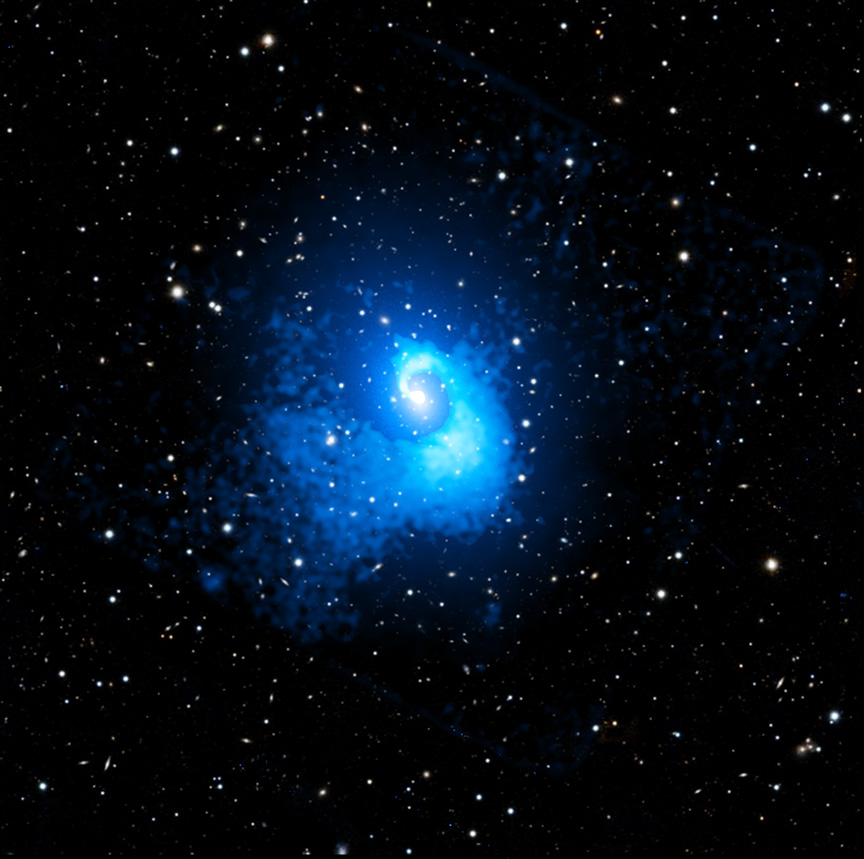
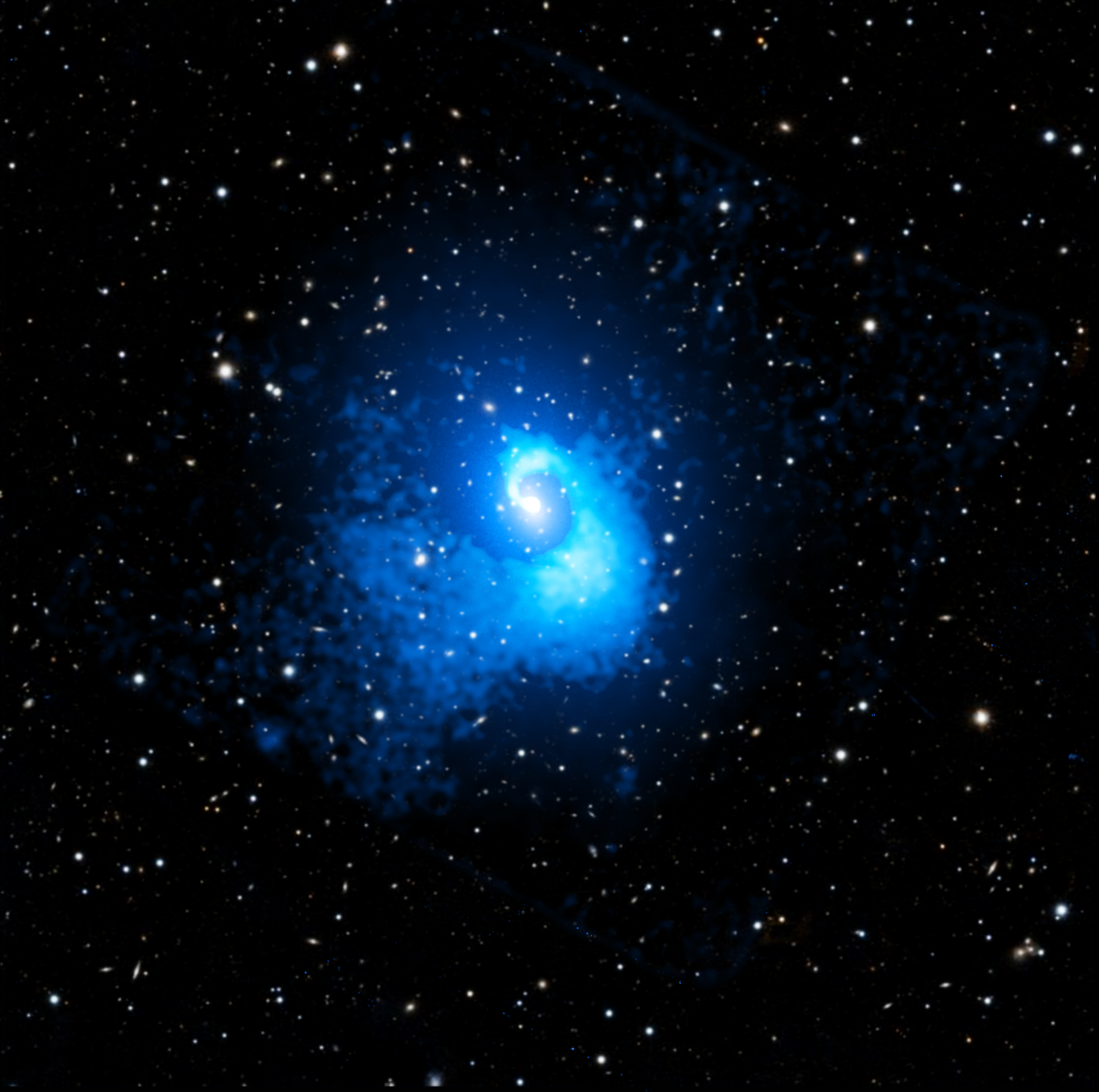
Abell 2029
Credit: X-ray: NASA/CXC/CfA/C. Watson et al.; Optical: PanSTARRS;
Image Processing: NASA/CXC/SAO/N. Wolk and P. Edmonds

JPEG (172.4 kb) - Large JPEG (2 MB) - Tiff (54.5 MB) - More Images

A Tour of Abell 2029 - More Videos


  • New data from NASA’s Chandra X-ray Observatory suggests an event-filled past for the galaxy cluster Abell 2029.

  • The X-rays reveal evidence for a collision with a smaller cluster about four billion years ago.

  • A sloshing spiral structure was formed when the smaller cluster made its first pass through Abell 2029, pulling its gas sideways.

  • Galaxy clusters are the largest structures in the Universe held together by gravity and are bellwethers for cosmic growth.


The galaxy cluster Abell 2029 is sometimes described as “the most relaxed cluster in the Universe.” This moniker does not arise from some sort of mellow vibe, but rather because of how calm and undisturbed the superheated gas that pervades the cluster appears to be.

New observations from NASA’s Chandra X-ray Observatory clearly show that Abell 2029 had a much more colorful history than its current disposition suggests. The latest study finds that Abell 2029 is still settling down after a raucous collision with another smaller cluster about four billion years ago.

Galaxy clusters are the largest structures in the Universe held together by gravity. They are made up of hundreds or even thousands of galaxies, unseen dark matter, and a huge amount of gas that fills in the space between the galaxies. This gas is typically heated to millions of degrees, which makes it glow in X-ray light.

A team led by astronomers from Boston University (BU) and the Center for Astrophysics | Harvard & Smithsonian (CfA) obtained the deepest X-ray observation ever made of this cluster using Chandra. The results are described in an Astrophysical Journal paper led by Courtney Watson from BU and CfA.

The Chandra data reveal clear signs that this cluster did not have a mundane history. This new composite image shows evidence for the cluster’s previous shenanigans in the nautilus-like shape in the Chandra data (blue). Optical light from stars and galaxies in the same field of view appears mainly white in an image from Pan-STARRS, a telescope in Hawaii.

The team think the spiral shape in the hot gas formed when gas in the cluster sloshed to the side because of the gravitational effects of the cluster collision — similar to how wine moves in a wine glass. The sloshing spiral in Abell 2029 is one of the longest ever seen, extending about two million light-years from the center of the cluster.

Abell 2029, "splash" and "bay" features labeled. Credit: X-ray: NASA/CXC/CfA/C. Watson et al.; Optical: PanSTARRS; Image Processing: NASA/CXC/SAO/N. Wolk and P. Edmonds


Computer simulations of the collision suggest that the smaller cluster was about ten times less massive than the larger cluster. The sloshing spiral formed when the smaller cluster made its first pass through the larger cluster, pulling its gas sideways. The gravity of the larger cluster then caused the other cluster to slow down and get pulled back in for a second collision. This drove a shock front and left behind a wake of material, forming the splash region.

To uncover these various features the authors used a special technique that examined how much the cluster’s hot gas deviates from a symmetrical shape. Most of the hot gas is symmetrical and is approximately shaped like an oval. The authors removed (“subtracted”) this symmetrical oval shape from the original X-ray image. The remaining X-ray emission in the “subtracted image” clearly shows the unusual features of the sloshing spiral, the bay and the splash area. The shock front is too faint to be seen in this image.

The new composite image combines both the original X-ray and the subtracted X-ray images of the deep Chandra observations of Abell 2029. The subtracted X-ray image (light blue) strikingly shows the sloshing spiral. Most of the original X-ray image is a darker blue color, apart from the center of the image, which is light blue. Two other features — the bay and the splash area — are labeled in an annotated version. The brightness of the original image has been reduced in this image to better show the subtracted image.

Courtney Watson conducted this work as a graduate student at BU and a predoctoral fellow at CfA. In addition to Watson, the authors of the paper are Elizabeth Blanton (Boston University), who was the Principal Investigator for the Chandra observations, Scott Randall (CfA), Tracy Clarke (Naval Research Laboratory), and John ZuHone (CfA).

NASA's Marshall Space Flight Center in Huntsville, Alabama, manages the Chandra program. The Smithsonian Astrophysical Observatory's Chandra X-ray Center controls science operations from Cambridge, Massachusetts, and flight operations from Burlington, Massachusetts.

There are several other key pieces of evidence for the past bash, never before seen together in a cluster, allowing the team to trace the collision history of the cluster in unprecedented detail. For example, the team sees hints of a wide “splash” of cooler gas created by the collision. There may also be a shock wave — akin to a sonic boom from a supersonic plane — in the superheated gas left over from the collision. Finally, there is a “bay” feature in the hot gas, which the researchers think might be caused by an overlap between the outer parts of the spiral and gas stripped away from the smaller cluster as it passed through the larger one. Though the authors think it is a relic from the collision, other explanations for this structure are also possible.


Visual Description:

This release features a composite image of a galaxy cluster with a unique spiral shape, giving it the appearance of a giant galactic seashell floating in the star-speckled blackness of space.

In this composite image, the surrounding stars and individual galaxies appear white, captured in optical light from Pan-STARRS, a telescope in Hawaii. But much of the spiraling cluster is rendered in neon blues, representing X-ray gas observed by Chandra. This super-heated gas fills the space between galaxies, giving the cluster its spiral shape when observed by scientists using an X-ray telescope.

Here, the blue spiral begins as a pale blue dot at the center of the cluster. The spiral stream of light and dark neon blue gas then widens as it moves away from the center of the cluster, gently corkscrewing one full rotation as it extends two-million lightyears into the distance.


Fast Facts for Abell 2029

Credit: X-ray: NASA/CXC/CfA/C. Watson et al.; Optical: PanSTARRS; Image Processing: NASA/CXC/SAO/N. Wolk and P. Edmonds
Release Date: May 12, 2026
Scale: Image is about 25 arcmin (7.2 million light-years) across.
Category:
Groups & Clusters of Galaxies
Coordinates (J2000): RA 15h 10m 56.1s | Dec +05° 44´ 40.0"
Constellation:
Virgo
Observation Dates: 24 observations from Apr 12, 2000 to Jun 6, 2023
Observation Time: 143 hours 3 minutes (5 days 23 hours 3 minutes)
Obs. ID: 891, 4977, 6101, 25496, 25814-25826, 26380, 26393, 26420, 26428, 27805, 27853, 27848
Instrument:
ACIS
References: Watson, C.B., et al., 2026, ApJ, 996, 106.
Color Code: X-ray: blue and white; Optical: red, green, and blue
Distance Estimate: About 1.0 billion light-years from Earth (z~0.0767)


Thursday, April 23, 2026

Euclid Space Warps: help spot galaxies bending spacetime

A collage of fourteen by eight squares containing examples of gravitational lenses. Each example typically comprises a bright centre with smears of stacredirs in an arc or multiple arcs around it as a result of light travelling towards Euclid from distant galaxies being bent and distorted by normal and dark matter in the foreground. In some rare cases the smearing is in a complete ring, crea,brting a so-called Einstein Ring. Credit: ESA/Euclid/Euclid Consortium/NASA, image processing by M. Walmsley, M. Huertas-Company, J.-C. Cuillandre.Hi-res JPG
Licence: CC BY-SA 3.0 IGO or ESA Standard Licence (content can be used under either licence)

Against a dark blue background, this infographic contains a paragraph of text in the top left corner, the logo of ESA in the top right corner and a succession of graphics in the bottom half of the image. The text paragraph explains the principle behind Einstein rings, and it can be read in the image caption. The graphics below it illustrate this astrophysical phenomenon, and by looking at them from left to right we can understand the process of how Einstein rings are formed.

The left-most element in the bottom half of the image is a graphic representation of a galaxy, labelled ‘distant galaxy’. To the right of it, another galaxy is shown, labelled ‘Foreground galaxy acting as a magnifying lens’. The third illustration, to the right of the previous one, shows ESA’s Euclid space telescope and is labelled ‘Telescope’. The ‘distant galaxy’ and the ‘Telescope’ are connected by two lines that form an elongated diamond-shape around the ‘Foreground galaxy’. This line is labelled ‘Gravity bends the light rays of the distant galaxy’. The fourth and last illustration in the line shows a ring of light around a central disk and is labelled ‘What the telescope sees’. Credit: ESA.
Hi-res JPG
Licence: CC BY-SA 3.0 IGO or ESA Standard Licence (content can be used under either licence)


In brief

With the launch of Space Warps, a new citizen science project on the Zooniverse platform, you can now join in the search to find rare and elusive strong gravitational lenses in never-before-seen images captured by the European Space Agency’s Euclid space telescope. The project aims at shining a light on dark matter in galaxies and providing clues about mysterious dark energy.

In-depth

Warps in spacetime do not only show up in science fiction movies like Interstellar. In real life, we can see the warping effect that gravity has on spacetime in the form of gravitational lensing.

The enormous gravity of a massive object – such as a galaxy or cluster of galaxies – distorts the shape of spacetime and can bend the light rays coming from a distant galaxy behind. By warping spacetime, the foreground galaxy acts like a magnifying glass.

Light from the background object that would be obscured doesn’t travel in a straight line anymore. Instead, it curves around the intervening mass, often producing multiple images, stretched arcs, or even a complete ring known as ‘Einstein ring’, like the one recently discovered by Euclid.

Strong gravitational lenses offer a striking demonstration of Einstein’s theory of general relativity, showing that matter in the Universe can act as a natural telescope, bringing distant objects into sight.

ESA’s Euclid telescope is revolutionising the studies of strong gravitational lensing by providing very sensitive imaging over large swaths of the sky in unprecedented detail. This is exactly what is needed to identify rare gravitational lenses.

In March 2025, 500 galaxy-galaxy strong lenses were found nestled in just the first 0.04% of Euclid data, most of them previously unknown. This pioneering catalogue was created thanks to the combined effort from citizen scientists, artificial intelligence (AI) and researchers.

Early glimpse of new Euclid images

As Euclid continues its survey, sending around 100 GB of data back to Earth every day, ESA and the Euclid Consortium once again need help from citizen scientists to identify strong gravitational lenses in a large data set.

For this, the Space Warps team has launched a citizen science project based on new Euclid images, which will be part of the future Euclid Data Release 1. While this data is not public yet, by participating in this new citizen science project you can get an early glimpse of these new images of galaxies captured by the telescope.

For this project, you will be inspecting new high quality imaging data from Euclid in which many previously unknown strong lenses are hiding. About 300 000 images pre-selected by AI algorithms will be shown, which are fine-tuned with the results from the initial citizen-science Euclid strong lens search. These are the highest ranked candidates from a whopping 72 million galaxies from DR1 that were classified by the AI algorithms. Scientists expect that this exquisite high-quality data will reveal more than 10 000 new lenses.

What can we learn from strong lenses.

The Euclid mission explores how the Universe has expanded and how its structure has changed through cosmic history using mainly two methods: weak lensing and baryonic acoustic oscillations. From this, scientists can learn more about the role of gravity and the nature of dark matter and dark energy.

Strong gravitational lenses can also provide insights into these central questions. For example, strong lensing features can ‘weigh’ individual galaxies and clusters of galaxies. This reveals the total matter (whether dark or light) and traces the distribution of dark matter. By studying strong lenses across cosmic time, scientists can trace the expansion of the Universe and its apparent acceleration. This will provide additional insight into the role of dark energy..

“We’ve already seen the success of combining AI with visual inspection by citizen volunteers and scientists on Space Warps, efficiently finding hundreds of high‑probability lens candidates in an initial small Euclid search in 2024”, explains Aprajita Verma, Space Warps’ co-founder and project lead at the University of Oxford, UK..

“In this brand new DR1 data, 30 times larger than the initial search and together with our improved AI algorithms, we are expecting to find more than 10 000 high quality lens candidates. This is more than four times the number of lenses than we have been able to find since the first gravitational lens was discovered nearly 50 years ago.”.

This step-change is possible thanks to Euclid. The mission can map large areas of the sky with unique sharpness, an ideal combination for finding rare objects like strong gravitational lenses..

“We can’t wait to see what we will find within this unprecedented dataset. Join us on Space Warps to take part in this exciting search!” concludes Aprajita.

Euclid: ESA’s mission into the unknown
Access the video


About Euclid

Euclid was launched in July 2023 and started its routine science observations on 14 February 2024. The goal of the mission is to reveal the hidden influence of dark matter and dark energy on the visible Universe. Over a period of six years, Euclid will observe the shapes, distances and motions of billions of galaxies out to 10 billion light-years. Euclid is a European mission, built and operated by ESA, with contributions from NASA. The Euclid Consortium – consisting of more than 2000 scientist from 300 institutes in 15 European countries, the USA, Canada, and Japan – is responsible for providing the scientific instruments and scientific data analysis. ESA selected Thales Alenia Space as prime contractor for the construction of the satellite and its service module, with Airbus Defence and Space chosen to develop the payload module, including the telescope. NASA provided the detectors of the Near-Infrared Spectrometer and Photometer, NISP. Euclid is a medium-class mission in ESA’s Cosmic Vision Programme.


Wednesday, April 01, 2026

Galactic warming: The ‘car engine-like’ effect heating our Milky Way

An artist’s impression of the Milky Way, with two of its satellite galaxies – the Large Magellanic Cloud and the Small Magellanic Cloud – in the bottom left. Credit: ESA/Gaia/DPAC, S. Payne-Wardenaar, L. McCallum et al (2025), Kevinmloch, F. Fraternali.
Licence type: Attribution (CC BY 4.0)


Our Milky Way's halo of hot gas is warmer to the 'south' than the 'north' because of an internal combustion engine-like effect that is compressing the gas like a piston, a new study has found.

Computer simulations reveal that the Large Magellanic Cloud – a satellite galaxy below, or on the south side, of our own – attracts the Milky Way, causing gas in the southern half of the halo to compress and heat up.

This, a team of scientists led by the University of Groningen say, explains why the southern half of the halo is up to 12 per cent warmer than the northern part above the Milky Way's disc, a discrepancy which was measured in 2024 by the X-ray observatory eROSITA mounted on a German-Russian space telescope.

Their findings are published today in Monthly Notices of the Royal Astronomical Society.

Many galaxies, including our own, are surrounded by a vast sphere of thin and warm matter, also known as a halo of hot gas.

Scientists estimate that our Milky Way's gaseous halo has a mass of 100 billion solar masses, meaning there is more matter in the halo than in the galactic disc. The halo, which has a temperature of about 2 million degrees kelvin (a few hundred times hotter than the surface of the Sun), is the 'building material' of the much more compact and cooler disc of gas and stars – including the Sun – at the centre of it.

The Milky Way in the computer simulations is made of three 'components': the rotating disc with relatively cold gas, the much warmer gas around it and a large halo consisting of dark matter.

The so-called hydrodynamic simulation calculates movements of these three components caused by the gravitational attraction of the Magellanic Clouds, which are passing close by the Milky Way, over the course of about one billion years.

The results show that the Milky Way's cold disc is currently moving towards the satellite galaxies at about 40 kilometres per second because of the gravity of the Large Magellanic Cloud. In this process, the Milky Way compresses the gas at the bottom and the material heats up 13 to 20 per cent, according to the calculations.

The simulation also shows that the temperature difference between the northern and southern parts of the halo has arisen in the last 100 million years.

"We saw fairly quickly in the simulations that there was a warming effect," said Filippo Fraternali, professor of gas dynamics and the evolution of galaxies at the University of Groningen.

"It took a little longer before we realised what is going on here – namely the compression of gas like in the piston of an internal combustion engine, which then heats up to make the southern side of our Milky Way's halo warmer."

The simulations may also explain more asymmetries around the Milky Way, according to the researchers. For example, many more so-called high-velocity clouds are seen on the north side of the Milky Way than on the south side. These regions of gas – usually about 100 times cooler than the surrounding material – move around the galaxy at highly anomalous speeds.

"The lower pressure of the surrounding gas may make it easier for these clouds to form and survive there," Fraternali added.

Initially, the researchers were not looking for what they discovered. The simulations had already been published in 2019 as part of an attempt to find an explanation for gas moving around the Magellanic Clouds, among other things. At that time, the temperature difference had not yet been found.

"Typically, computer models are designed to explain certain observations. It is remarkable these simulations already contained the temperature asymmetry before it was found. It makes this result extra robust," Fraternali said.

Co-author Else Starkenburg, associate professor at the University of Groningen, added: "Our explanation for the temperature asymmetry measured by eROSITA is based on simple and well-understood physical processes as we also find them in, for example, combustion engines.

"That gives the result extra elegance."


Media contacts:

Sam Tonkin
Royal Astronomical Society
Mob: +44 (0)7802 877 700

press@ras.ac.uk


Science contacts:

Professor Filippo Fraternali
Kapteyn Institute, University of Groningen

fraternali@astro.rug.nl

Professor Else Starkenburg
Kapteyn Institute, University of Groningen

estarkenburg@astro.rug.nl


Images & captions

Milky Way & the LMC

Caption: An artist’s impression of the Milky Way, with two of its satellite galaxies – the Large Magellanic Cloud and the Small Magellanic Cloud – in the bottom left.

Credit: ESA/Gaia/DPAC, S. Payne-Wardenaar, L. McCallum et al (2025), Kevinmloch, F. Fraternali.


Further information

The paper ‘Temperature asymmetry in the Milky Way’s hot circumgalactic medium induced by the Magellanic Clouds’ by A. Oprea et al. has been published in Monthly Notices of the Royal Astronomical Society. DOI: 10.1093/mnras/stag319.


Notes for editors

About the Royal Astronomical Society

The Royal Astronomical Society (RAS), founded in 1820, encourages and promotes the study of astronomy, solar-system science, geophysics and closely related branches of science.

The RAS organises scientific meetings, publishes international research journals, recognises outstanding achievements by the award of medals and prizes, maintains an extensive library, supports education through grants and outreach activities and represents UK astronomy nationally and internationally. Its more than 4,000 members (Fellows), a third based overseas, include scientific researchers in universities, observatories and laboratories as well as historians of astronomy and others.

The RAS accepts papers for its journals based on the principle of successful peer review, following which experts on the Editorial Boards accept the papers for publication. The Society issues press releases based on a similar principle, but the organisations and scientists concerned have overall responsibility for their content.

Keep up with the RAS on Instagram, Bluesky, LinkedIn, Facebook and YouTube.

Download the RAS Supermassive podcast

Submitted by Sam Tonkin on Thu, 26/03/2026 - 10:00


Monday, February 23, 2026

NASA’s Hubble Identifies One of Darkest Known Galaxies

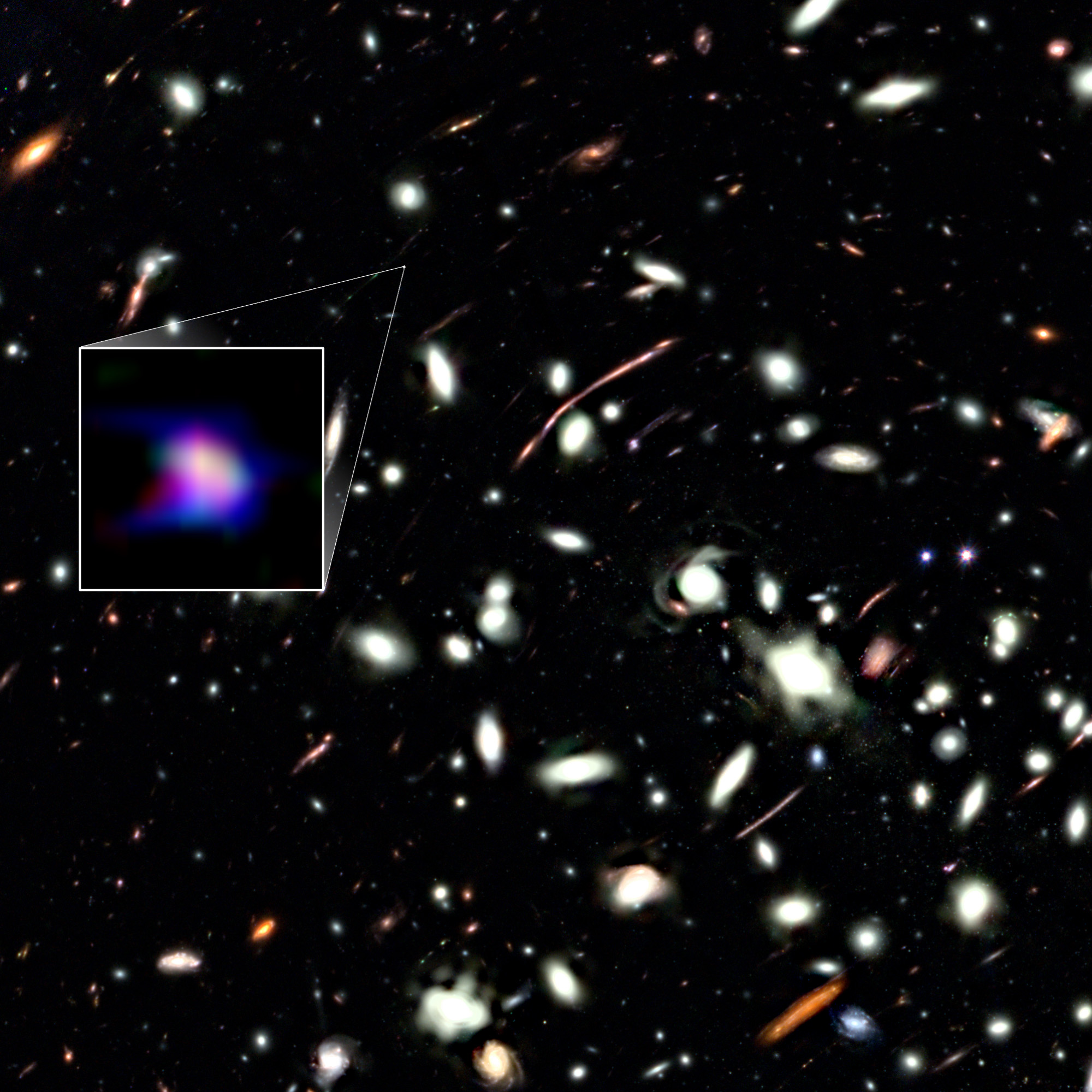
The low-surface-brightness galaxy CDG-2, within the dashed red circle at right, is dominated by dark matter and contains only a sparse scattering of stars. Credit Image: NASA, ESA, Dayi Li (UToronto); Image Processing: Joseph DePasquale (STScI)

"Dark Galaxy" Identified by Hubble (Video)
An elusive object, dubbed CDG-2, may be among the most heavily dark matter-dominated galaxies ever discovered.
Credits: Producer:
Paul Morris (eMITS) and Technical support: Aaron E. Lepsch (ADNET Systems, Inc.)

This image of dark galaxy CDG-2 was captured by the Hubble Space Telescope’s ACS (Advanced Camera for Surveys) with additional data from the European Space Agency’s Euclid space mission. The image shows a scale bar, compass arrows, and color key for reference. Credit Science: NASA, ESA, Dayi Li (UToronto); Image Processing: Joseph DePasquale (STScI)


In the vast tapestry of the universe, most galaxies shine brightly across cosmic time and space. Yet a rare class of galaxies remains nearly invisible — low-surface-brightness galaxies dominated by dark matter and containing only a sparse scattering of faint stars.

One such elusive object, dubbed CDG-2, may be among the most heavily dark matter-dominated galaxies ever discovered. (Dark matter is an invisible form of matter that does not reflect, emit, or absorb light.) The science paper detailing this finding was published in The Astrophysical Journal Letters.

Detecting such faint galaxies is extraordinarily difficult. Using advanced statistical techniques, David Li of the University of Toronto, Canada, and his team identified 10 previously confirmed low-surface-brightness galaxies and two additional dark galaxy candidates by searching for tight groupings of globular clusters — compact, spherical star groups typically found orbiting normal galaxies. These clusters can signal the presence of a faint, hidden stellar population.

To confirm one of the dark galaxy candidates, astronomers employed a trio of observatories: NASA’s Hubble Space Telescope, ESA’s (European Space Agency) Euclid space observatory, and the ground-based Subaru Telescope in Hawaii. Hubble’s high-resolution imaging revealed a close collection of four globular clusters in the Perseus galaxy cluster, 300 million light-years away. Follow-up studies using Hubble, Euclid, and Subaru data then revealed a faint, diffuse glow surrounding the star clusters — strong evidence of an underlying galaxy.

“This is the first galaxy detected solely through its globular cluster population,” said Li. “Under conservative assumptions, the four clusters represent the entire globular cluster population of CDG-2.”

Preliminary analysis suggests CDG-2 has the luminosity of roughly 6 million Sun-like stars, with the globular clusters accounting for 16% of its visible content. Remarkably, 99% of its mass, which includes both visible matter and dark matter, appears to be dark matter. Much of its normal matter to enable star formation — primarily hydrogen gas — was likely stripped away by gravitational interactions with other galaxies inside the Perseus cluster.

Globular clusters possess immense stellar density and are gravitationally tightly bound. This makes the clusters more resistant to gravitational tidal disruption, and therefore reliable tracers of such ghostly galaxies.

As sky surveys expand with missions like Euclid, NASA’s upcoming Nancy Grace Roman Space Telescope, and the Vera C. Rubin Observatory, astronomers are increasingly turning to machine learning and statistical methods to sift through vast datasets.

The Hubble Space Telescope has been operating for more than three decades and continues to make ground-breaking discoveries that shape our fundamental understanding of the universe. Hubble is a project of international cooperation between NASA and ESA (European Space Agency). NASA’s Goddard Space Flight Center in Greenbelt, Maryland, manages the telescope and mission operations. Lockheed Martin Space, based in Denver, also supports mission operations at Goddard. The Space Telescope Science Institute in Baltimore, which is operated by the Association of Universities for Research in Astronomy, conducts Hubble science operations for NASA.


Details:

Last Updated: Feb 18, 2026
Editor: Andrea Gianopoulos
Location: NASA Goddard Space Flight Center

Contact Media:

Claire Andreoli
NASA’s Goddard Space Flight Center
Greenbelt, Maryland

claire.andreoli@nasa.gov

Christine Pulliam
Space Telescope Science Institute
Baltimore, Maryland


Related Links and Documents


Wednesday, February 11, 2026

'Dark matter, not a black hole, could power Milky Way's heart'

Artistic representation of the Milky Way, where the innermost stars move at near relativistic speeds (defined as velocities that constitute a significant fraction of the speed of light, typically considered to be 10% or more) around a dense core of dark matter, with no black hole at the centre. At greater distances, the halo part of the same invisible dark matter distribution continues to shape the motions of stars in the outskirts of our galaxy, tracing the characteristic rotation curve. Credit: Valentina Crespi et al.
Licence type: Attribution (CC BY 4.0)

Our Milky Way galaxy may not have a supermassive black hole at its centre but rather an enormous clump of mysterious dark matter exerting the same gravitational influence, astronomers say.

They believe this invisible substance – which makes up most of the universe's mass – can explain both the violent dance of stars just light-hours (often used to measure distances within our own solar system) away from the galactic centre and the gentle, large-scale rotation of the entire matter in the outskirts of the Milky Way.

The new study has been published today in Monthly Notices of the Royal Astronomical Society (MNRAS)

It challenges the leading theory that Sagittarius A* (Sgr A*), a proposed black hole at the heart of our galaxy, is responsible for the observed orbits of a group of stars, known as the S-stars, which whip around at tremendous speeds of up to a few thousand kilometres per second.

The international team of researchers have instead put forward an alternative idea – that a specific type of dark matter made up of fermions, or light subatomic particles, can create a unique cosmic structure that also fits with what we know about the Milky Way's core.

It would in theory produce a super-dense, compact core surrounded by a vast, diffuse halo, which together would act as a single, unified entity.

The inner core would be so compact and massive that it could mimic the gravitational pull of a black hole and explain the orbits of S-stars that have been observed in previous studies, as well as the orbits of the dust-shrouded objects known as G-sources which also exist nearby.

Of particular importance to the new research is the latest data from the European Space Agency's GAIA DR3 mission, which has meticulously mapped the rotation curve of the Milky Way's outer halo, showing how stars and gas orbit far from the centre.

It observed a slowdown of our galaxy's rotation curve, known as the Keplerian decline, which the researchers say can be explained by their dark matter model's outer halo when combined with the traditional disc and bulge mass components of ordinary matter.

This, they add, strengthens the 'fermionic' model by highlighting a key structural difference. While traditional Cold Dark Matter halos spread out following an extended 'power law' tail, the fermionic model predicts a tighter structure, leading to more compact halo tails.

The research has been carried out by an international collaboration involving the Institute of Astrophysics La Plata in Argentina, International Centre for Relativistic Astrophysics Network and National Institute for Astrophysics in Italy, Relativity and Gravitation Research Group in Colombia and Institute of Physics University of Cologne in Germany.

"This is the first time a dark matter model has successfully bridged these vastly different scales and various object orbits, including modern rotation curve and central stars data," said study co-author Dr Carlos Argüelles, of the Institute of Astrophysics La Plata.

"We are not just replacing the black hole with a dark object; we are proposing that the supermassive central object and the galaxy's dark matter halo are two manifestations of the same, continuous substance."

Crucially, this fermionic dark matter model had already passed a significant test. A previous study by Pelle et al. (2024), also published in MNRAS, showed that when an accretion disk illuminates these dense dark matter cores, they cast a shadow-like feature strikingly similar to the one imaged by the Event Horizon Telescope (EHT) collaboration for Sgr A*.

"This is a pivotal point," said lead author Valentina Crespi, of the Institute of Astrophysics La Plata.

"Our model not only explains the orbits of stars and the galaxy's rotation but is also consistent with the famous 'black hole shadow' image. The dense dark matter core can mimic the shadow because it bends light so strongly, creating a central darkness surrounded by a bright ring."

The researchers statistically compared their fermionic dark matter model to the traditional black hole model.

They found that while current data for the inner stars cannot yet decisively distinguish between the two scenarios, the dark matter model provides a unified framework that explains the galactic centre (central stars and shadow), and the galaxy at large.

The new study paves the way for future observations. More precise data from instruments such as the GRAVITY interferometer, on the Very Large Telescope in Chile, and thesearch for the unique signature of photon rings – a key feature of black holes and absent in the dark matter core scenario – will be crucial to test the predictions of this new model, the authors say.

The outcome of these findings could potentially reshape our understanding of the fundamental nature of the cosmic behemoth at the heart of the Milky Way.


Media contacts:

Sam Tonkin
Royal Astronomical Society
Mob: +44 (0)7802 877 700

press@ras.ac.uk

Science contacts:

Lic Valentina Crespi
Institute of Astrophysics La Plata

valentinacrespi@fcaglp.fcaglp.unlp.edu.ar

Dr Carlos R. Argüelles
Institute of Astrophysics La Plata

valentinacrespi@fcaglp.fcaglp.unlp.edu.a


Further information

The paper 'The dynamics of S-stars and G-sources orbiting a supermassive compact object made of fermionic dark matter'by V. Crespi et al. has been published in Monthly Notices of the Royal Astronomical Society. DOI: 10.1093/mnras/staf1854.


Notes for editors

About the Royal Astronomical Society

The Royal Astronomical Society (RAS), founded in 1820, encourages and promotes the study of astronomy, solar-system science, geophysics and closely related branches of science.

The RAS organises scientific meetings, publishes international research and review journals, recognises outstanding achievements by the award of medals and prizes,maintains an extensive library, supports education through grants and outreach activities and represents UK astronomy nationally and internationally. Its more than 4,000 members (Fellows), a third based overseas, include scientific researchers in universities, observatories and laboratories as well as historians of astronomy and others.

The RAS accepts papers for its journals based on the principle of peer review, in which fellow experts on the editorial boards accept the paper as worth considering. The Society issues press releases based on a similar principle, but the organisations and scientists concerned have overall responsibility for their content.

Keep up with the RAS on Instagram, Bluesky, LinkedInFacebook and YouTube.

Download the RAS Supermassive podcast

Submitted by Sam Tonkin on