Saturday, November 12, 2022

ESO images a wondrous star factory to mark 60 years of collaboration

PR Image eso2215a
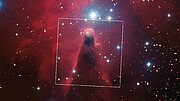
ESO’s 60th anniversary image: the Cone Nebula as seen by the VLT

PR Image eso2215b
Location of the Cone Nebula in the constellation of Monoceros

Wide-field view of the Cone Nebula region of the sky


Videos

Zooming in on the Cone Nebula  
Zooming in on the Cone Nebula


For the past 60 years the European Southern Observatory (ESO) has been enabling scientists worldwide to discover the secrets of the Universe. We mark this milestone by bringing you a spectacular new image of a star factory, the Cone Nebula, taken with ESO’s Very Large Telescope (VLT).

On 5 October 1962 five countries signed the convention to create ESO. Now, six decades later and supported by 16 Member States and strategic partners, ESO brings together scientists and engineers from across the globe to develop and operate advanced ground-based observatories in Chile that enable breakthrough astronomical discoveries.​ 

On the occasion of ESO’s 60th anniversary we are releasing this remarkable new image of the Cone Nebula, captured earlier this year with one of ESO’s telescopes and selected by ESO staff. This is part of a campaign marking ESO's 60th anniversary and taking place in late 2022, both on social media under the #ESO60years hashtag, and with local events in the ESO Member States and other countries. 

In this new image, we see centre-stage the seven-light-year-long pillar of the Cone Nebula, which is part of the larger star-forming region NGC 2264 and was discovered in the late 18th century by astronomer William Herschel. In the sky, we find this horn-shaped nebula in the constellation Monoceros (The Unicorn), a surprisingly fitting name.

Located less than 2500 light-years away, the Cone Nebula is relatively close to Earth, making it a well-studied object. But this view is more dramatic than any obtained before, as it showcases the nebula’s dark and impenetrable cloudy appearance in a way that makes it resemble a mythological creature.

The Cone Nebula is a perfect example of the pillar-like shapes that develop in the giant clouds of cold molecular gas and dust, known for creating new stars. This type of pillar arises when massive, newly formed bright blue stars give off stellar winds and intense ultraviolet radiation that blow away the material from their vicinity. As this material is pushed away, the gas and dust further away from the young stars gets compressed into dense, dark and tall pillar-like shapes. This process helps create the dark Cone Nebula, pointing away from the brilliant stars in NGC 2264.

In this image, obtained with the FOcal Reducer and low dispersion Spectrograph 2 (FORS2) on ESO’s VLT in Chile, hydrogen gas is represented in blue and sulphur gas in red. The use of these filters makes the otherwise bright blue stars, that indicate the recent star formation, appear almost golden, contrasting with the dark cone like sparklers.

This image is just one example of the many stunning and awe-inspiring observations ESO telescopes have made in the past 60 years. While this one was obtained for outreach purposes, the overwhelming majority of ESO’s telescope time is dedicated to scientific observations that have allowed us to capture the first image of an exoplanet, study the black hole at the centre of our home galaxy, and find proof that the expansion of our Universe is accelerating.

Building on our 60 years of experience in astronomy development, discovery and cooperation, ESO continues to chart new territory for astronomy, technology and international collaboration. With our current facilities and ESO’s upcoming Extremely Large Telescope (ELT), we will keep on addressing humanity’s biggest questions about the Universe ​and enabling unimaginable discoveries.


More Information

The image in this release was created as part of the ESO Cosmic Gems programme, an outreach initiative to produce images of interesting, intriguing or visually attractive objects using ESO telescopes, for the purposes of education and public outreach. The programme makes use of telescope time that cannot be used for science observations. All data collected may also be suitable for scientific purposes, and are made available to astronomers through ESO’s science archive.

The European Southern Observatory (ESO) enables scientists worldwide to discover the secrets of the Universe for the benefit of all. We design, build and operate world-class observatories on the ground — which astronomers use to tackle exciting questions and spread the fascination of astronomy — and promote international collaboration in astronomy. Established as an intergovernmental organisation in 1962, today ESO is supported by 16 Member States (Austria, Belgium, the Czech Republic, Denmark, France, Finland, Germany, Ireland, Italy, the Netherlands, Poland, Portugal, Spain, Sweden, Switzerland and the United Kingdom), along with the host state of Chile and with Australia as a Strategic Partner. ESO’s headquarters and its visitor centre and planetarium, the ESO Supernova, are located close to Munich in Germany, while the Chilean Atacama Desert, a marvellous place with unique conditions to observe the sky, hosts our telescopes. ESO operates three observing sites: La Silla, Paranal and Chajnantor. At Paranal, ESO operates the Very Large Telescope and its Very Large Telescope Interferometer, as well as survey telescopes such as VISTA. Also at Paranal ESO will host and operate the Cherenkov Telescope Array South, the world’s largest and most sensitive gamma-ray observatory. Together with international partners, ESO operates APEX and ALMA on Chajnantor, two facilities that observe the skies in the millimetre and submillimetre range. At Cerro Armazones, near Paranal, we are building “the world’s biggest eye on the sky” — ESO’s Extremely Large Telescope. From our offices in Santiago, Chile we support our operations in the country and engage with Chilean partners and society.


Links


Contacts:

Juan Carlos Muñoz Mateos
ESO Media Officer
Garching bei München, Germany
Tel: +49 89 3200 6176
Email:
press@eso.org

Source: ESO/News


Friday, November 11, 2022

Investigating A Made-to-Measure Galaxy

NGC 7038
Credit: ESA/Hubble & NASA, D. Jones
Acknowledgement: G. Anand, L. Shatz

The spiral arms of the galaxy NGC 7038 wind languidly across this image from the NASA/ESA Hubble Space Telescope. NGC 7038 lies around 220 million light-years from Earth in the southern constellation Indus. This image portrays an especially rich and detailed view of a spiral galaxy, and exposes a huge number of distant stars and galaxies around it. That’s because it’s made from a combined 15 hours worth of Hubble time focused on NGC 7038 and collecting light. So much data indicates that this is a valuable target, and indeed, NGC 7038 has been particularly helpful to astronomers measuring distances at vast cosmic scales.

The distances to astronomical objects are determined using an interconnected chain of measurement techniques called the Cosmic Distance Ladder. Each rung in the ladder is calibrated by earlier steps, based on measurements of objects closer to us. This makes the accuracy of distances at the largest scales dependent on how accurately distances to nearby objects can be determined. Hubble inspected NGC 7038 with its Wide Field Camera 3 to calibrate two of the most common distance measurement techniques: type 1A supernovae and Cepheid variables. 

One of Hubble's original science goals was to accurately establish distances to night-sky objects, and over its three decades of operation Hubble’s increasingly precise distance measurements have contributed to one of the most intriguing unsolved problems in astronomy. Distance measurements are used to derive a quantity known as the Hubble constant, which captures how fast the Universe is expanding. As astronomer’s measurements of the Hubble constant have become more precise, their value has become increasingly inconsistent with the value of the Hubble Constant derived from observations of the Big Bang’s afterglow. Astronomers have been unable to explain the mismatch between the two values of the Hubble constant, which suggests that a new discovery in cosmology is waiting to be made.

[Image description: An enormous spiral galaxy fills half of the frame, in the centre. It is oval-shaped, with four blue spiral arms winding around it. The galaxy’s centre shines brightly with pale yellow light. Thin strands of orange dust are spread around the centre, following the paths of the arms. Above and below the galaxy, very many small stars and galaxies are visible on the black background.]

Links


Thursday, November 10, 2022

A Supernova Hits a Cosmic Speed Bump

Images showing a supernova brightening and fading over time
Credit: SDSS/Caltech/Keck, CC BY 4.0

Why did a supernova observed back in 2021 initially emit so much ultraviolet light, then abruptly shift color? A recent study suggests a change in ejecta velocity, a cosmic speed bump, may be the culprit.

Brief Flashes


If you want to study the moments after a white dwarf explodes, speed is key. Each view of these violent ends, dubbed Type Ia supernovae, is temporary: we see a point of light grow brighter, then fainter over the course of months, and many of the interesting science questions can only be answered by catching the earliest moments after the eruption. This is an extremely difficult task considering that no one knows where a Type Ia supernova might go off, and consequently astronomers must scan the entire sky looking for tiny pinpricks of light that weren’t there before.

Although the adoption of automated telescopes in recent years has made this continuous needle-in-a-haystack search easier, it is still rare for astronomers to collect thorough measurements of a supernova many days before it reaches peak brightness. Recently, however, a team led by Chris Ashall (University of Hawaiʻi at Manoa) did just that, and what they found was somewhat surprising.


Top: the u-band photometry of SN 2021aefx measured in days until peak brightness, along with several possible fits. Bottom: the color evolution of SN 2021aefx, which reverses direction about 16 days before maximum brightness. Another supernova that followed a similarly non-monotonic path, SN 2018aoz, is included for comparison. Credit: Adapted from Ashall et al 2022.


Too Blue

The team’s target, named SN 2021aefx, initially emitted lots of ultraviolet light (u-band light, in observational astronomy parlance). However, in the first days after the explosion as the remnants grew brighter across all wavelengths, the growth of the u-band light didn’t follow the expected t2 power law. Instead, after its strong start, the ultraviolet emission stumbled: it still grew brighter, but followed a gentler two-component model with two different power indices. While the u-band emission faltered, all other wavelengths grew as expected, and this relative difference in growth rates changed color of the supernova soon after initial detection.

To figure out why this offbeat supernova generated so much ultraviolet light before changing its tune, the team collected spectra as well as multiband photometry. These data revealed that the supernova ejecta had a very high initial velocity of about 30,000 km/s 17 days before peak brightness, but that it slowed to 21,000 km/s less than two days later.


A spectrum of SN 2021aefx taken 17.3 days before maximum brightness, artificially blueshifted by different amounts. The u and B bandpasses are marked in blue and red, respectively. Note on the inset that blueshifts affect the observed flux within the u band, but only weakly affect the B-band values. Credit: Adapted from Ashall et al 2022.


Slow It Down

That speed change, combined with the difference in spectral shape across the u and B bands, was key to the authors’ explanation of the excess ultraviolet light. By artificially adjusting the velocity of their spectrum, Ashall and collaborators demonstrated that they could blueshift their way to a higher u-band measurement without affecting their B-band values. Putting it all together, the team claimed that the guts of this star hit a speed bump: when the ejecta were bolting out of the gate, more of their emitted light fell into the u band, but after abruptly slowing down, their emission tumbled back into the B band.

This study only focused on observations between 17 and 6 days before peak brightness, though the authors plan to publish fuller light curves they acquired. In the meantime, we’ll have to wonder about any other obstacles these supernova remnants might face on their journey through the universe.

Citation

“A Speed Bump: SN 2021aefx Shows that Doppler Shift Alone Can Explain Early Excess Blue Flux in Some Type Ia Supernovae,” C. Ashall et al 2022 ApJL 932 L2. doi:10.3847/2041-8213/ac738c

By Ben Cassese

Wednesday, November 09, 2022

Hubble Captures 3 Faces of Evolving Supernova in Early Universe

Lensed Supernova in Abell 370
Credits: Science: NASA, ESA, STScI, Wenlei Chen (UMN), Patrick Kelly (UMN), Hubble Frontier Fields


Multiple Light Paths of Single, Lensed Supernova
Credits: Illustration: NASA, ESA, Alyssa Pagan (STScI)


Three different moments in a far-off supernova explosion were captured in a single snapshot by NASA's Hubble Space Telescope. The star exploded more than 11 billion years ago, when the universe was less than a fifth of its current age of 13.8 billion years.

This is the first detailed look at a supernova so early in the universe's history. The research could help scientists learn more about the formation of stars and galaxies in the early universe. The supernova images are also special because they show the early stages of a stellar explosion.

"It is quite rare that a supernova can be detected at a very early stage, because that stage is really short," explained Wenlei Chen, first author of the paper and a postdoctoral researcher in the University of Minnesota School of Physics and Astronomy. "It only lasts for hours to a few days, and it can be easily missed even for a nearby detection. In the same exposure, we are able to see a sequence of the images—like multiple faces of a supernova."

This was possible through a phenomenon called gravitational lensing, which was first predicted in Einstein's theory of general relativity. In this case, the immense gravity of the galaxy cluster Abell 370 acted as a cosmic lens, bending and magnifying the light from the more distant supernova located behind the cluster.

The warping also produced multiple images of the explosion over different time periods that all arrived at Earth at the same time and were caught in one Hubble image. That was possible only because the magnified images took different routes through the cluster due both to differences in the length of the pathways the supernova light followed, and to the slowing of time and curvature of space due to gravity.

The Hubble exposure also captured the fading supernova's rapid change of color, which indicates temperature change. The bluer the color means the hotter the supernova is. The earliest phase captured appears blue. As the supernova cooled its light turned redder.

"You see different colors in the three different images," said Patrick Kelly, study leader and an assistant professor in the University of Minnesota's School of Physics and Astronomy. "You've got the massive star, the core collapses, it produces a shock, it heats up, and then you're seeing it cool over a week. I think that's probably one of the most amazing things I've ever seen!"

This is also the first time astronomers were able to measure the size of a dying star in the early universe. This was based on the supernova's brightness and rate of cooling, both of which depend on the size of the progenitor star. Hubble observations show that the red supergiant whose supernova explosion the researchers discovered was about 500 times larger than the Sun.

Chen, Kelly, and an international team of astronomers found this supernova by sifting through the Hubble data archives, looking for transient events. Chen wrote machine-learning algorithms to find these events, but this was the only multiply imaged supernova identified.

Chen and Kelly both have time planned for NASA's James Webb Space Telescope to observe even more distant supernovae. They hope to contribute to a catalog of very far-off supernovae to help astronomers understand if the stars that existed many billions of years ago are different from those in the nearby universe.

The team's paper, entitled "Shock cooling of a red-supergiant supernova at redshift 3 in lensed images ," will be published in Nature on November 10.

The Hubble Space Telescope is a project of international cooperation between NASA and ESA. NASA's Goddard Space Flight Center in Greenbelt, Maryland, manages the telescope. The Space Telescope Science Institute (STScI) in Baltimore conducts Hubble science operations. STScI is operated for NASA by the Association of Universities for Research in Astronomy, in Washington, D.C.


About This Release:

Credits

Media Contact:

Ann Jenkins
Space Telescope Science Institute, Baltimore, Maryland

Ray Villard
Space Telescope Science Institute, Baltimore, Maryland

Science Contact:

Wenlei Chen
University of Minnesota, Minneapolis, Minnesota

Patrick Kelly
University of Minnesota, Minneapolis, Minnesota

Permissions: Content Use Policy

Contact Us: Direct inquiries to the News Team.

Related Links and Documentshttps:


Tuesday, November 08, 2022

New Record: Nearest Known Black Hole to Earth Discovered


A bright, sun-like star orbiting the closest known black hole to earth, named gaia bh1. Credit: T. Müller (MPIA), PanSTARRS DR1 (K. C. Chambers et al. 2016), ESA/Gaia/DPAC (CC BY-SA 3.0 IGO)


Maunakea, Hawaiʻi – Astronomers using two Maunakea Observatories, W. M. Keck Observatory and the Gemini North telescope, have found the closest known black hole to our planet. Located a mere 1,560 light-years away from Earth in the constellation Ophiuchus, the black hole, named Gaia BH1, is three times closer to us than the previous record-holder.

The new study, which includes data from Keck Observatory’s High-Resolution Echelle Spectrometer (HIRES) and Echellette Spectrograph and Imager (ESI), is published in the journal Monthly Notices of the Royal Astronomical Society.

A research team led by the Max Planck Institute for Astronomy (MPIA) made the discovery by tracking Gaia BH1’s companion – a bright Sun-like star that orbits the black hole once every 185.6 days at about the same distance as the Earth orbits the Sun.

“Take the solar system, put a black hole where the Sun is, and the Sun where the Earth is, and you get this system,” said lead author Kareem El-Badry, an astrophysicist at MPIA and the Harvard & Smithsonian Center for Astrophysics. “While there have been many claimed detections of systems like this, almost all these discoveries have subsequently been refuted. This is the first unambiguous detection of a Sun-like star in a wide orbit around a stellar-mass black hole in our galaxy.”

Stellar-mass black holes form when dying massive stars collapse in on themselves. To find these dark, hard-to-detect objects, El-Badry’s team combed through data from the European Space Agency’s (ESA) Gaia spacecraft, which is designed to measure the motion of one billion stars in the Milky Way as they orbit around the center of our galaxy.

One star’s behavior caught the team’s attention; its orbit was larger than expected for its orbital period, suggesting the presence of a massive, unseen companion. For a more detailed look, the researchers conducted follow-up observations at several ground-based telescopes, including Gemini North and Keck Observatory in Hawaiʻi, and determined the star’s companion is a black hole that is 10 times more massive than the Sun.

“I have been searching for a system like Gaia BH1 for the last four years, trying all kinds of methods – but none of them worked,” said El-Badry. “It has been elating to see this search finally bear fruit.”

Learn more:

Zooming towards the black hole Gaia BH1. Background: region of the Milky Way galaxy; Panel 1: an image of the star orbiting the black hole; Panel 2: reconstructed orbit of the star; Panel 3: relativistic light-bending effects that would be visible if we could see star and black hole up close. Credit: T. Müller (MPIA), PanSTARRS DR1 (K. C. Chambers et al. 2016), ESA/Gaia/DPAC (CC BY-SA 3.0 IGO)


About HIRES

The High-Resolution Echelle Spectrometer (HIRES) produces spectra of single objects at very high spectral resolution, yet covering a wide wavelength range. It does this by separating the light into many “stripes” of spectra stacked across a mosaic of three large CCD detectors. HIRES is famous for finding exoplanets. Astronomers also use HIRES to study important astrophysical phenomena like distant galaxies and quasars, and find cosmological clues about the structure of the early universe, just after the Big Bang.

About ESI

The Echellette Spectrograph and Imager (ESI) is a medium-resolution visible-light spectrograph that records spectra from 0.39 to 1.1 microns in each exposure. Built at UCO/Lick Observatory by a team led by Prof. Joe Miller, ESI also has a low-resolution mode and can image in a 2 x 8 arc min field of view. An upgrade provided an integral field unit that can provide spectra everywhere across a small, 5.7 x4.0 arc sec field. Astronomers have found a number of uses for ESI, from observing the cosmological effects of weak gravitational lensing to searching for the most metal-poor stars in our galaxy.

About W. M. Keck Observatory
 
The W. M. Keck Observatory telescopes are among the most scientifically productive on Earth. The two 10-meter optical/infrared telescopes atop Maunakea on the Island of Hawaii feature a suite of advanced instruments including imagers, multi-object spectrographs, high-resolution spectrographs, integral-field spectrometers, and world-leading laser guide star adaptive optics systems. Some of the data presented herein were obtained at Keck Observatory, which is a private 501(c) 3 non-profit organization operated as a scientific partnership among the California Institute of Technology, the University of California, and the National Aeronautics and Space Administration. The Observatory was made possible by the generous financial support of the W. M. Keck Foundation. The authors wish to recognize and acknowledge the very significant cultural role and reverence that the summit of Maunakea has always had within the Native Hawaiian community. We are most fortunate to have the opportunity to conduct observations from this mountain.


Monday, November 07, 2022

Cool circumgalactic gas in galaxy clusters

Figure 1: Differential average surface mass density of MgII absorbers as a function of radius in and around DESI legacy galaxy clusters (purple), SDSS DR16 star-forming galaxies (blue) and SDSS luminous red galaxies (orange). The solid lines are best-fitting models described in Anand et al. 2022.© MPA

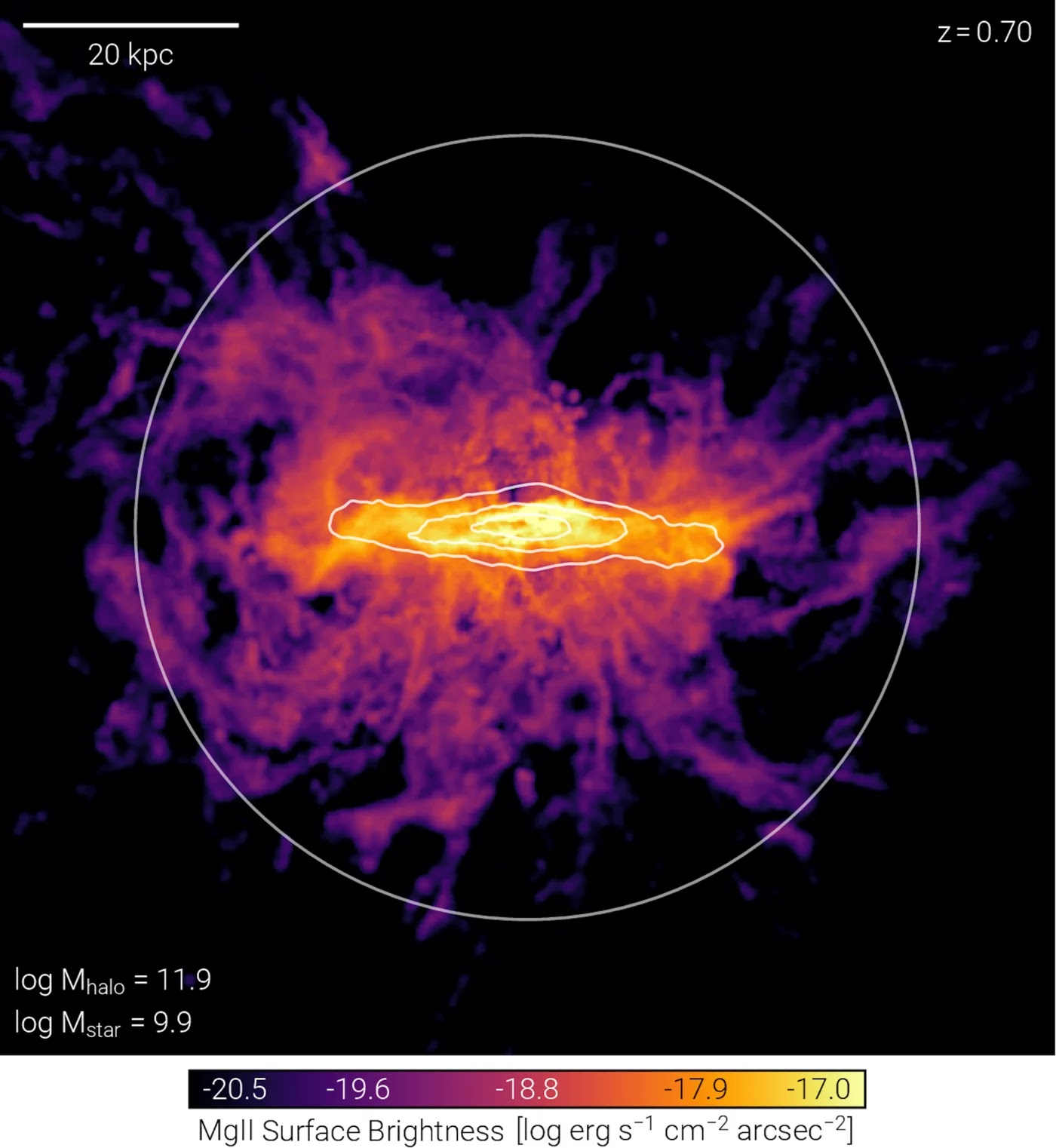
Figure 2: MgII emission surface brightness map around a star-forming galaxy simulated in TNG50 (Nelson et al. 2021). The extended emission from the galaxy out into the circumgalactic medium at distances of ∼ 10 − 20 kpc, with a complex morphology, can easily be seen. © MPA

Galaxy clusters are our universe's largest gravitationally bound systems, extending out to several million light-years and hosting up to 1000 galaxies. The matter permeating the clusters is known as the “intracluster medium” (ICM), a very hot and ionized gas (T~ 10-100 million K) emitting bright X-rays due to thermal bremsstrahlung. Scientists from MPA and the University of Heidelberg have discovered that the ICM also contains a significant amount of cool gas (10,000 K) up to large distances. The statistical connection between the haloes of cluster galaxies and absorption features points toward a complex origin of this cool gas where clouds are either associated with satellite galaxies or were previously stripped from their haloes.

Galaxies and the hot plasma around them (ICM) account for less than ~10 per cent of the total mass in galaxy clusters; dark matter makes up the other 90 per cent. Though astronomers have studied the hot ICM extensively with X-ray telescopes in space, such as Chandra and XMM-Newton, detailed studies of cool gas (T~10,000 K) are lacking as there are only few optically identified clusters. Quasar absorption lines at optical wavelengths are a powerful tool to study cool gas, where absorbers in intervening galaxy clusters leave traces in the spectra of a bright background source such as a quasar (see MPA Highlight of July 2021, Figure 1).

One of the most easily detectable absorbers in background quasars is singly-ionized magnesium (MgII), which exhibits a doublet profile, i.e. two absorption lines close together (with 2796 and 2803 Angstrom). Given the low ionization potential of magnesium, it traces cool gas (T ~ 10,000 K) in the circumgalactic (CGM) or intergalactic medium. Though the rest-frame wavelengths fall into the ultra-violet (UV) range, the lines shift to optical wavelengths at redshift z>0.4 and can be detected with ground-based telescopes. Previously, scientists at MPA constructed the most extensive absorber catalogue based on quasars detected in the Sloan Digital Sky Survey (SDSS) using a novel automated algorithm (see MPA Highlight of July 2021), which has allowed us to explore the nature of cool gas around galaxies in an unprecedented way.

The scientists now expanded this study to galaxy clusters, combining the latest absorber catalogue from the SDSS Data Release (DR16) and the Dark Energy Survey Instrument (DESI) legacy surveys cluster catalogue. The MgII-galaxy cluster cross-correlation from these large datasets provide us with an unprecedented opportunity to understand and constrain the nature of the cool gas in ICM. Furthermore, comparing our results with the studies explicitly performed for individual galaxies allows us to understand how the environment affects the nature of the cool gas round galaxies. We find a significant covering fraction relative to random sightlines, with the total Mg II mass within a cluster halo (estimated using surface mass density) being ~ ten times higher than for SDSS luminous red galaxies (see Figure 1). Our analysis also revealed that the covering fraction of cool gas in clusters decreases with increasing mass of the central galaxy.

Are the MgII absorbers detected in clusters associated with the CGM of its member galaxies? To investigate this question, we cross-correlated MgII absorption with cluster member galaxies from DESI and indeed found a statistically significant connection. Our analysis shows that the median projected distance between MgII absorbers and the nearest cluster member is ~200 kpc, compared to ~500 kpc in random mock samples with the same galaxy density profiles. However, we do not find a correlation between MgII strength and the star formation rate of the closest cluster neighbour. Combining our results with results from field galaxies suggests that cool gas in clusters, as traced by Mg II absorption, is: (i) associated with satellite galaxies, (ii) dominated by cold gas clouds in the intracluster medium, rather than by the interstellar medium of galaxies, and (iii) may originate in part from gas stripped from these cluster satellites in the past.

However, given the uncertainties in determining cluster membership for individual galaxies (with photometric redshifts), it is difficult to constrain the relative motion of absorbers and galaxies with our analysis. In the future, the upcoming cluster and active galactic nuclei (AGN) data from eROSITA and spectroscopic data of galaxies from DESI would allow us to perform a robust kinematic study of absorbers and cluster galaxies in more detail. This would put strong constraints on the motion of cool gas in cluster environments. Combining optical studies with the X-ray observations for clusters can also provide strong conditions on the nature of hot and cool gas in ICM.

On the other hand, one critical task would be comparing observational results such as ours with CGM simulations such as TNG50. Figure 2 (taken from Nelson et al. 2021) shows the MgII emission map around a galaxy and how it could be observed with a MUSE-like facility. These results are critical in constraining the physical models of ICM or CGM. An analysis such as ours or high resolution spectra observed with Keck like facility could provide the absorption clouds' size and mass, a key constraint that could then be compared with the theoretical models predicting the formation mechanism of cool gas clouds in such dense environments.

Authors:

Abhijeet Anand
PhD student
tel:2298

abhijeet@mpa-garching.mpg.de

Guinevere Kauffmann
Director
tel:2013

gamk@mpa-garching.mpg.de

Original publication

Anand, A., Kauffmann, G., Nelson, D.
Cool circumgalactic gas in galaxy clusters: connecting the DESI legacy imaging survey and SDSS DR16 MgII absorbers
MNRAS, 513, 3210

Source / DOI


Saturday, November 05, 2022

Can Cosmic Inflation be Ruled Out?

Cosmic inflation is a popular scenario for the earliest phase in the evolution of the universe.
Credit: A. Ijjas, P.J. Steinhardt and A. Loeb (Scientific American, February 2017)

Cambridge, MA – A team of astrophysicists say that cosmic inflation — a point in the universe's infancy when space-time expanded exponentially, and what physicists really refer to when they talk about the 'Big Bang' — can in principle be ruled out in an assumption-free way.

The astrophysicists, from the University of Cambridge, the University of Trento, and Harvard University, say that there is a clear, unambiguous signal in the cosmos which could eliminate inflation as a possibility. Their paper, published today in The Astrophysical Journal Letters, argues that this signal — known as the cosmic graviton background (CGB) — can feasibly be detected, although it will be a massive technical and scientific challenge.

"Inflation was theorized to explain various fine-tuning challenges of the so-called 'hot Big Bang' model,” says the paper's first author Sunny Vagnozzi who is affiliated with Cambridge's Kavli Institute for Cosmology and the University of Trento. "It also explains the origin of structure in our universe as a result of quantum fluctuations."

"However, the large flexibility displayed by possible models for cosmic inflation, which span an unlimited landscape of cosmological outcomes, raises concerns that cosmic inflation is not falsifiable, even if individual inflationary models can be ruled out. Is it possible in principle to test cosmic inflation in a model-independent way?" Vagnozzi asks.

Some scientists raised concerns about cosmic inflation in 2013 when the Planck satellite released its first measurements of the cosmic microwave background (CMB), the universe's oldest light.

"When the results from the Planck satellite were announced, they were held up as a confirmation of cosmic inflation," says Avi Loeb, Professor of Astronomy from Harvard University and Vagnozzi's co-author on the new paper. "However, some of us argued that the results might be showing just the opposite."

Along with Anna Ijjas and Paul Steinhardt, Loeb was one of those who argued that results from Planck showed that inflation posed more puzzles than it solved, and that it was time to consider new ideas about the beginnings of the universe, which, for instance, may have begun not with a bang but with a bounce from a previously contracting cosmos.

The maps of the CMB released by Planck represent the earliest time in the universe humankind could 'see,' 100 million years before the first stars formed. We cannot see farther.

"The actual edge of the observable universe is at the distance that any signal could have travelled at the speed-of-light limit over the 13.8 billion years that elapsed since the birth of the universe," says Loeb. "As a result of the expansion of the universe, this edge is currently located 46.5 billion light years away. The spherical volume within this boundary is like an archaeological dig centered on us: the deeper we probe into it, the earlier is the layer of cosmic history that we uncover, all the way back to the Big Bang which represents our ultimate horizon. What lies beyond the horizon is unknown."

It could be possible to dig even further into the universe’s beginnings by studying near-weightless particles known as neutrinos, which are the most abundant particles that have mass in the universe. The universe allowed neutrinos to travel freely without scattering from approximately a second after the Big Bang, when the temperature was ten billion degrees. The present-day universe must be filled with relic neutrinos from that time,” says Vagnozzi.

Vagnozzi and Loeb say we can go even further back, however, by tracing gravitons, particles which mediate the force of gravity.

"The universe was transparent to gravitons all the way back to the earliest instant traced by known physics, the Planck time: 10 to the power of -43 seconds, when the temperature was the highest conceivable: 10 to the power of 32 degrees," says Loeb. "A proper understanding of what came before that requires a predictive theory of quantum gravity, which we do not possess."

Vagnozzi and Loeb say that once the universe became transparent to gravitons, a relic background of thermal gravitational radiation with a temperature of slightly less than one degree above absolute zero should have been generated: the cosmic graviton background (CGB).

However, the Big Bang theory does not allow for the existence of the CGB, as it suggests that the exponential inflation of the newborn universe diluted relics such as the CGB to a point that they are undetectable.

This can be turned into a test, the team says: if the CGB were detected, clearly this would rule out the entire cosmic inflation paradigm, which does not allow for its existence.

Vagnozzi and Loeb argue that such a test is possible, and the CGB could in principle be detected in the future. The CGB adds to the cosmic radiation budget, which otherwise includes microwave and neutrino backgrounds. It therefore affects the cosmic expansion rate of the early universe at a level that is detectable by next-generation cosmological probes, which could provide the first indirect detection of the CGB.

However, to claim a definitive detection of the CGB, the 'smoking gun' would be the detection of a background of high-frequency gravitational waves peaking at frequencies around 100 GHz. This would be very hard to detect, and would require tremendous technological advances in gyrotron and superconducting magnets technology. Nevertheless, say the researchers, this signal may be within our reach in the future.


About the Center for Astrophysics | Harvard & Smithsonian

The Center for Astrophysics | Harvard & Smithsonian is a collaboration between Harvard and the Smithsonian designed to ask—and ultimately answer—humanity's greatest unresolved questions about the nature of the universe. The Center for Astrophysics is headquartered in Cambridge, MA, with research facilities across the U.S. and around the world.

Media Contact:

Nadia Whitehead
Public Affairs Officer
Center for Astrophysics | Harvard & Smithsonian

nadia.whitehead@cfa.harvard.edu


Friday, November 04, 2022

Astronomers Discover Closest Black Hole to Earth

Artist’s impression of the closest black hole to Earth and its Sun-like companion star


Videos

A Sun-like Star Orbiting Closest Black Hole to Earth


Astronomers using the International Gemini Observatory, operated by NSF’s NOIRLab, have discovered the closest-known black hole to Earth. This is the first unambiguous detection of a dormant stellar-mass black hole in the Milky Way. Its close proximity to Earth, a mere 1600 light-years away, offers an intriguing target of study to advance our understanding of the evolution of binary systems.

Black holes are the most extreme objects in the Universe. Supermassive versions of these unimaginably dense objects likely reside at the centers of all large galaxies. Stellar-mass black holes — which weigh approximately five to 100 times the mass of the Sun — are much more common, with an estimated 100 million in the Milky Way alone. Only a handful have been confirmed to date, however, and nearly all of these are ‘active’ – meaning they shine brightly in X-rays as they consume material from a nearby stellar companion, unlike dormant black holes which do not.

Astronomers using the Gemini North telescope on Hawai‘i, one of the twin telescopes of the International Gemini Observatory, operated by NSF’s NOIRLab, have discovered the closest black hole to Earth, which the researchers have dubbed Gaia BH1. This dormant black hole is about 10 times more massive than the Sun and is located about 1600 light-years away in the constellation Ophiuchus, making it three times closer to Earth than the previous record holder, an X-ray binary in the constellation of Monoceros. The new discovery was made possible by making exquisite observations of the motion of the black hole’s companion, a Sun-like star that orbits the black hole at about the same distance as the Earth orbits the Sun.

Take the Solar System, put a black hole where the Sun is, and the Sun where the Earth is, and you get this system,” explained Kareem El-Badry, an astrophysicist at the Center for Astrophysics | Harvard & Smithsonian and the Max Planck Institute for Astronomy, and the lead author of the paper describing this discovery. “While there have been many claimed detections of systems like this, almost all these discoveries have subsequently been refuted. This is the first unambiguous detection of a Sun-like star in a wide orbit around a stellar-mass black hole in our Galaxy.

Though there are likely millions of stellar-mass black holes roaming the Milky Way Galaxy, those few that have been detected were uncovered by their energetic interactions with a companion star. As material from a nearby star spirals in toward the black hole, it becomes superheated and generates powerful X-rays and jets of material. If a black hole is not actively feeding (i.e., it is dormant) it simply blends in with its surroundings.

>“I've been searching for dormant black holes for the last four years using a wide range of datasets and methods,” said El-Badry. “My previous attempts — as well as those of others — turned up a menagerie of binary systems that masquerade as black holes, but this is the first time the search has borne fruit.

The team originally identified the system as potentially hosting a black hole by analyzing data from the European Space Agency’s Gaia spacecraft. Gaia captured the minute irregularities in the star’s motion caused by the gravity of an unseen massive object. To explore the system in more detail, El-Badry and his team turned to the Gemini Multi-Object Spectrograph instrument on Gemini North, which measured the velocity of the companion star as it orbited the black hole and provided precise measurement of its orbital period. The Gemini follow-up observations were crucial to constraining the orbital motion and hence masses of the two components in the binary system, allowing the team to identify the central body as a black hole roughly 10 times as massive as our Sun.

Our Gemini follow-up observations confirmed beyond reasonable doubt that the binary contains a normal star and at least one dormant black hole,” elaborated El-Badry. “We could find no plausible astrophysical scenario that can explain the observed orbit of the system that doesn’t involve at least one black hole.

The team relied not only on Gemini North’s superb observational capabilities but also on Gemini’s ability to provide data on a tight deadline, as the team had only a short window in which to perform their follow-up observations.

When we had the first indications that the system contained a black hole, we only had one week before the two objects were at the closest separation in their orbits. Measurements at this point are essential to make accurate mass estimates in a binary system,” said El-Badry. “Gemini’s ability to provide observations on a short timescale was critical to the project’s success. If we’d missed that narrow window, we would have had to wait another year.” Astronomers’ current models of the evolution of binary systems are hard-pressed to explain how the peculiar configuration of Gaia BH1 system could have arisen. Specifically, the progenitor star that later turned into the newly detected black hole would have been at least 20 times as massive as our Sun. This means it would have lived only a few million years. If both stars formed at the same time, this massive star would have quickly turned into a supergiant, puffing up and engulfing the other star before it had time to become a proper, hydrogen-burning, main-sequence star like our Sun.

It is not at all clear how the solar-mass star could have survived that episode, ending up as an apparently normal star, as the observations of the black hole binary indicate. Theoretical models that do allow for survival all predict that the solar-mass star should have ended up on a much tighter orbit than what is actually observed.

This could indicate that there are important gaps in our understanding of how black holes form and evolve in binary systems, and also suggests the existence of an as-yet-unexplored population of dormant black holes in binaries.

It is interesting that this system is not easily accommodated by standard binary evolution models,” concluded El-Badry. “It poses many questions about how this binary system was formed, as well as how many of these dormant black holes there are out there.

As part of a network of space- and ground-based observatories, Gemini North has not only provided strong evidence for the nearest black hole to date but also the first pristine black hole system, uncluttered by the usual hot gas interacting with the black hole,” said NSF Gemini Program Officer Martin Still. “While this potentially augurs future discoveries of the predicted dormant black hole population in our Galaxy, the observations also leave a mystery to be solved — despite a shared history with its exotic neighbor, why is the companion star in this binary system so normal?

Gemini North observations were made as part of a director’s discretionary time program (program id: GN-2022B-DD-202).

The International Gemini Observatory is operated by a partnership of six countries, including the United States through the National Science Foundation, Canada through the National Research Council of Canada, Chile through the Agencia Nacional de Investigación y Desarrollo, Brazil through the Ministério da Ciência, Tecnologia e Inovações, Argentina through the Ministerio de Ciencia, Tecnología e Innovación, and Korea through the Korea Astronomy and Space Science Institute. These Participants and the University of Hawaii, which has regular access to Gemini, each maintain a “National Gemini Office” to support their local users.


More Information

El-Badry, K., et al. (2022). “A Sun-like star orbiting a black hole” published in the Monthly Notices of the Royal Astronomical Society. https://doi.org/10.1093/mnras/stac3140

NSF’s NOIRLab (National Optical-Infrared Astronomy Research Laboratory), the US center for ground-based optical-infrared astronomy, operates the international Gemini Observatory (a facility of NSF, NRC–Canada, ANID–Chile, MCTIC–Brazil, MINCyT–Argentina, and KASI–Republic of Korea), Kitt Peak National Observatory (KPNO), Cerro Tololo Inter-American Observatory (CTIO), the Community Science and Data Center (CSDC), and Vera C. Rubin Observatory (operated in cooperation with the Department of Energy’s SLAC National Accelerator Laboratory). It is managed by the Association of Universities for Research in Astronomy (AURA) under a cooperative agreement with NSF and is headquartered in Tucson, Arizona. The astronomical community is honored to have the opportunity to conduct astronomical research on Iolkam Du’ag (Kitt Peak) in Arizona, on Maunakea in Hawai‘i, and on Cerro Tololo and Cerro Pachón in Chile. We recognize and acknowledge the very significant cultural role and reverence that these sites have to the Tohono O'odham Nation, to the Native Hawaiian community, and to the local communities in Chile, respectively.


Links


Contacts:

Kareem Al-Badry
Center for Astrophysics | Harvard & Smithsonian
Max Planck Institute for Astronomy
Email:
kareem.el-badry@cfa.harvard.edu

Charles Blue
Public Information Officer
NSF’s NOIRLab
Tel: +1 202 236 6324
Email:
charles.blue@noirlab.edu


Thursday, November 03, 2022

How NASA’s Roman Telescope Will Scan for Showstopping Explosions

Illustration of a Kilonova

Following its launch no later than May 2027, NASA’s Roman Space Telescope will survey the same areas of the sky every few days. Researchers will mine these data to identify kilonovae – explosions that happen when two neutron stars or a neutron star and a black hole collide and merge. When these collisions happen, a fraction of the resulting debris is ejected as jets, which move near the speed of light. The remaining debris produces hot, glowing, neutron-rich clouds that forge heavy elements, like gold and platinum. Roman’s extensive data will help astronomers better identify how often these events occur, how much energy they give off, and how near or far they are. Credits: Artwwork: NASA, Joseph Olmsted (STScI)


What happens when the densest, most massive stars – that are also super small – collide? They send out brilliant explosions known as kilonovae. Think of these events as the universe’s natural fireworks. Theorists suspect they periodically occur all across the cosmos – both near and far. Scientists will soon have an additional observatory to help follow up on and even scout these remarkable events: NASA’s Nancy Grace Roman Space Telescope, which is set to launch by May 2027.

The key actors in kilonovae are neutron stars, the central cores of stars that collapsed under gravity during supernova explosions. They each have a mass similar to the Sun, but are only about 6 miles (10 kilometers) in diameter. And when they collide, they send out debris moving near the speed of light. These explosions are also thought to forge heavy elements, like gold, platinum, and strontium (which gives actual fireworks their stunning reds). Kilonovae shoot those elements across space, potentially allowing them to end up in rocks forming the crust of terrestrial planets like Earth.

The astronomical community captured one of these remarkable kilonova events in 2017. Scientists at the National Science Foundation’s Laser Interferometer Gravitational-Wave Observatory (LIGO) detected the collision of two neutron stars first with gravitational waves – ripples in space-time. Almost simultaneously, NASA’s Fermi Gamma-ray Space Telescope detected high-energy light. NASA quickly pivoted to observe the event with a broader fleet of telescopes, and captured the fading glow of the blast’s expanding debris in a series of images.

But the players in this example collided practically in our “backyard,” at least in astronomical terms. They lie only 130 million light-years away. There must be more kilonovae – and many that are farther flung – dotting our ever-active universe.

“We don’t yet know the rate of these events,” said Daniel M. Scolnic, an assistant professor of physics at Duke University in Durham, North Carolina. Scolnic led a study that estimates the number of kilonovae that could be discovered by past, present, and future observatories including Roman. “Is the single kilonova we identified typical? How bright are these explosions? What types of galaxies do they occur in?” Existing telescopes can’t cover wide enough areas or observe deeply enough to find more distant examples, but that will change with Roman.

Spotting More, and More Distant, Kilonovae

At this stage, LIGO leads the pack in identifying neutron star mergers. It can detect gravitational waves in all areas of the sky, but some of the most distant collisions may be too weak to be identified. Roman is set to join LIGO’s search, offering complementary qualities that help “fill out” the team. Roman is a survey telescope that will repeatedly scan the same areas of the sky. Plus, Roman's field of view is 200 times larger than the Hubble Space Telescope’s infrared view – not as vast as LIGO’s, but huge for a telescope that takes images. Its cadence will allow researchers to spot when objects on the sky brighten or dim, whether nearby or very far away.

Roman will provide researchers a powerful tool for observing extremely distant kilonovae. This is due to the expansion of space. Light that left stars billions of years ago is stretched into longer, redder wavelengths, known as infrared light, over time. Since Roman specializes in capturing near-infrared light, it will detect light from very distant objects. How distant? “Roman will be able to see some kilonovae whose light has traveled about 7 billion years to reach Earth,” explained Eve Chase, a postdoctoral researcher at Los Alamos National Laboratory in Los Alamos, New Mexico. Chase led a more recent study that simulated how differences in kilonovae ejecta can vary what we expect to observe from observatories including Roman.

There’s a second benefit to near-infrared light: It provides more time to observe these short-lived bursts. Shorter wavelengths of light, like ultraviolet and visible, disappear from view in a day or two. Near-infrared light can be gathered for a week or more. Researchers have been simulating the data to see how this will work. “For a subset of simulated kilonovae, Roman would be able to observe some more than two weeks after the neutron star merger occurred,” Chase added. “It will be an excellent tool for looking at kilonovae that are very far away.”

Soon, researchers will know far more about where kilonovae occur, and how often these explosions occur in the history of the universe. Were those that occurred earlier different in some way? “Roman will allow the astronomy community to begin conducting population studies along with a slew of new analyses on the physics of these explosions,” Scolnic said.

A survey telescope offers enormous possibility – and also a ton of data that will require precise machine learning. Astronomers are meeting this challenge by writing code to automate these searches. Ultimately, Roman’s massive data sets will help researchers unravel perhaps the greatest mysteries about kilonovae to date: What happens after two neutron stars collide? Does it produce a single neutron star, a black hole, or something else entirely? With Roman, we will gather the statistics researchers need to make substantial breakthroughs.

NASA’s Goddard Space Flight Center in Greenbelt, Maryland, manages the Roman mission, with participation by NASA's Jet Propulsion Laboratory in Southern California, and will provide Roman’s Mission Operations Center. The Space Telescope Science Institute in Baltimore will host Roman’s Science Operations Center and lead the data processing of Roman imaging. Caltech/IPAC in Pasadena, California, will house Roman’s Science Support Center and lead the data processing of Roman spectroscopy.


About This Release

Credits

Media Contact:

Claire Blome
Space Telescope Science Institute, Baltimore, Maryland

Christine Pulliam
Space Telescope Science Institute, Baltimore, Maryland

Permissions:
Content Use Policy

Contact Us: Direct inquiries to the News Team.

Related Links and Documents:


Wednesday, November 02, 2022

Hot Jupiters: Planets Can Be Anti-Aging Formula for Stars

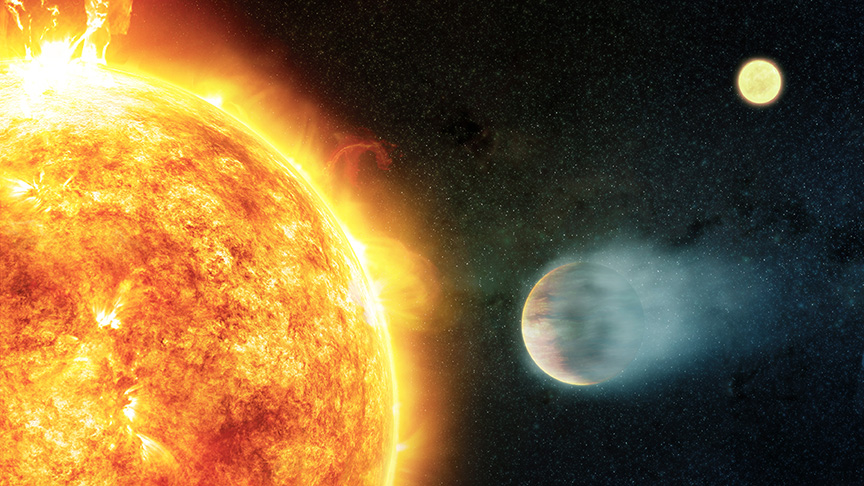
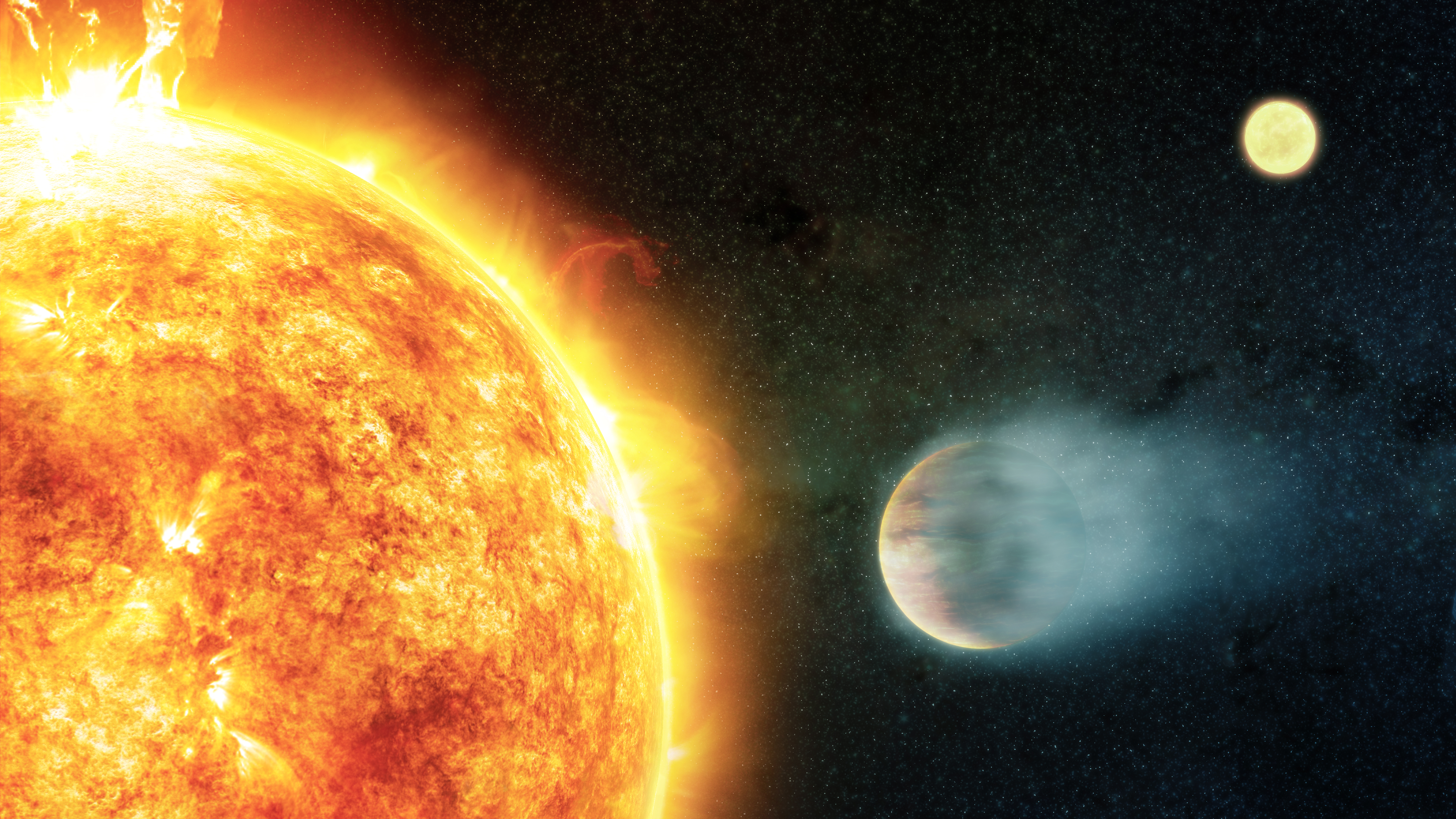
An artist’s illustration shows a gas giant planet (lower right) closely orbiting its host star (left), with another star in the distance (upper right). The two stars are themselves in orbit with each other. Credit: Illustration: NASA/CXC/M.Weiss. X-ray: NASA/CXC/Potsdam Univ./N. Ilic et al.

JPEG (869 kb) - Large JPEG (7.3 MB) - Tiff (37.1 MB) - More Images 

A Tour of Hot Jupiters - More Videos


An artist’s illustration shows a gas giant planet (lower right) closely orbiting its host star (left), with another star in the distance (upper right). The two stars are themselves in orbit with each other. As explained in our latest press release, a team of scientists used NASA’s Chandra X-ray Observatory and ESA’s XMM-Newton to test whether such exoplanets (known as “hot Jupiters”) affect their host star in comparison to the star that does not have one. The results show that these exoplanets can make their host star act younger than it is by causing the star to spin more quickly than it would without such a planet.

The double-star (or “binary”) system in the illustration is one of dozens that astronomers studied using Chandra and XMM-Newton to look for the effects of hot Jupiters on their host stars. A hot Jupiter can potentially influence its host star by tidal forces, causing the star to spin more quickly than if it did not have such a planet. This more rapid rotation can make the host star more active and produce more X-rays, making it appear younger than it really is.

The stars in binary systems form at the same time. The separation between the stars studied by the team, however, is much too large for them to influence each other or for the hot Jupiter to affect the other star. Studying such systems eliminates the challenge that astronomers face in precisely determining the age of individual stars, allowing them to avoid trying to account for the natural decrease in spin rate and activity that occur as stars age. In this new study, the companion star acts as a control for the star with the hot Jupiter.

The team measured the amounts of X-rays produced by the stars to determine how “young” they are acting by studying almost three dozen systems in X-rays (the final sample contained 10 systems observed by Chandra and 6 by ESA’s XMM-Newton, with several observed by both telescopes). The study revealed that the stars with hot Jupiters tended to be brighter in X-rays and therefore more active than their companion stars without hot Jupiters. In the illustration the more active star with the hot Jupiter shows flaring activity and the distant companion star does not. The illustration also shows some of the exoplanet’s atmosphere being blasted away by radiation from its host star.

Separate graphics show Chandra data for two of the systems where one star is orbited by a hot Jupiter (HD189733 and WASP-77) and two with neither star orbited by a hot Jupiter (HD46375 and HD109749). In the latter two systems one of the stars hosts a planet that is more distant or has a lower mass than a hot Jupiter. The stars with hot Jupiters are clearly brighter than their companion stars, including a non-detection for the companion in WASP-77. The stars without hot Jupiters have comparable brightness to their companions. This dependence of a star's X-ray brightness on the type of planet it hosts shows that hot Jupiters make their host stars act younger than they really are.

Labeled X-ray image of the HD189733 and WASP-77 systems
Credit: NASA/CXC/Potsdam Univ./N. Ilic et al

Labeled X-ray image of the HD46375 and HD109749 systems
Credit: NASA/CXC/Potsdam Univ./N. Ilic et al

A paper describing these results appeared in the July 2022 issue of the Monthly Notices of the Royal Astronomical Society, and appears online. The authors are Nikoleta Ilic (Leibniz Institute for Astrophysics Potsdam (AIP) in Germany), Katja Poppenhaeger (AIP), and S. Marzieh Hosseini (AIP). NASA's Marshall Space Flight Center manages the Chandra program. The Smithsonian Astrophysical Observatory's Chandra X-ray Center controls science operations from Cambridge, Massachusetts, and flight operations from Burlington, Massachusetts.

Source: NASA’s Chandra X-ray Observatory


Fast Facts for one of 3 dozen objects in the survey, HD 189733:

Scale: Image of HD 189733 is about 30 arcsec (0.00929 light-years or 3.39 light-days) across.
Category:
Normal Stars & Star Clusters
Coordinates (J2000): RA 20h 00m 43.7s | Dec +22° 42´ 39.1"
Constellation: Vulpecula
Observation Date: July 5, 2011
Observation Time:
5 hours 21 minutes
Obs. ID: 12340
Instrument: ACIS
References:
Ilic, N., et al., 2022, MNRAS, 513, 4380. arXiv:2203.13637
Color Code: X-ray: purple
Distance Estimate: About 64.5 light-years


Tuesday, November 01, 2022

Largest Potentially Hazardous Asteroid Detected in Eight Years

PR Image noirlab2226a
Artist’s impression of an asteroid that orbits closer to the Sun than Earth’s orbit


Videos

Cosmoview Episode 56: Largest Potentially Hazardous Asteroid Detected in Eight Years  
Cosmoview Episode 56: Largest Potentially Hazardous Asteroid Detected in Eight Years

CosmoView Episodio 56: Desde Tololo detectan asteroide potencialmente más peligroso de los últimos 8 años  
CosmoView Episodio 56: Desde Tololo detectan asteroide potencialmente más peligroso de los últimos 8 años


Twilight observations from Cerro Tololo Inter-American Observatory spot three large near-Earth objects lurking in the inner Solar System

Twilight observations with the US Department of Energy-fabricated Dark Energy Camera at Cerro Tololo Inter-American Observatory in Chile, a Program of NSF's NOIRLab, have enabled astronomers to spot three near-Earth asteroids (NEA) hiding in the glare of the Sun. These NEAs are part of an elusive population that lurks inside the orbits of Earth and Venus. One of the asteroids is the largest object that is potentially hazardous to Earth to be discovered in the last eight years.

An international team using the Dark Energy Camera (DECam) mounted on the Víctor M. Blanco 4-meter Telescope at Cerro Tololo Inter-American Observatory in Chile, a Program of NSF’s NOIRLab, has discovered three new near-Earth asteroids (NEAs) hiding in the inner Solar System, the region interior to the orbits of Earth and Venus. This is a notoriously challenging region for observations because asteroid hunters have to contend with the glare of the Sun. 

By taking advantage of the brief yet favorable observing conditions during twilight, however, the astronomers found an elusive trio of NEAs. One is a 1.5-kilometer-wide asteroid called 2022 AP7, which has an orbit that may someday place it in Earth’s path. The other asteroids, called 2021 LJ4 and 2021 PH27, have orbits that safely remain completely interior to Earth’s orbit. Also of special interest to astronomers and astrophysicists, 2021 PH27 is the closest known asteroid to the Sun. As such, it has the largest general-relativity effects [1] of any object in our Solar System and during its orbit its surface gets hot enough to melt lead.

Our twilight survey is scouring the area within the orbits of Earth and Venus for asteroids,” said Scott S. Sheppard, an astronomer at the Earth and Planets Laboratory of the Carnegie Institution for Science and the lead author of the paper describing this work. “So far we have found two large near-Earth asteroids that are about 1 kilometer across, a size that we call planet killers.

There are likely only a few NEAs with similar sizes left to find, and these large undiscovered asteroids likely have orbits that keep them interior to the orbits of Earth and Venus most of the time,” said Sheppard. “Only about 25 asteroids with orbits completely within Earth’s orbit have been discovered to date because of the difficulty of observing near the glare of the Sun.

Finding asteroids in the inner Solar System is a daunting observational challenge. Astronomers have only two brief 10-minute windows each night to survey this area and have to contend with a bright background sky resulting from the Sun’s glare. Additionally, such observations are very near to the horizon, meaning that astronomers have to observe through a thick layer of Earth’s atmosphere, which can blur and distort their observations. [2]

Discovering these three new asteroids despite these challenges was possible thanks to the unique observing capabilities of DECam. The state-of-the-art instrument is one of the highest-performance, wide-field CCD imagers in the world, giving astronomers the ability to capture large areas of sky with great sensitivity. Astronomers refer to observations as ‘deep’ if they capture faint objects. When hunting for asteroids inside Earth’s orbit, the capability to capture both deep and wide-field observations is indispensable. DECam was funded by the US Department of Energy (DOE) and was built and tested at DOE’s Fermilab.
Large areas of sky are required because the inner asteroids are rare, and deep images are needed because asteroids are faint and you are fighting the bright twilight sky near the Sun as well as the distorting effect of Earth’s atmosphere,” said Sheppard. “DECam can cover large areas of sky to depths not achievable on smaller telescopes, allowing us to go deeper, cover more sky, and probe the inner Solar System in ways never done before.

As well as detecting asteroids that could potentially pose a threat to Earth, this research is an important step toward understanding the distribution of small bodies in our Solar System. Asteroids that are further from the Sun than Earth are easiest to detect. Because of that these more-distant asteroids tend to dominate current theoretical models of the asteroid population. [3]

Detecting these objects also allows astronomers to understand how asteroids are transported throughout the inner Solar System and how gravitational interactions and the heat of the Sun can contribute to their fragmentation.

Our DECam survey is one of the largest and most sensitive searches ever performed for objects within Earth’s orbit and near to Venus’s orbit,” said Sheppard. “This is a unique chance to understand what types of objects are lurking in the inner Solar System.

After ten years of remarkable service, DECam continues to yield important scientific discoveries while at the same time contributing to planetary defense, a crucial service that benefits all humanity,” said Chris Davis, NSF Program Director for NOIRLab.

DECam was originally built to carry out the Dark Energy Survey, which was conducted by the DOE and the US National Science Foundation between 2013 and 2019.


Notes

[1] Einstein’s general theory of relativity explains how massive objects warp the fabric of spacetime and how this influences the motion of objects in the Universe. In our Solar System, this influence can be directly measured as, for example, the precession of the orbit of planet Mercury, which cannot be accurately explained using only Newtonian physics.

[2] Observing toward the inner Solar System is challenging for ground-based telescopes and impossible for space-based optical/infrared telescopes like NASA’s Hubble and JWST telescopes. The intense light and heat of the Sun would fry the sensitive electronics. For this reason, both
Hubble and JSWT are always pointed away from the Sun.

[3] Atria asteroids — also known by the Hawaiian term Apohele asteroids — are the smallest group of near-Earth asteroids. Their orbits have an aphelion (farthest point from the Sun) smaller than Earth's perihelion (nearest point to the Sun).


More Information

Sheppard, S. Tholen, D., Pokorný, P., Micheli, M., and Dell’Antoniio, I., et al. (2022). “A deep and wide twilight survey for asteroids interior to Earth and Venus.” Published in The Astronomical Journal, 164, 168. https://doi.org/10.3847/1538-3881/ac8cff

NSF’s NOIRLab (National Optical-Infrared Astronomy Research Laboratory), the US center for ground-based optical-infrared astronomy, operates the international Gemini Observatory (a facility of NSF, NRC–Canada, ANID–Chile, MCTIC–Brazil, MINCyT–Argentina, and KASI–Republic of Korea), Kitt Peak National Observatory (KPNO), Cerro Tololo Inter-American Observatory (CTIO), the Community Science and Data Center (CSDC), and Vera C. Rubin Observatory (operated in cooperation with the Department of Energy’s SLAC National Accelerator Laboratory). It is managed by the Association of Universities for Research in Astronomy (AURA) under a cooperative agreement with NSF and is headquartered in Tucson, Arizona. The astronomical community is honored to have the opportunity to conduct astronomical research on Iolkam Du’ag (Kitt Peak) in Arizona, on Maunakea in Hawai‘i, and on Cerro Tololo and Cerro Pachón in Chile. We recognize and acknowledge the very significant cultural role and reverence that these sites have to the Tohono O'odham Nation, to the Native Hawaiian community, and to the local communities in Chile, respectively.


Links


Contacts:

Scott Sheppard
Email:
ssheppard@carnegiescience.edu

Charles Blue
Public Information Officer
NSF’s NOIRLab
Tel: +1 202 236 6324
Email:
charles.blue@noirlab.edu