Releases from NASA, HubbleSite, Spitzer, ESO, ESA, NASA’s Chandra X-ray Observatory, Royal Astronomical Society, Harvard-Smithsonian Center For Astrophysics, Max Planck Institute, Gemini Observatory, Subaru Telescope, W. M. Keck Observatory, JPL-Caltech, ICRAR, Webb Space Telescope, etc
NASA’s James Webb Space Telescope identified the source of a super bright flash of light known as a gamma-ray burst: a supernova that exploded when the universe was only 730 million years old. Webb’s high-resolution near-infrared images also detected the supernova’s host galaxy. Image: NASA, ESA, CSA, STScI, Andrew Levan (Radboud University); Image Processing: Alyssa Pagan (STScI)
This two-part illustration represents supernova GRB 250314A as it was exploding and three months after that, when Webb observed it. Webb confirmed the supernova occurred when the universe was only 730 million years old. The star clusters at top-left represent its host galaxy. Artwork: NASA, ESA, CSA, STScI, Leah Hustak (STScI)
With this observation, Webb also broke its own record: The previous chart-topping supernova exploded when the universe was 1.8 billion years old.
“Only Webb could directly show that this light is from a supernova — a collapsing massive star,” said Andrew Levan, the lead author of one of two new papers in Astronomy and Astrophysics Letters and a professor at Radboud University in Nijmegen, Netherlands, and the University of Warwick in the United Kingdom. “This observation also demonstrates that we can use Webb to find individual stars when the universe was only 5% of its current age.”
While a gamma-ray burst typically lasts for seconds to minutes, a supernova rapidly brightens over several weeks before it slowly dims. In contrast, this supernova brightened over months. Since it exploded so early in the history of the universe, its light was stretched as the cosmos expanded over billions of years. As light is stretched, so is the time it takes for events to unfold. Webb’s observations were intentionally taken three and a half months after the gamma-ray burst ended, since the underlying supernova was expected to be brightest at that time.
“Webb provided the rapid and sensitive follow-up we needed,” said Benjamin Schneider, a co-author and a postdoctoral researcher at the Laboratoire d'Astrophysique de Marseille in France.
Gamma-ray bursts are incredibly rare. Those that last a few seconds may be caused by two neutron stars, or a neutron star and a black hole colliding. Longer bursts like this one, which lasted around 10 seconds, are frequently linked to the explosive deaths of massive stars.
Immediate, nimble investigation of the source
The first alert chimed March 14. The news of the gamma-ray burst from a very distant source came from the SVOM mission (Space-based multi-band astronomical Variable Objects Monitor), a Franco-Chinese telescope that launched in 2024 and was designed to detect fleeting events.
Within an hour and a half, NASA’s Neil Gehrels Swift Observatory pinpointed the X-ray source’s location on the sky. That enabled subsequent observations that would pin down the distance for Webb.
Eleven hours later, the Nordic Optical Telescope on the Canary Islands was queued up and revealed an infrared-light gamma-ray burst afterglow, an indication that the gamma ray might be associated with a very distant object.
Four hours later, the European Southern Observatory’s Very Large Telescope in Chile estimated the object existed 730 million years after the big bang.
“There are only a handful of gamma-ray bursts in the last 50 years that have been detected in the first billion years of the universe,” Levan said. “This particular event is very rare and very exciting.”
Shockingly similar to nearby supernovae
Since this is the earliest, farthest supernova to be detected to date, researchers compared it to what they know in great detail — modern, nearby supernovae. The two turned out to be very similar, which surprised them.
Why? Little is still known about the first billion years of the universe. Early stars likely contained fewer heavy elements, were more massive, and led shorter lives. They also existed during the Era of Reionization, when gas between galaxies was largely opaque to high-energy light.
“We went in with open minds,” said Nial Tanvir, a co-author and a professor at the University of Leicester in the United Kingdom. “And lo and behold, Webb showed that this supernova looks exactly like modern supernovae.” Before researchers can determine why such an early supernova is similar to nearby supernovae, more data is needed to pinpoint tiny differences.
First look at supernova’s host galaxy
“Webb’s observations indicate that this distant galaxy is similar to other galaxies that existed at the same time,” said Emeric Le Floc’h, a co-author and astronomer at the CEA Paris-Saclay (Commissariat à l'Énergie Atomique et aux Énergies Alternatives) in France. Since the galaxy’s light is blended into a few pixels, making the galaxy look like a reddened smudge, what we can learn about it is still limited. Seeing it at all is a breakthrough.
The researchers have already laid plans to reenlist Webb in the international effort to learn more about gamma-ray bursts emitted by objects in the early universe. The team has been approved to observe events with Webb and now have a new aim: to learn more about galaxies in the distant universe by capturing the afterglow of the gamma-ray bursts themselves. “That glow will help Webb see more and give us a ‘fingerprint’ of the galaxy,” Levan said.
The James Webb Space Telescope is the world’s premier space science observatory. Webb is solving mysteries in our solar system, looking beyond to distant worlds around other stars, and probing the mysterious structures and origins of our universe and our place in it. Webb is an international program led by NASA with its partners, ESA (European Space Agency) and CSA (Canadian Space Agency).
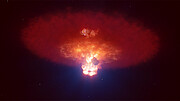
Swift observations with the European Southern Observatory’s Very Large Telescope (ESO’s VLT) have revealed the explosive death of a star just as the blast was breaking through the star’s surface. For the first time, astronomers unveiled the shape of the explosion at its earliest, fleeting stage. This brief initial phase wouldn’t have been observable a day later and helps address a whole set of questions about how massive stars go supernova.
When the supernova explosion SN 2024ggi was first detected on the night of 10 April 2024 local time, Yi Yang, an assistant professor at Tsinghua University in Beijing, China, and the lead author of the new study, had just landed in San Francisco after a long-haul flight. He knew he had to act quickly. Twelve hours later, he had sent an observing proposal to ESO, which, after a very quick approval process, pointed its VLT telescope in Chile at the supernova on 11 April, just 26 hours after the initial detection.
SN 2024ggi is located in the galaxy NGC 3621 in the direction of the constellation Hydra ‘only’ 22 million light-years away, close by in astronomical terms. With a large telescope and the right instrument, the international team knew they had a rare opportunity to unravel the shape of the explosion shortly after it happened. “The first VLT observations captured the phase during which matter accelerated by the explosion near the centre of the star shot through the star’s surface. For a few hours, the geometry of the star and its explosion could be, and were, observed together,” says Dietrich Baade, an ESO astronomer in Germany, and co-author of the study published today in Science Advances.
“The geometry of a supernova explosion provides fundamental information on stellar evolution and the physical processes leading to these cosmic fireworks,” Yang explains. The exact mechanisms behind supernova explosions of massive stars, those with more than eight times the mass of the Sun, are still debated and are one of the fundamental questions scientists want to address. This supernova’s progenitor was a red supergiant star, with a mass 12 to 15 times that of the Sun and a radius 500 times larger, making SN 2024ggi a classical example of a massive-star explosion.
We know that during its life a typical star keeps its spherical shape as a result of a very precise equilibrium of the gravitational force that wants to squeeze it and the pressure of its nuclear engine that wants to expand it. When it runs out of its last source of fuel, the nuclear engine starts sputtering. For massive stars this marks the beginning of a supernova: the core of the dying star collapses, the mass shells around fall onto it and bounce off. This rebound shock then propagates outward, disrupting the star.
Once the shock breaks through the surface, it unleashes immense amounts of energy — the supernova then brightens dramatically and becomes observable. During a short-lived phase, the supernova’s initial ‘breakout’ shape can be studied before the explosion interacts with the material surrounding the dying star.
This is what astronomers have now achieved for the very first time with ESO's VLT, using a technique called ‘spectropolarimetry’. “Spectropolarimetry delivers information about the geometry of the explosion that other types of observation cannot provide because the angular scales are too tiny,” says Lifan Wang, co-author and professor at the Texas A&M University in the US, who was a student at ESO at the start of his astronomy career. Even though the exploding star appears as a single point, the polarisation of its light carries hidden clues about its geometry, which the team were able to unravel. [1]
The only facility in the southern hemisphere capable of capturing the shape of a supernova through such a measurement is the FORS2 instrument installed on the VLT. With the FORS2 data, the astronomers found that the initial blast of material was shaped like an olive. As the explosion spread outwards and collided with the matter around the star, the shape flattened but the axis of symmetry of the ejecta remained the same. "These findings suggest a common physical mechanism that drives the explosion of many massive stars, which manifests a well-defined axial symmetry and acts on large scales,” according to Yang.
With this knowledge astronomers can already rule out some of the current supernova models and add new information to improve other ones, providing insights into the powerful deaths of massive stars. "This discovery not only reshapes our understanding of stellar explosions, but also demonstrates what can be achieved when science transcends borders,” says co-author and ESO astronomer Ferdinando Patat. “It’s a powerful reminder that curiosity, collaboration, and swift action can unlock profound insights into the physics shaping our Universe."
[1] Light particles (photons) have a property calledpolarisation. In a sphere, the shape of most stars, the polarisation of the individual photons cancels out so that the net polarisation of the object is zero. When astronomers measure a non-zero net polarisation, they can use that measurement to infer the shape of the object — a star or a supernova — emitting the observed light.
More information
This research was presented in a paper to appear in Science Advances (doi: 10.1126/sciadv.adx2925).
The team is composed of Y. Yang (Department of Physics, Tsinghua University, China [Tsinghua University]), X. Wen (School of Physics and Astronomy, Beijing Normal University, China [Beijing Normal University] and Tsinghua University), L. Wang (Department of Physics and Astronomy, Texas A&M University, USA [Texas A&M University] and George P. and Cynthia Woods Mitchell Institute for Fundamental Physics & Astronomy Texas A&M University, USA [IFPA Texas A&M University]), D. Baade (European Organisation for Astronomical Research in the Southern Hemisphere, Germany [ESO]), J. C. Wheeler (University of Texas at Austin, USA), A. V. Filippenko (Department of Astronomy, University of California, Berkeley, USA [UC Berkeley] and Hagler Institute for Advanced Study, Texas A&M University, USA), A. Gal-Yam (Department of Particle Physics and Astrophysics, Weizmann Institute of Science, Israel), J. Maund (Department of Physics, Royal Holloway, University of London, United Kingdom), S. Schulze (Center for Interdisciplinary Exploration and Research in Astrophysics, Northwestern University, USA), X. Wang (Tsinghua University), C. Ashall (Department of Physics, Virginia Tech, USA and Institute for Astronomy, University of Hawai’i at Manoa, USA), M. Bulla (Department of Physics and Earth Science, University of Ferrara, Italy and INFN, Sezione di Ferrara, Italy and INAF, Osservatorio Astronomico d’Abruzzo, Italy), A. Cikota (Gemini Observatory/NSF NOIRLab, Chile), H. Gao (Beijing Normal University and Institute for Frontier in Astronomy and Astrophysics, Beijing Normal University, China), P. Hoeflich (Department of Physics, Florida State University, USA), G. Li (Tsinghua University), D. Mishra (Texas A&M University and IFPA Texas A&M University), Ferdinando Patat (ESO), K. C. Patra (California and Department of Astronomy & Astrophysics, University of California, Santa Cruz, USA), S. S. Vasylyev (UC Berkeley), S. Yan (Tsinghua University).
The European Southern Observatory (ESO) enables scientists worldwide to discover the secrets of the Universe for the benefit of all. We design, build and operate world-class observatories on the ground — which astronomers use to tackle exciting questions and spread the fascination of astronomy — and promote international collaboration for astronomy. Established as an intergovernmental organisation in 1962, today ESO is supported by 16 Member States (Austria, Belgium, Czechia, Denmark, France, Finland, Germany, Ireland, Italy, the Netherlands, Poland, Portugal, Spain, Sweden, Switzerland and the United Kingdom), along with the host state of Chile and with Australia as a Strategic Partner. ESO’s headquarters and its visitor centre and planetarium, the ESO Supernova, are located close to Munich in Germany, while the Chilean Atacama Desert, a marvellous place with unique conditions to observe the sky, hosts our telescopes. ESO operates three observing sites: La Silla, Paranal and Chajnantor. At Paranal, ESO operates the Very Large Telescope and its Very Large Telescope Interferometer, as well as survey telescopes such as VISTA. Also at Paranal, ESO will host and operate the south array of the Cherenkov Telescope Array Observatory, the world’s largest and most sensitive gamma-ray observatory. Together with international partners, ESO operates ALMA on Chajnantor, a facility that observes the skies in the millimetre and submillimetre range. At Cerro Armazones, near Paranal, we are building “the world’s biggest eye on the sky” — ESO’s Extremely Large Telescope. From our offices in Santiago, Chile we support our operations in the country and engage with Chilean partners and society.
Dietrich Baade
European Southern Observatory
Garching bei München, Germany
Tel: +49 89 6096 295
Email:dbaade@eso.org
Lifan Wang
Department of Physics & Astronomy, College of Arts & Sciences, Texas A&M University
College Station, Texas, United States
Email:lifan@tamu.edu
Ferdinando Patat
European Southern Observatory
Garching bei München, Germany
Tel: +49 89 3200 6744
Email:fpatat@eso.org
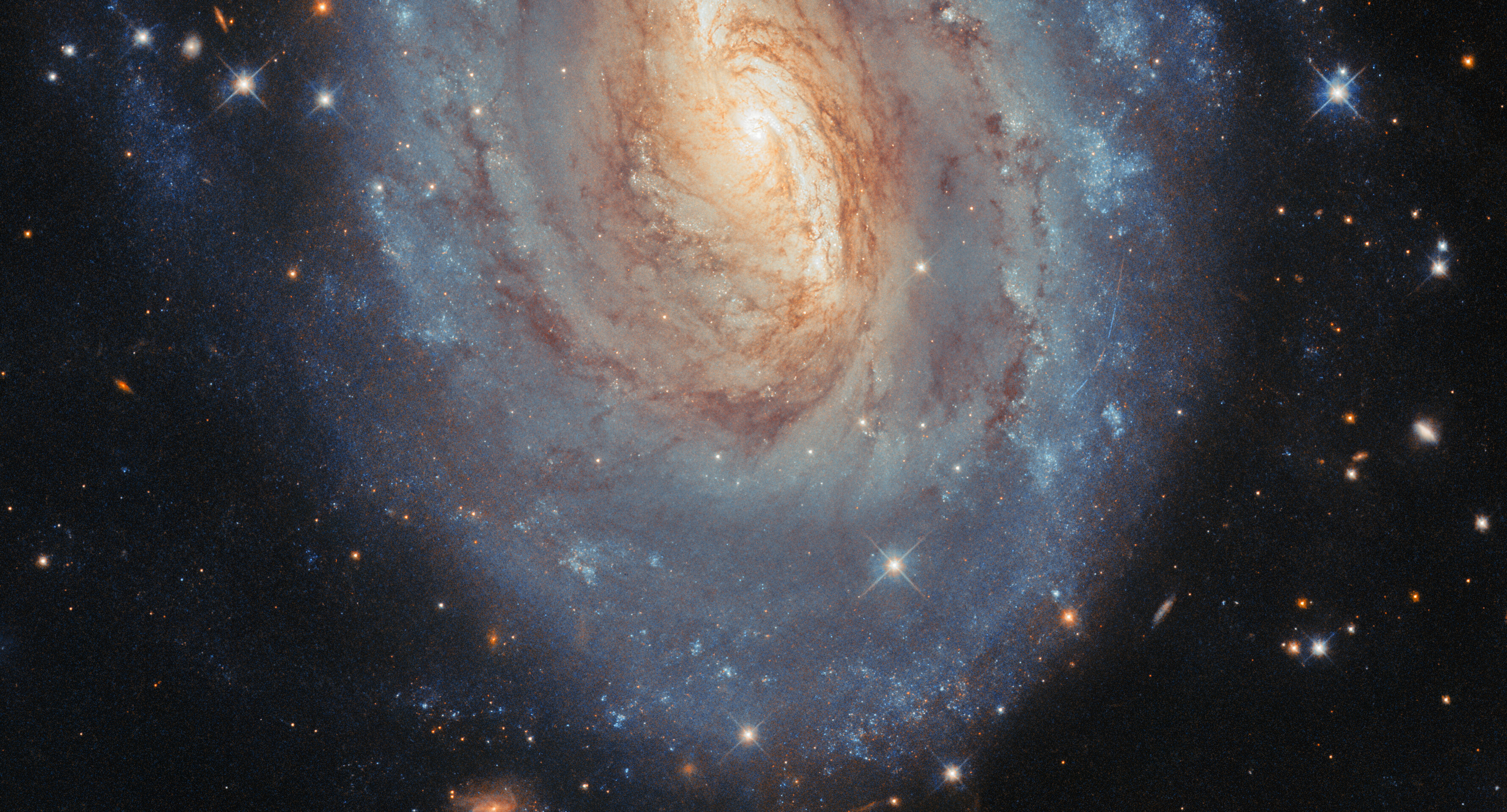
An oval-shaped spiral galaxy, of which only the centre and lower half is in frame. Its centre is mainly golden in colour with a white glowing core, while its thick spiral arms are mostly blue, particularly at the outskirts; the colours merge in between. Dark lanes of dust swirl through the centre, blocking some of its light. Stars and distant galaxies can be seen around the edges on a black background.Credit: ESA/Hubble & NASA, A. Filippenko - Acknowledgement: M. H. Özsaraç
Stars of all ages are on display in today’s NASA/ESA Hubble Space Telescope Picture of the Week. This sparkling spiral galaxy is called NGC 6000 and it is located 102 million light-years away in the constellation Scorpius.
This galaxy has a glowing yellow centre and glittering blue
outskirts. The colours reflect differences in the average ages, masses
and temperatures of the galaxy’s stars.
In the heart of the galaxy, the stars tend to be older and smaller.
Less massive stars are cooler than more massive stars, and somewhat
counterintuitively, cooler stars are redder, while hotter stars are
bluer. Farther out along NGC 6000’s spiral arms, brilliant star clusters
host young, massive stars that appear distinctly blue.
Hubble collected the data for this image while surveying the sites of recent supernova explosions in nearby galaxies. NGC 6000 has hosted two recent
supernovae: SN 2007ch in 2007 and SN 2010as in 2010. Using Hubble’s
sensitive detectors, researchers are able to discern the faint glow of
supernovae years after the initial explosion. These observations help to
constrain the masses of supernova progenitor stars and can indicate if
they had any stellar companions.
By zooming in to the right side of the galaxy’s disc in this image,
you may see something else yellow and blue: a set of four thin lines.
These are an asteroid
in our Solar System, which was drifting across Hubble’s field of view
as it gazed at NGC 6000. The four streaks are due to different exposures
that were recorded one after another with slight pauses in between.
These were combined to create this final image. The colours appear this
way because each exposure used a filter to collect only very specific
wavelengths of light, in this case around red and blue. Having these
separate exposures is important to study and compare stars by their
colours — but it also makes asteroid interlopers very obvious!
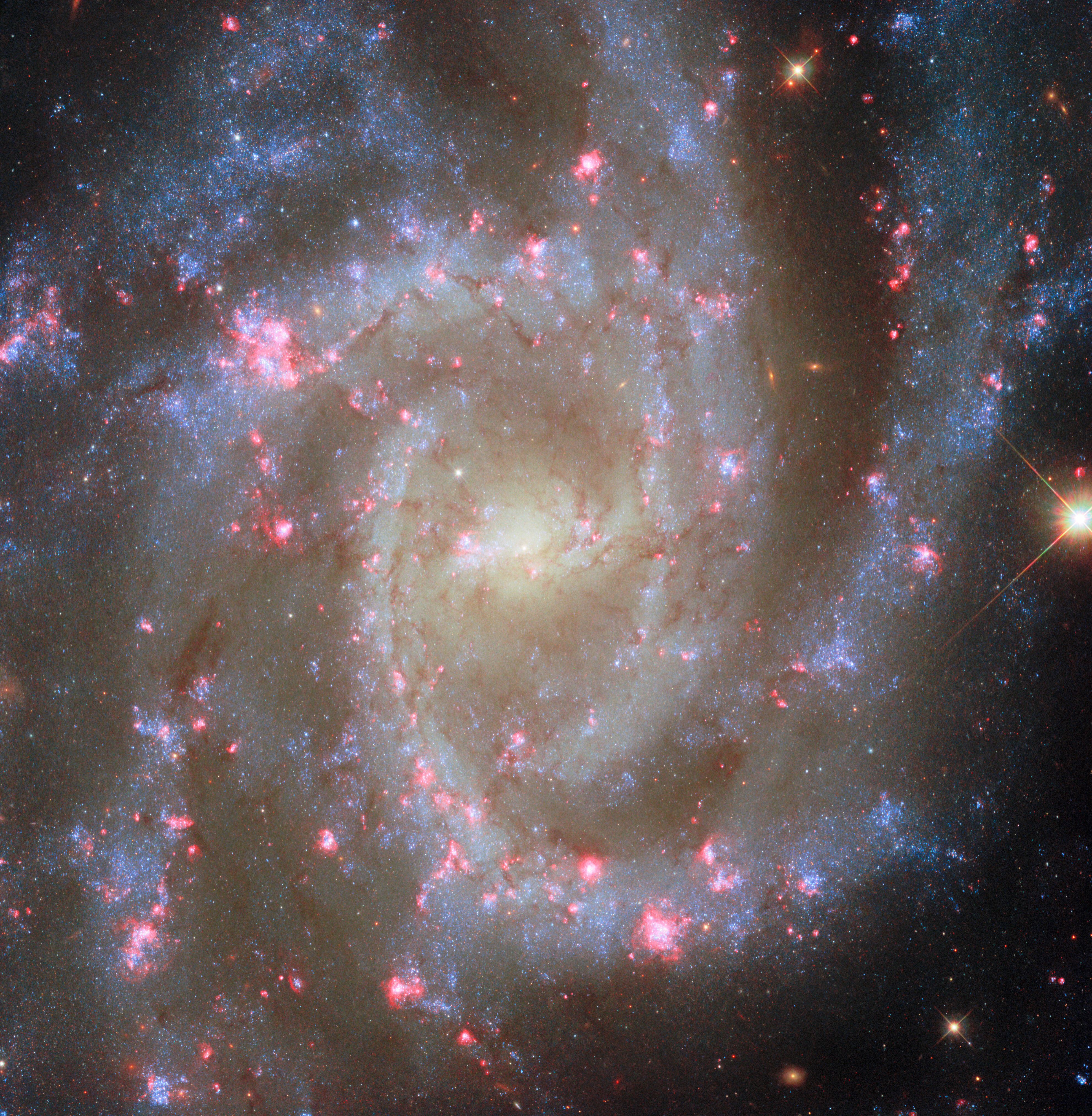
A spiral galaxy seen face-on. Its centre is a bright glowing yellow. The galaxy’s spiral arms contain sparkling blue stars, pink spots of star formation, and dark threads of dust that follow the arms. Credit: ESA/Hubble & NASA, R. Chandar, J. Lee and the PHANGS-HST team
Today’s NASA/ESA Hubble Space Telescope Picture of the Week offers a closeup of a nearby spiral galaxy. The subject is NGC 2835, which lies 35 million light-years away in the constellation Hydra (The Water Snake).
A previous Hubble image of this galaxy was released in 2020, and the NASA/ESA/CSA James Webb Space Telescope turned its gaze toward NGC 2835 in recent years as well. Do you see anything different between today’s image of NGC 2835 and the previously released versions? Overall, NGC 2835 looks quite similar in all of these images, with spiral arms dotted with young blue stars sweeping around an oval-shaped centre, where older stars reside.
This image differs from previously released images because it incorporates new data from Hubble that captures a specific wavelength of red light called H-alpha. The regions that are bright in H-alpha emission can be seen along NGC 2835’s spiral arms, where dozens of
bright pink nebulae appear like flowers in bloom. Astronomers are interested in H-alpha light because it signals the presence of several different types of nebulae that arise during different stages of a star’s life. Newborn massive stars create nebulae called H II regions that are particularly brilliant sources of H-alpha light, while dying stars can leave behind supernova remnants or planetary nebulae that can also be identified by their H-alpha emission.
By using Hubble’s sensitive instruments to survey 19 nearby galaxies, researchers aim to identify more than 50 000 nebulae. These
observations will help to explain how stars affect their birth neighbourhoods through intense starlight and winds.
These two images, taken one year apart by NASA's Hubble Space Telescope, show how the supernova designated SN 2018gv faded over time. The High-Latitude Time-Domain Survey by NASA’s Nancy Grace Roman Space Telescope will spot thousands of supernovae, including a specific type that can be used to measure the expansion history of the universe. Credits/Image: NASA, ESA, Martin Kornmesser (ESA), Mahdi Zamani (ESA/Hubble), Adam G. Riess (STScI, JHU), SH0ES Team
This infographic describes the High-Latitude Time-Domain Survey that will be conducted by NASA’s Nancy Grace Roman Space Telescope. The survey’s main component will cover over 18 square degrees — a region of sky as large as 90 full moons — and see supernovae that occurred up to about 8 billion years ago.
Credits/Illustration: NASA-GSFC
This sonification that uses simulated data from NASA’s OpenUniverse project shows the variety of explosive events that will be detected by NASA’s Nancy Grace Roman Space Telescope and its High-Latitude Time-Domain Survey. Different sounds represent different types of events, as shown in the key at right. A single kilonova seen about 12 seconds into the video is represented with a cannon shot.
The sonification sweeps backward in time to greater distances from Earth, and the pitch of the instrument gets lower as you move outward. (Cosmological redshift has been converted to a light travel time expressed in billions of years.). Credits/Sonification: Martha Irene Saladino (STScI), Christopher Britt (STScI) - Visualization: Frank Summers (STScI) - Designer: NASA, STScI, Leah Hustak (STScI)
NASA’s Nancy Grace Roman Space Telescope will be a discovery machine,
thanks to its wide field of view and resulting torrent of data.
Scheduled to launch no later than May 2027, with the team working toward
launch as early as fall 2026, its near-infrared Wide Field Instrument will capture an area 200 times larger than the Hubble Space Telescope’s
infrared camera, and with the same image sharpness and sensitivity.
Roman will devote about 75% of its science observing time over its
five-year primary mission to conducting three core community surveys that were defined collaboratively by the scientific community. One of
those surveys will scour the skies for things that pop, flash, and
otherwise change, like exploding stars and colliding neutron stars.
Called the High-Latitude Time-Domain Survey,
this program will peer outside of the plane of our Milky Way galaxy
(i.e., high galactic latitudes) to study objects that change over time.
The survey’s main goal is to detect tens of thousands of a particular
type of exploding star known as type Ia supernovae. These supernovae can be used to study how the universe has expanded over time.
“Roman is designed to find tens of thousands of type Ia supernovae
out to greater distances than ever before,” said Masao Sako of the
University of Pennsylvania, who served as co-chair of the committee that
defined the High-Latitude Time-Domain Survey. “Using them, we can
measure the expansion history of the universe, which depends on the
amount of dark matter and dark energy. Ultimately, we hope to understand
more about the nature of dark energy.”
Probing Dark Energy
Type Ia supernovae are useful as cosmological probes because
astronomers know their intrinsic luminosity, or how bright they
inherently are, at their peak. By comparing this with their observed
brightness, scientists can determine how far away they are. Roman will
also be able to measure how quickly they appear to be moving away from
us. By tracking how fast they’re receding at different distances,
scientists will trace cosmic expansion over time.
Only Roman will be able to find the faintest and most distant
supernovae that illuminate early cosmic epochs. It will complement
ground-based telescopes like the Vera C. Rubin Observatory
in Chile, which are limited by absorption from Earth’s atmosphere,
among other effects. Rubin’s greatest strength will be in finding
supernovae that happened within the past 5 billion years. Roman will
expand that collection to much earlier times in the universe’s history,
about 3 billion years after the big bang, or as much as 11 billion years
in the past. This would more than double the measured timeline of the
universe’s expansion history.
Recently, the Dark Energy Survey found hints that dark energy may be weakening over time, rather than being a constant force of expansion. Roman’s investigations will be critical for testing this possibility.
Seeking Exotic Phenomena
To detect transient objects, whose brightness changes over time,
Roman must revisit the same fields at regular intervals. The
High-Latitude Time-Domain Survey will devote a total of 180 days of
observing time to these observations spread over a five-year period.
Most will occur over a span of two years in the middle of the mission,
revisiting the same fields once every five days, with an additional 15
days of observations early in the mission to establish a baseline.
“To find things that change, we use a technique called image
subtraction,” Sako said. “You take an image, and you subtract out an
image of the same piece of sky that was taken much earlier — as early as
possible in the mission. So you remove everything that’s static, and
you’re left with things that are new.”
The survey will also include an extended component that will revisit
some of the observing fields approximately every 120 days to look for
objects that change over long timescales. This will help to detect the
most distant transients that existed as long ago as one billion years
after the big bang. Those objects vary more slowly due to time dilation
caused by the universe’s expansion.
“You really benefit from taking observations over the entire
five-year duration of the mission,” said Brad Cenko of NASA’s Goddard
Space Flight Center in Greenbelt, Maryland, the other co-chair of the
survey committee. “It allows you to capture these very rare, very
distant events that are really hard to get at any other way but that
tell us a lot about the conditions in the early universe.”
This extended component will collect data on some of the most
energetic and longest-lasting transients, such as tidal disruption
events — when a supermassive black hole shreds a star — or predicted but
as-yet unseen events known as pair-instability supernovae, where a
massive star explodes without leaving behind a neutron star or black
hole.
Survey Details
The High-Latitude Time-Domain Survey will be split into two imaging
“tiers” — a wide tier that covers more area and a deep tier that will
focus on a smaller area for a longer time to detect fainter objects. The
wide tier, totaling a bit more than 18 square degrees, will target
objects within the past 7 billion years, or half the universe’s history.
The deep tier, covering an area of 6.5 square degrees, will reach
fainter objects that existed as much as 10 billion years ago. The
observations will take place in two areas, one in the northern sky and
one in the southern sky. There will also be a spectroscopic component to this survey, which will be limited to the southern sky.
“We have a partnership with the ground-based Subaru Observatory,
which will do spectroscopic follow-up of the northern sky, while Roman
will do spectroscopy in the southern sky. With spectroscopy, we can
confidently tell what type of supernovae we’re seeing,” said Cenko.
The Nancy Grace Roman Space Telescope is managed at NASA’s Goddard
Space Flight Center in Greenbelt, Maryland, with participation by NASA’s
Jet Propulsion Laboratory in Southern California; Caltech/IPAC in
Pasadena, California; the Space Telescope Science Institute in
Baltimore; and a science team comprising scientists from various
research institutions. The primary industrial partners are BAE Systems,
Inc. in Boulder, Colorado; L3Harris Technologies in Melbourne, Florida;
and Teledyne Scientific & Imaging in Thousand Oaks, California.
This is an artist’s impression of a magnetar, which is a special type of neutron star with an incredibly strong magnetic field. Neutron stars are some of the most compact and extreme objects in the universe. These stars typically pack more than the mass of the Sun into a sphere of neutrons about 12 miles across. The neutron star is depicted as a white-blueish sphere. The magnetic field is shown as filaments streaming out from its polar regions. Illustration: ESA.Download image
Researchers using NASA’s Hubble Space Telescope
have discovered the magnetar called SGR 0501+4516 is traversing our
galaxy from an unknown place of origin. Researchers say that this
runaway magnetar is the likeliest candidate in our Milky Way galaxy for a
magnetar that was not born in a supernova explosion as initially
predicted. It is so strange it might even offer clues to the mechanism
behind events known as fast radio bursts.
“Magnetars are neutron stars — the dead remnants of stars — composed
entirely of neutrons. What makes magnetars unique is their extreme
magnetic fields,” said Ashley Chrimes, lead author of the discovery
paper published in the April 15 journal Astronomy & Astrophysics. Chrimes is a European Space Agency Research Fellow at the European Space Research and Technology Center in the Netherlands.
Magnetars have comic-book-hero superpowers. A magnetar has a magnetic
field about a trillion times more powerful than Earth’s magnetosphere.
If a magnetar flew by Earth at half the Moon’s distance, its intense
field would wipe out every credit card on our planet. If a human got
within 600 miles, the magnetar would become a proverbial sci-fi
death-ray, ripping apart every atom inside the body.
>The magnetar’s strangeness was identified with the help of Hubble’s
sensitive instruments as well as precise benchmarks from ESA's (European
Space Agency) Gaia spacecraft.
Initially, the mysterious magnetar was discovered in 2008 when NASA’s Swift Observatory
spotted brief, intense flashes of gamma rays from the outskirts of the
Milky Way. The source, which turned out to be one of only about 30 known
magnetars in the Milky Way, was dubbed SGR 0501+4516.
Because magnetars are neutron stars, the natural explanation for their formation is that they are born in supernovae, when a star explodes and can collapse down to an ultra-dense neutron star. This appeared to be the case for SGR 0501+4516, which is located close to a supernova remnant called HB9. The separation between the magnetar and the center of the supernova remnant on the sky is just 80 arcminutes, or slightly wider than your pinky finger when viewed at the end of your outstretched arm.
But a decade-long study with Hubble cast doubt on the magnetar’s birthplace. After initial observations with ground-based telescopes shortly after SGR 0501+4516’s discovery, researchers used Hubble’s exquisite sensitivity and steady pointing to spot the magnetar’s faint infrared glow in 2010, 2012, and 2020. Each of these images was aligned to a reference frame defined by observations from the Gaia spacecraft, which has crafted an extraordinarily precise three-dimensional map of nearly two billion stars in the Milky Way. This method revealed the subtle motion of the magnetar as it traversed the sky.
“All of this movement we measure is smaller than a single pixel of a Hubble image,” said co-investigator Joe Lyman of the University of Warwick, United Kingdom. “Being able to robustly perform such measurements really is a testament to the long-term stability of Hubble.”
By tracking the magnetar’s position, the team was able to measure the object’s apparent motion across the sky. Both the speed and direction of SGR 0501+4516’s movement showed that the magnetar could not be associated with the nearby supernova remnant. Tracing the magnetar’s trajectory thousands of years into the past showed that there were no other supernova remnants or massive star clusters with which it could be associated.
If SGR 0501+4516 was not born in a supernova, the magnetar must either be older than its estimated 20,000-year age, or it may have formed in another way. Magnetars may also be able to form through the merger of two lower-mass neutron stars or through a process called accretion-induced collapse. Accretion-induced collapse requires a binary star system containing a white dwarf: the core of a dead Sun-like star. If the white dwarf pulls in gas from its companion, it can grow too massive to support itself, leading to an explosion — or possibly the creation of a magnetar.
“Normally, this scenario leads to the ignition of nuclear reactions, and the white dwarf exploding, leaving nothing behind. But it has been theorized that under certain conditions, the white dwarf can instead collapse into a neutron star. We think this might be how SGR 0501 was born,” added Andrew Levan of Radboud University in the Netherlands and the University of Warwick in the United Kingdom.
Understanding Fast Radio Bursts
SGR 0501+4516 is currently the best candidate for a magnetar in our galaxy that may have formed through a merger or accretion-induced collapse. Magnetars that form through accretion-induced collapse could provide an explanation for some of the mysterious fast radio bursts, which are brief but powerful flashes of radio waves. In particular, this scenario may explain the origin of fast radio bursts that emerge from stellar populations too ancient to have recently birthed stars massive enough to explode as supernovae.
“Magnetar birth rates and formation scenarios are among the most pressing questions in high-energy astrophysics, with implications for many of the universe’s most powerful transient events, such as gamma-ray bursts, super-luminous supernovae, and fast radio bursts,” said Nanda Rea of the Institute of Space Sciences in Barcelona, Spain.
The research team has further Hubble observations planned to study the origins of other magnetars in the Milky Way, helping to understand how these extreme magnetic objects form.
The Hubble Space Telescope has been operating for over three decades and continues to make ground-breaking discoveries that shape our fundamental understanding of the universe. Hubble is a project of international cooperation between NASA and ESA (European Space Agency). NASA's Goddard Space Flight Center in Greenbelt, Maryland, manages the telescope and mission operations. Lockheed Martin Space, based in Denver, also supports mission operations at Goddard. The Space Telescope Science Institute in Baltimore, which is operated by the Association of Universities for Research in Astronomy, conducts Hubble science operations for NASA.
Winds from a central massive hot star cause the expansion of interstellar material, blowing outwards to create the Bubble Nebula. Credit:NASA, ESA, Hubble Heritage Team;CC BY 4.0
As the solar system travels through the Milky Way, our planet and the life it harbors are exposed to a variety of environments. A recent study suggests that a nearby supernova may have played a role in the evolution of life on Earth
The Local Bubble
About 6 million years ago, the solar system wandered into a 1,000 light-year-wide void known as the Local Bubble. Winds from massive stars and ionizing radiation from an estimated 15 supernovae carved out this bubble over the last 15 million years. As the solar system traveled from the bubble’s edge to its current position in the center, at least nine of the bubble-sculpting supernovae exploded, showering the Earth with supernova byproducts and intense radiation.
Evidence of these past explosions is embedded within the Earth’s crust — radioactive isotopes formed only in supernovae have decayed over time in deep-sea sediments. Less conspicuous are the ways cosmic rays from supernovae may have impacted the Earth; high-energy charged particles rained into the solar system, exposing the planet and the life on it to powerful radiation. Studying the Local Bubble and tracing the history of supernova explosions within it will allow researchers to gauge how the local environment has impacted our planet and the life it harbors.
Map of the Local Bubble showing the locations of surrounding stellar associations. The solar system lies near the center of the Local Bubble, and the surrounding stellar associations hosted supernovae that blew up the bubble. Modified from Nojiri et al 2025
Modeling Nearby Supernovae and Cosmic Radiation
Starting with the decay rate of the deep-sea isotopes, scientists estimate peaks in radioactive iron deposits approximately 2–3 and 5–6 million years ago. Using this information and the recent mapping of stellar associations in the Local Bubble, Caitlyn Nojiri (University of California, Santa Cruz) and collaborators modeled the necessary supernova input to produce the level of radioactive material present on Earth. From their modeling, they estimate that the iron peak ~2.5 million years ago can be attributed to a single supernova explosion from either the Upper Centaurus Lupus or Tucana Horologium stellar associations. The iron peak 5–6 million years ago, the authors suggest, arises from the solar system passing through the enriched outer shell of the Local Bubble.
Given the amount of radioactive iron deposited on Earth, the authors predict a powerful supernova progenitor capable of releasing some of the highest-energy cosmic rays in the universe. Through knowing the approximate location of the supernova and modeling its energy output, the authors estimate the amount of cosmic radiation Earth was exposed to from the time the supernova exploded to now. In their model, cosmic-ray radiation varies over time as the supernova evolves, meaning the Earth received a much higher volume of cosmic rays for the first 100,000 years after the explosion.
Cosmic-ray spectra (top panel) and the amount of cosmic radiation received at various depths on Earth (bottom panel) for the modeled supernova in the Upper Centaurus Lupus stellar association. Modified from Nojiri et al 2025
Impacts on Life
What does this cosmic-ray exposure mean for life on Earth? Though the exact effects of this radiation are not certain, biological studies have shown that radiation exposure can cause DNA to break, which can accelerate the rate at which genetic mutations and evolutionary changes occur. The authors note a prior study that showed the rate of virus diversification in Lake Tanganyika in Africa accelerated 2–3 million years ago. Though this cannot be definitively attributed to the supernova, the overlapping timeframes are suggestive of cosmic radiation playing a role in the evolution of life on our planet.
This study underscores the importance of considering cosmic radiation when it comes to understanding the environmental factors that drove biological evolution on Earth. Further studies must be performed in order to constrain the threshold at which this radiation goes from driving species diversification to becoming detrimental to life and its evolution. The Local Bubble has left imprints on the solar system and on Earth in ways that astronomers and biologists will continue to uncover.
“Life in the Bubble: How a Nearby Supernova Left Ephemeral Footprints on the Cosmic-Ray Spectrum and Indelible Imprints on Life,” Caitlyn Nojiri et al 2025 ApJL 979 L18.doi: 10.3847/2041-8213/ada27a
In the exact centre a supernova is seen as a small but bright blue dot. It lies atop a spiral galaxy, close to the glowing centre and next to some bright patches of blue stars in the galaxy. A small number of more minor galaxies are visible around the comparatively large spiral as small glowing discs, while further distant galaxies are seen as mere orangish spots and smudges, all on a black background. Credit: ESA/Hubble & NASA, R. J. Foley (UC Santa Cruz)
A supernova and its host galaxy are the subject of today’s NASA/ESA Hubble Space Telescope Picture of the Week. The galaxy in question is LEDA 132905, which is situated in the constellation Sculptor.
Even at over 400 million light-years away, LEDA 132905’s spiral
structure is faintly visible, as are patches of bright blue stars.
The bright white dot directly in the centre of the image, between the bright centre of the galaxy and its faint left edge, is a supernova named SN 2022abvt. SN 2022abvt was discovered in late 2022, and Hubble
observed the explosion about two months later. This image was
constructed from data collected to study Type Ia supernovae, which occur
when the exposed core of a dead star ignites in a sudden, destructive
burst of nuclear fusion. Researchers are interested in this type of
supernova because they can be used to measure precise distances to other
galaxies.
The Universe is a big place, and supernova explosions are fleeting.
How is it possible to be in the right place at the right time to catch a
supernova when it happens? Today, most supernovae are discovered by
robotic telescopes that continuously scan the night sky. But some are
still found the old-fashioned way, by careful observers who take
repeated images of the sky and search for changes. SN 2022abvt was
spotted by the Asteroid Terrestrial-impact Last Alert System, or ATLAS.
As the name suggests, ATLAS was designed to track down the faint,
fast-moving signals from asteroids
close to Earth. In addition to searching out asteroids, ATLAS also
keeps tabs on objects that brighten or fade suddenly, like supernovae,
variable stars and galactic centres powered by hungry black holes.
In the exact centre a supernova is seen as a small but bright blue dot. It lies atop the outer disc of a hazy-looking galaxy, which has a somewhat warped shape. Around this are a number of much more minor galaxies visible as glowing discs, and some points of light that are stars near to us, on a black background. X-shaped spikes around each star are optical artefacts from the telescope. Credit: ESA/Hubble & NASA, R. J. Foley (UC Santa Cruz). Hi-res image
The subject of this NASA/ESA Hubble Space Telescope Picture of the Week is a supernova-hosting galaxy located about 600 million light-years away in the constellation Gemini. This picture was taken roughly two months after a supernova
named SN 2022aajn was discovered in this galaxy. The supernova is
visible as a blue dot at the centre of the image, brightening the hazy
body of the galaxy.
Other than the announcement of its discovery in November 2022, SN
2022aajn has never been the subject of published research. Why, then,
would Hubble observe this supernova? SN 2022aajn is what’s known as a
Type Ia supernova, which results from the explosion of the core of a
dead star. Supernovae of this type help astronomers measure the distance
to faraway galaxies. This is possible because Type Ia supernovae are
thought to be of the same intrinsic luminosity — no matter how bright
they seem from Earth, they put out the same amount of light as other
Type Ia supernovae. Thus, by comparing the observed brightness to the
expected brightness, researchers can calculate the distance to the
supernova and its host galaxy.
This seemingly simple measurement method is complicated by cosmic
dust. The farther away a supernova is, the fainter and redder it will
appear — but intergalactic dust can make a supernova appear fainter and
redder as well. To understand this complication, researchers will use
Hubble to survey a total of 100 Type Ia supernovae in seven wavelength
bands from the ultraviolet to the near-infrared. This image combines
data taken at four infrared wavelengths. Infrared light passes through
dust more easily than visible or ultraviolet light. By comparing the
brightness of the sampled supernovae across different wavelengths,
researchers can disentangle the effects of dust and distance, helping to
improve measurements of galaxies billions of light-years away and even
the expansion of our Universe.
Wolf-Rayet 140 (MIRI Compass Image) Credits/Image: NASA, ESA, CSA, STScI
Science: Emma Lieb (University of Denver), Ryan Lau (NSF's NOIRLab), Jennifer Hoffman (University of Denver)
Fade Between 2022 and 2023 Observations of Wolf-Rayet 140 Credits/Video: NASA, ESA, CSA, STScI, Joseph DePasquale (STScI)
Science: Emma Lieb (University of Denver), Ryan Lau (NSF's NOIRLab), Jennifer Hoffman (University of Denver)
Astronomers have long tried to track down how elements like carbon, which is essential for life, become widely distributed across the universe. Now, NASA’s James Webb Space Telescope has examined one ongoing source of carbon-rich dust in our own Milky Way galaxy in greater detail: Wolf-Rayet 140, a system of two massive stars that follow a tight, elongated orbit.
As they swing past one another (within the central white dot in the Webb images), the stellar winds from each star slam together, the material compresses, and carbon-rich dust forms. Webb’s latest observations show 17 dust shells shining in mid-infrared light that are expanding at regular intervals into the surrounding space.
“The telescope not only confirmed that these dust shells are real, its data also showed that the dust shells are moving outward at consistent velocities, revealing visible changes over incredibly short periods of time,” said Emma Lieb, the lead author of the new paper and a doctoral student at the University of Denver in Colorado.
Every shell is racing away from the stars at more than 1,600 miles per second (2,600 kilometers per second), almost 1% the speed of light. “We are used to thinking about events in space taking place slowly, over millions or billions of years,” added Jennifer Hoffman, a co-author and a professor at the University of Denver. “In this system, the observatory is showing that the dust shells are expanding from one year to the next.”
Like clockwork, the stars’ winds generate dust for several months every eight years, as the pair make their closest approach during a wide, elongated orbit. Webb also shows how dust formation varies — look for the darker region at top left in both images.
The telescope’s mid-infrared images detected shells that have persisted for more than 130 years. (Older shells have dissipated enough that they are now too dim to detect.) The researchers speculate that the stars will ultimately generate tens of thousands of dust shells over hundreds of thousands of years.
“Mid-infrared observations are absolutely crucial for this analysis, since the dust in this system is fairly cool. Near-infrared and visible light would only show the shells that are closest to the star,” explained Ryan Lau, a co-author and astronomer at NSF NOIRLab in Tuscon, Arizona, who led the initial research about this system. “With these incredible new details, the telescope is also allowing us to study exactly when the stars are forming dust — almost to the day.”
The dust’s distribution isn’t uniform. Though this isn’t obvious at first glance, zooming in on the shells in Webb’s images reveals that some of the dust has “piled up,” forming amorphous, delicate clouds that are as large as our entire solar system. Many other individual dust particles float freely. Every speck is as small as one-hundredth the width of a human hair. Clumpy or not, all of the dust moves at the same speed and is carbon rich.
The Future of This System
What will happen to these stars over millions or billions of years, after they are finished “spraying” their surroundings with dust? The Wolf-Rayet star in this system is 10 times more massive than the Sun and nearing the end of its life. In its final “act,” this star will either explode as a supernova — possibly blasting away some or all of the dust shells — or collapse into a black hole, which would leave the dust shells intact.
Though no one can predict with any certainty what will happen, researchers are rooting for the black hole scenario. “A major question in astronomy is, where does all the dust in the universe come from?” Lau said. “If carbon-rich dust like this survives, it could help us begin to answer that question.”
“We know carbon is necessary for the formation of rocky planets and solar systems like ours,” Hoffman added. “It’s exciting to get a glimpse into how binary star systems not only create carbon-rich dust, but also propel it into our galactic neighborhood.”
These results have been published in the Astrophysical Journal Letters and were presented in a press conference at the 245th meeting of the American Astronomical Society in National Harbor, Maryland.
The James Webb Space Telescope is the world’s premier space science observatory. Webb will solve mysteries in our solar system, look beyond to distant worlds around other stars, and probe the mysterious structures and origins of our universe and our place in it. Webb is an international program led by NASA with its partners, ESA (European Space Agency) and the Canadian Space Agency.
A barred spiral galaxy on a dark background. The galaxy’s central region is a pale colour due to older stars, contains some pale reddish threads of dust, and is brighter along a broad horizontal bar through the very centre. Off the bar come several stubby spiral arms, merging into the outer region of the disc. It is a cool blue colour and contains some bright sparkling blue spots, both indicating young hot stars. Credit: ESA/Hubble & NASA, C. Kilpatrick
The subject of this NASA/ESA Hubble Space Telescope Picture of the Week is the spiral galaxy NGC 337, located about 60 million light-years away in the constellation Cetus (The Whale).
This image combines observations made at two wavelengths, highlighting the galaxy’s golden centre and blue outskirts. The golden central glow comes from older stars, while the sparkling blue edges get their colour from young stars. If Hubble had observed NGC 337 about a decade ago, the telescope would have spotted something remarkable among the hot blue stars along the galaxy’s edge: a brilliant supernova
The supernova, named SN 2014cx, is remarkable for having been discovered nearly simultaneously in two vastly different ways: by a prolific supernova hunter, Koichi Itagaki, and by the All Sky Automated Survey for SuperNovae (ASAS-SN). ASAS-SN is a worldwide network of robotic telescopes that scans the sky for sudden events like supernovae.
Researchers have determined that SN 2014cx was a Type IIP supernova. The “Type II” classification means that the exploding star was a supergiant at least eight times as massive as the Sun. The “P” stands for plateau, meaning that after the light from the supernova began to fade, the level reached a plateau, remaining at the same brightness for several weeks or months before fading further. This type of supernova occurs when a massive star can no longer produce enough energy in its core to stave off the crushing pressure of gravity. SN 2014cx’s progenitor star is estimated to have been ten times more massive than the Sun and hundreds of times as wide. Though it has long since dimmed from its initial brilliance, researchers are still keeping tabs on this exploded star, not least through the Hubble observing programme which produced this image.
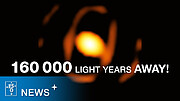
“For the first time, we have succeeded in
taking a zoomed-in image of a dying star in a galaxy outside our own
Milky Way,” says Keiichi Ohnaka, an astrophysicist from Universidad
Andrés Bello in Chile. Located a staggering 160 000 light-years from us,
the star WOH G64 was imaged thanks to the impressive sharpness offered
by the European Southern Observatory’s Very Large Telescope
Interferometer (ESO’s VLTI). The new observations reveal a star puffing
out gas and dust, in the last stages before it becomes a supernova.
“We discovered an egg-shaped cocoon closely surrounding the star,” says Ohnaka, the lead author of a study reporting the observations published today in Astronomy & Astrophysics. “We are excited because this may be related to the drastic ejection of material from the dying star before a supernova explosion.”
While astronomers have taken about two dozen zoomed-in
images of stars in our galaxy, unveiling their properties, countless
other stars dwell within other galaxies, so far away that observing even
one of them in detail has been extremely challenging. Up until now.
The newly imaged star, WOH G64, lies within the Large
Magellanic Cloud, one of the small galaxies that orbits the Milky Way.
Astronomers have known about this star for decades and have
appropriately dubbed it the ‘behemoth star’. With a size roughly 2000
times that of our Sun, WOH G64 is classified as a red supergiant.
Ohnaka’s team had long been interested in this behemoth star. Back in 2005 and 2007, they used ESO’s VLTI in Chile’s Atacama Desert to learn more about the star’s features, and carried on studying it in the years since. But an actual image of the star had remained elusive.
For the desired picture, the team had to wait for the development of one of the VLTI’s second-generation instruments, GRAVITY.
After comparing their new results with other previous observations of
WOH G64, they were surprised to find that the star had become dimmer
over the past decade.
“We have found that the star has been experiencing a
significant change in the last 10 years, providing us with a rare
opportunity to witness a star’s life in real time,” says Gerd
Weigelt, an astronomy professor at the Max Planck Institute for Radio
Astronomy in Bonn, Germany and a co-author of the study. In their final
life stages, red supergiants like WOH G64 shed their outer layers of gas
and dust in a process that can last thousands of years. "This star is one of the most extreme of its kind, and any drastic change may bring it closer to an explosive end," adds co-author Jacco van Loon, Keele Observatory Director at Keele University, UK, who has been observing WOH G64 since the 1990s.
The team thinks that these shed materials may also be
responsible for the dimming and for the unexpected shape of the dust
cocoon around the star. The new image shows that the cocoon is
stretched-out, which surprised scientists, who expected a different
shape based on previous observations and computer models. The team
believes that the cocoon’s egg-like shape could be explained by either
the star’s shedding or by the influence of a yet-undiscovered companion
star.
As the star becomes fainter, taking other close-up pictures of it is
becoming increasingly difficult, even for the VLTI. Nonetheless, planned
updates to the telescope’s instrumentation, such as the future GRAVITY+, promise to change this soon. “Similar follow-up observations with ESO instruments will be important for understanding what is going on in the star,” concludes Ohnaka.
ESO’s Very Large Telescope Interferometer is able to combine light collected by the telescopes of ESO’sVery Large Telescope (VLT), either the four 8-metre Unit Telescopes or the four smaller
Auxiliary Telescopes, creating highly detailed pictures of the cosmos.
Effectively, this makes the VLTI a “virtual” telescope with a resolution
equivalent to the maximum distance between the individual telescopes.
This process is highly complex and needs instruments especially
dedicated to this task. Back in 2005 and 2007 Ohnaka’s team had access
to the first generation of these instruments: MIDI.
While impressive for its time, those observations with MIDI only
combined the light from two telescopes. Now, researchers have access toGRAVITY,
a second-generation instrument able to capture the light of four
telescopes. Its improved sensitivity and resolution made the image of
WOH G64 possible. But there is more to come. GRAVITY+is a planned upgrade of GRAVITY which will be able to take advantage of
different technological updates performed at the VLTI and VLT. With
these, the VLTI will be able to see objects fainter and farther than
ever before.
This research was presented in a paper to appear in Astronomy and Astrophysics (https://www.aanda.org/10.1051/0004-6361/202451820).
The team is composed of: K. Ohnaka (Instituto de
Astrofísica, Departamento de Física y Astronomía, Facultad de Ciencias
Exactas, Universidad Andrés Bello), K.-H. Hofmann (Max Planck Institute
for Radio Astronomy, Bonn, Germany [MPIfR]), G. Weigelt (MPIfR), J. Th.
van Loon (Lennard-Jones Laboratories, Keele University, United Kingdom),
D. Schertl (MPIfR), S. R. Goldman (Space Telescope Science Institute,
Baltimore, USA).
The European Southern Observatory (ESO) enables scientists
worldwide to discover the secrets of the Universe for the benefit of
all. We design, build and operate world-class observatories on the
ground — which astronomers use to tackle exciting questions and spread
the fascination of astronomy — and promote international collaboration
for astronomy. Established as an intergovernmental organisation in 1962,
today ESO is supported by 16 Member States (Austria, Belgium, Czechia,
Denmark, France, Finland, Germany, Ireland, Italy, the Netherlands,
Poland, Portugal, Spain, Sweden, Switzerland and the United Kingdom),
along with the host state of Chile and with Australia as a Strategic
Partner. ESO’s headquarters and its visitor centre and planetarium, the
ESO Supernova, are located close to Munich in Germany, while the Chilean
Atacama Desert, a marvellous place with unique conditions to observe
the sky, hosts our telescopes. ESO operates three observing sites: La
Silla, Paranal and Chajnantor. At Paranal, ESO operates the Very Large
Telescope and its Very Large Telescope Interferometer, as well as survey
telescopes such as VISTA. Also at Paranal ESO will host and operate the
Cherenkov Telescope Array South, the world’s largest and most sensitive
gamma-ray observatory. Together with international partners, ESO
operates ALMA on Chajnantor, a facility that observes the skies in the
millimetre and submillimetre range. At Cerro Armazones, near Paranal, we
are building “the world’s biggest eye on the sky” — ESO’s Extremely
Large Telescope. From our offices in Santiago, Chile we support our
operations in the country and engage with Chilean partners and society.