Showing posts with label Asteroids. Show all posts

Saturday, July 04, 2026

Action! NSF–DOE Vera C. Rubin Observatory Begins Capturing the Greatest Cosmic Movie Ever Made

PR Image noirlab2616a
Ocean of Stars

PR Image noirlab2616b
The depth of NSF–DOE Rubin’s LSST

PR Image noirlab2616c
Ocean of Stars excerpts

PR Image noirlab2616d
NSF–DOE Rubin’s LSST coverage

PR Image noirlab2616e
NSF–DOE Vera C. Rubin Observatory by the numbers

PR Image noirlab2616f
NSF–DOE Rubin’s Legacy Survey of Space and Time

PR Image noirlab2616g
NSF–DOE Rubin’s Ocean of Stars field in the constellation Lupus

PR Image noirlab2616h
NSF–DOE Vera C. Rubin Observatory by the numbers (Spanish)

PR Image noirlab2616i
NSF–DOE Rubin’s Legacy Survey of Space and Time (Spanish)


Videos

A Week in the Life of NSF–DOE Rubin LSST
PR Video noirlab2616a
A Week in the Life of NSF–DOE Rubin LSST
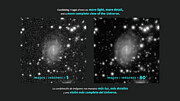
The depth of NSF–DOE Rubin’s LSST
PR Video noirlab2616b
The depth of NSF–DOE Rubin’s LSST
How NSF–DOE Rubin maps the Universe every night
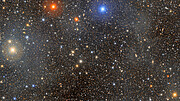
PR Video noirlab2616c
How NSF–DOE Rubin maps the Universe every night

Pan on NSF–DOE Rubin’s Ocean of Stars
PR Video noirlab2616d
Pan on NSF–DOE Rubin’s Ocean of Stars
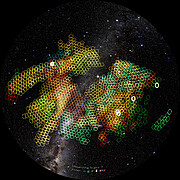
A Week in the Life of NSF–DOE Rubin LSST (fulldome fisheye)
PR Video noirlab2616e
A Week in the Life of NSF–DOE Rubin LSST (fulldome fisheye)

A Week in the Life of NSF–DOE Rubin’s LSST (no annotations)
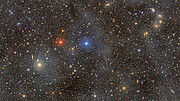
PR Video noirlab2616f
A Week in the Life of NSF–DOE Rubin’s LSST (no annotations)

Zooming into NSF–DOE Rubin’s Ocean of Stars
PR Video noirlab2616g
Zooming into NSF–DOE Rubin’s Ocean of Stars

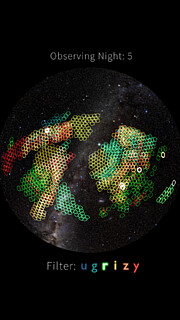
A Week in the Life of NSF–DOE Rubin’s LSST (vertical)
PR Video noirlab2616h
A Week in the Life of NSF–DOE Rubin’s LSST (vertical)


The 10-year Legacy Survey of Space and Time has officially started, marking the beginning of a new era in astronomy and astrophysics

The wait is over: NSF–DOE Rubin Observatory, funded by the U.S. National Science Foundation and the U.S. Department of Energy’s Office of Science, is now capturing the cosmos in unprecedented detail, transforming the way we study the dynamic Universe.

From a mountaintop in Chile, under clear dark skies, NSF–DOE Vera C. Rubin Observatory has begun the revolutionary Legacy Survey of Space and Time (LSST). The ten-year survey is Rubin’s signature campaign to create the most comprehensive, cinematic record of the Universe in history.

Rubin Observatory is a U.S. government facility jointly operated by NSF NOIRLab and DOE’s SLAC National Accelerator Laboratory. NOIRLab is managed by the Association of Universities for Research in Astronomy (AURA).

Over the next ten years, Rubin will relentlessly observe the entire southern sky every few nights to create an ultra-wide, ultra-high-definition time-lapse record of our Universe. This long-awaited milestone is the culmination of years of effort by thousands of people around the world. It follows the celebratory Rubin First Look event that took place in June 2025, which was followed by final commissioning work, an operational readiness review, and the beginning of the alert stream.

“Today, we begin filming the greatest cosmic movie ever made,” says Brian Stone, performing the duties of the NSF Director. “This moment reflects decades of vision, innovation, and the power of federal investment in science through the U.S. National Science Foundation and the Department of Energy. Every night, NSF–DOE Rubin Observatory will expand the frontiers of knowledge and strengthen America's global leadership in science and innovation.”

“With the launch of the ten-year Legacy Survey of Space and Time, NSF–DOE Rubin Observatory is opening a new window on the Universe. It is embarking on a mission that will redefine modern cosmology and astrophysics,” says Darío Gil, Under Secretary for Science at the U.S. Department of Energy. “With its world-class design and tools, Rubin Observatory will capture the dynamic nature of our cosmos and reveal unimagined insights into our Universe’s biggest mysteries, from our own Solar System to the very structure of the Universe. By seeking to understand the enigmatic phenomena of dark energy and dark matter, we are not just observing the stars; we are striving to grasp the fundamental laws that govern our existence.”

“It is amazing and humbling to be here at this time and place as we start the Legacy Survey of Space and Time, after more than two decades of incredible work by our dedicated team,” says Bob Blum, Director of Rubin Observatory at NSF NOIRLab. “Rubin Observatory is for everyone; the LSST will change how we do astronomy and astrophysics, allowing researchers anywhere to participate in cutting-edge science.”

“It’s taken 20 years of hard science, engineering, and more to get to the point where we can call ‘action’ as we start rolling on this blockbuster movie of the Universe,” says Phil Marshall, Deputy Director of Rubin Operations for SLAC. “Millions of alerts in just the last couple of months show that Rubin is up and running as a discovery machine. Now we’re putting it all together.”

“The decision to officially begin the LSST was made after a period of system optimization and a careful operational review of technical readiness, data system performance, and scientific validation,” says Željko Ivezić, Head of LSST. Important factors that played a role in this decision included image quality, effective survey speed, system uptime and reliability, and calibration accuracy.

Rubin Observatory’s unique design combines enormous light-collecting power, the ability to move rapidly across the sky, and a wide field of view. Its 3200-megapixel camera — the largest digital camera in the world — is now capturing a new, detailed image approximately every 40 seconds. Operating with this speed and sensitivity, Rubin functions as a unified, well-tuned system capable of catching faint objects and fleeting events with remarkable reliability and consistency every night. Visit rubinobservatory.org to follow the status of the Rubin in real time (and visit the real-time Alert Dashboard).

Rubin is bringing the Universe to life, illuminating a treasure trove of discoveries: pulsating stars, supernova explosions, the fossil record of galaxies, clues to the mysteries of dark energy and dark matter, and entirely new phenomena we’ve never seen before. Some cosmic processes unfold slowly, unpredictably, or incredibly rarely, which is why a ten-year survey is essential. By returning to each point in the sky about 800 times over a decade, Rubin data is providing the scientific community with deep, time-rich views needed to uncover subtle events, capture moving objects, and study the accelerating expansion of the Universe.

Not only is Rubin helping to unlock the mysteries of the distant Universe, it is also the most powerful Solar System discovery machine ever built. By taking about a thousand images every night, Rubin is compiling an astonishingly detailed census of our Solar System, including millions of asteroids and comets. In just a month and a half, during early optimization surveys, Rubin discovered over 11,000 never-before-seen asteroids, including 33 near-Earth objects and 380 trans-Neptunian objects [1].

Rubin will also advance opportunities for multi-messenger astronomy, which is the study of cosmic events using multiple signals such as light, gravitational waves, and cosmic rays. The observatory’s rapid, color-rich observations of transients such as stellar explosions, actively feeding black holes, and collisions between compact objects will guide telescopes around the world to follow up on these fleeting events.

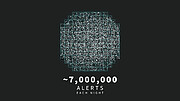
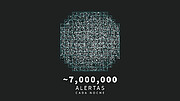
Each night, Rubin is collecting approximately ten terabytes of data and producing as many as seven million alerts of changes in the night sky. These alerts stream to alert brokers — automated systems that sort and classify these changes so scientists can act quickly.

When the LSST is complete, the final dataset will contain billions of objects with trillions of measurements, all accessible through regular data releases. This is the first time so much astronomical data will be available to so many people, opening the door to new kinds of discovery by both scientists and the public. Rubin invites anyone in the world to engage with its data and explore the dynamic Universe in ways never before possible.


Notes

[1] One of the newly discovered asteroids is the fastest-spinning asteroid larger than 500 meters (0.3 miles) ever found, and it resides in the main asteroid belt.


More information

NSF–DOE Vera C. Rubin Observatory, funded by the U.S. National Science Foundation and the U.S. Department of Energy’s Office of Science, is a groundbreaking new astronomy and astrophysics observatory on Cerro Pachón in Chile. It is named after astronomer Vera Rubin, who provided the first convincing evidence for the existence of dark matter. Using the largest camera ever built, Rubin will repeatedly scan the sky for 10 years to create an ultra-wide, ultra-high-definition, time-lapse record of our Universe.

NSF–DOE Vera C. Rubin Observatory is a joint initiative of the U.S. National Science Foundation (NSF) and the U.S. Department of Energy’s Office of Science (DOE/SC). Its primary mission is to carry out the Legacy Survey of Space and Time, providing an unprecedented data set for scientific research supported by both agencies. Rubin is operated jointly by NSF NOIRLab and SLAC National Accelerator Laboratory. NSF NOIRLab is managed by the Association of Universities for Research in Astronomy (AURA) and SLAC is operated by Stanford University for the DOE. France provides key support to the construction and operations of Rubin Observatory through contributions from CNRS/IN2P3. The Science and Technology Facilities Council supports the wide range of UK contributions to Rubin operations provided through the LSST:UK Science Centre programme. Rubin Observatory is privileged to conduct research in Chile and gratefully acknowledges additional contributions from more than 40 international organizations and teams.

The U.S. National Science Foundation (NSF) is an independent federal agency created by Congress in 1950 to promote the progress of science. NSF supports basic research and people to create knowledge that transforms the future.

The DOE’s Office of Science is the single largest supporter of basic research in the physical sciences in the United States and is working to address some of the most pressing challenges of our time.

NSF NOIRLab, the U.S. National Science Foundation center for ground-based optical-infrared astronomy, operates the International Gemini Observatory (a facility of NSF, NRC–Canada, ANID–Chile, MCTIC–Brazil, MINCyT–Argentina, and KASI–Republic of Korea), NSF Kitt Peak National Observatory (KPNO), NSF Cerro Tololo Inter-American Observatory (CTIO), the Community Science and Data Center (CSDC), and NSF–DOE Vera C. Rubin Observatory (in cooperation with DOE’s SLAC National Accelerator Laboratory). It is managed by the Association of Universities for Research in Astronomy (AURA) under a cooperative agreement with NSF and is headquartered in Tucson, Arizona.

The scientific community is honored to have the opportunity to conduct astronomical research on I’oligam Du’ag (Kitt Peak) in Arizona, on Maunakea in Hawai‘i, and on Cerro Tololo and Cerro Pachón in Chile. We recognize and acknowledge the very significant cultural role and reverence of I’oligam Du’ag to the Tohono O’odham Nation, and Maunakea to the Kanaka Maoli (Native Hawaiians) community.

SLAC National Accelerator Laboratory explores how the Universe works at the biggest, smallest and fastest scales and invents powerful tools used by researchers around the globe. As world leaders in ultrafast science and bold explorers of the physics of the Universe, we forge new ground in understanding our origins and building a healthier and more sustainable future. Our discovery and innovation help develop new materials and chemical processes and open unprecedented views of the cosmos and life’s most delicate machinery. Building on more than 60 years of visionary research, we help shape the future by advancing areas such as quantum technology, scientific computing and the development of next-generation accelerators. SLAC is operated by Stanford University for the U.S. Department of Energy’s Office of Science.

Forty-three international teams outside the U.S. and Chile are contributing to Rubin Observatory and LSST Science through the In-kind Program, in exchange for LSST data rights. These contributions are recognized in the International Data Rights Holder list, which includes all individuals nominated by their respective international programs.


Links


Contacts:

Bob Blum
Director for Operations
NSF–DOE Vera C. Rubin Observatory/NSF NOIRLab
Email:
bob.blum@noirlab.edu

Phil Marshall
Deputy Director of Operations
SLAC National Accelerator Laboratory
Email:
pjm@slac.stanford.edu

Lars Lindberg Christensen
Head of Communications, Education & Engagement
NSF NOIRLab
Email:
lars.christensen@noirlab.edu

Manuel Gnida
Head of External Communications
SLAC National Accelerator Laboratory
Email:
mgnida@slac.stanford.edu


Tuesday, April 07, 2026

Rubin Observatory Early Data from NSF–DOE Vera C. Rubin Observatory Reveals Over 11,000 New Asteroids

PR Image noirlab2608a
3D rendering of asteroids discovered by NSF–DOE Rubin Observatory

PR Image noirlab2608b
Asteroids discovered by NSF–DOE Rubin Observatory infographic

PR Image noirlab2608c
3D rendering of trans-Neptunian objects discovered by NSF–DOE Rubin Observatory

PR Image noirlab2608d
Distribution of new asteroids discovered by NSF–DOE Rubin Observatory

PR Image noirlab2608e
3D model of asteroids discovered by NSF–DOE Rubin Observatory (polar view)


Videos

3D animation of asteroids discovered by NSF–DOE Rubin Observatory (close)
PR Video noirlab2608a
3D animation of asteroids discovered by NSF–DOE Rubin Observatory (close)

3D animation of asteroids discovered by NSF–DOE Rubin Observatory
PR Video noirlab2608b
3D animation of asteroids discovered by NSF–DOE Rubin Observatory


Rubin’s largest asteroid haul yet, gathered before the Legacy Survey of Space and Time even begins, is just the “tip of the iceberg”

Scientists at NSF–DOE Vera C. Rubin Observatory, jointly funded by the U.S. National Science Foundation and the U.S. Department of Energy's Office of Science, have submitted an unprecedented set of asteroid detections to the IAU Minor Planet Center, including hundreds of distant worlds beyond Neptune and 33 previously unknown near-Earth asteroids.

Using preliminary data from NSF–DOE Vera C. Rubin Observatory, scientists have discovered over 11,000 new asteroids [1]. The data were confirmed by the International Astronomical Union’s Minor Planet Center (MPC), making this the largest single batch of asteroid discoveries submitted in the past year. The discoveries were made using data from Rubin’s early optimization surveys and offer a powerful preview of the observatory’s transformative impact on Solar System science.

Rubin Observatory is a joint program of NSF NOIRLab and DOE’s SLAC National Accelerator Laboratory, who cooperatively operate Rubin. NOIRLab is managed by the Association of Universities for Research in Astronomy (AURA).

The submission to MPC comprises approximately one million observations, taken over the span of a month and a half, of over 11,000 new asteroids and more than 80,000 already known asteroids, including some that had previously been observed but were later “lost” because their orbits were too uncertain to predict their future locations. You can interact with all of Rubin’s asteroid discoveries in the Rubin Orbitviewer, which uses real data to provide an intuitive way to explore the structure of our cosmic backyard in three dimensions and in real time. Also, visit the Rubin Asteroid Discoveries Dashboard to learn about the new objects Rubin has uncovered.

“This first large submission after Rubin First Look is just the tip of the iceberg and shows that the observatory is ready,” says Mario Juric, faculty at the University of Washington and Rubin Solar System Lead Scientist. “What used to take years or decades to discover, Rubin will unearth in months. We are beginning to deliver on Rubin’s promise to fundamentally reshape our inventory of the Solar System and open the door to discoveries we haven’t yet imagined.”

Among the newly identified objects are 33 previously unknown near-Earth objects (NEOs), which are small asteroids and comets whose closest approach to the Sun is less than 1.3 times the distance between Earth and the Sun. None of the newly discovered NEOs pose a threat to Earth, and the largest is about 500 meters wide. Objects larger than 140 meters are closely tracked as they could cause significant regional damage if they impact, yet scientists estimate that only about 40% of these mid-sized NEOs have been identified so far.

Once operating fully in survey mode, Rubin is expected to reveal an additional nearly 90,000 new NEOs, some of which may be potentially hazardous, and to nearly double the number of known NEOs larger than 140 meters to around 70%. By enabling early detection and continuous monitoring of these objects, Rubin will be a powerful tool for planetary defense.

The dataset also contains roughly 380 trans-Neptunian objects (TNOs) — icy bodies orbiting beyond Neptune. Two of the newly discovered TNOs — provisionally named 2025 LS2 and 2025 MX348 — have been found to be on extremely large and elongated, or stretched out, orbits. At their most distant points, these two objects reach roughly 1000 times farther away from the Sun than the Earth is, placing them among the 30 most distant minor planets known.

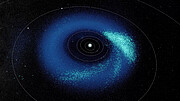
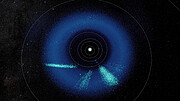
This animation shows the inner Solar System populated with known asteroids in dark blue and asteroids discovered by Rubin in light teal. Read morehere. Credit: NSF–DOE Vera C. Rubin Observatory/NOIRLab/SLAC/AURA/R. Proctor. Star map: NASA/Goddard Space Flight Center Scientific Visualization Studio. Gaia DR2: ESA/Gaia/DPAC. Image Processing: M. Zamani (NSF NOIRLab)

The discoveries were enabled by Rubin Observatory’s unique combination of a large mirror, the world’s most powerful astronomical digital camera, and highly sophisticated, software-driven pipelines designed to detect faint, fast-moving objects against a crowded sky. Rubin can survey the southern sky at roughly six times the sensitivity of most current asteroid searches, allowing it to detect smaller and more distant objects than ever before. These capabilities will allow Rubin to build the most detailed census of our Solar System ever, and all of the discoveries will help scientists work out the story of the Solar System’s history.

“Rubin’s unique observing cadence required a whole new software architecture for asteroid discovery,” says Ari Heinze, University of Washington, who, together with Jacob Kurlander, a graduate student at the University of Washington, built the software that detected them. “We built it, and it works. Even with just early, engineering-quality data, Rubin discovered 11,000 asteroids and measured more precise orbits for tens of thousands more. It seems pretty clear this observatory will revolutionize our knowledge of the asteroid belt.”

Particularly striking is the rapid growth of the TNO population. The 380 candidates discovered by Rubin in less than two months add to the 5000 discovered over the past three decades. As with less distant asteroids, finding the TNOs depended critically on developing new sophisticated algorithms.

“Searching for a TNO is like searching for a needle in a field of haystacks — out of millions of flickering sources in the sky, teaching a computer to sift through billions of combinations and identify those that are likely to be distant worlds in our Solar System required novel algorithmic approaches,” says Matthew Holman, a Senior Astrophysicist at the Center for Astrophysics | Harvard & Smithsonian and former Director of the Minor Planet Center, who spearheaded the work on the TNO discovery pipeline.

“Objects like these offer a tantalizing probe of the Solar System’s outermost reaches, from telling us how the planets moved early on in the Solar System’s history, to whether a hitherto undiscovered 9th large planet may still be out there,” says Kevin Napier, a research scientist at the Harvard-Smithsonian Center for Astrophysics who, with Holman, developed the algorithms to detect distant Solar System objects with Rubin data.

The MPC's verification of this large group of discoveries enables the entire global community to access the data, refine orbits, and begin analysis immediately. And these ~11,000 asteroids are just the start. Once the decade-long Legacy Survey of Space and Time (LSST) begins later this year, scientists expect Rubin to discover this many asteroids every two to three nights during the early years of the survey. This will ultimately triple the number of known asteroids and increase the number of known TNOs by nearly an order of magnitude.


Notes

[1] The new asteroid discoveries reported here are in addition to the ~1500 asteroid discoveries announced as part of Rubin First Look. When originally announced, 2104 of the asteroids were registered as new. Since then, 600 of the asteroids have been connected to earlier observations by the IAU Minor Planet Center, and hence reclassified as “recovered asteroids” and not discoveries.


More information

This research is available at the Rubin Asteroid Discoveries Dashboard.

The team is composed (in alphabetical order) of P. H. Bernardinelli (UW and USP, Brazil), S. Eggl (UIUC), A. Heinze (UW), M. Holman (CfA), M. Juric (UW), J. Kurlander (UW), J. Moeyens (B612 Asteroid Institute), K. Napier (CfA), and E. Nourbakhsh (Princeton).

NSF–DOE Vera C. Rubin Observatory, funded by the U.S. National Science Foundation and the U.S. Department of Energy’s Office of Science, is a groundbreaking new astronomy and astrophysics observatory on Cerro Pachón in Chile. It is named after astronomer Vera Rubin, who provided the first convincing evidence for the existence of dark matter. Using the largest camera ever built, Rubin will repeatedly scan the sky for 10 years to create an ultra-wide, ultra-high-definition, time-lapse record of our Universe.

NSF–DOE Vera C. Rubin Observatory is a joint initiative of the U.S. National Science Foundation (NSF) and the U.S. Department of Energy’s Office of Science (DOE/SC). Its primary mission is to carry out the Legacy Survey of Space and Time, providing an unprecedented data set for scientific research supported by both agencies. Rubin is operated jointly by NSF NOIRLab and SLAC National Accelerator Laboratory. NSF NOIRLab is managed by the Association of Universities for Research in Astronomy (AURA) and SLAC is operated by Stanford University for the DOE. France provides key support to the construction and operations of Rubin Observatory through contributions from CNRS/IN2P3. Rubin Observatory is privileged to conduct research in Chile and gratefully acknowledges additional contributions from more than 40 international organizations and teams.

The U.S. National Science Foundation (NSF) is an independent federal agency created by Congress in 1950 to promote the progress of science. NSF supports basic research and people to create knowledge that transforms the future

The DOE’s Office of Science is the single largest supporter of basic research in the physical sciences in the United States and is working to address some of the most pressing challenges of our time.

NSF NOIRLab, the U.S. National Science Foundation center for ground-based optical-infrared astronomy, operates the International Gemini Observatory (a facility of NSF, NRC–Canada, ANID–Chile, MCTIC–Brazil, MINCyT–Argentina, and KASI–Republic of Korea), NSF Kitt Peak National Observatory (KPNO), NSF Cerro Tololo Inter-American Observatory (CTIO), the Community Science and Data Center (CSDC), and NSF–DOE Vera C. Rubin Observatory (in cooperation with DOE’s SLAC National Accelerator Laboratory). It is managed by the Association of Universities for Research in Astronomy (AURA) under a cooperative agreement with NSF and is headquartered in Tucson, Arizona.

The scientific community is honored to have the opportunity to conduct astronomical research on I’oligam Du’ag (Kitt Peak) in Arizona, on Maunakea in Hawai‘i, and on Cerro Tololo and Cerro Pachón in Chile. We recognize and acknowledge the very significant cultural role and reverence of I’oligam Du’ag (Kitt Peak) to the Tohono O’odham Nation, and Maunakea to the Kanaka Maoli (Native Hawaiians) community.

SLAC National Accelerator Laboratory explores how the Universe works at the biggest, smallest and fastest scales and invents powerful tools used by researchers around the globe. As world leaders in ultrafast science and bold explorers of the physics of the Universe, we forge new ground in understanding our origins and building a healthier and more sustainable future. Our discovery and innovation help develop new materials and chemical processes and open unprecedented views of the cosmos and life’s most delicate machinery. Building on more than 60 years of visionary research, we help shape the future by advancing areas such as quantum technology, scientific computing and the development of next-generation accelerators. SLAC is operated by Stanford University for the U.S. Department of Energy’s Office of Science.


Links


Contacts:

Mario Juric
Rubin Solar System Lead Scientist
University of Washington
Email:
mjuric@uw.edu

Josie Fenske
Public Information Officer
NSF NOIRLab
Email:
josie.fenske@noirlab.edu


Thursday, February 05, 2026

NSF–DOE Vera C. Rubin Observatory Launches Real-Time Discovery Machine for Monitoring the Night Sky

PR Image noirlab2605a
NSF–DOE Rubin Observatory Launches Real-Time Monitoring of the Night Sky

Capturing the Changing Cosmos: Examples of Alerts from NSF–DOE Rubin Observatory

PR Image noirlab2605c
Capturando el cosmos cambiante: Ejemplos de Alertas del Observatorio Rubin de NSF–DOE
in English only

PR Image noirlab2605d
Examples of AGN Alerts from NSF–DOE Rubin Observatory

PR Image noirlab2605e
Ejemplos de Alertas de AGN del Observatorio Rubin de NSF–DOE
in English only

PR Image noirlab2605f
Examples of Solar System Object Alerts from NSF–DOE Rubin Observatory

PR Image noirlab2605g
Ejemplos de Alertas de Objetos del Sistema Solar del Observatorio Rubin de NSF–DOE
in English only
 Examples of SNe Alerts from NSF–DOE Rubin Observatory

PR Image noirlab2605i
Ejemplos de Alertas de Supernovas del Observatorio Rubin de NSF–DOE
in English only

PR Image noirlab2605j
Examples of variable stars Alerts from NSF–DOE Rubin Observatory

PR Image noirlab2605k
Ejemplos de Alertas de Estrellas Variables del Observatorio Rubin de NSF–DOE
in English only


Videos

Rubin Alerts — Seven million per night
PR Video noirlab2605a
Rubin Alerts — Seven million per night

Alertas de Rubin: Siete millones por noche
PR Video noirlab2605b
Alertas de Rubin: Siete millones por noche
in English only


The near-real-time alert system will enable scientists around the world to coordinate follow-up observations like never before

NSF–DOE Rubin Observatory has issued its first scientific alerts, marking a historic milestone in astrophysics. Expected to increase to seven million alerts per night, these first alerts start a new era of dynamic, real-time observation of the night sky.

NSF–DOE Vera C. Rubin Observatory, jointly funded by the U.S. National Science Foundation (NSF) and the U.S. Department of Energy's Office of Science (DOE/SC), has released its first alerts documenting astronomical events spotted by the observatory. Rubin issued 800,000 alerts the night of 24 February. These alerts called scientists’ attention to new asteroids, exploding stars, and other changes in the night sky. This milestone marks the launch of a system expected to eventually produce up to seven million alerts per night.

Among the first alerts are detections of supernovae, variable stars, active galactic nuclei, and objects whizzing around our Solar System, such as asteroids. The beginning of scientific alerts is one of the last major milestones before Rubin Observatory begins its Legacy Survey of Space and Time (LSST) later this year. During the LSST, Rubin will scan the Southern Hemisphere sky nightly for ten years to precisely capture every visible change using the largest digital camera ever made. These alerts will chronicle the treasure trove of scientific discoveries that Rubin will make through its time-lapse record of the Universe. In the first year of the LSST, Rubin is expected to capture images of more objects than all other optical observatories combined in human history.

“By connecting scientists to a vast and continuous stream of information, NSF–DOE Rubin Observatory will make it possible to follow the Universe’s events as they unfold, from the explosive to the most faint and fleeting,” says Luca Rizzi, a program director for research infrastructure at NSF.

“The discoveries reported in these alerts reflect the power of NSF–DOE Rubin Observatory as a tool for astrophysics and the importance of sustained federal support,” says Kathy Turner, program manager in the High Energy Physics program in the DOE’s Office of Science. “Rubin Observatory’s groundbreaking capabilities are revealing untold astrophysical treasures and expanding scientists’ access to the ever-changing cosmos.”

Rubin’s alerts will power discoveries in many areas of astronomy, astrophysics, and cosmology. While the night sky seems calm and unchanging to the casual viewer, it’s actually alive with motion and transformation. Each alert signals something that has changed in the sky since Rubin last looked — a new source of light, a star that brightened or dimmed, or an object that moved. With Rubin's alerts, scientists will have a greater ability to catch supernovae in their earliest moments, discover and track asteroids to assess potential threats to Earth, and spot rare interstellar objects as they race through the Solar System. Scientists can then use these data to better understand the nature of dark matter, dark energy, and other unknown aspects of the Universe.

“Rubin's alert system was designed to allow anyone to identify interesting astronomical events with enough notice to rapidly obtain time-critical follow-up observations,” says Eric Bellm, Alert Production Pipeline Group Lead for Rubin Data Management from NSF NOIRLab and the University of Washington. “Enabling real-time discovery on 10 terabytes of images nightly has required years of technical innovation in image processing algorithms, databases, and data orchestration. We can’t wait to see the exciting science that comes from these data.”

The near-real-time public nature of Rubin’s alert system enables scientists using other ground and space-based telescopes around the world to coordinate follow-up observations like never before. This collaboration will enable fast and detailed studies of unfolding phenomena.

The first Rubin Observatory alerts distributed to researchers worldwide were generated on the night of 24 February. The alerts contained the flares of new supernovae and the flickers of stars, actively feeding black holes in distant galaxies, and asteroids cruising through our Solar System.

Capturing the Changing Cosmos: Examples of Alerts from NSF–DOE Rubin Observatory
As new images are taken, Rubin Observatory’s sophisticated software automatically compares each one with a template image. The template image, built by combining Rubin’s previous images of the same area in the same filter, is subtracted from the new image, leaving only the changes. Each change triggers an alert within two minutes of image capture. The vast majority of these alerts are supernovae, variable stars, active galactic nuclei, and Solar System objects. The individual images above are “postage stamps” of objects observed by Rubin that changed from one visit to the next. For each of these example alerts, the left shows the template image, the center shows the new image, and the right shows the subtracted, or difference, image. The object of interest for a particular alert is centered in the images. In the case of the supernova above, the bright spots in the upper left corners of the template and new images are the center of the supernova’s host galaxy. The supernova itself — not seen in the template image — is clearly revealed in the center of the difference image. Credit: NSF–DOE Vera C. Rubin Observatory/NOIRLab/SLAC/AURA. Acknowledgement: Alert images with classifications provided by ALeRCE and Lasair.

Located in Chile, Rubin Observatory is jointly operated by NSF NOIRLab and DOE’s SLAC National Accelerator Laboratory. The telescope is equipped with the LSST Camera, the largest digital camera ever built. With 3200 megapixels, Rubin is capable of detecting faint and distant objects in the Universe.

Every 40 seconds during nighttime observations, Rubin captures a new region of the sky. It then sends the data on a seconds-long journey from Chile to the U.S. Data Facility (USDF) at SLAC in California for initial processing. Rubin’s data management system automatically compares it to a template made from previous images of the same region. This comparison allows it to detect the slightest variations. With every change, such as the appearance of a new point of light, an object’s movement, or a change in brightness, the system generates a public alert within a record two-minute interval. With such a large and sensitive camera, and the ability to quickly process historic amounts of data, Rubin can produce up to seven million alerts each night.

“The scale and speed of the alerts are unprecedented,” says Hsin-Fang Chiang, a SLAC software developer leading operations for data processing at the USDF. “After generating hundreds of thousands of test alerts in the last few months, we are now able to say, within minutes, with each image, ‘here is everything’ and ‘go’.”

To interpret the immense flow of data from the Rubin alert stream, scientists rely on a network of intelligent software platforms known as brokers. These systems use machine learning algorithms to filter, sort, and classify the alerts before distributing them to scientific teams and observatories.

“The extraordinary number of alerts that Rubin will produce presents an exciting challenge for both astronomers and software engineers,” explains Tom Matheson, Interim Director of the Community Science and Data Center (CSDC), a Program of NSF NOIRLab, and head of Time-Domain Services, which developed the ANTARES alert broker. “The broker teams have built systems that operate rapidly at scale so that scientists can find all of the objects of interest to them, as well as things we’ve never seen before.”

Brokers also cross-reference alerts with data from multi-wavelength astronomical catalogs. Some of them specialize in specific types of objects and events. These events include early identification of supernovae and Solar System objects. Identifying these events early allows scientists to provide tailored analysis and respond more quickly.

“What’s revolutionary about Rubin is its ability to capture both rapid changes and long-term evolution in the sky,” explains Rosaria Bonito, researcher at the Italian National Institute for Astrophysics (INAF) in Palermo, Italy, and co-chair of the Rubin LSST Transients and Variable Stars (TVS) science collaboration. “Young stars, for example, are highly dynamic and can experience sudden bursts of brightness caused by infalling matter. These events are often short-lived, and scientists can easily miss them without continuous monitoring. Rubin will allow us to detect these changes as they happen right there, right now, and also to track the evolution of stars over a decade.”

Rubin’s alerts are public to the world, meaning anyone — from professional researchers to students and citizen scientists — can access and explore them. Alerts can be accessed through any of the seven official community brokers, as well as two downstream services. These services form an international network that enables prompt, real-time data exploration from anywhere on Earth. Additionally, through collaborations with platforms like Zooniverse, Rubin will empower the global community to classify cosmic events and contribute directly to discovery.

Official brokers for Rubin data are: ALeRCE, AMPEL, ANTARES, Babamul, Fink, Lasair, Pitt-Google, SNAPS, and POI Broker.


More information

NSF–DOE Vera C. Rubin Observatory, funded by the U.S. National Science Foundation and the U.S. Department of Energy’s Office of Science, is a groundbreaking new astronomy and astrophysics observatory on Cerro Pachón in Chile. It is named after astronomer Vera Rubin, who provided the first convincing evidence for the existence of dark matter. Using the largest camera ever built, Rubin will repeatedly scan the sky for 10 years to create an ultra-wide, ultra-high-definition, time-lapse record of our Universe.

NSF–DOE Vera C. Rubin Observatory is a joint initiative of the U.S. National Science Foundation (NSF) and the U.S. Department of Energy’s Office of Science (DOE/SC). Its primary mission is to carry out the Legacy Survey of Space and Time, providing an unprecedented data set for scientific research supported by both agencies. Rubin is operated jointly by NSF NOIRLab and SLAC National Accelerator Laboratory. NSF NOIRLab is managed by the Association of Universities for Research in Astronomy (AURA) and SLAC is operated by Stanford University for the DOE. France provides key support to the construction and operations of Rubin Observatory through contributions from CNRS/IN2P3. Rubin Observatory is privileged to conduct research in Chile and gratefully acknowledges additional contributions from more than 40 international organizations and teams.

The U.S. National Science Foundation (NSF) is an independent federal agency created by Congress in 1950 to promote the progress of science. NSF supports basic research and people to create knowledge that transforms the future.

The DOE’s Office of Science is the single largest supporter of basic research in the physical sciences in the United States and is working to address some of the most pressing challenges of our time.


NSF NOIRLab, the U.S. National Science Foundation center for ground-based optical-infrared astronomy, operates the International Gemini Observatory (a facility of NSF, NRC–Canada, ANID–Chile, MCTIC–Brazil, MINCyT–Argentina, and KASI–Republic of Korea), NSF Kitt Peak National Observatory (KPNO), NSF Cerro Tololo Inter-American Observatory (CTIO), the Community Science and Data Center (CSDC), and NSF–DOE Vera C. Rubin Observatory (in cooperation with DOE’s SLAC National Accelerator Laboratory). It is managed by the Association of Universities for Research in Astronomy (AURA) under a cooperative agreement with NSF and is headquartered in Tucson, Arizona.

The scientific community is honored to have the opportunity to conduct astronomical research on I’oligam Du’ag (Kitt Peak) in Arizona, on Maunakea in Hawai‘i, and on Cerro Tololo and Cerro Pachón in Chile. We recognize and acknowledge the very significant cultural role and reverence of I’oligam Du’ag (Kitt Peak) to the Tohono O’odham Nation, and Maunakea to the Kanaka Maoli (Native Hawaiians) community

SLAC National Accelerator Laboratory explores how the Universe works at the biggest, smallest and fastest scales and invents powerful tools used by researchers around the globe. As world leaders in ultrafast science and bold explorers of the physics of the Universe, we forge new ground in understanding our origins and building a healthier and more sustainable future. Our discovery and innovation help develop new materials and chemical processes and open unprecedented views of the cosmos and life’s most delicate machinery. Building on more than 60 years of visionary research, we help shape the future by advancing areas such as quantum technology, scientific computing and the development of next-generation accelerators. SLAC is operated by Stanford University for the U.S. Department of Energy's’ Office of Science.


Links


Contacts:

Josie Fenske
Public Information Officer
NSF NOIRLab
Email:
josie.fenske@noirlab.edu

Aaron Groff
Media Relations Lead
SLAC National Accelerator Laboratory
Email:
agroff@slac.stanford.edu

Monday, January 12, 2026

NSF–DOE Vera C. Rubin Observatory Spots Record-Breaking Asteroid in Pre-Survey Observations

PR Image noirlab2601a
Artist’s illustration of asteroid 2025 MN45

PR Image noirlab2601b
Asteroid 2025 MN45 lightcurve

PR Image noirlab2601c
The Cosmic Treasure Chest

PR Image noirlab2601d
Portion of Virgo Cluster (with asteroids)


Videos

A Swarm of New Asteroids
PR Video noirlab2601a
A Swarm of New Asteroids


First peer-reviewed paper using LSST Camera data identifies an asteroid, nearly the size of eight football fields, rotating every two minutes

Astronomers analyzing data from NSF–DOE Vera C. Rubin Observatory, jointly funded by the U.S. National Science Foundation and the U.S. Department of Energy's Office of Science, have discovered the fastest-ever spinning asteroid with a diameter over half a kilometer — a feat uniquely enabled by Rubin. The study provides crucial information about asteroid composition and evolution, and demonstrates how Rubin is pushing the boundaries of what we can discover within our own Solar System.

As part of the NSF–DOE Vera C. Rubin Observatory First Look event in June 2025, Rubin announced that it had observed thousands of asteroids cruising about our Solar System, about 1900 of which have been confirmed as never-before-seen [1]. Within the flurry, a team of astronomers has discovered 19 super- and ultra-fast-rotating asteroids. One of these is the fastest-spinning asteroid larger than 500 meters (0.3 miles) ever found.

The study was led by Sarah Greenstreet, NSF NOIRLab assistant astronomer and lead of Rubin Observatory’s Solar System Science Collaboration’s Near-Earth Objects and Interstellar Objects working group. The team presents their results in a paper appearing in The Astrophysical Journal Letters, as well as at a press conference at the 247th meeting of the American Astronomical Society (AAS) in Phoenix, Arizona.

Rubin Observatory is a joint program of NSF NOIRLab and DOE’s SLAC National Accelerator Laboratory, who cooperatively operate Rubin. NOIRLab is managed by the Association of Universities for Research in Astronomy (AURA).

“NSF–DOE Rubin Observatory will find things that no one even knew to look for,” says Luca Rizzi, an NSF program director for research infrastructure. “When Rubin's Legacy Survey of Space and Time begins, this huge spinning asteroid will be joined by an avalanche of new information about our Universe, captured nightly.”

The Legacy Survey of Space and Time (LSST) is Rubin’s mission to repeatedly scan the Southern Hemisphere night sky for ten years to create an ultra-wide, ultra-high-definition time-lapse record of the Universe. LSST is expected to start in the coming months

The study discussed here uses data collected over the course of about ten hours across seven nights in April/May 2025, during Rubin Observatory's early commissioning phase. This is the first published peer-reviewed scientific paper that uses data from the LSST Camera — the largest digital camera in the world.

“The Department of Energy's investment in Rubin Observatory's cutting-edge technology, particularly the LSST Camera, is proving invaluable,” said Regina Rameika, the DOE Associate Director for High Energy Physics. “Discoveries like this exceptionally fast-rotating asteroid are a direct result of the observatory's unique capability to provide high-resolution, time-domain astronomical data, pushing the boundaries of what was previously observable.”

“We have known for years that Rubin would act as a discovery machine for the Universe, and we are already seeing the unique power of combining the LSST Camera with Rubin’s incredible speed. Together, Rubin can take an image every 40 seconds,” said Aaron Roodman, Deputy Head of LSST and professor of Particle Physics and Astrophysics at SLAC. “The ability to find thousands of new asteroids in such a short period of time, and learn so much about them, is a window into what will be uncovered during the 10-year survey.”

As asteroids orbit the Sun, they also rotate at a wide range of speeds. These spin rates not only offer clues about the conditions of their formation billions of years ago, but also tell us about their internal composition and evolution over their lifetimes. In particular, an asteroid spinning quickly may have been sped up by a past collision with another asteroid, suggesting that it could be a fragment of an originally larger object.

Fast rotation also requires an asteroid to have enough internal strength to not fly apart into many smaller pieces, called fragmentation. Most asteroids are ‘rubble piles’, which means they are made of many smaller pieces of rock held together by gravity, and thus have limits based on their densities as to how fast they can spin without breaking apart. For objects in the main asteroid belt, the fast-rotation limit to avoid being fragmented is 2.2 hours; asteroids spinning faster than this must be structurally strong to remain intact. The faster an asteroid spins above this limit, and the larger its size, the stronger the material it must be made from.

The study presents 76 asteroids with reliable rotation periods. This includes 16 super-fast rotators with rotation periods between roughly 13 minutes and 2.2 hours, and three ultra-fast rotators that complete a full spin in less than five minutes.

All 19 newly identified fast-rotators are longer than the length of an American football field (100 yards or about 90 meters). The fastest-spinning main-belt asteroid identified, named 2025 MN45, is 710 meters (0.4 miles) in diameter and it completes a full rotation every 1.88 minutes. This combination makes it the fastest-spinning asteroid with a diameter over 500 meters that astronomers have found.

“Clearly, this asteroid must be made of material that has very high strength in order to keep it in one piece as it spins so rapidly,” says Greenstreet. “We calculate that it would need a cohesive strength similar to that of solid rock. This is somewhat surprising since most asteroids are believed to be what we call ‘rubble pile’ asteroids, which means they are made of many, many small pieces of rock and debris that coalesced under gravity during Solar System formation or subsequent collisions.”

Most fast-rotators discovered so far orbit the Sun just beyond Earth, known as near-Earth objects (NEOs). Scientists find fewer fast-rotating main-belt asteroids (MBAs), which orbit the Sun between Mars and Jupiter. This is mainly because of the main-belt asteroids’ greater distance from Earth, which makes their light fainter and more difficult to see.

All but one of the newly identified fast-rotators live in the main asteroid belt, some even just beyond its outer edge, with the lone exception being an NEO. This shows that scientists are now finding these extremely rapidly rotating asteroids at farther distances than ever before, an achievement made possible by Rubin’s enormous light-collecting power and precise measurement capabilities.

In addition to 2025 MN45, other notable asteroid discoveries made by the team include 2025 MJ71 (1.9-minute rotation period), 2025 MK41 (3.8-minute rotation period), 2025 MV71 (13-minute rotation period), and 2025 MG56 (16-minute rotation period). These five super- to ultra-fast rotators are all several hundred meters in diameter and join a couple of NEOs as the fastest spinning sub-kilometer asteroids known.

“As this study demonstrates, even in early commissioning, Rubin is successfully allowing us to study a population of relatively small, very-rapidly-rotating main-belt asteroids that hadn’t been reachable before,” says Greenstreet.

Scientists expect to find more fast rotators once Rubin begins its 10-year Legacy Survey of Space and Time (LSST). Unlike the dense, rapid First Look observations that enabled this quick burst of discoveries, LSST’s regular, sparser observations will instead uncover fast rotators gradually as the survey accumulates data, providing pivotal information about the strengths, compositions, and collisional histories of these primitive bodies.


Notes

[1] These data were submitted to the IAU Minor Planet Center, making them the first publicly available data from Rubin First Look.


More information

This research was presented in a paper titled “Lightcurves, rotation periods, and colors for Vera C. Rubin Observatory’s first asteroid discoveries,” appearing in The Astrophysical Journal Letters. DOI: 10.3847/2041-8213/ae2a30

The team is composed of Sarah Greenstreet (NSF–DOE Vera C. Rubin Observatory/NSF NOIRLab, University of Washington), Zhuofu (Chester) Li (University of Washington), Dmitrii E. Vavilov (University of Washington), et al.

NSF–DOE Vera C. Rubin Observatory, funded by the U.S. National Science Foundation and the U.S. Department of Energy’s Office of Science, is a groundbreaking new astronomy and astrophysics observatory on Cerro Pachón in Chile. It is named after astronomer Vera Rubin, who provided the first convincing evidence for the existence of dark matter. Using the largest camera ever built, Rubin will repeatedly scan the sky for 10 years to create an ultra-wide, ultra-high-definition, time-lapse record of our Universe.

NSF–DOE Vera C. Rubin Observatory is a joint initiative of the U.S. National Science Foundation (NSF) and the U.S. Department of Energy’s Office of Science (DOE/SC). Its primary mission is to carry out the Legacy Survey of Space and Time, providing an unprecedented data set for scientific research supported by both agencies. Rubin is operated jointly by NSF NOIRLab and SLAC National Accelerator Laboratory. NSF NOIRLab is managed by the Association of Universities for Research in Astronomy (AURA), and SLAC is operated by Stanford University for the DOE. France provides key support to the construction and operations of Rubin Observatory through contributions from CNRS/IN2P3. Rubin Observatory is privileged to conduct research in Chile and gratefully acknowledges additional contributions from more than 40 international organizations and teams.

The U.S. National Science Foundation (NSF) is an independent federal agency created by Congress in 1950 to promote the progress of science. NSF supports basic research and people to create knowledge that transforms the future.

The DOE’s Office of Science is the single largest supporter of basic research in the physical sciences in the United States and is working to address some of the most pressing challenges of our time.

NSF NOIRLab, the U.S. National Science Foundation center for ground-based optical-infrared astronomy, operates the International Gemini Observatory (a facility of NSF, NRC–Canada, ANID–Chile, MCTIC–Brazil, MINCyT–Argentina, and KASI–Republic of Korea), NSF Kitt Peak National Observatory (KPNO), NSF Cerro Tololo Inter-American Observatory (CTIO), the Community Science and Data Center (CSDC), and NSF–DOE Vera C. Rubin Observatory (in cooperation with DOE’s SLAC National Accelerator Laboratory). It is managed by the Association of Universities for Research in Astronomy (AURA) under a cooperative agreement with NSF and is headquartered in Tucson, Arizona.

The scientific community is honored to have the opportunity to conduct astronomical research on I’oligam Du’ag (Kitt Peak) in Arizona, on Maunakea in Hawai‘i, and on Cerro Tololo and Cerro Pachón in Chile. We recognize and acknowledge the very significant cultural role and reverence of I’oligam Du’ag (Kitt Peak) to the Tohono O’odham Nation, and Maunakea to the Kanaka Maoli (Native Hawaiians) community.

SLAC National Accelerator Laboratory explores how the Universe works at the biggest, smallest, and fastest scales and invents powerful tools used by researchers around the globe. As world leaders in ultrafast science and bold explorers of the physics of the Universe, we forge new ground in understanding our origins and building a healthier and more sustainable future. Our discovery and innovation help develop new materials and chemical processes and open unprecedented views of the cosmos and life’s most delicate machinery. Building on more than 60 years of visionary research, we help shape the future by advancing areas such as quantum technology, scientific computing, and the development of next-generation accelerators. SLAC is operated by Stanford University for the U.S. Department of Energy’s Office of Science.


Links


Contacts:

Sarah Greenstreet
Assistant Astronomer
NSF–DOE Vera C. Rubin Observatory/NSF NOIRLab
Email:
sarah.greenstreet@noirlab.edu

Josie Fenske
Public Information Officer
NSF NOIRLab
Email:
josie.fenske@noirlab.edu

Aaron Groff
Media Relations Lead
SLAC National Accelerator Laboratory
Email:
agroff@slac.stanford.edu