NGC 7038
Credit: ESA/Hubble & NASA, D. Jones
Acknowledgement: G. Anand, L. Shatz
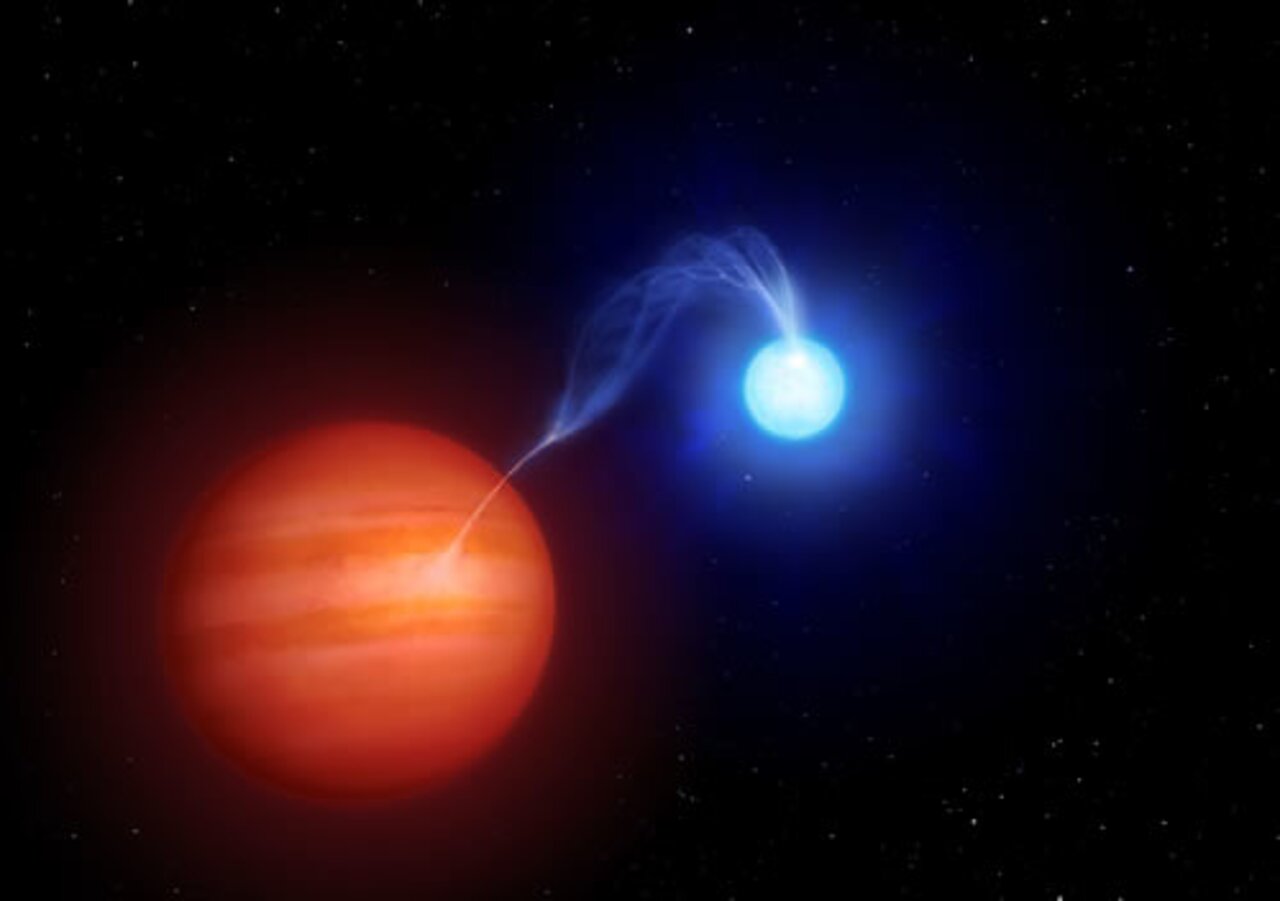
The spiral arms of the galaxy NGC 7038 wind languidly across this
image from the NASA/ESA Hubble Space Telescope. NGC 7038 lies around 220
million light-years from Earth in the southern constellation Indus.
This image portrays an especially rich and detailed view of a spiral
galaxy, and exposes a huge number of distant stars and galaxies around
it. That’s because it’s made from a combined 15 hours worth of Hubble
time focused on NGC 7038 and collecting light. So much data indicates
that this is a valuable target, and indeed, NGC 7038 has been
particularly helpful to astronomers measuring distances at vast cosmic
scales.
The distances to astronomical objects are determined using an
interconnected chain of measurement techniques called the Cosmic
Distance Ladder. Each rung in the ladder is calibrated by earlier steps,
based on measurements of objects closer to us. This makes the accuracy
of distances at the largest scales dependent on how accurately distances
to nearby objects can be determined. Hubble inspected NGC 7038 with its
Wide Field Camera 3 to calibrate two of the most common distance measurement techniques: type 1A supernovae and Cepheid variables.
One of Hubble's original science goals was to accurately establish
distances to night-sky objects, and over its three decades of operation
Hubble’s increasingly precise distance measurements have contributed to one of the most intriguing unsolved problems in astronomy.
Distance measurements are used to derive a quantity known as the Hubble
constant, which captures how fast the Universe is expanding. As
astronomer’s measurements of the Hubble constant have become more
precise, their value has become increasingly inconsistent with the value
of the Hubble Constant derived from observations of the Big Bang’s
afterglow. Astronomers have been unable to explain the mismatch between
the two values of the Hubble constant, which suggests that a new
discovery in cosmology is waiting to be made.
[Image description: An enormous spiral galaxy fills half of
the frame, in the centre. It is oval-shaped, with four blue spiral arms
winding around it. The galaxy’s centre shines brightly with pale yellow
light. Thin strands of orange dust are spread around the centre,
following the paths of the arms. Above and below the galaxy, very many
small stars and galaxies are visible on the black background.]
Links