Showing posts with label ESO. Show all posts

Thursday, July 30, 2026

Astronomers find strongest evidence yet that Betelgeuse has a companion

PR Image eso2611a
VLT images of Betelgeuse and its companion

PR Image eso2611b
VLT image of Betelgeuse’s companion

PR Image eso2611c
Digitized Sky Survey image of Betelgeuse

PR Image eso2611d
Wide-field view of the region of the sky where Betelgeuse is located

PR Image eso2611e
The star Betelgeuse in the constellation of Orion


Videos
Clearest image ever of Betelgeuse’s companion | ESO News
PR Video eso2611a
Clearest image ever of Betelgeuse’s companion | ESO News

Zooming in on Betelgeuse’s companion
PR Video eso2611b
Zooming in on Betelgeuse’s companion


“The conclusion of a century-long quest”

At long last, astronomers have firm evidence that Betelgeuse, one of the most famous stars in the night sky, is not alone. Using the European Southern Observatory’s Very Large Telescope (ESO's VLT), a team led by French researcher Miguel Montargès obtained the clearest image ever of what likely is Betelgeuse B, the star orbiting Betelgeuse. “This is the conclusion of a century-long quest,” says Montargès.

We have shown that Betelgeuse is not single, it is accompanied by a faint stellar companion,” says Montargès, astronomer at the Observatoire de Paris - PSL, France, and lead author of the study published today in Astronomy & Astrophysics. Betelgeuse — a reddish star in the Orion constellation that is easily visible with the naked eye and is known to change in brightness — has been observed for millennia. But it still surprises astronomers.

I jumped from my chair when I saw the processed images,” recalls Montargès. Astronomers have looked for the potential companion, originally proposed to explain Betelgeuse’s brightness changes, for about a century, but without success. Two studies published in 2024 robustly predicted that in December that year, the companion would be furthest from Betelgeuse and hence easier to spot. Montargès and his team got to work, observing the star with ESO’s VLT in December 2024 and spending several months processing the data.

Honestly, I thought we did not have the sensitivity to detect Betelgeuse B as it was predicted,” explains Montargès. “Because it is more massive than predicted, we see it!” Originally thought to be about as massive as the Sun, the new observations reveal that Betelgeuse B has instead around two to three times the mass of the Sun. “The fact that we can still discover a nearby companion, more massive and brighter than the Sun, around such a well-studied star is remarkable,” says Montargès. “These are among the best moments in science: seeing something new, unexpected.”

Betelgeuse B was directly imaged, meaning the light from the star itself was detected, using the SPHERE instrument on ESO’s VLT in Chile’s Atacama Desert. While there was evidence for the existence of this companion star, including a possible direct detection with the Gemini North Telescope in Hawaiʻi, USA, this is the strongest evidence for, and clearest image yet of, Betelgeuse B. “It is remarkable to see how SPHERE and advanced post-processing techniques, originally developed to find exoplanets, also excel at detecting a companion around a massive, evolved star like Betelgeuse," says co-author Anthony Boccaletti, also an astronomer at the Observatoire de Paris.

To be certain that the companion is really there, we still need to observe it in one year on the other side of the star, but there is very little space left for doubt,” adds Montargès.

A few years back, Betelgeuse was the subject of attention from astronomers and non-astronomers alike when it visibly started dimming. As an evolved supergiant star, Betelgeuse is expected to die in a supernova explosion, and the dimming led some to speculate it could be about to explode. A group of astronomers led by Montargès studied the star with ESO’s VLT, finding it was instead obscured by a cloud of dust.

The potential detection of Betelgeuse B will prompt astronomers to investigate how the companion could affect Betelgeuse's anticipated supernova explosion. “The question is truly opened whether this companion is going to have an impact on the evolution of the red supergiant,” concludes Montargès.

Source: ESO/News


More information

At long last, astronomers have firm evidence that Betelgeuse, one of the most famous stars in the night sky, is not This research was presented in a paper titled “VLT/SPHERE images the candidate companion of Betelgeuse” to appear in Astronomy & Astrophysics.

The team is composed of M. Montargès (Laboratoire d'Instrumentation et de Recherche en Astrophysique, Observatoire de Paris, Université PSL, Sorbonne Université, Université Paris Cité, CY Cergy Paris Université, CNRS, France [LIRA]), A. Boccaletti (LIRA), O. Flasseur (Universite Claude Bernard Lyon 1, Centre de Recherche Astrophysique de Lyon UMR5574, ENS de Lyon, CNRS, France), A. de Koter (University of Amsterdam, Anton Pannekoek Institute for Astronomy, The Netherlands), J. Milli (Univ. Grenoble Alpes, CNRS, IPAG, France), P. Kervella (French-Chilean Laboratory for Astronomy, IRL 3386, CNRS and U. de Chile, Chile and LIRA), S. Ridgway (National Optical Astronomy Observatory, USA), E. Bordier (I. Physikalisches Institut der Universität zu Köln, Germany), E. Lagadec (Université Côte dAzur, Observatoire de la Côte dAzur, CNRS, Laboratoire Lagrange, France), A. K. Dupree (Center for Astrophysics-Harvard & Smithsonian, USA), F. Backs (Institute of Astronomy, KU Leuven, Belgium), T. Calderwood (American Association of Variable Star Observers, USA [AAVSO]), and P. Morgan (AAVSO).

The European Southern Observatory (ESO) enables scientists worldwide to discover the secrets of the Universe for the benefit of all. We design, build and operate world-class observatories on the ground — which astronomers use to tackle exciting questions and spread the fascination of astronomy — and promote international collaboration for astronomy. Established as an intergovernmental organisation in 1962, today ESO is supported by 16 Member States (Austria, Belgium, Czechia, Denmark, France, Finland, Germany, Ireland, Italy, the Netherlands, Poland, Portugal, Spain, Sweden, Switzerland and the United Kingdom), along with the host state of Chile and with Australia as a Strategic Partner. ESO’s headquarters and its visitor centre and lanetarium, the ESO Supernova, are located close to Munich in Germany, while the Chilean Atacama Desert, a marvellous place with unique conditions to observe the sky, hosts our telescopes. ESO operates three observing sites: La Silla, Paranal and Chajnantor. At Paranal, ESO operates the Very Large Telescope and its Very Large Telescope Interferometer, as well as survey telescopes such as VISTA. Also at Paranal, ESO will host and operate the south array of the Cherenkov Telescope Array Observatory, the world’s largest and most sensitive gamma-ray observatory. Together with international partners, ESO operates ALMA on Chajnantor, a facility that observes the skies in the millimetre and submillimetre range. At Cerro Armazones, near Paranal, we are building “the world’s biggest eye on the sky” — ESO’s Extremely Large Telescope. From our offices in Santiago, Chile we support our operations in the country and engage with Chilean partners and society.


Links


Contacts:

Miguel Montargès
LIRA, Observatoire de Paris, PSL University
Paris, France
Tel: +33 (0)1 45 07 76 95
Email:
miguel.montarges@observatoiredeparis.psl.eu

Anthony Boccaletti
LIRA, Observatoire de Paris, PSL University
Paris, France
Email:
anthony.boccaletti@observatoiredeparis.psl.eu

Bárbara Ferreira
ESO Media Manager
Garching bei München, Germany
Tel: +49 89 3200 6670
Cell: +49 151 241 664 00
Email:
press@eso.org


Monday, July 27, 2026

New ‘exomoon’ detection challenges cosmic labels

PR Image eso2610a
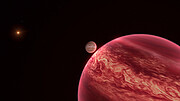
Artist’s impression of CD-35 2722, a system with a moon-like object

PR Image eso2610b
Artist’s impression of the CD-35 2722 system

PR Image eso2610c
Wide-field view around the CD-35 2722 system


Videos

New 'exomoon' detection challenges cosmic labels | ESO News
PR Video eso2610a
New 'exomoon' detection challenges cosmic labels | ESO News

Animation of CD-35 2722, a system with a moon-like object
PR Video eso2610b
Animation of CD-35 2722, a system with a moon-like object

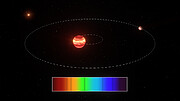
De.tecting a moon-like object in the CD-35 2722 system
PR Video eso2610c
Detecting a moon-like object in the CD-35 2722 system


Observations made with the European Southern Observatory’s Very Large Telescope (ESO’s VLT) have revealed evidence for a moon-like object in the CD-35 2722 system. Unlike moons in our Solar System, the newly found object does not orbit a planet, raising questions about what to name it. Instead, it circles a brown dwarf, an object larger than a planet, that orbits the CD-35 2722 star. If confirmed, this could be the first ‘moon’ discovered outside our Solar System.

Kevin Hoy, an ESO student in Chile and lead author of the study published today in Nature, describes the system he spent months analysing as “super weird” compared to our own. The biggest and most massive object in this young system is the star CD-35 2722, which has about half the mass of the Sun. The star is being orbited by a brown dwarf, an object too massive to be a planet but too small to be a star. The newly discovered object orbits this brown dwarf.

This system is somewhat hard to define using Solar-System-based words like ‘planet’ and ‘moon’,” states Hoy, who is also affiliated with the Universidad Diego Portales and the Millennium Nucleus of Young Exoplanets and their Moons (YEMS) in Chile. The new object, which the team call an exosatellite, is at least as massive as Jupiter while the brown dwarf has more than 30 times the mass of Jupiter. “The exosatellite is clearly massive enough to be a planet, but it does not orbit a star, though it orbits an object that orbits a star," says Hoy."Being the third wheel in this system makes us want to call it a moon, even if it is nothing like the small, rocky moons we have in our system.”

This exosatellite or ‘exomoon’, a natural satellite outside our Solar System [1], is difficult to label, given the differences in this system compared to our own. Alice Zurlo, YEMS Director and collaborator on the study explains: “The satellite we report is a giant gaseous body orbiting a highly massive companion, itself several times the mass of Jupiter.”

We have a clear delineation between the planets and the Sun in the Solar System, so defining things like moons is simple. In the CD-35 2722 system, where we are blurring the lines between stars, planets, and moons, the whole thing becomes more complicated to describe,” adds Zurlo, who is also an astrophysicist at Universidad Diego Portales.

Regardless of what to call this object, astronomers have been trying to detect satellites outside our Solar System for years, but none has yet been confidently detected. Therefore, despite the over 6000 exoplanets discovered to date, only a few exomoon candidates have been spotted and the evidence to support them is limited. Just a few months ago, a team led by Quentin Kral reported on observations with ESO’s Very Large Telescope Interferometer in the HD 206893 star system, which revealed hints of a satellite, but no firm detection.

For the CD-35 2722 observations, Hoy, Zurlo and their team used the CRIRES+ instrument on ESO’s VLT, employing the method that was used to find the first exoplanet around a Sun-like star. They applied this radial velocity method to detect small wobbles on the brown dwarf caused by the object orbiting it, finding what the team believe to be strong evidence for this ‘moon’. “As exotic as it is, this system is truly unique and represents a breakthrough: the first plausible detection of an exosatellite,” says Zurlo.

Beyond the excitement of discovering new types of objects, detecting satellites in other planetary systems can help us understand how diverse their formation and evolution might be. With its 39-metre mirror and advanced instrumentation, ESO’s upcoming Extremely Large Telescope (ELT) will allow astronomers to detect smaller exomoons. Discoveries with the ELT will make us further reconsider how we label planetary objects from systems different from our own.

Source: ESO/News


Notes

[1] A satellite is an object that orbits another object and it can be natural (like our own moon) or artificial (like a spacecraft). An exosatellite is a satellite outside our Solar System. An exomoon is generally considered to be a natural satellite orbiting a planet or another object outside the Solar System, though there is no officially accepted definition for exomoon.


More information

This research was presented in a paper titled “Planetary-Mass Exosatellite Detected Around a Star’s Substellar Companion” to appear in Nature (doi:10.1038/s41586-026-10751-w).

The team is composed of K. Hoy (Instituto de Estudios Astrofísicos, Facultad de Ingeniería y Ciencias, Universidad Diego Portales, Chile [Diego Portales]; European Southern Observatory, Chile [ESO Chile]; Millennium Nucleus on Young Exoplanets and their Moons, Chile [YEMS]), A. Zurlo (Diego Portales; YEMS), P. A. Peña R. (Diego Portales; Centro de Astrofísica y Tecnologías Afines, Chile [CATA]), J. Köhler (TLS Tautenburg, Germany), S. Desidera (INAF Osservatorio Astronomico di Padova, Italy [INAF Padova]), R. Gratton (INAF Padova), C. Lazzoni (INAF Padova; YEMS), S. Petrus (NASA Goddard Space Flight Center, USA; YEMS), F. Rodler (ESO Chile), J. Smoker (ESO Chile), V. D’Orazi (Dipartimento di Fisica, Università degli Studi di Roma Tor Vergata, Italy; INAF Osservatorio Astronomico di Roma, Italy), I. Carleo (INAF Padova), I. Giovannini (Dipartimento di Fisica e Astronomia, Università degli Studi di Padova, Italy; Diego Portales; INAF Padova; YEMS).

The European Southern Observatory (ESO) enables scientists worldwide to discover the secrets of the Universe for the benefit of all. We design, build and operate world-class observatories on the ground — which astronomers use to tackle exciting questions and spread the fascination of astronomy — and promote international collaboration for astronomy. Established as an intergovernmental organisation in 1962, today ESO is supported by 16 Member States (Austria, Belgium, Czechia, Denmark, France, Finland, Germany, Ireland, Italy, the Netherlands, Poland, Portugal, Spain, Sweden, Switzerland and the United Kingdom), along with the host state of Chile and with Australia as a Strategic Partner. ESO’s headquarters and its visitor centre and planetarium, the ESO Supernova, are located close to Munich in Germany, while the Chilean Atacama Desert, a marvellous place with unique conditions to observe the sky, hosts our telescopes. ESO operates three observing sites: La Silla, Paranal and Chajnantor. At Paranal, ESO operates the Very Large Telescope and its Very Large Telescope Interferometer, as well as survey telescopes such as VISTA. Also at Paranal, ESO will host and operate the south array of the Cherenkov Telescope Array Observatory, the world’s largest and most sensitive gamma-ray observatory. Together with international partners, ESO operates ALMA on Chajnantor, a facility that observes the skies in the millimetre and submillimetre range. At Cerro Armazones, near Paranal, we are building “the world’s biggest eye on the sky” — ESO’s Extremely Large Telescope. From our offices in Santiago, Chile we support our operations in the country and engage with Chilean partners and society.


Links


Contacts:

Kevin Hoy
European Southern Observatory (ESO) and Universidad Diego Portales
Santiago, Chile
Email:
Kevin.Hoy@eso.org, kevin.hoy@mail.udp.cl

Alice Zurlo
Universidad Diego Portales
Santiago, Chile
Tel: +56 22138153
Email:
alice.zurlo@mail.udp.cl

Bárbara Ferreira
ESO Media Manager
Garching bei München, Germany
Tel: +49 89 3200 6670
Cell: +49 151 241 664 00
Email:
press@eso.org


Saturday, July 18, 2026

Faintest planet ever imaged from Earth found after more than 10 years of hide-and-seek

PR Image eso2609a
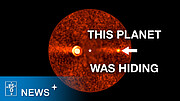
VLT image of the Beta Pictoris d exoplanet

PR Image eso2609b
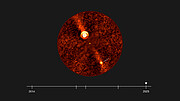
The Beta Pictoris d exoplanet observed over the years

PR Image eso2609c
Map of the sky around Beta Pictoris

PR Image eso2609d
Around Beta Pictoris


Videos

New exoplanet had been hiding for more than 10 years | ESO News
PR Video eso2609a
New exoplanet had been hiding for more than 10 years | ESO News

Time-lapse of exoplanet Beta Pictoris d orbiting around its host star
PR Video eso2609b
Time-lapse of exoplanet Beta Pictoris d orbiting around its host star


A team of astronomers have discovered a third planet orbiting the star Beta Pictoris. The new planet, Beta Pictoris d, is 100 times fainter than Beta Pictoris b — the first planet discovered in the same system — and is among the lightest exoplanets ever to be imaged from the ground. After spotting the planet using the European Southern Observatory’s Very Large Telescope (ESO’s VLT), the team found it had been hiding in archive observations spanning more than a decade.

This was a serendipitous discovery,” says Ben Sutlieff, co-lead of the study published today in The Astrophysical Journal Letters and astronomer at the University of Edinburgh, United Kingdom. “We initially wanted to look more at a known planet in the system, Beta Pictoris b, to see how it changed over time,” he adds. However, when the team went to analyse their images of the system, they noticed something else, separated from Beta Pictoris b, that led them down an entirely new path.

“‘There’s something else there, did you see it?’” Markus Bonse, ESO astronomer in Germany and the other co-lead of the study, recalls saying when looking at the data. To confirm the nature of their detection, the team looked through the ESO archive, a catalogue of past observations made with ESO facilities. They found a new planet, Beta Pictoris d, in multiple images dating back as far as 11 years ago, including one where it was only just visible against the glare of its larger neighbour Beta Pictoris b. “Planet d, it seems, has been playing a game of hide-and-seek with us for over a decade and only now can we say ‘found you!’” says Jayne Birkby, co-author of the study and astronomer at the University of Oxford, United Kingdom.

The newly discovered planet, like the two others in the system, is a gas giant like Jupiter or Saturn. However, Beta Pictoris d has a much wider orbit than the planets Beta Pictoris b and Beta Pictoris c. Moreover, while the first two planets are each around ten times the mass of Jupiter, the new planet is only 2.4 times more massive than Jupiter, making it one of the lightest ever imaged from the ground. The planet is also relatively cold and, hence, extremely faint relative to its host star.

Direct imaging, where the light from an object is captured as in a photograph, only works for planets bright enough to show up next to their much brighter host stars. Taking a direct image of a planet as faint as Beta Pictoris d, therefore, represents a significant achievement. “The new planet is 100 times fainter than Beta Pictoris b, the famous planet in the same system, making it the faintest exoplanet ever imaged directly from Earth,” explains Bonse [1].

This first clear detection of Beta Pictoris d, which is 63 light-years away from us, was made with the ERIS instrument on the VLT by Sutlieff, Bonse and their team. An independent team led by Aidan Gibbs at the University of California, US, also discovered the same planet using the James Webb Space Telescope (JWST), a facility of the US, European and Canadian space agencies. Their results are also published today in The Astrophysical Journal Letters.

To confirm a planet’s discovery from a detection, astronomers usually have to make follow-up observations. However, this system had been extensively studied, with several images stored in the ESO and JWST science archives. “To our joy, out it popped in previous SPHERE observations,” says Birkby, referring to another VLT instrument previously used to observe the Beta Pictoris system. The planet was also spotted in archival observations from NIRCam, a JWST instrument. Now that the team knew where to look for the potential new planet, “it turns out it was hiding in the data all along!” says Birkby. Co-author Valentin Christiaens, researcher at CEA Paris-Saclay, France, adds: “The detections in the archival SPHERE data are not only very exciting on their own, but also because they suggest a number of treasures are still hidden in the archives of VLT instruments!

Beta Pictoris is now the second system, after HR 8799, where more than two planets have been directly imaged. “Systems with multiple directly imaged exoplanets are the ‘holy grails’ of discoveries, because they can teach us a lot about what different exoplanets are like in the same formation environment,” says Sutlieff [2]. Beta Pictoris d also clears up a mystery in its planetary system, as it has exactly the right mass and position to explain the particular shape of the surrounding debris disc, made of the leftovers of planet formation.

The discovery of Beta Pictoris d in this way encourages further direct imaging of planetary systems where faint planets may have been hiding in plain sight, including with ESO’s upcoming Extremely Large Telescope (ELT). “Planets seem to have friends,” says Beth Biller, also a co-author of the paper and astronomer at the University of Edinburgh, “many of the famous directly imaged exoplanet systems seem to have multiple giant planets in the same system, and likely there are even more lower mass planets hiding in these systems that might be revealed with instruments on the ELT.”


Source: ESO/News


Notes

[1] Beta Pictoris d is the faintest exoplanet ever imaged from Earth when corrected for the distance to the system — faintest in absolute magnitude (owing to its size and temperature only) not in apparent magnitude (where distance also contributes to faintness).

[2] Beta Pic is part of a group of stars all with the same age, and some of them have planets too. Beta Pic d seems to be almost a twin of one of these planets, 51 Eri b, meaning astronomers can use them both to anchor their models of how planets evolve and grow over time.


More information

This research was presented in a paper to appear in The Astrophysical Journal Letters (https://doi.org/10.3847/2041-8213/ae80a0).

This paper, co-led by B. J. Sutlieff and M. J. Bonse, involves over 90 authors from around the world, including Belgium, France, Germany, Ireland, Italy, the Netherlands, Switzerland, the United Kingdom and Chile.

The European Southern Observatory (ESO) enables scientists worldwide to discover the secrets of the Universe for the benefit of all. We design, build and operate world-class observatories on the ground — which astronomers use to tackle exciting questions and spread the fascination of astronomy — and promote international collaboration for astronomy. Established as an intergovernmental organisation in 1962, today ESO is supported by 16 Member States (Austria, Belgium, Czechia, Denmark, France, Finland, Germany, Ireland, Italy, the Netherlands, Poland, Portugal, Spain, Sweden, Switzerland and the United Kingdom), along with the host state of Chile and with Australia as a Strategic Partner. ESO’s headquarters and its visitor centre and planetarium, the ESO Supernova, are located close to Munich in Germany, while the Chilean Atacama Desert, a marvellous place with unique conditions to observe the sky, hosts our telescopes. ESO operates three observing sites: La Silla, Paranal and Chajnantor. At Paranal, ESO operates the Very Large Telescope and its Very Large Telescope Interferometer, as well as survey telescopes such as VISTA. Also at Paranal, ESO will host and operate the south array of the Cherenkov Telescope Array Observatory, the world’s largest and most sensitive gamma-ray observatory. Together with international partners, ESO operates ALMA on Chajnantor, a facility that observes the skies in the millimetre and submillimetre range. At Cerro Armazones, near Paranal, we are building “the world’s biggest eye on the sky” — ESO’s Extremely Large Telescope. From our offices in Santiago, Chile we support our operations in the country and engage with Chileanpartners and society.


Links


Contacts:

Ben Sutlieff
Institute for Astronomy, University of Edinburgh
Edinburgh, United Kingdom
Email:
ben.sutlieff@roe.ac.uk

Markus Bonse
European Southern Observatory (ESO)
Garching bei München, Germany
Email:
Markus.Bonse@eso.org

Jayne Birkby
Department of Physics, University of Oxford
Oxford, United Kingdom
Email:
jayne.birkby@physics.ox.ac.uk

Valentin Christiaens
CEA Paris-Saclay, Université Paris-Saclay, Université Paris Cité, CEA, CNRS
Paris, France
Tel: +33169083661
Email:
valentin.christiaens@cea.fr

Beth Biller
Institute for Astronomy, University of Edinburgh
Edinburgh, United Kingdom
Tel: +44 (0)131 668 8349
Email:
bbiller@ed.ac.uk

Bárbara Ferreira
ESO Media Manager
Garching bei München, Germany
Tel: +49 89 3200 6670
Cell: +49 151 241 664 00
Email
: press@eso.org

Press and Public Relations
University of Edinburgh
Edinburgh, United Kingdom
Tel: +44(0)7979 446 209
Email:
press.office@ed.ac.uk


Thursday, July 09, 2026

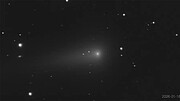
VLT image of interstellar comet 3I/ATLAS (18 January 2026)

PR Image eso2608a
VLT image of interstellar comet 3I/ATLAS (18 January 2026)

PR Image eso2608b
VLT spectrum of interstellar comet 3I/ATLAS

PR Image eso2608c
VLT image of interstellar comet 3I/ATLAS (18 February 2026)


Videos

3I/ATLAS likely formed in the outskirts of an old star system | ESO News
PR Video eso2608a
3I/ATLAS likely formed in the outskirts of an old star system | ESO News

VLT time-lapse of insterstellar comet 3I/ATLAS
PR Video eso2608b
VLT time-lapse of insterstellar comet 3I/ATLAS

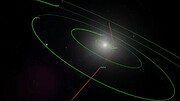
Trajectory of interstellar comet 3I/ATLAS
PR Video eso2608c
Trajectory of interstellar comet 3I/ATLAS


Astronomers have used the European Southern Observatory's Very Large Telescope (ESO's VLT) to study the composition of 3I/ATLAS, the brightest interstellar object ever seen, in detail. By measuring specific chemical fingerprints — the first observations of this kind for a comet that formed outside the Solar System — they found that 3I/ATLAS likely originated in the outskirts of an old star system. The findings shine new light on the formation history of this comet, indicating that it may be much older than the Sun.

Interstellar comets are icy objects formed around a star other than the Sun that occasionally wander into our Solar System. "They are sort of fossils from a planetary formation process that happened very far away, but that we get the chance to study from much closer," says astronomer Cyrielle Opitom, a researcher at the University of Edinburgh, United Kingdom. Together with Jean Manfroid and Damien Hutsemékers of the University of Liège, Belgium, Opitom led a study of 3I/ATLAS published today in Nature Astronomy.

3I/ATLAS is the third interstellar object ever discovered, after 1I/ʻOumuamua and 2I/Borisov. It was found as it was approaching the Sun, spending enough time in our Solar System for astronomers to study it in detail. While it was difficult to measure the composition of the first two interstellar objects — in the first astronomers didn’t detect gas and the second was too faint — this was not the case for 3I/ATLAS. Thanks to the object's unprecedented brightness, Opitom, Manfroid, Hutsemékers and their team were able to measure the comet's isotopic ratios: the relative amounts of different forms of the same element.

Using the UVES instrument on ESO's VLT, the team measured ratios of carbon and nitrogen isotopes in cyanide molecules present in the gas around the comet. These ratios are known to be a good indicator of a comet’s origin, as they are very sensitive to the physical conditions in the formation environment and are not expected to change much as the comet travels on through space.

Unlike comets from our Solar System, this interstellar visitor carries unusually high carbon and nitrogen isotopic ratios,” explains Aravind Krishnakumar, a researcher at the University of Liège and co-author on the new study. A similar study led by Martin Cordiner at the NASA Goddard Space Flight Center, US, that was published late last month in Nature, found a similar isotopic ratio of carbon, as well as elevated levels of deuterium, also called heavy hydrogen [1]. The study used data from the James Webb Space Telescope, a joint project of the US, European and Canadian space agencies.

Overall, the findings by Opitom’s team indicate that the comet likely formed in the outer regions around an old, ‘low-metallicity’ star. A low-metallicity star is one with few elements heavier than helium in its composition, that is thought to have formed when the Universe was much younger — and less chemically rich — than it is now. The team suspects that 3I/ATLAS therefore originated around a star much older than the Sun. “3I/ATLAS is a really exciting opportunity to probe the composition of another planetary system, one that formed long before our Sun and Solar System even existed," says co-author Rosemary Dorsey, a researcher at the University of Helsinki, Finland. Evidence from the studies by the different teams points to 3I/ATLAS being more than twice as old as the Sun.

As 3I/ATLAS moves away from the Sun and gets progressively fainter, its observations at the VLT are also nearing their end. ESO's upcoming Extremely Large Telescope (ELT) will allow similar measurements for future interstellar objects, including those less bright than 3I/ATLAS. "The field of interstellar objects is still very new, and we do not really know what to expect. Every time a new one is discovered, we have new surprises," Opitom concludes.

Source: ESO/News


Notes

[1] A team lead by Salazar-Manzano and Paneque-Carreño used the Atacama Large Millimeter/submillimeter Array (ALMA), in which ESO is a partner, to measure deuterated (or semi-heavy) water in 3I/ATLAS. They also found elevated levels of this type of water compared to those found in Solar System comets.


More information

´´This research was presented in a paper to appear in Nature Astronomy (doi:10.1038/s41550-026-02921-7).

The team is composed of C. Opitom (Institute for Astronomy, University of Edinburgh, Royal Observatory, UK [Edinburgh]), J. Manfroid (STAR Institute, University of Liège, Belgium [STAR]), D. Hutsemékers (STAR), E. Jehin (STAR), M. M. Knight (Volgenau Department of Physics, United States Naval Academy, Annapolis, MD, USA), K. Aravind (STAR), L. Ferellec (Faculty of Science and Engineering, Northumbria University, Newcastle, UK), D. Bodewits (Physics Department, Edmund C. Leach Science Center, Auburn University, AL, USA), V. V. Guzmán (Instituto de Astrofísica, Pontificia Universidad Católica de Chile, Santiago, Chile), M. Cordiner (Department of Physics, Catholic University of America, Washington, DC, USA and Astrochemistry Laboratory, NASA Goddard Space Flight Center, Greenbelt, MD, USA), R. C. Dorsey (Department of Physics, University of Helsinki, Finland), F. La Forgia (Department of Physics and Astronomy, University of Padova, Italy), M. Lippi (INAF - Osservatorio Astrofisico di Arcetri, Firenze, Italy), B. P. Murphy (Edinburgh), C. Snodgrass (Edinburgh).

The European Southern Observatory (ESO) enables scientists worldwide to discover the secrets of the Universe for the benefit of all. We design, build and operate world-class observatories on the ground — which astronomers use to tackle exciting questions and spread the fascination of astronomy — and promote international collaboration for astronomy. Established as an intergovernmental organisation in 1962, today ESO is supported by 16 Member States (Austria, Belgium, Czechia, Denmark, France, Finland, Germany, Ireland, Italy, the Netherlands, Poland, Portugal, Spain, Sweden, Switzerland and the United Kingdom), along with the host state of Chile and with Australia as a Strategic Partner. ESO’s headquarters and its visitor centre and planetarium, the ESO Supernova, are located close to Munich in Germany, while the Chilean Atacama Desert, a marvellous place with unique conditions to observe the sky, hosts our telescopes. ESO operates three observing sites: La Silla, Paranal and Chajnantor. At Paranal, ESO operates the Very Large Telescope and its Very Large Telescope Interferometer, as well as survey telescopes such as VISTA. Also at Paranal, ESO will host and operate the south array of the Cherenkov Telescope Array Observatory, the world’s largest and most sensitive gamma-ray observatory. Together with international partners, ESO operates ALMA on Chajnantor, a facility that observes the skies in the millimetre and submillimetre range. At Cerro Armazones, near Paranal, we are building “the world’s biggest eye on the sky” — ESO’s Extremely Large Telescope. From our offices in Santiago, Chile we support our operations in the country and engage with Chilean partners and society.


Links


Contacts:

Cyrielle Opitom
School of Physics and Astronomy, University of Edinburgh
Edinburgh, United Kingdom
Tel: +44 (0)131 668 8350
Email:
copi@roe.ac.uk

Aravind Krishnakumar
Space sciences, Technologies & Astrophysics Research (STAR) Institute, University of Liège
Liège, Belgium
Email:
aravind139@gmail.com

Rosemary Dorsey
University of Helsinki
Helsinki, Finland
Email:
rosemary.dorsey@helsinki.fi

Bárbara Ferreira
ESO Media Manager
Garching bei München, Germany
Tel: +49 89 3200 6670
Cell: +49 151 241 664 00
Email:
press@eso.org


Sunday, June 21, 2026

Celebrating the birth of new stars... and the VST!

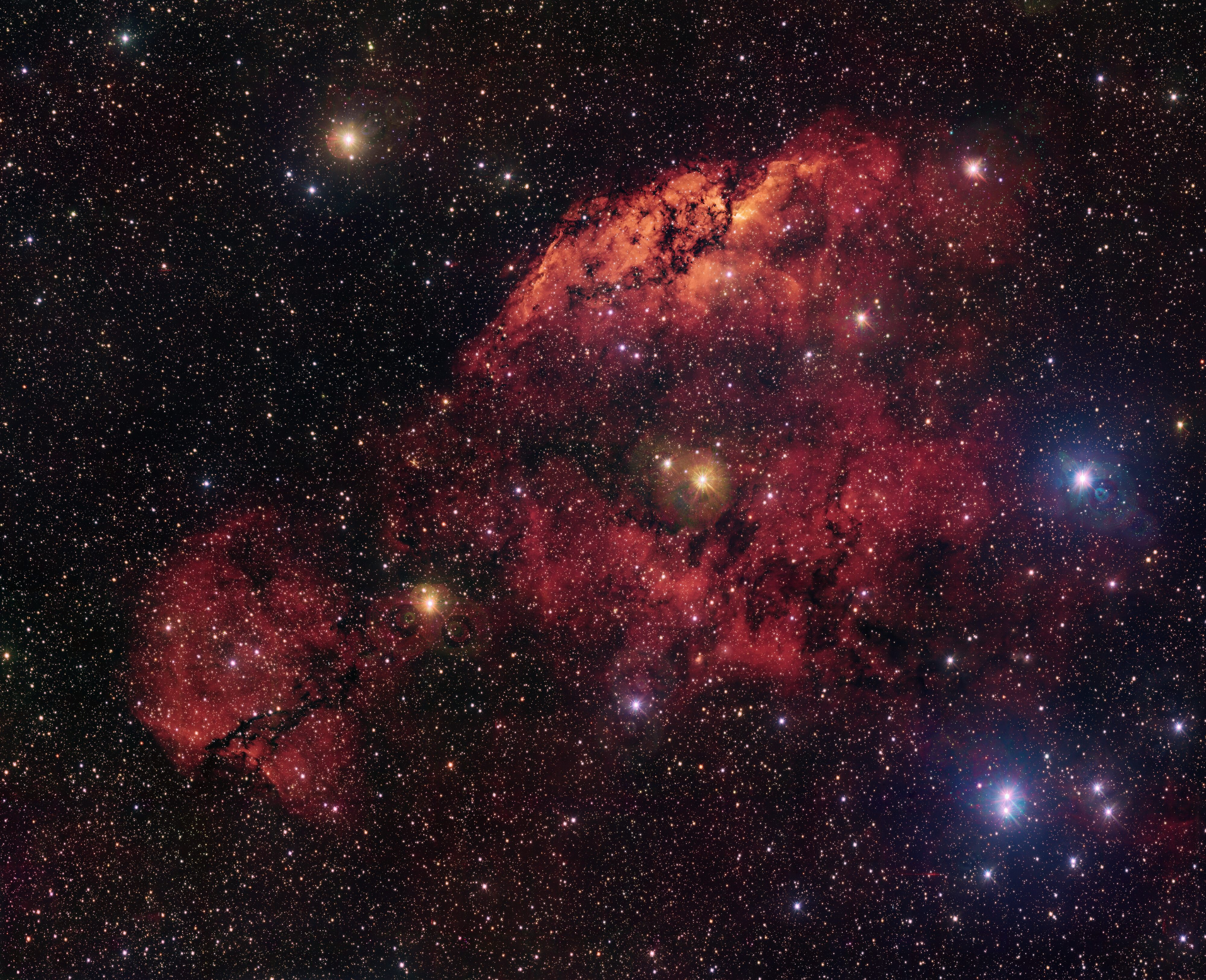
Imagine for a moment you are lying back, gazing up at the red-orange celestial clouds in today’s Picture of the Week. What shapes do you see? A chicken pecking seeds on the ground, the head of a dragon, or something else entirely?

These pareidolia-inducing clouds are a pair of nebulae — collections of dust and gas in interstellar space — called Gum 10 and Gum 11. Visible mostly from the southern hemisphere, they are part of a larger complex, in which stars are born. Gum 10 is the brightest cloud that occupies most of the image, whereas Gum 11 is the fainter, detached cloud to the bottom-left. Their bright glow comes from a special interaction between hydrogen and the hot massive stars in each nebula. These stars emit ultraviolet light, which has enough energy to tear electrons away from their atoms, forming ions. These electrons eventually recombine with hydrogen ions, which causes the emission of the specific shade of red light seen in this image. The black lines in the nebula come from dust that blocks the light behind it.

This image was taken with the VLT Survey Telescope (VST), which celebrates the 15th anniversary of its first light today! The VST project was a joint venture between ESO and the Capodimonte Astronomical Observatory (OAC), part of the Italian National Institute for Astrophysics (INAF). Today the VST is solely managed by INAF and is hosted by ESO at its Paranal Observatory in Chile. The data behind this picture comes from a project called VPHAS+, which uses the VST to scan across the plane of our Milky Way galaxy, intended to better understand the lifecycle of stars.

Link

Credit: ESO/VPHAS+ team

Source: ESO/potw


Wednesday, June 03, 2026

Strange winds reveal strongest hints yet of magnetic activity in exoplanets

PR Image eso2606a
Artist’s impression of an exoplanet with a magnetic field

PR Image eso2606b
How magnetic fields govern winds in exoplanets


Videos

Strange winds reveal magnetic exoplanets | ESO News
PR Video eso2606a
Strange winds reveal magnetic exoplanets | ESO News

Animation of an exoplanet with a magnetic field
PR Video eso2606b
Animation of an exoplanet with a magnetic field

How magnetic fields govern winds in exoplanets
PR Video eso2606c
How magnetic fields govern winds in exoplanets


A team of astronomers has found the strongest evidence yet that some planets outside our Solar System may be magnetic. Using the European Southern Observatory’s Very Large Telescope (ESO's VLT) and the Gemini North telescope, the researchers measured wind speeds on seven very hot, Jupiter-like exoplanets. The observations revealed that the winds on these planets are most likely governed by magnetic fields, providing the first robust measurement of magnetism on planets outside the Solar System.

This breakthrough opens a completely new window on exoplanet research. It’s the first time we can compare the magnetic environments of other worlds — a key step toward ultimately understanding which planets can stay alive, keep their water, and perhaps even, one day, host life as we know it,” says Julia Seidel, an astronomer at the Laboratoire Lagrange, Observatoire de la Côte d’Azur, France and lead author of the study published today in Nature Astronomy.

Earth’s magnetic field influences our atmosphere in complex ways, and is therefore a key factor in understanding what keeps the planet habitable for life. Magnetic fields are also present in other Solar System planets, like Jupiter and Saturn. However, for the past 15 years, no one succeeded in directly measuring the strength of the magnetic fields of exoplanets — until now.

The team, however, didn’t set out to measure magnetic fields but, rather, winds. They measured wind speeds on seven exoplanets orbiting different stars: gas giants like Jupiter, but each tidally locked to its host star and very close to it. Just as we always see only one side of the Moon, these planets always keep one face towards the star, resulting in a scorching hot day side and a freezing cold night side. This temperature difference creates a climate completely different from the one on our planet, with extremely strong winds. The wind speeds in their sample ranged from around 7200 km/h to over 25 000 km/h; in comparison, the fastest winds measured on Jupiter reach speeds of around 1500 km/h.

In the beginning we set out to check if the atmospheric winds behaved the same way for all hot planets,” explains Seidel, who was previously an astronomer at ESO in Chile. For their measurements, the team used data from the ESPRESSO instrument on ESO’s VLT, in the Chilean Atacama Desert, and from a similar instrument on the Gemini North telescope in Hawaiʻi, USA. (The VLT is an ESO telescope while Gemini North is one half of the International Gemini Observatory, partly funded by the U.S. National Science Foundation (NSF) and operated by NSF NOIRLab.)

But when they looked at how the wind speeds varied with planet temperature, they saw a very intriguing pattern emerge: the hotter the planet, the slower the wind. “This is totally counter intuitive because, all things being equal, hot planets have more energy to accelerate the winds! Something must happen that slows down the wind speeds for hotter objects,” says study co-author Vivien Parmentier, a professor at the Laboratoire Lagrange.

The team concluded that the most consistent explanation for this mystery is the presence of planet-wide magnetic fields, since these fields can work as a brake, slowing down the motion of charged particles in the atmosphere. The data therefore allowed the researchers to infer the strength of the magnetic field in each of the studied planets. They found them to be comparable in strength to those found in our Solar System: approximately four times as strong as Saturn's or about half the strength of Jupiter's.

Such strong magnetic fields could affect more than just the wind on these distant planets. "Here on Earth, we know the beauty of the northern and southern lights, where particles from the Sun hit our magnetic field and are guided toward the poles, colliding with gases in the atmosphere to produce colourful displays of green, pink, and purple," explains study co-author Bibiana Prinoth, a former PhD student at Lund University, Sweden, now an astronomer at ESO in Garching, Germany. On the studied exoplanets, the magnetically driven aurorae could be even more dramatic. The team eagerly anticipates the arrival of ESO’s Extremely Large Telescope, which will help to characterise not only large, Jupiter-like exoplanets but also smaller ones like Earth, possibly even detecting gases that could produce aurorae on these distant worlds. Prinoth says: “I like to imagine that some of these worlds have a sky filled not only with stars, but with vast curtains of colourful light dancing across a planet that’s half in perpetual day and half in endless night.”

Source: ESO/News


More information

This research was presented in a paper to appear in Nature Astronomy (
doi:10.1038/s41550-026-02870-1).

The team is composed of Julia V. Seidel (European Southern Observatory, Santiago, Chile [ESO Chile]; Université Côte d’Azur, Observatoire de la Côte d’Azur, CNRS, Laboratoire Lagrange, France [Lagrange]), Vivien Parmentier (Lagrange), Bibiana Prinoth (Lund Observatory, Division of Astrophysics, Department of Physics, Lund University, Lund, Sweden[LU]), Thea Hood (Lagrange), Nishil Mehta (Lagrange), Valentin De Lia (Lagrange), Brian Thorsbro (Lagrange, LU), Konstantin Batygin (Division of Geological and Planetary Sciences, California Institute of Technology, USA), Tristan Guillot (Lagrange), Ragnar van den Broeck (Lagrange), Florian Debras (IRAP, Université de Toulouse, Toulouse, France), Daniel D. B. Koll (School of Physics, Peking University), Thaddeus Komacek (Department of Physics (Atmospheric, Oceanic and Planetary Physics), University of Oxford, Oxford, UK [Oxford]), Hayley Beltz (Department of Astronomy, University of Maryland, College Park, USA), Emily Rauscher (Department of Astronomy and Astrophysics, University of Michigan, MI, USA), Lorenzo Pino (INAF - Osservatorio Astrofisico di Arcetri, Florence, Italy), Matteo Brogi (Dipartimento di Fisica, Università di Ferrara, Ferrara, Italy; INAF – Osservatorio Astrofisico di Torino, Turin, Italy), Joost P. Wardenier (Département de Physique, Institut Trottier de Recherche sur les Exoplanètes, Université de Montréal, Canada [iREx]), Jacob L. Bean (Department of Astronomy & Astrophysics, University of Chicago, Chicago, USA [Chicago]), Björn Benneke (iREx and Department of Earth, Planetary, and Space Sciences, University of California, Los Angeles, CA 90095, USA), Jean-Michel L. B. Desert (Anton Pannekoek Institute for Astronomy, University of Amsterdam, Amsterdam, Netherlands), Pablo Drake (Lagrange), Siddharth Gandhi (Department of Physics, University of Warwick, Coventry, UK and Centre for Exoplanets and Habitability, University of Warwick, Coventry, UK), Mark Hammond (Oxford), David Kasper (Chicago), Michael R. Line (School of Earth and Space Exploration, Arizona State University, Tempe, USA [SESE]), Elspeth Lee (Center for Space and Habitability, niversity of Bern, Bern, Switzerland), Stefan Pelletier (Observatoire astronomique de l’Université de Genève, Versoix, Switzerland), Andreas Seifahrt (International Gemini Observatory/NSF NOIRLab, Tucson, USA), Adrien Simonnin (Lagrange), Peter Smith (SESE), and Kevin B. Stevenson (JHU Applied Physics Laboratory, Laurel, USA)

The European Southern Observatory (ESO) enables scientists worldwide to discover the secrets of the Universe for the benefit of all. We design, build and operate world-class observatories on the ground — which astronomers use to tackle exciting questions and spread the fascination of astronomy — and promote international collaboration for astronomy. Established as an intergovernmental organisation in 1962, today ESO is supported by 16 Member States (Austria, Belgium, Czechia, Denmark, France, Finland, Germany, Ireland, Italy, the Netherlands, Poland, Portugal, Spain, Sweden, Switzerland and the United Kingdom), along with the host state of Chile and with Australia as a Strategic Partner. ESO’s headquarters and its visitor centre and planetarium, the ESO Supernova, are located close to Munich in Germany, while the Chilean Atacama Desert, a marvellous place with unique conditions to observe the sky, hosts our telescopes. ESO operates three observing sites: La Silla, Paranal and Chajnantor. At Paranal, ESO operates the Very Large Telescope and its Very Large Telescope Interferometer, as well as survey telescopes such as VISTA. Also at Paranal, ESO will host and operate the south array of the Cherenkov Telescope Array Observatory, the world’s largest and most sensitive gamma-ray observatory. Together with international partners, ESO operates ALMA on Chajnantor, a facility that observes the skies in the millimetre and submillimetre range. At Cerro Armazones, near Paranal, we are building “the world’s biggest eye on the sky” — ESO’s Extremely Large Telescope. From our offices in Santiago, Chile we support our operations in the country and engage with Chilean partners and society.


Links


Contacts:

Julia Victoria Seidel
Lagrange Laboratory, Observatoire de la Côte d'Azur
Nice, France
Tel: +33 743 32 79 73
Email:
jseidel@oca.eu

Vivien Parmentier
Lagrange Laboratory, Observatoire de la Côte d'Azur
Nice, France
Email:
Vivien.PARMENTIER@univ-cotedazur.fr

Bibiana Prinoth
European Southern Observatory (ESO)
Garching bei München, Germany
Email:
bibiana.prinoth@eso.org

Bárbara Ferreira
ESO Media Manager
Garching bei München, Germany
Tel: +49 89 3200 6670
Cell: +49 151 241 664 00
Email:
press@eso.org


Friday, March 27, 2026

A Solar System in the making? Two planets spotted forming in disc around young star

PR Image eso2604a
VLT images of two planets forming around the young star WISPIT 2

PR Image eso2604b
Composite VLT image of two planets around the WISPIT 2 star

PR Image eso2604c
Spectrum of the baby exoplanet WISPIT 2c

PR Image eso2604d
Wide-field view of the area around the WISPIT 2 star

PR Image eso2604e
The young star WISPIT 2 in the constellation Aquila


Videos

Two planets spotted forming around a young star | ESO News
PR Video eso2604a
Two planets spotted forming around a young star | ESO News

Zooming into the young planetary system around the WISPIT 2 star
PR Video eso2604b
Zooming into the young planetary system around the WISPIT 2 star


Astronomers have observed two planets forming in the disc around a young star named WISPIT 2. Having previously detected one planet, the team have now employed European Southern Observatory (ESO) telescopes to confirm the presence of another. These observations, and the unique structure of the disc around the star, indicate that the WISPIT 2 system could resemble a young Solar System.

WISPIT 2 is the best look into our own past that we have to date,” says Chloe Lawlor, PhD student at the University of Galway, Ireland, and lead author of the study published today in The Astrophysical Journal Letters.

The system is only the second known, after PDS 70, where two planets have been directly observed in the process of forming around their host star. Unlike PDS 70, however, WISPIT 2 has a very extended planet-forming disc with distinctive gaps and rings. "These structures suggest that more planets are currently forming, which we will eventually detect,” Lawlor says.

"WISPIT 2 gives us a critical laboratory not just to observe the formation of a single planet but an entire planetary system," says Christian Ginski, study co-author and researcher at the University of Galway. With such observations, astronomers aim to better understand how baby planetary systems develop into mature ones, like our own.

The first newborn planet found in the system — named WISPIT 2b — was detected last year, with a mass almost five times that of Jupiter and orbiting the central star at around 60 times the distance between Earth and the Sun. “This detection of a new world in formation really showed the amazing potential of our current instrumentation,” said Richelle van Capelleveen, PhD student at Leiden Observatory, the Netherlands, and leader of the previous study. After an additional object was identified near the star [1], measurements made with ESO’s Very Large Telescope (VLT) and the VLT Interferometer (VLTI) confirmed its planetary nature. The new planet — WISPIT 2c — is four times closer to the central star and is twice as massive as WISPIT 2b. Both planets are gas giants, like the outer planets in our Solar System.

To confirm the existence of WISPIT 2c the team employed the SPHERE instrument on ESO's VLT, which captured an image of the object. The team then used the GRAVITY+ instrument on the VLTI to confirm that the object was indeed a planet. "Critically our study made use of the recent upgrade to GRAVITY+ without which we would not have been able to get such a clear detection of the planet so close to its star," says Guillaume Bourdarot, study co-author and researcher at the Max Planck Institute for Extraterrestrial Physics, Garching, Germany.

Both planets in WISPIT 2 appear in clear gaps within the disc of dust and gas circling the young star. These gaps result from each planet's development: particles in the disc accumulate, their gravity pulling in more material until an embryo planet forms. The remaining material, around each gap, creates distinctive dust rings in the disc.

Besides the gaps that the two planets were found in, there is at least one smaller gap farther out in the WISPIT 2 disc. "We suspect there may be a third planet carving out this gap" says Lawlor, "potentially of Saturn mass owing to the gap’s being much narrower and shallower". The team are eager to make follow-up observations, with Ginski noting that “with ESO’s upcoming Extremely Large Telescope, we may be able to directly image such a planet.


Source: ESO/News


Notes

[1] The first hints of the presence of a second planet came from observations made with the University of Arizona's MagAO-X on the 6.5-metre Magellan Telescopes in Chile and the University of Virginia's LMIRcam on the Large Binocular Telescope Interferometer in the USA.


More information

This research was presented in a paper to appear in The Astrophysical Journal Letters (https://doi.org/10.3847/2041-8213/ae4b3b).

The team is composed of C. Lawlor (School of Natural Sciences, Centre for Astronomy and Ryan Institute, University of Galway, Ireland [Galway]), R. F. van Capelleveen (Leiden Observatory, Leiden University,The Netherlands [Leiden]), G. Bourdarot (Max Planck Institute for Extraterrestrial Physics, Garching, Germany [MPE]), C. Ginski (Galway and Center for Astronomical Adaptive Optics, Department of Astronomy, University of Arizona, Tucson, USA [CAAO]), M. A. Kenworthy (Leiden), T. Stolker (Leiden), L. Close (CAAO), A. J. Bohn (Leiden), F. Eisenhauer (MPE and Department of Physics, Technical University of Munich, Garching, Germany), P. Garcia (Faculdade de Engenharia, Universidade do Porto, Portugal and CENTRA – Centro de Astrofísica e Gravitação, IST, Universidade de Lisboa, Portugal), S. F. Honig (School of Physics and Astronomy, University of Southampton, United Kingdom), J. Kammerer (European Southern Observatory, Garching Germany), L. Kreidberg (Max Planck Institute for Astronomy, Heidelberg, Germany), S. Lacour (LIRA, Observatoire de Paris, Université PSL, CNRS, Sorbonne Université, Université de Paris, Meudon, France), J.-B. Le Bouquin (Univ. Grenoble Alpes, CNRS, IPAG, Grenoble, France), E. Mamajek (Jet Propulsion Laboratory, California Institute of Technology, Pasadena, California, USA), M. Nowak (LIRA), T. Paumard (LIRA), C. Straubmeier (1st Institute of Physics, University of Cologne, Germany), N. van der Marel (Leiden) and the exoGRAVITY Collaboration.

The European Southern Observatory (ESO) enables scientists worldwide to discover the secrets of the Universe for the benefit of all. We design, build and operate world-class observatories on the ground — which astronomers use to tackle exciting questions and spread the fascination of astronomy — and promote international collaboration for astronomy. Established as an intergovernmental organisation in 1962, today ESO is supported by 16 Member States (Austria, Belgium, Czechia, Denmark, France, Finland, Germany, Ireland, Italy, the Netherlands, Poland, Portugal, Spain, Sweden, Switzerland and the United Kingdom), along with the host state of Chile and with Australia as a Strategic Partner. ESO’s headquarters and its visitor centre and planetarium, the ESO Supernova, are located close to Munich in Germany, while the Chilean Atacama Desert, a marvellous place with unique conditions to observe the sky, hosts our telescopes. ESO operates three observing sites: La Silla, Paranal and Chajnantor. At Paranal, ESO operates the Very Large Telescope and its Very Large Telescope Interferometer, as well as survey telescopes such as VISTA. Also at Paranal, ESO will host and operate the south array of the Cherenkov Telescope Array Observatory, the world’s largest and most sensitive gamma-ray observatory. Together with international partners, ESO operates ALMA on Chajnantor, a facility that observes the skies in the millimetre and submillimetre range. At Cerro Armazones, near Paranal, we are building “the world’s biggest eye on the sky” — ESO’s Extremely Large Telescope. From our offices in Santiago,Chile we support our operations in the country and engage with Chilean partners and society.


Links


Contacts:

Chloe Lawlor
University of Galway
Galway, Ireland
Email:
c.lawlor13@universityofgalway.ie

Christian Ginski
University of Galway
Galway, Ireland
Email
: christian.ginski@universityofgalway.ie

Richelle van Capelleveen
Leiden Observatory, Leiden University
Leiden, the Netherlands
Email:
capelleveen@strw.leidenuniv.nl

Guillaume Bourdarot
Max Planck Institute for Extraterrestrial Physics
Garching, Germany
Tel: +498930000-3295
Email:
bourdarot@mpe.mpg.de

Bárbara Ferreira
ESO Media Manager
Garching bei München, Germany
Tel: +49 89 3200 6670
Cell: +49 151 241 664 00
Email:
press@eso.org


Monday, March 02, 2026

Largest image of its kind shows hidden chemistry at the heart of the Milky Way

PR Image eso2603a
Largest ALMA image ever shows the molecular gas in the centre of the Milky Way

PR Image eso2603b
Different molecules in the centre of the Milky Way observed with ALMA

PR Image eso2603c
Location of the Central Molecular Zone in the Milky Way


Videos

The hidden chemistry at the heart of our galaxy  | Wonders of the Universe
PR Video eso2603a
The hidden chemistry at the heart of our galaxy | Wonders of the Universe

Zooming into the gas at the core of the Milky Way
PR Video eso2603b
Zooming into the gas at the core of the Milky Way

Ashley Barnes talks about ACES
PR Video eso2603c
Ashley Barnes talks about ACES

Katharina Immer talks about ACES
PR Video eso2603d
Katharina Immer talks about ACES

Steve Longmore talks about ACES
PR Video eso2603e
Steve Longmore talks about ACES


Astronomers have captured the central region of our Milky Way in a striking new image, unveiling a complex network of filaments of cosmic gas in unprecedented detail. Obtained with the Atacama Large Millimeter/submillimeter Array (ALMA), this rich dataset — the largest ALMA image to date — will allow astronomers to probe the lives of stars in the most extreme region of our galaxy, next to the supermassive black hole at its centre.

It’s a place of extremes, invisible to our eyes, but now revealed in extraordinary detail,” says Ashley Barnes, an astronomer at the European Southern Observatory (ESO) in Germany who is part of the team that obtained the new data. The observations provide a unique view of the cold gas — the raw material from which stars form — within the so-called Central Molecular Zone (CMZ) of our galaxy. It is the first time the cold gas across this whole region has been explored in such detail.

The region featured in the new image spans more than 650 light-years. It harbours dense clouds of gas and dust, surrounding the supermassive black hole at the centre of our galaxy. “It is the only galactic nucleus close enough to Earth for us to study in such fine detail,” says Barnes. The dataset reveals the CMZ like never before, from gas structures dozens of light-years across all the way down to small gas clouds around individual stars.

The gas that ACES — the ALMA CMZ Exploration Survey — specifically explores is cold molecular gas. The survey unpacks the intricate chemistry of the CMZ, detecting dozens of different molecules, from simple ones such as silicon monoxide to more complex organic ones like methanol, acetone or ethanol.

Cold molecular gas flows along filaments feeding into clumps of matter out of which stars can grow. In the outskirts of the Milky Way we know how this process happens, but within the central region the events are much more extreme. “The CMZ hosts some of the most massive stars known in our galaxy, many of which live fast and die young, ending their lives in powerful supernova explosions, and even hypernovae,” says ACES leader Steve Longmore, a professor of astrophysics at Liverpool John Moores University, UK. With ACES, astronomers hope to better understand how these phenomena influence the birth of stars and whether our theories of star formation hold in extreme environments.

By studying how stars are born in the CMZ, we can also gain a clearer picture of how galaxies grew and evolved,” Longmore adds. “We believe the region shares many features with galaxies in the early Universe, where stars were forming in chaotic, extreme environments.”

To collect this new dataset, astronomers used ALMA, which is operated by ESO and partners in Chile’s Atacama Desert. In fact, this is the first time such a large area has been scanned with this facility, making this the largest ALMA image ever. Seen in the sky, the mosaic — obtained by stitching together many individual observations like putting puzzle pieces together — is as long as three full Moons side-by-side.

We anticipated a high level of detail when designing the survey, but we were genuinely surprised by the complexity and richness revealed in the final mosaic," says Katharina Immer, an ALMA astronomer at ESO who is also part of the project. The data from ACES are presented in five papers accepted for publication in Monthly Notices of the Royal Astronomical Society, with a sixth in the final review stages.

The upcoming ALMA Wideband Sensitivity Upgrade, along with ESO’s Extremely Large Telescope, will soon allow us to push even deeper into this region — resolving finer structures, tracing more complex chemistry, and exploring the interplay between stars, gas and black holes with unprecedented clarity,” says Barnes. “In many ways, this is just the beginning.”

Source: ESO/News


More information

This research was presented in a series of papers presenting the ACES data, to appear in Monthly Notices of the Royal Astronomical Society:

  • Paper I - ALMA Central Molecular Zone Exploration Survey (ACES) I: Overview paper https://arxiv.org/abs/2602.20340

  • Paper II - ALMA Central Molecular Zone Exploration Survey (ACES) II: 3mm continuum images https://arxiv.org/abs/2602.20240

  • Paper III - ALMA Central Molecular Zone Exploration Survey (ACES) III: Molecular line data reduction and HNCO & HCO+ data https://arxiv.org/abs/2602.20276

  • Paper IV - ALMA Central Molecular Zone Exploration Survey (ACES) IV: Data of the two intermediate-width spectral windows https://arxiv.org/abs/2602.20445

  • Paper V - ALMA Central Molecular Zone Exploration Survey (ACES) V: CS(2-1), SO 2_3-1_2, CH3CHO 5_(1,4)-4_(1,3), HC3N(11-10) and H40A lines data

  • Paper VI - ALMA Central Molecular Zone Exploration Survey (ACES) VI: ALMA Large Program Reveals a Highly Filamentary Central Molecular Zone (undergoing minor revision) https://arxiv.org/abs/2602.20262

The data itself will be available from the ALMA Science Portal at https://almascience.org/alma-data/lp/aces.

The international ACES team is composed of over 160 scientists ranging from Master’s students to retirees, working at more than 70 institutions across Europe, North and South America, Asia, and Australia. The project was instigated and led by Principal Investigator Steven Longmore (Liverpool John Moores University, UK), together with co-PIs Ashley Barnes (European Southern Observatory, Germany), Cara Battersby (University of Connecticut, USA [Connecticut]), John Bally (University of Colorado Boulder, USA), Laura Colzi (Centro de Astrobiología, Madrid, Spain [CdA]), Adam Ginsburg (University of Florida, USA [Florida]), Jonathan Henshaw (Max Planck Institute for Astronomy, Heidelberg, Germany), Paul Ho (Academia Sinica Institute of Astronomy and Astrophysics, Taiwan), Izaskun Jiménez-Serra (CdA), J. M. Diederik Kruijssen (COOL Research DAO), Elisabeth Mills (University of Kansas, USA), Maya Petkova (Chalmers University of Technology, Sweden), Mattia Sormani (Dipartimento di Scienza e Alta Tecnologia (DiSAT), University of Insubria, Italy), Robin Tress (École Polytechnique Fédérale de Lausanne, Switzerland & Institut für Theoretische Astrophysik, Universität Heidelberg, Germany), Daniel Walker (UK ALMA Regional Centre Node, University of Manchester, UK), and Jennifer Wallace (Connecticut).

Within ACES, the ALMA data reduction working group is coordinated by Adam Ginsburg, Daniel Walker, and Ashley Barnes, and includes Nazar Budaiev (Florida), Laura Colzi (CdA), Savannah Gramze (Florida), Pei-Ying Hsieh (National Astronomical Observatory of Japan, Mitaka, Tokyo, Japan), Desmond Jeff (Florida), Xing Lu (Shanghai Astronomical Observatory, Chinese Academy of Sciences, China), Jaime Pineda (Max-Planck-Institut für extraterrestrische Physik, Germany), Marc Pound (University of Maryland, USA), and Álvaro Sánchez-Monge (Institut de Ciències de l’Espai, CSIC, Bellaterra, Spain; Institut d’Estudis Espacials de Catalunya, Castelldefels, Spain), together with more than 30 additional team members who contributed to the data reduction effort.

The Atacama Large Millimeter/submillimeter Array (ALMA), an international astronomy facility, is a partnership of ESO, the U.S. National Science Foundation (NSF) and the National Institutes of Natural Sciences (NINS) of Japan in cooperation with the Republic of Chile. ALMA is funded by ESO on behalf of its Member States, by NSF in cooperation with the National Research Council of Canada (NRC) and the National Science and Technology Council (NSTC) in Taiwan and by NINS in cooperation with the Academia Sinica (AS) in Taiwan and the Korea Astronomy and Space Science Institute (KASI). ALMA construction and operations are led by ESO on behalf of its Member States; by the National Radio Astronomy Observatory (NRAO), managed by Associated Universities, Inc. (AUI), on behalf of North America; and by the National Astronomical Observatory of Japan (NAOJ) on behalf of East Asia. The Joint ALMA Observatory (JAO) provides the unified leadership and management of the construction, commissioning and operation of ALMA.

The European Southern Observatory (ESO) enables scientists worldwide to discover the secrets of the Universe for the benefit of all. We design, build and operate world-class observatories on the ground — which astronomers use to tackle exciting questions and spread the fascination of astronomy — and promote international collaboration for astronomy. Established as an intergovernmental organisation in 1962, today ESO is supported by 16 Member States (Austria, Belgium, Czechia, Denmark, France, Finland, Germany, Ireland, Italy, the Netherlands, Poland, Portugal, Spain, Sweden, Switzerland and the United Kingdom), along with the host state of Chile and with Australia as a Strategic Partner. ESO’s headquarters and its visitor centre and planetarium, the ESO Supernova, are located close to Munich in Germany, while the Chilean Atacama Desert, a marvellous place with unique conditions to observe the sky, hosts our telescopes. ESO operates three observing sites: La Silla, Paranal and Chajnantor. At Paranal, ESO operates the Very Large Telescope and its Very Large Telescope Interferometer, as well as survey telescopes such as VISTA. Also at Paranal, ESO will host and operate the south array of the Cherenkov Telescope Array Observatory, the world’s largest and most sensitive gamma-ray observatory. Together with international partners, ESO operates ALMA on Chajnantor, a facility that observes the skies in the millimetre and submillimetre range. At Cerro Armazones, near Paranal, we are building “the world’s biggest eye on the sky” — ESO’s Extremely Large Telescope. From our offices in Santiago, Chile we support our operations in the country and engage with Chilean partners and society.


Links


Contacts:

Ashley Thomas Barnes
Astronomical Data Scientist, European Southern Observatory (ESO)
Garching bei München, Germany
Tel: +49 89 3200 6729
Email:
Ashley.Barnes@eso.org

Steven Longmore
Professor of Astrophysics, Astrophysics Research Institute, Liverpool John Moores University
Liverpool, UK
Tel: +44 (0)151 231 2929
Email:
S.N.Longmore@ljmu.ac.uk

Katharina Immer
ALMA Regional Centre Astronomer, European Southern Observatory (ESO)
Garching bei München, Germany
Tel: +49 89 3200 6471
Email:
Katharina.Immer@eso.org
Adam Ginsburg

Associate Professor, Department of Astronomy, University of Florida
Gainesville, FL, USA
Tel: +1 352-294-1879
Email:
adamginsburg@ufl.edu, adam.g.ginsburg@gmail.com

Daniel Walker
Astronomer, UK ALMA Regional Centre Node, University of Manchester
Manchester, UK
Email:
daniel.walker-2@manchester.ac.uk
Pei-Ying Hsieh

Assistant Professor, National Astronomical Observatory of Japan, Tokyo, Japan
Email:
pei-ying.hsieh@nao.ac.jp

Xing Lu
Professor, Shanghai Astronomical Observatory, Chinese Academy of Sciences
Shanghai, China
Email:
xinglu@shao.ac.cn, xinglv.nju@gmail.com

Bárbara Ferreira
ESO Media Manager
Garching bei München, Germany
Tel: +49 89 3200 6670
Cell: +49 151 241 664 00
Email:
press@eso.org