Showing posts with label NSF’s National Optical-Infrared Astronomy Research Laboratory (NOIRLab). Show all posts

Thursday, October 29, 2026

NSF–DOE Vera C. Rubin Observatory Reveals Its First Dwarf Planet Candidate in Our Solar System

PR Image noirlab2626a
2026 ED138 orbital arc (with annotations)

PR Image noirlab2626b
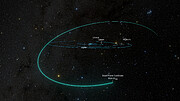
2026 ED138 orbit in 3D

PR Image noirlab2626c
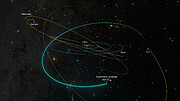
2026 ED138 orbit in 3D (with dwarf planets)

PR Image noirlab2626d
2026 ED138 orbital arc (without annotations)

PR Image noirlab2626e
2026 ED138 orbital pathway during May 2026

PR Image noirlab2626f
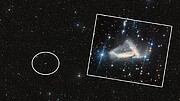
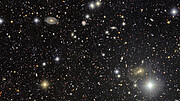
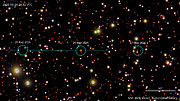
Mosaic of 2026 ED138 discovery images

PR Image noirlab2626g
Top-down view of 2026 ED138 orbit

PR Image noirlab2626h
Top-down view of 2026 ED138 orbit (with dwarf planets)


Videos

2026 ED138 orbital arc
PR Video noirlab2626a
2026 ED138 orbital arc
2026 ED138 3D orbit
PR Video noirlab2626b
2026 ED138 3D orbit
2026 ED138 3D orbit (with dwarf planets)
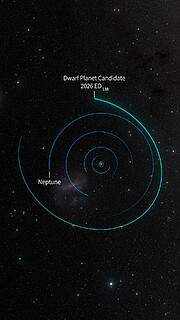
PR Video noirlab2626c
2026 ED138 3D orbit (with dwarf planets)

2026 ED138 3D orbit (portrait)
PR Video noirlab2626d
2026 ED138 3D orbit (portrait)
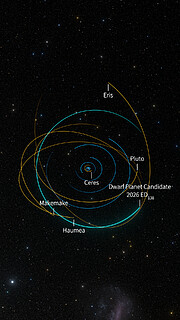
2026 ED138 3D orbit (portrait, with dwarf planets)
PR Video noirlab2626e
2026 ED138 3D orbit (portrait, with dwarf planets)

Zooming into 2026 ED138
PR Video noirlab2626f
Zooming into 2026 ED138


The candidate orbits our Sun beyond Pluto, and may be among the largest and brightest objects discovered in this region of the Solar System

In the outer reaches of our Solar System, beyond the orbit of Pluto, NSF–DOE Vera C. Rubin Observatory has spotted 2026 ED138 — a large, bright trans-Neptunian object that scientists have identified as a dwarf planet candidate. The observations were announced today by the International Astronomical Union Minor Planet Center (MPC). If confirmed, ED138 would be among the largest dwarf planets ever discovered in this region of the Solar System.

With observations taken during the run up to the Legacy Survey of Space and Time (LSST), NSF–DOE Vera C. Rubin Observatory has discovered a new dwarf planet candidate in our Solar System. The candidate, which has been given the provisional designation 2026 ED138 (ED138), was found by Rubin Operations team member and in-Kind contributor Matthew Holman (Center for Astrophysics | Harvard & Smithsonian [CfA]). He contributes to improving Rubin's algorithms that search for distant moving objects in our Solar System. The candidate’s distance from the Sun places it beyond the orbit of dwarf planet Pluto. Initial analysis indicates that it may be among the largest and brightest bodies scientists have discovered in this region of the Solar System.

Rubin Observatory is jointly funded by the U.S. National Science Foundation and the U.S. Department of Energy's Office of Science.

“Rubin Observatory's super power is the ability to clearly capture movement and change among a vast number of objects and phenomena that humans have never seen before,” says Edward Ajhar, NSF Program Director for Rubin Observatory. “That power greatly extends our ability to reveal and understand new things about our Solar System, the Milky Way, and billions of other galaxies across the Universe.”

“Rubin Observatory’s unique strengths make it an incredible tool for investigating a wide range of astrophysical phenomena, from dark energy to the discovery of this dwarf planet candidate,” says Kathy Turner, DOE’s Program Manager for Rubin Observatory.

Today, MPC announced the discovery in a Minor Planet Electronic Circular. Mario Jurić, faculty at the University of Washington and Rubin Solar System Lead Scientist, and Holman presented the results at a press conference at the 58th Annual Division for Planetary Sciences (DPS) meeting in Spokane, Washington.

On the evening of 13 October, Holman was running data collected by Rubin earlier in 2026 through a search code he developed with CfA colleague Kevin Napier. The code is built to look at billions of detections of moving objects, compare them, and find the detections that correspond to the same object. Using this method, Holman uncovered ED138, and he immediately noticed that its brightness and distance indicated that it is unusually large.

“My first reaction was one of excited disbelief,” says Holman. “Objects like this are very rare, so I immediately started checking whether I or the code had done something wrong.”

To remove any doubt, a detailed search through the data began in the hopes of uncovering more observations of ED138. Jurić searched Rubin’s catalogs and images and found 20 more observations, going back to 4 March 2026. In all, Rubin observed ED138 30 times on 20 nights between 4 March and 11 July. Additional archival images from the DOE-fabricated Dark Energy Camera (DECam), and uncovered by the Asteroid Institute’s ADAM Precovery service, provided data going all the way back to 2016. These data allowed the team to trace more than 10 years of ED138's orbit. DECam is mounted on the NSF Victor M. Blanco 4-meter Telescope at Cerro Tololo Inter-American Observatory (CTIO), a Program of NSF NOIRLab.

ED138 is currently at a distance of about 46 astronomical units (au), where 1 au is the average distance between the Earth and the Sun. For reference, dwarf planet Pluto has an average distance of 40 au. This classifies ED138 as a trans-Neptunian object (TNO) — objects that orbit the Sun at a distance greater than Neptune’s.

A model of the Solar System showing the orbital pathway of newly discovered dwarf planet candidate 2026 ED138 (ED138). ED138 was discovered in observational data from NSF–DOE Vera C. Rubin Observatory spanning 4 March–11 July 2026. The rendering starts on 8 May 2026. Visit Orbitviewer to interact with ED138’s orbit in 3D and in real-time. Credit: NSF–DOE Vera C. Rubin Observatory/NOIRLab/SLAC/AURA/R. Proctor.

Scientists study the size, composition, and orbital trajectories of TNOs to understand how the Solar System formed, how the giant planets migrated over time, and how smaller objects have been scattered throughout this evolution. ED138’s orbit is tilted almost 25 degrees off of the plane of the Solar System, classifying it as a hot-classical TNO and suggesting that it was disturbed from its original orbit through gravitational interactions with Neptune.

Not all TNOs are considered dwarf planet candidates, with the distinction being in the size and shape of the object. To be a dwarf planet an object needs to be massive enough for its own gravity to pull it into a round shape. Based on ED138’s distance, brightness and estimated surface reflectivity (albedo), the team estimates that its size is between 600 and 1500 kilometers, and icy bodies this large are expected to be round.

This preliminary analysis places ED138 among the largest dwarf planet candidates ever discovered beyond Neptune, though observations in the infrared are needed to constrain its exact size and confirm its nature as a dwarf planet. If confirmed, ED138 would join the five dwarf planets recognized by the International Astronomical Union (IAU): Pluto, Ceres, Eris, Haumea, and Makemake.

ED138 was found in a region of sky close to the plane of the Milky Way — a crowded region filled with millions of stars. To most telescopes, ED138 has been lost among the myriad background sources, which is likely why it was not discovered until now. Rubin Observatory’s regular and continuous monitoring of the entire Southern Hemisphere sky, combined with powerful algorithms that sift through millions to billions of points of light to identify those corresponding to small moving objects, enabled the team to spot ED138 within the crowded field.

“Rubin is giving us an unprecedented capacity to explore the sky through a combination of speed, depth, and precision,” says Jurić. “And the discovery is just the beginning: once we identify a new object, we can search back months, and sometimes even decades, finding it in images where nobody knew to look. This ability to both discover and ‘precover’ objects is transforming how quickly and accurately we can determine their orbits and understand the distant Solar System.”

ED138 joins the rapidly growing sample of Solar System objects discovered by Rubin since it began collecting early data in preparation for the LSST, which began in June 2026. In April, before LSST formally began, the Rubin Solar System team submitted observations of over 11,000 new asteroids to the IAU Minor Planet Center (MPC), which included roughly 380 new TNOs. At the time, the team called this large submission “the tip of the iceberg” and expressed their excitement for the discoveries to come once LSST began. With the discovery of ED138, those hopes are coming to fruition.

“If confirmed as a dwarf planet, ED138 would join a very small family of worlds,” says Holman. “Rubin will image the whole southern sky again and again for ten years, so any others hiding in the places earlier surveys skipped are now within reach.”

Now that Rubin has identified ED138, scientists around the globe can organize follow-up observations to uncover even more information about its nature. Images of ED138 are made available to Rubin data rights holders on the Rubin Science Platform, an online, web-based environment where scientists can access, explore, and process the massive amounts of data being produced by the LSST. The public can also interact with this discovery on Orbitviewer, an interactive web-based app that provides an intuitive way to explore the structure of our cosmic backyard in three dimensions and in real time.


More information

The Rubin Solar System Operations team is composed of Mario Jurić, Aren Heinze, Jacob A. Kurlander, Matthew J. Holman, Kevin J. Napier, Ian Sullivan, Eric C. Bellm, Megan E. Schwamb; Joachim Moeyens, Ian Chow, Pedro H. Bernardinelli, Colin Orion Chandler, Sarah Greenstreet, Samuel Cornwall, Siegfried Eggl, Chester Li, Eric J. Christensen, Erfan Nourbakhsh, James E. Robinson, Devanshi Singh, and Danica Zilkova.

NSF–DOE Vera C. Rubin Observatory, funded by the U.S. National Science Foundation and the U.S. Department of Energy’s Office of Science, is a groundbreaking new astronomy and astrophysics observatory on Cerro Pachón in Chile. It is named after astronomer Vera Rubin, who provided the first convincing evidence for the existence of dark matter. Using the largest camera ever built, Rubin is repeatedly scanning the sky for 10 years to create an ultra-wide, ultra-high-definition, time-lapse record of our Universe.

NSF–DOE Vera C. Rubin Observatory is a joint initiative of the U.S. National Science Foundation (NSF) and the U.S. Department of Energy’s Office of Science (DOE/SC). Its primary mission is to carry out the Legacy Survey of Space and Time, providing an unprecedented data set for scientific research supported by both agencies. Rubin is operated jointly by NSF NOIRLab and SLAC National Accelerator Laboratory. NSF NOIRLab is managed by the Association of Universities for Research in Astronomy (AURA) and SLAC is operated by Stanford University for the DOE. France provides key support to the construction and operations of Rubin Observatory through contributions from CNRS/IN2P3. Rubin Observatory is privileged to conduct research in Chile and gratefully acknowledges additional contributions from more than 40 international organizations and teams.

The U.S. National Science Foundation (NSF) is an independent federal agency created by Congress in 1950 to promote the progress of science. NSF supports basic research and people to create knowledge that transforms the future.

The DOE’s Office of Science is the single largest supporter of basic research in the physical sciences in the United States and is working to address some of the most pressing challenges of our time.

NSF NOIRLab, the U.S. National Science Foundation center for ground-based optical-infrared astronomy, operates the International Gemini Observatory (a facility of NSF, NRC–Canada, ANID–Chile, MCTIC–Brazil, MINCyT–Argentina, and KASI–Republic of Korea), NSF Kitt Peak National Observatory (KPNO), NSF Cerro Tololo Inter-American Observatory (CTIO), the Community Science and Data Center (CSDC), and NSF–DOE Vera C. Rubin Observatory (in cooperation with DOE’s SLAC National Accelerator Laboratory). It is managed by the Association of Universities for Research in Astronomy (AURA) under a cooperative agreement with NSF and is headquartered in Tucson, Arizona.

The scientific community is honored to have the opportunity to conduct astronomical research on I’oligam Du’ag (Kitt Peak) in Arizona, on Maunakea in Hawai‘i, and on Cerro Tololo and Cerro Pachón in Chile. We recognize and acknowledge the very significant cultural role and reverence of I’oligam Du’ag to the Tohono O’odham Nation, and Maunakea to the Kanaka Maoli (Native Hawaiians) community.

SLAC National Accelerator Laboratory explores how the universe works at the biggest, smallest, and fastest scales and invents powerful tools used by researchers around the globe. As world leaders in ultrafast science and bold explorers of the physics of the universe, we forge new ground in understanding our origins and building a healthier and more sustainable future. Our discovery and innovation help develop new materials and chemical processes and open unprecedented views of the cosmos and life’s most delicate machinery. Building on more than 60 years of visionary research, we help shape the future by advancing areas such as quantum technology, scientific computing, and the development of next-generation accelerators. SLAC is operated by Stanford University for the U.S. Department of Energy’s Office of Science.


Links


Contacts:

Mario Jurić
Rubin Solar System Lead Scientist
University of Washington
Email:
mjuric@uw.edu

Matt Holman
Senior Astrophysicist
Center for Astrophysics | Harvard & Smithsonian
Email:
mholman@cfa.harvard.edu

Josie Fenske
Public Information Officer
NSF NOIRLab
Email:
josie.fenske@noirlab.edu


Monday, October 26, 2026

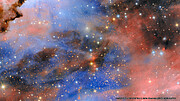
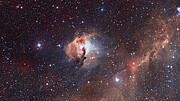
Seagull Nebula Through the Eyes of NSF–DOE Vera C. Rubin Observatory Commissioning Camera

PR Image noirlab2625a
Seagull Nebula captured by NSF–DOE Vera C. Rubin Observatory ComCam

PR Image noirlab2625b
Scale Comparison of Seagull Nebula to Trifid-Lagoon


Videos

Pan on the Seagull Nebula
PR Video noirlab2625a
Pan on the Seagull Nebula

Zooming into the Seagull Nebula
PR Video noirlab2625b
Zooming into the Seagull Nebula

Stepping into the Seagull Nebula
PR Video noirlab2625c
Stepping into the Seagull Nebula


Before Rubin Observatory’s First Look event, its engineering camera captured exquisite details of star formation taking place in the Seagull Nebula

Two years ago this month, NSF–DOE Vera C. Rubin Observatory’s engineering test camera, named the LSST Commissioning Camera (ComCam), began capturing images of the sky to prepare for the revolutionary Legacy Survey of Space and Time, which began earlier this year. This image featuring the head of the Seagull Nebula was one of many ComCam images that led to the success of Rubin First Look and helped to document the observatory’s excellent performance.

Active star formation populates this image of the Seagull Nebula taken in Fall 2024 by NSF–DOE Vera C. Rubin Observatory’s engineering test camera, known as the Commissioning Camera (ComCam). This image is being released today in recognition of the two-year anniversary of the beginning of engineering testing with ComCam.

ComCam’s work was an important step towards the ongoing Legacy Survey of Space and Time (LSST). Collecting the data for this Seagull Nebula image provided an opportunity to test Rubin’s hardware and software systems, as well as the image processing pipelines that would later be used with the much larger images from the LSST Camera.

With a mosaic of nine CCD sensors and a total of 144 megapixels, ComCam covers an area in the sky about twice that of the full Moon. Over the seven-week ComCam engineering test campaign, from 24 October to 11 December 2024, approximately 16,000 exposures were acquired. Within the data collected is this image featuring IC 2177, a region recognizable as the head of the Seagull Nebula.

Rubin Observatory is a joint initiative of the U.S. National Science Foundation (NSF) and the U.S. Department of Energy’s Office of Science (DOE/SC). Rubin is operated jointly by NSF NOIRLab and SLAC National Accelerator Laboratory.

Located about 3700 light-years away from Earth, between the constellations of Monoceros (The Unicorn) and Canis Major (The Great Dog), lie three expansive clouds of gas. These clouds, Sharpless 2-292, Sharpless 2-296, and Sharpless 2-297, form a shape that looks like a seagull in flight. Sharpless 2-292 represents the head of the nebulous bird and is pictured here.

The spectacular pink and blue colors of this nebula are caused by the rich star formation within it. When stars are born in molecular clouds, they emit ultraviolet radiation hot enough to ionize, or energize, the surrounding hydrogen gas and cause it to glow. The pressure of this radiation sweeps away light-obscuring material, such as dust, and makes the glowing hydrogen gas visible. In this image these regions appear pink. The contrasting blue haze is composed of dust particles reflecting the light of the other young stars in the area.

Sharpless 2-292 is a cloud of ionized hydrogen gas, known as an H II region, within IC 2177. The source of Sharpless 2-292 is HD 53367, a triple star system of massive young stars that sits at the top of the dark, jagged ridge in this image where it represents the Seagull’s blue eye.

With just 144 megapixels, ComCam is much smaller than the 3200-megapixel LSST Camera, which is now mounted on the Simonyi Survey Telescope and executing the Legacy Survey of Space and Time (LSST). LSSTCam’s field of view is 21 times larger than ComCam’s, which enables it to capture images of the entire southern hemisphere sky every 3–4 nights. Until LSST collects more data, this image is the deepest and sharpest view of this region.

This ComCam image of the Seagull Nebula gave Rubin’s image processing team early experience working with the complex structures found in star-forming regions. That experience helped the team identify and solve processing challenges that would also arise with the much larger LSST Camera images, including the Trifid and Lagoon Nebulae, one of the Rubin First Look images released in June 2025.

With its job on the telescope completed, ComCam now serves as a test stand in the summit clean room, supporting LSST Camera software testing and the regular cycling of spare vacuum pumps and refrigeration compressors to keep them in good working order. Although ComCam is no longer taking images of the sky, it continues to play an important role in supporting Rubin behind the scenes as the Legacy Survey of Space and Time gets underway.


More information

NSF–DOE Vera C. Rubin Observatory, funded by the U.S. National Science Foundation and the U.S. Department of Energy’s Office of Science, is a groundbreaking new astronomy and astrophysics observatory on Cerro Pachón in Chile. It is named after astronomer Vera Rubin, who provided the first convincing evidence for the existence of dark matter. Using the largest camera ever built, Rubin is repeatedly scanning the sky for 10 years to create an ultra-wide, ultra-high-definition, time-lapse record of our Universe.

NSF–DOE Vera C. Rubin Observatory is a joint initiative of the U.S. National Science Foundation (NSF) and the U.S. Department of Energy’s Office of Science (DOE/SC). Its primary mission is to carry out the Legacy Survey of Space and Time, providing an unprecedented data set for scientific research supported by both agencies. Rubin is operated jointly by NSF NOIRLab and SLAC National Accelerator Laboratory. NSF NOIRLab is managed by the Association of Universities for Research in Astronomy (AURA) and SLAC is operated by Stanford University for the DOE. France provides key support to the construction and operations of Rubin Observatory through contributions from CNRS/IN2P3. Rubin Observatory is privileged to conduct research in Chile and gratefully acknowledges additional contributions from more than 40 international organizations and teams.

The U.S. National Science Foundation (NSF) is an independent federal agency created by Congress in 1950 to promote the progress of science. NSF supports basic research and people to create knowledge that transforms the future.

The DOE’s Office of Science is the single largest supporter of basic research in the physical sciences in the United States and is working to address some of the most pressing challenges of our time.

NSF NOIRLab, the U.S. National Science Foundation center for ground-based optical-infrared astronomy, operates the International Gemini Observatory (a facility of NSF, NRC–Canada, ANID–Chile, MCTIC–Brazil, MINCyT–Argentina, and KASI–Republic of Korea), NSF Kitt Peak National Observatory (KPNO), NSF Cerro Tololo Inter-American Observatory (CTIO), the Community Science and Data Center (CSDC), and NSF–DOE Vera C. Rubin Observatory (in cooperation with DOE’s SLAC National Accelerator Laboratory). It is managed by the Association of Universities for Research in Astronomy (AURA) under a cooperative agreement with NSF and is headquartered in Tucson, Arizona.

The scientific community is honored to have the opportunity to conduct astronomical research on I’oligam Du’ag (Kitt Peak) in Arizona, on Maunakea in Hawai‘i, and on Cerro Tololo and Cerro Pachón in Chile. We recognize and acknowledge the very significant cultural role and reverence of I’oligam Du’ag to the Tohono O’odham Nation, and Maunakea to the Kanaka Maoli (Native Hawaiians) community.

SLAC National Accelerator Laboratory explores how the universe works at the biggest, smallest, and fastest scales and invents powerful tools used by researchers around the globe. As world leaders in ultrafast science and bold explorers of the physics of the universe, we forge new ground in understanding our origins and building a healthier and more sustainable future. Our discovery and innovation help develop new materials and chemical processes and open unprecedented views of the cosmos and life’s most delicate machinery. Building on more than 60 years of visionary research, we help shape the future by advancing areas such as quantum technology, scientific computing, and the development of next-generation accelerators. SLAC is operated by Stanford University for the U.S. Department of Energy’s Office of Science.


Links


Contacts:

Josie Fenske
Public Information Officer
NSF NOIRLab
Email:
josie.fenske@noirlab.edu


Friday, October 09, 2026

Gemini North Reveals Pearl-Like Knots in the Remnant of a Supernova Witnessed in the Year 1181

PR Image noirlab2624a
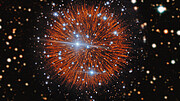
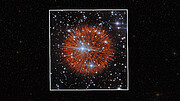
Supernova remnant Pa 30

PR Image noirlab2624b
Gemini North’s laser shines through airglow


Videos

Pan on supernova remnant Pa 30
PR Video noirlab2624a
Pan on supernova remnant Pa 30

Zooming into supernova remnant Pa 30
PR Video noirlab2624b
Zooming into supernova remnant Pa 30


Cascading knot structure of historic supernova remnant are uncovered in new observations from the Gemini North telescope in Hawai‘i

The Gemini North telescope located on Maunakea in Hawai‘i has revealed the most detailed view yet of Pa 30, the likely remnant of the historic supernova seen in the year 1181. The new observations reveal that its famous “firework” filaments are not smooth streaks, but chains of tiny knots.

No, this is not a firework display. This is Pa 30 — the likely remnant of the historic supernova witnessed in the year 1181, now captured here in unprecedented detail by the Gemini North telescope, one half of the International Gemini Observatory, partly funded by the U.S. National Science Foundation (NSF) and operated by NSF NOIRLab. This image was captured with the Gemini Multi-Object Spectrograph (GMOS), and it shows that the remnant’s unmistakable firework-shaped ejecta take a cascading knot-like structure.

The historic supernova, named SN 1181, is one of only five supernovae in the Milky Way that were observed from Earth before the invention of the telescope. Eight separate texts show that Chinese, Japanese, and Arabic astronomers first observed the supernova between 4 and 6 August 1181. The supernova remained visible in the constellation Cassiopeia for 185 days. According to what we know about how stars end their lives, the colossal explosion would have left something behind. Pa 30, a system composed of a blue central star and surrounding firework-shaped shell, is the top candidate for this supernova remnant.

Pa 30 was only discovered in 2013 through a citizen science campaign to find planetary nebulae in Wide-field Infrared Survey Explorer (WISE) data. It was the 30th nebula found by American amateur astronomer Dana Patchick. Follow-up imaging on the KPNO 2.1-meter Telescope and the Hiltner 2.4-meter Telescope, both located at NSF Kitt Peak National Observatory (KPNO), a Program of NSF NOIRLab, revealed faint, diffuse nebular emission and remarkable radial filaments threading the nebula in a nearly perfect sphere. Based on its estimated age and brightness, scientists consider Pa 30 to be the likely remnant of SN 1181.

Analysis of the new observations from Gemini North, which was led by Timothy Cunningham (Center for Astrophysics — Harvard & Smithsonian) and Ilaria Caiazzo (Institute of Science and Technology Austria), reveals about ten times more filamentary structure in Pa 30 than previously seen. It also shows that the radial filaments are made of consistent chains of tiny knots of gas, rather than smooth streaks as previously thought. This knotty structure suggests that there may have been thermal or density variations in the circumstellar medium that shaped the supernova ejecta as it expanded radially away from the explosion.

Pa 30 is unique among all known supernova remnants. The central star remaining after the explosion, IRAS 00500+6713, is extremely hot, with a temperature of about 200,000°C (~360,000°F). It also possesses very fast stellar winds that move at around 16,000 kilometers per second (~10,000 miles per second).

Surviving remnant stars are expected to be “kicked” away during the powerful supernova explosion. However, the central star of Pa 30 appears almost exactly centered in the remnant. This curious configuration implies that the explosion was quite symmetrical, and it rules out a large kick that could have knocked the star off-center. From this, the researchers conclude that SN 1181 was an extremely rare Type Iax supernova. Unlike the standard high-energy explosions of Type Ia supernovae that wipe out their stars, Type Iax supernovae are lower-energy, incomplete explosions that leave behind a surviving remnant star. Pa 30 is the only known Type Iax remnant in the Milky Way.

The story of SN 1181 is one of humans working together, across time and space, to understand the changing Universe. As new astronomical questions arrive every day, SN 1181 invites us to wonder what mysteries remain unsolved from the distant past.


More information

Analysis of this data is presented in a paper titled “Detection of knots in the supernova type Iax remnant Pa 30” appearing in The Astrophysical Journal. DOI: 10.3847/1538-4357/ae9cb2

The team is composed of T. Cunningham (Center for Astrophysics — Harvard & Smithsonian [CfA]; now University of Warwick), I. Caiazzo (Institute of Science and Technology Austria), J. C. Raymond (CfA), and S. J. Kenyon (CfA).

NSF NOIRLab, the U.S. National Science Foundation center for ground-based optical-infrared astronomy, operates the International Gemini Observatory (a facility of NSF, NRC–Canada, ANID–Chile, MCTIC–Brazil, MINCyT–Argentina, and KASI–Republic of Korea), NSF Kitt Peak National Observatory (KPNO), NSF Cerro Tololo Inter-American Observatory (CTIO), the Community Science and Data Center (CSDC), and NSF–DOE Vera C. Rubin Observatory (in cooperation with DOE’s SLAC National Accelerator Laboratory). It is managed by the Association of Universities for Research in Astronomy (AURA) under a cooperative agreement with NSF and is headquartered in Tucson, Arizona.

The scientific community is honored to have the opportunity to conduct astronomical research on I’oligam Du’ag (Kitt Peak) in Arizona, on Maunakea in Hawai‘i, and on Cerro Tololo and Cerro Pachón in Chile. We recognize and acknowledge the very significant cultural role and reverence of I’oligam Du’ag to the Tohono O’odham Nation, and Maunakea to the Kanaka Maoli (Native Hawaiians) community.


Links


Contacts:

Timothy Cunnigham
Center for Astrophysics — Harvard & Smithsonian
Email:
timothy.cunningham@cfa.harvard.edu

Ilaria Caiazzo
Institute of Science and Technology Austria
Email:
ilaria.caiazzo@ist.ac.at

Josie Fenske
Public Information Officer
NSF NOIRLab
Email:
josie.fenske@noirlab.edu


Saturday, September 05, 2026

Hawai‘i Students Name Image of Glittering Galaxy Pair Nā ʻUhane Māhoe Huki Pū i ke Ola

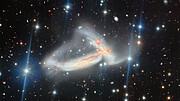
PR Image noirlab2621a
Nā ʻUhane Māhoe Huki Pū i ke Ola

PR Image noirlab2621b
Project Hōkūlani Interns Summer 2026

PR Image noirlab2621c
Project Hōkūlani Galaxy Presentation

PR Image noirlab2621d
Project Hōkūlani Stargazing on Maunakea

PR Image noirlab2621e
Project Hōkūlani Interns Fall 2025

PR Image noirlab2621f
Project Hōkūlani Interns Shadow Nighttime Operations


Videos

Pan on NGC 7253
PR Video noirlab2621a
Pan on NGC 7253

Zooming into NGC 7253
PR Video noirlab2621b
Zooming into NGC 7253


Project Hōkūlani interns researched and named this new Gemini North image featuring the stunning pair of interacting galaxies known as NGC 7253

Nā ʻUhane Māhoe Huki Pū i ke Ola is the Hawaiian name given to this image of NGC 7253 — a pair of spiral galaxies caught in each other’s gravity. Captured by the Gemini North telescope on Maunakea in Hawai‘i, this image created a spectacular symbolic display for this year’s interns participating in Project Hōkūlani.

Over 200 million light years away, deep within the constellation Ka Lupe o Kawelo (Pegasus), is NGC 7253 — a pair of gravitationally interacting galaxies separated by a distance of about four million light years. This glittering view of their meeting was captured by the Gemini North telescope, one half of the International Gemini Observatory, partly funded by the U.S. National Science Foundation (NSF) and operated by NSF NOIRLab. The new image offers viewers the closest look yet at NGC 7253, and has been named Nā ʻUhane Māhoe Huki Pū i ke Ola, which translates to “The Twin Spirits Pulling Together Creating Life.”

The creation of this image began in October 2025 with three local students from Waiākea High School and the Volcano School of Arts and Sciences participating in the Project Hōkūlani internship. Interns Raiyan Rahman, Rafan Rahman, and Alia Tamanha spent one week at the Gemini North Hilo Base Facility with three goals: learn about observatory operations and how scientific data is collected; deepen their own appreciation for Maunakea; and select an astronomical object for Gemini North to image.

“NGC 7253 is a fascinating object because it’s two galaxies that are merging into one over billions of years. But we mainly picked this object because it was one of the few that actually lay within a Hawaiian constellation, Ka Lupe o Kawelo,” says Raiyan Rahman. “After spending so much time on Maunakea, it was important to us to pick something that was both culturally and astronomically significant.”

In June 2026, three more local students from Keaʻau High School and Kamehameha Schools joined the Project Hōkūlani internship program. Mylin Wilson, Manu Silva-Sampaio, and Samantha Silva-Sampaio shared many of the same goals as their predecessors, and built upon their work by creating a name for the new image of NGC 7253.

The chosen name, Nā ʻUhane Māhoe Huki Pū i ke Ola, is inspired by the dual nature of the interacting galaxies and symbolizes the transformative experience the students had during their summer internship. Each portion of the name corresponds to a different part of the interns’ experience.

Nā ʻUhane Māhoe represents the two similarly sized galaxies and their wispy spiral arms. It also represents the twin nature of the International Gemini Observatory, composed of the Gemini North telescope in Hawai‘i and the Gemini South telescope on Cerro Pachón in Chile.

“ʻUhane (spirit) was an important theme for our group. Our experiences throughout the week — ʻoli (stargazing), visiting the summit, and learning about the awesome scientific discoveries made possible by Maunakea — ignited our own spirits as we prepare for life after high school,” says Samantha Silva-Sampaio.

“ʻUhane in this image reminds us that astronomy is not just science or spirit; it's both at the same time,” adds Manu Silva-Sampaio.

Huki Pū represents the physical and literal aspect of the galaxies being pulled together, driven by the force of each other's gravity. It also represents the communities that came together to make Project Hōkūlani a reality.

“Many people from around the world and different areas of expertise came together to make our internship possible, and we learned so much from everyone,” says Wilson. “Our experience, and astronomy itself, is a kākou (collective) type of practice.”

Finally, i ke Ola represents the life that can be created by interacting galaxies. To choose a fitting name for this image, the interns researched interacting galaxies and galaxy mergers. They learned that when spiral galaxies begin to merge, the gas and dust in their spiral arms collide, causing a significant burst in star formation. Extremely hot radiation from the newly born stars ionizes, or energizes, the surrounding gas. When atomic hydrogen is ionized, it forms what are known as H II (pronounced “h-two”) regions, which are visible in this image as concentrations of bright pink light. Manu Silva-Sampaio says, “Stars are sources of life and health for us as human beings, because our Sun is a star, and we cannot live without it.”

Project Hōkūlani operates through a partnership between the International Gemini Observatory and the Project Hōkūlani team at the University of Hawaiʻi at Mānoa. Project Hōkūlani supports middle and high school students in entering postsecondary science, technology, engineering, and math (STEM) fields through strengths- and work-based enrichment programs.

This image was taken as part of the NOIRLab Legacy Imaging Program — a continuation of the program started at the International Gemini Observatory in 2002, called the Gemini Legacy Imaging Program. Its aim is to use observing time on NOIRLab telescopes that is dedicated to acquiring data specifically for color images to share with the public.

Through both of these programs, six local high school students on Hawaiʻi Island get to contribute to the selection, imaging, and naming of a new astronomical image from the Gemini North telescope on Maunakea each year.


More information

NSF NOIRLab, the U.S. National Science Foundation center for ground-based optical-infrared astronomy, operates the International Gemini Observatory (a facility of NSF, NRC–Canada, ANID–Chile, MCTIC–Brazil, MINCyT–Argentina, and KASI–Republic of Korea), NSF Kitt Peak National Observatory (KPNO), NSF Cerro Tololo Inter-American Observatory (CTIO), the Community Science and Data Center (CSDC), and NSF–DOE Vera C. Rubin Observatory (in cooperation with DOE’s SLAC National Accelerator Laboratory). It is managed by the Association of Universities for Research in Astronomy (AURA) under a cooperative agreement with NSF and is headquartered in Tucson, Arizona.

The scientific community is honored to have the opportunity to conduct astronomical research on I’oligam Du’ag (Kitt Peak) in Arizona, on Maunakea in Hawai‘i, and on Cerro Tololo and Cerro Pachón in Chile. We recognize and acknowledge the very significant cultural role and reverence of I’oligam Du’ag to the Tohono O’odham Nation, and Maunakea to the Kanaka Maoli (Native Hawaiians) community.


Links


Contacts:

Leinani Lozi
Hawaiʻi Education and Engagement Manager
International Gemini Observatory/NSF NOIRLab
Email:
leinani.lozi@noirlab.edu

Josie Fenske
Public Information Officer
NSF NOIRLab
Email:
josie.fenske@noirlab.edu


Sunday, August 16, 2026

Scientists Release Biggest 2D Map of the Universe

PR Image noirlab2620a
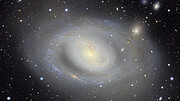
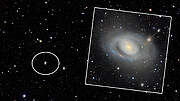
Messier 96 as Seen with DESI Legacy Survey

PR Image noirlab2620b
Copeland Septet group of galaxies

PR Image noirlab2620c
Sunset over Kitt Peak National Observatory

PR Image noirlab2620d
CTIO on the Edge of the World


Videos

Pan on Messier 96
PR Video noirlab2620a
Pan on Messier 96

Zoom into Messier 96
PR Video noirlab2620b
Zoom into Messier 96


The new DESI Legacy Imaging Surveys map serves as the foundation for the largest-ever 3D map of the Universe, used to investigate dark energy

Hold on to your telescopes: the DESI Legacy Imaging Surveys team has released the largest-ever 2D map of the Universe. The 5.6-trillion-pixel map contains nearly four billion celestial objects, including stars, galaxies, black holes, and asteroids. The data are available for all to use and are publicly viewable through the Legacy Survey Sky Viewer.

for rare phenomena like gravitational lenses, observe fleeting events like supernovae, and investigate two of physics’ biggest mysteries: dark matter, the invisible substance that accounts for most of the mass in our Universe, and dark energy, the force driving our Universe’s accelerating expansion.

The new map builds on earlier versions from the DESI Legacy Imaging Surveys that have already proved invaluable. To date, more than 1800 science papers have been published referencing the Legacy Surveys’ data.

“It’s part of the fabric of astronomy research now,” says David Schlegel, a co-lead of the Legacy Surveys and scientist at the Department of Energy’s Lawrence Berkeley National Laboratory (Berkeley Lab). “When you're working with astronomical objects today, you often start by pulling up the Legacy Imaging Viewer to see what you’re looking at.”;

Covering roughly 75% of the sky in visible and near-infrared light, the updated map provides a deep view of the extragalactic Universe not blocked by the dust and stars of our own Milky Way. Researchers expect it will remain the most comprehensive 2D map of our Universe for years to come.

More than 160 scientists contributed to data collection for the project, and a team of 20 produced the final dataset released today. It was built by combining 263,407 telescope exposures from three ground-based sky surveys:

  • The Dark Energy Camera Legacy Survey (DECaLS), conducted by the 570-megapixel Department of Energy-fabricated Dark Energy Camera (DECam), mounted on the U.S. National Science Foundation (NSF) Victor M. Blanco 4-meter Telescope at NSF Cerro Tololo Inter-American Observatory (CTIO), a Program of NSF NOIRLab.
  • The Mayall z-band Legacy Survey (MzLS), conducted by the NSF Nicholas U. Mayall 4-meter Telescope at NSF Kitt Peak National Observatory (KPNO), a Program of NSF NOIRLab.
  • The Beijing-Arizona Sky Survey (BASS) at the University of Arizona’s Steward Observatory, conducted with the UA Bok 2.3-meter Telescope at KPNO and supplemented by years of data from NASA’s Wide-field Infrared Survey Explorer (WISE) satellite mission.

In addition to the extended file collection, the DESI Legacy Surveys’ full catalog of data is made available as a searchable database via the Astro Data Lab at the Community Science and Data Center (CSDC), a Program of NSF NOIRLab. These services are accessible to the entire astronomy community to facilitate data access and analysis.

“Explorations of our Universe always start with images of the night sky. The DESI Imaging Legacy Surveys are just one step in this venerable human tradition,” says Arjun Dey, co-lead of the Legacy Surveys and an astronomer at NSF NOIRLab. “For our team, these data are fundamental to the investigation of the expansion history of the Universe and the formation of our galaxy. But the skies belong to everyone, and this survey gives everyone the chance to marvel at their wonders.”

The DESI Legacy Imaging Surveys were originally conducted to prepare for the Dark Energy Spectroscopic Instrument (DESI) survey. The Legacy Surveys’ 2D map is essentially a deep photograph of the sky; it records where galaxies and stars appear and how bright they appear. This crucial step enables DESI to select objects and measure their light in different wavelengths to determine their distances, building the largest high-resolution 3D map ever made. Scientists use this map to study the way galaxies have clustered at different ages of the Universe to track dark energy over time.

In April 2026, DESI completed its original five-year survey ahead of schedule and with vastly more objects than expected. The early results have shown surprising hints that dark energy’s impact may be weakening over time — a paradigm shift that could potentially shape the predicted fate of our Universe. DESI expects to publish improved results using its first five years of data in 2027 and is continuing observations into 2028.

Beyond supporting DESI, the Legacy Surveys will be a foundational reference for the next generation of telescopes. As new observatories like NSF–DOE Vera C. Rubin Observatory, jointly funded by the NSF and DOE’s Office of Science (DOE/SC), and NASA’s Nancy Grace Roman Space Telescope come online, researchers can compare their observations with one of the deepest and most comprehensive views of the sky ever assembled.

The Legacy Surveys’ data will also help scientists train artificial intelligence tools to analyze petabytes of astronomical data and accelerate new discoveries. It will be among the datasets used in an astrophysics pilot project within the American Science Cloud, part of the DOE’s Genesis Mission.


More information

The DESI Legacy Imaging Surveys are supported by the U.S. Department of Energy’s Office of High Energy Physics; the National Energy Research Scientific Computing Center, a DOE Office of Science user facility; the U.S. National Science Foundation, Division of Astronomical Sciences; and the partner institutions.

DESI is supported by the DOE Office of Science and by the National Energy Research Scientific Computing Center, a DOE Office of Science national user facility. Additional support for DESI is provided by the U.S. National Science Foundation; the Science and Technology Facilities Council of the United Kingdom; the Gordon and Betty Moore Foundation; the Heising-Simons Foundation; the French Alternative Energies and Atomic Energy Commission (CEA); the Secretariat of Science, Humanities, Technology and Innovation (SECIHTI) of Mexico; the Ministry of Science and Innovation of Spain; and by the DESI member institutions.

Lawrence Berkeley National Laboratory (Berkeley Lab) is committed to groundbreaking research focused on discovery science and solutions for abundant and reliable energy supplies. The lab’s expertise spans materials, chemistry, physics, biology, earth and environmental science, mathematics, and computing. Researchers from around the world rely on the lab’s world-class scientific facilities for their own pioneering research. Founded in 1931 on the belief that the biggest problems are best addressed by teams, Berkeley Lab and its scientists have been recognized with 17 Nobel Prizes. Berkeley Lab is a multiprogram national laboratory managed by the University of California for the U.S. Department of Energy’s Office of Science.

DOE’s Office of Science is the single largest supporter of basic research in the physical sciences in the United States, and is working to address some of the most pressing challenges of our time. For more information, please visit energy.gov/science.

NSF NOIRLab, the U.S. National Science Foundation center for ground-based optical-infrared astronomy, operates the International Gemini Observatory (a facility of NSF, NRC–Canada, ANID–Chile, MCTIC–Brazil, MINCyT–Argentina, and KASI–Republic of Korea), NSF Kitt Peak National Observatory (KPNO), NSF Cerro Tololo Inter-American Observatory (CTIO), the Community Science and Data Center (CSDC), and NSF–DOE Vera C. Rubin Observatory (in cooperation with DOE’s SLAC National Accelerator Laboratory). It is managed by the Association of Universities for Research in Astronomy (AURA) under a cooperative agreement with NSF and is headquartered in Tucson, Arizona. 

The scientific community is honored to have the opportunity to conduct astronomical research on I’oligam Du’ag (Kitt Peak) in Arizona, on Maunakea in Hawai‘i, and on Cerro Tololo and Cerro Pachón in Chile. We recognize and acknowledge the very significant cultural role and reverence of I’oligam Du’ag to the Tohono O’odham Nation, and Maunakea to the Kanaka Maoli (Native Hawaiians) community.


Links


Contacts:

Arjun Dey
Astronomer
NSF NOIRLab
Email:
arjun.dey@noirlab.edu

Josie Fenske
Public Information Officer
NSF NOIRLab
Email:
josie.fenske@noirlab.edu
Lauren Biron
Lawrence Berkeley National Laboratory
Science Communication and Media Relations Specialist
Email:
LBiron@lbl.gov


Tuesday, August 04, 2026

NSF–DOE Rubin Observatory Opens Deep Window on Famous Cosmic Field

PR Image noirlab2618a
Rubin Looks Deep Into a Famous Cosmic Field

PR Image noirlab2618b
Rubin Looks Deep Into a Famous Cosmic Field (selected excerpts)

PR Image noirlab2618c
Footprints on COSMOS


Videos

Zoom on Rubin Observatory’s Image of the COSMOS Field
PR Video noirlab2618a
Zoom on Rubin Observatory’s Image of the COSMOS Field

Pan on Rubin Observatory’s Image of the COSMOS Field
PR Video noirlab2618b
Pan on Rubin Observatory’s Image of the COSMOS Field


A new NSF–DOE Vera C. Rubin Observatory image featuring hundreds of thousands of distant galaxies in and around the COSMOS field marks the Observatory’s first LSST Camera image and catalog release for science

A new image from NSF–DOE Vera C. Rubin Observatory offers a spectacularly deep view into a famous region of sky known as the COSMOS field. Located in the constellation Sextans, COSMOS is one of the most observed patches of the Universe — and Rubin’s new image adds a powerful new view of this well-known cosmic landmark.

Packed into this single image from Rubin Observatory are many different kinds of galaxies: spirals with delicate arms, smooth elliptical galaxies, distorted merging galaxies, and faint red galaxies from the distant Universe. Only a relatively small number of bright stars from our own Milky Way appear in the foreground, leaving an unusually clear view of galaxies stretching far into the distance.

Rubin Observatory is jointly funded by the U.S. National Science Foundation (NSF) and the U.S. Department of Energy's Office of Science (DOE/SC).

This image was captured with Rubin’s 3.2-gigapixel LSST Camera — the largest digital camera in the world, mounted on the 8.4-meter Simonyi Survey Telescope. It features the well-known and well-studied region of sky known as the COSMOS field. It was created by stacking hundreds of individual observations and contains more than half a million galaxies and more than 50,000 stars.

The COSMOS field is especially valuable to astronomers because it looks away from the crowded plane of our Milky Way. With fewer nearby stars and clouds of dust blocking the view, telescopes can see enormous numbers of distant galaxies, many so far away that their light has traveled for billions of years before reaching Earth. Looking deeper into space also means looking farther back in time, allowing scientists to study galaxies at many different stages in the history of the Universe.

Astronomers have studied COSMOS for more than two decades. Beginning with observations by the Hubble Space Telescope in 2003, researchers around the world have pointed many of the world’s leading telescopes at this same area, observing it in wavelengths ranging from radio waves to X-rays. Because the field has been observed so extensively, it serves as an important reference point for testing new data, comparing measurements, and combining information from many observatories.

Rubin now brings something new to this familiar field: a combination of depth, wide-field coverage, and repeated observations. By imaging COSMOS again and again with the LSST Camera, Rubin will complement earlier observations and add a dynamic view of the field. This perspective will help astronomers study not only what distant galaxies look like, but also how the sky changes over time.

Because of its scientific value, the COSMOS field is among the regions that will be observed more frequently than most areas included in the Legacy Survey of Space and Time (LSST) — Rubin’s ten-year survey aimed at creating the most comprehensive, cinematic record of the Universe in history. With added observations, Rubin will create an even deeper view, revealing fainter galaxies and finer details than can be seen in this first image.

This image is being released today to mark the occasion of Rubin’s Early Data Preview 2, or EDP2 — the first phase of Rubin’s Data Preview 2 release. EDP2 is Rubin’s first data preview based on observations from the LSST Camera [1]. It combines Rubin’s science validation observations collected between April 2025 and January 2026. It provides the Rubin science community with a deep co-added (stacked) image covering 3000 square degrees of night sky, which is around one-sixth of the entire visible Southern Hemisphere sky.

“The COSMOS deep image is just the beginning for Rubin in this region. Repeated visits to the field over the next few years will demonstrate the power of our survey design for discovery by providing our science community with a huge number of transient and variable objects like supernovae and other explosive transients for follow-up and detailed study,” says Bob Blum, Director of Rubin Observatory at NSF NOIRLab.

While EDP2 is not a release of data from the full LSST, which has only recently begun, it is a scientifically valuable data release in and of itself. The data preview gives scientists a rich look at the Southern Hemisphere sky, while allowing the Rubin science community to test tools, validate data products, and prepare for the decade-long survey ahead. Notably, EDP2 includes the COSMOS field, as well as the region of sky captured in Rubin’s Ocean of Stars image, which was released to celebrate the beginning of the LSST.

“The COSMOS field is a very important one for LSST science,” says Phil Marshall, Deputy Director of Rubin Observatory at SLAC. “Its wealth of prior observations, and its repeated targeting both during commissioning and as one of the LSST’s deep fields, will make it very valuable as a testing ground for scientists as they get ready to take on the survey data.”

With this new view of COSMOS, Rubin offers an early glimpse of the science to come: an extraordinarily deep and wide view of the Universe, revealing both the vast population of distant galaxies and the changing sky above Earth. Visit the Rubin Skyviewer app to explore this field in more detail.

Bob Blum adds: “As we celebrate the start of science with Rubin Observatory, our thoughts are with our staff and the community of Chile impacted by the recent devastating storms in the region of Coquimbo and beyond. Our priority is to ensure the well-being of our staff in the region and support the community where we live and work. This image marking the start of LSST science is dedicated to the people of the region of Coquimbo and is a small token of our gratitude for their decades of support for astronomy and the AURA Observatories in Chile.”

The second phase of EDP2, expected in the October–December 2026 timeframe, will add products derived from individual images. This includes the processed visit images from individual observations, difference images that show only detected changes, and the template images, which are compared to the individual visit images to produce the difference images

Access to EDP2 is available right now to researchers in the U.S. and Chile, as well as authorized international Rubin data-rights holders. In keeping with Rubin Observatory’s data-access policy, the data products will be made openly available to the public after a two-year proprietary period.


Notes

[1] Rubin’s Data Preview 1 (DP1), released in June 2025, contained observations from October–December 2024 taken with the LSST Commissioning Camera — a much smaller version of the LSST Camera that was used to conduct test campaigns.


More information

NSF–DOE Vera C. Rubin Observatory, funded by the U.S. National Science Foundation and the U.S. Department of Energy’s Office of Science, is a groundbreaking new astronomy and astrophysics observatory on Cerro Pachón in Chile. It is named after astronomer Vera Rubin, who provided the first convincing evidence for the existence of dark matter. Using the largest camera ever built, Rubin will repeatedly scan the sky for 10 years to create an ultra-wide, ultra-high-definition, time-lapse record of our Universe.

NSF–DOE Vera C. Rubin Observatory is a joint initiative of the U.S. National Science Foundation (NSF) and the U.S. Department of Energy’s Office of Science (DOE/SC). Its primary mission is to carry out the Legacy Survey of Space and Time, providing an unprecedented data set for scientific research supported by both agencies. Rubin is operated jointly by NSF NOIRLab and SLAC National Accelerator Laboratory. NSF NOIRLab is managed by the Association of Universities for Research in Astronomy (AURA) and SLAC is operated by Stanford University for the DOE. France provides key support to the construction and operations of Rubin Observatory through contributions from CNRS/IN2P3. The Science and Technology Facilities Council supports the wide range of UK contributions to Rubin operations provided through the LSST:UK Science Centre programme. Rubin Observatory is privileged to conduct research in Chile and gratefully acknowledges additional contributions from more than 40 international organizations and teams.

The U.S. National Science Foundation (NSF) is an independent federal agency created by Congress in 1950 to promote the progress of science. NSF supports basic research and people to create knowledge that transforms the future.

The DOE’s Office of Science is the single largest supporter of basic research in the physical sciences in the United States and is working to address some of the most pressing challenges of our time.

NSF NOIRLab, the U.S. National Science Foundation center for ground-based optical-infrared astronomy, operates the International Gemini Observatory (a facility of NSF, NRC–Canada, ANID–Chile, MCTIC–Brazil, MINCyT–Argentina, and KASI–Republic of Korea), NSF Kitt Peak National Observatory (KPNO), NSF Cerro Tololo Inter-American Observatory (CTIO), the Community Science and Data Center (CSDC), and NSF–DOE Vera C. Rubin Observatory (in cooperation with DOE’s SLAC National Accelerator Laboratory). It is managed by the Association of Universities for Research in Astronomy (AURA) under a cooperative agreement with NSF and is headquartered in Tucson, Arizona.

The scientific community is honored to have the opportunity to conduct astronomical research on I’oligam Du’ag (Kitt Peak) in Arizona, on Maunakea in Hawai‘i, and on Cerro Tololo and Cerro Pachón in Chile. We recognize and acknowledge the very significant cultural role and reverence of I’oligam Du’ag to the Tohono O’odham Nation, and Maunakea to the Kanaka Maoli (Native Hawaiians) community.

SLAC National Accelerator Laboratory explores how the Universe works at the biggest, smallest and fastest scales and invents powerful tools used by researchers around the globe. As world leaders in ultrafast science and bold explorers of the physics of the Universe, we forge new ground in understanding our origins and building a healthier and more sustainable future. Our discovery and innovation help develop new materials and chemical processes and open unprecedented views of the cosmos and life’s most delicate machinery. Building on more than 60 years of visionary research, we help shape the future by advancing areas such as quantum technology, scientific computing and the development of next-generation accelerators. SLAC is operated by Stanford University for the U.S. Department of Energy’s Office of Science.

Forty-three international teams outside the U.S. and Chile are contributing to Rubin Observatory and LSST Science through the In-kind Program, in exchange for LSST data rights. These contributions are recognized in the International Data Rights Holder list, which includes all individuals nominated by their respective international programs.


Links


Contacts:

Bob Blum
Director for Operations
NSF–DOE Vera C. Rubin Observatory/NSF NOIRLab
Email:
bob.blum@noirlab.edu

Phil Marshall
Deputy Director of Operations
SLAC National Accelerator Laboratory
Email:
pjm@slac.stanford.edu

Josie Fenske
Public Information Officer
NSF NOIRLab
Email:
josie.fenske@noirlab.edu
Manuel Gnida
Head of External Communications
SLAC National Accelerator Laboratory
Email:
mgnida@slac.stanford.edu