Showing posts with label Sun-like star. Show all posts

Saturday, April 25, 2026

Astronomers Determine Brown Dwarf Age Using Tiny Stellar Pulsations

An illustration of a star and a brown dwarf in a binary system.
Generated with ChatGPT by the University of Hawaiʻi .


Results Test Brown Dwarf Theory challenging astrophysicists

Maunakea, Hawaiʻi – Astronomers using W. M. Keck Observatory on Maunakea, Hawaiʻi Island, have measured one of the most precise ages yet for a Sun-like star hosting a brown dwarf companion. The result offers a powerful new test of how brown dwarfs cool and evolve over time, helping to address a long-standing challenge in astrophysics.

The study focused on the nearby system HR 7672, which includes a Sun-like star and a faint brown dwarf companion. Using Keck Observatory’s Keck Planet Finder (KPF), the team detected subtle oscillations in the star’s surface, ripples that revealed its age to be 2.3 billion years.

Because the brown dwarf formed alongside the star, this precise stellar age serves as a benchmark for the companion’s evolution, offering a rare chance to directly test theoretical models of brown dwarf cooling.

“The 18% age uncertainty establishes the HR7672 system as a valuable benchmark for years to come,” said Yaguang Li, lead author and researcher at the University of Hawaiʻi at Mānoa.

The study, led by the University of Hawaiʻi Institute for Astronomy, is published in The Astrophysical Journal.

A Two-Decade Scientific Arc

The HR 7672 system has played a historic role in the study of substellar objects. The companion, known as HR 7672B, was first discovered by researcher Michael Liu, co-author and professor at the University of Hawaiʻi Institute for Astronomy. HR 7672B was the first directly imaged brown dwarfs orbiting a Sun-like star.

Using Keck Observatory’s Near-Infrared Camera (NIRC2) and the telescope’s Adaptive Optics system to correct for atmospheric blurring, Liu obtained a sharper image of the brown dwarf, which is 2,000 times fainter than its bright host star.

“Pioneering observations with Keck Observatory helped illuminate the so-called “brown dwarf desert,” the scarcity of such companions around Sun-like stars at close separations,” said Liu.

Now, more than two decades later, a new generation of Keck Observatory instrumentation continues to advance that legacy. Using ultra-precise measurements of the host star with the Keck Planet Finder (KPF) instrument, astronomers detected tiny stellar pulsations that reveal the star’s internal structure and age with unprecedented precision.

“The unique fast-readout mode of the Keck Planet Finder makes it the only instrument in the Northern Hemisphere capable of sampling oscillations on such short timescales,” added Li.

Testing How Brown Dwarfs Cool Over Time

Brown dwarfs are failed stars that are too small to sustain stable hydrogen fusion, so they gradually cool and fade as they age. Their brightness, therefore, depends sensitively on both their mass and age. However, astronomers have had difficulty testing theoretical models of this cooling, in part because reliable ages are rarely available.

Now, with this new and precise age measurement, combined with HR 7672B’s well-known luminosity and mass, the system becomes an exceptional “benchmark” for testing brown dwarf evolutionary models.

Comparing the observations with six different theoretical cooling models, the team found the best agreement with the most recent models that incorporate updated interior physics. Without the new data, the team would not have been able to distinguish this model from the five other possibilities.

These results demonstrate that high-precision stellar ages are essential for understanding substellar evolution — and show that precision spectroscopy with the next generation of observations will finally provide this information.

“Yaguang’s research has made this object even more valuable for our theoretical understanding of brown dwarfs,” said Liu.

As a next step, the researchers plan to generalize this method to a broader set of benchmark systems and test brown dwarf evolutionary models across different regimes.


Related Links
.


Media Contact:

Meagan O’Shea

moshea@keck.hawaii.edu


Tuesday, April 21, 2026

NASA Finds Young Stars Dim in X-rays Surprisingly Quickly

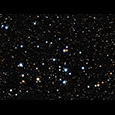
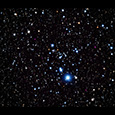
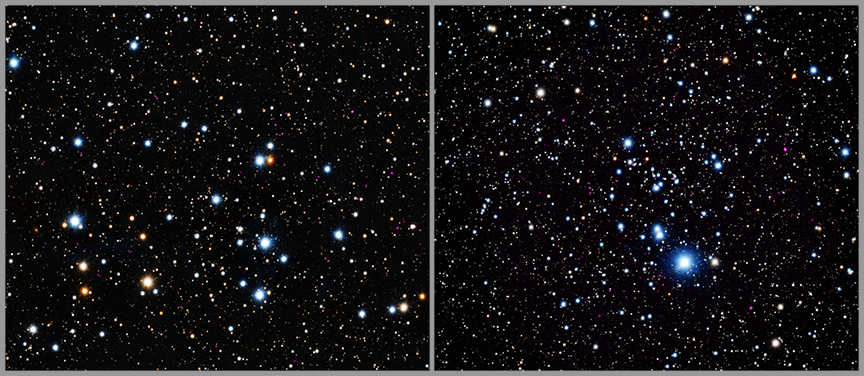
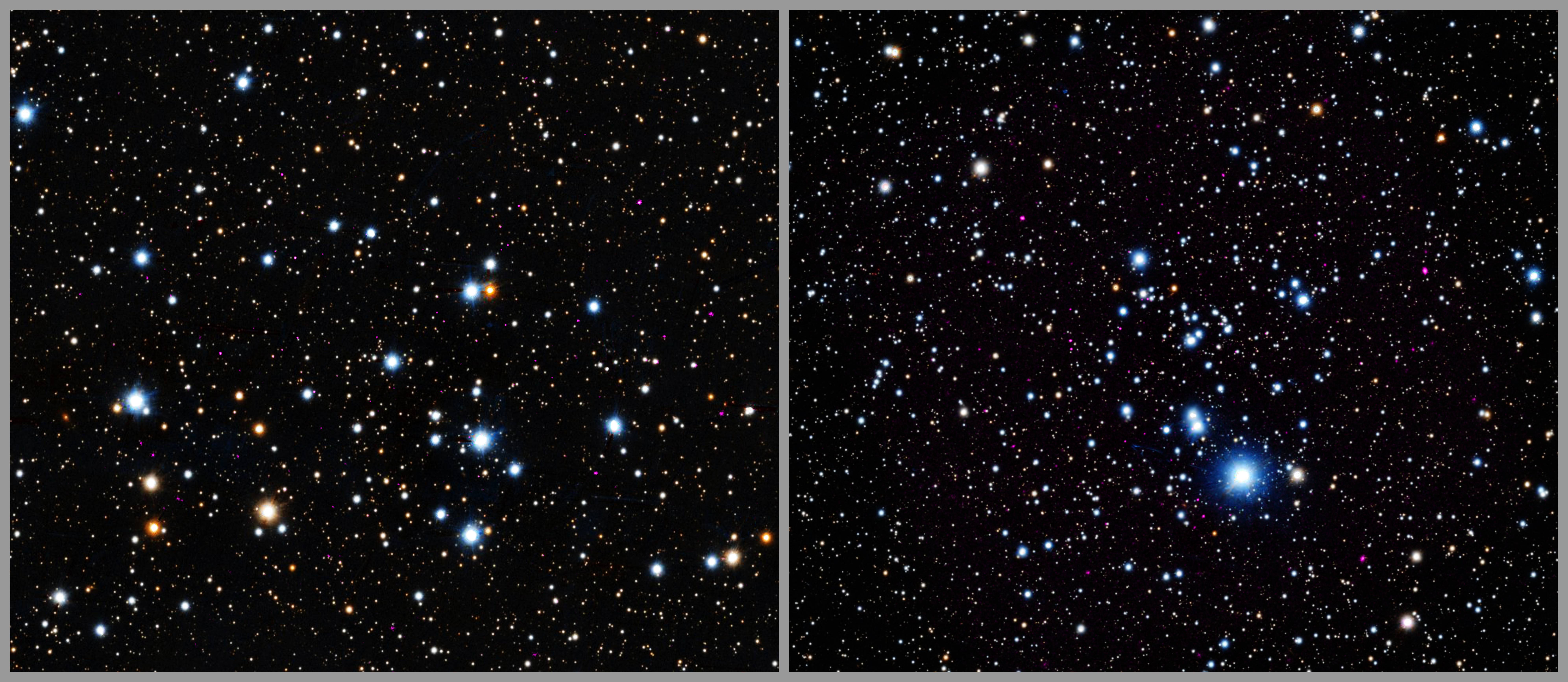
Trumpler 3, NGC 2353, and NGC 2301
Credit: X-ray: NASA/CXC/Penn State Univ/K. Getman; Optical/IR: PanSTARRS;
Image Processing: NASA/CXC/SAO/N. Wolk


JPEG (390.4 kb) - Large JPEG (7 MB) - Tiff (97 MB) - More Images

A Tour of NASA Finds Young Stars Dim in X-rays Surprisingly Quickly - More Videos


  • A new study using NASA’s Chandra X-ray Observatory has young Sun-like stars are dimming more significantly than previously thought.

  • This result has a parallel to the new ‘Project Hail Mary’ book and movie, though there are obvious clear differences.

  • The causes of the dimming in the Chandra study are completely natural, arising from the magnetic fields inside the stars are less efficient.

  • In fact, this quieting of these younger cousins to the Sun likely boosts the prospects of life on any planets orbiting these stars.


These images of star clusters represent a new study from NASA’s Chandra X-ray Observatory that shows how young Sun-like stars are dimmer in X-rays than previously thought. As described in our latest press release, this result has implications for the prospects of life developing and surviving on planets in orbit around these stars.

Trumpler 3 and NGC 2353 are so-called open clusters that contains hundreds of young stars. These stars are tied to each other through gravity, having been formed from the same clouds of gas. Many of these stars have masses that are similar to our Sun, but are much younger. In these new composite images of Trumpler 3 and NGC 2353, X-rays from Chandra (purple) have been combined with an optical image from the PanSTARRS telescope in Hawaii (red, green, and blue). Another star clusters from the new Chandra study, NGC 2301 is shown in the same color schemes with the X-ray and optical data.

In total, the new Chandra study looked at eight clusters of stars between the ages of 45 million and 750 million years old. (By comparison, our Sun has lived for about 4.6 billion years.) The researchers found that Sun-like stars older than about 100 million years in these clusters unleashed only about a quarter to a third of the X-rays that they expected.

This relative calm could be a boon to the formation of life on planets around stars that are younger versions of our own Sun. This is because large amounts of X-rays can erode a planet’s atmosphere and prevent formation of molecules necessary for organic life, as we know it. On average, three-million-year-old stars with a mass equal to the Sun produce about a thousand times more X-rays than today's Sun. Meanwhile, 100-million-year-old solar-mass stars are about 40 times brighter in X-rays than the present Sun.

An artist’s illustration depicts X-rays and other high energy radiation from a young Sun-like star eroding some of the atmosphere of an orbiting planet. Lower levels of X-rays will cause less erosion of planetary atmospheres.

Illustration of a young Sun-like star eroding some of the atmosphere of an orbiting planet.
Credit: NASA/SAO/CXC/M. Weiss

The researchers found that stars with about the same mass as the Sun quieted down relatively rapidly — after a few hundred million years — while ones with less mass kept up their high levels of X-ray emission for longer. Combined with a decrease in the energy of the X-rays and the disappearance of energetic particles, the Sun-sized stars are apparently better suited to host planets with robust atmospheres and possibly blossoming life than previously thought.

The team used data from ESA’s Gaia satellite and X-ray data from the ROSAT mission. This data allowed them to identify the stars that were members of the clusters (not foreground or background stars). To measure the X-ray output from the stars, they made new Chandra observations of five clusters with ages between 45 million and 100 million years and Chandra and ROSAT data from archives to study three older clusters with ages between 220 and 750 million years.

A new paper describing these results has been accepted and appears in The Astrophysical Journal. The authors of the paper are Konstantin Getman (Penn State University), Eric Feigelson (Penn State), Vladimir Airapetian (NASA Goddard Space Flight Center), and Gordon Garmire (Penn State).

NASA's Marshall Space Flight Center in Huntsville, Alabama, manages the Chandra program. The Smithsonian Astrophysical Observatory's Chandra X-ray Center controls science operations from Cambridge, Massachusetts, and flight operations from Burlington, Massachusetts.


Visual Description:

This release features three composite images and one artist's illustration. Each composite image depicts a different star cluster packed with countless glowing specks of light. The close-up artist's illustration depicts the effects of a young Sun-like star's high energy radiation on the atmosphere of an orbiting planet.

The three clusters depicted in today's release are Trumpler 3, NGC 2353, and NGC 2301. In each image, the blackness of space is blanketed in white, blue, orange, purple, and golden yellow dots. Some of the dots are in the foreground, while others are background stars. Many in the middle-ground are clustered Sun-like stars being observed in a new study by Chandra. Some of the stars in the cluster and foreground appear as gleaming dots with glowing halos and occasional diffraction spikes, while the background stars are generally smaller and fainter.

In these composite images, purple represents X-rays from Chandra, while reds, greens and blues are courtesy of optical images from the Pan-STARRS telescope in Hawaii.

Results from the new study reveal that many young Sun-like stars are dimmer in X-rays than previously thought. X-rays and other high energy radiation from a young Sun-like star can erode some of the atmosphere of an orbiting planet. This erosion is highlighted in the artist's illustration. Here, a massive ball of churning fire, the young Sun-like star, occupies our left half of the photorealistic graphic. At its right is an orbiting planet, a relatively small, pale sphere, shedding its atmosphere, depicted as a wake of faint blue mist.

Sun-like stars that emit lower levels of X-rays will cause less atmospheric erosion on orbiting planets. This impacts the prospects of life developing and surviving on planets orbiting these stars.


Fast Facts for Trumpler 3:


Credit: X-ray: NASA/CXC/Penn State Univ/K. Getman; Optical/IR: PanSTARRS; Image Processing: NASA/CXC/SAO/N. Wolk
Release Date: April 14, 2026
Scale: Image is about 20 arcmin (13 light-years) across.
Category: Normal Stars & Star Clusters and Exoplanets
Coordinates (J2000): RA: 3h 12m 00s | Dec: +63° 15' 00"
Constellation: Cassiopeia
Observation Date(s): 12 observations from Dec, 2022 to Apr, 2025
Observation Time: 52 hours and 52 minutes (2 days 4 hours 52 minutes)
Obs. IDs: 27348, 27413, 27414, 27587, 28762, 28829, 28830, 29078, 30791, 30792, 30897, 30898
Instrument: ACIS
References: Getman, K. et al. 2026, ApJ, accepted; arXiv:2512.12055
Color Code: X-ray: purple; Optical/IR: red, green, and blue
Distance Estimate: About 2,200 light-years from Earth


Fast Facts for NGC 2353:


Credit: X-ray: NASA/CXC/Penn State Univ/K. Getman; Optical/IR: PanSTARRS; Image Processing: NASA/CXC/SAO/N. Wolk
Release Date: April 14, 2026
Scale: Image is about 20 arcmin (23 light-years) across.
Category: Normal Stars & Star Clusters and Exoplanets
Coordinates (J2000): RA: 7h 14m 30s | Dec: -10° 16' 00"
Constellation: Monoceros
Observation Date(s): 16 observations from Nov, 2022 to Sep, 2024
Observation Time: 80 hours and 44 minutes (3 days 8 hours 44 minutes)
Obs. IDs: 26500, 27044-27049, 27349, 27415, 27416, 29003, 29030, 29042, 29053, 29091, 29224
Instrument: ACIS
References: Getman, K. et al. 2026, ApJ, accepted; arXiv:2512.12055
Color Code: X-ray: purple; Optical/IR: red, green, and blue
Distance Estimate: About 3,900 light-years from Earth


Monday, December 01, 2025

Gemini South Celebrates 25th Anniversary With Stunning Snapshot of the Butterfly Nebula

PR Image noirlab2530a
Gemini South Images the Butterfly Nebula


Videos

Pan on the Butterfly Nebula
PR Video noirlab2530a
Pan on the Butterfly Nebula

Zooming into the Butterfly Nebula
PR Video noirlab2530b
Zooming into the Butterfly Nebula


NGC 6302 is captured in exquisite detail by the Gemini South telescope in Chile, revealing dynamic gaseous outflows driven by an extremely hot star

To celebrate 25 years since the completion of the International Gemini Observatory, students in Chile voted for the Gemini South telescope to image NGC 6302 — a billowing planetary nebula that resembles a cosmic butterfly. The International Gemini Observatory is partly funded by the U.S. National Science Foundation (NSF) and operated by NSF NOIRLab.

The glowing ‘wings’ of the Butterfly Nebula appear to be bursting out of the interstellar medium in this image captured by the Gemini South telescope, one half of the International Gemini Observatory, located on Cerro Pachón in Chile. This picturesque object was chosen as a target for the 8.1-meter telescope by students in Chile as part of the Gemini First Light Anniversary Image Contest. The contest engaged students in the host locations of the Gemini telescopes to celebrate the legacy that the International Gemini Observatory has built since its completion, marked by Gemini South’s First Light in November 2000.

NGC 6302 is a bipolar planetary nebula that lies between 2500 and 3800 light-years away in the constellation Scorpius. Sources report various dates of discovery, but credit typically goes to a 1907 study by American astronomer Edward E. Barnard, though Scottish astronomer James Dunlop may have discovered it in 1826. Its official name is NGC 6302, but it is also referred to as the Butterfly Nebula, Bug Nebula, or Caldwell 69.

A planetary nebula is a type of emission nebula consisting of a massive star near the end of its life that is expelling material, surrounded by an expanding, glowing shell of ionized gas. Typically, these mesmerizing structures have a planet-like round shape, which is why they were named ‘planetary nebulae’ by the early astronomers who observed them through their telescopes.

You may notice, though, that the Butterfly Nebula does not resemble a round planet, but instead a winged creature caught mid-flight. The formation of this unique structure is driven by a star at the nebula’s center that is casting off layers of gas and dust as it nears the end of its life.

In 2009, the Wide Field Camera 3 on board the Hubble Space Telescope (HST) identified the central star as a white dwarf — the dense remnant of a Sun-like star — that expelled its outer layers over 2000 years ago and is now around two-thirds the mass of our Sun. It is one of the hottest stars known, with a surface temperature in excess of 250,000 degrees Celsius (450,000 degrees Fahrenheit), implying the star from which it formed must have been very large.Sun-like star

Studies of NGC 6302 have revealed a dramatic formation history. Before becoming a white dwarf, the star was a red giant with a diameter about 1000 times that of the Sun. The massive star shed its outer layers of gas, which traveled outward from the equator at a relatively slow speed to form the dark, doughnut-shaped band still visible around the star. Other gas was expelled perpendicular to the band, which restricted the outflows and created the bipolar structure seen today.

As the star continued evolving, it unleashed a powerful gust of stellar wind that tore through the ‘wings’ at more than three million kilometers per hour (1.8 million miles per hour). Interactions between slow- and fast-moving gas further texturized the ‘wings’ into expansive landscapes of cloudy ridges and pillars.

Now, as a white dwarf, the star is emitting intense radiation that is heating the ‘wings’ of NGC 6302 to more than 20,000 degrees Celsius (around 35,000 degrees Fahrenheit) and causing the gas to glow. The rich red in the image traces areas of energized hydrogen gas, while the stark blue traces areas of energized oxygen gas. This material, in addition to the other elements scientists have found in NGC 6302, such as nitrogen, sulfur, and iron, will go on to help form the next generation of stars and planets.

This image was taken as part of the NOIRLab Legacy Imaging Program — a continuation of the program started at the International Gemini Observatory in 2002, called the Gemini Legacy Imaging Program. It aims to use observing time on NOIRLab telescopes that is dedicated to acquiring data specifically for color images to share with the public.


More information

NSF NOIRLab, the U.S. National Science Foundation center for ground-based optical-infrared astronomy, operates the International Gemini Observatory (a facility of NSF, NRC–Canada, ANID–Chile, MCTIC–Brazil, MINCyT–Argentina, and KASI–Republic of Korea), NSF Kitt Peak National Observatory (KPNO), NSF Cerro Tololo Inter-American Observatory (CTIO), the Community Science and Data Center (CSDC), and NSF–DOE Vera C. Rubin Observatory (in cooperation with DOE’s SLAC National Accelerator Laboratory). It is managed by the Association of Universities for Research in Astronomy (AURA) under a cooperative agreement with NSF and is headquartered in Tucson, Arizona.

The scientific community is honored to have the opportunity to conduct astronomical research on I’oligam Du’ag (Kitt Peak) in Arizona, on Maunakea in Hawai‘i, and on Cerro Tololo and Cerro Pachón in Chile. We recognize and acknowledge the very significant cultural role and reverence of I’oligam Du’ag to the Tohono O’odham Nation, and Maunakea to the Kanaka Maoli (Native Hawaiians) community.


Links


Contacts:

Josie Fenske
Public Information Office
NSF NOIRLab
Email:
josie.fenske@noirlab.edu


Friday, November 07, 2025

Ageing stars may be destroying their closest planets

This artist’s impression depicts a dying Sun-like star engulfing an exoplanet. New research published in Monthly Notices of the Royal Astronomical Society suggests that ageing stars may be destroying the giant planets orbiting closest to them.
Credit: International Gemini Observatory/NOIRLab/NSF/AURA/M. Garlick/M. Zamani
Licence type: Attribution (CC BY 4.0)


Ageing stars may be destroying the giant planets orbiting closest to them, new research shows – offering a glimpse into the possible fate of the likes of Jupiter and Saturn in our own solar system.

Once stars like the Sun run out of hydrogen fuel, they cool down and expand to become red giants. In the Sun's case this will happen in about five billion years.

In the new study, published in Monthly Notices of the Royal Astronomical Society, researchers looked at nearly half a million stars that had just entered this "post-main sequence" phase of their lives.

The team of astronomers at University College London (UCL) and the University of Warwick identified 130 planets and planet candidates (i.e., that still need to be confirmed), including 33 that were previously unknown, orbiting closely around these stars.

They found such planets were less likely to occur around stars that had expanded and cooled enough to be classed as red giants (i.e. that were further on in their post-main sequence evolution), suggesting many of these planets may already have been destroyed.

Lead author Dr Edward Bryant, of Mullard Space Science Laboratory at UCL and the University of Warwick, said: "This is strong evidence that as stars evolve off their main sequence they can quickly cause planets to spiral into them and be destroyed. This has been the subject of debate and theory for some time but now we can see the impact of this directly and measure it at the level of a large population of stars.

"We expected to see this effect but we were still surprised by just how efficient these stars seem to be at engulfing their close planets.

"We think the destruction happens because of the gravitational tug-of-war between the planet and the star, called tidal interaction. As the star evolves and expands, this interaction becomes stronger.

"Just like the Moon pulls on Earth's oceans to create tides, the planet pulls on the star. These interactions slow the planet down and cause its orbit to shrink, making it spiral inwards until it either breaks apart or falls into the star."

Co-author Dr Vincent Van Eylen, of Mullard Space Science Laboratory at UCL, said: "In a few billion years, our own Sun will enlarge and become a red giant. When this happens, will the solar system planets survive? We are finding that in some cases planets do not.

"Earth is certainly safer than the giant planets in our study, which are much closer to their star. But we only looked at the earliest part of the post-main sequence phase, the first one or two million years of it – the stars have a lot more evolution to go.

"Unlike the missing giant planets in our study, Earth itself might survive the Sun's red giant phase. But life on Earth probably would not."

For their study, the researchers used data from NASA's Transiting Exoplanet Survey Satellite (TESS). They used a computer algorithm to search for the repeated dips in brightness that indicate an orbiting planet is passing in front of the star, focusing on giant planets with short orbital periods (i.e., that took no more than 12 days to orbit their star).

The team began with more than 15,000 possible signals, and applied rigorous tests to rule out false signals, eventually whittling this number down to 130 planets and planet candidates. Of these, 48 were already known, 49 were already identified as planet candidates (i.e., they still need to be confirmed), and 33 were new candidates detected for the first time.

The team found that the more advanced a star's evolution, the less likely it was to host a nearby giant planet.

The overall occurrence rate of such planets was measured at just 0.28%, with the youngest post-main sequence stars showing a higher rate (0.35%) similar to that of main sequence stars, and the most evolved stars, which had cooled and swelled enough to be classed as red giants, dropping to 0.11%. (For this analysis, the researchers excluded the smallest 12 of the 130 identified planets.)

From the TESS data, researchers can estimate the size (radius) of these possible planets. To confirm them as planets rather than planet candidates, astronomers must rule out the possibility of these bodies being low-mass stars or brown dwarfs ("failed stars" whose core pressure is not high enough to start nuclear fusion) by calculating their mass.

This can be done by precisely measuring the movements of their host stars and inferring the gravitational tug of the planets (and therefore their mass) from wobbles in these movements.

Dr Bryant added: "Once we have these planets' masses, that will help us understand exactly what is causing these planets to spiral in and be destroyed."

The researchers received funding from the Science and Technology Facilities Council (STFC).


Media contacts

Sam Tonkin
Royal Astronomical Society
Mob: +44 (0)7802 877 700

press@ras.ac.uk

Dr Robert Massey
Royal Astronomical Society
Mob: +44 (0)7802 877 699

press@ras.ac.uk

Mark Greaves
University College London

m.greaves@ucl.ac.uk


Science contacts:

Dr Edward Bryant
University of Warwick

edward.m.bryant@warwick.ac.uk

Dr Vincent Van Eylen
University College London

v.vaneylen@ucl.ac.uk


Images & captions

Dying star engulfing a planet

Caption: This artist’s impression depicts a dying Sun-like star engulfing an exoplanet. New research published in Monthly Notices of the Royal Astronomical Society suggests that ageing stars may be destroying the giant planets orbiting closest to them.

Credit: International Gemini Observatory/NOIRLab/NSF/AURA/M. Garlick/M. Zamani


Further information

The paper ‘Determining the impact of post-main sequence stellar evolution on the transiting giant planet population’ by Edward M Bryant and Vincent,hr Van Eylen has been published in Monthly Notices of the Royal Astronomical Society. DOI: 10.1093/mnras/staf1771.


Notes for editors

About the Royal Astronomical Society

The Royal Astronomical Society (RAS), founded in 1820, encourages and promotes the study of astronomy, solar-system science, geophysics and closely related branches of science.

The RAS organises scientific meetings, publishes international research and review journals, recognises outstanding achievements by the award of medals and prizes, maintains an extensive library, supports education through grants and outreach activities and represents UK astronomy nationally and internationally. Its more than 4,000 members (Fellows), a third based overseas, include scientific researchers in universities, observatories and laboratories as well as historians of astronomy and others.

The RAS accepts papers for its journals based on the principle of peer review, in which fellow experts on the editorial boards accept the paper as worth considering. The Society issues press releases based on a similar principle, but the organisations and scientists concerned have overall responsibility for their content.

Keep up with the RAS on Instagram, Bluesky, LinkedIn, Facebook and YouTube.

Submitted by Sam Tonkin on Wed, 05/11/2025 - 13:07


Wednesday, October 29, 2025

Young Star Cooks Surroundings with Different Temperatures

An artist’s impression of a mass ejection event from EK Draconis. Hot, fast plasma is shown in blu,bre, and cooler, slower gas is shown in red.Credit: NAOJ.
Download image (2.2MB)


Astronomers have used simultaneous ground-based and space-based observations to measure the temperature and velocity of gas ejected from a young Sun-like star. The result showed a two-component ejection consisting of a hot fast component followed by a slower cooler component. This result is important for understanding how young stars affect their surrounding environment where planets and life may first be forming, and by extension provides insights into the early days of the Solar System, Earth, and life on Earth.

The Sun frequently ejects huge masses of hot ionized gas called plasma, associated with solar flares. These events are known as Coronal Mass Ejections (CMEs). Young Sun-like stars have been observed to emit frequent stellar flares, and some of them are known to be associated with large CMEs, dwarfing any observed from the modern Sun. CMEs on the Sun contain components at different temperatures, ranging from 10,000 Kelvin to 1,000,000 Kelvin, but so far data for CMEs on other stars have been limited to a single temperature component, especially low temperature plasma.

To get a more complete understanding of young stars’ CME events, an international team of researchers led by Kosuke Namekata at Kyoto University arranged for ultraviolet observations by the Hubble Space Telescope, and optical observations by ground-based telescopes in Japan and Korea to simultaneously measure different temperature components of a stellar CME event. Their target was the young Sun-like Star EK Draconis, located 111 light-years away in the direction of the constellation Draco.

The team succeeded in observing different temperature components of a CME event. First, hot plasma of 100,000 Kelvin was ejected at 300 to 550 kilometers per second, followed about ten minutes later by a cooler gas of about 10,000 Kelvin ejected at 70 kilometers per second. This indicates that the hotter components of stellar CMEs possess higher kinetic energies than the cooler ones, and thus can affect exoplanetary atmospheres more severely than previously inferred from measurements limited to cool plasma alone.

Because the young Sun was presumably similar to EK Draconis, this provides insights in to the conditions in the early Solar System, which was likely disturbed by huge and fast CMEs. Theoretical and experimental studies suggest that fast CMEs play a role in initiating biomolecules and greenhouse gases, which are essential for the emergence and maintenance of life on an early planet. Therefore, this discovery has major implications for understanding planetary habitability and the conditions under which life emerged on Earth, and possibly elsewhere.

The team plans to continue their research with new observations using X-rays, radio waves, and next-generation UV space telescopes to better understand the conditions around young stars where planets, and possibly living things, form. In particular, this study highlights the importance of UV astronomy, which will be further explored by JAXA’s upcoming LAPYUTA mission.


Release Information

Researcher(s) Involved in this Release

  • Kosuke Namekata (Kyoto University/NASA Goddard Space Flight Center)
  • Kazunari Shibata (Kyoto University/Doshisha University)
  • Hiroyuki Maehara (NAOJ)
  • Satoshi Honda (Nishi-Harima Astronomical Observatory, University of Hyogo)
  • Yuta Notsu (University of Colorado Boulder)
  • Kevin France (University of Colorado Boulder)
  • Jongchul Chae (Seoul National University)
  • Vladimir S. Airapetian (NASA Goddard Space Flight Center)

Coordinated Release Organization(s)

  • Kyoto University
  • National Institutes of Natural Sciences, National Astronomical Observatory of Japan
  • Nishi-Harima Astronomical Observatory, University of Hyogo
  • NASA Goddard Space Flight Center
  • University of Colorado Boulder
  • Seoul National University

Paper(s)

  • Kosuke Namekata et al. “Discovery of multi-temperature coronal mass ejection signatures from a young solar analogue”, in Nature Astronomy, DOI: 10.1038/s41550-025-02691-8
  • Kosuke Namekata et al. “Do Young Suns Produce Frequent, Massive CMEs? Results from Five-Year Dedicated Optical Ob.servations of EK Draconis and V889 Hercules”, in The Astrophysi,brcal Journal, DOI: 10.3847/1538-4357/adfe70


Sunday, June 22, 2025

Exoplanet GJ 504 b, " Second Jupiter " Directly Observed


Detail :
GJ 504 b is an exoplanet orbiting a sun-like star GJ 504. It is estimated to be three to six times more massive than Jupiter, making it the least massive planet ever directly imaged. This faint and cold planet, often referred to as the "second Jupiter," was discovered as part of the Strategic Explorations of Exoplanets and Disks with Subaru (SEEDS) Project. The SEEDS project aimed to conduct direct observations of exoplanets to discover and explore their features using the coronagraph imager HiCIAO and the adaptive optics system with 188 elements AO 188.

GJ 504 is a star in the constellation Virgo, about 60 light-years away from Earth. The planet GJ 504 b is captured in the upper right of the star, at the center of the image. The apparent distance between GJ 504 and GJ 504 b is 44 astronomical units (au), which is similar to the distance between the Sun and Pluto.

Exoplanets are incredibly faint, making direct imaging very challenging. However, direct observation enables us not only to discover these planets but also to characterize them. For instance, GJ 504 b was found to have a very low temperature of approximately 500 Kelvin (or 230 degrees Celsius), and its atmosphere is less cloudy compared to those of other exoplanets previously discovered.

Distance from Earth:About 60 light-years
Instrument: HiCIAO (High Contrast Instrument for the Subaru Next Generation Adaptive Optics) + AO188

Relevant Links
Source:  Subaru Telescope


Monday, May 15, 2023

Astronomers Witness Star Devouring Planet: Possible Preview of the Ultimate Fate of Earth

Artist Impression of a Star Devouring One of Its Planets

Infographic of Star Engulfing a Planet 
 
Infografía de una Estrella devorando un Planeta


Videos

Astronomers Witness Star Devouring Planet: Possible Preview of the Ultimate Fate of Earth

Por primera vez astrónomos observan un planeta devorado por su estrella


Gemini South captures first direct evidence of an exoplanet being swallowed by an ancient Sun-like star

Astronomers using the Gemini South telescope in Chile, operated by NSF’s NOIRLab, have observed the first evidence of a dying Sun-like star engulfing an exoplanet. The “smoking gun” of this event was seen in a long and low-energy outburst from the star — the telltale signature of a planet skimming along a star’s surface. This never-before-seen process may herald the ultimate fate of Earth when our own Sun nears the end of its life in about five billion years.

By studying countless stars at various stages of their evolution, astronomers have been able to piece together an understanding of the life cycle of stars and how they interact with their surrounding planetary systems as they age. This research confirms that when a Sun-like star nears the end of its life, it expands anywhere from 100 to 1000 times its original size, eventually engulfing the system’s inner planets. Such events are estimated to occur only a few times each year across the entire Milky Way. Though past observations have confirmed the aftermath of planetary engulfments [1], astronomers have never caught one in the act, until now.

With the power of the Gemini South Adaptive Optics Imager (GSAOI) on Gemini South, one half of the International Gemini Observatory, operated by NSF’s NOIRLab, [2] astronomers have observed the first direct evidence of a dying star expanding to engulf one of its planets. Evidence for this event was found in a telltale “long and low-energy” outburst from a star in the Milky Way about 13,000 light-years from Earth. This event, the devouring of a planet by an engorged star, likely presages the ultimate fate of Mercury, Venus, and Earth when our Sun begins its death throes in about five billion years.

“These observations provide a new perspective on finding and studying the billions of stars in our Milky Way that have already consumed their planets,” says Ryan Lau, NOIRLab astronomer and co-author on this study, which is published in the journal Nature.

For most of its life, a Sun-like star fuses hydrogen into helium in its hot, dense core, which allows the star to push back against the crushing weight of its outer layers. When hydrogen in the core runs out, the star begins fusing helium into carbon, and hydrogen fusion migrates to the star’s outer layers, causing them to expand, and changing the Sun-like star into a red giant.

Such a transformation, however, is bad news for any inner-system planets. When the star's surface eventually expands to engulf one of its planets, their interaction would trigger a spectacular outburst of energy and material. This process would also put the brakes on the planet's orbital velocity, causing it to plunge into the star.

The first hints of this event were uncovered by optical images from the Zwicky Transient Facility. Archival infrared coverage from NASA’s Near-Earth Object Wide-field Infrared Survey Explorer (NEOWISE), which is able to peer into dusty environments in search of outbursts and other transient events, then confirmed the engulfment event, named ZTF SLRN-2020. “Our team’s custom reanalysis of all-sky infrared maps from NEOWISE exemplifies the vast discovery potential of archival survey data sets,” said NOIRLab astronomer Aaron Meisner, another co-author on the paper.

Distinguishing a planetary-engulfment outburst from other types of outbursts, such as solar-flare-type events and coronal-mass ejections, is difficult and requires high-resolution observations to pinpoint the location of an outburst and long-term measurements of its brightness without contamination from nearby stars.


More Information

Gemini South provided these essential data thanks to its adaptive-optics capabilities.

Gemini South continues to expand our understanding of the Universe and these new observations support predictions for the future of our own planet,” said NSF Gemini Observatory program director Martin Still. “This discovery is a wonderful example of the feats we can accomplish when we combine world-class telescope operations and cutting-edge scientific collaboration.”

“With these revolutionary new optical and infrared surveys, we are now witnessing such events happen in real time in our own Milky Way — a testament to our almost certain future as a planet,” said Kishalay De, an astronomer at the Massachusetts Institute of Technology and lead author on the paper.

The outburst from the engulfment lasted approximately 100 days and the characteristics of its lightcurve, as well as the ejected material, gave astronomers insight into the mass of the star and that of its engulfed planet. The ejected material consisted of about 33
Earth masses of hydrogen and about 0.33 Earth masses of dust. “That's more star- and planet-forming material being recycled, or burped out, into the interstellar medium thanks to the star eating the planet,” said Lau. From this analysis, the team estimated that the progenitor star is about 0.8−1.5 times the mass of our Sun and the engulfed planet was 1−10 times the mass of Jupiter.

Now that the signatures of a planetary engulfment have been identified for the first time, astronomers have improved metrics they can use to search for similar events happening elsewhere in the cosmos. This will be especially important when
Vera C. Rubin Observatory comes on line in 2025. For instance, the observed effects of chemical pollution on the remnant star when seen elsewhere can hint that an engulfment has taken place. The interpretation of this event also provides evidence for a missing link in our understanding of the evolution and final fates of planetary systems, including our own.

“I think there's something pretty remarkable about these results that speaks to the transience of our existence,” says Lau. “After the billions of years that span the lifetime of our Solar System, our own end stages will likely conclude in a final flash that lasts only a few months.”


Links


Contacts:

Kishalay De
MIT Kavli Institute Postdoctoral Fellow
Email:
kde1@mit.edu
Charles Blue
NSF’s NOIRLab
Tel: +1 202 236 6324
Email:
charles.blue@noirlab.edu

Josie Fenske
NSF’s NOIRLab
Email:
josie.fenske@noirlab.edu


Monday, May 08, 2023

Star Eats Planet, Brightens Dramatically Planetary Death Spiral

This artist's impression shows a doomed planet skimming the surface of its star. Astronomers used a combination of telescopes to spot the first direct evidence of an aging, bloated sun-like star, like the one pictured here, engulfing its planet. These telescopes included the Zwicky Transient Facility (ZTF) at Caltech's Palomar Observatory, the W.M. Keck Observatory, and NASA's NEOWISE mission. The aging star depicted here, called ZTF SLRN-2020, is roughly 10 billion years old. It had begun to inflate over hundreds of thousands of years as it transformed into a red giant, and, as a result, inched closer to its inner planet. According to astronomers, when the planet was almost touching the surface of the star, the increasing frictional forces caused the planet to rapidly spiral inward. Eventually, on timescales that are not certain, the planet plunged into the core of the star. When that happened, the star inflated to four times its size and brightened by a factor of more than a hundred. ZTF SLRN-2020 lies about 15,000 light-years away in the constellation Aquila. Credit: K. Miller/R. Hurt (Caltech/IPAC)

Planetary Death Spiral

ZTF and NEOWISE spot evidence for the first known case of a star engulfing its planet

For the first time, astronomers have caught a star in the act of swallowing a planet whole. The sun-like star, called ZTF SLRN-2020, lies about 15,000 light-years away in our galaxy and is thought to have engulfed a hot gas giant about the size of Jupiter or smaller. Scientists already knew that older stars will, as they puff up with age, ultimately ingest their inner orbiting planets. Our own sun is predicted to do so in 5 billion years, consuming Mercury, Venus, and likely Earth. But nobody had seen direct evidence for such a remarkable scenario until now.

"The confirmation that sun-like stars engulf inner planets provides us with a missing link in our understanding of the fates of solar systems, including our own," says Kishalay De (MS '18, PhD '21), a postdoctoral scholar at MIT and lead author of a new study about the findings in the journal Nature.

The plump star was first spotted by Zwicky Transient Facility, or ZTF, a National Science Foundation–funded instrument that scans the skies every night from Caltech's Samuel Oschin Telescope at Palomar Observatory near San Diego. ZTF observations showed that the star had dramatically brightened and begun to fade in a period of about a week. At first, De thought this variable star might have resulted from a nova explosion, which occurs when a dead star called a white dwarf steals matter from its companion star. But follow-up observations with the W. M. Keck Observatory atop Maunakea in Hawaiʻi revealed something else was going on.

"I had been looking for erupting stars called novae," De says. "But the Keck data indicated that the star was not lighting up hot gas as is expected for novae. I couldn't make any sense of it."

De, who was then a graduate student at Caltech, put the object aside to finish his PhD thesis and came back to it about a year later after he had moved to MIT. He and his colleagues then obtained infrared data from a camera at Palomar's Hale Telescope called WIRC (Wide-field Infrared Camera), "and that's when things got really interesting," he says.

Those observations showed that the star was brightening over time in not only optical light as ZTF had observed but also in infrared light, which indicates the presence of dust. The researchers then turned to NASA's NEOWISE space telescope in search of more clues. NEOWISE, formerly known as WISE (Wide-field Infrared Survey Explorer), has been scanning the skies regularly since shortly after its launch in 2009. NEOWISE detected the star brightening in infrared light about nine months before ZTF caught the extreme rise in optical light. Even now, after the optical light has faded, NEOWISE continues to pick up infrared light from the star.

"The infrared observations were one of the main clues that we were looking at a star engulfing a planet," says Viraj Karambelkar (MS '21), a grad student at Caltech and co-author of the study.

Once the science team put all the evidence together, they realized that the dust they were seeing with NEOWISE was being generated as a planet spiraled into the star's puffy atmosphere. Like other older stars, the star had begun to expand in size as it aged, bringing it closer to the orbiting planet. As the planet skimmed the surface of the star, it pulled hot gas off the star that then drifted outward and cooled, forming dust. In addition, material from the disintegrating planet blew outward, also forming dust.

What happened next, according to the astronomers, triggered the flare of optical light seen by ZTF.

"The planet plunged into the core of the star and got swallowed whole. As it was doing this, energy was transferred to the star," De explains. "The star blew off its outer layers to get rid of the energy. It expanded and brightened, and the brightening is what ZTF registered."

Some of this expanding stellar material then escaped from the star and traveled outward. Like the boiled-off layers of the star and planet that previously drifted outward, this material also cooled to form dust.

NEOWISE is detecting the infrared glow of all the newly minted dust.

"NEOWISE data are a treasure trove," says co-author Mansi Kasliwal (MS '07, PhD '11), professor of astronomy at Caltech and a co-investigator on the ZTF project. "ZTF caught the event, which is what it excels at, while NEOWISE and other telescopes all helped us figure out what is going on."

The planetary engulfment is similar to what happens when two stars merge, events called red novae. Stars in our universe often form in pairs. Over time, as one star ages and expands faster than its companion, it can essentially ingest its partner. Twenty of these star mergers have been detected to date by ZTF and other instruments, mostly in galaxies beyond the Milky Way.

"Star mergers are thousands of times brighter than this event," says Karambelkar, who has observed eight of these eruptions using ZTF as part of his PhD thesis. "This was another clue that we were looking at a planet being eaten by its star. The level of brightening was much fainter due to the small size of the planet."

"This is just spectacular," Kasliwal adds. "We are still amazed that we caught a star in the act of ingesting its planet, something our own sun will do to its inner planets. That's a long time from now, in five billion years, so we don't have to worry just yet."

The Nature study titled "An infrared transient from a star engulfing a planet," was funded by NASA, the National Science Foundation (NSF), and the Heising-Simons Foundation.

Caltech's ZTF is funded by the NSF and an international collaboration of partners. Additional support comes from the Heising-Simons Foundation and from Caltech. ZTF data are processed and archived by Caltech's IPAC. NASA supports ZTF's search for near-Earth objects through the Near-Earth Object Observations program.

Launched in 2009, the WISE spacecraft was placed into hibernation in 2011 after completing its primary mission. In September 2013, NASA reactivated the spacecraft with the primary goal of scanning for near-Earth objects, or NEOs, and the mission and spacecraft were renamed NEOWISE. The mission was selected competitively under NASA's Explorers Program managed by the agency's Goddard Space Flight Center in Greenbelt, Maryland. NEOWISE is a project of JPL, which is managed by Caltech for NASA, and the University of Arizona and is supported by NASA's Planetary Defense Coordination Office.

Written by
Whitney Clavin


Contact:

Whitney Clavin
(626) 395‑1944

wclavin@caltech.edu

Source: Caltech/News


Kishaly De - Viraj Karambelkar and Mansi Kasliwal


Friday, November 04, 2022

Astronomers Discover Closest Black Hole to Earth

Artist’s impression of the closest black hole to Earth and its Sun-like companion star


Videos

A Sun-like Star Orbiting Closest Black Hole to Earth


Astronomers using the International Gemini Observatory, operated by NSF’s NOIRLab, have discovered the closest-known black hole to Earth. This is the first unambiguous detection of a dormant stellar-mass black hole in the Milky Way. Its close proximity to Earth, a mere 1600 light-years away, offers an intriguing target of study to advance our understanding of the evolution of binary systems.

Black holes are the most extreme objects in the Universe. Supermassive versions of these unimaginably dense objects likely reside at the centers of all large galaxies. Stellar-mass black holes — which weigh approximately five to 100 times the mass of the Sun — are much more common, with an estimated 100 million in the Milky Way alone. Only a handful have been confirmed to date, however, and nearly all of these are ‘active’ – meaning they shine brightly in X-rays as they consume material from a nearby stellar companion, unlike dormant black holes which do not.

Astronomers using the Gemini North telescope on Hawai‘i, one of the twin telescopes of the International Gemini Observatory, operated by NSF’s NOIRLab, have discovered the closest black hole to Earth, which the researchers have dubbed Gaia BH1. This dormant black hole is about 10 times more massive than the Sun and is located about 1600 light-years away in the constellation Ophiuchus, making it three times closer to Earth than the previous record holder, an X-ray binary in the constellation of Monoceros. The new discovery was made possible by making exquisite observations of the motion of the black hole’s companion, a Sun-like star that orbits the black hole at about the same distance as the Earth orbits the Sun.

Take the Solar System, put a black hole where the Sun is, and the Sun where the Earth is, and you get this system,” explained Kareem El-Badry, an astrophysicist at the Center for Astrophysics | Harvard & Smithsonian and the Max Planck Institute for Astronomy, and the lead author of the paper describing this discovery. “While there have been many claimed detections of systems like this, almost all these discoveries have subsequently been refuted. This is the first unambiguous detection of a Sun-like star in a wide orbit around a stellar-mass black hole in our Galaxy.

Though there are likely millions of stellar-mass black holes roaming the Milky Way Galaxy, those few that have been detected were uncovered by their energetic interactions with a companion star. As material from a nearby star spirals in toward the black hole, it becomes superheated and generates powerful X-rays and jets of material. If a black hole is not actively feeding (i.e., it is dormant) it simply blends in with its surroundings.

>“I've been searching for dormant black holes for the last four years using a wide range of datasets and methods,” said El-Badry. “My previous attempts — as well as those of others — turned up a menagerie of binary systems that masquerade as black holes, but this is the first time the search has borne fruit.

The team originally identified the system as potentially hosting a black hole by analyzing data from the European Space Agency’s Gaia spacecraft. Gaia captured the minute irregularities in the star’s motion caused by the gravity of an unseen massive object. To explore the system in more detail, El-Badry and his team turned to the Gemini Multi-Object Spectrograph instrument on Gemini North, which measured the velocity of the companion star as it orbited the black hole and provided precise measurement of its orbital period. The Gemini follow-up observations were crucial to constraining the orbital motion and hence masses of the two components in the binary system, allowing the team to identify the central body as a black hole roughly 10 times as massive as our Sun.

Our Gemini follow-up observations confirmed beyond reasonable doubt that the binary contains a normal star and at least one dormant black hole,” elaborated El-Badry. “We could find no plausible astrophysical scenario that can explain the observed orbit of the system that doesn’t involve at least one black hole.

The team relied not only on Gemini North’s superb observational capabilities but also on Gemini’s ability to provide data on a tight deadline, as the team had only a short window in which to perform their follow-up observations.

When we had the first indications that the system contained a black hole, we only had one week before the two objects were at the closest separation in their orbits. Measurements at this point are essential to make accurate mass estimates in a binary system,” said El-Badry. “Gemini’s ability to provide observations on a short timescale was critical to the project’s success. If we’d missed that narrow window, we would have had to wait another year.” Astronomers’ current models of the evolution of binary systems are hard-pressed to explain how the peculiar configuration of Gaia BH1 system could have arisen. Specifically, the progenitor star that later turned into the newly detected black hole would have been at least 20 times as massive as our Sun. This means it would have lived only a few million years. If both stars formed at the same time, this massive star would have quickly turned into a supergiant, puffing up and engulfing the other star before it had time to become a proper, hydrogen-burning, main-sequence star like our Sun.

It is not at all clear how the solar-mass star could have survived that episode, ending up as an apparently normal star, as the observations of the black hole binary indicate. Theoretical models that do allow for survival all predict that the solar-mass star should have ended up on a much tighter orbit than what is actually observed.

This could indicate that there are important gaps in our understanding of how black holes form and evolve in binary systems, and also suggests the existence of an as-yet-unexplored population of dormant black holes in binaries.

It is interesting that this system is not easily accommodated by standard binary evolution models,” concluded El-Badry. “It poses many questions about how this binary system was formed, as well as how many of these dormant black holes there are out there.

As part of a network of space- and ground-based observatories, Gemini North has not only provided strong evidence for the nearest black hole to date but also the first pristine black hole system, uncluttered by the usual hot gas interacting with the black hole,” said NSF Gemini Program Officer Martin Still. “While this potentially augurs future discoveries of the predicted dormant black hole population in our Galaxy, the observations also leave a mystery to be solved — despite a shared history with its exotic neighbor, why is the companion star in this binary system so normal?

Gemini North observations were made as part of a director’s discretionary time program (program id: GN-2022B-DD-202).

The International Gemini Observatory is operated by a partnership of six countries, including the United States through the National Science Foundation, Canada through the National Research Council of Canada, Chile through the Agencia Nacional de Investigación y Desarrollo, Brazil through the Ministério da Ciência, Tecnologia e Inovações, Argentina through the Ministerio de Ciencia, Tecnología e Innovación, and Korea through the Korea Astronomy and Space Science Institute. These Participants and the University of Hawaii, which has regular access to Gemini, each maintain a “National Gemini Office” to support their local users.


More Information

El-Badry, K., et al. (2022). “A Sun-like star orbiting a black hole” published in the Monthly Notices of the Royal Astronomical Society. https://doi.org/10.1093/mnras/stac3140

NSF’s NOIRLab (National Optical-Infrared Astronomy Research Laboratory), the US center for ground-based optical-infrared astronomy, operates the international Gemini Observatory (a facility of NSF, NRC–Canada, ANID–Chile, MCTIC–Brazil, MINCyT–Argentina, and KASI–Republic of Korea), Kitt Peak National Observatory (KPNO), Cerro Tololo Inter-American Observatory (CTIO), the Community Science and Data Center (CSDC), and Vera C. Rubin Observatory (operated in cooperation with the Department of Energy’s SLAC National Accelerator Laboratory). It is managed by the Association of Universities for Research in Astronomy (AURA) under a cooperative agreement with NSF and is headquartered in Tucson, Arizona. The astronomical community is honored to have the opportunity to conduct astronomical research on Iolkam Du’ag (Kitt Peak) in Arizona, on Maunakea in Hawai‘i, and on Cerro Tololo and Cerro Pachón in Chile. We recognize and acknowledge the very significant cultural role and reverence that these sites have to the Tohono O'odham Nation, to the Native Hawaiian community, and to the local communities in Chile, respectively.


Links


Contacts:

Kareem Al-Badry
Center for Astrophysics | Harvard & Smithsonian
Max Planck Institute for Astronomy
Email:
kareem.el-badry@cfa.harvard.edu

Charles Blue
Public Information Officer
NSF’s NOIRLab
Tel: +1 202 236 6324
Email:
charles.blue@noirlab.edu


Friday, May 28, 2021

NASA’s Roman Mission to Probe Cosmic Secrets Using Exploding Stars

NASA’s upcoming Nancy Grace Roman Space Telescope will see thousands of exploding stars called supernovae across vast stretches of time and space. Using these observations, astronomers aim to shine a light on several cosmic mysteries, providing a window onto the universe’s distant past and hazy present.Credits: NASA's Goddard Space Flight Center/CI Labs. Download high-resolution video and images from NASA’s Scientific Visualization Studio

NASA’s upcoming Nancy Grace Roman Space Telescope will see thousands of exploding stars called supernovae across vast stretches of time and space. Using these observations, astronomers aim to shine a light on several cosmic mysteries, providing a window onto the universe’s distant past and hazy present.

Roman’s supernova survey will help clear up clashing measurements of how fast the universe is currently expanding, and even provide a new way to probe the distribution of dark matter, which is detectable only through its gravitational effects. One of the mission’s primary science goals involves using supernovae to help pin down the nature of dark energy – the unexplained cosmic pressure that’s speeding up the expansion of the universe.

Space’s biggest mystery

“Dark energy makes up the majority of the cosmos, but we don’t actually know what it is,” said Jason Rhodes, a senior research scientist at NASA’s Jet Propulsion Laboratory in Southern California. “By narrowing down possible explanations, Roman could revolutionize our understanding of the universe – and dark energy is just one of the many topics the mission will explore!”

Roman will use multiple methods to investigate dark energy. One involves surveying the sky for a special type of exploding star, called a type Ia supernova.

Many supernovae occur when massive stars run out of fuel, rapidly collapse under their own weight, and then explode because of strong shock waves that propel out of their interiors. These supernovae occur about once every 50 years in our Milky Way galaxy. But evidence shows that type Ia supernovae originate from some binary star systems that contain at least one white dwarf – the small, hot core remnant of a Sun-like star. Type Ia supernovae are much rarer, happening roughly once every 500 years in the Milky Way.

In some cases, the dwarf may siphon material from its companion. This ultimately triggers a runaway reaction that detonates the thief once it reaches a specific point where it has gained so much mass that it becomes unstable. Astronomers have also found evidence supporting another scenario, involving two white dwarfs that spiral toward each other until they merge. If their combined mass is high enough that it leads to instability, they, too, may produce a type Ia supernova.

These explosions peak at a similar, known intrinsic brightness, making type Ia supernovae so-called standard candles – objects or events that emit a specific amount of light, allowing scientists to find their distance with a straightforward formula. Because of this, astronomers can determine how far away the supernovae are by simply measuring how bright they appear.

Astronomers will also use Roman to study the light of these supernovae to find out how quickly they appear to be moving away from us. By comparing how fast they’re receding at different distances, scientists will trace cosmic expansion over time. This will help us understand whether and how dark energy has changed throughout the history of the universe.

“In the late 1990s, scientists discovered that the expansion of the universe was speeding up using dozens of type Ia supernovae,” said Daniel Scolnic, an assistant professor of physics at Duke University in Durham, North Carolina, who is helping design Roman’s supernova survey. “Roman will find them by the thousands, and much farther away than the majority of those we’ve seen so far.”

Previous type Ia supernova surveys have concentrated on the relatively nearby universe, largely due to instrument limitations. Roman’s infrared vision, gigantic field of view, and exquisite sensitivity will dramatically extend the search, pulling the cosmic curtains far enough aside to allow astronomers to spot thousands of distant type Ia supernovae.

The mission will study dark energy’s influence in detail over more than half of the universe’s history, when it was between about four and 12 billion years old. Exploring this relatively unprobed region will help scientists add crucial pieces to the dark energy puzzle.

“Type Ia supernovae are among the most important cosmological probes we have, but they’re hard to see when they’re far away,” Scolnic said. “We need extremely precise measurements and an incredibly stable instrument, which is exactly what Roman will provide.”

Hubble constant hubbub

In addition to providing a cross-check with the mission’s other dark energy surveys, Roman’s type Ia supernova observations could help astronomers examine another mystery. Discrepancies keep popping up in measurements of the Hubble constant, which describes how fast the universe is currently expanding.

Predictions based on early universe data, from about 380,000 years after the big bang, indicate that the cosmos should currently expand at about 42 miles per second (67 kilometers per second) for every megaparsec of distance (a megaparsec is about 3.26 million light-years). But measurements of the modern universe indicate faster expansion, between roughly 43 to 47 miles per second (70 to 76 kilometers per second) per megaparsec.

Roman will help by exploring different potential sources of these discrepancies. Some methods to determine how fast the universe is now expanding rely on type Ia supernovae. While these explosions are remarkably similar, which is why they’re valuable tools for gauging distances, small variations do exist. Roman’s extensive survey could improve their use as standard candles by helping us understand what causes the variations.

The mission should reveal how the properties of type Ia supernovae change with age, since it will view them across such a vast sweep of cosmic history. Roman will also spot these explosions in various locations in their host galaxies, which could offer clues to how a supernova’s environment alters its explosion.

Illuminating dark matter

In a 2020 paper, a team led by Zhongxu Zhai, a postdoctoral research associate at Caltech/IPAC in Pasadena, California, showed that astronomers will be able to glean even more cosmic information from Roman’s supernova observations.

“Roman will have to look through enormous stretches of the universe to see distant supernovae,” said Yun Wang, a senior research scientist at Caltech/IPAC and a co-author of the study. “A lot can happen to light on such long journeys across space. We’ve shown that we can learn a lot about the structure of the universe by analyzing how light from type Ia supernovae has been bent as it traveled past intervening matter.”

Anything with mass warps the fabric of space-time. Light travels in a straight line, but if space-time is bent – which happens near massive objects – light follows the curve. When we look at distant type Ia supernovae, the warped space-time around intervening matter – such as individual galaxies or clumps of dark matter – can magnify the light from the more distant explosion.

By studying this magnified light, scientists will have a new way to probe how dark matter is clustered throughout the universe. Learning more about the matter that makes up the cosmos will help scientists refine their theoretical model of how the universe evolves.

By charting dark energy’s behavior across cosmic history, homing in on how the universe is expanding today, and providing more information on mysterious dark matter, the Roman mission will deliver an avalanche of data to astronomers seeking to solve these and other longstanding problems. With its ability to help solve so many cosmic mysteries, Roman will be one of the most important tools for studying the universe we’ve ever built.

The Nancy Grace Roman Space Telescope is managed at NASA’s Goddard Space Flight Center in Greenbelt, Maryland, with participation by NASA's Jet Propulsion Laboratory and Caltech/IPAC in Southern California, the Space Telescope Science Institute in Baltimore, and science teams comprising scientists from various research institutions. 

Source: NASA/Roman Space Telescope

Editor: Ashley Balzer