Showing posts with label Milky Way. Show all posts

Friday, August 21, 2026

Milky Way's fastest star orbits our supermassive black hole so closely it feels its spin

PR Image eso2612a
VLT images of the S301 star orbiting Sagittarius A*

PR Image eso2612b
VLT images of the S301 star orbiting Sagittarius A* (square layout)

PR Image eso2612c
VLT images of S301 and other S-stars orbiting Sagittarius A*

PR Image eso2612d
Illustration of the Lense-Thirring effect

PR Image eso2612e
Effect of a spinning black hole on the orbit of the S301 star

PR Image eso2612f
Wide-field view of the centre of the Milky Way

PR Image eso2612g
Sagittarius A* in the constellation of Sagittarius

PR Image eso2612h
New look at the stars around the Milky Way's centre


PR Image eso2612i
Four lasers for the VLTI


Videos

Does the Milky Way central black hole rotate? This star could tell us | ESO Chasing Starlight
PR Video eso2612a
Does the Milky Way central black hole rotate? This star could tell us | ESO Chasing Starlight
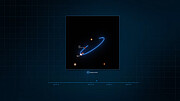
Time-lapse of the S301 star orbiting Sagittarius A*

PR Video eso2612b
Time-lapse of the S301 star orbiting Sagittarius A*

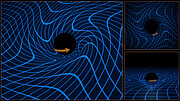
Effect of a spinning black hole on the orbit of the S301 star
PR Video eso2612c
Effect of a spinning black hole on the orbit of the S301 star

Animation of the Lense-Thirring effect
PR Video eso2612d
Animation of the Lense-Thirring effect

Disruption of a binary star close to a black hole
PR Video eso2612e
Disruption of a binary star close to a black hole


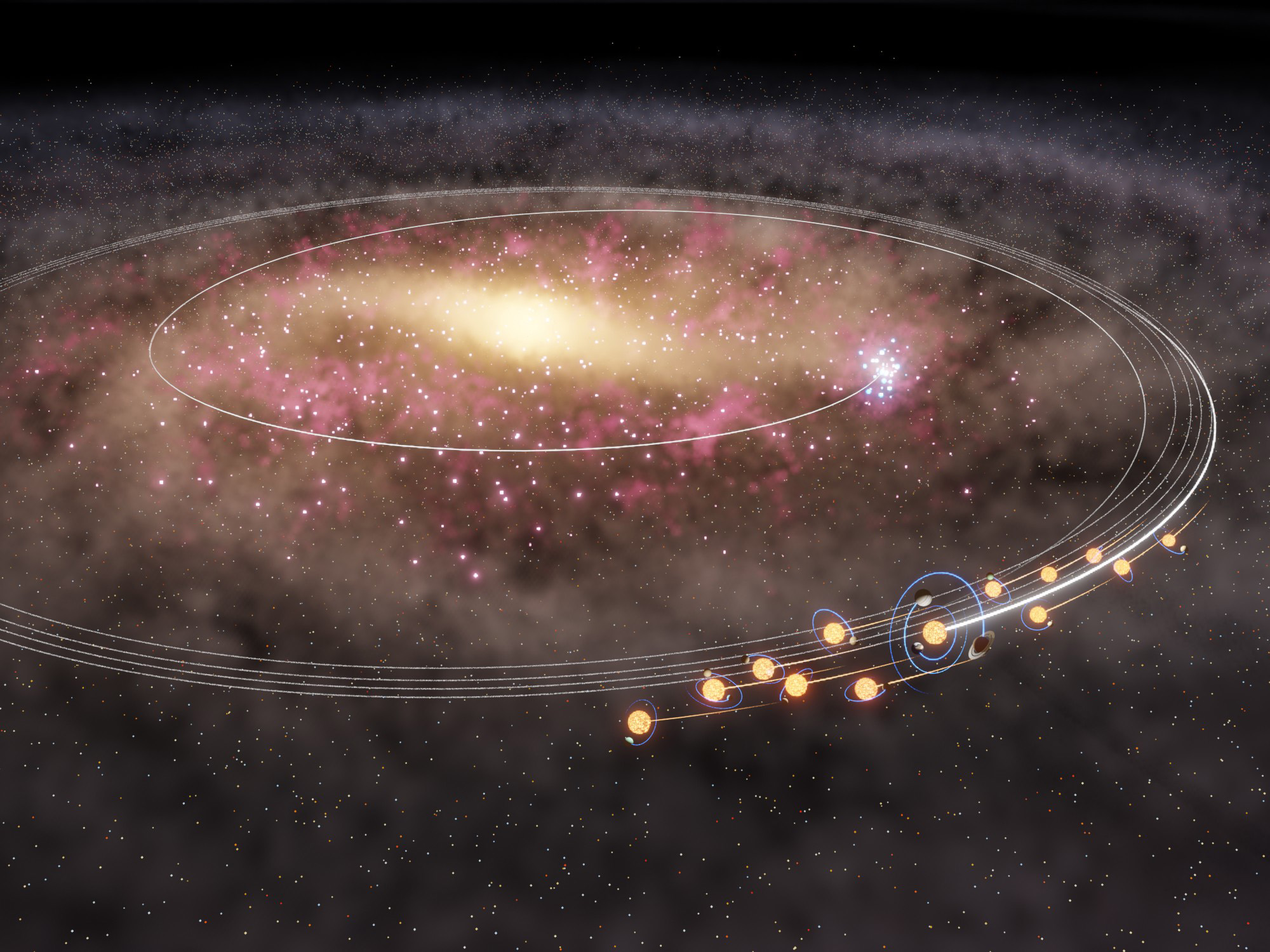
Astronomers have discovered the fastest known star in our galaxy, the Milky Way, orbiting the black hole at its centre. The star, named S301, was detected with the European Southern Observatory’s Very Large Telescope Interferometer (ESO’s VLTI) and reaches speeds of 25 000 km/s as it travels around the four-million-Solar-mass black hole. It comes closer to it than any other observed before, so close that it feels the effects of the black hole’s rotation.

Decades carefully tracking stars orbiting our galaxy’s central black hole, Sagittarius A*, have led to this breakthrough discovery of a very promising star. Because it orbits so close to Sagittarius A*, S301 opens a new window to the fundamental properties of spacetime in this extreme black-hole environment,” says Nobel Prize winner Reinhard Genzel, Director at the Max Planck Institute for Extraterrestrial Physics (MPE) in Garching, Germany, and founding member of the collaboration that made the new observations.

What is special about this star is that it’s orbiting Sagittarius A* on a very tight orbit, taking just 8.7 years to complete it, and is approaching the black hole at a mere 12 times the distance of Earth to the Sun. That is unprecedented,” says Felix Mang, PhD student at MPE and author of the study published today in Nature

During its closest passage to the black hole, the star travels at around 25 000 kilometres per second — 100 000 times faster than a commercial plane, or over 8% of the speed of light — making it the record holder for the fastest star in the Milky Way. S301 also comes closer to Sagittarius A* than any other star observed so far, approaching the black hole at around the distance of Saturn to the Sun. [1] Because S301 comes so close to Sagittarius A*, it is the first star known that could be used to directly measure the rotation of a black hole.

Like most things in our Universe, astronomers predict that Sagittarius A* spins. According to Einstein’s general theory of relativity, a spinning black hole drags spacetime along with it and twists it, which impacts the orbits of surrounding stars. The effect is felt more strongly for objects orbiting fast-rotating black holes at close range.

With this star we hope to measure, within the next 10 years, the spin of the black hole," says Mang. MPE researcher Stefan Gillessen, who also had a leading role in the new study, adds: “For the first time, we would actually be able to measure very directly the spin of a massive black hole, which would be a key test of Einstein’s theory.” Juan Osorno, an astronomer at LIRA Observatoire de Paris–PSL, France, who also had a key role in the study adds: “Without this star, we would need to measure the motion of other stars for several more decades to get anywhere close to measuring the spin of the black hole.”

Finding S301, which appears two billion times fainter than Betelgeuse (the orange star in the constellation Orion) in the sky, was no easy feat. The team used the VLTI, a facility at ESO’s Paranal Observatory in Chile and its GRAVITY instrument, now known as GRAVITY+ following an infrastructure upgrade. [2] The VLTI’s superpower lies in its ability to combine the light from four 8-metre telescopes to create a ‘virtual’ telescope with 15 times the spatial resolution of a single 8-metre telescope.

Worldwide, Paranal is the only place where you can do this type of observations because no other observatory in the world has four 8-metre telescopes that can act together as an interferometer,” says co-author Frank Eisenhauer, GRAVITY+ Principal Investigator and Director at MPE.

With GRAVITY, and later with GRAVITY+, the team managed to catch a first glimpse of the new star in spring 2023 and have followed it since to constrain its orbit. They could also trace S301’s orbital history back to 2017, finding that it last made its closest approach to the central black hole in early 2023. S301’s orbital properties, and the fact that stars cannot form so close to a massive black hole, indicate that the star was likely part of a binary pair that was torn apart by the tidal forces of Sagittarius A*. In the process, S301 became trapped by the black hole’s gravity while its companion star was kicked out with high velocity, most likely enough to leave the galaxy altogether.

Follow-up observations with GRAVITY+, and with the MICADO instrument on ESO’s upcoming Extremely Large Telescope (ELT), will be crucial for tracing S301’s path over the next decade, as it makes its next closest passage in 2031. Observing at least two complete orbits of S301 allows its trajectory to be constrained with high enough precision to enable the team to directly determine the spin of Sagittarius A* for the first time. “That would be a dream come true,” says Mang.

Source: ESO/News


Notes

[1] At its closest approach, the star passes just 1.78 billion km from the black hole, around 12 times the Sun-Earth distance or just 20% larger than the Sun-Saturn distance.

[2] Following decades mapping stars orbiting the Milky Way’s centre using different ESO facilities, the team has been using the GRAVITY instrument on the VLTI for this purpose interferometer, called GRAVITY+, has been implemented gradually over the last few years, and has allowed them to find increasingly fainter objects.


More information

This research was presented in a GRAVITY+ Collaboration paper titled “Discovery of a star sensitive to the spin of Sgr A*” to appear in Nature (doi: 10.1038/s41586-026-10894-w).

The team is composed of: K. Abd El Dayem (LIRA, Observatoire de Paris, Universitê PSL, CNRS, Sorbonne Université, Université de Paris, France), R. Abuter (European Southern Observatory, Garching, Germany [ESO Germany]), N. Aimar (Faculdade de Engenharia, Universidade do Porto, Portugal [FEUP], and Centro de Astrofísica e Gravitação, IST, Universidade de Lisboa, Portugal [CENTRA]), P. Amaro-Seoane (Universitat Politècnica de València, Spain and Max Planck Institute for Extraterrestrial Physics, Garching, Germany [MPE]), A. Berdeu (ESO and LIRA), J. P. Berger (Univ. Grenoble Alpes, CNRS, Grenoble, France [IPAG]), G. Bourdarot (MPE), W. Brandner (Max Planck Institute for Astronomy, Heidelberg, Germany [MPIA]), A. Burkert (University Observatory, Faculty of Physics, Ludwig-Maximilians-Universität, Munich, Germany [LMU] and MPE), D. Calderon (Max Planck Institute for Astrophysics [MPA], Garching, Germany), C. Correia (FEUP and CENTRA), J. Cuadra (Universidad Adolfo Ibañez, Viña del Mar, Chile and Millennium Nucleus on Transversal Research and Technology to Explore Supermassive Black Holes [TITANS], Chile), R. Davies (MPE), D. Defrère (Institute of Astronomy, KU Leuven, Belgium [KU Leuven]), L. Delit (LIRA), A. Drescher (IPAG and MPE), F. Eisenhauer (MPE and Department of Physics, Technical University of Munich, Germany [TUM]), L. Esteras Otal (ESO Germany), M. Fabricius (MPE), H. Feuchtgruber (MPE), N. M. Förster Schreiber (MPE), A. Foschi (LIRA), P. Garcia (FEUP and CENTRA), R. Garcia Lopez (School of Physics, University College Dublin, Ireland), A. Generozov Astronomy Dept. and Oden Institute, University of Texas at Austin, USA), R. Genzel (MPE and Departments of Physics Astronomy, Le Conte Hall, University of California, Berkeley, USA) S. Gillessen (MPE), F. Gonté (ESO Germany), X. Haubois (European Southern Observatory, Santiago, Chile [ESO Chile]), S. F. Hönig (School of Physics & Astronomy, University of Southampton, United Kingdom [Southampton]), M. Houllé (IPAG), S. Joharle (MPE), A. Kaufer (ESO Chile), J. Kammerer (ESO Germany), P. Kervella (LIRA), J. Kolb (ESO Germany), L. Kreidberg (MPIA), R. Laugier (KU Leuven), S. Lacour (LIRA), O. Lai (Université Côte d’Azur, Observatoire de la Côte d’Azur, CNRS, Laboratoire Lagrange [Lagrange]), J.-B. Le Bouquin (IPAG), J. Leftley (Southampton) B. Lopez (Lagrange), D. Lutz (MPE), F. Mang (MPE and TUM), A. Mérand (ESO Germany), F. Millour (Lagrange), M. Montargès (LIRA), N. Morujão (FEUP and CENTRA), H. Nowacki (Lagrange), M. Nowak (LIRA), S. Oberti (ESO Germany), J. Osorno (LIRA), T. Ott (MPE), T. Paumard (LIRA), C. Paladini (ESO Chile), H. B. Perets (Physics department, Technion - Israel Institute of Technology, Haifa, Israel), K. Perraut (IPAG), G. Perrin (LIRA), R. Petrov (Lagrange) P. O. Petrucci (IPAG), T. Piran (Racah Institute of Physics, The Hebrew University of Jerusalem, Israel [Racah]), N. Pourré (IPAG), S. Rabien (MPE), D. C. Ribeiro (MPE), S.Robbe-Dubois (Lagrange), M. Sadun Bordoni (MPE), J. Sánchez Bermúdez (Instituto de Astronomía, National Autonomous University of Mexico, Mexico), D. Santos (MPE), R. Sari (Racah) J. Sauter (MPIA), S. Scheithauer (MPIA), J. Scigliuto (Lagrange) J. Shangguan (MPE), T. T. Shimizu (MPE), F. Soulez (Univ. Lyon, Univ. Lyon 1, ENS de Lyon, CNRS, Centre de Recherche Astrophysique de Lyon, France), J. Stadler (LMU), C. Straubmeier (1st Institute of Physics, University of Cologne, Germany), E. Sturm (MPE), M. Subroweit (Cologne), C. Sykes (Southampton), L. J. Tacconi (MPE), P. Thévenet (LIRA), I. Urso (LIRA), F. Vincent (LIRA), J. Woillez (ESO Germany), G. Zins (ESO Chile).

The European Southern Observatory (ESO) enables scientists worldwide to discover the secrets of the Universe for the benefit of all. We design, build and operate world-class observatories on the ground — which astronomers use to tackle exciting questions and spread the fascination of astronomy — and promote international collaboration for astronomy. Established as an intergovernmental organisation in 1962, today ESO is supported by 16 Member States (Austria, Belgium, Czechia, Denmark, France, Finland, Germany, Ireland, Italy, the Netherlands, Poland, Portugal, Spain, Sweden, Switzerland and the United Kingdom), along with the host state of Chile and with Australia as a Strategic Partner. ESO’s headquarters and its visitor centre and planetarium, the ESO Supernova, are located close to Munich in Germany, while the Chilean Atacama Desert, a marvellous place with unique conditions to observe the sky, hosts our telescopes. ESO operates three observing sites: La Silla, Paranal and Chajnantor. At Paranal, ESO operates the Very Large Telescope and its Very Large Telescope Interferometer, as well as survey telescopes such as VISTA. Also at Paranal, ESO will host and operate the south array of the Cherenkov Telescope Array Observatory, the world’s largest and most sensitive gamma-ray observatory. Together with international partners, ESO operates ALMA on Chajnantor, a facility that observes the skies in the millimetre and submillimetre range. At Cerro Armazones, near Paranal, we are building “the world’s biggest eye on the sky” — ESO’s Extremely Large Telescope. From our offices in Santiago, Chile we support our operations in the country and engage with Chilean partners and society.


Links


Contacts:

Felix Mang
Max Planck Institute for Extraterrestrial Physics
Garching bei München, Germany
Tel: +49 89 30000-3713
Email:
fmang@mpe.mpg.de

Stefan Gillessen
Max Planck Institute for Extraterrestrial Physics
Garching bei München, Germany
Tel: +49 89 30000 3839
Cell: +49 176 99 66 41 39
Email:
ste@mpe.mpg.de

Juan Osorno
Laboratory for Instrumentation and Research in Astrophysics (LIRA), Observatoire de Paris, PSL University
Meudon, France
Email:
Juan.Osorno@observatoiredeparis.psl.eu


Director, Max Planck Institute for Extraterrestrial Physics
Garching bei München, Germany
Tel: +49 89 30000-3100
Email:
eisenhau@mpe.mpg.de

Reinhard Genzel
Director, Max Planck Institute for Extraterrestrial Physics
Garching bei München, Germany
Tel: +49 89 30000 3281
Email:
genzel@mpe.mpg.de

Xavier Haubois (for questions on VLTI)
European Southern Observatory
Paranal Observatory, Atacama Desert, Chile
Email:
Xavier.Haubois@eso.org

Bárbara Ferreira
ESO Media Manager
Garching bei München, Germany
Tel: +49 89 3200 6670 (unavailable before 17 August)
Cell: +49 151 241 664 00 (unavailable before 17 August)
Email:
press@eso.org


Tuesday, May 12, 2026

Hubble Survey Sets Up Roman’s Future Look Near Milky Way’s Center


About this image: This near-infrared image from the ground-based VISTA VVV Survey shows the galactic bulge near Sagittarius A* (pronounced “A star”), the black hole at the Milky Way’s center. The region, outlined in white, shows five stacked fields of view from NASA’s Nancy Grace Roman Space Telescope that will be observed as part of its Galactic Bulge Time-Domain Survey, one of its three core community surveys. (Roman will also observe a sixth field at the galactic center that is not shown here.) Prior to Roman’s launch, a team of researchers sought to use Hubble to capture the same regions in preparation for potential microlensing events.

These events cause the light from a more distant object to warp as a mass precisely aligns in front of that object. These masses, therefore, act like lenses, bending the light from objects behind them like background stars. In this case, the glow from the densely packed stars within the galactic bulge would be the distant light source. Having these Hubble observations allows us to capture the moments before these microlensing events happen, providing astronomers a way to clearly characterize objects (stars, planets, and even stellar-mass black holes) that cause microlensing by passing in front of stars within the galactic bulge.

The colored lines representing the Hubble survey area are stylized and represent a large number of individual pointings.

Credits Image: NASA, Alyssa Pagan (STScI) - Acknowledgment: VISTA, Dante Minniti (UNAB), Ignacio Toledo (ALMA), Martin Kornmesser (ESO) //imag

A follow-up observation by NASA’s Hubble Space Telescope shows a field containing a microlensing event that was captured by the Optical Gravitational Lensing Experiment (OGLE) in 2013. This provides an example of how a Hubble image could be used to analyze future microlensing events spotted by NASA’s Nancy Grace Roman Space Telescope.

In gravitational microlensing, the gravity of a foreground object acts as a lens, magnifying and distorting the light of a background star when the two objects align in the sky. Credits Image: NASA, ESA, Sean Terry (UMD), Jay Anderson (STScI) - Image Processing: Alyssa Pagan (STScI)

This graphic illustrates a microlensing event, which occurs when the light from a distant object warps as a mass, such as a star (depicted here) or a stellar-mass black hole, precisely aligns in front of that object. In this image, a red, foreground star intervenes between the telescope, acting as the “lens,” bending, and magnifying the light of the yellow background star. Unlike some gravitational lensing events, which occur at the scale of galaxies or galaxy clusters, microlensing events occur on a much smaller scale, such as that of individual stars. The lensing effect is, therefore, much smaller.

This image also provides a representation of what the background star would look like to a telescope in a microlensing event. Because of the curvature of space around the background star (represented by the white arrows that curve around it in the image), the background star appears to increase in brightness as the event begins before decreasing in apparent brightness as it falls out of alignment. The graph at bottom plots the apparent brightness of the background star over time. Credits Illustration: NASA, STScI, Joyce Kang (STScI)

This video shows a zoom into the Milky Way’s galactic bulge near the galactic center. As it zooms in, the view changes from the near-infrared 2MASS survey to the VISTA VVV survey (both ground-based). At the conclusion of the zoom, part of the region of the galactic bulge that will be surveyed by Roman’s Galactic Bulge Time-Domain Survey is highlighted with five stacked fields of view. (Roman will also observe a sixth field at the galactic center that is not shown here.)

Prior to Roman’s launch, a team of researchers are using NASA’s Hubble Space Telescope to observe the same regions to enable better analysis of microlensing events detected by Roman. The colored lines representing the Hubble survey area are stylized and represent a large number of individual pointings. The video also labels Sagittarius A* (pronounced “A star”), the black hole at the Milky Way’s center. Credits Video: NASA, Alyssa Pagan (STScI) - Acknowledgment: VISTA, Caltech, Caltech/IPAC, Sean Terry (UMD), Jay Anderson (STScI), Dante Minniti (UNAB), Ignacio Toledo (ALMA), Martin Kornmesser (ESO), 2MASS


The Milky Way’s galactic bulge, the bulbous region that surrounds the galactic center, contains a dense collection of stars, planets, and other free-floating objects. This region has been studied for decades with numerous ground-based and space-based telescopes, including NASA’s Hubble and James Webb space telescopes. Soon, NASA’s Nancy Grace Roman Space Telescope will be the first to make studying the galactic bulge a part of its core science objectives, building on the data collected from all observatories before it. Roman’s field of view will cover more area at a far faster cadence than previous space telescopes, allowing it to survey millions of stars and find thousands of new exoplanets.

To support Roman in characterizing numerous stars and planets, astronomers sought to use Hubble to observe many of the same areas of the galactic bulge that Roman will observe in its core Galactic Bulge Time-Domain Survey. By comparing Hubble data taken months or years earlier to new Roman data, astronomers will be better able to interpret Roman’s forthcoming observations. The Roman telescope team is targeting as soon as early September 2026 for launch.

“A top priority of our Hubble survey is to cover as much sky area as possible,” said Sean Terry, project lead and assistant research scientist from the University of Maryland, College Park and NASA’s Goddard Space Flight Center in Greenbelt.

A paper about the team’s work published May 11, 2026 in the Astrophysical Journal.

‘Small’ lenses, large discoveries

Many planetary systems within the Milky Way evolve much like our solar system did, beginning with the collapse of a cosmic gas cloud, the growth of a star, and the formation of surrounding planets. However, in some systems, different events can result in a planet being ejected from the system where it formed. Hundreds of these “rogue planets” will be detected by Roman’s Galactic Bulge Time-Domain Survey, in addition to previously unseen, isolated neutron stars, and even black holes with masses similar to our Sun.

This survey consists of six 72-day observing seasons during which Roman will take a snapshot every 12 minutes of a large portion of the bulge (approximately 1.7 square degrees of the region, or the area of 8.5 full moons). While it will detect a variety of targets, the survey is optimized to look for a specific type of event known as microlensing.

Microlensing events, a type of gravitational lensing event, occur when the light from a more distant object is warped by the mass of a closer object along the line of sight. These events occur on a much smaller scale than larger lensing events (on the order of individual stars instead of galaxies or galaxy clusters) and allow us to search for exoplanets between us and the densely packed stars within the galactic bulge.

“The great thing about microlensing is that we’ll be able to do a complete census of objects as small as Mars that are moving between us and these fields in the bulge, no matter what it is,” said co-author Jay Anderson of the Space Telescope Science Institute in Baltimore.

For Roman, from Hubble

When a telescope observes a lensing object, such as a bright star, aligning with a star in the galactic bulge, it can be difficult for astronomers to decipher which of the two the starlight comes from. Therefore, timing is a key consideration. If astronomers can identify light sources separately before a microlensing event occurs, it becomes far easier to disentangle them.

To collect this pre-Roman data, astronomers used the Hubble Space Telescope to conduct a large-scale survey, which began in the spring of 2025, covering much of the same area that Roman will observe in the Galactic Bulge Time-Domain Survey. The size of this program is even larger than two previous surveys (each around 0.5 square degrees) that led to Hubble’s largest mosaic, that of our neighboring Andromeda galaxy, which took over 10 years to assemble.

“The main goal of these observations is to be able to identify objects that participate in lensing events during the Roman survey, catching them before they undergo the lensing event,” said Anderson. “When, in a couple of years, an event happens during Roman's long stare at the field, we can go back and say, ‘This was a red star, this was a blue star, and the event happened when the red star went in front of the blue star.’”

The data from Hubble also will help shape the analysis of the lensing objects themselves. The microlensing event itself measures only a ratio of the masses of a host star and its planet. With data from stars before or after their microlensing events, however, scientists would be able to measure the stars’ individual masses, echoing the way Hubble previously determined the mass of a star and its planet in the Milky Way. This method turns a more opaque measurement of the relationship between a star and its planet into one far more certain.

“Instead of estimating a mass ratio of a planet that's orbiting a star, we can say that we're confident it's a Saturn-mass planet orbiting a star that's 0.8 solar masses, for example,” Terry said. “So with the help of precursor imaging from Hubble you can hope to get direct measurements of the masses as opposed to indirect mass ratios.”

Next leap in magnitude

While exoplanet discovery is a large part of Roman’s Galactic Bulge Time-Domain Survey, observing such a large area with Hubble also can help identify areas of extinction, dense pockets of dust and gas that absorb or scatter light, allowing us to create maps detailing where we can see stars and where we can’t.

Hubble’s survey also has provided the crucial beginning of a brand-new catalog of stars, which will help astronomers characterize the host stars of exoplanets discovered by Roman. The research team predicts Roman will add to Hubble’s star catalog by an order of magnitude.

“This Hubble survey will build a catalog of 20 to 30 million point sources,” said Terry. “But, by the end of the Galactic Bulge Time-Domain Survey, Roman may measure about 200 to 300 million, and it will produce, essentially, some of the deepest images ever taken of any part of the sky.”

The data from the most recent Hubble survey is available in the Mikulski Archive for Space Telescopes.

The Hubble Space Telescope has been operating for over three decades and continues to make ground-breaking discoveries that shape our fundamental understanding of the universe. Hubble is a project of international cooperation between NASA and ESA (European Space Agency). NASA Goddard manages the telescope and mission operations. Lockheed Martin Space, based in Denver, also supports mission operations at Goddard. The Space Telescope Science Institute in Baltimore, which is operated by the Association of Universities for Research in Astronomy, conducts Hubble science operations for NASA.

The Nancy Grace Roman Space Telescope is managed at NASA Goddard with participation by NASA's Jet Propulsion Laboratory in Southern California; Caltech/IPAC in Pasadena, California; the Space Telescope Science Institute; and a science team comprising scientists from various research institutions. The primary industrial partners are BAE Systems, Inc. in Boulder, Colorado; L3Harris Technologies in Melbourne, Florida; and Teledyne Scientific & Imaging in Thousand Oaks, California.


About This Release

Credits

Media Contact:

Matthew Brown
Space Telescope Science Institute, Baltimore

Christine Pulliam
Space Telescope Science Institute, Baltimore

Permissions:
Content Use Policy

Related Links and Documents


Thursday, May 07, 2026

Milky Way supermassive black hole archeology

NuSTAR image of the Galactic center region. Sgr A* is the position of supermassive black hole at the center of the Milky Way galaxy. Green dashed ellipses show the areas of giant molecular clouds. The distance from the Bridge to Sgr A* is 200 light years. Credit: Mori 2015.  Download Image

At the center of our Milky Way galaxy is a black hole with a mass more than a million times the mass of the Sun, called Sgr A*. This has been directly confirmed by detailed radio imaging of material close to the black hole by the event horizon telescope as well as the motions of stars in the center of the galaxy effected by the gravitational pull of this supermassive black hole. The low luminosity of Sgr A* indicates that the system is in a relatively quiescent state compared to Active Galactic Nuclei (AGN) in other galaxies which may harbor more massive black holes. However, this has not always been the case, and evidence of higher luminosity in the past is indicated by the increasing X-ray brightness of giant molecular clouds near Sgr A*. Over the past four years observations by NuSTAR of regions close to the center of our galaxy have confirmed that X-ray emission from one of these clouds, called “The Bridge” has been increasing and is likely due to reflection of X-rays from a past Sgr A* outburst approximately 200 years ago. NuSTAR observations last week of The Bridge will add to the detailed investigation of the full profile of this Sgr A* illumination event. Characterizing past Sgr A* outbursts is a necessary step towards understanding the physical mechanisms that triggered major outbursts from a quiescent supermassive black hole, possibly similar to a tidal disruption event seen in other AGN. Observations of The Bridge will continue in 2027, for a proposal selected to be part of cycle 12 of the NuSTAR General Observer program.


Friday, April 24, 2026

Milky Way's 'little cousins' may hold clues about infant universe

(A) A dark matter map in our neighbourhood of the universe. The two large densities are dark matter halos of the Milky Way and Andromeda galaxy; (B) Zoomed-in on the dark matter map, showing a small dark matter clump ~700 million years after the Big Bang; (C-1 and C-2) stars and in the simulated ultra-faint dwarf galaxy, formed in the centre of the small dark matter halo in panel B. The two panels show two different radiation levels shortly after the Big Bang. It reveals how the ultra-faint dwarf galaxy changes its properties depending on which radiation is used. The scale on each image is in units of light years.Credit: J Sureda/A Fattahi/S Brown/S Avraham
Licence type: Attribution (CC BY 4.0)


Ultra-faint dwarf galaxies – tiny satellite galaxies orbiting the Milky Way – have long been seen as cosmic fossils.

Now, a new study published today in Monthly Notices of the Royal Astronomical Society uses an unprecedented set of simulations to show just how powerfully these faint systems can reflect the conditions of the early universe and tell us why some galaxies grew and others did not.

They could also reveal what the universe's earliest 'climate' was like – for example, the level of radiation and how this impacted whether and where stars formed.

Dwarf galaxies are often described as small cousins of the Milky Way. They form in small dark matter halos which are predicted by the standard model of cosmology. The faintest examples of such systems are extreme in both size and fragility, and lie on the boundary of our knowledge about galaxy formation and dark matter.

"In this work we presented a brand-new suite of cosmological simulations focused on the faintest galaxies in the universe, with an unprecedented resolution.

"These are by far the largest sample of such galaxies ever simulated at these resolutions," said Associate Professor Dr Azadeh Fattahi, of the Oskar Klein Centre (OKC) in Stockholm, which led the new study with the LYRA collaboration, in collaboration with Durham University and the University of Hawaii.

"The smallest galaxiesare called ultra-faint dwarf galaxies, which are a million times less massive than the Milky Way or even smaller.

"Due to their small size these galaxies have proven very difficult to model and simulate."

This new simulation suite represents a major step forward, enabling a systematic view of how these galaxies form and evolve.

A down-to-earth analogy

"A useful analogy… is to plants and crops and how the way they grow is sensitive to the weather conditions," said Shaun Brown, who led the study while working at OKC and Durham University.

"In the same way that the yield of a crop in summer can indirectly tell you a lot about what the weather in spring must have been like, the properties of faint dwarf galaxies today can tell us a lot about the conditions, or weather, of the universe at a much earlier time."

What makes the results especially timely is that the simulations do more than reproduce faint dwarf galaxies – they suggest that these local objects can act as a probe of the universe's earliest 'climate'. The team explored how different assumptions about the early radiation environment influence which small dark matter haloes manage to form stars at all.

"In the paper we studied two different assumptions about the properties of the early universe when it was less than 500 million years old, to understand the effect on the properties of these small galaxies today when the universe is 13 billion years old," Brown explained.

"We found that these small ultra-faint galaxies are very sensitive to these changes, while more massive galaxies, like our Milky Way, don't really care," he added

"For the smallest galaxies, early conditions can decide whether they become visible galaxies – or remain starless dark matter halos."

Future research

That sensitivity opens a clear path to testing early-universe physics with upcoming observations.

"Excitingly, in the near future we will have data from the Vera C. Rubin Observatory which will be able to find many more of these ultra faint dwarfs around the Milky Way," Dr Fattahi said.

Many astronomers hope Rubin can deliver a near-complete census of Milky Way satellite galaxies – and these simulations hint that this census may carry information far beyond our local neighbourhood.

"Our work suggests that these upcoming observations of the very local universe will be able to constrain what the universe at its infancy looked like, something we currently cannot directly access with other observations," Dr Fattahi added.

The result is particularly relevant in the light of recent discoveries, by the James Webb Space Telescope (JWST), of galaxies in the early universe, some of which are unexpectedly massive and bright.

If the early universe is producing surprises at large distances, then local relics from the same epoch – ultra-faint dwarfs – may provide an additional route to understanding what happened, according to Dr Fattahi.

But with research such as this there are still major practical challenges to overcome.

"Running these simulations is challenging, and extremely expensive in both time and computational resources. In total it took more than 6 months to run all of the simulations," Dr Fattahi added.

"The simulation also produces very large amounts of data (in total ~ 300 terabytes). Thismeant many of the old algorithms designed for smaller amounts of data needed updating and improving to effectively handle this new large amount of data."

Most of the work was carried out on the COSMA 8 supercomputer, which is designed for simulation-driven research. Durham University’s Institute for Computational Cosmology hosts COSMA 8 on behalf of the UK’s DiRAC High Performance Computing Facility.

Looking ahead, Dr Fattahi’s team plans to use the new suite to tackle questions that are still open in modern galaxy and structure formation, such as where can we find the very first generation of stars formed in the universe? Or what do the properties of ultra-faint dwarf galaxies tell us about the nature of dark matter?


Media contacts:

Sam Tonkin
Royal Astronomical Society
Mob: +44 (0)7802 877 700

press@ras.ac.uk


Science contacts:

Dr Azadeh Fattahi
Oskar Klein Centre

azadeh.fattahi@fysik.su.se


Images & captions

Dwarf galaxies

Caption: (A) A dark matter map in our neighbourhood of the universe. The two large densities are dark matter halos of the Milky Way and Andromeda galaxy; (B) Zoomed-in on the dark matter map, showing a small darkmatter clump ~700 million years after the Big Bang; (C-1 and C-2) stars and gas in the simulated ultra-faint dwarf galaxy, formed in the centre of the small dark matter halo in panel B. The two panels show twodifferent radiation levels shortly after the Big Bang. It reveals how the ultra-faint dwarf galaxy changes its properties depending on which radiation is used. The scale on each image is in units of light years.

Credit: J Sureda/A Fattahi/S Brown/S Avraham


Further information

The paper ‘LYRA ultra-faints: The emergence of faint dwarf galaxies in the presence of an early Lyman-Werner background’ by Brown et al. has been published in Monthly Notices of the Royal Astronomical Society. DOI: 10.1093/mnras/stag439.


Notes for editors

About the Royal Astronomical Society

The Royal Astronomical Society (RAS), founded in 1820, encourages and promotes the study of astronomy, solar-system science, geophysics and closely related branches of science.

The RAS organises scientific meetings, publishes international research journals, recognises outstanding achievements by the award of medals and prizes, maintains an extensive library, supports education through grants and outreach activities and represents UK astronomy nationally and internationally. Its more than 4,000 members (Fellows), a third based overseas, include scientific researchers in universities, observatories and laboratories as well as historians of astronomy and others.

The RAS accepts papers for its journals based on the principle of successful peer review, following which experts on the Editorial Boards accept the papers for publication. The Society issues press releases based on a similar principle, but the organisations and scientists concerned have overall responsibility for their content.


Keep up with the RAS on Instagram, Bluesky, LinkedIn, Facebook and YouTube.

Download the RAS Supermassive podcast

Submitted by Sam Tonkin on Fri, 24/04/2026 - 00:01


Sunday, April 19, 2026

‘Interstellar Glaciers’: NASA’s SPHEREx Maps Vast Galactic Ice Regions

These observations made by NASA’s SPHEREx mission reveal vast frozen complexes in the Cygnus X star-forming region of the Milky Way galaxy. Water ice, shown as bright blue structures at left, exactly overlays the dark lanes of interstellar dust, shown in different wavelengths at right. Credit: NASA/JPL-Caltech/IPAC/Hora et al. Full Image Details


The water, carbon dioxide, and carbon monoxide ices are attached to the surface of tiny dust particles in clouds spanning hundreds of light-years across.

NASA’s SPHEREx (Spectro-Photometer for the History of the Universe, Epoch of Reionization, and Ices Explorer) mission has mapped interstellar ice at an unprecedented scale. Covering regions in our Milky Way galaxy more than 600 light-years across, the ice was found inside giant molecular clouds — vast regions of gas and dust where dense clumps of matter collapse under gravity, giving birth to stars. A study describing these findings published Wednesday in The Astrophysical Journal.

One of SPHEREx’s main goals is to map the chemical signatures of various types of interstellar ice. This ice includes molecules like water, carbon dioxide, and carbon monoxide, which are vital to the chemistry that allows life to develop. Researchers believe these ice reservoirs, attached to the surfaces of tiny dust grains, are where most of the universe’s water is formed and stored. The water in Earth’s oceans — and the ices in comets and on other planets and moons in our galaxy — originates from these regions.

“These vast frozen complexes are like ‘interstellar glaciers’ that could deliver a massive water supply to new solar systems that will be born in the region,” said study coauthor Phil Korngut, the instrument scientist for SPHEREx at Caltech in Pasadena, California. “It’s a profound idea that we are looking at a map of material that could rain on nascent planets and potentially support future life.”

Thanks to its spectral capabilities, SPHEREx can measure the amounts of various ices and molecules, such as polycyclic aromatic hydrocarbons, in and around molecular clouds, helping scientists better understand their composition and environment.

Although space telescopes such as NASA’s James Webb Space Telescope and the agency’s retired Spitzer have detected water, carbon dioxide, carbon monoxide, and other icy molecules throughout our galaxy, the SPHEREx observatory is the first infrared mission specifically designed to find such molecules over the entire sky via the mission’s large-scale spectral survey.

“We expected to detect these ices in front of individual bright stars: The light from a star acts like a spotlight, revealing any ice in the space between us and that star. But this is something different,” said lead author Joseph Hora, an astronomer at the Center for Astrophysics (CfA) at Harvard & Smithsonian in Cambridge, Massachusetts. “When looking along the galactic plane — where most of the stars, gas, and dust of our galaxy are concentrated — there’s a lot of diffuse background light shining through entire dust clouds, and SPHEREx can see the spatial distribution of the ices they contain in incredible detail.”

Managed by NASA’s Jet Propulsion Laboratory in Southern California, the SPHEREx observatory launched March 11, 2025, and has the unique ability to see the sky in 102 colors, each representing a different wavelength of infrared light that offers distinctive information about galaxies, stars, planet-forming regions, and other cosmic features. By late 2025, SPHEREx had completed the first of four all-sky infrared maps of the universe, charting the positions of hundreds of millions of galaxies in 3D to help answer major questions about the cosmos, including those about the origins of water and life.

Icy origins

Using the SPHEREx maps of various icy molecules, the study’s authors were able to look deep into many molecular clouds in the Cygnus X and North American Nebula regions of the Milky Way. In the densest areas, where the amount of dust is greatest, dark filamentary lanes block the visible light from the stars behind. With its infrared eye, the space telescope also revealed where the different ices — which absorb specific wavelengths of infrared light that would pass through the clouds if they consisted only of dust — are at their densest.

This finding supports the hypothesis that interstellar ice forms on the surface of tiny dust particles, which are no larger than particles found in candle smoke, and that the dense regions of dust shield the ices from the intense ultraviolet radiation emitted by newborn stars. However, not all ices are treated the same way in the interstellar medium.

“We can investigate the environmental factors that contribute to different ice formation rates across large areas of interstellar space,” said study coauthor Gary Melnick, also an astronomer at the CfA. “The SPHEREx mission’s ‘big picture’ view provides valuable new information you can’t get when zooming in on a small region.”

Within this broad perspective, adds Melnick, SPHEREx can do something ground-based observatories cannot: detect varying amounts of water and carbon dioxide, two ices that respond differently to environmental factors. For example, the presence of intense ultraviolet light from nearby massive young stars or the heating of these dust grains by that light affects the abundances of different ices in distinct ways.

This is just the beginning for the mission. Observations from SPHEREx will provide scientists with a powerful tool to explore the various components of our galaxy, the physics of the interstellar medium that lead to star and planet formation, and the chemical processes that deliver molecules essential for life to newly formed planets. More about SPHEREx

More about SPHEREx

The mission is managed by JPL for the agency’s Astrophysics Division within the Science Mission Directorate in Washington. The telescope and the spacecraft bus were built by BAE Systems in Boulder, Colorado. The science analysis of the SPHEREx data is being conducted by a team of scientists at 13 institutions across the U.S. and in South Korea and Taiwan, led by Principal Investigator Jamie Bock, who is based at Caltech with a joint JPL appointment, and by JPL Project Scientist Olivier Doré. Data is processed and archived at IPAC at Caltech in Pasadena, which manages JPL for NASA. The SPHEREx dataset is freely available to scientists and the public.

For more information about the SPHEREx mission visit: https://science.nasa.gov/mission/spherex/


News Media Contact:

Ian J. O’Neill
Jet Propulsion Laboratory, Pasadena, Calif.
818-354-2649

ian.j.oneill@jpl.nasa.gov

Alise Fisher
NASA Headquarters, Washington
202-358-2546

alise.m.fisher@nasa.gov

Amy C. Oliver, FRAS
Public Affairs Officer

amy.oliver@cfa.harvard.edu
Smithsonian Astrophysical Observatory


Friday, March 20, 2026

We are Not Alone: Our Sun Escaped From Galactic Center Together with Stellar “Twins”

A mass migration of stellar twins. Stars similar to our Sun form a mass migration from the center of the Milky Way Galaxy, occurring approximately 4 to 6 billion years ago. Credit: NAOJ. Download Image (578KB) - Download Movie (33MB)


Researchers have uncovered evidence that our Sun was part of a mass migration of similar “twins” leaving the core regions of our Galaxy, 4 to 6 billion years ago. The team created and studied an unprecedentedly accurate catalogue of stars and their properties using data from the European Space Agency’s Gaia satellite. This discovery sheds light on the evolution of our Galaxy, particularly the development of the rotating bar-like structure at its center.

While archaeology on Earth studies the human past, galactic archaeology traces the vast journeys of stars and galaxies. For example, scientists know that our Sun was born around 4.6 billion years ago, more than 10,000 light-years closer to the center of the Milky Way than we are today. While studies of the composition of stars support this theory, this has long proven a conundrum to scientists. Observations reveal an enormous bar-like structure at our galactic center which creates a “corotation barrier,” which makes it difficult for stars to escape so far from the center.

So how did we get here? To answer this question, a team led by Assistant Professors Daisuke Taniguchi from Tokyo Metropolitan University and Takuji Tsujimoto from the National Astronomical Observatory of Japan undertook an unprecedentedly large study of solar “twins,” stars which have very similar temperature, surface gravity, and composition to our Sun. They used data taken by the European Space Agency’s Gaia satellite mission, a daunting trove of observations covering two billion stars and other objects. They created a catalogue of 6,594 stellar “twins,” a collection around 30 times larger than previous surveys.

From this immense list, they were able to obtain the most accurate picture to date of the ages of these stars, carefully correcting for the selection bias of stars which are easier to see. Looking at the distribution of ages, they noticed a broad peak for stars around 4 to 6 billion years old: this includes our Sun, and is evidence for similar stars of similar age, positioned around the same distance from the center of the Galaxy. This means that our Sun is not at its current position by accident, but as part of a much larger stellar migration.

This discovery sheds light not only on the nature of our Solar System, but also the evolution of the Galaxy itself. The corotation barrier created by the bar structure at the galactic center would not allow for such a mass egress. However, the story changes if the bar was still being formed at the time. The ages of our stellar “twins” reveal not only when the mass escape occurred, but also the time range over which the bar was formed.

The center of the Galaxy is a far less hospitable environment for the evolution of life than the outer regions. The team’s findings thus illuminate a key factor in how our Solar System, and in turn our planet, found itself in a region of the Galaxy where organisms could develop and evolve.

In the future the team hopes to use precise observations of the stars similar in age to the Sun to look for stars born near the same time and place as the Sun to determine the point of origin and travel route of the mass migration. It is expected that the Japanese JASMINE astrometry satellite mission being developed by the National Astronomical Observatory of Japan will contribute to this research.


Detailed Article(s)

We are Not Alone: Our Sun Escaped From Galactic Center Together with Stellar “Twins”
JASMINE Project


Release Information

Researcher(s) Involved in this Release
  • Daisuke Taniguchi (Tokyo Metropolitan University)
  • Takuji Tsujimoto (National Astronomical Observatory of Japan)

Coordinated Release Organization(s)

  • Tokyo Metropolitan University
  • National Astronomical Observatory of Japan, NINS

Paper(s)

  • Daisuke Taniguchi et al. “Solar twins in Gaia DR3 GSP-Spec I. Building a large catalog of Solar twins with ages”, in Astronomy and Astrophysics, DOI:10.1051/0004-6361/202658913

  • Takuji Tsujimoto et al. “Solar twins in Gaia DR3 GSP-Spec II. Age distribution and its implications for the Sun's migration”, in Astronomy and Astrophysics (Letter to the Editor) DOI: 10.1051/0004-6361/202658914

Related Link(s)


Monday, March 02, 2026

Largest image of its kind shows hidden chemistry at the heart of the Milky Way

PR Image eso2603a
Largest ALMA image ever shows the molecular gas in the centre of the Milky Way

PR Image eso2603b
Different molecules in the centre of the Milky Way observed with ALMA

PR Image eso2603c
Location of the Central Molecular Zone in the Milky Way


Videos

The hidden chemistry at the heart of our galaxy  | Wonders of the Universe
PR Video eso2603a
The hidden chemistry at the heart of our galaxy | Wonders of the Universe

Zooming into the gas at the core of the Milky Way
PR Video eso2603b
Zooming into the gas at the core of the Milky Way

Ashley Barnes talks about ACES
PR Video eso2603c
Ashley Barnes talks about ACES

Katharina Immer talks about ACES
PR Video eso2603d
Katharina Immer talks about ACES

Steve Longmore talks about ACES
PR Video eso2603e
Steve Longmore talks about ACES


Astronomers have captured the central region of our Milky Way in a striking new image, unveiling a complex network of filaments of cosmic gas in unprecedented detail. Obtained with the Atacama Large Millimeter/submillimeter Array (ALMA), this rich dataset — the largest ALMA image to date — will allow astronomers to probe the lives of stars in the most extreme region of our galaxy, next to the supermassive black hole at its centre.

It’s a place of extremes, invisible to our eyes, but now revealed in extraordinary detail,” says Ashley Barnes, an astronomer at the European Southern Observatory (ESO) in Germany who is part of the team that obtained the new data. The observations provide a unique view of the cold gas — the raw material from which stars form — within the so-called Central Molecular Zone (CMZ) of our galaxy. It is the first time the cold gas across this whole region has been explored in such detail.

The region featured in the new image spans more than 650 light-years. It harbours dense clouds of gas and dust, surrounding the supermassive black hole at the centre of our galaxy. “It is the only galactic nucleus close enough to Earth for us to study in such fine detail,” says Barnes. The dataset reveals the CMZ like never before, from gas structures dozens of light-years across all the way down to small gas clouds around individual stars.

The gas that ACES — the ALMA CMZ Exploration Survey — specifically explores is cold molecular gas. The survey unpacks the intricate chemistry of the CMZ, detecting dozens of different molecules, from simple ones such as silicon monoxide to more complex organic ones like methanol, acetone or ethanol.

Cold molecular gas flows along filaments feeding into clumps of matter out of which stars can grow. In the outskirts of the Milky Way we know how this process happens, but within the central region the events are much more extreme. “The CMZ hosts some of the most massive stars known in our galaxy, many of which live fast and die young, ending their lives in powerful supernova explosions, and even hypernovae,” says ACES leader Steve Longmore, a professor of astrophysics at Liverpool John Moores University, UK. With ACES, astronomers hope to better understand how these phenomena influence the birth of stars and whether our theories of star formation hold in extreme environments.

By studying how stars are born in the CMZ, we can also gain a clearer picture of how galaxies grew and evolved,” Longmore adds. “We believe the region shares many features with galaxies in the early Universe, where stars were forming in chaotic, extreme environments.”

To collect this new dataset, astronomers used ALMA, which is operated by ESO and partners in Chile’s Atacama Desert. In fact, this is the first time such a large area has been scanned with this facility, making this the largest ALMA image ever. Seen in the sky, the mosaic — obtained by stitching together many individual observations like putting puzzle pieces together — is as long as three full Moons side-by-side.

We anticipated a high level of detail when designing the survey, but we were genuinely surprised by the complexity and richness revealed in the final mosaic," says Katharina Immer, an ALMA astronomer at ESO who is also part of the project. The data from ACES are presented in five papers accepted for publication in Monthly Notices of the Royal Astronomical Society, with a sixth in the final review stages.

The upcoming ALMA Wideband Sensitivity Upgrade, along with ESO’s Extremely Large Telescope, will soon allow us to push even deeper into this region — resolving finer structures, tracing more complex chemistry, and exploring the interplay between stars, gas and black holes with unprecedented clarity,” says Barnes. “In many ways, this is just the beginning.”

Source: ESO/News


More information

This research was presented in a series of papers presenting the ACES data, to appear in Monthly Notices of the Royal Astronomical Society:

  • Paper I - ALMA Central Molecular Zone Exploration Survey (ACES) I: Overview paper https://arxiv.org/abs/2602.20340

  • Paper II - ALMA Central Molecular Zone Exploration Survey (ACES) II: 3mm continuum images https://arxiv.org/abs/2602.20240

  • Paper III - ALMA Central Molecular Zone Exploration Survey (ACES) III: Molecular line data reduction and HNCO & HCO+ data https://arxiv.org/abs/2602.20276

  • Paper IV - ALMA Central Molecular Zone Exploration Survey (ACES) IV: Data of the two intermediate-width spectral windows https://arxiv.org/abs/2602.20445

  • Paper V - ALMA Central Molecular Zone Exploration Survey (ACES) V: CS(2-1), SO 2_3-1_2, CH3CHO 5_(1,4)-4_(1,3), HC3N(11-10) and H40A lines data

  • Paper VI - ALMA Central Molecular Zone Exploration Survey (ACES) VI: ALMA Large Program Reveals a Highly Filamentary Central Molecular Zone (undergoing minor revision) https://arxiv.org/abs/2602.20262

The data itself will be available from the ALMA Science Portal at https://almascience.org/alma-data/lp/aces.

The international ACES team is composed of over 160 scientists ranging from Master’s students to retirees, working at more than 70 institutions across Europe, North and South America, Asia, and Australia. The project was instigated and led by Principal Investigator Steven Longmore (Liverpool John Moores University, UK), together with co-PIs Ashley Barnes (European Southern Observatory, Germany), Cara Battersby (University of Connecticut, USA [Connecticut]), John Bally (University of Colorado Boulder, USA), Laura Colzi (Centro de Astrobiología, Madrid, Spain [CdA]), Adam Ginsburg (University of Florida, USA [Florida]), Jonathan Henshaw (Max Planck Institute for Astronomy, Heidelberg, Germany), Paul Ho (Academia Sinica Institute of Astronomy and Astrophysics, Taiwan), Izaskun Jiménez-Serra (CdA), J. M. Diederik Kruijssen (COOL Research DAO), Elisabeth Mills (University of Kansas, USA), Maya Petkova (Chalmers University of Technology, Sweden), Mattia Sormani (Dipartimento di Scienza e Alta Tecnologia (DiSAT), University of Insubria, Italy), Robin Tress (École Polytechnique Fédérale de Lausanne, Switzerland & Institut für Theoretische Astrophysik, Universität Heidelberg, Germany), Daniel Walker (UK ALMA Regional Centre Node, University of Manchester, UK), and Jennifer Wallace (Connecticut).

Within ACES, the ALMA data reduction working group is coordinated by Adam Ginsburg, Daniel Walker, and Ashley Barnes, and includes Nazar Budaiev (Florida), Laura Colzi (CdA), Savannah Gramze (Florida), Pei-Ying Hsieh (National Astronomical Observatory of Japan, Mitaka, Tokyo, Japan), Desmond Jeff (Florida), Xing Lu (Shanghai Astronomical Observatory, Chinese Academy of Sciences, China), Jaime Pineda (Max-Planck-Institut für extraterrestrische Physik, Germany), Marc Pound (University of Maryland, USA), and Álvaro Sánchez-Monge (Institut de Ciències de l’Espai, CSIC, Bellaterra, Spain; Institut d’Estudis Espacials de Catalunya, Castelldefels, Spain), together with more than 30 additional team members who contributed to the data reduction effort.

The Atacama Large Millimeter/submillimeter Array (ALMA), an international astronomy facility, is a partnership of ESO, the U.S. National Science Foundation (NSF) and the National Institutes of Natural Sciences (NINS) of Japan in cooperation with the Republic of Chile. ALMA is funded by ESO on behalf of its Member States, by NSF in cooperation with the National Research Council of Canada (NRC) and the National Science and Technology Council (NSTC) in Taiwan and by NINS in cooperation with the Academia Sinica (AS) in Taiwan and the Korea Astronomy and Space Science Institute (KASI). ALMA construction and operations are led by ESO on behalf of its Member States; by the National Radio Astronomy Observatory (NRAO), managed by Associated Universities, Inc. (AUI), on behalf of North America; and by the National Astronomical Observatory of Japan (NAOJ) on behalf of East Asia. The Joint ALMA Observatory (JAO) provides the unified leadership and management of the construction, commissioning and operation of ALMA.

The European Southern Observatory (ESO) enables scientists worldwide to discover the secrets of the Universe for the benefit of all. We design, build and operate world-class observatories on the ground — which astronomers use to tackle exciting questions and spread the fascination of astronomy — and promote international collaboration for astronomy. Established as an intergovernmental organisation in 1962, today ESO is supported by 16 Member States (Austria, Belgium, Czechia, Denmark, France, Finland, Germany, Ireland, Italy, the Netherlands, Poland, Portugal, Spain, Sweden, Switzerland and the United Kingdom), along with the host state of Chile and with Australia as a Strategic Partner. ESO’s headquarters and its visitor centre and planetarium, the ESO Supernova, are located close to Munich in Germany, while the Chilean Atacama Desert, a marvellous place with unique conditions to observe the sky, hosts our telescopes. ESO operates three observing sites: La Silla, Paranal and Chajnantor. At Paranal, ESO operates the Very Large Telescope and its Very Large Telescope Interferometer, as well as survey telescopes such as VISTA. Also at Paranal, ESO will host and operate the south array of the Cherenkov Telescope Array Observatory, the world’s largest and most sensitive gamma-ray observatory. Together with international partners, ESO operates ALMA on Chajnantor, a facility that observes the skies in the millimetre and submillimetre range. At Cerro Armazones, near Paranal, we are building “the world’s biggest eye on the sky” — ESO’s Extremely Large Telescope. From our offices in Santiago, Chile we support our operations in the country and engage with Chilean partners and society.


Links


Contacts:

Ashley Thomas Barnes
Astronomical Data Scientist, European Southern Observatory (ESO)
Garching bei München, Germany
Tel: +49 89 3200 6729
Email:
Ashley.Barnes@eso.org

Steven Longmore
Professor of Astrophysics, Astrophysics Research Institute, Liverpool John Moores University
Liverpool, UK
Tel: +44 (0)151 231 2929
Email:
S.N.Longmore@ljmu.ac.uk

Katharina Immer
ALMA Regional Centre Astronomer, European Southern Observatory (ESO)
Garching bei München, Germany
Tel: +49 89 3200 6471
Email:
Katharina.Immer@eso.org

Adam Ginsburg
Associate Professor, Department of Astronomy, University of Florida
Gainesville, FL, USA
Tel: +1 352-294-1879
Email:
adamginsburg@ufl.edu, adam.g.ginsburg@gmail.com

Daniel Walker
Astronomer, UK ALMA Regional Centre Node, University of Manchester
Manchester, UK
Email:
daniel.walker-2@manchester.ac.uk
Pei-Ying Hsieh
Assistant Professor, National Astronomical Observatory of Japan, Tokyo, Japan
Email:
pei-ying.hsieh@nao.ac.jp

Xing Lu
Professor, Shanghai Astronomical Observatory, Chinese Academy of Sciences
Shanghai, China
Email:
xinglu@shao.ac.cn, xinglv.nju@gmail.com

Bárbara Ferreira
ESO Media Manager
Garching bei München, Germany
Tel: +49 89 3200 6670
Cell: +49 151 241 664 00
Email:
press@eso.org


Thursday, February 05, 2026

An old puzzle solved: astronomers discover the world is flat

The average distribution of dark matter for a large number of computer simulations, each of which was required to form a Milky Way and an Andromeda Nebula (the two bright blobs at the centre) with the observed position and velocity, and also to match the observed velocity at the position of 31 nearby galaxies (cyan dots). The box size is 20 times the Milky Way-Andromeda separation with a depth of one-half this separation. Colour represents the amount of dark matter at each point, while arrows show its velocity relative to a uniformly expanding universe. The left image is looking down onto the Local Mass Sheet, while the right one views it from the side. Notice that velocities relative to a uniform Hubble flow are small in both panels in the region occupied by the cyan dots, implying that these galaxies appear to match Hubble’s Law almost perfectly in the simulated universes. © MPA


A pan-European group of astronomers has used newly developed computer technology to solve a 100 year-old puzzle. While most galaxies in our neighborhood move away from us almost as expected for an unperturbed cosmic expansion, our nearest giant neighbour is approaching at high speed. Systematic numerical experimentation demonstrates this rapid approach is due to massive dark matter haloes surrounding both Andromeda and our own Milky Way, but this mass does not slow down somewhat more distant galaxies because its effects are counteracted by more distant dark matter which lies in a vast flattened sheet out to distances well beyond the neighboring galaxies considered.

Why is the Andromeda Nebula heading straight for us, while other nearby galaxies are receding?

It is nearly a century since the American astronomer Edwin Hubble discovered the expansion of the Universe. Distant galaxies similar to our own Milky Way move away from us at speeds that increase in proportion to their distance, reflecting the origin of the Universe in a Big Bang, an enormous explosion 14 billion years ago. Hubble already knew, however, that this is not true for our nearest giant neighbour, the Andromeda Nebula, which is 2.5 million light-years away and coming towards us at 100 kilometers per second. In 1959, two European astronomers, Franz Kahn and Lodewijk Woltjer, calculated that in order for the gravity of the two galaxies to have reversed the initial expansion, their total mass must be more than 1000 billion times the mass of the Sun – much more than the mass of all their stars put together. This was the first detection of unseen Dark Matter around our Milky Way and its neighbour.

In the 1970s and 1980s, accurate distances began to be measured for somewhat more distant galaxies. It became clear that not only are they are mostly moving away from us but that their speeds are close to those predicted by the overall cosmic expansion – starting in a “Big Bang” 14 billion years ago. Studies of galaxies at distances from 1.5 to 4 times the Milky Way-Andromeda separation found the deviations to be actually quite small – the total amount of matter required to account for these deviations out to the most distant galaxy cannot be larger than that already needed to explain the approach speed of the Milky Way and Andromeda. However, there are several other large galaxies in this region, which should contribute additional mass. Why then does the cosmic expansion around us appear so weakly perturbed?

A pan-European group of astronomers has recently used newly developed computer technology to find the solution to this puzzle. They set the machine the following task: Find representative regions of the early Universe with small deviations from uniformity that are statistically similar to the Cosmic Microwave Background, but that evolve to produce galaxies similar to the Milky Way and Andromeda, with the appropriate positions and velocities. At the same time, other nearby galaxies should show motions and positions matching those of observed nearby galaxies.

Apparently, the puzzle was not hard for the computer: it was able to find hundreds of examples satisfying all the given conditions. The average mass distribution for a large number of these is shown in the figure. In the region containing the local galaxies, motions relative to a uniform expansion are indeed small – the Hubble flow is almost unperturbed – while at larger distances material is actually moving away from the Milky Way faster than the Hubble flow.

Max Planck Institute for Astrophysics How the computer solved the puzzle can be seen in the right image of the figure, which shows a view of the same box rotated by 90 degrees. The mass is concentrated to a flattened sheet extending well beyond the region occupied by the local galaxies considered. All the galaxies are inside the sheet and even at larger distances most known galaxies are still found in a flattened distribution known as the Local Supercluster. The computer has inferred this larger structure even though it was not told about its existence. The large low-density regions above and below the sheet are also seen in the galaxy distribution and are known as the Local Voids. However, the large velocities predicted there are not observable, because in the real universe there are no galaxies there to be measured.

Thus, there are two reasons why the local Hubble flow seems so weakly perturbed despite the large combined mass of the Milky Way and Andromeda. Mass at larger distances is counteracting the gravity of the central galaxies by pulling material outwards. In addition, there are no galaxies where the predicted infall effects are large, so inflow onto the Local Sheet is hidden.

The solution to the puzzle is that the total mass distribution in our environment is at least as sheet-like as the distribution of galaxies. The world around our Local Group of galaxies is indeed flat out to distances of tens of millions of light-years.


Author:

Simon White
Emeritus Director
Tel:
2211
Tel: +49 170 248 1178
swhite@mpa-garching.mpg.de


Original publication

E. Wempe et al. The mass distribution in and around the Local Group
Nature Astronomy, 27 January 2026

Source


Weitere Informationen

L’anomalie d’Andromède résolue : une feuille cosmique explique son mouvement et l’expansion locale
CNRS Press Release
(in French)

Een ‘platte’ omgeving van de Melkweg verklaart de beweging van nabije sterrenstelsels
Dutch press release

Gammal gåta löst: astronomer upptäcker att vårt kosmiska närområde är platt
University Stockholm press release