Friday, March 07, 2014

Crashing Comets Explain Surprise Gas Clump Around Young Star

Artist's impression of Beta Pictoris

PR Image eso1408b
Map of the sky around Beta Pictoris 

Around Beta Pictoris

ALMA image of carbon monoxide around Beta Pictoris (infographic)

ALMA reveals an enigmatic gas clump in debris disc around Beta Pictoris

Astronomers using the Atacama Large Millimeter/submillimeter Array (ALMA) telescope in northern Chile have today announced the discovery of an unexpected clump of carbon monoxide gas in the dusty disc around the star Beta Pictoris. This is a surprise, as such gas is expected to be rapidly destroyed by starlight. Something — probably frequent collisions between small, icy objects such as comets — must be causing the gas to be continuously replenished. The new results are published today in the journal Science. 

Beta Pictoris, a nearby star easily visible to the naked eye in the southern sky, is already hailed as the archetypal young planetary system. It is known to harbour a planet that orbits some 1.2 billion kilometres from the star, and it was one of the first stars found to be surrounded by a large disc of dusty debris [1].

New observations from ALMA now show that the disc is permeated by carbon monoxide gas. Paradoxically the presence of carbon monoxide, which is so harmful to humans on Earth, could indicate that the Beta Pictoris planetary system may eventually become a good habitat for life. The cometary bombardment that its planets are currently undergoing is likely providing them with life-enabling water [2].

But carbon monoxide is easily and rapidly broken up by starlight — it can only last about 100 years where it is observed in the Beta Pictoris disc. Seeing it in the 20-million year old Beta Pictoris disc is a complete surprise. So where did it come from, and why is it still there?

Unless we are observing Beta Pictoris at a very unusual time, the carbon monoxide must be continuously replenished,” said Bill Dent, an ESO astronomer at the Joint ALMA Office in Santiago, Chile, and lead author on a paper published today in the journal Science. “The most abundant source of carbon monoxide in a young solar system is collisions between icy bodies, from comets up to larger planet-sized objects.”

But the rate of destruction must be very high: “To get the amount of carbon monoxide we observe, the rate of collisions would be truly startling — one large comet collision every five minutes,” noted Aki Roberge, an astronomer at NASA’s Goddard Research Center in Greenbelt, USA, and coauthor of the paper. “To get this number of collisions, this would have to be a very tight, massive comet swarm.

But there was another surprise in the ALMA observations, which did not just discover the carbon monoxide, but also mapped its location in the disc, through ALMA’s unique ability to simultaneously measure both position and velocity: the gas is concentrated in a single compact clump. This concentration lies 13 billion kilometres from the star, which is about three times the distance of Neptune from the Sun. Why the gas is in this small clump so far from the star is a mystery.

This clump is an important clue to what is going on in the outer reaches of this young planetary system,” says Mark Wyatt, an astronomer at the University of Cambridge, UK, and a co-author on the paper. He goes on to explain that there are two ways such a clump can form: “Either the gravitational pull of an as yet unseen planet similar in mass to Saturn is concentrating the cometary collisions into a small area, or what we are seeing are the remnants of a single catastrophic collision between two icy Mars-mass planets”.

Both of these possibilities give astronomers reason to be optimistic that there are several more planets waiting to be found around Beta Pictoris. “Carbon monoxide is just the beginning — there may be other more complex pre-organic molecules released from these icy bodies,” adds Roberge.

Further observations are planned with ALMA, which is still ramping up to its full capabilities, to shed more light on this intriguing planetary system, and so help us to understand what conditions were like during the formation of the Solar System.

Notes

[1] Many stars are surrounded by swirling clouds of dust, known as debris discs.They are the remains of a collisional cascade of the rocks in orbit around the star, much like the collisional breakup of the space station depicted in the movie Gravity (but on a much larger scale). Earlier observations of Beta Pictoris were reported in eso1024 and eso0842.

[2] Comets contain ices of carbon monoxide, carbon dioxide, ammonia and methane, but the majority component is a mixture of dust and water ice.

More information

The Atacama Large Millimeter/submillimeter Array (ALMA), an international astronomy facility, is a partnership of Europe, North America and East Asia in cooperation with the Republic of Chile. ALMA is funded in Europe by the European Southern Observatory (ESO), in North America by the U.S. National Science Foundation (NSF) in cooperation with the National Research Council of Canada (NRC) and the National Science Council of Taiwan (NSC) and in East Asia by the National Institutes of Natural Sciences (NINS) of Japan in cooperation with the Academia Sinica (AS) in Taiwan. ALMA construction and operations are led on behalf of Europe by ESO, on behalf of North America by the National Radio Astronomy Observatory (NRAO), which is managed by Associated Universities, Inc. (AUI) and on behalf of East Asia by the National Astronomical Observatory of Japan (NAOJ). The Joint ALMA Observatory (JAO) provides the unified leadership and management of the construction, commissioning and operation of ALMA.


This research was presented in a paper entitled “Molecular Gas Clumps from the Destruction of Icy Bodies in the β Pictoris Debris Disk” to appear in the journal Science on 6 March 2014.

The team is composed of W.R.F. Dent (Joint ALMA Office, Santiago, Chile [JAO]), M.C. Wyatt (Institute of Astronomy, Cambridge, UK [IoA]), A. Roberge (NASA Goddard Space Flight Center, Greenbank, USA), J.-C. Augereau (Institut de Planétologie et d'Astrophysique de Grenoble, France [IPAG]), S. Casassus (Universidad de Chile, Santiago, Chile), S. Corder (JAO), J.S. Greaves (University of St. Andrews, UK), I. de Gregorio-Monsalvo (JAO), A. Hales (JAO), A.P.Jackson (IoA), A. Meredith Hughes (Wesleyan University, Middletown, USA), A.-M. Lagrange (IPAG), B. Matthews (National Research Council of Canada, Victoria, Canada) and D. Wilner (Smithsonian Astrophysical Observatory, Cambridge, USA).


ESO is the foremost intergovernmental astronomy organisation in Europe and the world’s most productive ground-based astronomical observatory by far. It is supported by 15 countries: Austria, Belgium, Brazil, the Czech Republic, Denmark, France, Finland, Germany, Italy, the Netherlands, Portugal, Spain, Sweden, Switzerland and the United Kingdom. ESO carries out an ambitious programme focused on the design, construction and operation of powerful ground-based observing facilities enabling astronomers to make important scientific discoveries. ESO also plays a leading role in promoting and organising cooperation in astronomical research. ESO operates three unique world-class observing sites in Chile: La Silla, Paranal and Chajnantor. At Paranal, ESO operates the Very Large Telescope, the world’s most advanced visible-light astronomical observatory and two survey telescopes. VISTA works in the infrared and is the world’s largest survey telescope and the VLT Survey Telescope is the largest telescope designed to exclusively survey the skies in visible light. ESO is the European partner of a revolutionary astronomical telescope ALMA, the largest astronomical project in existence. ESO is currently planning the 39-metre European Extremely Large optical/near-infrared Telescope, the E-ELT, which will become “the world’s biggest eye on the sky”.

Links

Contacts

Bill Dent
Joint ALMA Office
Santiago, Chile
Email:
wdent@alma.cl

Richard Hook
ESO, Public Information Officer
Garching bei München, Germany
Tel: +49 89 3200 6655
Cell: +49 151 1537 3591
Email:
rhook@eso.org

Source: ESO


Thursday, March 06, 2014

RX J1131-1231: Chandra & XMM-Newton Provide Direct Measurement of Distant Black Hole's Spin

Quasar - RX J1131-1231 (Labeled)
Credit: X-ray: NASA/CXC/Univ of Michigan/R.C.Reis et al; Optical: NASA/STScI 
 

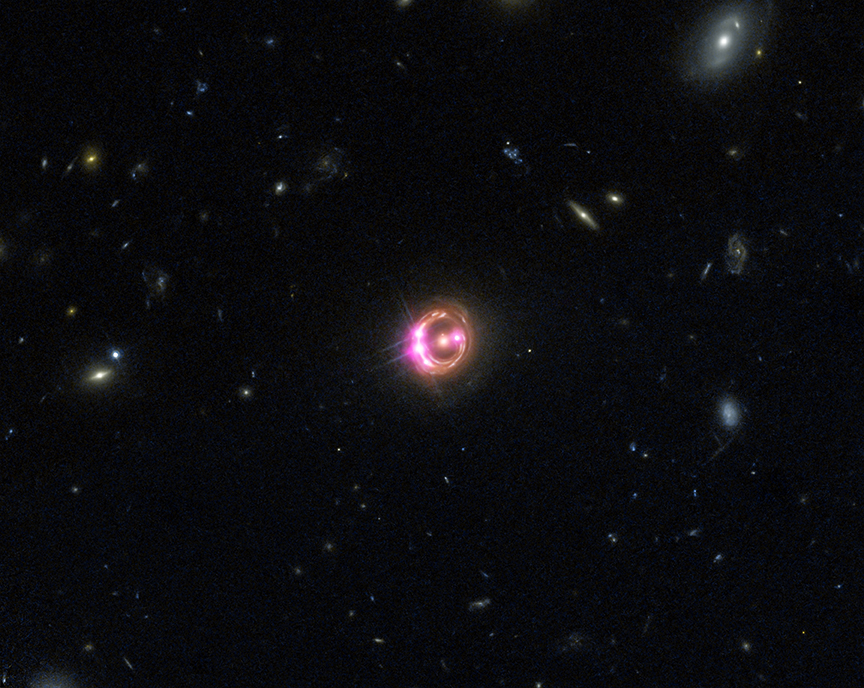
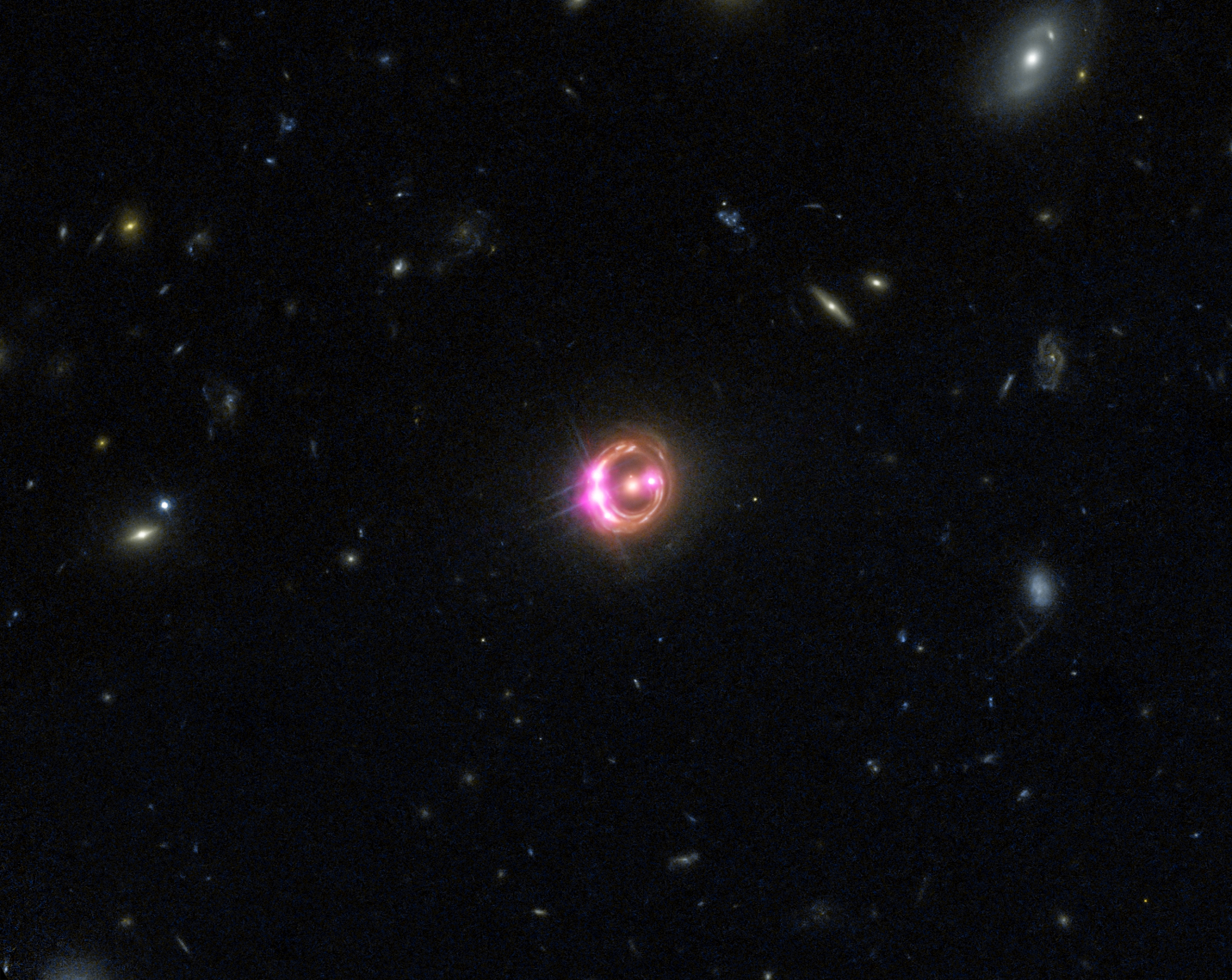
Multiple images of a distant quasar are visible in this combined view from NASA's Chandra X-ray Observatory and the Hubble Space Telescope. The Chandra data, along with data from ESA's XMM-Newton, were used to directly measure the spin of the supermassive black hole powering this quasar. This is the most distant black hole where such a measurement has been made, as reported in our press release.

Gravitational lensing by an intervening elliptical galaxy has created four different images of the quasar, shown by the Chandra data in pink. Such lensing, first predicted by Einstein, offers a rare opportunity to study regions close to the black hole in distant quasars, by acting as a natural telescope and magnifying the light from these sources. The Hubble data in red, green and blue shows the elliptical galaxy in the middle of the image, along with other galaxies in the field.

The quasar is known as RX J1131-1231 (RX J1131 for short), located about 6 billion light years from Earth. Using the gravitational lens, a high quality X-ray spectrum - that is, the amount of X-rays seen at different energies - of RX J1131 was obtained.

The X-rays are produced when a swirling accretion disk of gas and dust that surrounds the black hole creates a multimillion-degree cloud, or corona near the black hole. X-rays from this corona reflect off the inner edge of the accretion disk. The reflected X-ray spectrum is altered by the strong gravitational forces near the black hole. The larger the change in the spectrum, the closer the inner edge of the disk must be to the black hole.

The authors of the new study found that the X-rays are coming from a region in the disk located only about three times the radius of the event horizon, the point of no return for infalling matter. This implies that the black hole must be spinning extremely rapidly to allow a disk to survive at such a small radius.

This result is important because black holes are defined by just two simple characteristics: mass and spin. While astronomers have long been able to measure black hole masses very effectively, determining their spins have been much more difficult.

These spin measurements can give researchers important clues about how black holes grow over time. If black holes grow mainly from collisions and mergers between galaxies they should accumulate material in a stable disk, and the steady supply of new material from the disk should lead to rapidly spinning black holes. In contrast if black holes grow through many small accretion episodes, they will accumulate material from random directions. Like a merry go round that is pushed both backwards and forwards, this would make the black hole spin more slowly.

The discovery that the black hole in RX J1131 is spinning at over half the speed of light suggests that this black hole has grown via mergers, rather than pulling material in from different directions.

These results were published online in the journal Nature. The lead author is Rubens Reis of the University of Michigan. His co-authors are Mark Reynolds and Jon M. Miller, also of Michigan, as well as Dominic Walton of the California Institute of Technology.

Fast Facts for RX J1131-1231: 


Scale: Image is 1.2 arcmin on a side (About 1.6 million light years) 
Category: Quasars & Active Galaxies, Black Holes
Coordinates (J2000): RA 11h 31m 51.60s | Dec -12° 31' 57.00" 
Constellation: Crater
Observation Date: 28 Nov 2009 
Observation Time: 7 hours 39 min 
Obs. ID: 11540 
Instrument: ACIS
References: Reis, R.C., et al, 2014 Nature, in press. 
Color Code: X-ray (Pink); Optical (Red, Green, Blue) Optical: 
Distance Estimate: 6.05 billion light years (z=0.658) 


First Light for MUSE

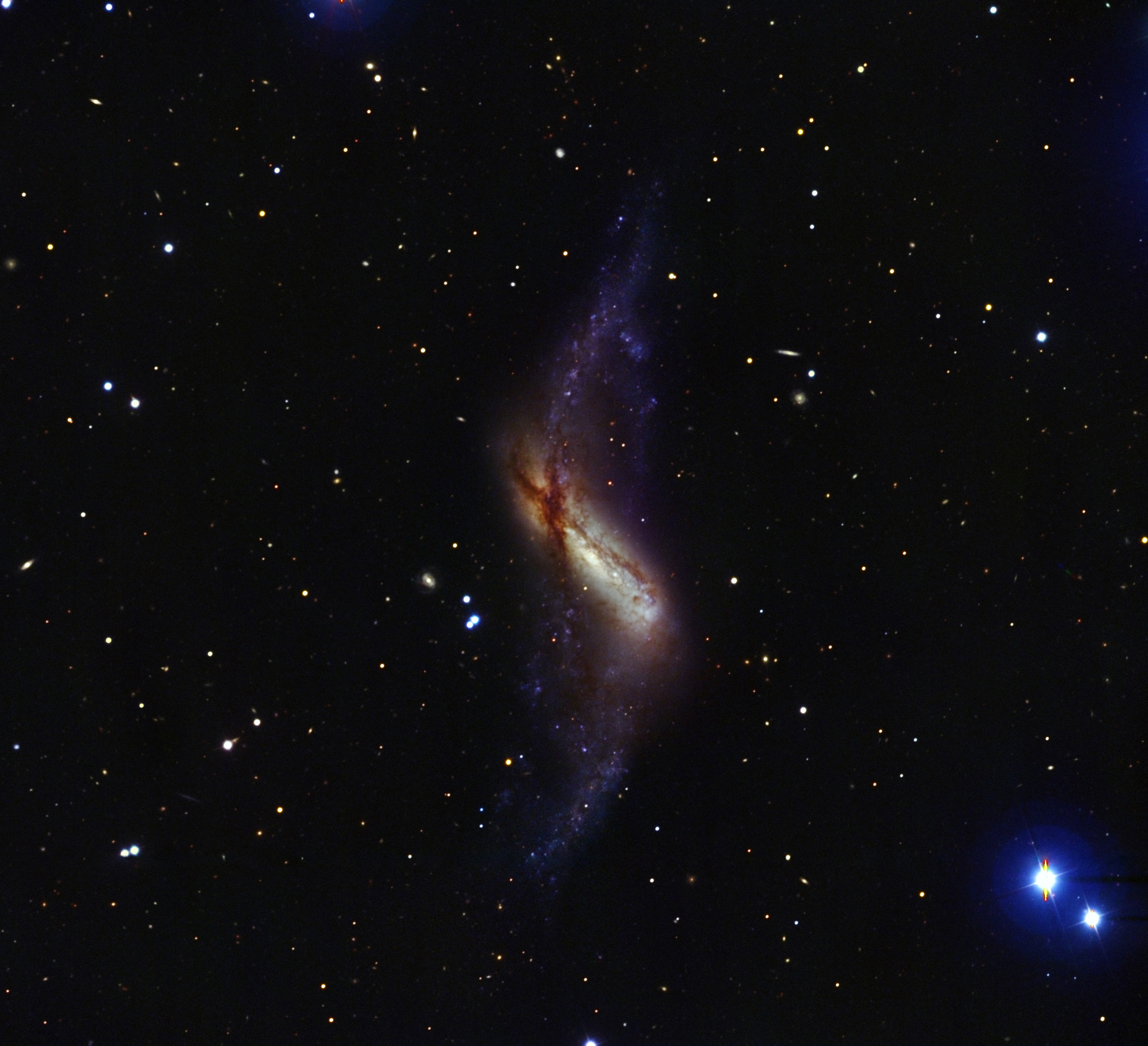
MUSE views the strange galaxy NGC 4650A

MUSE views of the Orion Nebula

MUSE colour-coded image of  NGC 4650A

MUSE image of the Orion Nebula

The MUSE instrument attached to the Very Large Telescope

The MUSE instrument at night

The MUSE instrument during installation at ESO’s Paranal Observatory

The MUSE instrument during installation at ESO’s Paranal Observatory 

The MUSE instrument makes the final ascent to the Very Large Telescope at ESO’s Paranal Observatory

MUSE image of the strange galaxy NGC 4650A

*************************************

Videos

MUSE views the unusual galaxy NGC 4650A

MUSE video of the transit of Europa across the disc of Jupiter

MUSE views the Orion Nebula

MUSE —  Running through the 3D data of NGC 4650A
MUSE — Running through the 3D data of NGC 4650A

MUSE —  Close up of the H-alpha line in the strange galaxy NGC 4650A
MUSE — Close up of the H-alpha line in the strange galaxy NGC 4650A

MUSE views the unusual galaxy NGC 4650A

Powerful 3D spectrograph successfully installed on VLT


A new innovative instrument called MUSE (Multi Unit Spectroscopic Explorer) has been successfully installed on ESO’s Very Large Telescope (VLT) at the Paranal Observatory in northern Chile. MUSE has observed distant galaxies, bright stars and other test targets during the first period of very successful observations.
Following testing and preliminary acceptance in Europe in September 2013, MUSE was shipped to ESO’s Paranal Observatory in Chile. It was reassembled at the base camp before being carefully transported to its new home at the VLT, where it is now installed on Unit Telescope 4. MUSE is the latest of the second generation instruments for the VLT (the first two were X-shooter and KMOS and the next, SPHERE, will follow shortly).

The leader of the team and principal investigator for the instrument, Roland Bacon (Centre de Recherche Astrophysique de Lyon, France), expressed his feelings: “It has taken a lot of work by many people over many years, but we have done it! It seems strange that this seven-tonne collection of optics, mechanics and electronics is now a fantastic time machine for probing the early Universe. We are very proud of the achievement — MUSE will remain a unique instrument for years to come.”

MUSE’s science goals include delving into the early epochs of the Universe to probe the mechanisms of galaxy formation and studying both the motions of material in nearby galaxies and their chemical properties. It will have many other applications, ranging all the way from studies of the planets and satellites in the Solar System, through the properties of star-forming regions in the Milky Way and out to the distant Universe.

As a unique and powerful tool for discovery MUSE uses 24 spectrographs to separate light into its component colours to create both images and spectra of selected regions of the sky. It creates 3D views of the Universe with a spectrum for each pixel as the third dimension [1]. During the subsequent analysis the astronomer can move through the data and study different views of the object at different wavelengths, just like tuning a television to different channels at different frequencies.

MUSE couples the discovery potential of an imaging device with the measuring capabilities of a spectrograph, while taking advantage of the much better image sharpness provided by adaptive optics. The instrument is mounted on Unit Telescope 4 of the VLT, which is currently being converted into a fully adaptive telescope.


Since the start of 2014, Bacon and the rest of the MUSE integration and commissioning team at Paranal have recorded the MUSE story in a series of blog posts which can be followed here. The team will present the first results from MUSE at the forthcoming 3D2014 workshop at ESO in Garching bei München, Germany.

A muse is there to inspire. Indeed, MUSE has inspired us for many years and will continue to do so,” says Bacon in a blog post on the first light. “No doubt many astronomers from all over the world will also be charmed by our MUSE.“

Notes

[1] This technique, known as integral field spectroscopy, allows astronomers to simultaneously study the properties of different parts of an object such as a galaxy to see how it is rotating and to measure its mass. It also allows the chemical composition and other physical properties to be determined in different parts of the object. The technique has been used for many years but has now with MUSE reached a leap in sensitivity, efficiency and resolution. One way of describing this, is that MUSE simultaneously combines high-resolution imaging with spectroscopy.

More information

ESO is the foremost intergovernmental astronomy organisation in Europe and the world’s most productive ground-based astronomical observatory by far. It is supported by 15 countries: Austria, Belgium, Brazil, the Czech Republic, Denmark, France, Finland, Germany, Italy, the Netherlands, Portugal, Spain, Sweden, Switzerland and the United Kingdom. ESO carries out an ambitious programme focused on the design, construction and operation of powerful ground-based observing facilities enabling astronomers to make important scientific discoveries. ESO also plays a leading role in promoting and organising cooperation in astronomical research. ESO operates three unique world-class observing sites in Chile: La Silla, Paranal and Chajnantor. At Paranal, ESO operates the Very Large Telescope, the world’s most advanced visible-light astronomical observatory and two survey telescopes. VISTA works in the infrared and is the world’s largest survey telescope and the VLT Survey Telescope is the largest telescope designed to exclusively survey the skies in visible light. ESO is the European partner of a revolutionary astronomical telescope ALMA, the largest astronomical project in existence. ESO is currently planning the 39-metre European Extremely Large optical/near-infrared Telescope, the E-ELT, which will become “the world’s biggest eye on the sky”.

Links


Contacts

Roland Bacon
Lyon Centre for Astrophysics Research (CRAL)
France
Cell: +33 6 08 09 14 27
Email: rmb@obs.univ-lyon1.fr

Richard Hook
ESO, Public Information Officer
Garching bei München, Germany
Tel: +49 89 3200 6655
Cell: +49 151 1537 3591
Email: rhook@eso.org

Marcella Carollo
Institute for Astronomy ETH Zurich
Zurich, Switzerland
Tel: +41 44 633 3725
Email: marcella@phys.ethz.ch

Thierry Contini
Institut de Recherche en Astrophysique et Planétologie (IRAP)
Toulouse, France
Tel: +33 5 61 33 28 14
Email: Thierry.Contini@irap.omp.eu

Harald Nicklas
Institut für Astrophysik (IAG)
Göttingen, Germany
Tel: +49 551 39 50 -39
Email: nicklas@astro.physik.uni-goettingen.de

Joop Schaye
Leiden Observatory (NOVA)
Leiden, The Netherlands
Cell: +31 (71) 527 8443
Email: schaye@strw.leidenuniv.nl

Lutz Wisotzki
Leibniz-Institut für Astrophysik Potsdam (AIP)
Potsdam, Germany
Tel: +49 331 7499 532
Email: lwisotzki@aip.de

Source: ESO


Wednesday, March 05, 2014

Spiral galaxy spills blood and guts

New Hubble image of spiral galaxy ESO 137-001
Hubble and Chandra composite of ESO 137-001
*****************************

Videos

Hubblecast 72: Clues to a cosmic crime

Zooming in on ESO 137-001
Panning across ESO 137-001

3D visualisation of ESO 137-001 (artist’s impression)

Fade between Hubble and Chandra images of ESO 137-001


This new Hubble image shows spiral galaxy ESO 137-001, framed against a bright background as it moves through the heart of galaxy cluster Abell 3627. This cluster is violently ripping the spiral’s entrails out into space, leaving bright blue streaks as telltale clues to this cosmic crime.

This new Hubble image shows ESO 137-001, a galaxy located in the southern constellation of Triangulum Australe (The Southern Triangle) — a delicate and beautiful spiral galaxy, but with a secret.

This image not only captures the galaxy and its backdrop in stunning detail, but also something more dramatic — intense blue streaks streaming outwards from the galaxy, seen shining brightly in ultraviolet light.

These streaks are actually hot young stars, encased in wispy streams of gas that are being torn away from the galaxy by its surroundings as it moves through space. This violent galactic disrobing is due to a process known as ram pressure stripping — a drag force felt by an object moving through a fluid [1]. The fluid in question here is superheated gas, which lurks at the centres of galaxy clusters.

This image also shows other telltale signs of this process, such as the curved appearance of the disc of gas and dust — a result of the forces exerted by the heated gas. The cluster's drag may be strong enough to bend ESO 137-001, but in this cosmic tug-of-war the galaxy's gravitational pull is strong enough to hold on to the majority of its dust — although some brown streaks of dust displaced by the stripping are visible.
Studying ram pressure stripping helps astronomers to better understand the mechanisms that drive the evolution of galaxies. For example, it will leave this galaxy with very little of the cold gas that is essential for star formation, rendering the galaxy effectively incapable of forming new stars.

ESO 137-001 is part of the Norma Cluster, a cluster of galaxies near the centre of the Great Attractor, a region of space that earned its name by being so massive, and having a gravitational pull so strong, that it is pulling entire galaxy clusters towards it. This region is located around 200 million light-years from our galaxy, the Milky Way. Both our galaxy and its home group, the Local Group, are slowly being hauled towards this mysterious region. Hubble also imaged ESO 137-001's neighbour, ESO 137-002, which is also known to have a hot tail of gas extending outwards into space (potw1302).

Despite being relatively close by cosmic standards, catching even a glimpse of the Norma Cluster is no mean feat. Observed from Earth, the cluster lies close to the plane of the Milky Way and is obscured by a thick smog of cosmic dust. But Hubble is up to the challenge — using new data from Hubble's Wide Field Camera 3 (WFC3).

As with most images from Hubble, this is not just a pretty picture; it tells us a great deal about the harsh environment at the heart of a galaxy cluster, and the fate of galaxies like ESO 137-001 that find passage through it.
A version of this image was submitted to the Hubble's Hidden Treasures image processing competition by contestant Serge Meunier.

Notes

[1] A quick and simple analogy for this effect would be to imagine leaning out of a car window as it travelled quickly along a motorway, or walking within a swimming pool.

Notes for editors

The Hubble Space Telescope is a project of international cooperation between ESA and NASA.
The data for this image comes from HST project 12377, with prinicipal investigator Ming Sun.

More information

Image credit: NASA, ESA
Acknowledgements: Ming Sun (UAH), and Serge Meunier

Links

Contacts

Georgia Bladon
Hubble/ESA
Garching bei München, Germany
Tel: +49-89-3200-6855
Email:
gbladon@partner.eso.org


Tuesday, March 04, 2014

Standard-Candle Supernovae are Still Standard, but Why?

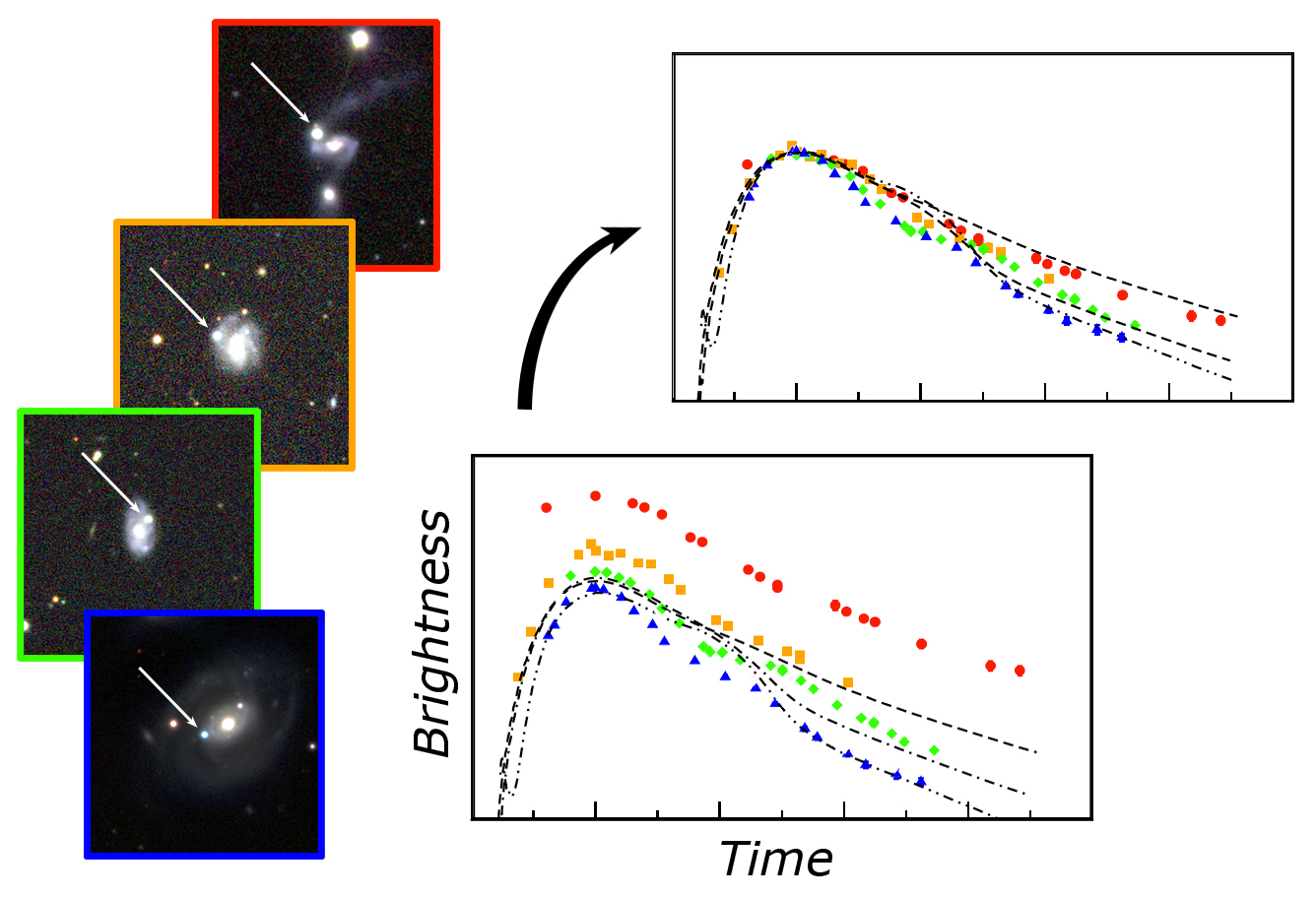
Type Ia supernovae result from the explosions of white dwarf stars. These supernovae vary widely in peak brightness, how long they stay bright, and how they fade away, as the lower graph shows. Theoretical models (dashed black lines) seek to account for the differences, for example why faint supernovae fade quickly and bright supernovae fade slowly. A new analysis by the Nearby Supernova Factory indicates that when peak brightnesses are accounted for, as shown in the upper graph, the late-time behaviors of faint and bright supernovae provide solid evidence that the white dwarfs that caused the explosions had different masses, even though the resulting blasts are all “standard candles.” (Click here for best resolution)

The Nearby Supernova Factory based at Berkeley Lab shows that Type Ia supernovae have a surprisingly large range of masses

Sixteen years ago two teams of supernova hunters, one led by Saul Perlmutter of the U.S. Department of Energy’s Lawrence Berkeley National Laboratory (Berkeley Lab), the other by Brian Schmidt of the Australian National University, declared that the expansion of the universe is accelerating – a Nobel Prize-winning discovery tantamount to the discovery of dark energy. Both teams measured how fast the universe was expanding at different times in its history by comparing the brightnesses and redshifts of Type Ia supernovae, the best cosmological “standard candles.”

These dazzling supernovae are remarkably similar in brightness, given that they are the massive thermonuclear explosions of white dwarf stars, which pack roughly the mass of our sun into a ball the size of Earth. Based on their colors and how fast they brighten and fade away, the brightnesses of different Type Ia supernovae can be standardized to within about 10 percent, yielding accurate gauges for measuring cosmic distances.

Until recently, scientists thought they knew why Type Ia supernovae are all so much alike. But their favorite scenario was wrong.
The assumption was that carbon-oxygen white dwarf stars, the progenitors of the supernovae, capture additional mass by stripping it from a companion star or by merging with another white dwarf; when they approach the Chandrasekhar limit (40 percent more massive than our sun) they experience thermonuclear runaway. Type Ia brightnesses were so similar, scientists thought, because the amounts of fuel and the explosion mechanisms were always the same.

“The Chandrasekhar mass limit has long been put forward by cosmologists as the most likely reason why Type Ia supernovae brightnesses are so uniform, and more importantly, why they are not expected to change systematically at higher redshifts,” says cosmologist Greg Aldering, who leads the international Nearby Supernova Factory (SNfactory) based in Berkeley Lab’s Physics Division. “The Chandrasekhar limit is set by quantum mechanics and must apply equally, even for the most distant supernovae.”
But a new analysis of normal Type Ia supernovae, led by SNfactory member Richard Scalzo of the Australian National University, a former Berkeley Lab postdoc, shows that in fact they have a range of masses. Most are near or slightly below the Chandrasekhar mass, and about one percent somehow manage to exceed it.
The SNfactory analysis has been accepted for publication by the Monthly Notices of the Royal Astronomical Society and is available online as an arXiv preprint.

A new way to analyze exploding stars
 
While white dwarf stars are common, Scalzo says, “it’s hard to get a Chandrasekhar mass of material together in a natural way.” A Type Ia starts in a two-star (or perhaps a three-star) system, because there has to be something from which the white dwarf accumulates enough mass to explode.

Some models picture a single white dwarf borrowing mass from a giant companion. However, says Scalzo, “The most massive newly formed carbon-oxygen white dwarfs are expected to be around 1.2 solar masses, and to approach the Chandrasekhar limit a lot of factors would have to line up just right even for these to accrete the remaining 0.2 solar masses.”

If two white dwarfs are orbiting each other they somehow have to get close enough to either collide or gently merge, what Scalzo calls “a tortuously slow process.” Because achieving a Chandrasekhar mass seems so unlikely, and because sub-Chandrasekhar white dwarfs are so much more numerous, many recent models have explored how a Type Ia explosion could result from a sub-Chandrasekhar mass – so many, in fact, that Scalzo was motivated to find a simple way to eliminate models that couldn’t work.

He and his SNfactory colleagues determined the total energy of the spectra of 19 normal supernovae, 13 discovered by the SNfactory and six discovered by others. All were observed by the SNfactory’s unique SNIFS spectrograph (SuperNova Integral Field Spectrograph) on the University of Hawaii’s 2.2-meter telescope on Mauna Kea, corrected for ultraviolet and infrared light not observed by SNIFS.

A supernova eruption thoroughly trashes its white dwarf progenitor, so the most practical way to tell how much stuff was in the progenitor is by spectrographically “weighing” the leftover debris, the ejected mass. To do this Scalzo took advantage of a supernova’s layered composition.

A Type Ia’s visible light is powered by radioactivity from nickel-56, made by burning carbon near the white dwarf’s center. Just after the explosion this radiation, in the form of gamma rays, is absorbed by the outer layers – including iron and lighter elements like silicon and sulfur, which consequently heat up and glow in visible wavelengths.

But a month or two later, as the outer layers expand and dissipate, the gamma rays can leak out. The supernova’s maximum brightness compared to its brightness at late times depends on how much gamma radiation is absorbed and converted to visible light – which is determined both by the mass of nickel-56 and the mass of the other material piled on top of it.

The SNfactory team compared masses and other factors with light curves: the shape of the graph, whether narrow or wide, that maps how swiftly a supernova achieves its brightest point, how bright it is, and how hastily or languorously it fades away. The typical method of “standardizing” Type Ia supernovae is to compare their light curves and spectra.

“The conventional wisdom holds that the light curve width is determined primarily or exclusively by the nickel-56 mass,” Scalzo says, “whereas our results show that there must also be a deep connection with the ejected mass, or between the ejected mass and the amount of nickel-56 created in a particular supernova.”

Exploding white dwarf stars, the bottom line

Greg Aldering summarizes the most basic result of the new analysis: “The white dwarfs exploding as Type Ia supernovae have a range of masses, and the resulting light-curve width is directly proportional to the total mass involved in the explosion.”

For a supernova whose light falls off quickly, the progenitor is a lot less massive than the Chandrasekhar mass – yet it’s still a normal Type Ia, whose luminosity can be confidently standardized to match other normal Type Ia supernovae.

The same is true for a Type Ia that starts from a “classic” progenitor with Chandrasekhar mass, or even more. For the heavyweights, however, the pathway to supernova detonation must be significantly different than for lighter progenitors. These considerations alone were enough to eliminate a number of theoretical models for Type Ia explosions.

Carbon-oxygen white dwarfs are still key. They can’t explode on their own, so another star must provide the trigger. For super-Chandrasekhar masses, two C-O white dwarfs could collide violently, or one could accrete mass from a companion star in a way that causes it to spin so fast that angular momentum supports it beyond the Chandrasekhar limit.

More relevant for cosmolology, because more numerous, are models for sub-Chandrasekhar mass. From a companion star, a C-O white dwarf could accumulate helium, which detonates more readily than carbon – the result is a double detonation. Or two white dwarfs could merge. There are other surviving models, but the psychological “safety net” that the Chandrasekhar limit once provided cosmologists has been lost. Still, says Scalzo, the new analysis narrows the possibilities enough for theorists to match their models to observations.
“This is a significant advance in furthering Type Ia supernovae as cosmological probes for the study of dark energy,” says Aldering, “likely to lead to further improvements in measuring distances. For instance, light-curve widths provide a measure of the range of the star masses that are producing Type Ia supernovae at each slice in time, well back into the history of the universe.”

This work was supported by DOE’s Office of Science and the Gordon and Betty Moore Foundation, and in France by CNRS/IN2P3 (National Center for Scientific Research, National Institute of Nuclear and Particle Physics), CNRS/INSU (CNRS National Institute for Earth Sciences and Astronomy), and PNC (Programme National de Cosmologie).

###

“Type Ia Supernova Bolometric Light Curves and Ejected Mass Estimates from the Nearby Supernova Factory,” by Richard Scalzo, Greg Aldering, Pierre Antilogus, Cecilia Aragon, Stephen Bailey, Charles Baltay, Sébastien Bongard, Clement Buton, Flora Cellier-Holzem, Mike Childress, Nicolas Chotard, Yannick Copin, Hannah K. Fakhouri, Emmanuel Gangler, Julien Guy, Alex Kim, Marek Kowalski, Markus Kromer, Jakob Nordin, Peter Nugent, Kerstin Paech, Reynald Pain, Emmanuel Pécontal, Rui Pereira, Saul Perlmutter, David Rabinowitz, Mickael Rigault, Karl Runge, Clare Saunders, Stuart Sim, Gerard Smadja, Charling Tao, Stefan Taubenberger, Rollin Thomas, and Benjamin Alan Weaver (The Nearby Supernova Factory), will appear in the Monthly Notices of the Royal Astronomical Society and is available online as an arXiv preprint.


The Nearby Supernova Factory is a scientific collaboration between the Centre de Recherche Astronomique de Lyon, Institut de Physique Nucléaire de Lyon, Laboratoire de Physique Nucléaire et des Hautes Energies, Lawrence Berkeley National Laboratory, Yale University, University of Bonn, Max Planck Institute for Astrophysics, Tsinghua Center for Astrophysics, and the Centre de Physique des Particules de Marseille. The ARC Centre of Excellence for All‐sky Astrophysics (CAASTRO) is a collaboration between The University of Sydney, The Australian National University, The University of Melbourne, Swinburne University of Technology, The University of Queensland, The University ofb Western Australia, and Curtin University.

Lawrence Berkeley National Laboratory addresses the world’s most urgent scientific challenges by advancing sustainable energy, protecting human health, creating new materials, and revealing the origin and fate of the universe. Founded in 1931, Berkeley Lab’s scientific expertise has been recognized with 13 Nobel prizes. The University of California manages Berkeley Lab for the U.S. Department of Energy’s Office of Science. For more, visit http://www.lbl.gov.

The DOE Office of Science is the single largest supporter of basic research in the physical sciences in the United States and is working to address some of the most pressing challenges of our time. For more information, please visit science.energy.gov.
Paul Preuss 
 

The Music of the Galaxies

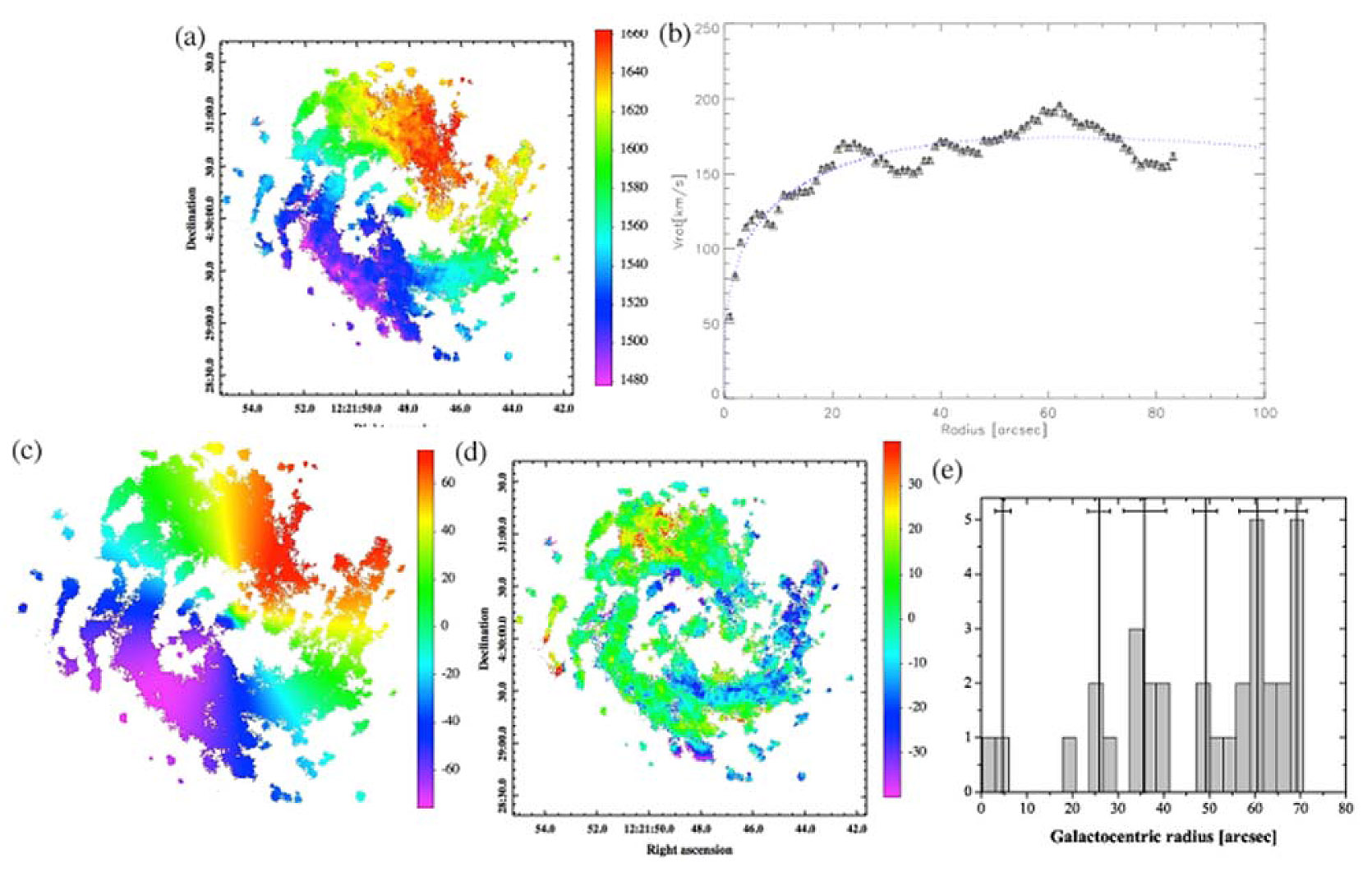
Panel a: Line-of-sight velocity field in Hydrogen-alpha for NGC 4303 (color table to the right gives values of the velocity in km/s). Panel b: Rotation curve extracted from the velocity map of panel a. Panel c: Velocity model map generated by rotating and projecting the rotation curve. Panel d: Residual velocity map derived by subtracting the model map (panel c) from the velocity map (panel a). Panel e: Radial distribution of phase reversals. Vertical solid lines mark the resonance radii and horizontal lines near the top indicate the uncertainty bar associated with each radius. [ JPEG | TIFF ]
  
Galaxy density waves are lines of enhanced density of stars which propagate through the disc of a galaxy in the form of a spiral. The theory of density waves offers an excellent framework for studying the spiral structure in galaxies as it provides quantitative relations between morphological and kinematic parameters and predicts phenomena, which can be compared with observations.

Using Fabry-Perot optical interferometers, including GHaFaS on the William Herschel Telescope, and observing a sample of over a hundred nearby galaxies, astronomers have discovered that there are more density waves than predicted by theory, and that there are relations between them forming a complex pattern of resonances, which orchestrate the “Music of the Galaxies”.

For any galaxy with spiral arms, current theory describes the existence of a density wave and its resonances. For these galaxies the theory predicted two sets of waves, one in the inner part of the galaxy containing the bar, and the other in the outer part containing the spiral arms. In their study, however, the astronomers found to their surprise more than two circular zones of density waves in almost all the galaxies analysed. The most frequently found number was four, although the maximum was seven.

Some of the observable phenomena the theory predicts include the Inner Lindblad Resonance (ILR) and Outer Lindblad Resonance (OLR), and the co-rotation radius, a key parameter which is defined as the radial position where the angular frequency of the gravitational perturbation propagating in the disc, usually called the pattern speed, is equal to the angular speed of the matter which is following circular orbits. Astronomers developed a new method, the Phase-Reversal Method, to determine the resonance radii of a disc galaxy.

The prime material for the method is the 2D residual, or non-circular, velocity field, which is obtained by subtracting off the rotation curve model from the initial velocity map, which is derived from the data cube. They then look for the radii in the galactic plane at which these residual velocities change their phase along the radial direction, from inflow to outflow, or vice-versa. A plot, against galactocentric radius, of the number of pixels across which the phase changes occurs, shows a set of well defined peaks which give the resonance radii. Source: Isaac Newton Group of Telescopes

More information:
  • "IAC astronomers discover 'The Music of the Galaxies'". IAC Press Release, 18th December 2013.
  • GHaFaS web site.
  • Font, J., Beckman, J. E., Querejeta, M., Epinat, E., James, P. A., Blasco-Herrera, J., Erroz-Ferrer, S. and Pérez, I., 2014, “Interlocking resonance pattern in galaxy disks”, ApJS, 210, 2. Paper.
  • Font, J., Beckman, J.E., Epinat, B., Fathi, K., Gutiérrez, L., Hernández, O., 2011, “Resonant Structure in the Disks of Spiral Galaxies, Using Phase Reversals in Streaming Motions from Two-dimensional H-alpha Fabry-Perot Spectroscopy”, ApJ, 741, L14. Paper
 
Contact: Javier Méndez  (Public Relations Officer)


Monday, March 03, 2014

New fast and furious black hole found

Nearby spiral galaxy M83 and the MQ1 system with jets, as seen by the Hubble Space Telescope. The blue circle marks the position of the MQ1 system in the galaxy (shown inset). Image Credits: M83 - NASA, ESA and the Hubble Heritage Team (WFC3/UVIS, STScI-PRC14-04a).MQ1 inset - W. P. Blair (Johns Hopkins University) & R. Soria (ICRAR-Curtin). Click here to enlarge

A team of Australian and American astronomers have been studying nearby galaxy M83 and have found a new superpowered small black hole, named MQ1, the first object of its kind to be studied in this much detail.

Astronomers have found a few compact objects that are as powerful as MQ1, but have not been able to work out the size of the black hole contained within them until now.

The team observed the MQ1 system with multiple telescopes and discovered that it is a standard-sized small black hole, rather than a slightly bigger version that was theorised to account for all its power.

Curtin University senior research fellow Dr Roberto Soria, who is part of the International Centre for Radio Astronomy Research (ICRAR) and led the team investigating MQ1, said it was important to understand how stars were formed, how they evolved and how they died, within a spiral shaped galaxy like M83.

“MQ1 is classed as a microquasar - a black hole surrounded by a bubble of hot gas, which is heated by two jets just outside the black hole, powerfully shooting out energy in opposite directions, acting like cosmic sandblasters pushing out on the surrounding gas,” Dr Soria said.

“The significance of the huge jet power measured for MQ1 goes beyond this particular galaxy: it helps astronomers understand and quantify the strong effect that black hole jets have on the surrounding gas, which gets heated and swept away.

“This must have been a significant factor in the early stages of galaxy evolution, 12 billion years ago, because we have evidence that powerful black holes like MQ1, which are rare today, were much more common at the time.”

“By studying microquasars such as MQ1, we get a glimpse of how the early universe evolved, how fast quasars grew and how much energy black holes provided to their environment.”As a comparison, the most powerful microquasar in our galaxy, known as SS433, is about 10 times less powerful than MQ1.

Although the black hole in MQ1 is only about 100 kilometres wide, the MQ1 structure - as identified by the Hubble Space Telescope - is much bigger than our Solar System, as the jets around it extend about 20 light years from either side of the black hole.

Black holes vary in size and are classed as either stellar mass (less than about 70 times the mass of our Sun) or supermassive (millions of times the mass of our Sun, like the giant black hole that is located in the middle of the Milky Way).

MQ1 is a stellar mass black hole and was likely formed when a star died, collapsing to leave behind a compact mass.

The discovery of MQ1 and its characteristics is just one of the results of the comprehensive study of galaxy M83, a collection of millions of stars located 15 million light years away from Earth.

M83, the iconic Southern-sky galaxy, is being mapped with the Hubble Space and Magellan telescopes (detecting visible light), the Chandra X-ray Observatory (detecting light in X-ray frequencies), the Australia Telescope Compact Array and the Very Large Array (detecting radio waves).

ICRAR is a joint venture between Curtin University and The University of Western Australia which receives funding from the State Government of Western Australia.

Original Publication:


‘Super-Eddington Mechanical Power of an Accreting Black Hole in M83’ published in Science 27/2/2014. Full text available on request.

Contacts

Dr Roberto Soria
ICRAR - Curtin
Ph: +61 8 9266 9665
Email:
roberto.soria@icrar.org

Kirsten Gottschalk
Media Contact, ICRAR
Ph: +61 8 6488 7771
M: +61 438 361 876
Email:
kirsten.gottschalk@icrar.org

Monika Dudek
Public Relations Consultant, Curtin University
Ph: +61 8 9266 4241
M: +61 412 266 462
Email:
media@curtin.edu.au

Source: ICRAR


The Evolution of Galaxies that Host Massive Black Holes

An image of the galaxy NGC 1068, one of the nearest and brightest spiral galaxies containing a rapidly growing supermassive black hole at its nucleus, as seen in X-rays (red), optical (green), and radio (blue). Astronomers have completed a statistical analysis of over 300,000 galaxies and concluded that supermassive black hole activity like this (generally speaking) falls into two categories, and that the host galaxies reflect these differences. NASA and the Chandra X-ray Observatory; CfA 

Our Milky Way galaxy, like most galaxies, has a nucleus with a massive black hole. Our nuclear black hole contains about four million solar masses of material, but others are thought to have hundreds of millions of solar masses or even more. Around the core, according to theories, is a torus of dust and gas whose inner edge can be heated to millions of degrees by material falling into the black hole, a process called accretion. Accretion heating can sometimes drive bipolar jets of rapidly moving charged particles, which radiate at radio wavelengths and are detected as bright cosmic radio sources.

Galaxies frequently collide, and it has been predicted that such mergers tend to push material towards the central black holes, thus fueling the accretion process. There is a variety of evidence in favor of this scenario, including the fact that more massive black holes are found in more massive galaxies, possibly the results of mergers. However, there is some conflicting evidence. By some accounts there are not enough merging galaxies to account for all the massive black holes that are seen. Moreover, galaxies and their black holes can also grow and evolve by more mundane processes such as normal gas inflow to the cores. Finally, most galaxies from an epoch a few billion years ago appear to be relatively normal objects, and not undergoing collisions.

A team of nine CfA astronomers and their colleagues have proposed a solution. Andy Goulding, Bill Forman, Christine Jones, Steve Murray, Alessandro Paggi, Matt Ashby, Jaisheng Huang, Ralph Kraft, and Steve Willner, with their team, have completed a statistical study of the optical and infrared properties of 330,811 galaxies covering distances out to about four billion light-years. They cross-reference the optical properties with infrared, X-ray and radio catalogs to determine which galaxies have radio loud outflows (they tend to be reddish in color) and which are dominated by star formation activity (these tend to be bluish).

The astronomers explain the conflicting evidence by showing that there are probably two different accretion mechanisms at work. Bluer galaxies, which are predominately seen in optical, infrared or X-ray bands, have black hole accretion that is probably driven by active star formation in the disk of the galaxy. In the redder, radio-loud galaxies (which are also fewer in number), the black hole accretion is of a different type called advection-dominated; here there is so much inflowing gas that the radiation is trapped and cannot escape. These redder galaxies are probably characterized by having undergone catastrophic collisions. The team not only finds that galaxies group into these two general kinds of sources, they also report that, contrary to some conventional ideas, both kinds of galaxies evolve in much the same way as do their counterparts without active black holes.

Reference: 
"Tracing the Evolution of Active Galactic Nuclei Host Galaxies Over the Last 9 Gyr of Cosmic Time," A. D. Goulding, W. R. Forman, R. C. Hickox, C. Jones, S. S. Murray, A. Paggi, M. L. N. Ashby, A. L. Coil, M. C. Cooper, J.-S. Huang, R. Kraft, J. A. Newman, B. J. Weiner, and S. P. Willner, ApJ 783, 490, 2014


Sunday, March 02, 2014

NGC 660 Galaxy Through the Eyes of the New PFIP Red+4 Detector

This composite image was obtained in Johnson-Bessel BVR filters taken during the first light of PFIP's Red+4 detector on the 27th of September 2013. The combined total exposure time was 40 minutes. Credits: Alex Tudorica (AIfA and ING collaborator) and Ovidiu Vaduvescu (ING). [JPEG]

NGC 660 is a polar ring galaxy at a distance of about 43 million light years in the constellation of Pisces. Polar ring galaxies are named as such because a substantial proportion of the stellar population, gas and dust orbit the galaxy is placed in rings around the nucleus. These rings are thought to be created by interaction with a neighbouring galaxy. 
The image shown above was obtained as part of the first light tests for the new Prime Focus Imaging Platform (PFIP) wide-field camera mounted on the William Herschel telescope. The new, large-format single-chip detector allows a wider field of view (18 arcminutes) than its predecessor and it provides a better response in the red wavelength range (less fringing and higher throughput).


More information:

Contact: Javier Méndez  (Public Relations Officer) 
Source: Isaac Newton Group of Telescopes


NEOWISE Spies Its First Comet

Comet NEOWISE was first observed by NASA's Near-Earth Object Wide-field Infrared Survey Explorer (NEOWISE) spacecraft on Valentine's Day, 2014.  Full image and caption

NASA's Near-Earth Object Wide-field Infrared Survey Explorer (NEOWISE) spacecraft has spotted a never-before-seen comet -- its first such discovery since coming out of hibernation late last year. 

"We are so pleased to have discovered this frozen visitor from the outermost reaches of our solar system," said Amy Mainzer, the mission's principal investigator from NASA's Jet Propulsion Laboratory in Pasadena, Calif. "This comet is a weirdo - it is in a retrograde orbit, meaning that it orbits the sun in the opposite sense from Earth and the other planets." 

Officially named "C/2014 C3 (NEOWISE)", the first comet discovery of the renewed mission came on Feb. 14 when the comet was about 143 million miles (230 million kilometers) from Earth. Although the comet's orbit is still a bit uncertain, it appears to have arrived from its most distant point in the region of the outer planets. The mission's sophisticated software picked out the moving object against a background of stationary stars. As NEOWISE circled Earth, scanning the sky, it observed the comet six times over half a day before the object moved out of its view. The discovery was confirmed by the Minor Planet Center, Cambridge, Mass., when follow-up observations were received three days later from the Near Earth Object Observation project Spacewatch, Tucson, Ariz. Other follow-up observations were then quickly received. While this is the first comet NEOWISE has discovered since coming out of hibernation, the spacecraft is credited with the discovery of 21 other comets during its primary mission.

Originally called the Wide-field Infrared Survey Explorer (WISE), the spacecraft was shut down in 2011 after its primary mission was completed. In September 2013, it was reactivated, renamed NEOWISE and assigned a new mission to assist NASA's efforts to identify the population of potentially hazardous near-Earth objects. NEOWISE will also characterize previously known asteroids and comets to better understand their sizes and compositions. 

JPL manages the NEOWISE mission for NASA's Science Mission Directorate in Washington. The Space Dynamics Laboratory in Logan, Utah, built the science instrument. Ball Aerospace & Technologies Corp. of Boulder, Colo., built the spacecraft. Science operations and data processing take place at the Infrared Processing and Analysis Center at the California Institute of Technology in Pasadena. Caltech manages JPL for NASA. 

More information on NEOWISE is online at: http://www.jpl.nasa.gov/wise/ .

DC Agle 818-393-9011
Jet Propulsion Laboratory, Pasadena, Calif.

agle@jpl.nasa.gov 


Saturday, March 01, 2014

NASA's Kepler Mission Announces a Planet Bonanza, 715 New Worlds

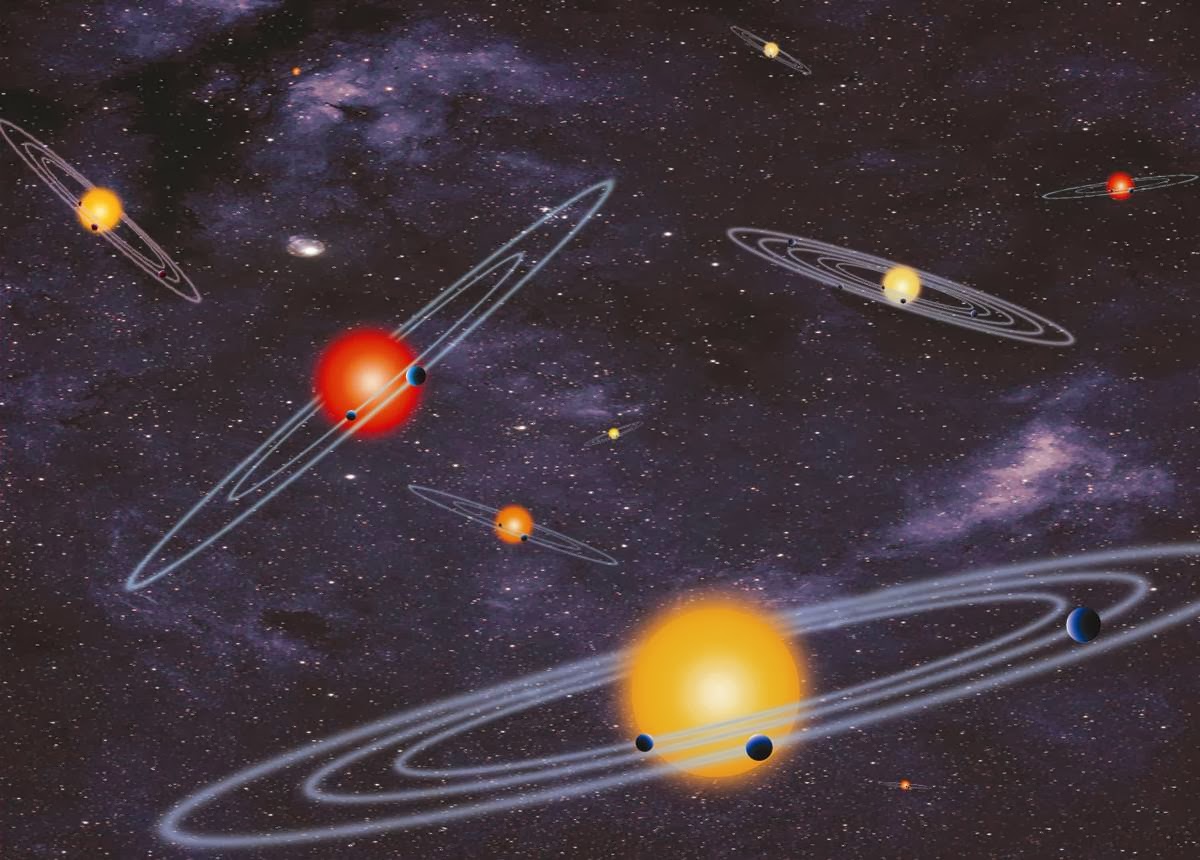
The artist concept depicts multiple-transiting planet systems, which are stars with more than one planet. The planets eclipse or transit their host star from the vantage point of the observer. This angle is called edge-on. Image Credit: NASA 

NASA's Kepler mission announced Wednesday the discovery of 715 new planets. These newly-verified worlds orbit 305 stars, revealing multiple-planet systems much like our own solar system.

Nearly 95 percent of these planets are smaller than Neptune, which is almost four times the size of Earth.

 This discovery marks a significant increase in the number of known small-sized planets more akin to Earth than previously identified exoplanets, which are planets outside our solar system.

"The Kepler team continues to amaze and excite us with their planet hunting results," said John Grunsfeld, associate administrator for NASA's Science Mission Directorate in Washington. "That these new planets and solar systems look somewhat like our own, portends a great future when we have the James Webb Space Telescope in space to characterize the new worlds.”

Since the discovery of the first planets outside our solar system roughly two decades ago, verification has been a laborious planet-by-planet process. Now, scientists have a statistical technique that can be applied to many planets at once when they are found in systems that harbor more than one planet around the same star.

To verify this bounty of planets, a research team co-led by Jack Lissauer, planetary scientist at NASA's Ames Research Center in Moffett Field, Calif., analyzed stars with more than one potential planet, all of which were detected in the first two years of Kepler's observations -- May 2009 to March 2011.

The research team used a technique called verification by multiplicity, which relies in part on the logic of probability. Kepler observes 150,000 stars, and has found a few thousand of those to have planet candidates. If the candidates were randomly distributed among Kepler's stars, only a handful would have more than one planet candidate. However, Kepler observed hundreds of stars that have multiple planet candidates. Through a careful study of this sample, these 715 new planets were verified.

This method can be likened to the behavior we know of lions and lionesses. In our imaginary savannah, the lions are the Kepler stars and the lionesses are the planet candidates. The lionesses would sometimes be observed grouped together whereas lions tend to roam on their own. If you see two lions it could be a lion and a lioness or it could be two lions. But if more than two large felines are gathered, then it is very likely to be a lion and his pride. Thus, through multiplicity the lioness can be reliably identified in much the same way multiple planet candidates can be found around the same star.

"Four years ago, Kepler began a string of announcements of first hundreds, then thousands, of planet candidates --but they were only candidate worlds," said Lissauer. "We've now developed a process to verify multiple planet candidates in bulk to deliver planets wholesale, and have used it to unveil a veritable bonanza of new worlds."

These multiple-planet systems are fertile grounds for studying individual planets and the configuration of planetary neighborhoods. This provides clues to planet formation.

Four of these new planets are less than 2.5 times the size of Earth and orbit in their sun's habitable zone, defined as the range of distance from a star where the surface temperature of an orbiting planet may be suitable for life-giving liquid water.

One of these new habitable zone planets, called Kepler-296f, orbits a star half the size and 5 percent as bright as our sun. Kepler-296f is twice the size of Earth, but scientists do not know whether the planet is a gaseous world, with a thick hydrogen-helium envelope, or it is a water world surrounded by a deep ocean.

"From this study we learn planets in these multi-systems are small and their orbits are flat and circular -- resembling pancakes -- not your classical view of an atom," said Jason Rowe, research scientist at the SETI Institute in Mountain View, Calif., and co-leader of the research. "The more we explore the more we find familiar traces of ourselves amongst the stars that remind us of home."

This latest discovery brings the confirmed count of planets outside our solar system to nearly 1,700. As we continue to reach toward the stars, each discovery brings us one step closer to a more accurate understanding of our place in the galaxy.

Launched in March 2009, Kepler is the first NASA mission to find potentially habitable Earth-size planets. Discoveries include more than 3,600 planet candidates, of which 961 have been verified as bona-fide worlds.

The findings papers will be published March 10 in The Astrophysical Journal and are available for download at: http://www.nasa.gov/ames/kepler/digital-press-kit-kepler-planet-bonanza

Ames is responsible for the Kepler mission concept, ground system development, mission operations and science data analysis. NASA's Jet Propulsion Laboratory in Pasadena, Calif., managed Kepler mission development. Ball Aerospace & Technologies Corp. in Boulder, Colo., developed the Kepler flight system and supports mission operations with the Laboratory for Atmospheric and Space Physics at the University of Colorado in Boulder. The Space Telescope Science Institute in Baltimore archives, hosts and distributes Kepler science data. Kepler is NASA's 10th Discovery Mission and was funded by the agency's Science Mission Directorate.

For more information about the Kepler space telescope, visit:  http://www.nasa.gov/kepler

Michele Johnson
Ames Research Center, Moffett Field, Calif.
650-604-6982

michele.johnson@nasa.gov

J.D. Harrington
Headquarters, Washington
202-358-5241

j.d.harrington@nasa.gov