Showing posts with label NGC 4303. Show all posts

Saturday, February 11, 2023

A hypnotising galaxy

NGC 4303
Credit: ESO/ALMA (ESO/NAOJ/NRAO)/PHANGS

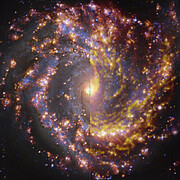
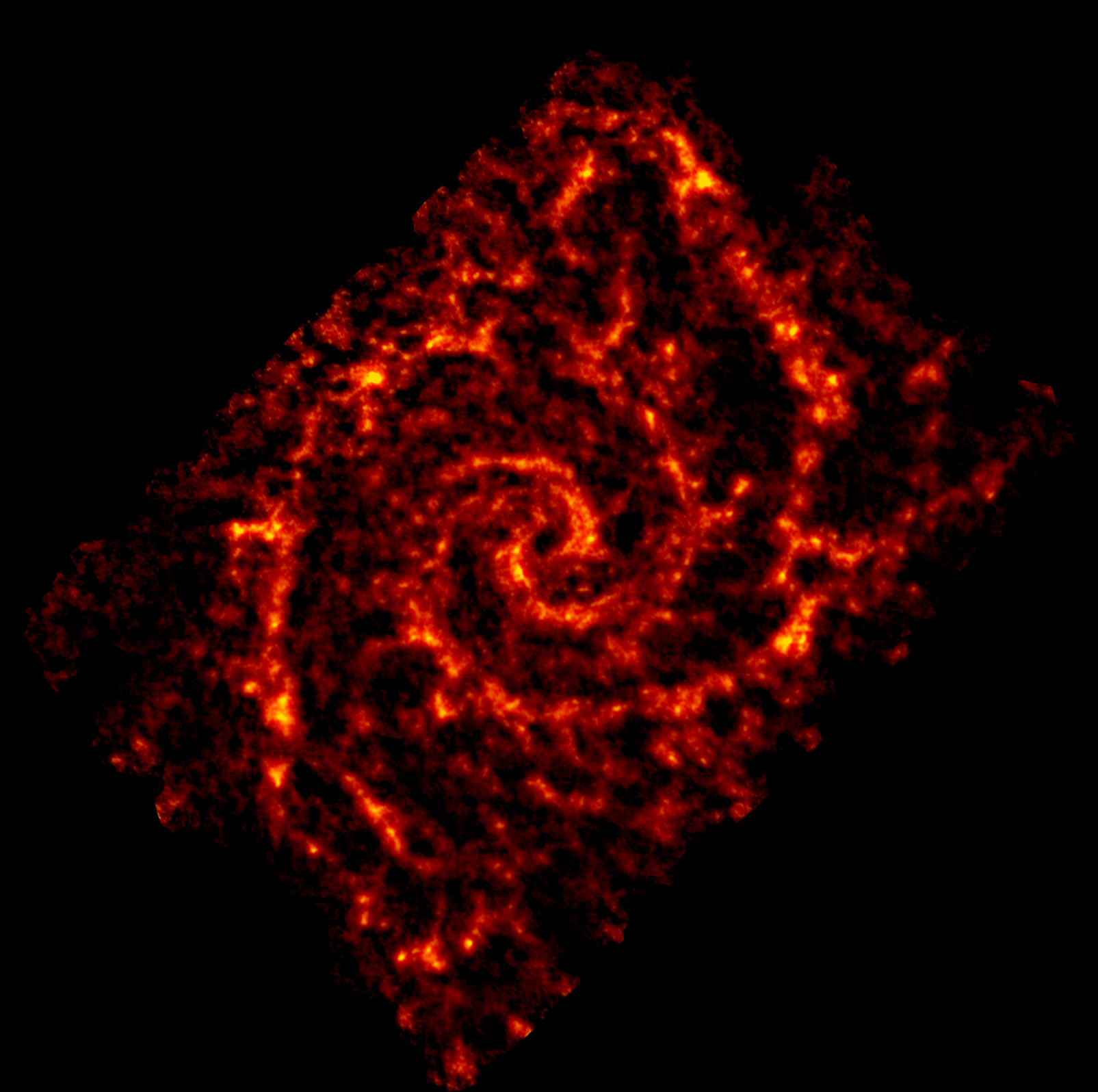
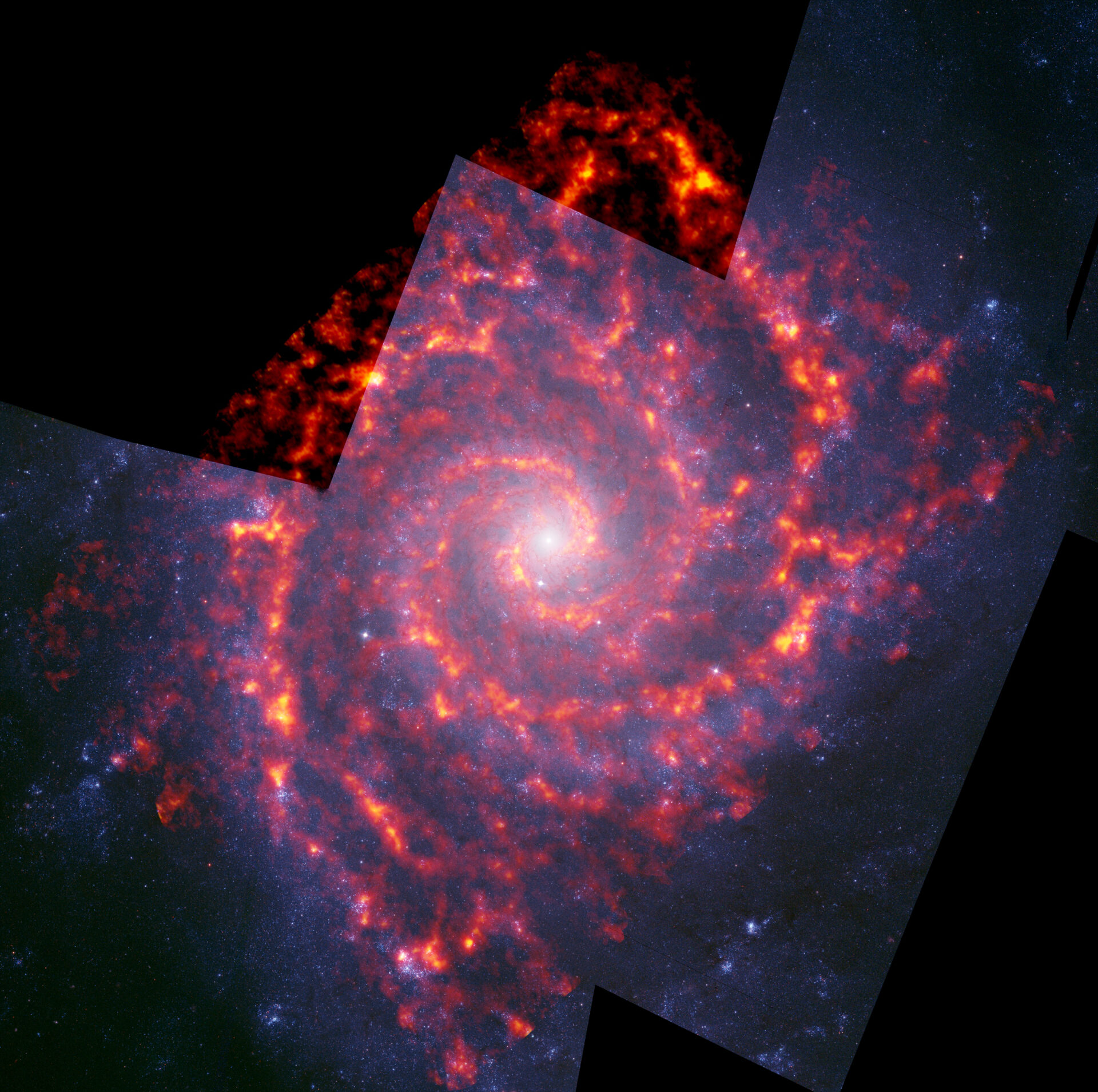
Fall deeper into the entrancing NGC 4303, a spiral galaxy located approximately 55 million light-years from Earth in the constellation Virgo. This image combines data taken at radio and visible wavelengths, and is helping astronomers understand how stars form in galaxies.

The hypnotising golden glow drawing you into the image corresponds to clouds of molecular gas, the raw material out of which stars form. The data was taken with the Atacama Large Millimeter/submillimeter Array (ALMA), co-operated by ESO in the Chilean Andes. The blueish regions in the background, on the other hand, were imaged with the Multi-Unit Spectroscopic Explorer (MUSE) instrument on ESO’s Very Large Telescope (VLT), also in Chile, and they reveal already formed stars. By comparing the distribution of gas and stars astronomers are able to study what triggers, enhances or hampers the birth of new stars.

This image is part of the Physics at High Angular resolution in Nearby GalaxieS (PHANGS) project, which is using ground-based and space telescopes to make detailed observations of nearby galaxies across the electromagnetic spectrum.


Source: ESO/potw


Saturday, July 17, 2021

Galactic fireworks: new ESO images reveal stunning features of nearby galaxies

Five galaxies as seen with MUSE on ESO’s VLT at several wavelengths of light

NGC 4303 as seen with MUSE on ESO’s VLT at several wavelengths of light 
 
NGC 4254 as seen with MUSE on ESO’s VLT at several wavelengths of light
 
NGC 3627 as seen with MUSE on ESO’s VLT at several wavelengths of light 
 
NGC 1087 as seen with MUSE on ESO’s VLT at several wavelengths of light 
 
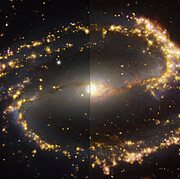
NGC 1300 as seen with MUSE on ESO’s VLT at several wavelengths of light 
 
NGC 4303 as seen with the VLT and ALMA at several wavelengths of light 
 
NGC 4254 as seen with the VLT and ALMA at several wavelengths of light
 
NGC 3627 as seen with the VLT and ALMA at several wavelengths of light
 
NGC 1087 as seen with the VLT and ALMA at several wavelengths of light 
 
NGC 1300 as seen with the VLT and ALMA at several wavelengths of light


Videos

Cosmic fireworks reveal newborn stars (ESOcast Light 239)
Cosmic fireworks reveal newborn stars (ESOcast Light 239) 
 
Multiple views of the galaxy NGC 4303 as seen with the VLT and ALMA (with annotations)
Multiple views of the galaxy NGC 4303 as seen with the VLT and ALMA (with annotations) 
 
Multiple views of the galaxy NGC 4254 as seen with the VLT and ALMA
Multiple views of the galaxy NGC 4254 as seen with the VLT and ALMA 
 
Multiple views of the galaxy NGC 3627 as seen with the VLT and ALMA
 
Multiple views of the galaxy NGC 1087 as seen with the VLT and ALMA
Multiple views of the galaxy NGC 1087 as seen with the VLT and ALMA 
 
Multiple views of the galaxy NGC 1300 as seen with the VLT and ALMA
 
Multiple views of the galaxy NGC 4303 as seen with the VLT and ALMA
Multiple views of the galaxy NGC 4303 as seen with the VLT and ALMA 


Image Comparisons

Comparison of different views of the galaxy NGC 4303
 
Comparison of different views of the galaxy NGC 1300
 

A team of astronomers has released new observations of nearby galaxies that resemble colourful cosmic fireworks. The images, obtained with the European Southern Observatory’s Very Large Telescope (ESO’s VLT), show different components of the galaxies in distinct colours, allowing astronomers to pinpoint the locations of young stars and the gas they warm up around them. By combining these new observations with data from the Atacama Large Millimeter/submillimeter Array (ALMA), in which ESO is a partner, the team is helping shed new light on what triggers gas to form stars.

Astronomers know that stars are born in clouds of gas, but what sets off star formation, and how galaxies as a whole play into it, remains a mystery. To understand this process, a team of researchers has observed various nearby galaxies with powerful telescopes on the ground and in space, scanning the different galactic regions involved in stellar births.

“For the first time we are resolving individual units of star formation over a wide range of locations and environments in a sample that well represents the different types of galaxies,” says Eric Emsellem, an astronomer at ESO in Germany and lead of the VLT-based observations conducted as part of the Physics at High Angular resolution in Nearby GalaxieS (PHANGS) project. “We can directly observe the gas that gives birth to stars, we see the young stars themselves, and we witness their evolution through various phases.” 

Emsellem, who is also affiliated with the University of Lyon, France, and his team have now released their latest set of galactic scans, taken with the Multi-Unit Spectroscopic Explorer (MUSE) instrument on ESO’s VLT in the Atacama Desert in Chile. They used MUSE to trace newborn stars and the warm gas around them, which is illuminated and heated up by the stars and acts as a smoking gun of ongoing star formation.

The new MUSE images are now being combined with observations of the same galaxies taken with ALMA and released earlier this year. ALMA, which is also located in Chile, is especially well suited to mapping cold gas clouds — the parts of galaxies that provide the raw material out of which stars form.

By combining MUSE and ALMA images astronomers can examine the galactic regions where star formation is happening, compared to where it is expected to happen, so as to better understand what triggers, boosts or holds back the birth of new stars. The resulting images are stunning, offering a spectacularly colourful insight into stellar nurseries in our neighbouring galaxies.

“There are many mysteries we want to unravel,” says Kathryn Kreckel from the University of Heidelberg in Germany and PHANGS team member. “Are stars more often born in specific regions of their host galaxies — and, if so, why? And after stars are born how does their evolution influence the formation of new generations of stars?”

Astronomers will now be able to answer these questions thanks to the wealth of MUSE and ALMA data the PHANGS team have obtained. MUSE collects spectra — the “bar codes” astronomers scan to unveil the properties and nature of cosmic objects — at every single location within its field of view, thus providing much richer information than traditional instruments. For the PHANGS project, MUSE observed 30 000 nebulae of warm gas and collected about 15 million spectra of different galactic regions. The ALMA observations, on the other hand, allowed astronomers to map around 100 000 cold-gas regions across 90 nearby galaxies, producing an unprecedentedly sharp atlas of stellar nurseries in the close Universe.

In addition to ALMA and MUSE, the PHANGS project also features observations from the NASA/ESA Hubble Space Telescope. The various observatories were selected to allow the team to scan our galactic neighbours at different wavelengths (visible, near-infrared and radio), with each wavelength range unveiling distinct parts of the observed galaxies. “Their combination allows us to probe the various stages of stellar birth — from the formation of the stellar nurseries to the onset of star formation itself and the final destruction of the nurseries by the newly born stars — in more detail than is possible with individual observations,” says PHANGS team member Francesco Belfiore from INAF-Arcetri in Florence, Italy. "PHANGS is the first time we have been able to assemble such a complete view, taking images sharp enough to see the individual clouds, stars, and nebulae that signify forming stars."

The work carried out by the PHANGS project will be further honed by upcoming telescopes and instruments, such as NASA’s James Webb Space Telescope. The data obtained in this way will lay further groundwork for observations with ESO’s future Extremely Large Telescope (ELT), which will start operating later this decade and will enable an even more detailed look at the structures of stellar nurseries.

“As amazing as PHANGS is, the resolution of the maps that we produce is just sufficient to identify and separate individual star-forming clouds, but not good enough to see what’s happening inside them in detail,” pointed out Eva Schinnerer, a research group leader at the Max Planck Institute for Astronomy in Germany and principal investigator of the PHANGS project, under which the new observations were conducted. “New observational efforts by our team and others are pushing the boundary in this direction, so we have decades of exciting discoveries ahead of us.”


More Information 

The international PHANGS team is composed of over 90 scientists ranging from Master students to retirees working at 30 institutions across four continents. The MUSE data reduction working group within PHANGS is being led by Eric Emsellem (European Southern Observatory, Garching, Germany and Centre de Recherche Astrophysique de Lyon, Université de Lyon, ENS de Lyon, Saint-Genis Laval, France) and includes Francesco Belfiore (INAF Osservatorio Astrofisico di Arcetri, Florence, Italy), Guillermo Blanc (Carnegie Observatories, Pasadena, US), Enrico Congiu (Universidad de Chile, Santiago, Chile and Las Campanas Observatory, Carnegie Institution for Science, Atacama Region, Chile), Brent Groves (The University of Western Australia, Perth, Australia), I-Ting Ho (Max Planck Institute for Astronomy, Heidelberg, Germany [MPIA]), Kathryn Kreckel (Heidelberg University, Heidelberg, Germany), Rebecca McElroy (Sydney Institute for Astronomy, Sydney, Australia), Ismael Pessa (MPIA), Patricia Sanchez-Blazquez (Complutense University of Madrid, Madrid, Spain), Francesco Santoro (MPIA), Fabian Scheuermann (Heidelberg University, Heidelberg, Germany) and Eva Schinnerer (MPIA).

Go to the ESO public image archive to see a sample of PHANGS images.

ESO is the foremost intergovernmental astronomy organisation in Europe and the world’s most productive ground-based astronomical observatory by far. It has 16 Member States: Austria, Belgium, the Czech Republic, Denmark, France, Finland, Germany, Ireland, Italy, the Netherlands, Poland, Portugal, Spain, Sweden, Switzerland and the United Kingdom, along with the host state of Chile and with Australia as a Strategic Partner. ESO carries out an ambitious programme focused on the design, construction and operation of powerful ground-based observing facilities enabling astronomers to make important scientific discoveries. ESO also plays a leading role in promoting and organising cooperation in astronomical research. ESO operates three unique world-class observing sites in Chile: La Silla, Paranal and Chajnantor. At Paranal, ESO operates the Very Large Telescope and its world-leading Very Large Telescope Interferometer as well as two survey telescopes, VISTA working in the infrared and the visible-light VLT Survey Telescope. Also at Paranal ESO will host and operate the Cherenkov Telescope Array South, the world’s largest and most sensitive gamma-ray observatory. ESO is also a major partner in two facilities on Chajnantor, APEX and ALMA, the largest astronomical project in existence. And on Cerro Armazones, close to Paranal, ESO is building the 39-metre Extremely Large Telescope, the ELT, which will become “the world’s biggest eye on the sky”.


Links


Contacts 

Eric Emsellem
European Southern Observatory
Garching bei München, Germany
Tel: +49 89 3200 6914
Email:
eric.emsellem@eso.org

Eva Schinnerer
Max Planck Institute for Astronomy
Heidelberg, Germany
Tel: +49 6221 528 294
Email:
schinner@mpia.de

Kathryn Kreckel
Astronomisches Recheninstitut, Zentrum für Astronomie, Universität Heidelberg
Heidelberg, Germany
Email:
kathryn.kreckel@uni-heidelberg.de

Francesco Belfiore
INAF Osservatorio Astrofisico di Arcetri
Florence, Italy
Email:
francesco.belfiore@inaf.it

Bárbara Ferreira
ESO Media Manager
Garching bei München, Germany
Tel: +49 89 3200 6670
Cell: +49 151 241 664 00
Email:
press@eso.org

 Source: ESO/News


Monday, June 15, 2020

New Method to Study Barred Spiral Galaxies

(Upper Left) The distribution of stars (psudocolor) and gas (contour lines) for two barred spiral galaxies in this study, NGC 2903 and NGC 4303. (Lower Left) The velocity of the gas in the galaxies. Blue indicates motion towards the viewer; red indicates motion away from the viewer. (Right) The Nobeyama 45-m Radio Telescope used for the COMING (CO Multi-line Imaging of Nearby Galaxies) survey.  Credit: Upper Left psudocolor images: 2MASS J-band, Jarrett et al. 2003, contour and Lower Left images: COMING project; Right: Dragan Salak.  Original size (1.2MB)

Analysis of gas motion in 20 nearby spiral galaxies has revealed a clear difference between those with bars and those without bars. This suggests that already available data on gas motion can be used to study bars in spiral galaxies, even in the absence of high-resolution imaging data.

In spiral galaxies, a large disk of stars and gas rotates around a central bulge. Spiral galaxies take their name from bright swirls (spiral arms) in the disk where stars are more densely concentrated. Many different types of spirals have been observed, including some with straight sections known as bars.

But a galactic disk is not a solid object. Different parts of the disk rotate at different speeds, similar to the clouds in a typhoon or soap suds spinning around a drain. In fact, the motion in a galactic disk isn’t limited to pure circular rotation, parts moving radially towards or away from the center can also be observed.

To better understand motion within the disk, a team led by Dragan Salak (at that time an assistant professor at Kwansei Gakuin University and now a postdoctoral researcher at the University of Tsukuba) analyzed the gas motion in the disks for a sample of 20 nearby spiral galaxies, including 7 barred-spirals. They found a clear difference between the kinematics of barred and non-barred galaxies. Non-barred spiral galaxies show very little radial motion at all locations. In contrast, barred spirals have on average 1.5-2 times more radial motion than non-barred spirals out to the end of the bar, but beyond the end of the bar the motion is close to circular. This result matches theoretical models where the bar structure helps to channel gas towards the center of the galaxy. The team found that the radius where the motion towards the center stops is closely related to the length of the bar, ranging between 0.8 to 1.6 times the length. This suggests that using the gas motion as a proxy for the bar could allow researchers to use modest-resolution, wide-field velocity data which are more easily available than high-resolution image data. For example, this study used the COMING survey of gas properties in nearby galaxies from the Nobeyama 45-m Radio Telescope in Japan.

Then by correlating the properties of the bar with the properties of the host galaxy, the team found that bars in more massive galaxies tend to be larger and rotate slower. This agrees with simulations where more massive galaxies provide more material for the bars to grow, but the mass of the galaxy exerts a torque which slows the rotation of the bar.

These results appeared as Salak et al. “CO Multi-line Imaging of Nearby Galaxies (COMING). VII. Fourier Decomposition of Molecular Gas Velocity Fields and Bar Pattern Speed” in December 2019 in Publications of the Astronomical Society of Japan Special Issue: Nobeyama 45 m Telescope: Legacy Projects and Receiver FOREST.

Related Links


Wednesday, January 16, 2019

What 100,000 Star Factories in 74 Galaxies Tell Us about Star Formation across the Universe

 
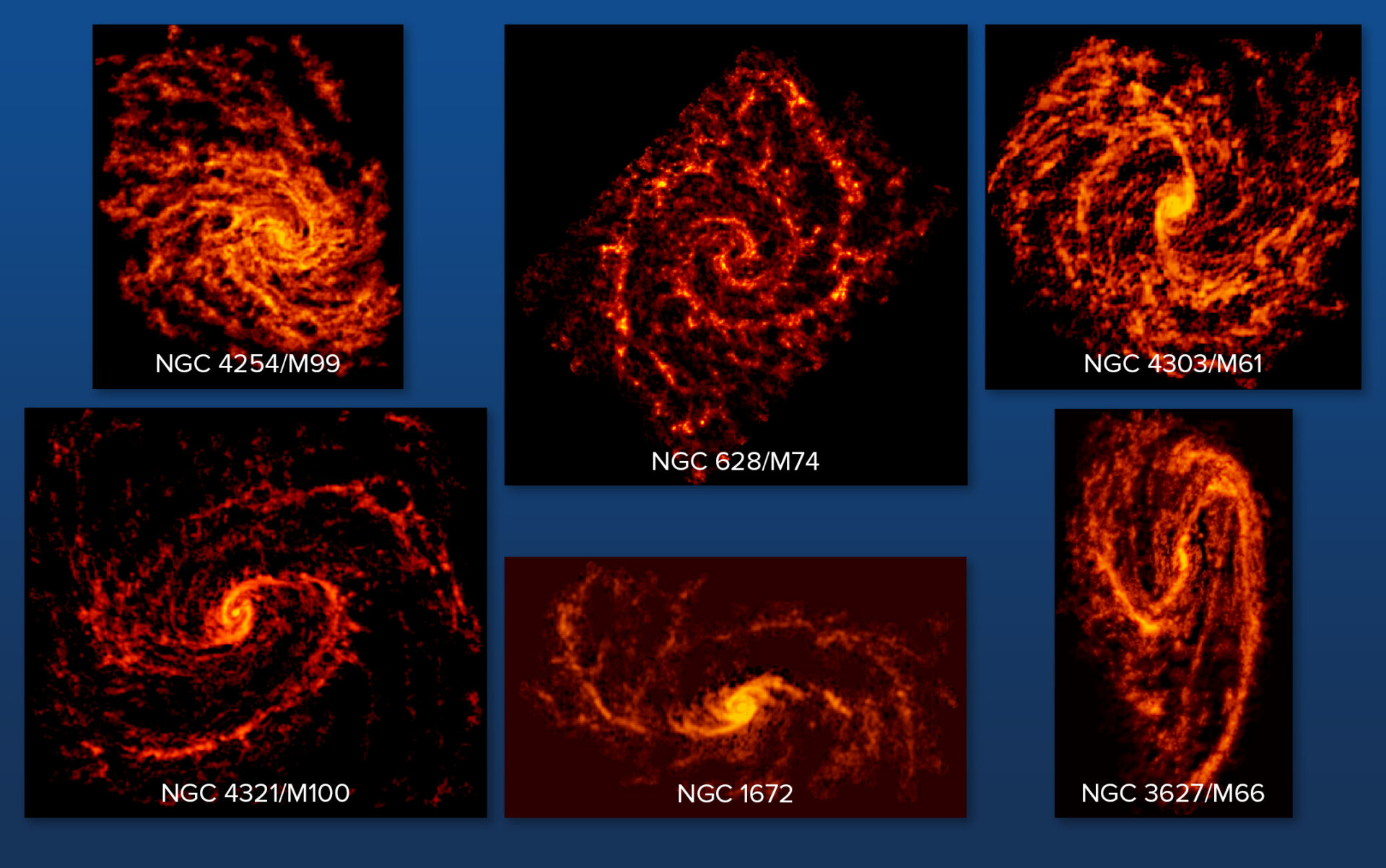
Six ALMA-imaged galaxies out of a collection of the 74. The images were taken as part of the PHANGS-ALMA survey to study the properties of star-forming clouds in disk galaxies. Credit: ALMA (ESO/NAOJ/NRAO); NRAO/AUI/NSF, B. Saxton. Hi-res image

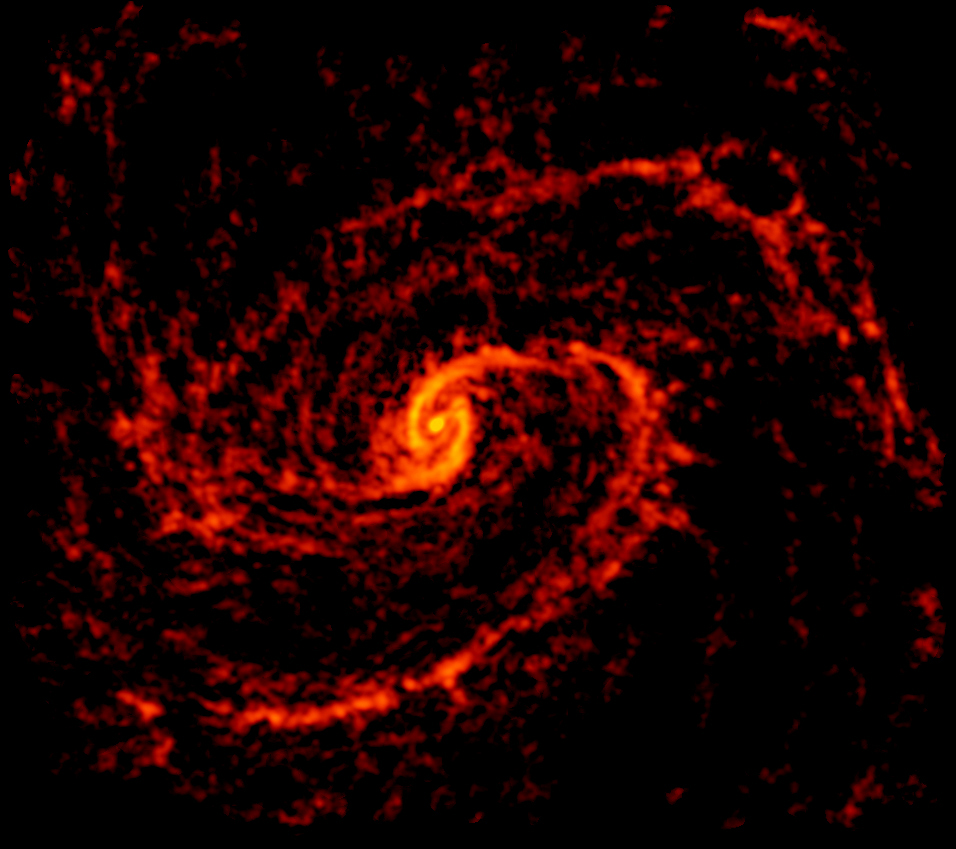
ALMA image of galaxy NGC 4321, also known as Messier 100, an intermediate spiral galaxy located about 55 million light-years from Earth in the constellation Coma Berenices. It is imaged as part of the PHANGS-ALMA survey to study the properties of star-forming clouds in disk galaxies. Credit: ALMA (ESO/NAOJ/NRAO); NRAO/AUI/NSF, B. Saxton. Hi-res image

ALMA image of NGC 628, also known as Messier 74, a spiral galaxy in the constellation Pisces, located approximately 32 million light-years from Earth. It is imaged as part of the PHANGS-ALMA survey to study the properties of star-forming clouds in disk galaxies. Credit: ALMA (ESO/NAOJ/NRAO); NRAO/AUI/NSF, B. Saxton. Hi-res image

Composite ALMA (orange) and Hubble (blue) image of NGC 628, also known as Messier 74, a spiral galaxy in the constellation Pisces, located approximately 32 million light-years from Earth. It is imaged as part of the PHANGS-ALMA survey to study the properties of star-forming clouds in disk galaxies. Credit: NRAO/AUI/NSF, B. Saxton: ALMA (ESO/NAOJ/NRAO); NASA/Hubble. Hi-res image


Galaxies come in a wide variety of shapes and sizes. Some of the most significant differences among galaxies, however, relate to where and how they form new stars. Compelling research to explain these differences has been elusive, but that is about to change. The Atacama Large Millimeter/submillimeter Array (ALMA) is conducting an unprecedented survey of nearby disk galaxies to study their stellar nurseries. With it, astronomers are beginning to unravel the complex and as-yet poorly understood relationship between star-forming clouds and their host galaxies.

A vast, new research project with ALMA, known as PHANGS-ALMA (Physics at High Angular Resolution in Nearby GalaxieS), delves into this question with far greater power and precision than ever before by measuring the demographics and characteristics of a staggering 100,000 individual stellar nurseries spread throughout 74 galaxies.

PHANGS-ALMA, an unprecedented and ongoing research campaign, has already amassed a total of 750 hours of observations and given astronomers a much clearer understanding of how the cycle of star formation changes, depending on the size, age, and internal dynamics of each individual galaxy. This campaign is ten- to one-hundred-times more powerful (depending on your parameters) than any prior survey of its kind.

“Some galaxies are furiously bursting with new stars while others have long ago used up most of their fuel for star formation. The origin of this diversity may very likely lie in the properties of the stellar nurseries themselves,” said Erik Rosolowsky, an astronomer at the University of Alberta in Canada and a co-Principal Investigator of the PHANGS-ALMA research team.

He presented initial findings of this research at the 233rd meeting of the American Astronomical Society being held this week in Seattle, Washington. Several papers based on this campaign have also been published in the Astrophysical Journal and the Astrophysical Journal Letters. 

“Previous observations with earlier generations of radio telescopes provide some crucial insights about the nature of cold, dense stellar nurseries,” Rosolowsky said. “These observations, however, lacked the sensitivity, fine-scale resolution, and power to study the entire breadth of stellar nurseries across the full population of local galaxies. This severely limited our ability to connect the behavior or properties of individual stellar nurseries to the properties of the galaxies that they live in.”

For decades, astronomers have speculated that there are fundamental differences in the way disk galaxies of various sizes convert hydrogen into new stars. Some astronomers theorize that larger, and generally older galaxies, are not as efficient at stellar production as their smaller cousins. The most logical explanation would be that these big galaxies have less efficient stellar nurseries. But testing this idea with observations has been difficult.

For the first time, ALMA is allowing astronomers to conduct the necessary wide-ranging census to determine how the large-scale properties (size, motion, etc.) of a galaxy influence the cycle of star formation on the scale of individual molecular clouds. These clouds are only about a few tens to a few hundreds of light-years across, which is phenomenally small on the scale of an entire galaxy, especially when seen from millions of light-years away.

“Stars form more efficiently in some galaxies than others, but the dearth of high-resolution, cloud-scale observations meant our theories were weakly tested, which is why these ALMA observations are so critical,” said Adam Leroy, an astronomer at The Ohio State University and co-Principal Investigator on the PHANGS-ALMA team.

Part of the mystery of star formation, the astronomers note, has to do with the interstellar medium – all the matter and energy that fills the space between the stars.

Astronomers understand that there is an ongoing feedback loop in and around the stellar nurseries. Within these clouds, pockets of dense gas collapse and form stars, which disrupts the interstellar medium.

“Indeed, comparing early PHANGS observations with the locations of newly formed stars shows that the newly formed stars quickly destroy their birth clouds,” said Rosolowsky. “The PHANGS team is studying how this disruption plays out in different types of galaxies, which may be a key factor in star-forming efficiency.”

For this research, ALMA is observing molecules of carbon monoxide (CO) from all relatively massive, generally face-on spiral galaxies visible from the Southern Hemisphere. Molecules of CO naturally emit the millimeter-wavelength light that ALMA can detect. They are particularly effective at highlighting the location of star-forming clouds.

“ALMA is a stunningly efficient machine to map carbon monoxide over large areas in nearby galaxies,” said Leroy. “It was able to perform this survey because of the combined power of the 12-meter dishes, which study fine-scale features, and the smaller, 7-meter dishes at the center of the array, which are sensitive to large-scale features, essentially filling in the gaps.”

A companion survey, PHANGS-MUSE, is using the Very Large Telescope to obtain optical imaging of the first 19 galaxies observed by ALMA. MUSE stands for the Multi-Unit Spectroscopic Explorer. Another survey, PHANGS-HST uses the Hubble Space Telescope to survey 38 of these galaxies to find their youngest stellar clusters. Together, these three surveys give a startlingly complete picture of how well galaxies form stars by probing cold molecular gas, its motion, the location of ionized gas (regions where stars are already forming), and the galaxies’ complete stellar populations.

“In astronomy, we have no ability to watch the cosmos change over time; the timescales simply dwarf human existence,” noted Rosolowsky. “We can’t watch one object forever, but we can observe hundreds of thousands of star-forming clouds in galaxies of different sizes and ages to infer how galactic evolution works. That is the real value of the PHANGS-ALMA campaign.”

“We also look at thousands to tens of thousands of star-forming regions within each galaxy, catching them across their life cycle. This lets us build a picture of the birth and death of stellar nurseries across galaxies, something almost impossible before ALMA,” added Leroy.

So far, PHANGS-ALMA has studied about 100,000 Orion Nebula-like objects in the nearby universe. It is expected that the campaign will eventually observe around 300,000 star-forming regions.


Additional Information

These results are being published in a series of papers in the Astrophysical Journal and the Astrophysical Journal Letters. Already accepted and published:

“Cloud-scale Molecular Gas Properties in 15 Nearby Galaxies,” J. Sun, et al., 2018 June. 25, Astrophysical Journal [http://iopscience.iop.org/article/10.3847/1538-4357/aac326]

“Star Formation Efficiency per Free-fall Time in nearby Galaxies,” D. Utomo, et al., 2018 July 11, Astrophysical Journal Letters [http://iopscience.iop.org/article/10.3847/2041-8213/aacf8f/meta]

“A 50 pc Scale View of Star Formation Efficiency across NGC 628,” K. Kreckel, et al., 2018 August 14, Astrophysical Journal Letters [http://iopscience.iop.org/article/10.3847/2041-8213/aad77d]

The Atacama Large Millimeter/submillimeter Array (ALMA), an international astronomy facility, is a partnership of the European Southern Observatory (ESO), the U.S. National Science Foundation (NSF) and the National Institutes of Natural Sciences (NINS) of Japan in cooperation with the Republic of Chile. ALMA is funded by ESO on behalf of its Member States, by NSF in cooperation with the National Research Council of Canada (NRC) and the Ministry of Science and Technology (MOST) in Taiwan and by NINS in cooperation with the Academia Sinica (AS) in Taiwan and the Korea Astronomy and Space Science Institute (KASI).

ALMA construction and operations are led by ESO on behalf of its Member States; by the National Radio Astronomy Observatory (NRAO), managed by Associated Universities, Inc. (AUI), on behalf of North America; and by the National Astronomical Observatory of Japan (NAOJ) on behalf of East Asia. The Joint ALMA Observatory (JAO) provides the unified leadership and management of the construction, commissioning and operation of ALMA.


Contacts

Nicolás Lira
Education and Public Outreach Coordinator
Joint ALMA Observatory, Santiago - Chile
Phone: +56 2 2467 6519
Cell phone: +56 9 9445 7726
Email: nicolas.lira@alma.cl

Charles E. Blue
Public Information Officer
National Radio Astronomy Observatory Charlottesville, Virginia - USA
Phone: +1 434 296 0314
Cell phone: +1 202 236 6324
Email: cblue@nrao.edu

Calum Turner
ESO Assistant Public Information Officer
Garching bei München, Germany
Phone: +49 89 3200 6670
Email: calum.turner@eso.org

Masaaki Hiramatsu
Education and Public Outreach Officer, NAOJ Chile
Observatory
, Tokyo - Japan
Phone: +81 422 34 3630
Email: hiramatsu.masaaki@nao.ac.jp


Friday, May 02, 2014

A hungry starburst galaxy

Credit: ESA/Hubble & NASA
Acknowledgement: Det58

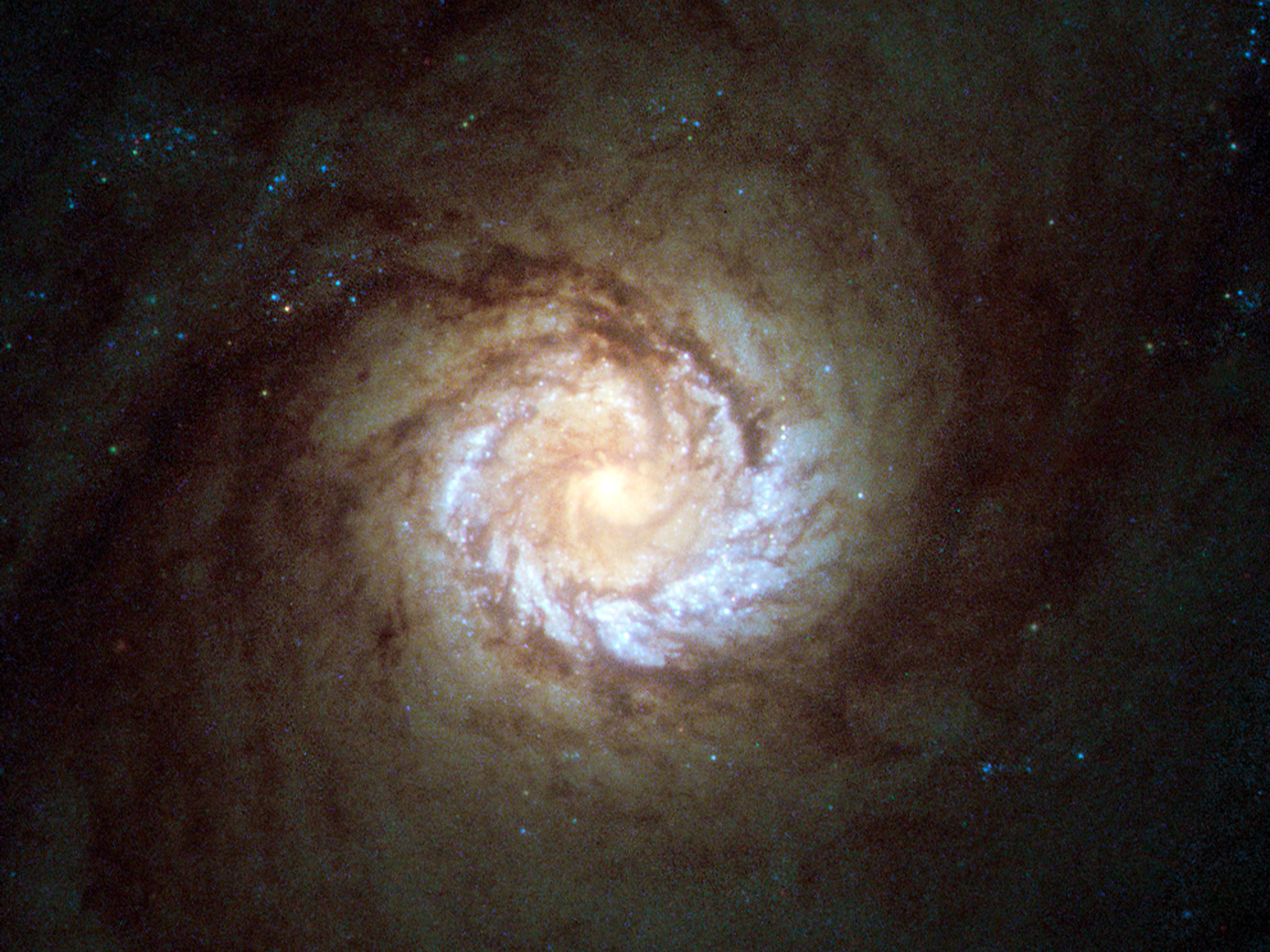
 This new Hubble picture is the sharpest ever image of the core of spiral galaxy Messier 61. Taken using the High Resolution Channel of Hubble's Advanced Camera for Surveys, the central part of the galaxy is shown in striking detail.

Also known as NGC 4303, this galaxy is roughly 100 000 light-years across, comparable in size to our galaxy, the Milky Way. Both Messier 61 and our home galaxy belong to a group of galaxies known as the Virgo Supercluster in the constellation of Virgo (The Virgin) — a group of galaxy clusters containing up to 2000 spiral and elliptical galaxies in total.

Messier 61 is a type of galaxy known as a starburst galaxy. Starburst galaxies experience an incredibly high rate of star formation, hungrily using up their reservoir of gas in a very short period of time (in astronomical terms). But this is not the only activity going on within the galaxy; deep at its heart there is thought to be a supermassive black hole that is violently spewing out radiation.

Despite its inclusion in the Messier Catalogue, Messier 61 was actually discovered by Italian astronomer Barnabus Oriani in 1779. Charles Messier also noticed this galaxy on the very same day as Oriani, but mistook it for a passing comet — the comet of 1779.

A version of this image was submitted to the Hubble’s Hidden Treasures image processing competition by Flickr user Det58.


Tuesday, March 04, 2014

The Music of the Galaxies

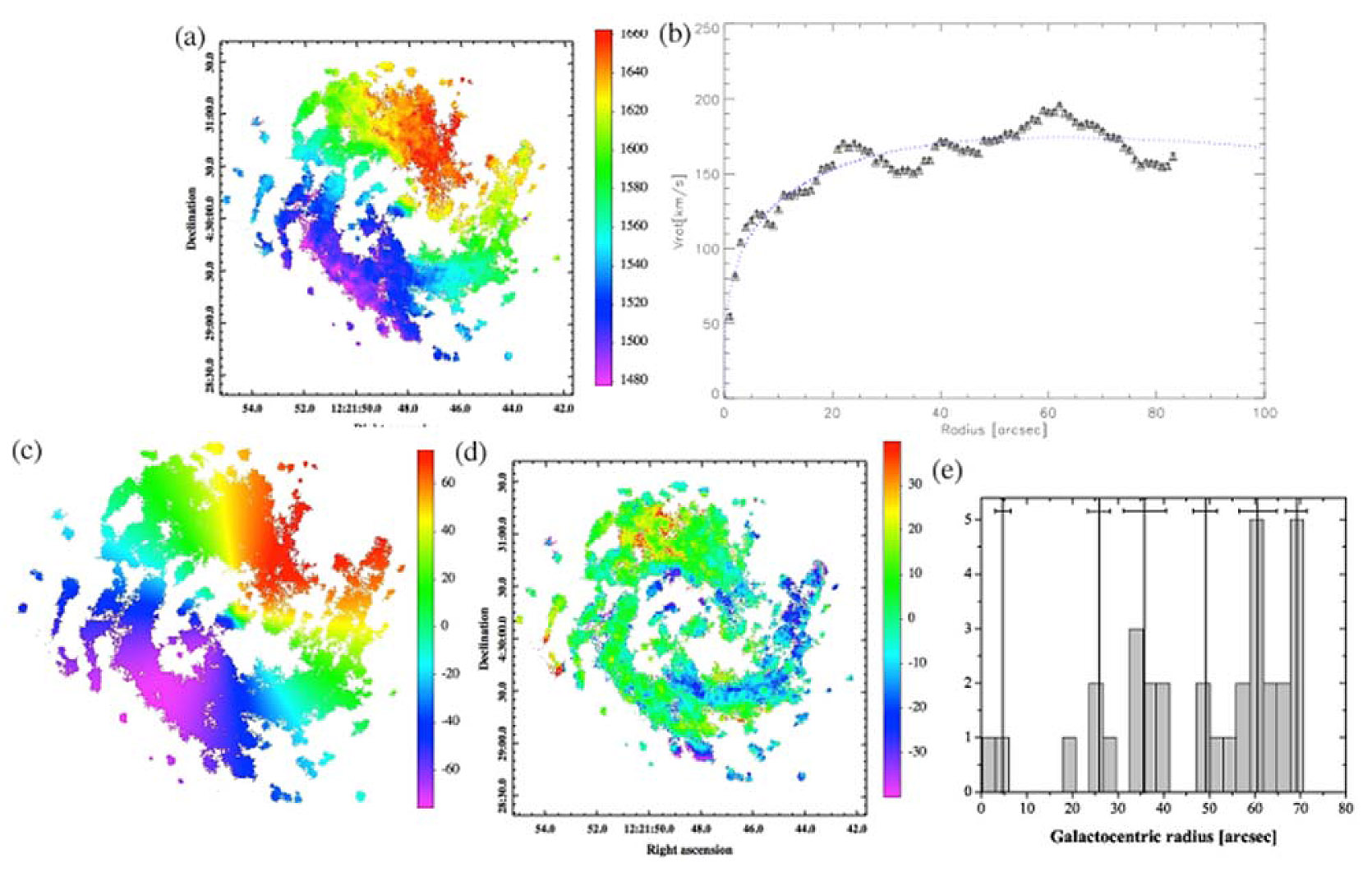
Panel a: Line-of-sight velocity field in Hydrogen-alpha for NGC 4303 (color table to the right gives values of the velocity in km/s). Panel b: Rotation curve extracted from the velocity map of panel a. Panel c: Velocity model map generated by rotating and projecting the rotation curve. Panel d: Residual velocity map derived by subtracting the model map (panel c) from the velocity map (panel a). Panel e: Radial distribution of phase reversals. Vertical solid lines mark the resonance radii and horizontal lines near the top indicate the uncertainty bar associated with each radius. [ JPEG | TIFF ]
  
Galaxy density waves are lines of enhanced density of stars which propagate through the disc of a galaxy in the form of a spiral. The theory of density waves offers an excellent framework for studying the spiral structure in galaxies as it provides quantitative relations between morphological and kinematic parameters and predicts phenomena, which can be compared with observations.

Using Fabry-Perot optical interferometers, including GHaFaS on the William Herschel Telescope, and observing a sample of over a hundred nearby galaxies, astronomers have discovered that there are more density waves than predicted by theory, and that there are relations between them forming a complex pattern of resonances, which orchestrate the “Music of the Galaxies”.

For any galaxy with spiral arms, current theory describes the existence of a density wave and its resonances. For these galaxies the theory predicted two sets of waves, one in the inner part of the galaxy containing the bar, and the other in the outer part containing the spiral arms. In their study, however, the astronomers found to their surprise more than two circular zones of density waves in almost all the galaxies analysed. The most frequently found number was four, although the maximum was seven.

Some of the observable phenomena the theory predicts include the Inner Lindblad Resonance (ILR) and Outer Lindblad Resonance (OLR), and the co-rotation radius, a key parameter which is defined as the radial position where the angular frequency of the gravitational perturbation propagating in the disc, usually called the pattern speed, is equal to the angular speed of the matter which is following circular orbits. Astronomers developed a new method, the Phase-Reversal Method, to determine the resonance radii of a disc galaxy.

The prime material for the method is the 2D residual, or non-circular, velocity field, which is obtained by subtracting off the rotation curve model from the initial velocity map, which is derived from the data cube. They then look for the radii in the galactic plane at which these residual velocities change their phase along the radial direction, from inflow to outflow, or vice-versa. A plot, against galactocentric radius, of the number of pixels across which the phase changes occurs, shows a set of well defined peaks which give the resonance radii. Source: Isaac Newton Group of Telescopes

More information:
  • "IAC astronomers discover 'The Music of the Galaxies'". IAC Press Release, 18th December 2013.
  • GHaFaS web site.
  • Font, J., Beckman, J. E., Querejeta, M., Epinat, E., James, P. A., Blasco-Herrera, J., Erroz-Ferrer, S. and Pérez, I., 2014, “Interlocking resonance pattern in galaxy disks”, ApJS, 210, 2. Paper.
  • Font, J., Beckman, J.E., Epinat, B., Fathi, K., Gutiérrez, L., Hernández, O., 2011, “Resonant Structure in the Disks of Spiral Galaxies, Using Phase Reversals in Streaming Motions from Two-dimensional H-alpha Fabry-Perot Spectroscopy”, ApJ, 741, L14. Paper. 
 
Contact: Javier Méndez  (Public Relations Officer)


Friday, June 21, 2013

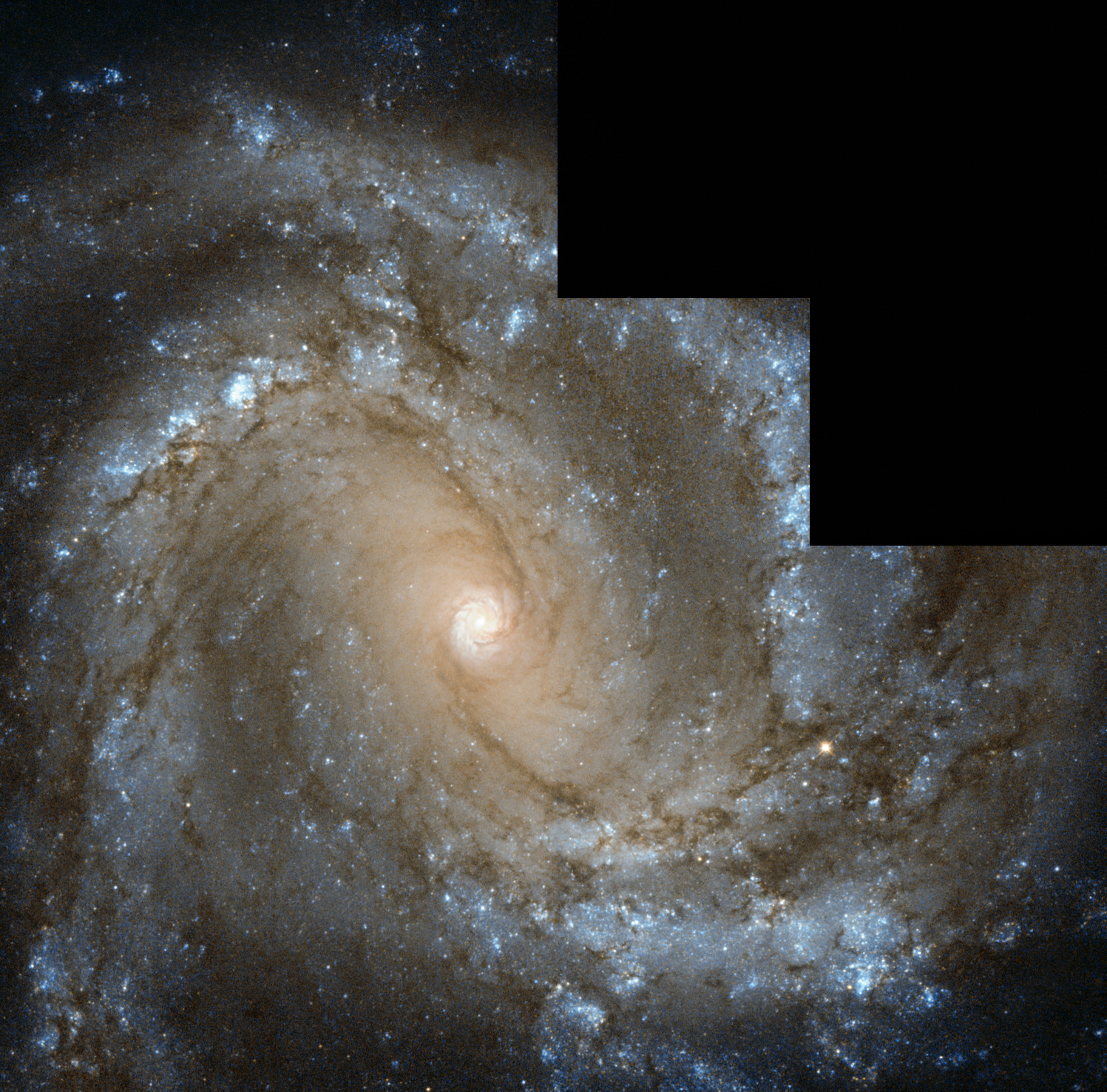
Messier 61 looks straight into the camera

Credit: ESA/Hubble & NASA
Acknowledgements: G. Chapdelaine, L. Limatola, and R. Gendler. 

The NASA/ESA Hubble Space Telescope has captured this image of nearby spiral galaxy Messier 61, also known as NGC 4303. The galaxy, located only 55 million light-years away from Earth, is roughly the size of the Milky Way, with a diameter of around 100 000 light-years. The galaxy is notable for one particular reason — six supernovae have been observed within Messier 61, a total that places it in the top handful of galaxies alongside Messier 83, also with six, and NGC 6946, with a grand total of nine observed supernovae.

In this Hubble image the galaxy is seen face-on as if posing for a photograph, allowing us to study its structure closely. The spiral arms can be seen in stunning detail, swirling inwards to the very centre of the galaxy, where they form a smaller, intensely bright spiral. In the outer regions, these vast arms are sprinkled with bright blue regions where new stars are being formed from hot, dense clouds of gas.

Messier 61 is part of the Virgo Galaxy Cluster, a massive group of galaxies in the constellation of Virgo (the Virgin). Galaxy clusters, or groups of galaxies, are among the biggest structures in the Universe to be held together by gravity alone. The Virgo Cluster contains more than 1300 galaxies and forms the central region of the Local Supercluster, an even bigger gathering of galaxies.

The image was taken using data from Hubble’s Wide Field Camera 2. Different versions of this image were submitted to the Hubble’s Hidden Treasures image processing competition by contestants Gilles Chapdelaine, Luca Limatola, and Robert Gendler.

Links