Thursday, March 16, 2023

Update on JWST Observations of Galaxy Cluster SMACS 0723


The first image from JWST, a portion of which is shown here, offers a detailed view of the galaxy cluster SMACS 0723. Credit: NASA, ESA, CSA, and STScI

In the months since the release of the first JWST image of the galaxy cluster SMACS J0723.3–7327 (SMACS 0723), astronomers have studied the image from every possible angle. Today’s post takes a look at five research articles that have advanced our understanding of galaxies within the cluster and beyond.


Top: Mass distribution derived by Mahler and collaborators. The magenta lines are mass contours and the white lines are X-ray surface brightness contours. Bottom: Mass distribution derived by Pascale and collaborators. The black lines show the surface mass density distribution. Note that there is a difference in scale and orientation between the two maps. Credit: Adapted from Mahler et al. 2023; Pascale et al. 2022


How to Weigh a Cluster

SMACS 0723 is a galaxy cluster located four billion light-years away. It gets its name from the Southern MAssive Cluster Survey (SMACS), in which the Hubble Space Telescope observed 124 galaxy clusters that are bright at X-ray wavelengths. In addition to the galaxies bound to the cluster, observations of SMACS 0723 contain images of galaxies far more distant. This is because SMACS 0723 is so massive that it warps spacetime, causing photons from galaxies billions of light-years away to curve around the foreground galaxies and into our field of view. As a result, we see stretched-out, wiggly, or multiple images of distant galaxies.
 
Researchers can use these wiggly galaxies to reconstruct a map of SMACS 0723’s mass distribution. Understanding how a cluster’s mass is distributed is important because it can tell us about the underlying distribution of dark matter within the cluster and how the cluster has evolved over time. As is often the case when exciting new data are released, several teams worked in parallel to map SMACS 0723’s mass distribution using different techniques. Two articles published in AAS journals detail efforts by teams led by Massimo Pascale (University of California, Berkeley) and Guillaume Mahler (Durham University) to use JWST’s superior capabilities to improve upon the existing mass map based on Hubble data.

In previous observations of the cluster, astronomers picked out five lensed background galaxies, but JWST’s impressive capabilities allowed the teams to pick out many more; at 6.5 meters in diameter, JWST is already a massive space telescope, but as Pascale and coauthors noted, pointing it toward a galaxy cluster that bends the light from more distant sources effectively creates a telescope with a diameter of 20–30 meters!

Pascale’s and Mahler’s teams used different computer algorithms to analyze the lensed galaxies newly identified in the JWST images, and both teams achieved a large increase in the precision of their mass maps compared to those based on Hubble data. Both teams’ maps show evidence of a past disturbance in the galaxy cluster, such as gravitational interactions or mergers between galaxies.


Metallicity versus stellar mass for galaxies in the local universe (light blue circles) and at high redshift. Values from this work are shown with stars, while other researchers’ results are shown with triangles, diamonds, pentagons, and squares. Credit: Arellano-Córdova et al. 2022

A Trio of Distant Galaxies

Karla Arellano-Córdova (The University of Texas at Austin) and collaborators took advantage of SMACS 0723’s lensing ability to study three galaxies with redshift, z, between 7.6 and 8.5, corresponding to when the universe was about 600–700 million years old. Using JWST’s Near-Infrared Spectrograph (NIRSpec), the team identified emission lines in the spectra of these distant galaxies. By measuring the strength of several prominent emission lines and the ratios of their strengths relative to one another, Arellano-Córdova’s team determined the properties of the gas in each galaxy, including the abundance of elements like carbon, oxygen, neon, and potentially iron. Notably, the team measured the neon-to-oxygen abundance ratio for a galaxy at z > 7 for the first time, and they obtained the most distant carbon-to-oxygen ratio measurement ever.
 
By comparing the chemical abundances for the three high-redshift galaxies to those of nearby galaxies, the team gained a sense of how each element’s abundance has changed over time, which can inform us about how galactic stellar populations evolved early in the universe. While some of the abundances followed expected trends, others showed behavior that will require further inspection; a tentative detection of emission lines from iron atoms suggests that these galaxies might be rich in iron compared to oxygen, which the authors propose could be due to gaseous outflows. The authors emphasized that this is just the beginning of what JWST will accomplish in terms of investigating the chemical makeup of galaxies in the first billion years of the universe — we’ve cracked open a window into that time period, and future studies should open it wider still.

Location of the star clusters studied in this work within the larger SMACS 0723 field.
Credit: Faisst et al. 2022

Galaxy Cluster Globular Clusters

Myung Gyoon Lee (Seoul National University) and collaborators also went globular cluster–hunting in the SMACS 0723 images, using an algorithm to identify and characterize point sources throughout the galaxy cluster. By grouping point sources based on their color and brightness, the team identified those that are most likely to be globular clusters associated with the SMACS 0723 galaxy cluster.

Many of the sources appear to be linked to the brightest galaxy in the cluster, which lies near the cluster center. These star clusters are most concentrated near the bright central galaxy and become more scattered farther out, and similar concentrations are seen around other bright galaxies within the cluster.

In addition to tracing the distribution of galaxies in SMACS 0723, the candidate globular clusters also follow some of the intracluster structures, such as the distribution of diffuse intracluster light. This faint emission comes from stars that have been ejected from their home galaxy due to gravitational interactions between galaxies in the cluster. The team also compared the star cluster distribution to the dark matter distribution determined in other research articles, finding considerable similarities between the two distributions. These findings suggest that star clusters can be used to trace dark matter within galaxy clusters.

Citation

“Unscrambling the Lensed Galaxies in JWST Images behind SMACS 0723,” Massimo Pascale et al 2022 ApJL 938 L6. doi:10.3847/2041-8213/ac9316

 By


Wednesday, March 15, 2023

Hubble’s neighbourhood watch

A wide band of bluish light extends from the centre of the image to the right side. It is speckled with many tiny stars, and a few small, bright red bubbles of gas, identifying it as a galaxy. The background is black, and has small galaxies and stars spread around. Most are too small to distinguish, except for two oval-shaped galaxies, each having a hazy glow around a bright centre.Credit: ESA/Hubble & NASA, R. Tully

UGCA 307 hangs against an irregular backdrop of distant galaxies in this image from the NASA/ESA Hubble Space Telescope. The small galaxy consists of a diffuse band of stars containing red bubbles of gas that mark regions of recent star formation, and lies roughly 26 million light-years from Earth in the constellation Corvus. Appearing as just a small patch of stars, UGCA 307 is a diminutive dwarf galaxy without a defined structure — resembling nothing more than a hazy patch of passing cloud.

This image is part of a Hubble project to explore every known nearby galaxy, giving astronomers insights into our galactic neighbourhood. Before this set of observations, almost three quarters of nearby galaxies had been investigated by Hubble in enough detail to spot the brightest stars and build up an understanding of the stars populating each galaxy. This Hubble project set out to explore the remaining quarter of nearby galaxies by taking advantage of short gaps in Hubble’s observing schedule.

This crystal-clear image was captured by Hubble’s Advanced Camera for Surveys (ACS), which was installed on the telescope in 2002 during Servicing Mission 3B. Hubble’s vantage point in low Earth orbit means that it is above atmospheric turbulence, giving it a sharper view of the Universe. However, it is also close enough to Earth that astronauts could visit the telescope to repair and refurbish the telescope. In total, five Space Shuttle missions flew to Hubble and kept it at the forefront of astronomy by installing new instruments. The ACS replaced one of Hubble’s original instruments, the Faint Object Camera, which was built by ESA.


Tuesday, March 14, 2023

NASA’s Webb Telescope Captures Rarely Seen Prelude to Supernova

WR 124 (NIRCam and MIRI Composite Image)
Credit: Image: NASA, ESA, CSA, STScI, Webb ERO Production Team

WR 124 (MIRI Image)
Credit: Image: NASA, ESA, CSA, STScI, Webb ERO Production Team


The rare sight of a Wolf-Rayet star – among the most luminous, most massive, and most briefly-detectable stars known – was one of the first observations made by NASA’s James Webb Space Telescope in June 2022. Webb shows the star, WR 124, in unprecedented detail with its powerful infrared instruments. The star is 15,000 light-years away in the constellation Sagittarius.

Massive stars race through their lifecycles, and only some of them go through a brief Wolf-Rayet phase before going supernova, making Webb’s detailed observations of this rare phase valuable to astronomers. Wolf-Rayet stars are in the process of casting off their outer layers, resulting in their characteristic halos of gas and dust. The star WR 124 is 30 times the mass of the Sun and has shed 10 Suns’ worth of material—so far. As the ejected gas moves away from the star and cools, cosmic dust forms and glows in the infrared light detectable by Webb.

The origin of cosmic dust that can survive a supernova blast and contribute to the universe’s overall “dust budget” is of great interest to astronomers for multiple reasons. Dust is integral to the workings of the universe: It shelters forming stars, gathers together to help form planets, and serves as a platform for molecules to form and clump together—including the building blocks of life on Earth. Despite the many essential roles that dust plays, there is still more dust in the universe than astronomers’ current dust-formation theories can explain. The universe is operating with a dust budget surplus.

Webb opens up new possibilities for studying details in cosmic dust, which is best observed in infrared wavelengths of light. Webb’s Near-Infrared Camera (NIRCam) balances the brightness of WR 124’s stellar core and the knotty details in the fainter surrounding gas. The telescope’s Mid-Infrared Instrument (MIRI) reveals the clumpy structure of the gas and dust nebula of the ejected material now surrounding the star. Before Webb, dust-loving astronomers simply did not have enough detailed information to explore questions of dust production in environments like WR 124, and whether the dust grains were large and bountiful enough to survive the supernova and become a significant contribution to the overall dust budget. Now those questions can be investigated with real data.

Stars like WR 124 also serve as an analog to help astronomers understand a crucial period in the early history of the universe. Similar dying stars first seeded the young universe with heavy elements forged in their cores – elements that are now common in the current era, including on Earth.

Webb’s detailed image of WR 124 preserves forever a brief, turbulent time of transformation, and promises future discoveries that will reveal the long-shrouded mysteries of cosmic dust.

The James Webb Space Telescope is the world's premier space science observatory. Webb will solve mysteries in our solar system, look beyond to distant worlds around other stars, and probe the mysterious structures and origins of our universe and our place in it. Webb is an international program led by NASA with its partners, ESA (European Space Agency), and CSA (Canadian Space Agency).


About This Release

Credits:

Media Contact:

Leah Ramsay
Space Telescope Science Institute, Baltimore, Maryland
Christine Pulliam
Space Telescope Science Institute, Baltimore, Maryland

Permissions: Content Use Policy

Contact Us: Direct inquiries to the News Team.


Monday, March 13, 2023

Black hole accretion discs may dance around more slowly than previously thought

Corona around a spinning black hole

Simulation of a precessing corona and disc. The blue material is a cool, thin disc, while red represents the corona. The corona precesses around the black hole spin axis, marked in the image. The thin disc remains relatively unchanged throughout the simulation, though it plays an important role in setting the precession rate of the corona.

Black holes, resulting from the death of massive stars, are some of the most exotic and powerful objects in the Universe. Since even light cannot escape these objects, the quasi-periodic signals coming from the gas falling into the black hole serve as a probe to infer a great deal of information about the black hole and its surrounding environment. The most-commonly observed quasi-periodic signal is thought to originate from the wobbling of hot gas around the black hole, like a spinning top. One problem, though, is that inferred size of this (isolated) corona seemed to be inconsistent with estimations from other observables. With our recent, state-of-the-art computer simulations, involving a more realistic geometry of the accretion flow, we demonstrated for the first time, that the presence of a disc around the corona significantly slows down its precession, relieving much of the tension between this model and observations. These results thus have important implications for studies of black hole properties and how black hole systems form and evolve.

Accretion onto compact objects like black holes, neutron stars or white dwarfs is an important dynamical process that powers many astrophysical sources in the Universe by generating radiative energy from the gravitational potential energy of the accreting matter. Accretion flows are well studied in X-ray binaries (XRBs): close binary systems which usually have a main sequence or a supergiant star as a donor and a neutron star or black hole as an accretor. Matter transferred from the donor star carries certain angular momentum and due to the central gravity force, it gets confined to the orbital plane, forming disk-like structures around the compact object.


Time evolution of the cumulative precession angle of the inner, hot accretion flow around a black hole with spin parameter 0.9. The precession rate is given by the slope of these curves. The precession rate computed from our two-component accretion flow simulations (solid, green curve) is significantly lower than the estimated rate for an isolated torus, i.e., not surrounded by an outer, thin disk (dashed, yellow line). When we include the angular momentum flux terms, in addition to the Lense-Thirring torque term, we find remarkable agreement between the simulation results and the analytical estimate (dash-dotted, blue curve). © MPA

Long-term observations have shown that black hole X-ray binaries exhibit strong, aperiodic variability over a broad range of timescales: a few milliseconds to seconds. In addition, these systems also exhibit rapid variability in their X-ray light curves, which are termed quasi-periodic oscillations (QPOs); broadly classified into high-frequency (> 60 Hz) and low-frequency QPOs (< 30 Hz). Understanding the nature of these variabilities and the underlying physical processes helps us probe the nature of the compact object and its surroundings. Apart from the broad picture, very few definite properties are known regarding the origin of the observed variability. This is because the physics and geometry of accreting black holes are highly complex with turbulence, radiation, and 3D effects all coming into play.

Using advanced numerical techniques, we performed general relativistic, magneto-hydrodynamic simulations of a truncated disk with an inner, hot flow that is misaligned with the spin axis of the black hole. These simulations are the very first to investigate the effect of the outer, thin disk on the Lense-Thirring precession of the inner, hot accretion flow, and thus add much-needed realism to the usual simulations.

The key finding of our simulations is that the presence of an outer, thin disk decreases the precession rate of the inner torus by nearly 95 per cent. We show that the slowdown in the precession rate is caused by the exchange of the angular momentum between the outer thin and inner thick disks. With this effect, the model now requires a much smaller inner, precessing thick disk to be able to match the typically observed range of type-C QPO frequencies (0.1-10 Hz). Some recent observations have already suggested that the precessing flow needs to be smaller than the estimated size from the Lense-Thirring model for an isolated torus. Thus, our new results help relieve some of the remaining tensions between the model and observations.


Author:

Deepika Bollimpalli
Postdoc
tel:2396

deepika@mpa-garching.mpg.de

Original publication:

D A Bollimpalli, P C Fragile, W Kluźniak Effect of geometrically thin discs on precessing, thick flows: relevance to type-C QPOs MNRAS, Volume 520, Issue 1, March 2023, Pages L79–L84


Source | DOI
 

Saturday, March 11, 2023

Hubble spies a meandering spiral

A spiral galaxy. It is irregularly-shaped and its spiral arms are difficult to distinguish. The edges are faint and the core has a pale glow. It is dotted with small, wispy, pink regions where stars are forming. A few stars and small galaxies in warm colours are visible around it. Credit: ESA/Hubble & NASA, C. Kilpatrick

The irregular spiral galaxy NGC 5486 hangs against a background of dim, distant galaxies in this image from the NASA/ESA Hubble Space Telescope. The tenuous disc of the galaxy is threaded through with pink wisps of star formation, which stand out from the diffuse glow of the galaxy’s bright core. While this particular galaxy has indistinct, meandering spiral arms it lies close to the much larger Pinwheel Galaxy, one of the best known examples of ‘grand design’ spiral galaxies with prominent and well-defined spiral arms. In 2006 Hubble captured an image of the Pinwheel Galaxy which was — at the time — the largest and most detailed photo of a spiral galaxy ever taken with Hubble.

NGC 5486 lies 110 million light-years from Earth in the constellation Ursa Major. Constellations are not only patterns of bright stars, but also a system that astronomers use to divide the sky into regions. There are 88 of these regions, and each has an associated constellation depicting a mythological figure, an animal, or even an item of scientific equipment. This strange celestial menagerie contains everything from Ursa Major’s great bear to a toucan, a sea monster, a telescope, and even a painter's easel!

This observation comes from a selection of Hubble images exploring the detritus left behind by Type II supernovae. As massive stars reach the end of their lives they cast off huge amounts of gas and dust before ending their lives in titanic supernova explosions. NGC 5486 hosted a supernova in 2004, and astronomers used the keen vision of Hubble’s Advanced Camera for Surveys to explore the aftermath in the hopes of learning more about these explosive events.

Friday, March 10, 2023

Featured Image: Making the First Stars in Spinning Clouds


Simulation results showing the number density of gas particles for 16 simulations with different values of β, which increases as the rotation rate of the cloud increases. Notice that the scale of the images changes as β increases. Click for high-resolution version. Credit: Raghuvanshi and Dutta 2023

When the first stars in the universe formed, ending millions of years of darkness, what masses did they have? This question is more than a matter of idle curiosity: if any of the first stars formed with masses less than 0.8 solar mass, they would still exist today. In a recent research article, Shubham Raghuvanshi and Jayanta Dutta (both from the Harish-Chandra Research Institute in India) performed hydrodynamic modeling to test how the rotation of a primordial gas cloud affects the resulting masses of the first stars. The images above and to the right show the results of their simulations after 50 solar masses of gas had been collected by the newly forming protostars. Ultimately, Raghuvanshi and Dutta found that in the fastest-spinning clouds, 10–12% of young stars might be ejected before they can grow past 0.8 solar masses. This suggests that if early gas clouds spun fast enough, some of the most ancient stars might still exist in modern galaxies, waiting to be found. To learn more about how the team modeled the making of the first stars, be sure to check out the full article linked below!

Citation:

“Simulating the Collapse of Rotating Primordial Gas Clouds to Study the Possibility of the Survival of Population III Protostars,” Shubham P. Raghuvanshi and Jayanta Dutta 2023 ApJ 944 76. doi:10.3847/1538-4357/acac30

Thursday, March 09, 2023

3C 297: Chandra Helps Astronomers Discover a Surprisingly Lonely Galaxy

3C 297, Labeled
Credit: X-ray: NASA/CXC/Univ. of Torino/V. Missaglia et al.;
Optical: NASA/ESA/STScI & International Gemini Observatory/NOIRLab/NSF/AURA;
Infrared: NASA/ESA/STScI;
Radio: NRAO/AUI/NSF)


This image features a galaxy called 3C 297 that is lonelier than expected after it likely pulled in and absorbed its former companion galaxies, as described in our latest press release. The solo galaxy is located about 9.2 billion light-years from Earth and contains a quasar, a supermassive black hole pulling in gas at the center of the galaxy and driving powerful jets of matter seen in radio waves. This result made with NASA’s Chandra X-ray Observatory and the International Gemini Observatory may push the limits for how quickly astronomers expect galaxies to grow in the early universe.

In several regards, 3C 297 has the qualities of a galaxy cluster, a gigantic structure that contains hundreds or even thousands of individual galaxies. X-ray data from Chandra reveal large quantities of gas heated to millions of degrees — a signature feature of a galaxy cluster. Astronomers also found a jet from the quasar — seen by the Karl G. Jansky Very Large Array — that has been bent by interacting with its surroundings. Finally, Chandra data shows evidence that the other quasar jet has smashed into the gas around it, creating a “hotspot” of X-rays. These are typically characteristics of a galaxy cluster. Yet, data from the Gemini Observatory show there is only one galaxy in 3C 297. The nineteen galaxies that appear close to 3C 297 in a Gemini image are actually at much different distances.


3C 297, Labeled
(Credit: X-ray: NASA/CXC/Univ. of Torino/V. Missaglia et al.;
Optical: NASA/ESA/STScI & International Gemini Observatory/NOIRLab/NSF/AURA;
 Infrared: NASA/ESA/STScI;
Radio: NRAO/AUI/NSF)

In this new composite image, Chandra data is colored purple, VLA data is red and Gemini data is green. Visible light and infrared data from the Hubble Space Telescope (blue and orange respectively) have also been included. The lonely galaxy (3C 297) and the position of its supermassive black are identified in a labeled version of the image, along with the black hole’s jets, the X-ray hotspot and the hot gas. The field of view of this image is too small to show any of the 19 galaxies that are not at the same distance as 3C 297.

One proposal for what happened to the missing galaxies is that the gravitational pull of the largest galaxy, combined with the interactions between them, caused the companion galaxies to fall and be assimilated by the alpha. The team considers 3C 297 is most likely a “fossil group” instead of a galaxy cluster, a stage of galactic evolution where one galaxy is pulling in and merging with others. If that is the case, 3C 297 represents the most distant fossil group ever found.

The authors cannot rule out the presence of dwarf galaxies around 3C 297, but their presence would still not explain the lack of larger galaxies like the Milky Way. Nearby examples are M87 in the Virgo Cluster, which has had large galactic companions for billions of years. However, 3C 297 will spend billions of years essentially alone.

The new study was published in the January 2023 issue of The Astrophysical Journal, available here. Earlier Chandra observations lasting only three hours showed hints of the hot gas seen in the new study, as reported by co-author Chiara Stuardi in a paper published in the April 2018 issue of The Astrophysical Journal Supplement Series, available here. Much deeper Chandra observations, however, were required to confirm it. The Chandra observations of 3C 297 were taken over a total time of 2.5 days in April and August of 2021 and 2022.

NASA's Marshall Space Flight Center manages the Chandra program. The Smithsonian Astrophysical Observatory's Chandra X-ray Center controls science operations from Cambridge, Massachusetts, and flight operations from Burlington, Massachusetts.


Visual Description:

This release features a composite image of a lonely galaxy containing a supermassive black hole, two jets, and an X-ray hotspot, all surrounded by hot gas. Visually, the scene resembles colorful, out-of-focus points of light in a dark room, clouded with pockets of purple mist. Given the complexity of the image, it is presented both with and without labels.

Much of the image features blurry blue, purple, and orange dots against a black background. But the focus of this release is on the solo galaxy at our righthand side of the image, known as 3C 297. Layered atop the dotted black background, the solo galaxy resembles a disk of orange haze with a bright white dot at the center. The white dot is the location of the supermassive black hole at the galaxy’s core. The black hole pulls gas inwards, and drives the powerful jets of matter.

Shooting from the orange haze toward our upper right, is a short, blurry, neon red line. This is a jet: a stream of particles blasting from the supermassive black hole inside the solo galaxy. At the end of the short red line is a second bright white dot, this one ringed in neon red. This is the X-ray hotspot, where matter from the jet has smashed into the purple gas cloud.

A second jet emerges from the bottom of the hazy orange disk, and gently curves toward our lower right. This jet is also neon red but is considerably less vibrant. It presents as a sparse dotted line, rather than a solid one. Interactions with its surroundings have caused the jet to bend.

All of these elements, the solo galaxy, black hole, jets, and hotspot, are surrounded by the purple gas cloud. X-ray data from Chandra suggests this gas is present in very large quantities and is heated to millions of degrees Fahrenheit.


Fast Facts for (3C 297):
 
Scale: Image is about 24 arcsec (670,000 light-years) across.
Category: Groups & Clusters of Galaxies, Normal Galaxies & Starburst Galaxies
Coordinates (J2000): RA 14h 17m 24.1s | Dec -4° 00´ 48.9"
Constellation: Virgo
Observation Dates: March 27, 2016; April 7, 8, 10, 11, 13 and 27, 2021; August 7 and 24, 2021; April 11, 2022
Observation Time: 35 hours (2 days 11 hours)
Obs. ID:
18103, 23829, 24352, 24353, 24355-24357, 25000, 25001, 25004, 25023
Instrument: ACIS
References: Missaglia, V, et al., 2023, ApJS, 264, 6
Color Code: X-ray: purple; Optical: blue (Hubble) & green (Gemini); Infrared: orange (Hubble); Radio: red
Distance Estimate: About 9.2 billion light-years


Wednesday, March 08, 2023

Astronomers find missing link for water in the Solar System

PR Image eso2302a
Water in the planet-forming disc around the star V883 Orionis (artist’s impression)

PR Image eso2302b
ALMA images of the planet-forming disc around the star V883 Orionis

PR Image eso2302c
The planet-forming disc around the star V883 Orionis (artist’s impression)

PR Image eso2302d
From gas clouds to discs to planetary systems (artist’s impression)

PR Image eso2302e
The star V883 Orionis in the constellation of Orion


Videos

The Missing Link for Water in the Solar System (ESOcast 258 Light)
The Missing Link for Water in the Solar System (ESOcast 258 Light) 
Zooming on the protoplanetary disc around V883 Orionis


Using the Atacama Large Millimeter/submillimeter Array (ALMA), astronomers have detected gaseous water in the planet-forming disc around the star V883 Orionis. This water carries a chemical signature that explains the journey of water from star-forming gas clouds to planets, and supports the idea that water on Earth is even older than our Sun.

“We can now trace the origins of water in our Solar System to before the formation of the Sun,” says John J. Tobin, an astronomer at the National Radio Astronomy Observatory, USA and lead author of the study published today in Nature.

This discovery was made by studying the composition of water in V883 Orionis, a planet-forming disc about 1300 light-years away from Earth. When a cloud of gas and dust collapses it forms a star at its centre. Around the star, material from the cloud also forms a disc. Over the course of a few million years, the matter in the disc clumps together to form comets, asteroids, and eventually planets. Tobin and his team used ALMA, in which the European Southern Observatory (ESO) is a partner, to measure chemical signatures of the water and its path from the star-forming cloud to planets.

Water usually consists of one oxygen atom and two hydrogen atoms. Tobin’s team studied a slightly heavier version of water where one of the hydrogen atoms is replaced with deuterium — a heavy isotope of hydrogen. Because simple and heavy water form under different conditions, their ratio can be used to trace when and where the water was formed. For instance, this ratio in some Solar System comets has been shown to be similar to that in water on Earth, suggesting that comets might have delivered water to Earth.

The journey of water from clouds to young stars, and then later from comets to planets has previously been observed, but until now the link between the young stars and comets was missing. “V883 Orionis is the missing link in this case,” says Tobin. “The composition of the water in the disc is very similar to that of comets in our own Solar System. This is confirmation of the idea that the water in planetary systems formed billions of years ago, before the Sun, in interstellar space, and has been inherited by both comets and Earth, relatively unchanged.”

But observing the water turned out to be tricky. “Most of the water in planet-forming discs is frozen out as ice, so it’s usually hidden from our view,'' says co-author Margot Leemker, a PhD student at Leiden Observatory in the Netherlands. Gaseous water can be detected thanks to the radiation emitted by molecules as they spin and vibrate, but this is more complicated when the water is frozen, where the motion of molecules is more constrained. Gaseous water can be found towards the centre of the discs, close to the star, where it’s warmer. However, these close-in regions are hidden by the dust disc itself, and are also too small to be imaged with our telescopes.

Fortunately, the V883 Orionis disc was shown in a recent study to be unusually hot. A dramatic outburst of energy from the star heats the disc, “up to a temperature where water is no longer in the form of ice, but gas, enabling us to detect it,” says Tobin.

The team used ALMA, an array of radio telescopes in northern Chile, to observe the gaseous water in V883 Orionis. Thanks to its sensitivity and ability to discern small details they were able to both detect the water and determine its composition, as well as map its distribution within the disc. From the observations, they found this disc contains at least 1200 times the amount of water in all Earth’s oceans.

In the future, they hope to use ESO’s upcoming Extremely Large Telescope and its first-generation instrument METIS. This mid-infrared instrument will be able to resolve the gas-phase of water in these types of discs, strengthening the link of water’s path all the way from star-forming clouds to solar systems. ”This will give us a much more complete view of the ice and gas in planet-forming discs,” concludes Leemker.


More Information

This research was presented in a paper “Deuterium-enriched water ties planet-forming disks to comets and protostars” to appear in Nature (doi: 10.1038/s41586-022-05676-z).

The team is composed of John J. Tobin (National Radio Astronomy Observatory, USA), Merel L. R. van’t Hoff (Department of Astronomy, University of Michigan, USA), Margot Leemker (Leiden Observatory, Leiden University, the Netherlands [Leiden]) , Ewine F. van Dishoeck (Leiden), Teresa Paneque-Carreño (Leiden; European Southern Observatory, Germany), Kenji Furuya (National Astronomical Observatory of Japan, Japan), Daniel Harsono (Institute of Astronomy, National Tsing Hua University, Taiwan), Magnus V. Persson (Department of Space, Earth and Environment, Chalmers University of Technology, Onsala Space Observatory, Sweden), L. Ilsedore Cleeves (Department of Astronomy, University of Virginia, USA), Patrick D. Sheehan (Center for Interdisciplinary Exploration and Research in Astronomy, Northwestern University, USA) and Lucas Cieza (Núcleo de Astronomía, Facultad de Ingeniería, Millennium Nucleus on Young Exoplanets and their Moons, Universidad Diego Portales, Chile).

The European Southern Observatory (ESO) enables scientists worldwide to discover the secrets of the Universe for the benefit of all. We design, build and operate world-class observatories on the ground — which astronomers use to tackle exciting questions and spread the fascination of astronomy — and promote international collaboration in astronomy. Established as an intergovernmental organisation in 1962, today ESO is supported by 16 Member States (Austria, Belgium, the Czech Republic, Denmark, France, Finland, Germany, Ireland, Italy, the Netherlands, Poland, Portugal, Spain, Sweden, Switzerland and the United Kingdom), along with the host state of Chile and with Australia as a Strategic Partner. ESO’s headquarters and its visitor centre and planetarium, the ESO Supernova, are located close to Munich in Germany, while the Chilean Atacama Desert, a marvellous place with unique conditions to observe the sky, hosts our telescopes. ESO operates three observing sites: La Silla, Paranal and Chajnantor. At Paranal, ESO operates the Very Large Telescope and its Very Large Telescope Interferometer, as well as survey telescopes such as VISTA. Also at Paranal ESO will host and operate the Cherenkov Telescope Array South, the world’s largest and most sensitive gamma-ray observatory. Together with international partners, ESO operates ALMA on Chajnantor, a facility that observes the skies in the millimetre and submillimetre range. At Cerro Armazones, near Paranal, we are building “the world’s biggest eye on the sky” — ESO’s Extremely Large Telescope. From our offices in Santiago, Chile we support our operations in the country and engage with Chilean partners and society.


Links


Contacts:

John J. Tobin
National Radio Astronomy Observatory
Charlottesville, USA
Email:
jtobin@nrao.edu
Margot Leemker
Leiden Observatory
Leiden, the Netherlands
Email:
leemker@strw.leidenuniv.nl

Juan Carlos Muñoz Mateos
ESO Media Officer
Garching bei München, Germany
Tel: +49 89 3200 6176
Email:
press@eso.org

Source: ESO/News


Tuesday, March 07, 2023

Resurrected Supernova Provides Missing-Link


An image of the central region of M77 taken by the Hubble space telescope (left), in which the position of SN 2018ivc is marked. Right panels show the expanded view around SN 2018ivc based on the data taken by ALMA, at ~200 days (upper right) and ~ 1000 days (lower right), clearly showing that the rebrightening happened at about one year after the SN explosion. Credit: (left) Based on observations made with the NASA/ESA Hubble Space Telescope, and obtained from the Hubble Legacy Archive, which is a collaboration between the Space Telescope Science Institute (STScI/NASA), the Space Telescope European Coordinating Facility (ST-ECF/ESA) and the Canadian Astronomy Data Centre (CADC/NRC/CSA). (right) ALMA (ESO/NAOJ/NRAO), K. Maeda et al. Original Size (4.9MB)

Astronomers have discovered a supernova exhibiting unprecedented rebrightening at millimeter wavelengths, providing an intermediate case between two types of supernovae: those of solitary stars and those in close-binary systems.

Many massive stars end their lives in a catastrophic explosion known as a supernova (SN). Supernovae increase rapidly in brightness, and then fade over the course of several months.

Astronomers have long known that the presence or absence of a close binary companion can affect the evolution of massive stars. In a close binary system, gravitational interactions with the binary companion will strip large amounts of material from the SN progenitor long before the final explosion. In these cases, the progenitor will be quiet up until the time of the actual SN. On the other hand, in the case of an SN progenitor with no binary companion or a distant companion, leading up to the SN explosion the progenitor will keep most of its initial mass.

Of course smart alecs will ask, “What happens when the binary is not too close and not too distant?” Not just smart alecs, astronomers also wanted to know. The break came when an international research team, led by Keiichi Maeda (Professor at the Graduate School of Science, Kyoto University) and Tomonari Michiyama (ALMA Joint Postdoctoral Fellow at the Graduate School of Science, Osaka University), used ALMA (The Atacama Large Millimeter/submillimeter Array) to monitor a supernova known as SN 2018ivc as it dimmed for about 200 days after the initial explosion. The results showed that SN 2018ivc was an unusual object, so the team decided to check up on it again, at about 1000 days after the explosion. They found that the object was actually rebrightening, the first time this phenomenon had ever been observed in millimeter wavelength radiation.

Comparison to numerical modeling suggests that interaction with an intermediate-distance binary companion about 1500 years before the SN explosion created a large hollow shell of circumstellar medium. At 200 days after the SN, the ejecta flying out from the explosion had yet to reach the shell. Then sometime between 200 and 1000 days, the ejecta collided with the circumstellar medium.

These results appeared as K. Maeda et al. “Resurrection of Type IIL Supernova 2018ivc: Implications for a Binary Evolution Sequence Connecting Hydrogen-rich and Hydrogen-poor Progenitors” in The Astrophysical Journal Letters on March 1, 2023.

Related Link


Monday, March 06, 2023

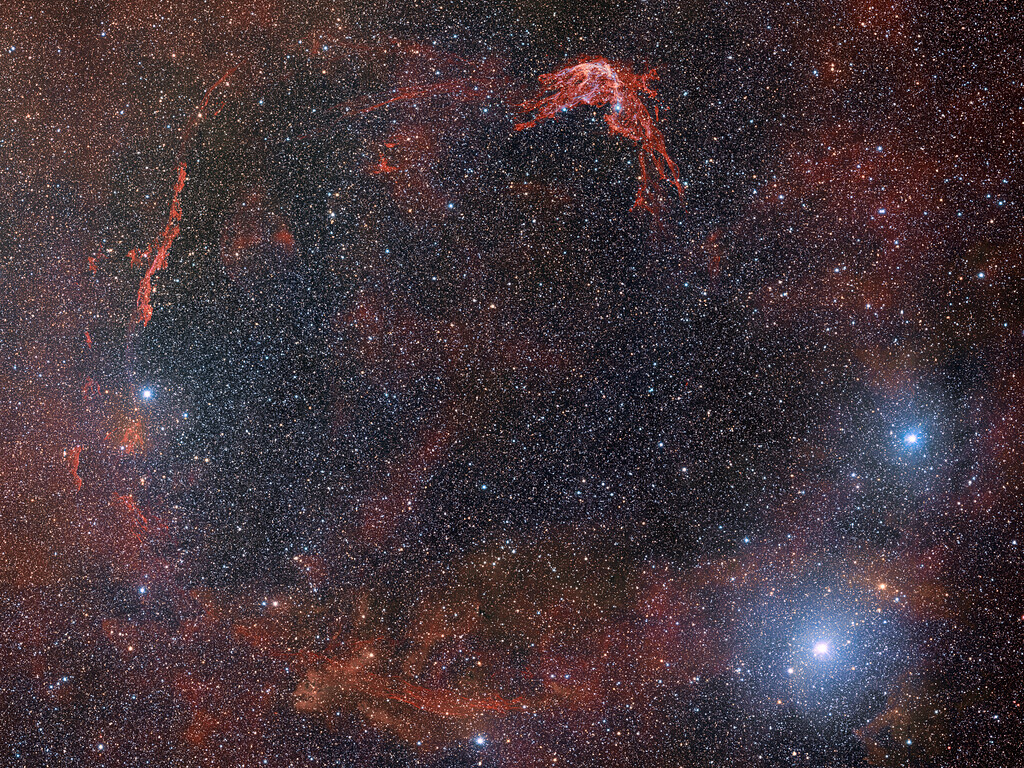
Supernova From the Year 185: A Rare View of the Entirety of This Supernova Remnant


DECam Images RCW 86, Remains of Supernova Witnessed in 185 
 

Videos

Cosmoview Episode 63:  Supernova From the Year 185: A Rare View of the Entirety of This Supernova Remnant
Cosmoview Episode 63: Supernova From the Year 185: A Rare View of the Entirety of This Supernova Remnant 
 
Cosmoview Episodio 63: Cerro Tololo logra un retrato único de una supernova que explotó hace más de 1.800 años


Dark Energy Camera captures the glowing remains of the first-ever documented supernova

The tattered shell of the first-ever historically recorded supernova was captured by the US Department of Energy-fabricated Dark Energy Camera, which is mounted on the National Science Foundation’s (NSF) Víctor M. Blanco 4-meter Telescope at Cerro Tololo Inter-American Observatory in Chile, a Program of NSF’s NOIRLab. RCW 86’s ring of debris is all that remains of a white-dwarf star that exploded more than 1800 years ago, when it was recorded by Chinese stargazers as a ‘guest star’.

Draped around the outer edges of this star-filled image are wispy tendrils that appear to be flying away from a central point, like the tattered remains of a burst balloon. These cloud-like features are thought to be the glowing remains of a supernova that was witnessed by Chinese astronomers in the year 185 C.E. When it appeared, this baffling addition to the night sky was referred to as a ‘guest star’ by ancient astronomers. It remained visible to the naked eye for about eight months before fading from view. 

This historical supernova, which astronomers now refer to as SN 185, occurred more than 8000 light-years away in the approximate direction of Alpha Centauri, between the constellations of Circinus and Centaurus. The resulting structure, RCW 86 — as imaged by the Dark Energy Camera (DECam) mounted on the Víctor M. Blanco 4-meter Telescope at Cerro Tololo Inter-American Observatory in Chile, a Program of NSF’s NOIRLab — helps shed light on how the remains of the supernova evolved over the past 1800 years. DECam’s amazing wide-field vision enabled astronomers to create this rare view of the entire supernova remnant as it is seen today.

Though the link between RCW 86 and SN 185 is now well established, that wasn’t always the case. For decades, astronomers thought it would take about 10,000 years for a traditional core-collapse supernova — one in which a massive star blows material away from itself by exploding — to form the structure as we see it today. This would make the structure far older than the supernova observed in the year 185. 

This preliminary estimate largely came from measurements of the supernova remnant’s size. But, a 2006 study found that the large size was due instead to an extremely high expansion velocity. The new estimate is much more in line with a comparatively youthful age of about 2000 years, which strengthened the link between RCW 86 and the guest star observed centuries ago.

While a more accurate age estimate brought astronomers one step closer to understanding this unique stellar feature, one mystery still remained. How did RCW 86 expand so fast? The answer was uncovered when X-ray data of the region revealed large amounts of iron present, a tell-tale sign of a different kind of explosion: a Type Ia supernova. This type of blast occurs in a binary star system when a dense white dwarf (the end-of-life remains of a star like our Sun) siphons material from its companion star to the point of detonation. These supernovae are the brightest of all and no doubt SN 185 would have awed observers while it shone brightly in the night sky.

Astronomers now have a more complete picture of how RCW 86 formed. As the white dwarf of the binary system swallowed the material of its companion star, its high-velocity winds pushed the surrounding gas and dust outward, creating the cavity we observe today. Then, when the white dwarf could not support any more mass falling onto it from the companion star, it exploded in a violent eruption. The previously formed cavity gave ample room for the high-velocity stellar remnants to expand very quickly and to create the monumental features we see today. 

This new image of RCW 86 gives astronomers an even deeper look into the physics of this perplexing structure and its formation.

The image was obtained by NOIRLab’s Communication, Education & Engagement team as part of the NOIRLab Legacy Imaging Program.


More information

NSF’s NOIRLab (National Optical-Infrared Astronomy Research Laboratory), the US center for ground-based optical-infrared astronomy, operates the international Gemini Observatory (a facility of NSF, NRC–Canada, ANID–Chile, MCTIC–Brazil, MINCyT–Argentina, and KASI–Republic of Korea), Kitt Peak National Observatory (KPNO), Cerro Tololo Inter-American Observatory (CTIO), the Community Science and Data Center (CSDC), and Vera C. Rubin Observatory (operated in cooperation with the Department of Energy’s SLAC National Accelerator Laboratory). It is managed by the Association of Universities for Research in Astronomy (AURA) under a cooperative agreement with NSF and is headquartered in Tucson, Arizona. The astronomical community is honored to have the opportunity to conduct astronomical research on Iolkam Du’ag (Kitt Peak) in Arizona, on Maunakea in Hawai‘i, and on Cerro Tololo and Cerro Pachón in Chile. We recognize and acknowledge the very significant cultural role and reverence that these sites have to the Tohono O’odham Nation, to the Native Hawaiian community, and to the local communities in Chile, respectively.

Contacts

Charles Blue
NSF’s NOIRLab
Cell: +1 202 236 6324
Email: charles.blue@noirlab.edu

Source: NSF’s National Optical-Infrared Astronomy Research Laboratory (NOIRLab)/News


Friday, March 03, 2023

Spiral Pattern Gives Clue to how High-Mass Stars Form

Map of material distribution in the disk around protostar G358-MM1. The white “+” marks the location of the protostar. The contour lines indicate signal strength. The colors represent the line-of-sight velocities. Movement away from the viewer is shown in red/orange and movement towards the viewer is shown in blue/green, indicating that the disk is rotating. Overlaid gray lines indicate the spiral arms identified though data analysis. (Credit: R. A. Burns) Original size (190 KB)

New observations have revealed a spiral pattern in a disk of material around a still forming, but already high-mass, baby star. This indicates that there is gravitational instability in the disk, which has important implications for how high-mass stars form.

As a star forms, a protostellar disk helps to feed material to the nascent “protostar” at its center. For high-mass protostars already exceeding 8 times the mass of the Sun and still growing, it is believed that, rather than a continuous flow, clumps of material from the disk occasionally fall on to the protostar causing short, episodic bursts of growth.

An international research team led by Ross A. Burns at NAOJ used VLBI techniques combining radio telescope arrays around the world to map the maser emissions in the disk around a high-mass protostar known as G358-MM1. This high-mass protostar is the third ever case of an observationally confirmed growth burst, and was intensely studied by the maser monitoring organisation (M2O, www.masermonitoring.org). The team was able to investigate the phenomenon in detail for the first time.

The observational results show clear rotation around the central protostar and a spiral pattern with four arms. Spiral arms in rotating protostellar disks are a sign of instability, a characteristic which was long theorized to be associated with massive star formation, but had yet to be proven observationally. This discovery not only revealed the first spiral driven accretion disk in a high-mass protostar but also links spiral arm instabilities with the episodic growth bursts that are central to high-mass star formation theory.

This research used a new technique known as “heat-wave mapping.” When a clump of material falls from the disk on to the protostar, it releases a burst of energy that heats the inner part of the disk, exciting methanol maser emission. This heat-wave then moves outward, heating increasingly more distant parts of the disk as time passes. By observing the regions that ignited maser emission caused by this heating it was possible to map the surface of the disk in G358-MM1. The team, comprising a collaboration of more than 90 astronomers from across the globe, now hopes to apply this technique to observe the disks of other high-mass protostars which undergo growth bursts in the future.

These results appeared as R. A. Burns et al. “A Keplerian disk with a four-arm spiral birthing an episodically accreting high-mass protostar” in Nature Astronomy on February 27, 2023.

Related Links


Thursday, March 02, 2023

Hubble Captures Movie of DART Asteroid Impact Debris

Didymos-Dimorphos System After DART Impact
Credits Science: NASA, ESA, STScI, Jian-Yang Li (PSI)
IMAGE PROCESSING: Joseph DePasquale (STScI)


Release Images | Release Videos


Like a sports photographer at an auto-racing event, NASA's Hubble Space Telescope captured a series of photos of asteroid Dimorphos when it was deliberately hit by a 1,200-pound NASA spacecraft called DART on September 26, 2022.

The primary objective of DART, which stands for Double Asteroid Redirection Test, was to test our ability to alter the asteroid's trajectory as it orbits its larger companion asteroid, Didymos. Though neither Didymos nor Dimorphos poses any threat to Earth, data from the mission will help inform researchers how to potentially divert an asteroid's path away from Earth, if ever necessary. The DART experiment also provided fresh insights into planetary collisions that may have been common in the early solar system.

Hubble's time-lapse movie of the aftermath of DART's collision reveals surprising and remarkable, hour-by-hour changes as dust and chunks of debris were flung into space. Smashing head on into the asteroid at 13,000 miles per hour, the DART impactor blasted over 1,000 tons of dust and rock off of the asteroid.

The Hubble movie offers invaluable new clues into how the debris was dispersed into a complex pattern in the days following the impact. This was over a volume of space much larger than could be recorded by the LICIACube cubesat, which flew past the binary asteroid minutes after DART's impact.

"The DART impact happened in a binary asteroid system. We've never witnessed an object collide with an asteroid in a binary asteroid system before in real time, and it's really surprising. I think it's fantastic. Too much stuff is going on here. It's going to take some time to figure out," said Jian-Yang Li of the Planetary Science Institute in Tucson, Arizona. The study , led by Li along with 63 other DART team members, was published on March 1 in the journal Nature.

The movie shows three overlapping stages of the impact aftermath: the formation of an ejecta cone, the spiral swirl of debris caught up along the asteroid's orbit about its companion asteroid, and the tail swept behind the asteroid by the pressure of sunlight (resembling a windsock caught in a breeze).

The Hubble movie starts at 1.3 hours before impact. In this view both Didymos and Dimorphos are within the central bright spot; even Hubble can't resolve the two asteroids separately. The thin, straight spikes projecting away from the center (and seen in later images) are artifacts of Hubble's optics. The first post-impact snapshot is 2 hours after the event. Debris flies away from the asteroid, moving with a range of speeds faster than four miles per hour (fast enough to escape the asteroid's gravitational pull, so it does not fall back onto the asteroid). The ejecta forms a largely hollow cone with long, stringy filaments.

At about 17 hours after the impact the debris pattern entered a second stage. The dynamic interaction within the binary system starts to distort the cone shape of the ejecta pattern. The most prominent structures are rotating, pinwheel-shaped features. The pinwheel is tied to the gravitational pull of the companion asteroid, Didymos. "This is really unique for this particular incident," said Li. "When I first saw these images, I couldn't believe these features. I thought maybe the image was smeared or something."

Hubble next captures the debris being swept back into a comet-like tail by the pressure of sunlight on the tiny dust particles. This stretches out into a debris train where the lightest particles travel the fastest and farthest from the asteroid. The mystery is compounded later when Hubble records the tail splitting in two for a few days.

A multitude of other telescopes on Earth and in space, including NASA's James Webb Space Telescope and Lucy spacecraft also observed the DART impact and its outcomes.

The Hubble Space Telescope is a project of international cooperation between NASA and ESA. NASA's Goddard Space Flight Center in Greenbelt, Maryland, manages the telescope. The Space Telescope Science Institute (STScI) in Baltimore, Maryland, conducts Hubble and Webb science operations. STScI is operated for NASA by the Association of Universities for Research in Astronomy, in Washington, D.C.


About This Release

Credits:

Release: NASA, ESA, STScI

Media Contact:

Ray Villard
Space Telescope Science Institute, Baltimore, Maryland

Science Contact:

Jian-Yang Li
Planetary Science Institute, Tucson, Arizona

Permissions:
Content Use Policy

Contact Us: Direct inquiries to the News Team.

Related Links and Documents:


Wednesday, March 01, 2023

Galactic Seascape

Ka 364
Credit: ESA/Hubble & NASA, M. Gullieuszik

A spiral galaxy lies just off-centre. It has large, faint, reddish spiral arms and a bright, reddish core. These lie over two brighter blue spiral arms. These are patchy, with blotches of star formation. Long trails of these bright blotches trail down from the lower spiral arm, resembling tendrils. The background is black, lightly scattered with small galaxies and stars, and a larger elliptical galaxy in one corner.

A jellyfish galaxy with trailing tentacles of stars hangs in inky blackness in this image from the NASA/ESA Hubble Space Telescope. As Jellyfish galaxies move through intergalactic space they are slowly stripped of gas, which trails behind the galaxy in tendrils illuminated by clumps of star formation. These blue tendrils are visible drifting below the core of this galaxy, and give it its jellyfish-like appearance. This particular jellyfish galaxy — known as JO201 — lies in the constellation Cetus, which is named after a sea monster from ancient Greek mythology. This sea-monster-themed constellation adds to the nautical theme of this image.

The tendrils of jellyfish galaxies extend beyond the bright disc of the galaxy core. This particular observation comes from an investigation into the sizes, masses and ages of the clumps of star formation in the tendrils of jellyfish galaxies. Astronomers hope that this will provide a breakthrough in understanding the connection between ram-pressure stripping — the process that creates the tendrils of jellyfish galaxies — and star formation.

This galactic seascape was captured by Wide Field Camera 3 (WFC3), a versatile instrument that captures images at ultraviolet and visible wavelengths. WFC3 is the source of some of Hubble’s most spectacular images, from a view of Jupiter and Europa to a revisit to the Pillars of Creation.

Tuesday, February 28, 2023

Over One Billion Galaxies Blaze Bright in Colossal Map of the Sky

Image of Abell 3158, Part of the DESI Legacy Imaging Survey
 
The largest two-dimensional map of the sky ever made has grown even larger with the tenth data release from the DESI Legacy Imaging Surveys — a monumental six-year survey covering nearly half the sky. This new data release adds increased sky and wavelength coverage to the already completed surveys made with data from NSF’s NOIRLab telescopes at Kitt Peak National Observatory in Arizona and Cerro Tololo Inter-American Observatory in Chile.

The Universe is teeming with galaxies, each brimming with billions of stars. Though all galaxies shine brightly, many are cloaked in dust while others are so distant that to observers on Earth they appear as little more than faint smudges. By creating comprehensive maps of even the dimmest and most-distant galaxies, astronomers are better able to study the structure of the Universe and unravel the mysterious properties of dark matter and dark energy. The largest such map to date has just grown even larger, with the tenth data release from the DOE’s Dark Energy Spectroscopic Instrument (DESI) Legacy Imaging Survey. 

The DESI Legacy Imaging Survey expands on the data included in two earlier companion surveys: the Dark Energy Camera (DECam) Legacy Survey and the Beijing-Arizona Sky Survey. Jointly these three surveys imaged 14,000 square degrees of the sky visible from the northern hemisphere using telescopes at NSF’s NOIRLab’s Kitt Peak National Observatory (KPNO) and Cerro Tololo Inter-American Observatory (CTIO) in Chile. 

This ambitious six-year effort involved three telescopes, one petabyte (1000 trillion bytes) of data, and 100 million CPU hours on one of the world’s most powerful computers at the US Department of Energy’s National Energy Research Scientific Computing Center. 

This effort culminated in the largest two-dimensional map of the sky ever created. With collective observations by the Mosaic-3 camera on the Nicholas U. Mayall 4-meter Telescope and the 90Prime camera on the University of Arizona Bok 2.3-meter Telescope, both located at KPNO, as well as the DOE-built Dark Energy Camera (DECam) on the Víctor M. Blanco 4-meter Telescope at CTIO in Chile.

One of the main purposes of this map is to identify roughly 40 million target galaxies for the five-year DESI Spectroscopic Survey, which is aimed at understanding dark energy by precisely mapping the expansion history of the Universe over the last 12 billion years. The DESI project has selected its targets and the spectroscopic survey is currently underway. However, the team is looking to create the most comprehensive map of the sky that they can, so more images and improved processing have been added to the Legacy Surveys to include data that were previously missing.

Most notably, the tenth data release focuses on integrating new imaging from DECam of the southern extragalactic sky, especially in areas away from the Milky Way’s disk, which are ideal for looking far into the cosmos. 

With the addition of southern sky images in the new data release, the Legacy Surveys have been expanded to over 20,000 square degrees, nearly half the sky. In addition, the new release includes images of the sky taken in an additional color filter, able to sample infrared light just redder than what the human eye can see. The additions to the map’s footprint and wavelength coverage will in turn make the data useful to a wider demographic of scientists.

“The addition of near-infrared wavelength data to the Legacy Survey will allow us to better calculate the redshifts of distant galaxies, or the amount of time it took light from those galaxies to reach Earth,” said Alfredo Zenteno, an astronomer with NSF’s NOIRLab and principal investigator of DECam eROSITA Survey (DeROSITAS).

“This is essential for surveys at radio and X-ray wavelengths that need the complete ‘optical’ view to identify the origin of the emission, like clusters of galaxies and active supermassive black holes,” said Mara Salvato, a researcher at the Max Planck Institute for Extraterrestrial Physics (MPE) and spokesperson for eROSITA.

The bulk of these additional DECam observations are from the DeROSITAS team, which includes scientists from NSF’s NOIRLab, the University of La Serena, MPE and Ludwig Maximilians University Munich in Germany; the DECam Local Volume Exploration Survey; and the final (sixth) year of the Dark Energy Survey. The team also scoured the NSF NOIRLab data archive to use any public data of the sky that already existed or was being collected by other researchers.

It’s not only scientists who benefit from the growing archive of astronomical data coming out of the Legacy Surveys. The publicly available data make it possible for astronomy enthusiasts and curious individuals to digitally peruse the Universe around us.

“Anyone can use the survey data to explore the sky and make discoveries,” said Arjun Dey, an astronomer with NSF’s NOIRLab. “In my opinion it is this ease of access which has made this survey so impactful. We hope that in a few years the Legacy Surveys will have the most complete map of the entire sky, and provide a treasure trove for scientists well into the future.”

NOIRLab will host these data products in the Astro Data Archive, from the original images taken at the telescopes to the catalogs that report the positions and other properties of stars and galaxies. Astro Data Lab, which is part of the Community Science and Data Center (CSDC) at NSF’s NOIRLab, also serves the catalogs as databases, which astronomers can easily analyze using the Astro Data Lab tools and services, and cross-match them with other datasets, giving more opportunities for discovery. In addition, Astro Data Lab provides astronomers with example scientific applications and tutorials to assist with their research.

More information

NSF’s NOIRLab (National Optical-Infrared Astronomy Research Laboratory), the US center for ground-based optical-infrared astronomy, operates the International Gemini Observatory (a facility of NSF, NRC–Canada, ANID–Chile, MCTIC–Brazil, MINCyT–Argentina, and KASI–Republic of Korea), Kitt Peak National Observatory (KPNO), Cerro Tololo Inter-American Observatory (CTIO), the Community Science and Data Center (CSDC), and Vera C. Rubin Observatory (operated in cooperation with the Department of Energy’s SLAC National Accelerator Laboratory). It is managed by the Association of Universities for Research in Astronomy (AURA) under a cooperative agreement with NSF and is headquartered in Tucson, Arizona. The astronomical community is honored to have the opportunity to conduct astronomical research on Iolkam Du’ag (Kitt Peak) in Arizona, on Maunakea in Hawai‘i, and on Cerro Tololo and Cerro Pachón in Chile. We recognize and acknowledge the very significant cultural role and reverence that these sites have to the Tohono O’odham Nation, to the Native Hawaiian community, and to the local communities in Chile, respectively.

DESI is supported by the US Department of Energy’s Office of High Energy Physics; the US National Science Foundation, Division of Astronomical Sciences under contract to the NSF’s NOIRLab; the Science and Technologies Facilities Council of the United Kingdom; the Gordon and Betty Moore Foundation; the Heising-Simons Foundation; the French Alternative Energies and Atomic Energy Commission (CEA); the National Council of Science and Technology of Mexico; the Ministry of Economy of Spain; and DESI member institutions. The DESI scientists are honored to be permitted to conduct astronomical research on Iolkam Du’ag (Kitt Peak), a mountain with particular significance to the Tohono O'odham Nation.

For more information, visit: desi.lbl.gov.

Contacts:

Charles Blue
Public Information Officer
NSF’s NOIRLab
Tel: +1 202 236 6324
Email:
charles.blue@noirlab.edu


Source:  NSF’s National Optical-Infrared Astronomy Research Laboratory (NOIRLab)/News