Showing posts with label National Astronomical Observatory of Japan (NAOJ). Show all posts

Thursday, June 11, 2026

Magnetic Field Helps Binary Star Systems Form

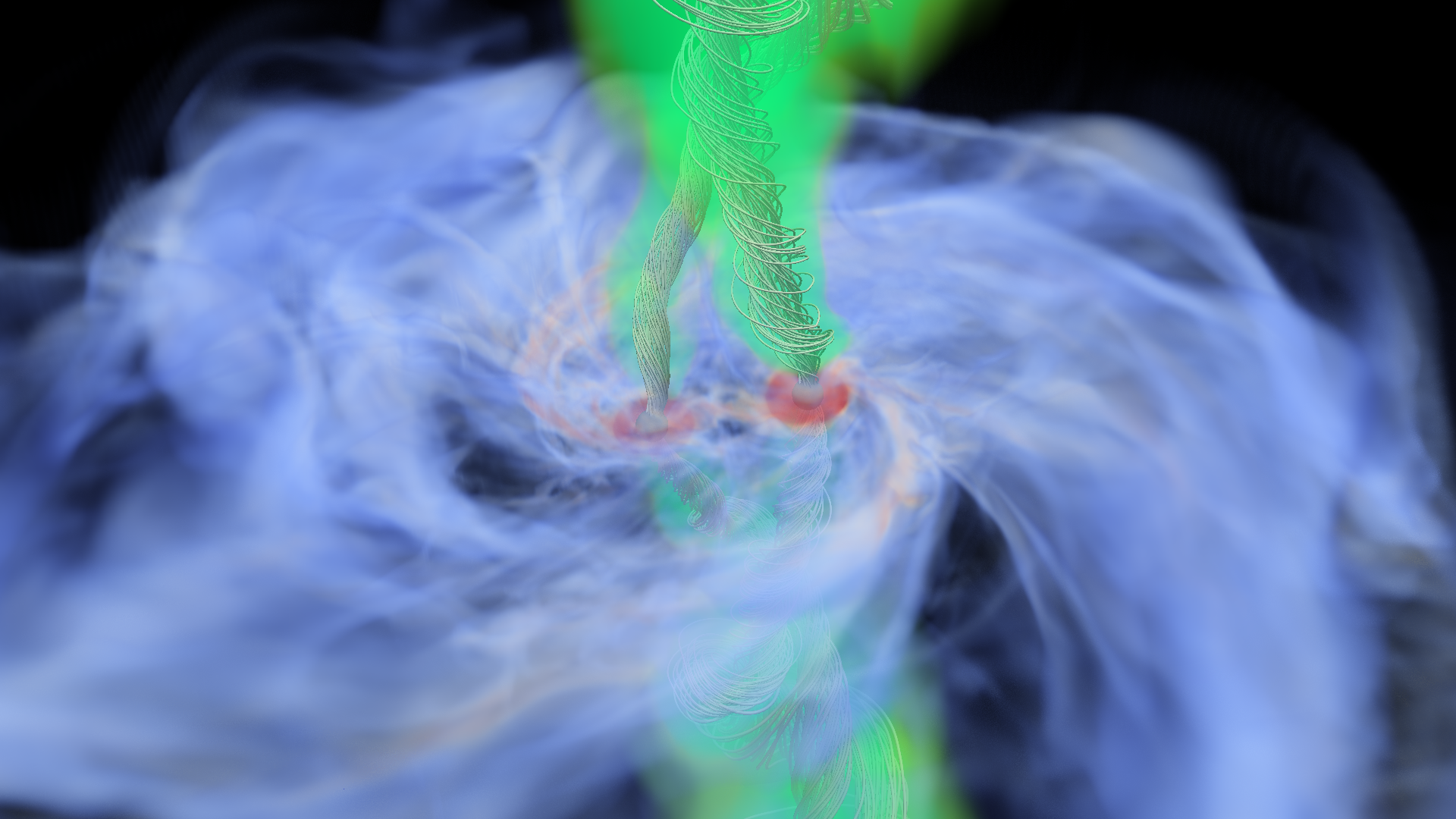
Visualization of gas flows around a binary protostar system calculated by ATERUI III. The gas shown in red orbits around one of the two protostars. The gas shown in blue orbits around the combined binary system. The gas shown in green is being expelled from the system and is carrying away angular momentum. The present research shows that the magnetic field plays an important role in expelling gas and angular momentum. (Credit: Matsumoto, Hotokezaka, Inayoshi 2026). Image (1.7MB)

Visualization of gas flows around a binary protostar system calculated by ATERUI III. The first half of the video shows a close-up view around the binary protostars. The second half shows a wide-field view of the system. You can see how the outflow escaping from the disk around the binary system carries angular momentum far away. (Credit: Matsumoto, Hotokezaka, Inayoshi 2026). YouTube video


New simulations show that interactions with a magnetic field can work to decrease the distance between still forming binary protostars. These results can help explain the characteristics of the binary star systems observed in the Milky Way. These results can also be extrapolated to binary black holes, giving insights into how super massive black holes evolve.

Stars form from clouds of interstellar gas that collapse into dense regions known as molecular cloud cores. Multiple stars form close together simultaneously, and in some cases two stars will become gravitationally bound to each other, forming a binary star system. Observations suggest that these binary systems form early on, before the stars are even fully formed. Astronomers have struggled to explain how these still forming “protostars” can pull together into binary systems so quickly.

New simulations using multiple supercomputers including the ATERUI III supercomputer for astronomical simulations and its predecessor ATERUI II, both at the National Astronomical Observatory of Japan, have shown that interactions between an interstellar magnetic field and the gas around the protostars can remove angular momentum from the protostar pair, allowing the binary systems to form within a realistic time period. In the simulation run with zero magnetic field performed as part of this research, the protostars actually moved farther apart, indicating the importance of the magnetic field in the process.

The simulations also suggest that the same process could work on massive binary black holes in the gas-rich heart of a new galaxy formed from the merger of two smaller galaxies. This would help explain how massive black holes can move close enough to merge and form a supermassive black hole. Direct simulation of massive binary black holes over the timespans required to spiral towards each other is still computationally challenging, so rigorous investigation of the effects of magnetic fields on massive binary black holes remains a topic for future investigation.


Detailed Article(s)

Magnetic Field Helps Binary Star Systems Form
Center for Computational Astrophysics

Release Information
Researcher(s) Involved in this Release

Tomoaki Matsumoto (Hosei University)
Kenta Hotokezaka (The University of Tokyo)
Kohei Inayoshi (Peking University)

Coordinated Release Organization(s)

National Astronomical Observatory of Japan, NINS
Hosei University

Paper(s)
Matsumoto, Tomoaki al. “Magnetic-field-induced inspiral of binaries with circumbinary disc: black hole and protostellar systems”, in Monthly Notices of the Royal Astronomical Society, DOI: 10.1093/mnras/stag669


Tuesday, June 02, 2026

Simulations Explain Baby Carriage Wheels Around Baby Stars

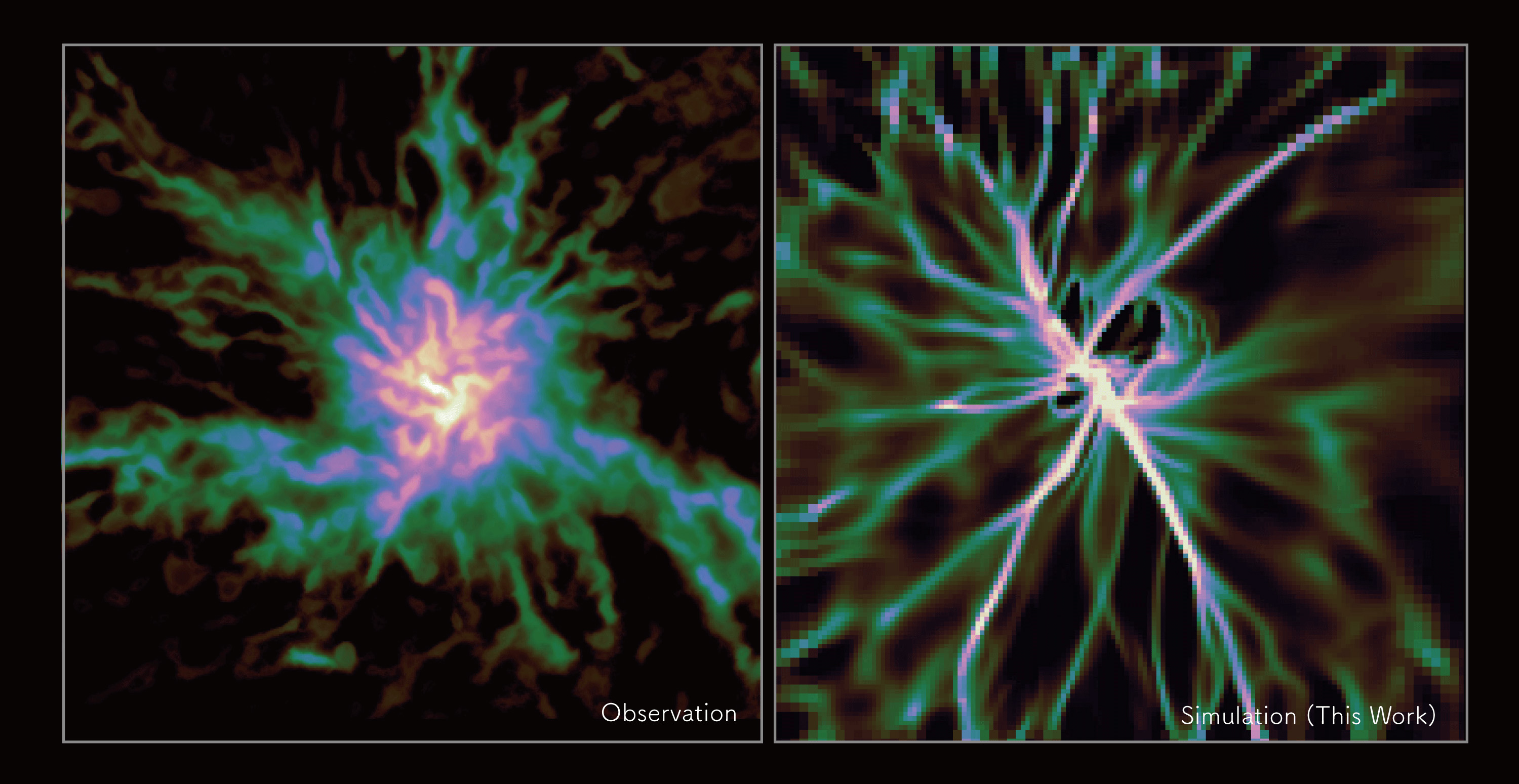
Left: Observations of a star-forming region with a hub-and-spoke shape like a baby carriage wheel. Right: A similar shape produced by a simulation using the ATERUI III supercomputer. (Credit: M. S. N. Kumar, ESA/Herschel, NASA/JPL-Caltech (Spitzer), S. Nozaki, S. Inutsuka) Image (716KB)

After an interstellar shock wave passes through a molecular cloud, multiple filaments characteristic of a hub–filament system develop radially toward the center. The left panels show the cloud viewed perpendicular to the propagation direction of the interstellar shock wave, while the right panels show the view parallel to the direction from which the shock wave approaches. The numbers in the upper left indicate the elapsed time since the start of the simulation. Note that the right panels are displayed using a different density range than the left panels in order to make the higher-density gas easier to distinguish. (Credit: Shingo Nozaki (Kyushu University))


Research using multiple supercomputers, including ATERUI III at the National Astronomical Observatory of Japan, has found a possible explanation for the hub-and-spoke pattern seen in some molecular clouds where baby stars are forming. According to the new numerical simulations, if an external shock interacts with magnetic fields which have been warped by the motion of the clouds, gas can be channeled into a shape resembling the spokes on the wheels of a baby carriage.

When parts of molecular clouds become dense enough, they can collapse under self-gravity. As a result of this collapse, the gas in the clouds condenses into protostars which will grow into stars. For this reason, molecular clouds are nicknamed “stellar cradles.” But some of these sites of star formation are more like baby carriages than cradles because they have filaments of gas extending toward a central hub, forming a shape like a spoked wheel.

Researchers from Kyushu University and Nagoya University investigated the possibility that magnetic fields within the clouds might play a role in forming this distinct shape. Using ATERUI III, a dedicated-astronomy supercomputer operated by the National Astronomical Observatory of Japan, they modeled how gas and magnetic fields evolve together over time. The results show that as the cloud collapses under self-gravity, it pulls the magnetic field lines inward, bending them into an hourglass shape. The team then simulated the effects of a disturbance like a shock wave from a nearby supernova remnant or from expanding gas around a massive star. The team found that if this shock hits the curved magnetic field at certain angles, it strengthens parts of the magnetic field, forming invisible channels that guide compressed gas into long, narrow filaments converging toward the center.

The team now plans to conduct more simulations to test whether this mechanism can explain more asymmetric and complex shapes. This will help clarify how the diversity of observed hub-filament systems reflects differences in cloud environments and how such environments shape the formation of massive stars and clusters.


Detailed Article(s)

Simulations Explain Baby Carriage Wheels Around Baby Stars
Center for Computational Astrophysics

Release Information

Researcher(s) Involved in this Release

Shingo Nozaki (Kyushu University)
Shu-ichiro Inutsuka (Nagoya University)

Coordinated Release Organization(s)

Kyushu University
Nagoya University
National Astronomical Observatory of Japan, NINS

Paper(s)

Shingo Nozaki and Shu-ichiro Inutsuka “An Origin of Radially Aligned Filaments in Hub-filament Systems”, in Astrophysical Journal Letters,
DOI: 10.3847/2041-8213/ae4c84

Related Link(s)

Scientists show how baby stars' cradles get their radial shape (Kyushu University)


Tuesday, May 19, 2026

Astronomers Find Most Chemically Primitive Galaxy in Early Universe

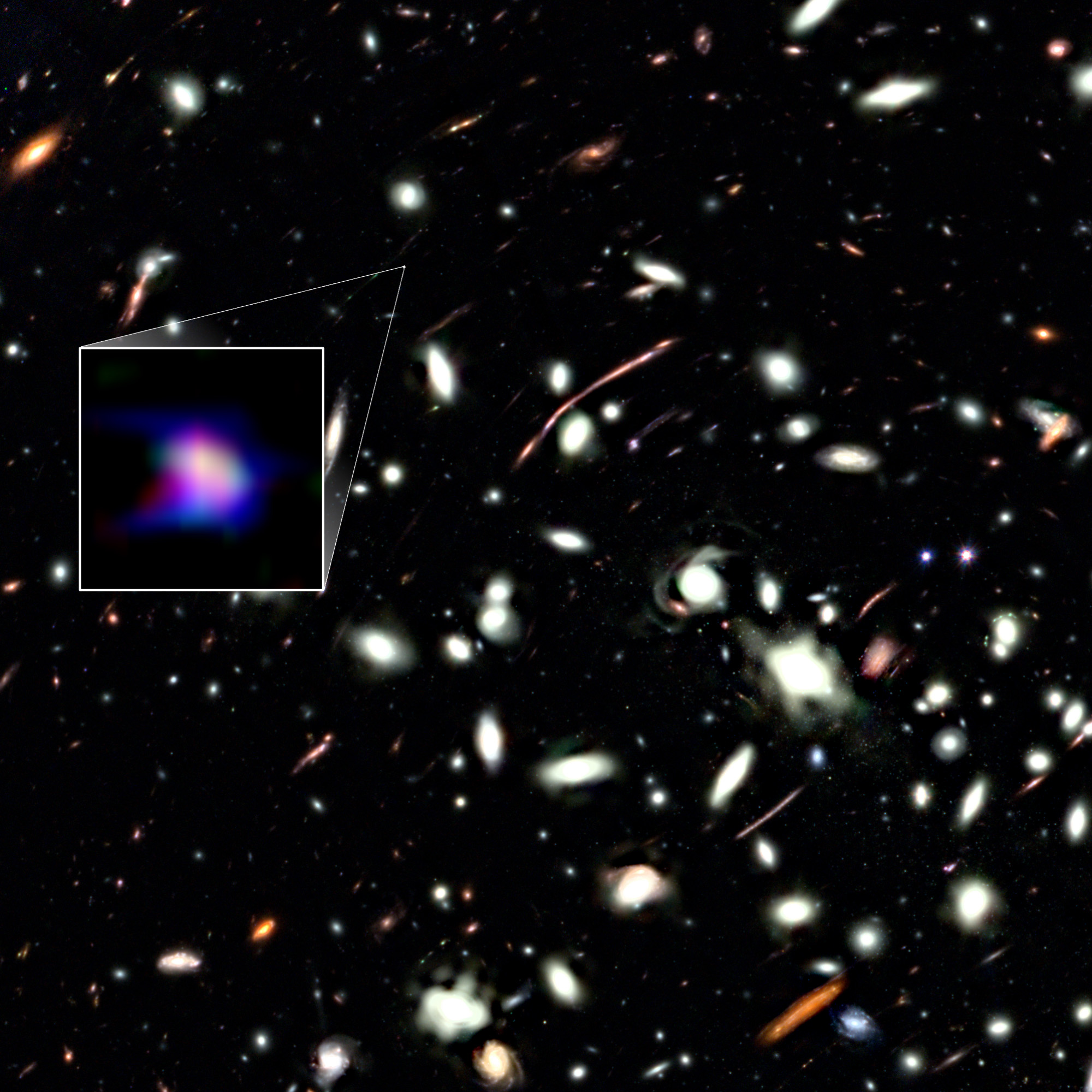
Revealing the Nature of the Ultra-Faint Galaxy LAP1-B through a giant “gravitational lens.” A 3 color image created from data taken with the Near-Infrared Camera (NIRCam) on the James Webb Space Telescope (JWST). Because the stars in this galaxy are extremely faint and few in number, the galaxy is invisible in the background image taken by NIRCam, but another instrument, the Near-Infrared Spectrograph (NIRSpec) was able to detect chemical signatures. A visualization (not an actual image) of the NIRSpec velocity and distribution data is shown in the inset for oxygen (green) and two different excitation states of hydrogen (blue and red). (Credit: NASA, ESA, CSA & K. Nakajima et al., Nature). Image (703KB)


An international team of astronomers has used the James Webb Space Telescope (JWST) and a natural phenomenon known as gravitational lensing to achieve a definitive characterization of LAP1-B, an ultra-faint galaxy from 13 billion years ago. Expanding upon initial detections, this new study revealed a record-breaking low oxygen abundance – merely 1/240th that of the Sun. This chemically primitive state, coupled with an elevated carbon-to-oxygen ratio and a dominant dark matter halo, suggests that LAP1-B is the long-sought “ancestor” of the mysterious fossil galaxies found near our Milky Way Galaxy today.

Just after the Big Bang, contained only light elements like hydrogen and helium. The heavier elements, such as oxygen and carbon, were forged much later inside the hearts of the very first stars. For decades, astronomers have tried to find the moment these “first-generation stars” began scattering heavier elements across the cosmos. However, the earliest galaxies hosting such young, primordial stars are so small and faint that seeing their chemical makeup was considered nearly impossible – until now.

A research team led by Kimihiko Nakajima of Kanazawa University and including Masami Ouchi at the National Astronomical Observatory of Japan (NAOJ) and the University of Tokyo focused on a tiny, ultra-faint galaxy named LAP1-B. Its light was magnified 100 times by a phenomenon called “gravitational lensing,” where the gravity of a massive galaxy cluster acts like a natural giant telescope lens in space. By staring at this spot for over 30 hours with JWST, the team determined that the galaxy’s oxygen abundance is roughly 1/240th that of the Sun. “I was instantly thrilled by the extreme lack of oxygen,” says Nakajima. “Finding a galaxy in such a primitive state is astonishing. It’s a chemical signature that clearly indicates a primordial galaxy caught in the moments shortly after its formation.”

Beyond its primitive nature, the galaxy exhibited a high carbon-to-oxygen abundance ratio. This unique ratio of elements aligns closely with theoretical predictions for the material dispersed by the explosions of the universe’s first-generation stars.

The team also discovered that LAP1-B is incredibly lightweight – less than 3,300 times the mass of the Sun – implying that most of the galaxy consists of invisible dark matter. This feature, together with its unique chemical makeup, makes it a near-perfect match for the “Ultra-Faint Dwarf galaxies (UFDs)” found near our Milky Way Galaxy today, which are extremely dim, small, and contain very few stars.

“UFDs are not only the faintest galaxies; they are composed of ancient stars over 12 billion years old and are often described as ‘fossils of the Universe,’” explains Ouchi. “Astronomers suspected they might be the remains of the Universe’s earliest galaxies because they lack heavy elements, but astronomers never had a direct link – until we found LAP1-B.”

Ouchi continues: “It is a profound surprise to find that LAP1-B looks exactly like the ‘ancestor’ we had only imagined in theories. This helps us solve the mystery of why these cosmic fossils have survived in their current form to the present day.”

This discovery establishes a new way to map the birth of elements and the formation of the Universe’s oldest structures. Moving forward, the team will use JWST to search for even more primitive objects, aiming to find the very first galaxies ever formed.


Release Information

Researcher(s) Involved in this Release

Kimihiko Nakajima (Kanazawa University)
Masami Ouchi (National Astronomical Observatory of Japan / University of Tokyo)

Coordinated Release Organization(s)

Kanazawa University
National Astronomical Observatory of Japan, NINS
Institute for Cosmic Ray Research, The University of Tokyo
Paper(s)

K. Nakajima et al. “An ultra-faint, chemically primitive galaxy forming in the reionization era”, in Nature, DOI: 10.1038/s41586-026-10374-1


Related Link(s)


Wednesday, May 06, 2026

Outer Solar System Object Has an Atmosphere But Shouldn’t

Artist’s conception of this research showing an imagined time sequence as a star passes behind a TNO with an atmosphere. Credit: NAOJ. Image (961KB)


A team of professional and amateur Japanese astronomers foundidence for a thin atmosphere around a small body in the outer Solarystem. The object is so small that it should not have a sustainableatmosphere, raising questions about when and how the atmosphere formd. Future observations to better characterize the atmosphere will help solve these mysteries.

In the cold reaches of the outer Solar System lie thousands of small objects known as trans-Neptunian objects (TNOs) because they lie outside the orbit of Neptune. A thin atmosphere has been observed around Pluto, the most famous TNO, but studies of other TNOs have yielded negative results. Most TNOs are so cold, and their surface gravity so weak, that they are not expected to retain atmospheres.

But astronomers like to expect the unexpected, so they took advantage of a lucky “natural experiment” to look for an atmosphere around a TNO known as (612533) 2002 XV93. This object, abbreviated as 2002 XV93, has a diameter of approximately 500 km. For reference, Pluto’s diameter is 2,377 km. The orbit of 2002 XV93 is such that, as seen from Japan, it passed directly in front of a star on January 10, 2024. As the star disappears behind 2002 XV93, it might gradually fade, indicating that the light is being attenuated as it passes through a thin atmosphere; or it might suddenly wink out as it slips behind the solid surface of the TNO.

A team of professional and amateur astronomers, led by Ko Arimatsu at NAOJ Ishigakijima Astronomical Observatory, observed the star as 2002 XV93 passed in front of it from multiple sites in Japan. The obtained data are consistent with attenuation by an atmosphere.

Calculations show that the atmosphere found around 2002 XV93 is expected to last less than 1000 years unless it is replenished. So it must have been created or replenished recently. Observations by the James Webb Space Telescope show no signs of frozen gases on the surface of 2002 XV93 that might sublimate to form an atmosphere. One possibility is that some event brought frozen or liquid gases from deep inside the TNO to the surface. Another possibility is that a comet crashed into 2002 XV93, releasing gas that formed a temporary atmosphere. Further observations are needed to distinguish between these two scenarios.

Conceptual video for Arimatsu et al. (2026)
Conceptual video showing how the light from a star changes when it passes behind an object with an atmosphere.
Credit: NAOJ


Release Information

Researcher(s) Involved in this Release

Ko Arimatsu (Ishigakijima Astronomical Observatory, National Astronomical Observatory of Japan)

Jun-ichi Watanabe (Kyoto Sangyo University)

Coordinated Release Organization(s)

National Astronomical Observatory of Japan, NINS

Faculty of Science, The University of Tokyo

Kyoto University

Kyoto Sangyo University

Paper(s)

Ko Arimatsu et al. “Detection of an atmosphere on a trans-Neptunian object beyond Pluto”, in Nature Astronomy, DOI:
10.1038/s41550-026-02846-1


Sunday, April 12, 2026

How Jupiter Cultivated More Large Moons than Saturn — A magnetospheric cavity explains the difference

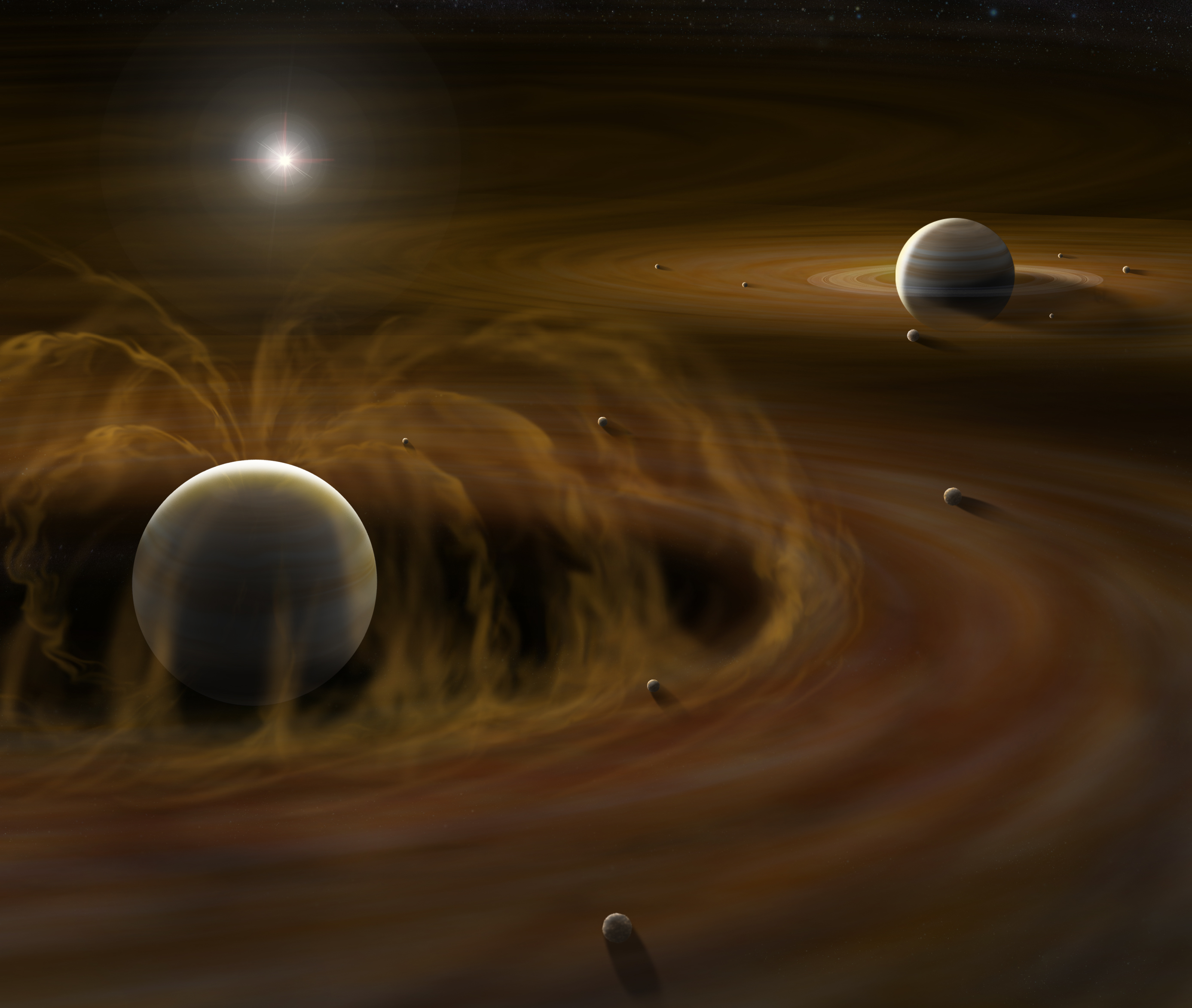
Artist’s impression of the simulations conducted in this research. Jupiter (lower left) has a strong magnetic field which creates a cavity in its circumplanetary disk. Saturn (upper right) lacks a strong magnetic field so its circumplanetary disk evolves without a cavity. Credit: Yuri I. Fujii/L-INSIGHT [Kyoto University], Shinichiro Kinoshita.  Image (5.0MB)

The Solar System’s two largest gas giant planets, Jupiter and Saturn, have extensive but very different families of moons orbiting them. New simulations conducted on the PC cluster at the Center for Computational Astrophysics (CfCA), National Astronomical Observatory of Japan (NAOJ) showed that the planet’s magnetic field plays a role in creating an environment where the new moons can survive and grow, thus shaping the evolution of the system.

Jupiter has more than 100 reported moons, including four large ones (Ganymede, Callisto, Io, and Europa). Saturn has more than 280 reported moons, but only one large one (Titan). So it is a puzzle why Saturn managed to cultivate more moons, but fewer large moons than Jupiter.

A team led by Kyoto University, including researchers from institutes in Japan and China, used the PC cluster at CfCA, NAOJ, to simulate the formation of the moon systems around Jupiter and Saturn. This simulation recreated the planets’ internal structure to calculate the thermal evolution of Jupiter and Saturn and how their magnetic fields have varied over time.

Moons form from material in a “circumplanetary disk” of gas and dust orbiting the young planet. The disk nurtures the young moons, but interactions with the disk may cause them to fall into the planet. The simulations showed that young Jupiter generated a strong planetary magnetic field that created a safe “cavity” around the planet where its young large moons were prevented from migrating too close to their host planet. Young Saturn lacked a strong magnetic field, so only one large moon managed to survive.

“Testing planet formation theory is somewhat difficult because we have only our Solar System for reference, but there are multiple satellite systems close to us whose detailed characteristics we can observe,” says Yuri I. Fujii, primary author of the report announcing these findings. Next, the team is interested in expanding their theory to other moons and potential exomoon systems.


Detailed Article(s)

How Jupiter Cultivated More Large Moons than Saturn —— A magnetospheric cavity explains the difference

Center for Computational Astrophysics

Release Information

Researcher(s) Involved in this Release

  • Yuri Fujii (Graduate School of Human and Environmental Studies, Kyoto University)
  • Masahiro Ogihara (Tsung-Dao Lee Institute, Shanghai Jiao Tong University)
  • Yasunori Hori (Okayama University)

Coordinated Release Organization(s)
  • Kyoto University
  • Okayama University
  • National Astronomical Observatory of Japan, NINS
  • Fujii et al. “Different architecture of Jupiter and Saturn satellite systems from magnetospheric cavity formation” in Nature Astronomy, DOI: 10.1038/s41550-026-02820-x

Related Link(s)

Friday, March 20, 2026

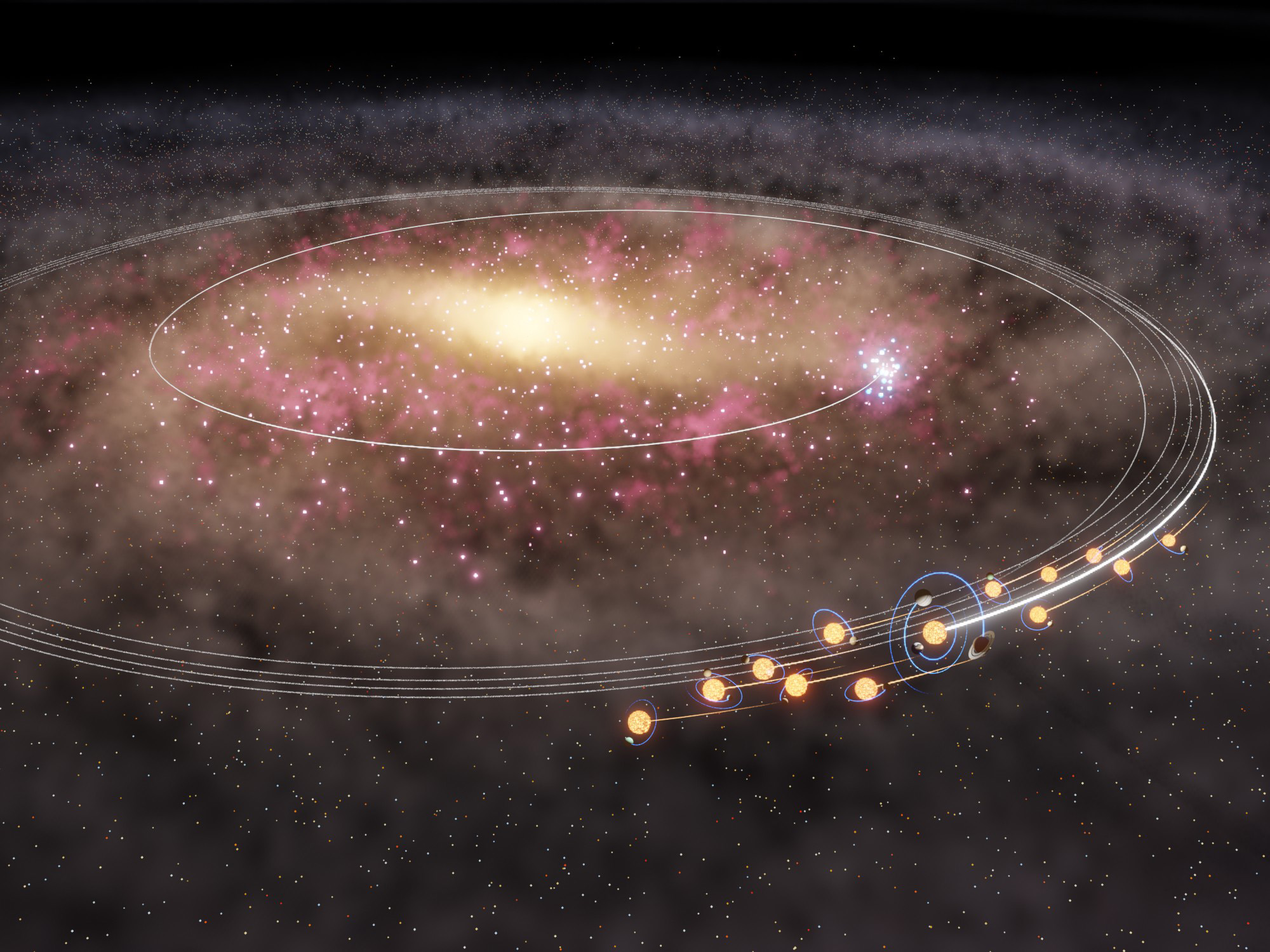
We are Not Alone: Our Sun Escaped From Galactic Center Together with Stellar “Twins”

A mass migration of stellar twins. Stars similar to our Sun form a mass migration from the center of the Milky Way Galaxy, occurring approximately 4 to 6 billion years ago. Credit: NAOJ. Download Image (578KB) - Download Movie (33MB)


Researchers have uncovered evidence that our Sun was part of a mass migration of similar “twins” leaving the core regions of our Galaxy, 4 to 6 billion years ago. The team created and studied an unprecedentedly accurate catalogue of stars and their properties using data from the European Space Agency’s Gaia satellite. This discovery sheds light on the evolution of our Galaxy, particularly the development of the rotating bar-like structure at its center.

While archaeology on Earth studies the human past, galactic archaeology traces the vast journeys of stars and galaxies. For example, scientists know that our Sun was born around 4.6 billion years ago, more than 10,000 light-years closer to the center of the Milky Way than we are today. While studies of the composition of stars support this theory, this has long proven a conundrum to scientists. Observations reveal an enormous bar-like structure at our galactic center which creates a “corotation barrier,” which makes it difficult for stars to escape so far from the center.

So how did we get here? To answer this question, a team led by Assistant Professors Daisuke Taniguchi from Tokyo Metropolitan University and Takuji Tsujimoto from the National Astronomical Observatory of Japan undertook an unprecedentedly large study of solar “twins,” stars which have very similar temperature, surface gravity, and composition to our Sun. They used data taken by the European Space Agency’s Gaia satellite mission, a daunting trove of observations covering two billion stars and other objects. They created a catalogue of 6,594 stellar “twins,” a collection around 30 times larger than previous surveys.

From this immense list, they were able to obtain the most accurate picture to date of the ages of these stars, carefully correcting for the selection bias of stars which are easier to see. Looking at the distribution of ages, they noticed a broad peak for stars around 4 to 6 billion years old: this includes our Sun, and is evidence for similar stars of similar age, positioned around the same distance from the center of the Galaxy. This means that our Sun is not at its current position by accident, but as part of a much larger stellar migration.

This discovery sheds light not only on the nature of our Solar System, but also the evolution of the Galaxy itself. The corotation barrier created by the bar structure at the galactic center would not allow for such a mass egress. However, the story changes if the bar was still being formed at the time. The ages of our stellar “twins” reveal not only when the mass escape occurred, but also the time range over which the bar was formed.

The center of the Galaxy is a far less hospitable environment for the evolution of life than the outer regions. The team’s findings thus illuminate a key factor in how our Solar System, and in turn our planet, found itself in a region of the Galaxy where organisms could develop and evolve.

In the future the team hopes to use precise observations of the stars similar in age to the Sun to look for stars born near the same time and place as the Sun to determine the point of origin and travel route of the mass migration. It is expected that the Japanese JASMINE astrometry satellite mission being developed by the National Astronomical Observatory of Japan will contribute to this research.


Detailed Article(s)

We are Not Alone: Our Sun Escaped From Galactic Center Together with Stellar “Twins”
JASMINE Project


Release Information

Researcher(s) Involved in this Release
  • Daisuke Taniguchi (Tokyo Metropolitan University)
  • Takuji Tsujimoto (National Astronomical Observatory of Japan)

Coordinated Release Organization(s)

  • Tokyo Metropolitan University
  • National Astronomical Observatory of Japan, NINS

Paper(s)

  • Daisuke Taniguchi et al. “Solar twins in Gaia DR3 GSP-Spec I. Building a large catalog of Solar twins with ages”, in Astronomy and Astrophysics, DOI:10.1051/0004-6361/202658913

  • Takuji Tsujimoto et al. “Solar twins in Gaia DR3 GSP-Spec II. Age distribution and its implications for the Sun's migration”, in Astronomy and Astrophysics (Letter to the Editor) DOI: 10.1051/0004-6361/202658914

Related Link(s)


Monday, January 26, 2026

Theory-Breaking Extremely Fast-Growing Black Hole

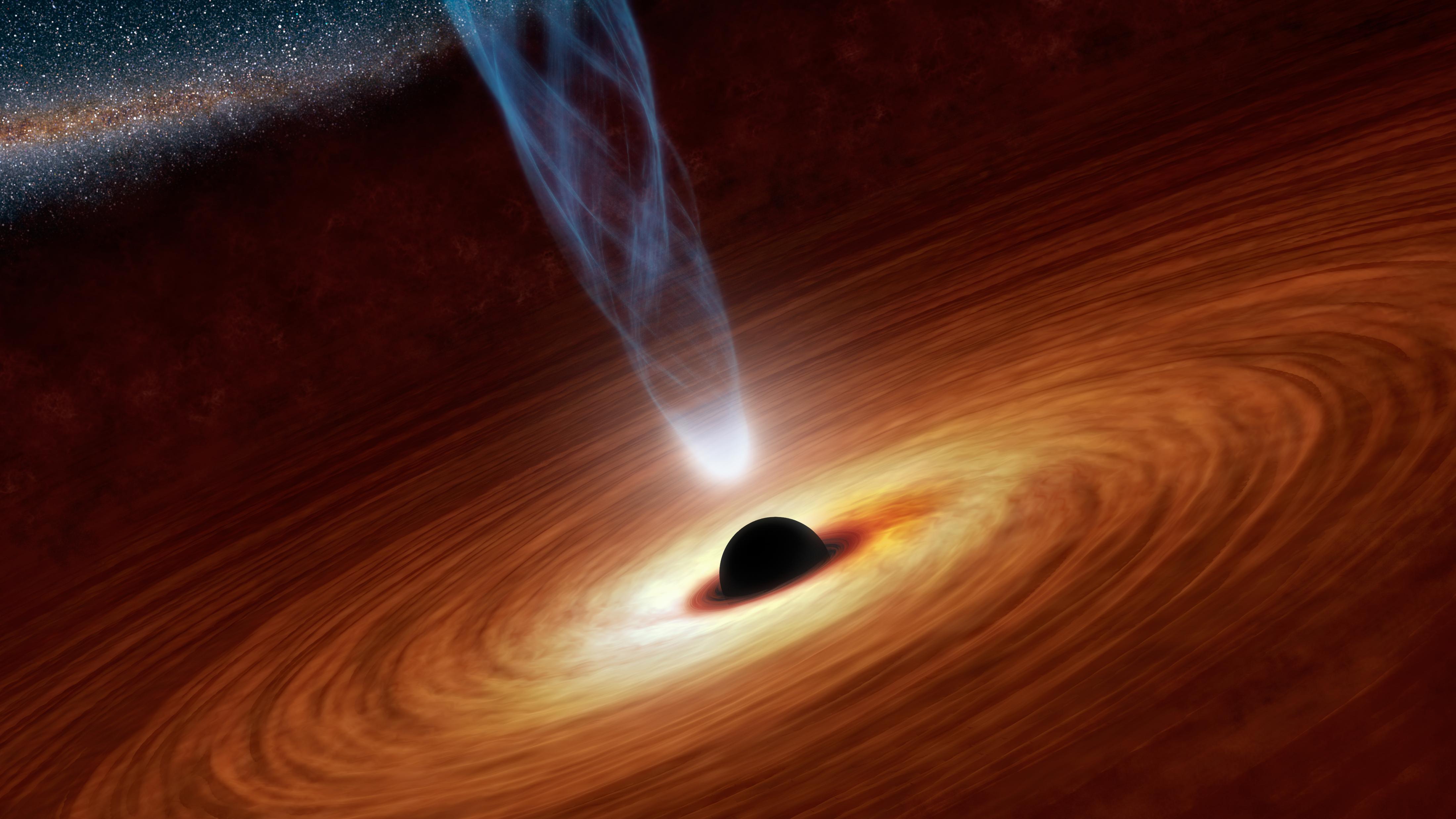
Artist’s impression of a supermassive black hole system. Infalling gas forms a bright corona near the black hole. In some systems, a jet is launched. Credit: NASA/JPL-Caltech - Download image (578KB)


An international research team has discovered a supermassive black hole growing rapidly while radiating bright X-rays and radio waves. This combination of features contradicts the current models of black hole growth, requiring astronomers to look for a new explanation.

Supermassive black holes, millions to billions of times the mass of the Sun, sit in the centers of most galaxies. They grow by pulling in surrounding gas. As gas spirals inward, it can power a compact region of hot plasma known as a corona which emits X-rays. Some supermassive black holes also form a jet of outflowing material that emits strongly at radio wavelengths.

But if gas falls towards a supermassive black hole too quickly, radiation from the gas starts to push back on the material flowing behind it, causing the flow to slow down. This sets a self-regulating “Eddington Limit,” a speed limit on how fast gas can flow in. Like most speed limits, the Eddington Limit is broken sometimes, enabling rapid mass build-up over short cosmic timescales.

To test whether such extreme growth occurs in the early Universe, a team led by scientists at Waseda University and Tohoku University used the Subaru Telescope to measure the motion of gas around a supermassive black hole that existed when the Universe was less than 1.5 billion years old and found that it is accreting gas at 13 times the Eddington Limit. More surprisingly, the object also emits bright X-rays and radio waves. In the current models, super-Eddington accretion should change the gas flow and suppress X-ray and radio wave production. This unexpected combination hints at physical mechanisms not yet fully captured by current models of extreme accretion.

The team thinks the object is in a short-lived transitional stage. A sudden burst of inflowing gas may have pushed the system into a super-Eddington state, while a bright X-ray corona and a strong radio-wave emitting jet remained simultaneously energized for a limited time before the system settles toward a more typical regime.

This discovery offers a rare glimpse of time-variable black hole growth in the early Universe—an important step toward understanding the rapid growth of massive black holes.


Detailed Article(s)

"Rule-Breaking," Extremely Fast-Growing Supermassive Black Hole in the Early Universe
Subaru Telescope


Release Information

Researcher(s) Involved in this Release

Sakiko Obuchi (Waseda Universiy)
Kohei Ichikawa (Tohoku University)

Coordinated Release Organization(s)

National Astronomical Observatory of Japan, NINS
Waseda University
Tohoku University

Paper(s)

Obuchi et al. “Discovery of an X-ray Luminous Radio-Loud Quasar at z = 3.4: A Possible Transitional Super-Eddington Phase”, in The Astrophysical Journal, DOI:
10.3847/1538-4357/ae1d6d


Related Link(s)

Rule-Breaking, Extremely Fast-Growing Supermassive Black Hole in the Early Universe (Waseda University)


Wednesday, January 14, 2026

Cotton Candy Worlds Evolve into Rock Candy Worlds

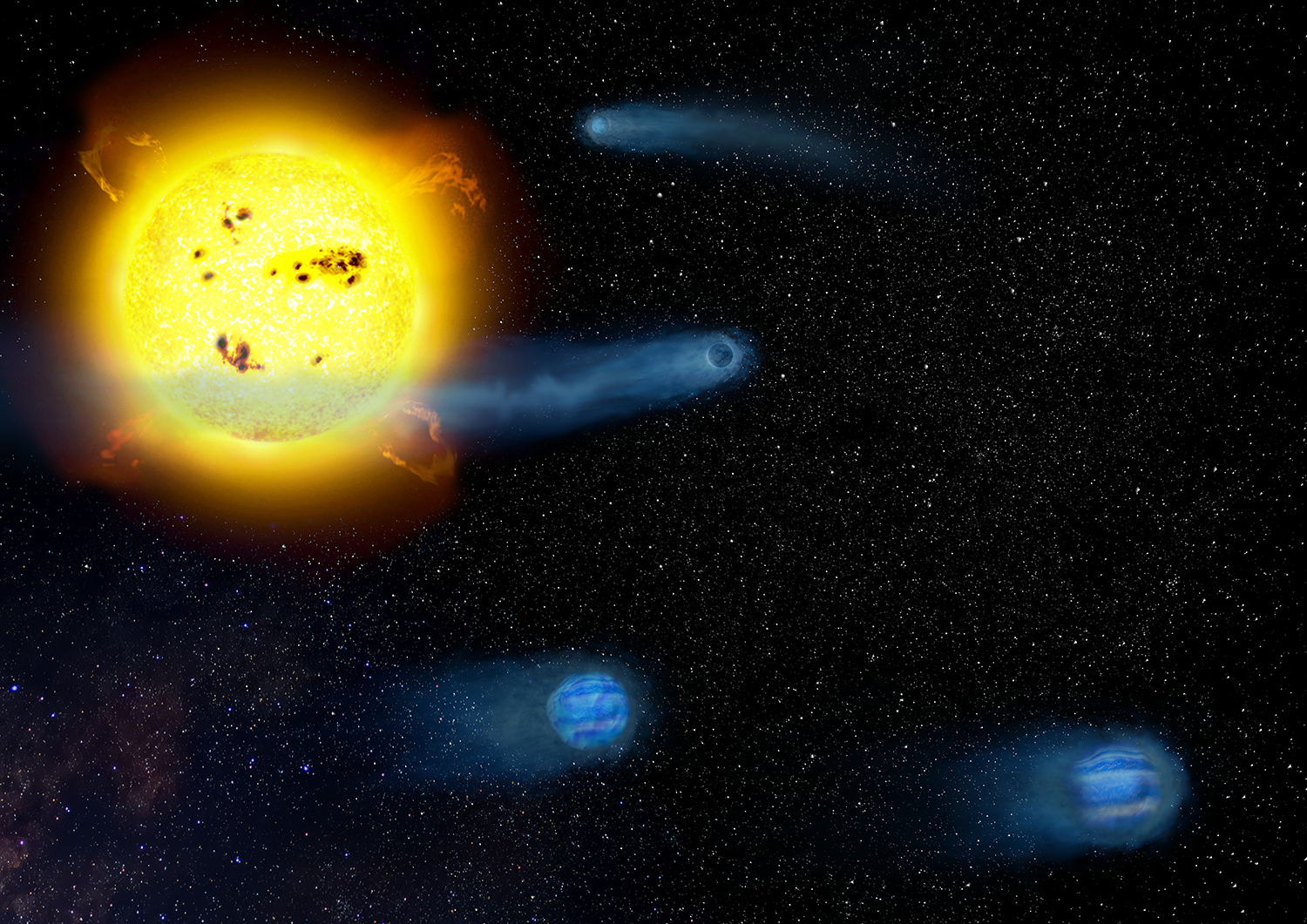
Artist’s conception of the four planets around a young star observed in this research. The puffy planets may be losing their atmospheres due to the intense radiation from the star. (Credit: Astrobiology Center) - Download image (1.9MB)


Using data spanning a decade taken by telescopes around the world and in space, including NAOJ’s 188-cm telescope in Okayama, astronomers have been able to weigh a quartet of baby planets. Even though the planets are currently large and puffy, like cotton candy, as they mature they will evolve into smaller, denser rocky worlds like Earth or small gaseous ‘sub-Neptune’ worlds.

One of the biggest recent surprises in astronomy is the discovery that most stars like the Sun harbor a planet between the size of Earth and Neptune at a distance from the star closer than Mercury’s orbit around the Sun. These ‘super-Earths’ and ‘sub-Neptunes’ are the most common type of planets known in the Galaxy. However, their formation has been shrouded in mystery. Now, an international team of astronomers has found a crucial missing link in the formation process. By weighing four newborn planets in the V1298 Tau system, the team captured a rare snapshot of the development of compact, multi-planet systems.

The study focused on V1298 Tau, a star located 352 light-years away in the direction of the constellation Taurus. V1298 Tau is only about 20 million years old, compared to our 4.5-billion-year-old Sun. Around this young, active star, four giant planets, all between the sizes of Neptune and Jupiter, have been observed in a fleeting and turbulent phase of rapid evolution. This system appears to be a progenitor of the type of compact, multi-planet systems found throughout the Galaxy.

The team used data taken over a decade by an arsenal of ground- and space-based telescopes to precisely measure when each planet passed in front of the star, an event known as a transit. By timing these transits, astronomers detected small variations in the planets' orbits. Their orbital configuration and gravity cause them to tug on each other, slightly speeding up or slowing down the timing of the transit. These tiny shifts in timing allowed the team to robustly measure the planets' masses for the first time. The planets, despite being 5 to 10 times the radius of Earth, were found to have masses of only 5 to 15 times that of our own world. This makes them incredibly low-density—more like planetary-sized cotton candy than Earth-like rock candy worlds.

This puffiness helps solve a long-standing puzzle in planet formation. A planet that simply forms and cools down over time would be much more compact. The puffiness indicates that these planets have already undergone a dramatic transformation, rapidly losing much of their original atmospheres and cooling. Now the planets are predicted to continue evolving, losing their atmospheres and shrinking significantly, transforming into the kinds of super-Earths and sub-Neptunes which are often observed.

The V1298 Tau system now serves as a crucial laboratory for understanding the origins of the most abundant planetary systems in the Milky Way, giving scientists an unprecedented glimpse into the turbulent and transformative lives of young worlds. Understanding systems like V1298 Tau may also help explain why our own Solar System lacks the super-Earths and sub-Neptunes that are so abundant elsewhere in the Galaxy.


Detailed Article(s)

Astronomers Find Missing Link to Galaxy’s Most Common Planets

Astrobiology Center


Release Information

Researcher(s) Involved in this Release

John H. Livingston (Astrobiology Center/National Astronomical Observatory of Japan)
Norio Narita (Graduate School of Arts and Sciences, The University of Tokyo/Astrobiology Center)
Mayuko Mori (Astrobiology Center/National Astronomical Observatory of Japan)

Coordinated Release Organization(s)

Astrobiology Center, NINS
National Astronomical Observatory of Japan, NINS
Graduate School of Arts and Sciences, The University of Tokyo

Paper(s)

John H. Livingston et al. “A young progenitor for the most common planetary systems in the Galaxy”, in Nature, DOI: 10.1038/s41586-025-09840-z


Related Link(s)


Friday, December 05, 2025

First Discoveries from New Subaru Telescope Program

Time-lapse movie of the Subaru Telescope images which led to the discovery of HIP 54515 b (indicated by the arrow). The planet’s host star has been blocked in this image. The star’s position is indicated by the star mark. The dotted line shows the outline of the mask used to block the star. (Credit: T. Currie/Subaru Telescope, UTSA). Download image (358KB)

Astronomers using the Subaru Telescope in Hawaiʻi have discovered a massive planet and a brown dwarf orbiting distant stars. The discoveries are the first results from OASIS (Observing Accelerators with SCExAO Imaging Survey), which combines space-based measurements with the Subaru Telescope’s advanced imaging to find hidden worlds. These discoveries in turn enable NASA’s upcoming Roman Space Telescope to test critical technologies for imaging Earth-like planets.

Only about 1% of stars host massive planets and brown dwarfs that can be photographed directly with current telescopes. Even in young planetary systems where these objects are still glowing hot with the energy of having just been formed, making them brighter and easier to detect, they’re still much fainter than their host stars and are easily lost in the stellar glare. The key question for astronomers has been: where to look for these objects?

That is where OASIS [Principal Investigator (PI): Thayne Currie / Deputy-PI: Masayuki Kuzuhara] comes in. The program uses measurements from two European Space Agency missions—Hipparcos and Gaia—to identify stars being tugged by the gravity of unseen companions. OASIS then targets these promising candidates with the Subaru Coronagraphic Extreme Adaptive Optics (SCExAO) system, which provides the exceptional precision and advanced technology needed to actually photograph these hidden companions.

The newly discovered planet, HIP 54515 b, orbits a star 271 light-years away in the constellation Leo. With nearly 18 times Jupiter’s mass, it circles its star at about Neptune’s distance from our Sun. But the star and planet appear very close when seen from Earth; roughly the size that a baseball seen 100 km away would appear. The SCExAO system produced extremely sharp images allowing us to see the planet.

The second discovery, HIP 71618 B, is a 60 Jupiter mass brown dwarf located 169 light-years away in the constellation Bootes. Brown dwarfs are sometimes called “failed stars”—because they form like stars but never become massive enough to sustain nuclear fusion.

What makes HIP 71618 B special is its highly suitable properties for observations with NASA’s Roman Space Telescope. Roman will carry out a technology demonstration to test coronagraph systems that future telescopes will need to photograph Earth-like planets around other stars—planets that are ten billion times fainter than their host stars. Before this discovery, astronomers didn’t have a single confirmed target meeting all the strict requirements for this demonstration. HIP 71618 B changes that, checking off the boxes for being a suitable target: its star is bright and the brown dwarf is in the right location. At the Roman Coronagraph’s operating wavelengths it will be faint enough compared to its star to validate these new technologies.

These discoveries from OASIS showcase how combining space-based precision star-tracking and ground-based direct imaging can reveal planets and brown dwarfs that would otherwise remain hidden. This type of tag-team observations leading to new discoveries shows that the Subaru Telescope will continue to be a world-leading observatory in astronomy even as new telescopes come online.


Detailed Article(s)


Release Information

Researcher(s) Involved in this Release
  • Thayne Currie (The University of Texas at San Antonio)
  • Masayuki Kuzuhara (Astrobiology Center/NAOJ)

Coordinated Release Organization(s)

  • National Astronomical Observatory of Japan
  • The University of Texas at San Antonio
  • Astrobiology Center, NINS
  • W. M. Keck Observatory

Paper(s)

  • Currie & Li et al. “SCExAO/CHARIS and Gaia Direct Imaging and Astrometric Discovery of a Superjovian Planet 3–4 λ/D from the Accelerating Star HIP 54515”, in the Astronomical Journal, DOI: 10.3847/1538-3881/ae1a82 (2025 Dec. 3)

  • El Morsy et al. “OASIS Survey Direct Imaging and Astrometric Discovery of HIP 71618 B: A Substellar Companion Suitable for the Roman Coronagraph Technology Demonstration”, in The Astrophysical Journal Letters, DOI: 10.3847/2041-8213/ae195f (2025 Dec. 3)

Related Link(s)


Wednesday, October 29, 2025

Young Star Cooks Surroundings with Different Temperatures

An artist’s impression of a mass ejection event from EK Draconis. Hot, fast plasma is shown in blu,bre, and cooler, slower gas is shown in red.Credit: NAOJ.
Download image (2.2MB)


Astronomers have used simultaneous ground-based and space-based observations to measure the temperature and velocity of gas ejected from a young Sun-like star. The result showed a two-component ejection consisting of a hot fast component followed by a slower cooler component. This result is important for understanding how young stars affect their surrounding environment where planets and life may first be forming, and by extension provides insights into the early days of the Solar System, Earth, and life on Earth.

The Sun frequently ejects huge masses of hot ionized gas called plasma, associated with solar flares. These events are known as Coronal Mass Ejections (CMEs). Young Sun-like stars have been observed to emit frequent stellar flares, and some of them are known to be associated with large CMEs, dwarfing any observed from the modern Sun. CMEs on the Sun contain components at different temperatures, ranging from 10,000 Kelvin to 1,000,000 Kelvin, but so far data for CMEs on other stars have been limited to a single temperature component, especially low temperature plasma.

To get a more complete understanding of young stars’ CME events, an international team of researchers led by Kosuke Namekata at Kyoto University arranged for ultraviolet observations by the Hubble Space Telescope, and optical observations by ground-based telescopes in Japan and Korea to simultaneously measure different temperature components of a stellar CME event. Their target was the young Sun-like Star EK Draconis, located 111 light-years away in the direction of the constellation Draco.

The team succeeded in observing different temperature components of a CME event. First, hot plasma of 100,000 Kelvin was ejected at 300 to 550 kilometers per second, followed about ten minutes later by a cooler gas of about 10,000 Kelvin ejected at 70 kilometers per second. This indicates that the hotter components of stellar CMEs possess higher kinetic energies than the cooler ones, and thus can affect exoplanetary atmospheres more severely than previously inferred from measurements limited to cool plasma alone.

Because the young Sun was presumably similar to EK Draconis, this provides insights in to the conditions in the early Solar System, which was likely disturbed by huge and fast CMEs. Theoretical and experimental studies suggest that fast CMEs play a role in initiating biomolecules and greenhouse gases, which are essential for the emergence and maintenance of life on an early planet. Therefore, this discovery has major implications for understanding planetary habitability and the conditions under which life emerged on Earth, and possibly elsewhere.

The team plans to continue their research with new observations using X-rays, radio waves, and next-generation UV space telescopes to better understand the conditions around young stars where planets, and possibly living things, form. In particular, this study highlights the importance of UV astronomy, which will be further explored by JAXA’s upcoming LAPYUTA mission.


Release Information

Researcher(s) Involved in this Release

  • Kosuke Namekata (Kyoto University/NASA Goddard Space Flight Center)
  • Kazunari Shibata (Kyoto University/Doshisha University)
  • Hiroyuki Maehara (NAOJ)
  • Satoshi Honda (Nishi-Harima Astronomical Observatory, University of Hyogo)
  • Yuta Notsu (University of Colorado Boulder)
  • Kevin France (University of Colorado Boulder)
  • Jongchul Chae (Seoul National University)
  • Vladimir S. Airapetian (NASA Goddard Space Flight Center)

Coordinated Release Organization(s)

  • Kyoto University
  • National Institutes of Natural Sciences, National Astronomical Observatory of Japan
  • Nishi-Harima Astronomical Observatory, University of Hyogo
  • NASA Goddard Space Flight Center
  • University of Colorado Boulder
  • Seoul National University

Paper(s)

  • Kosuke Namekata et al. “Discovery of multi-temperature coronal mass ejection signatures from a young solar analogue”, in Nature Astronomy, DOI: 10.1038/s41550-025-02691-8
  • Kosuke Namekata et al. “Do Young Suns Produce Frequent, Massive CMEs? Results from Five-Year Dedicated Optical Ob.servations of EK Draconis and V889 Hercules”, in The Astrophysi,brcal Journal, DOI: 10.3847/1538-4357/adfe70


Tuesday, September 30, 2025

Motion of Planet-Forming Spirals Captured on Video

ALMA observations of the spiral patterns in the disk around the young star
IM Lup. Credit: ALMA(ESO/NAOJ/NRAO), Tomohiro Yoshida et al.

Download image (3.6MB)

The Atacama Large Millimeter/submillimeter Array (ALMA) has captured the motion of spirals of dust around a young star and shown that the winding motion of the spiral pattern is conducive to planet formation. This provides new evidence for planet formation around this young star. The results could have implications for other young stars as well.

Observations have revealed a spiral pattern in the disk of gas and dust around the young star IM Lup located 515 light-years away in the direction of the constellation Lupus. Spiral patterns are thought to be one of the signs that a new planet will form soon, but other things, such as an already formed planet, can also form spirals. These different types of spirals cannot be distinguished by visual inspection, but they are expected to move differently over time.

To determine the origin of the spirals around IM Lup, an international research team led by Tomohiro Yoshida, a graduate student at The Graduate University for Advanced Studies, SOKENDAI and the National Astronomical Observatory of Japan (NAOJ), created a stop-motion animation of the spiral pattern using four observations taken by ALMA over the course of seven years. The motion of the spirals in the stop-motion animation shows that they were not caused by an already formed planet, and instead the spirals might be helping to form a new planet.

Tomohiro Yoshida says, “When I saw the outcome of the analysis —the dynamic visualization of the spiral in motion— I screamed with excitement. This achievement was made possible by the long-term, stable operations of the ALMA telescope, which demonstrates the world’s highest performance. In the future, we plan to conduct similar observations on other protoplanetary disks to create a documentary of the entire planetary system formation process.”

Video of artist’s impression of planet formation around a young star, showing spiral patterns which help the young planets to form. (Credit: ALMA(ESO/NAOJ/NRAO), Tomohiro Yoshida et al.)


Detailed Article(s)

Winding Motion of Planet-Forming Spirals Captured on Video for the First Time

ALMA


Release Information

Researcher(s) Involved in this Release
  • Tomohiro Yoshida (NAOJ/SOKENDAI)
  • Hideko Nomura (NAOJ/SOKENDAI)
  • Kiyoaki Doi (Max Planck Institute for Astronomy)
  • Marcelo Barraza-Alfaro (Massachusetts Institute of Technology)
  • Richard Teague (Massachusetts Institute of Technology)
  • Kenji Furuya (RIKEN)
  • Yoshihide Yamato (RIKEN)
  • Takashi Tsukagoshi (Ashikaga University)

Coordinated Release Organization(s)
  • National Astronomical Observatory of Japan
  • Massachusetts Institute of Technology
  • RIKEN
  • The Graduate University for Advanced Studies, SOKENDAI
  • Ashikaga University

Paper(s) Related Link(s)


Tuesday, June 03, 2025

Cosmic Himalayas Quasar Cluster Defies Explanation

The densest cluster of supermassive black holes identified in the Universe. The background image was taken by Hyper Suprime-Cam on the Subaru Telescope. The red and blue shadows represent the density of the supermassive black holes (quasars) and the surrounding hundreds of young, star-forming galaxies, respectively. The white squares frame the quasars, and the larger squares show close up images. (Credit: Subaru Telescope / SDSS, Liang et al.)

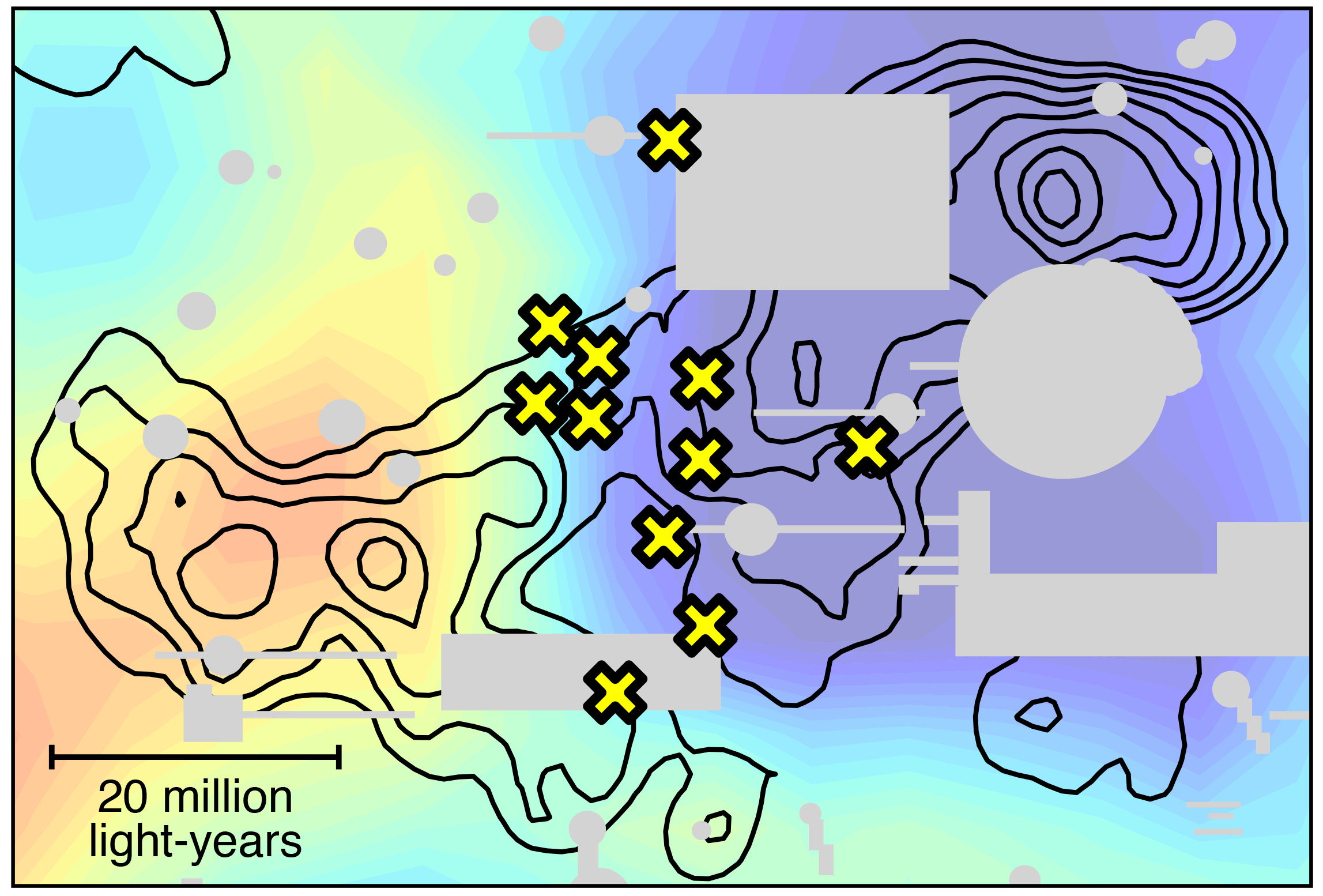
A newly discovered cluster of eleven quasars has shattered the previous record of five. Rather than being associated with a dense group of galaxies, these quasars sit on the boundary between two groups of galaxies. This structure, dubbed the “Cosmic Himalayas,” cannot be explained by conventional theories, forcing astronomers to rethink the formation scenarios for quasars.

Quasars are some of the brightest objects in the Universe. A quasar is powered by large amounts of matter falling into the supermassive black hole at the center of a galaxy. Collisions and mergers between galaxies can cause quasar activity by feeding addition matter into the center of a galaxy. Quasar activity peaked in the early Universe, but even then they were relatively rare. So an international research team led by Yongming Liang at the National Astronomical Observatory of Japan was surprised when they found a group of elven quasars in an area of space where you would normally expect to see maybe one, while analyzing data from the Sloan Digital Sky Survey. The previous record holder for quasar over-density had been five.

Follow-up observations with the Subaru Telescope revealed another mystery. The quasars do not coincide with a dense group of galaxies. Instead, they sit on the boundary between two groups. If galaxy collisions and mergers are responsible for quasar activity, then the densest groups of quasars should be found in the densest group of galaxies. A new formation scenario is needed to explain this group of quasars, which could change the way we think about the evolution of other structures in the Universe. The team hopes that new data from next-generation instruments like the Prime Focus Spectrograph on the Subaru Telescope will help to solve the mysteries of the Cosmic Himalayas.

The research team named this formation the Cosmic Himalayas in reference to how the towering Himalayas on Earth form a boundary between plains and plateaus. The Cosmic Himalayas date back 10.8 billion years. As seen from Earth, this cluster lies in the direction of the constellation Cetus.

The "Cosmic Himalayas": a towering cluster of energetic quasars shaping the cosmic landscape. Yellow X marks indicate the positions of quasars. The color scale represents the density of neutral hydrogen gas, with red indicating high density and blue indicating low density, or in other words, the blue region is rich in ionized gas. Therefore, the neutral gas concentrates in the left cluster of galaxies, while the ionized gas preferentially appears around the right galaxy clump. Black contour lines show the galaxy density. Gray regions are masked areas due to poor image mosaic or saturation near bright stars. (Credit: Subaru Telescope / SDSS, Liang et al.) Download image (626KB)


Detailed Article(s)

The Giant Supermassive Black Hole Cluster Discovered in the Distant Universe: New Puzzles in the Cosmic Matter Distribution
Subaru Telescope


Release Information

Researcher(s) Involved in this Release
Yongming Liang (National Astronomical Observatory of Japan)
Masami Ouchi (National Astoronomical Observatory of Japan / The University of Tokyo)

Coordinated Release Organization(s)
National Astronomical Observatory of Japan
Institute for Cosmic Ray Research, the University of Tokyo

Paper(s)
Liang et al. “Cosmic Himalayas: The Highest Quasar Density Peak Identified in a 10,000 deg2 Sky with Spatial Discrepancies between Galaxies, Quasars, and IGM HI”, in The Astrophysical Journal, DOI: 10.3847/1538-4357/adc1bb

Wednesday, February 26, 2025

Subaru Telescope Observes Near Earth Asteroid 2024 YR4

Asteroid 2024 YR4 (marked by the crosshairs) as observed by the Subaru Telescope around 21:00 on February 20, 2025 (HAST). This image is 1 arcminute north-to-south and 2 arcminutes east-to-west. Exposure time 120 s in the r-band (550-700 nanometer wavelength). Credit: NAOJ.
Download image (2.2MB)

Time animation of the Subaru Telescope observations of 2024 YR4. Near the center of the image with the field of view of 30 arcsec, the asteroid can be seen moving with respect to the background stars and galaxies over the course of the 15 minutes required for this observation. Credit: NAOJ


On February 20, 2025 (Hawaii-Aleutian Standard Time, HAST), the Subaru Telescope captured images of asteroid 2024 YR4, which will pass close to the Earth in 2032. The positional data obtained from these observations was used to refine the asteroid’s orbit, and assure us that the asteroid will not actually hit the Earth.

Discovered in December 2024, asteroid 2024 YR4 is estimated to be 40–90 meters in diameter. It follows a long elliptical orbit around the Sun with a period of approximately four years. For most of its orbit, it remains far from the Earth; however, when it approaches the Sun, it crosses Earth's orbit and occasionally comes close to the Earth. The International Asteroid Warning Network (IAWN)—coordinated by the United Nations Office for Outer Space Affairs—issued the first-ever official impact risk notification in history for 2024 YR4 because there was a slight possibility it could collide with the Earth in December 2032. Now global efforts are working to observe the asteroid with better precision to refine the estimates of its trajectory.

The Subaru Telescope observations of 2024 YR4 were conducted at the request of the JAXA Planetary Defense Team, responding to IAWN’s call for improved orbital tracking. On February 20, 2025 (HAST), Hyper Suprime-Cam (HSC), a wide-field prime-focus camera mounted on the Subaru Telescope, successfully imaged 2024 YR4 and precisely measured its position. The asteroid's brightness was also measured and found to be 24.3 magnitude in r-band (red visible light).

Dr. Tsuyoshi Terai of the Subaru Telescope, National Astronomical Observatory of Japan (NAOJ), who led the observations, comments: “Although 2024 YR4 appeared relatively bright at the time of its discovery, it has been steadily fading as it moves away from the Earth. By late February, observations would have been extremely challenging without a large telescope. This mission was successfully accomplished thanks to the Subaru Telescope’s powerful light-gathering capability and HSC’s high imaging performance.”

The observation results have been reported to the Minor Planet Center (MPC) of the International Astronomical Union, contributing to a more precise determination of 2024 YR4’s orbital elements. Based on new information, IAWN has revised its estimate of the asteroid colliding with the Earth in 2032, downgrading it to only a 0.004 percent chance of collision, much lower than the estimate at the beginning of February.


Related Link(s)


Sunday, February 16, 2025

Dusting for Stars’ Magnetic Fingerprints

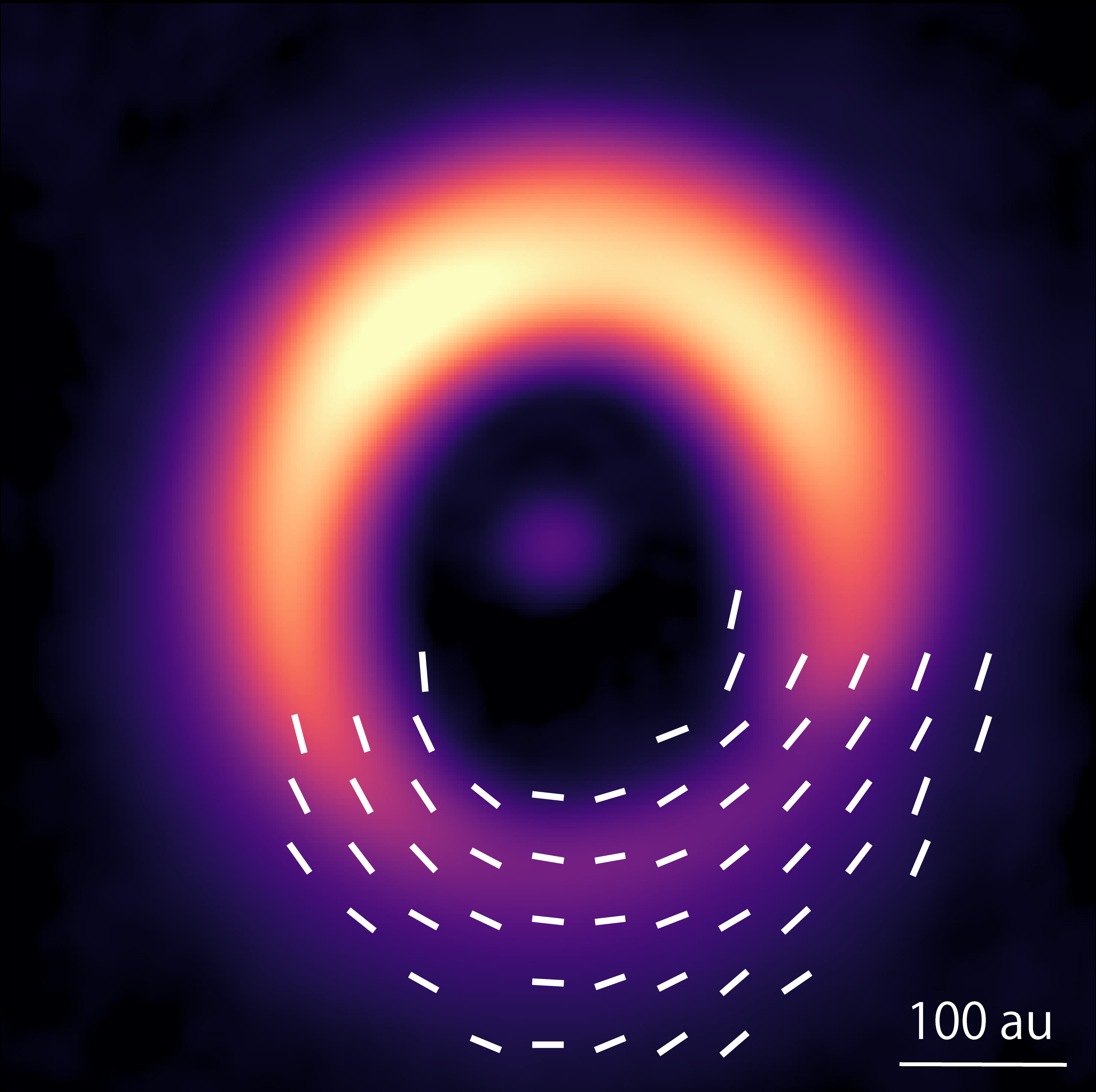
ALMA observations of the protoplanetary disk around HD 142527. The white bars show the directions of the magnetic field revealed by the orientation of the dust grains. The strength of the magnetic field is 0.3 milligauss. For comparison, a typical refrigerator magnet has a magnetic field of about 1,000,000 milligauss. Credit: ALMA (ESO/NAOJ/NRAO), S. Ohashi et al.
Download image (1.8MB)


For the first time astronomers have succeeded in observing the magnetic field around a young star where planets are thought to be forming. The team was able to use dust to measure the three-dimensional structure “fingerprint” of the magnetic field. This will help improve our understanding of planet formation. Planets form in turbulent disks of gas and dust called protoplanetary disks around young stars. It is thought that the first step in planet formation is dust grains colliding and sticking together. The movement of the dust grains is influenced by many forces, including magnetism. Thus, understanding the magnetic fields is important for understanding planet formation, but so far it has not been possible to measure the magnetic fields in a protoplanetary disk.

In this research, an international team of astronomers led by Satoshi Ohashi at the National Astronomical Observatory of Japan used the Atacama Large Millimeter/submillimeter Array (ALMA) to observe the protoplanetary disk around a young star known as HD 142527. This star is located 512 light-years away in the direction of the constellation Lupus. The team found that the dust grains aligned with the magnetic field lines. This allowed the team to detect and measure the unseen magnetic field lines, much the same way iron filings can reveal the magnetic field around a magnet. The team thinks that the measured three-dimensional structure might create strong turbulence withing the protoplanetary disk.

Now that this method of dusting for a young star’s magnetic fingerprint has been proven to work, the team wants to apply it to more stars, and measure the magnetic field closer to the star to better understand the magnetic conditions where planets are forming.


Detailed Article(s)

Magnetic Field in Planet Formation has been Successfully Observed
ALMA


Release Information

Researcher(s) Involved in this Release

Satoshi Ohashi (National Astronomical Observatory of Japan)

Coordinated Release Organization(s)

National Astronomical Observatory of Japan
RIKEN
Kogakuin University
Ibaraki University
Ashikaga University

Paper(s)
Satoshi Ohashi et al. “Observationally derived magnetic field strength and 3D components in the HD 142527 disk”, in Nature Astronomy, DOI:10.1038/s41550-024-02454-x


Related Link(s)

ALMA measures size of seeds of planets (December 5, 2016)

Thursday, January 23, 2025

First Solar Images from Sunrise-Ⅲ

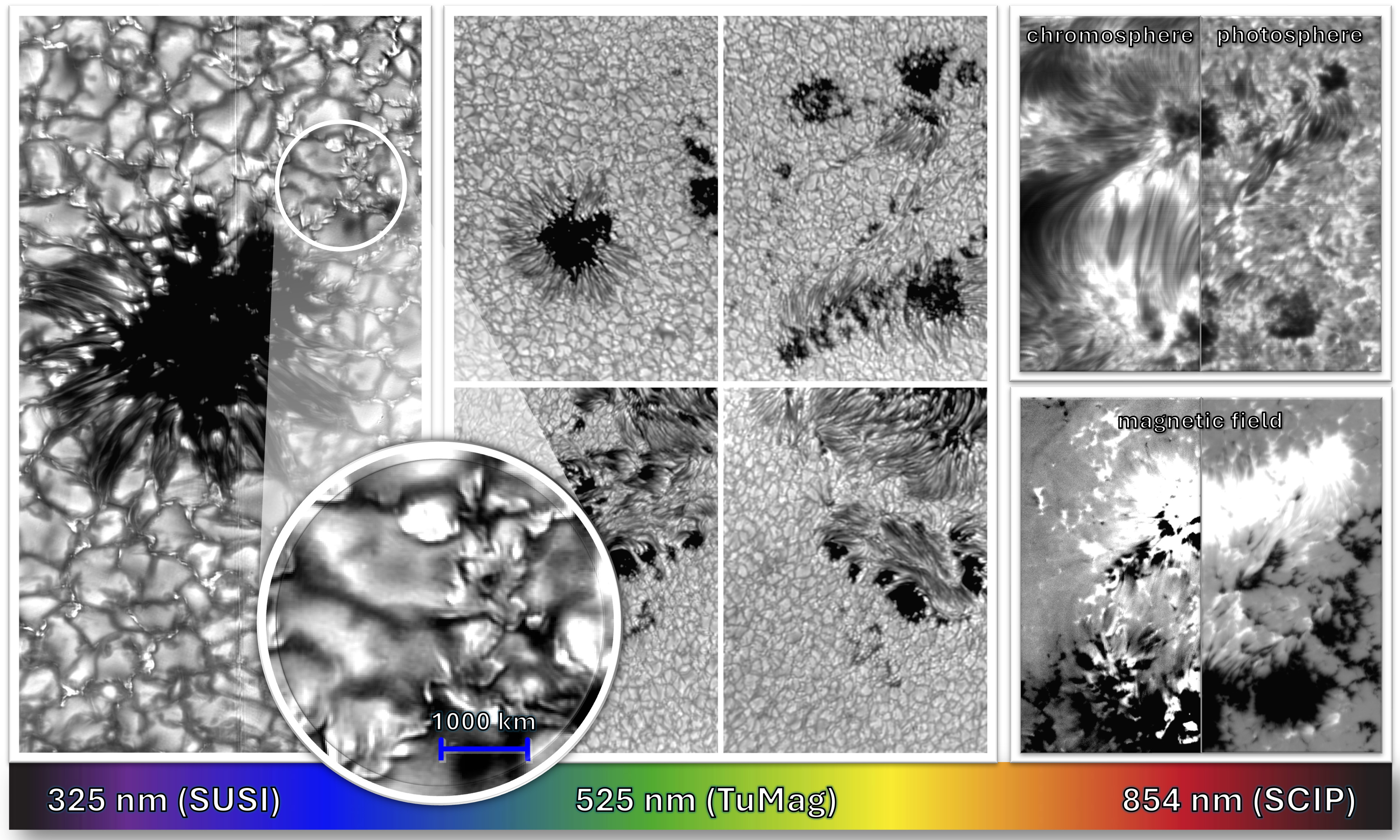
Left: The SUSI instrument shows the surface of the Sun in ultraviolet light. Here you can see a sunspot, its finely structured edge area, and the typical granulation of the solar surface. Center: The TuMag instrument images the surface of the Sun in visible light. The four images show different views of sunspots. Right: Infrared images of the chromosphere and photosphere taken by the SCIP instrument. In the upper image, elongated fibril-like structures can be seen in the chromosphere. The lower image shows the corresponding magnetic fields in the chromosphere and photosphere.  (Credit:MPS/Sunrise III/Teams: SUSI, TuMag, SCIP, CWS, Gondola).
Download image


The first images have been published from the Sunrise-Ⅲ balloon-borne solar telescope’s successful 6.5-day stratospheric flight in July 2024. The unprecedented huge amount of data (about 200 terabytes) recorded during the flight observations show structures down to only 50 kilometers in size on the Sun’s visible surface. The Sun is now in the maximum phase of its 11-year solar cycle (Cycle 25), so solar activity was high during the Sunrise-Ⅲ flight observations. Two solar flares were successfully observed as well as growing sunspots and various dynamical phenomena.

Within the international collaboration framework of the Sunrise-Ⅲ project, the near-infrared spectropolarimeter SCIP was developed under the leadership of the National Astronomical Observatory of Japan. SCIP observes many spectral lines simultaneously, including chromospheric and photospheric spectral lines, in the near-infrared wavelength bands. The images obtained by SCIP show the three-dimensional structures of the radiation intensity (Figure, right top) and magnetic field (Figure, right bottom) from the solar surface (photosphere) to the upper solar atmosphere (chromosphere). Elongated, fibril-like fine-scale structures in the vertical direction can be seen in the chromosphere, connecting the positive (white) and negative (black) polarity magnetic fields. Thanks to Sunrise-Ⅲ’s observations from a balloon in Earth’s stratosphere, the temporal evolution of these three-dimensional structures was successfully captured for several hours without interruption.

Furthermore, a Spanish team of amateur astronomers mounted four cameras on balloon’s gondola and took “selfies” of Sunrise-Ⅲ during the flight from takeoff to landing. Please take a look.


Related Link(s)


Super-Earth vs. Sub-Neptune? The Winner is Super-Venus!

Artist’s impression of GJ 1214 b passing in front of its host star. The “transit method” allows astronomers to study an exoplanet by seeing which wavelengths of light dim when the star’s light passes through the exoplanet atmosphere. Credit: NAOJ.
Download image (1.1MB)


New observational data from the James Webb Space Telescope and simulation models have confirmed a new type of planet unlike anything found in the Solar System. This provides another piece of the puzzle to understand how planets and planetary systems form.

To date, more than 5000 exoplanets have been confirmed around stars other than the Sun. Many exoplanets are unlike any of the planets in the Solar System, making it difficult to guess their true natures. One of the most common types of exoplanets falls in a size range between Earth and Neptune. Astronomers have debated whether these planets are Earth-like rocky planets with thick hydrogen-rich atmospheres, or Neptune-like icy planets surrounded by water-rich atmospheres, called water worlds. Previous studies have been confounded by layers of high thick clouds, which seem to be common on this type of planet, and make it difficult to study the atmosphere below the cloud deck.

An international team of researchers led by Everett Schlawin at the University of Arizona and Steward Observatory and Kazumasa Ohno at the National Astronomical Observatory of Japan used the James Webb Space Telescope to peer through the clouds on an example of this kind of exoplanet known as GJ 1214 b. Located only 48 light years from the Solar System, in the direction of the constellation Ophiuchus, GJ 1214 b is the easiest example of this planet to study.

Instead of a hydrogen rich super-Earth, or a water world, the new data revealed concentrations of carbon-dioxide (CO2) comparable to the levels found in the dense CO2 atmosphere of Venus in the Solar System. But there were still many uncertainties in the new data. “The detected CO2 signal from the first study is tiny, and so it required careful statistical analysis to ensure that it is real,” explains Ohno. “At the same time, we needed the physical and chemical insights to extract the true nature of GJ 1214 b’s atmosphere from Schlawin’s study.” Then Ohno took the lead, using theoretical models to run a plethora of “what if” scenarios about the atmosphere of the planet. Out of all of these models, the ones which best fit the data all suggest a carbon-dominated atmosphere, like a “super-Venus.”

Although fascinating, the atmospheric signature detected in this work is very small. Schlawin compares it to reading a book, “It’s equivalent to Leo Tolstoy’s War and Peace. If I gave you two copies and changed one sentence in one of the books, could you find that sentence?” The team stresses the need for future studies to confirm and expand their findings about this common yet mysterious type of exoplanet.


Release Information

Researcher(s) Involved in this Release

Kazumasa Ohno (National Astronomical Observatory of Japan)

Coordinated Release Organization(s)

National Astronomical Observatory of Japan
Steward Observatory of the University of Arizona

Paper(s)

Everett Schlawin, Kazumasa Ohno et al. “Possible Carbon Dioxide above the Thick Aerosols of GJ 1214 b”, in The Astrophysical Journal Letters, DOI: 10.3847/2041-8213/ad7fef
Kazumasa Ohno, Everett Schlawin et al. “A Possible Metal-Dominated Atmosphere Below the Thick Aerosols of GJ 1214 b Suggested by its JWST Panchromatic Transmission Spectrum”, in The Astrophysical Journal Letters, DOI: 10.3847/2041-8213/ada02c


Related Link(s)


Friday, January 10, 2025

Prime Focus Spectrograph on the Subaru Telescope to Begin Science Operations in February

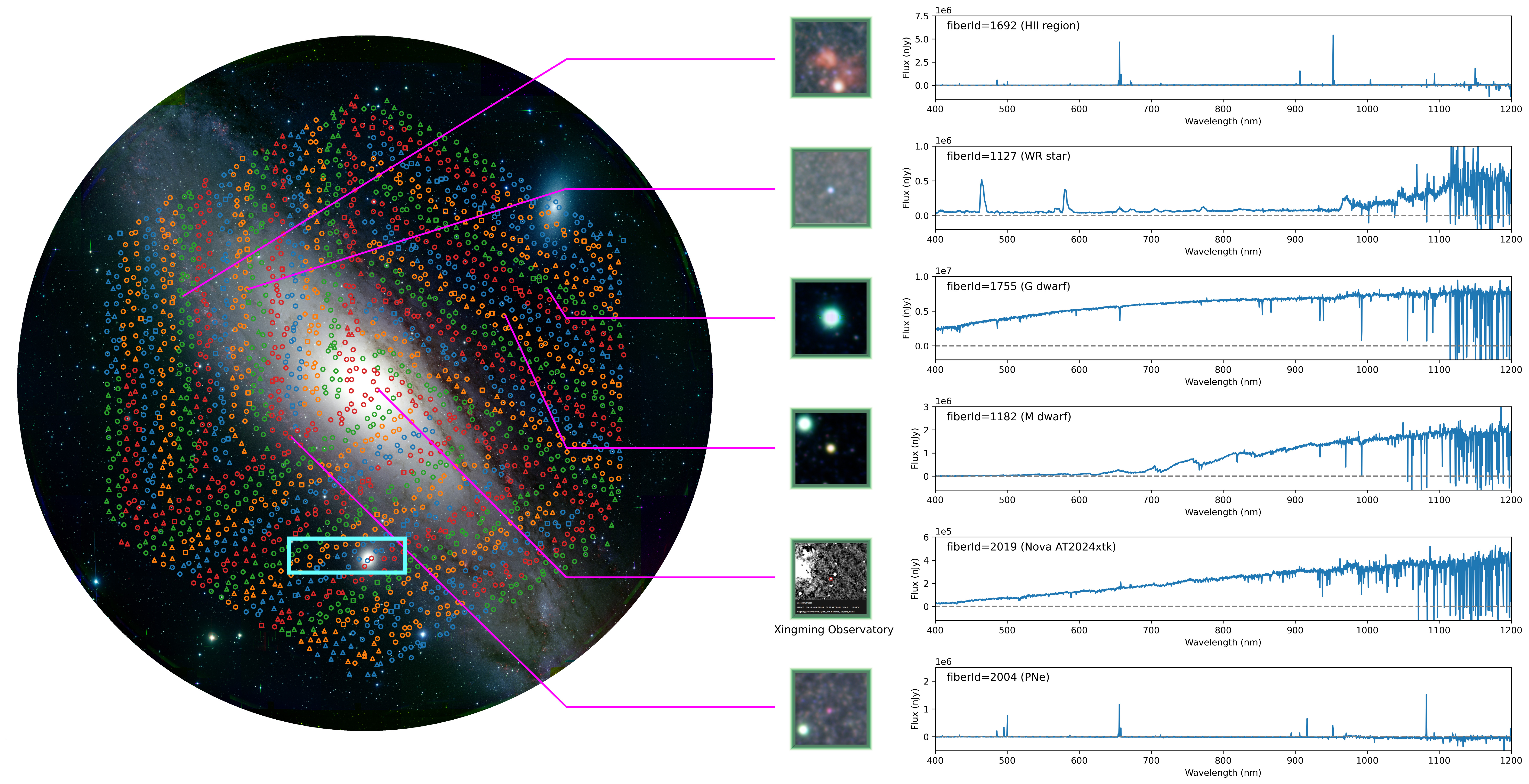
Example of data obtained by PFS observing celestial objects in the Andromeda Galaxy region. On the left, the positions of the PFS fibers configured to observe individual celestial objects are marked by circles on an image of the Andromeda Galaxy taken with HSC (Hyper Suprime-Cam) (Credit: NAOJ). The cyan rectangle represents the field of view of the multi-object spectrograph DEIMOS in operation at W. M. Keck Observatory for comparison. On the right, a magnified image of the observed celestial object is shown, along with the spectra obtained by PFS. (Credit: PFS Project/Kavli IPMU/NAOJ). Download image (4.5MB)


Researchers have finished equipping the Subaru Telescope with a new special “compound eye,” culminating several years of effort. This new eye is an instrument featuring approximately 2,400 prisms scattered across the extremely wide field of view available at the Subaru Telescope’s primary focus, allowing for simultaneous spectroscopic observation of thousands of celestial objects. This unrivaled capability will help researchers precisely understand the formation and evolution of galaxies and the Universe. Among 8-meter-class telescopes, the Subaru Telescope is the most competitive with the largest survey capability in the world. This instrument, the Prime Focus Spectrograph (PFS), will be ready to begin scientific operations in February 2025.

PFS will be one of the flagship instruments of the “Subaru Telescope 2.0” era. Taking advantage of the Subaru Telescope’s ultrawide field of view, approximately 1.3 degrees in diameter at the prime focus, and world-renowned large light-gathering power, PFS will position 2,400 fibers to collect light from celestial objects and simultaneously obtain spectra across the entire visible light range and part of the near-infrared band. Just like the compound eyes of insects, each facet (fiber) focuses on a different direction to cover a wide area while perceiving the colors of light from that direction. This highly ambitious instrument will dramatically enhance the Subaru Telescope’s spectroscopic observation efficiency.

Spanning nearly 15 years with support from industrial partners around the world, the development of PFS has been led by an international collaboration of over 20 research institutions in Japan, the U.S., France, Brazil, Taiwan, Germany, and China. Notably, the University of Tokyo Kavli Institute for the Physics and Mathematics of the Universe (Kavli IPMU, WPI) has taken the lead in proposing and developing the instrument as well as planning large-sky survey observations, with the goal of testing various theoretical models about the formation of the Universe. The National Astronomical Observatory of Japan (NAOJ) has also played a central role, participating in the development of the instrument and overseeing the coordination of the project, while also being responsible for the acceptance and operation of the instrument

The PFS team plans to carry out a large-sky survey program over the next five or so years, utilizing a total of 360 nights of telescope time. This survey will take spectra of millions of distant galaxies, as well as hundreds of thousands of stars in the Milky Way and our neighboring Andromeda Galaxy.


Related Link(s)