Showing posts with label Alpha Centauri. Show all posts

Thursday, October 09, 2025

Finding Avatar’s Pandora: Exomoons with Astrometry

Illustration of a giant planet with a large moon orbiting a distant star.
Credit:
NASA/ESA/L. Hustak


Authors: Kevin Wagner et al.
First Author’s Institution: University of Arizona
Status: Published in ApJL

Six of the eight planets in our solar system host at least one moon; the innermost planets Mercury and Venus are the exceptions. The origins of these moons are widely studied and hotly debated. Earth’s very own moon seems to have formed in the aftermath of a collision between the young Earth and another protoplanet. Mars seems to have captured two asteroids as its moons, Phobos and Deimos, a process thought to have produced many of the irregular satellites orbiting the gas giants as well. Using our solar system as a model, the presence of moons seems like a natural outcome of planet formation.

Why then don’t we observe exomoons, moons orbiting any of the ~6,000 known exoplanets? Well, the largest moon in our solar system, Ganymede, is 2.5% as massive as Earth and has 40% of the radius, making it marginally larger than Mercury but still less massive. You might have heard how difficult it is to find Earth-like exoplanets, and finding exomoons is even harder. A few exomoon candidates have been announced via microlensing and transits, but the authors of today’s article investigate whether a different technique, astrometry, could help find moons.

Astrometry involves precisely tracking the positions of objects like stars or planets on the sky. In a simple star–planet system, the star and planet trace out ellipses around their shared center of mass. With a moon present, there is an additional deviation, as the planet wobbles to and fro due to the gravitational tug of the moon. The authors of today’s article check whether moons can be detected by tracking such wobbles exhibited by directly imaged planets.

To start, the authors consider whether any known planets are promising targets for astrometric moon searches. There just so happens to be a giant planet candidate in Alpha Centauri, and if there were a massive moon orbiting this large planet around this nearby star, it would be as good as it gets. The authors simulate orbits of this system (a Saturn-like planet in a 1.8 au orbit around a Sun-like star at a distance of 4.2 light-years) with a 30-Earth-mass moon injected. They simulate observing such a system with a space-based 6.5-meter telescope (similar to the planned Habitable Worlds Observatory) with realistic noise over a 3-year observing campaign. The simulated and modeled orbits are shown in Figure 1. After the authors subtract the best-fit planet orbit, they are left with what is shown in Figure 2, where a clear periodic perturbation from the moon as it orbits is visible.

Figure 1: Left: The zoomed-out orbit of the hypothetical Alpha Centauri star–planet–moon system. The blue curve shows the Keplerian orbital fit. Right: The zoomed-in orbit. The red points are the simulated observations, showing deviations caused by the moon. Credit: Wagner et al. 2025

Figure 2: Left: Deviations in position of the planet’s orbit over time. The red points show the simulated observations, and the black curve shows the data smoothed. Right: Zoom-in showing the moon’s effect on the planet’s motion. Adapted from Wagner et al. 2025


The authors then repeat this procedure with more realistically sized moons and a more optimistic observing campaign (5-year baseline, 1-hour observing cadence, precision of 0.1 milliarcsecond) looking at the Alpha Centauri giant planet candidate. They use the difference in the chi-squared (χ2) test statistic to determine whether the presence of a moon is statistically preferred. Figure 3 shows the moon-induced deviations for two different moon masses and the resulting χ2 difference. Using their χ2 difference threshold of ~5, the lowest-mass detectable moon is ~0.2 Earth mass. This is much more massive than the Moon, which is around 1% of Earth’s mass. The authors additionally vary the moon’s orbital period and find that periods of 4–30 days are detectable.

Figure 3: Left: Moon-induced planet position deviations over the first 90 observing days. Middle: Deviations from the entire 5-year observing baseline folded around the best-fit moon orbital period. Right: χ2 difference as a function of period, showing a peak in the signal at the moon’s orbital period. Adapted from Wagner et al. 2025


The authors continue to consider more specific observing scenarios: a 39-meter ground-based telescope (similar to the planned European Extremely Large Telescope) and a 3-meter space telescope built specifically to find moons. They find that the ground-based telescope observing once per day could detect an Earth-mass moon around a Saturn-like planet over a 5-year observing campaign. The dedicated space telescope observing once per hour could make the same detection observing over 5 years. While detecting moons astrometrically is neither easy nor fast, it may be feasible to start finding moons around planets orbiting nearby stars in the coming decades.

All of this is great news for fans of the hit movie (and still the highest-grossing movie of all time) Avatar, which features a habitable exomoon in the Alpha Centauri system. Searching for moons will help us understand their properties and formation, probe whether our solar system is unique, and even look for life on rocky moons orbiting gas giants in the habitable zones of their stars.

Original astrobite edited by Ryan White.


About the author, Kylee Carden:

I am a PhD student at Johns Hopkins University, where I am an observer of planets outside the solar system. I’m interested in dynamics, disks, demographics, the Roman Space Telescope. I am a huge fan of my cat Piccadilly, cycling, and visiting underappreciated tourist sites.


Editor’s Note: Astrobites is a graduate-student-run organization that digests astrophysical literature for undergraduate students. As part of the partnership between the AAS and astrobites, we occasionally repost astrobites content here at AAS Nova. We hope you enjoy this post from astrobites; the original can be viewed at astrobites.org.


Friday, October 04, 2024

Scientists discover planet orbiting closest single star to our Sun

PR Image eso2414a
Artist’s impression of a sub-Earth-mass planet orbiting Barnard’s star

PR Image eso2414b
The nearest stars to the Sun (infographic)

PR Image eso2414c
Barnard’s Star in the constellation Ophiuchus

PR Image eso2414d
Widefield image of the sky around Barnard’s Star showing its motion


Videos

New planet discovered orbiting closest single star to our Sun | ESO News
PR Video eso2414a
New planet discovered orbiting closest single star to our Sun | ESO News

Animation of a sub-Earth-mass planet orbiting Barnard’s star
PR Video eso2414b
Animation of a sub-Earth-mass planet orbiting Barnard’s star

Animation of a sub-Earth-mass planet orbiting Barnard’s star
PR Video eso2414c
Animation of a sub-Earth-mass planet orbiting Barnard’s star

Barnard’s Star in the Solar neighborhood
PR Video eso2414d
Barnard’s Star in the Solar neighborhood

The radial velocity method for finding exoplanets
PR Video eso2414e
The radial velocity method for finding exoplanets


Using the European Southern Observatory’s Very Large Telescope (ESO’s VLT), astronomers have discovered an exoplanet orbiting Barnard’s star, the closest single star to our Sun. On this newly discovered exoplanet, which has at least half the mass of Venus, a year lasts just over three Earth days. The team’s observations also hint at the existence of three more exoplanet candidates, in various orbits around the star.

Located just six light-years away, Barnard’s star is the second-closest stellar system — after Alpha Centauri’s three-star group — and the closest individual star to us. Owing to its proximity, it is a primary target in the search for Earth-like exoplanets. Despite a promising detection back in 2018, no planet orbiting Barnard's star had been confirmed until now.

The discovery of this new exoplanet — announced in a paper published today in the journal Astronomy & Astrophysics — is the result of observations made over the last five years with ESO’s VLT, located at Paranal Observatory in Chile. “Even if it took a long time, we were always confident that we could find something,” says Jonay González Hernández, a researcher at the Instituto de Astrofísica de Canarias in Spain, and lead author of the paper. The team were looking for signals from possible exoplanets within the habitable or temperate zone of Barnard’s star — the range where liquid water can exist on the planet’s surface. Red dwarfs like Barnard’s star are often targeted by astronomers since low-mass rocky planets are easier to detect there than around larger Sun-like stars. [1]

Barnard b [2], as the newly discovered exoplanet is called, is twenty times closer to Barnard’s star than Mercury is to the Sun. It orbits its star in 3.15 Earth days and has a surface temperature around 125 °C. “Barnard b is one of the lowest-mass exoplanets known and one of the few known with a mass less than that of Earth. But the planet is too close to the host star, closer than the habitable zone,” explains González Hernández. “Even if the star is about 2500 degrees cooler than our Sun, it is too hot there to maintain liquid water on the surface.”

For their observations, the team used ESPRESSO, a highly precise instrument designed to measure the wobble of a star caused by the gravitational pull of one or more orbiting planets. The results obtained from these observations were confirmed by data from other instruments also specialised in exoplanet hunting: HARPS at ESO’s La Silla Observatory, HARPS-N and CARMENES. The new data do not, however, support the existence of the exoplanet reported in 2018. 

In addition to the confirmed planet, the international team also found hints of three more exoplanet candidates orbiting the same star. These candidates, however, will require additional observations with ESPRESSO to be confirmed. “We now need to continue observing this star to confirm the other candidate signals,” says Alejandro Suárez Mascareño, a researcher also at the Instituto de Astrofísica de Canarias and co-author of the study. “But the discovery of this planet, along with other previous discoveries such as Proxima b and d, shows that our cosmic backyard is full of low-mass planets.”

ESO’s Extremely Large Telescope (ELT), currently under construction, is set to transform the field of exoplanet research. The ELT’s ANDES instrument will allow researchers to detect more of these small, rocky planets in the temperate zone around nearby stars, beyond the reach of current telescopes, and enable them to study the composition of their atmospheres.

Source: ESO/News


Notes

[1] Astronomers target cool stars, like red dwarfs, because their temperate zone is much closer to the star than that of hotter stars, like the Sun. This means that the planets orbiting within their temperate zone have shorter orbital periods, allowing astronomers to monitor them over several days or weeks, rather than years. In addition, red dwarfs are much less massive than the Sun, so they are more easily disturbed by the gravitational pull of the planets around them and thus they wobble more strongly.

[2] It’s common practice in science to name exoplanets by the name of their host star with a lowercase letter added to it, ‘b’ indicating the first known planet, ’c’ the next one, and so on. The name Barnard b was therefore also given to a previously suspected planet candidate around Barnard's star, which scientists were unable to confirm.


More information

This research was presented in the paper “A sub-Earth-mass planet orbiting Barnard’s star” to appear in Astronomy & Astrophysics. (https://www.aanda.org/10.1051/0004-6361/202451311)

The team is composed of J. I. González Hernández (Instituto de Astrofísica de Canarias, Spain [IAC] and Departamento de Astrofísica, Universidad de La Laguna, Spain [IAC-ULL]), A. Suárez Mascareño (IAC and IAC-ULL), A. M. Silva (Instituto de Astrofísica e Ciências do Espaço, Universidade do Porto, Portugal [IA-CAUP] and Departamento de Física e Astronomia Faculdade de Ciências, Universidade do Porto, Portugal [FCUP]), A. K. Stefanov (IAC and IAC-ULL), J. P. Faria (Observatoire de Genève, Université de Genève, Switzerland [UNIGE]; IA-CAUP and FCUP), H. M. Tabernero (Departamento de Física de la Tierra y Astrofísica & Instituto de Física de Partículas y del Cosmos, Universidad Complutense de Madrid, Spain), A. Sozzetti (INAF - Osservatorio Astrofisico di Torino [INAF-OATo] and Istituto Nazionale di Astrofisica, Torino, Italy), R. Rebolo (IAC; IAC-ULL and Consejo Superior de Investigaciones Científicas, Spain [CSIC]), F. Pepe (UNIGE), N. C. Santos (IA-CAUP; FCUP), S. Cristiani (INAF - Osservatorio Astronomico di Trieste, Italy [INAF-OAT] and Institute for Fundamental Physics of the Universe, Trieste, Italy [IFPU]), C. Lovis (UNIGE), X. Dumusque (UNIGE), P. Figueira (UNIGE and IA-CAUP), J. Lillo-Box (Centro de Astrobiología, CSIC-INTA, Madrid, Spain [CAB]), N. Nari (IAC; Light Bridges S. L., Canarias, Spain and IAC-ULL), S. Benatti (INAF - Osservatorio Astronomico di Palermo, Italy [INAF-OAPa]), M. J. Hobson (UNIGE), A. Castro-González (CAB), R. Allart (Institut Trottier de Recherche sur les Exoplanètes, Université de Montréal, Canada and UNIGE), V. M. Passegger (National Astronomical Observatory of Japan, Hilo, USA; IAC; IAC-ULL and Hamburger Sternwarte, Hamburg, Germany), M.-R. Zapatero Osorio (CAB), V. Adibekyan (IA-CAUP and FCUP), Y. Alibert (Center for Space and Habitability, University of Bern, Switzerland and Weltraumforschung und Planetologie, Physikalisches Institut, University of Bern, Switzerland), C. Allende Prieto (IAC and IAC-ULL), F. Bouchy (UNIGE), M. Damasso (INAF-OATo), V. D’Odorico (INAF-OAT and IFPU), P. Di Marcantonio (INAF-OAT), D. Ehrenreich (UNIGE), G. Lo Curto (European Southern Observatory, Santiago, Chile [ESO Chile]), R. Génova Santos (IAC and IAC-ULL), C. J. A. P. Martins (IA-CAUP and Centro de Astrofísica da Universidade do Porto, Portugal), A. Mehner (ESO Chile), G. Micela (INAF-OAPa), P. Molaro (INAF-OAT), N. Nunes (Instituto de Astrofísica e Ciências do Espaço, Universidade de Lisboa), E. Palle (IAC and IAC-ULL), S. G. Sousa (IA-CAUP and FCUP), and S. Udry (UNIGE).

The European Southern Observatory (ESO) enables scientists worldwide to discover the secrets of the Universe for the benefit of all. We design, build and operate world-class observatories on the ground — which astronomers use to tackle exciting questions and spread the fascination of astronomy — and promote international collaboration for astronomy. Established as an intergovernmental organisation in 1962, today ESO is supported by 16 Member States (Austria, Belgium, Czechia, Denmark, France, Finland, Germany, Ireland, Italy, the Netherlands, Poland, Portugal, Spain, Sweden, Switzerland and the United Kingdom), along with the host state of Chile and with Australia as a Strategic Partner. ESO’s headquarters and its visitor centre and planetarium, the ESO Supernova, are located close to Munich in Germany, while the Chilean Atacama Desert, a marvellous place with unique conditions to observe the sky, hosts our telescopes. ESO operates three observing sites: La Silla, Paranal and Chajnantor. At Paranal, ESO operates the Very Large Telescope and its Very Large Telescope Interferometer, as well as survey telescopes such as VISTA. Also at Paranal ESO will host and operate the Cherenkov Telescope Array South, the world’s largest and most sensitive gamma-ray observatory. Together with international partners, ESO operates ALMA on Chajnantor, a facility that observes the skies in the millimetre and submillimetre range. At Cerro Armazones, near Paranal, we are building “the world’s biggest eye on the sky” — ESO’s Extremely Large Telescope. From our offices in Santiago, Chile we support our operations in the country and engage with Chilean partners and society.


Links


Contacts:

Jonay I. González Hernández
Instituto de Astrofísica de Canarias
Tenerife, Spain
Tel: +34 922 605 751 or +34 922 605 200
Email:
jonay.gonzalez@iac.es Alejandro Suárez Mascareño
Instituto de Astrofísica de Canarias
Tenerife, Spain
Tel: +34 658 778 954
Email:
alejandro.suarez.mascareno@iac.es

Serena Benatti
INAF - Osservatorio Astronomico di Palermo
Palermo, Italy
Tel: +39 091 233270
Email:
serena.benatti@inaf.it

João Faria
Département d’astronomie de l’Université de Genève
Geneve, Switzerland
Tel: +41 22 379 22 76
Email:
joao.faria@unige.ch

André M. Silva
Instituto de Astrofísica e Ciências do Espaço, Universidade do Porto
Porto, Portugal
Tel: +351 226 089 830
Email:
Andre.Silva@astro.up.pt

Bárbara Ferreira
ESO Media Manager
Garching bei München, Germany
Tel: +49 89 3200 6670
Cell: +49 151 241 664 00
Email:
press@eso.org


Monday, March 06, 2023

Supernova From the Year 185: A Rare View of the Entirety of This Supernova Remnant


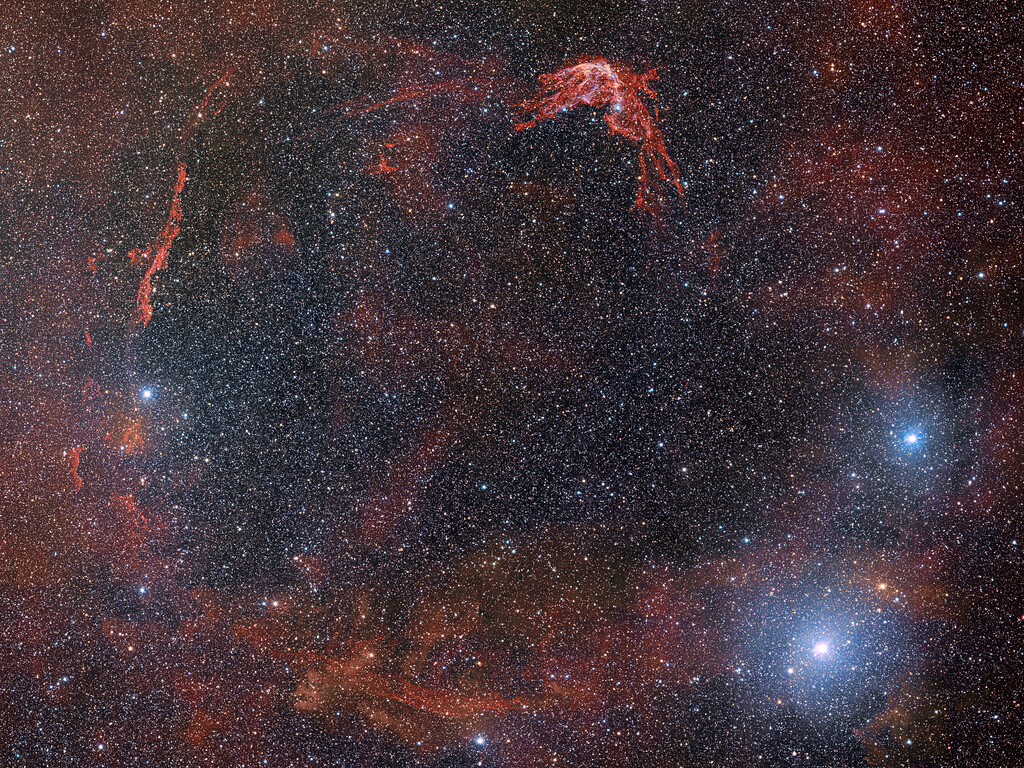
DECam Images RCW 86, Remains of Supernova Witnessed in 185 
 

Videos

Cosmoview Episode 63:  Supernova From the Year 185: A Rare View of the Entirety of This Supernova Remnant
Cosmoview Episode 63: Supernova From the Year 185: A Rare View of the Entirety of This Supernova Remnant 
 
Cosmoview Episodio 63: Cerro Tololo logra un retrato único de una supernova que explotó hace más de 1.800 años


Dark Energy Camera captures the glowing remains of the first-ever documented supernova

The tattered shell of the first-ever historically recorded supernova was captured by the US Department of Energy-fabricated Dark Energy Camera, which is mounted on the National Science Foundation’s (NSF) Víctor M. Blanco 4-meter Telescope at Cerro Tololo Inter-American Observatory in Chile, a Program of NSF’s NOIRLab. RCW 86’s ring of debris is all that remains of a white-dwarf star that exploded more than 1800 years ago, when it was recorded by Chinese stargazers as a ‘guest star’.

Draped around the outer edges of this star-filled image are wispy tendrils that appear to be flying away from a central point, like the tattered remains of a burst balloon. These cloud-like features are thought to be the glowing remains of a supernova that was witnessed by Chinese astronomers in the year 185 C.E. When it appeared, this baffling addition to the night sky was referred to as a ‘guest star’ by ancient astronomers. It remained visible to the naked eye for about eight months before fading from view. 

This historical supernova, which astronomers now refer to as SN 185, occurred more than 8000 light-years away in the approximate direction of Alpha Centauri, between the constellations of Circinus and Centaurus. The resulting structure, RCW 86 — as imaged by the Dark Energy Camera (DECam) mounted on the Víctor M. Blanco 4-meter Telescope at Cerro Tololo Inter-American Observatory in Chile, a Program of NSF’s NOIRLab — helps shed light on how the remains of the supernova evolved over the past 1800 years. DECam’s amazing wide-field vision enabled astronomers to create this rare view of the entire supernova remnant as it is seen today.

Though the link between RCW 86 and SN 185 is now well established, that wasn’t always the case. For decades, astronomers thought it would take about 10,000 years for a traditional core-collapse supernova — one in which a massive star blows material away from itself by exploding — to form the structure as we see it today. This would make the structure far older than the supernova observed in the year 185. 

This preliminary estimate largely came from measurements of the supernova remnant’s size. But, a 2006 study found that the large size was due instead to an extremely high expansion velocity. The new estimate is much more in line with a comparatively youthful age of about 2000 years, which strengthened the link between RCW 86 and the guest star observed centuries ago.

While a more accurate age estimate brought astronomers one step closer to understanding this unique stellar feature, one mystery still remained. How did RCW 86 expand so fast? The answer was uncovered when X-ray data of the region revealed large amounts of iron present, a tell-tale sign of a different kind of explosion: a Type Ia supernova. This type of blast occurs in a binary star system when a dense white dwarf (the end-of-life remains of a star like our Sun) siphons material from its companion star to the point of detonation. These supernovae are the brightest of all and no doubt SN 185 would have awed observers while it shone brightly in the night sky.

Astronomers now have a more complete picture of how RCW 86 formed. As the white dwarf of the binary system swallowed the material of its companion star, its high-velocity winds pushed the surrounding gas and dust outward, creating the cavity we observe today. Then, when the white dwarf could not support any more mass falling onto it from the companion star, it exploded in a violent eruption. The previously formed cavity gave ample room for the high-velocity stellar remnants to expand very quickly and to create the monumental features we see today. 

This new image of RCW 86 gives astronomers an even deeper look into the physics of this perplexing structure and its formation.

The image was obtained by NOIRLab’s Communication, Education & Engagement team as part of the NOIRLab Legacy Imaging Program.


More information

NSF’s NOIRLab (National Optical-Infrared Astronomy Research Laboratory), the US center for ground-based optical-infrared astronomy, operates the international Gemini Observatory (a facility of NSF, NRC–Canada, ANID–Chile, MCTIC–Brazil, MINCyT–Argentina, and KASI–Republic of Korea), Kitt Peak National Observatory (KPNO), Cerro Tololo Inter-American Observatory (CTIO), the Community Science and Data Center (CSDC), and Vera C. Rubin Observatory (operated in cooperation with the Department of Energy’s SLAC National Accelerator Laboratory). It is managed by the Association of Universities for Research in Astronomy (AURA) under a cooperative agreement with NSF and is headquartered in Tucson, Arizona. The astronomical community is honored to have the opportunity to conduct astronomical research on Iolkam Du’ag (Kitt Peak) in Arizona, on Maunakea in Hawai‘i, and on Cerro Tololo and Cerro Pachón in Chile. We recognize and acknowledge the very significant cultural role and reverence that these sites have to the Tohono O’odham Nation, to the Native Hawaiian community, and to the local communities in Chile, respectively.

Contacts

Charles Blue
NSF’s NOIRLab
Cell: +1 202 236 6324
Email: charles.blue@noirlab.edu

Source: NSF’s National Optical-Infrared Astronomy Research Laboratory (NOIRLab)/News


Monday, September 13, 2021

A Closer Look at Hubble’s 31st Anniversary Snapshot

AG Carinae - Comparison
Credit: ESA/Hubble and NASA, A. Nota, C. Britt

A Closer Look at Hubble’s 31st Anniversary Snapshot

A Closer Look at Hubble’s 31st Anniversary Snapshot

This comparison view shows puffing dust bubbles and an erupting gas shell — the final acts of a monster star.You can explore the detail of the nebula surrounding the star AG Carinae by using the slider tool on the image above.

This comparison view shows puffing dust bubbles and an erupting gas shell — the final acts of a monster star.You can explore the detail of the nebula surrounding the star AG Carinae by using the slider tool on the image above.

This Picture of the Week showcases new views of the dual nature of the star AG Carinae, which was the target of the NASA/ESA Hubble Space Telescope’s 31st anniversary image in April 2021. This new perspective was developed thanks to Hubble’s observations of the star in 2020 and 2014, along with others captured by the telescope’s WFPC2 instrument in 1994.

The first image showcases the details of the ionised hydrogen and ionised nitrogen emissions from the nebula (seen here in red). In the second image, the blue demonstrates the contrasting appearance of the distribution of the dust that shines of reflected stellar light. Astronomers believe that the dust bubbles and filaments formed within and were shaped by powerful stellar wind .

This giant star is waging a tug-of-war between gravity and radiation to avoid self-destruction. The star is surrounded by an expanding shell of gas and dust — a nebula — that is shaped by the powerful winds emanating from the star. The nebula is about five light-years wide, equal to the distance from here to our nearest star, Alpha Centauri

AG Carinae is formally classified as a Luminous Blue Variable because it is hot (blue), very luminous, and variable. Such stars are quite rare because there are not many stars that are so massive. Luminous Blue Variable stars continuously lose mass in the final stages of their life, during which a significant amount of stellar material is ejected into the surrounding interstellar space, until enough mass has been lost that the star has reached a stable state.

AG Carinae is surrounded by a spectacular nebula, formed by material ejected by the star during several of its past outbursts. The nebula is approximately 10 000 years old, and the observed velocity of the gas is approximately 70 kilometres per second. While this nebula looks like a ring, it is in fact a hollow shell rich in gas and dust, the centre of which has been cleared by the powerful stellar wind travelling at roughly 200 kilometres per second. The gas (composed mostly of ionised hydrogen and nitrogen) is visible to us in these images as a thick bright red ring, which appears doubled in places — possibly the result of several outbursts colliding into each other. The dust, here visible in blue, has formed in clumps, bubbles and filaments that are shaped by the stellar wind.

Scientists who observed the star and its surrounding nebula note that the ring is not perfectly spherical; it appears to have a bipolar symmetry, indicating that the mechanism producing the outburst may have been caused by the presence of a disc in the centre, or that the star is not alone but might have a companion (known as a binary star). An alternative and simpler theory is that the star rotates very fast (as many massive stars have been found to do).


Sunday, August 01, 2021

Getting to Know Our Nearest Neighbors with ALMA


Alpha centauri is the nearest star system to us. In the image above, the binary system Alpha centauri AB is the bright source on the left; Beta Centauri is the bright star on the right. Proxima Centauri is the faint star circled in red below. [Skatebiker]


This artist’s interpretation shows the planet Proxima Centauri b around its host star. You can see the binary α Cen AB in between the planet and star, as two faint white dots in the background. [ESO]

Secrets Among Nearby Stars

When it comes to exploring Sun-like stars that might host planets, the Alpha Centauri (α Cen) star system is an ideal target. At just over 4 light-years away, this triple system — the binary pair α Cen AB and an additional companion, Proxima Centauri — contains the closest stars to the Sun.

Recent news has hyped the discovery of two exoplanets around the red dwarf Proxima Centauri — but what other surprises might the larger stellar system harbor? Given that α Cen A and B are both very similar to the Sun, it would be particularly valuable if we could find Earth-like, potentially habitable worlds around these near neighbors.

Choosing a Method

But how to detect them? Searching for transits works only for very specific orbit orientations. Direct imaging might be an option, since α Cen is so close. But even these nearby stars are challenging: α Cen A’s habitable zone lies at about 1.2 au, or just 0.9” in angular separation, from our point of view. It’s hard to confidently detect a small, dim object at that separation!

Another method may prove useful in this case, however: astrometry. In a new study, a team of scientists led by Rachel Akeson (NASA Exoplanet Science Institute, Caltech-IPAC) has used the high resolving power of the Atacama Large Millimeter/submillimeter Array (ALMA) to make some of the most precise astrometric measurements of α Cen AB yet.


Calibrated images of α Cen A and B taken with ALMA in October 2018 (left two panels) and in August 2019 (right two panels). [Adapted from Akeson et al. 2021]

Hints of Influence

Astrometry relies on the idea that the slight gravitational tug of an orbiting planet causes a star to “wobble” in place. If this effect is large enough, we can detect it via meticulous imaging that very precisely tracks the location and motion of the star on the sky over time.

Taking advantage of the high-resolution observations provided by ALMA’s long baseline, Akeson and collaborators captured measurements of α Cen A and B during 2018 and 2019. Their results provide the first high-accuracy absolute measurements of the stars’ positions on the sky since 1991, as well as the highest-accuracy differential astrometry yet, comparing their relative separation and searching for the tiny influence of planets around the two stars.

The authors then combine these results with archival data to better constrain α Cen AB’s orbit and properties.


Top left: astrometric measurements (red: Hipparcos and ALMA data, blue: archival data) and best-fit orbit of α Cen B relative to α Cen A. Top right: enlargement of the 2019 ALMA measurements (the total orbit takes ~80 years). Bottom: residuals of the fit as a function of time. [Akeson et al. 2021]

A Promising Future

Akeson and collaborators show that ALMA can produce remarkably precise astrometric measurements for the α Cen system, demonstrating the exciting potential of using ALMA for this technique. Though the observations don’t reveal signs of a planet yet, continued monitoring should allow us to ultimately be able to detect planets of a few tens of Earth masses in stable orbits between 1 and 3 au around α Cen A.

But these results go beyond our search for planets — they also refine our measurements of α Cen’s motions. This allows us to make more accurate estimates of the physical properties of α Cen A and B, filling in our understanding of our nearest neighbors.

Citation

“Precision Millimeter Astrometry of the α Centauri AB System,” Rachel Akeson et al 2021 AJ 162 14. doi:10.3847/1538-3881/abfaff


Friday, June 09, 2017

Waltzing dwarfs

Credit: ESA/Hubble & NASA, L. Bedin et al.


This seemingly unspectacular series of dots with varying distances between them actually shows the slow waltz of two brown dwarfs. The image is a stack of 12 images made over the course of three years with the NASA/ESA Hubble Space Telescope. Using high-precision astrometry, an Italian-led team of astronomers tracked the two components of the system as they moved both across the sky and around each other.

The observed system, Luhman 16AB, is only about six light-years away and is the third closest stellar system to Earth — after the triple star system Alpha Centauri and Barnard’s Star. Despite its proximity, Luhman 16AB was only discovered in 2013 by the astronomer Kevin Luhman. The two brown dwarfs that make up the system, Luhman 16A and Luhman 16B, orbit each other at a distance of only three times the distance between the Earth and the Sun, and so these observations are a showcase for Hubble’s precision and high resolution.

The astronomers using Hubble to study Luhman 16AB were not only interested in the waltz of the two brown dwarfs, but were also searching for a third, invisible, dancing partner. Earlier observations with ESO’s Very Large Telescope indicated the presence of an exoplanet in the system. The team wanted to verify this claim by analysing the movement of the brown dwarfs in great detail over a long period of time, but the Hubble data showed that the two dwarfs are indeed dancing alone, unperturbed by a massive planetary companion.

Links

Tuesday, January 10, 2017

VLT to Search for Planets in Alpha Centauri

The Very Large Telescope and the star system Alpha Centauri 

The Alpha Centauri Star System

Videos

ESOcast 91 Light: VLT to search for planets around Alpha Centauri 4K UHD


ESO Signs Agreement with Breakthrough Initiatives

ESO has signed an agreement with the Breakthrough Initiatives to adapt the Very Large Telescope instrumentation in Chile to conduct a search for planets in the nearby star system Alpha Centauri. Such planets could be the targets for an eventual launch of miniature space probes by the Breakthrough Starshot initiative.

ESO, represented by the Director General, Tim de Zeeuw, has signed an agreement with the Breakthrough Initiatives, represented by Pete Worden, Chairman of the Breakthrough Prize Foundation and Executive Director of the Breakthrough Initiatives. The agreement provides funds for the VISIR (VLT Imager and Spectrometer for mid-Infrared) instrument, mounted at ESO’s Very Large Telescope (VLT) to be modified in order to greatly enhance its ability to search for potentially habitable planets around Alpha Centauri, the closest stellar system to the Earth. The agreement also provides for telescope time to allow a careful search programme to be conducted in 2019.

The discovery in 2016 of a planet, Proxima b, around Proxima Centauri, the third and faintest star of the Alpha Centauri system, adds even further impetus to this search.

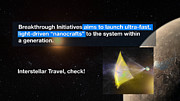
Knowing where the nearest exoplanets are is of paramount interest for Breakthrough Starshot, the research and engineering programme launched in April 2016, which aims to demonstrate proof of concept for ultra-fast light-driven “nanocraft”, laying the foundation for the first launch to Alpha Centauri within a generation.

Detecting a habitable planet is an enormous challenge due to the brightness of the planetary system’s host star, which tends to overwhelm the relatively dim planets. One way to make this easier is to observe in the mid-infrared wavelength range, where the thermal glow from an orbiting planet greatly reduces the brightness gap between it and its host star. But even in the mid-infrared, the star remains millions of times brighter than the planets to be detected, which calls for a dedicated technique to reduce the blinding stellar light.

The existing mid-infrared instrument VISIR on the VLT will provide such performance if it were enhanced to greatly improve the image quality using adaptive optics, and adapted to employ a technique called coronagraphy to reduce the stellar light and thereby reveal the possible signal of potential terrestrial planets. Breakthrough Initiatives will pay for a large fraction of the necessary technologies and development costs for such an experiment, and ESO will provide the required observing capabilities and time.

The new hardware includes an instrument module contracted to Kampf Telescope Optics (KTO), Munich, which will host the wavefront sensor, and a novel detector calibration device. In addition, there are plans for a new coronagraph to be developed jointly by University of Liège (Belgium) and Uppsala University (Sweden).

Detecting and studying potentially habitable planets orbiting other stars will be one of the main scientific goals of the upcoming European Extremely Large Telescope (E-ELT). Although the increased size of the E-ELT will be essential to obtaining an image of a planet at larger distances in the Milky Way, the light collecting power of the VLT is just sufficient to image a planet around the nearest star, Alpha Centauri.

The developments for VISIR will also be beneficial for the future METIS instrument, to be mounted on the E-ELT, as the knowledge gained and proof of concept will be directly transferable. The huge size of the E-ELT should allow METIS to detect and study exoplanets the size of Mars orbiting Alpha Centauri, if they exist, as well as other potentially habitable planets around other nearby stars.


More Information

The Breakthrough Initiatives are a program of scientific and technological exploration founded in 2015 by Internet investor and science philanthropist Yuri Milner to explore the Universe, seek scientific evidence of life beyond Earth, and encourage public debate from a planetary perspective.

Breakthrough Starshot is a $100 million research and engineering program aiming to demonstrate proof of concept for a new technology, enabling ultra-light unmanned space flight at 20% of the speed of light, and to lay the foundations for a flyby mission to Alpha Centauri within a generation.

ESO is the foremost intergovernmental astronomy organisation in Europe and the world’s most productive ground-based astronomical observatory by far. It is supported by 16 countries: Austria, Belgium, Brazil, the Czech Republic, Denmark, France, Finland, Germany, Italy, the Netherlands, Poland, Portugal, Spain, Sweden, Switzerland and the United Kingdom, along with the host state of Chile. ESO carries out an ambitious programme focused on the design, construction and operation of powerful ground-based observing facilities enabling astronomers to make important scientific discoveries. ESO also plays a leading role in promoting and organising cooperation in astronomical research. ESO operates three unique world-class observing sites in Chile: La Silla, Paranal and Chajnantor. At Paranal, ESO operates the Very Large Telescope, the world’s most advanced visible-light astronomical observatory and two survey telescopes. VISTA works in the infrared and is the world’s largest survey telescope and the VLT Survey Telescope is the largest telescope designed to exclusively survey the skies in visible light. ESO is a major partner in ALMA, the largest astronomical project in existence. And on Cerro Armazones, close to Paranal, ESO is building the 39-metre European Extremely Large Telescope, the E-ELT, which will become “the world’s biggest eye on the sky”.


Links


Contacts

Markus Kasper
ESO
Garching bei München, Germany
Tel: +49 89 3200 6359

Breakthrough Initiatives

Janet Wootten
Rubenstein Communications, Inc.
Tel: +1 212 843 8024

Richard Hook
ESO Public Information Officer
Garching bei München, Germany
Tel: +49 89 3200 6655
Cell: +49 151 1537 3591

Source: ESO

Friday, April 01, 2016

Milky Way Nuclear Star Cluster

Milky Way Nuclear Star Cluster
Credit: NASA, ESA, HSTWFC3/IR, STScI-PRC16-11a

This four-panel graphic zooms into the Hubble Space Telescope view of the galactic core. The first panel shows a wide view of the Milky Way in visible light. The second panel, which zooms into the boxed area in the first panel, shows interstellar dust obscuring much of the view of the core. The third panel zooms in yet again, but the view shifts to infrared light that penetrates the dust and exposes the core. Finally, the fourth panel is a close-up of the galactic core as seen in infrared by the Hubble Space Telescope. The locator mark in the middle designates the galaxy's nucleus, which is home to a central, supermassive black hole.  Credit: NASA, ESA, and Z. Levay (STScI).  Acknowledgment: NASA, ESA, A. Fujii, Digitized Sky Survey (DSS), STScI/AURA, Palomar/Caltech, UKSTU/AAO, NASA/JPL-Caltech/S. Stolovy (Spitzer Science Center/Caltech), the Hubble Heritage Team (STScI/AURA), T. Do and A. Ghez (UCLA), and V. Bajaj (STScI)


Hubble's infrared vision pierced the dusty heart of our Milky Way galaxy to reveal more than half a million stars at its core. Except for a few blue, foreground stars, the stars are part of the Milky Way's nuclear star cluster, the most massive and densest stellar cluster in our galaxy. Located 27,000 light-years away, this region is so packed with stars, it is equivalent to having a million suns crammed into the volume of space between us and our closest stellar neighbor, Alpha Centauri, 4.3 light-years away. At the very hub of our galaxy, this star cluster surrounds the Milky Way's central supermassive black hole, which is about 4 million times the mass of our sun.

Peering deep into the heart of our Milky Way galaxy, NASA's Hubble Space Telescope reveals a rich tapestry of more than half a million stars. Except for a few blue, foreground stars, the stars are part of the Milky Way's nuclear star cluster, the most massive and densest star cluster in our galaxy. So packed with stars, it is equivalent to having a million suns crammed into the volume of space between us and our closest stellar neighbor, Alpha Centauri, 4.3 light-years away. At the very hub of our galaxy, this star cluster surrounds the Milky Way's central supermassive black hole, which is about 4 million times the mass of our sun.

Astronomers used Hubble's infrared vision to pierce through the dust in the disk of our galaxy that obscures the star cluster. In this image, scientists translated the infrared light, which is invisible to human eyes, into colors our eyes can see. The red stars are either embedded or shrouded by intervening dust. Extremely dense clouds of gas and dust are seen in silhouette, appearing dark against the bright background stars. These clouds are so thick that even Hubble's infrared capability could not penetrate them.

Hubble's sharp vision allowed astronomers to measure the movements of the stars over four years. 

Using this information, scientists were able to infer important properties such as the mass and structure of the nuclear star cluster. The motion of the stars may also offer a glimpse into how the star cluster was formed — whether it was built up over time by globular star clusters that happen to fall into the galaxy's center, or from gas spiraling in from the Milky Way's disk to form stars at the core.

This picture, spanning 50 light-years across, is a mosaic stitched from nine separate images from Hubble's Wide Field Camera 3. The center of the Milky Way is located 27,000 light-years away. The "snowstorm" of stars in the image is just the tip of the iceberg: Astronomers estimate that about 10 million stars in this cluster are too faint to be captured in this image.


For additional information, contact:

Ann Jenkins / Ray Villard
Space Telescope Science Institute, Baltimore, Maryland
410-338-4488 / 410-338-4514

jenkins@stsci.edu / villard@stsci.edu

Zolt Levay
Space Telescope Science Institute, Baltimore, Maryland
410-338-4907

levay@stsci.edu

Tuan Do
University of California, Los Angeles, California

tdo@astro.ucla.edu

Andrea Ghez
University of California, Los Angeles, California

ghez@astro.ucla.edu


Source: HubbleSite