Showing posts with label planet-forming disk. Show all posts

Thursday, December 25, 2025

NASA’s Hubble Reveals Largest Found Chaotic Birthplace of Planets

This Hubble Space Telescope image shows the largest planet-forming disk ever observed around a young star. It spans nearly 400 billion miles — 40 times the diameter of our solar system. Image: NASA, ESA, STScI, Kristina Monsch (CfA); Image Processing: Joseph DePasquale (STScI)


Astronomers using NASA’s Hubble Space Telescope have imaged the largest protoplanetary disk ever observed circling a young star. For the first time in visible light, Hubble has revealed the disk is unexpectedly chaotic and turbulent, with wisps of material stretching much farther above and below the disk than astronomers have seen in any similar system. Strangely, more extended filaments are only visible on one side of the disk. The findings, which published Tuesday in The Astrophysical Journal, mark a new milestone for Hubble and shed light on how planets may form in extreme environments, as NASA’s missions lead humanity’s exploration of the universe and our place in it.

Located roughly 1,000 light-years from Earth, IRAS 23077+6707, nicknamed “Dracula’s Chivito,” spans nearly 400 billion miles — 40 times the diameter of our solar system to the outer edge of the Kuiper Belt of cometary bodies. The disk obscures the young star within it, which scientists believe may be either a hot, massive star, or a pair of stars. And the enormous disk is not only the largest known planet-forming disk; it’s also shaping up to be one of the most unusual.

“The level of detail we’re seeing is rare in protoplanetary disk imaging, and these new Hubble images show that planet nurseries can be much more active and chaotic than we expected,” said lead author Kristina Monsch of the Center for Astrophysics | Harvard & Smithsonian (CfA). “We’re seeing this disk nearly edge-on and its wispy upper layers and asymmetric features are especially striking. Both Hubble and NASA’s James Webb Space Telescope have glimpsed similar structures in other disks, but IRAS 23077+6707 provides us with an exceptional perspective — allowing us to trace its substructures in visible light at an unprecedented level of detail. This makes the system a unique, new laboratory for studying planet formation and the environments where it happens.”

The nickname “Dracula’s Chivito” playfully reflects the heritage of its researchers—one from Transylvania and another from Uruguay, where the national dish is a sandwich called a chiv ito. The edge-on disk resembles a hamburger, with a dark central lane flanked by glowing top and bottom layers of dust and gas.

Puzzling asymmetry

The impressive height of these features wasn’t the only thing that captured the attention of scientists. The new images revealed that vertically imposing filament-like features appear on just one side of the disk, while the other side appears to have a sharp edge and no visible filaments. This peculiar, lopsided structure suggests that dynamic processes, like the recent infall of dust and gas, or interactions with its surroundings, are shaping the disk.

“We were stunned to see how asymmetric this disk is,” said co-investigator Joshua Bennett Lovell, also an astronomer at the CfA. “Hubble has given us a front row seat to the chaotic processes that are shaping disks as they build new planets — processes that we don’t yet fully understand but can now study in a whole new way.”

All planetary systems form from disks of gas and dust encircling young stars. Over time, the gas accretes onto the star, and planets emerge from the remaining material. IRAS 23077+6707 may represent a scaled-up version of our early solar system, with a disk mass estimated at 10 to 30 times that of Jupiter — ample material for forming multiple gas giants. This, plus the new findings, makes it an exceptional case for studying the birth of planetary systems.

“In theory, IRAS 23077+6707 could host a vast planetary system,” said Monsch. “While planet formation may differ in such massive environments, the underlying processes are likely similar. Right now, we have more questions than answers, but these new images are a starting point for understanding how planets form over time and in different environments.”

Hubble Spots Giant Vampire Sandwich?
Credit: NASA's Goddard Space Flight Center; Lead Producer: Paul Morris

Source: NASA/Hubble


The Hubble Space Telescope has been operating for over three decades and continues to make ground-breaking discoveries that shape our fundamental understanding of the universe. Hubble is a project of international cooperation between NASA and ESA (European Space Agency). NASA’s Goddard Space Flight Center in Greenbelt, Maryland, manages the telescope and mission operations. Lockheed Martin Space, based in Denver, also supports mission operations at Goddard. The Space Telescope Science Institute in Baltimore, which is operated by the Association of Universities for Research in Astronomy, conducts Hubble science operations for NASA.


Sunday, November 09, 2025

Astronomers reveal tasty insights into exoplanet formation using SPAM

The NIRC2 image of dust around a young star named HD34282 (left) produced using an algorithm to construct images from aperture masking interferometry data. The light from the star is removed and its location is marked with a star symbol in all panels. The model that reproduces the data (middle) includes a circular inner structure around the star, which may be an envelope of dust. There is also a large protoplanetary disk around both the star and the inner structure. Between the inner structure and the protoplanetary disk is a ~40 AU gap, where planets may be forming. On the right is the image of the model after it is passed through the algorithm used on the left. This is done to test if the model can visually reproduce the data. Credit: Christina Vides / University of California Irvine / W. M. Keck Observatory.

The name SPAM is a registered trademark of Hormel Foods, LLC. This release and image are not sponsored or endorsed by Hormel Foods. Credit: W. M. Keck Observatory / Ilihia Gionson.


Study serves up the closest-ever view of a planet-forming disk around young star HD 34282

Maunakea, Hawaiʻi – Astronomers using W. M. Keck Observatory on Maunakea, Hawaiʻi Island have taken the closest-ever look at the dusty regions where planets form, offering new insight into the earliest stages of planetary birth.

HD 34282 is one of thirty objects observed thus far as part of The Search for Protoplanets with Aperture Masking, affectionately referred to as SPAM.

“We all want to know where we came from and how our solar system formed,” said Christina Vides, a graduate student at the University of California Irvine and lead author of the study published in The Astrophysical Journal. “By studying systems like this, we can watch planet formation in action and learn what conditions give rise to worlds like our own.”

Peering Into Planet Nurseries

The team used Keck Observatory’s Near-Infrared Camera (NIRC2) which enables astronomers to see closer to a star than traditional imaging methods permit.

Their target, HD 34282, is a young star about 400 light-years away, surrounded by a thick ring of dust and gas—a “transition disk” thought to be sculpted by growing planets.

With Keck Observatory’s advanced instrumentation and adaptive optics, Vides and the team captured the most detailed view yet of the inner regions of HD 34282’s disk, revealing clumpy structures and brightness patterns that hint at possible planet-forming activity.

Although no confirmed protoplanet was detected, the observations provided the closest constraints yet on where a young planet could be hiding, as well as estimates of the star’s mass and accretion rate—key clues for modeling how its surrounding material might evolve into planets.

The Rarest of Discoveries

Early detection of protoplanets is exceptionally rare and technically challenging.

PDS 70 b and PDS 70 c are the only two confirmed protoplanets that have ever been imaged directly. Both were discovered in 2020 by Caltech observers also using Keck Observatory’s NIRC2 instrument.

Each new observation builds on that legacy, bringing astronomers closer to understanding how planetary systems emerge from swirling disks of gas and dust.

“This work is pushing the boundaries of what we can see,” said Vides. “Keck’s adaptive optics and masking capabilities make it possible to resolve features just a few astronomical units from the star—regions that are otherwise completely invisible.”

What’s Next

The team will continue using Keck’s advanced instruments to study other young stars with promising disks and compile more data for SPAM. The team is also preparing for observations using future instrumentation like SCALES, a next-generation high-contrast imager now being developed for Keck Observatory, which will expand the search for protoplanets in unprecedented detail.

“Every new system we study helps us understand a little more about how planets form and evolve,” said Vides. “It’s incredible that we can point a telescope at a young star hundreds of light-years away and actually see the conditions that could give rise to new worlds.”


Thursday, October 16, 2025

First-ever Detection of “Heavy Water” in a Planet-forming Disk

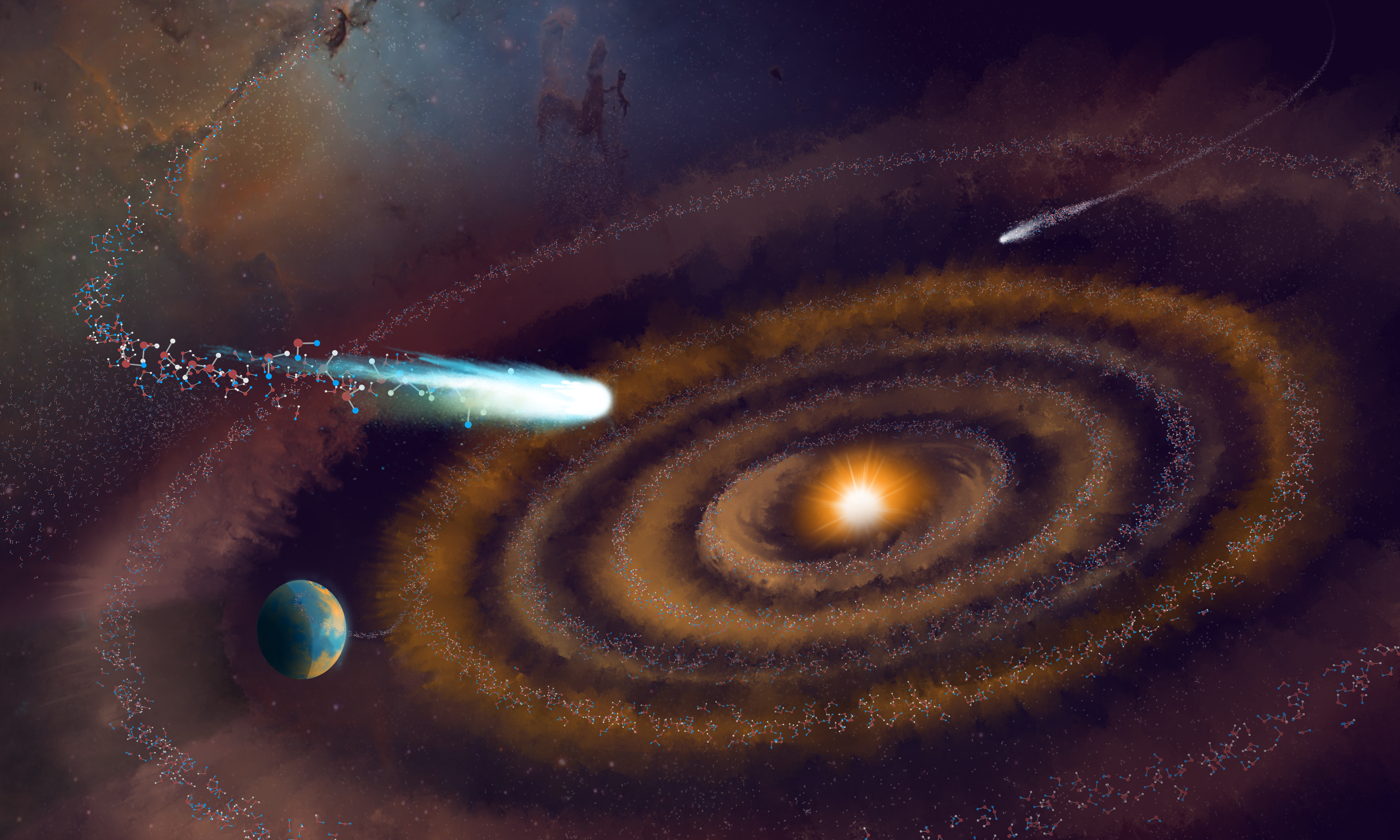
This artist’s impression shows the evolution of heavy water molecules (H2O, HDO, and D2O) as they have been observed in giant molecular clouds, a planet forming-disk, and comets—before they eventually may have made their way to Earth.Credit: NSF/AUI/NSF NRAO/P. Vosteen/B. Saxton.
Hi-Res File


New ALMA data traces water found in comets, and planet formation, back to the dawn of the cosmos

The discovery of ancient water in a planet-forming disk reveals that some of the water found in comets—and maybe even Earth—is older than the disk’s star itself, offering breakthrough insights into the history of water in our Solar System.

Astronomers using the Atacama Large Millimeter/submillimeter Array (ALMA) have made a first-ever detection of doubly deuterated water (D₂O, or “heavy water”) in a planet-forming disk around V883 Ori, a young star. This means that the water in this disk, and by extension the water in comets that form here, predates the birth of the star itself, having journeyed through space from ancient molecular clouds long before this solar system formed.

“Our detection indisputably demonstrates that the water seen in this planet-forming disk must be older than the central star and formed at the earliest stages of star and planet formation,” shares Margot Leemker, lead author on this paper, and a postdoc with the Department of Physics, University of Milan. “This presents a major breakthrough in understanding the journey of water through planet formation, and how this water made its way to our Solar System, and possibly Earth, through similar processes.”

Does this mean that the water in your morning cup of coffee could be older than the Sun? The chemical fingerprinting of D₂O shows that these water molecules have survived the violent processes of star and planet formation, travelling billions of kilometers through space and time before, ending up in planetary systems like our own. Instead of being destroyed and reformed in the disk, the bulk of this water is inherited from the earliest, coldest stages of star formation, a cosmic hand-me-down that may also be present on Earth today.

“Until now, we weren’t sure if most of the water in comets and planets formed fresh in young disks like V883 Ori, or if it’s ‘pristine,’ originating from ancient interstellar clouds,” shares John Tobin, a scientist with the U.S. National Science Foundation National Radio Astronomy Observatory, and second author on this new paper. The detection of heavy water, using sensitive isotopologue ratios (D₂O/H₂O), proves the water’s ancient heritage and provides a missing link between clouds, disks, comets, and ultimately planets. This finding is the first direct evidence of water’s interstellar journey from clouds to the materials that form planetary systems—unchanged and intact.

Water is fundamental to life and habitability. Knowing where planetary water comes from helps us understand the ingredients for life in our Solar System and in others. This discovery suggests that many young planets, and maybe even worlds beyond our own, could inherit water billions of years older than themselves, reminding us how deeply interconnected our existence is with the universe’s ancient past.


About NRAO

The National Radio Astronomy Observatory (NRAO) is a facility of the U.S. National Science Foundation, operated under cooperative agreement by Associated Universities, Inc.

About ALMA

The Atacama Large Millimeter/submillimeter Array (ALMA), an international astronomy facility, is a partnership of the European Southern Observatory (ESO), the U.S. National Science Foundation (NSF) and the National Institutes of Natural Sciences (NINS) of Japan in cooperation with the Republic of Chile. ALMA is funded by ESO on behalf of its Member States, by NSF in cooperation with the National Research Council of Canada (NRC) and the National Science and Technology Council (NSTC) in Taiwan and by NINS in cooperation with the Academia Sinica (AS) in Taiwan and the Korea Astronomy and Space Science Institute (KASI).

ALMA construction and operations are led by ESO on behalf of its Member States; by the National Radio Astronomy Observatory (NRAO), managed by Associated Universities, Inc. (AUI), on behalf of North America; and by the National Astronomical Observatory of Japan (NAOJ) on behalf of East Asia. The Joint ALMA Observatory (JAO) provides the unified leadership and management of the construction, commissioning and operation of ALMA.


Sunday, May 25, 2025

Key Building Block for Life Discovered in Planet-Forming Disk

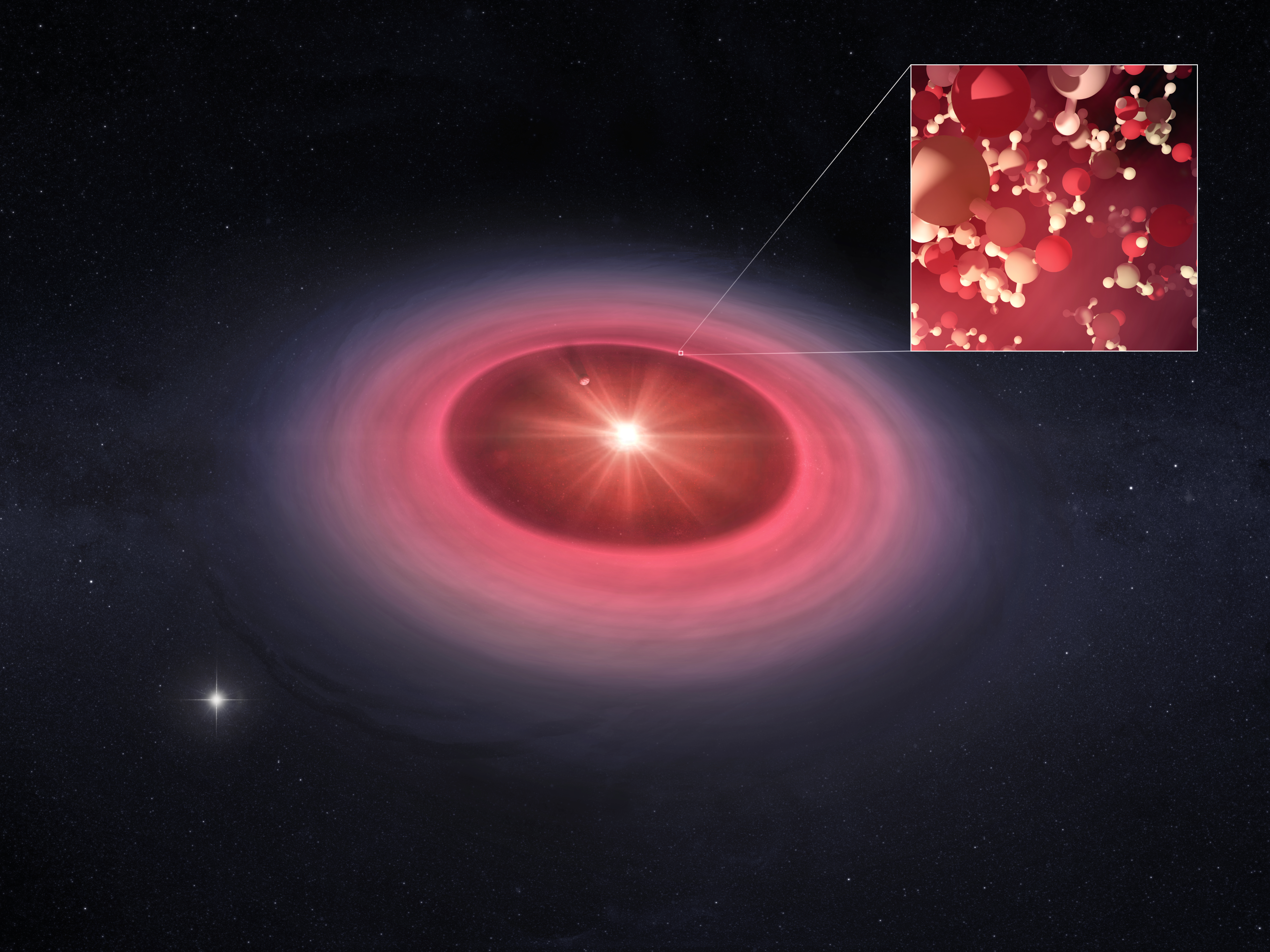
This artist's conception shows a disk of dust and gas surrounding a young star with a large cavity carved out by a forming giant planet. The warm methanol gas tracing the dust cavity wall is highlighted. These molecules originate from ices rich in organic matter that are heated by radiation from the star, forming gas. The detection of methanol, as well as the methanol isotopes, supports the idea that interstellar ices can survive the formation of planet-forming disks. Credit: CfA/M. Weiss.
High Resolution Image


CfA astronomers have helped discover rare types of methanol, a building block required for life as we know it to form.

Cambridge, MA - Astronomers have found a rare form of methanol, a type of alcohol, in a planet-forming disk, providing a critical step in understanding how life beyond Earth may form. This result reveals vital details about the chemical composition of the ice in disks that form planets, and what organic molecules are available for comets to deliver to planets, including in our Solar System.

While astronomers have found evidence for other more complex molecules in planet-forming disks around other stars, this latest discovery is the first time that rare isotopes of methanol have been detected. Isotopes are different versions of a chemical element or compound that have the same numbers of protons but different numbers of neutrons.

"Finding these isotopes of methanol gives essential insight into the history of ingredients necessary to build life here on Earth," said Alice Booth of the Center for Astrophysics | Harvard & Smithsonian (CfA) who led the study.

Booth and colleagues discovered these isotopes of methanol around HD 100453, a star with about 1.6 times the mass of the Sun located about 330 light-years from Earth. They used data from the Atacama Large Millimeter-submillimeter Array (ALMA), an international radio array in the Atacama Desert in Chile supported by the National Science Foundation in the US.

Scientists, like this research team and many others, look at planet-forming disks around stars as laboratories because they reveal the amounts of complex organic molecules that are present when planets and comets are assembling.

"Finding out methanol is definitely part of this stellar cocktail is really a cause for celebration," said co-author Lisa Wölfer of the Massachusetts Institute of Technology. "I’d say that the vintage of more than a million years, which is the age of HD 100453, is quite a good one."

What made this discovery possible? Because HD 100453 has a higher mass than the Sun, it has a warmer, planet-forming disk around it. This causes molecules in the disk, including methanol, to exist as gas at larger distances from the star, enabling ALMA to detect it. By contrast, less massive stars like the Sun have cooler disks so methanol would be locked up in ice and ALMA cannot detect it.

The ratio of methanol to other simple organic molecules seen in HD 100453 is about the same as it is in comets in our Solar System. This reinforces the potential to learn about our own planet’s history by studying these more distant early worlds.

More specifically, this work suggests that the ices within planet-forming disks, which serve as the material that will eventually clump together to form comets, are rich in complex organic molecules.

"This research supports the idea that comets may have played a big role in delivering important organic material to the Earth billions of years ago," said co-author Milou Temmink of Leiden Observatory in the Netherlands. "They may be the reason why life, including us, was able to form here."

Methanol had previously been detected in several star-forming disks, but detecting isotopes of methanol -- which are 10 to 100 times less abundant -- is an important step because it confirms that the disks are likely rich in organic molecules not yet detected in HD 100453, including simple amino acids and sugars such as glycine and glycolaldehyde.

High levels of methanol in the disk likely come from the inner edge of a ring of dust about 1.5 billion miles from the star, equivalent to 16 times the distance between the Sun and the Earth.

The paper describing these results is available online and appears in The Astrophysical Journal.


Media Contact:

Peter Edmonds
Interim CfA Public Affairs Officer
Center for Astrophysics | Harvard & Smithsonian
617-571-7279

pedmonds@cfa.harvard.edu


About the Center for Astrophysics | Harvard & Smithsonian

The Center for Astrophysics | Harvard & Smithsonian is a collaboration between Harvard and the Smithsonian designed to ask—and ultimately answer—humanity's greatest unresolved questions about the nature of the universe. The Center for Astrophysics is headquartered in Cambridge, MA, with research facilities across the U.S. and around the world.


Sunday, September 08, 2024

ALMA Detects Hallmark “Wiggle” of Gravitational Instability in Planet-Forming Disk

ALMA images reveal vast spiral arms in the AB Aurigae circumstellar disk (three rightmost panels), and counterparts observed with VLT/SPHERE (leftmost panel). Astronomers processed the ALMA images to uncover the variations in brightness, temperature, and velocity of the gas. Credit: ALMA (ESO/NAOJ/NSF NRAO), VLT/SPHERE (ESO), Speedie et al. Hi-Res File

Interferometry of stunning spiral arms around young star reveals gravity’s hand in planet formation

Traditionally, planet formation has been described as a “bottom-up” process, as dust grains gradually collect into bigger conglomerations over tens of millions of years: from microns, to centimeters, to meters, to kilometers. Alternatively, another theory proposes that planets can form rapidly by a “top-down” process, where circumstellar disk material in spiral arms fragments due to gravitational instability.

In a powerful match-up of technique, instrumentation, and target, an international team of astronomers led by Jessica Speedie, Department of Physics & Astronomy PhD candidate at the University of Victoria (Canada), observed the well-characterized protoplanetary disk around AB Aurigae and found observational evidence that matches the alternative “top-down” theoretical sequence of planet formation.

The U.S. National Science Foundation National Radio Astronomy Observatory (NSF NRAO) and the Atacama Large Millimeter/submillimeter Array (ALMA), in which NRAO is a partner, were crucial to the team’s success. “ALMA’s sensitivity and high velocity resolution enabled us to probe the gas deep within the disk and measure its motion precisely. It was the only tool for the job,” Speedie says.

Astronomers have already spotted several developing protoplanets currently forming in AB Aurigae’s disk region, including one that is nine times more massive than Jupiter. They appear as clumps nestled within a clear structure of spiral arms rotating counterclockwise around the star. The star itself, AB Aurigae, has a mass of approximately 2.4 times that of our Sun, and is roughly 4 million years old. The star’s age implies a conundrum: if the “bottom-up” process has not had time to take place, then by what mechanism are the protoplanets forming?

ALMA observations of 13CO molecular emission reveal vast spiral arms and global velocity perturbations in the planet-forming disk around AB Aurigae. Credit: ALMA (ESO/NAOJ/NSF NRAO), VLT/SPHERE (ESO), Speedie et al.

Speedie, her PhD advisor Ruobing Dong, and their team set out to use ALMA to study how the gas in the system’s vast spiral arms is moving. “Disks that are gravitationally unstable should have distinctive ‘wiggles’ in their velocity field, unlike disks that are stable,’’ says Dr. Cassandra Hall, Assistant Professor of Computational Astrophysics at the University of Georgia and co-author on the research. “Back in 2020, we performed some of the most advanced simulations in the world to predict the existence of this hallmark signature of gravitational instability,” Hall said of the research she led four years ago. “It was clear, it was testable, and it was a bit scary – if we didn’t find it, then something had to be very, very wrong with our understanding of these disks.”

Using the ALMA radio interferometer (12-meter array), Speedie mapped the velocity of 13CO and C18O gases within these vast spiral arms around AB Aurigae and found clear evidence of the predicted “wiggles.” Cristiano Longarini, postdoctoral associate at the University of Cambridge and co-author on the research explains, “Spiral arms form in the disk when the disk-to-star mass ratio is sufficiently high. Within those arms, changes in density lead to changes in gravity, which in turn lead to variations in the velocities of gas in the local area around and within the arms. We see these variations in the velocity as wiggles.” The magnitude of these velocity wiggles, Longarini confirmed, can be used to infer the mass ratio between the host star and its surrounding disk material.

“Our detection of gravitational instability in the disk around AB Aurigae is a direct observational confirmation of this ‘top-down’ pathway to planet formation,” Speedie summarizes.

Animation of an ALMA data cube clearly showing how astronomers detect the velocity wiggle in a cut through the cube
Credit: ALMA (ESO/NAOJ/NSF NRAO), J. Speedie.

Similar to how an MRI generates images of the brain in “slices,” ALMA interferometry measurements yielded a three-dimensional rectangular “data cube” that mapped gas velocity and position along the line of sight within the protoplanetary disk. By parsing strategically oriented cuts through the data cube, Speedie and her team were able to conclusively identify the telltale velocity wiggle indicating gravitational instability.

“We worked with one of the deepest ALMA observations taken with such high velocity resolution toward a single protoplanetary disk to date,” Speedie says. “The ALMA data provides a clear diagnosis of gravitational instability in action. There is no other mechanism we know of that can create the global architecture of spiral structure and velocity patterns that we observe.”

Adds Speedie in reference to Hall’s predictions, “This is a classic science story of, ‘we predicted it, and then we found it’. The Hall-mark of gravitational instability.” Her use of ALMA won’t end with this research — as part of the NSF NRAO ALMA ambassador program, she is training alongside other postdocs and early career astronomers to share ALMA’s resources and capabilities with the wider astronomy community.

This research was published in the journal Nature.


About NRAO

The National Radio Astronomy Observatory (NRAO) is a facility of the U.S. National Science Foundation, operated under cooperative agreement by Associated Universities, Inc.

About ALMA

The Atacama Large Millimeter/submillimeter Array (ALMA), an international astronomy facility, is a partnership of ESO, the U.S. National Science Foundation (NSF) and the National Institutes of Natural Sciences (NINS) of Japan in cooperation with the Republic of Chile. ALMA is funded by ESO on behalf of its Member States, by NSF in cooperation with the National Research Council of Canada (NRC) and the National Science and Technology Council (NSTC) in Taiwan and by NINS in cooperation with the Academia Sinica (AS) in Taiwan and the Korea Astronomy and Space Science Institute (KASI).

ALMA construction and operations are led by ESO on behalf of its Member States; by the National Radio Astronomy Observatory (NRAO), managed by Associated Universities, Inc. (AUI), on behalf of North America; and by the National Astronomical Observatory of Japan (NAOJ) on behalf of East Asia. The Joint ALMA Observatory (JAO) provides the unified leadership and management of the construction, commissioning and operation of ALMA.


Sunday, May 19, 2024

A Giant Cosmic Butterfly's Nature is Revealed

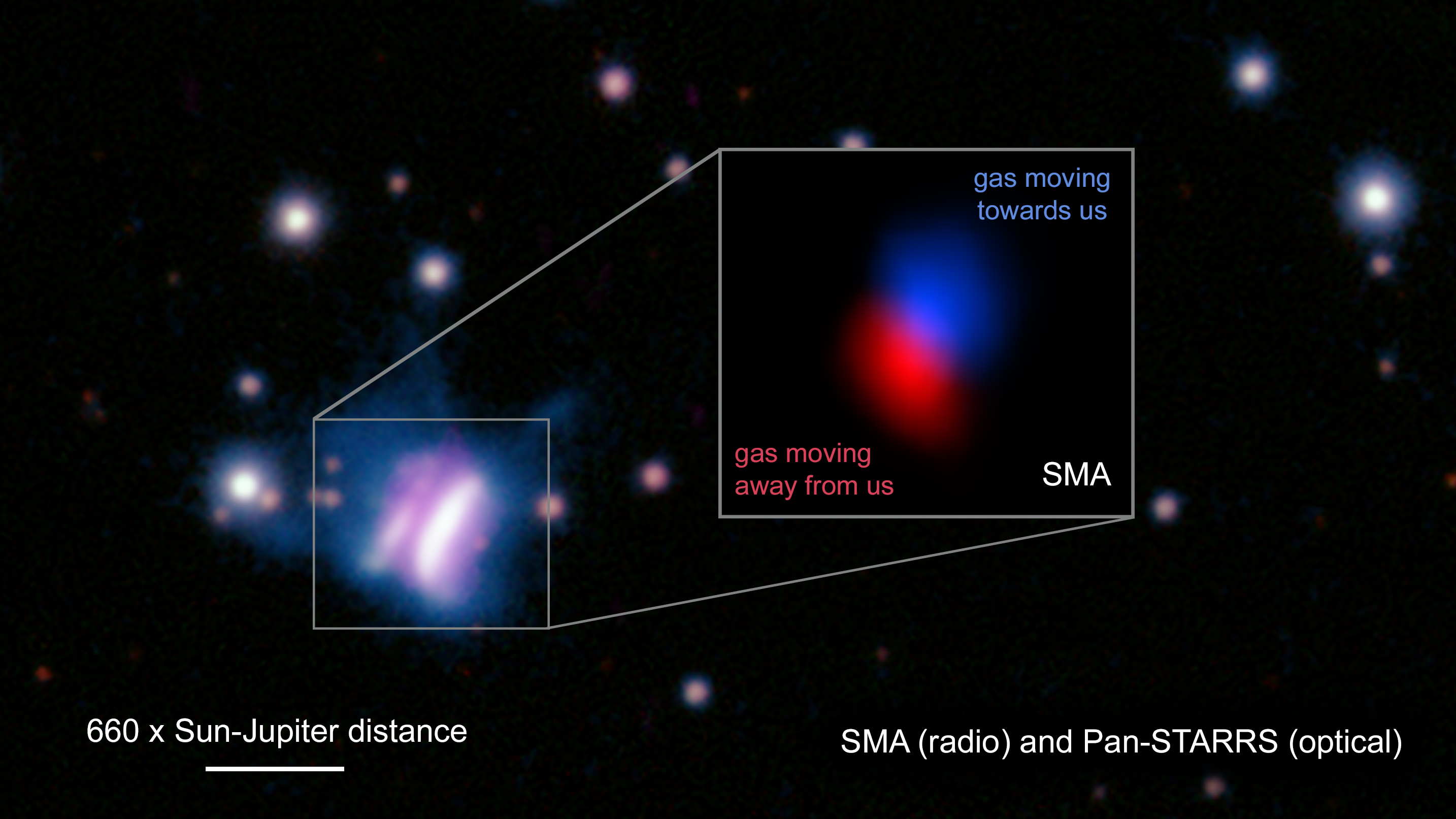
Pan-STARRS and SMA image: The center of this composite image shows IRAS 23077, likely the largest planet-forming disk ever seen, which looks like a giant cosmic butterfly. Data from the Submillimeter Array (SMA) at radio wavelengths is shown in pink, and data from Pan-STARRS at optical wavelengths is shown as a color image. Most of the nearby stars appear as white or red. The star in the center of IRAS 23077 is not visible because its light is blocked by the surrounding disk, which is viewed from the side. The blue PanSTARRS data for IRAS 23077 shows the smallest dust grains, with sizes of only a few micrometers. These dust grains are elevated into the uppermost layers of IRAS 23077's disk and appear as two bright lobes, similar in shape to the wings of a butterfly. The two faint filaments in IRAS 23077's northern region could be remnants from IRAS 23077's formation. The pink SMA data shows larger dust grains, with sizes of about one millimeter. These larger dust grains are coincident with the midplane of the planet-forming disk, where dust grains settle and grow to larger sizes and eventually form planets. Credit: Radio: SAO/ASIAA/SMA/K. Monsch et al; Optical: Pan-STARRS.  High Resolution Image

Labeled Pan-STARRS and SMA image with SMA image inset: The inset for this image shows compelling evidence that IRAS 23077 contains a planet-forming disk. Along with dust grains, the SMA can also observe the cold carbon monoxide gas that comprises the bulk of a planet-forming disk. By measuring its velocity structure and dividing this into "blue-shifted" and "red-shifted" components, showing material moving towards us and away from us respectively, the team showed that the gas is rotating around the central star, as expected for a planet-forming disk. The line in the bottom left shows the diameter of the disk, equivalent to 660 times the distance between the Sun and Jupiter. Credit: SAO/ASIAA/SMA/K. Monsch et al; Optical: Pan-STARRS. High Resolution Image


CfA astronomers using the Submillimeter Array have determined the true nature of a "giant butterfly" in space, providing information about the environments where planets form.

Cambridge, MA--Astronomers have found what is likely the largest planet-forming disk ever seen, which appears like a giant, cosmic butterfly in the night sky. This discovery offers new insight into the environments where planets form.

Officially known as IRAS 23077+6707 (IRAS 23077, for short), this giant cosmic butterfly is about 1000 light-years from Earth and was initially discovered in 2016 by Ciprian T. Berghea from the US Naval Observatory using the Panoramic Survey Telescope and Rapid Response System (Pan-STARRS). However, for years it remained uncharacterized.

Two new papers have now revealed the true nature of IRAS 23077. One paper, led by Berghea and accepted for publication in The Astrophysical Journal Letters, reports the discovery that IRAS 23077 is a young star located in the middle of what looked like an enormous planet-forming disk. In the second paper, published yesterday in The Astrophysical Journal Letters, researchers confirm the discovery of a large planet-forming disk, using the Submillimeter Array (SMA).

The SMA is an array of telescopes in Hawaii jointly operated by the Smithsonian Astrophysical Observatory (SAO) at the Center for Astrophysics | Harvard & Smithsonian (CfA) and the Academia Sinica Institute of Astronomy and Astrophysics (ASIAA) in Taiwan. It detects light at millimeter wavelengths, a type of radio wave.

"After finding out about this possible planet-forming disk from Pan-STARRS data, we were keen to observe it with the SMA, which allowed us to understand its physical nature," explains Kristina Monsch, an SAO astrophysicist and a postdoctoral fellow at the CfA, who led the SMA campaign. "What we found was incredible – evidence that this was the largest planet-forming disk ever discovered. It is extremely rich in dust and gas, which we know are the building blocks of planets."

Planet-forming disks - called "protoplanetary disks" by astronomers - are planetary nurseries in which rocky planets like Earth and Mars, and giant planets like Jupiter and Saturn form around young stars. They are rich in dust and gas, and rotate with a specific signature that astronomers can use to infer their sizes, and the masses of their central stars.

Some planet-forming disks are 'edge–on,' meaning they are oriented such that their own dust and gas–rich disks entirely obscure the light emitted from their parent star, as is the case with IRAS 23077. While their stars may be shrouded, the dust and gas signatures of their surrounding disks can still be bright at millimeter wavelengths, as obtained by the SMA.

"The data from the SMA offer us the smoking–gun evidence that this is a disk, and coupled with the estimate of the system’s distance, that it is rotating around a star likely two to four times more massive than our own Sun," said Monsch. "From the SMA data we can also weigh the dust and gas in this planetary nursery, which we found has enough material to form many giant planets – and out to distances over 300 times further out than the distance between the Sun and Jupiter!."

"The discovery of a structure as extended and bright as IRAS 23077 poses some important questions," said co-author Joshua Bennett Lovell, an SAO astrophysicist and an SMA Fellow at CfA. "Just how many more of these objects have we missed? Further study of IRAS 23077 is warranted to investigate the possible routes to form planets in these extreme young environments, and how these might compare to exoplanet populations observed around distant stars more massive than our Sun."

"In addition to gaining brand new data on IRAS 23077, we must also continue the hunt for other similar objects if we are to unlock the story of how extrasolar planetary systems develop in their earliest years," said co-author Jeremy Drake, Astrophysics Chief Scientist at Lockheed Martin's Advanced Technology Center.

IRAS 23077 was initially termed "Dracula's Chivito" by Ciprian Berghea, who grew up in the Transylvania region in Romania, close to where Vlad Dracula lived. In analogy to the famous object “Gomez’s Hamburger”, which is another enormous planet-forming disk that is seen edge-on, they followed the suggestion of Ana Mosquera, Berghea's co-author, to name it after her country's national dish the "chivito," a hamburger-like sandwich from Uruguay.

Besides Kristina Monsch, Joshua Lovell, Jeremy Drake, and Ciprian Berghea, the authors of the ApJL paper are Gordian Edenhofer from the Max Planck Institute for Astrophysics, David J. Wilner, Garrett K. Keating, and Sean M. Andrews from CfA, and Ammar Bayyari from the University of Hawaii.


About the Center for Astrophysics | Harvard & Smithsonian

The Center for Astrophysics | Harvard & Smithsonian is a collaboration between Harvard and the Smithsonian designed to ask—and ultimately answer—humanity's greatest unresolved questions about the nature of the universe. The Center for Astrophysics is headquartered in Cambridge, MA, with research facilities across the U.S. and around the world.


Media Contact:

Peter Edmonds
Interim CfA Public Affairs Officer
Center for Astrophysics | Harvard & Smithsonian
+1 617-571-7279

pedmonds@cfa.harvard.edu


Wednesday, May 10, 2023

Hubble Follows Shadow Play Around Planet-Forming Disk

Concentric Gas-and-Dust Disks Around Star TW Hydrae (Artist's Concept)
Credits: Artwork: NASA, AURA/STScI for ESA, Leah Hustak (STScI)

TW Hydrae Disk
Credits: Image: NASA, ESA, STScI, John Debes (AURA/STScI for ESA)
Image Processing: Joseph DePasquale (STScI)


The young star TW Hydrae is playing "shadow puppets" with scientists observing it with NASA's Hubble Space Telescope.

In 2017, astronomers reported discovering a shadow sweeping across the face of a vast pancake-shaped gas-and-dust disk surrounding the red dwarf star. The shadow isn't from a planet, but from an inner disk slightly inclined relative to the much larger outer disk – causing it to cast a shadow. One explanation is that an unseen planet's gravity is pulling dust and gas into the planet's inclined orbit.

Now, a second shadow – playing a game of peek-a-boo – has emerged in just a few years between observations stored in Hubble's MAST archive. This could be from yet another disk nestled inside the system. The two disks are likely evidence of a pair of planets under construction.

TW Hydrae is less than 10 million years old and resides about 200 light-years away. In its infancy, our solar system may have resembled the TW Hydrae system, some 4.6 billion years ago. Because the TW Hydrae system is tilted nearly face-on to our view from Earth, it is an optimum target for getting a bull's-eye-view of a planetary construction yard.

The second shadow was discovered in observations obtained on June 6, 2021, as part of a multi-year program designed to track the shadows in circumstellar disks. John Debes of AURA/STScI for the European Space Agency at the Space Telescope Science Institute in Baltimore, Maryland, compared the TW Hydrae disk to Hubble observations made several years ago.

"We found out that the shadow had done something completely different," said Debes, who is principal investigator and lead author of the study published in The Astrophysical Journal. "When I first looked at the data, I thought something had gone wrong with the observation because it wasn't what I was expecting. I was flummoxed at first, and all my collaborators were like: what is going on? We really had to scratch our heads and it took us a while to actually figure out an explanation."

The best solution the team came up with is that there are two misaligned disks casting shadows. They were so close to each other in the earlier observation they were missed. Over time they've now separated and split into two shadows. "We've never really seen this before on a protoplanetary disk. It makes the system much more complex than we originally thought," he said.

The simplest explanation is that the misaligned disks are likely caused by the gravitational pull of two planets in slightly different orbital planes. Hubble is piecing together a holistic view of the architecture of the system.

The disks may be proxies for planets that are lapping each other as they whirl around the star. It's sort of like spinning two vinyl phonograph records at slightly different speeds. Sometimes labels will match up but then one gets ahead of the other.

"It does suggest that the two planets have to be fairly close to each other. If one was moving much faster than the other, this would have been noticed in earlier observations. It's like two race cars that are close to each other, but one slowly overtakes and laps the other," said Debes.

The suspected planets are located in a region roughly the distance of Jupiter from our Sun. And, the shadows complete one rotation around the star about every 15 years – the orbital period that would be expected at that distance from the star.

Also, these two inner disks are inclined about five to seven degrees relative to the plane of the outer disk. This is comparable to the range of orbital inclinations inside our solar system. "This is right in line with typical solar system style architecture," said Debes.

The outer disk that the shadows are falling on may extend as far as several times the radius of our solar system's Kuiper belt. This larger disk has a curious gap at twice Pluto's average distance from the Sun. This might be evidence for a third planet in the system.

Any inner planets would be difficult to detect because their light would be lost in the glare of the star. Also, dust in the system would dim their reflected light. ESA's Gaia space observatory may be able to measure a wobble in the star if Jupiter-mass planets are tugging on it, but this would take years given the long orbital periods.

The TW Hydrae data are from Hubble's Space Telescope Imaging Spectrograph. The James Webb Space Telescope's infrared vision may also be able to show the shadows in more detail.

The Hubble Space Telescope is a project of international cooperation between NASA and ESA. NASA's Goddard Space Flight Center in Greenbelt, Maryland, manages the telescope. The Space Telescope Science Institute (STScI) in Baltimore conducts Hubble science operations. STScI is operated for NASA by the Association of Universities for Research in Astronomy, in Washington, D.C.


About This Release

Credits

Media Contact:

Ray Villard
Space Telescope Science Institute, Baltimore, Maryland

Science Contact:Contact: John Debes
AURA/STScI for the European Space Agency, Baltimore, Maryland


Permissions: Content Use Policy

Contact Us: Direct inquiries to the News Team.

Related Links and Documents:


Wednesday, March 08, 2023

Astronomers find missing link for water in the Solar System

PR Image eso2302a
Water in the planet-forming disc around the star V883 Orionis (artist’s impression)

PR Image eso2302b
ALMA images of the planet-forming disc around the star V883 Orionis

PR Image eso2302c
The planet-forming disc around the star V883 Orionis (artist’s impression)

PR Image eso2302d
From gas clouds to discs to planetary systems (artist’s impression)

PR Image eso2302e
The star V883 Orionis in the constellation of Orion


Videos

The Missing Link for Water in the Solar System (ESOcast 258 Light)
The Missing Link for Water in the Solar System (ESOcast 258 Light) 
Zooming on the protoplanetary disc around V883 Orionis


Using the Atacama Large Millimeter/submillimeter Array (ALMA), astronomers have detected gaseous water in the planet-forming disc around the star V883 Orionis. This water carries a chemical signature that explains the journey of water from star-forming gas clouds to planets, and supports the idea that water on Earth is even older than our Sun.

We can now trace the origins of water in our Solar System to before the formation of the Sun,” says John J. Tobin, an astronomer at the National Radio Astronomy Observatory, USA and lead author of the study published today in Nature.

This discovery was made by studying the composition of water in V883 Orionis, a planet-forming disc about 1300 light-years away from Earth. When a cloud of gas and dust collapses it forms a star at its centre. Around the star, material from the cloud also forms a disc. Over the course of a few million years, the matter in the disc clumps together to form comets, asteroids, and eventually planets. Tobin and his team used ALMA, in which the European Southern Observatory (ESO) is a partner, to measure chemical signatures of the water and its path from the star-forming cloud to planets.

Water usually consists of one oxygen atom and two hydrogen atoms. Tobin’s team studied a slightly heavier version of water where one of the hydrogen atoms is replaced with deuterium — a heavy isotope of hydrogen. Because simple and heavy water form under different conditions, their ratio can be used to trace when and where the water was formed. For instance, this ratio in some Solar System comets has been shown to be similar to that in water on Earth, suggesting that comets might have delivered water to Earth.

The journey of water from clouds to young stars, and then later from comets to planets has previously been observed, but until now the link between the young stars and comets was missing. “V883 Orionis is the missing link in this case,” says Tobin. “The composition of the water in the disc is very similar to that of comets in our own Solar System. This is confirmation of the idea that the water in planetary systems formed billions of years ago, before the Sun, in interstellar space, and has been inherited by both comets and Earth, relatively unchanged.”

But observing the water turned out to be tricky. “Most of the water in planet-forming discs is frozen out as ice, so it’s usually hidden from our view,'' says co-author Margot Leemker, a PhD student at Leiden Observatory in the Netherlands. Gaseous water can be detected thanks to the radiation emitted by molecules as they spin and vibrate, but this is more complicated when the water is frozen, where the motion of molecules is more constrained. Gaseous water can be found towards the centre of the discs, close to the star, where it’s warmer. However, these close-in regions are hidden by the dust disc itself, and are also too small to be imaged with our telescopes.

Fortunately, the V883 Orionis disc was shown in a recent study to be unusually hot. A dramatic outburst of energy from the star heats the disc, “up to a temperature where water is no longer in the form of ice, but gas, enabling us to detect it,” says Tobin.

The team used ALMA, an array of radio telescopes in northern Chile, to observe the gaseous water in V883 Orionis. Thanks to its sensitivity and ability to discern small details they were able to both detect the water and determine its composition, as well as map its distribution within the disc. From the observations, they found this disc contains at least 1200 times the amount of water in all Earth’s oceans.

In the future, they hope to use ESO’s upcoming Extremely Large Telescope and its first-generation instrument METIS. This mid-infrared instrument will be able to resolve the gas-phase of water in these types of discs, strengthening the link of water’s path all the way from star-forming clouds to solar systems. ”This will give us a much more complete view of the ice and gas in planet-forming discs,” concludes Leemker.


More Information

This research was presented in a paper “Deuterium-enriched water ties planet-forming disks to comets and protostars” to appear in Nature (doi: 10.1038/s41586-022-05676-z).

The team is composed of John J. Tobin (National Radio Astronomy Observatory, USA), Merel L. R. van’t Hoff (Department of Astronomy, University of Michigan, USA), Margot Leemker (Leiden Observatory, Leiden University, the Netherlands [Leiden]) , Ewine F. van Dishoeck (Leiden), Teresa Paneque-Carreño (Leiden; European Southern Observatory, Germany), Kenji Furuya (National Astronomical Observatory of Japan, Japan), Daniel Harsono (Institute of Astronomy, National Tsing Hua University, Taiwan), Magnus V. Persson (Department of Space, Earth and Environment, Chalmers University of Technology, Onsala Space Observatory, Sweden), L. Ilsedore Cleeves (Department of Astronomy, University of Virginia, USA), Patrick D. Sheehan (Center for Interdisciplinary Exploration and Research in Astronomy, Northwestern University, USA) and Lucas Cieza (Núcleo de Astronomía, Facultad de Ingeniería, Millennium Nucleus on Young Exoplanets and their Moons, Universidad Diego Portales, Chile).

The European Southern Observatory (ESO) enables scientists worldwide to discover the secrets of the Universe for the benefit of all. We design, build and operate world-class observatories on the ground — which astronomers use to tackle exciting questions and spread the fascination of astronomy — and promote international collaboration in astronomy. Established as an intergovernmental organisation in 1962, today ESO is supported by 16 Member States (Austria, Belgium, the Czech Republic, Denmark, France, Finland, Germany, Ireland, Italy, the Netherlands, Poland, Portugal, Spain, Sweden, Switzerland and the United Kingdom), along with the host state of Chile and with Australia as a Strategic Partner. ESO’s headquarters and its visitor centre and planetarium, the ESO Supernova, are located close to Munich in Germany, while the Chilean Atacama Desert, a marvellous place with unique conditions to observe the sky, hosts our telescopes. ESO operates three observing sites: La Silla, Paranal and Chajnantor. At Paranal, ESO operates the Very Large Telescope and its Very Large Telescope Interferometer, as well as survey telescopes such as VISTA. Also at Paranal ESO will host and operate the Cherenkov Telescope Array South, the world’s largest and most sensitive gamma-ray observatory. Together with international partners, ESO operates ALMA on Chajnantor, a facility that observes the skies in the millimetre and submillimetre range. At Cerro Armazones, near Paranal, we are building “the world’s biggest eye on the sky” — ESO’s Extremely Large Telescope. From our offices in Santiago, Chile we support our operations in the country and engage with Chilean partners and society.


Links


Contacts:

John J. Tobin
National Radio Astronomy Observatory
Charlottesville, USA
Email:
jtobin@nrao.edu
Margot Leemker
Leiden Observatory
Leiden, the Netherlands
Email:
leemker@strw.leidenuniv.nl

Juan Carlos Muñoz Mateos
ESO Media Officer
Garching bei München, Germany
Tel: +49 89 3200 6176
Email:
press@eso.org

Source: ESO/News


Tuesday, March 08, 2022

Astronomers discover largest molecule yet in a planet-forming disc

Dimethyl ether spotted in disc around IRS 48 star
 
Molecules in the disc around the star IRS 48 
 
Molecules in the disc around the star IRS 48 (composite)
 
ALMA image of comet factory around Oph-IRS 48 
 
ALMA and VLT image of comet factory around Oph-IRS 48 
 
ALMA image of dust trap/comet factory around Oph-IRS 48 (annotated) 
 
The location of the system Oph-IRS 48 in the constellation of Ophiuchus


Videos
 
Largest Molecule yet Spotted in a Planet-forming Disc (ESOcast 253 Light)
Largest Molecule yet Spotted in a Planet-forming Disc (ESOcast 253 Light) 
 
Artist’s animation of the dust trap in IRS 48
Artist’s animation of the dust trap in IRS 48 
 
Zooming in on the Oph-IRS 48 system


Using the Atacama Large Millimeter/submillimeter Array (ALMA) in Chile, researchers at Leiden Observatory in the Netherlands have for the first time detected dimethyl ether in a planet-forming disc. With nine atoms, this is the largest molecule identified in such a disc to date. It is also a precursor of larger organic molecules that can lead to the emergence of life.

"From these results, we can learn more about the origin of life on our planet and therefore get a better idea of the potential for life in other planetary systems. It is very exciting to see how these findings fit into the bigger picture," says Nashanty Brunken, a Master's student at Leiden Observatory, part of Leiden University, and lead author of the study published today in Astronomy & Astrophysics.

Dimethyl ether is an organic molecule commonly seen in star-forming clouds, but had never before been found in a planet-forming disc. The researchers also made a tentative detection of methyl formate, a complex molecule similar to dimethyl ether that is also a building block for even larger organic molecules.

"It is really exciting to finally detect these larger molecules in discs. For a while we thought it might not be possible to observe them,” says co-author Alice Booth, also a researcher at Leiden Observatory.

The molecules were found in the planet-forming disc around the young star IRS 48 (also known as Oph-IRS 48) with the help of ALMA, an observatory co-owned by the European Southern Observatory (ESO). IRS 48, located 444 light-years away in the constellation Ophiuchus, has been the subject of numerous studies because its disc contains an asymmetric, cashew-nut-shaped “dust trap”. This region, which likely formed as a result of a newly born planet or small companion star located between the star and the dust trap, retains large numbers of millimetre-sized dust grains that can come together and grow into kilometre-sized objects like comets, asteroids and potentially even planets.

Many complex organic molecules, such as dimethyl ether, are thought to arise in star-forming clouds, even before the stars themselves are born. In these cold environments, atoms and simple molecules like carbon monoxide stick to dust grains, forming an ice layer and undergoing chemical reactions, which result in more complex molecules. Researchers recently discovered that the dust trap in the IRS 48 disc is also an ice reservoir, harbouring dust grains covered with this ice rich in complex molecules. It was in this region of the disc that ALMA has now spotted signs of the dimethyl ether molecule: as heating from IRS 48 sublimates the ice into gas, the trapped molecules inherited from the cold clouds are freed and become detectable.

What makes this even more exciting is that we now know these larger complex molecules are available to feed forming planets in the disc,” explains Booth. “This was not known before as in most systems these molecules are hidden in the ice.

The discovery of dimethyl ether suggests that many other complex molecules that are commonly detected in star-forming regions may also be lurking on icy structures in planet-forming discs. These molecules are the precursors of prebiotic molecules such as amino acids and sugars, which are some of the basic building blocks of life.

By studying their formation and evolution, researchers can therefore gain a better understanding of how prebiotic molecules end up on planets, including our own. “We are incredibly pleased that we can now start to follow the entire journey of these complex molecules from the clouds that form stars, to planet-forming discs, and to comets. Hopefully with more observations we can get a step closer to understanding the origin of prebiotic molecules in our own Solar System,” says Nienke van der Marel, a Leiden Observatory researcher who also participated in the study.

Future studies of IRS 48 with ESO’s Extremely Large Telescope (ELT), currently under construction in Chile and set to start operations later this decade, will allow the team to study the chemistry of the very inner regions of the disc, where planets like Earth may be forming.


More Information

This research was presented in the paper "A major asymmetric ice trap in a planet-forming disk: III. First detection of dimethyl ether" (doi: 10.1051/0004-6361/202142981) to appear in Astronomy and Astrophysics.

This publication was released on International Women’s Day 2022 and features research undertaken by six researchers who identify as women.

The team is composed of Nashanty G. C. Brunken (Leiden Observatory, Leiden University,  Netherlands [Leiden]), Alice S. Booth (Leiden), Margot Leemker (Leiden), Pooneh Nazari (Leiden),  Nienke van der Marel (Leiden),  Ewine F. van Dishoeck (Leiden Observatory, Max-Planck-Institut für Extraterrestrische Physik, Garching, Germany)

The European Southern Observatory (ESO) enables scientists worldwide to discover the secrets of the Universe for the benefit of all. We design, build and operate world-class observatories on the ground — which astronomers use to tackle exciting questions and spread the fascination of astronomy — and promote international collaboration in astronomy. Established as an intergovernmental organisation in 1962, today ESO is supported by 16 Member States (Austria, Belgium, the Czech Republic, Denmark, France, Finland, Germany, Ireland, Italy, the Netherlands, Poland, Portugal, Spain, Sweden, Switzerland and the United Kingdom), along with the host state of Chile and with Australia as a Strategic Partner. ESO’s headquarters and its visitor centre and planetarium, the ESO Supernova, are located close to Munich in Germany, while the Chilean Atacama Desert, a marvellous place with unique conditions to observe the sky, hosts our telescopes. ESO operates three observing sites: La Silla, Paranal and Chajnantor. At Paranal, ESO operates the Very Large Telescope and its Very Large Telescope Interferometer, as well as two survey telescopes, VISTA working in the infrared and the visible-light VLT Survey Telescope. Also at Paranal ESO will host and operate the Cherenkov Telescope Array South, the world’s largest and most sensitive gamma-ray observatory. Together with international partners, ESO operates APEX and ALMA on Chajnantor, two facilities that observe the skies in the millimetre and submillimetre range. At Cerro Armazones, near Paranal, we are building “the world’s biggest eye on the sky” — ESO’s Extremely Large Telescope. From our offices in Santiago, Chile we support our operations in the country and engage with Chilean partners and society.


Links


Contacts:

Nashanty Brunken
Leiden Observatory, Leiden University
Leiden, The Netherlands
Email: brunken@strw.leidenuniv.nl

Alice Booth
Leiden Observatory, Leiden University
Leiden, The Netherlands
Tel: +31 71 527 5737
Email: abooth@strw.leidenuniv.nl

Nienke van der Marel
Leiden Observatory, Leiden University
Leiden, The Netherlands
Tel: +31 71 527 5872
Email: nmarel@strw.leidenuniv.nl

Bárbara Ferreira
ESO Media Manager
Garching bei München, Germany
Tel: +49 89 3200 6670
Cell: +49 151 241 664 00
Email: press@eso.org

Source: ESO/News


Thursday, June 17, 2021

Study of Young Chaotic Star System Reveals Planet Formation Secrets


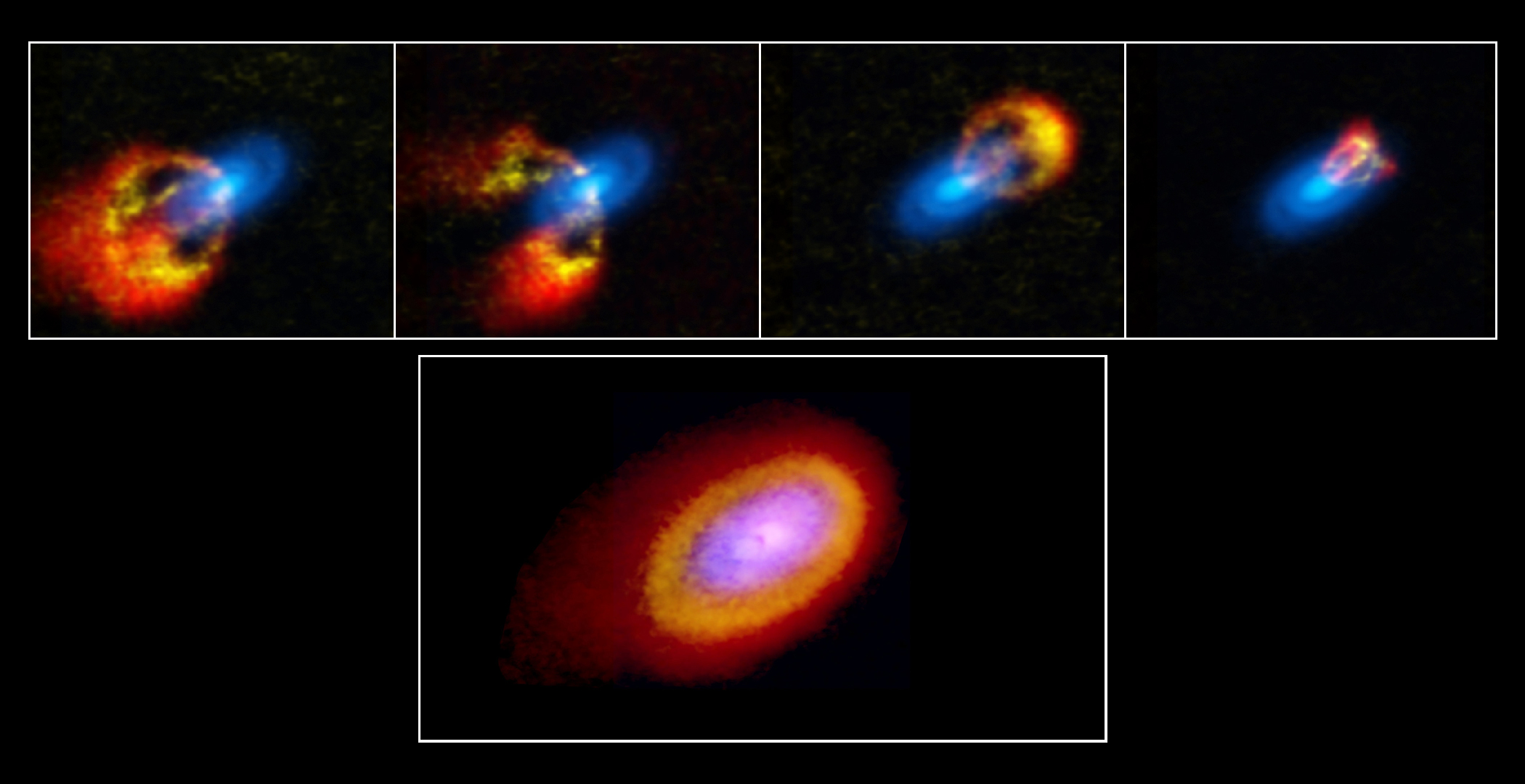
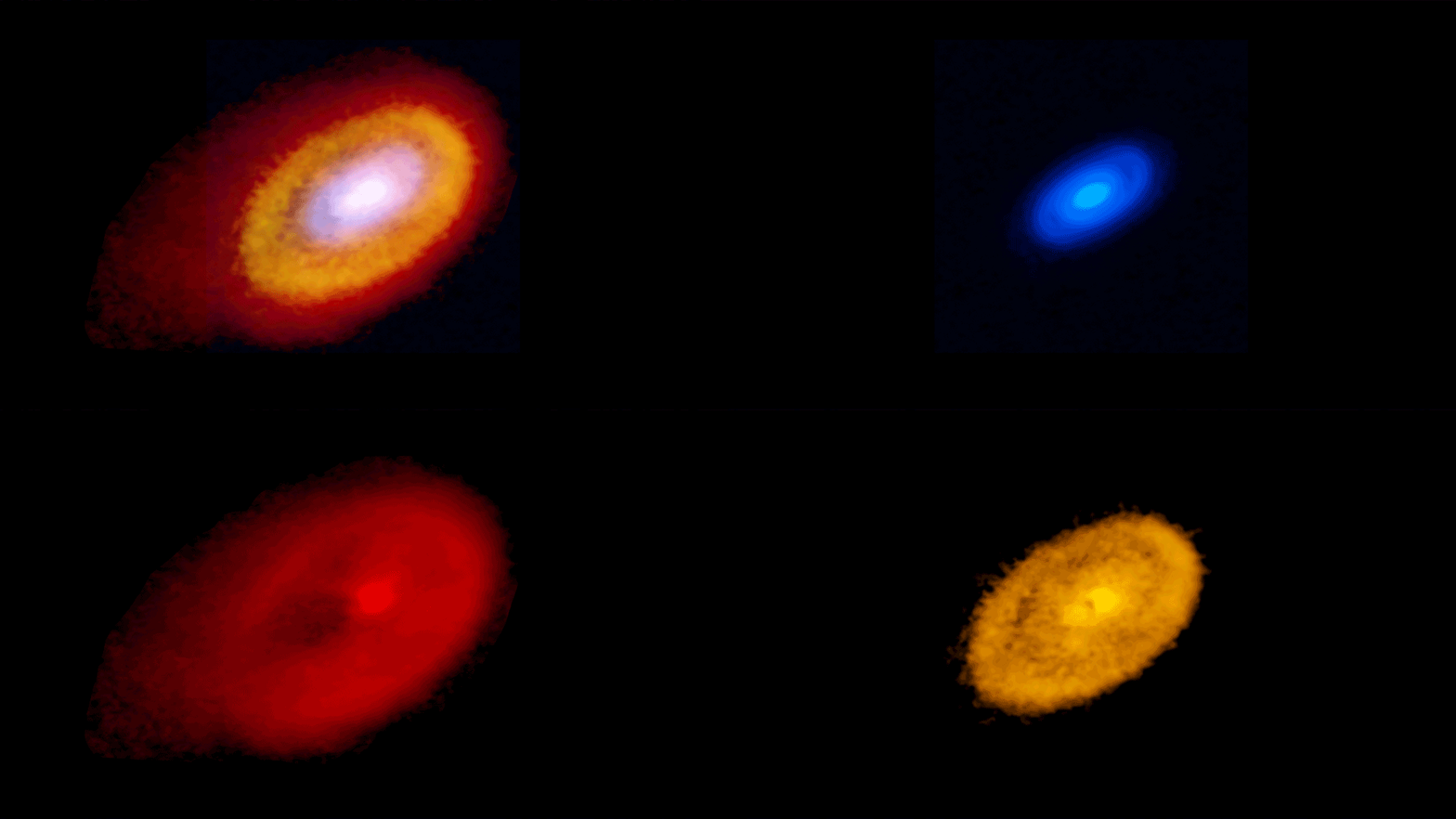
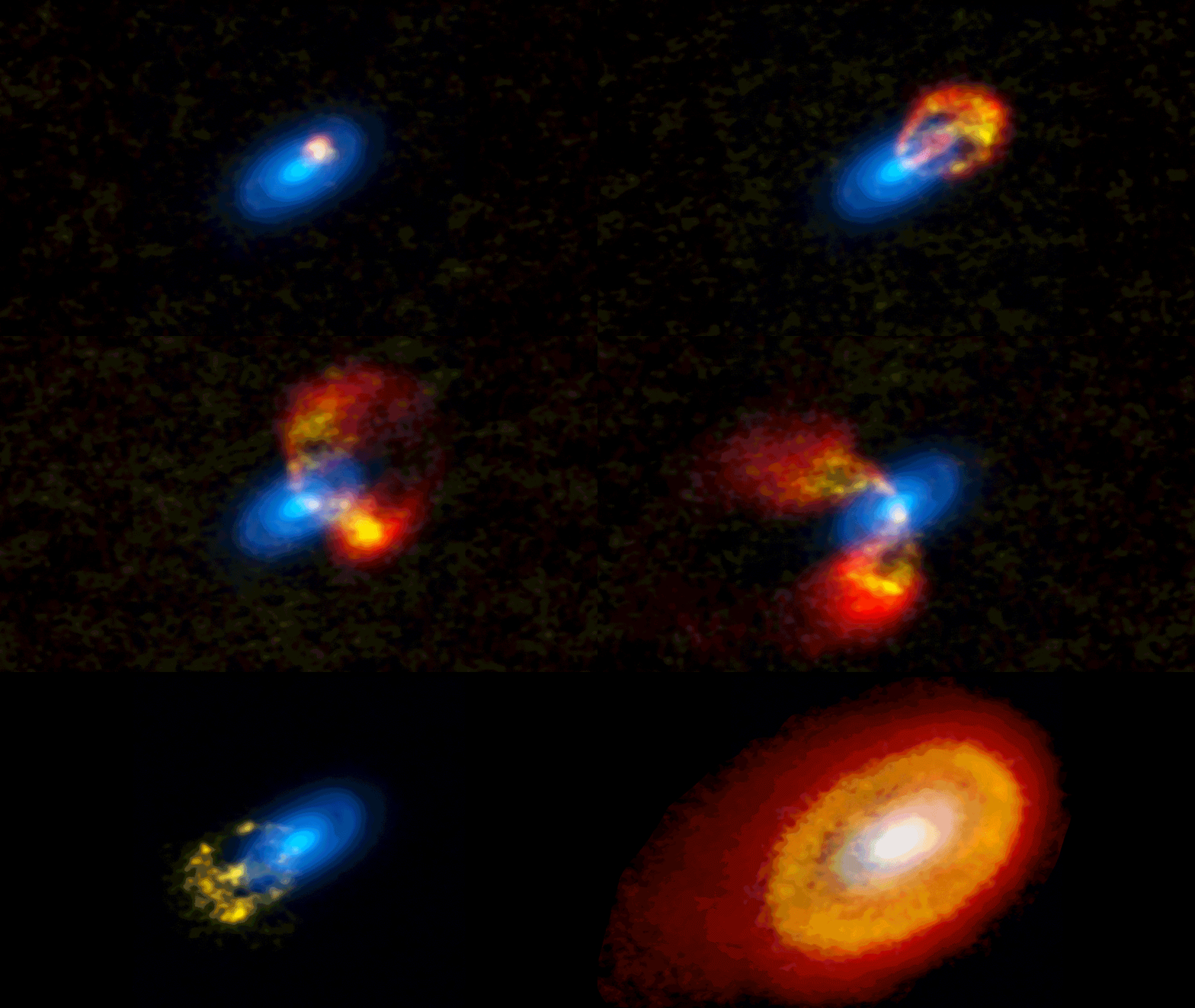
Using gas velocity data, scientists observing Elias 2-27 were able to directly measure the mass of the young star’s protoplanetary disk and also trace dynamical perturbations in the star system. Visible in this paneled composite are the dust continuum 0.87mm emission data (blue), along with emissions from gases C18O (yellow) and 13CO (red). Credit: ALMA (ESO/NAOJ/NRAO)/T. Paneque-Carreño (Universidad de Chile), B. Saxton (NRAO). Hi-Res File


Multiple molecular tracers helped scientists to better understand the gases present in the disk surrounding Elias 2-27. Visible in this composite are the 0.87mm dust continuum data (blue), C18O emission (yellow), and 13CO emission (red). Credit: ALMA (ESO/NAOJ/NRAO)/T. Paneque-Carreño (Universidad de Chile), B. Saxton (NRAO). Hi-Res File


Multiple molecular tracers helped scientists to better understand the gases present in the disk surrounding Elias 2-27. Visible in this animation are the 0.87mm dust continuum data (blue), C18O emission (yellow), and 13CO emission (red), with each layer shown individually and in composite. Credit: ALMA (ESO/NAOJ/NRAO)/T. Paneque-Carreño (Universidad de Chile), B. Saxton (NRAO).
Hi-Res File


Using gas velocity data, scientists observing Elias 2-27 were able to directly measure the mass of the young star’s protoplanetary disk and also trace dynamical perturbations in the star system. Visible in this animation are the dust continuum 0.87mm emission data (blue), along with emissions from gases C18O (yellow) and 13CO (red). Credit: ALMA (ESO/NAOJ/NRAO)/T. Paneque-Carreño (Universidad de Chile), B. Saxton (NRAO).
Hi-Res File 
 

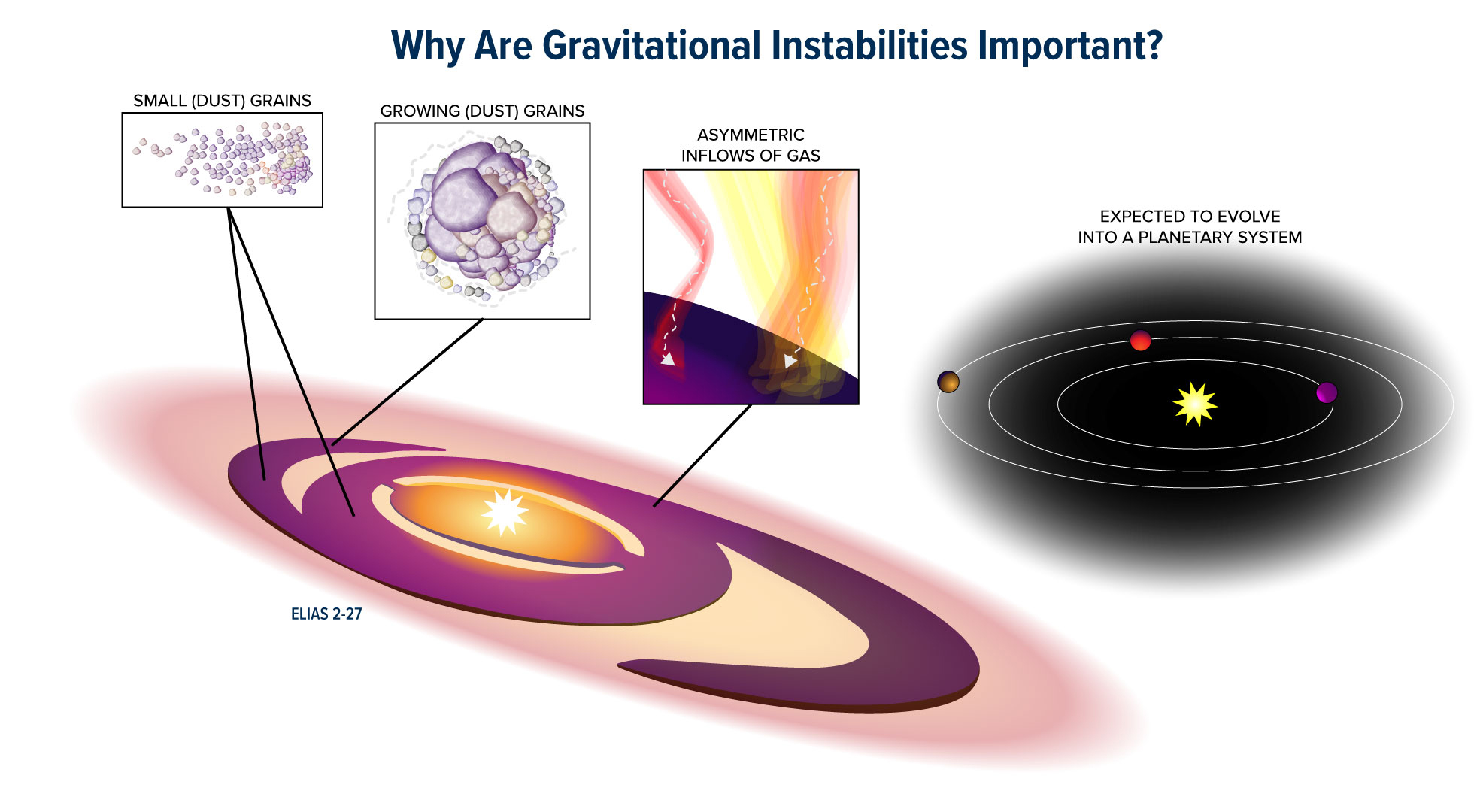
Elias 2-27 is a young star located just 378 light-years from Earth. The star is host to a massive protoplanetary disk of gas and dust, one of the key elements to planet formation. In this graphic illustration, dust is distributed along a spiral-shaped morphology first discovered in Elias 2-27 in 2016. The larger dust grains are found along the spiral arms while the smaller dust grains are distributed all around the protoplanetary disk. Asymmetric inflows of gas were also detected during the study, indicating that there may still be material infalling into the disk. Scientists believe that Elias 2-27 may eventually evolve into a planetary system, with gravitational instabilities causing the formation of giant planets. Because this process takes millions of years to occur, scientists can only observe the beginning stages. Credit: ALMA (ESO/NAOJ/NRAO)/T. Paneque-Carreño (Universidad de Chile), B. Saxton (NRAO).
Hi-Res File


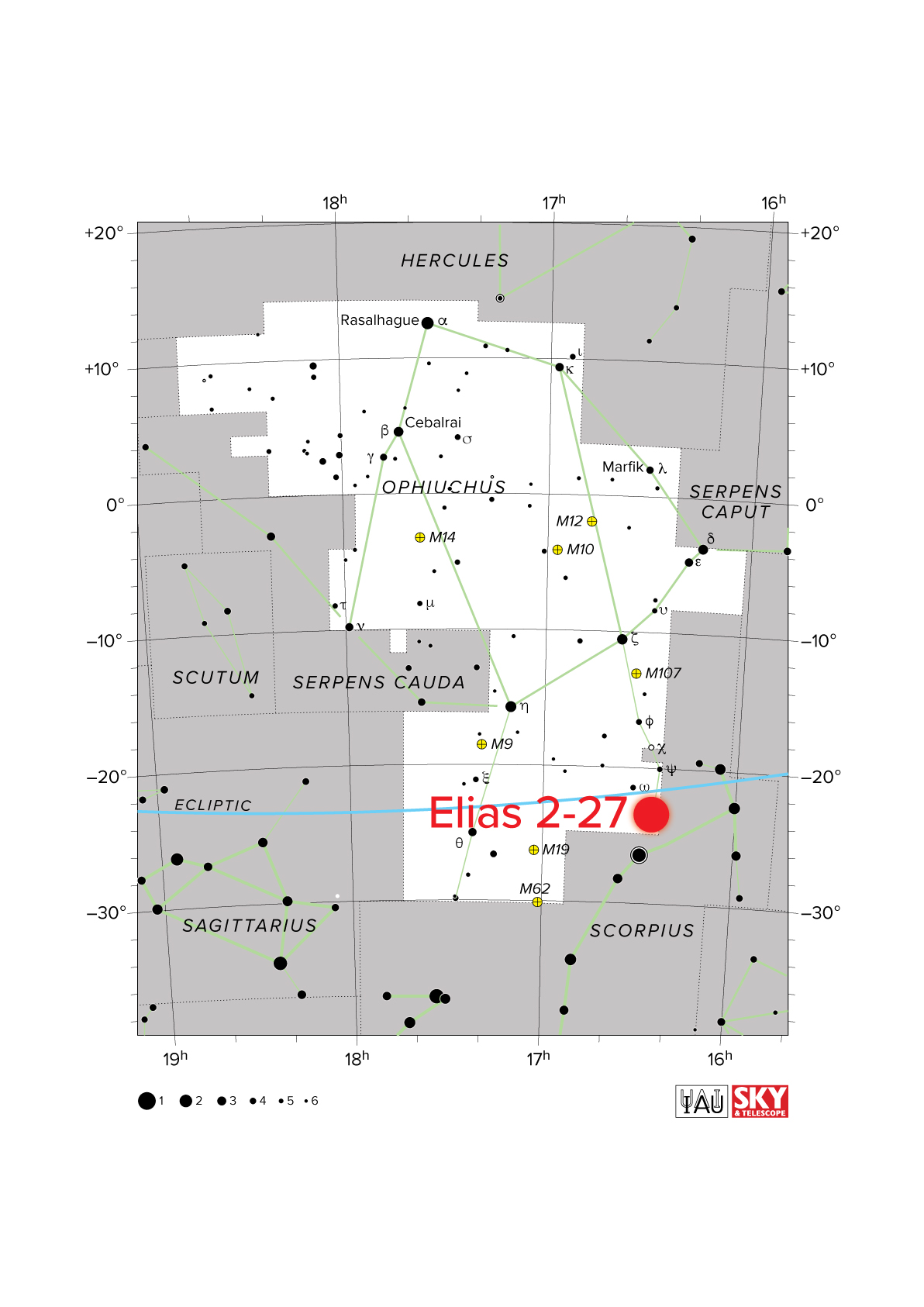
Elias 2-27 is a young star located 378 light-years from Earth, in the star-forming region of the Ophiuchus Molecular Cloud in the constellation Ophiuchus. Credit: ALMA (ESO/NAOJ/NRAO)/T. Paneque-Carreño (Universidad de Chile), B. Saxton (NRAO).
Hi-Res File


New observations of young stellar object Elias 2-27 confirm gravitational instabilities and planet-forming disk mass as key to formation of giant planets

A team of scientists using the Atacama Large Millimeter/submillimeter Array (ALMA) to study the young star Elias 2-27 have confirmed that gravitational instabilities play a key role in planet formation, and have for the first time directly measured the mass of protoplanetary disks

using gas velocity data, potentially unlocking one of the mysteries of planet formation. The results of the research are published today in two papers in The Astrophysical Journal.

Protoplanetary disks—planet-forming disks made of gas and dust that surround newly formed young stars—are known to scientists as the birthplace of planets. The exact process of planet formation, however, has remained a mystery. The new research, led by Teresa Paneque-Carreño—a recent graduate of the Universidad de Chile and PhD student at the University of Leiden and the European Southern Observatory, and the primary author on the first of the two papers—focuses on unlocking the mystery of planet formation.

During observations, scientists confirmed that the Elias 2-27 star system—a young star located less than 400 light-years away from Earth in the constellation Ophiuchus—was exhibiting evidence of gravitational instabilities which occur when planet-forming disks carry a large fraction of the system’s stellar mass. “How exactly planets form is one of the main questions in our field. However, there are some key mechanisms that we believe can accelerate the process of planet formation,” said Paneque-Carreño. “We found direct evidence for gravitational instabilities in Elias 2-27, which is very exciting because this is the first time that we can show kinematic and multi-wavelength proof of a system being gravitationally unstable. Elias 2-27 is the first system that checks all of the boxes.”

Elias 2-27’s unique characteristics have made it popular with ALMA scientists for more than half a decade. In 2016, a team of scientists using ALMA discovered a pinwheel of dust swirling around the young star. The spirals were believed to be the result of density waves, commonly known to produce the recognizable arms of spiral galaxies—like the Milky Way Galaxy—but at the time, had never before been seen around individual stars.

“We discovered in 2016 that the Elias 2-27 disk had a different structure from other already studied systems, something not observed in a protoplanetary disk before: two large-scale spiral arms. Gravitational instabilities were a strong possibility, but the origin of these structures remained a mystery and we needed further observations,” said Laura Pérez, Assistant Professor at the Universidad de Chile and the principal investigator on the 2016 study. Together with collaborators, she proposed further observations in multiple ALMA bands that were analyzed with Paneque-Carreño as a part of her M.Sc. thesis at Universidad de Chile.

In addition to confirming gravitational instabilities, scientists found perturbations—or disturbances—in the star system above and beyond theoretical expectations. “There may still be new material from the surrounding molecular cloud falling onto the disk, which makes everything more chaotic,” said Paneque-Carreño, adding that this chaos has contributed to interesting phenomena that have never been observed before, and for which scientists have no clear explanation. “The Elias 2-27 star system is highly asymmetric in the gas structure. This was completely unexpected, and it is the first time we’ve observed such vertical asymmetry in a protoplanetary disk.”

Cassandra Hall, Assistant Professor of Computational Astrophysics at the University of Georgia, and a co-author on the research, added that the confirmation of both vertical asymmetry and velocity perturbations—the first large-scale perturbations linked to spiral structure in a protoplanetary disk—could have significant implications for planet formation theory. “This could be a ‘smoking gun’ of gravitational instability, which may accelerate some of the earliest stages of planet formation. We first predicted this signature in 2020, and from a computational astrophysics point of view, it’s exciting to be right.”

Paneque-Carreño added that while the new research has confirmed some theories, it has also raised new questions. “While gravitational instabilities can now be confirmed to explain the spiral structures in the dust continuum surrounding the star, there is also an inner gap, or missing material in the disk, for which we do not have a clear explanation.”

One of the barriers to understanding planet formation was the lack of direct measurement of the mass of planet-forming disks, a problem addressed in the new research. The high sensitivity of ALMA Band 6, paired with Bands 3 and 7, allowed the team to more closely study the dynamical processes, density, and even the mass of the disk. “Previous measurements of protoplanetary disk mass were indirect and based only on dust or rare isotopologues. With this new study, we are now sensitive to the entire mass of the disk,” said Benedetta Veronesi—a graduate student at the University of Milan and postdoctoral researcher at École normale supérieure de Lyon, and the lead author on the second paper. “This finding lays the foundation for the development of a method to measure disk mass that will allow us to break down one of the biggest and most pressing barriers in the field of planet formation. Knowing the amount of mass present in planet-forming disks allows us to determine the amount of material available for the formation of planetary systems, and to better understand the process by which they form.” Although the team has answered a number of key questions about the role of gravitational instability and disk mass in planet formation, the work is not yet done. “Studying how planets form is difficult because it takes millions of years to form planets. This is a very short time-scale for stars, which live thousands of millions of years, but a very long process for us,” said Paneque-Carreño. “What we can do is observe young stars, with disks of gas and dust around them, and try to explain why these disks of material look the way they do. It’s like looking at a crime scene and trying to guess what happened. Our observational analysis paired with future in-depth analysis of Elias 2-27 will allow us to characterize exactly how gravitational instabilities act in planet-forming disks, and gain more insight into how planets are formed.”


Resources

Spiral Arms and a Massive Dust Disk with non-Keplerian Kinematics: Possible Evidence for Gravitational Instability in the Disk of Elias 2-27, Paneque-Carreño et al. ApJ, preview [
https://arxiv.org/pdf/2103.14048.pdf]

A Dynamical Measurement of the Disk Mass in Elias 2-27, Veronesi et al. ApJ, preview [
https://arxiv.org/pdf/2104.09530.pdf]


About ALMA

The Atacama Large Millimeter/submillimeter Array (ALMA), an international astronomy facility, is a partnership of the European Organisation for Astronomical Research in the Southern Hemisphere (ESO), the U.S. National Science Foundation (NSF) and the National Institutes of Natural Sciences (NINS) of Japan in cooperation with the Republic of Chile. ALMA is funded by ESO on behalf of its Member States, by NSF in cooperation with the National Research Council of Canada (NRC) and the Ministry of Science and Technology (MOST) and by NINS in cooperation with the Academia Sinica (AS) in Taiwan and the Korea Astronomy and Space Science Institute (KASI).

ALMA construction and operations are led by ESO on behalf of its Member States; by the National Radio Astronomy Observatory (NRAO), managed by Associated Universities, Inc. (AUI), on behalf of North America; and by the National Astronomical Observatory of Japan (NAOJ) on behalf of East Asia. The Joint ALMA Observatory (JAO) provides the unified leadership and management of the construction, commissioning and operation of ALMA..”


Media Contact:

Amy C. Oliver
Public Information Officer, ALMA
Public Information & News Manager, NRAO
+1 434 242 9584

aoliver@nrao.edu

Nicolás Lira
Education and Public Outreach Coordinator
Joint ALMA Observatory, Santiago – Chile
+56 2 2467 6519

nicolas.lira@alma.cl