Showing posts with label Supermassive Black Hole. Show all posts

Monday, August 24, 2026

Stellar spin may explain why repeated black hole flares grow dimmer


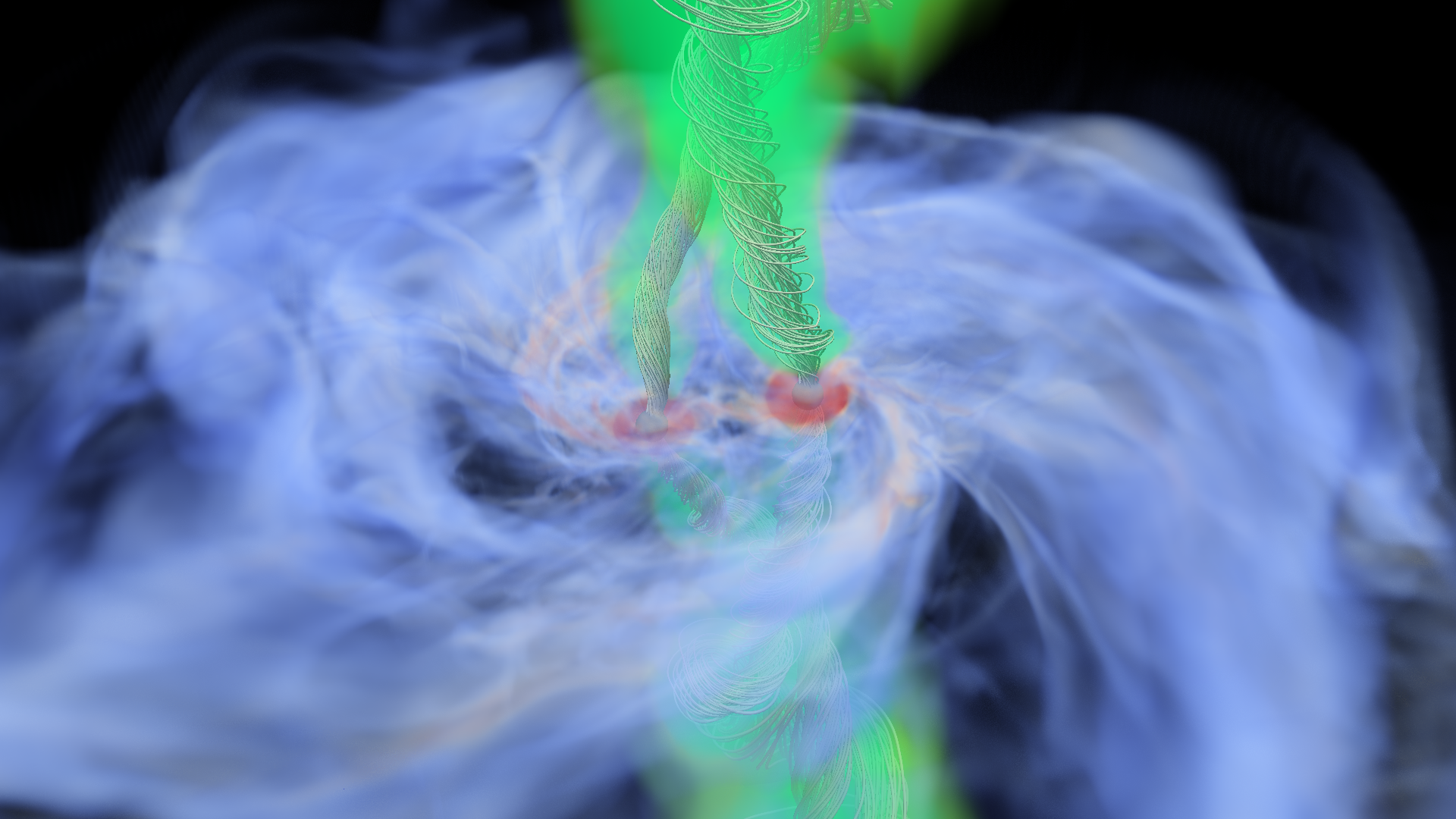
A hydrodynamical simulation of a star being ripped apart by the tidal forces of a supermassive black hole.
Credit: NASA/ S. Gezari (JHU)/ J. Guillochon (UCSC)


At the center of most galaxies lies a supermassive black hole, with a mass millions to billions of times that of our sun and some of the most extreme gravity in the universe.

Some stars that venture too close to such black holes live to tell the tale. Rather than being completely destroyed, they survive to make repeated close passes, producing a new flare of light each time.

These repeating partial tidal disruption events (rpTDEs) give astronomers the opportunity to watch the same star and black hole interaction unfold again and again, thanks to wide-field time-domain surveys that repeatedly scan large areas of the sky for objects that change in brightness.

But in several cases, researchers have noticed a puzzling pattern: The successive flares grow progressively dimmer. For years, theoretical models couldn't explain why.

Now, a team of astrophysicists at Syracuse University has shown that the answer may lie in a previously overlooked factor—the star's spin.

The study, published in The Astrophysical Journal, was led by doctoral student Ananya Bandopadhyay, working with postdoctoral researcher Benjamin Amend and associate professor Eric Coughlin—all in the Department of Physics—as well as colleagues at other institutions.

When stars meet black holes

In a typical tidal disruption event (TDE), a black hole's tidal force—the difference in gravitational pull across a nearby star—tears the star completely apart.

As the disrupted stellar debris falls toward, or "accretes" onto, the black hole, it loses energy that is emitted in the form of light over the course of days to months.

While black holes themselves emit no light, TDEs provide a short-lived supply of fuel that lights up the surrounding region, allowing astronomers to study these otherwise invisible objects indirectly.

If a star orbiting a black hole does not come close enough to be completely ripped apart, it can, however, lose a fraction of its mass, resulting in a partial TDE. In a repeating partial TDE, the surviving core continues orbiting the black hole, losing more material with each new close pass, a few months to several years apart.

The dimming mystery

How much material a star loses during repeated encounters depends partly on its internal structure. Bandopadhyay compares a low-mass star to a fluffy meringue, which can become increasingly vulnerable to the black hole's tidal forces.

By contrast, a higher-mass star has a more centrally concentrated, onion-like structure and can shed its outer layers while its dense core remains relatively unaffected, losing decreasing amounts of mass over time.

Those differences can help explain why rpTDEs don't all behave the same way. But one pattern in particular has mystified researchers. Of the roughly 10 repeating systems identified to date, four have produced flares that grow progressively dimmer.

Decreasing mass loss might seem like an obvious explanation. But previous hydrodynamical simulations showed that, surprisingly, even as the material lost decreased with each encounter, the predicted flares retained roughly the same brightness.

"We were puzzled by this for two years," Bandopadhyay says.

Their previous work had revealed another effect of the black hole's tidal forces. In addition to stripping material from the star, they exert a torque that causes the star to spin faster with each close encounter. As a result, although less material falls back toward the black hole, it returns over a shorter period of time, helping to keep the predicted flare at roughly the same brightness.

To reproduce the dimming astronomers were actually observing, the researchers needed what Bandopadhyay called "a new ingredient"—a star that was already spinning rapidly before its first encounter with the black hole.

The new study found that this initial rotation prevents the star from being significantly spun up during each passage. Without that additional spin-up, the timescale over which the stripped material falls back remains relatively constant. As the star loses less material with each encounter, the peak fallback rate—and the predicted brightness of the flare—can finally decline.

Tracing the star's past

But why would the star already be spinning so rapidly?

"It is also extremely difficult to 'bind' a star to a supermassive black hole so tightly that it orbits the black hole in a matter of months, and yet they seem to do so in rpTDEs," Coughlin says.

The so-called Hills mechanism may explain both. Under this scenario, a pair of closely orbiting stars passes near a supermassive black hole, which tears the binary apart, ejecting one star and capturing the other.

In a close binary, the stars can become tidally locked, causing each to rotate on its axis at the same rate that the pair orbits each other. The tighter the binary, the shorter that orbital period and the faster a tidally locked star spins. The binaries capable of leaving a captured star on the short orbit observed in rpTDEs would have to be extremely tight—also leaving a tidally locked star spinning rapidly before its capture.

"Ananya's work demonstrates that each of these peculiarities can be explained by the same underlying phenomenon: the tidal destruction of a binary system and the capture of one of the stars," Coughlin says. "From a theoretical standpoint, this is a major step forward in our understanding of the physics at play in these systems."

Zooming out, Coughlin notes that Hills capture may also have produced some of the stars orbiting Sagittarius A*, the supermassive black hole at the center of the Milky Way. The new findings could therefore help explain some of the properties of stars in what he calls "our own cosmological backyard."

by Olivia Hall, Syracuse University

edited by Sadie Harley, reviewed by Robert Egan

Source: Phys.org


Publication details

Ananya Bandopadhyay et al, The Role of Stellar Spin in Repeating Partial Tidal Disruption Events, The Astrophysical Journal (2026). DOI: 10.3847/1538-4357/ae8f31

Journal information: Astrophysical Journal


Provided by Syracuse University


Sunday, August 02, 2026

A bright X-ray flare from a tidal disruption event

An artist's i,br,brmpression of a tidal disruption event in an active galaxy, in which a star is torn up by the gravitational force from a nearby supermassive.. black hole. Image credit: NASA/CXC/M.Weiss. -
Download Image


This week's significant event is from Maya Nunez, a rising sophomore at California State University, Long Beach, who is doing a Summer Undergraduate Research Fellowship (SURF) with the NuSTAR group at Caltech. Maya is working with Murray Brightman, a NuSTAR Staff Scientist, on transient X-ray sources—that is, X-ray sources that rapidly change in brightness, such as new X-ray sources that suddenly appear in the sky. X-ray transients can be caused by a wide variety of astrophysical processes, including Tidal Disruption Events (TDEs), which occur when a star passes too close to a supermassive black hole and is torn apart. Maya identified a bright X-ray flare from a galaxy hosting an actively accreting supermassive black hole, i.e., an active galaxy. Back in 2019, this galaxy had hosted the bright optical and infrared transient AT2019fdr, whose origin has been under much debate. AT2019fdr is hypothesized to be either a superluminous supernova, a flare from a supermassive black hole, or a TDE. Maya led an approved NuSTAR Director's Discretionary Time proposal to observe this source, and the observations, obtained last week, detected the source in the 3–8 keV NuSTAR energy band. The NuSTAR data provide a late-time X-ray detection from AT2019fdr which, in combination with recent literature, solidifies AT2019fdr’s categorization as a TDE as opposed to a superluminous supernova, since late-time X-ray emission is not common for such supernovae. A flare from a supermassive black hole is also less probable, but not completely ruled out. These new data and findings will expand our understanding of TDEs, particularly TDEs in galaxies with actively accreting supermassive black holes, which have not been as well-studied as TDEs in inactive or quiescent galaxies.


Wednesday, July 08, 2026

The Environment Around a Supermassive Black Hole

Artist's impression of the innermost regions around a supermassive black hole, showing an accretion disk visually distorted by gravity surrounding the event horizon, and powering an outflow of material. Image credit: CfA/M. Weiss.
Download Image

During the past week, NuSTAR observed the nearby active galactic nucleus (AGN) I Zwicky 1 in coordination with the JAXA/ESA/NASA’s XRISM and ESA’s XMM-Newton X-ray observatories. I Zwicky 1 is a unique AGN from which we can learn a lot about the fundamental physics at work as material spirals into a black hole, and the processes by which supermassive black holes grow and are able to have a profound impact on their host galaxies by AGN feedback. In this AGN, we observe X-rays reflecting off the innermost regions of the accretion disk, allowing us to probe the extreme environment just outside the event horizon of the black hole. In addition, I Zwicky 1 is seen to launch an ultrafast outflow: a wind from the inner accretion disk reaching velocities up to 30% of the speed of light. These outflows carry significant energy into their host galaxies and understanding how they are launched is an important step towards understanding AGN/host galaxy feedback. I Zwicky 1 is often seen to launch X-ray flares originating in the corona, and the outflows are seen to evolve in response to these flares. Through these observations, important new insights are expected into the structure of the accretion disk around a rapidly growing black hole, the launching mechanism of the ultrafast outflows, and the connection between these outflows and the innermost regions of the accretion disk and the corona.
Author: Dan Wilkins (Research Assistant Professor, The Ohio State University)


Saturday, June 13, 2026

Galaxy Roasts Clouds, Makes "BBQ Sauce"

Figure: Schematic illustration of an evolutionary scenario connecting LRDs (left), BBQSORS (center), and ordinary QSOs (right). In LRDs, a supermassive black hole is thought to be surrounded by thick gas clouds. In BBQSORS, the surrounding clouds are being roasted off, and the region around the black hole may be partially emerging into view. In a QSO, the region around the black hole is visible. (Credit: Illustration generated by ChatGPT [OpenAI]; edited by Kohei Ichikawa)


Galaxies in the early Universe which shine brightly due to gas falling into a supermassive blackhole at the galaxy center were originally regarded as puzzling Quazi-Stellar Objects, abbreviated as QSO. Even though we now know that they are not stars, but entire galaxies, the abbreviation QSO, now pronounced as "quasar," is still used. QSOs are some of the brightest objects in the Universe, but the recipe nature uses to create them has remained a secret.

Now, thanks to data from the new wide-field multi-object spectrograph, ʻŌnohiʻula PFS, on the Subaru Telescope, astronomers think that they have discovered the special sauce needed to understand the secret recipe. The data comes from observations of an object known as "BBQSORS," which is an abbreviation for "Blackbody QSO and Radio Source," and is pronounced "barbecue sauce."

As the name implies, BBQSORS seems to be a QSO, but has some idiosyncrasies. It was originally identified as a radio-bright QSO candidate. Follow-up observations to determine the true nature of the candidate were conducted as part of ʻŌnohiʻula PFS’s filler observations program. Under this program, astronomers can request observations of an object when ʻŌnohiʻula PFS is scheduled to observe other targets in the same area of the sky. This filler observation program allows astronomers to make simultaneous observations, which use the instrument more efficiently without detracting from the main observations. The PFS observations revealed that BBQSORS shows the characteristic of high-speed gas around a black hole, but, unlike ordinary QSOs, also has features similar to black body emission from gas at around 10,000 degrees.

A research team including researchers from the Japanese institutions Tohoku University, Ehime University, and Ritsumeikan University analyzed data for BBQSORS from other observations and found that it has properties similar to those of a class of objects called "Little Red Dots" (LRDs). Researchers think that in LRDs, a growing supermassive black hole may be obscured by very dense clouds of gas which absorb the intense light from the center and re-emit it at different wavelengths. From this early "cloudy stage," LRDs are thought to change into QSOs.

BBQSORS seems to be shrouded in gas clouds, similar to LRDs, but the gas may be hotter than that surrounding LRDs. In other words, BBQSORS may be roasting off its surrounding clouds in the process of cooking up a QSR. If this interpretation is correct, BBQSORS is a valuable candidate object capturing the transition from a thick-gas-enshrouded stage to an ordinary quasar.

This research result was published on June 3, 2026, in The Astrophysical Journal Letters (Zhong, Chen, Ichikawa et al., "Blackbody Quasar and Radio Source (BBQSORS): A Candidate of Transitional Little Red Dots with a T ~ 104 K Blackbody Spectrum").

This research was supported by JSPS KAKENHI (Grant No. 25K01043), JST FOREST Program (JPMJFR2466), and the Inamori Foundation Research Grant.


Relevant Links


About the Subaru Telescope

The Subaru Telescope is a large optical-infrared telescope operated by the National Astronomical Observatory of Japan, National Institutes of Natural Sciences with the support of the MEXT Project to Promote Large Scientific Frontiers. We are honored and grateful for the opportunity of observing the Universe from Maunakea, which has cultural, historical, and natural significance in Hawai`i.


Thursday, June 11, 2026

Magnetic Field Helps Binary Star Systems Form

Visualization of gas flows around a binary protostar system calculated by ATERUI III. The gas shown in red orbits around one of the two protostars. The gas shown in blue orbits around the combined binary system. The gas shown in green is being expelled from the system and is carrying away angular momentum. The present research shows that the magnetic field plays an important role in expelling gas and angular momentum. (Credit: Matsumoto, Hotokezaka, Inayoshi 2026). Image (1.7MB)

Visualization of gas flows around a binary protostar system calculated by ATERUI III. The first half of the video shows a close-up view around the binary protostars. The second half shows a wide-field view of the system. You can see how the outflow escaping from the disk around the binary system carries angular momentum far away. (Credit: Matsumoto, Hotokezaka, Inayoshi 2026). YouTube video


New simulations show that interactions with a magnetic field can work to decrease the distance between still forming binary protostars. These results can help explain the characteristics of the binary star systems observed in the Milky Way. These results can also be extrapolated to binary black holes, giving insights into how super massive black holes evolve.

Stars form from clouds of interstellar gas that collapse into dense regions known as molecular cloud cores. Multiple stars form close together simultaneously, and in some cases two stars will become gravitationally bound to each other, forming a binary star system. Observations suggest that these binary systems form early on, before the stars are even fully formed. Astronomers have struggled to explain how these still forming “protostars” can pull together into binary systems so quickly.

New simulations using multiple supercomputers including the ATERUI III supercomputer for astronomical simulations and its predecessor ATERUI II, both at the National Astronomical Observatory of Japan, have shown that interactions between an interstellar magnetic field and the gas around the protostars can remove angular momentum from the protostar pair, allowing the binary systems to form within a realistic time period. In the simulation run with zero magnetic field performed as part of this research, the protostars actually moved farther apart, indicating the importance of the magnetic field in the process.

The simulations also suggest that the same process could work on massive binary black holes in the gas-rich heart of a new galaxy formed from the merger of two smaller galaxies. This would help explain how massive black holes can move close enough to merge and form a supermassive black hole. Direct simulation of massive binary black holes over the timespans required to spiral towards each other is still computationally challenging, so rigorous investigation of the effects of magnetic fields on massive binary black holes remains a topic for future investigation.


Detailed Article(s)

Magnetic Field Helps Binary Star Systems Form
Center for Computational Astrophysics

Release Information
Researcher(s) Involved in this Release

Tomoaki Matsumoto (Hosei University)
Kenta Hotokezaka (The University of Tokyo)
Kohei Inayoshi (Peking University)

Coordinated Release Organization(s)

National Astronomical Observatory of Japan, NINS
Hosei University

Paper(s)
Matsumoto, Tomoaki al. “Magnetic-field-induced inspiral of binaries with circumbinary disc: black hole and protostellar systems”, in Monthly Notices of the Royal Astronomical Society, DOI: 10.1093/mnras/stag669


Wednesday, June 10, 2026

ALMA Finally Catches the Milky Way's Black Hole “Breathing”

This composite image overlays data from the Atacama Large Millimeter/submillimeter Array and NASA’s Chandra X-Ray Observatory. It shows evidence for a wind blowing away from Sagittarius A* (Sgr A*), the supermassive black hole in the center of our galaxy. The white dot in the center of the image shows Sgr A*. In orange is data from ALMA radio telescopes in Chile, mapping the location of cold gas composed of carbon monoxide in the image. In blue is X-ray data from NASA’s Chandra X-ray Observatory. A large cone-shaped cavity, visible as an absence of cold gas in the ALMA data, is filled by hot X-ray-emitting gas in the Chandra data. Researchers think a hot, energetic wind blowing from Sgr A* created this,br structure by sweeping the cold gas away or heating it up. Image Credit: Northwestern Univ./M. Gorski; X-ray: NASA/CXC/SAO; Radio: ESO/NAOJ/NRAO/ALMA


By creating the most detailed map ever of cold gas around Sagittarius A*, astronomers have provided compelling evidence for a long-sought black-hole wind

Astronomers using the Atacama Large Millimeter/submillimeter Array (ALMA) have finally found clear evidence that the supermassive black hole at the center of the Milky Way, Sagittarius A*(Sgr A*), is blowing a hot cosmic wind – something scientists have been hunting for over 50 years. Astronomical theory says that when a black hole feeds on gas, it should also blow some material back out as winds or jets. Until now, the wind coming from our own Galaxy’s black hole had never been seen clearly. Using several years of highly detailed ALMA observations, astronomers mapped cold gas within just a few light‑years of Sgr A*. After carefully removing the black hole’s bright radio glow, they uncovered a giant, cone‑shaped hole in the cold gas, pointing straight at the black hole – the unmistakable imprint of a large, hot, active wind launched from Sgr A*.

With over five years of ALMA observations (made at a wavelength of 1.3 milimeters) astronomers mapped emission from carbon monoxide (CO) molecules, a classic tracer of cold molecular gas, within only about three light‑years of Sgr A*. By carefully modeling and subtracting the black hole’s own rapidly varying radio emission, they were able to reveal extremely faint, intricate structures in the surrounding gas. Data from NASA’s Chandra X-Ray Observatory show hot gas filling the same region, confirming that this is a black hole–powered outflow, not something caused by nearby stars.

The resulting map is roughly 100 times more sensitive and 80 times higher in angular resolution than previous CO maps of the region, making it the most sensitive, highest‑resolution map of cold gas within three light‑years of Sgr A* ever obtained. This discovery relied not only on years of ALMA observations but also innovative data‑processing techniques to model and subtract Sgr A*’s rapidly variable emission, revealing fainter structures in the surr,brounding gas.

The team estimates this wind has been blowing for at least 20,000 years, but it’s relatively gentle compared to the dramatic jets seen in other galaxies. By revealing this long‑sought wind, ALMA (and Chandra) have helped solve a decades‑old mystery and given scientists their clearest view yet of how a supermassive black hole can both feed on and reshape its surroundings at the heart of our Milky Way Galaxy.

Additional Information

The study appears as “The Discovery of a Large Active Wind from the Milky Way's Central Black Hole” by M. Gorsky and E. Murchikova in The Astrophysical Journal Letters.

This article is based on the original press release by the U.S. National Science Foundation National Radio Astronomy Observatory (NRAO), an ALMA partner on behalf of North America.

The Atacama Large Millimeter/submillimeter Array (ALMA), an international astronomy facility, is a partnership of the European Southern Observatory (ESO), the U.S. National Science Foundation (NSF) and the National Institutes of Natural Sciences (NINS) of Japan in cooperation with the Republic of Chile. .ALMA is funded by ESO on behalf of its Member States, by NSF in cooperation with the National Research Council of Canada (NRC) and the National Scie,brnce and Technology Council (NSTC) in Taiwan and by NINS in cooperation with the Academia Sinica (AS) in Taiwan and the Korea Astronomy and Space Sci.ence Institute (KASI).
ALMA c.onstruction and operations are led by ESO on behalf of its Member States; by the National Radio Astronomy Observatory (NRAO), managed by Asso,brciated Universities, Inc. (AUI), on behalf of North America; and by the National Astronomical Observatory of Japan (NAOJ) on behalf of East Asia. The. Joint ALMA Observatory (JAO) provides the unified leadership and management of the construction, commissioning and operation of ALMA.


Contacts:

Nicolás Lira
Education and Public Outreach Officer
Joint ALMA Observatory, Santiago - Chile
Phone:
+56 2 2467 6519
Cel: +56 9 9445 7726
Email: nicolas.lira@alma.cl

Jill Malusky
Public Information Officer
NRAO
Phone:
+1 304-456-2236
Email: jmalusky@nrao.edu

Seiichiro Naito
NAOJ EPO Lead
Email:
naito.seiichiro@nao.ac.jp

Bárbara Ferreira
ESO Media Manager
Garching bei München, Germany
Phone:
+49 89 3200 6670
Email: press@eso.org


Sunday, May 31, 2026

NASA’s Webb Reveals Black Hole That Formed Before Its Galaxy

An image from NIRCam on NASA’s James Webb Space Telescope shows Little Red Dot Abell2744-QSO1, magnified and triply imaged by galaxy cluster Abell 2744 (Pandora’s Cluster). Credit Image: NASA, ESA, CSA, Lukas Furtak (Ben-Gurion University); Image Processing: Alyssa Pagan (STScI)

An image detail from NIRCam (left) on NASA’s James Webb Space Telescope shows Little Red Dot Abell2744-QSO1. A map of gas velocity in QSO1 (right), made using the IFU on NIRSpec, shows evidence for a 50-million-solar-mass black hole at the center. Credit Image: NASA, ESA, CSA, Ignas Juodžbalis (Cambridge), Cosimo Marconcini (University of Florence), Roberto Maiolino (Cambridge), Francesco D'Eugenio (Cambridge), Hannah Übler (MPE); Image Processing: Alyssa Pagan (STScI)

Image of Abell 2744 and Little Red Dot Abell2744-QSO1, captured by Webb’s NIRCam, with compass arrows, scale bar, and color key for reference. Credit Image: NASA, ESA, CSA, Lukas Furtak (Ben-Gurion University); Image Processing: Alyssa Pagan (STScI)

A sonification is a translation of data into sound. In this sonification, the velocity of hydrogen gas moving around a black hole in the center of a Little Red Dot known as Abell2744-QSO1 (QSO1) is translated into sounds of varying pitch (or frequency). The faster the gas is moving toward the telescope, the higher the pitch. The faster it is moving away from the telescope, the lower the pitch. Credit Sonification: NASA, ESA, CSA, STScI, Christopher Britt (STScI), Ralf Crawford (STScI), Alyssa Pagan (STScI), Margaret Carruthers (STScI); Science: Ignas Juodžbalis (Cambridge), Cosimo Marconcini (University of Florence), Roberto Maiolino (Cambridge), Francesco D'Eugenio (Cambridge), Hannah Übler (MPE)


Which comes first, the galaxy or the black hole? We don’t know, but scientists have long thought it could be the galaxy: Large stars within an existing galaxy consume their fuel and collapse to form black holes, which can gobble up surrounding material and merge over time to form more massive entities.

But it’s hard to figure out how black holes millions to billions of times the mass of the Sun, thousands of which have now been detected in the early universe, could have grown so quickly from such small seeds.

Now, researchers using NASA’s James Webb Space Telescope have detected clear evidence that some supermassive black holes were enormous from the beginning, forming without a stellar collapse phase, and without a significantly more massive host galaxy to feed them.

“This is a remarkable finding,” said Roberto Maiolino of University of Cambridge in the United Kingdom, co-author of studies published in Nature and the Monthly Notices of the Royal Astronomical Society. “It’s a paradigm shift, a total revisiting of the classical scenarios of how black holes form and grow.”

Little Red Dot QSO1

The team’s conclusion is based on detailed observations of Abell2744-QSO1 (QSO1), a prototypical Little Red Dot that existed just 700 million years after the big bang.

Although QSO1 is only 1,300 light-years across, and its light has been traveling for more than 13 billion years, it is easier to study than most other Little Red Dots because it is gravitationally lensed by galaxy cluster Abell 2744 (Pandora’s Cluster). QSO1 is both magnified and triply imaged, appearing in three different locations in the sky.

Initial studies of QSO1 revealed compelling evidence that it may be little more than a cloud of glowing hydrogen and helium gas circling a supermassive black hole estimated at 40 million times the mass of the Sun. But as with other early black holes discovered by Webb, there was uncertainty about whether it really was that massive. “Before now, all of the mass measurements of black holes in the early universe have been indirect, based on assumptions from what we know about them in the local universe. We didn’t know if those assumptions really apply to the distant universe,” said co-author Francesco D’Eugenio, also of the University of Cambridge.

Mapping gas composition, velocity

The team recognized that if QSO1’s black hole is as massive as it looks, they should be able to use the integral field unit (IFU) on Webb’s NIRSpec (Near Infrared Spectrograph) to trace the effects of its gravity on the gas swirling around it, while also mapping the distribution of various elements in the gas.

Cambridge graduate student Ignas Juodžbalis and Cosimo Marconcini of the University of Florence, lead authors on one of the studies, used the IFU observations to map motions of hydrogen gas surrounding the black hole. When they plotted the rotation velocity as a function of distance from the center, they found that the gas has Keplerian motion: It orbits a central point in the same way that planets in our solar system orbit the Sun.

“This is important because it tells us that most of the mass of QSO1 is concentrated in the black hole at the center,” said Juodžbalis. “If the mass were more distributed, as it would be if there were a lot of stars, the gas would not have this perfect Keplerian rotation.”

Since Keplerian motion is governed by simple laws of gravity, the team was able to use the gas velocity measurements to calculate the black hole mass directly, a feat that had not previously been possible.

They found that not only is the black hole immense — roughly 50 million solar masses — it makes up, at minimum, an astonishing two-thirds of QSO1’s total mass. This proportion is thousands of times greater than in nearby galaxies, where supermassive black holes make up only a tiny fraction of the host galaxy’s total mass.

The IFU composition maps supported these results, showing that the gas throughout QSO1 is almost entirely hydrogen and helium, with very little of the heavier elements like oxygen that would be expected in a galaxy rich with stars and stellar debris. With a metallicity less than 0.5% of the Sun, QSO1 is one of the most pristine galactic environments ever measured.

“This is a phenomenal result,” said Maiolino. “It is the first direct measurement of a black hole mass within the first billion years after the big bang, and it is consistent with the previous measurements.” The team thinks this is a good sign that the assumptions used for indirect mass measurements are valid and the masses of other black holes in the early universe have not been overestimated.

Supermassive black hole origins

The team recognized that if QSO1’s black hole is as massive as it looks, they should be able to use the integral The outsized mass of QSO1 relative to its host galaxy suggests that it can’t have formed gradually from much smaller, stellar-mass black holes merging and feeding. “It seems that we have found a black hole that does not have a substantial host galaxy and that has predated stellar processes,” said Juodžbalis. “This is very exciting because it is evidence for primordial black holes or direct collapse black holes, which have been theorized but not confirmed.”

Whether QSO1’s black hole evolved from a “heavy seed” that formed within the first second of the big bang or somewhat later from the collapse of a giant cloud of gas, it was almost certainly born big, and may be in the early stages of building a galaxy around it.

The team thinks that Little Red Dots like QSO1 cannot have been rare in the early universe, and is in the process of analyzing similar objects to find out whether supermassive black holes actually do predate the galaxies where they currently reside.

The James Webb Space Telescope is the world’s premier space science observatory. Webb is solving mysteries in our solar system, looking beyond to distant worlds around other stars, and probing the mysterious structures and origins of our universe and our place in it. Webb is an international program led by NASA with its partners, ESA (European Space Agency) and CSA (Canadian Space Agency).


Related Links

Watch: NASA Black Hole Visualization Takes Viewers Beyond the Brink

Explore more: ViewSpace | Black Holes: Searching for the unseen

Read more: Dissecting Supermassive Black Holes

Watch: What Webb Learns from Light

Explore more: NASA's Universe of Learning: Black Hole Resources

More Webb News

More Webb Images

Webb Science Themes

Webb Mission Page


Wednesday, May 27, 2026

Supermassive black hole accretion flow

An artist’s impression of a supermassive black hole, with intense radiation blasting out across the accretion disk of matter flowing into it. Image credit: NASA/JPL-Caltech.
Download Image

A key question in studies of Active Galactic Nuclei (AGN) is the nature of the accretion flow around the supermassive black hole, which is still poorly understood. NGC 4051 offers a rare opportunity to observe this process around a low-mass AGN, which is also one of the brightest of its class. Its unique combination of variability, lower black hole mass, and accessibility to monitoring makes it an ideal laboratory for testing models of the innermost structure of AGN. A critical open question is the role of X-rays in irradiating the accretion disk, and how this effects the total energy observed in the system. For this purpose, NuSTAR's broad energy coverage and sensitivity are ideal for obtaining a high-quality X-ray spectrum. The NuSTAR observation performed last week completes the measurement of the broadband spectral energy distribution for NGC 4051 and is a key component to the 3-month multi-wavelength monitoring campaign of this interesting source that is currently underway.

Author: Marcin Marculewicz (Postdoctoral Fellow, Wayne State University)

Wednesday, May 20, 2026

NuSTAR & IXPE coordinated observations of Fairall 51

An artist impression of the obscurer surrounding AGN.
Credit: R. Hurt, NASA/JPL-Caltech

Download Image

Joint observations by NuSTAR and NASA’s Imaging X-ray Polarimetry Explorer (IXPE) mission last week offer a unique window into the structure of material around the supermassive black hole at the center of the galaxy Fairall 51. The material near the black hole in this active galactic nucleus (AGN) is thought to be oriented at a peculiar angle that reveals both the black hole’s accretion disk and surrounding circum-polar dust. By combining the unique capabilities of NuSTAR and IXPE, a detailed investigation is being made of the radiation from the hot “corona” near the black hole’s accretion disk as well as X-ray photons reflected by the dust structure beyond the disk. These data will constrain how the corona is oriented relative to the putative “torus” of material around the black hole and the perpendicular polar-scattering region identified by ground-based observatories. Ultimately, this coordinated effort will reveal how the small-scale central engine is physically linked to the vast dust structures around it, providing a full picture of the environment near the accreting supermassive black hole.

Author: Chien-Ting Chen, USRA scientist & IXPE science operations at NASA/MSFC


Tuesday, January 21, 2025

Astronomers Catch Unprecedented Features at Brink of Active Black Hole

In this artist’s concept, a stream of matter trails a white dwarf (sphere at lower right) orbiting within the innermost accretion disk surrounding 1ES 1927’s supermassive black hole. Astronomers developed this scenario to explain the evolution of rapid X-ray oscillations detected by ESA’s (European Space Agency) XMM-Newton satellite. ESA’s LISA mission, due to launch in the next decade, should be able to confirm the presence of an orbiting white dwarf by detecting the gravitational waves it produces. Hi-Res File

Radio images of 1ES 1927+654 reveal emerging structures that appear to be jets of plasma erupting from both sides of the galaxy’s central black hole following a strong radio flare. The first image, taken in June 2023, shows no sign of the jet, possibly because hot gas screened it from view. Then, starting in February 2024, the features emerge and expand away from the galaxy’s center, covering a total distance of about half a light-year as measured from the center of each structure. Hi-Res File


International teams of astronomers monitoring a supermassive black hole in the heart of a distant galaxy have detected features never seen before using data from NASA missions and other facilities including the National Science Foundation (NSF) National Radio Astronomy Observatory (NSF NRAO) Very Long Baseline Array (VLBA). The features include the launch of a plasma jet moving at nearly one-third the speed of light and unusual, rapid X-ray fluctuations likely arising from near the very edge of the black hole.

The source is 1ES 1927+654, a galaxy located about 270 million light-years away in the constellation Draco. It harbors a central black hole with a mass equivalent to about 1.4 million Suns.

“In 2018, the black hole began changing its properties right before our eyes, with a major optical, ultraviolet, and X-ray outburst,” said Eileen Meyer, an associate professor at UMBC (University of Maryland Baltimore County). “Many teams have been keeping a close eye on it ever since.”

She presented her team’s findings at the 245th meeting of the American Astronomical Society in National Harbor, Maryland. A paper led by Meyer describing the radio results was published Jan. 13 in The Astrophysical Journal Letters.

After the outburst, the black hole appeared to return to a quiet state, with a lull in activity for nearly a year. But by April 2023, a team led by Sibasish Laha at UMBC and NASA’s Goddard Space Flight Center in Greenbelt, Maryland, had noted a steady, months-long increase in low-energy X-rays in measurements by NASA’s Neil Gehrels Swift Observatory and NICER (Neutron star Interior Composition Explorer) telescope on the International Space Station. This monitoring program, which also includes observations from NASA’s NuSTAR(Nuclear Spectroscopic Telescope Array) and ESA’s (European Space Agency) XMM-Newton mission, continues.

The increase in X-rays triggered the UMBC team to make new radio observations, which indicated a strong and highly unusual radio flare was underway. The scientists then began intensive observations using the NSF NRAO’s VLBA and other facilities. The VLBA, a network of radio telescopes spread across the U.S., combines signals from individual dishes to create what amounts to a powerful, high-resolution radio camera. This allows the VLBA to detect features less than a light-year across at 1ES 1927’s distance.

This text is adapted from a press release shared by NASA. Read their complete release here.
You can access high-resolution versions of these supplemental images in SVS here.


Original release text by Francis Reddy
NASA’s Goddard Space Flight Center, Greenbelt, Md.


About NRAO

The National Radio Astronomy Observatory (NRAO) is a facility of the U.S. National Science Foundation, operated under cooperative agreement by Associated Universities, Inc.


Media Contacts:

Claire Andreoli
301-286-1940

claire.andreoli@nasa.gov
Public Affairs Officer
NASA’s Goddard Space Flight Center, Greenbelt, Md.


Jill Malusky
304-456-2236

jmalusky@nrao.edu
News & Public Information Manager
National Radio Astronomy Observatory, Charlottesville, Va.


Corrina Jaramillo Feldman
505-366-7267

cfeldman@nrao.edu
Public Information Officer – New Mexico
National Radio Astronomy Observatory, Socorro, NM.


Monday, January 13, 2025

Seeing an Active Galactic Nucleus with 20/20 X-Ray Vision with XRISM

This multiwavelength image shows X-rays (blue), optical light (yellow), and radio waves (red) from the galaxy NGC 4151, which hosts an active galactic nucleus. Credit:
X-ray: NASA/CXC/CfA/J.Wang et al.; Optical: Isaac Newton Group of Telescopes, La Palma/Jacobus Kapteyn Telescope, Radio: NSF/NRAO/VLA

Title: XRISM Spectroscopy of the Fe Kα Emission Line in the Seyfert Active Galactic Nucleus NGC 4151 Reveals the Disk, Broad-line Region, and Torus
Authors: XRISM Collaboration
Status: Published in ApJL

Today we’re going to be taking a high-resolution look at X-rays from close to a supermassive black hole! But before we get into the astrophysics of today’s article, we first need to discuss the instruments that were built to do this science. More than 50 years ago now, charge-coupled devices (CCDs) began revolutionizing astronomy, and they continue to be one of the most commonly used detectors on telescopes. CCDs rely on the photoelectric effect, through which an incoming photon can liberate electrons in some material (semiconductors in the case of CCDs). These electrons are trapped by strong potential wells and electric charge can be applied to move the charge along and read this signal (check out this Astrobite for more details). CCDs are particularly powerful in the X-ray band, where the number of electrons trapped in each pixel scales roughly with the photon energy. This means that you get energy information (i.e., a spectrum) for free with CCDs! However, CCDs have limited spectral resolution, meaning they can’t determine this energy very precisely and therefore cannot resolve and unlock the power of narrow emission and absorption lines.

Figure 1: Schematic showing how a microcalorimeter works. An X-ray photon with energy E will produce a spike in the temperature of the absorber of E/C, where C is the heat capacity of the absorber. The thermometer is extremely sensitive to small changes in temperature, which means that we can get very accurate energies for each of the incoming X-ray photons. Therefore, a microcalorimeter can produce an X-ray spectrum with the best energy resolution of any current instrumentation. Credit:
NASA

X-Ray Microcalorimetry and 20/20 Vision

There are other ways to get better spectral resolution in the X-ray, including using gratings that will disperse your spectrum, as is commonly done with optical spectroscopy. However, even these techniques can’t reach the high spectral resolution needed; instead, new technology called a microcalorimeter has been engineered to solve this long-standing issue. As the name suggests, this instrument detects incoming photons by measuring tiny (micro) changes to the temperature (calorimetry) of the detector. Figure 1 shows the basic set-up of a microcalorimeter and how the energy of the photon is encoded in the strength of the resulting temperature fluctuation. In order to detect tiny changes to the temperature, microcalorimeters need to be extremely cold, 50 millikelvin to be precise! This is a huge engineering feat, but one that has recently been achieved by the X-ray Imaging and Spectroscopy Mission (XRISM)! XRISM is a JAXA/NASA collaborative mission, and it has two instruments on board: a CCD camera called Xtend and a microcalorimeter called Resolve. It was launched in September 2023, and its first science results are just starting to roll in!

Now, XRISM isn’t actually the first X-ray microcalorimeter to fly, but it’s the first to live through its commissioning phase! Although the X-ray microcalorimeter has been in the works since the 1990s, previous X-ray microcalorimeters have been cut from missions, lost to launch failures, and left unable to operate due to loss of coolant for the detector. In 2016, JAXA successfully launched and operated the first X-ray microcalorimeter on the Hitomi Satellite. However, unfortunately, shortly after taking a beautiful spectrum of the Perseus Cluster, one of the best-studied galaxy clusters in the local universe, communication was lost with the satellite and never recovered. XRISM’s Resolve instrument has been the most successful X-ray microcalorimeter so far, and it has allowed us to start looking at the universe with 20/20 X-ray vision!

Figure 2: XRISM Resolve spectra of NGC 4151. The left panels show the spectrum in the 5.8-7.2 keV range from two separate observations, with the data in black and the best fit total model in red. The right panels show a zoom in on the iron Kα 6.4 keV line with the three different components for the line also shown. The magenta model corresponds to the widest line, arising potentially from a warped disk, the dark blue model corresponds to the intermediate width line coming from the inner edge of the broad line region (BLR), and the cyan model corresponds to the most narrow line that arises from the inner edge of the dusty torus. Credit: XRISM Collaboration et al. 2024 universe with 20/20 X-ray vision!

Supermassive Science with XRISM

Today we’re going to put on our high-resolution X-ray spectroscopy glasses to look at one of the first XRISM targets: NGC 4151, one of the most well-known active galactic nuclei in the local universe. An active galactic nucleus consists of a supermassive black hole that is gobbling down gas from its surroundings through a process known as accretion. While we’ve known about active galactic nuclei for more than 50 years now, we still don’t really understand how they are fueled and what the structure is around them. XRISM can unlock this information indirectly by resolving some of the key X-ray emission and absorption lines. In particular, the most prominent emission line in the X-ray spectrum of an active galactic nucleus is a neutral iron Kα line at 6.4 kiloelectronvolts (keV), which arises from material around the supermassive black hole being illuminated by the light from the accretion process. This line holds the keys to probing the structure of the surrounding gas, as its dynamics can tell us about the structure of the accretion disk and trace gas in the torus that is thought to connect the local host galaxy to the accretion flow.

Figure 2 shows the XRISM Resolve spectrum of NGC 4151 from two separate observations. The spectrum shows a prominent 6.4 keV line that is resolved, meaning that the measured width of the line is greater than the instrument’s resolution limit. Additionally, the line cannot be fit with a single emission line and instead requires multiple lines, signaling multiple physical scales contributing to this emission line. The right panels of this figure highlight that there are three distinct components to this emission line with broad (magenta), intermediate (dark blue), and narrow (cyan) widths. Since gas that is closer to the black hole will be moving faster than more distant gas, the authors can use these line widths to estimate where this gas is located. They find that these three lines range from about 100 gravitational radii (about 100 times the size of the black hole) to about 10,000 gravitational radii. Determining the multi-scale nature of this line has been extraordinarily difficult to detect with other instruments due to their limited energy resolution!

Together these three components to the iron Kα line provide a compelling picture for the nuclear structure, which is shown in Figure 3. There are some additional pieces of evidence from the data that support this model as well. For example, the broadest line (magenta) shows variability on timescales of less than a day. This timescale corresponds roughly to the distance light could travel before reaching the magenta part of this figure, supporting the idea that there is a broad component associated with the disk. In addition to the location of the emitting gas, the dynamics and density can be constrained using the energy and shape of the line, respectively. In this source, the line is at the rest-frame energy and the shape is relatively symmetric, which together suggest that the emission comes from relatively optically thin gas that has not been accelerated to high velocities. Together, these diagnostics give one of the most in-depth pictures of supermassive black hole environments to date and will be crucial for testing our models of black hole feeding!

Figure 3: Schematic highlighting where each of the iron Kα emission lines arise from. The magenta component corresponds to the broadest line, potentially from a warp in the disk. The dark blue component corresponds to the intermediate-width line and arises from the inner edge of the broad line region (BLR). The cyan component corresponds to the narrowest line and arises from the inner edge of the active galactic nucleus torus. Credit: XRISM Collaboration et al. 2024

What’s Next?

These XRISM observations are rich with information, and today’s article focused only on the 6.4 keV emission line. The authors are planning a series of further articles, including on the active galactic nucleus winds traced by the absorption lines (i.e., the major dips seen at ~6.7 and ~7 keV in the left panels of Figure 2), comparisons of the emission lines with optical emission lines, and looking for faint evidence of broader emission from even closer to the supermassive black hole. The next obvious steps are also to observe more active galactic nuclei to test whether this multi-zone emission is a common occurrence in active galactic nuclei. One thing’s for sure, this 20/20 vision is sure to reveal new secrets about the lives and environments of supermassive black holes!

Original astrobite edited by Roel Lefever


Editor’s Note: Astrobites is a graduate-student-run organization that digests astrophysical literature for undergraduate students. As part of the partnership between the AAS and astrobites, we occasionally repost astrobites content here at AAS Nova. We hope you enjoy this post from astrobites; the original can be viewed at astrobites.org.


About the author, Megan Masterson:

I’m a 4th-year PhD student at MIT studying transient accretion events around supermassive black holes, including tidal disruption events and changing-look active galactic nuclei. I primarily use multi-wavelength observations to study from the inner accretion flow to the obscuring material in these transients. In my free time, you’ll find me hiking, reading, and watching women’s soccer.


Monday, December 30, 2024

Moving towards a close-up of a black hole and its jets

Fig. 1: How do black holes launch their powerful jets? Artist’s impression of the centre of galaxy NGC 1052, reached through layers of gas and dust to almost reveal the supermassive black hole. New measurements now show that the final close-up of the black hole – and the origin of its jets – are within the reach of the Event Horizon Telescope. © Chalmers University of Technology | 3dVision | Johan Bournonville | Anne-Kathrin Baczko

Fig. 2: The Global mm-VLBI Array (GMVA) is one of the two world-wide radio telescope networks utilized for the observations of galaxy NGC 1052 at 3.5 mm wavelength. The 100-m Effelsberg telescope plays an important role within the GMVA. Compilation: Helge Rottmann / MPIfR


Two networks of telescopes zoom in on galaxy NGC 1052

After taking the first images of black holes, the ground-breaking Event Horizon Telescope and the Global mm-VLBI Array poised to reveal how black holes launch powerful jets into space. Now, a research team led by scientists from the Onsala Space Observatory, the University Würzburg and the Max Planck Institute for Radio Astronomy has shown that the EHT will be able to make exciting images of a supermassive black hole and its jets in the galaxy NGC 1052. The measurements, made with interconnected radio telescopes, also confirm strong magnetic fields close to the black hole’s edge. The results are published in Astronomy & Astrophysics.

How do supermassive black holes launch galaxy-size streams of high-energy particles – known as jets – into space at almost light-speed? Scientists have now taken an important step towards being able to answer this question, with intricate measurements of the centre of the galaxy NGC 1052, at a distance of 60 million light years from Earth in the direction of the constellation Cetus (the whale).

The research team made coordinated measurements using several radio telescopes, providing new insights into the workings of a galaxy and its supermassive black hole in the centre. Included are arrays of radio telescopes defining the Event Horizon Telescope (EHT) at 1.3 mm wavelength and the Global mm-VLBI Array (GMVA) at 3.5 mm. The technique which connects these telescopes is called very-long-baseline interferometry (VLBI).

“The centre of this galaxy, NGC 1052, is a promising target for imaging with the Event Horizon Telescope, but it’s faint, complex and more challenging than all other sources we’ve attempted so far,” says Anne-Kathrin Baczko, the main author of the publication. She is an astronomer at Onsala Space Observatory, Chalmers, and also affiliated to the Max-Planck-Institut für Radioastronomie (MPIfR).

The publication is the culmination of more than eight years of work, originally conceived at the Julius-Maximilians-Universität Würzburg (JMU) by Matthias Kadler in collaboration with Eduardo Ros at MPIfR and then continued during the PhD thesis of Anne-Kathrin Baczko in Bonn under their joint supervision.

The galaxy NGC 1052 hosts a supermassive black hole of about 150 million solar masses that is the source of two powerful jets which stretch thousands of light years outwards through space.

“We want to study not only the black hole itself and its extreme environment, but also the origin of the twin jets emanating from it. We have used the opportunity provided by GMVA and EHT to target a particularly important and key object, in the crossroads of different types of active galaxy,” says Eduardo Ros from MPIfR, a member of the research team.

The team made measurements using just five of the telescopes in the EHT’s global network – including ALMA (the Atacama Large Millimeter/submillimeter Array) in Chile, in a configuration that would allow the best possible estimate of its potential for future observations, and supplemented with measurements from other telescopes including the GMVA.

“For such a faint and unknown target, we were not sure if we would get any data at all. But the strategy worked, thanks in particular to the sensitivity of ALMA and complementary data from many other telescopes,” says Anne-Kathrin Baczko.

The scientists are now certain that successful imaging will be possible in the future, thanks to two new key findings. "Our results show that the region around the black hole where the twin jets form is large enough to be imaged with mm-VLBI observations. And it emits at exactly the right frequency of radio waves to take advantage of the strengths of the next generation of VLBI networks," says Matthias Kadler from the JMU Würzburg.

From their measurements, the scientists have also estimated the strength of the magnetic field close to the black hole’s event horizon. The field strength, 2.6 tesla, is about 40 0001) times stronger than the Earth’s magnetic field. That’s consistent with previous estimates for this galaxy.

“This is such a powerful magnetic field that we think it can probably stop matter from falling into the black hole. That in turn can help to launch the galaxy’s two jets,” says Christian Fromm, also from JMU Würzburg, and affiliated to the MPIfR.

Even though the source is as challenging as this, the future looks bright as radio astronomers prepare for much enhanced telescope networks such as the forthcoming NRAO’s new-generation Very Large Array (ngVLA) and future 1.3 mm arrays, with new antennas and improved equipment.

The new measurements give a clearer idea of how the innermost centre of the galaxy shines at different wavelengths. Its spectrum is bright enough at millimetre wavelengths yielding the very sharpest images and is even brighter around wavelength 2.3 mm, which makes it a prime target for the next generation of radio telescopes.

“Thanks to instruments like the EHT and the GMVA, we are now making remarkable observations that show the great progress in radio astronomy through technological innovation and international collaboration. Measurements at NGC 1052, ranging from magnetic field strength to black hole environments, are providing valuable insights into the processes of jet formation and accretion,’ says Anton Zensus, founding chair of the EHT collaboration and director at MPIfR. ‘With new telescopes and the next generation of networks, we will further deepen our understanding of these fascinating cosmic phenomena.”


Additional Information

The EHT collaboration involves more than 400 researchers from Africa, Asia, Europe, North and South America, with around 270 participating in this paper. The international collaboration aims to capture the most detailed images of black holes using a virtual Earth-sized telescope. Supported by considerable international efforts, the EHT links existing telescopes using novel techniques to create a fundamentally new instrument with th highest angular resolving power that has yet been achieved.

The EHT consortium consists of 13 stakeholder institutes; the Academia Sinica Institute of‬ Astronomy and Astrophysics, the University of Arizona, the Center for Astrophysics | Harvard &‬ Smithsonian, the University of Chicago, the East Asian Observatory, the Goethe University‬ Frankfurt, the Institut de Radioastronomie Millimétrique, the Large Millimeter Telescope, the Max Planck‬ Institute for Radio Astronomy, the MIT Haystack Observatory, the National Astronomical Observatory of‬ Japan, the Perimeter Institute for Theoretical Physics, and the Radboud University.

The measurements of NGC 1052 were made by five telescopes in the EHT network: ALMA (the Atacama Large Millimeter/submillimeter Array) in Chile, the IRAM 30-metre telescope in Spain; the James Clerk Maxwell Telescope (JCMT) and the Submillimeter Array (SMA) in Hawaiʻi; and the South Pole Telescope (SPT) in Antarctica. These were supplemented with measurements from 14 other radio telescopes in the GMVA network (Global Millimetre VLBI Array), in Spain, Finland and Germany, including the 100-metre Effelsberg radio telescope, the 20-metre telescope at Onsala Space Observatory, Sweden, and the telescopes of the VLBA (Very Long Baseline Array) in the US.

Researchers affiliated with the Max Planck Institut für Radioastronomie, include Anne-Kathrin Baczko, the first author (main affiliation: Onsala Space Observatory, Chalmers University of Technology), and also Eduardo Ros, Christian M. Fromm, Maciek Wielgus, Thomas P. Krichbaum, Michael Janssen,Walter Alef, Rebecca Azulay, Uwe Bach, Silke Britzen, Gregory Desvignes, Sergio A. Dzib, Ralph Eatough, Ramesh Karuppusamy, Dong-Jin Kim, Joana A. Kramer, Michael Kramer, Jun Liu, Kuo Liu, Andrei P. Lobanov, Ru-sen Lu, Nicholas R. MacDonald, Nicola Marchili, Karl M. Menten, Cornelia Müller, Hendrik Müller, Aristeidis Noutsos, Gisela Ortiz-Leon, Georgios Filippos Paraschos, Felix Poetzl, Helge Rottmann, Alan L. Roy, Tuomas Savolainen, Lijing Shao, Pablo Torne, Efthalia Traianou, Jan Wagner, Robert Wharton, Gunther Witzel, J. Anton Zensus, and Guang-Yao Zhao.

1) The value for the comparison from an earlier version that was too small has been corrected.


Contact:

Dr. Anne-Kathrin Baczko

tel: +46 31 772-1347
anne-kathrin.baczko@chalmers.se
Onsala Space Observatory, Chalmers University of Technology

Prof. Dr. Eduardo Ros
tel: +49 228 525-125
ros@mpifr-bonn.mpg.de
Max-Planck-Institut für Radioastronomie, Bonn

Prof. Dr. Matthias Kadler
tel: +49 931 31-85138
matthias.kadler@uni-wuerzburg.de
Lehrstuhl für Astronomie, Universität Würzburg

Dr. Norbert Junkes
Press and Public Outreach

+49 228 525-399
njunkes@mpifr-bonn.mpg.de
Max-Planck-Institut für Radioastronomie, Bonn


Original Paper

The putative center in NGC 1052
Anne-Kathrin Baczko and 286 co-authors, in: Astronomy & Astrophysics, December 17, 2024 (DOI: 10.1051/0004-6361/202450898).


Animation

How do black holes launch their powerful jets? In this visualisation of the centre of galaxy NGC 1052, we zoom in through layers of gas and dust to almost reveal the supermassive black hole. New measurements now show that the final close-up of the black hole – and the origin of its jets – are within the reach of the Event Horizon Telescope. Credit: Chalmers University of Technology | 3dVision | Johan Bournonville | Anne-Kathrin Baczko


Links

Radio Astronomy / VLBI
Research Department at MPIfR

EHT
Event Horizon Telescope (EHT)

GMVA
Global mm-VLBI Array (GMVA)

OSO
Onsala Space Observatory (OSO)

Chalmers
Astronomy and Plasma Physics, Chalmers University of Technology

Univ. Würzburg
Lehrstuhl für Astronomie, Universität Würzburg


Parallel Press Releases

Event Horizon Telescope: Moving towards a close-up of a black hole and its jets
CTU Press Release, December 17, 2024

Closing-in on a Black Hole and its Jets
JMU Press Release, December 17, 2024

The Event Horizon Telescope can provide a close-up of a black hole and its jets
UV Press Release, December 17, 2024


Monday, December 23, 2024

Astronomers Detect Earliest and Most Distant Blazar in the Universe

VLASS J041009.05−013919.88
Credit: U.S. National Science Foundation/NSF National Radio Astronomy Observatory, B. Saxton

A groundbreaking discovery has revealed the presence of a blazar—a supermassive black hole with a jet pointed directly at Earth—at an extraordinary redshift of 7.0. The object, designated VLASS J041009.05−013919.88 (J0410−0139), is the most distant blazar ever identified, providing a rare glimpse into the epoch of reionization when the universe was less than 800 million years old. This discovery challenges existing models of black hole and galaxy formation in the early cosmos.

J0410−0139 is powered by a black hole with a mass of 700 million times that of the Sun. Multi-wavelength observations show that its radio variability, compact structure, and X-ray properties identify it as a blazar with a jet aligned toward Earth. Blazars are rare and account for only a small fraction of all quasars. The discovery of J0410−0139 implies the existence of a much larger population of similar jetted sources in the early universe. These jets likely enhance black hole growth and significantly affect their host galaxies.

Observations with instruments such as the U.S. National Science Foundation Very Large Array (NSF VLA), the NSF Very Long Baseline Array (NSF VLBA), the Chandra X-ray Observatory, and the Atacama Large Millimeter/submillimeter Array (ALMA) indicate that J0410−0139 exhibits radio emission amplified by relativistic beaming, a hallmark of blazars. Its spectrum also confirms stable accretion and emission regions typical of active black holes. This discovery raises questions about how supermassive black holes grow so rapidly in the universe’s infancy. Models may need to account for jet-enhanced accretion or obscured, super-Eddington growth to reconcile this finding with the known black hole population at such high redshifts.

“This blazar offers a unique laboratory to study the interplay between jets, black holes, and their environments during one of the universe’s most transformative epochs,” said Dr. Emmanuel Momjian of the NSF National Radio Astronomy Observatory, a co-lead of the study, “The alignment of J0410−0139’s jet with our line of sight allows astronomers to peer directly into the heart of this cosmic powerhouse.”

The existence of J0410−0139 at such an early time suggests that current radio surveys might uncover additional jetted quasars from the same era. Understanding these objects will illuminate the role of jets in shaping galaxies and growing supermassive black holes in the early universe.


About NRAO

The NSF National Radio Astronomy Observatory (NSF NRAO) is a facility of the U.S. National Science Foundation, operated under cooperative agreement by Associated Universities, Inc.

For media inquiries or further information, please contact:

NRAO Media Contact: Corrina C. Jaramillo Feldman
Public Information Officer – New Mexico
Tel: +1 505-366-7267

cfeldman@nrao.edu