Monday, April 16, 2018

A Key Element to Life is Lacking in the Crab Nebula

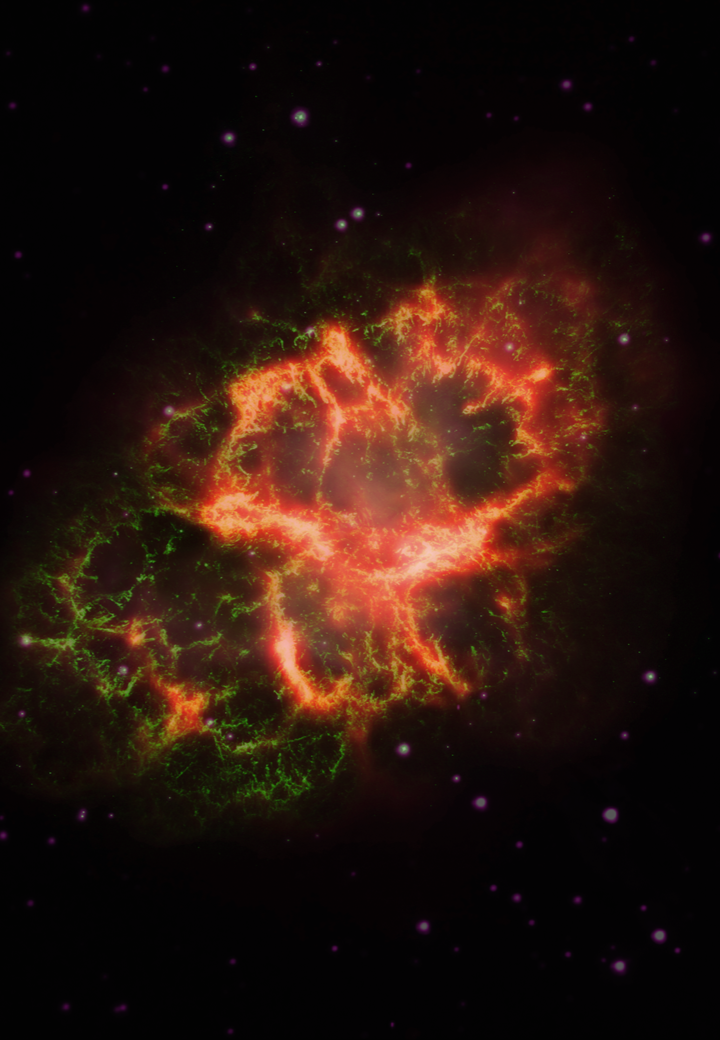
A composite of infrared (shown as red), visible (green) and ultraviolet (violet) images of the Crab Nebula, with IR enhanced and visible/UV balanced to yield neutral star colours. Composite image made with the Cosmic Coloring Compositor. Credit: NRAO. Large format: [ PNG ].


Work by Jane Greaves and Phil Cigan from Cardiff University, UK suggests there may be a cosmic paucity of a chemical element essential to life. Greaves has been searching for phosphorus in the universe, because of its link to life on Earth. If this element is lacking in other parts of the cosmos, then it could be difficult for extra-terrestrial life to exist. 

She explains "Phosphorus is one of just six chemical elements on which Earth organisms depend, and it is crucial to the compound adenosine triphosphate (ATP), which cells use to store and transfer energy. Astronomers have just started to pay attention to the cosmic origins of phosphorus, and found quite a few surprises. In particular, phosphorus is created in supernovae - the explosions of massive stars - but the amounts seen so far don't match our computer models. I wondered what the implications were for life on other planets if unpredictable amounts of phosphorus are spat out into space, and later used in the construction of new planets." 

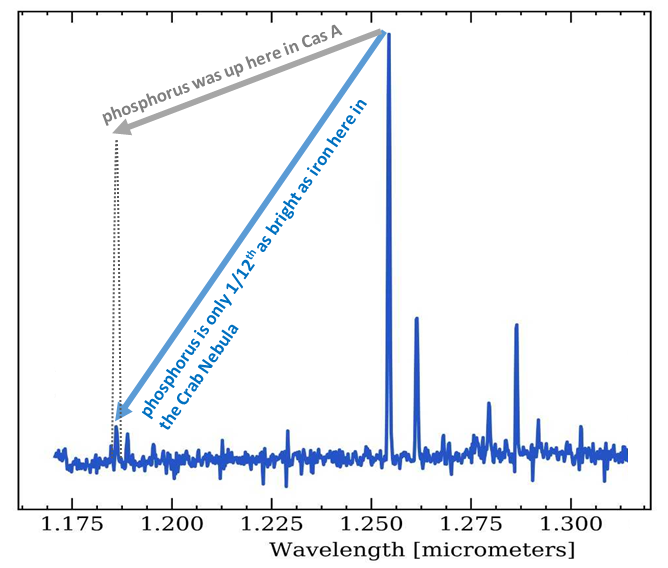
The team used LIRIS on the William Herschel Telescope (WHT) to observe infrared light from phosphorus and iron in the Crab Nebula, a supernova remnant around 6,500 light-years away in the constellation of Taurus. 

Spectrum of one position near the centre of the Crab Nebula, taken with LIRIS at the WHT. The overlaid dotted line is a synthetic representation of how the phosphorus line would appear if the Crab Nebula had the same ratio of phosphorus to iron as the median value in Cas A, the only other supernova remnant where phosphorus was studied previously. Credit: Jane Greaves and Phil Cigan. Large format: [ PNG ]. 
 

These preliminary results suggest that material blown out into space could vary dramatically in chemical composition. Greaves remarks "The route to carrying phosphorus into new-born planets looks rather precarious. We already think that only a few phosphorus-bearing minerals that came to the Earth - probably in meteorites - were reactive enough to get involved in making proto-biomolecules." 

She adds: "If phosphorus is sourced from supernovae, and then travels across space in meteoritic rocks, I'm wondering if a young planet could find itself lacking in reactive phosphorus because of where it was born? That is, it started off near the wrong kind of supernova? In that case, life might really struggle to get started out of phosphorus-poor chemistry on another world otherwise similar to our own."Isaac Newton Group of Telescopes


More Information

"Paucity of phosphorus hints at precarious path for extraterrestrial life", European Week of Astronomy and Space Science press release, 3rd April 2018.

Contact:

Javier Méndez  (Public Relations Officer)


Friday, April 13, 2018

A colossal cluster

Credit: ESA/Hubble & NASA, RELICS


This NASA/ESA Hubble Space Telescope image shows a massive galaxy cluster glowing brightly in the darkness. Despite its beauty, this cluster bears the distinctly unpoetic name of PLCK_G308.3-20.2. 

Galaxy clusters can contain thousands of galaxies all held together by the glue of gravity. At one point in time they were believed to be the largest structures in the Universe — until they were usurped in the 1980s by the discovery of superclusters, which typically contain dozens of galaxy clusters and groups and span hundreds of millions of light-years. However, clusters do have one thing to cling on to; superclusters are not held together by gravity, so galaxy clusters still retain the title of the biggest structures in the Universe bound by gravity.

One of the most interesting features of galaxy clusters is the stuff that permeates the space between the constituent galaxies: the intracluster medium (ICM). High temperatures are created in these spaces by smaller structures forming within the cluster. This results in the ICM being made up of plasma — ordinary matter in a superheated state. Most luminous matter in the cluster resides in the ICM, which is very luminous X-rays. However, the majority of the mass in a galaxy cluster exists in the form of non-luminous dark matter. Unlike plasma, dark matter is not made from ordinary matter such as protons, neutrons and electrons. It is a hypothesised substance thought to make up 80 % of the Universe’s mass, yet it has never been directly observed.

This image was taken by Hubble’s Advanced Camera for Surveys and Wide-Field Camera 3 as part of an observing programme called RELICS (Reionization Lensing Cluster Survey). RELICS imaged 41 massive galaxy clusters with the aim of finding the brightest distant galaxies for the forthcoming NASA/ESA/CSA James Webb Space Telescope (JWST) to study.


Thursday, April 12, 2018

NASA's Juno Mission Provides Infrared Tour of Jupiter's North Pole

This infrared 3-D image of Jupiter's north pole was derived from data collected by the Jovian Infrared Auroral Mapper (JIRAM) instrument aboard NASA's Juno spacecraft. Image credit: NASA/JPL-Caltech/SwRI/ASI/INAF/JIRAM.  › Larger view

Scientists working on NASA's Juno mission to Jupiter shared a 3-D infrared movie depicting densely packed cyclones and anticyclones that permeate the planet's polar regions, and the first detailed view of a dynamo, or engine, powering the magnetic field for any planet beyond Earth. Those are among the items unveiled during the European Geosciences Union General Assembly in Vienna, Austria, on Wednesday, April 11.

In this animation the viewer is taken low over Jupiter's north pole to illustrate the 3-D aspects of the region's central cyclone and the eight cyclones that encircle it. The movie utilizes imagery derived from data collected by the Jovian Infrared Auroral Mapper (JIRAM) instrument aboard NASA's Juno mission during its fourth pass over the massive planet. Infrared cameras are used to sense the temperature of Jupiter's atmosphere and provide insight into how the powerful cyclones at Jupiter's poles work. In the animation, the yellow areas are warmer (or deeper into Jupiter's atmosphere) and the dark areas are colder (or higher up in Jupiter's atmosphere). In this picture the highest "brightness temperature" is around 260K (about -13°C) and the lowest around 190K (about -83°C). The "brightness temperature" is a measurement of the radiance, at 5 µm, traveling upward from the top of the atmosphere towards Juno, expressed in units of temperature.

Juno mission scientists have taken data collected by the spacecraft's Jovian InfraRed Auroral Mapper (JIRAM) instrument and generated the 3-D fly-around of the Jovian world's north pole. Imaging in the infrared part of the spectrum, JIRAM captures light emerging from deep inside Jupiter equally well, night or day. The instrument probes the weather layer down to 30 to 45 miles (50 to 70 kilometers) below Jupiter's cloud tops. The imagery will help the team understand the forces at work in the animation - a north pole dominated by a central cyclone surrounded by eight circumpolar cyclones with diameters ranging from 2,500 to 2,900 miles (4,000 to 4,600 kilometers).

NASA's Juno mission has provided the first view of the dynamo, or engine, powering Jupiter's magnetic field. The new global portrait reveals unexpected irregularities and regions of surprising magnetic field intensity. Red areas show where magnetic field lines emerge from the planet, while blue areas show where they return. As Juno continues its mission, it will improve our understanding of Jupiter's complex magnetic environment. 

"Before Juno, we could only guess what Jupiter's poles would look like," said Alberto Adriani, Juno co-investigator from the Institute for Space Astrophysics and Planetology, Rome. "Now, with Juno flying over the poles at a close distance it permits the collection of infrared imagery on Jupiter's polar weather patterns and its massive cyclones in unprecedented spatial resolution." 

Another Juno investigation discussed during the media briefing was the team's latest pursuit of the interior composition of the gas giant. One of the biggest pieces in its discovery has been understanding how Jupiter's deep interior rotates. 

"Prior to Juno, we could not distinguish between extreme models of Jupiter's interior rotation, which all fitted the data collected by Earth-based observations and other deep space missions," said Tristan Guillot, a Juno co-investigator from the Université Côte d'Azur, Nice, France. "But Juno is different -- it orbits the planet from pole-to-pole and gets closer to Jupiter than any spacecraft ever before. 

Thanks to the amazing increase in accuracy brought by Juno's gravity data, we have essentially solved the issue of how Jupiter's interior rotates: The zones and belts that we see in the atmosphere rotating at different speeds extend to about 1,900 miles (3,000 kilometers).

An infrared view of Jupiter's North Pole. The movie utilizes imagery derived from data collected by the Jovian Infrared Auroral Mapper (JIRAM) instrument aboard NASA's Juno mission. The images were obtained during Juno's fourth pass over Jupiter. Infrared cameras are used to sense the temperature of Jupiter's atmosphere and provide insight into how the powerful cyclones at Jupiter's poles work. In the animation, the yellow areas are warmer (or deeper into Jupiter's atmosphere) and the dark areas are colder (or higher up in Jupiter's atmosphere). In this picture the highest "brightness temperature" is around 260K (about -13°C) and the lowest around 190K (about -83°C). The "brightness temperature" is a measurement of the radiance, at 5 µm, traveling upward from the top of the atmosphere towards Juno, expressed in units of temperature.

"At this point, hydrogen becomes conductive enough to be dragged into near-uniform rotation by the planet's powerful magnetic field."

The same data used to analyze Jupiter's rotation contain information on the planet's interior structure and composition. Not knowing the interior rotation was severely limiting the ability to probe the deep interior. "Now our work can really begin in earnest -- determining the interior composition of the solar system's largest planet," said Guillot.

At the meeting, the mission's deputy-principal investigator, Jack Connerney of the Space Research Corporation, Annapolis, Maryland, presented the first detailed view of the dynamo, or engine, powering the magnetic field of Jupiter.

Connerney and colleagues produced the new magnetic field model from measurements made during eight orbits of Jupiter. From those, they derived maps of the magnetic field at the surface and in the region below the surface where the dynamo is thought to originate. Because Jupiter is a gas giant, "surface" is defined as one Jupiter radius, which is about 44,400 miles (71,450 kilometers).

These maps provide an extraordinary advancement in current knowledge and will guide the science team in planning the spacecraft's remaining observations.

"We're finding that Jupiter's magnetic field is unlike anything previously imagined,"said Connerney. "Juno's investigations of the magnetic environment at Jupiter represent the beginning of a new era in the studies of planetary dynamos."

The map Connerney's team made of the dynamo source region revealed unexpected irregularities, regions of surprising magnetic field intensity, and that Jupiter's magnetic field is more complex in the northern hemisphere than in the southern hemisphere. About halfway between the equator and the north pole lies an area where the magnetic field is intense and positive. It is flanked by areas that are less intense and negative. In the southern hemisphere, however, the magnetic field is consistently negative, becoming more and more intense from the equator to the pole.

The researchers are still figuring out why they would see these differences in a rotating planet that's generally thought of as more-or-less fluid.

"Juno is only about one third the way through its planed mapping mission and already we are beginning to discover hints on how Jupiter's dynamo works," said Connerney. "The team is really anxious to see the data from our remaining orbits."

Juno has logged nearly 122 million miles (200 million kilometers) to complete those 11 science passes since entering Jupiter's orbit on July 4, 2016. Juno's 12th science pass will be on May 24.


NASA's Jet Propulsion Laboratory, Pasadena, California, manages the Juno mission for the principal investigator, Scott Bolton, of the Southwest Research Institute in San Antonio. Juno is part of NASA's New Frontiers Program, which is managed at NASA's Marshall Space Flight Center in Huntsville, Alabama, for NASA's Science Mission Directorate. The Italian Space Agency (ASI), contributed two instruments, a Ka-band frequency translator (KaT) and the Jovian Infrared Auroral Mapper (JIRAM). Lockheed Martin Space, Denver, built the spacecraft.

https://www.nasa.gov/juno
https://www.missionjuno.swri.edu

The public can follow the mission on Facebook and Twitter at:
https://www.facebook.com/NASAJuno
https://www.twitter.com/NASAJuno

More information on Jupiter can be found at: https://www.nasa.gov/jupiter


News Media Contact

DC Agle
Jet Propulsion Laboratory, Pasadena, Calif.
818-393-9011
agle@jpl.nasa.gov

JoAnna Wendel
NASA Headquarters, Washington
202-358-1003
joanna.r.wendel@nasa.gov


Wednesday, April 11, 2018

SPHERE Reveals Fascinating Zoo of Discs Around Young Stars

SPHERE images a zoo of dusty discs around young stars

PR Image eso1811b
SPHERE images the edge-on disc around the star GSC 07396-00759

PR Image eso1811c
SPHERE image of the dusty disc around IM Lupi


Videos
 
ESOcast 156 Light: Weird and Wonderful Dusty Discs (4K UHD)


New images from the SPHERE instrument on ESO’s Very Large Telescope are revealing the dusty discs surrounding nearby young stars in greater detail than previously achieved. They show a bizarre variety of shapes, sizes and structures, including the likely effects of planets still in the process of forming.

The SPHERE instrument on ESO’s Very Large Telescope (VLT) in Chile allows astronomers to suppress the brilliant light of nearby stars in order to obtain a better view of the regions surrounding them. This collection of new SPHERE images is just a sample of the wide variety of dusty discs being found around young stars.

These discs are wildly different in size and shape — some contain bright rings, some dark rings, and some even resemble hamburgers. They also differ dramatically in appearance depending on their orientation in the sky — from circular face-on discs to narrow discs seen almost edge-on.

SPHERE’s primary task is to discover and study giant exoplanets orbiting nearby stars using direct imaging. But the instrument is also one of the best tools in existence to obtain images of the discs around young stars — regions where planets may be forming. Studying such discs is critical to investigating the link between disc properties and the formation and presence of planets.

Many of the young stars shown here come from a new study of T Tauri stars, a class of stars that are very young (less than 10 million years old) and vary in brightness. The discs around these stars contain gas, dust, and planetesimals — the building blocks of planets and the progenitors of planetary systems.

These images also show what our own Solar System may have looked like in the early stages of its formation, more than four billion years ago.

Most of the images presented were obtained as part of the DARTTS-S (Discs ARound T Tauri Stars with SPHERE) survey. The distances of the targets ranged from 230 to 550 light-years away from Earth. For comparison, the Milky Way is roughly 100 000 light-years across, so these stars are, relatively speaking, very close to Earth. But even at this distance, it is very challenging to obtain good images of the faint reflected light from discs, since they are outshone by the dazzling light of their parent stars.

Another new SPHERE observation is the discovery of an edge-on disc around the star GSC 07396-00759, found by the SHINE (SpHere INfrared survey for Exoplanets) survey. This red star is a member of a multiple star system also included in the DARTTS-S sample but, oddly, this new disc appears to be more evolved than the gas-rich disc around the T Tauri star in the same system, although they are the same age.This puzzling difference in the evolutionary timescales of discs around two stars of the same age is another reason why astronomers are keen to find out more about discs and their characteristics.

Astronomers have used SPHERE to obtain many other impressive images, as well as for other studies including the interaction of a planet with a disc, the orbital motions within a system, and the time evolution of a disc.

The new results from SPHERE, along with data from other telescopes such as ALMA, are revolutionising astronomers’ understanding of the environments around young stars and the complex mechanisms of planetary formation.


More Information


The images of T Tauri star discs were presented in a paper entitled “Disks Around T Tauri Stars With SPHERE (DARTTS-S) I: SPHERE / IRDIS Polarimetric Imaging of 8 Prominent T Tauri Disks”, by H. Avenhaus et al., to appear in in the Astrophysical Journal. The discovery of the edge-on disc is reported in a paper entitled “A new disk discovered with VLT/SPHERE around the M star GSC 07396-00759”, by E. Sissa et al., to appear in the journal Astronomy & Astrophysics.

The first team is composed of Henning Avenhaus (Max Planck Institute for Astronomy, Heidelberg, Germany; ETH Zurich, Institute for Particle Physics and Astrophysics, Zurich, Switzerland; Universidad de Chile, Santiago, Chile), Sascha P. Quanz (ETH Zurich, Institute for Particle Physics and Astrophysics, Zurich, Switzerland; National Center of Competence in Research “PlanetS”), Antonio Garufi (Universidad Autonónoma de Madrid, Madrid, Spain), Sebastian Perez (Universidad de Chile, Santiago, Chile; Millennium Nucleus Protoplanetary Disks Santiago, Chile), Simon Casassus (Universidad de Chile, Santiago, Chile; Millennium Nucleus Protoplanetary Disks Santiago, Chile), Christophe Pinte (Monash University, Clayton, Australia; Univ. Grenoble Alpes, CNRS, IPAG, Grenoble, France), Gesa H.-M. Bertrang (Universidad de Chile, Santiago, Chile), Claudio Caceres (Universidad Andrés Bello, Santiago, Chile), Myriam Benisty (Unidad Mixta Internacional Franco-Chilena de Astronomía, CNRS/INSU; Universidad de Chile, Santiago, Chile; Univ. Grenoble Alpes, CNRS, IPAG, Grenoble, France) and Carsten Dominik (Anton Pannekoek Institute for Astronomy, University of Amsterdam, The Netherlands).

The second team is composed of: E. Sissa (INAF-Osservatorio Astronomico di Padova, Padova, Italy), J. Olofsson (Max Planck Institute for Astronomy, Heidelberg, Germany; Universidad de Valparaíso, Valparaíso, Chile), A. Vigan (Aix-Marseille Université, CNRS, Laboratoire d’Astrophysique de Marseille, Marseille, France), J.C. Augereau (Université Grenoble Alpes, CNRS, IPAG, Grenoble, France) , V. D’Orazi (INAF-Osservatorio Astronomico di Padova, Padova, Italy), S. Desidera (INAF-Osservatorio Astronomico di Padova, Padova, Italy), R. Gratton (INAF-Osservatorio Astronomico di Padova, Padova, Italy), M. Langlois (Aix-Marseille Université, CNRS, Laboratoire d’Astrophysique de Marseille Marseille, France; CRAL, CNRS, Université de Lyon, Ecole Normale Suprieure de Lyon, France), E. Rigliaco (INAF-Osservatorio Astronomico di Padova, Padova, Italy), A. Boccaletti (LESIA, Observatoire de Paris-Meudon, CNRS, Université Pierre et Marie Curie, Université Paris Diderot, Meudon, France), Q. Kral (LESIA, Observatoire de Paris-Meudon, CNRS, Université Pierre et Marie Curie, Université Paris Diderot, Meudon, France; Institute of Astronomy, University of Cambridge, Cambridge, UK), C. Lazzoni (INAF-Osservatorio Astronomico di Padova, Padova, Italy; Universitá di Padova, Padova, Italy), D. Mesa (INAF-Osservatorio Astronomico di Padova, Padova, Italy; University of Atacama, Copiapo, Chile), S. Messina (INAF-Osservatorio Astrofisico di Catania, Catania, Italy), E. Sezestre (Université Grenoble Alpes, CNRS, IPAG, Grenoble, France), P. Thébault (LESIA, Observatoire de Paris-Meudon, CNRS, Université Pierre et Marie Curie, Université Paris Diderot, Meudon, France), A. Zurlo (Universidad Diego Portales, Santiago, Chile; Unidad Mixta Internacional Franco-Chilena de Astronomia, CNRS/INSU; Universidad de Chile, Santiago, Chile; INAF-Osservatorio Astronomico di Padova, Padova, Italy), T. Bhowmik (Université Grenoble Alpes, CNRS, IPAG, Grenoble, France), M. Bonnefoy (Université Grenoble Alpes, CNRS, IPAG, Grenoble, France), G. Chauvin (Université Grenoble Alpes, CNRS, IPAG, Grenoble, France; Universidad Diego Portales, Santiago, Chile), M. Feldt (Max Planck Institute for Astronomy, Heidelberg, Germany), J. Hagelberg (Université Grenoble Alpes, CNRS, IPAG, Grenoble, France), A.-M. Lagrange (Université Grenoble Alpes, CNRS, IPAG, Grenoble, France), M. Janson (Stockholm University, Stockholm, Sweden; Max Planck Institute for Astronomy, Heidelberg, Germany), A.-L. Maire (Max Planck Institute for Astronomy, Heidelberg, Germany), F. Ménard (Université Grenoble Alpes, CNRS, IPAG, Grenoble, France), J. Schlieder (NASA Goddard Space Flight Center, Greenbelt, Maryland, USA; Max Planck Institute for Astronomy, Heidelberg, Germany), T. Schmidt (Université Grenoble Alpes, CNRS, IPAG, Grenoble, France), J. Szulági (Institute for Particle Physics and Astrophysics, ETH Zurich, Zurich, Switzerland; Institute for Computational Science, University of Zurich, Zurich, Switzerland), E. Stadler (Université Grenoble Alpes, CNRS, IPAG, Grenoble, France), D. Maurel (Université Grenoble Alpes, CNRS, IPAG, Grenoble, France), A. Deboulbé (Université Grenoble Alpes, CNRS, IPAG, Grenoble, France), P. Feautrier (Université Grenoble Alpes, CNRS, IPAG, Grenoble, France), J. Ramos (Max Planck Institute for Astronomy, Heidelberg, Germany) and R. Rigal (Anton Pannekoek Institute for Astronomy, Amsterdam, The Netherlands).

ESO is the foremost intergovernmental astronomy organisation in Europe and the world’s most productive ground-based astronomical observatory by far. It has 15 Member States: Austria, Belgium, the Czech Republic, Denmark, France, Finland, Germany, Italy, the Netherlands, Poland, Portugal, Spain, Sweden, Switzerland and the United Kingdom, along with the host state of Chile and with Australia as a strategic partner. ESO carries out an ambitious programme focused on the design, construction and operation of powerful ground-based observing facilities enabling astronomers to make important scientific discoveries. ESO also plays a leading role in promoting and organising cooperation in astronomical research. ESO operates three unique world-class observing sites in Chile: La Silla, Paranal and Chajnantor. At Paranal, ESO operates the Very Large Telescope and its world-leading Very Large Telescope Interferometer as well as two survey telescopes, VISTA working in the infrared and the visible-light VLT Survey Telescope. ESO is also a major partner in two facilities on Chajnantor, APEX and ALMA, the largest astronomical project in existence. And on Cerro Armazones, close to Paranal, ESO is building the 39-metre Extremely Large Telescope, the ELT, which will become “the world’s biggest eye on the sky”.


Links


Contacts

Henning Avenhaus
Max Planck Institute for Astronomy
Heidelberg, Germany
Email:
havenhaus@gmail.com

Elena Sissa
INAF - Astronomical Observatory of Padova
Padova, Italy
Email:
elena.sissa@inaf.it

Richard Hook
ESO Public Information Officer
Garching bei München, Germany
Tel: +49 89 3200 6655
Cell: +49 151 1537 3591
Email:
rhook@eso.org

Source: ESO/News

Monday, April 09, 2018

Cloudy Venus

Copyright ESA, NASA, J. Peralta & R. Hueso


Our sister planet Venus is a dynamic and unusual place. Strong winds swirl around the planet, dragging thick layers of cloud with them as they go. These fierce winds move so speedily that they display ‘super-rotation’: Earth’s can move at up to a fifth of our planet’s rotation speed, but winds on Venus can travel up to 60 times faster than the planet.

Observations from ESA’s Venus Express, which orbited Venus from 2006 to 2014, and other international spacecraft have probed deeper into this wind and cloud in past years, and uncovered some peculiar behaviour.

The side of the planet facing away from the Sun is somewhat more mysterious than the other side, but what we do know shows it to be quite different, with never-before-seen cloud types, shapes and dynamics – some of which appear to be connected to features on the surface below.

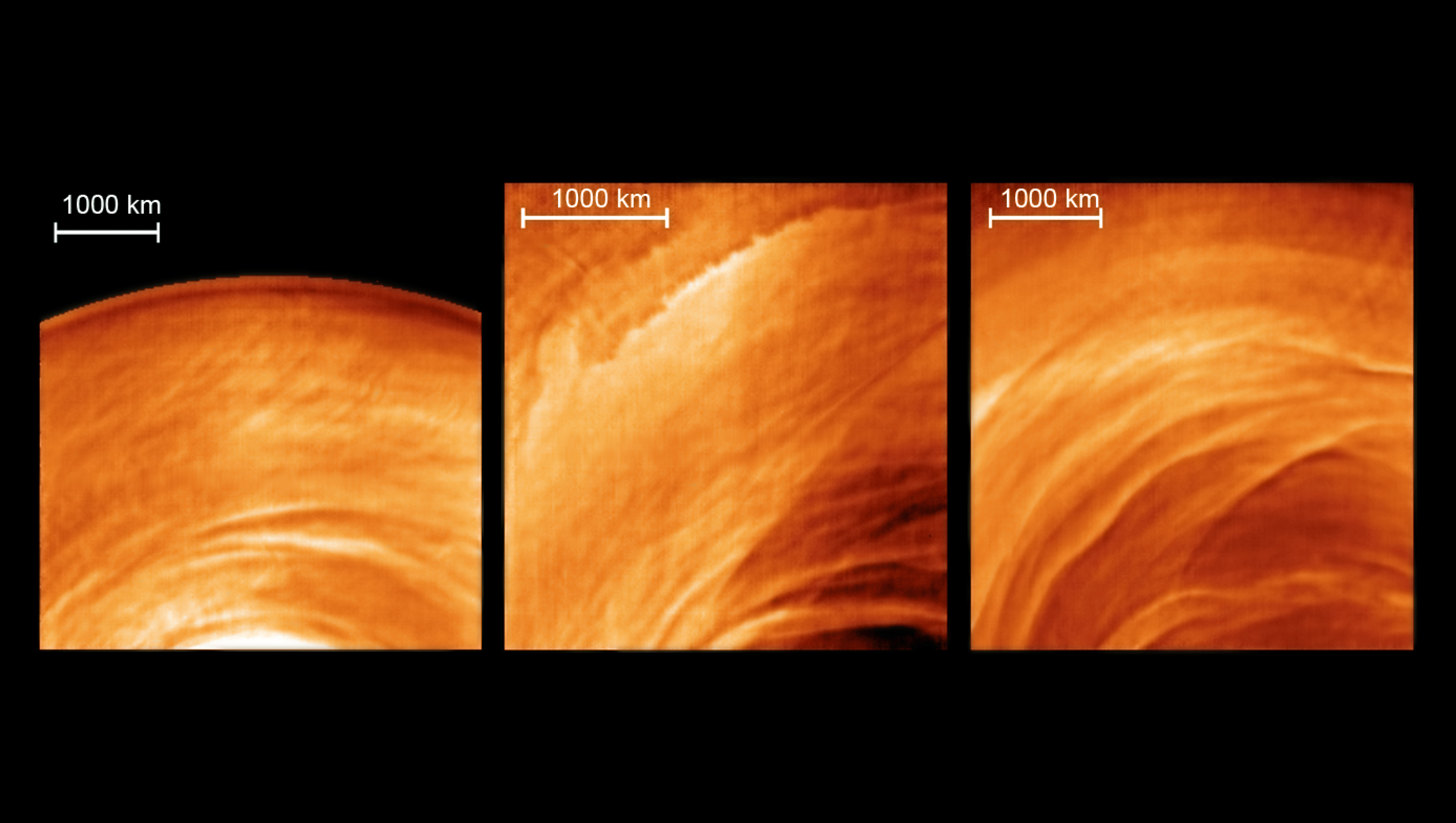
Super-rotation appears to behave more chaotically on the night side than the day side, but climate modellers remain unsure why. Night-side clouds also create different patterns and shapes than those found elsewhere – large, wavy, patchy irregular and filament-like patterns – and are dominated by mysterious ‘stationary waves’. These waves rise up within the atmosphere, do not move with the planet’s rotation, and appear to be concentrated above steep and higher-altitude regions of the surface, suggesting that Venus’ topography may well affect what happens in the cloud layers way up above.

These three images from the visible and infrared camera on Venus Express show these cloud features in detail: stationary waves (left), dynamical instabilities (middle) and mysterious filaments (right).

Venus Express was launched in 2005 and began orbiting Venus in 2006; the mission ended in December 2014. This image is based on the news item Venus' mysterious night side revealed, published in 2017.


Sunday, April 08, 2018

Cosmic cloning

Credit: ESA/Hubble & NASA
Acknowledgement: Judy Schmidt


This image is packed full of galaxies! A keen eye can spot exquisite ellipticals and spectacular spirals, seen at various orientations: edge-on with the plane of the galaxy visible, face-on to show off magnificent spiral arms, and everything in between. The vast majority of these specks are galaxies, but to spot a foreground star from our own galaxy, you can look for a point of light with tell-tale diffraction spikes.

The most alluring subject sits at the centre of the frame. With the charming name of SDSSJ0146-0929, the glowing central bulge is a galaxy cluster — a monstrous collection of hundreds of galaxies all shackled together in the unyielding grip of gravity. The mass of this galaxy cluster is large enough to severely distort the spacetime around it, creating the odd, looping curves that almost encircle the cluster.

These graceful arcs are examples of a cosmic phenomenon known as an Einstein ring. The ring is created as the light from a distant objects, like galaxies, pass by an extremely large mass, like this galaxy cluster. In this image, the light from a background galaxy is diverted and distorted around the massive intervening cluster and forced to travel along many different light paths towards Earth, making it seem as though the galaxy is in several places at once.

Source: ESA/Hubble/Potw

Saturday, April 07, 2018

What’s Happening in Orion’s Horsehead Nebula?

The Horsehead Nebula is shown in red and green against the surrounding cold molecular cloud (blue). The red areas are carbon monoxide molecules sheltered in the dense nebula and the green areas are carbon atoms and ions that have been affected by the radiation from nearby stars. Credits: NASA/SOFIA/J. Bally et. al


Two research teams used a map from NASA’s Stratospheric Observatory for Infrared Astronomy, SOFIA, to uncover new findings about stars forming in Orion’s iconic Horsehead Nebula. The map reveals vital details for getting a complete understanding of the dust and gas involved in star formation.

The Horsehead Nebula is embedded in the much larger Orion B giant molecular cloud and is extremely dense, with enough mass to make about 30 Sun-like stars. It marks the boundary between the surrounding cold molecular cloud -- filled with the raw materials needed to make stars and planetary systems -- and the area to the west where massive stars have already formed. But the radiation from the stars erodes those raw materials. While the cold molecules, like carbon monoxide, deep within the dense nebula are sheltered from this radiation, molecules on the surface are exposed to it. This triggers reactions that can affect star formation, including the transformation of carbon monoxide molecules into carbon atoms and ions, called ionization.

A team, led by John Bally at the Center for Astrophysics and Space Astronomy, at the University of Colorado in Boulder, wanted to learn if the intense radiation from nearby stars is strong enough to compress the gas within the nebula and trigger new star formation. They combined data from SOFIA and two other observatories to get a multifaceted view of the structure and motion of the molecules there.

Bally’s team found that the radiation from the nearby stars creates hot plasma that compresses the cold gas inside the Horsehead, but the compression is insufficient to trigger the birth of additional stars. Nevertheless, they learned key details about the nebula’s structure.  

The radiation caused a destructive ionization wave to crash over the cloud. That wave was stopped by the dense Horsehead portion of the cloud, causing the wave to wrap around it. The Horsehead developed its iconic shape because it was dense enough to block the destructive forces of the ionization wave.

“The shape of the iconic Horsehead Nebula speaks to the movement and velocity of this process,” said Bally. “It really illustrates what happens when a molecular cloud is destroyed by ionized radiation.” 

Researchers are trying to understand how stars formed in the Horsehead Nebula --  and why additional stars did not -- because its proximity to Earth allows astronomers to study it in great detail. This provides clues to how stars may form in distant galaxies that are too far away for fine details to be observed clearly by even the most powerful telescopes.  

“In studies such as this, we are learning that star formation is a self-limiting process,” said Bally.  “The first stars to form in a cloud can prevent the birth of additional stars nearby by destroying adjacent parts of the cloud.”  

In another study based on SOFIA’s map, a team of researchers lead by Cornelia Pabst, of Leiden University, Netherlands, analyzed the structure and brightness of the gas within cold dark regions in and around the Horsehead Nebula. This region has very little star formation compared to the Orion B Cloud or the Great Nebula in Orion, southwest of the Horsehead Nebula. Pabst and her team wanted to understand the physical conditions in the dark region that may be affecting the star formation rate.

They found that the shape, structure and brightness of the gas in the nebula do not fit existing models.  

Further observations are necessary to explore why the models do not match with what was observed.
“We’re just beginning to understand that, even though we only looked at a very small portion of this molecular cloud, everything is more complicated than what the models initially indicated,” said Pabst. “This map is beautiful, valuable data that we can combine with future observations to help us understand how stars form locally, in our galaxy, so we can then relate that to extragalactic research.”
The studies were published in The Astronomical Journal and Astronomy and Astrophysics. 

The Horsehead Nebula map used by both teams was created using SOFIA’s upgraded GREAT instrument. It was upgraded to use 14 detectors simultaneously, so the map was created significantly faster than it could have been on previous observatories, which used only a single detector.

“We could not have done this research without SOFIA and its upgraded instrument, upGREAT.” said Bally. “Because it lands after each flight, its instruments can be adjusted, upgraded and improved in ways not possible on space-based observatories. SOFIA is fundamental to developing ever more powerful and reliable instruments for future use in space.”

SOFIA is a Boeing 747SP jetliner modified to carry a 100-inch diameter telescope. It is a joint project of NASA and the German Aerospace Center, DLR. NASA’s Ames Research Center in California’s Silicon Valley manages the SOFIA program, science and mission operations in cooperation with the Universities Space Research Association headquartered in Columbia, Maryland, and the German SOFIA Institute (DSI) at the University of Stuttgart. The aircraft is based at NASA’s Armstrong Flight Research Center's Hangar 703, in Palmdale, California.  NASA/SOFIA


Media Point of Contact

Nicholas A. Veronico
650.224.8726 cell

Nicholas.A.Veronico@nasa.gov

Written by Kassandra Bell
SOFIA Science Center

 
Editor: Kassandra Bell
Source:  NASA/SOFIA

Friday, April 06, 2018

Dead Star Circled by Light

An isolated neutron star in the Small Magellanic Cloud

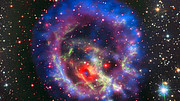
Hubble view of the surroundings of a hidden neutron star in the Small Magellanic Cloud

MUSE view of the surroundings of a hidden neutron star in the Small Magellanic Cloud

X-ray view of the surroundings of a hidden neutron star in the Small Magellanic Cloud 

The Small Magellanic Cloud


Videos
 
ESOcast 155 Light: Dead Star Circled by Light (4K UHD)

Zooming in on a neutron star in the Small Magellanic Cloud


MUSE data points to isolated neutron star beyond our galaxy

New images from ESO’s Very Large Telescope in Chile and other telescopes reveal a rich landscape of stars and glowing clouds of gas in one of our closest neighbouring galaxies, the Small Magellanic Cloud. The pictures have allowed astronomers to identify an elusive stellar corpse buried among filaments of gas left behind by a 2000-year-old supernova explosion. The MUSE instrument was used to establish where this elusive object is hiding, and existing Chandra X-ray Observatory data confirmed its identity as an isolated neutron star.

Spectacular new pictures, created from images from both ground- and space-based telescopes [1], tell the story of the hunt for an elusive missing object hidden amid a complex tangle of gaseous filaments in the Small Magellanic Cloud, about 200 000 light-years from Earth.

New data from the MUSE instrument on ESO’s Very Large Telescope in Chile has revealed a remarkable ring of gas in a system called 1E 0102.2-7219, expanding slowly within the depths of numerous other fast-moving filaments of gas and dust left behind after a supernova explosion. This discovery allowed a team led by Frédéric Vogt, an ESO Fellow in Chile, to track down the first ever isolated neutron star with low magnetic field located beyond our own Milky Way galaxy.

The team noticed that the ring was centred on an X-ray source that had been noted years before and designated p1. The nature of this source had remained a mystery. In particular, it was not clear whether p1 actually lies inside the remnant or behind it. It was only when the ring of gas — which includes both neon and oxygen — was observed with MUSE that the science team noticed it perfectly circled p1. The coincidence was too great, and they realised that p1 must lie within the supernova remnant itself. Once p1’s location was known, the team used existing X-ray observations of this target from the Chandra X-ray Observatory to determine that it must be an isolated neutron star, with a low magnetic field.

In the words of Frédéric Vogt: “If you look for a point source, it doesn’t get much better than when the Universe quite literally draws a circle around it to show you where to look.”

When massive stars explode as supernovae, they leave behind a curdled web of hot gas and dust, known as a supernova remnant. These turbulent structures are key to the redistribution of the heavier elements — which are cooked up by massive stars as they live and die — into the interstellar medium, where they eventually form new stars and planets.

Typically barely ten kilometres across, yet weighing more than our Sun, isolated neutron stars with low magnetic fields are thought to be abundant across the Universe, but they are very hard to find because they only shine at X-ray wavelengths [2]. The fact that the confirmation of p1 as an isolated neutron star was enabled by optical observations is thus particularly exciting.

Co-author Liz Bartlett, another ESO Fellow in Chile, sums up this discovery: “This is the first object of its kind to be confirmed beyond the Milky Way, made possible using MUSE as a guidance tool. We think that this could open up new channels of discovery and study for these elusive stellar remains.”


Notes

[1] The image combines data from the MUSE instrument on ESO’s Very Large Telescope in Chile and the orbiting the NASA/ESA Hubble Space Telescope and NASA Chandra X-Ray Observatory.

[2] Highly-magnetic spinning neutron stars are called pulsars. They emit strongly at radio and other wavelengths and are easier to find, but they are only a small fraction of all the neutron stars predicted to exist.


More Information

This research was presented in a paper entitled “Identification of the central compact object in the young supernova remnant 1E 0102.2-7219”, by Frédéric P. A. Vogt et al., in the journal Nature Astronomy.

The team is composed of Frédéric P. A. Vogt (ESO, Santiago, Chile & ESO Fellow), Elizabeth S. Bartlett (ESO, Santiago, Chile & ESO Fellow), Ivo R. Seitenzahl (University of New South Wales Canberra, Australia), Michael A. Dopita (Australian National University, Canberra, Australia), Parviz Ghavamian (Towson University, Baltimore, Maryland, USA), Ashley J. Ruiter (University of New South Wales Canberra & ARC Centre of Excellence for All-sky Astrophysics, Australia) and Jason P. Terry (University of Georgia, Athens, USA).

ESO is the foremost intergovernmental astronomy organisation in Europe and the world’s most productive ground-based astronomical observatory by far. It has 15 Member States: Austria, Belgium, the Czech Republic, Denmark, France, Finland, Germany, Italy, the Netherlands, Poland, Portugal, Spain, Sweden, Switzerland and the United Kingdom, along with the host state of Chile and with Australia as a strategic partner. ESO carries out an ambitious programme focused on the design, construction and operation of powerful ground-based observing facilities enabling astronomers to make important scientific discoveries. ESO also plays a leading role in promoting and organising cooperation in astronomical research. ESO operates three unique world-class observing sites in Chile: La Silla, Paranal and Chajnantor. At Paranal, ESO operates the Very Large Telescope and its world-leading Very Large Telescope Interferometer as well as two survey telescopes, VISTA working in the infrared and the visible-light VLT Survey Telescope. ESO is also a major partner in two facilities on Chajnantor, APEX and ALMA, the largest astronomical project in existence. And on Cerro Armazones, close to Paranal, ESO is building the 39-metre Extremely Large Telescope, the ELT, which will become “the world’s biggest eye on the sky”.


Links


Contact
Frédéric P. A. Vogt
ESO Fellow
Santiago, Chile
Email: fvogt@eso.org

Elizabeth S. Bartlett
ESO Fellow
Santiago, Chile
Email: ebartlet@eso.org

Richard Hook
ESO Public Information Officer
Garching bei München, Germany
Tel: +49 89 3200 6655
Cell: +49 151 1537 3591
Email: rhook@eso.org

Source: ESO/News

Thursday, April 05, 2018

Hubble Makes the First Precise Distance Measurement to an Ancient Globular Star Cluster Hubble’s View of Dazzling Globular Star Cluster NGC 6397

Hubble’s View of Dazzling Globular Star Cluster NGC 6397
Credit: NASA, ESA, and T. Brown and S. Casertano (STScI)
Acknowledgement: NASA, ESA, and J. Anderson (STScI)


Astronomers using NASA’s Hubble Space Telescope have for the first time precisely measured the distance to one of the oldest objects in the universe, a collection of stars born shortly after the big bang.

This new, refined distance yardstick provides an independent estimate for the age of the universe. The new measurement also will help astronomers improve models of stellar evolution. Star clusters are the key ingredient in stellar models because the stars in each grouping are at the same distance, have the same age, and have the same chemical composition. They therefore constitute a single stellar population to study.

This stellar assembly, a globular star cluster called NGC 6397, is one of the closest such clusters to Earth. The new measurement sets the cluster’s distance at 7,800 light-years away, with just a 3 percent margin of error.

Until now, astronomers have estimated the distances to our galaxy’s globular clusters by comparing the luminosities and colors of stars to theoretical models, and to the luminosities and colors of similar stars in the solar neighborhood. But the accuracy of these estimates varies, with uncertainties hovering between 10 percent and 20 percent.

However, the new measurement uses straightforward trigonometry, the same method used by surveyors, and as old as ancient Greek science. Using a novel observational technique to measure extraordinarily tiny angles on the sky, astronomers managed to stretch Hubble’s yardstick outside of the disk of our Milky Way galaxy.

The research team calculated NGC 6397’s age at 13.4 billion years old. “The globular clusters are so old that if their ages and distances deduced from models are off by a little bit, they seem to be older than the age of the universe,” said Tom Brown of the Space Telescope Science Institute (STScI) in Baltimore, Maryland, leader of the Hubble study.

Accurate distances to globular clusters are used as references in stellar models to study the characteristics of young and old stellar populations. “Any model that agrees with the measurements gives you more faith in applying that model to more distant stars,” Brown said. “The nearby star clusters serve as anchors for the stellar models. Until now, we only had accurate distances to the much younger open clusters inside our galaxy because they are closer to Earth.”

By contrast, about 150 globular clusters orbit outside of our galaxy’s comparatively younger starry disk. These spherical, densely packed swarms of hundreds of thousands of stars are the first homesteaders of the Milky Way.

The Hubble astronomers used trigonometric parallax to nail down the cluster’s distance. This technique measures the tiny, apparent shift of an object’s position due to a change in an observer’s point of view. Hubble measured the apparent tiny wobble of the cluster stars due to Earth’s motion around the Sun.

To obtain the precise distance to NGC 6397, Brown’s team employed a clever method developed by astronomers Adam Riess, a Nobel laureate, and Stefano Casertano of the STScI and Johns Hopkins University, also in Baltimore, to accurately measure distances to pulsating stars called Cepheid variables. These pulsating stars serve as reliable distance markers for astronomers to calculate an accurate expansion rate of the universe.

With this technique, called “spatial scanning,” Hubble’s Wide Field Camera 3 gauged the parallax of 40 NGC 6397 cluster stars, making measurements every 6 months for 2 years. The researchers then combined the results to obtain the precise distance measurement. “Because we are looking at a bunch of stars, we can get a better measurement than simply looking at individual Cepheid variable stars,” team member Casertano said.

The tiny wobbles of these cluster stars were only 1/100th of a pixel on the telescope’s camera, measured to a precision of 1/3000th of a pixel. This is the equivalent to measuring the size of an automobile tire on the moon to a precision of one inch.

The researchers say they could reach an accuracy of 1 percent if they combine the Hubble distance measurement of NGC 6397 with the upcoming results obtained from the European Space Agency’s Gaia space observatory, which is measuring the positions and distances of stars with unprecedented precision. The data release for the second batch of stars in the survey is in late April. “Getting to 1 percent accuracy will nail this distance measurement forever,” Brown said.

The team’s results appeared in the March 20, 2018, issue of The Astrophysical Journal Letters.
The research team consists of T. Brown, S. Casertano, and D. Soderblom (STScI); J. Strader (MSU); A. Riess and J. Kalirai (STScI, JHU); D. VandenBerg (UVic); and R. Salinas (Gemini).

The Hubble Space Telescope is a project of international cooperation between NASA and ESA (European Space Agency). NASA's Goddard Space Flight Center in Greenbelt, Maryland, manages the telescope. The Space Telescope Science Institute (STScI) in Baltimore, Maryland, conducts Hubble science operations. STScI is operated for NASA by the Association of Universities for Research in Astronomy, in Washington, D.C.


Related Links

This site is not responsible for content found on external links


Contact

Donna Weaver / Ray Villard
Space Telescope Science Institute, Baltimore, Maryland
410-338-4493 / 410-338-4514

dweaver@stsci.edu / villard@stsci.edu

Tom Brown
Space Telescope Science Institute, Baltimore, Maryland
410-338-4902

tbrown@stsci.edu

Source: HubbleSite/News

Wednesday, April 04, 2018

Perseus Cluster: Scientists Surprised by Relentless Cosmic Cold Front


A gigantic and resilient "cold front" hurtling through the Perseus galaxy cluster has been studied using data from NASA's Chandra X-ray Observatory. This cosmic weather system spans about two million light years and has been traveling for over 5 billion years, longer than the existence of our Solar System.

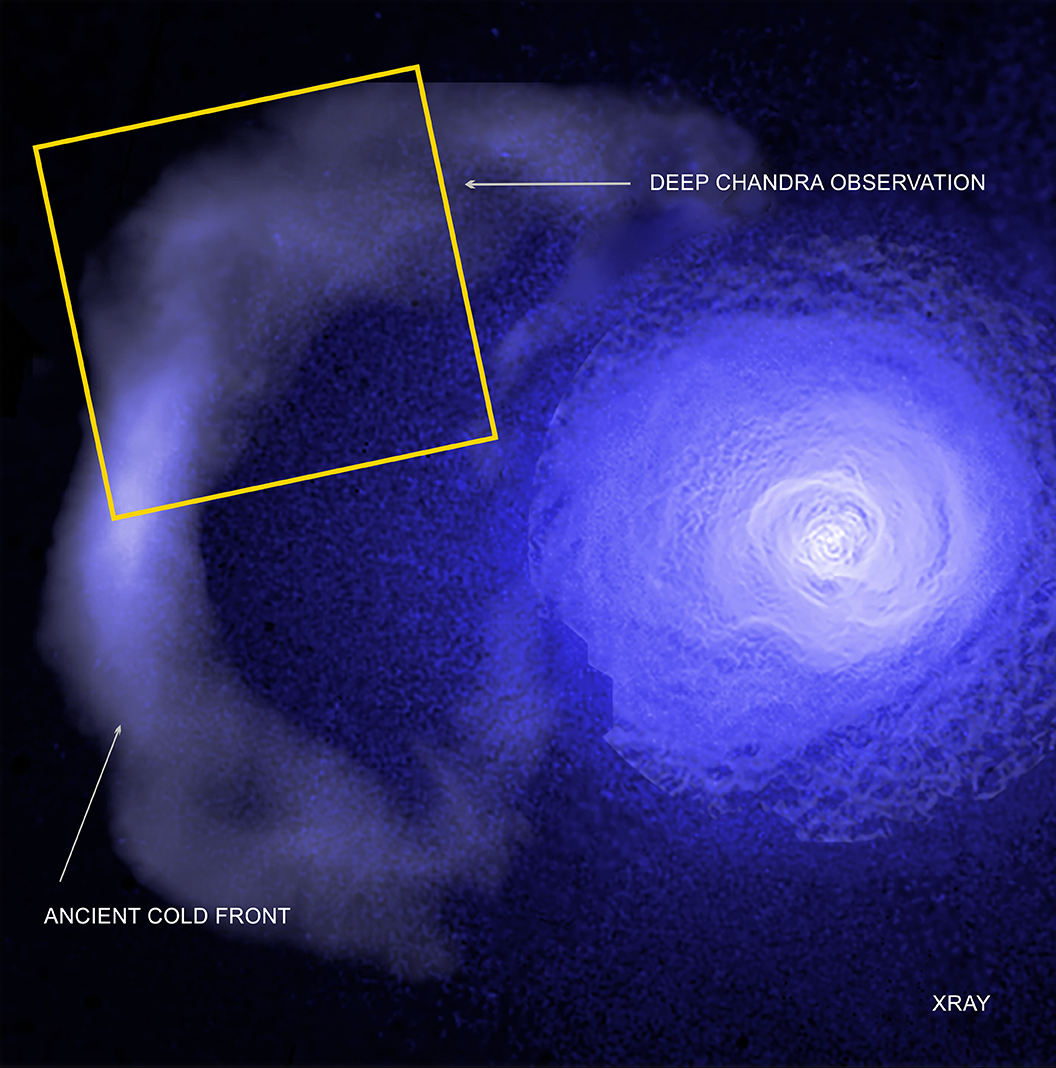
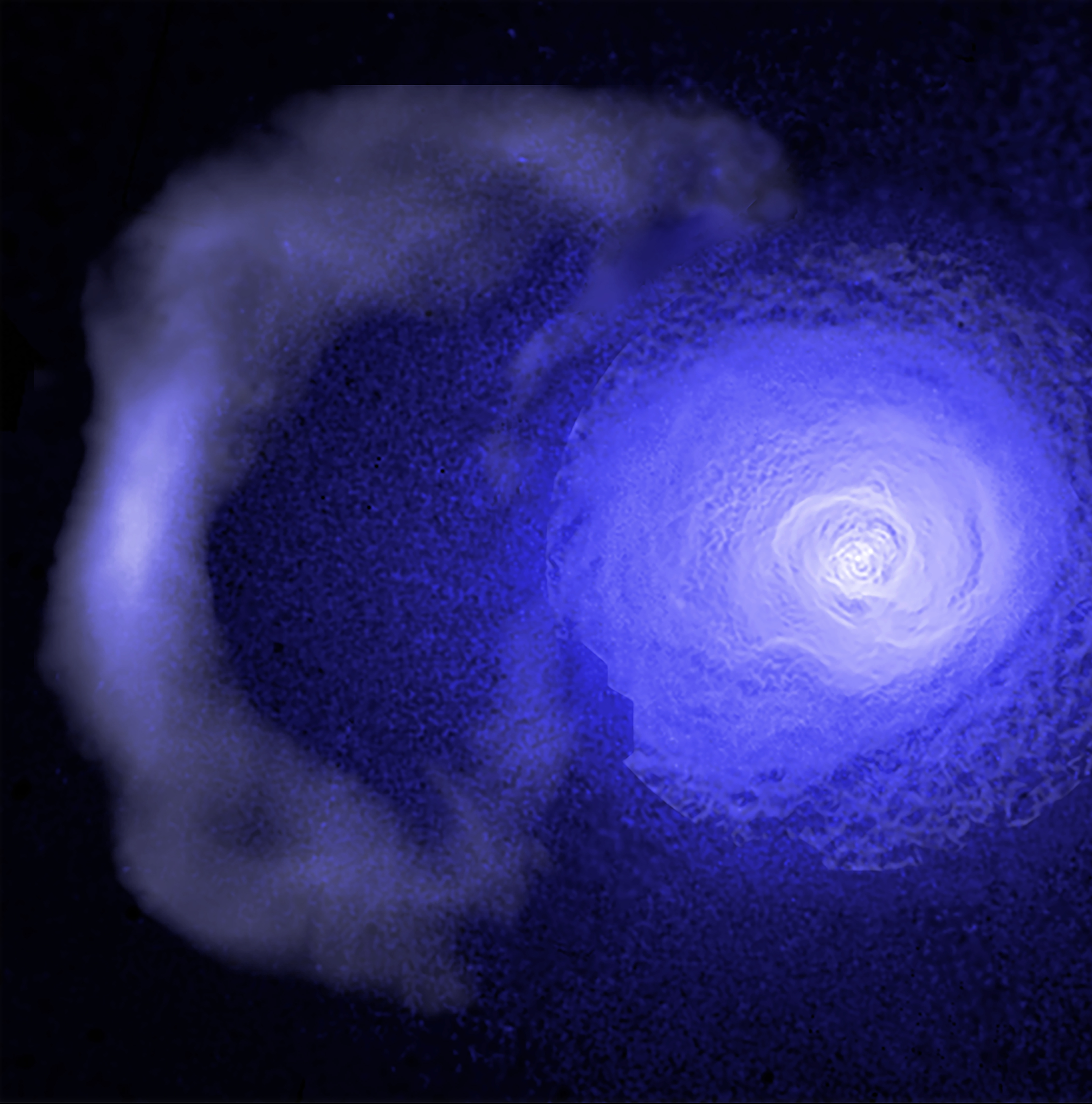
This graphic shows the cold front in the Perseus cluster. The image above contains X-ray data from Chandra — for regions close to the center of the cluster —along with data from ESA's XMM-Newton and the now-defunct German Roentgen (ROSAT) satellite for regions farther out. The Chandra data have been specially processed to brighten the contrast of edges to make subtle details more obvious.
The cold front is the long vertical structure on the left side of the image (rollover the image above to view labels). It is about two million light years long and has traveled away from the center of the cluster at about 300,000 miles per hour.

The inset below shows a close-up view of the cold front from Chandra. This image is a temperature map, where blue represents relatively cooler regions (30 million degrees) while the red is where the hotter regions (80 million degrees) are.

Close-up view of the cold front; 
Credit: NASA/CXC/GSFC/S.Walker, ESA/XMM, ESA/ROSAT

The cold front has not only survived for over a third of the age of the Universe, but it has also remained surprisingly sharp and split into two different pieces. Astronomers expected that such an old cold front would have been blurred out or eroded over time because it has traveled for billions of years through a harsh environment of sound waves and turbulence caused by outbursts from the huge black hole at the center of Perseus.

Instead, the sharpness of the Perseus cold front suggests that the structure has been preserved by strong magnetic fields that are wrapped around it. The comparison of the Chandra X-ray data to theoretical models also gives scientists an indication of the strength of the cold front's magnetic field for the first time.


While cold fronts in the Earth's atmospheres are driven by rotation of the planet, those in the atmospheres of galaxy clusters like Perseus are caused by collisions between the cluster and other clusters of galaxies. These collisions typically occur as the gravity of the main cluster pulls the smaller cluster inward towards its central core. As the smaller cluster makes a close pass by the central core, the gravitational attraction between both structures causes the gas in the core to slosh around like wine swirled in a glass. The sloshing produces a spiral pattern of cold fronts moving outward through the cluster gas.

Aurora Simionescu and collaborators originally discovered the Perseus cold front in 2012 using data from ROSAT (the ROentgen SATellite), ESA's XMM-Newton Observatory, and Japan's Suzaku X-ray satellite. Chandra's high-resolution X-ray vision allowed this more detailed work on the cold front to be performed.

The results of this work appear in a paper that will be published in the April issue of Nature Astronomy and is available online. The authors of the paper are Stephen Walker (Goddard Space Flight Center), John ZuHone (Harvard-Smithsonian Center for Astrophysics), Jeremy Sanders (Max Planck Institute for Extraterrestrial Physics), and Andrew Fabian (Institute of Astronomy, Cambridge, England.)

NASA's Marshall Space Flight Center in Huntsville, Alabama, manages the Chandra program for NASA's Science Mission Directorate in Washington. The Smithsonian Astrophysical Observatory in Cambridge, Massachusetts, controls Chandra's science and flight operations.


Fast Facts for Perseus Cluster:


Scale: Image is about 42 arcmin (about 3 million light years) across.
Category: Groups & Clusters of Galaxies, Cosmology/Deep Fields/X-ray Background
Coordinates (J2000): RA 03h 19m 47.60s | Dec +41° 30´ 37.00"
Constellation: Perseus
Observation Date: Nov 13, 2016
Observation Time: 25 hours 50 min (1 day 1 hour 60 minutes)
Obs. ID: 19565, 19938
Instrument: ACIS
Also Known As: Abell 426
References: S. Walker et al., 2018, Nature Astronomy, arXiv:1803.00898
Color Code: X-ray (intensity)
Distance Estimate: About 250 million light years


Tuesday, April 03, 2018

The primordial magnetic field in our cosmic backyard

Fig. 1: Sky view of the Harrison magnetic field strength averaged within a sphere with 300 million light years radius around the Earth. The region with stronger fields on the left side of the image is the Perseus Pisces galaxy cluster, the one in the upper part is the Virgo cluster. © MPA


Fig. 2: Sky view of the magnetic field strength and orientation of the magnet field components perpendicular to the line of sight, again averaged a sphere with 300 million light years radius around the Earth. The texture indicates the direction of the field lines.© MPA 


At the very beginning of the Universe, not only elementary particles and radiation were generated but also magnetic fields. A team of researchers led by the Max Planck Institute for Astrophysics now calculated what these magnetic fields should look like today in the local universe – in great detail and in 3D. To achieve this, first they traced back the current distribution of matter to the time of the Big Bang; this distribution of matter was then used to calculate the generation of the magnetic field; and finally the resulting fields were translated back to the present. Thus, the researchers were able to predict the structure and morphology of the primordial magnetic field in our cosmic neighbourhood for the first time. This field is incredibly weak; nevertheless, the prediction could help to address the challenge of measuring it.

The Big Bang is still shrouded in mystery in many respects. Cosmologists use many different ways to try and get information about the first moments of our universe. One possibility are cosmic magnetic fields, which were created by the Big Bang and should have survived to this day. A number of highly speculative mechanisms have been proposed for this so-called magnetogenesis, but in addition there is a simple plasma-physical effect, the Harrison effect, which should have produced magnetic fields at the birth of the cosmos. This effect describes how vortex movements in the plasma of the early universe produce electric currents due to friction with the very strong radiative field, thus inducing a magnetic field. Knowing the plasma vortices in that early time, one could calculate in detail how these magnetic fields were generated. If one also knew the plasma motions since then, one could calculate what these magnetic fields should look like today.

The necessary information is contained in the distribution of the galaxies around us, as this is the result of the motion of matter since the early universe. As we know the laws leading to the formation of galaxies, from today's galaxy distribution it is possible – with some uncertainty – to trace the evolution of the matter distribution from the early universe to the present day. This means that the information necessary is available to predict the magnetic fields generated by the Harrison effect in today's universe (Highlight 12/2009: Mapping of the Universe beyond the Known). An international team of scientists led by the MPA used this logic to calculate today's remnants of the primordial magnetic fields in our cosmic neighbourhood, i.e. in the surrounding 300 million light years.

Fig. 3: A slice through the Perseus Pisces galaxy cluster in the present Universe with the matter distribution depicted in grey and the blue arrows highlighting the Harrison magnetic field. © MPA


These magnetic fields are extremely weak, twenty-seven orders of magnitude smaller than the Earth's magnetic field (see Figures). In spite of the weakness, the team was able to precisely predict the magnetic field structure as viewed from Earth (Figures 1 and 2) and at known places in the Universe (Figure 3) – unfortunately these fields are far smaller than the current measuring threshold. 

Nevertheless, these calculations show that we can understand our cosmos with high precision and calculate subtle effects within. And who knows how precisely we will be able to measure magnetic fields in 100 years – Einstein also thought that the gravitational waves he predicted would be too weak to detect...


Authors

Hutschenreuter, Sebastian
PhD student
Room: 002

Enßlin, Torsten
Scientific Staff
Phone: 2243
Email: tensslin@mpa-garching.mpg.de
Room: 010

Links:  personal homepage (the institute is not responsible for the contents of personal homepages)


Original Publication

1. Sebastian Hutschenreuter, Sebastian Dorn, Jens Jasche, Franco Vazza, Daniela Paoletti, Guilhem Lavaux, Torsten A. Enßlin 

The primordial magnetic field in our cosmic backyard 

submitted to Classical and Quantum Gravity 
focus issue: Magnetic Fields at Cosmogical Scales.  Source