Showing posts with label Neutron Star. Show all posts

Tuesday, November 10, 2026

ASA's Chandra Finds Source of Star's Mysterious Outbursts

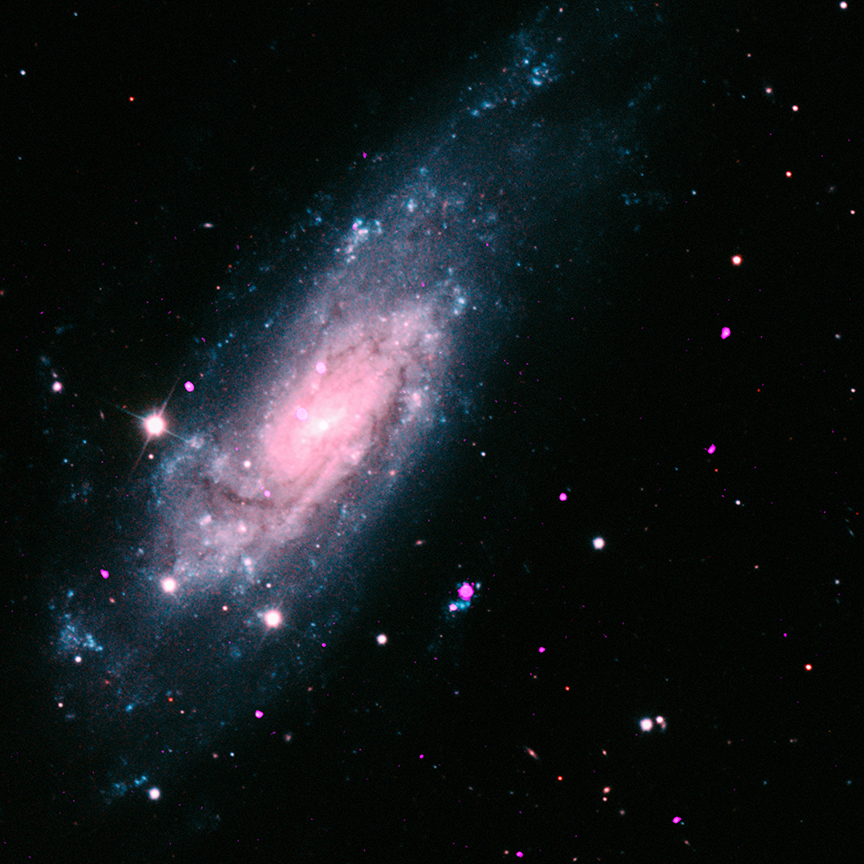
AT 2016blu in NGC 4559 (Labeled)
Credit: X-ray: NASA/CXC/Univ. of Virgina/M. Aghakhanloo et al.; Optical: SDSS;
Image Processing: NASA/CXC/SAO/P. Edmonds


JPEG (772 kb) - Large JPEG (6.9 MB) - Tiff (95.4 MB) - More Images

A Tour of AT 2016blu - More Videos


  • Researchers using Chandra have uncovered the source of large, repeating flares of light from a giant star.

  • The Chandra data revealed the presence of a black hole or neutron star in an oval-shaped orbit with the unstable star.

  • After monitoring the star, AT 2016blu, with optical telescopes, the team asked Chandra to observe it at a specific time.

  • During their closest approach the black hole or neutron star pulls material from the unstable star, which is heated and produces X-rays.


Astronomers have discovered what is triggering repeated outbursts from a giant, unstable star using NASA’s Chandra X-ray Observatory, as described in our latest press release. This volatile star, known as AT 2016blu, is located in the spiral galaxy NGC 4559 that is about 37 million light-years from Earth.

For about 15 years, astronomers have watched as AT 2016blu has repeatedly grown extremely bright in optical light only to dim back down again. AT 2016blu is a type of luminous blue variable (LBV), which are hot massive stars characterized by changes in brightness (Eta Carinae is the most famous LBV).

This change in brightness was so dramatic that it rivaled the light output of a supernova explosion, which was ruled out as an explanation since the star repeated this behavior many times. (Some have referred to this star as a “supernova imposter”.) To solve this puzzle, a team of astronomers turned to Chandra and found that during an optical outburst in March 2026, the object also glowed brightly in X-rays.

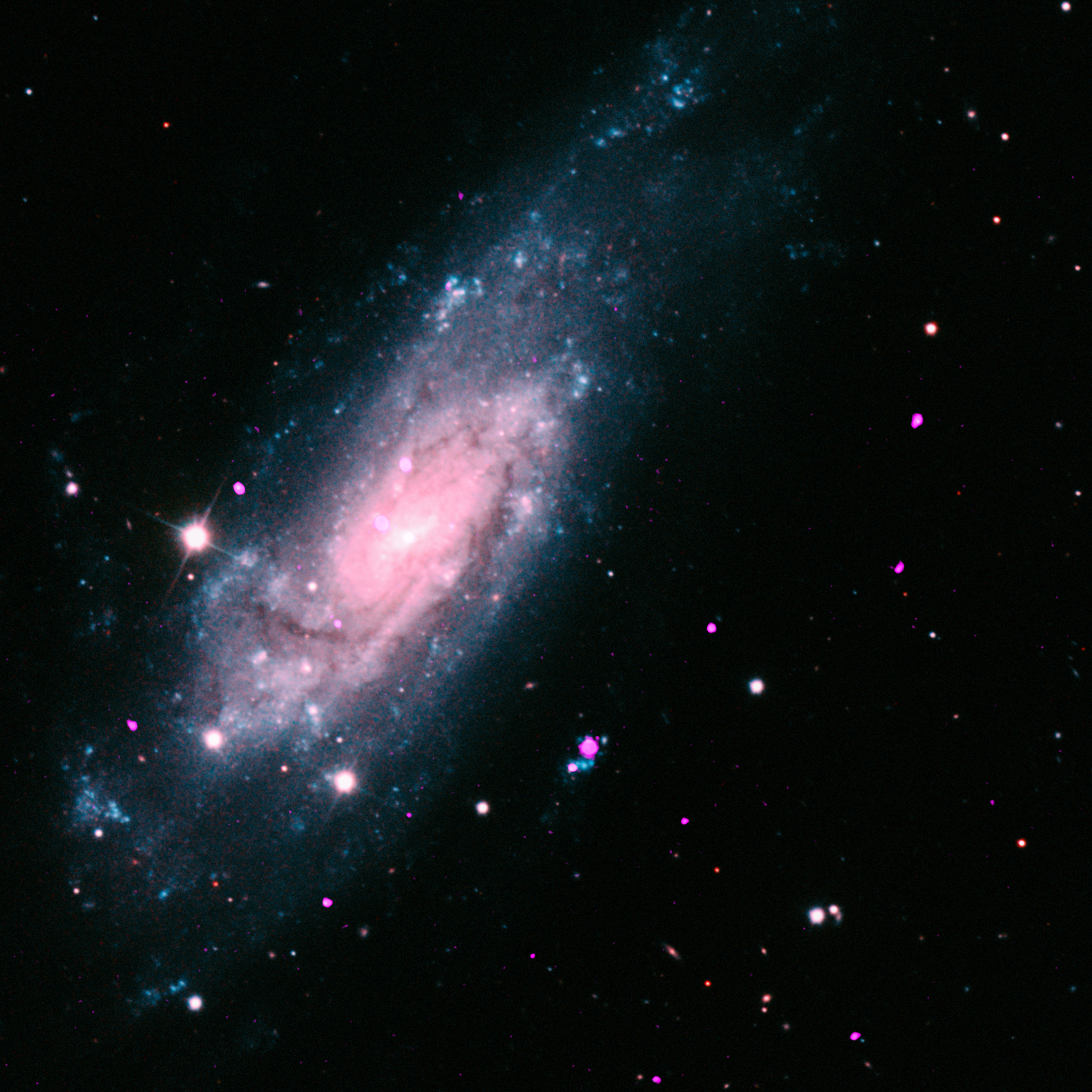
AT 2016blu in Quiescence and Outburst in X-ray & Optical Light.
Credit: X-ray: NASA/CXC/Univ. of Virgina/M. Aghakhanloo et al; Optical: NSF/KAIT

This increase in X-ray brightness Chandra provided the answer: a previously hidden companion object keeps pulling material away from the massive star every 113 days as they orbit one another. This partner is either a stellar-mass black hole or a neutron star (the dense collapsed core of a massive star). When the star gets to its closest approach to the neutron star or black hole in their oval-shaped orbit, some of its material is pulled away and gets captured by the black hole or neutron star. The material then orbits at very high speeds close to the speed of light, getting so hot that it shines brightly in X-rays.

This composite image shows AT 2016blu in X-rays from Chandra (magenta) along with its host galaxy, NGC 4559, in optical light from the Sloan Digital Sky Survey (red, green, and blue). The colors of the optical image blend to appear white in many regions. The Chandra data from March 2026 show X-ray sources in the field, some of them associated with NGC 4559, and the Sloan data shows the galaxy and foreground and background objects. The LBV AT 2016blu is in the middle of the small square and is seen in both the Chandra and Sloan data. The much brighter X-ray source within the square is unrelated to AT 2016blu.

The Chandra data from March 2026 revealed that AT 2016blu was at least 100 times brighter in X-rays than in Chandra data from 2001 to 2002, which is before the outbursts began. AT 2016blu is bright enough in X-rays to be classified as a candidate ultra-luminous X-ray source (ULX). These are rare, bright X-ray sources found with telescopes like Chandra that astronomers have yet to fully understand. The current thinking is that some of them contain neutron stars, and others have black holes.

A paper describing these results, led by Mojgan Aghakhanloo (University of Virginia), is being published in The Astrophysical Journal on November 9, 2026; it is available at https://iopscience.iop.org/article/10.3847/1538-4357/ae9a86.

NASA's Marshall Space Flight Center in Huntsville, Alabama, manages the Chandra program. The Smithsonian Astrophysical Observatory's Chandra X-ray Center controls science operations from Cambridge, Massachusetts, and flight operations from Burlington, Massachusetts.


Visual Description:

This release features a composite image of a spiral galaxy with a giant, unstable star at its outer edge. Using Chandra, astronomers have discovered the star's previously hidden companion, which triggers luminous outbursts every 113 days.

The spiral galaxy is NGC 4559. Shown at a sharp angle in the composite image, its flat pink and milky blue face tilts toward our upper left. Sitting near the outer edge of the dense spiral, near the center of the frame, is a small group of pink and blue dots. This group is outlined with a white square, enlarged and annotated in supporting images.

The smallest pink dot in the square is AT 2016blu, a massive star some 33 times the size of our Sun. For over 15 years astronomers have been watching this star get bright and then dim again in optical light on a regular basis. Chandra's X-ray observations suggest that a hidden companion object, either a stellar mass black hole or a neutron star, is pulling material from AT 2016blu every 113 days as they orbit one another. This captured material gets so hot that it shines brightly in X-rays.

Other pink and blue specks within the white square and enlargement are unresolved stars or star clusters, too distant to be related to the movement of material between AT 2016blu and its hidden but influential neighbor.


Fast Facts for AT 2016blu in NGC 4559:

Credit: X-ray: NASA/CXC/Univ. of Virgina/M. Aghakhanloo et al.; Optical: SDSS; Image Processing: NASA/CXC/SAO/P. Edmonds
Release Date: November 9, 2026
Scale: Image is about 12 arcmin (130,000 light-years) across.
Category: Black Holes, Neutron Stars/X-ray Binaries
Coordinates (J2000): RA 12h 35m 52.2s | Dec +27° 55´ 55.9"
Constellation: Coma Berenices
Observation Dates: 5 observations during Mar 2026 Observation Time: 26 hours 30 minutes (1 days 2 hours 30 minutes)
Obs. ID: 31041, 32254-32257
Instrument:
ACIS
References: Aghakhanloo, M, et al, 2026, ApJ, Published.
Color Code: X-ray: magenta; Infrared: red, green, and blue;
Distance Estimate: About 37 million light-years from Earth (z=0.00261)


Friday, June 19, 2026

The Neutron Star That Doesn't Stop Spinning Up

A combined optical, H-alpha, and X-ray image of NGC 7793, indicating the position of the remarkably bright X-ray source P13. Image credit: NASA/CXC/ESO/VLT/NOAO/AURA/NSF/Univ of Strasbourg/M. Pakull et al. Download Image


Last week, NuSTAR performed the first of two planned observations of the ultraluminous X-ray source NGC 7793 P13. Like its fellow ultraluminous source M82 X-2, P13 is a pulsar, meaning that its extraordinary luminosity comes from extreme levels of accretion onto a tiny neutron star, and its spin period decreases over time as the accreting material spins it up by adding angular momentum. Every now and again, P13 appears to fade dramatically in brightness but, unusually for this class of objects, when it returns to its usual luminosity again its rate of spin has increased further rather than slowing down, suggesting that it doesn't stop spinning up even when it is in a faint state. Additionally, this binary system has an orbital period a little over 60 days long, with a variation in the ultraviolet emission that is very slightly out of sync with it, which might indicate some unusual interaction between different parts of the accreting system. These NuSTAR observations will continue to track its changing period over time, helping to piece together the shape of this system and the reasons for its strange behavior.

Author: Hannah Earnshaw (NuSTAR Project Scientist, Caltech)


Sunday, June 07, 2026

Is this Be star isolated?

Artists impression of “edge-on” view of a Be star with ioniozed gas disk.
Credit: NASA/ESA/G. Bacon (STScI)

Download Image

During the past week, NuSTAR observed CL Pismis 17 3, hitherto known as an isolated Be star, that shows suspiciously strong X-ray emission above 3 keV. This is part of a campaign to probe such anomalously X-ray bright Be stars for hidden accreting companions, like a neutron star, or possibly a white dwarf. The NuSTAR data is crucial to determine if the system is undergoing active mass transfer, as the hard X-ray spectrum is a reliable probe for Comptonised emission, as expected from an accreting neutron star. In such a case, the system would join a growing list of Be X-ray binaries, that are known to be accreting persistently at a stable lower luminosity, instead of being punctuated by very luminous outbursts as they typically exhibit. This not only allows us to sharpen constraints on the X-ray luminosity function of High Mass X-ray Binaries, which are crucial to understand our Galactic star formation history, but also provides us with a test case to study persistent but tenuous accretion mechanisms.

Author: Aafia Ansar Mohideen (Research Scientist, Dr. Karl Remeis Sternwarte Astronomical Institute, Germany)


Thursday, March 19, 2026

Oval orbit casts new light on black hole - neutron star mergers

Artist’s impression of an eccentric neutron star–black hole binary
© Geraint Pratten, Royal Society University Research Fellow, University of Birmingham


Breakthrough discovery provides new clues about how these celestial bodies - that push the known laws of physics to their limits - find each other.

Scientists have uncovered the first robust evidence of a black hole and neutron star crashing together but orbiting in an oval path rather than a perfect circle just before they merged. This discovery challenges long-standing assumptions about how these cosmic pairs form and evolve.

Researchers from the University of Birmingham, Universidad Autónoma de Madrid, and Max Planck Institute for Gravitational Physics published their findings in The Astrophysical Journal Letters.

Most neutron star-black hole pairs are expected to adopt circular orbits long before merging. But the analysis of the gravitational-wave event GW200105 shows that this system travelled on an oval orbit long before merging to form a black hole 13 times more massive than the Sun. An oval orbit is something never seen before in this kind of collision.


"This discovery gives us vital new clues about how these extreme objects come together. It tells us that our theoretical models are incomplete and raises fresh questions about where in the universe such systems are born."

Dr Patricia Schmidt
Associate Professor


Dr Patricia Schmidt, from the University of Birmingham, said: “This discovery gives us vital new clues about how these extreme objects come together. It tells us that our theoretical models are incomplete and raises fresh questions about where in the universe such systems are born.”

The researchers analysed data from LIGO and Virgo detectors using a new gravitational‑wave model developed at the University of Birmingham’s Institute of Gravitational Wave Astronomy. This allowed them to measure both how ‘oval’ the orbit was (eccentricity) and any spin‑induced wobbling (precession). This is the first time these two effects have been measured together in a neutron star–black hole event.

Geraint Pratten, a Royal Society University Research Fellow from the University of Birmingham, said: “The orbit gives the game away. Its elliptical shape just before merger shows this system did not evolve quietly in isolation but was almost certainly shaped by gravitational interactions with other stars, or a third companion.”

A Bayesian analysis comparing thousands of theoretical predictions to the real data, showed that a circular orbit is extremely unlikely, ruling it out with 99.5% confidence.

Black hole mass

Past analyses of GW200105, which assumed a circular orbit, underestimated the black hole mass and overestimated the neutron star mass. The new study corrects these values and finds no compelling evidence of precession, indicating that the eccentricity was imprinted by its formation rather than by spins.

Gonzalo Morras, from the Universidad Autónoma de Madrid and the Max Planck Institute for Gravitational Physics, said: “This is convincing proof that not all neutron star–black hole pairs share the same origin. The eccentric orbit suggests a birthplace in an environment where many stars interact gravitationally.”

This discovery challenges the prevailing view that all neutron star–black hole mergers arise from a single dominant formation channel and highlights the need for more advanced waveform models capable of capturing the full complexity of these systems.

The study helps to explain the growing diversity seen in compact-binary mergers and opens the door to identifying even more unusual pathways as the number of gravitational-wave detections continues to grow.


Notes for editors

For more information, please contact the press office on +44 (0) 121 414 2772

‘Orbital eccentricity in a neutron star – black hole merger’ - Gonzalo Morras, Geraint Pratten, and Patricia Schmidt is published by The Astrophysical Journal Letters.

As well as being ranked among the world’s top 100 institutions, the University of Birmingham is the most targeted UK university by top graduate employers. Its work brings people from across the world to Birmingham, including researchers, educators and more than 40,000 students from over 150 countries.

About the Max Planck Institute for Gravitational Physics

The Max Planck Institute for Gravitational Physics (Albert Einstein Institute) based in Potsdam and Hannover, Germany, is a leading international research centre. The research program covers the entire spectrum of gravitational physics: from the giant dimensions of the Universe to the tiny scales of strings. The unification of all these important research branches under one roof is unique in the world.

About Universidad Autónoma de Madrid

Universidad Autónoma de Madrid (UAM) is a public university with an outstanding international reputation for its high-quality teaching and research. Founded in 1968, it is recognized as one of the best Spanish universities in both national and international rankings. UAM has 8 Faculties/Schools -Science, Economics and Business Studies, Law, Arts and Humanities, Medicine, Psychology, Teachers Training and Education and a School of Engineering, and several affiliated centres, offering a wide range of studies in humanities and scientific and technical fields. Currently it has about 30,000 students, 2,800 professors and researchers and nearly 1,000 administrative staff.


Sunday, March 08, 2026

NuSTAR Observes a Bursting Neutron Star

Artist's impression of the neutron star GS 1826–24, accreting material from its neighbor in a disk, and undergoing a bright thermonuclear burst that sends a flash through the system, illuminating its different components. Image credit: Futselaar (artsource) / Degenaar. Download Image

During the past week, NuSTAR targeted the X-ray binary GS 1826–24 in coordinated observations with the Karl G. Jansky Very Large Array (VLA) radio telescope, aiming to directly measure the speed of a jet launched by an accreting neutron star. This source recently entered an extraordinary state of rapid, clocklike thermonuclear bursts ignited on the neutron star surface. This produces a series of predictable, high-contrast, X-ray flashes that perturb the inner accretion flow and the associated jet of the neutron star binary system. NuSTAR precisely measures the burst onset and energetics, as well as the dynamical response of the inner accretion flow, while the VLA simultaneously tracks the compact radio jet. By measuring the lag between the X-ray burst and the jet’s radio response, the jet propagation speed can be directly determined — applying a novel burst-timing technique that was recently first demonstrated by the same team to measure the speed of the compact jet of the accreting neutron star 4U 1728−34 . At the same time, NuSTAR’s broadband X-ray coverage tracks how different components of the accretion flow — such as the boundary layer, corona, and inner disk — respond to each burst. This approach tests fundamental predictions for how relativistic jets are launched and powered in accreting compact objects.

Author: Nathalie Degenaar (Associate Professor, University of Amsterdam)


Saturday, December 27, 2025

“Superkilonova” A Star So Nice, It Explodes Twice

Artist interpretation depicts a hypothesized event known as a superkilonova. Initially, a massive star explodes in a supernova, which generates elements like carbon and iron (left). In the aftermath, two neutron stars are born, at least one of which is believed to be less massive than our Sun (middle). The neutron stars spiral together, sending gravitational waves rippling through the cosmos, before merging in a dramatic kilonova (right). Kilonovae seed the universe with the heaviest elements, such as gold at platinum, which glow in red light as depicted in the animation. Credit: Caltech/K. Miller and R. Hurt (IPAC)


Potential first-of-a-kind may have produced gravitational waves and light

Maunakea, Hawaiʻi – A team of astronomers using a variety of telescopes, including the W. M. Keck Observatory on Maunakea, Hawaiʻi Island, have discovered a possible “Superkilonova” that exploded not once but twice, evidence that this oddball event may be a first-of-a-kind superkilonova, or a kilonova spurred by a supernova. Such an event has been hypothesized but never seen.

When the most massive stars reach the ends of their lives, they blow up in spectacular supernova explosions, which seed the universe with heavier elements such as carbon and iron. Another type of explosion—the kilonova—occurs when a pair of dense, dead stars called neutron stars smash together, forging even heavier elements, such as gold and uranium. The heavy elements created by both of these explosions are among the basic building blocks of stars and planets.

So far, only one kilonova has been unambiguously confirmed to date, a historic event known as GW170817, which took place in 2017. In that case, two neutron stars smashed together, sending ripples in space-time known as gravitational waves, as well as light waves, across the cosmos. The cosmic blast was detected in gravitational waves by the National Science Foundation’s Laser Interferometer Gravitational-Wave Observatory (LIGO) and its European partner, the Virgo gravitational-wave detector, and in light waves by dozens of ground-based and space telescopes around the world.

The curious case of the kilonova candidate, AT2025ulz, is complex, and thought to have stemmed from a supernova blast that went off hours before, ultimately obscuring astronomers’ view and making the case more complicated.

“At first, for about three days, the eruption looked just like the first kilonova in 2017,” said Mansi Kasliwal, professor of astronomy at The California Institute of Technology and director of Palomar Observatory. “Everybody was intensely trying to observe and analyze it, but then it started to look more like a supernova, and some astronomers lost interest. Not us.”

The study, led by The California Institute of Technology, is published in The Astrophysical Journal Letters.

In August 2025, a new gravitational-wave signal was picked up by The Laser Interferometer Gravitational-Wave Observatory (LIGO) and Virgo in Italy. Within minutes, an alert was issued to the astronomical community containing a rough map of the source signaling to researchers that gravitational waves had been registered from what appeared to be a merger between two objects, with at least one of them being unusually tiny.

After first being identified by the Zwicky Transient Facility at Palomar Observatory, Kasliwal coordinated with Keck Observatory staff astronomer Michael Lundquist to launch a rapid Target of Opportunity (ToO) observation of AT2025ulz, a process that allows scientists to request immediate access for short-lived cosmic events. Mansi’s ToO request enabled the immediate spectroscopic follow-up using the Low-Resolution Imaging Spectrograph (LRIS).

“Keck Observatory provided the imagery and spectroscopy via our Low-Resolution Imaging Spectrograph (LRIS) Instrument to measure the host extinction and redshift of the galaxy as well as looking at the spectroscopic evolution,” Lundquist said. “This highlights Keck Observatory’s Target of Opportunity capability to rapidly respond to transient alerts and deliver the spectroscopic data needed to explore potential multi-messenger associations.”

The observations confirmed that the eruption of light had faded fast and glowed at red wavelengths—just as GW170817 had done eight years earlier. In the case of the GW170817 kilonova, the red colors came from heavy elements like gold; these atoms have more electron energy levels than lighter elements, so they block blue light but let red light pass through.

Then, days after the blast, AT2025ulz started to brighten again, turn blue and show hydrogen in its spectra, all signs of a supernova not a kilonova (specifically a “stripped-envelope, core-collapse” supernova). Supernovae from distant galaxies are generally not expected to generate enough gravitational waves to be detectable by LIGO and Virgo, whereas kilonovae are. This led some astronomers to conclude that AT2025ulz was triggered by a typical, ho-hum supernova and not in fact related to the gravitational-wave signal.

What Might Be Going On?

Kasliwal says that several clues tipped her off that something unusual had taken place. Though AT2025ulz did not resemble the classic kilonova GW170817, it also did not look like an average supernova. Additionally, the LIGO–Virgo gravitational-wave data had revealed that at least one of the neutron stars in the merger was less massive than our Sun, a hint that one or two small neutron stars might have merged to produce a kilonova.

Neutron stars are the leftover remains of massive stars that explode as supernovae. They are thought to be around the size of San Francisco (about 22 to 30 kilometers across) with masses that range from 1.2 to about 3 times that of our Sun. Some theorists have proposed ways in which neutron stars might be even smaller, with masses less than the Sun’s, but none have been observed so far.

Theorists invoke two scenarios to explain how a neutron star could be that small. In one, a rapidly spinning massive star goes supernova, then splits into two tiny, sub-solar neutron stars in a process termed fission. In the second scenario, called fragmentation, the rapidly spinning star again goes supernova, but this time a disk of material forms around the collapsing star. The lumpy disk material coalesces into a tiny neutron in a manner similar to how planets form.

With LIGO and Virgo having detected at least one sub-solar neutron star, it is possible, according to theories proposed by co-author Brian Metzger of Columbia University that two newly formed neutron stars could have crashed into each other, erupting as a kilonova that sent gravitational waves rippling through the cosmos. As the kilonova churned out heavy metals, it would have initially glowed in red light as ZTF and other telescopes observed. The expanding debris from the initial supernova blast would have obscured the astronomers’ view of the kilonova. In other words, a supernova may have birthed twin baby neutron stars that then merged to make a kilonova.

“The only way theorists have come up with to birth sub-solar neutron stars is during the collapse of a very rapidly spinning star,” Metzger says. “If these ‘forbidden’ stars pair up and merge by emitting gravitational waves, it is possible that such an event would be accompanied by a supernova rather than be seen as a bare kilonova.”

But while this theory is tantalizing and interesting to consider, the research team stresses that there is not enough evidence to make firm claims. The only way to test the superkilonovae theory is to find more.

“Future kilonovae events may not look like GW170817 and may be mistaken for supernovae,” Kasliwal says. “We can look for new possibilities in data like this, but we do not know with certainty that we found a superkilonova. The event, nevertheless, is eye o,brpening.”
.


About LRIS

The Low Resolution Imaging Spectrometer (LRIS) is a very versatile and ultra-sensitive visible-wavelength imager and spectrograph built at the California Institute of Technology by a team led by Prof. Bev Oke and Prof. Judy Cohen and commissioned in 1993. Since then it has seen two major upgrades to further enhance its capabilities: the addition of a second, blue arm optimized for shorter wavelengths of light and the installation of detectors that are much more sensitive at the longest (red) wavelengths. Each arm is optimized for the wavelengths it covers. This large range of wavelength coverage, combined with the instrument’s high sensitivity, allows the study of everything from comets (which have interesting features in the ultraviolet part of the spectrum), to the blue light from star formation, to the red light of very distant objects. LRIS also records the spectra of up to 50 objects simultaneously, especially useful for studies of clusters of galaxies in the most distant reaches, and earliest times, of the universe. LRIS was used in observing distant supernovae by astronomers who received the Nobel Prize in Physics in 2011 for research determining that the universe was speeding up in its expansion.

About W. M. Keck Observatory

The W. M. Keck Observatory telescopes are among the most scientifically productive on Earth. The two 10-meter optical/infrared telescopes atop Maunakea on the Island of Hawaiʻi feature a suite of advanced instruments including imagers, multi-object spectrographs, high-resolution spectrographs, integral-field spectrometers, and world-leading laser guide star adaptive optics systems. Some of the data presented herein were obtained at Keck Observatory, which is a private 501(c) 3 non-profit organization operated as a scientific partnership among the California Institute of Technology, the University of California, and the National Aeronautics and Space Administration. The Observatory was made possible by the generous financial support of the W. M. Keck Foundation. The authors wish to recognize and acknowledge the very significant cultural role and reverence that the summit of Maunakea has always had within the Native Hawaiian community. We are most fortunate to have the opportunity to conduct observations from this mountain. For more information, visit: www.keckobservatory.org


Sunday, March 30, 2025

Investigating Neutron Star Evolution

An artist's impression of a neutron-star X-ray binary accreting from its companion star and powering a jet.
Image credit: NASA/JPL-Caltech/R. Hurt (SSC)

Download Image

Over the past week, NuSTAR has conducted an intensive observing campaign on the neutron star X-ray binary GX 340+0, in coordination with the Australian Telescope Compact Array (ATCA, radio) and the X-ray Telescope aboard NASA’s Gehrels-Swift observatory. This well-known system belongs to the so-called "Z-source" family – a group of bright, accreting neutron stars that persistently trace a distinctive "Z-shaped" pattern in diagrams of their X-ray "hardness" (or color) plotted against their X-ray intensity. As these systems move back and forth along this Z-shaped track, typically over a timescale of about a week, their X-ray spectral and timing properties undergo a clear evolution. However, this evolution is significantly less pronounced compared to most other X-ray binaries, whether they contain neutron stars or black holes as the central accreting object. Interestingly, despite the relatively subtle changes in their X-ray properties, the radio emission from Z-sources has been observed to vary dramatically depending on their position along the Z-track. This suggests that the physical properties of their radio jets evolve far more than the underlying accretion flow. This behavior is unexpected, as such dramatic jet evolution is typically accompanied by equally dramatic changes in X-ray spectral-timing properties – especially in black hole systems. This discrepancy raises the possibility of different jet-launching mechanisms, distinct physical conditions, and/or unique correlations between jets and accretion flows in neutron star versus black hole X-ray binaries. To investigate this intriguing scenario, six simultaneous NuSTAR and ATCA observations were coordinated with a near-daily cadence over the course of a week. This observing strategy will, for the first time, track the co-evolution of the jet (radio) and accretion flow (X-rays) in this system, providing unique and unprecedented insights into the factors that govern jet evolution in Z-sources.

Authors: Alessio Marino (Postdoctoral fellow, ICE-CSIC, Spain)


Saturday, November 23, 2024

NASA's Chandra, Hubble Tune Into 'Flame-Throwing' Guitar Nebula

PSR B2224+65/Guitar Nebula
Credit/X-ray: NASA/CXC/Stanford Univ./M. de Vries et al.; Optical: (Hubble) NASA/ESA/STScI and (Palomar) Hale Telescope/Palomar/CalTech; Image Processing: NASA/CXC/SAO/L. Frattare


A Tour the Guitar Nebula - More Videos


Normally found only in heavy metal bands or certain post-apocalyptic films, a “flame-throwing guitar” has now been spotted moving through space. Astronomers have captured movies of this extreme cosmic object using NASA’s Chandra X-ray Observatory and Hubble Space Telescope.

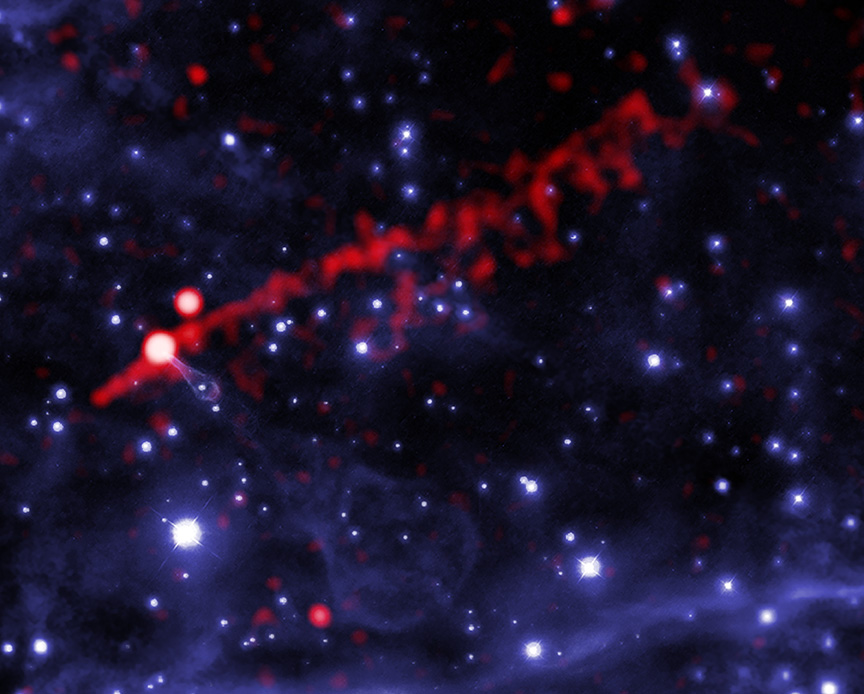
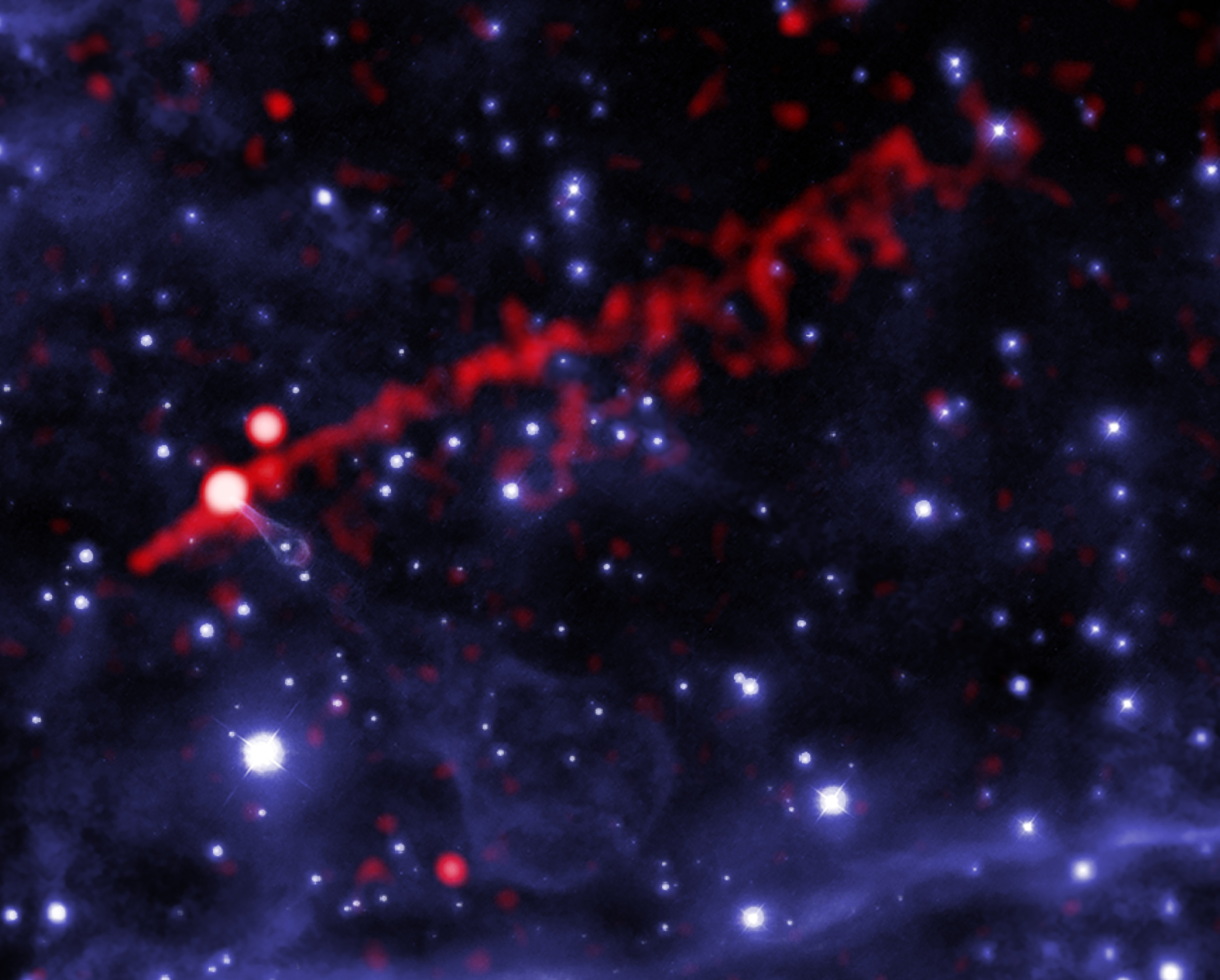
The new movie of Chandra (red) and Palomar (blue) data helps break down what is playing out in the Guitar Nebula. X-rays from Chandra show a filament of energetic matter and antimatter particles, about two light-years or 12 trillion miles long, blasting away from the pulsar (seen as the bright white dot connected to the filament).
 
Astronomers have nicknamed the structure connected to the pulsar PSR B2224+65 as the “Guitar Nebula” because of its distinct resemblance to the instrument in glowing hydrogen light. The guitar shape comes from bubbles blown by particles ejected from the pulsar through a steady wind. Because the pulsar is moving from the lower right to the upper left, most of the bubbles were created in the past as the pulsar moved through a medium with variations in density. 

Outline of the guitar shape in the X-ray and optical image. Credit: X-ray: NASA/CXC/Stanford Univ./M. de Vries et al.; Optical: (Hubble) NASA/ESA/STScI and (Palomar) Hale Telescope/Palomar/CalTech; Illustrated outline: NASA/CXC/K. DiVona; Image Processing: NASA/CXC/SAO/L. Frattare)

At the tip of the guitar is the pulsar, a rapidly rotating neutron star left behind after the collapse of a massive star. As it hurtles through space it is pumping out a flame-like filament of particles and X-ray light that astronomers have captured with Chandra.

How does space produce something so bizarre? The combination of two extremes — fast rotation and high magnetic fields of pulsars — leads to particle acceleration and high-energy radiation that creates matter and antimatter particles, as electron and positron pairs. In this situation, the usual process of converting mass into energy, famously determined by Albert Einstein's E = mc2 equation, is reversed. Here, energy is being converted into mass to produce the particles.

Particles spiraling along magnetic field lines around the pulsar create the X-rays that Chandra detects. As the pulsar and its surrounding nebula of energetic particles have flown through space, they have collided with denser regions of gas. This allows the most energetic particles to escape the confines of the Guitar Nebula and fly to the right of the pulsar, creating the filament of X-rays. When those particles escape, they spiral around and flow along magnetic field lines in the interstellar medium, that is, the space in between stars.

The new movie shows the pulsar and the filament flying towards the upper left of the image through Chandra data taken in 2000, 2006, 2012 and 2021. The movie has the same optical image in each frame, so it does not show changes in parts of the “guitar.” A separate movie obtained with data from NASA’s Hubble Space Telescope (obtained in 1994, 2001, 2006, and 2021) shows the motion of the pulsar and the smaller structures around it.

Hubble Space Telescope data: 1994, 2001, 2006, and 2021
Credit: Optical: (Hubble) NASA/ESA/STScI and (Palomar) Hale Telescope/Palomar/CalTech)

A study of this data has concluded that the variations that drive the formation of bubbles in the hydrogen nebula, which forms the outline of the guitar, also control changes in how many particles escape to the right of the pulsar, causing subtle brightening and fading of the X-ray filament, like a cosmic blow torch shooting from the tip of the guitar.

The structure of the filament teaches astronomers about how electrons and positrons travel through the interstellar medium. It also provides an example of how this process is injecting electrons and positrons into the interstellar medium.

A paper describing these results was published in The Astrophysical Journal and is available here.

NASA's Marshall Space Flight Center manages the Chandra program. The Smithsonian Astrophysical Observatory's Chandra X-ray Center controls science operations from Cambridge, Massachusetts, and flight operations from Burlington, Massachusetts.

NASA's Chandra, Hubble Tune Into 'Flame-Throwing' Guitar Nebula


Visual Description:

This release features two short videos and a labeled composite image, all featuring what can be described as a giant flame-throwing guitar floating in space.

In both the six second multiwavelength Guitar Nebula timelapse video and the composite image, the guitar shape appears at our lower left, with the neck of the instrument pointing toward our upper left. The guitar shape is ghostly and translucent, resembling a wispy cloud on a dark night. At the end of the neck, the guitar’s headstock comes to a sharp point that lands on a bright white dot. This dot is a pulsar, and the guitar shape is a hydrogen nebula. The nebula was formed when particles being ejected by the pulsar produced a cloud of bubbles. The bubbles were then blown into a curvy guitar shape by a steady wind. The guitar shape is undeniable, and is traced by a thin white line in the labeled composite image.

The pulsar, known as PSR B2224+65, has also released a long filament of energetic matter and antimatter particles approximately 12 trillion miles long. In both the composite image and the six second video, this energetic, X-ray blast shoots from the bright white dot at the tip of the guitar’s headstock, all the way out to our upper righthand corner. In the still image, the blast resembles a streak of red dots, most of which fall in a straight, densely packed line. The six second video features four separate images of the phenomenon, created with Chandra data gathered in 2000, 2006, 2012, and 2021. When shown in sequence, the density of the X-ray blast filament appears to fluctuate.

A 12 second video is also included in this release. It features four images that focus on the headstock of the guitar shape. These images were captured by the Hubble Space Telescope in 1994, 2001, 2006, and 2021. When played in sequence, the images show the headstock shape expanding. A study of this data has concluded that the variations that drive the formation of bubbles in the hydrogen nebula also control changes in the pulsar’s blast filament. Meaning the same phenomenon that created the cosmic guitar also created the cosmic blowtorch shooting from the headstock.


Fast Facts for Guitar Nebula:

Scale: Image is about 2.6 arcmin (2 light-years) across.
Category: Neutron Stars/X-ray Binaries
Coordinates (J2000): RA 22h 25m 52.36s | Dec +65° 35´ 33.79"
Constellation: Cepheus
Observation Dates: 21 pointings between Oct 2000 and Feb 2022
Observation Time: 147 hours 56 minutes (6 days 3 hours 56 minutes)
Obs. ID: 755, 6691, 7400, 13771, 14353, 14467, 24426-24437, 24992, 26336
Instrument: ACIS
References: de Vries, M. et al., 2022, ApJ, 939, 70.
Color Code: X-ray: red; Optical: blue
Distance Estimate: About 2,700 light-years


Monday, July 22, 2024

Telescope Tag-Team Discovers Galactic Cluster’s Bizarre Secrets

Terzan 5, located in the constellation Sagittarius, is a crowded globular cluster home to hundreds of thousands of stars.Ten unusual and exotic pulsars were recently discovered by an international team of astronomers from the U.S. National Science Foundation National Radio Astronomy Observatory, the Max Planck Institute for Gravitational Physics (Albert Einstein Institute) (AEI), and the Max Planck Institute for Radio Astronomy.Credit: US NSF, AUI, NSF NRAO, S. Dagnello. Hi-Res File


U.S. National Science Foundation Green Bank Telescope teams up with South African Radio Astronomy Observatory MeerKAT Telescope, discovers ten strange and exotic pulsars

Towards the center of our Milky Way Galaxy, in the constellation Sagittarius, astronomers have discovered  10 monstrous neutron stars. These particular stars, called pulsars, reside together in globular cluster Terzan 5, a crowded home for hundreds of thousands of different types of stars. Pulsars are millions (or even billions) of times more dense than other stars and rotate rapidly, emitting bright pulses of light from their strong magnetic fields, making them a beacon for astronomers to find. In one of the most jam-packed places in our Milky Way, many pulsars in Terzan 5 have evolved into bizarre and eccentric forms.

Astronomers already knew that 39 pulsars call Terzan 5 home. With the teamwork of the U.S. National Science Foundation Green Bank Telescope (NSF GBT) and the South African Radio Astronomy Observatory’s MeerKAT Telescope, ten more have been added to the count. “It’s very unusual to find exotic new pulsars. But what’s really exciting is the wide variety of such weirdos in a single cluster,” shared Scott Ransom, a scientist with the U.S. National Science Foundation National Radio Astronomy Observatory (NSF NRAO). The discoveries were made by an international team of astronomers from NSF NRAO, the Max Planck Institute for Gravitational Physics (Albert Einstein Institute) (AEI), and the Max Planck Institute for Radio Astronomy.

The Meerkat Telescope was able to determine the rough location of each pulsar by tracking and timing how quickly they rotate, matched against twenty years of Terzan 5 observations taken by the NSF GBT, which revealed the bizarre and eccentric details of these stars. “Without the NSF Green Bank Telescope’s archive, we wouldn’t have been able to characterize these pulsars and understand their astrophysics,” adds Ransom. The archival NSF GBT data allowed astronomers to pinpoint the pulsars’ position on the sky, measure their specific movements, and see how their orbits changed over time.

Among the discoveries, astronomers saw two likely neutron stars pulled into each other’s orbit as a binary system. Out of 3,600 known pulsars in the Galaxy, only 20 have been identified as double neutron-star binaries. When pulsars pair off in binaries, the gravitational pull from one to the other can steal material and energy, causing one to spin even faster, becoming a millisecond pulsar. This pair could be a record breaker, with a new contender for fastest spinning pulsar in a double neutron-star system, and the longest orbit of its kind. The current record holder for fastest spinning pulsar already resides in Terzan 5. Only future observations will reveal the truth.

Astronomers also observed three new rare pulsar “spider” binary systems (in addition to five already known in the cluster) called Redbacks or Black Widows, depending on the types of companion stars that they have. A companion star falls into the orbit of a spider pulsar, where a web of plasma fills the space between the two (caused by outflows from the companion star due to the pulsar’s energy) slowly dissolving the companion over time.

The discovery of these strange pulsars allows scientists to better understand globular clusters, neutron stars, and even test Einstein’s theory of general relativity, along with expanding what is known about pulsar categories. The research team is already making plans to find even more in Terzan 5, with the support of volunteers. Citizen scientists who’d like to share in the excitement of this discovery can help at Einstein@Home. This project, led by scientists at AEI, has already discovered more than 90 new neutron stars.

The Green Bank Observatory, home of the GBT, and the National Radio Astronomy Observatory are major facilities of the U.S. National Science Foundation and are operated by Associated Universities, Inc.


Media contacts:

Jill Malusky,
NRAO & GBO News & Public Information Manager

jmalusky@nrao.edu

Benjamin Knispel,
Max Planck Institute for Gravitational Physics (Albert Einstein Institute)

benjamin.knispel@aei.mpg.de


Monday, July 08, 2024

Old Data, New Tricks Discover Pulsar in Galactic Plane

Credit: B. Saxton U.S. National Science Foundation/NSF National Radio Astronomy Observatory


A team of astronomers has found a new tool to discover pulsars. Pulsars are rapidly rotating neutron stars that blast out pulses of radiation at regular intervals ranging from seconds to milliseconds. These pulses help scientists learn more about the Universe, to test the curve of space time around black holes, detect gravitational waves, and probe the interstellar medium.

This search combined observations from the U.S. National Science Foundation (NSF) Karl G. Jansky Very Large Array, the VLA Low-band Ionosphere and Transient Experiment (VLITE), and archival data from the NSF Robert C. Byrd Green Bank Telescope. The U.S. Naval Research Laboratory (NRL) and the NSF National Radio Astronomy Observatory (NRAO) collaborated to develop VLITE. This experiment allows researchers to continually monitor the sky at low radio frequencies by piggybacking VLITE observations on nearly all observations using the VLA’s higher frequency receivers.

“It was exciting so early in my career to see a speculative project work out so successfully,” said Amaris McCarver, an undergraduate student at Texas Tech University, who will be the lead author on a paper submitted to the Astrophysical Journal, reporting these results.

“We used the VLITE data to search for candidate pulsars. After identifying the best candidate, GLIMPSE-C01, we reprocessed archival GBT pulsar data with new algorithms to confirm the discovery of a millisecond pulsar. After that, we followed up with new VLA observations to confirm its location and properties,” shares Tracy E. Clarke, an astronomer who coordinates VLITE for the Naval Research Laboratory (NRL). You can read the NRL press release on this science HERE.

“Tracy and I had been talking about doing this project for many years. Amaris started working with me during the academic year, doing similar searches on some all-sky surveys at higher radio frequency, and she immediately distinguished herself as an excellent research student, so I referred her to the NRL internship program, where she then conducted this work,” said Tom Maccarone, a professor at Texas Tech University.

By cross-matching existing all-sky catalogs at different wavelengths—rather than spending hours of costly observing that might not even find a pulsar—astronomers were able to identify strong pulsar candidates, one of which was confirmed by re-processing archival data using modern software. “Time and time again, new discoveries are being made from archival data. The value of these astronomical data archives couldn’t be more important,” adds Scott Ransom, an NRAO scientist who focuses on pulsar research. Since pulsar search data is so voluminous, the Green Bank staff did not archive those types of data for at least the first 15 years of GBT operations. This particular observation was saved on a raw hard-disk drive by Scott Ransom and stored on a shelf in his office. In recent years, the huge improvements in storage capacity have enabled the Green Bank Observatory to archive essentially all of the potentially priceless data from the GBT, and make them available to all researchers.

“This research shows we can use measures of radio brightness at different frequencies to find new pulsars efficiently, and that available sky surveys combined with VLITE mean those measurements are essentially always available. This opens the door to a new era of searches for highly dispersed and highly accelerated pulsars,” adds Clarke. Pulsar searches are inherently less sensitive to the most exotic types of pulsars. These can be the fastest ones, the ones deepest in the Galactic Plane, and the ones in the shortest period binaries. The capabilities of VLITE, and improved algorithms, will allow “old” data to yield new discoveries. “We can revisit previous searches with better tools to discover these hard-to-find gems in the pulsar population,” adds Clarke.


About NRAO & GBO

The National Radio Astronomy Observatory (NRAO) and the Green Bank Observatory (GBO) are facilities of the U.S. National Science Foundation, operated under cooperative agreement by Associated Universities, Inc.

Construction and installation of VLITE was supported by the NRL Sustainment Restoration and Maintenance fund.


Media Contacts:

Corrina Jaramillo Feldman,
Public Information Officer – New Mexico,

cfeldman@nrao.edu
505-366-7267

Jill Malusky,
NRAO/GBO News & Public Information Manager,

jmalusky@nrao.edu
304-460-5608


Saturday, June 29, 2024

NASA's Chandra Peers Into Densest and Weirdest Stars

3C 58
Credit: X-ray: NASA/CXC/ICE-CSIC/A. Marino et al.; Optical: SDSS; Image Processing: NASA/CXC/SAO/J. Major


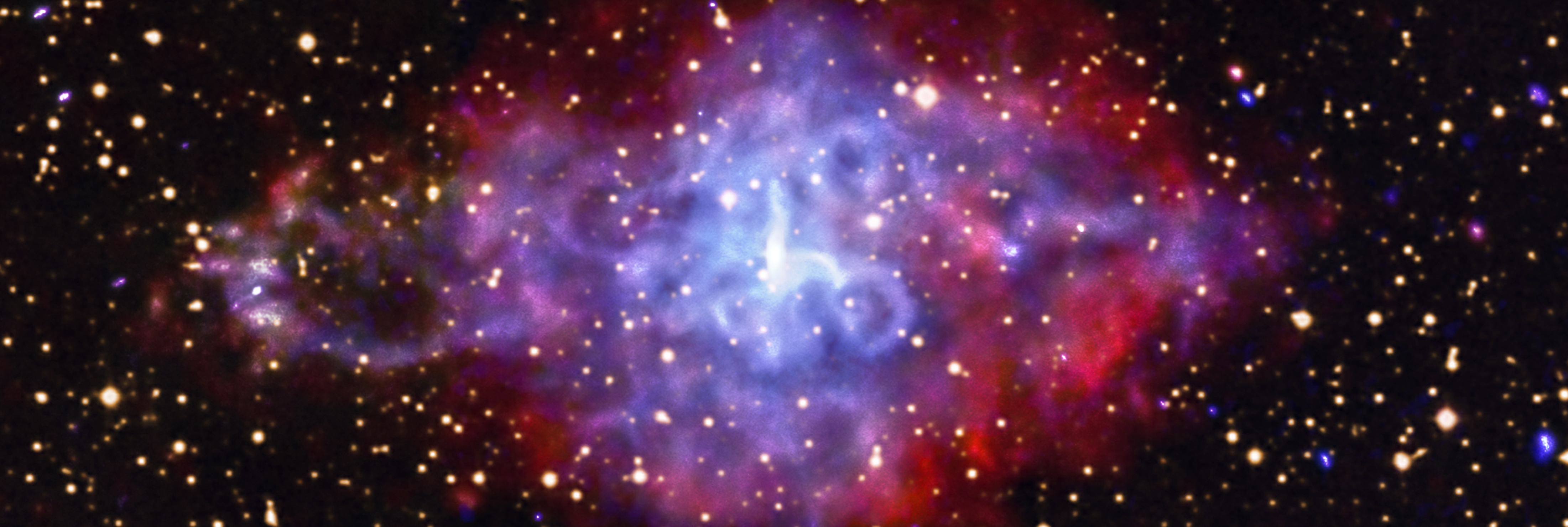
The supernova remnant 3C 58 contains a spinning neutron star, known as PSR J0205+6449, at its center. Astronomers studied this neutron star and others like it to probe the nature of matter inside these very dense objects. A new study, made using NASA’s Chandra X-ray Observatory and ESA’s XMM-Newton, reveals that the interiors of neutron stars may contain a type of ultra-dense matter not found anywhere else in the Universe, as reported in our latest press release.

In this image of 3C 58, low-energy X-rays are colored red, medium-energy X-rays are green, and the high-energy band of X-rays is shown in blue. The X-ray data have been combined with an optical image in yellow from the Digitized Sky Survey. The Chandra data show that the rapidly rotating neutron star (also known as a “pulsar”) at the center is surrounded by a torus of X-ray emission and a jet that extends for several light-years. The optical data shows stars in the field.

The team in this new study analyzed previously released data from neutron stars to determine the so-called equation of state. This refers to the basic properties of the neutron stars including the pressures and temperatures in different parts of their interiors.

The authors used machine learning, a type of artificial intelligence, to compare the data to different equations of state. Their results imply that a significant fraction of the equations of state — the ones that do not include the capability for rapid cooling at higher masses — can be ruled out.

The researchers capitalized on some neutron stars in the study being located in supernova remnants, including 3C 58. Since astronomers have age estimates of the supernova remnants, they also have the ages of the neutron stars that were created during the explosions that created both the remnants and the neutron stars. The astronomers found that the neutron star in 3C 58 and two others were much cooler than the rest of the neutron stars in the study.

Illustration of a Neutron Star
Credit: ICE-CSIC/D. Futselaar/Marino et al.

The team thinks that part of the explanation for the rapid cooling is that these neutron stars are more massive than most of the rest. Because more massive neutron stars have more particles, special processes that cause neutron stars to cool more rapidly might be triggered.

One possibility for what is inside these neutron stars is a type of radioactive decay near their centers where neutrinos — low mass particles that easily travel through matter — carry away much of the energy and heat, causing rapid cooling.

Another possibility is that there are types of exotic matter found in the centers of these more rapidly cooling neutron stars.

The Nature Astronomy paper describing these results is available here. The authors of the paper are Alessio Marino (Institute of Space Sciences (ICE) in Barcelona, Spain), Clara Dehman (ICE), Konstantinos Kovlakas (ICE), Nanda Rea (ICE), J. A. Pons (University of Alicante in Spain), and Daniele Viganò (ICE).

NASA's Marshall Space Flight Center manages the Chandra program. The Smithsonian Astrophysical Observatory's Chandra X-ray Center controls science from Cambridge Massachusetts and flight operations from Burlington, Massachusetts.


Visual Description:

This is an image of the leftovers from an exploded star called 3C 58, shown in X-ray and optical light. At the center of the remnant is a rapidly spinning neutron star, called a pulsar, that presents itself as a bright white object that's somewhat elongated in shape.

Loops and swirls of material, in shades of blue and purple, extend outward from the neutron star in many directions, resembling the shape of an octopus and its arms.

Surrounding the octopus-like structure is a cloud of material in shades of red that is wider horizontally than it is vertically. A ribbon of purple material extends to the left edge of the red cloud, curling upward at its conclusion. Another purple ribbon extends to the right edge of the red cloud, though it is less defined than the one on the other side. Stars of many shapes and sizes dot the entire image.


Fast Facts for 3C 58:

Scale: Image is about 12 arcmin (26 light-years) across.
Category: Neutron Stars/X-ray Binaries, Supernovas & Supernova Remnants
Coordinates (J2000): RA 02h 05m 37.0s | Dec +64° 49´ 48.0"
Constellation: Cassiopeia
Observation Dates: 4 observations from Sep 2000 to Apr 2003
Observation Time: 108 hours 52 minutes (4 days 12 hours 52 minutes)
Obs. ID: 728, 3832, 4382, 4383
Instrument: ACIS
References: Marino, A. et al., 2024, Nature Astronomy;
Color Code: X-ray: red = 0.5-1.2 keV, green = 1.2-2.0 keV, blue = 2.0-7.0 keV; Optical: yellow
Distance Estimate: About 6,500 light-years


Saturday, June 22, 2024

Investigating the Origins of the Crab Nebula With NASA's Webb

Crab Nebula
Credits: Image: NASA, ESA, CSA, STScI, Tea Temim (Princeton University)


A team of scientists used NASA’s James Webb Space Telescope to parse the composition of the Crab Nebula, a supernova remnant located 6,500 light-years away in the constellation Taurus. With the telescope’s MIRI (Mid-Infared Instrument) and NIRCam (Near-Infrared Camera), the team gathered data that is helping to clarify the Crab Nebula’s history.

The Crab Nebula is the result of a core-collapse supernova from the death of a massive star. The supernova explosion itself was seen on Earth in 1054 CE and was bright enough to view during the daytime. The much fainter remnant observed today is an expanding shell of gas and dust, and outflowing wind powered by a pulsar, a rapidly spinning and highly magnetized neutron star.

The Crab Nebula is also highly unusual. Its atypical composition and very low explosion energy previously have been explained by an electron-capture supernova — a rare type of explosion that arises from a star with a less-evolved core made of oxygen, neon, and magnesium, rather than a more typical iron core.

“Now the Webb data widen the possible interpretations,” said Tea Temim, lead author of the study at Princeton University in New Jersey. “The composition of the gas no longer requires an electron-capture explosion, but could also be explained by a weak iron core-collapse supernova.”

Studying the Present to Understand the Past

Past research efforts have calculated the total kinetic energy of the explosion based on the quantity and velocities of the present-day ejecta. Astronomers deduced that the nature of the explosion was one of relatively low energy (less than one-tenth that of a normal supernova), and the progenitor star’s mass was in the range of eight to 10 solar masses — teetering on the thin line between stars that experience a violent supernova death and those that do not.

However, inconsistencies exist between the electron-capture supernova theory and observations of the Crab, particularly the observed rapid motion of the pulsar. In recent years, astronomers have also improved their understanding of iron core-collapse supernovae and now think that this type can also produce low-energy explosions, providing that the stellar mass is adequately low.

Webb Measurements Reconcile Historic Results

To lower the level of uncertainty surrounding the Crab’s progenitor star and nature of the explosion, the team led by Temim used Webb’s spectroscopic capabilities to hone in on two areas located within the Crab’s inner filaments.

Theories predict that because of the different chemical composition of the core in an electron-capture supernova, the nickel to iron (Ni/Fe) abundance ratio should be much higher than the ratio measured in our Sun (which contains these elements from previous generations of stars). Studies in the late 1980s and early 1990s measured the Ni/Fe ratio within the Crab using optical and near-infrared data and noted a high Ni/Fe abundance ratio that seemed to favor the electron-capture supernova scenario.

The Webb telescope, with its sensitive infrared capabilities, is now advancing Crab Nebula research. The team used MIRI’s spectroscopic abilities to measure the nickel and iron emission lines, resulting in a more reliable estimate of the Ni/Fe abundance ratio. They found that the ratio was still elevated compared to the Sun, but only modestly and much lower in comparison to prior estimates.

The revised values are consistent with electron-capture, but do not rule out an iron core-collapse explosion from a similarly low-mass star. (Higher-energy explosions from higher-mass stars are expected to produce ratios closer to solar abundances.) Further observational and theoretical work will be needed to distinguish between these two possibilities.

“At present, the spectral data from Webb covers two small regions of the Crab, so it’s important to study much more of the remnant and identify any spatial variations,” said Martin Laming of the Naval Research Laboratory in Washington and a co-author of the paper. “It would be interesting to see if we could identify emission lines from other elements, like cobalt or germanium.”

Mapping the Crab’s Current State

Besides pulling spectral data from two small regions of the Crab Nebula’s interior to measure the abundance ratio, the telescope also observed the remnant’s broader environment to understand details of the synchrotron emission and the dust distribution.

The images and data collected by MIRI enabled the team to isolate the dust emission within the Crab and map it in high resolution for the first time. By mapping the warm dust emission with Webb, and even combining it with the Herschel Space Observatory’s data on cooler dust grains, the team created a well-rounded picture of the dust distribution: The outermost filaments contain relatively warmer dust, while cooler grains are prevalent near the center.

“Where dust is seen in the Crab is interesting because it differs from other supernova remnants, like Cassiopeia A and Supernova 1987A," said Nathan Smith of the Steward Observatory at the University of Arizona and a co-author of the paper. “In those objects, the dust is in the very center. In the Crab, the dust is found in the dense filaments of the outer shell. The Crab Nebula lives up to a tradition in astronomy: The nearest, brightest, and best-studied objects tend to be bizarre.”

These findings have been accepted for publication in The Astrophysical Journal Letters.

The observations were taken as part of General Observer program 1714.

The James Webb Space Telescope is the world’s premier space science observatory. Webb is solving mysteries in our solar system, looking beyond to distant worlds around other stars, and probing the mysterious structures and origins of our universe and our place in it. Webb is an international program led by NASA with its partners, ESA (European Space Agency) and CSA (Canadian Space Agency).


About This Release

Credits:

Media Contact:

Abigail Major
Space Telescope Science Institute, Baltimore, Maryland

Christine Pulliam
Space Telescope Science Institute, Baltimore, Maryland

Science: Tea Temim (Princeton University)

Permissions: Content Use Policy

Contact Us: Direct inquiries to the News Team.


Sunday, April 28, 2024

Radio telescope becomes stellar ‘speed camera’ in deep-space experiment


Matter spirals into a neutron star from a nearby companion, boosting the jets from the top and bottom of the neutron star as it does. Credit: ESA

In a world first, researchers have measured the jets of neutron stars to be moving at 114,000km per second – one-third the speed of light.

The international team achieved this result using the European Space Agency (ESA)’s orbiting gamma ray telescope, Integral, and the Australia Telescope Compact Array (ATCA) on Gomeroi Country which is owned and operated by Australia’s national science agency, CSIRO.

Neutron stars, like black holes, have huge gravitational pulls. When pulling matter from a nearby star, their extreme environments cause the occasional thermonuclear explosion and constant jets of matter shooting into space. Not much is known about these jets, including their composition and speed.

These latest results, published today in Nature, revealed that thermonuclear explosions – detected by Integral – pushed gas into the jets. The jets were then tracked with ATCA allowing their speed to be recorded.

Professor James Miller-Jones from the Curtin University node of the International Centre for Radio Astronomy Research (ICRAR) was one of the project researchers.

He said it’s typically hard to measure the speed of a jet, but discovering the jets are enhanced after every thermonuclear explosion provides a new way of measuring their speeds.

“The explosion tells us when the enhanced jets were launched, and we simply time them as they move downstream – just like we would time a 100m sprinter as they move between the starting blocks and the finish line,” Professor Miller-Jones said.


CSIRO’s Dr Jamie Stevens, who leads the ATCA operations team in Narrabri, describes the telescope as a world-class and adaptable instrument.

“Radio telescopes are extremely versatile in the research they can do,” Dr Stevens said.

“The sensitivity and stability of ATCA allowed this research team to observe rapid changes in the neutron star’s surroundings over three days.

“This new method will help astronomers to better understand jets in many different environments and the complex events that build our Universe,” he said.


Publication

Russell, Degenaar, van den Eijnden et al, ‘Thermonuclear explosions on neutron stars reveal the speed of their jets’, Nature, 27 March 2024, DOI 10.1038/s41586-024-07133-5


Sunday, April 21, 2024

Unusually Lightweight Black Hole Candidate Spotted by LIGO

The image shows the coalescence and merger of a lower mass-gap black hole (dark gray surface) with a neutron star (greatly tidally deformed by the black hole's gravity). This still image from a simulation of the merger highlights just the neutron star's lower density components, ranging from 60 grams per cubic centimeter (dark blue) to 600 kilograms per cubic centimeter (white). Its shape highlights the strong deformations of the low-density material of the neutron star Credit: Ivan Markin, Tim Dietrich (University of Potsdam), Harald Paul Pfeiffer, Alessandra Buonanno (Max Planck Institute for Gravitational Physics)

In May 2023, shortly after LIGO (Laser Interferometer Gravitational-wave Observatory) turned back on for its fourth run of observations, it detected a gravitational-wave signal from the collision of an object, most likely a neutron star, with a suspected black hole possessing a mass that is 2.5 to 4.5 times more than that of our Sun. This signal, called GW230529, is intriguing to researchers because the candidate black hole's mass falls within a so-called mass gap between the heaviest known neutron stars, which are slightly more than two solar masses, and the lightest known black holes, which are about five solar masses. While the gravitational-wave signal alone cannot reveal the true nature of this object, future detections of similar events, especially those accompanied by bursts of light, could hold the key to answering the question of how lightweight black holes can be.

"The latest finding demonstrates the impressive science capability of the gravitational-wave detector network, which is significantly more sensitive than it was in the third observing run," says Jenne Driggers (PhD '15), detection lead scientist at LIGO Hanford in Washington, one of two facilities, along with LIGO Livingston in Louisiana, that make up the LIGO Observatory.

LIGO made history in 2015 after carrying out the first direct detection of gravitational waves in space. Since then, LIGO and its partner detector in Europe, Virgo, have detected nearly 100 mergers between black holes, a handful between neutron stars, as well as mergers between neutron stars and black holes. The Japanese detector KAGRA joined the gravitational-wave network in 2019, and the team of scientists who collectively analyze data from all three detectors is known as the LIGO–Virgo–KAGRA (LVK) collaboration. The LIGO observatories are funded by the National Science Foundation (NSF), and were conceived, built, and are operated by Caltech and MIT.<

The latest finding also indicates that collisions involving lightweight black holes may be more common than previously believed.

"This detection, the first of our exciting results from the fourth LIGO–Virgo–KAGRA observing run, reveals that there may be a higher rate of similar collisions between neutron stars and low mass black holes than we previously thought," says Jess McIver, an assistant professor at the University of British Columbia, deputy spokesperson of the LIGO Scientific Collaboration, and a former postdoctoral fellow at Caltech.

Prior to the GW230529 event, one other intriguing mass-gap candidate object had been identified. In that event, which took place in August 2019 and is known as GW190814, a compact object of 2.6 solar masses was found as part of a cosmic collision, but scientists are not sure if it was a neutron star or black hole.

After a break for maintenance and upgrades, the detectors' fourth observing run will resume on April 10, 2024, and will continue until February 2025.

The preprint GW230529 study titled, "Observation of Gravitational Waves from the Coalescence of a 2.5-4.5 M_\odot Compact Object and a Neutron Star," has been posted online.

Read the full story from the LVK collaboration.

Source: Caltech/News


Contact:

>Whitney Clavin
(626) 395‑1944

wclavin@caltech.edu