Wednesday, November 20, 2013

X-Class Solar Flare

Adding on to a series of solar flares throughout October and November, the sun emitted another significant solar flare on Nov. 19, 2013, peaking at 5:26 a.m. EST. Solar flares are powerful bursts of radiation. Harmful radiation from a flare cannot pass through Earth's atmosphere to physically affect humans on the ground, however -- when intense enough -- they can disturb the atmosphere in the layer where GPS and communications signals travel.
 
An X1-class flare erupts from the right side of the sun in this image captured by NASA's Solar Dynamics Observatory on Nov. 19, 2013. The flare erupted from a region that produced many flares in its two-week journey across the face of the sun, and is shown here just before rotating out of view.Image Credit: NASA/SDO

 To see how this event may impact Earth, please visit NOAA's Space Weather Prediction Center, the U.S. government's official source for space weather forecasts, alerts, watches and warnings.

This flare is classified as an X1.0 class flare. "X-class" denotes the most intense flares, while the number provides more information about its strength. An X2 is twice as intense as an X1, an X3 is three times as intense, etc.

This flare came from an active region numbered AR 1893 that is just rotating out of sight over the sun's right side. Increased numbers of flares are quite common at the moment, since the sun's normal 11-year activity cycle is ramping up toward solar maximum conditions. Humans have tracked this solar cycle continuously since it was discovered in 1843, and it is normal for there to be many flares a day during the sun's peak activity.

Updates will be provided as needed.

Karen C. Fox
NASA's Goddard Space Flight Center, Greenbelt, Md.


Sun Emits Powerful Solar Flares


This movie shows 23 of the 26 M- and X-class flares on the sun between 1800 UT Oct. 23 and 1500 UT Oct. 28, 2013, as captured by NASA’s Solar Dynamics Observatory. It also shows the coronal mass ejections — great clouds of solar material bursting off the sun into space — during that time as captured by the ESA/NASA Solar and Heliospheric Observatory. Music: “Stella Nova” by Lars Leonhard, courtesy of the artist and Ultimae records. 
 
The sun emitted a significant solar flare – its fourth X-class flare since Oct. 23, 2013 — peaking at 5:54 p.m. on Oct. 29, 2013. Solar flares are powerful bursts of radiation. Harmful radiation from a flare cannot pass through Earth’s atmosphere to physically affect humans on the ground, however — when intense enough — they can disturb the atmosphere in the layer where GPS and communications signals travel. This disrupts the radio signals for as long as the flare is ongoing, anywhere from minutes to hours.

To see how this event may impact Earth, please visit NOAA’s Space Weather Prediction Center, the U.S. government’s official source for space weather forecasts, alerts, watches and warnings.

This flare is classified as an X2.3 class flare. “X-class” denotes the most intense flares, while the number provides more information about its strength. An X2 is twice as intense as an X1, an X3 is three times as intense, etc.

Increased numbers of flares are quite common at the moment, since the sun’s normal 11-year activity cycle is ramping up toward solar maximum conditions. Humans have tracked this solar cycle continuously since it was discovered in 1843, and it is normal for there to be many flares a day during the sun’s peak activity.

Posted by: Soderman/SSERVI Staff
Source: NASA/SSERVI

Super-telescope LOFAR finds its first pulsars

On the left of the image the central LOFAR antennas. On the right the peaked signals of the two discovered pulsars. Credit: LOFAR Pulsar Working Group 

The radio telescope LOFAR has discovered two new pulsars - fast-spinning neutron stars, remnants of massive supernova explosions. Two of these weak but quickly flashing radio sources were spotted for the first time during the ‘warm-up' for the LOFAR all-sky survey. The results are described in the PhD thesis that astronomer Thijs Coenen will defend November 20 at the University of Amsterdam.
 
The International LOFAR Telescope (ILT), designed and built by ASTRON, is a radio telescope centered in the Netherlands and spread across Europe. The telescope consists of a network of thousands of individual dipole antennas, connected over a fast network to a central supercomputer. The high sensitivity of this software telescope means it is extraordinarily suited for pulsar research. 
 
The international team of astronomers looking for new pulsars with LOFAR is led by Jason Hessels, from ASTRON and the University of Amsterdam, and Ben Stappers, from the University Manchester. The discovery highlighted by Coenen's PhD research showcases the pulsar capabilities of LOFAR, and hints at new possibilities with its successor, the Square Kilometre Array (SKA). Hessels says: "SKA will take LOFAR technology one step further, and these discoveries show we can expect to detect a large fraction of the pulsars in our Galaxy with SKA."
 
Pulsars act as cosmic lighthouses, emitting radio beams that sweep the Galaxy. Their signals allow scientists to study the behaviour of gravity and matter in circumstances so extreme that they cannot be reproduced on Earth, not even in the most advanced facility. Pulsars are important because of this - they are true cosmic laboratories. So far, about 2,000 pulsars have been identified, but astronomers think there must be about 50,000 active pulsars in our Galaxy. 
 
Using computing resources provided by the European Grid Infrastructure, Coenen and the team needed only a month to search through a set of 2010-2013 LOFAR images that would have occupied a single computer for more than a century. Coenen says: "Analysing all that data was a huge challenge, but then to find two new pulsars with this powerful telescope was very special." 
 
These first results show how LOFAR, with its flexible configuration, can produce more than a 1,000 images per second of a large part of the sky. That means the pulsar survey will be the most sensitive ever in this radio regime. 
 
Joeri van Leeuwen, Coenen's PhD co-supervisor, concludes: "With these first tests so successfully wrapped up, the hunt for new pulsars is on." 
 
 
More information
 
Science contacts (CET time):
Thijs Coenen MSc.
E-mail:
t.coenen@uva.nl
Tel: +31 6 42346856
 
Dr. Joeri van Leeuwen
E-mail:
leeuwen@astron.nl
Tel: +31 6 26154552
 
Dr. Jason Hessels
E-mail:
hessels@astron.nl
Tel: +31 6 10260062
 
PhD thesis:
Searching for Pulsars with LOFAR, Thijs Coenen MSc.,
Public defence: 20 November 2013 at 10am in the Agnietenkapel, Amsterdam.
Supervisor: Prof. dr. M.B.M. van der Klis
Co-supervisor: Dr. A.G.J. van Leeuwen
Co-supervisor: Dr. J.W.T. Hessels
 
Pulsar Working Group:
A. Alexov, A. Bilous, R. Breton, T. Coenen, H. Falcke, J.M Griessmeier, T. Hassall, J. Hessels, A. Karastergiou, E. Keane, V. Kondratiev, M. Kramer,  M. Kuniyoshi, J. van Leeuwen, A. Noutsos, M. Serylak, M. Pilia, C. Sobey, B. Stappers, S. ter Veen, J. Verbiest, P. Weltevrede, K. Zagkouris.
 

Tuesday, November 19, 2013

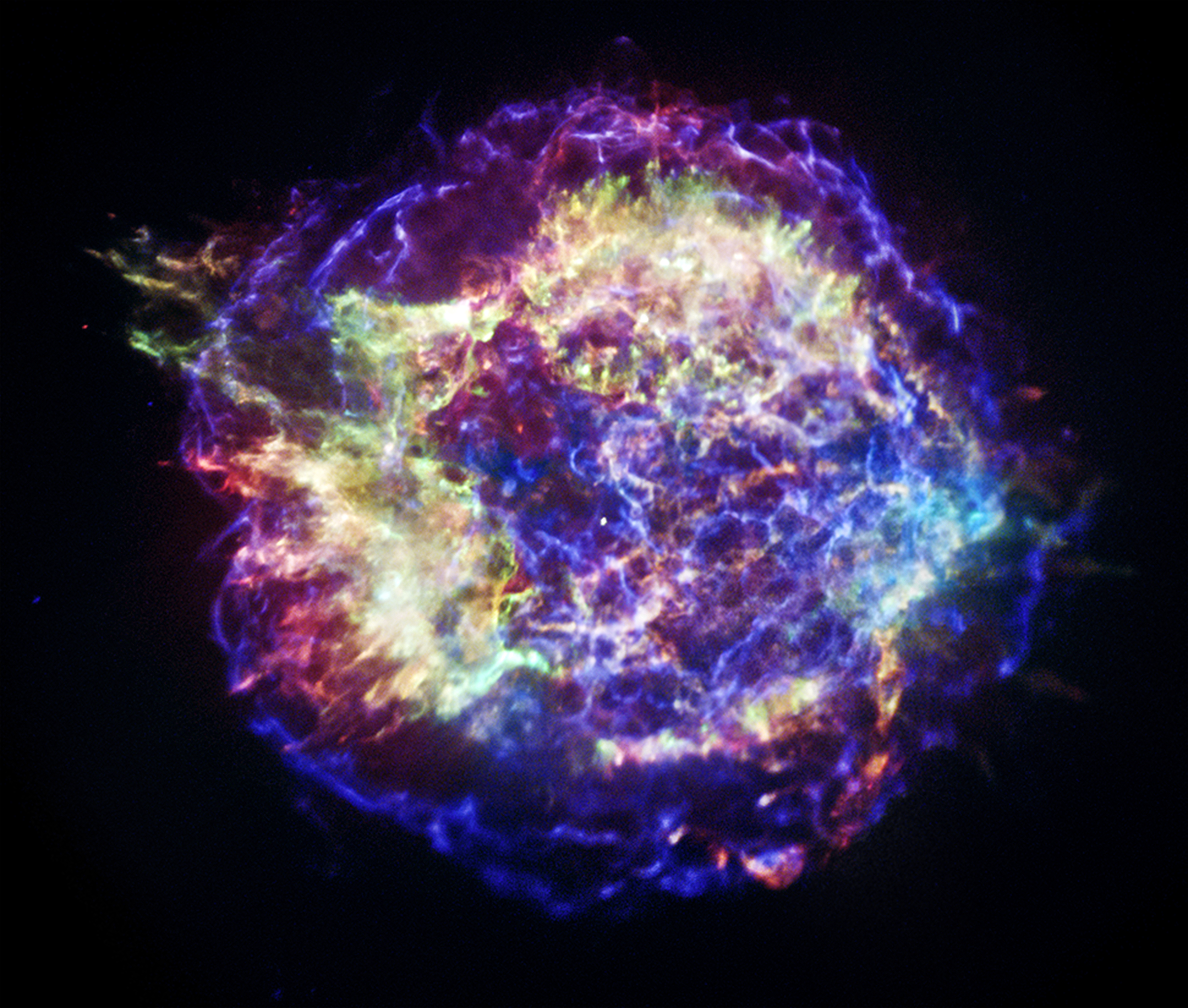
Cassiopeia A: Exploring the Third Dimension of Cassiopeia A

 Cassiopeia A - Cas A
Credit: NASA/CXC/SAO
JPEG (754.9 kb) - Large JPEG (4.9 MB) - Tiff (14.6 MB)
 More Images
 View on the Sky (WWT)
 
One of the most famous objects in the sky - the Cassiopeia A supernova remnant - will be on display like never before, thanks to NASA's Chandra X-ray Observatory and a new project from the Smithsonian Institution. A new three-dimensional (3D) viewer, being unveiled this week, will allow users to interact with many one-of-a-kind objects from the Smithsonian as part of a large-scale effort to digitize many of the Institutions objects and artifacts.

Scientists have combined data from Chandra, NASA's Spitzer Space Telescope, and ground-based facilities to construct a unique 3D model of the 300-year old remains of a stellar explosion that blew a massive star apart, sending the stellar debris rushing into space at millions of miles per hour. The collaboration with this new Smithsonian 3D project will allow the astronomical data collected on Cassiopeia A, or Cas A for short, to be featured and highlighted in an open-access program -- a major innovation in digital technologies with public, education, and research-based impacts.

To coincide with Cas A being featured in this new 3D effort, a specially-processed version of Chandra's data of this supernova remnant is also being released. This new image shows with better clarity the appearance of Cas A in different energy bands, which will aid astronomers in their efforts to reconstruct details of the supernova process such as the size of the star, its chemical makeup, and the explosion mechanism. The color scheme used in this image is the following: low-energy X-rays are red, medium-energy ones are green, and the highest-energy X-rays detected by Chandra are colored blue.


Cas A is the only astronomical object to be featured in the new Smithsonian 3D project. This and other objects in the collection - including the Wright brothers plane, a 1,600-year-old stone Buddha, a gunboat from the Revolutionary War, and fossil whales from Chile -- were showcased in the Smithsonian X 3D event, taking place on November 13th and 14th at the Smithsonian in Washington, DC. In addition to new state-of-the-art 3D viewer, the public will be able to explore these objects through original videos, online tours, and other supporting materials.

Cas A is the only supernova remnant to date to be modeled in 3D. In order to create this visualization, unique software that links the fields of astrophysics and medical imaging (known as "astronomical medicine") was used. Since its initial release in 2009, the 3D model has proven a rich resource for scientists as well as an effective tool for communicating science to the public. Providing this newly formatted data in an open source framework with finely-tuned contextual materials will greatly broaden awareness and participation for general public, teacher, student and researcher audiences.

NASA's Marshall Space Flight Center in Huntsville, Ala., manages the Chandra program for NASA's Science Mission Directorate in Washington. The Smithsonian Astrophysical Observatory controls Chandra's science and flight operations from Cambridge, Mass.
Fast Facts for Cassiopeia A:


Release Date: November 15, 2013 
Scale Image: is about 8.91 arcmin across (about 29 light years) 
Category: Supernovas & Supernova Remnants
Coordinates (J2000): RA 23h 23m 26.7s | Dec +58° 49' 03.00" 
Constellation: Cassiopeia 
Observation Date: 16 pointings between Jan 2000 and Nov 2010 
Observation Time: 353 hours (14 days, 17 hours). 
Obs. ID: 114, 1952, 4634-4639, 5196, 5319, 5320, 6690, 10935, 10936, 12020, 13177 
Instrument: ACIS 
Also Known As: Cas A 
Color Code: X-ray: Red 0.5-1.5 keV; Green 1.5-2.5; Blue 4.0-6.0 
Distance Estimate: About 11,000 light years 


Hot gas sloshing in a galactic cauldron

Hot gas sloshing in a galactic cauldron
Copyright: E. O’Sullivan & ESA

Galaxies are social beasts that are mostly found in groups or clusters – large assemblies of galaxies that are permeated by even larger amounts of diffuse gas. With temperatures of 10 million degrees or more, the gas in galaxy groups and clusters is hot enough to shine brightly in X-rays and be detected by ESA’s XMM-Newton X-ray observatory.

As galaxies speed through these gigantic cauldrons, they occasionally jumble the gas and forge it into lop-sided shapes. An example is revealed in this composite image of the galaxy group NGC 5044, the brightest group in X-rays in the entire sky.

The group is named after the massive and bright elliptical galaxy at its centre, surrounded by tens of smaller spiral and dwarf galaxies. The galaxies are shown in a combination of optical images from the Digitized Sky Survey with infrared and ultraviolet images from NASA’s WISE and Galex satellites, respectively. Foreground stars are also sprinkled across the image.

The large blue blob shows the distribution of hot gas filling the space between NGC 5044’s galaxies as imaged by XMM-Newton. From the X-ray observations, astronomers can also see the glow of iron atoms that were forged in stellar explosions within the galaxies of the group but streamed beyond. The distribution of iron atoms is shown in purple.

Embedded within the hot gas are clouds of even more energetic plasma that emit radio waves – a reminder of the past activity of a supermassive black hole lurking at the centre of the group. These are the green filament extending from the central galaxy to the lower right and the larger green region to its lower left, which were imaged with the Giant Metrewave Radio Telescope, near Pune in India.

The distribution of the intergalactic gas and its ingredients is asymmetric, with a larger splotch in the upper right part of the image and a smaller one in the lower left.

Astronomers believe that gas in NGC 5044 is sloshing as a consequence of a galaxy that passed through it several millions of years ago. The culprit is the spiral galaxy NGC 5054, which is not visible here, instead hiding beyond its lower left corner.

The transit of NGC 5054 through the centre of the group may have also caused the twisted shape of the radio-bright filament.

This image was first published in the XMM-Newton Image Gallery in October 2013. The analysis is reported in the paper by E. O’Sullivan et al. “The impact of sloshing on the intra-group medium and old radio lobe of NGC 5044.”

Source: ESA


Monday, November 18, 2013

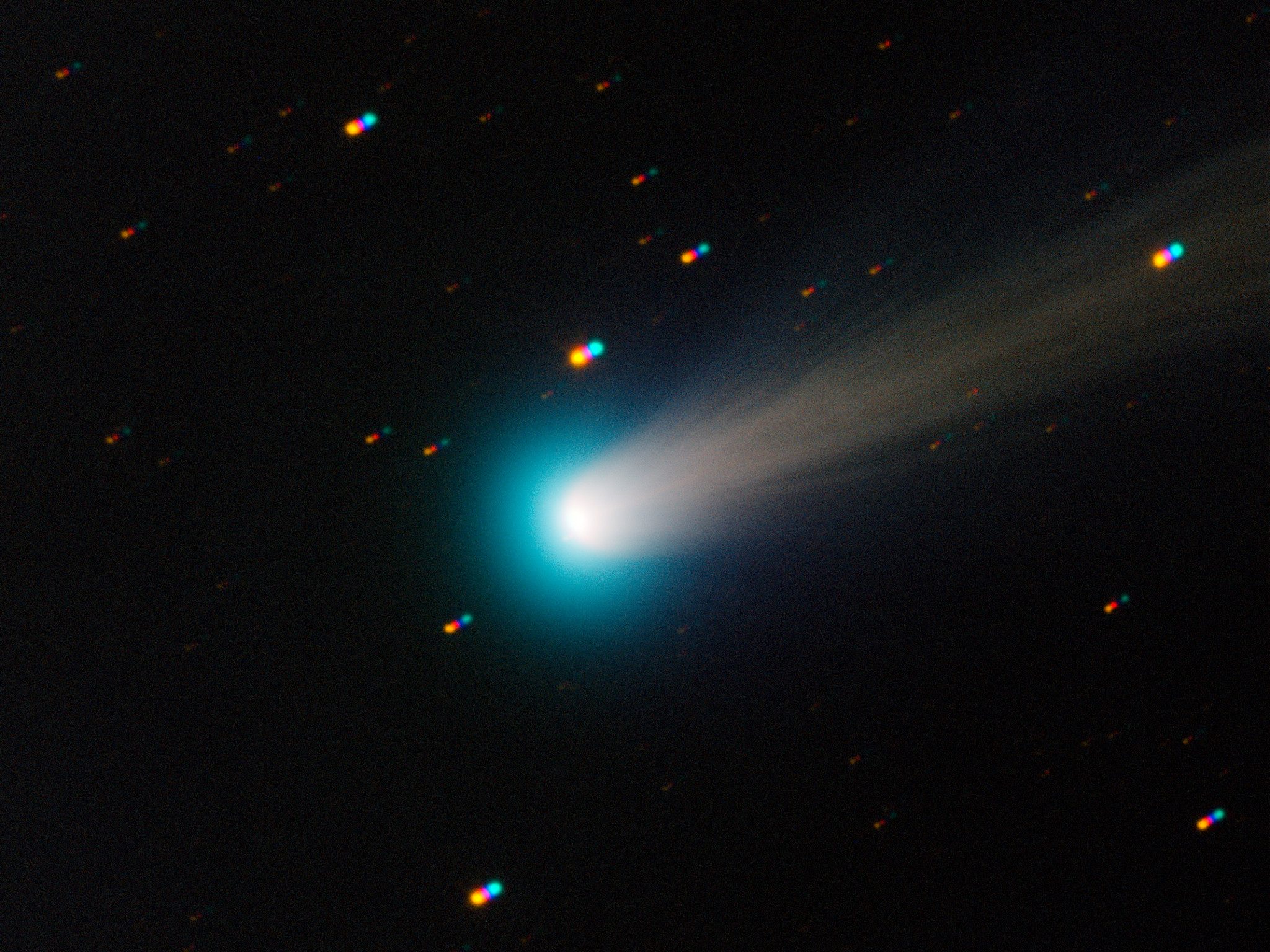
New Image of Comet ISON

Credit: TRAPPIST/E. Jehin/ESO

This new view of Comet C/2012 S1 (ISON) was taken with the TRAPPIST national telescope at ESO's La Silla Observatory on the morning of Friday 15 November 2013. Comet ISON was first spotted in our skies in September 2012, and will make its closest approach to the Sun in late November 2013.

TRAPPIST has been monitoring comet ISON since mid-October, using broad-band filters like those used in this image. It has also been using special narrow-band filters which isolate the emission of various gases, allowing astronomers to count how many molecules of each type are released by the comet.

Comet ISON was fairly quiet until 1 November 2013, when a first outburst doubled the amount of gas emitted by the comet. On 13 November, just before this image was taken, a second giant outburst shook the comet, increasing its activity by a factor of ten. It is now bright enough to be seen with a good pair of binoculars from a dark site, in the morning skies towards the East. Over the past couple of nights, the comet has stabilised at its new level of activity.

These outbursts were caused by the intense heat of the Sun reaching ice in the tiny nucleus of the comet as it zooms toward the Sun, causing the ice to sublimate and throwing large amounts of dust and gas into space. By the time ISON makes its closest approach to the Sun on 28 November (at only 1.2 million kilometres from its surface — just a little less than the diameter of the Sun!), the heat will cause even more ice to sublimate. However, it could also break the whole nucleus down into small fragments, which would completely evaporate by the time the comet moves away from the Sun's intense heat. If ISON survives its passage near the Sun, it could then become spectacularly bright in the morning sky.

The image is a composite of four different 30-second exposures through blue, green, red, and near-infrared filters. As the comet moved in front of the background stars, these appear as multiple coloured dots.

TRAPPIST (TRAnsiting Planets and PlanetesImals Small Telescope) is devoted to the study of planetary systems through two approaches: the detection and characterisation of planets located outside the Solar System (exoplanets), and the study of comets orbiting around the Sun. The 60-cm national telescope is operated from a control room in Liège, Belgium, 12 000 km away.

Links


Source: ESO


WISE Catalog Just Got Wiser

The new AllWISE catalog will bring distant galaxies that were once invisible out of hiding, as illustrated in this image.  › Full image and caption

NASA's WISE mission has released a new and improved atlas and catalog brimming with data on three-quarters of a billion objects detected during two full scans of the sky.

WISE, which stands for Wide-field Infrared Survey Explorer, scanned the entire sky in infrared light in 2010, snapping a dozen pictures of every star and galaxy. By October of that year, the spacecraft ran out of the coolant needed to chill some of its heat-seeking detectors. NASA then decided to fund a second scan of the sky to look for asteroids and comets, in a project called NEOWISE.

But the images from that second sky scan were designed to catch moving asteroids, not stars and galaxies. Now NASA has funded a project called AllWISE to stack up all the WISE images, including those from the second sky scan, thereby doubling exposure times and making new stars and galaxies visible.

"By stacking up the data, we have created a monster database with dozens of individual measurements on every one of the infrared sources we detect," said Ned Wright of UCLA, the principal investigator of WISE.

One new feature of the enhanced WISE images is the ability to search for nearby stars, especially cooler ones that only show up in infrared light. Objects that are closer to us will appear to move across the sky over time in relation to background stars. This is the same reason why the planets march across our night skies while the stars seem to stay still. With the new atlas, astronomers can look at images of the sky taken six months apart; if something jumps across the images, then it must be located nearby and could be a never-before-seen neighbor.

The new catalog will also help with studies of distant galaxies, bringing those that were invisible to us before out of hiding.

"The extra depth of AllWISE lets us see galaxies so distant that their light was emitted in the first half of the history of the universe," said Peter Eisenhardt, the WISE project scientist at NASA's Jet Propulsion Laboratory, Pasadena, Calif.

In addition to AllWISE, NASA decided to wake up the WISE spacecraft again to search for more asteroids (see http://www.jpl.nasa.gov/news/news.php?release=2013-257 ).

The technical details for accessing the AllWISE data are online at: http://wise2.ipac.caltech.edu/docs/release/allwise/ .

NASA's Jet Propulsion Laboratory, Pasadena, Calif., manages and operates the newly activated NEOWISE mission for NASA's Science Mission Directorate. The WISE mission was selected competitively under NASA's Explorers Program managed by the agency's Goddard Space Flight Center in Greenbelt, Md. The science instrument was built by the Space Dynamics Laboratory in Logan, Utah. The spacecraft was built by Ball Aerospace & Technologies Corp. in Boulder, Colo. Science operations and data processing take place at the Infrared Processing and Analysis Center at the California Institute of Technology in Pasadena. Caltech manages JPL for NASA. More information is online at http://www.nasa.gov/wise and http://wise.astro.ucla.edu and http://www.jpl.nasa.gov/wise .


Whitney Clavin (818) 354-4673
Jet Propulsion Laboratory, Pasadena, Calif.

whitney.clavin@jpl.nasa.gov


Friday, November 15, 2013

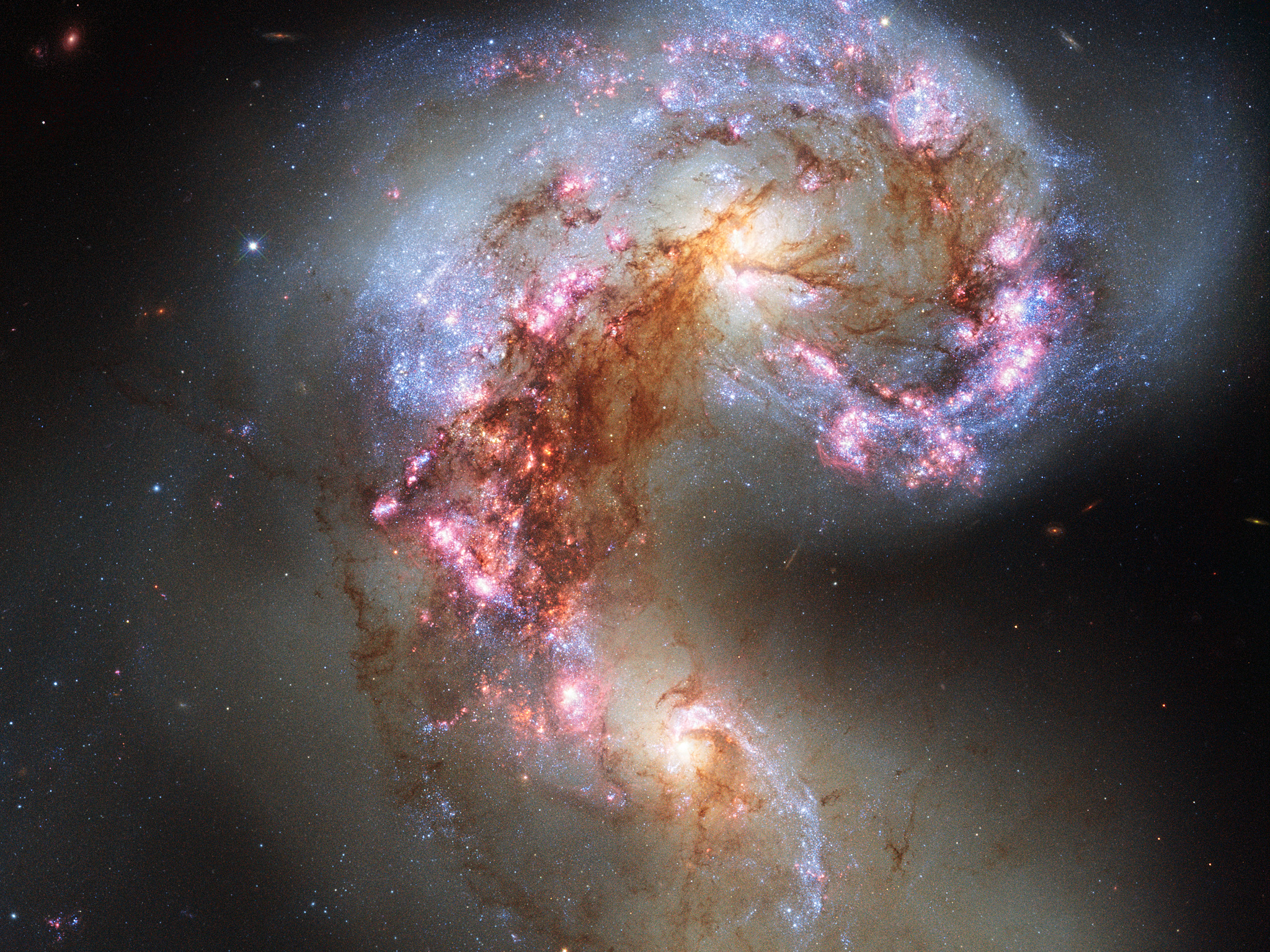
Antennae Galaxies reloaded

Credit: ESA/Hubble & NASA

The NASA/ESA Hubble Space Telescope has snapped the best ever image of the Antennae Galaxies. Hubble has released images of these stunning galaxies twice before, once using observations from its Wide Field and Planetary Camera 2 (WFPC2) in 1997, and again in 2006 from the Advanced Camera for Surveys (ACS). Each of Hubble’s images of the Antennae Galaxies has been better than the last, due to upgrades made during the famous servicing missions, the last of which took place in 2009.

The galaxies — also known as NGC 4038 and NGC 4039 — are locked in a deadly embrace. Once normal, sedate spiral galaxies like the Milky Way, the pair have spent the past few hundred million years sparring with one another. This clash is so violent that stars have been ripped from their host galaxies to form a streaming arc between the two. In wide-field images of the pair the reason for their name becomes clear — far-flung stars and streamers of gas stretch out into space, creating long tidal tails reminiscent of antennae.

This new image of the Antennae Galaxies shows obvious signs of chaos. Clouds of gas are seen in bright pink and red, surrounding the bright flashes of blue star-forming regions — some of which are partially obscured by dark patches of dust. The rate of star formation is so high that the Antennae Galaxies are said to be in a state of starburst, a period in which all of the gas within the galaxies is being used to form stars. This cannot last forever and neither can the separate galaxies; eventually the nuclei will coalesce, and the galaxies will begin their retirement together as one large elliptical galaxy.

This image uses visible and near-infrared observations from Hubble’s Wide Field Camera 3 (WFC3), along with some of the previously-released observations from Hubble’s Advanced Camera for Surveys (ACS).


Thursday, November 14, 2013

Hubble Reveals First Scrapbook Pictures of Milky Way's Formative Years

Galaxies Similar to the Milky Way  
Credit: NASA, ESA, P. van Dokkum (Yale University), 
S. Patel (Leiden University), and the 3D-HST Team 

NASA's Hubble Space Telescope has provided the first visual evidence showing how our home galaxy, the Milky Way, assembled itself into the majestic pinwheel of stars we see today.

Perusing Hubble's deep-sky surveys, astronomers traced 400 galaxies similar to our Milky Way at various stages of construction over a time span of 11 billion years.

"For the first time we have direct images of what the Milky Way looked like in the past," said study co-leader Pieter G. van Dokkum of Yale University in New Haven, Conn. "Of course, we can't see the Milky Way itself in the past. We selected galaxies billions of light-years away that will evolve into galaxies like the Milky Way. By tracing the Milky Way's siblings, we find that our galaxy built up 90 percent of its stars between 11 billion and 7 billion years ago, which is something that has not been measured directly before."

The Hubble telescope's superb resolving power allowed the researchers to study how the structure of the Milky Way changed over time. A scale model of the Milky Way can be imagined by envisioning a fried egg. The egg white is the disk, where the Sun and Earth reside. The yoke represents the central bulge of older stars, home to a supermassive black hole that must have also grown along with the galaxy.

The Hubble images suggest that our galaxy's flat disk and central bulge grew simultaneously into the majestic spiral galaxy of today. "You can see that these galaxies are fluffy and spread out," said study co-leader Shannon Patel, of Leiden University,  the Netherlands. "There is no evidence of a bulge without a disk, around which the disk formed later." Team member Erica Nelson, of Yale University, added: "These galaxies show us that the whole Milky Way grew at the same time, unlike more massive elliptical galaxies, in which the central bulge forms first."

The survey reveals that billions of years ago, the Milky Way was likely a faint, blue, low-mass object containing lots of gas, the fuel for star birth. The blue colors of the Milky Way ancestors are a signpost of rapid star formation. At the peak of star birth, when the universe was about 4 billion years old, the Milky Way-like galaxies were pumping out about 15 stars a year. By comparison, our galaxy today is creating only one star a year.

To identify the far-flung galaxies and study them in detail, the research team used three of the largest Hubble programs, the 3D-HST survey, the Cosmic Assembly Near-infrared Deep Extragalactic Legacy Survey or CANDELS, and the Great Observatories Origins Deep Survey or GOODS. These surveys of the distant universe combined spectroscopy with visible and near-infrared imaging by Hubble's Wide Field Camera 3 and Advanced Camera for Surveys. The research team's analysis involved measuring the galaxies' distances and sizes. The astronomers calculated the mass of each galaxy from its brightness and colors. They selected the galaxies in their census from a catalog they compiled of over 100,000 galaxies. The survey galaxies are consistent with computer models, which show that the bulges, and presumably the black holes, of spiral galaxies at early stages were largely built up at the same time as the disks.

"In these observations, we're capturing most of the evolution of the Milky Way," explained team member Joel Leja of Yale University. "These deep surveys allow us to see the smaller galaxies. In previous observations we could only see the most luminous galaxies in the distant past, and now we can look at more normal galaxies. Hubble gives us the shapes and colors of these spirals as well as their distances from Earth. We also can measure the rates at which each part of the galaxies grew. All of this is difficult to do from the ground." Exploring these galaxies back to their infancy will take the infrared eyes of NASA's James Webb Space Telescope, scheduled to launch in 2018.

The Hubble images also reinforce the idea that major mergers between spiral galaxies were not important in building them up. Computer simulations have shown that mergers would have destroyed the disks. Instead, this census reveals that spirals grew through star formation. This galaxy-formation scenario is different from the way massive elliptical galaxies develop.

"These observations show that there are at least two galaxy-formation tracks," van Dokkum said. "Massive ellipticals form a very dense core early in the universe, including a black hole, presumably, and the rest of the galaxy slowly accretes around it, fueled by mergers with other galaxies. But from our survey we find that galaxies like our Milky Way show a different, more uniform path of growing into the majestic spirals we see today."

The team's results appeared on July 10, 2013, in The Astrophysical Journal Letters. A second paper appears in the Nov. 11 online edition of The Astrophysical Journal.

CONTACT

Donna Weaver / Ray Villard
Space Science Telescope Institute, Baltimore, Md.
410-338-4493 / 410-338-4514

dweaver@stsci.edu / villard@stsci.edu

Pieter van Dokkum

Yale University, New Haven, Conn.

203-432-3000

pieter.vandokkum@yale.edu

Shannon Patel
The Observatories of the Carnegie Institution for Science, Pasadena, Calif.
626-304-0292

patel@carnegiescience.edu


Black hole boasts heavyweight jets

Black hole with disc and jets
Copyright ESA/ATG medialab

Astronomers studying a black hole in our Galaxy with ESA’s XMM-Newton observatory have made a surprising discovery about the cocktail of particles that are ejected from its surroundings. 

Stellar-mass black holes are often found feasting on material from a companion star. Matter flows from the star towards the black hole, circling in a disc around it with a temperature so high that it emits X-rays. 

The black hole can be a fussy eater: instead of swallowing all of the material, it sometimes pushes a fraction of it away in the form of two powerful jets of particles. Because these jets release mass and energy into the surroundings, the black hole has less material to feed on. 

By studying the composition of the jets, we can learn more about the feeding habits of black holes. 

Observations at radio wavelengths have already found that black hole jets contain electrons moving at close to the speed of light. But, until now, it was not clear whether the negative charge of the electrons is complemented by their anti-particles, positrons, or rather by heavier positively-charged particles in the jets, like protons or atomic nuclei. 

In a new study, astronomers have used XMM-Newton to study a black hole binary system called 4U1630–47, well known to show outbursts of X-rays over periods of months and years. 

“In our observations, we found signs of highly ionised nuclei of two heavy elements, iron and nickel,” says María Díaz Trigo of the European Southern Observatory in Munich, Germany, lead author of the paper published in the journal Nature. 

“The discovery came as a surprise – and a good one, since it shows beyond doubt that the composition of black hole jets is much richer than just electrons.” 

The team of astronomers observed 4U1630–47 with XMM-Newton on two occasions in September 2012, and compared the results with near-simultaneous radio observations from the Australia Telescope Compact Array. 

Although the two sets of observations described by Dr Díaz Trigo and collaborators were separated by only a couple of weeks, the results were surprisingly different. 

In the first set of observations, the astronomers detected X-rays from the accretion disc, but did not see anything in radio waves – a sign that the jets were not active. 

But in the second set, they detected the source both in X-rays and radio waves, so they knew the jets had been reactivated in the meantime. 

When scrutinising the X-ray data from the second batch of observations, the astronomers also found tell-tale signs of iron nuclei moving both towards and away from XMM-Newton, providing confirmation that the ions belong to the two jets, pointing in opposite directions. 

The astronomers also found evidence of nickel nuclei in the jet pointing towards XMM-Newton. 

“From these ‘fingerprints’ of iron and nickel, we could show that the speed of the jet is very high, about two-thirds of the speed of light,” says co-author James Miller-Jones from the Curtin University node of the International Centre for Radio Astronomy Research in Perth, Australia. 

“Moreover, the presence of heavy atomic nuclei in black hole jets means that mass and energy are being carried away from the black hole in much larger amounts than we previously thought, which may have an impact on the mechanism and rate by which the black hole accretes matter,” adds co-author Simone Migliari from the University of Barcelona, Spain. 

This is the first time that heavy nuclei have been detected in the jets of a relatively typical stellar-mass black hole. 

There is only one other X-ray binary that shows similar signatures from atomic nuclei in its jets – a source known as SS 433. This black hole system, however, is characterised by an unusually high accretion rate, which makes it difficult to compare its properties to those of more ordinary black holes. 

The new observations of 4U1630–47 will help astronomers learn more about the physical mechanism that launches jets from a black hole’s accretion disc. 

“While we now know a great deal about black holes and what happens around them, the formation of jets is still a big puzzle, so this observation is a major step forward in understanding this fascinating phenomenon,” says Norbert Schartel, ESA's XMM-Newton Project Scientist. 

“Baryons in the relativistic jets of the stellar-mass black hole candidate 4U1630–47,” by M. Díaz Trigo et al. is published in Nature, 14 November 2013. 


For further information, please contact:
 
Markus Bauer 


ESA Science and Robotic Exploration Communication Officer


Tel: +31 71 565 6799


Mob: +31 61 594 3 954


Email:
markus.bauer@esa.int


María Díaz Trigo
European Southern Observatory, Munich, Germany
Email:
mdiaztri@eso.org

Norbert Schartel


XMM-Newton Project Scientist


Tel: +34 91 8131 184


Email:
Norbert.Schartel@sciops.esa.int

Source: ESA


Wednesday, November 13, 2013

Young Stars Paint Spectacular Stellar Landscape

The star cluster NGC 3572 and its dramatic surroundings 
The star cluster NGC 3572 in the constellation of Carina

Wide-field view of the sky around the star cluster NGC 3572 


********************************

Videos

Zooming in on the star cluster NGC 3572

A close look at the star cluster NGC 3572 and its dramatic surroundings


Astronomers at ESO have captured the best image so far of the curious clouds around the star cluster NGC 3572. This new image shows how these clouds of gas and dust have been sculpted into whimsical bubbles, arcs and the odd features known as elephant trunks by the stellar winds flowing from this gathering of hot young stars. The brightest of these cluster stars are much heavier than the Sun and will end their short lives as supernova explosions.

Most stars do not form alone, but with many siblings that are created at about the same time from a single cloud of gas and dust. NGC 3572, in the southern constellation of Carina (The Keel), is one of these clusters. It contains many hot young blue-white stars that shine brightly and generate powerful stellar winds that tend to gradually disperse the remaining gas and dust from their surroundings. The glowing gas clouds and accompanying cluster of stars are the subjects of a new picture from the Wide Field Imager on the MPG/ESO 2.2-metre telescope at ESO’s La Silla Observatory in Chile [1].

In the lower part of the image a big chunk of the molecular cloud that gave birth to these stellar youngsters still can be seen. It has been dramatically affected by the powerful radiation coming from its smoldering offspring. The radiation not only makes it glow with a characteristic hue, but also sculpts the clouds into amazingly convoluted shapes, including bubbles, arcs and the dark columns that astronomers call elephant trunks [2].

A strange feature captured in this image is the tiny ring-like nebula located slightly above the centre of the image. Astronomers still are a little uncertain about the origin of this curious feature. It is probably a dense leftover from the molecular cloud that formed the cluster, perhaps a bubble created around a very bright hot star. But some authors have considered that it may be some kind of oddly shaped planetary nebula — the remnants of a dying star [3].

Stars born inside a cluster may be siblings, but they are not twins. They have almost the same age, but differ in size, mass, temperature, and colour. The course of a star's life is determined largely by its mass, so a given cluster will contain stars in various stages of their lives, giving astronomers a perfect laboratory in which they can study how stars evolve [4].

These gangs of young stars stick together for a relatively short time, typically tens or hundreds of millions of years. They are gradually disbanded by gravitational interactions, but also because the most massive stars are short-lived, burning through their fuel quickly and ultimately ending their lives in violent supernova explosions, thus contributing to the dispersion of the remaining gas and stars in the cluster.

Notes

[1] The data used to create this picture were obtained by a team led by ESO astronomer Giacomo Beccari. They used the power of the Wide Field Imager to study the physics of protoplanetary discs in the young stars in NGC 3572. They were surprised to find that this cluster contains stars older than ten million years that are still unambiguously undergoing mass accretion and, therefore, must still be surrounded by discs. This proves that the star formation in NGC 3572 has been ongoing for at least 10–20 million years and would imply that the planet formation process could proceed on much longer timescales than previously thought.

[2] The most famous examples of such elephant trunk features are the Pillars of Creation in the Eagle Nebula, which were captured in exquisite detail by the NASA/ESA Hubble Space Telescope (http://www.spacetelescope.org/images/opo9544a/).

[3] When a Sun-like star uses up all its fuel, it puffs its outer layers off into the surrounding space. The hot remains of the star continue to shine strongly into this material, creating beautiful but short-lived glowing shells of ionised gas and forming a so-called planetary nebula. This historical name is only related to the appearance of the object in a small telescope, not to a physical relation to a planet.

[4] The lifetime of a star depends dramatically on how heavy it is. A star fifty times more massive than the Sun will have a life of only a few million years, the Sun will live for about ten billion years whereas low-mass red dwarf stars can live for trillions of years — much longer than the current age of the Universe.

More information

ESO is the foremost intergovernmental astronomy organisation in Europe and the world’s most productive ground-based astronomical observatory by far. It is supported by 15 countries: Austria, Belgium, Brazil, the Czech Republic, Denmark, France, Finland, Germany, Italy, the Netherlands, Portugal, Spain, Sweden, Switzerland and the United Kingdom. ESO carries out an ambitious programme focused on the design, construction and operation of powerful ground-based observing facilities enabling astronomers to make important scientific discoveries. ESO also plays a leading role in promoting and organising cooperation in astronomical research. ESO operates three unique world-class observing sites in Chile: La Silla, Paranal and Chajnantor. At Paranal, ESO operates the Very Large Telescope, the world’s most advanced visible-light astronomical observatory and two survey telescopes. VISTA works in the infrared and is the world’s largest survey telescope and the VLT Survey Telescope is the largest telescope designed to exclusively survey the skies in visible light. ESO is the European partner of a revolutionary astronomical telescope ALMA, the largest astronomical project in existence. ESO is currently planning the 39-metre European Extremely Large optical/near-infrared Telescope, the E-ELT, which will become “the world’s biggest eye on the sky”.

Links

Contacts

Richard Hook
ESO Public Information Officer
Garching bei München, Germany
Tel: +49 89 3200 6655
Cell: +49 151 1537 3591
Email:
rhook@eso.org

Giacomo Beccari
ESO
Santiago, Chile
Tel: +56 (0) 2 2463 3096
Email:
gbeccari@eso.org

Tuesday, November 12, 2013

NASA Cassini Spacecraft Provides New View of Saturn and Earth

On July 19, 2013, in an event celebrated the world over, NASA's Cassini spacecraft slipped into Saturn's shadow and turned to image the planet, seven of its moons, its inner rings -- and, in the background, our home planet, Earth. Image Credit: NASA/JPL-Caltech/SSI. Full image and caption

This collage includes about 1,600 images submitted by members of the public as part of the NASA Cassini mission's "Wave at Saturn" campaign. Image Credit: NASA/JPL-Caltech/SSI. Full image and caption

NASA has released a natural-color image of Saturn from space, the first in which Saturn, its moons and rings, and Earth, Venus and Mars, all are visible.

The new panoramic mosaic of the majestic Saturn system taken by NASA's Cassini spacecraft, which shows the view as it would be seen by human eyes, was unveiled at the Newseum in Washington on Tuesday.

Cassini's imaging team processed 141 wide-angle images to create the panorama. The image sweeps 404,880 miles (651,591 kilometers) across Saturn and its inner ring system, including all of Saturn's rings out to the E ring, which is Saturn's second outermost ring. For perspective, the distance between Earth and our moon would fit comfortably inside the span of the E ring.

"In this one magnificent view, Cassini has delivered to us a universe of marvels," said Carolyn Porco, Cassini's imaging team lead at the Space Science Institute in Boulder, Colo. "And it did so on a day people all over the world, in unison, smiled in celebration at the sheer joy of being alive on a pale blue dot."

The mosaic is part of Cassini's "Wave at Saturn" campaign, where on July 19, people for the first time had advance notice a spacecraft was taking their picture from planetary distances. NASA invited the public to celebrate by finding Saturn in their part of the sky, waving at the ringed planet and sharing pictures over the Internet.

An annotated version of the Saturn system mosaic labels points of interest. Earth is a bright blue dot to the lower right of Saturn. Venus is a bright dot to Saturn’s upper left. Mars also appears, as a faint red dot, above and to the left of Venus. Seven Saturnian moons are visible, including Enceladus on the left side of the image. Zooming into the image reveals the moon and the icy plume emanating from its south pole, supplying fine, powder-sized icy particles that make up the E ring.

The E ring shines like a halo around Saturn and the inner rings. Because it is so tenuous, it is best seen with light shining from behind it, when the tiny particles are outlined with light because of the phenomenon of diffraction. Scientists who focus on Saturn's rings look for patterns in optical bonanzas like these. They use computers to increase dramatically the contrast of the images and change the color balance, for example, to see evidence for material tracing out the full orbits of the tiny moons Anthe and Methone for the first time. 

“This mosaic provides a remarkable amount of high-quality data on Saturn’s diffuse rings, revealing all sorts of intriguing structures we are currently trying to understand," said Matt Hedman, a Cassini participating scientist at the University of Idaho in Moscow. "The E ring in particular shows patterns that likely reflect disturbances from such diverse sources as sunlight and Enceladus’ gravity.”

Cassini does not attempt many images of Earth because the sun is so close to our planet that an unobstructed view would damage the spacecraft's sensitive detectors. Cassini team members looked for an opportunity when the sun would slip behind Saturn from Cassini's point of view. A good opportunity came on July 19, when Cassini was able to capture a picture of Earth and its moon, and this multi-image, backlit panorama of the Saturn system.

"With a long, intricate dance around the Saturn system, Cassini aims to study the Saturn system from as many angles as possible," said Linda Spilker, Cassini project scientist based at NASA's Jet Propulsion Laboratory in Pasadena, Calif. "Beyond showing us the beauty of the Ringed Planet, data like these also improve our understanding of the history of the faint rings around Saturn and the way disks around planets form -- clues to how our own solar system formed around the sun."

Launched in 1997, Cassini has explored the Saturn system for more than nine years. NASA plans to continue the mission through 2017, with the anticipation of many more images of Saturn, its rings and moons, as well as other scientific data.

The Cassini-Huygens mission is a cooperative project of NASA, the European Space Agency and the Italian Space Agency. JPL, a division of the California Institute of Technology, Pasadena, manages the mission for NASA's Science Mission Directorate in Washington. JPL designed, developed and assembled the Cassini orbiter and its two onboard cameras. The imaging team is based at the Space Science Institute, Boulder, Colo.


A new version of the collage of photos shared by the public, with the Saturn system as backdrop, is available at: http://www.jpl.nasa.gov/spaceimages/details.php?id=PIA17679.

More information about Cassini is available at: http://www.nasa.gov/cassini and http://saturn.jpl.nasa.gov .

Jia-Rui C. Cook 818-354-0850
Jet Propulsion Laboratory, Pasadena, Calif.

jccook@jpl.nasa.gov

Dwayne Brown 202-358-1726
NASA Headquarters, Washington                   
                                            
dwayne.c.brown@nasa.gov

Steve Mullins 720-974-5859
Space Science Institute, Boulder, Colo.

media@ciclops.org

Monday, November 11, 2013

Spitzer and ALMA Reveal a Star's Bubbly Birth

Combined observations from NASA's Spitzer Space Telescope and the newly completed Atacama Large Millimeter/submillimeter Array (ALMA) in Chile have revealed the throes of stellar birth, as never before, in the well-studied object known as HH 46/47. Image credit: NASA/JPL-Caltech/ALMA.  › Full image and caption
 
It's a bouncing baby . . . star! Combined observations from NASA's Spitzer Space Telescope and the newly completed Atacama Large Millimeter/submillimeter Array (ALMA) in Chile have revealed the throes of stellar birth as never before in the well-studied object known as HH 46/47.

Herbig-Haro (HH) objects form when jets shot out by newborn stars collide with surrounding material, producing small, bright, nebulous regions. To our eyes, the dynamics within many HH objects are obscured by enveloping gas and dust. But the infrared and submillimeter wavelengths of light seen by Spitzer and ALMA, respectively, pierce the dark cosmic cloud around HH 46/47 to let us in on the action.

The Spitzer observations show twin supersonic jets emanating from the central star that blast away surrounding gas and set it alight into two bubbly lobes. HH 46/47 happens to sit on the edge of its enveloping cloud in such a way that the jets pass through two differing cosmic environments. The rightward jet, heading into the cloud, is plowing through a "wall" of material, while the leftward jet's path out of the cloud is relatively unobstructed, passing through less material. This orientation serves scientists well by offering a handy compare-and-contrast setup for how the outflows from a developing star interact with their surroundings.

"Young stars like our sun need to remove some of the gas collapsing in on them to become stable, and HH 46/47 is an excellent laboratory for studying this outflow process," said Alberto Noriega-Crespo, a scientist at the Infrared Processing and Analysis Center at the California Institute of Technology, Pasadena, Calif. "Thanks to Spitzer, the HH 46/47 outflow is considered one of the best examples of a jet being present with an expanding bubble-like structure."

Noriega-Crespo led the team that began studying HH 46/47 with Spitzer nearly 10 years ago when the telescope first began observing the heavens. Now, using a new image processing technique developed in the past few years, he and his colleagues have been able to render HH 46/47 in higher resolution.

Meanwhile, the fresh views of HH 46/47 by ALMA have revealed that the gas in the lobes is expanding faster than previously thought. This faster expansion has an influence on the overall amount of turbulence in the gaseous cloud that originally spawned the star. In turn, the extra turbulence could have an impact on whether and how other stars might form in this gaseous, dusty, and thus fertile, ground for star-making.

A team led by Hector Arce at Yale University, New Haven, Conn., carried out the ALMA observations and their analysis was published recently in The Astrophysical Journal.

NASA's Jet Propulsion Laboratory, Pasadena, Calif., manages the Spitzer Space Telescope mission for NASA's Science Mission Directorate, Washington. Science operations are conducted at the Spitzer Science Center at the California Institute of Technology in Pasadena. Spacecraft operations are based at Lockheed Martin Space Systems Company, Littleton, Colorado. Data are archived at the Infrared Science Archive housed at the Infrared Processing and Analysis Center at Caltech. Caltech manages JPL for NASA. For more information about Spitzer, visit http://spitzer.caltech.edu and http://www.nasa.gov/spitzer.

The Atacama Large Millimeter/submillimeter Array (ALMA), an international astronomy facility, is a partnership of Europe, North America and East Asia in cooperation with the Republic of Chile.


Whitney Clavin 818-354-4673
Jet Propulsion Laboratory, Pasadena, Calif.

whitney.clavin@jpl.nasa.gov


Friday, November 08, 2013

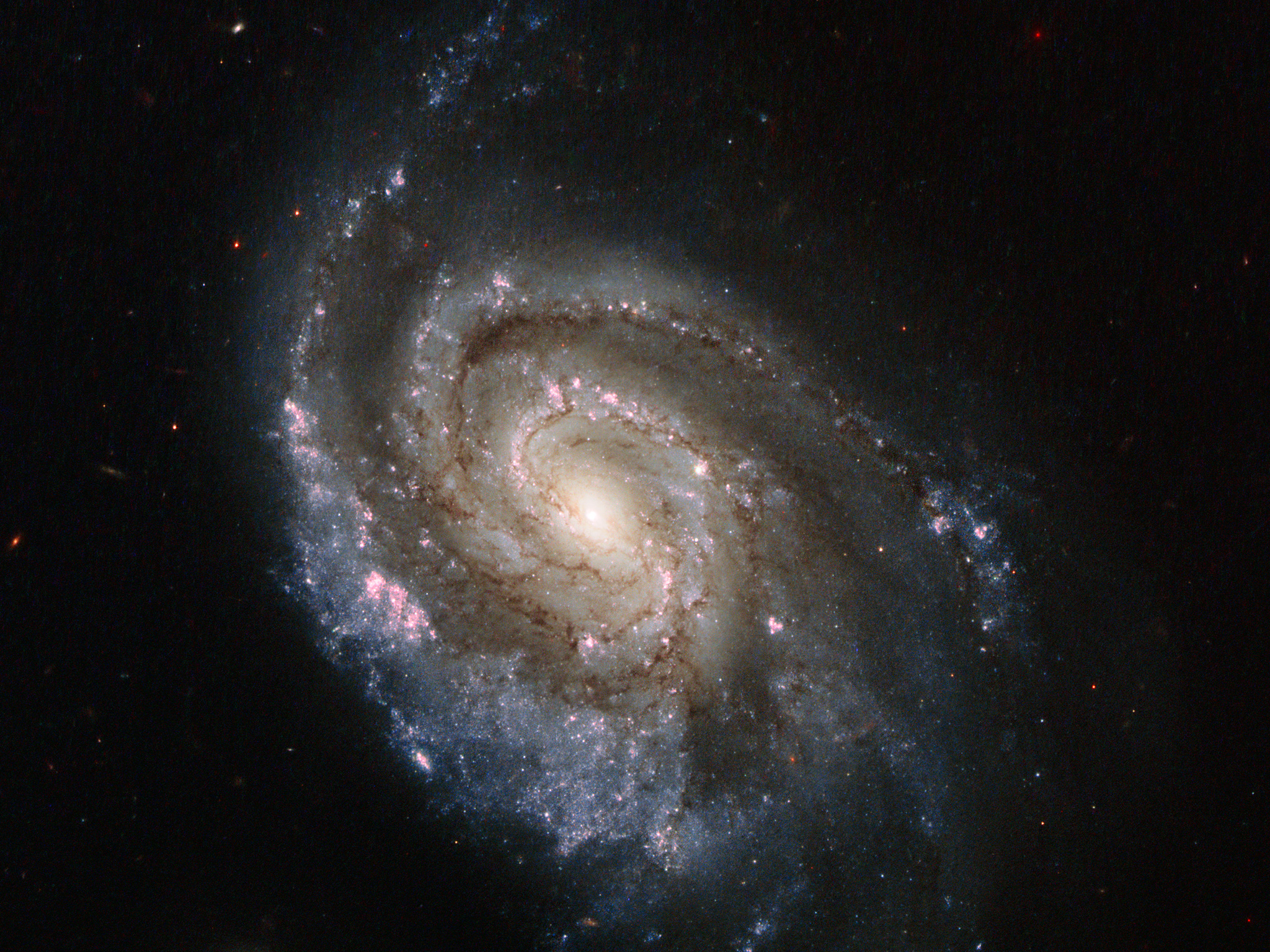
Stellar explosions in NGC 6984

Credit: ESA/Hubble & NASA

Supernovae are intensely bright objects. They are formed when a star reaches the end of its life with a dramatic explosion, expelling most of its material out into space. The subject of this new Hubble image, spiral galaxy NGC 6984, played host to one of these explosions back in 2012, known as SN 2012im. Now, another star has exploded, forming supernova SN 2013ek — visible in this image as the prominent, star-like bright object just slightly above and to the right of the galaxy's centre.

SN 2012im is known as a Type Ic supernova, while the more recent SN 2013ek is a Type Ib. Both of these types are caused by the core collapse of massive stars that have shed — or lost — their outer layers of hydrogen. Type Ic supernovae are thought to have lost more of their outer envelope than Type Ib, including a layer of helium.

The observations that make up this new image were taken on 19 August 2013, and aimed to pinpoint the location of this new explosion more precisely. It is so close to where SN 2012im was spotted that the two events are thought to be linked; the chance of two completely independent supernovae so close together and of the same class exploding within one year of one another is a very unlikely event. It was initially suggested that SN 2013ek may in fact be SN 2012im flaring up again, but further observations support the idea that they are separate supernovae — although they may be closely related in some as-yet-unknown way.


Black Holes Don't Make a Big Splash

Merging black holes ripple space and time in this artist's concept. Pulsar-timing arrays -- networks of the pulsing cores of dead stars -- are one strategy for detecting these ripples, or gravitational waves, thought to be generated when two supermassive black holes merge into one. Image credit: Swinburne Astronomy Productions.  › Larger image

Throughout our universe, tucked inside galaxies far, far away, giant black holes are pairing up and merging. As the massive bodies dance around each other in close embraces, they send out gravitational waves that ripple space and time themselves, even as the waves pass right through our planet Earth.

Scientists know these waves, predicted by Albert Einstein's theory of relativity, exist but have yet to directly detect one. In the race to catch the waves, one strategy -- called pulsar-timing arrays -- has reached a milestone not through detecting any gravitational waves, but in revealing new information about the frequency and strength of black hole mergers.

"We expect that many gravitational waves are passing through us all the time, and now we have a better idea of the extent of this background activity," said Sarah Burke-Spolaor, co-author of a new Science paper published Oct. 18, which describes research she contributed to while based at NASA's Jet Propulsion Laboratory in Pasadena, Calif. Burke-Spolaor is now at the California Institute of Technology in Pasadena.

Gravitational waves, if detected, would reveal more information about black holes as well as one of the four fundamental forces of nature: gravity.

The team's inability to detect any gravitational waves in the recent search actually has its own benefits, because it reveals new information about supermassive black hole mergers -- their frequency, distance from Earth and masses. One theory of black hole growth to hit the theorists' cutting room floors had stated that mergers alone are responsible for black holes gaining mass.

The results come from the Commonwealth Scientific and Industrial Research Organization's (CSIRO) Parkes radio telescope in eastern Australia. The study was jointly led by Ryan Shannon of CSIRO, and Vikram Ravi, of the University of Melbourne and CSIRO.

Pulsar-timing arrays are designed to catch the subtle gravitational waves using telescopes on the ground, and spinning stars called pulsars. Pulsars are the burnt-out cores of exploded stars that send out beams of radio waves like lighthouse beacons. The timing of the pulsars' rotation is so precise that researchers say they are akin to atomic clocks.

When gravitational waves pass through an array of multiple pulsars, 20 in the case of the new study, they set the pulsars bobbing like buoys. Researchers recording the radio waves from the pulsars can then piece together the background hum of waves.

"The gravitational waves cause the space between Earth and pulsars to stretch and squeeze," said Burke-Spolaor.

The new study used the Parkes Pulsar Timing Array, which got its start in the 1990s. According to the research team, the array, at its current sensitivity, will be able to detect a gravitational wave within 10 years.

Researchers at JPL are currently developing a similar precision pulsar-timing capability for NASA's Deep Space Network, a system of large dish antennas located around Earth that tracks and communicates with deep-space spacecraft. During gaps in the network's tracking schedules, the antennas can be used to precisely measure the timing of pulsars' radio waves. Because the Deep Space Network's antennas are distributed around the globe, they can see pulsars across the whole sky, which improves sensitivity to gravitational waves.

"Right now, the focus in the pulsar-timing array communities is to develop more sensitive technologies and to establish long-term monitoring programs of a large ensemble of the pulsars," said Walid Majid, the principal investigator of the Deep Space Network pulsar-timing program at JPL. "All the strategies for detecting gravitational waves, including LIGO [Laser Interferometer Gravitational-Wave Observatory], are complementary, since each technique is sensitive to detection of gravitational waves at very different frequencies. While some might characterize this as a race, in the end, the goal is to detect gravitational waves, which will usher in the beginning of gravitational wave astronomy. That is the real exciting part of this whole endeavor."

The ground-based LIGO observatory is based in Louisiana and Washington. It is a joint project of Caltech and the Massachusetts Institute of Technology, Cambridge, Mass., with funding from the National Science Foundation. The European Space Agency is developing the space-based LISA Pathfinder (Laser Interferometer Space Antenna), a proof-of-concept mission for a future space observatory to detect gravitational waves. LIGO, LISA and pulsar-timing arrays would all detect different frequencies of gravitational waves and thus are sensitive to various types of merger events.

A video about the new Parkes findings from Swinburne University of Technology in Melbourne, Australia, is online at: http://astronomy.swin.edu.au/production/blackhole/ .

Caltech manages JPL for NASA.

Whitney Clavin 818-354-4673
Jet Propulsion Laboratory, Pasadena, Calif.
whitney.clavin@jpl.nasa.gov

Thursday, November 07, 2013

When is a comet not a comet?

Hubble views extraordinary multi-tailed asteroid P/2013 P5

Labelled view of extraordinary multi-tailed asteroid P/2013 P5
Schematic of active asteroid P/2013 P5

Hubble astronomers observe bizarre six-tailed asteroid

Astronomers using the NASA/ESA Hubble Space Telescope have observed a unique and baffling object in the asteroid belt that looks like a rotating lawn sprinkler or badminton shuttlecock. While this object is on an asteroid-like orbit, it looks like a comet, and is sending out tails of dust into space.

Normal asteroids appear as tiny points of light. But this asteroid, designated P/2013 P5, has six comet-like tails of dust radiating from it like the spokes on a wheel. It was first spotted in August of this year as an unusually fuzzy-looking object by astronomers using the Pan-STARRS 1 telescope in Hawaii [1].

Because nothing like this has ever been seen before, astronomers are scratching their heads to find an adequate explanation for its mysterious appearance.

The multiple tails were discovered in Hubble images taken on 10 September 2013. When Hubble returned to the asteroid on 23 September, its appearance had totally changed. It looked as if the entire structure had swung around.

"We were literally dumbfounded when we saw it," said lead investigator David Jewitt of the University of California at Los Angeles, USA. "Even more amazingly, its tail structures change dramatically in just 13 days as it belches out dust. That also caught us by surprise. It's hard to believe we're looking at an asteroid."

One explanation for the odd appearance is that the asteroid's rotation rate increased to the point where its surface started flying apart, ejecting dust in episodic eruptions that started last spring. The team rules out an asteroid impact because a lot of dust would have been blasted into space all at once, whereas P5 has ejected dust intermittently over a period of at least five months [2].

Careful modelling by team member Jessica Agarwal of the Max Planck Institute for Solar System Research in Lindau, Germany, showed that the tails could have been formed by a series of impulsive dust-ejection events [3]. Radiation pressure from the Sun smears out the dust into streamers. "Given our observations and modelling, we infer that P/2013 P5 might be losing dust as it rotates at high speed," says Agarwal. "The Sun then drags this dust into the distinct tails we're seeing."

The asteroid could possibly have been spun up to a high speed as pressure from the Sun's light exerted a torque on the body. If the asteroid's spin rate became fast enough, Jewitt said, the asteroid's weak gravity would no longer be able to hold it together. Dust might avalanche down towards the equator, and maybe shatter and fall off, eventually drifting into space to make a tail. So far, only a small fraction of the main mass, perhaps 100 to 1000 tonnes of dust, has been lost. The asteroid is thousands of times more massive, with a radius of up to 240 metres.

Follow-up observations may show whether the dust leaves the asteroid in the equatorial plane, which would be quite strong evidence for a rotational breakup. Astronomers will also try to measure the asteroid's true spin rate.

Jewitt's interpretation implies that rotational breakup may be a common phenomenon in the asteroid belt; it may even be the main way in which small asteroids "die" [4]. "In astronomy, where you find one, you eventually find a whole bunch more," Jewitt said. "This is just an amazing object to us, and almost certainly the first of many more to come."

The paper from Jewitt's team appears online in the 7 November issue of The Astrophysical Journal Letters.

Notes

[1] The comet was discovered by Micheli et al. on 27 August 2013. It was spotted in observations from 18 August 2013. The discovery was announced in a Minor Planet Electronic Circular.

[2] Agarwal calculated that the first ejection event occurred on 15 April, and the last one on 4 September 2013. Other eruptions occurred on 18 July, 24 July, 8 August, and 26 August 2013.

[3] A less likely option is that this emission is a result of water ice sublimating. Water ice can survive within the asteroid belt, although only at the outskirts or if buried deep enough within a large enough asteroid to be shielded. However, P5 is likely made of metamorphic rocks, making it incapable of holding ice in the same way that comets do. This, coupled with P5's orbit and its very small size, makes it very unlikely that its mass loss would be due to ice sublimation.

[4] This is not the first time that Hubble has observed a strange asteroid. In 2010, Hubble spotted a strange X-shaped asteroid (heic1016). However, unlike P/2013 P5, this was thought to have been formed by a collision. Later that year astronomers observed asteroid (596) Scheila, an object with a tail that was surrounded by a C-shaped cloud of dust (opo1113a). Again, this asteroid was thought to be the result of a collision between Scheila and a much smaller body — only the second time that such an event has been spotted.

Notes for editors


The Hubble Space Telescope is a project of international cooperation between ESA and NASA.


The international team of astronomers in the Hubble study consists of D. Jewitt (UCLA, USA), J. Agarwal (Max Planck Institute for Solar System Research, Germany), H. Weaver (The Johns Hopkins University Applied Physics Laboratory, USA), M. Mutchler (STScI, USA), and S. Larson (University of Arizona, USA). The paper, entitled “The Extraordinary Multi-Tailed Main-Belt Comet P/2013 P5”, is published in The Astrophysical Journal Letters.

More information

Image credit: NASA, ESA, D. Jewitt (University of California, Los Angeles), J. Agarwal (Max Planck Institute for Solar System Research), H. Weaver (Johns Hopkins University Applied Physics Laboratory), M. Mutchler (STScI), and S. Larson (University of Arizona)

Links

Contacts

David Jewitt
University of California at Los Angeles
Los Angeles, USA
Tel: +1-310-825-2521
Email:
jewitt@ucla.edu

Nicky Guttridge
ESA/Hubble, Public Information Officer
Garching bei München, Germany
Tel: +49-89-3200-6855
Cell: +44 7512 318322
Email:
nguttrid@partner.eso.org