Videos

Astronomers have found a direct link between the explosive deaths of massive stars and the formation of the
most compact and enigmatic objects in the Universe — black holes and
neutron stars. With the help of the European Southern Observatory’s Very
Large Telescope (ESO’s VLT) and ESO’s New Technology Telescope (NTT),
two teams were able to observe the aftermath of a supernova explosion in
a nearby galaxy, finding evidence for the mysterious compact object it
left behind.
When massive stars reach the end of their lives, they collapse under their own gravity so rapidly that a violent explosion known as a supernova ensues. Astronomers believe that, after all the excitement of the explosion, what is left is the ultra-dense core, or compact remnant, of the star. Depending on how massive the star is, the compact remnant will be either a neutron star — an object so dense that a teaspoon of its material would weigh around a trillion kilograms here on Earth — or a black hole — an object from which nothing, not even light, can escape.
Astronomers have found many clues hinting at this chain of events in the past, such as finding a neutron star within the Crab Nebula, the gas cloud left behind when a star exploded nearly a thousand years ago. But they had never before seen this process happen in real time, meaning that direct evidence of a supernova leaving behind a compact remnant has remained elusive. “In our work, we establish such a direct link,” says Ping Chen, a researcher at the Weizmann Institute of Science, Israel, and lead author of a study published today in Nature and presented at the 243rd American Astronomical Society meeting in New Orleans, USA.
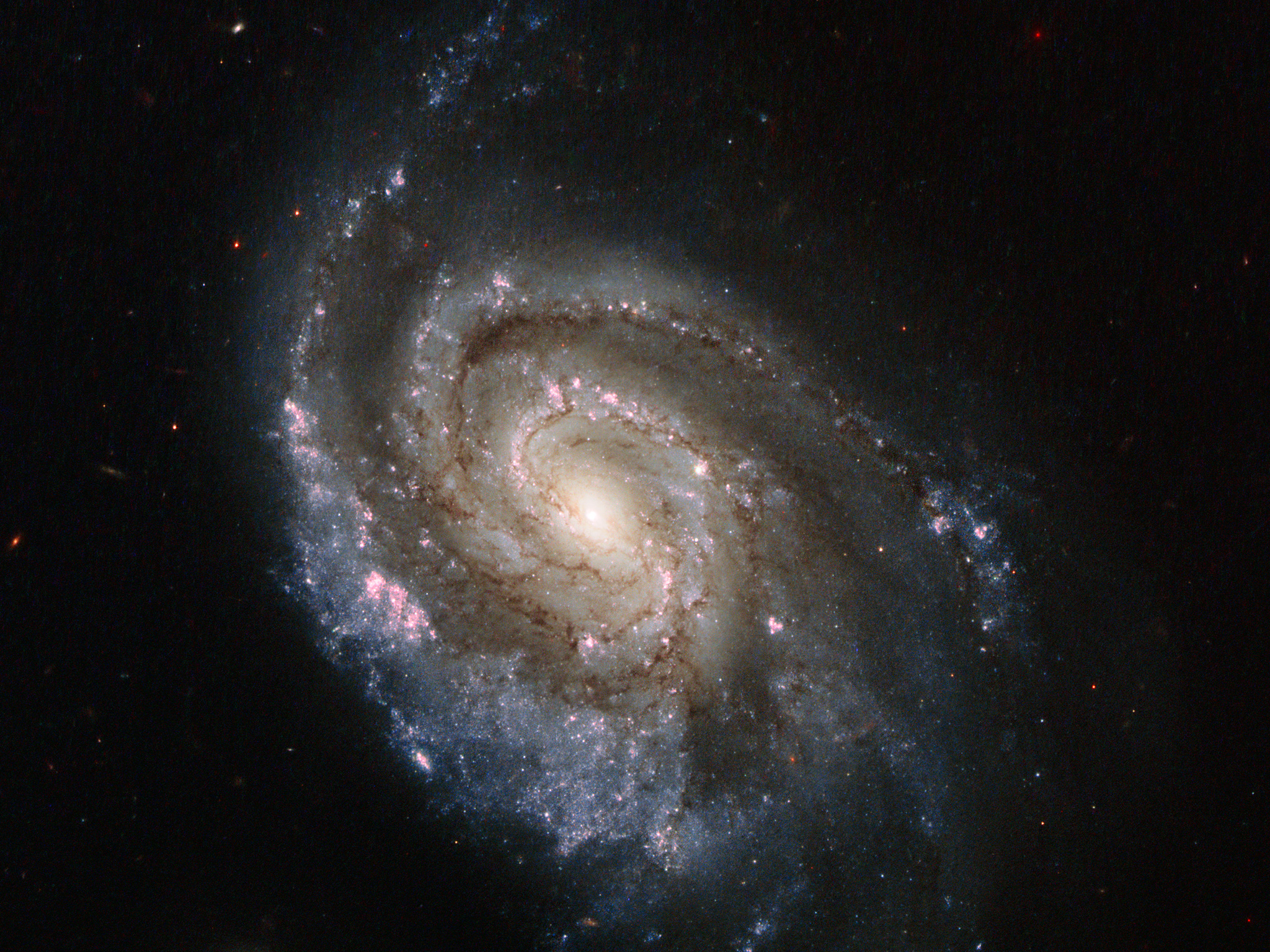
The researchers’ lucky break came in May 2022, when South African amateur astronomer Berto Monard discovered the supernova SN 2022jli in the spiral arm of the nearby galaxy NGC 157, located 75 million light-years away. Two separate teams turned their attention to the aftermath of this explosion and found it to have a unique behaviour.
After the explosion, the brightness of most supernovae simply fades away with time; astronomers see a smooth, gradual decline in the explosion’s ‘light curve’. But SN 2022jli’s behaviour is very peculiar: as the overall brightness declines, it doesn’t do so smoothly, but instead oscillates up and down every 12 days or so. “In SN 2022jli’s data we see a repeating sequence of brightening and fading,” says Thomas Moore, a doctoral student at Queen’s University Belfast, Northern Ireland, who led a study of the supernova published late last year in the Astrophysical Journal. “This is the first time that repeated periodic oscillations, over many cycles, have been detected in a supernova light curve,” Moore noted in his paper. Both the Moore and Chen teams believe that the presence of more than one star in the SN 2022jli system could explain this behaviour. In fact, it’s not unusual for massive stars to be in orbit with a companion star in what is known as a binary system, and the star that caused SN 2022jli was no exception. What is remarkable about this system, however, is that the companion star appears to have survived the violent death of its partner and the two objects, the compact remnant and the companion, likely kept orbiting each other.
The data collected by the Moore team, which included observations with ESO’s NTT in Chile’s Atacama Desert, did not allow them to pin down exactly how the interaction between the two objects caused the highs and lows in the light curve. But the Chen team had additional observations. They found the same regular fluctuations in the system’s visible brightness that the Moore team had detected, and they also spotted periodic movements of hydrogen gas and bursts of gamma rays in the system. Their observations were made possible thanks to a fleet of instruments on the ground and in space, including X-shooter on ESO's VLT, also located in Chile.
Putting all the clues together, the two teams generally agree that when the companion star interacted with the material thrown out during the supernova explosion, its hydrogen-rich atmosphere became puffier than usual. Then, as the compact object left behind after the explosion zipped through the companion’s atmosphere on its orbit, it would steal hydrogen gas, forming a hot disc of matter around itself. This periodic stealing of matter, or accretion, released lots of energy that was picked up as regular changes of brightness in the observations.
Even though the teams could not observe light coming from the compact object itself, they concluded that this energetic stealing can only be due to an unseen neutron star, or possibly a black hole, attracting matter from the companion star’s puffy atmosphere. “Our research is like solving a puzzle by gathering all possible evidence,” Chen says. “All these pieces lining up lead to the truth.”
With the presence of a black hole or neutron star confirmed, there is still plenty to unravel about this enigmatic system, including the exact nature of the compact object or what end could await this binary system. Next-generation telescopes such as ESO’s Extremely Large Telescope, scheduled to begin operation later this decade, will help with this, allowing astronomers to reveal unprecedented details of this unique system.
When massive stars reach the end of their lives, they collapse under their own gravity so rapidly that a violent explosion known as a supernova ensues. Astronomers believe that, after all the excitement of the explosion, what is left is the ultra-dense core, or compact remnant, of the star. Depending on how massive the star is, the compact remnant will be either a neutron star — an object so dense that a teaspoon of its material would weigh around a trillion kilograms here on Earth — or a black hole — an object from which nothing, not even light, can escape.
Astronomers have found many clues hinting at this chain of events in the past, such as finding a neutron star within the Crab Nebula, the gas cloud left behind when a star exploded nearly a thousand years ago. But they had never before seen this process happen in real time, meaning that direct evidence of a supernova leaving behind a compact remnant has remained elusive. “In our work, we establish such a direct link,” says Ping Chen, a researcher at the Weizmann Institute of Science, Israel, and lead author of a study published today in Nature and presented at the 243rd American Astronomical Society meeting in New Orleans, USA.
The researchers’ lucky break came in May 2022, when South African amateur astronomer Berto Monard discovered the supernova SN 2022jli in the spiral arm of the nearby galaxy NGC 157, located 75 million light-years away. Two separate teams turned their attention to the aftermath of this explosion and found it to have a unique behaviour.
After the explosion, the brightness of most supernovae simply fades away with time; astronomers see a smooth, gradual decline in the explosion’s ‘light curve’. But SN 2022jli’s behaviour is very peculiar: as the overall brightness declines, it doesn’t do so smoothly, but instead oscillates up and down every 12 days or so. “In SN 2022jli’s data we see a repeating sequence of brightening and fading,” says Thomas Moore, a doctoral student at Queen’s University Belfast, Northern Ireland, who led a study of the supernova published late last year in the Astrophysical Journal. “This is the first time that repeated periodic oscillations, over many cycles, have been detected in a supernova light curve,” Moore noted in his paper. Both the Moore and Chen teams believe that the presence of more than one star in the SN 2022jli system could explain this behaviour. In fact, it’s not unusual for massive stars to be in orbit with a companion star in what is known as a binary system, and the star that caused SN 2022jli was no exception. What is remarkable about this system, however, is that the companion star appears to have survived the violent death of its partner and the two objects, the compact remnant and the companion, likely kept orbiting each other.
The data collected by the Moore team, which included observations with ESO’s NTT in Chile’s Atacama Desert, did not allow them to pin down exactly how the interaction between the two objects caused the highs and lows in the light curve. But the Chen team had additional observations. They found the same regular fluctuations in the system’s visible brightness that the Moore team had detected, and they also spotted periodic movements of hydrogen gas and bursts of gamma rays in the system. Their observations were made possible thanks to a fleet of instruments on the ground and in space, including X-shooter on ESO's VLT, also located in Chile.
Putting all the clues together, the two teams generally agree that when the companion star interacted with the material thrown out during the supernova explosion, its hydrogen-rich atmosphere became puffier than usual. Then, as the compact object left behind after the explosion zipped through the companion’s atmosphere on its orbit, it would steal hydrogen gas, forming a hot disc of matter around itself. This periodic stealing of matter, or accretion, released lots of energy that was picked up as regular changes of brightness in the observations.
Even though the teams could not observe light coming from the compact object itself, they concluded that this energetic stealing can only be due to an unseen neutron star, or possibly a black hole, attracting matter from the companion star’s puffy atmosphere. “Our research is like solving a puzzle by gathering all possible evidence,” Chen says. “All these pieces lining up lead to the truth.”
With the presence of a black hole or neutron star confirmed, there is still plenty to unravel about this enigmatic system, including the exact nature of the compact object or what end could await this binary system. Next-generation telescopes such as ESO’s Extremely Large Telescope, scheduled to begin operation later this decade, will help with this, allowing astronomers to reveal unprecedented details of this unique system.
Source: ESO/News
More information
This research was presented in two papers. The team led by P. Chen published a paper titled “A 12.4 day
periodicity in a close binary system after a supernova” in Nature (doi: 10.1038/s41586-023-06787-x).
The team is composed of P. Chen (Department of Particle Physics and Astrophysics, Weizmann Institute of Science, Israel [Weizmann Institute]), A. Gal-Yam (Weizmann Institute), J. Sollerman (The Oskar Klein Centre, Department of Astronomy, Stockholm University, Sweden [OKC DoA]), S. Schulze (The Oskar Klein Centre, Department of Physics, Stockholm University, Sweden [OKC DoP]), R. S. Post (Post Observatory, Lexington, USA), C. Liu (Department of Physics and Astronomy, Northwestern University, USA [Northwestern]; Center for Interdisciplinary Exploration and Research in Astrophysics, Northwestern University, USA [CIERA]), E. O. Ofek (Weizmann Institute), K. K. Das (Cahill Center for Astrophysics, California Institute of Technology, USA [Cahill Center]), C. Fremling (Caltech Optical Observatories, California Institute of Technology, USA [COO]; Division of Physics, Mathematics and Astronomy, California Institute of Technology, USA [PMA]), A. Horesh (Racah Institute of Physics, The Hebrew University of Jerusalem, Israel), B. Katz (Weizmann Institute), D. Kushnir (Weizmann Institute), M. M. Kasliwal (Cahill Center), S. R. Kulkarni (Cahill Center), D. Liu (South-Western Institute for Astronomy Research, Yunnan University, China [Yunnan]), X. Liu (Yunnan), A. A. Miller (Northwestern; CIERA), K. Rose (Sydney Institute for Astronomy, School of Physics, The University of Sydney, Australia), E. Waxman (Weizmann Institute), S. Yang (OKC DoA; Henan Academy of Sciences, China), Y. Yao (Cahill Center), B. Zackay (Weizmann Institute), E. C. Bellm (DIRAC Institute, Department of Astronomy, University of Washington, USA), R. Dekany (COO), A. J. Drake (PMA), Y. Fang (Yunnan), J. P. U. Fynbo (The Cosmic DAWN Center, Denmark; Niels Bohr Institute, University of Copenhagen, Denmark), S. L. Groom (IPAC, California Institute of Technology, USA [IPAC]), G. Helou (IPAC), I. Irani (Weizmann Institute), T. J. du Laz (PMA), X. Liu (Yunnan), P. A. Mazzali (Astrophysics Research Institute, Liverpool John Moores University, UK; Max Planck Institute for Astrophysics, Germany), J. D. Neill (PMA), Y.-J. Qin (PMA), R. L. Riddle (COO), A. Sharon (Weizmann Institute), N. L. Strotjohann (Weizmann Institute), A. Wold (IPAC), L. Yan (COO).
The team led by T. Moore published a paper titled “SN 2022jli: A Type 1c Supernova with Periodic Modulation of Its Light Curve and an Unusually Long Rise” in The Astrophysical Journal Letters (doi: 10.3847/2041-8213/acfc25).
T. Moore (Astrophysics Research Centre, Queenʼs University Belfast, UK [Queen’s]), S. J. Smartt (Queen’s; Department of Physics, University of Oxford, UK [Oxford]), M. Nicholl (Queen’s), S. Srivastav (Queen’s), H. F. Stevance (Oxford; Department of Physics, The University of Auckland, New Zealand), D. B. Jess (Queen’s; Department of Physics and Astronomy, California State University Northridge, USA), S. D. T. Grant (Queen’s), M. D. Fulton (Queen’s), L. Rhodes (Oxford), S. A. Sim (Queen’s), R. Hirai (OzGrav: The Australian Research Council Centre of Excellence for Gravitational Wave Discovery, Australia; School of Physics and Astronomy, Monash University, Australia), P. Podsiadlowski (University of Oxford, UK), J. P. Anderson (European Southern Observatory, Chile; Millennium Institute of Astrophysics MAS, Chile), C. Ashall (Department of Physics, Virginia Tech, USA), W. Bate (Queen’s), R. Fender (Oxford), C. P. Gutiérrez (Institut d’Estudis Espacials de Catalunya, Spain [IEEC]; Institute of Space Sciences, Campus UAB, Spain [ICE, CSIC]), D. A. Howell (Las Cumbres Observatory, USA [Las Cumbres]; Department of Physics, University of California, Santa Barbara, USA [UCSB]), M. E. Huber (Institute for Astronomy, University of Hawai’i, USA [Hawai’i]), C. Inserra (Cardiff Hub for Astrophysics Research and Technology, Cardiff University, UK), G. Leloudas (DTU Space, National Space Institute, Technical University of Denmark, Denmark), L. A. G. Monard (Kleinkaroo Observatory, South Africa), T. E. Müller-Bravo (IEEC; ICE, CSIC), B. J. Shappee (Hawai’i), K. W. Smith (Queen’s), G. Terreran (Las Cumbres), J. Tonry (Hawai’i), M. A. Tucker (Department of Astronomy, The Ohio State University, USA; Department of Physics, The Ohio State University, USA; Center for Cosmology and Astroparticle Physics, The Ohio State University, USA), D. R. Young (Queen’s), A. Aamer (Queen’s; Institute for Gravitational Wave Astronomy, University of Birmingham, UK [IGWA]; School of Physics and Astronomy, University of Birmingham, UK [Birmingham]), T.-W. Chen (Graduate Institute of Astronomy, National Central University, Taiwan), F. Ragosta (INAF, Osservatorio Astronomico di Roma, Italy; Space Science Data Center—ASI, Italy), L. Galbany (IEEC; ICE, CSIC), M. Gromadzki (Astronomical Observatory, University of Warsaw, Poland), L. Harvey (School of Physics, Trinity College Dublin, The University of Dublin, Ireland), P. Hoeflich (Department of Physics, Florida State University, USA), C. McCully (Las Cumbres), M. Newsome (Las Cumbres; UCSB), E. P. Gonzalez (Las Cumbres; UCSB), C. Pellegrino (Las Cumbres; UCSB), P. Ramsden (Birmingham; IGWA), M. Pérez-Torres (Instituto de Astrofísica de Andalucía (IAA-CSIC), Spain; School of Sciences, European University Cyprus, Cyprus), E. J. Ridley (IGWA; Birmingham), X. Sheng (Queen’s), and J. Weston (Queen’s)
The European Southern Observatory (ESO) enables scientists worldwide to discover the secrets of the Universe for the benefit of all. We design, build and operate world-class observatories on the ground — which astronomers use to tackle exciting questions and spread the fascination of astronomy — and promote international collaboration for astronomy. Established as an intergovernmental organisation in 1962, today ESO is supported by 16 Member States (Austria, Belgium, the Czech Republic, Denmark, France, Finland, Germany, Ireland, Italy, the Netherlands, Poland, Portugal, Spain, Sweden, Switzerland and the United Kingdom), along with the host state of Chile and with Australia as a Strategic Partner. ESO’s headquarters and its visitor centre and planetarium, the ESO Supernova, are located close to Munich in Germany, while the Chilean Atacama Desert, a marvellous place with unique conditions to observe the sky, hosts our telescopes. ESO operates three observing sites: La Silla, Paranal and Chajnantor. At Paranal, ESO operates the Very Large Telescope and its Very Large Telescope Interferometer, as well as survey telescopes such as VISTA. Also at Paranal ESO will host and operate the Cherenkov Telescope Array South, the world’s largest and most sensitive gamma-ray observatory. Together with international partners, ESO operates ALMA on Chajnantor, a facility that observes the skies in the millimetre and submillimetre range. At Cerro Armazones, near Paranal, we are building “the world’s biggest eye on the sky” — ESO’s Extremely Large Telescope. From our offices in Santiago, Chile we support our operations in the country and engage with Chilean partners and society,
The team is composed of P. Chen (Department of Particle Physics and Astrophysics, Weizmann Institute of Science, Israel [Weizmann Institute]), A. Gal-Yam (Weizmann Institute), J. Sollerman (The Oskar Klein Centre, Department of Astronomy, Stockholm University, Sweden [OKC DoA]), S. Schulze (The Oskar Klein Centre, Department of Physics, Stockholm University, Sweden [OKC DoP]), R. S. Post (Post Observatory, Lexington, USA), C. Liu (Department of Physics and Astronomy, Northwestern University, USA [Northwestern]; Center for Interdisciplinary Exploration and Research in Astrophysics, Northwestern University, USA [CIERA]), E. O. Ofek (Weizmann Institute), K. K. Das (Cahill Center for Astrophysics, California Institute of Technology, USA [Cahill Center]), C. Fremling (Caltech Optical Observatories, California Institute of Technology, USA [COO]; Division of Physics, Mathematics and Astronomy, California Institute of Technology, USA [PMA]), A. Horesh (Racah Institute of Physics, The Hebrew University of Jerusalem, Israel), B. Katz (Weizmann Institute), D. Kushnir (Weizmann Institute), M. M. Kasliwal (Cahill Center), S. R. Kulkarni (Cahill Center), D. Liu (South-Western Institute for Astronomy Research, Yunnan University, China [Yunnan]), X. Liu (Yunnan), A. A. Miller (Northwestern; CIERA), K. Rose (Sydney Institute for Astronomy, School of Physics, The University of Sydney, Australia), E. Waxman (Weizmann Institute), S. Yang (OKC DoA; Henan Academy of Sciences, China), Y. Yao (Cahill Center), B. Zackay (Weizmann Institute), E. C. Bellm (DIRAC Institute, Department of Astronomy, University of Washington, USA), R. Dekany (COO), A. J. Drake (PMA), Y. Fang (Yunnan), J. P. U. Fynbo (The Cosmic DAWN Center, Denmark; Niels Bohr Institute, University of Copenhagen, Denmark), S. L. Groom (IPAC, California Institute of Technology, USA [IPAC]), G. Helou (IPAC), I. Irani (Weizmann Institute), T. J. du Laz (PMA), X. Liu (Yunnan), P. A. Mazzali (Astrophysics Research Institute, Liverpool John Moores University, UK; Max Planck Institute for Astrophysics, Germany), J. D. Neill (PMA), Y.-J. Qin (PMA), R. L. Riddle (COO), A. Sharon (Weizmann Institute), N. L. Strotjohann (Weizmann Institute), A. Wold (IPAC), L. Yan (COO).
The team led by T. Moore published a paper titled “SN 2022jli: A Type 1c Supernova with Periodic Modulation of Its Light Curve and an Unusually Long Rise” in The Astrophysical Journal Letters (doi: 10.3847/2041-8213/acfc25).
T. Moore (Astrophysics Research Centre, Queenʼs University Belfast, UK [Queen’s]), S. J. Smartt (Queen’s; Department of Physics, University of Oxford, UK [Oxford]), M. Nicholl (Queen’s), S. Srivastav (Queen’s), H. F. Stevance (Oxford; Department of Physics, The University of Auckland, New Zealand), D. B. Jess (Queen’s; Department of Physics and Astronomy, California State University Northridge, USA), S. D. T. Grant (Queen’s), M. D. Fulton (Queen’s), L. Rhodes (Oxford), S. A. Sim (Queen’s), R. Hirai (OzGrav: The Australian Research Council Centre of Excellence for Gravitational Wave Discovery, Australia; School of Physics and Astronomy, Monash University, Australia), P. Podsiadlowski (University of Oxford, UK), J. P. Anderson (European Southern Observatory, Chile; Millennium Institute of Astrophysics MAS, Chile), C. Ashall (Department of Physics, Virginia Tech, USA), W. Bate (Queen’s), R. Fender (Oxford), C. P. Gutiérrez (Institut d’Estudis Espacials de Catalunya, Spain [IEEC]; Institute of Space Sciences, Campus UAB, Spain [ICE, CSIC]), D. A. Howell (Las Cumbres Observatory, USA [Las Cumbres]; Department of Physics, University of California, Santa Barbara, USA [UCSB]), M. E. Huber (Institute for Astronomy, University of Hawai’i, USA [Hawai’i]), C. Inserra (Cardiff Hub for Astrophysics Research and Technology, Cardiff University, UK), G. Leloudas (DTU Space, National Space Institute, Technical University of Denmark, Denmark), L. A. G. Monard (Kleinkaroo Observatory, South Africa), T. E. Müller-Bravo (IEEC; ICE, CSIC), B. J. Shappee (Hawai’i), K. W. Smith (Queen’s), G. Terreran (Las Cumbres), J. Tonry (Hawai’i), M. A. Tucker (Department of Astronomy, The Ohio State University, USA; Department of Physics, The Ohio State University, USA; Center for Cosmology and Astroparticle Physics, The Ohio State University, USA), D. R. Young (Queen’s), A. Aamer (Queen’s; Institute for Gravitational Wave Astronomy, University of Birmingham, UK [IGWA]; School of Physics and Astronomy, University of Birmingham, UK [Birmingham]), T.-W. Chen (Graduate Institute of Astronomy, National Central University, Taiwan), F. Ragosta (INAF, Osservatorio Astronomico di Roma, Italy; Space Science Data Center—ASI, Italy), L. Galbany (IEEC; ICE, CSIC), M. Gromadzki (Astronomical Observatory, University of Warsaw, Poland), L. Harvey (School of Physics, Trinity College Dublin, The University of Dublin, Ireland), P. Hoeflich (Department of Physics, Florida State University, USA), C. McCully (Las Cumbres), M. Newsome (Las Cumbres; UCSB), E. P. Gonzalez (Las Cumbres; UCSB), C. Pellegrino (Las Cumbres; UCSB), P. Ramsden (Birmingham; IGWA), M. Pérez-Torres (Instituto de Astrofísica de Andalucía (IAA-CSIC), Spain; School of Sciences, European University Cyprus, Cyprus), E. J. Ridley (IGWA; Birmingham), X. Sheng (Queen’s), and J. Weston (Queen’s)
The European Southern Observatory (ESO) enables scientists worldwide to discover the secrets of the Universe for the benefit of all. We design, build and operate world-class observatories on the ground — which astronomers use to tackle exciting questions and spread the fascination of astronomy — and promote international collaboration for astronomy. Established as an intergovernmental organisation in 1962, today ESO is supported by 16 Member States (Austria, Belgium, the Czech Republic, Denmark, France, Finland, Germany, Ireland, Italy, the Netherlands, Poland, Portugal, Spain, Sweden, Switzerland and the United Kingdom), along with the host state of Chile and with Australia as a Strategic Partner. ESO’s headquarters and its visitor centre and planetarium, the ESO Supernova, are located close to Munich in Germany, while the Chilean Atacama Desert, a marvellous place with unique conditions to observe the sky, hosts our telescopes. ESO operates three observing sites: La Silla, Paranal and Chajnantor. At Paranal, ESO operates the Very Large Telescope and its Very Large Telescope Interferometer, as well as survey telescopes such as VISTA. Also at Paranal ESO will host and operate the Cherenkov Telescope Array South, the world’s largest and most sensitive gamma-ray observatory. Together with international partners, ESO operates ALMA on Chajnantor, a facility that observes the skies in the millimetre and submillimetre range. At Cerro Armazones, near Paranal, we are building “the world’s biggest eye on the sky” — ESO’s Extremely Large Telescope. From our offices in Santiago, Chile we support our operations in the country and engage with Chilean partners and society,
Links
- Chen et al. paper
- Moore et al. paper
- Photos of the VLT
- Photos of the NTT
- Find out more about ESO's Extremely Large Telescope on our dedicated website and press kit
- For journalists: subscribe to receive our releases under embargo in your language
- For scientists: got a story? Pitch your research
Contacts
Ping Chen
Weizmann Institute of Science
Rehovot, Israel
Tel: +972 8 934 6512
Email: chen.ping@weizmann.ac.il
Thomas Moore
Queen’s University Belfast
Belfast, Northern Ireland, UK
Email: tmoore11@qub.ac.uk
Jesper Sollerman
Department of Astronomy, Stockholm University
Stockholm, Sweden
Tel: +46 8 5537 8554
Email: jesper@astro.su.se
Matt Nicholl
Queen’s University Belfast
Belfast, Northern Ireland, UK
Email: matt.nicholl@qub.ac.uk
Bárbara Ferreira
ESO Media Manager
Garching bei München, Germany
Tel: +49 89 3200 6670
Cell: +49 151 241 664 00
Email: press@eso.org