Showing posts with label NGC 5044. Show all posts

Thursday, May 23, 2024

Spotted — "Death Star" Black Holes in Action

Abell 478 - NGC 5044
Credit: X-ray: NASA/CXC/Univ. of Bologna/F. Ubertosi; Image Processing: NASA/CXC/SAO/N. Wolk


A team of astronomers have studied 16 supermassive black holes that are firing powerful beams into space, to track where these beams, or jets, are pointing now and where they were aimed in the past, as reported in our latest press release. Using NASA’s Chandra X-ray Observatory and the U.S. National Science Foundation (NSF) National Radio Astronomical Observatory’s (NRAO) Very Large Baseline Array (VLBA), they found that some of the beams have changed directions by large amounts.

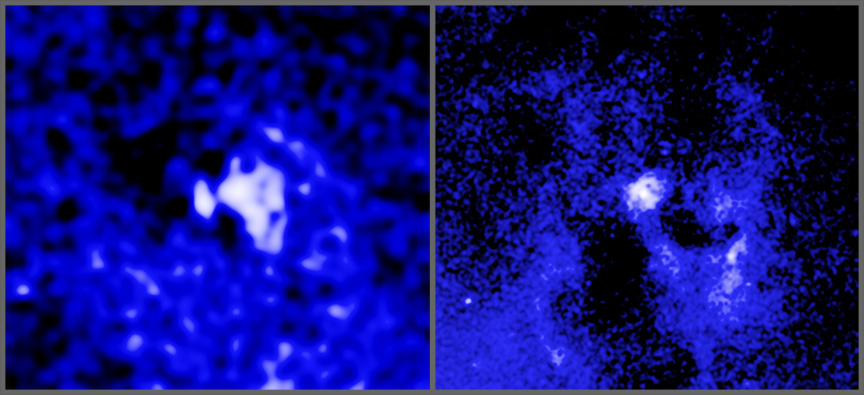
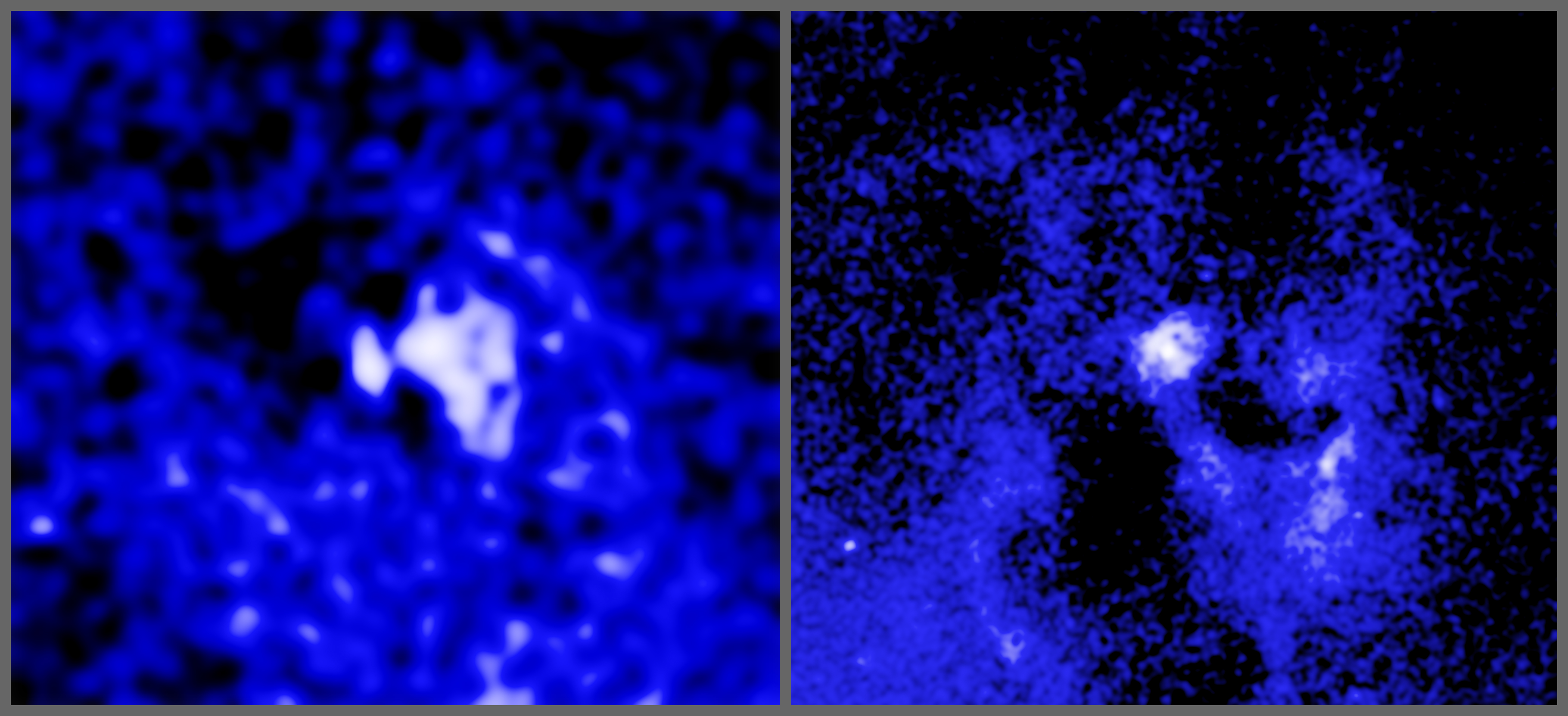
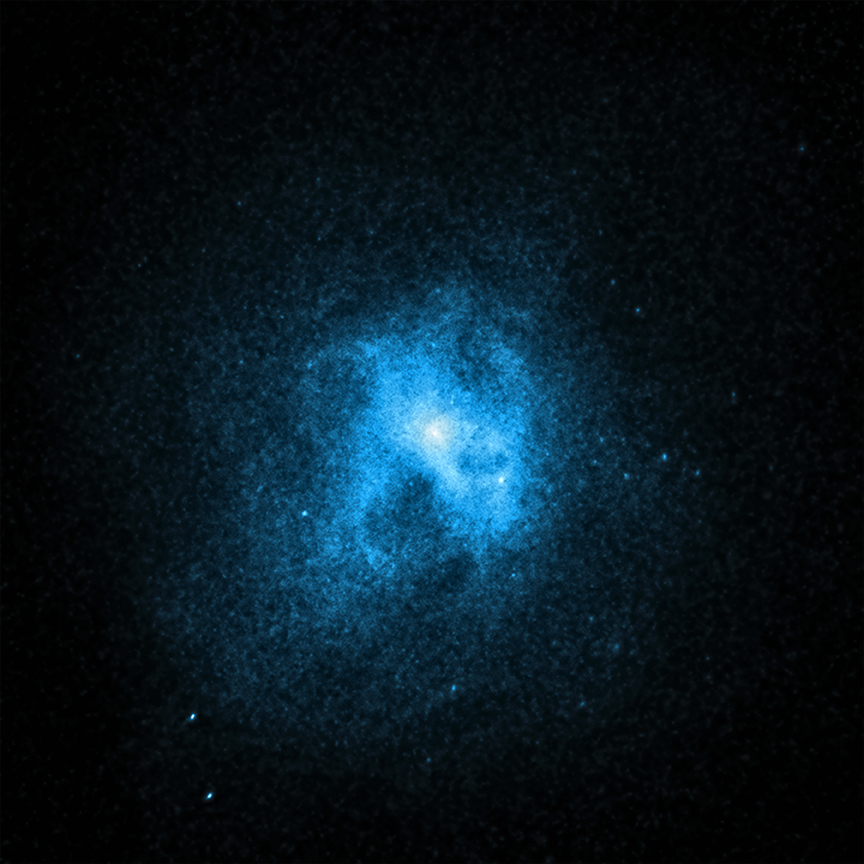
These two Chandra images show hot gas in the middle of the galaxy cluster Abell 478 (left) and the galaxy group NGC 5044 (right). The center of each image contains one of the sixteen black holes firing beams outwards. Each black hole is in the center of a galaxy embedded in the hot gas.

By mousing over the images, labels and the radio images appear. Ellipses show a pair of cavities in the hot gas for Abell 478 (left) and ellipses show two pairs of cavities for NGC 5044 (right). These cavities were carved out by the beams millions of years ago, giving the directions of the beams in the past. An X shows the location of each supermassive black hole.

Abell 478 and NGC 5044 (Labeled). Credit: X-ray: NASA/CXC/Univ. of Bologna/F. Ubertosi; Insets Radio: NSF/NRAO/VLBA; Wide field Image: Optical/IR: Univ. of Hawaii/Pan-STARRS; Image Processing: NASA/CXC/SAO/N. Wolk

The VLBA images are shown as insets, which reveal where the beams are currently pointing, as seen from Earth. The radio images are both much smaller than the X-ray images. For Abell 478 the radio image is about 3% of the width of the Chandra image and for NGC 5044 the radio image is about 4% of the Chandra image’s width.

A comparison between the Chandra and VLBA images shows that the beams for Abell 478 changed direction by about 35 degrees and the beams for NGC 5044 changed direction by about 70 degrees.

Across the entire sample the researchers found that about a third of the 16 galaxies have beams that are pointing in completely different directions than they were before. Some have changed directions by nearly 90 degrees in some cases, and over timescales between one million years and a few tens of millions of years. Given that the black holes are of the order of 10 billion years old, this represents a relatively rapid change for these galaxies.

Wide Field Views of Abell 478 [Left] and NGC 5044 [Right]. Credit: X-ray: NASA/CXC/Univ. of Bologna/F. Ubertosi et al.; Optical/IR: Univ. of Hawaii/Pan-STARRS; IR: NASA/ESA/JPL/CalTech/Herschel Space Telescope

Black holes generate beams when material falls onto them via a spinning disk of matter and some of it then gets redirected outward. The direction of the beams from each of these giant black holes, which are likely spinning, is thought to align with the rotation axis of the black hole, meaning that the beams point along a line connecting the poles.

These beams are thought to be perpendicular to the disk. If material falls towards the black holes at a different angle that is not parallel to the disk, it could affect the direction of the black hole’s rotation axes, changing the direction of the beams.

Scientists think that beams from black holes and the cavities they carve out play an important role in how many stars form in their galaxies. The beams pump energy into the hot gas in and around the galaxy, preventing it from cooling down enough to form huge numbers of new stars. If the beams change directions by large amounts, they can tamp down star formation across much larger areas of the galaxy.

The paper describing these results was published in the January 20th, 2024 issue of The Astrophysical Journal, and is available here. The authors are Francesco Ubertosi (University of Bologna in Italy), Gerritt Schellenberger (Center for Astrophysics | Harvard & Smithsonian), Ewan O’Sullivan (CfA), Jan Vrtilek (CfA), Simona Giacintucci (Naval Research Laboratory), Laurence David (CfA), William Forman (CfA), Myriam Gitti (University of Bologna), Tiziana Venturi (National Institute of Astrophysics—Institute of Radio Astronomy in Italy), Christine Jones (CfA), and Fabrizio Brighenti (University of Bologna).

NASA's Marshall Space Flight Center manages the Chandra program. The Smithsonian Astrophysical Observatory's Chandra X-ray Center controls science from Cambridge Massachusetts and flight operations from Burlington, Massachusetts.


Visual Description:

This image contains two X-ray images presented side by side, separated by a thin, gray line. On the left is an image of galaxy cluster Abell 478, and on the right is an image of galaxy group NGC 5044.

The X-ray image of Abell 478 resembles a gooey, blue substance that has been spilled on a black canvas. Most of the image is covered in this blue goo texture, which is hot gas in X-ray light, however there are cavities where no blue texture is present. At the center of the image is a bright, white region. Within the white region, too small to identify, exists Abell 478's supermassive black hole.

The X-ray image of NGC 5044, on our right, is more pixelated than the image of Abell 478. It resembles blue television static or noise, that is present on a television when no transmission signal is detected. Most of the image is covered in this blue static, however there are cavities where no blue static is present. At the center of the image is a bright, white region. Within the white region, too small to identify, exists NGC 5044's supermassive black hole.


Fast Facts for Abell 478:

Scale: Image is about 2 arcmin (650,000 light-years) across.
Category: Groups and Clusters of Galaxies
Coordinates (J2000): RA 4h 13m 20.7s | Dec +10° 27´ 56"
Constellation: Taurus
Observation Dates: 6 observations from Jan 27, 2001 to Jul 29, 2006
Observation Time: 27 hours 58 minutes (1 day 3 hours 58 minutes)
Obs. ID: 1669, 6102, 6928, 7231-7233
Instrument: ACIS
References: Ubertosi, F. et al, 2024, ApJ, 961, 134; arXiv:2313.02283
Color Code: X-ray: blue and white;
Distance Estimate: About 1.2 billion light-years from Earth (z=0.088)


Fast Facts for NGC 5044:

Scale: Image is about 2.4 arcmin (87,000 light-years) across.
Category: Groups and Clusters of Galaxies
Coordinates (J2000): RA 13h 15m 23.9s | Dec -16° 23´ 07.5"
Constellation: Virgo
Observation Dates: 9 observations from Mar 3, 2000 to Aug 23, 2015
Observation Time: 156 hours 34 minutes (6 days 12 hours and 34 minutes)
Obs. ID: 798, 3225, 3664, 9399, 17195, 17196, 17653, 17654, 17666
Instrument: ACIS
References: Ubertosi, F. et al, 2024, ApJ, 961, 134; arXiv:2313.02283
Color Code: X-ray: blue and white;
Distance Estimate: About 130 million light-years from Earth (z=0.009)


Monday, June 02, 2014

Elliptical Galaxies: Chandra Helps Explain "Red and Dead Galaxies"

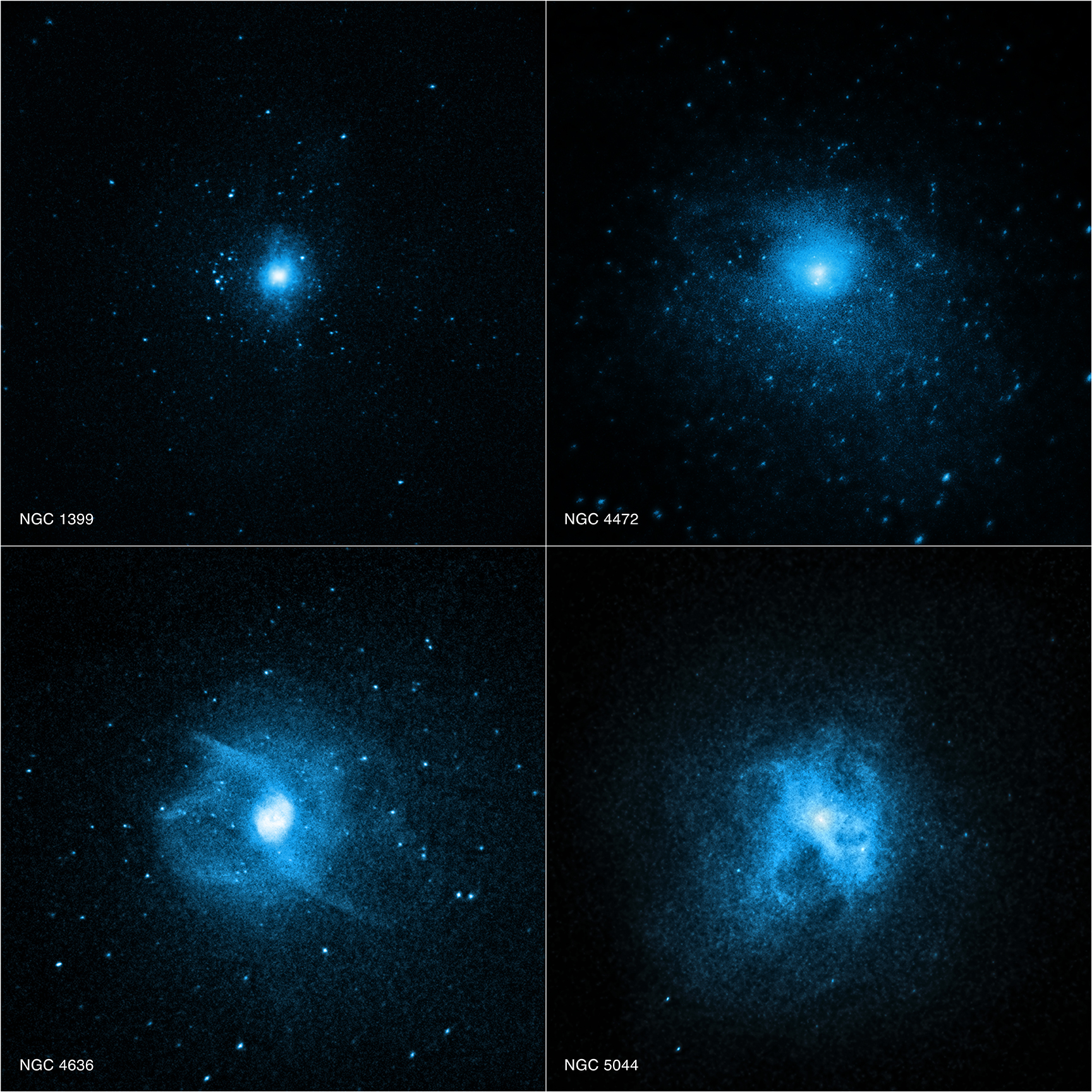
NGC 1399 - NGC 4472 - NGC 4636 - NGC 5044
Credit  X-ray: NASA/CXC/Stanford Univ/N.Werner et al.

JPEG (2.3 MB) - Large JPEG (14.9 MB) - Tiff (148.3 MB) - More Images 

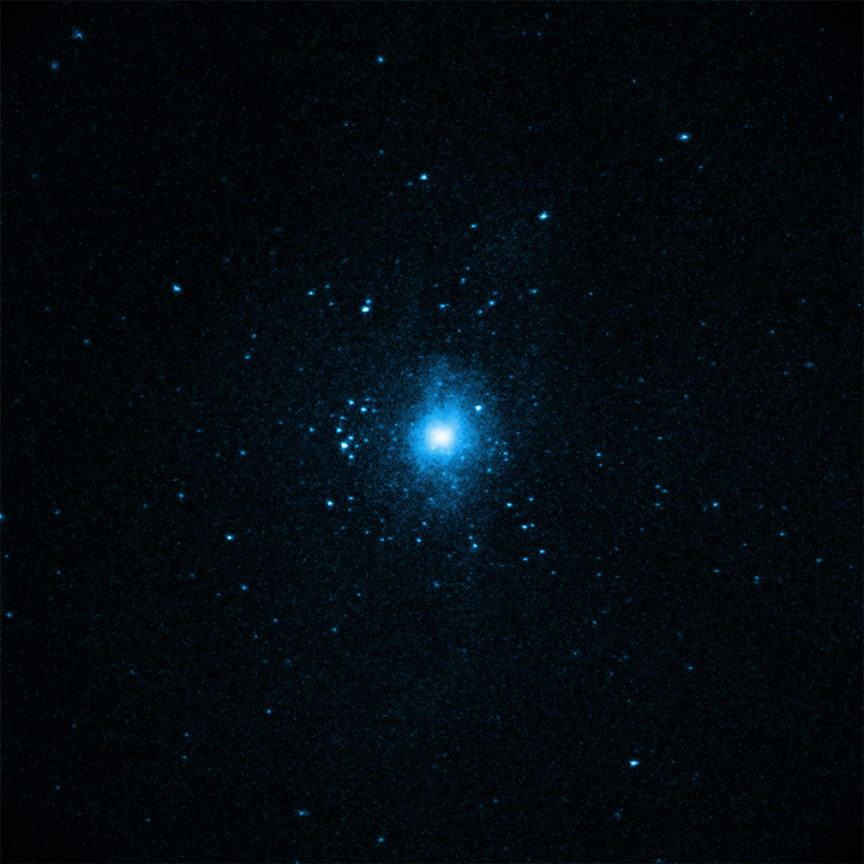
NASA's Chandra X-ray Observatory has shed new light on the mystery of why giant elliptical galaxies have few, if any, young stars. This new evidence highlights the important role that supermassive black holes play in the evolution of their host galaxies.

Because star-forming activity in many giant elliptical galaxies has shut down to very low levels, these galaxies mostly house long-lived stars with low masses and red optical colors. Astronomers have therefore called these galaxies "red and dead".

Previously it was thought that these red and dead galaxies do not contain large amounts of cold gas - the fuel for star formation - helping to explain the lack of young stars. However, astronomers have used ESA's Herschel Space Observatory to find surprisingly large amounts of cold gas in some giant elliptical galaxies. In a sample of eight galaxies, six contain large reservoirs of cold gas. This is the first time that astronomers have seen large quantities of cold gas in giant elliptical galaxies that are not located at the center of a massive galaxy cluster.

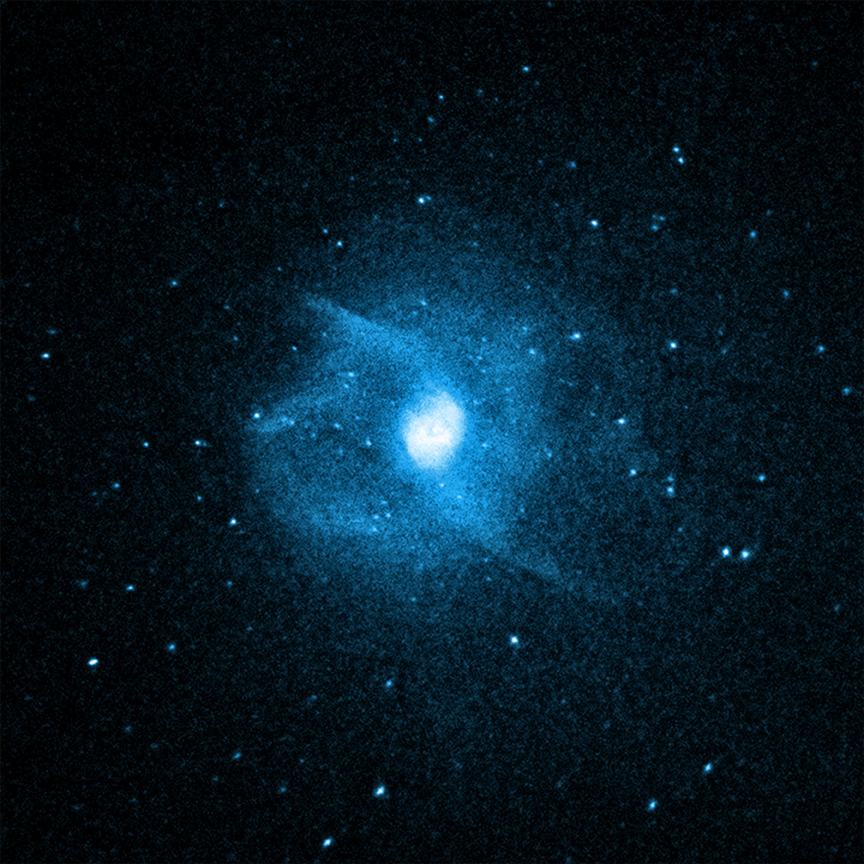
With lots of cold gas, astronomers would expect many stars to be forming in these galaxies, contrary to what is observed. To try to understand this inconsistency, astronomers studied the galaxies at other wavelengths, including X-rays and radio waves. The Chandra observations map the temperature and density of hot gas in these galaxies. For the six galaxies containing abundant cold gas, including NGC 4636 and NGC 5044 shown here, the X-ray data provide evidence that the hot gas is cooling, providing a source for the cold gas observed with Herschel. However, the cooling process stops before the cold gas condenses to form stars. What prevents the stars from forming?

A strong clue comes from the Chandra images. The hot gas in the center of the six galaxies containing cold gas appears to be much more disturbed than in the cold gas-free systems. This is a sign that material has been ejected from regions close to the central black hole. These outbursts are possibly driven, in part, by clumpy, cold gas that has been pulled onto the black hole. The outbursts dump most of their energy into the center of the galaxy, where the cold gas is located, preventing the cold gas from cooling sufficiently to form stars.

The other galaxies in the sample, NGC 1399 and NGC 4472, are also forming few if any stars, but they have a very different appearance. No cold gas was detected in these galaxies, and the hot gas in their central regions is much smoother. Additionally, they have powerful jets of highly energetic particles, as shown in radio images from the National Science Foundation's Karl G. Jansky Very Large Array. These jets are likely driven by hot gas falling towards the central supermassive black holes. By pushing against the hot gas, the jets create enormous cavities that are observed in the Chandra images, and they may heat the hot, X-ray emitting gas, preventing it from cooling and forming cold gas and stars. The centers of NGC 1399 and NGC 4472 look smoother in X-rays than the other galaxies, likely because their more powerful jets produce cavities further away from the center, where the X-ray emission is fainter, leaving their bright cores undisturbed.

A paper describing these results was published in the February 25, 2014 issue of the Monthly Notices of the Royal Astronomical Society and is available online. The first author is Norbert Werner from Stanford University in California.

NASA's Marshall Space Flight Center in Huntsville, Ala., manages the Chandra program for NASA's Science Mission Directorate in Washington. The Smithsonian Astrophysical Observatory in Cambridge, Mass., controls Chandra's science and flight operations.

Fast Facts for NGC 1399:

Scale: Image is 6.5 arcmin across. (about 130,000 light years)
Category: Normal Galaxies & Starburst Galaxies
Coordinates (J2000): RA 03h 38m 29.08s | Dec -35º 27' 02.67"
Constelattion: Fornax
Observation Dates: 3 pointings between 18 Jan 2000 and 08 Jun 2008
Observation Time: 40 hours 32 min (1 day 16 hours 32 min)
Obs. IDs: 319, 4172, 9530
Instrument: ACIS
References: Werner, N. et al, 2014, MNRAS 439, 2291-2306; arXiv:1310.5450
Color Code: X-ray (Blue)
Distance Estimate: About 65 million light years


Fast Facts for NGC 4472:

Scale: Image is 6.5 arcmin across. (about 100,000 light years)
Category: Normal Galaxies & Starburst Galaxies
Coordinates (J2000: RA 12h 29m 46.90s | Dec +08º 00' 13.00
Constellation: Virgo
Observation Dates: 12 Jun 2000
Observation Time: 11 hours 6 min
Obs. IDs: 321
Instrument: ACIS
References: Werner, N. et al, 2014, MNRAS 439, 2291-2306; arXiv:1310.5450
Color Code: X-ray (Blue)
Distance Estimate: About 55 million light years


Fast Facts for NGC 4636:

Scale: Image is 6.5 arcmin across. (about 95,000 light years)
Category: Normal Galaxies & Starburst Galaxies
Coordinates (J2000): RA 12h 42m 49.87s | Dec +02° 41' 16.01"
Constellation: Virgo
Observation Dates: 3 pointings between 26 Jan 2000 and 15 Mar 2003
Observation Time: 55 hours 57 min (2 days 7 hours 57 min)
Obs. IDs: 323, 3926, 4415
Instrument: ACIS
References: Werner, N. et al, 2014, MNRAS 439, 2291-2306; arXiv:1310.5450
Color Code: X-ray (Blue)
Distance Estimate: About 50 million light years


Fast Facts for NGC 5044:

Scale: Image is 6.5 arcmin across. (about 190,000 light years)
Category: Normal Galaxies & Starburst Galaxies
Coordinates (J2000): RA 13h 15m 23.97s | Dec -16º 23' 08.00"
Constellation: Virgo
Observation Dates: 2 pointings on 19 Mar 2000 and 07 Mar 2008
Observation Time: 28 hours 39 min (1 day 4 hours 39 min)
Obs. IDs: 798, 9399
Instrument: ACIS
References: Werner, N. et al, 2014, MNRAS 439, 2291-2306; arXiv:1310.5450
Color Code: X-ray (Blue)
Distance Estimate: About 102 million light years


Wednesday, February 26, 2014

Bullying black holes force galaxies to stay red and dead

Multi-wavelength view of the elliptical galaxy NGC 5044. Credits: Digitised Sky Survey/NASA Chandra/Southern Observatory for Astrophysical Research/Very Large Array (Robert Dunn et al. 2010).  Click here for 3 extra photos and captions (pdf)

Herschel has discovered massive elliptical galaxies in the nearby Universe containing plenty of cold gas, even though the galaxies fail to produce new stars. Comparison with other data suggests that, while hot gas cools down in these galaxies, stars do not form because jets from the central supermassive black hole heat or stir up the gas and prevent it from turning into stars.
 
Giant elliptical galaxies are the most puzzling type of galaxy in the Universe. Since they mysteriously shut down their star-forming activity and remain home only to the longest-lived of their stars - which are low-mass ones and appear red -  astronomers often call these galaxies 'red and dead'. 

Up until now, it was thought that red-and-dead galaxies were poor in cold gas - the vital raw material from which stars are born. While cold gas is abundant in spiral galaxies with lively star formation, the lack of it in giant ellipticals seemed to explain the absence of new stars. 

Astronomers have long been debating the physical processes leading to the end of their star formation. They speculated that these galaxies somehow expelled the cold gas, or that they had simply used it all to form stars in the past. Although the reason was uncertain, one thing seemed to have been established: these galaxies are red and dead because they no longer possess the means to sustain the production of stars. 

This view is being challenged by a new study based on data from ESA's Herschel Space Observatory. The results are published in Monthly Notices of the Royal Astronomical Society. 

"We looked at eight giant elliptical galaxies that nobody had looked at with Herschel before and we were delighted to find that, contrary to previous belief, six out of eight abound with cold gas", explains Norbert Werner from Stanford University in California, USA, who led the study. 

This is the first time that astronomers have seen large amounts of cold gas in red-and-dead galaxies that are not located at the centre of a massive galaxy cluster. 

The cold gas manifested itself through far-infrared emissions from carbon ions and oxygen atoms. Herschel's sensitivity at these wavelengths was instrumental to the discovery. 

"While we see cold gas, there is no sign of ongoing star formation," says co-author Raymond Oonk from ASTRON, the Netherlands Institute for Radio Astronomy. 

"This is bizarre: with plenty of cold gas at their disposal, why aren't these galaxies forming stars?" 

The astronomers proceeded to investigate their sample of galaxies across the electromagnetic spectrum, since gas at different temperatures shines brightly at different wavelengths. They used optical images to probe the warm gas - at slightly higher temperatures than the cold one detected with Herschel, and X-ray data from NASA's Chandra X-ray Observatory to trace the hot gas, up to tens of millions of K. 

"In the six galaxies that are rich in cold gas, the X-ray data show tell-tale signs that the hot gas is cooling," says Werner. 

This is consistent with theoretical expectations: once cooled, the hot gas would become the warm and cold gas that are observed at longer wavelengths. However, in these galaxies the cooling process somehow stopped, and the cold gas failed to condense and form stars. 

In the other two galaxies of the sample - the ones without cold gas - the hot gas does not appear to be cooling at all. 

"The contrasting behaviour of these galaxies may have a common explanation: the central supermassive black hole," adds Oonk. 

In some theoretical models, the level of a black hole's activity could explain why gas in a galaxy is able - or not able - to cool and form stars. And this seems to apply for the galaxies studied by Werner and his colleagues, too. 

While the six galaxies with plenty of cold gas harbour moderately active black holes at their centres, the other two show a marked difference. In the two galaxies without cold gas, the central black holes are accreting matter at frenzied pace, as confirmed by radio observations showing powerful jets of highly energetic particles that stem from their cores. 

The jets could be an effect of the hot gas cooling down, and flowing towards the centre of the galaxies. This inflow of cold gas can boost the black hole's accretion rate, launching the jets that are observed at radio wavelengths. 

The jets, in turn, have the potential to reheat the galaxy's reservoir of cold gas - or even to push it beyond the galaxy's reach. This scenario can explain the absence of star formation in all the galaxies observed in this study and, at the same time, the lack of cold gas in those with powerful jets. 

"These galaxies are red, but with the giant black holes pumping in their hearts, they are definitely not dead," comments Werner. 

"Once again, Herschel has detected something that was never seen before: significant amounts of cold gas in nearby red-and-dead galaxies," notes Göran Pilbratt, Herschel Project Scientist at ESA, "nevertheless, these galaxies do not form stars, and the culprit seems to be the black hole."


Background information
 
The study presented here is based on observations performed with the Photodetector Array Camera and Spectrometer (PACS) on board ESA's Herschel Space Observatory. 

In addition, the astronomers also used optical observations from the Southern Observatory for Astrophysical Research (SOAR) telescope in Chile and archival X-ray data from NASA's Chandra X-ray Observatory. 

Herschel is an ESA space observatory with science instruments provided by European-led Principal Investigator consortia and with important participation from NASA. 

The PACS instrument contains an imaging photometer (camera) and an imaging spectrometer. The camera operates in three bands centred on 70, 100, and 160 μm, respectively, and the spectrometer covers the wavelength range between 51 and 220 μm. PACS has been developed by a consortium of institutes led by MPE (Germany) and including UVIE (Austria); KU Leuven, CSL, IMEC (Belgium); CEA, LAM (France); MPIA (Germany); INAF-IFSI/OAA/OAP/OAT, LENS, SISSA (Italy); IAC (Spain). This development has been supported by the funding agencies BMVIT (Austria), ESA-PRODEX (Belgium), CEA/CNES (France), DLR (Germany), ASI/INAF (Italy), and CICYT/MCYT (Spain). 

Herschel was launched on 14 May 2009 and completed science observations on 29 April 2013.
 
Related publications (links on right-hand menu of web-page)
 
N. Werner, et al., "The origin of cold gas in giant elliptical galaxies and its role in fuelling radio-mode AGN feedback", 2014, Monthly Notices of the Royal Astronomical Society
 
Contacts
 
Norbert Werner
Kavli Institute for Particle Astrophysics and Cosmology and Department of Physics, Stanford University
Stanford, CA, USA
Email:
norbertw@stanford.edu
Phone: +81-90-6489-3142
 
J. B. Raymond Oonk
ASTRON, Netherlands Institute for Radio Astronomy
Dwingeloo, The Netherlands
Email:
oonk@astron.nl
Phone: +31-521-595-766
 
Göran Pilbratt
Herschel Project Scientist
Scientific Support Office
Science and Robotic Exploration Directorate
ESA, The Netherlands
Email:
gpilbratt@rssd.esa.int
Phone: +31-71-565-3621 


Tuesday, November 19, 2013

Hot gas sloshing in a galactic cauldron

Hot gas sloshing in a galactic cauldron
Copyright: E. O’Sullivan & ESA

Galaxies are social beasts that are mostly found in groups or clusters – large assemblies of galaxies that are permeated by even larger amounts of diffuse gas. With temperatures of 10 million degrees or more, the gas in galaxy groups and clusters is hot enough to shine brightly in X-rays and be detected by ESA’s XMM-Newton X-ray observatory.

As galaxies speed through these gigantic cauldrons, they occasionally jumble the gas and forge it into lop-sided shapes. An example is revealed in this composite image of the galaxy group NGC 5044, the brightest group in X-rays in the entire sky.

The group is named after the massive and bright elliptical galaxy at its centre, surrounded by tens of smaller spiral and dwarf galaxies. The galaxies are shown in a combination of optical images from the Digitized Sky Survey with infrared and ultraviolet images from NASA’s WISE and Galex satellites, respectively. Foreground stars are also sprinkled across the image.

The large blue blob shows the distribution of hot gas filling the space between NGC 5044’s galaxies as imaged by XMM-Newton. From the X-ray observations, astronomers can also see the glow of iron atoms that were forged in stellar explosions within the galaxies of the group but streamed beyond. The distribution of iron atoms is shown in purple.

Embedded within the hot gas are clouds of even more energetic plasma that emit radio waves – a reminder of the past activity of a supermassive black hole lurking at the centre of the group. These are the green filament extending from the central galaxy to the lower right and the larger green region to its lower left, which were imaged with the Giant Metrewave Radio Telescope, near Pune in India.

The distribution of the intergalactic gas and its ingredients is asymmetric, with a larger splotch in the upper right part of the image and a smaller one in the lower left.

Astronomers believe that gas in NGC 5044 is sloshing as a consequence of a galaxy that passed through it several millions of years ago. The culprit is the spiral galaxy NGC 5054, which is not visible here, instead hiding beyond its lower left corner.

The transit of NGC 5054 through the centre of the group may have also caused the twisted shape of the radio-bright filament.

This image was first published in the XMM-Newton Image Gallery in October 2013. The analysis is reported in the paper by E. O’Sullivan et al. “The impact of sloshing on the intra-group medium and old radio lobe of NGC 5044.”

Source: ESA