Friday, August 12, 2016

A lopsided lynx

Credit: ESA/Hubble & NASA


This galaxy, known as NGC 2337, resides 25 million light-years away in the constellation of Lynx. NGC 2337 is an irregular galaxy, meaning that it — along with a quarter of all galaxies in the Universe — lacks a distinct, regular appearance. The galaxy  was discovered in 1877 by the French astronomer Édouard Stephan who, in the same year, discovered the galactic group Stephan’s Quintet (heic0910i).

Although irregular galaxies may never win a beauty prize when competing with their more symmetrical spiral and elliptical peers, astronomers consider them to be very important. Some irregular galaxies may have once fallen into one of the regular classes of the Hubble sequence, but were warped and deformed by a passing cosmic companion. As such, irregular galaxies provide astronomers with a valuable opportunity to learn more about galactic evolution and interaction.

Despite the disruption, gravitational interactions between galaxies can kickstart star formation activity within the affected galaxies, which may explain the pockets of blue light scattered throughout NGC 2337. These patches and knots of blue signal the presence of young, newly formed, hot stars.


Thursday, August 11, 2016

Hubble Uncovers a Galaxy Pair Coming in from the Wilderness

Pisces A and B
Credit: NASA, ESA, and E. Tollerud (STScI)


NASA's Hubble Space Telescope has uncovered two tiny dwarf galaxies that have wandered from a vast cosmic wilderness into a nearby "big city" packed with galaxies. After being quiescent for billions of years, they are ready for partying by starting a firestorm of star birth.

"These Hubble images may be snapshots of what present-day dwarf galaxies may have been like at earlier epochs," said lead researcher Erik Tollerud of the Space Telescope Science Institute in Baltimore, Maryland. "Studying these and other similar galaxies can provide further clues to dwarf galaxy formation and evolution."

The Hubble observations suggest that the galaxies, called Pisces A and B, are late bloomers because they have spent most of their existence in the Local Void, a region of the universe sparsely populated with galaxies. The Local Void is roughly 150 million light-years across.

Under the steady pull of gravity from the galactic big city, the loner dwarf galaxies have at last entered a crowded region that is denser in intergalactic gas. In this gas-rich environment, star birth may have been triggered by gas raining down on the galaxies as they plow through the denser region. Another idea is that the duo may have encountered a gaseous filament, which compresses gas in the galaxies and stokes star birth. Based on the galaxies' locations, Tollerud's team determined that the objects are at the edge of a nearby filament of dense gas. Each galaxy contains about 10 million stars.

Dwarf galaxies are the building blocks from which larger galaxies were formed billions of years ago in the early universe. Inhabiting a sparse desert of largely empty space for most of the universe's history, these two galaxies avoided that busy construction period.

"These galaxies may have spent most of their history in the void," Tollerud explained. "If this is true, the void environment would have slowed their evolution. Evidence for the galaxies' void address is that their hydrogen content is somewhat high relative to similar galaxies. In the past, galaxies contained higher concentrations of hydrogen, the fuel needed to make stars. But these galaxies seem to retain that more primitive composition, rather than the enriched composition of contemporary galaxies, due to a less vigorous history of star formation. The galaxies also are quite compact relative to the typical star-forming galaxies in our galactic neighborhood."

The dwarf galaxies are small and faint, so finding them is extremely difficult. Astronomers spotted them by using radio telescopes in a unique survey to measure the hydrogen content in our Milky Way. The observations captured thousands of small blobs of dense hydrogen gas. Most of them are gas clouds within our galaxy, but astronomers identified 30 to 50 of those blobs as possible galaxies. The researchers used the WIYN telescope in Arizona to study 15 of the most promising candidates in visible light. Based on those observations, Tollerud's team selected the two that were the most likely candidates to be nearby galaxies and analyzed them with Hubble's Advanced Camera for Surveys. Hubble's sharp vision helped the astronomers confirm that both of them, Pisces A and B, are dwarf galaxies.

The Hubble telescope is aptly suited to study nearby, dim dwarf galaxies because its sharp vision can resolve individual stars and help astronomers estimate the galaxies' distances. Distance is important for determining a galaxy's brightness, and, in these Hubble observations, for calculating how far away the galaxies are from nearby voids. Pisces A is about 19 million light-years from Earth and Pisces B roughly 30 million light-years away.

An analysis of the stars' colors allowed the astronomers to trace the star formation history of both galaxies.

Each galaxy contains about 20 to 30 bright blue stars, a sign that they are very young, less than 100 million years old. Tollerud's team estimates that less than 100 million years ago, the galaxies doubled their star-formation rate. Eventually, the star formation may slow down again if the galaxies become satellites of a much larger galaxy.

"The galaxies could even probably stop forming stars all together, because they will stop getting new gas to make stars," Tollerud said. "So they will use up their existing gas. But it's hard to tell right now exactly when that would happen, so it's a reasonable guess that the star formation will ramp up at least for a while."
Tollerud's team hopes to observe other similar galaxies with Hubble. He also plans to scour the Panoramic Survey Telescope & Rapid Response System (Pan-STARRS) survey for potential dwarf galaxies. Future wide-survey telescopes, such as the Large Synoptic Survey Telescope (LSST) in Chile and the large radio telescope in China, should be able to find many of these puny galactic neighbors.

The team's results will appear in the Aug. 11 issue of The Astrophysical Journal.


Contacts:

Donna Weaver / Ray Villard
Space Telescope Science Institute, Baltimore, Maryland
410-338-4493 / 410-338-4514

dweaver@stsci.edu / villard@stsci.edu

Erik Tollerud
Space Telescope Science Institute, Baltimore, Maryland

etollerud@stsci.edu


Source: HubbleSite

IC 2497: A Black Hole Story Told by a Cosmic Blob and Bubble

IC 2497
Credit X-ray: NASA/CXC/ETH Zurich/L.Sartori et al, Optical: NASA/STScI


Two cosmic structures show evidence for a remarkable change in behavior of a supermassive black hole in a distant galaxy. Using data from NASA’s Chandra X-ray Observatory and other telescopes, astronomers are piecing together clues from a cosmic “blob” and a gas bubble that could be a new way to probe the past activity of a giant black hole and its effect on its host galaxy.

The Green Blob, a renowned cosmic structure also called “Hanny’s Voorwerp” (which means “Hanny’s object” in Dutch), is located about 680 million light years from Earth. This object was discovered in 2007 by Hanny van Arkel, at the time a school teacher, as part of the citizen science project called Galaxy Zoo.

Astronomers think that a blast of ultraviolet and X-radiation produced by a supermassive black hole at the center of the galaxy IC 2497 (only 200,000 light years away) excited the oxygen atoms in a gas cloud, giving the Green Blob its emerald glow. At present the black hole is growing slowly and not producing nearly enough radiation to cause such a glow.

However, the distance of the Green Blob from IC 2497 is large enough that we may be observing a delayed response, or an echo of past activity, from a rapidly growing black hole. Such a black hole would produce copious amounts of radiation from infalling material, categorizing it as a “quasar.”

If the black hole was growing at a much higher rate in the past and then slowed down dramatically in the past 200,000 years, the glow of the Green Blob could be consistent with the present low activity of the black hole. In this scenario, the blob would become much dimmer in the distant future, as reduced ultraviolet and X-radiation levels from the faded quasar finally reach the cloud.

In this new composite image of IC 2497 (top object) and the Green Blob (bottom), X-rays from Chandra are purple and optical data from the Hubble Space Telescope are red, green, and blue.

New observations with Chandra show that the black hole is still producing large amounts of energy even though it is no longer generating intense radiation as a quasar. The evidence for this change in the black hole’s activity comes from hot gas in the center of IC 2497 detected in a long exposure by Chandra. The center of the X-ray emission shows cooler gas, which astronomers interpret as a large bubble in the gas.

Astronomers suspect this bubble may have been created when a pair of jets from the black hole blew away the hot gas. In this scenario, the energy produced by the supermassive black hole has changed from that of a quasar, when energy is radiated in a broad beam, to more concentrated output in the form of collimated jets of particles and consistent with the observed radio emission in this source.

Such changes in behavior from strong radiation to strong outflow are seen in stellar-mass black holes that weigh about ten times that of the Sun, taking place over only a few weeks. The much higher mass of the black hole in IC 2497 results in much slower changes over many thousands of years.

The citizen and professional scientists of the Galaxy Zoo project have continued to hunt for objects like the Green Blob. Many smaller versions of the Green Blob have been found (dubbed “Voorwerpjes” or “little objects” in Dutch.) These latest results from Chandra suggest that fading quasars identified as Voorwerpjes are good places to search for examples of supermassive black holes affecting their surroundings.

A paper on these results recently appeared in Monthly Notices of the Royal Astronomical Society and is available online [http://arxiv.org/abs/1601.07550]. The authors of the paper are Lia Sartori (ETH Zurich), Kevin Schawinski (ETH Zurich), Michael Koss (ETH Zurich), Ezequiel Treister (University of Concepcion, Chile), Peter Maksym (Harvard-Smithsonian Center for Astrophysics), William Keel (University of Alabama, Tuscaloosa), C. Megan Urry (Yale University), Chris Lintott (Oxford University), and O. Ivy Wong (University of Western Australia).

NASA’s Marshall Space Flight Center in Huntsville, Alabama, manages the Chandra program for NASA’s Science Mission Directorate in Washington. The Smithsonian Astrophysical Observatory in Cambridge, Massachusetts, controls Chandra’s science and flight operations. 


Fast Facts for IC 2497:

Scale: Main image is 51 arcsec across (about 160,000 light years);
Category: Quasars & Active Galaxies
Coordinates (J2000): RA 09h 41m 04.10s | Dec +34° 43’ 57.70"
Constellation: Leo Minor
Observation Date: 08 and 11 Jan 2012
Observation Time: 42 hours 18 min (1 day 18 hours 18 min).
Obs. ID: 13966, 14381
Instrument: ACIS
References: Sartori, L. et al, 2016, MNRAS, 457, 3629; arXiv:1601.07550
Color Code: X-ray (Purple), Optical (Red, Green, Blue)
Distance Estimate: About 680 million light years


Wednesday, August 10, 2016

Stellar Lab in Sagittarius

 PR Image eso1628a
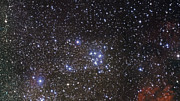
The star cluster Messier 18 and its surroundings 

PR Image eso1628b
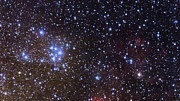
The star cluster Messier 18 in the constellation of Sagittarius 

PR Image eso1628c
Wide-field view of the region around the star cluster Messier 18


Videos

Zooming in on the star cluster Messier 18

Close-up look at the region around the star cluster Messier 18


The small smattering of bright blue stars in the upper left of this vast new 615 megapixel ESO image is the perfect cosmic laboratory in which to study the life and death of stars. Known as Messier 18 this star cluster contains stars that formed together from the same massive cloud of gas and dust. This image, which also features red clouds of glowing hydrogen and dark filaments of dust, was captured by the VLT Survey Telescope (VST) located at ESO’s Paranal Observatory in Chile.

Messier 18 was discovered and catalogued in 1764 by Charles Messier — for whom the Messier Objects are named — during his search for comet-like objects [1]. It lies within the Milky Way, approximately 4600 light-years away in the constellation of Sagittarius, and consists of many sibling stars loosely bound together in what is known as an open cluster.

There are over 1000 known open star clusters within the Milky Way, with a wide range of properties, such as size and age, that provide astronomers with clues to how stars form, evolve and die. The main appeal of these clusters is that all of their stars are born together out of the same material.

In Messier 18 the blue and white colours of the stellar population indicate that the cluster’s stars are very young, probably only around 30 million years old. Being siblings means that any differences between the stars will only be due to their masses, and not their distance from Earth or the composition of the material they formed from. This makes clusters very useful in refining theories of star formation and evolution.

Astronomers now know that most stars do form in groups, forged from the same cloud of gas that collapsed in on itself due to the attractive force of gravity. The cloud of leftover gas and dust — or molecular cloud — that envelops the new stars is often blown away by their strong stellar winds, weakening the gravitational shackles that bind them. Over time, loosely bound stellar siblings like those pictured here will often go their separate ways as interactions with other neighbouring stars or massive gas clouds nudge, or pull, the stars apart. Our own star, the Sun, was most likely once part of a cluster very much like Messier 18 until its companions were gradually distributed across the Milky Way.

The dark lanes that snake through this image are murky filaments of cosmic dust, blocking out the light from distant stars. The contrasting faint reddish clouds that seem to weave between the stars are composed of ionised hydrogen gas. The gas glows because young, extremely hot stars like these are emitting intense ultraviolet light which strips the surrounding gas of its electrons and causes it to emit the faint glow seen in this image. Given the right conditions, this material could one day collapse in on itself and provide the Milky Way with yet another brood of stars — a star formation process that may continue indefinitely (eso1535).

This mammoth 30 577 x 20 108 pixel image was captured using the OmegaCAM camera, which is attached to the VLT Survey Telescope (VST) at ESO’s Paranal Observatory in Chile.


Notes

[1] Messier 18 is also listed in the New General Catalogue as NGC 6613.


More Information

ESO is the foremost intergovernmental astronomy organisation in Europe and the world’s most productive ground-based astronomical observatory by far. It is supported by 16 countries: Austria, Belgium, Brazil, the Czech Republic, Denmark, France, Finland, Germany, Italy, the Netherlands, Poland, Portugal, Spain, Sweden, Switzerland and the United Kingdom, along with the host state of Chile. ESO carries out an ambitious programme focused on the design, construction and operation of powerful ground-based observing facilities enabling astronomers to make important scientific discoveries. ESO also plays a leading role in promoting and organising cooperation in astronomical research. ESO operates three unique world-class observing sites in Chile: La Silla, Paranal and Chajnantor. At Paranal, ESO operates the Very Large Telescope, the world’s most advanced visible-light astronomical observatory and two survey telescopes. VISTA works in the infrared and is the world’s largest survey telescope and the VLT Survey Telescope is the largest telescope designed to exclusively survey the skies in visible light. ESO is a major partner in ALMA, the largest astronomical project in existence. And on Cerro Armazones, close to Paranal, ESO is building the 39-metre European Extremely Large Telescope, the E-ELT, which will become “the world’s biggest eye on the sky”.


Links


Contacts

Richard Hook
ESO Public Information Officer
Garching bei München, Germany
Tel: +49 89 3200 6655
Cell: +49 151 1537 3591
Email:
rhook@eso.org

Source: ESO

Tuesday, August 09, 2016

Investigating the Neutrino Mass Scale with the ultra-low background KamLAND-Zen detector

Credit: RCNS, Tohoku University


The ultra-low background KamLAND-Zen detector, hosted by the Research Center for Neutrino Science (RCNS) at Tohoku University in collaboration with the Kavli Institute for the Physics and Mathematics of the Universe (Kavli IPMU) at the University of Tokyo and other international institutes, demonstrates the best sensitivity in the search for neutrinoless double-beta decay, and sets the best limit on the effective Majorana neutrino mass.

The basic theory of neutrinoless double-beta decay was suggested in the 1930s. The physicist Ettore Majorana hypothesized that the uncharged neutrino particle could be its own antiparticle, and thus could be annihilated by itself. The search for neutrinoless decay is the most practical experimental probe for the neutrino-antineutrino identity.

However, there has been no experimental evidence so far. Recent neutrino measurement results revealed that neutrinos have a tiny mass, and Majorana's hypothesis could be of decisive importance in constructing a theoretical mechanism to realize these tiny masses.

A number of experiments world-wide, using different technologies, are in competition to discover neutrinoless decay. The KamLAND-Zen experiment succeeded in dramatically improving the neutrinoless decay search limit by combing an ultra-low background detector with an unprecedented amount of xenon-136, the isotope where the double-beta decay occurs.

Under the assumption of the neutrino-antineutrino identity, the non-detection constrains the mass scale of neutrinos, close to the so-called inverted hierarchy scale.

This result demonstrates great potential for further investigation of the neutrino mass.


Publication Details:


Authors: A. Gando, Y. Gando, T. Hachiya, A. Hayashi, S. Hayashida, H. Ikeda, K. Inoue, K. Ishidoshiro, Y. Karino, M. Koga, S. Matsuda, T. Mitsui, K. Nakamura1, S. Obara, T. Oura, H. Ozaki, I. Shimizu, Y. Shirahata, J. Shirai, A. Suzuki, T. Takai, K. Tamae, Y. Teraoka, K. Ueshima, H. Watanabe, A. Kozlov, Y. Takemoto, S. Yoshida, K. Fushimi, T.I. Banks, B.E. Berger, B.K. Fujikawa, T. O'Donnell, L.A. Winslow, Y. Efremenko, H.J. Karwowski, D.M. Markoff, W. Tornow, J.A. Detwiler, S. Enomoto and M.P. Decowski

Title: Search for Majorana Neutrinos near the Inverted Mass Hierarchy Region with KamLAND-Zen

Journal: Physical Review Letters


Paper abstract:

arXiv.org: Pre-print


Contact:

Kunio Inoue
Research Center for Neutrino Science
http://www.awa.tohoku.ac.jp/kamlande


Monday, August 08, 2016

UCLA Astronomers Use Keck Observatory to Look Back 12 Billion Years and Measure Oxygen

Galaxy COSMOS-1908 is in the center of this Hubble Space Telescope image, indicated by the arrow. 
Nearly everything in the image is a galaxy. 
Credit: Ryan Sanders and the CANDELS team


MAUNAKEA, Hawaii — UCLA astronomers have used the W. M. Keck Observatory on Maunakea, Hawaii to make the first accurate measurement of the abundance of oxygen in a distant galaxy. 

Oxygen, the third-most abundant chemical element in the Universe, is created inside stars and released into interstellar gas when stars die. Quantifying the amount of oxygen is key to understanding how matter cycles in and out of galaxies. This research is published online in the Astrophysical Journal Letters.

“This is by far the most distant galaxy for which the oxygen abundance has actually been measured,” said Alice Shapley, a UCLA professor of astronomy, and co-author of the study. “We’re looking back in time at this galaxy as it appeared 12 billion years ago.”

Knowing the abundance of oxygen in the galaxy called COSMOS-1908 is an important stepping stone toward allowing astronomers to better understand the population of faint, distant galaxies observed when the Universe was only a few billion years old, Shapley said.

COSMOS-1908 contains approximately one billion stars. In contrast, the Milky Way contains approximately 100 billion stars. Furthermore, COSMOS-1908 contains approximately only 20 percent the abundance of oxygen that is observed in the Sun.

Typically, astronomers rely on extremely indirect and imprecise techniques for estimating oxygen abundance for the vast majority of distant galaxies. But in this case, UCLA researchers used a direct measurement, said Ryan Sanders, astronomy graduate student and the study’s lead author.

“Close galaxies are much brighter, and we have a very good method of determining the amount of oxygen in nearby galaxies,” Sanders said. 

In faint, distant galaxies, the task is dramatically more difficult, but COSMOS-1908 was one case for which Sanders was able to apply the “robust” method commonly applied to nearby galaxies. “We hope this will be the first of many,” he said.

Shapley said that prior to Sanders’ discovery, researchers didn’t know if they could measure how much oxygen there was in these distant galaxies.

“Ryan’s discovery shows we can measure the oxygen and compare these observations with models of how galaxies form and what their history of star formation is,” Shapley said.

The researchers used an extremely advanced and sophisticated instrument called MOSFIRE (Multi-Object Spectrometer for Infra-Red Exploration) installed on the Keck I telescope at the Keck Observatory. 

This five-ton instrument was designed to study the most distant, faintest galaxies, said UCLA physics and astronomy professor Ian McLean, co-project leader on MOSFIRE and director of UCLA’s Infrared Laboratory for Astrophysics. McLean and co-principal investigator Chuck Steidel from the California Institute of Technology built the instrument with colleagues colleagues from UCLA, Caltech, UC Santa Cruz and industrial sub-contractors.

The amount of oxygen in a galaxy is determined primarily by three factors: how much oxygen comes from large stars that end their lives violently in supernova explosions — a ubiquitous phenomenon in the early Universe, when the rate of stellar births was dramatically higher than the rate in the Universe today; how much of that oxygen gets ejected from the galaxy by so-called “super winds,” which propel oxygen and other interstellar gases out of galaxies at hundreds of thousands of miles per hour; and how much pristine gas enters the galaxy from the intergalactic medium, which doesn’t contain much oxygen.

“If we can measure how much oxygen is in a galaxy, it will tell us about all these processes,” said Shapley, who, along with Sanders, is interested in learning how galaxies form and evolve, why galaxies have different structures, and how galaxies exchange material with their intergalactic environments.

Shapley expects the measurements of oxygen will reveal that super winds are very important in how galaxies evolved. “Measuring the oxygen content of galaxies over cosmic time is one of the key methods we have for understanding how galaxies grow, as well as how they spew out gas into the intergalactic medium,” she said.

Keck Observatory’s MOSFIRE collects visible-light photons from objects billions of light years away whose wavelengths have been stretched or “redshifted” to the infrared by the expansion of the Universe. Due to the finite speed of light, MOSFIRE is providing a view of these galaxies as they existed billions of years ago, when the light first started traveling to Earth. MOSFIRE is a type of instrument known as a “spectrograph,” which spreads the light from astronomical objects out into a spectrum of separate wavelengths (colors), indicating the specific amount of energy emitted at each wavelength. Spectrographs enable astronomers to determine the chemical contents of galaxies, because different chemical elements — such as oxygen, carbon, iron or hydrogen — each provide a unique spectral fingerprint, emitting light at specific wavelengths.

To characterize the chemical contents of COSMOS-1908, Sanders analyzed a particular wavelength in the MOSFIRE spectrum of this galaxy that is sensitive to the amount of oxygen. “It’s an amazing instrument, which made Ryan’s measurement possible,” Shapley said.

Data for COSMOS-1908 were collected as part of the MOSFIRE Deep Evolution Field (MOSDEF) survey, a large Keck Observatory project that Shapley and Sanders have carried out in collaboration with astronomers at UC Berkeley, UC Riverside and UCSD. Between 2012 and 2016, the MOSDEF survey was allocated roughly 50 nights of MOSFIRE time on the Keck I telescope to study distant galaxies forming in the early Universe.

The research was funded by both the National Science Foundation and NASA. MOSFIRE was also funded by the National Science Foundation (through the Telescope System Instrumentation program), and by Gordon and Betty Moore.

The W. M. Keck Observatory operates the largest, most scientifically productive telescopes on Earth. The two, 10-meter optical/infrared telescopes near the summit of Maunakea on the Island of Hawaii feature a suite of advanced instruments including imagers, multi-object spectrographs, high-resolution spectrographs, integral-field spectrographs and world-leading laser guide star adaptive optics systems. 

Keck Observatory is a private 501(c) 3 non-profit organization and a scientific partnership of the California Institute of Technology, the University of California and NASA.


Media Contact

Steve Jefferson
W. M. Keck Observatory
(808) 881-3827
sjefferson@keck.hawaii.edu


Sunday, August 07, 2016

Is Earthly Life Premature from a Cosmic Perspective?

"If you ask, 'When is life most likely to emerge?' you might naively say, 'Now,'" says lead author Avi Loeb of the Harvard-Smithsonian Center for Astrophysics. "But we find that the chance of life grows much higher in the distant future."

Life as we know it first became possible about 30 million years after the Big Bang, when the first stars seeded the cosmos with the necessary elements like carbon and oxygen. Life will end 10 trillion years from now when the last stars fade away and die. Loeb and his colleagues considered the relative likelihood of life between those two boundaries.

The dominant factor proved to be the lifetimes of stars. The higher a star's mass, the shorter its lifetime. Stars larger than about three times the sun's mass will expire before life has a chance to evolve.

Conversely, the smallest stars weigh less than 10 percent as much as the Sun. They will glow for 10 trillion years, giving life ample time to emerge on any planets they host. As a result, the probability of life grows over time. In fact, chances of life are 1000 times higher in the distant future than now.

"So then you may ask, why aren't we living in the future next to a low-mass star?" says Loeb.

"One possibility is we're premature. Another possibility is that the environment around a low-mass star is hazardous to life."

Although low-mass, red dwarf stars live for a long time, they also pose unique threats. In their youth they emit strong flares and ultraviolet radiation that could strip the atmosphere from any rocky world in the habitable zone.

To determine which possibility is correct -- our premature existence or the hazard of low-mass stars -- Loeb recommends studying nearby red dwarf stars and their planets for signs of habitability. Future space missions like the Transiting Exoplanet Survey Satellite and James Webb Space Telescope should help to answer these questions.

The paper describing this work has been accepted for publication in the Journal of Cosmology and Astroparticle Physics and is available online. Its co-authors are Avi Loeb (Harvard-Smithsonian Center for Astrophysics) and Rafael Batista and David Sloan (University of Oxford). Loeb simultaneously wrote an extended review on the habitability of the universe as a chapter for a forthcoming book.

Headquartered in Cambridge, Mass., the Harvard-Smithsonian Center for Astrophysics (CfA) is a joint collaboration between the Smithsonian Astrophysical Observatory and the Harvard College Observatory. CfA scientists, organized into six research divisions, study the origin, evolution and ultimate fate of the universe.


For more information, contact:

Christine Pulliam
Media Relations Manager
Harvard-Smithsonian Center for Astrophysics
617-495-7463
cpulliam@cfa.harvard.edu


Saturday, August 06, 2016

Faintest hisses from space reveal famous star's past life

Artist’s impression of the supernova flare seen in the Large Magellanic Cloud on 23 February 1987. Credit: CAASTRO / Mats Björklund (Magipics). Click for a full size image

Artist’s impression of the star in its multi-million year long and previously unobservable phase as a large, red supergiant. 
Credit: CAASTRO / Mats Björklund (Magipics). Click for a full size image


Astronomers have managed to peer into the past of a nearby star millions of years before its famous explosion, using a telescope in remote outback Australia at a site free from FM radio interference.

Research led by a student at the University of Sydney, and including an international team of astronomers observing the region at the lowest-ever radio frequencies, has helped fine-tune our understanding of stellar explosions. The findings are published today in the journal Monthly Notices of the Royal Astronomical Society.

The research paints a picture of the star's life long before its death in what was the closest and brightest supernova seen from Earth, now known as supernova remnant 1987A (SN 1987A), which collapsed spectacularly almost 30 years ago.

Much had been known about the immediate past of this star through studying the cosmic ruins resulting from the star's collapse in 1987, which occurred in a neighbouring galaxy, the Large Magellanic Cloud. However it was the detection of the very faintest of hisses through low-frequency radio astronomy that has provided the latest insights. Previously, only the final fraction of the dead star's multi-million-year-long life, about 0.1%, or 20,000 years had been observable.

This latest research – which has enabled astrophysicists to probe the supernova's past life millions of years further back than was previously possible – was led by Joseph Callingham, a PhD candidate with the University of Sydney and the ARC Centre of Excellence for All-Sky Astrophysics (CAASTRO), under supervision from former Young Australian of the Year and former CAASTRO Director Prof Bryan Gaensler, now at the University of Toronto.

Operating the Murchison Widefield Array in the West Australian desert, the radio astronomers were able to 'see' right back to when the star was in its long-lasting red supergiant phase.

Mr Callingham explained previous studies focused on material that was ejected into space when the star was in its final blue supergiant phase. "Just like excavating and studying ancient ruins that teach us about the life of a past civilisation, my colleagues and I have used low-frequency radio observations as a window into the star's life," he said.

Researchers found the red supergiant lost its matter at a slower rate and generated slower winds that pushed into its surrounding environment than was previously assumed. 

"Our new data improves our knowledge of the composition of space in the region of SN 1987A; we can now go back to our simulations and tweak them, to better reconstruct the physics of supernova explosions," said Mr Callingham.

Professor Gaensler explained that key to gaining these new insights was the quiet environment in which the radio telescope is located. "Nobody knew what was happening at low radio frequencies, because the signals from our own earthbound FM radio drown out the faint signals from space. Now, by studying the strength of the radio signal, astronomers for the first time can calculate how dense the surrounding gas is, and thus understand the environment of the star before it died."


Media contact

Dr Wiebke Ebeling
ARC Centre of Excellence for All-sky Astrophysics (CAASTRO)
Curtin Institute of Radio Astronomy | Curtin University
Australia
Tel: +61 8 9266 9174
Mob: +61 423 933 444
wiebke.ebeling@curtin.edu.au


Science contact

Joseph Callingham
University of Sydney
j.callingham@physics.usyd.edu.au


Images e videos


The team describe the result, and show an animation of how the older material from the star's red supergiant phase is being pushed along by younger material and by the shock from the supernova. Credit: CAASTRO


Notes for Editors

CAASTRO is a collaboration of The University of Sydney, The Australian National University, The University of Melbourne, Swinburne University of Technology, The University of Queensland, The University of Western Australia and Curtin University, the latter two participating together as the International Centre for Radio Astronomy Research (ICRAR). CAASTRO is funded under the Australian Research Council (ARC) Centre of Excellence program, with additional funding from the seven participating universities and from the NSW State Government's Science Leveraging Fund.

The Royal Astronomical Society (RAS), founded in 1820, encourages and promotes the study of astronomy, solar-system science, geophysics and closely related branches of science. The RAS organizes scientific meetings, publishes international research and review journals, recognizes outstanding achievements by the award of medals and prizes, maintains an extensive library, supports education through grants and outreach activities and represents UK astronomy nationally and internationally. Its more than 4000 members (Fellows), a third based overseas, include scientific researchers in universities, observatories and laboratories as well as historians of astronomy and others.

The RAS accepts papers for its journals based on the principle of peer review, in which fellow experts on the editorial boards accept the paper as worth considering. The Society issues press releases based on a similar principle, but the organisations and scientists concerned have overall responsibility for their content.
 
Follow the RAS on Twitter


Friday, August 05, 2016

Astronomers Catalog Planets That May Be Earthlike

The artistic concept of Kepler-186f is the result of scientists and artists collaborating to imagine the appearance of these distant worlds. 
Image credit: NASA Ames/SETI Institute/JPL-Caltech.  › Full image and caption


Using public data collected by NASA's Kepler mission, astronomers have catalogued the planet candidates that may be similar to our third rock from the sun. The tabulation of candidates will help astronomers focus their research efforts in the search for life.

The analysis, led by Stephen Kane, an associate professor of physics and astronomy at San Francisco State University in California, highlights 20 candidates in the Kepler trove that are less than twice the size of Earth and orbit their star in the conservative habitable zone -- the range of distances where liquid water could pool on the surface of an orbiting planet. Of these 20 candidates, nine have been previously investigated and determined to be verified planets, including notables like Kepler-62f, Kepler-186f, Kepler-283c, Kepler-296f and Kepler-442b.

The results are presented in a paper accepted by the Astrophysical Journal. For a listing of the candidates and their properties, the paper can be reviewed at: http://arxiv.org/abs/1608.00620.

NASA's Ames Research Center in California's Silicon Valley manages the Kepler and K2 missions for NASA's Science Mission Directorate. NASA's Jet Propulsion Laboratory in Pasadena, California, managed Kepler mission development. Ball Aerospace & Technologies Corporation operates the flight system with support from the Laboratory for Atmospheric and Space Physics at the University of Colorado at Boulder.


News Media Contact

Elizabeth Landau
Jet Propulsion Laboratory, Pasadena, Calif.
818-354-6425

elizabeth.landau@jpl.nasa.gov

Michele Johnson
Ames Research Center, Moffett Field, Calif.
650-604-6982

michele.johnson@nasa.gov

Written by Michele Johnson


Source: JPL-Caltech

A sky full of stars

Credit: ESA/Hubble and NASA


Located approximately 22 000 light-years away in the constellation of Musca (The Fly), this tightly packed collection of stars — known as a globular cluster — goes by the name of NGC 4833. This NASA/ESA Hubble Space Telescope image shows the dazzling stellar group in all its glory.

NGC 4833 is one of the over 150 globular clusters known to reside within the Milky Way. These objects are thought to contain some of the oldest stars in our galaxy. Studying these ancient cosmic clusters can help astronomers to unravel how a galaxy formed and evolved, and give an idea of the galaxy’s age.

Globular clusters are responsible for some of the most striking sights in the cosmos, with hundreds of thousands of stars congregating in the same region of space. Hubble has observed many of these clusters during its time in orbit around our planet, each as breathtaking as the last.


Thursday, August 04, 2016

A Giant Stellar Void in the Milky Way

An artist's impression of the implied distribution of young stars, represented here by Cepheids shown as blue stars plotted on the background of a drawing of the Milky Way. With the exception of a small clump in the Galactic centre, the central 8000 light years appear to have very few Cepheids, and hence very few young stars. Credit: The University of Tokyo. Click for a full size image


A major revision is required in our understanding of our Milky Way Galaxy according to an international team led by Prof Noriyuki Matsunaga of the University of Tokyo. The Japanese, South African and Italian astronomers find that there is a huge region around the centre of our own Galaxy, which is devoid of young stars. The team publish their work in a paper in Monthly Notices of the Royal Astronomical Society.

The Milky Way is a spiral galaxy containing many billions of stars, with our Sun about 26,000 light years from its centre. Measuring the distribution of these stars is crucial to our understanding of how our Galaxy formed and evolved. Pulsating stars called Cepheids are ideal for this. They are much younger (between 10 and 300 million years old) than our Sun (4.6 billion years old) and they pulsate in brightness in a regular cycle. The length of this cycle is related to the luminosity of the Cepheid, so if astronomers monitor them they can establish how bright the star really is, compare it with what we see from Earth, and work out its distance.

Despite this, finding Cepheids in the inner Milky Way is difficult, as the Galaxy is full of interstellar dust which blocks out light and hides many stars from view. Matsunaga's team compensated for this, with an analysis of near-infrared observations made with a Japanese-South African telescope located at Sutherland, South Africa. To their surprise they found hardly any Cepheids in a huge region stretching for thousands of light years from the core of the Galaxy.

Noriyuki Matsunaga explains: "We already found some while ago that there are Cepheids in the central heart of our Milky Way (in a region about 150 light years in radius). Now we find that outside this there is a huge Cepheid desert extending out to 8000 light years from the centre."

This suggests that a large part of our Galaxy, called the Extreme Inner Disk, has no young stars. Co-author Michael Feast notes: "Our conclusions are contrary to other recent work, but in line with the work of radio astronomers who see no new stars being born in this desert."

Another author, Giuseppe Bono, points out: "The current results indicate that there has been no significant star formation in this large region over hundreds of millions years. The movement and the chemical composition of the new Cepheids are helping us to better understand the formation and evolution of the Milky Way."

Cepheids have more typically been used to measure the distances of objects in the distant Universe, and the new work is an example instead of the same technique revealing the structure of our own Milky Way.


Media contacts

Ms Kanako Takeda
The University of Tokyo
Japan

kouhou.s@gs.mail.u-tokyo.ac.jp

Thami Nkwanyane
University of Cape Town
Tel: +27 21 650 5672

thami.nkwanyane@uct.ac.za

Thembela Mantungwa
South African Astronomical Observatory
Tel: +27 21 460 9319

tm@saao.ac.za


Science contacts

Prof Noriyuki Matsunaga
The University of Tokyo
Japan
matsunaga@astron.s.u-tokyo.ac.jp

Prof Michael Feast
University of Cape Town and
South African Astronomical Observatory
Tel: +27 21 650 2396
mwf@ast.uct.ac.za

Prof Giuseppe Bono
University of Rome Tor Vergata
Italy
bono@roma2.infn.it

Prof Marco Galliani
INAF
Italy
marco.galliani@inaf.it

Prof Marco Malaspina
INAF
Italy
marco.malaspina@inaf.it


Further information


The new work appears in "A lack of classical Cepheids in the inner part of the Galactic disc", N. Matsunaga, M. Feast, G. Bono, N. Kobayashi, L. Inno, T. Nagayama, S. Nishiyama, Y. Matsuoka and T. Nagata (Kyoto), Monthly Notices of the Royal Astronomical Society, Oxford University Press, in press.

A preprint of the paper is available on the arXiv


Notes for Editors

The Royal Astronomical Society (RAS), founded in 1820, encourages and promotes the study of astronomy, solar-system science, geophysics and closely related branches of science. The RAS organizes scientific meetings, publishes international research and review journals, recognizes outstanding achievements by the award of medals and prizes, maintains an extensive library, supports education through grants and outreach activities and represents UK astronomy nationally and internationally. Its more than 4000 members (Fellows), a third based overseas, include scientific researchers in universities, observatories and laboratories as well as historians of astronomy and others.

The RAS accepts papers for its journals based on the principle of peer review, in which fellow experts on the editorial boards accept the paper as worth considering. The Society issues press releases based on a similar principle, but the organisations and scientists concerned have overall responsibility for their content.
Follow the RAS on Twitter


Wednesday, August 03, 2016

Gemini Tracks Collapse of Io's Atmosphere During Frigid Eclipses

Artist’s concept of the atmospheric collapse of Jupiter’s volcanic moon Io, which is eclipsed by Jupiter for two hours of each day (1.7 Earth days). The resulting temperature drop freezes sulfur dioxide gas, causing the atmosphere to “deflate,” as seen in the shadowed area on the left. Credits: SwRI/Andrew Blanchard. Full resolution JPEG


Gemini observations show that the thin atmosphere of Jupiter's moon Io undergoes dramatic changes during frequent eclipses with the giant planet. The following press release, issued by the Southwest Research Institute, explains how the dramatic changes in temperature cause the moon's atmosphere to collapse.

San Antonio – Aug. 2, 2016 – A Southwest Research Institute-led team has documented atmospheric changes on Io, Jupiter’s volcanically active satellite, as the giant planet casts its shadow over the moon’s surface during daily eclipses. 

A study led by SwRI’s Constantine Tsang concluded that Io’s thin atmosphere, which consists primarily of sulfur dioxide (SO2) gas emitted from volcanoes, collapses as the SO2 freezes onto the surface as ice when Io is shaded by Jupiter. When the moon moves out of eclipse and ice warms, the atmosphere reforms through sublimation, where ice converts directly to gas. 

“This research is the first time scientists have observed this phenomenon directly, improving our understanding of this geologically active moon,” said Tsang, a senior research scientist in SwRI’s Space Science and Engineering Division. 

The findings were published in a study titled “The Collapse of Io’s Primary Atmosphere in Jupiter Eclipse” in the Journal of Geophysical Research. The team used the eight-meter Gemini North telescope in Hawai'i with the Texas Echelon Cross Echelle Spectrograph (TEXES) for this research. 

Data showed that Io’s atmosphere begins to “deflate” when the temperatures drop from -235 degrees Fahrenheit (-148 ℃) in sunlight to -270 degrees Fahrenheit (-168 ℃) during eclipse. Eclipse occurs 2 hours of every Io day (1.7 Earth days). In full eclipse, the atmosphere effectively collapses as most of the SO2 gas settles as frost on the moon’s surface. The atmosphere redevelops as the surface warms once the moon returns to full sunlight. 

“This confirms that Io’s atmosphere is in a constant state of collapse and repair, and shows that a large fraction of the atmosphere is supported by sublimation of SO2 ice,” said John Spencer, an SwRI scientist who also participated in the study. “Though Io’s hyperactive volcanoes are the ultimate source of the SO2, sunlight controls the atmospheric pressure on a daily basis by controlling the temperature of the ice on the surface. We’ve long suspected this, but can finally watch it happen.” 

Prior to the study, no direct observations of Io’s atmosphere in eclipse had been possible because Io’s atmosphere is difficult to observe in the darkness of Jupiter’s shadow. This breakthrough was possible because TEXES measures the atmosphere using heat radiation, not sunlight, and the giant Gemini telescope can sense the faint heat signature of Io’s collapsing atmosphere. 

Tsang and Spencer’s observations occurred over two nights in November 2013, when Io was more than 420 million miles (676 million km) from Earth. On both occasions, Io was observed moving in and out of Jupiter’s shadow, for a period about 40 minutes before and after eclipse. 

Io is the most volcanically active object in the solar system. Tidal heating, the result of Io’s gravitational interaction with Jupiter, drives the moon’s volcanic activity. Io’s volcanoes emit umbrella-like plumes of SO2 gas extending up to 300 miles (483 km) above the moon’s surface and produce extensive basaltic lava fields that can flow for hundreds of miles. 

This study is also timely given that NASA’s Juno spacecraft entered Jupiter orbit on July 4th. “Io spews out gases that eventually fill the Jupiter system, ultimately seeding some of the auroral features seen at Jupiter’s poles,” Tsang said. “Understanding how these emissions from Io are controlled will help paint a better picture of the Jupiter system.” 

For more information, contact Robert Crowe, (210) 522-4630, Communications Department, Southwest Research Institute, PO Drawer 28510, San Antonio, TX 78228-0510. 

SwRI Space Scientists Observe Io’s Atmospheric Collapse During Eclipse:  http://www.swri.org/9what/releases/2016/io-atmosphere-collapse-eclipse.htm


Tuesday, August 02, 2016

Thermal conduction in galaxy clusters

Spatial structure of the mirror instability after one shear time in the PIC simulations by Matt Kunz (Princeton). The magnetic-field strength is indicated by colour, where the colour scale is in the units of the initial value of the magnetic field. Field lines are shown by contours. The mirror fluctuations are elongated along the field lines. © MPA/Princeton


From X-ray and SZ observations we know all major characteristics of the hot intracluster medium (ICM) filling the entire volume of galaxy clusters - the largest virialized objects in our Universe. However, several important properties are still poorly known, including thermal conduction in the ICM, mediated by electrons. 

To explain the sharp temperature gradients in galaxy clusters, it is often proposed that thermal conduction is suppressed both by the topology of magnetic-field lines, which tangle electron trajectories, and by variations of the field strength that can trap electrons. The latter mechanism can be crucially important when the so-called mirror instability generates fluctuations of the magnetic field strength: this kinetic instability is triggered by pressure anisotropies in turbulent plasma. Even if such fluctuations are present on truly microscopic scales, they have the potential to completely shut down heat conduction. Scientists at MPA have investigated such a possibility by analysing the results of recent simulations and found that the suppression of thermal conductivity is in fact rather modest, a factor of ~5 compared to unmagnetized plasma. The effect operates in addition to other suppression mechanisms and independently of them, and depends only weakly on the macroscopic parameters of the intracluster medium.

The dominant baryonic component of a galaxy cluster is hot tenuous plasma that has accreted into the deep gravitational well formed by the dominant dark matter component. This makes galaxy clusters unique laboratories for a variety of plasma phenomena on an extremely wide range of scales. Intricate plasma processes on microscales, more than ten orders of magnitude smaller than the size of the cluster, affect the large-scale properties of the cluster; for example modifying particle transport influences the temperature profile. Many puzzling features of galaxy clusters, such as the stability of cool cores, sharp local gradients or the substructure seen in temperature maps, are closely tied to the problem of thermal conduction in the intracluster medium (ICM).

From X-ray observations it is now clear that the ICM demonstrates a variety of violent physical processes, such as cluster mergers, infalling galaxies, shock waves, and active galactic nuclei. These naturally render the plasma turbulent. In addition, radio observations show evidence that the ICM is pervaded by magnetic fields. 
The field magnitude is sufficient to confine the motion of charged particles to spiralling around field lines with a tiny Larmor radius, much smaller than the mean free paths of the particles. This effectively shuts down particle transport perpendicular to field lines. Moreover, such a plasma turns out to be unstable to pressure anisotropies that are easily generated by turbulent motions. These instabilities then grow rapidly on Larmor scales.

When studying thermal conduction, the mirror instability is of particular interest. In this case, the magnetic field strength is perturbed with a significant amplitude on the order of the local mean magnetic field. The correlation length of mirror perturbations is only two orders of magnitude longer than the electron Larmor radius, but about ten orders of magnitude smaller that the collisional mean free path. This means that such perturbations are capable of magnetically mirroring the electrons: a charged particle spiralling along a field line is reflected from a region with a strong magnetic field. If perturbations of the magnetic field are generated by turbulence on scales above the collisional mean free path, magnetic trapping is ineffective. The mirror fluctuations, in contrast, are at the scales comparable to the ion Larmor radius, where magnetic mirrors can suppress electron transport considerably.

The scale of mirror fluctuations is far smaller than the current observational limits. Instead, one has to turn to numerical simulations. Only recently have particle-in-cell codes become capable of studying micro-instabilities driven by pressure anisotropies. In these simulations, a region of plasma (with a linear size of the order of a few hundreds of the ion Larmor radius) is subjected to a shear, stretching the magnetic field lines, producing pressure anisotropy, and triggering the instability.

Suppression factor of the electron diffusivity in mirror fluctuations (solid line) as a function of the ratio of the mean free path to the correlation length of the fluctuations. At large mean free paths, the suppression stays above a certain lower limit. For comparison, the dashed line shows suppression for a lognormal distribution of magnetic fluctuations with a similar width of the probability density. © MPA


Scientists at MPA have used the results of these simulations to investigate the motion of electrons in mirror fluctuations (shown in Fig. 1). By applying a Monte Carlo approach, the diffusion and thermal conduction coefficients have been estimated for a representative field line extracted from the simulation domain. The probability distribution function of the magnetic field strength along the field line turns out to have a cut-off at a field strength of several times the initial value. This leads to only a moderate amount of particle transport suppression. In the limit where the collisional mean free path is much larger than the correlation length of the mirror fluctuations, diffusion is suppressed by a factor of ~10 (Fig. 2). This value then has to be converted into the suppression of thermal conduction.

Due to the additional presence of diffusion in energy space the thermal conductivity is suppressed by approximately a factor of two less effectively than the particle transport. The resulting suppression by a factor of ~5 appears to depend only very weakly on macroscopic parameters of the ICM as long as the ion Larmor radius remains much smaller than the correlation scale of the mirror perturbations, which is indeed well satisfied in the ICM. The effect operates on top of other suppression mechanisms and independently of them.


Author:  Sergey Komarov

Original Publication: 

1. Komarov S. V., Churazov E. M., Kunz M. W., Schekochihin A. A.  
Title: 2016, MNRAS, 460, 467


Monday, August 01, 2016

Chorus of Black Holes Sings in X-Rays

The blue dots in this field of galaxies, known as the COSMOS field, show galaxies that contain supermassive black holes emitting high-energy X-rays.Credit: NASA/JPL-Caltech


Supermassive black holes in the universe are like a raucous choir singing in the language of X-rays. When black holes pull in surrounding matter, they let out powerful X-ray bursts. This song of X-rays, coming from a chorus of millions of black holes, fills the entire sky -- a phenomenon astronomers call the cosmic X-ray background.

NASA's Chandra mission has managed to pinpoint many of the so-called active black holes contributing to this X-ray background, but the ones that let out high-energy X-rays -- those with the highest-pitched "voices" -- have remained elusive.

New data from NASA's Nuclear Spectroscopic Telescope Array, or NuSTAR, have, for the first time, begun to pinpoint large numbers of the black holes belting out the high-energy X-rays. Or, in astronomer-speak, NuSTAR has made significant progress in resolving the high-energy X-ray background.

"We've gone from resolving just two percent of the high-energy X-ray background to 35 percent," said Fiona Harrison, the principal investigator of NuSTAR at Caltech in Pasadena and lead author of a new study describing the findings in an upcoming issue of The Astrophysical Journal.  "We can see the most obscured black holes, hidden in thick gas and dust."

The results will ultimately help astronomers understand how the feeding patterns of supermassive black holes change over time. This is a key factor in the growth of not only black holes, but also the galaxies that host them. The supermassive black hole at the center of our Milky Way galaxy is dormant now, but at some point in the past, it too would have siphoned gas and bulked up in size.

As black holes grow, their intense gravity pulls matter toward them. The matter heats up to scorching temperatures, and particles get boosted to close to the speed of light. Together, these processes make the black hole surroundings glow with X-rays. A supermassive black hole with a copious supply of fuel, or gas, will give off more high-energy X-rays.

NuSTAR is the first telescope capable of focusing these high-energy X-rays into sharp pictures.

"Before NuSTAR, the X-ray background in high energies was just one blur with no resolved sources," said Harrison. "To untangle what's going on, you have to pinpoint and count up the individual sources of the X-rays."

"We knew this cosmic choir had a strong high-pitched component, but we still don't know if it comes from a lot of smaller, quiet singers, or a few with loud voices," said co-author Daniel Stern, the project scientist for NuSTAR at NASA's Jet Propulsion Laboratory in Pasadena, California. "Now, thanks to NuSTAR, we're gaining a better understanding of the black holes and starting to address these questions."

High-energy X-rays can reveal what lies around the most buried supermassive black holes, which are otherwise hard to see. In the same way that medical X-rays can travel through your skin to reveal pictures of bones, NuSTAR can see through the gas and dust around black holes, to get a deeper view of what's going on inside.

With NuSTAR's more complete picture of the supermassive black hole populations, astronomers can begin to puzzle together how they evolve and change over time. When did they start and stop feeding? What is the distribution of the gas and dust that both feed and hide the black holes?

The team expects to resolve more of the high-energy X-ray background over time with NuSTAR -- and better decipher the X-ray voices of our universe's rowdiest choir.

NuSTAR is a Small Explorer mission led by Caltech and managed by JPL for NASA's Science Mission Directorate in Washington. NuSTAR was developed in partnership with the Danish Technical University and the Italian Space Agency (ASI). The spacecraft was built by Orbital Sciences Corp., Dulles, Virginia. NuSTAR's mission operations center is at UC Berkeley, and the official data archive is at NASA's High Energy Astrophysics Science Archive Research Center. ASI provides the mission's ground station and a mirror archive. JPL is managed by Caltech for NASA.