Showing posts with label Dwarf Galaxies. Show all posts

Friday, September 25, 2026

A Sneak Peek into Early-Universe Star Formation with Boötes I

This image from the Hubble Space Telescope shows the Large Magellanic Cloud nebula N44, which is home to a large star cluster. Credit: ESA/Hubble & NASA, D. Gouliermis; CC BY 4.0

Title: Probing the IMF in the Early Universe — Direct Measurements in the Boötes I UFD with JWST/NIRCam
Authors: Keyi Ding et al.
First Author’s Institution: University of Maryland
Status: Accepted ApJ
The Stellar Initial Mass Function

Figure 1: Several different formulations for the IMF. Astronomers have found that the Milky Way IMF seems to follow either a broken power law (Kroupa), or a log-normal (Chabrier) distribution. Credit:
JohannesBuchner; CC BY-SA 4.0

A fundamental concept in astronomy is the stellar initial mass function (IMF). The IMF describes the number of stars of each mass that form from a single birth cloud. If the IMF has a negative slope, it means most stars are low in mass; if it has a positive slope, it means most stars are high in mass. Figure 1 shows some examples of commonly used IMFs, all of which have a negative slope, since we see far more low-mass stars than high-mass stars in the Milky Way. You may notice that several models deviate from a straight line at about 0.5 solar mass. This point, known as the turnover or critical mass, is crucial in determining the exact shape of the IMF.

For a relatively simple concept, the IMF is shaped by incredibly complicated underlying physical mechanisms. Things like turbulence, magnetic fields, and chemical enrichment all play a role in shaping the observed IMF. Additionally, the IMF is a pretty fundamental quantity. An enormous amount of astronomy research relies on assumptions made about the IMF. For example, since most stars are low in mass, and low-mass stars are dimmer, astronomers use the IMF to convert the amount of light in a galaxy to the number of stars; if there are more or fewer low-mass stars than we expect, our measurements will be wrong.

A big question surrounding the IMF is whether or not it’s universal. In the Milky Way, astronomers have been able to measure the IMF accurately, and they have found that it seems to be the same regardless of which bunch of stars we use to measure it.1 However, we know that galaxies in the early universe were very different compared to today. Things get tricky when you acknowledge that most measurements made of early-universe galaxies rely on modeling tools that are entirely reliant on assuming an IMF. This gnarly little detail makes measuring the IMF in the early universe especially valuable to astronomers.

What Makes Ultra-Faint Dwarfs So Special?

Today’s authors attempt to measure the early-universe IMF using a local relic, an ultra-faint dwarf galaxy (UFD). You might describe UFDs as “incredibly funky little galaxies.” They’re much less massive than the Milky Way, with about 10,000 times less stellar mass. What stars they do have tend to be very old and metal poor. The nature of UFDs has led many astronomers to think of them as fossils: relatively untouched galaxies formed in the early universe. Since we think UFDs are fossils of earlier galaxies, measuring the IMF in a UFD tells us whether the IMF was the same in the early universe as it is today. The authors focus on Boötes I, a relatively luminous UFD orbiting the Milky Way. Figure 2 shows Boötes I as seen by the Sloan Digital Sky Survey.

Figure 2: Boötes I as seen by the Sloan Digital Sky Survey. Because they’re so diffuse, UFDs look less like galaxies and more like groups of stars. Credit:
Vasily Belokurov – SDSS-II Collaboration

The IMF in Boötes I

Measuring the IMF can get tricky — it’s typically pretty difficult to measure the mass of each individual star in a galaxy. Thankfully, Boötes I is close enough that we can do exactly that! Using JWST’s NIRCam instrument, today’s authors obtain imaging of Boötes I that is sensitive enough to extract roughly 10,000 stars belonging to the galaxy.

To measure the IMF from the observed population of stars, the authors use a modified version of Starwave, a Bayesian inference tool. In short, the tool takes in some assumptions about the population of stars in the galaxy, then generates many potential color–magnitude diagrams for various parameter selections. You can then assess how well each simulated color–magnitude diagram fits the observed data, thus determining likely parameters for the stellar population. The authors apply their tool for three different IMF models, testing how close the IMF in Boötes I is to that of the Milky Way. This allows them to determine how well the IMF compares to that of the Milky Way, which is typically thought of as a broken power law or log-normal distribution. If the IMF in Boötes I aligns with the Milky Way’s IMF, we’ll have a solid piece of evidence for a truly invariant IMF across cosmic time, allowing astronomers to rest easy knowing our modeling efforts haven’t been bunk this whole time.

So… What Did We Learn?

The authors find that a single power law can be ruled out to a good degree of confidence. This is good, as Milky Way studies show undeniable evidence of a turnover in the distribution. The broken power law and log-normal models both fit the observed data relatively well, aligning well with Milky Way–derived IMFs. All in all, they find solid evidence for an invariant IMF in the early universe.

However, they are unable to say with absolute certainty that the IMF is invariant. Given that their data are nearly perfect (that is, it’s pretty much impossible to get better data for Boötes I), the authors emphasize that a larger sample of UFD IMFs is needed to truly rule out an invariant IMF, but we’re certainly taking steps in the right direction! As the age-old saying goes, “more data are needed!”

Original astrobite edited by Maggie Verrico.


Editor’s Note: The Milky Way IMF may vary from star cluster to star cluster; as described in this AAS Nova highlight from 8 July 2026, recent research using data from the Gaia spacecraft has found evidence for IMF variation in our galaxy. ↩︎


About the author, Drew Lapeer:

Drew is a first-year PhD student at the University of Massachusetts Amherst. They are broadly interested in the evolution of galaxies, with a focus on the impact of cosmic feedback on the galactic ecosystem. In their free time, they enjoy reading, rock climbing, hiking, and baking!


Thursday, January 08, 2026

Stars That Die Off the Beaten Path

This artist's impression of the M33 galaxy, with data inset from ALMA and the NSF VLA, shows the supernova remnant astronomers believe to be caused by a supernova explosion some 10,000 years ago. This new reserach suggests that the Wolf-Rayet may explode as a supernova in the next 0.5-1 million years. Credit: NSF/AUI/NRAO/B.Saxton. Hi-Res File


By tracking thousands of massive, dying stars in nearby galaxy M33, astronomers have drawn the first large‑scale map of potential supernova blast sites

Astronomers have created a detailed forecast of where they expect to observe future stellar explosions in a nearby galaxy, opening a new window into how exploding stars shape the cosmos. Focusing on M33, a spiral galaxy about 2.7 million light‑years away, this research combined new maps of cold atomic hydrogen gas from the U.S. National Science Foundation Very Large Array (NSF VLA) with millimeter‑wave observations of molecular gas from the Atacama Large Millimeter/submillimeter Array (ALMA).

Massive stars end their lives in titanic supernova explosions. These blasts influence how galaxies grow by stirring gas, driving winds, and seeding space with heavy elements. How much impact a single explosion has depends on where it happens: a blast inside a dense cloud of gas behaves very differently than one in a relatively empty region. Until now, astronomers have had few opportunities to observe this problem, because supernovae are rare, and typically too far away to study in detail.

This new study offers a solution to this problem, by shifting telescopes to observe future supernova sites instead. The team mapped the gas, at various wavelengths, around thousands of evolved, massive stars in M33. These are stars that are expected to explode as core‑collapse supernovae within a few million years. On top of these gas maps, the team overlaid catalogs of three types of objects: red supergiants, Wolf–Rayet stars, and supernova remnants. Red supergiants are bloated, dying massive stars that are known progenitors of most Type II supernovae, while Wolf–Rayet stars are hotter, more massive, and shorter‑lived, and are linked to stripped‑envelope explosions and some gamma‑ray bursts. Supernova remnants mark locations where massive stars have already exploded in the past 10,000–100,000 years.

By shifting their focus, these astronomers have assembled the first large, quantitative census of the environments in which massive stars will eventually end their existence. “What we found was surprising,” shares Sumit Sarbadhicary, of Johns Hopkins University, and lead author of this research. “A large fraction of these future supernovae are expected to explode outside of the dense molecular clouds.” Only about 30–40 percent of red supergiants and a similar fraction of supernova remnants sit in regions where molecular hydrogen is detected, while the remaining majority lie in lower‑density, primarily atomic gas. Even among the youngest, most massive Wolf–Rayet stars, roughly 45 percent show no detectable molecular gas at their exact locations.

At the same time, almost all of these stars do reside somewhere within the broader disk of cold gas: more than 90% are found in regions with detectable atomic hydrogen. This means that many supernovae will not explode inside of dense, star‑forming clouds, but in the surrounding, more diffuse intercloud medium. In those environments, supernova blast waves can travel farther before cooling, changing how and where they inject energy and momentum into the galaxy.

When the team sorted stars by their estimated birth masses, a clear trend emerged: the higher the mass of the star, the denser its surrounding gas. More massive red supergiants, and especially Wolf–Rayet stars, are statistically more likely to be found close to peaks in the molecular gas distribution than their lower‑mass counterparts. This is consistent with the idea that the most massive, shortest‑lived stars explode before they have time to drift far from their birth clouds or before those clouds have fully dispersed.

Still, the study finds that even these massive stars often inhabit complex surroundings. In one detailed zoom using ultra‑high‑resolution ALMA data, a Wolf–Rayet star that appears to sit in a dense cloud at coarse resolution is actually embedded in a small, roughly 10‑light‑year‑wide cavity carved out of the molecular gas. That cavity was likely created by intense radiation, stellar winds, or a previous supernova, and it will strongly influence how the Wolf–Rayet star’s own explosion interacts with nearby gas.

The data used in this research is part of the Local Group L-Band Survey, a radio survey at 1-2 GHz of Local Group galaxies, including Triangulum (referenced here), Andromeda, and four other dwarf galaxies (NGC 6822, WLM, IC 1613 and IC10). Team members essential to gathering and assembling this data include Eric Koch of the NSF NRAO, Adam Leroy of Ohio State University, and Erik Rosolowsky of the University of Alberta, Canada. The maps created in this survey will become the most sensitive maps of atomic hydrogen in these galaxies, with preliminary versions being used in Sarbadhicary’s current paper.

Because large computer simulations of galaxies must approximate where supernovae occur, this new census offers a way to check these projections against reality. Galaxy simulations (including those used in research projects like FIRE, Illustris, TIGRESS, SILCC) are the only way in which astronomers can study millions, and billions, of years of galaxy evolution. However, the simulations must to approximate the physics at the scales of individual stars and molecular clouds. Observations such as these will be vital, and much needed, for these simulations to benchmark the sub-scale (or subgrid) physics from stars, in order to accurately capture how these stars disperse gas, drive winds and regulate the overall star-formation in galaxies. The Local Group L-Band Survey will capture the highest resolution maps of gas around stars to understand this longstanding mystery of how efficiently stars form and disperse the cold gas reservoir in galaxies.

This comparison flagged how simulations treat radiation, winds, clustering, and runaway stars, suggesting they may need refinement to better match observed environments. The team argues that similar comparisons, extended to more galaxies and higher‑resolution gas maps, can help narrow down which feedback models most faithfully reproduce how real supernovae sculpt the interstellar medium.

“As this research continues, we’re aiming to expand this collection by sampling another 80 star-forming galaxies,” adds Sarbadhicary. “We also have upcoming maps of M33 from ALMA, led by team members Eric Koch and Erik Rosolowsky, that will be significantly sharper than the present study, revealing even more detailed, complex environments like the Wolf-Rayet star mentioned earlier.” By treating evolved massive stars and recent remnants as signposts of present and future explosion sites, astronomers continue to grow their understanding of how those explosions will continue to shape galaxies like M33, and our own Milky Way. Sarbadhicary and the nearby galaxy research community are directing their efforts to produce the sharpest maps of interstellar gas with instruments like NSF VLA, ALMA, and NASA’s JWST, and in future with the NSF NRAO’s proposed Next Generation Very Large Array. Stars form from gas, but stars also destroy. These maps are crucial to understand how this curious contradiction, yet vital process, drives the evolution of galaxies.


Links:

Scientific Paper
Local Group L-Band Survey


About ALMA

The Atacama Large Millimeter/submillimeter Array (ALMA), an international astronomy facility, is a partnership of the European Southern Observatory (ESO), the U.S. National Science Foundation (NSF) and the National Institutes of Natural Sciences (NINS) of Japan in cooperation with the Republic of Chile. ALMA is funded by ESO on behalf of its Member States, by NSF in cooperation with the National Research Council of Canada (NRC) and the National Science and Technology Council (NSTC) in Taiwan and by NINS in cooperation with the Academia Sinica (AS) in Taiwan and the Korea Astronomy and Space Science Institute (KASI).

ALMA construction and operations are led by ESO on behalf of its Member States; by the National Radio Astronomy Observatory (NRAO), managed by Associated Universities, Inc. (AUI), on behalf of North America; and by the National Astronomical Observatory of Japan (NAOJ) on behalf of East Asia. The Joint ALMA Observatory (JAO) provides the unified leadership and management of the construction, commissioning and operation of ALMA.

About NRAO

The National Radio Astronomy Observatory (NRAO) is a facility of the U.S. National Science Foundation, operated under cooperative agreement by Associated Universities, Inc.


Tuesday, June 17, 2025

Small but mighty

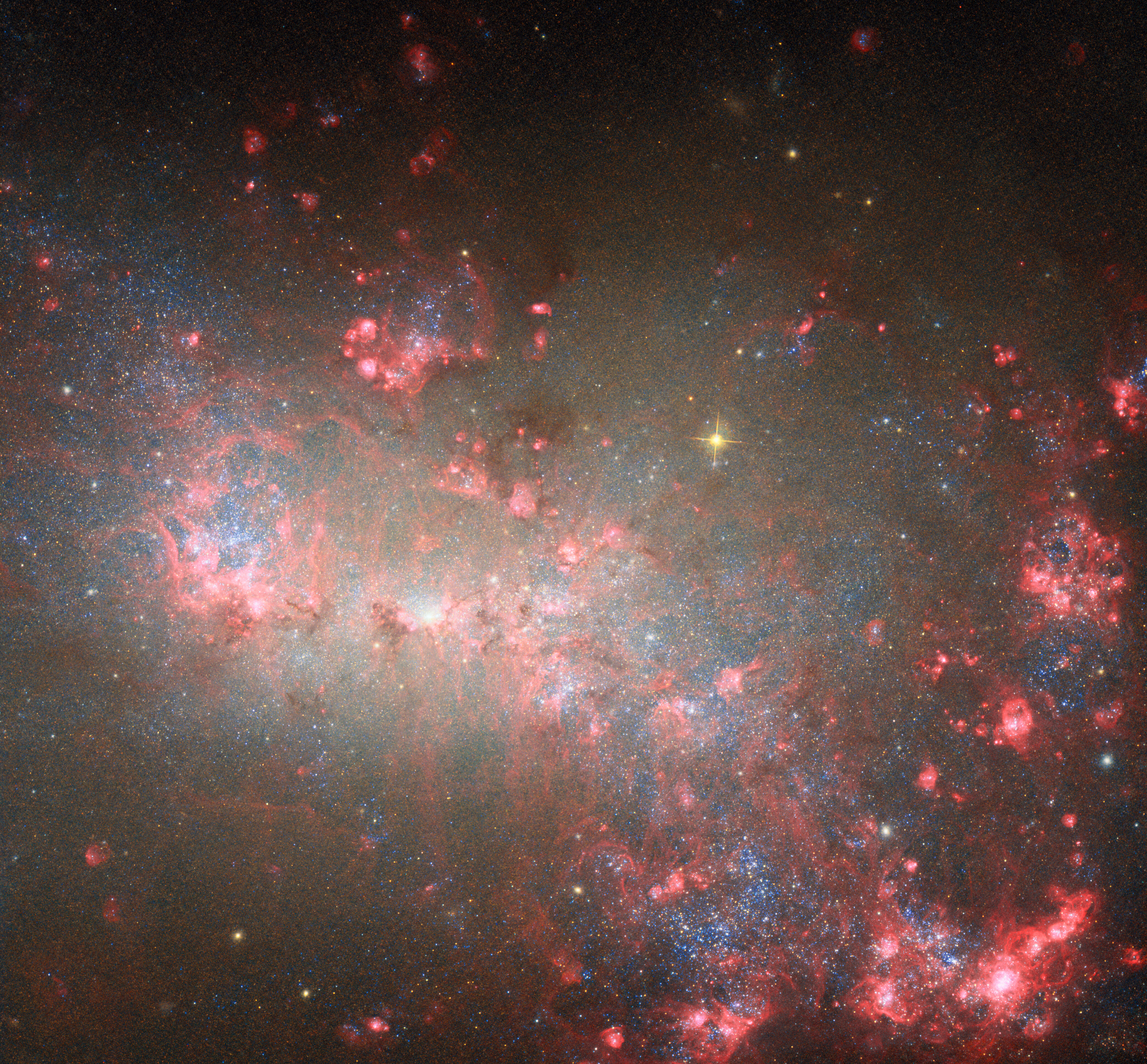
This Hubble image shows the galaxy
NGC 4449. The field is dominated by dust that appears in dark red, with scattered brighter regions of star formation as bright pink globules. The background shows countless blue stars peeking around the dusty regions. Credit: ESA/Hubble & NASA, E. Sabbi, D. Calzetti, A. Aloisi

This portrait from the NASA/ESA Hubble Space Telescope puts the nearby galaxy NGC 4449 in the spotlight. The galaxy is situated just 12.5 million light-years away in the constellation Canes Venatici (The Hunting Dogs). It is a member of the M94 galaxy group, which is near the Local Group of galaxies to which the Milky Way belongs.

NGC 4449 is a dwarf galaxy, which means that it is far smaller and contains fewer stars than the Milky Way. But don’t let its small size fool you — NGC 4449 packs a punch when it comes to making stars! This galaxy is currently forming new stars at a much faster rate than expected for its size, which makes it known as a starburst galaxy. Most starburst galaxies churn out stars mainly in their centres, but NGC 4449 is alight with brilliant young stars throughout. Researchers believe that this global burst of star formation came about because of NGC 4449’s interactions with its galactic neighbours. Because NGC 4449 is so close, it provides an excellent opportunity for Hubble to study how interactions between galaxies can influence the formation of new stars.

A Hubble image of NGC 4449 was previously released in 2007. This new version incorporates several additional wavelengths of light that Hubble collected for multiple observing programmes. These programmes encompass an incredible range of science, from a deep dive into NGC 4449’s star-formation history to the mapping of the brightest, hottest, and most massive stars in more than two dozen nearby galaxies.

The NASA/ESA/CSA James Webb Space Telescope has also observed NGC 4449, revealing in intricate detail the galaxy’s tendrils of dusty gas, glowing from the intense starlight radiated by the flourishing young stars.


Friday, February 28, 2025

NASA's Hubble Provides Bird's-Eye View of Andromeda Galaxy's Ecosystem

Survey of Andromeda's Satellite Galaxies
Credits/Image: NASA, ESA, Alessandro Savino (UC Berkeley), Joseph DePasquale (STScI), Akira Fujii DSS2.

The Distribution of Satellite Galaxies around M31
Credits/Visualization: NASA, ESA, Christian Nieves (STScI)
Science: Alessandro Savino (UC Berkeley)
Acknowledgment:Joseph DePasquale (STScI), Frank Summers (STScI), Robert Gendler


Located 2.5 million light-years away, the majestic Andromeda galaxy appears to the naked eye as a faint, spindle-shaped object roughly the angular size of the full Moon. What backyard observers don't see is a swarm of nearly three dozen small satellite galaxies circling the Andromeda galaxy, like bees around a hive.

These satellite galaxies represent a rambunctious galactic "ecosystem" that NASA's Hubble Space Telescope is studying in unprecedented detail. This ambitious Hubble Treasury Program used observations from more than a whopping 1,000 Hubble orbits. Hubble's optical stability, clarity, and efficiency made this ambitious survey possible. This work included building a precise 3D mapping of all the dwarf galaxies buzzing around Andromeda and reconstructing how efficiently they formed new stars over the nearly 14 billion years of the universe's lifetime.

In the study published in The Astrophysical Journal, Hubble reveals a markedly different ecosystem from the smaller number of satellite galaxies that circle our Milky Way. This offers forensic clues as to how our Milky Way galaxy and Andromeda have evolved differently over billions of years. Our Milky Way has been relatively placid. But it looks like Andromeda has had a more dynamic history, which was probably affected by a major merger with another big galaxy a few billion years ago. This encounter, and the fact that Andromeda is as much as twice as massive as our Milky Way, could explain its plentiful and diverse dwarf galaxy population.

Surveying the Milky Way's entire satellite system in such a comprehensive way is very challenging because we are embedded inside our galaxy. Nor can it be accomplished for other large galaxies because they are too far away to study the small satellite galaxies in much detail. The nearest galaxy of comparable mass to the Milky Way beyond Andromeda is M81, at nearly 12 million light-years.

This bird's-eye view of Andromeda's satellite system allows us to decipher what drives the evolution of these small galaxies. "We see that the duration for which the satellites can continue forming new stars really depends on how massive they are and on how close they are to the Andromeda galaxy," said lead author Alessandro Savino of the University of California at Berkeley. "It is a clear indication of how small-galaxy growth is disturbed by the influence of a massive galaxy like Andromeda."

"Everything scattered in the Andromeda system is very asymmetric and perturbed. It does appear that something significant happened not too long ago," said principal investigator Daniel Weisz of the University of California at Berkeley. "There's always a tendency to use what we understand in our own galaxy to extrapolate more generally to the other galaxies in the universe. There's always been concerns about whether what we are learning in the Milky Way applies more broadly to other galaxies. Or is there more diversity among external galaxies? Do they have similar properties? Our work has shown that low-mass galaxies in other ecosystems have followed different evolutionary paths than what we know from the Milky Way satellite galaxies."

For example, half of the Andromeda satellite galaxies all seem to be confined to a plane, all orbiting in the same direction. "That's weird. It was actually a total surprise to find the satellites in that configuration and we still don't fully understand why they appear that way," said Weisz.

The brightest companion galaxy to Andromeda is Messier 32 (M32). This is a compact ellipsoidal galaxy that might just be the remnant core of a larger galaxy that collided with Andromeda a few billion years ago. After being gravitationally stripped of gas and some stars, it continued along its orbit. Galaxy M32 contains older stars, but there is evidence it had a flurry of star formation a few billion years ago. In addition to M32, there seems to be a unique population of dwarf galaxies in Andromeda not seen in the Milky Way. They formed most of their stars very early on, but then they didn't stop. They kept forming stars out of a reservoir of gas at a very low rate for a much longer time.

"Star formation really continued to much later times, which is not at all what you would expect for these dwarf galaxies," continued Savino. "This doesn't appear in computer simulations. No one knows what to make of that so far."

"We do find that there is a lot of diversity that needs to be explained in the Andromeda satellite system," added Weisz. "The way things come together matters a lot in understanding this galaxy's history."

Hubble is providing the first set of imaging where astronomers measure the motions of the dwarf galaxies. In another five years Hubble or NASA's James Webb Space Telescope will be able to get the second set of observations, allowing astronomers to do a dynamical reconstruction for all 36 of the dwarf galaxies, which will help astronomers to rewind the motions of the entire Andromeda ecosystem billions of years into the past.

The Hubble Space Telescope has been operating for over three decades and continues to make ground-breaking discoveries that shape our fundamental understanding of the universe. Hubble is a project of international cooperation between NASA and ESA (European Space Agency). NASA's Goddard Space Flight Center in Greenbelt, Maryland, manages the telescope and mission operations. Lockheed Martin Space, based in Denver, also supports mission operations at Goddard. The Space Telescope Science Institute in Baltimore, which is operated by the Association of Universities for Research in Astronomy, conducts Hubble science operations for NASA.


About This Release

Credits:

Media Contact:

Ray Villard
Space Telescope Science Institute, Baltimore, Maryland

Science Contact:

Alessandro Savino
University of California, Berkeley, California

Permissions: Content Use Policy

Contact Us: Direct inquiries to the News Team.

Related Links and Documents


Monday, February 24, 2025

DESI Uncovers 300 New Intermediate-Mass Black Holes Plus 2500 New Active Black Holes in Dwarf Galaxies

PR Image noirlab2508a
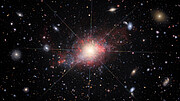
Artist’s illustration of dwarf galaxy with active galactic nucleus

PR Image noirlab2508b
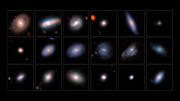
Dwarf Galaxy AGN Candidates

PR Image noirlab2508c
Intermediate Black Hole Candidates

PR Image noirlab2508d
Dwarf AGN Candidates Scatter Plot


Cosmoview Episode 94: DESI Uncovers 300 New Intermediate-Mass Black Holes Plus 2500 New Active Black Holes in Dwarf Galaxies

Cosmoview Episodio 94: DESI descubre un tesoro de 300 nuevos agujeros negros de masa intermedia y 2.500 agujeros negros activos en galaxias enanasin English only

Pan across dwarf AGN illustration
PR Video noirlab2508c
Pan across dwarf AGN illustration

Pan across Dwarf AGN candidates
PR Video noirlab2508d
Pan across Dwarf AGN candidates

Pan across IMBH candidates
PR Video noirlab2508e
Pan across IMBH candidates


The Dark Energy Spectroscopic Instrument discovers a treasure trove of active black holes in dwarf galaxies and reveals that surprisingly few are of intermediate mass

Within the Dark Energy Spectroscopic Instrument’s early data, scientists have uncovered the largest samples ever of intermediate-mass black holes and dwarf galaxies hosting an active black hole, more than tripling the existing census of both. These large statistical samples will allow for more in-depth studies of the dynamics between dwarf galaxy evolution and black hole growth, and open up vast discovery potential surrounding the evolution of the Universe’s earliest black holes.

Using early data from the Dark Energy Spectroscopic Instrument (DESI), a team of scientists have compiled the largest sample ever of dwarf galaxies that host an actively feeding black hole, as well as the most extensive collection of intermediate-mass black hole candidates to date. This dual achievement not only expands scientists’ understanding of the black hole population in the Universe, but also sets the stage for further explorations regarding the formation of the first black holes to form in the Universe and their role in galaxy evolution.

DESI is a state-of-the-art instrument that can capture light from 5000 galaxies simultaneously. It was constructed, and is operated, with funding from the Department of Energy (DOE) Office of Science. DESI is mounted on the U.S. National Science Foundation (NSF) Nicholas U. Mayall 4-meter Telescope at the NSF Kitt Peak National Observatory, a Program of NSF NOIRLab. The program is now in its fourth of five years surveying the sky and is set to observe roughly 40 million galaxies and quasars by the time the project ends.

The DESI project is an international collaboration of more than 900 researchers from over 70 institutions around the world and is managed by DOE’s Lawrence Berkeley National Laboratory (Berkeley Lab).

With DESI’s early data [1], which include survey validation and 20% of the first year of operations, the team, led by University of Utah postdoctoral researcher Ragadeepika Pucha, was able to obtain an unprecedented dataset that includes the spectra of 410,000 galaxies [2], including roughly 115,000 dwarf galaxies — small, diffuse galaxies containing thousands to several billions of stars and very little gas. This extensive set would allow Pucha and her team to explore the complex interplay between black hole evolution and dwarf galaxy evolution.

While astrophysicists are fairly confident that all massive galaxies, like our Milky Way, host black holes at their centers, the picture becomes unclear as you move toward the low-mass end of the spectrum. Finding black holes is a challenge in itself, but identifying them in dwarf galaxies is even more difficult, owing to their small sizes and the limited ability of our current instruments to resolve the regions close to these objects. An actively feeding black hole, however, is easier to spot.

“When a black hole at the center of a galaxy starts feeding, it unleashes a tremendous amount of energy into its surroundings, transforming into what we call an active galactic nucleus,” says Pucha. “This dramatic activity serves as a beacon, allowing us to identify hidden black holes in these small galaxies.”

From their search the team identified an astonishing 2500 candidate dwarf galaxies hosting an active galactic nucleus (AGN) — the largest sample ever discovered. The significantly higher fraction of dwarf galaxies hosting an AGN (2%) relative to previous studies (about 0.5%) is an exciting result and suggests scientists have been missing a substantial number of low-mass, undiscovered black holes.

In a separate search through the DESI data, the team identified 300 intermediate-mass black hole candidates — the most extensive collection to date. Most black holes are either lightweight (less than 100 times the mass of our Sun) or supermassive (more than one million times the mass of our Sun). The black holes in between the two extremes are poorly understood, but are theorized to be the relics of the very first black holes formed in the early Universe, and the seeds of the supermassive black holes that lie at the center of large galaxies today. Yet they remain elusive, with only around 100–150 intermediate-mass black hole candidates known until now. With the large population discovered by DESI, scientists now have a powerful new dataset to use to study these cosmic enigmas.

“The technological design of DESI was important for this project, particularly its small fiber size, which allowed us to better zoom in on the center of galaxies and identify the subtle signatures of active black holes,” says Stephanie Juneau, associate astronomer at NSF NOIRLab and co-author of the paper. “With other fiber spectrographs with larger fibers, more starlight from the galaxy's outskirts comes in and dilutes the signals we’re searching for. This explains why we managed to find a higher fraction of active black holes in this work relative to previous efforts.”

Typically, black holes found in dwarf galaxies are expected to be within the intermediate-mass regime. But intriguingly, only 70 of the newly discovered intermediate-mass black hole candidates overlap with dwarf AGN candidates. This adds another layer of excitement to the findings and raises questions about black hole formation and evolution within galaxies.

“For example, is there any relationship between the mechanisms of black hole formation and the types of galaxies they inhabit?” Pucha said. “Our wealth of new candidates will help us delve deeper into these mysteries, enriching our understanding of black holes and their pivotal role in galaxy evolution.


Notes

[1] DESI early data is available as files via the DESI collaboration and as searchable databases of catalogs and spectra via the
 Astro Data Lab and SPARCL at the Community Science and Data Center, a Program of NSF NOIRLab.

[2] DESI's early data contain nearly 3.5 million unique galaxy spectra. The sample used in this work was selected based on redshift (distance) and accurate detection of emission lines.


More information

This research was presented in a paper titled “Tripling the Census of Dwarf AGN Candidates Using DESI Early Data” to appear in The Astrophysical Journal. DOI: 10.3847/1538-4357/adb1dd. The study can be found ahead of publication here.

The team is composed of Ragadeepika Pucha (University of Utah, University of Arizona), S. Juneau (NSF NOIRLab), Arjun Dey (NSF NOIRLab), M. Siudek (Institute of Space Sciences (ICE-CSIC), Instituto de Astrof´ısica de Canarias), M. Mezcua (ICE-CSIC, Institut d’Estudis Espacials de Catalunya (IEEC)), J. Moustakas (Siena College), S. BenZvi (University of Rochester), K. Hailine (University of Arizona), R. Hviding (Max Planck Institute for Astronomy, University of Arizona), Yao-Yuan Mao (University of Utah), D. M. Alexander (Durham University), R. Alfarsy (University of Portsmouth), C. Circosta (European Space Agency (ESA), University College London), Wei-Jian Guo (National Astronomical Observatories, Chinese Academy of Sciences), V. Manwadkar (Stanford University, SLAC National Accelerator Laboratory), P. Martini (The Ohio State University), B. A. Weaver (NSF NOIRLab), J. Aguilar (Lawrence Berkeley National Laboratory), S. Ahlen (Boston University), D. Bianchi (Università degli Studi di Milano), D. Brooks (University College London), R. Canning (University of Portsmouth), T. Claybaugh (Lawrence Berkeley National Laboratory) K. Dawson (University of Utah), A. de la Macorra (Universidad Nacional Autónoma de México), Biprateep Dey (University of Toronto, University of Pittsburgh), P. Doel (University College London), A. Font-Ribera (University College London, The Barcelona Institute of Science and Technology), J. E. Forero-Romero (Universidad de los Andes), E. Gaztañaga (IEEC, University of Portsmouth, ICE-CSIC), S. Gontcho A Gontcho (Lawrence Berkeley National Laboratory), G. Gutierrez (Fermi National Accelerator Laboratory), K. Honscheid (The Ohio State University), R. Kehoe (Southern Methodist University), S. E. Koposov (University of Edinburgh, University of Cambridge), A. Lambert (Lawrence Berkeley National Laboratory), M. Landriau (Lawrence Berkeley National Laboratory), L. Le Guillou (Sorbonne Université, CNRS/IN2P3), A. Meisner (NSF NOIRLab), R. Miquel (Institució Catalana de Recerca i Estudis Avançats, The Barcelona Institute of Science and Technology), F. Prada (Instituto de Astrofísica de Andalucía (CSIC)), G. Rossi (Sejong University), E. Sanchez (CIEMAT), D. Schlegel (Lawrence Berkeley National Laboratory) M. Schubnell (University of Michigan), H. Seo (Ohio University), D. Sprayberry (NSF NOIRLab), G. Tarlé (University of Michigan), and H. Zou (National Astronomical Observatories, Chinese Academy of Sciences).

This research is supported by the Director, Office of Science, Office of High Energy Physics of the U.S. Department of Energy, and by the National Energy Research Scientific Computing Center, a DOE Office of Science User Facility; additional support for DESI is provided by the U.S. National Science Foundation, Division of Astronomical Sciences; the Science and Technology Facilities Council of the United Kingdom; the Gordon and Betty Moore Foundation; the Heising-Simons Foundation; the French Alternative Energies and Atomic Energy Commission (CEA); the National Council of Humanities, Science and Technology of Mexico (CONAHCYT); the Ministry of Science, Innovation and Universities of Spain (MICIU/AEI/10.13039/501100011033), and by the DESI Member Institutions. The authors are honored to be permitted to conduct scientific research on I’oligam Du’ag (Kitt Peak), a mountain with particular significance to the Tohono O’odham Nation.

Current DESI Member Institutions include: Aix-Marseille University; Argonne National Laboratory; Barcelona-Madrid Regional Participation Group; Brookhaven National Laboratory; Boston University; Brazil Regional Participation Group; Carnegie Mellon University; CEA-IRFU, Saclay; China Participation Group; Cornell University; Durham University; École Polytechnique Fédérale de Lausanne; Eidgenössische Technische Hochschule, Zürich; Fermi National Accelerator Laboratory; Granada-Madrid-Tenerife Regional Participation Group; Harvard University; Kansas State University; Korea Astronomy and Space Science Institute; Korea Institute for Advanced Study; Lawrence Berkeley National Laboratory; Laboratoire de Physique Nucléaire et de Hautes Energies; Ludwig Maximilians University; Max Planck Institute; Mexico Regional Participation Group; National Taiwan University; New York University; NSF’s National Optical-Infrared Astronomy Research Laboratory; Ohio University; Perimeter Institute; Shanghai Jiao Tong University; Siena College; SLAC National Accelerator Laboratory; Southern Methodist University; Swinburne University; The Ohio State University; Universidad de los Andes; University of Arizona; University of Barcelona; University of California, Berkeley; University of California, Irvine; University of California, Santa Cruz; University College London; University of Florida; University of Michigan at Ann Arbor; University of Pennsylvania; University of Pittsburgh; University of Portsmouth; University of Queensland; University of Rochester; University of Toronto; University of Utah; University of Waterloo; University of Wyoming; University of Zurich; UK Regional Participation Group; Yale University. For more information, visit desi.lbl.gov.

Lawrence Berkeley National Laboratory addresses the world’s most urgent scientific challenges by advancing sustainable energy, protecting human health, creating new materials, and revealing the origin and fate of the universe. Founded in 1931, Berkeley Lab’s scientific expertise has been recognized with 13 Nobel prizes. The University of California manages Berkeley Lab for the U.S. Department of Energy’s Office of Science. For more, visit
http://www.lbl.gov.

DOE’s Office of Science is the single largest supporter of basic research in the physical sciences in the United States, and is working to address some of the most pressing challenges of our time. For more information, please visit
science.energy.gov.

NSF NOIRLab, the U.S. National Science Foundation center for ground-based optical-infrared astronomy, operates the International Gemini Observatory (a facility of NSF, NRC–Canada, ANID–Chile, MCTIC–Brazil, MINCyT–Argentina, and KASI–Republic of Korea), NSF Kitt Peak National Observatory (KPNO), NSF Cerro Tololo Inter-American Observatory (CTIO), the Community Science and Data Center (CSDC), and NSF–DOE Vera C. Rubin Observatory (in cooperation with DOE’s SLAC National Accelerator Laboratory). It is managed by the Association of Universities for Research in Astronomy (AURA) under a cooperative agreement with NSF and is headquartered in Tucson, Arizona.

The scientific community is honored to have the opportunity to conduct astronomical research on I’oligam Du’ag (Kitt Peak) in Arizona, on Maunakea in Hawai‘i, and on Cerro Tololo and Cerro Pachón in Chile. We recognize and acknowledge the very significant cultural role and reverence of I’oligam Du’ag (Kitt Peak) to the Tohono O’odham Nation, and Maunakea to the Kanaka Maoli (Native Hawaiians) community.

The National Science Foundation (NSF) is an independent federal agency created by Congress in 1950 to promote the progress of science. NSF supports basic research and people to create knowledge that transforms the future. Please refer to
www.nsf.gov.

Established in 2007 by Mark Heising and Elizabeth Simons, the Heising-Simons Foundation (www.heisingsimons.org) is dedicated to advancing sustainable solutions in the environment, supporting groundbreaking research in science, and enhancing the education of children.

The Gordon and Betty Moore Foundation, established in 2000, seeks to advance environmental conservation, patient care and scientific research. The Foundation’s Science Program aims to make a significant impact on the development of provocative, transformative scientific research, and increase knowledge in emerging fields. For more information, visit
www.moore.org.

The Science and Technology Facilities Council (STFC) of the United Kingdom coordinates research on some of the most significant challenges facing society, such as future energy needs, monitoring and understanding climate change, and global security. It offers grants and support in particle physics, astronomy and nuclear physics, visit
www.stfc.ac.uk.


Links


Contacts

Ragadeepika Pucha
University of Utah
Postdoctoral Researcher
Email:
dr.raga.pucha@gmail.com

Stephanie Juneau
Associate Astronomer
NSF NOIRLab
Email:
stephanie.juneau@noirlab.edu

Josie Fenske
Jr. Public Information Officer
Email:
josie.fenske@noirlab.edu

Wednesday, January 22, 2025

This Tiny Galaxy Is Answering Some Big Questions

Leo P (NIRCam Image)
Credits/Image: NASA, ESA, CSA, Kristen McQuinn (STScI)
Image Processing: Joseph DePasquale (STScI)

Leo P (NIRCam Compass Image)
Credits/Image: NASA, ESA, CSA, Kristen McQuinn (STScI)
Image Processing: Joseph DePasquale (STScI)


“Leo P provides a unique laboratory to explore the early evolution of a low-mass galaxy in detail,” said McQuinn, who is also the mission head of the Nancy Grace Roman Space Telescope’s Science Operations Center at STScI.

McQuinn and her team studied Leo P using NASA’s James Webb Space Telescope. They imaged Leo P using Webb’s NIRCam (Near-Infrared Camera) to determine the brightness and colors of thousands of stars within the dwarf galaxy. That data yielded information about the star formation history within the galaxy.

The team found that Leo P formed stars early on but then stopped making them shortly after a period known as the Epoch of Reionization , a significant period in the early history of the universe. After a few billion years the galaxy reignited and started forming new stars again.

“We have a measurement like this for only three other galaxies that are all isolated from the Milky Way, and they all show a similar pattern,” McQuinn said.

Observations of dwarf galaxies within the Local Group, however, show that star production within them ceased after the Epoch of Reionization and never resumed.

The contrast between the star production of isolated dwarf galaxies versus those in the Local Group provides compelling evidence that it isn’t just the mass of a galaxy at the time of reionization that determines whether its star formation will be shut down, or quenched. Its environment — meaning whether it is isolated or functioning as a satellite of a larger system — is an important factor.

McQuinn said the observations will help pin down not only when little galaxies formed their stars, but also how the reionization of the universe may have impacted how small structures form.

“If the trend holds, it provides insights about the growth of low-mass structures that are not only a fundamental constraint for structure formation but a benchmark for cosmological simulations,” she said.

The researchers also found that Leo P is metal-poor, possessing 3% of the Sun’s heavy elements (which astronomers call metals). This makes Leo P similar to the primordial galaxies of the early universe.

The researchers plan to use Webb to study four additional isolated, star-forming dwarf galaxies to determine if similar trends in star formation rates are common among them.

The Space Telescope Science Institute is expanding the frontiers of space astronomy by hosting the science operations center of the Hubble Space Telescope, the science and mission operations centers for the James Webb Space Telescope, and the science operations center for the Nancy Grace Roman Space Telescope. STScI also houses the Barbara A. Mikulski Archive for Space Telescopes (MAST) which is a NASA-funded project to support and provide to the astronomical community a variety of astronomical data archives, and is the data repository for the Hubble, Webb, Roman, Kepler, K2, TESS missions and more. STScI is operated by the Association of Universities for Research in Astronomy in Washington, D.C.


About This Release

Credits:

Media Contact:

Christine Pulliam
Space Telescope Science Institute, Baltimore, Maryland

Kitta MacPherson
Rutgers University, New Brunswick, New Jersey

Science: Kristen McQuinn (STScI)

Permissions: Content Use Policy

Related Links and Documents


Saturday, January 04, 2025

Dark Energy Camera Captures the Glittering Galaxies of the Antlia Cluster

PR Image noirlab2501a
DECam Deep View of the Antlia Cluster

PR Image noirlab2501b
Cosmic Gems Within the Antlia Cluster

PR Image noirlab2501c
Ultra-compact Dwarf Galaxy in the Antlia Cluster

PR Image noirlab2501d
Spiral Galaxy in the Antlia Cluster


PR Image noirlab2501e
Elliptical Galaxy in the Antlia Cluster

PR Image noirlab2501f
Galaxy Cluster in the Antlia Cluster


Videos

Cosmoview Episode 91: Dark Energy Camera Captures the Glittering Galaxies of the Antlia Cluster
PR Video noirlab2430a
Cosmoview Episode 91: Dark Energy Camera Captures the Glittering Galaxies of the Antlia Cluster

Cosmoview Episodio 91: Miles de galaxias capturadas en una sola foto desde Cerro Tololo 
PR Video noirlab2430b
Cosmoview Episodio 91: Miles de galaxias capturadas en una sola foto desde Cerro Tololo

Pan on the Antlia Cluster
PR Video noirlab2430c
Pan on the Antlia Cluster

Zooming into the Antlia Cluster
PR Video noirlab2430d
Zooming into the Antlia Cluster


Thousands of sparkling galaxies revealed in new ultra-deep DECam image featuring the Antlia Cluster

NSF NOIRLab rings in the New Year with a glittering galaxyscape captured with the Department of Energy-fabricated Dark Energy Camera, mounted on the U.S. National Science Foundation Víctor M. Blanco 4-meter Telescope at Cerro Tololo Inter-American Observatory in Chile, a Program of NSF NOIRLab. This ultra-deep view of the Antlia Cluster reveals a spectacular array of galaxy types amongst the hundreds that make up its population.

Galaxy clusters are some of the largest known structures in the known Universe. Current models suggest that these massive structures form as clumps of dark matter and the galaxies that form within them are pulled together by gravity to form groups of dozens of galaxies, which in turn merge to form clusters of hundreds, even thousands. One such group is the Antlia Cluster (Abell S636), located around 130 million light-years from Earth in the direction of the constellation Antlia (the Air Pump).

This image was taken with the 570-megapixel Department of Energy-fabricated Dark Energy Camera (DECam), mounted on the U.S. National Science Foundation (NSF) Víctor M. Blanco 4-meter Telescope at Cerro Tololo Inter-American Observatory in Chile, a Program of NSF NOIRLab. It captures only a portion of the 230 galaxies that so far have been found to make up the Antlia Cluster, as well as thousands of background galaxies. DECam’s ultra-deep view showcases the variety of galaxy types within and beyond the cluster in incredible detail.

Several Programs of NOIRLab (NOAO before 2019) have contributed observations of the Antlia Cluster over the past 20 years. Scientists from Chile have used both the Blanco telescope (with its predecessor camera MOSAIC II) and the Gemini South telescope, one half of the International Gemini Observatory, funded in part by NSF and operated by NSF NOIRLab, to examine the cluster through the Antlia Cluster Project. In more recent years, researchers have investigated the cluster from space- and ground-based observatories. These combined efforts have revealed a dynamic menagerie of rarer galaxy types within the cluster.

The Antlia Cluster is dominated by two massive elliptical galaxies — NGC 3268 (center) and NGC 3258 (lower right). These central galaxies are surrounded by a number of faint dwarf galaxies (see this finder chart showing the Altia Cluster in a different orientation). Researchers believe these two galaxies are in the process of merging, based on X-ray observations that revealed a ‘rope’ of globular clusters along the peak area of light between them. This may be evidence that the Antlia cluster is really two smaller clusters that are combining.

The cluster is rich in lenticular galaxies — a type of disk galaxy that has little interstellar matter and thus little ongoing star formation — and also hosts some irregular galaxies. A plethora of rarer, low-luminosity dwarf galaxies have been found in the cluster, including ultra-compact dwarfs, compact ellipticals, and blue compact dwarfs. The cluster may also contain dwarf spheroidal galaxies and the ultra-diffuse galaxy sub-type, though further investigations are needed to confirm them.

Many of these galaxy types have only been identified within the past few decades because of advances in observational equipment and data analysis techniques that can better capture the low luminosity and relatively smaller size of these galaxies. Evaluating galaxy types allows astronomers to plot the fine details of galaxy evolution, and some galaxies rich with dark matter provide further opportunities for astronomers to understand this mysterious substance that makes up 25% of the Universe.

The development of larger and more highly sensitized cameras like DECam allows astronomers to see the fainter details of these superstructures, such as the diffuse light between the cluster galaxies, which is a combination of intracluster light — the feeble glow of stars flung out into the gravitational field of the cluster by the churn of interacting galaxies — and faded light from the nearby Antlia Supernova Remnant discovered in 2002.

NSF–DOE Vera C. Rubin Observatory’s upcoming Legacy Survey of Space and Time will be the first astronomical survey to provide scientists with the data they need to detect intracluster light in thousands of galaxy clusters, unlocking clues to the distribution of dark matter around galaxy clusters and the evolutionary history of the Universe on large scales.


More information

NSF NOIRLab, the U.S. National Science Foundation center for ground-based optical-infrared astronomy, operates the International Gemini Observatory (a facility of NSF, NRC–Canada, ANID–Chile, MCTIC–Brazil, MINCyT–Argentina, and KASI–Republic of Korea), NSF Kitt Peak National Observatory (KPNO), NSF Cerro Tololo Inter-American Observatory (CTIO), the Community Science and Data Center (CSDC), and NSF–DOE Vera C. Rubin Observatory (in cooperation with DOE’s SLAC National Accelerator Laboratory). It is managed by the Association of Universities for Research in Astronomy (AURA) under a cooperative agreement with NSF and is headquartered in Tucson, Arizona.

The scientific community is honored to have the opportunity to conduct astronomical research on I’oligam Du’ag (Kitt Peak) in Arizona, on Maunakea in Hawai‘i, and on Cerro Tololo and Cerro Pachón in Chile. We recognize and acknowledge the very significant cultural role and reverence of I’oligam Du’ag (Kitt Peak) to the Tohono O’odham Nation, and Maunakea to the Kanaka Maoli (Native Hawaiians) community.


Links


Contacts

Josie Fenske
Jr. Public Information Officer
NSF NOIRLab
Email:
josie.fenske@noirlab.edu


Tuesday, November 12, 2024

Down to the Core: Dark Matter Deviations in Ultra-Faint Dwarf Galaxies

Barely visible, the Sculptor Dwarf Galaxy orbits the Milky Way as one of many small satellite galaxies
Credit:
NASA, ESA/Hubble.org, DSS2

Though the majority of the mass in the universe lies in dark matter, many mysteries remain about its nature. A new study suggests that the smallest and faintest galaxies hold the key to unlocking how dark matter interacts within the universe.

From simulations, the expected shape (cusp) of a galaxy’s dark matter density profile is shown with the red curve, while the observed shape (core) is shown with the blue curve. As we approach the galactic center, a cuspy profile peaks at high density, and the cored profile levels off at a lower density. Credit: Lexi Gault

Core-Cusp Conundrum

Surrounding the Milky Way are tiny faint galaxies — known as satellite galaxies — millions of times smaller than the massive galaxy they orbit. Despite their small sizes, these satellites are of huge importance in understanding the behavior of dark matter. In the leading cosmological model, called lambda cold dark matter (ΛCDM), dark matter is cold, collisionless, and interacts with normal matter only by way of gravity.

Galaxy formation and evolution simulations using the ΛCDM model predict galaxies to form within dark matter halos that have density distributions that peak in the center, or reach a cusp. While this seems to be true on large scales like galaxy clusters, individual galaxies often appear to have smoother dark matter distributions. When enough normal matter enters the picture, feedback from newborn stars, tidal interactions, and other processes can flatten out the dark matter distribution, transforming the central cusp into a central core.

However, according to ΛCDM, there should exist very low-mass galaxies — like the faintest satellite galaxies that orbit the Milky Way — that do not have enough mass to change an originally cuspy dark matter distribution into a cored one. If observations reveal that even these small galaxies have cored dark matter distributions, that may mean that dark matter may not behave as expected in the ΛCDM paradigm.

Histograms showing how each considered dark matter profile compares to the observations, where NFW corresponds to a cuspy distribution, Plummer corresponds to a cored distribution, and the ρ230 is in the middle of the two. The the histograms plot the distributions of the innermost slopes for the fits where a slope close to 0 means the profile flattens, and a more negative slope means a steeper rise in the center. The cored (Plummer) fit aligns best with the observed galaxies. Modified from Sánchez Almeida et al 2024

Dark Matter Distributions

In order to investigate dark matter distributions at the smallest scales, Jorge Sánchez Almeida (Institute of Astrophysics of the Canary Islands; University of La Laguna) and collaborators analyze the stellar count distribution of six ultra-faint dwarf satellites of the Milky Way and the Large Magellanic Cloud. These galaxies have cored stellar surface density distributions, suggesting that their underlying dark matter distributions may be cored as well.

Beyond Standard

Given that a cored dark matter distribution seems to fit best for these ultra-faint galaxies, the authors suggest that dark matter may not behave as the standard cold dark matter model anticipates. Instead, dark matter may be warm, self-interacting, or fuzzy. However, could other factors be driving the cored distributions of these galaxies?

The author’s analysis hinges on several assumptions that could blur their results. To address these concerns, they carefully consider properties like stellar feedback contributions, tidal interactions, velocity distributions, and other properties important to their analysis. When changing these assumptions slightly, in ways still physically reasonable for very low-mass galaxies, the ultra-faint dwarfs still appear to reside in cored dark matter distributions.

What does this mean? While the standard ΛCDM model explains large-scale structures of the universe well, it does not adequately characterize what is observed on smaller scales — like the Milky Way’s satellites. Though the exact nature of dark matter is still unknown, cold and collisionless dark matter does not likely produce the ultra-faint galaxies’ cored profiles. Thus, further studying the lowest-mass galaxies in the universe may reveal new characteristics of dark matter beyond the standard model.

By Lexi Gault

Citation

“The Stellar Distribution in Ultrafaint Dwarf Galaxies Suggests Deviations from the Collisionless Cold Dark Matter Paradigm,” Jorge Sánchez Almeida et al 2024 ApJL 973 L15. doi:10.3847/2041-8213/ad66bc


Monday, September 16, 2024

NASA's Webb Peers into the Extreme Outer Galaxy

NASA’s James Webb Space Telescope observed the outskirts of our Milky Way galaxy. Known as the Extreme Outer Galaxy, this region is located more than 58,000 light-years from the Galactic Center.

To learn more about how a local environment affects the star formation process within it, a team of scientists directed the telescope’s NIRCam (Near-Infrared Camera) and MIRI (Mid-Infrared Instrument) toward a total of four star-forming areas within Digel Clouds 1 and 2: 1A, 1B, 2N, and 2S.

In the case of Cloud 2S, shown here, Webb revealed a luminous main cluster that contains newly formed stars. Several of these young stars are emitting extended jets of material from their poles. To the main cluster’s top right is a sub-cluster of stars, a feature that scientists previously suspected to exist but has now been confirmed with Webb. Additionally, the telescope revealed a deep sea of background galaxies and red nebulous structures that are being carved away by winds and radiation from nearby stars.

Annotated image of Digel Cloud 2S captured by Webb's NIRCam (Near-Infrared Camera) and MIRI (Mid-Infrared Instrument), with compass arrows, a scale bar, color key, and graphic overlays for reference.

The north and east compass arrows show the orientation of the image on the sky. Note that the relationship between north and east on the sky (as seen from below) is flipped relative to direction arrows on a map of the ground (as seen from above).

The scale bar is labeled in light-years and arcseconds. One light-year is equal to about 5.88 trillion miles or 9.46 trillion kilometers. One arcsecond is equal to 1/3600 of one degree of arc. (The full Moon has an angular diameter of about 0.5 degrees.) The actual size of an object that covers one arcsecond on the sky depends on its distance from the telescope.
This image shows invisible near- and mid-infrared wavelengths of light that have been translated into visible-light colors. The color key shows which NIRCam and MIRI filters were used when collecting the light. The color of each filter name is the visible light color used to represent the infrared light that passes through that filter.

In the main cluster are five white arrows, which highlight the paths of five protostar jets. To learn more about how a local environment affects the star formation process within it, a team of scientists directed the telescope’s NIRCam (Near-Infrared Camera) and MIRI (Mid-Infrared Instrument) toward a total of four star-forming areas within Digel Clouds 1 and 2: 1A, 1B, 2N, and 2S.

In the case of Cloud 2S, shown here, Webb revealed a luminous main cluster that contains newly formed stars. Several of these young stars are emitting extended jets of material from their poles. To the main cluster’s top right is a sub-cluster of stars, a feature that scientists previously suspected to exist but has now been confirmed with Webb. Additionally, the telescope revealed a deep sea of background galaxies and red nebulous structures that are being carved away by winds and radiation from nearby stars. Credits: Image: NASA, ESA, CSA, STScI, Michael Ressler (NASA-JPL)


Astronomers have directed NASA’s James Webb Space Telescope to examine the outskirts of our Milky Way galaxy. Scientists call this region the Extreme Outer Galaxy due to its location more than 58,000 light-years away from the Galactic Center. (For comparison, Earth is approximately 26,000 light-years from the center.)

A team of scientists used Webb’s NIRCam (Near-Infrared Camera) and MIRI (Mid-Infrared Instrument) to image select regions within two molecular clouds known as Digel Clouds 1 and 2. With its high degree of sensitivity and sharp resolution, the Webb data resolved these areas, which are hosts to star clusters undergoing bursts of star formation, in unprecedented detail. Details of this data include components of the clusters such as very young (Class 0) protostars, outflows and jets, and distinctive nebular structures.

These Webb observations, which came from telescope time allocated to Mike Ressler of NASA’s Jet Propulsion Laboratory in California, are enabling scientists to study star formation in the outer Milky Way in the same depth of detail as observations of star formation in our own solar neighborhood.

“In the past, we knew about these star forming regions but were not able to delve into their properties,” said Natsuko Izumi of Gifu University and the National Astronomical Observatory of Japan, lead author of the study. “The Webb data builds upon what we have incrementally gathered over the years from prior observations with different telescopes and observatories. We can get very powerful and impressive images of these clouds with Webb. In the case of Digel Cloud 2, I did not expect to see such active star formation and spectacular jets.”

Stars in the Making

Although the Digel Clouds are within our galaxy, they are relatively poor in elements heavier than hydrogen and helium. This composition makes them similar to dwarf galaxies and our own Milky Way in its early history. Therefore, the team took the opportunity to use Webb to capture the activity occurring in four clusters of young stars within Digel Clouds 1 and 2: 1A, 1B, 2N, and 2S.

For Cloud 2S, Webb captured the main cluster containing young, newly formed stars. This dense area is quite active as several stars are emitting extended jets of material along their poles. Additionally, while scientists previously suspected a sub-cluster might be present within the cloud, Webb’s imaging capabilities confirmed its existence for the first time.

“We know from studying other nearby star-forming regions that as stars form during their early life phase, they start emitting jets of material at their poles,” said Ressler, second author of the study and principal investigator of the observing program. “What was fascinating and astounding to me from the Webb data is that there are multiple jets shooting out in all different directions from this cluster of stars. It’s a little bit like a firecracker, where you see things shooting this way and that.”

The Saga of Stars

The Webb imagery skims the surface of the Extreme Outer Galaxy and the Digel Clouds, and is just a starting point for the team. They intend to revisit this outpost in the Milky Way to find answers to a variety of current mysteries, including the relative abundance of stars of various masses within Extreme Outer Galaxy star clusters. This measurement can help astronomers understand how a particular environment can influence different types of stars during their formation.

“I’m interested in continuing to study how star formation is occurring in these regions. By combining data from different observatories and telescopes, we can examine each stage in the evolution process,” said Izumi. “We also plan to investigate circumstellar disks within the Extreme Outer Galaxy. We still don’t know why their lifetimes are shorter than in star-forming regions much closer to us. And of course, I’d like to understand the kinematics of the jets we detected in Cloud 2S.”

Though the story of star formation is complex and some chapters are still shrouded in mystery, Webb is gathering clues and helping astronomers unravel this intricate tale.

These findings have been published in the Astronomical Journal.

The observations were taken as part of Guaranteed Time Observation program 1237.

The James Webb Space Telescope is the world’s premier space science observatory. Webb is solving mysteries in our solar system, looking beyond to distant worlds around other stars, and probing the mysterious structures and origins of our universe and our place in it. Webb is an international program led by NASA with its partners, ESA (European Space Agency) and CSA (Canadian Space Agency).


About This Release

Credits:

Media Contact:

Abigail Major
Space Telescope Science Institute, Baltimore, Maryland

Christine Pulliam
Space Telescope Science Institute, Baltimore, Maryland

Permissions: Content Use Policy

Contact Us: Direct inquiries to the News Team.