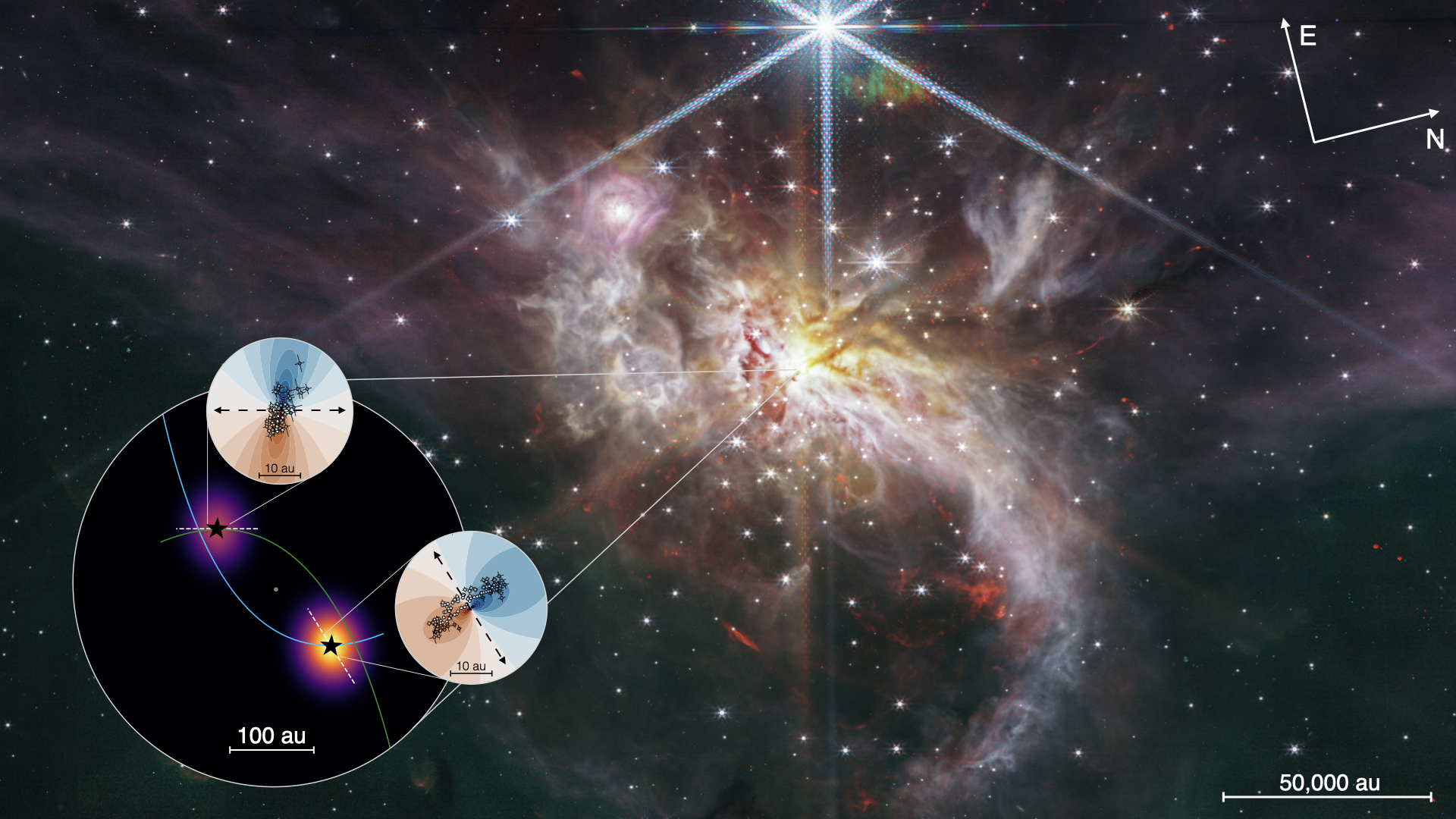
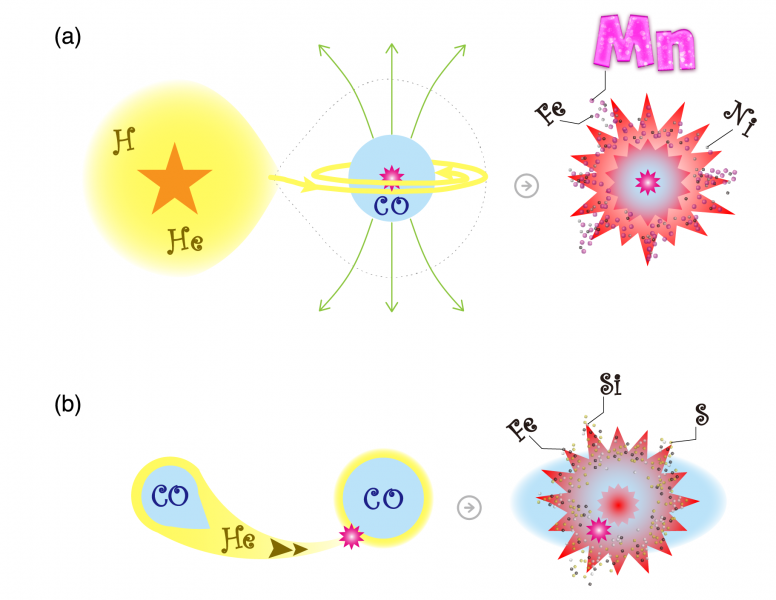
An artist’s impression of a neutron star accreting gas in a binary system. Close to the neutron star, the strong magnetic field funnels material towards the neutron star poles. Image credit: NASA/GSFC/D. Berry. Download Image
During the last week, NuSTAR observed a highly obscured high-mass X-ray binary called IGR J16320−4751. While previous studies of IGR J16320−4751 with lower-energy X-ray telescopes have largely focused on the circumbinary matter surrounding the neutron star, the NuSTAR observation aims to probe the region very close to the neutron star's surface to investigate how its accretion has changed over time. The neutron star in IGR J16320−4751 spins once every ~1,300 seconds, with its spin period slowly changing over the years. Previous observations have suggested that the system’s accretion behavior may change approximately every 11 years. By revisiting the source about 11 years after its last NuSTAR observation, we can test this idea through (i) timing analysis of the neutron star’s beamed X-ray emission, including how the pulse fraction varies with energy, and (ii) spectral analysis to constrain its magnetic field evolution, which plays a key role in channeling matter onto the surface. Together, these measurements will determine whether the accretion flow has changed and explore those changes to the evolution of the neutron star’s magnetic field, which can be trillions of times stronger than that on Earth. For decades, NuSTAR has advanced our understanding of accretion onto neutron stars through its sensitivity to high-energy X-rays. This latest observation is a testament to NuSTAR’s continued contribution towards exploring how matter behaves in the extreme gravity and magnetic fields surrounding neutron stars.
The announcement of opportunity for proposals to NuSTAR General Observer cycle-13 was released last week. In addition to 8.5 Ms of NuSTAR observing time, proposals may include coordinated observations with ESA's XMM-Newton observatory and the JAXA/NASA/ESA mission XRISM. The combination of the high spectral resolution and soft X-ray sensitivity of these missions enhances the scientific return of the NuSTAR observations, and a high oversubscription rate is expected for these joint observations. Proposals to NuSTAR GO cycle-13 are due on January 28th, 2027 with peer reviews planned for March and the first observations for the new observing cycle scheduled for 2027 June.
Authors: Pragati Pradhan, Assistant Professor, Embry-Riddle Aeronautical University (Prescott campus); Karl Forster, NuSTAR Science Operations Lead (Caltech)