Showing posts with label magnetar. Show all posts

Saturday, February 21, 2026

NuSTAR Observes a Transient Magnetar


During the past week, NuSTAR observed the transient magnetar 1E 1547.0-5408, a highly magnetized neutron star that previously exhibited Fast Radio Bursts (FRBs) accompanied by X-ray burst activity. Earlier joint NuSTAR and NICER ToO observations revealed a dynamic outburst of this magnetar in 2022, including a forest of short X-ray bursts and a pair of rotational glitches occurring before and after the FRB emission. The association of magnetars with FRBs represents a major breakthrough in understanding these mysterious powerful millisecond radio flashes. Yet, the exact mechanism that powers FRBs in magnetars remains an open question. X-ray monitoring of outbursts through this week’s and upcoming NuSTAR DDT observations aims to further probe the FRB-magnetar connection, including potential trigger mechanisms, and search for similar burst and glitch behavior. Coordinated observations with NASA’s Imaging X-ray Polarimetry Explorer (IXPE) are also planned, promising unique insights into magnetar outbursts and FRBs through spectro-polarimetry. This may also reveal signatures of physics in extreme magnetic fields, including potential quantum electrodynamic (QED) effects in the magnetar environment. Download Image

Author: Demet Kirmizibayrak (Caltech, Postdoctoral Scholar Research Associate)


Wednesday, December 10, 2025

Gemini and Blanco Telescopes Unlock Clues to Origin of Longest Gamma-ray Burst Ever Observed

PR Image noirlab2531a
Artist’s illustration of GRB 250702B

PR Image noirlab2531b
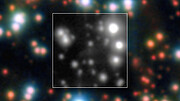
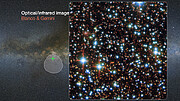
GRB 250702B collage

PR Image noirlab2531c
Field around GRB 250702B

PR Image noirlab2531d
GRB 250702B host galaxy


Videos

Zooming in on GRB 250702B
PR Video GRB-zoom
Zooming in on GRB 250702B

Localizing GRB250802B
PR Video noirlab2531a
Localizing GRB250802B

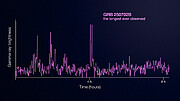
GRB250802B timescale
PR Video noirlab2531b
GRB250802B timescale


Data acquired with multiple NSF NOIRLab facilities indicate gamma-ray burst lasting over seven hours resides in a massive, extremely dusty galaxy

Astronomers have observed the longest-ever gamma-ray burst — a powerful, extragalactic explosion that lasted over seven hours. Rapid follow-up observations with the U.S. Department of Energy-fabricated Dark Energy Camera and the International Gemini Observatory, funded in part by the U.S. National Science Foundation and operated by NSF NOIRLab, provided crucial information about the possible origin of this extraordinary event and the galaxy that hosts it.

Gamma-ray bursts (GRBs) are among the most powerful explosions in the Universe, second only to the Big Bang. The majority of these bursts are observed to flash and fade within a few seconds to minutes. But on 2 July 2025, astronomers were alerted to a GRB source that was exhibiting repeating bursts and would end up lasting over seven hours. This event, dubbed GRB 250702B, is the longest gamma-ray burst humans have ever witnessed.

GRB 250702B was first identified by NASA’s Fermi Gamma-ray Space Telescope (Fermi). Shortly after space-based telescopes detected the initial bursts in gamma-rays and pinpointed its on-sky location in X-rays, astronomers around the world launched campaigns to observe the event in additional wavelengths of light.

One of the first revelations about this event came when infrared observations acquired by ESO's Very Large Telescope (VLT) established that the source of GRB 250702B is located in a galaxy outside of ours, which until then had remained a question.

Following this, a team of astronomers led by Jonathan Carney, graduate student at the University of North Carolina at Chapel Hill, set out to capture the event’s evolving afterglow, or the fading light emissions that follow the initial, extremely bright flash of gamma-rays. The properties of these emissions can provide clues about the type of event that caused the GRB.

To better understand the nature of this record-breaking event, the team used three of the world’s most powerful ground-based telescopes: the NSF Víctor M. Blanco 4-meter Telescope and the twin 8.1-meter International Gemini Observatory telescopes [1]. This trio observed GRB 250702B starting roughly 15 hours after the first detection until about 18 days later. The team presents their findings in a paper published on 26 November in The Astrophysical Journal Letters.

The Blanco telescope is located in Chile at NSF Cerro Tololo Inter-American Observatory (CTIO), a Program of NSF NOIRLab. The International Gemini Observatory consists of the Gemini North telescope in Hawai‘i and the Gemini South telescope in Chile. It is partly funded by NSF and operated by NSF NOIRLab.

“The ability to rapidly point the Blanco and Gemini telescopes on short notice is crucial to capturing transient events such as gamma-ray bursts,” says Carney. “Without this ability, we would be limited in our understanding of distant events in the dynamic night sky.”

The team used a suite of instruments for their investigation: the NEWFIRM wide-field infrared imager and the 570-megapixel DOE-fabricated Dark Energy Camera (DECam), both mounted on the Blanco telescope, and the Gemini Multi-Object Spectrographs (GMOS) mounted on Gemini North and Gemini South.

Analysis of the observations revealed that GRB 250702B could not be seen in visible light, partly due to interstellar dust in our own Milky Way Galaxy, but more so due to dust in the GRB’s host galaxy. In fact, Gemini North, which provided the only close-to-visible-wavelength detection of the host galaxy, required nearly two hours of observations to capture the faint signal from beneath the swaths of dust.

Carney and his team then combined these data with new observations taken with the Keck I Telescope at W. M. Keck Observatory, the Magellan Baade Telescope, and the Fraunhofer Telescope at Wendelstein Observatory, as well as publicly available data from VLT, NASA’s Hubble Space Telescope (HST), and X-ray and radio observatories. They then compared this robust dataset with theoretical models, which are frameworks that explain the behavior of astronomical phenomena. Models can be used to make predictions that can then be tested against observational data to refine scientists' understanding.

The team’s analysis established that the initial gamma-ray signal likely came from a narrow, high-speed jet of material crashing into the surrounding material, known as a relativistic jet. The analysis also helped characterize the environment around the GRB and the host galaxy overall. They found that there is a large amount of dust surrounding the location of the burst, and that the host galaxy is extremely massive compared to most GRB hosts. The data support a picture in which the GRB source resides in a dense, dusty environment, possibly a thick lane of dust present in the host galaxy along the line-of-sight between Earth and the GRB source. These details about the environment of GRB 250702B provide important constraints on the system that produced the initial outburst of gamma-rays.

Of the roughly 15,000 GRBs observed since the phenomenon was first recognized in 1973, only a half dozen come close to the length of GRB 250702B. Their proposed origins range from the collapse of a blue supergiant star, a tidal disruption event, or a newborn magnetar. GRB 250702B, however, doesn’t fit neatly into any known category.

From the data obtained so far, scientists have a few ideas of possible origin scenarios: (1) a black hole falling into a star that’s been stripped of its hydrogen and is now almost purely helium, (2) a star (or sub-stellar object such as a planet or brown dwarf) being disrupted during a close encounter with a stellar compact object, such as a stellar black hole or a neutron star, in what is known as a micro-tidal disruption event, (3) a star being torn apart as it falls into an intermediate-mass black hole — a type of black hole with a mass ranging from one hundred to one hundred thousand times the mass of our Sun that is believed to exist in abundance, but has so far been very difficult to find. If it is the latter scenario, this would be the first time in history that humans have witnessed a relativistic jet from an intermediate mass black hole in the act of consuming a star.

While more observations are needed to conclusively determine the cause of GRB 250702B, the data acquired so far remain consistent with these novel explanations.

“This work presents a fascinating cosmic archaeology problem in which we’re reconstructing the details of an event that occurred billions of light-years away,” says Carney. “The uncovering of these cosmic mysteries demonstrates how much we are still learning about the Universe's most extreme events and reminds us to keep imagining what might be happening out there.”


Notes

[1] This study uses data obtained from several sources, including:


More information

This research was presented in a paper titled “Optical/infrared observations of the extraordinary GRB 250702B: a highly obscured afterglow in a massive galaxy consistent with multiple possible progenitors” to appear in The Astrophysical Journal Letters. DOI: 10.3847/2041-8213/ae1d67

The team is composed of J. Carney (University of North Carolina at Chapel Hill, USA), I. Andreoni (University of North Carolina at Chapel Hill, USA), B. O'Connor (Carnegie Mellon University, USA), J. Freeburn (University of North Carolina at Chapel Hill, USA), H. Skobe (Carnegie Mellon University, USA), L. Westcott (University of Manchester, UK), M. Busmann (Ludwig Maximilian University of Munich, Germany), A. Palmese (Carnegie Mellon University, USA), X. J. Hall (Carnegie Mellon University, USA), R. Gill (National Autonomous University of Mexico, Mexico/The Open University of Israel, Israel), P. Beniamini (The Open University of Israel, Israel/The George Washington University, USA), E. R. Coughlin (Syracuse University, USA), C. D. Kilpatrick (Northwestern University, USA), A. Anumarlapudi (University of North Carolina at Chapel Hill, USA), N. M. Law (University of North Carolina at Chapel Hill, USA), H. Corbett (University of North Carolina at Chapel Hill, USA), T. Ahumada (California Institute of Technology, USA), P. Chen (Zhejiang University, China), C. Conselice (University of Manchester, UK), G. Damke (NSF NOIRLab, USA), K. K. Das (California Institute of Technology, USA), A. Gal-Yam (Weizmann Institute of Science, Israel), D. Gruen (Ludwig Maximilian University of Munich, Germany/Excellence Cluster ORIGINS, Germany), S. Heathcote (NSF NOIRLab, USA), L. Hu (Carnegie Mellon University, USA), V. Karambelkar (California Institute of Technology, USA), M. Kasliwal (California Institute of Technology, USA), K. Labrie (NSF NOIRLab, USA), D. Pasham (Eureka Scientific, USA/The George Washington University, USA), A. Riffeser, M. Schmidt, K. Sharma, S. Wilke (Ludwig Maximilian University of Munich, Germany), & W. Zang (Center for Astrophysics | Harvard & Smithsonian, USA).

NSF NOIRLab, the U.S. National Science Foundation center for ground-based optical-infrared astronomy, operates the International Gemini Observatory (a facility of NSF, NRC–Canada, ANID–Chile, MCTIC–Brazil, MINCyT–Argentina, and KASI–Republic of Korea), NSF Kitt Peak National Observatory (KPNO), NSF Cerro Tololo Inter-American Observatory (CTIO), the Community Science and Data Center (CSDC), and NSF–DOE Vera C. Rubin Observatory (in cooperation with DOE’s SLAC National Accelerator Laboratory). It is managed by the Association of Universities for Research in Astronomy (AURA) under a cooperative agreement with NSF and is headquartered in Tucson, Arizona.

The scientific community is honored to have the opportunity to conduct astronomical research on I’oligam Du’ag (Kitt Peak) in Arizona, on Maunakea in Hawai‘i, and on Cerro Tololo and Cerro Pachón in Chile. We recognize and acknowledge the very significant cultural role and reverence of I’oligam Du’ag to the Tohono O’odham Nation, and Maunakea to the Kanaka Maoli (Native Hawaiians) community.

The Dark Energy Camera was designed specifically for the Dark Energy Survey (DES). It was funded by the U.S. Department of Energy (DOE) and was built and tested at DOE's Fermilab.


Links


Contacts:

Jonathan Carney
Graduate Student
University of North Carolina at Chapel Hill
Email:
jcarney@unc.edu

Josie Fenske
Public Information Officer
NSF NOIRLab
Email:
josie.fenske@noirlab.edu


Thursday, April 17, 2025

NASA's Hubble Tracks a Roaming Magnetar of Unknown Origin

This is an artist’s impression of a magnetar, which is a special type of neutron star with an incredibly strong magnetic field. Neutron stars are some of the most compact and extreme objects in the universe. These stars typically pack more than the mass of the Sun into a sphere of neutrons about 12 miles across. The neutron star is depicted as a white-blueish sphere. The magnetic field is shown as filaments streaming out from its polar regions. Illustration: ESA.
Download image


Researchers using NASA’s Hubble Space Telescope have discovered the magnetar called SGR 0501+4516 is traversing our galaxy from an unknown place of origin. Researchers say that this runaway magnetar is the likeliest candidate in our Milky Way galaxy for a magnetar that was not born in a supernova explosion as initially predicted. It is so strange it might even offer clues to the mechanism behind events known as fast radio bursts.

“Magnetars are neutron stars — the dead remnants of stars — composed entirely of neutrons. What makes magnetars unique is their extreme magnetic fields,” said Ashley Chrimes, lead author of the discovery paper published in the April 15 journal Astronomy & Astrophysics. Chrimes is a European Space Agency Research Fellow at the European Space Research and Technology Center in the Netherlands.

Magnetars have comic-book-hero superpowers. A magnetar has a magnetic field about a trillion times more powerful than Earth’s magnetosphere. If a magnetar flew by Earth at half the Moon’s distance, its intense field would wipe out every credit card on our planet. If a human got within 600 miles, the magnetar would become a proverbial sci-fi death-ray, ripping apart every atom inside the body.

>The magnetar’s strangeness was identified with the help of Hubble’s sensitive instruments as well as precise benchmarks from ESA's (European Space Agency) Gaia spacecraft.

Initially, the mysterious magnetar was discovered in 2008 when NASA’s Swift Observatory spotted brief, intense flashes of gamma rays from the outskirts of the Milky Way. The source, which turned out to be one of only about 30 known magnetars in the Milky Way, was dubbed SGR 0501+4516.

Because magnetars are neutron stars, the natural explanation for their formation is that they are born in supernovae, when a star explodes and can collapse down to an ultra-dense neutron star. This appeared to be the case for SGR 0501+4516, which is located close to a supernova remnant called HB9. The separation between the magnetar and the center of the supernova remnant on the sky is just 80 arcminutes, or slightly wider than your pinky finger when viewed at the end of your outstretched arm.

But a decade-long study with Hubble cast doubt on the magnetar’s birthplace. After initial observations with ground-based telescopes shortly after SGR 0501+4516’s discovery, researchers used Hubble’s exquisite sensitivity and steady pointing to spot the magnetar’s faint infrared glow in 2010, 2012, and 2020. Each of these images was aligned to a reference frame defined by observations from the Gaia spacecraft, which has crafted an extraordinarily precise three-dimensional map of nearly two billion stars in the Milky Way. This method revealed the subtle motion of the magnetar as it traversed the sky.

“All of this movement we measure is smaller than a single pixel of a Hubble image,” said co-investigator Joe Lyman of the University of Warwick, United Kingdom. “Being able to robustly perform such measurements really is a testament to the long-term stability of Hubble.”

By tracking the magnetar’s position, the team was able to measure the object’s apparent motion across the sky. Both the speed and direction of SGR 0501+4516’s movement showed that the magnetar could not be associated with the nearby supernova remnant. Tracing the magnetar’s trajectory thousands of years into the past showed that there were no other supernova remnants or massive star clusters with which it could be associated.

If SGR 0501+4516 was not born in a supernova, the magnetar must either be older than its estimated 20,000-year age, or it may have formed in another way. Magnetars may also be able to form through the merger of two lower-mass neutron stars or through a process called accretion-induced collapse. Accretion-induced collapse requires a binary star system containing a white dwarf: the core of a dead Sun-like star. If the white dwarf pulls in gas from its companion, it can grow too massive to support itself, leading to an explosion — or possibly the creation of a magnetar.

“Normally, this scenario leads to the ignition of nuclear reactions, and the white dwarf exploding, leaving nothing behind. But it has been theorized that under certain conditions, the white dwarf can instead collapse into a neutron star. We think this might be how SGR 0501 was born,” added Andrew Levan of Radboud University in the Netherlands and the University of Warwick in the United Kingdom.

Understanding Fast Radio Bursts

SGR 0501+4516 is currently the best candidate for a magnetar in our galaxy that may have formed through a merger or accretion-induced collapse. Magnetars that form through accretion-induced collapse could provide an explanation for some of the mysterious fast radio bursts, which are brief but powerful flashes of radio waves. In particular, this scenario may explain the origin of fast radio bursts that emerge from stellar populations too ancient to have recently birthed stars massive enough to explode as supernovae.

“Magnetar birth rates and formation scenarios are among the most pressing questions in high-energy astrophysics, with implications for many of the universe’s most powerful transient events, such as gamma-ray bursts, super-luminous supernovae, and fast radio bursts,” said Nanda Rea of the Institute of Space Sciences in Barcelona, Spain. The research team has further Hubble observations planned to study the origins of other magnetars in the Milky Way, helping to understand how these extreme magnetic objects form.

The Hubble Space Telescope has been operating for over three decades and continues to make ground-breaking discoveries that shape our fundamental understanding of the universe. Hubble is a project of international cooperation between NASA and ESA (European Space Agency). NASA's Goddard Space Flight Center in Greenbelt, Maryland, manages the telescope and mission operations. Lockheed Martin Space, based in Denver, also supports mission operations at Goddard. The Space Telescope Science Institute in Baltimore, which is operated by the Association of Universities for Research in Astronomy, conducts Hubble science operations for NASA.


Andrea Gianopoulos
NASA Goddard Space Flight Center

Contact Media:

Claire Andreoli
NASA’s Goddard Space Flight Center
Greenbelt, Maryland

claire.andreoli@nasa.gov

Bethany Downer
ESA/Hubble

bethany.downer@esahubble.org
Garching, Germany

Ray Villard
Space Telescope Science Institute
Baltimore, Maryland


Science:

Ashley Chrimes
ESA-ESTEC/Radboud University


Friday, February 21, 2025

Mystery of 'remarkable' cosmic explosion that lay hidden for years

The "remarkable" XRT 200515 cosmic explosion observed by NASA's Chandra X-ray Observatory. Credit: Steven Dillmann
Licence type: Attribution (CC BY 4.0)

The "needle in the haystack" discovery of a powerful explosion from a mysterious unknown object outside our galaxy has excited astronomers.

It went unnoticed for years within a vast, two decade-long archive of observations by NASA's Chandra X-ray Observatory, before being unearthed by a new paper published in Monthly Notices of the Royal Astronomical Society.

Astronomers led by Stanford University and Harvard believe the "remarkable" cosmic explosion could either be the first X-ray burster ever discovered in the Large Magellanic Cloud (LMC), a rare flare from a magnetar – one of the most mysterious objects in the universe – or something entirely new and unheard of.

"Have you ever flipped through old photo albums and suddenly found something fascinating hidden in the background of a picture, no one had ever noticed before? Now imagine doing that on a cosmic scale," said lead researcher Steven Dillmann, a PhD student at Stanford University.

"Using a novel machine learning approach, we looked back through over 20 years of archived observations from NASA's Chandra X-ray Observatory and discovered a remarkable, powerful X-ray flash from an unknown object outside our own galaxy that had gone unnoticed for years within the vast Chandra archive – a true needle in the haystack event."

In 15 May 2020, while Chandra was observing the remains of an exploded star in the LMC (a small galaxy neighbouring our Milky Way), it accidentally captured a bright and extremely fast X-ray flash from an unknown origin.

This flash appeared and disappeared within a few seconds, went unnoticed during the initial observation, and so was stored in the large Chandra archive.

The field of view Chandra was observing when XRT 200515 occurred. The XRT 200515 label in yellow points to the burst.
Credit: Steven Dillmann
Licence type: Attribution (CC BY 4.0)

Unlike traditional approaches, the novel machine learning method used in the new study managed to uncover the so-called extragalactic fast X-ray transient (FXT), which the researchers named XRT 200515 in reference to the day it was detected by Chandra.

"The cosmic flash is particularly interesting because of its unusual characteristics that are different to any of the other extragalactic FXTs that have previously been detected by Chandra," said Mr Dillmann.

"It produced an incredibly energetic initial burst that lasted for only 10s, whereas others lasted for minutes or hours. This was followed by a longer, less energetic afterglow lasting for a few minutes."

As neither Chandra nor any other telescope has ever recorded the source before or since this burst, its true nature remains a puzzle.

The researchers believe one explanation is that it could be the first X-ray burster ever discovered in the LMC. These are systems involving two stars: one small and super-dense dead star (called a neutron star) and a normal companion star that orbits around it.

The neutron star is like a cosmic vacuum cleaner – its powerful gravity pulls gas off its companion star. When enough gas builds up on the neutron star's surface, it triggers a massive thermonuclear explosion that releases an intense burst of X-ray radiation.

An image of the lightcurve (amount of photons received from the burst location over time) of XRT 200515, which shows how strong and fast the burst is. Credit: Steven Dillmann
Licence type: Attribution (CC BY 4.0)

Another theory is that it could be a rare, giant flare from a distant magnetar – neutron stars with extremely strong magnetic fields. These flares are some of the most explosive events in the cosmos, releasing a huge amount of gamma rays in a very short time.

If XRT 200515 is an X-ray counterpart to such an event, it would be the first giant magnetar flare observed at these X-ray energy levels.

The final explanation the researchers put forward is that it might be a previously unknown type of cosmic explosion that could reveal new insights about the universe.

"This discovery reminds us that space is dynamic and ever-changing, with exciting phenomena occurring constantly," said Mr Dillmann.

"It also demonstrates the value of using artificial intelligence for scientific discovery in archived astronomical data – there might be countless other discoveries waiting to be found in observations we've already made."

The researchers are now fine-tuning their method to search for signs of planets outside the Milky Way, building on previous breakthrough work led by co-author Rosanne di Stefano, which identified the first potential extragalactic planet candidate.


Media contacts:

Sam Tonkin
Royal Astronomical Society
Mob: +44 (0)7802 877 700

press@ras.ac.uk

Dr Robert Massey
Royal Astronomical Society
Mob: +44 (0)7802 877 699

press@ras.ac.uk


Scientific contacts:

Steven Dillmann
Stanford University

stevendi@stanford.edu


Notes for editors

About the Royal Astronomical Society

The Royal Astronomical Society (RAS), founded in 1820, encourages and promotes the study of astronomy, solar-system science, geophysics and closely related branches of science.

The RAS organises scientific meetings, publishes international research and review journals, recognises outstanding achievements by the award of medals and prizes, maintains an extensive library, supports education through grants and outreach activities and represents UK astronomy nationally and internationally. Its more than 4,000 members (Fellows), a third based overseas, include scientific researchers in universities, observatories and laboratories as well as historians of astronomy and others.

The RAS accepts papers for its journals based on the principle of peer review, in which fellow experts on the editorial boards accept the paper as worth considering. The Society issues press releases based on a similar principle, but the organisations and scientists concerned have overall responsibility for their content.

Keep up with the RAS on X, Facebook, LinkedIn and YouTube.


Thursday, September 19, 2024

Evaporating Stars, Magnetars, and Bumpy Supernova Light Curves

The Wolf–Rayet star WR 140 as seen by JWST. This image shows the shells of dust created by the interaction of WR 140 with its binary companion. New research shows that the explosion of a Wolf–Rayet star with a binary companion can account for the bumpy light curves of certain supernovae. Credit: NASA, ESA, CSA, STScI, NASA-JPL, Caltech

Artist’s impression of a highly magnetized stellar remnant called a magnetar.
Credit:
ESO/L.Calçada; CC BY 4.0

Instead of fading smoothly, some supernova light curves take a bumpy road from brilliance to obscurity. Can unusual binary systems containing a rapidly spinning, wind-emitting magnetar and a stellar companion explain these light curves?

Light Curve Wiggles

When a star explodes, researchers record the light curve from its final moments and attempt to understand its life and death. Certain supernovae show bumps and wiggles in their light curves, the cause of which is not yet agreed upon. Researchers suspect that some of these light-curve bumps crop up when the expanding shock wave of the supernova slams into gas and dust surrounding the star. Other brightness increases might occur when the explosion leaves behind a magnetar — an extremely dense, city-size stellar remnant that spins rapidly and has a strong magnetic field — that injects energy into its surroundings.

In a recent research article, Jin-Ping Zhu (Monash University) and collaborators expanded on the latter possibility, pairing a powerful magnetar with an unlucky companion star to explain bumpy features in the light curves of certain supernovae.

A diagram illustrating the stages of the magnetar–star binary engine model.
Credit: Zhu et al. 2024


What Goes Bump in a Supernova Light Curve

The proposed theory starts with an ordinary star and a massive star in a close binary system. As the massive star evolves, it sheds its outer layers through rapid rotation and fierce winds, exposing its super-hot core and becoming a rare Wolf–Rayet star. As the Wolf–Rayet star continues to evolve, tidal interactions between the stars in the binary system spin the Wolf–Rayet star up to high speeds. It eventually explodes in a core-collapse supernova, leaving behind a rapidly spinning magnetar.

Other models have invoked magnetars to explain bumpy supernova light curves, but this theory goes a step further, giving the companion an important role to play. As the newborn magnetar and the companion star swing around each other on their tight orbits, the magnetar’s powerful particle wind collides with the other star, evaporating some of the unlucky companion. The evaporated stellar material is then heated and accelerated by the magnetar wind, producing a bump in the light curve.

Example of multi-band light curves for a supernova that is well fit by the authors’ model.
Adapted from Zhu et al. 2024


A Fitting Theory

That’s the theory — how does it compare to observations? Zhu and collaborators applied their magnetar–star binary engine model to the light curves of supernovae with a single bump after maximum brightness. They found that the model generally fits the observations well, with the best-fitting results implying that a significant chunk — about 25–60% — of the companion star gets evaporated.

Zhu and collaborators suspect that their model may apply to light curves with multiple bumps, as well. If the companion star remains bound to the magnetar after the supernova explosion but is kicked into a new, highly eccentric orbit, a bump could be created each time the stars draw close to one another on their orbits.

The team notes that there isn’t yet firm observational or theoretical evidence that rapidly rotating massive stars leave behind magnetars, and it’s not clear whether a magnetar embedded within a supernova remnant can sustain a magnetar wind, as is required here. Future work may shore up the needed evidence, and in the meantime, this work provides a new way to interpret bumpy light curves.

By Kerry Hensley

Citation

“Bumpy Superluminous Supernovae Powered by a Magnetar–Star Binary Engine,” Jin-Ping Zhu et al 2024 ApJL 970 L42.
doi:10.3847/2041-8213/ad63a8


Thursday, August 31, 2023

Fast Radio Burst Roundup

A visualization of a magnetar, one of the possible sources of fast radio bursts.
Credit:
NASA’s Goddard Space Flight Center

They’re powerful, they’re fast, and we aren’t sure about what causes them, but astronomers are closer than ever to understanding the source of mysterious fast radio bursts.

Flashes Without a Cause

Fast radio bursts: one of the most recent mysteries to appear in the sky and one of the most active fields of astronomical research. Since the discovery of the first of these powerful (< 1)-second eruptions of radio waves back in 2007, astronomers have recorded hundreds of similar events. We know that they must originate from beyond our Milky Way galaxy, but, beyond that, astronomers have still yet to settle on a consensus about what might cause such brief, energetic flashes. This mystery of the origins of these bursts has driven many astronomers into an exciting, frustrating, and increasingly productive quest to understand whatever immense forces power them.

For the 16 years since the discovery of the first fast radio burst, astronomers have been trying to piece together their secrets without even knowing the location of each flash. Recently, however, they have made progress both in narrowing in on their quarry and on understanding their source. Below are three recent studies published in AAS Journals detailing this progress.


Zooming In


First up is a study published in May of this year by a team led by Shivani Bhandari, Netherlands Institute for Radio Astronomy. Bhandari and collaborators describe their discovery of a fast radio burst using the Australian Square Kilometre Array Pathfinder, a relatively new and phenomenally capable radio telescope that they used the pin down the location of the flash to within one arcsecond (about 0.03% of a degree!). This extreme precision allowed the team to identify which galaxy the flash came from, and what they found was somewhat surprising: the host was a small, somewhat boring dwarf galaxy with almost no ongoing star formation. This is in contrast to the handful of known hosts of repeating fast radio burst, which were all more lively, active galaxies. Considering both the host and the properties of the burst itself, the team concluded that their burst could have been caused by an “accretion jet from a hyperaccreting black hole.”

Magnetar Earthquakes?

A month later in early June, a team led by Fayin Wang, Nanjing University, published their own analysis of archival data to suggest an alternative source. By digging through all of the observations of two known repeating fast radio burst collected by the Five-hundred-meter Aperture Spherical radio Telescope (FAST), Wang and colleagues realized that the gaps between bursts were not quite as random as previously thought. Instead, whatever was causing the bursts seemed to have “memory,” meaning the triggers must be correlated in time. Building from this, they advocate for a different explanation, positing that the bursts occur whenever a highly magnetized neutron star undergoes “crustal fractures” — in other words, earthquakes. After a shift, the magnetic stresses will build up again and cause the process to repeat, which could give rise to the recurring bursts.


The location of one of the thirteen repeating fast radio burst, which lines up perfectly with a pair of merging spiral galaxies.
Credit: Michilli et al. 2023

More then One

Finally, in late June, another study led by Daniele Michilli, Massachusetts Institute of Technology, offered a bridge between the two previous ones. This publication describes a re-analysis of data collected by the Canadian Hydrogen Intensity Mapping Experiment (CHIME), which resulted in newer, much more precise estimates of previous fast radio burst locations. The team focused on 13 repeating bursts and pinned down each of their locations to within about 10 arcseconds. While that isn’t precise enough to nail the host galaxy for all 13, they did mange to conclusively identify the host for two of them. Intriguingly, these two galaxies were nothing alike: one is a peaceful, quiescent galaxy, and the other is one in a pair of merging spiral galaxies that are actively forming many stars. This suggests that fast radio burst can come from a range of environments, or even that there could be multiple causes that each produce a similar looking signal.

While the final, well-supported model to describe all fast radio burst is still out of reach, astronomers are actively getting closer to this final goal. As new telescopes and processing techniques come online, it is only a matter of time until enough data is collected and analyzed that a clearer picture emerges. Soon, what now appear as mysterious flashes will be the subjects of well-documented chapters in the next textbooks, and this knowledge will be based on studies happening today, like these three.


Citation

“A Nonrepeating Fast Radio Burst in a Dwarf Host Galaxy,” Shivani Bhandari et al 2023 ApJ 948 67. doi:10.3847/1538-4357/acc178

“Repeating Fast Radio Bursts Reveal Memory from Minutes to an Hour,” F. Y. Wang et al 2023 ApJL 949 L33. doi:10.3847/2041-8213/acd5d2

“Subarcminute Localization of 13 Repeating Fast Radio Bursts Detected by CHIME/FRB,” Daniele Michilli et al 2023 ApJ 950 134. doi:10.3847/1538-4357/accf89


Monday, July 24, 2023

Hiding in plain sight, astronomers find new type of stellar object


An artist’s impression of the ultra-long period magnetar—a rare type of star with extremely strong magnetic fields that can produce powerful bursts of energy. Credit: ICRAR.

An international team led by astronomers from the Curtin University node of the International Centre for Radio Astronomy Research (ICRAR) has discovered a new type of stellar object that challenges our understanding of the physics of neutron stars.

The object could be an ultra-long period magnetar, a rare type of star with extremely strong magnetic fields that can produce powerful bursts of energy.

An animation describing the discovery, the behaviour of the object and what it might look like.
Credit: ICRAR.


Dr Natasha Hurley-Walker on-site at CSIRO’s Murchison Radio-astronomy Observatory, amongst the core ’tiles’ of the Murchison Widefiled Array.


Until recently, all known magnetars released energy at intervals ranging from a few seconds to a few minutes. The newly discovered object emits radio waves every 22 minutes, making it the longest period magnetar ever detected.

The research was published today in the journal Nature.

Astronomers discovered the object using the Murchison Widefield Array (MWA), a radio telescope on Wajarri Yamaji Country in outback Western Australia.

Lead author Dr Natasha Hurley-Walker said the magnetar, named GPM J1839−10, is 15,000 light-years away from Earth in the Scutum constellation.

“This remarkable object challenges our understanding of neutron stars and magnetars, which are some of the most exotic and extreme objects in the Universe,” she said.

The stellar object is only the second of its kind ever detected after the first was discovered by Curtin University undergraduate research student Tyrone O’Doherty.

Initially, scientists could not explain what they had found.

They published a paper in Nature in January 2022 describing an enigmatic transient object that would intermittently appear and disappear, emitting powerful beams of energy three times per hour.

Dr Hurley-Walker—O’Doherty’s honours supervisor—said the first object took us by surprise.

“We were stumped,” she said. “So we started searching for similar objects to find out if it was an isolated event or just the tip of the iceberg.”

Between July and September 2022, the team scanned the skies using the MWA telescope. 
 

One of 256 tiles of the Murchison Widefield Array (MWA). The MWA is a precursor instrument to the Square Kilometre Array radio telescopes. Photographed by Pete Wheeler


They soon found what they were looking for in GPM J1839−10. It emits bursts of energy that last up to five minutes—five times longer than the first object.


An artist’s impression of the Murchison Widefield Array radio telescope observing the ultra-long period magnetar, 15,000 light-years away from Earth in the Scutum Constellation. Credit: ICRAR


Other telescopes followed up to confirm the discovery and learn more about the object’s unique characteristics.

These included three CSIRO radio telescopes in Australia, the MeerKAT radio telescope in South Africa, and the XMM-Newton space telescope.


CSIRO’s ASKAP radio telescope on Wajarri Yamaji Country. Like the MWA, ASKAP is a precursor instrument to the Square Kilometre Array telescopes. Credit: Alex Cherney


MeerKAT is a radio telescope consisting of 64 antennas in the Northern Cape region of South Africa. Like the MWA and ASKAP, MeerKAT is a precursor to the Square Kilometre Array telescopes. Credit: Morganoshell


Armed with GPM J1839−10’s celestial coordinates and characteristics, the team also began searching the observational archives of the world’s premier radio telescopes.

“It showed up in observations by the Giant Metrewave Radio Telescope (GMRT) in India, and the Very Large Array (VLA) in the USA had observations dating as far back as 1988,” she said.

“That was quite an incredible moment for me. I was five years old when our telescopes first recorded pulses from this object, but no one noticed it, and it stayed hidden in the data for 33 years.

“They missed it because they hadn’t expected to find anything like it.”


The magnetar was discovered by the Murchison Widefield Array (MWA) radio telescope, with a host of other facilities around the globe joining in to confirm the discovery and study the object. MeerKAT—Credit: South African Radio Astronomy Observatory (SARAO), Gran Telescopio Canarias—Credit: Daniel López/IAC, Murchison Widefield Array—Credit: Marianne Annereau, Giant Metrewave Radio Telescope—Credit: NCRA, Australian SKA Pathfinder—Credit: CSIRO/Dragonfly Media, Australia Telescope Compact Array—Credit: CSIRO, Parkes Radio Telescope, Murriyang—Credit: CSIRO, Very Large Array—Credit: AUI/NRAO, XMM-Newton—Credit: European Space Agency


Not all magnetars produce radio waves. Some exist below the ‘death line’, a critical threshold where a star’s magnetic field becomes too weak to generate high-energy emissions.

“The object we’ve discovered is spinning way too slowly to produce radio waves—it’s below the death line,” Dr Hurley-Walker said.

“Assuming it’s a magnetar, it shouldn’t be possible for this object to produce radio waves. But we’re seeing them.

“And we’re not just talking about a little blip of radio emission.

“Every 22 minutes, it emits a five-minute pulse of radio wavelength energy, and it’s been doing that for at least 33 years.

“Whatever mechanism is behind this is extraordinary.”

The discovery has important implications for our understanding of the physics of neutron stars and the behaviour of magnetic fields in extreme environments.

It also raises new questions about the formation and evolution of magnetars and could shed light on the origin of mysterious phenomena such as fast radio bursts.

The research team plans to conduct further observations of the magnetar to learn more about its properties and behaviour.

They also hope to discover more of these enigmatic objects in the future, to determine whether they are indeed ultra-long period magnetars, or something even more phenomenal.

The MWA is a precursor to the world’s largest radio astronomy observatory, the Square Kilometre Array, which is under construction in Australia and South Africa. The MWA celebrates a significant milestone this year as it completes a decade of operations and international scientific discovery.


Composite image of the SKA-Low telescope in Western Australia. The image blends a real photo (on the left) of the SKA-Low prototype station already on-site with an artist’s impression of the future SKA-Low stations as they will look when constructed. These dipole antennas, which will number in the hundreds of thousands, will survey the radio sky at frequencies as low as 50Mhz. Credit: ICRAR, SKAO.


We acknowledge the Wajarri Yamaji as the Traditional Owners and native title holders of Inyarrimanha Ilgari Bundara, the CSIRO Murchison Radio-astronomy Observatory site where the Murchison Widefield Array is located.

The Pawsey Supercomputing Research Centre in Perth–a Tier 1 publicly funded national supercomputing facility–helped store and process the MWA observations used in this research.


Publications

‘A long-period radio transient active for three decades’, published in Nature on July 20, 2023.

Supporting Multimedia

You are welcome to use any of the images and videos shown on this webpage in press articles or on social media, with the credit line intact. Download Media


More Information

ICRAR

The International Centre for Radio Astronomy Research (ICRAR) is a joint venture between Curtin University and The University of Western Australia with support and funding from the State Government of Western Australia.

Telescopes Observatories

CSIRO, Australia’s national science agency, owns and operates the Australia Telescope National Facility (ATNF), which includes the Parkes 64-metre radio telescope, Murriyang and the Australia Telescope Compact Array in New South Wales, and the ASKAP radio telescope in Western Australia.

Along with MeerKAT in South Africa, the ATNF instruments were involved in following up the initial observations made by the MWA.

A faint source, which aligns with the position of GPMJ 1839−10, was detected at infrared wavelengths using a spectrograph mounted on the Gran Telescopio Canarias. Referred to as ‘GranTeCan’ or ‘GTC,’ this telescope holds the distinction of being the world’s largest single-aperture optical telescope. It is situated on the island of La Palma, in the Canaries, Spain.

An observation with XMM-Newton X-ray space telescope simultaneous to the ASKAP observation did not detect any X-ray emission from the position of GPMJ 1839−10.

Searches of archival data involved the Very Large Array (VLA), the VLA Low-band Ionospheric and Transient Experiment (VLITE), and the Giant Metrewave Radio Telescope (GMRT).

The Square Kilometre Array

The MWA, ASKAP and MeerKAT are all precursors to the international Square Kilometre Array (SKA) project. Construction of the two SKA telescopes has started and is expected to finish by 2028.

Australia will host SKA-Low at Inyarrimanha Ilgari Bundara, the CSIRO Murchison Radio-astronomy Observatory, which will have 131,072 antennas receiving low-frequency radio waves. Each antenna will be 2 metres tall and shaped like a Christmas tree.

South Africa will host SKA-Mid, which will be made up of 197 dish antennas receiving mid-frequency radio waves.


Interviews

Dr Natasha Hurley-Walker | ICRAR / Curtin University

Natasha.Hurley-Walker@curtin.edu.au<

Professor Steven Tingay | ICRAR / Curtin University
S.Tingay@curtin.edu.au

Media Enquiries:

Charlene D’Monte | ICRAR

charlene.dmonte@icrar.org | +61 468 579 311

Lucien Wilkinson | Curtin University
lucien.wilkinson@curtin.edu.au | +61 401 103 683 | +61 8 9266 9185


Saturday, April 01, 2023

Investigating Polarized Magnetar Flares

>
An artist's impression of a magnetar with a cracked crust and a polar hot spot.
Credit: NASA/Goddard Space Flight Center Conceptual Image Lab

Astronomers have observed polarised X-rays emitted by a magnetar, opening the door to understanding these extreme objects in more detail.


A magnetar is a sub-type of a stellar remnant called a neutron star. Magnetars and neutron stars are made solely of neutrons, and they are about 10–15 miles across. This illustration places a neutron star next to Manhattan for comparison. Credit:
NASA/Goddard Space Flight Center

Magnetic Remnants

A magnetar is the remnant of the death a medium-sized star. It is a type of rapidly spinning neutron star with a typical rotation period of between one and twelve seconds. However, its magnetic field is one thousand times stronger than an ordinary neutron star. In fact, if you were to replace the Moon with a magnetar it would wipe the credit card details of everyone on Earth.

Their strong magnetic fields make magnetars prone to dramatic outbursts, emitting radiation across the electromagnetic spectrum. A magnetar’s X-ray bursts are particularly spectacular, with their X-ray flux suddenly leaping by a factor of up to a thousand.

An artist’s impression of the Imaging X-ray Polarimetry Explorer (IXPE) spacecraft.
Credit:
NASA

Focusing on Flares

It hasn’t always been clear, however, where these flares are coming from. They could spring from the crust of the magnetar itself, or they could launch from material trapped in an atmosphere around it. A team led by Silvia Zane (University College London) recently went looking for answers using the Imaging X-ray Polarimetry Explorer (IXPE). Launched at the end of 2021, it is a joint mission between NASA and the Italian Space Agency.

As its name suggests, IXPE observes the polarisation of X-rays. Light is polarised if its waves all vibrate in the same plane. Zane’s team used IXPE to observe the polarisation of the magnetar known as 1RXS J170849.0-40091 to see if they could work out what was corralling the X-rays.


Polarisation of the magnetar in different energy bands. The colors of the circles represent different detector units (DUs), and the orange stars and green crosses show the predictions for the “belt plus cap” and “cap plus cap” models, respectively. Credit: Adapted from Zane et al. 2023

Belts, Caps, and More

They found that about 20% of the low-energy X-rays produced by 1RXS J170849.0-40091 are polarised, but this rises to around 80% for higher-energy X-rays.

The team ran simulations of various magnetar configurations to see if they could explain this result, settling on two possibilities. The first, which they call “belt plus cap,” has a warm region around the magnetar’s equator and a hotter atmosphere confined to a circular polar cap. The second, called “cap plus cap,” has the X-ray emission emanating from two circular spots. One is on the surface of the magnetar, and there’s a hotter atmospheric spot located in the opposite hemisphere.

Further work to untangle these two possibilities could have wider implications. Astronomers have previously suggested that magnetars are the main source of fast radio bursts, for example. Understanding why magnetars flare could help cement this link and assist astronomers in explaining these mysterious events.

Citation

“A Strong X-Ray Polarization Signal from the Magnetar 1RXS J170849.0-400910,” Silvia Zane et al 2023 ApJL 944 L27.
doi:10.3847/2041-8213/acb703

By Colin Stuart


Monday, May 02, 2022

A Possible Optical Counterpart to FRB 180916B?


Artist's impression of a fast radio burst from an extremely magnetized stellar remnant — one possible progenitor for these mysterious flashes.  Credit: Sophia Dagnello, NRAO/AUI/NSF


What’s the mechanism behind millisecond-duration bursts of radio energy coming from outer space? A team of astronomers performed a systematic search of optical transients to see if they could match one radio burst with another object, which would help constrain where these bursts come from.

Fantastic, Radiant, Baffling

Fast radio bursts (FRBs) are energetic pulses of radio waves that burst onto the scene in 2007. Their origin is one of the biggest recent mysteries in astronomy. As new telescopes such as the Canadian Hydrogen Intensity Mapping Experiment (CHIME) Telescope in Canada have come online, more FRBs have been found, but even with all of these new sources, we don’t yet know with certainty what causes them. Some FRBs repeat, some have been localized, and a few are accompanied by persistent radio emission. One of the most promising theories is that FRBs are caused by bursts from magnetars — super dense neutron stars that have extremely high magnetic fields — but no one is quite sure.


The distribution of FRBs (orange circles) and astronomical transients (blue circles) in the sky with the position of FRB 180916B and AT2020hur denoted with a red circle.  Credit: Li et al. 2022

Searching for Signals of a Coincident Companion

Though some models predict multiwavelength counterparts to FRBs, only a few have been found. This may be because these counterparts are very faint, have very short durations, or there’s too much of a delay between the FRB and the counterpart for them both to be detected in one observation. Two FRBs have been found to be accompanied by persistent radio emission — FRB 190520B and FRB 121102 (which is located near radio emission consistent with a superluminous supernova) — while FRB 200428 is located coincident with an X-ray burst. These detections of multiwavelength counterparts led to the theory that there may be some connection between FRBs and other transient sources. A team led by Long Li (Nanjing University) decided to see if there are any optical transients that coincide with FRB 180916B, the only known FRB to repeat at regular intervals. What they found may help shed light on the origin of these bursts.

To see if any astronomical transients are coincident with FRB 180916B, the team searched through transients contained in the Open Supernova Catalog (OSC) and the Transient Name Server (TNS), both of which contain supernovae, unidentified transients, and some gamma-ray bursts. They discovered that one unidentified source, AT2020hur, seemed to line up with the location of FRB 180916B. The authors calculate that the probability that the sources are connected is 99.96%, meaning the alignment most likely didn’t happen by chance.

The radio light curves for the FRB and counterpart. Circles represent detections and triangles represent upper limits.
Credit: Li et al. 2022


Mysterious Magnetars or Fantastic Flares?

So what does mean for the origin of FRB 180916B? The authors postulate that the FRB could be caused by a flaring magnetar, while the optical counterpart comes from the afterglow of one or more giant flares emitted by that magnetar. However, the authors find this scenario unlikely because the energy of the flares would have to be much larger than what is typical for giant flares. In addition, there’s a lot of fine-tuning and coincidences required for this model to work. Another possibility is that the optical counterpart could come from two or more optical flares that originated from the source of the FRB, which would make sense because the transient is detected during one of the emission windows of FRB 180916B.

Though the possibility of FRBs having optical counterparts is exciting and could help us solve the mystery of these bursts, more observations of FRBs and their optical counterparts are needed to better understand what processes may be at work in these systems.

Citation

“AT2020hur: A Possible Optical Counterpart of FRB 180916B,” Long Li et al 2022 ApJ 929 139. doi:10.3847/1538-4357/ac5d5a