Showing posts with label Type Ia supernovae (SNe Ia). Show all posts

Tuesday, April 14, 2026

The Local Universe’s Expansion Rate Is Clearer Than Ever, but Still Doesn’t Add Up

PR Image noirlab2611a
Artist’s interpretation of the cosmic distance ladder

PR Image noirlab2611b
Graphic representation of the Hubble tension


A new synthesis of astronomical measurements confirms a persistent mismatch that could point to physics beyond current models

An international collaboration of astronomers has produced one of the most precise measurements yet of how fast the local Universe is expanding. The result deepens one of the most significant challenges in modern cosmology. John Blakeslee, astronomer at NSF NOIRLab, funded by the U.S. National Science Foundation, is a member of the collaboration, and telescopes across two NSF NOIRLab Programs contributed data.

Astronomers have sought to measure the expansion rate of the Universe using two fundamentally different approaches. One method relies on measuring distances to stars and galaxies in the nearby Universe. The other uses measurements of the cosmic microwave background to predict what the expansion rate would be today under the standard model of cosmology.

These two approaches are expected to yield the same result, but they don’t. Measurements based on the nearby Universe consistently indicate a higher expansion rate — around 73 kilometers per second per megaparsec — while predictionderived from the early Universe yield a lower value, closer to 67 or 68. Although the numerical difference is modest, it is s far larger than can be explained by statistical uncertainty. This persistent disagreement, known as the Hubble tension, has now been observed across multiple independent studies and techniques.

By bringing together decades of independent observations into a single, unified framework, an international collaboration of astronomers has achieved the most precise direct measurement to date of the expansion rate of the nearby Universe. In a paper published on 10 April in Astronomy & Astrophysics, the H0 Distance Network (H0DN) Collaboration reports a value of the Hubble constant of 73.50 ± 0.81 kilometers per second per megaparsec, corresponding to a precision of just over 1%.

The study, “The Local Distance Network: a community consensus report on the measurement of the Hubble constant at ∼1% precision,” is the outcome of a broad community effort launched at the International Space Science Institute (ISSI) Breakthrough Workshop, “What’s under the H0od?”, held at ISSI in Bern, Switzerland, in March 2025.

“This isn’t just a new value of the Hubble constant,” the collaboration notes, “it’s a community-built framework that brings decades of independent distance measurements together, transparently and accessibly.”

NSF NOIRLab contributed both expertise and observational data to this effort. John Blakeslee, astronomer and Director of Research and Science Services at NSF NOIRLab, is a member of the collaboration. The study includes data from telescopes at NSF Cerro Tololo Inter-American Observatory (CTIO) in Chile and NSF Kitt Peak National Observatory (KPNO) in Arizona, both Programs of NSF NOIRLab. Those data were incorporated into a broader, collaborative framework spanning both ground and space-based observatories, helping to strengthen the overall result.

Rather than relying on a single method, the team constructed a “distance network” that links many overlapping techniques for measuring distances across the local Universe. These include observations of pulsating Cepheid variable stars, red giant stars that shine with a known brightness, Type Ia supernovae, and certain types of galaxies. This approach enables multiple independent paths to the same final result, and allows for a critical test: is the discrepancy caused by an error within a single method? The results indicate that this is unlikely. Even when individual techniques are removed from the analysis, the overall result changes only minimally. Independent measurements remain consistent with one another, reinforcing the robustness of the locally measured expansion rate.

“This work effectively rules out explanations of the Hubble tension that rely on a single overlooked error in local distance measurements,” the authors conclude. “If the tension is real, as the growing body of evidence suggests, it may point to new physics beyond the standard cosmological model.”

The implications are significant. The lower expansion rate inferred from the early Universe depends on the standard model of cosmology, which describes how the Universe has evolved since the Big Bang. If that model is incomplete — for example, if it does not fully account for the behavior of dark energy, new particles, or modifications to gravity — its predictions for the present-day expansion rate would be affected.

In that case, the Hubble tension may not be the result of measurement error, but rather evidence that the current model of the Universe is missing a key component. The local distance network also establishes a framework for future investigations. By making its methods and data openly available, the collaboration has created a foundation that can be expanded with new observations. With next-generation observatories expected to provide even more precise measurements, astronomers aim to determine whether this discrepancy will ultimately be resolved or continue to point toward new physics.


More information

This research is presented in a paper titled “The Local Distance Network: A community consensus report on the measurement of the Hubble constant at ∼1% precision” to appear in Astronomy & Astrophysics. DOI: 10.1051/0004-6361/202557993

The results are presented by the H0DN Collaboration.

NSF NOIRLab, the U.S. National Science Foundation center for ground-based optical-infrared astronomy, operates the International Gemini Observatory (a facility of NSF, NRC–Canada, ANID–Chile, MCTIC–Brazil, MINCyT–Argentina, and KASI–Republic of Korea), NSF Kitt Peak National Observatory (KPNO), NSF Cerro Tololo Inter-American Observatory (CTIO), the Community Science and Data Center (CSDC), and NSF–DOE Vera C. Rubin Observatory (in cooperation with DOE’s SLAC National Accelerator Laboratory). It is managed by the Association of Universities for Research in Astronomy (AURA) under a cooperative agreement with NSF and is headquartered in Tucson, Arizona.

The scientific community is honored to have the opportunity to conduct astronomical research on I’oligam Du’ag (Kitt Peak) in Arizona, on Maunakea in Hawai‘i, and on Cerro Tololo and Cerro Pachón in Chile. We recognize and acknowledge the very significant cultural role and reverence of I’oligam Du’ag to the Tohono O’odham Nation, and Maunakea to the Kanaka Maoli (Native Hawaiians) community.

The International Space Science Institute (ISSI) is an Institute of Advanced Studies, where scientists from all over the world meet in a neutral, welcoming, and multi-disciplinary setting to discuss and publish about relevant and compelling topics related to four Disciplines: Astrophysics, Heliophysics, Planetary Science and Earth Science. ISSI’s mission is to advance science by facilitating scientific community interactions, meetings, discussions, and publications aimed at a deeper understanding of results from different space missions, ground-based observations, and theory. This is achieved through a broad portfolio of scientific opportunities that include: International Teams, Workshops, Working Groups, Fora, or visits of individual Visiting Scientists. For additional information related to ISSI and to the opportunities it offers, see:
www.issibern.ch.


Links


Contacts:

Josie Fenske
Public Information Officer
NSF NOIRLab
Email:
josie.fenske@noirlab.edu

Fabio Crameri
Communication Scientist
ISSI
Email:
fabio.crameri@issibern.ch


Monday, October 20, 2025

Focusing on NGC 3370

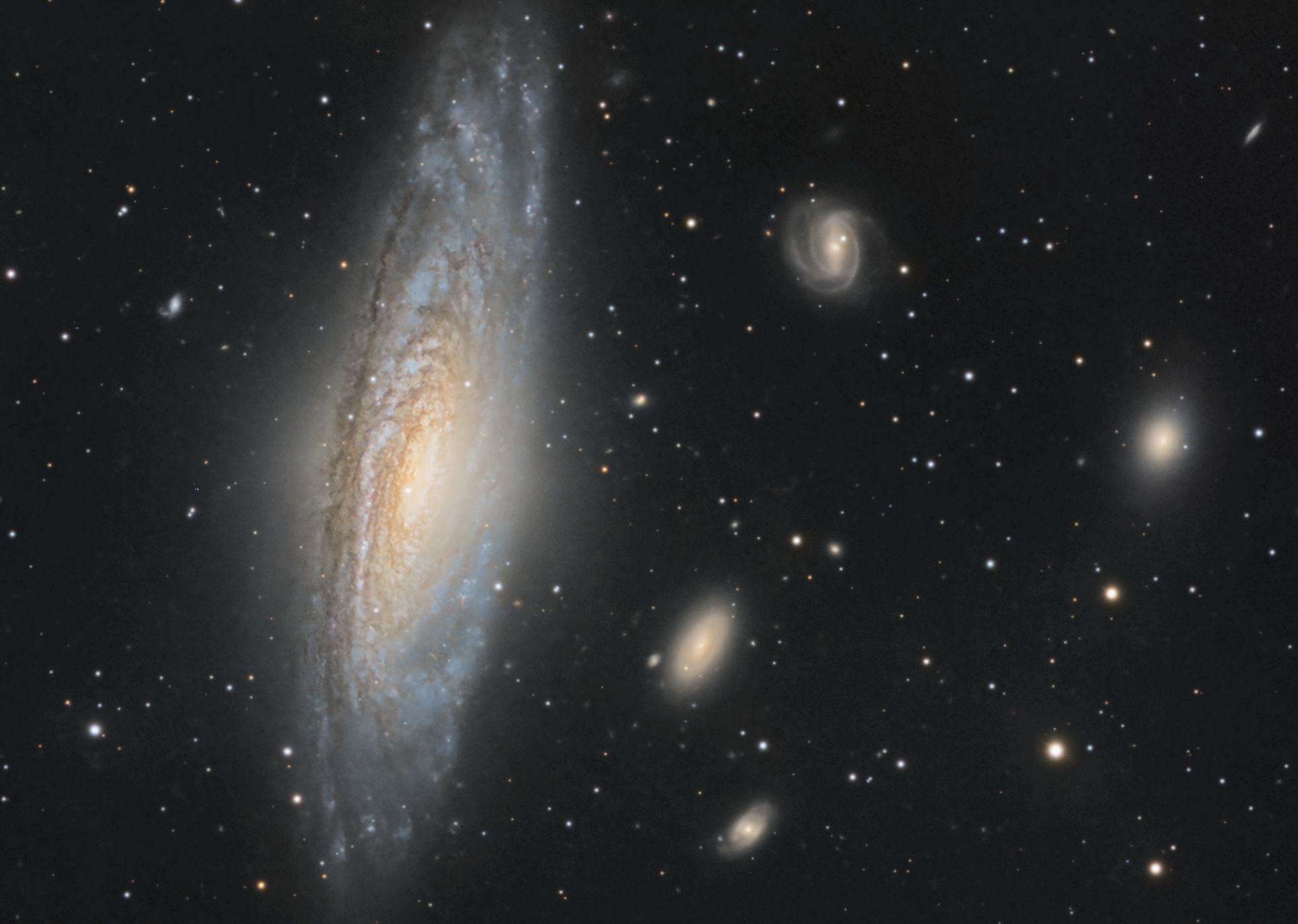
A spiral galaxy occupies most of the image. It is a slightly tilted disc of stars, yellow-white in the centre and blue in the outskirts, showing light from different stars in the galaxy. Its spiral arms c.url outwards from the centre, speckled with blue star clusters. Dark reddish threads of dust swirl around the galaxy’s centre. Th,bre backdrop is two medium-sized and many small, distant galaxies on a black background. Credit: ESA/Hubble & NASA, A. Riess, K. Nol

Today’s ESA/Hubble Picture of the Week features a galaxy that Hubble has captured multiple times over more than 20 years. The galaxy is called NGC 3370, and it is a spiral galaxy located nearly 90 million light-years away in the constellation Leo (The Lion).

What is it about this galaxy that makes it a popular target for researchers? NGC 3370 is home to two kinds of objects that astronomers prize for their usefulness in determining distances to faraway galaxies: Cepheid variable stars and Type Ia supernovae.

Cepheid variable stars change in both size and temperature as they pulsate. As a result, the luminosity of these stars varies over a period of days to months. It does so in a way that reveals something important: the more luminous a Cepheid variable star is, the more slowly it pulsates. By measuring how long a Cepheid variable’s brightness takes to complete one cycle, astronomers can determine how bright the star actually is. Paired with how bright the star appears from Earth, this information gives the distance to the star and its home galaxy.

Type Ia supernovae provide a way to measure distances in a single explosive burst rather than through regular brightness variations. Type Ia supernovae happen when the dead core of a star ignites in a sudden flare of nuclear fusion. These explosions peak at very similar luminosities, and much like for a Cepheid variable star, knowing the intrinsic brightness of a supernova explosion allows for its distance to be measured. Observations of Cepheid variable stars and Type Ia supernovae are both critical for precisely measuring how fast our Universe is expanding.

A previous Hubble image of NGC 3370 was released in 2003. The image released today zooms in on the galaxy, presenting a richly detailed view that incorporates wavelengths of light that were not included in the previous version. NGC 3370 is a member of the NGC 3370 group of galaxies along with other Hubble targets NGC 3447 and NGC 3455.

Links


Sunday, August 03, 2025

NuSTAR Observes a Nearby Supernova

An astrophotographer's optical image of the supernova host galaxy NGC 7331. SN 2025rbs is visible as a bright point close to the galaxy center. An animated GIF showing the appearance of the supernova can be found at:
https://ssr.app.astrobin.com/i/pnplmb?r=C. Image credit: GalacticRAVE/M. Steinmetz. Download Image

During the past week, NuSTAR responded to a community target-of-opportunity (ToO) request to observe the young, Type Ia supernova SN 2025rbs, which is located in the galaxy NGC 7331. Type Ia supernovae are the result of a white dwarf accreting material from a companion star until it exceeds the Chandrasekhar mass and explodes. These explosions have regular enough time profiles and overall luminosity that they are regularly used to measure the distance scale of the Universe. However, their underlying physics is relatively poorly understood since there are few Type Ia supernovae that are close enough to study in detail. In their early lives, the supernovae are powered by radioactive decay of material (primarily 56Ni) that releases gamma-rays that thermalize into the supernova atmosphere so that the ejecta glows in optical light. NuSTAR provides a unique capability to study the hard X-ray (>50 keV) emission from these systems, which arises as the ejecta expands and becomes optically thin to the gamma-ray photons so that hard X-rays “leak out” of the ejecta. SN 2025rbs is the closest Type Ia supernova to the Earth since SN 2014J exploded in M82, which NuSTAR observed in January/February 2014 for nearly a month. The NuSTAR ToO observation of SN 2025rbs occurred prior to the optical peak of the emission, only six days after the supernova was classified as a Type Ia and a few days before the optical peak. An Astronomer’s Telegram (ATel) reporting early results was posted the same day the data were received at the NuSTAR Science Operations Center (SOC), thanks to the ability of the SOC to provide “quicklook” unprocessed data products to the community. These data will provide the most stringent limits on any high-energy emission from the supernova explosion.

Authors: Brian Grefenstette (NuSTAR Instrument Scientist, Caltech)


Wednesday, July 30, 2025

An artist's impression of a white dwarf polar system, consisting of a magnetic white dwarf accreting matter from its companion—for EF Eri, this is a star that has lost so much mass that it is now too small to undergo stellar fusion. Image credit: International Gemini Observatory/NOIRLab/NSF/AURA/University of Leicester (UK)/M. A. Garlick.
 Download Image

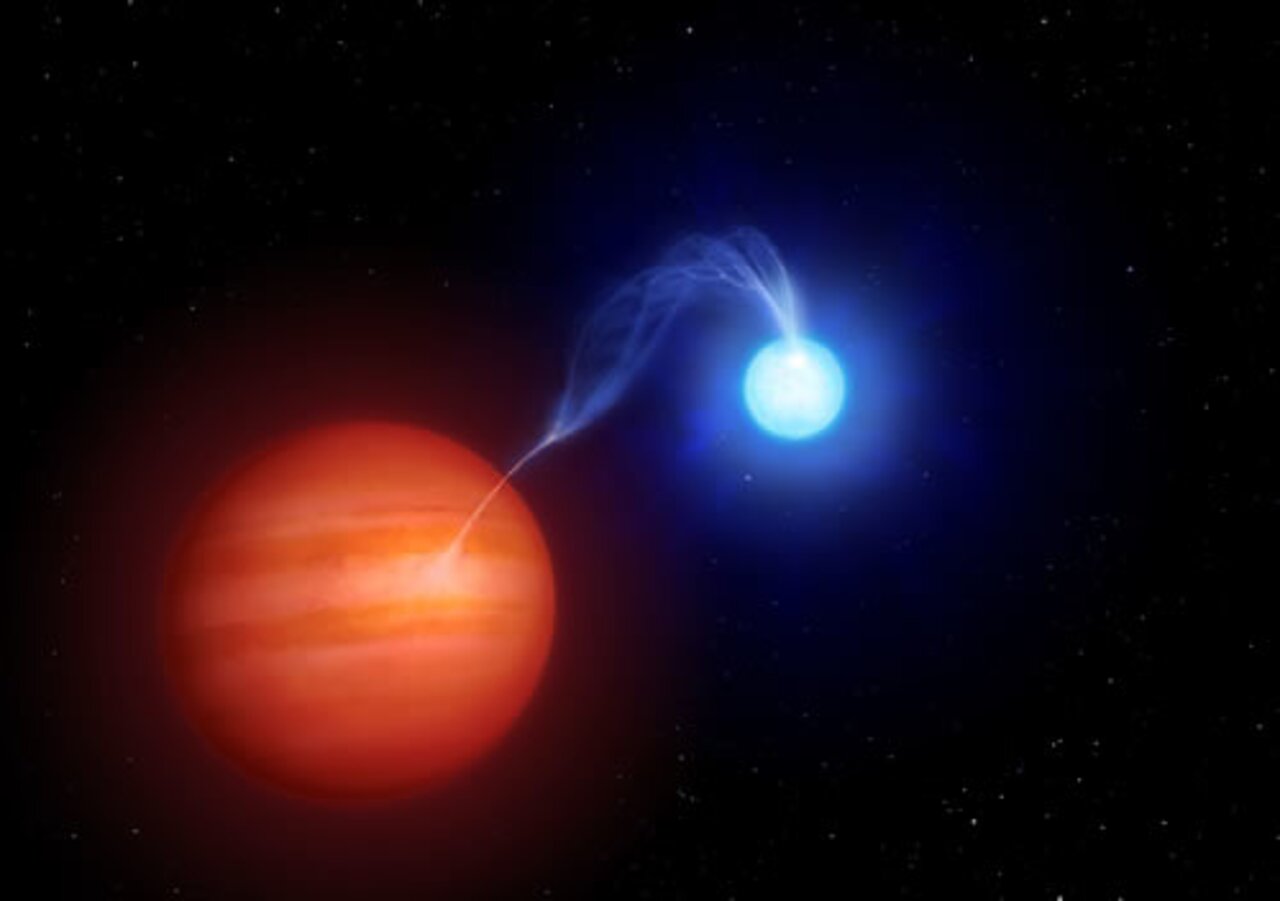
During the past week, NuSTAR observed the magnetic Cataclysmic Variable (mCV) EF Eridani, after it awoke from a nearly 30-year-long dormant period. mCVs are binary star systems consisting of a white dwarf and a companion star, where material from the companion is accreted onto the white dwarf. As this material falls, it reaches supersonic speeds, creating a shock wave that heats the material to over 100 million Kelvin and produces intense X-ray emission, detectable by NuSTAR. mCVs are of particular astrophysics interest since they are potential progenitors to Type Ia supernovae, a critical component of the cosmological distance ladder, and because they contribute significantly to the X-ray source population in the Galactic Center. This NuSTAR observation is coordinated with XRISM. NuSTAR’s broadband spectral sensitivity, combined with XRISM's precision spectroscopy, will provide scientists with unique insights into the accretion flow onto EF Eridani, revealing details of the heating, dynamics, and radiative processes that govern mCV systems.

Authors: Gabriel Bridges (PhD Student, Columbia University)


Friday, October 25, 2024

On the Run: Hypervelocity Stars and Their Links to Type Ia Supernovae

Artist’s rendition of two white dwarf stars about to collide and explode in a Type Ia supernova.
Still image from an animation by
NASA’s Goddard Space Flight Center Conceptual Image Lab

As the Gaia spacecraft has mapped more and more of the Milky Way, astronomers have uncovered some of the fastest-moving stars in the galaxy. Can simulations link these stars to the elusive origins of Type Ia supernovae?

Type Ia Supernova Origins

Occurring in binary star systems with at least one white dwarf, Type Ia supernovae are key cosmological distance indicators and have allowed astronomers to study the expansion of the universe. Despite their importance, the details behind these explosions and the characteristics of their progenitor systems remain unclear.

One proposed mechanism to launch a Type Ia supernova is the double-detonation scenario, in which the white dwarf accretes helium from a helium-rich donor star. Forming a thin shell around the carbon-oxygen core, the siphoned helium eventually detonates, sending shock waves through the core, causing it to also detonate. In the wake of the powerful explosion, the donor star launches across the Milky Way, forever changed.

Recent Gaia discoveries of a runaway helium-burning star and hypervelocity stars — stars that zoom through the galaxy much faster than the general stellar population — suggest that the double-detonation scenario may be responsible for a number of Type Ia supernovae. Can double-detonation simulations predict the observed properties of these fast-moving stars, further uncovering Type Ia supernova origins?

Simulation snapshots showing fraction of donor material (left) and total density (right) for a helium white dwarf donor model. The bottom panel shows that, though much of the donor’s material has expanded, a large fraction is still bound to the donor star as indicated by the gray lines in the left panel. The impacts of shock waves can be seen as concentric shells in the density distribution on the right. Credit: Wong et al. 2024

Supernova Ejecta Effects

As a helium-rich donor star is bombarded with material and energy from its exploding white dwarf companion, interactions with the supernova ejecta can leave lasting impacts on the donor star’s trajectory through the galaxy as well as the star’s properties and evolution. Motivated by this interaction and the Gaia observations of hypervelocity stars, Tin Long Sunny Wong (University of California, Santa Barbara) and collaborators performed hydrodynamical simulations that track, with novel clarity, the lasting imprints supernova ejecta leave on their companions. The authors’ analysis shows that as the supernova ejecta crashes into the donor star, some of the donor star’s material is swept up and pulled in the direction of the supernova’s propagation. The supernova shock wave passes through the donor star, both compressing and pushing the star away from the explosion center. As the shock front moves on, the donor star attempts to return to equilibrium, contracting and expanding, sending smaller shock waves into its surroundings.

For each progenitor stellar type simulated, the authors find that the donor stars become puffed up with lower densities and larger radii. The donors also lose some of their original mass but acquire a small portion of supernova ejecta material — consistent with the observed metal-polluted atmospheres and larger radii of hypervelocity stars.

Postexplosion evolution for each simulated donor star type (labeled in figure legend) in luminosity-temperature space (Hertzsprung-Russell diagram). Four observed stars of interest are plotted, showing intriguing agreement between the well-studied hypervelocity star D6-2 and the expected evolution for a helium white dwarf donor companion. Credit:Wong et al. 2024

Postexplosion Evolution

Particularly important to the identification of donor stars in the field is how these stars evolve over longer timescales and how we may observe them today. The authors performed further simulations to track the temperature and luminosity changes for each simulated donor star from ~10 years to 100 million years after the supernova event. Intriguingly, some of the observed hypervelocity stars seem to fall near the predicted evolutionary tracks, suggesting that these stars could have been ejected by Type Ia supernovae. This study provides important evidence for the possible double-detonation scenario of Type Ia supernovae. As simulations continue to improve, the ability to identify the progenitor systems of these energetic events becomes more promising.

By Lexi Gault

Citation

“Shocking and Mass Loss of Compact Donor Stars in Type Ia Supernovae,” Tin Long Sunny Wong et al 2024 ApJ 973 65. doi:10.3847/1538-4357/ad6a11


Monday, February 12, 2024

NASA's Roman to Use Rare Events to Calculate Expansion Rate of Universe


Supernova Refsdal (Hubble image)
Credits: Image: NASA, ESA, Steve A. Rodney (JHU), Tommaso Treu (UCLA), Patrick Kelly (UC Berkeley), Jennifer Lotz (STScI), Marc Postman (STScI), Zolt G. Levay (STScI), FrontierSN Team, GLASS Team, HFF Team (STScI), CLASH Team

Distant Supernova Multiply Imaged by Foreground Cluster
Illustration: NASA, ESA, Ann Feild (STScI), Joseph DePasquale (STScI)
Science: NASA, ESA, Steve A. Rodney (JHU), Tommaso Treu (UCLA), Patrick Kelly (UC Berkeley), Jennifer Lotz (STScI), Marc Postman (STScI), Zolt G. Levay (STScI), FrontierSN Team, GLASS Team, HFF Team (STScI), CLASH Team


Astronomers investigating one of the most pressing mysteries of the cosmos – the rate at which the universe is expanding – are readying themselves to study this puzzle in a new way using NASA’s Nancy Grace Roman Space Telescope. Once it launches by May 2027, astronomers will mine Roman’s wide swaths of images for gravitationally lensed supernovae, which can be used to measure the expansion rate of the universe.

There are multiple independent ways astronomers can measure the present expansion rate of the universe, known as the Hubble constant . Different techniques have yielded different values, referred to as the Hubble tension . Much of Roman’s cosmological investigations will be into elusive dark energy, which affects how the universe is expanding over time. One primary tool for these investigations is a fairly traditional method, which compares the intrinsic brightness of objects like type Ia supernovae to their perceived brightness to determine distances. Alternatively, astronomers could use Roman to examine gravitationally lensed supernovae. This method of exploring the Hubble constant is unique from traditional methods because it’s based on geometric methods, and not brightness.

“Roman is the ideal tool to let the study of gravitationally lensed supernovae take off,” said Lou Strolger of the Space Telescope Science Institute (STScI) in Baltimore, co-lead of the team preparing for Roman’s study of these objects. “They are rare, and very hard to find. We have had to get lucky in detecting a few of them early enough. Roman’s extensive field of view and repeated imaging in high resolution will help those chances.”

Using various observatories like NASA’s Hubble Space Telescope and James Webb Space Telescope, astronomers have discovered just eight gravitationally lensed supernovae in the universe. However, only two of those eight have been viable candidates to measure the Hubble constant due to the type of supernovae they are and the duration of their time-delayed imaging.

Gravitational lensing occurs when the light from an object like a stellar explosion, on its way to Earth, passes through a galaxy or galaxy cluster and gets deflected by the immense gravitational field. The light splits along different paths and forms multiple images of the supernova on the sky as we see it. Depending on the differences between the paths, the supernova images appear delayed by hours to months, or even years. Precisely measuring this difference in arrival times between the multiple images leads to a combination of distances that constrain the Hubble constant.

“Probing these distances in a fundamentally different way than more common methods, with the same observatory in this case, can help shed light on why various measurement techniques have yielded different results,” added Justin Pierel of STScI, Strolger’s co-lead on the program.

Finding the Needle in the Haystack

Roman's extensive surveys will be able to map the universe much faster than Hubble can, with the telescope “seeing” more than 100 times the area of Hubble in a single image.

“Rather than gathering several pictures of trees, this new telescope will allow us to see the entire forest in a single snapshot,” Pierel explained.

In particular, the High Latitude Time Domain Survey will observe the same area of sky repeatedly, which will allow astronomers to study targets that change over time. This means there will be an extraordinary amount of data – over 5 billion pixels each time – to sift through in order to find these very rare events.

A team led by Strolger and Pierel at STScI is laying the groundwork for finding gravitationally lensed supernovae in Roman data through a project funded by NASA’s Research Opportunities in Space and Earth Science (ROSES) Nancy Grace Roman Space Telescope Research and Support Participation Opportunities program.

“Because these are rare, leveraging the full potential of gravitationally lensed supernovae depends on a high level of preparation,” said Pierel. “We want to make all the tools for finding these supernovae ready upfront so we don’t waste any time sifting through terabytes of data when it arrives.”

The project will be carried out by a team of researchers from various NASA centers and universities around the country.

The preparation will occur in several stages. The team will create data reduction pipelines designed to automatically detect gravitationally lensed supernovae in Roman imaging. To train those pipelines, the researchers will also create simulated imaging: 50,000 simulated lenses are needed, and there are only 10,000 actual lenses currently known.

The data reduction pipelines created by Strolger and Pierel’s team will complement pipelines being created to study dark energy with Type Ia supernovae.

“Roman is truly the first opportunity to create a gold-standard sample of gravitationally lensed supernovae,” concluded Strolger. “All our preparations now will produce all the components needed to ensure we can effectively leverage the enormous potential for cosmology.”

The Nancy Grace Roman Space Telescope is managed at NASA’s Goddard Space Flight Center in Greenbelt, Maryland, with participation by NASA's Jet Propulsion Laboratory and Caltech/IPAC in Southern California, the Space Telescope Science Institute in Baltimore, and a science team comprising scientists from various research institutions. The primary industrial partners are Ball Aerospace and Technologies Corporation in Boulder, Colorado; L3Harris Technologies in Melbourne, Florida; and Teledyne Scientific & Imaging in Thousand Oaks, California.


About This Release

Credits:

Media Contact:

Hannah Braun
Space Telescope Science Institute, Baltimore, Maryland

Christine Pulliam
Space Telescope Science Institute, Baltimore, Maryland

Permissions: Content Use Policy

Related Links and Documents


Sunday, March 14, 2021

How fast is the universe expanding? Galaxies provide one answer.

NGC 1453, a giant elliptical galaxy situated in the constellation Eridanus, was one of 63 galaxies used to calculate the expansion rate of the local universe. Last year, the MASSIVE survey team determined that the galaxy is located 166 million light years from Earth and has a black hole at its center with a mass nearly 3 billion times that of the sun. (Photo courtesy of the Carnegie-Irvine Galaxy Survey)

Determining how rapidly the universe is expanding is key to understanding our cosmic fate, but with more precise data has come a conundrum: Estimates based on measurements within our local universe don’t agree with extrapolations from the era shortly after the Big Bang 13.8 billion years ago.

A new estimate of the local expansion rate — the Hubble constant, or H0 (H-naught) — reinforces that discrepancy.

Using a relatively new and potentially more precise technique for measuring cosmic distances, which employs the average stellar brightness within giant elliptical galaxies as a rung on the distance ladder, astronomers calculate a rate — 73.3 kilometers per second per megaparsec, give or take 2.5 km/sec/Mpc — that lies in the middle of three other good estimates, including the gold standard estimate from Type Ia supernovae. This means that for every megaparsec — 3.3 million light years, or 3 billion trillion kilometers — from Earth, the universe is expanding an extra 73.3 ±2.5 kilometers per second. The average from the three other techniques is 73.5 ±1.4 km/sec/Mpc.

Perplexingly, estimates of the local expansion rate based on measured fluctuations in the cosmic microwave background and, independently, fluctuations in the density of normal matter in the early universe (baryon acoustic oscillations), give a very different answer: 67.4 ±0.5 km/sec/Mpc.

Astronomers are understandably concerned about this mismatch, because the expansion rate is a critical parameter in understanding the physics and evolution of the universe and is key to understanding dark energy — which accelerates the rate of expansion of the universe and thus causes the Hubble constant to change more rapidly than expected with increasing distance from Earth. Dark energy comprises about two-thirds of the mass and energy in the universe, but is still a mystery.

For the new estimate, astronomers measured fluctuations in the surface brightness of 63 giant elliptical galaxies to determine the distance and plotted distance against velocity for each to obtain H0. The surface brightness fluctuation (SBF) technique is independent of other techniques and has the potential to provide more precise distance estimates than other methods within about 100 Mpc of Earth, or 330 million light years. The 63 galaxies in the sample are at distances ranging from 15 to 99 Mpc, looking back in time a mere fraction of the age of the universe.

“For measuring distances to galaxies out to 100 megaparsecs, this is a fantastic method,” said cosmologist Chung-Pei Ma, the Judy Chandler Webb Professor in the Physical Sciences at the University of California, Berkeley, and professor of astronomy and physics. “This is the first paper that assembles a large, homogeneous set of data, on 63 galaxies, for the goal of studying H-naught using the SBF method.”

Ma leads the MASSIVE survey of local galaxies, which provided data for 43 of the galaxies — two-thirds of those employed in the new analysis.

The data on these 63 galaxies was assembled and analyzed by John Blakeslee, an astronomer with the National Science Foundation’s NOIRLab. He is first author of a paper now accepted for publication in The Astrophysical Journal that he co-authored with colleague Joseph Jensen of Utah Valley University in Orem. Blakeslee, who heads the science staff that support NSF’s optical and infrared observatories, is a pioneer in using SBF to measure distances to galaxies, and Jensen was one of the first to apply the method at infrared wavelengths. The two worked closely with Ma on the analysis.

“The whole story of astronomy is, in a sense, the effort to understand the absolute scale of the universe, which then tells us about the physics,” Blakeslee said, harkening back to James Cook’s voyage to Tahiti in 1769 to measure a transit of Venus so that scientists could calculate the true size of the solar system. “The SBF method is more broadly applicable to the general population of evolved galaxies in the local universe, and certainly if we get enough galaxies with the James Webb Space Telescope, this method has the potential to give the best local measurement of the Hubble constant.”

The James Webb Space Telescope, 100 times more powerful than the Hubble Space Telescope, is scheduled for launch in October.

Giant elliptical galaxies

The Hubble constant has been a bone of contention for decades, ever since Edwin Hubble first measured the local expansion rate and came up with an answer seven times too big, implying that the universe was actually younger than its oldest stars. The problem, then and now, lies in pinning down the location of objects in space that give few clues about how far away they are.

Hubble Space Telescope images of giant elliptical galaxies like this one, NGC 1453, are used to determine surface brightness fluctuations and estimate these galaxies’ distances from Earth. (Photo courtesy of the Space Telescope Science Institute)

Astronomers over the years have laddered up to greater distances, starting with calculating the distance to objects close enough that they seem to move slightly, because of parallax, as the Earth orbits the sun. Variable stars called Cepheids get you farther, because their brightness is linked to their period of variability, and Type Ia supernovae get you even farther, because they are extremely powerful explosions that, at their peak, shine as bright as a whole galaxy. For both Cepheids and Type Ia supernovae, it’s possible to figure out the absolute brightness from the way they change over time, and then the distance can be calculated from their apparent brightness as seen from Earth.

The best current estimate of H0 comes from distances determined by Type Ia supernova explosions in distant galaxies, though newer methods — time delays caused by gravitational lensing of distant quasars and the brightness of water masers orbiting black holes — all give around the same number.

The technique using surface brightness fluctuations is one of the newest and relies on the fact that giant elliptical galaxies are old and have a consistent population of old stars — mostly red giant stars — that can be modeled to give an average infrared brightness across their surface. The researchers obtained high-resolution infrared images of each galaxy with the Wide Field Camera 3 on the Hubble Space Telescope and determined how much each pixel in the image differed from the “average” — the smoother the fluctuations over the entire image, the farther the galaxy, once corrections are made for blemishes like bright star-forming regions, which the authors exclude from the analysis.

Neither Blakeslee nor Ma was surprised that the expansion rate came out close to that of the other local measurements. But they are equally confounded by the glaring conflict with estimates from the early universe — a conflict that many astronomers say means that our current cosmological theories are wrong, or at least incomplete.

The extrapolations from the early universe are based on the simplest cosmological theory — called lambda cold dark matter, or CDM — which employs just a few parameters to describe the evolution of the universe. Does the new estimate drive a stake into the heart of CDM?

“I think it pushes that stake in a bit more,” Blakeslee said. “But it (CDM) is still alive. Some people think, regarding all these local measurements, (that) the observers are wrong. But it is getting harder and harder to make that claim — it would require there to be systematic errors in the same direction for several different methods: supernovae, SBF, gravitational lensing, water masers. So, as we get more independent measurements, that stake goes a little deeper.”

Ma wonders whether the uncertainties astronomers ascribe to their measurements, which reflect both systematic errors and statistical errors, are too optimistic, and that perhaps the two ranges of estimates can still be reconciled.

“The jury is out,” she said. “I think it really is in the error bars. But assuming everyone’s error bars are not underestimated, the tension is getting uncomfortable.”

In fact, one of the giants of the field, astronomer Wendy Freedman, recently published a study pegging the Hubble constant at 69.8 ±1.9 km/sec/Mpc, roiling the waters even further. The latest result from Adam Riess, an astronomer who shared the 2011 Nobel Prize in Physics for discovering dark energy, reports 73.2 ±1.3 km/sec/Mpc. Riess was a Miller Postdoctoral Fellow at UC Berkeley when he performed this research, and he shared the prize with UC Berkeley and Berkeley Lab physicist Saul Perlmutter.

MASSIVE galaxies

The new value of H0 is a byproduct of two other surveys of nearby galaxies — in particular, Ma’s MASSIVE survey, which uses space and ground-based telescopes to exhaustively study the 100 most massive galaxies within about 100 Mpc of Earth. A major goal is to weigh the supermassive black holes at the centers of each one.

Another image of the giant elliptical galaxy NGC1453, taken by Pan-STARRS, the Panoramic Survey Telescope and Rapid Response System at the Haleakala Observatory on the island of Maui in Hawaii.

To do that, precise distances are needed, and the SBF method is the best to date, she said. The MASSIVE survey team used this method last year to determine the distance to a giant elliptical galaxy, NGC 1453, in the southern sky constellation of Eridanus. Combining that distance, 166 million light years, with extensive spectroscopic data from the Gemini and McDonald telescopes — which allowed Ma’s graduate students Chris Liepold and Matthew Quenneville to measure the velocities of the stars near the center of the galaxy — they concluded that NGC 1453 has a central black hole with a mass nearly 3 billion times that of the sun.

To determine H0, Blakeslee calculated SBF distances to 43 of the galaxies in the MASSIVE survey, based on 45 to 90 minutes of HST observing time for each galaxy. The other 20 came from another survey that employed HST to image large galaxies, specifically ones in which Type Ia supernovae have been detected.

Most of the 63 galaxies are between 8 and 12 billion years old, which means that they contain a large population of old red stars, which are key to the SBF method and can also be used to improve the precision of distance calculations. In the paper, Blakeslee employed both Cepheid variable stars and a technique that uses the brightest red giant stars in a galaxy — referred to as the tip of the red giant branch, or TRGB technique — to ladder up to galaxies at large distances. They produced consistent results. The TRGB technique takes account of the fact that the brightest red giants in galaxies have about the same absolute brightness.

“The goal is to make this SBF method completely independent of the Cepheid-calibrated Type Ia supernova method by using the James Webb Space Telescope to get a red giant branch calibration for SBFs,” he said.

“The James Webb telescope has the potential to really decrease the error bars for SBF,” Ma added. But for now, the two discordant measures of the Hubble constant will have to learn to live with one another.

“I was not setting out to measure H0; it was a great product of our survey,” she said. “But I am a cosmologist and am watching this with great interest.”

Co-authors of the paper with Blakeslee, Ma and Jensen are Jenny Greene of Princeton University, who is a leader of the MASSIVE team, and Peter Milne of the University of Arizona in Tucson, who leads the team studying Type Ia supernovae. The work was supported by the National Aeronautics and Space Administration (HST-GO-14219, HST-GO-14654, HST GO-15265) and the National Science Foundation (AST-1815417, AST-1817100).

 Related Information


Friday, November 27, 2020

Neil Gehrels Swift Observatory Gamma-Ray Burst associated with Kilonovae: ambushing the Standard Candle in its own nest

Illustration 1: NASA's Swift spacecraft spots its thousandth gamma-ray burst
Credit: MASA.

Gamma-Ray Bursts (GRBs) are the most luminous and explosive transient phenomena in the Universe after the Big Bang, but they are still puzzling phenomena regarding their emission mechanism even after more than 50 years from their discovery. A powerful tool for characterizing and classifying GRBs to allow them to be used as tracers of the expansion history of the Universe and to understand their mysterious and debated physical mechanisms has been recently presented by an international team of researchers led by Dr. hab. Maria Dainotti, Assistant Professor at Jagiellonian University, Poland and concurrently serving as Senior Research Scientist at RIKEN and affiliate Research Scientist at Space Science Institute, in Boulder, Colorado.

The new article, which has been accepted by the Astrophysical Journal, pays particular attention to the GRBs associated with Kilonovae, and to a sample called the Platinum sample for which the maximum redshift observed is 5, much more distant than the maximum redshift at which the SNe Ia have been observed.

Astronomers can only directly measure distances to objects that are close to Earth and can extrapolate the distances to objects farther out. All the objects that serve as rungs on the cosmological distance ladder have known luminosities and are referred to as "standard candles". Once the absolute luminosity of the standard candle is known, the distance to that object can be calculated based on its measured brightness. For example, the light of the same standard candle will appear dimmer when it is farther away. GRBs are so powerful that in a few seconds they emit the equivalent of the energy emitted by the Sun during its entire lifetime. Thus, it is possible to observe GRBs at incredibly large distances (a.k.a., high redshift), much further than standard candles like Ia-type supernovae (SNe Ia) that are observed at up to 11 billion light years. Using GRBs as a new type of standard candle will allow astronomers to study and comprehend cosmological issues that could change current models regarding the Universe's history and its evolution.

Despite decades of observations, a comprehensive model able to explain the underlying physical mechanisms and properties of these objects has not been reached yet. Many possible physical origins for GRBs have been proposed, like the explosion of an extremely massive star (the long duration GRBs) or the merging of two compact objects (the short duration GRBs). Many models about the progenitor responsible of powering GRBs have been proposed as well, such as a black hole, a neutron star (NS) or a rapidly rotating newly born NS with a high magnetific field (magnetar).

Kilonovae (in short: KNe) are astrophysical objects linked to short duration gamma-ray bursts, which are the result of explosions occuring after two very dense objects (for exampe, two neutron stars) merge together. The detection of X-ray emission at a location coincident with the given Kilonovae can also provide the missing observational link between short duration GRBs and gravitational wavesproduced by ssuch stellar mergers. The first detection of the Kilonovae associated with both gravitational waves emission and such a short GRB, namely GRB 170817, has opened a new era of observations and theoretical investigation. The missing piece to this long-standing story is the connection of KNe and the GRB observational correlations that Dainotti et al. now provide. 

Figure 2: The LX-T*X-Lpeak relation for the SGRB (short duration GRB) sample with separated KN-SGRB cases. We note here that all the KN-SGRBs (marked in yellow) fall below the best fitting plane. Credit: The Authors.

Even when all the GRBs are observed with the same satellite, in this case the NASA's Neil Gehrels Swift Observatory, the GRBs' features are seen to vary very widely over several orders of magnitude. This applies not only to the prompt emission (the main event in the gamma rays), but also to the extended afterglow phase (which follows the prompt emission and is seen over a wide range of wavelengths). Thus, the key point of the article by Dainotti et al., is the hunt for features which remain invariant according to peculiar classes of GRBs. 

Figure 3: Histograms of the distance from the Short Duration Plane for KN-SGRBs and SGRBs, considering the correction for selection biases and evolutionary effects. Credit: The Authors.

The team has found a 3-D correlation, i.e. a link between the following three variables that identifies a plane: duration of the X-ray plateau phase, its luminosity, and the luminosity of the peak prompt gamma ray feature. The distances of GRBs from a given class's plane allowed the authors to determine if GRBs belong to that particular class by showing different features related to this 3-D correlation. The Dainotti et al. study has also shown that although the GRBs-KNe events are a subsample of the larger class of short duration GRBs (red cuboids), they show some observational peculiarities: indeed, they all lie below the short fundamental plane as shown in Figure 2 (yellow truncated icosahedrons). In this analysis, selection biases and evolutionary effects (namely, how the variables change with distance or redshift) have been accounted for, and after correction for selection bias the 3D correlation for GRB-KNe is still tight together with the platinum sample, the tightest sample for the 3D correlation where only well-sampled determined features are taken into account. Thus, both the platinum and the GRBs-KNe plane seems to be the excellent tools for further cosmological studies.

In fact, the GRBs-KNe plane has the smallest observed distance from its plane, called the intrinsic scatter. Here this scatter is 29% smaller than a previous analysis, see Fig. 2, object of a NASA press in 2016, lead by Dr. Dainotti. We note that this finding has been reached in a natural way without assuming any observational criteria, as had been done in Dainotti et al. previous studies. This new result is thus a step much further ahead than previous analyses.

In addition, the separated KNe plane itself still has a very small distance from the 3D plane related to the KNe when evolution is accounted for, see Fig. 3. The smaller the distance is from the plane, the more useful the plane is to be used as a cosmological tool.

A great advantage of using the GRBs associated with Kilonovae is that the GRB-KNe events have a clearer physical emission process compared to other observational GRB classes. Thus, the leap forward in this study is that this sample has a physical grounding related to the fundamental plane relation regardless of the features of the plateau phase which can vary widely from one GRB to another.


Original publication: 
 
Prof. Maria Giovanna Dainotti, Aleksander Lenart, Giuseppe Sarracino, Shigehiro Nagataki, Salvatore Capozziello, Nissim Fraija; The X-ray fundamental plane of the Platinum Sample, the Kilonovae and the SNe Ib/c associated with GRBs, ApJ 2020 (DOI: 10.3847/1538-4357/abbe8a).


The research was conducted at the Department of High Energy Astrophysics of the Jagiellonian University’s Astronomical Observatory (OA UJ).


Contact:

Maria Giovanna Dainotti
Astronomical Observatory
Jagiellonian

M.Dainotti@oa.uj.edu.pl


Friday, October 09, 2020

The origin of Type Ia supernovae revealed by manganese abundances

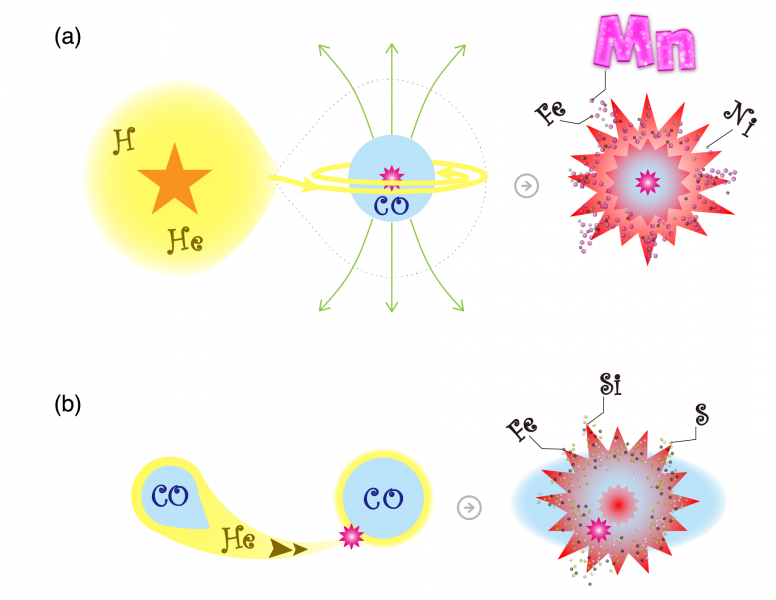
Image caption 1: (a) Near-Chandrasekhar mass explosions: In a binary system of one white dwarf that is made of carbon and oxygen, mass accretion from the companion star (a main se-quence star or red giant) causes winds of material from the white dwarf, which regu-lates the mass accretion onto the white dwarf, and increases the white dwarf mass. Subsonic waves from the explosion at the centre of near-Chandrasekhar mass white dwarf trigger a detonation in the outskirts. This explosion can produce a lot of manga-nese (Mn) and nickel (Ni) as well as iron (Fe). (b) An example of sub-Chandrasekhar mass explosions: In a binary system of two white dwarfs (at least one white dwarf consists of carbon and oxygen), the smaller one is dis-rupted by tidal forces and merges with the larger one. A detonation in a thin helium enve-lope around the white dwarf triggers a carbon detonation at the centre. This explosion can produce more silicon (Si) and sulphur (S), as well as iron (Fe), and unburnt carbon and oxygen.


Image caption 2: Evolution of oxygen (left) and manganese (right) in the solar neighborhood of the Milky Way Galaxy. The x-axis shows the metallicity (iron abundance relative to hydrogen), which is a proxy of time increasing from the left to right. The y-axis shows the oxygen and manganese abundances, relative to iron. The points are for the elemental abundances observed in nearby stars with high-resolution spectroscopy. From the comparison, it is found that at least 75 percent of Type Ia supernovae are near-Chandrasekhar mass ex-plosions.

A research team at the Kavli Institute for the Physics and Mathematics of the Universe (Kavli IPMU) consisting of Visiting Scientist Chiaki Kobayashi, Project Researcher at the time Shing-Chi Leung (currently at the California Institute of Technology), and Senior Scientist Ken’ichi Nomoto have used computer simulations to follow the explosion, nuclear reaction, production of elements, and evolution of elemental abundances in galaxies. As a result, they placed stringent constraints on the origin of Type Ia supernovae. 

A Type Ia supernova is a type of supernova that is not related to the death of a massive star. Instead, a Type Ia supernova is a luminous explosion of a star that occurs in a binary system, where two relatively low-mass stars are evolving together. Because of their relatively constant luminosity, Type Ia supernovae have been used as a standard “candle” to measure the expansion of the universe, a result for which the 2011 Nobel Prize in Physics was awarded. However, the progenitor star of a Type Ia supernova is unknown, and has been the topic of debate for around a half century. 

“As usual for normal supernovae, Type Ia supernovae produce “metals”—or, in astronomical terms, chemical elements heavier than hydrogen and helium, the latter pair tracing their origin to the Big Bang—but Type Ia supernovae produce different elements, such as manganese (Mn), nickel (Ni), and iron (Fe). These elemental abundances can be measured in spectral features of nearby stars, which keep a “record” of supernovae from the past, like fossils do in archaeology,’’ Kobayashi, who is also an associate professor at the University of Hertfordshire in the United Kingdom, said. Therefore, the evolution of elemental abundances in galaxies can provide a stringent constraint on the true origin of Type Ia supernovae.

The progenitor stars of Type Ia supernovae are a type of white dwarf that are made of carbon and oxygen. White dwarfs form after the deaths of intermediate-mass stars, where electron degeneracy pressure supports the star against collapsing under its own gravity. However, if a white dwarf exceeds its upper mass limit—also called the Chandrasekhar mass limit (named after physicist Subrahmanyan Chandrasekhar)—this leads to nuclear reactions that cause it to explode.

Therefore, in a binary system containing a near-Chandrasekhar-mass white dwarf, mass accretion from a companion star can cause an explosion, which is one of the two proposed scenarios (the “single degenerate scenario”) for Type Ia supernovae (Figure 1a). In the other scenario, two white dwarfs are formed in a binary system (the “double degenerate scenario”), which merge together to cause an explosion—namely, a sub-Chandrasekhar-mass explosion (Figure 1b).  

Click here for Figure 1 (with a white background).

 To investigate both cases, the research team run detailed calculations (2-dimensional hydrodynamical simulations and nucleosynthesis) of both near-Chandrasekhar-mass and sub-Chandrasekhar-mass explosions, and calculated the evolution of the Milky Way Galaxy, something that had not been done in previous research. 

“Between these two cases, we find a critical difference in the evolution of elemental abundances, in particular for the element manganese,’’ Kobayashi explained. In the first simulation, the explosion provided high-temperature and high-density matter where a lot of manganese was produced, while in the second simulation, there was no such matter and hence not enough manganese was produced.

The research team then incorporated the production amount of each chemical element into their galaxy model to predict the evolution of elements in the Milky Way. Compared to observational data, namely, elemental abundances measured in nearby stars with high-resolution spectroscopy, they found that at least 75 percent of Type Ia supernovae are near-Chandrasekhar mass explosions (Figure 2). In both cases, the research found, the produced iron mass is roughly the same—that is, 60 percent of the mass of the Sun—which is about 10 times larger than in normal supernovae from massive stars.

“The chemical evolution of galaxies is powerful for solving long-standing problems in nuclear astrophysics. Not only manganese but also nickel abundances are updated in our calculations with the latest nuclear reactions. Nickel was overproduced in previous calculations, but now the predicted abundance is consistent with observations,’’ Kobayashi added. As a result of their findings, the nickel overproduction problem is finally solved, after two decades of studies.

More interestingly, the research team also showed that a larger contribution from sub-Chandrasekhar-mass explosions is preferred to near-Chandrasekhar-mass explosions  from the available observations in different galaxies—dwarf spheroidal galaxies around the Milky Way, for example. 

Kobayashi and her team noted that the elemental abundances of millions of stars will be obtained with ongoing and future international projects, such as APOGEE (Apache Point Observatory Galactic Evolution Experiment), HERMES-GALAH (GALactic Archeology with HERMES), WEAVE (WHT Enhanced Area Velocity Explorer), 4MOST (4-metre Multi-Object Spectroscopic Telescope), MSE (The Maunakea Spectroscopic Explorer), in the new research area of “Galactic Archaeology,” or the study of the history of the Milky Way Galaxy, and their findings will be tested further in future research.

Paper details:

Journal: The Astrophysical Journal

Title: New Type Ia Supernova Yields and the Manganese and Nickel Problems in the Milky Way and Dwarf Spheroidal Galaxies

Authors: Chiaki Kobayashi (1,2), Shing-Chi Leung (2,3), Ken'ichi Nomoto (2)

Author affiliation:

1. Center for Astrophysics Research, Department of Physics, Astronomy and Mathemat-ics, University of Hertfordshire, College Lane, Hatfield AL10 9AB, UK
2. Kavli Institute for the Physics and Mathematics of the Universe (WPI), The University of Tokyo Institutes for Advanced Study, The University of Tokyo, Kashiwa, Chiba 277-8583, Japan
3. TAPIR, Walter Burke Institute for Theoretical Physics, Mailcode 350-17, Caltech, Pasa-dena, CA 91125, USA

DOI: https://doi.org/10.3847/1538-4357/ab8e44 (Posted on June 4, 2020)

Paper abstract: (Astrophysical Journal page): https://iopscience.iop.org/article/10.3847/1538-4357/ab8e44 

Preprint (arXiv.org page): https://arxiv.org/abs/1906.09980 

Research contact: 

Ken’ichi Nomoto 
Senior Scientist
Kavli Institute for the Physics and Mathematics of the Universe, University of Tokyo
E-mail:
nomoto@astron.s.u-tokyo.ac.jp
TEL: +81-4-7136-5940

Chiaki Kobayashi
Associate Professor
University of Hertfordshire
Visiting Scientist
Kavli Institute for the Physics and Mathematics of the Universe, University of Tokyo
E-mail:
c.kobayashi@herts.ac.uk

Media contact:

John Amari
Press officer 
Kavli Institute for the Physics and Mathematics of the Universe, The University of Tokyo
E-mail:
press@ipmu.jp
TEL: 080-4056-2767 

Related links:

Gold in the cosmos is an astronomical mystery (University of Hertfordshire press release, English)*
https://www.herts.ac.uk/about-us/media-centre/news/2020/gold-in-the-cosmos-is-an-astronomical-mystery 


*Contents related to the research results, by Kavli IPMU Visiting Scientist Chiaki Koba-yashi, published in the Astrophysical Journal on September 16, 2020


Monday, October 02, 2017

Rise and Shine: Type Ia supernova models at early times

An example of the immense brightness SNe Ia can develop: SN 1994D outshines its host galaxy, NGC 4526. The supernova is the bright object in the lower left corner. Image credit: NASA/ESA, The Hubble Key Project Team and The High-Z Supernova Search Team


Type Ia supernovae (SNe Ia) are spectacular explosions in white dwarf stars and play an essential role in astrophysics in general and in cosmological studies in particular. However, many puzzles about the nature and the inherent physical mechanisms in SNe Ia are still waiting to be answered. Robotic surveys of the next decade will provide an unprecedented wealth of observed Type Ia supernovae, detected shortly after explosion. Researchers at MPA examine here whether different explosion models are expected to leave clear imprints in such early observations that could be used in future photometric surveys to help shedding light on the progenitors and explosion mechanism of SNe Ia.

Most likely, you are reading this article using a device whose existence relies on the silicon chip, such as a PC, laptop or mobile phone. Together with a number of other chemical elements such as iron, a significant fraction of the silicon in our Universe today has been forged from lighter elements in the thermonuclear fires raging in cataclysmic events known as "Type Ia supernovae" (SNe Ia). These violent explosions mark the brilliant death of a low mass star. During their evolution, SNe Ia can become incredibly bright – to the point at which they outshine their host galaxies (see for example SN 1994D shown in Figure 1).

This is one of the properties that make SNe Ia ideal for cosmological studies in which they are frequently used as distance indicators mapping out the recent expansion history of the Universe. Specifically, SNe Ia were instrumental in establishing our current cosmological picture which involves a dark energy component responsible for the accelerated expansion. This discovery was recognized by the Nobel prize committee in 2011. However, despite their astrophysical and cosmological significance, astrophysicists are still in the dark about many aspects concerning SNe Ia.

It is broadly accepted that the supernova marks a thermonuclear explosion in a white dwarf made up of mainly carbon and oxygen that has been part of a binary system. White dwarfs are compact objects which are stabilized by electron degeneracy pressure. They are the evolutionary end state of low mass stars after their nuclear fuel has been exhausted. However, it is still heavily debated what the nature of the companion is, whether it is a sun-like or giant star or another white dwarf.

Moreover, the details of how the thermonuclear explosion is triggered and how it proceeds are still under active investigation. In particular, it is not clear if the burning front propagates as a supersonic detonation, as a subsonic turbulent deflagration, or whether a mixture of both modes is realized and the burning starts subsonically and then transitions into a detonation (delayed detonation model).

Related to the previous questions, it is still unclear at which mass the white dwarf explodes, in particular whether the supernova sets in at the theoretical mass limit for systems stabilized by electron degeneracy pressure (about 1.4 times the mass of our sun), or below it. This limit is referred to as "Chandrasekhar mass" and consequently one distinguishes Chandrasekhar mass and sub-Chandrasekhar mass models. In the latter case, the explosion can for example be triggered by a merger with another white dwarf.

Finally, it still has to be firmly established whether one scenario is exclusively responsible for SNe Ia or whether a mixture of the different explosion and progenitor possibilities is realised in nature.

Overview of the synthetic light curves for the different models in the Bessell U (upper left), B (upper right), V (lower left) and R (lower right) wavelength bands during the first 10 days after explosion. The inset shows the same curves on a logarithmic timescale, demonstrating that the curves do not follow a power law (which would be a straight line). Image: Nöbauer/MPA


Researchers at MPA performed a theoretical study, developing predictions for the early optical appearance for a number of common explosion models for standard SNe Ia. They focussed specifically on identifying clear signatures in the early light curve, i.e. the time evolution of the emission in a particular passband. Such a signature would make it possible to clearly identify specific explosion scenarios from early photometric observations.

The reason for the interest and focus on early observables is two-fold: currently, the tightest constraints on the nature of SN Ia progenitors come from the earliest data points shortly after explosion. Moreover, upcoming high-cadence surveys and upgrades of existing transient search programmes will drastically increase the number of SNe Ia detected shortly after explosion.

For the main part of the study, the scientists selected two Chandrasekhar mass explosion models, namely the well-known carbon deflagration model W7 and the delayed detonation model N100. In addition, they focussed on three sub-Chandrasekhar models, in particular a merger of two white dwarfs, a double detonation in a carbon-oxygen white dwarf with a helium shell and a pure detonation in a white dwarf core. Using the radiation hydrodynamical code Stella, they followed the supernova ejecta evolution in all these models and calculated colour light curves in various pass bands (see Figure 2). 

While for most scenarios, the light curves of the various models evolve similarly, the double detonation model shows a steep rise and a pronounced first shoulder due to radioactive material located close to the ejecta surface. This material has been synthesized in the first detonation in the Helium shell. Unfortunately, this signature is very similar to the traces left by the interaction between ejecta and a companion star or ejecta and circumstellar material, which have been investigated by other groups, rendering it a challenge to establish a clear link between such a feature in the early observables and the physical properties of the explosion scenario.

Investigating the early light curves in more detail, the researchers found that none of the standard models follow a power-law rise. However, such a behaviour, namely that the emitted luminosity increases proportional to some power of the time since explosion, is often assumed when reconstructing the explosion date from observational data. The scientists demonstrate that this can lead to errors of several days in determining the explosion date without degrading the fidelity of the fits. Potentially, this has severe consequences for estimating the size and nature of the exploding object from early data, which requires a precise determination of the time of explosion.

In summary, the researchers demonstrated that it is very challenging to identify specific explosion scenarios based on early photometric data alone. The additional availability of early spectroscopic information may help to break some of the degeneracy. Unlike typically assumed, they predict an early non-power law rise for all of the investigated standard explosion models. This can lead to serious difficulties in dating the explosion and deriving constraints about the nature of the exploding object.


Authors

Noebauer, Ulrich
Postdoc

Phone: 2297
Email: ulnoe@mpa-garching.mpg.de  
Links: personal homepage (the institute is not responsible for the contents of personal homepages)

Taubenberger, Stefan 
Postdoc  
Phone: ESO 
 Email: tauben@mpa-garching.mpg.de 

Hillebrandt, Wolfgang
Director emeritus
Phone: 2200  
Email: wfh@mpa-garching.mpg.de


Original Publication

U. M. Noebauer M. Kromer S. Taubenberger P. Baklanov S. Blinnikov E. Sorokina W. Hillebrandt
Early light curves for Type Ia supernova explosion models accepted for publication in Monthly Notices of the Royal Astronomical Society, stx2093
Source / DO


Sunday, October 01, 2017

Progenitor for Tycho’s supernova was not hot and luminous

The remnant of Tycho’s supernova as seen in X-rays, showing the expanding shock wave
Image credit: X-ray: NASA/CXC/Rutgers/K.Eriksen et al.; Optical: DSS

Artist’s conception of a white dwarf slowly accreting matter from a companion star
Image credit: David A. Hardy & PPARC

Artist’s conception of a binary white dwarf system.
Image credit: Tod Strohmayer (GSFC), CXC, NASA, Illustration: Dana Berry (CXC)


An international team of scientists from the Monash University (Melbourne, Australia), the Towson and Pittsburgh Universities (USA) and the Max Planck Institute for Astrophysics, has shed new light on the origins of the famous Tycho’s supernova. The research, published in Nature Astronomy, debunks the common view that Tycho’s supernova originated from a white dwarf, which had been slowly accreting matter from its companion in a binary system.

Type Ia supernovae (SNe Ia) serve as standard candles of modern observational cosmology; they also play a vital role in galactic chemical evolution. However, the origin of these gigantic cosmic explosions remains uncertain. Although there is a nearly universal consensus that SNe Ia are a result of the thermonuclear disruption of a white dwarf consisting of carbon and oxygen reaching the Chandrasekhar mass limit (about 1.4 times the mass of our Sun), the exact nature of their progenitors is still unknown. The white dwarf could have been gradually accumulating matter from a companion star thus reaching the Chandrasekhar mass limit, at which point the nuclear runaway began; or the nuclear explosion could have been triggered by the merger of two white dwarfs in a compact binary system. These two scenarios differ dramatically in the level of electromagnetic emission expected from the progenitor during millions of years prior to the explosion.

A white dwarf that is accreting material from the donor star becomes a source of copious X-ray and extreme UV photons – the canonical accretion scenario implies a hot and luminous progenitor that would ionize all surrounding gas within a radius of ~10–100 parsecs (up to about 300 light-years), the so called Strömgren sphere. After the white dwarf is disrupted in the supernova explosion, the source of ionizing emission disappears. However, it takes quite a long time for the interstellar gas to recombine and to become neutral again – an ionized nebula will continue to exist around the supernova for about 100,000 years after the explosion. Thus, the detection of even small amounts of neutral gas in the vicinity of a supernova can help scientists to place tight constraints on the temperature and luminoisty of the progenitor.

445 years ago, Tycho Brahe observed a stella nova (“new star”) in the night sky. Brighter than Venus when it first appeared, it faded over the following year. Today, we know that Tycho had observed a nuclear disruption of a white dwarf – a type Ia supernova. Due to its history and relative proximity to Earth, Tycho’s supernova is one of the most well-documented examples of a Type Ia supernova.

In particular, we know from optical observations that the supernova remnant today is expanding into the mostly neutral gas. Thus, using the remnant itself as a probe of its environment, scientists could exclude hot luminous progenitors that would have produced a Strömgren sphere larger than the radius of the present remnant (~3 parsecs). This conclusively rules out steadily nuclear-burning white dwarfs (supersoft X-ray sources), as well as disk emission from a Chandrasekhar-mass white dwarf accreting more than one solar mass in approximately 100 million years (recurrent novae). The lack of a surrounding Strömgren sphere is consistent with the merger of a double white dwarf binary, although other more exotic scenarios may be also possible.


Contact

Gilfanov, Marat
Scientific Staff
Phone: 2227
Email: mgilfanov@mpa-garching.mpg.de

Hämmerle, Hannelore
Press officer
Phone: 3980
Email: hanne@mpa-garching.mpg.de


Original publication

1. Tyrone Woods, Parvis Ghavamian, Carlos Badenes & Marat Gilfanov No hot and luminous progenitor for Tycho’s supernova

Nature Astronomy (2017), Published online: 25 September 2017
Source / DOI