Showing posts with label white dwarf star. Show all posts

Wednesday, October 07, 2026

Suspected Second-generation Planet Solves NASA Hubble Cold Case

This artist’s concept depicts a possible explanation for the unusual chemical abundances NASA’s Hubble Space Telescope detected in the HS 0209+0832 system: a second-generation planet orbiting a white dwarf star. Credit Artwork: NASA, ESA, Leah Hustak (STScI)

NASA’s Hubble Space Telescope spectrum shows the unusual abundances of certain elements it found in the HS 0209+0832 system. Dips indicate where niobium, nickel, and calcium are absorbing light, so less light in that part of the spectrum reached Hubble. Credit Illustration: NASA, ESA, Leah Hustak (STScI)

This artist’s concept, not to scale, imagines the evolution of a Sun-like star (1) into an aging red giant (2) and then a small, bright white dwarf surrounded by a disk of its expelled outer layers (3), from which a second-generation planet forms (4). Credit Illustration: NASA, ESA, Leah Hustak (STScI)


Diligent sleuthing by astronomers has broken open a cold case in the data archive of NASA’s Hubble Space Telescope. In a study published Monday in Nature Astronomy, researchers report uncovering a surprising chemical clue that indicates the white dwarf star HS 0209+0832 may host a second-generation planet.

A white dwarf is the remnant core of a low-mass star that has burned through all its nuclear fuel and lost its outer envelope of gas and dust to space. A second-generation planet is a world that forms around the stellar remnant from its cast-off material.

“Rather than the white dwarf stage being a kind of epilogue to the story of a star and its planets, this research points to the systems we are familiar with only being the first chapter of a potentially much longer tale, with some new characters showing up. That’s a really exciting prospect to pursue,” said Jamie Williams, astronomer and lead author, a doctoral candidate at the University of Warwick in the United Kingdom.

Earth and the other planets in our solar system are first-generation planets, which form from material left over from a star’s birth.

“What Hubble is showing us in this white dwarf system is something we haven’t seen before: a high abundance of the element niobium, the signature of which I was unfamiliar with when I first found it in the archival data,” Williams said.

When Hubble first observed the star in 1999, the data contained roughly 100 chemical features that could not be identified. Williams went back to those records armed with an updated chemical database and found that niobium matched many of the mystery features.

Williams explained that, while niobium is found in our solar system and has multiple uses on Earth, including in jewelry and medical imaging devices, the amount Hubble found in the HS 0209+0832 system points to a planet forming not from a star’s birth, but from the material ejected as it dies.

"Niobium and other elements heavier than iron are astronomically special because, unlike many common elements, they are not formed in the cores of stars by thermonuclear fusion,” said Nicholas Stone, a theoretical astrophysicist at the University of Wisconsin – Madison and member of the research team. “Instead, these heavy elements can only be synthesized in the exotic conditions that briefly emerge inside dying stars. The presence of niobium is a signpost of these ‘death’ throes, and the expulsion of the dying star's innards into space.”

Once the star ejected this chemically enriched material, the team theorizes that some of it coalesced into a gas giant planet. The remainder of the ejecta dispersed long ago, but the planet remains.

“When Jamie asked me about niobium in relation to this study I was truly gobsmacked, as that element had not been reported in any other white dwarf analyzed to date. Once we realized it was there, everything fell into place,” said astronomer and study co-author Boris Gaensicke, also at the University of Warwick.

The research team confirmed the Hubble observations with data from NASA's retired FUSE (Far Ultraviolet Spectroscopic Explorer) mission, which also showed strong signatures of niobium in the HS 0209+0832 system.

NASA’s TESS (Transiting Exoplanet Survey Satellite) also observed the white dwarf for four months, allowing it to detect periodic brightness variations that indicate that a planet orbits at a distance of about 3.7 million miles (6 million kilometers), much closer than Mercury orbits the Sun.

The research team estimates the candidate planet is a gas giant about the size of Jupiter that is rapidly losing atmosphere. Because the white dwarf star is relatively new, it is still very hot and likely blasting this planet with energy that is stripping its outer material. This could result in the planet having a comet-like tail of material that would form a disk around the white dwarf star and fall back on to its surface, leading to Hubble detecting the niobium when studying the star. Despite this mass loss, Williams said that the planet is likely not a temporary blip on the cosmic radar.

“If the second-generation planet is there, I think it is likely to survive. Eventually the white dwarf will cool and then maintain a consistent temperature, with the planet in its stable habitable zone for millions of years,” Williams said.

Williams added that there is still a lot of work to do to understand these types of systems — how second-generation planets form, how common or rare they are, and how they evolve in orbit around a “dead” star. He’ll use Hubble to explore these questions for the next several years, hoping to build up substantial data and statistics about these new types of celestial bodies.

“I think this research is an important example of the fact that scientific discovery is not a straight path,” Gaensicke said. “It often needs that magical moment when people discuss big questions on their minds and realize that together they can find unexpected answers.”

The Hubble Space Telescope has been operating for more than three decades and continues to make ground-breaking discoveries that shape our fundamental understanding of the universe. Hubble is a project of international cooperation between NASA and ESA (European Space Agency). NASA’s Goddard Space Flight Center in Greenbelt, Maryland, manages the telescope and mission operations. Lockheed Martin Space also supports mission operations at Goddard. The Space Telescope Science Institute in Baltimore, which is operated by the Association of Universities for Research in Astronomy, conducts Hubble science operations for NASA.


Details:

Last Updated: Oct 05, 2026
Editor: Andrea Gianopoulos
Location:
NASA Goddard Space Flight Center

Contact Media

Claire Andreoli
NASA’s Goddard Space Flight Center
Greenbelt, Maryland

claire.andreoli@nasa.gov

Leah Ramsay, Christine Pulliam
Space Telescope Science Institute
Baltimore, Maryland


Tuesday, August 11, 2026

Lion Nebula Roars to Life With NASA’s Webb

NASA’s James Webb Space Telescope imaged the planetary nebula NGC 2392, the Lion Nebula, using the observatory’s NIRCam and MIRI instruments. The central star’s remains are responsible for the nebula’s structure, including a lion face-shaped bubble of ionized gas and dust “mane.” Credit Image: NASA, ESA, CSA, STScI; Image Processing: Alyssa Pagan (STScI)

NASA’s James Webb Space Telescope’s mid-infrared image of planetary nebula NGC 2392, nicknamed the Lion Nebula, highlights the varying dust structures. Some dust is being destroyed by the dying central star’s radiation, while some dust filaments manage to survive. Credit Image: NASA, ESA, CSA, STScI; Image Processing: Alyssa Pagan (STScI)


Observing across the starry “plains” of space, NASA’s James Webb Space Telescope has taken new images of NGC 2392, nicknamed the Lion Nebula. NASA’s Hubble Space Telescope previously viewed this planetary nebula in 2000, imaging the lion face-shaped target in visible light and revealing features such as the “mane” of hazy, comet-shaped objects. Now Webb has captured a clearer, more detailed view of the Lion Nebula due to its high-resolution imaging.

At first glance the nebula’s overall structure in Webb’s infrared images, with both the NIRCam (Near Infrared Camera) and MIRI (Mid Infrared Instrument) instruments, may look quite similar to Hubble’s earlier visible-light view. However, Webb’s infrared vision highlights features like compact clumps of dust and a haze of ionized gas. It’s taken several thousand years for this collection of gas and dust to reach its current shape, and the nebula’s components continue to be altered.

The source of these constant changes and the reason for the Lion Nebula’s distinct appearance is located at the center: the remains of a dying star. Though it looks like the button nose of the lion, its energy and radiation are powering the intricate structures seen here.

Massive stars undergo supernova explosions at the end of their lives, but these kinds of events are few and far in between. Most of the universe’s stars have lower masses, like the one belonging to NGC 2392. When a lower-mass star can no longer sustain itself with nuclear reactions in its core, the star becomes unstable and pulsates, losing its mass by shedding its outer layers, which then turn into shells of gas and dust called a planetary nebula. (Stars at this life stage are responsible for producing much of the universe’s observable dust.) The star’s radiation drives the ejected material away, leaving behind the very hot stellar core, also known as a white dwarf.

In the Lion Nebula’s case, the death of the oxygen-rich central star has left behind a white dwarf that is “cooking” everything from the inside and producing a bubble of ionized gas as it does. The gas bubble, which forms the lion’s face, is expanding over time and destroying dust that is in its path. Understanding why the swept-up gas has a complex structure of rings and shells, a common feature in planetary nebulae, is an ongoing endeavor.

The mane of the lion is the interior of a dust shell that is being illuminated by the white dwarf at the center. The tufts of hair, which look like cometary tails of material, are compact clumps of dust that have survived the stellar core’s radiation and protect the material that lies behind them.

Webb’s imagery “freezes” this planetary nebula in time, though the star’s death, and its tumultuous effects, go on. NGC 2392 will continue to undergo changes as its gas and dust migrate away from the stellar core. Astronomers estimate the lion will eventually disperse in approximately 10,000 years — a relatively short period in astronomical terms.

The James Webb Space Telescope is the world’s premier space science observatory. Webb is solving mysteries in our solar system, looking beyond to distant worlds around other stars, and probing the mysterious structures and origins of our universe and our place in it. Webb is an international program led by NASA with its partners, ESA (European Space Agency) and CSA (Canadian Space Agency).


Details:

Last Updated: Aug 10, 2026
Location:
NASA Goddard Space Flight Center

Contact Media:

Laura Betz
NASA’s Goddard Space Flight Center
Greenbelt, Maryland

laura.e.betz@nasa.gov

Abigail Major
Space Telescope Science Institute
Baltimore, Maryland

Christine Pulliam
Space Telescope Science Institute
Baltimore, Maryland


Wednesday, June 17, 2026

'Crisis averted' as experts confirm universe's expansion IS accelerating

Studying Type Ia supernovae – violent, luminous white dwarf star explosions – led to the Nobel Prize-winning discovery that the universe's expansion is accelerating. This image combines data from four space telescopes to create a multi-wavelength view of all that remains of RCW 86, the oldest documented example of a supernova. Credit: X-ray: NASA/CXC/SAO & ESA; Infared: NASA/JPL-Caltech/B. Williams (NCSU)
Licence type: Attribution (CC BY 4.0)


Our universe's expansion is still accelerating despite recent claims suggesting otherwise, an international team of astrophysicists say.

They refuted a study published last year claiming the growth of the universe is slowing and insist there is no flaw in the widely-accepted theory that a mysterious force known as dark energy is driving the expanding cosmos.

The researchers, who include two Nobel Laureates and represent institutions worldwide, say the debate that followed last November’s revelations was the result of a scientific misunderstanding rather than a cosmic grenade threatening to blow apart everything we know about the universe.

Their paper has been published today in Monthly Notices of the Royal Astronomical Society.

It is a direct rebuttal of a study by a team of South Korean researchers that made the erroneous claim the universe's expansion may have entered a deceleration phase, caused by the influence of dark energy – which acts as a kind of anti-gravity – weakening over time.

"The previous and well accepted measurements were, in fact, fine and our current understanding of the fate of the universe remains robust," said lead author Dr Phil Wiseman, from the University of Southampton.

"Thankfully we have averted this crisis, but the mystery about why the rate of expansion of the universe is still accelerating remains.

"By proving our measurements are correct, we can get back to trying to understand what this dark energy actually is, rather than wondering if it exists at all."

The international team of researchers involved in the new study included Professor Adam Riess and Professor Brian Schmidt, who won the 2011 Nobel Prize in Physics alongside Professor Saul Perlmutter.

The trio studied Type Ia supernovae – violent, luminous white dwarf star explosions – and determined that more distant objects appeared to move faster, leading to their conclusion that the universe's expansion was accelerating.

This has been the globally-accepted theory ever since, although last year's research by the South Korean team threatened to upset the apple cart. It claimed that, as the universe aged, these supernovae had different maximum brightnesses, tricking astronomers into thinking the cosmos was accelerating when it was in fact slowing.

But the University of Southampton-led researchers found an error in how the age of these stars was estimated. They say the previous findings incorrectly assumed the age of a galaxy was the same as the age of the star that exploded.

The experts also said the South Korean paper failed to account for the mass of host galaxies, a standard correction used in modern cosmology to prove accuracy.

Professor Riess added: "Extraordinary claims require especially careful testing.

"What we find is that when we calibrate these supernovae, accounting for different host environments and populations, the evidence for cosmic acceleration remains remarkably consistent."

Professor Mark Sullivan, also from the University of Southampton, said challenging accepted theories and observations was fundamental to science.

"This is how progress is made. Although this idea did not turn out to be correct, it has opened up new ways of thinking about how supernovae explode and how we can measure dark energy more accurately," he added.

Fellow co-author Dr Brodie Popovic agreed. "We've recently been really focused on astrophysics of the explosions and how they impact cosmology," he said.

"This was a good opportunity to go back and go over all of our assumptions – it turns out, yes, we do understand this stuff and we're accounting for it in our cosmology measurement."


Media contacts:

Sam Tonkin
Royal Astronomical Society
Mob: +44 (0)7802 877 700
Email:
press@ras.ac.uk

James Haigh
University of Southampton
Mob: +44 (0)7584 368684
Email:
J.haigh@soton.ac.uk

Science contacts:

Dr Phil Wiseman
University of Southampton
Email:
P.S.Wiseman@soton.ac.uk

Dr Brodie Popovic
University of Southampton
Email:
B.A.Popovic@soton.ac.uk


Images & video

Supernova

Caption: Studying Type Ia supernovae – violent, luminous white dwarf star explosions – led to the Nobel Prize-winning discovery that the universe's expansion is accelerating. This image combines data from four space telescopes to create a multi-wavelength view of all that remains of RCW 86, the oldest documented example of a supernova. Credit: X-ray: NASA/CXC/SAO & ESA; Infared: NASA/JPL-Caltech/B. Williams (NCSU)

Type Ia supernova animation

Caption: This animation shows the explosion of a Type Ia supernova, where the white dwarf's gravity steals material away from a nearby stellar companion until it can no longer sustain its own weight and blows up. Credit: NASA/JPL-Caltech


Further information

The paper '
Still Accelerating: Type Ia supernova cosmology is robust to host galaxy age evolution' by Wiseman et al. has been published in >Monthly Notices of the Royal Astronomical Society. DOI: 10.1093/mnras/stag797.


Notes for editors

About the Royal Astronomical Society

The Royal Astronomical Society (RAS), founded in 1820, encourages and promotes the study of astronomy, solar-system science, geophysics and closely related branches of science.

The RAS organises scientific meetings, publishes international research journals, recognises outstanding achievements by the award of medals and prizes, maintains an extensive library, supports education through grants and outreach activities and represents UK astronomy nationally and internationally. Its more than 4,000 members (Fellows), a third based overseas, include scientific researchers in universities, observatories and laboratories as well as historians of astronomy and others.

The RAS accepts papers for its journals based on the principle of successful peer review, following which experts on the Editorial Boards accept the papers for publication. The Society issues press releases based on a similar principle, but the organisations and scientists concerned have overall responsibility for their content.

Keep up with the RAS on Instagram, Bluesky, LinkedIn, Facebook and YouTube.

Download the RAS Supermassive podcast

Submitted by Sam Tonkin on Thu, 11/06/2026 - 00:01


Wednesday, February 04, 2026

Binary dance: a white dwarf system explains mysterious radio pulses across the Milky Way

Artistic impression of the red dwarf and white dwarf interaction of the long-period transient GPM J1839-10. Credits: D. Futselaar/Horvath, Rea, Hurley-Walker et al. 2026

The white and red spheres are the white dwarf and M-dwarf. The arrow represents the white dwarf’s rotating magnetic moment. The yellow cone is the radio beam whose brightness depends on the alignment of the white dwarf’s magnetic moment with the M-dwarf. Below is the radio flux density detected on Earth. Animation from interactive by Csanad Horvath.


Investigating the nature of long-period transients, a newly discovered class of radio transients, can widen our knowledge on how plasmas and magnetic fields interact in extreme environments.

An international team observed a long-period transient non stop for 2 days in a study published in Nature Astronomy.

Over the past four years, a new class of signals from the Universe has captured astronomers’ attention. These events originate from galactic objects known as long-period transients (LPTs), whose nature remains unknown. They appear as repeating bright radio pulses with unusually long periods. So far, around 12 such sources have been discovered, but their origin and the mechanisms that generate their emission are still unclear. A new study published in Nature Astronomy, led by ICRAR PhD student Csanad Horvath, investigates the longest-lived LPT known.

GPM J1839-10 is the name of the longest-known LPT, with a 21- min period, observed in the Milky Way. It has now been demonstrated to be a binary system hosting a white dwarf. This system consists of a spinning white dwarf (a stellar remnant) and a red dwarf (a star smaller than the Sun). It adds scientific evidence to two previous studies that proposed other LPTs as the same type of binary systems, showing that most LPTs may share a similar origin. The exact physics behind the bright radio pulses of these sources has now been related with the interaction between the white dwarf pulsar magnetic field and the wind of the companion star.

“This work demonstrates a novel way of shedding light on the nature of LPTs, a field that started only 3 years ago and has been revealed to be key to understanding the radio transient sky”, says Nanda Rea, from the Institute of Space Sciences (ICE-CSIC) and the Institute of Space Studies of Catalonia (IEEC), co-author of the study.

These findings may represent the first steps toward understanding the true nature of all LPTs and, consequently, revising our knowledge of white dwarf and red dwarf binaries. “Radio emission produced by white dwarf binaries might be more prevalent and diverse than previously thought,” suggests Rea.

To carry out the study, the international team, composed of six researchers from astronomy research institutes in Australia and Spain, conducted a continuous 40-hour observation of GPM J1839−10. This required three radio telescopes operating sequentially at different locations around the world: the MeerKAT telescope in South Africa, CSIRO’s ASKAP radio telescope on Wajarri Yamaji Country in Australia, and the Karl G. Jansky Very Large Array (VLA) in the United States of America. “Each telescope handed the source to the next as the Earth rotated to keep the source in view,” explains Csanad Horvath, a PhD student at the Curtin University node of ICRAR, who led the work and spent a month at ICE-CSIC to finalize the analysis.

This allowed the team to record the signal pattern with high precision for subsequent analysis. They discovered that the radio pulses arrive in groups of 4 or 5 and that they come in pairs separated by two hours. A pattern that repeats every 9 hours, suggesting orbital motion with such period happens within the source system.

Using a theoretical model based on the same geometric framework proposed for white dwarf pulsars, the team accurately reproduced the intermittent emission and double-pulse structure. This strongly supports the interpretation that the LPT is a white dwarf–red dwarf binary system, and allowed to measure the system characteristics as the orbit, the inclination in our line of sight and star masses. In this scenario, radio pulses are produced whenever the magnetic axis of the spinning white dwarf, the imaginary line connecting its two magnetic poles, intersects the stellar wind of its companion, generating a bright radio signal. In every orbit the bright radio pulses can be seen twice, with 4-5 pulses every time.

Beyond revealing the likely nature of one known LPT, the study also provides a framework to investigate many more such objects. The model applied to the growing population of LPTs and other known white dwarf binary pulsars have shown the connection between these apparently different classes as well as shed light on the evolution of magnetic properties of white dwarf and red dwarf binaries.


Publication

Horváth, Rea, Hurley-Walker, McSweeney, Perley, & Lenc (2026), ‘A binary model of long-period radio transients and white dwarf pulsars‘, Nature Astronomy. DOI: 10.1038/s41550-025-02760-y.

Adapted from a media release by Institute of Space Studies of Catalonia (IEEC)


Friday, January 23, 2026

Intricacies of Helix Nebula Revealed With NASA’s Webb

This new image of a portion of the Helix Nebula from NASA’s James Webb Space Telescope highlights comet-like knots, fierce stellar winds, and layers of gas shed off by a dying star interacting with its surrounding environment. Credit Image: NASA, ESA, CSA, STScI; Image Processing: Alyssa Pagan (STScI)

This image of the Helix Nebula from the ground-based Visible and Infrared Telescope for Astronomy (left) shows the full view of the planetary nebula, with a box highlighting Webb’s field of view (right). Credit Image: ESO, VISTA, NASA, ESA, CSA, STScI, J. Emerson (ESO); Acknowledgment: CASU

This image of the Helix Nebula, captured by the NIRCam (Near-Infrared Camera) instrument on Webb, includes compass arrows, scale bar, and color key for reference. Credit Image: NASA, ESA, CSA, STScI; Image Processing: Alyssa Pagan (STScI)

This video compares images of the Helix Nebula from three NASA observatories: Hubble’s image in visible light, Spitzer’s infrared view, and Webb’s high-resolution near-infrared look. Credit Video: NASA, ESA, CSA, STScI, Alyssa Pagan (STScI); Acknowledgment: NASA/JPL-Caltech, ESO, VISTA, CASU, Joseph Hora (CfA), J. Emerson (ESO). (Video)


NASA’s James Webb Space Telescope has zoomed into the Helix Nebula to give an up-close view of the possible eventual fate of our own Sun and planetary system. In Webb’s high-resolution look, the structure of the gas being shed off by a dying star comes into full focus. The image reveals how stars recycle their material back into the cosmos, seeding future generations of stars and planets, as NASA explores the secrets of the universe and our place in it.

In the image from Webb’s NIRCam (Near-Infrared Camera), pillars that look like comets with extended tails trace the circumference of the inner region of an expanding shell of gas. Here, blistering winds of fast-moving hot gas from the dying star are crashing into slower moving colder shells of dust and gas that were shed earlier in its life, sculpting the nebula’s remarkable structure.

The iconic Helix Nebula has been imaged by many ground- and space-based observatories over the nearly two centuries since it was discovered. Webb’s near-infrared view of the target brings these knots to the forefront compared to the ethereal image from NASA’s Hubble Space Telescope, while its increased resolution sharpens focus from NASA’s retired Spitzer Space Telescope’s snapshot. Additionally, the new near-infrared look shows the stark transition between the hottest gas to the coolest gas as the shell expands out from the central white dwarf.

A blazing white dwarf, the leftover core of the dying star, lies right at the heart of the nebula, out of the frame of the Webb image. Its intense radiation lights up the surrounding gas, creating a rainbow of features: hot ionized gas closest to the white dwarf, cooler molecular hydrogen farther out, and protective pockets where more complex molecules can begin to form within dust clouds. This interaction is vital, as it’s the raw material from which new planets may one day form in other star systems.

In Webb’s image of the Helix Nebula, color represents the temperature and chemistry. A touch of a blue hue marks the hottest gas in this field, energized by intense ultraviolet light from the white dwarf. Farther out, the gas cools into the yellow regions where hydrogen atoms join into molecules. At the outer edges, the reddish tones trace the coolest material, where gas begins to thin and dust can take shape. Together, the colors show the star’s final breath transforming into the raw ingredients for new worlds, adding to the wealth of knowledge gained from Webb about the origin of planets.

Spitzer’s studies of the Helix Nebula hinted at the formation of more complex molecules, but Webb’s resolution shows how they form in shielded zones of the scene. In the Webb image, look for dark pockets of space amid the glowing orange and red.

The Helix Nebula is located 650 light-years away from Earth in the constellation Aquarius. It remains a favorite among stargazers and professional astronomers alike due to its relative proximity to Earth, and its similar appearance to the “Eye of Sauron.”

The James Webb Space Telescope is the world’s premier space science observatory. Webb is solving mysteries in our solar system, looking beyond to distant worlds around other stars, and probing the mysterious structures and origins of our universe and our place in it. Webb is an international program led by NASA with its partners, ESA (European Space Agency) and CSA (Canadian Space Agency).


Related Links

Read more: NASA’s Webb Traces Details of Complex Planetary Nebula

Explore more: ViewSpace Star Death: Helix Nebula

Explore more: ViewSpace Celestial Tour: Planetary Nebulae—Sculptures in the Sky

Explore more:Stellar Evolution Flipbook Activity Guide

More Webb News

More Webb Images

Webb Science Themes

Webb Mission Page


Location: NASA Goddard Space Flight Center

Contact Media:

Laura Betz
NASA’s Goddard Space Flight Center
Greenbelt, Maryland

laura.e.betz@nasa.gov

Hannah Braun
Space Telescope Science Institute
Baltimore, Maryland


Christine Pulliam
Space Telescope Science Institute
Baltimore, Maryland


Thursday, January 15, 2026

Astronomers surprised by mysterious shock wave around dead star


PR Image eso2601a
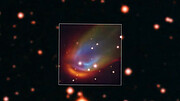
VLT image of a dead star creating a shock wave as it moves through space

PR Image eso2601b
VLT image of a dead star creating a shock wave as it moves through space

PR Image eso2601c
Wide-field view (DSS) of the area of the sky around the star RXJ0528+2838

PR Image eso2601d
Wide-field view (PanSTARRS) of the area of the sky around the star RXJ0528+2838


Videos

An unexpected shock wave | ESO News
PR Video eso2601a
An unexpected shock wave | ESO News

Zooming on a dead star with a strange shock wave around it
PR Video eso2601b
Zooming on a dead star with a strange shock wave around it

The star RXJ0528+2838 moving through space
PR Video eso2601c
The star RXJ0528+2838 moving through space


Gas and dust flowing from stars can, under the right conditions, clash with a star’s surroundings and create a shock wave. Now, astronomers using the European Southern Observatory’s Very Large Telescope (ESO’s VLT) have imaged a beautiful shock wave around a dead star — a discovery that has left them puzzled. According to all known mechanisms, the small, dead star RXJ0528+2838 should not have such structure around it. This discovery, as enigmatic as it’s stunning, challenges our understanding of how dead stars interact with their surroundings.

“We found something never seen before and, more importantly, entirely unexpected,” says Simone Scaringi, associate professor at Durham University, UK and co-lead author of the study published today in Nature Astronomy. “Our observations reveal a powerful outflow that, according to our current understanding, shouldn’t be there,” says Krystian Iłkiewicz, a postdoctoral researcher at the Nicolaus Copernicus AstronomicalCenter in Warsaw, Poland and study co-lead. ‘Outflow’ is the term used by astronomers to describe the material that is ejected from celestial objects.

The star RXJ0528+2838 islocated 730 light-years away and, like the Sun and other stars, it rotates around our galaxy’s centre. As it moves, it interacts with the gas that permeates the space between stars, creating a type of shock wave called a bow shock, “a curved arc of material, similar to the wave that builds up in front of a ship,” explains Noel Castro Segura, research fellow at the University of Warwick in the UK and collaborator in this study. These bow shocks are usually created by material outflowing from the central star, but in the case of RXJ0528+2838, none of the known mechanisms can fully explain the observations

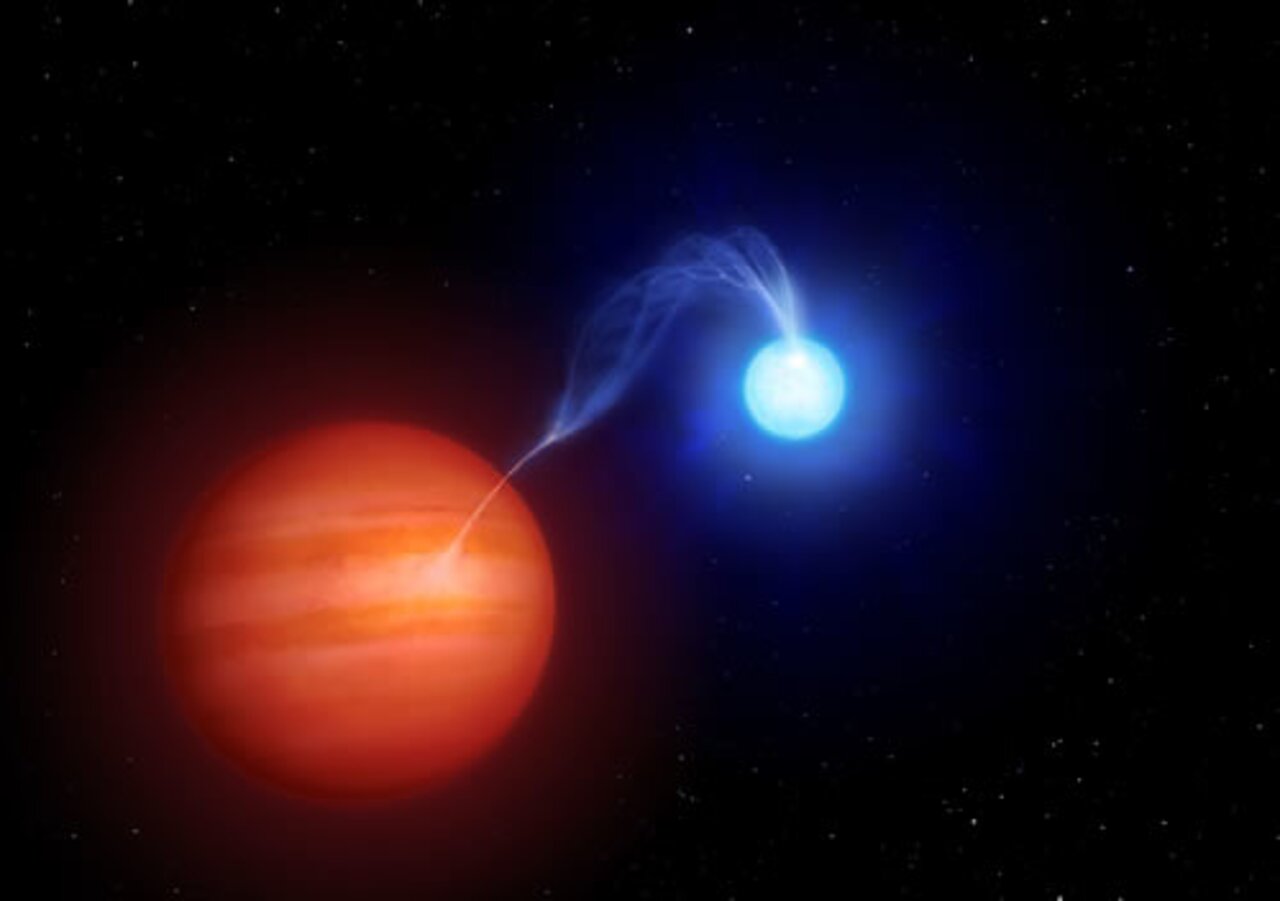
RXJ0528+2838 is a white dwarf — the left-over core of a dying low-mass star — and has a Sun-like companion orbiting it. In such binary systems, the material from the companion star is transferred to the white dwarf, often forming a disc around it. While the disc fuels the dead star, some of the material also gets ejected into space, creating powerful outflows. But RXJ0528+2838 shows no signs of a disc, making the origin of the outflow and resulting nebula around the star a mystery.

The surprise that supposedly quiet, discless system could drive such a spectacular nebula was one of those rare ‘wow’ moments,” says Scaringi.

The team first spotted a strange nebulosity around RXJ0528+2838 on images from the Isaac Newton Telescope in Spain. Noticing its unusual shape, they observed ;it in more detail with the MUSE instrument on ESO’s VLT. “Observations with the ESO MUSE instrument allowed us to map the bow shock in detail and analyse its composition. This was crucial to confirm that the structure really originates from the binary system and not from an unrelated nebula or interstellar cloud,”Iłkiewic explains.

The shape and size of the bow shock imply that the white dwarf has been expelling a powerful outflow for at least 1000 years. Scientists don’t know exactly how a dead star without a disc can power such a long-lasting outflow — but they do have a uess.

This white dwarf is known to host a strong magnetic field, which has been confirmed by the MUSE data. This field channels the material stolen from the companion star directly onto the white dwarf, without forming a disc around it. “Our finding shows that even without a disc, these systems can drive powerful outflows, revealing a mechanism we do not yet understand. This discovery challenges the standard picture of how matter moves and interacts in these extreme binary systems,” Iłkiewicz explains.

The results hint at a hidden energy source, likely the strong magnetic field, but this ‘mystery engine’, as Scaringi puts it, still needs to be investigated. The data show that the current magnetic field is only strong enough to power a bow shock lasting for a few hundred years, so it only partly explains what the astronomers are seeing.

To better understand the nature of such discless outflows, many more binary systems need to be studied. ESO’s upcoming Extremely Large Telescope (ELT) will help astronomers“to map more of these systems as well as fainter ones and detect similar systems in detail, ultimately helping in understanding the mysterious energy source that remains une/xplained,” as Scaringi foresees.

Source: ESO/News


More information

This research was presented in a paper titled “A persistent bow shock in a diskless magnetised accreting white dwarf” to appear in Nature Astronomy (doi: 10.1038/s41550-025-02748-8).

The team is composed of Krystian Iłkiewicz (Nicolaus Copernicus Astronomical Center, Polish Academy of Sciences, Warsaw, Poland and Centre for Extragalactic Astronomy, Department of Physics, Durham University, Durham, UK [CEA Durham]), Simone Scaringi (CEA Durham and INAF-Osservatorio Astronomico di Capodimonte, Naples, Italy [Capodimonte]), Domitilla de Martino (Capodimonte), Christian Knigge (Department of Physics & Astronomy, University of Southampton, Southampton, UK), Sara E. Motta (Istituto Nazionale di Astrofisica, Osservatorio Astronomico di Brera, Merate, Italy and University of Oxford, Department of Physics, Oxford, UK [Oxford]), Nanda Rea (Institute of Space Sciences (ICE, CSIC), Barcelona, Spain and Institut d’Estudis Espacials de Catalunya (IEEC), Castelldefels, Spain), David Buckley (South African Astronomical Observatory, South Africa [SAAO] and Department of Astronomy & IDIA, University of Cape Town, Rondebosh, South Africa [Cape Town] and Department of Physics, University of the Free State, Bloemfontein, South Africa), Noel Castro Segura (Department of Physics, University of Warwick, Coventry, UK), Paul J. Groot (SAAO and Cape Town and Department of Astrophysics/IMAPP, Radboud University, Nijmegen, The Netherlands), Anna F. McLeod (CEA Durham and Institute for Computational Cosmology, Department of Physics, University of Durham, Durham UK), Luke T. Parker (Oxford), and Martina Veresvarska (CEA Durham).

The European Southern Observatory (ESO) enables scientists worldwide to discover the secrets of the Universe for the benefit of all. We design, build and operate world-class observatories on the ground — which astronomers use to tackle exciting questions and spread the fascination of astronomy — and promote international collaboration for astronomy. Established as an intergovernmental organisation in 1962, today ESO is supported by 16 Member States (Austria, Belgium, Czechia, Denmark, France, Finland, Germany, Ireland, Italy, the Netherlands, Poland, Portugal, Spain, Sweden, Switzerland and the United Kingdom), along with the host state of Chile and with Australia as a Strategic Partner. ESO’s headquarters and its visitor centre and planetarium, the ESO Supernova, are located close to Munich in Germany, while the Chilean Atacama Desert, a marvellous place with unique conditions to observe the sky, hosts our telescopes. ESO operates three observing sites: La Silla, Paranal and Chajnantor. At Paranal, ESO operates the Very Large Telescope and its Very Large Telescope Interferometer, as well as survey telescopes such as VISTA. Also at Paranal, ESO will host and operate the south array of the Cherenkov Telescope Array Observatory, the world’s largest and most sensitive gamma-ray observatory. Together with international partners, ESO operates ALMA on Chajnantor, a facility that observes the skies in the millimetre and submillimetre range. At Cerro Armazones, near Paranal, we are building “the world’s biggest eye on the sky” — ESO’s Extremely Large Telescope. From our offices in Santiago, Chile we support our operations in the country and engage with Chilean partners and society.


Links


Contacts:

Krystian Iłkiewicz
Nicolaus Copernicus Astronomical Center
Warsaw, Poland
Tel: +48 223296134
Email:
ilkiewicz@camk.edu.pl

Simone Scaringi
Centre for Extragalactic Astronomy, Department of Physics, Durham University
Durham, UK
Cell: +44 7737 980235
Email:
simone.scaringi@durham.ac.uk

Noel Castro Segura
Department of Physics, University of Warwick
Coventry, UK
Tel: +44 7859 761377
Email:
noel.castro-segura@warwick.ac.uk

Bárbara Ferreira
ESO Media Manager
Garching bei München, Germany
Tel: +49 89 3200 6670
Cell: +49 151 241 664 00
Email:
press@eso.org


Sunday, October 26, 2025

Aging White Dwarf Still Consuming Its Planetary System

This artist’s illustration shows a 3-billion-year-old white dwarf star accreting material from the remnants of its former planetary system. Gravitational instabilities caused a surviving planet to spiral inward and disintegrate under intense tidal forces, forming a debris disk. Spectroscopic analysis of the white dwarf’s atmosphere revealed the presence of this planetary debris. Credits/Artwork: NASA, ESA, Joseph Olmsted (STScI)


Astronomers have identified a rare, ancient planetary system still being actively consumed by its central white dwarf star, LSPM J0207+3331, which is located 145 light-years from Earth. This system hosts the oldest and most metal-rich debris disk ever observed around a hydrogen-rich white dwarf, raising new questions about the long-term stability of planetary systems billions of years after stellar death.

“This discovery challenges our understanding of planetary system evolution,” said lead author Érika Le Bourdais of the Trottier Institute for Research on Exoplanets at Université de Montréal. “Ongoing accretion at this stage suggests white dwarfs may also retain planetary remnants still undergoing dynamical changes.”

Spectroscopic data from the W. M. Keck Observatory on Maunakea in Hawaiʻi revealed the white dwarf’s atmosphere is polluted with 13 chemical elements, an evidence of a rocky body at least 120 miles (200 kilometers) wide that was torn apart by the star’s gravity. “The amount of rocky material is unusually high for a white dwarf of this age,” noted co-author Patrick Dufour, also of Université de Montréal.

Hydrogen-rich atmospheres around white dwarfs typically mask such elemental signatures, making this detection especially significant. “Something clearly disturbed this system long after the star’s death,” said co-investigator John Debes of the Space Telescope Science Institute in Baltimore, Maryland. “There’s still a reservoir of material capable of polluting the white dwarf, even after billions of years.”

Delayed planetary instability

Nearly half of all polluted white dwarfs show signs of accreting heavy elements, indicating their planetary systems have been dynamically disturbed. In the case of LSPM J0207+3331, a recent perturbation— within the last few million years—probably sent a rocky planet spiraling inward. “This suggests tidal disruption and accretion mechanisms remain active long after the main-sequence phase of a star’s life,” said Debes. “Mass loss during stellar evolution can destabilize orbits, affecting planets, comets, and asteroids.”

The system may exemplify delayed instability, where multi-planet interactions gradually destabilize orbits over billions of years. “This could point to long-term dynamical processes we don’t yet fully understand,” Debes added.

Searching for Outer Planets

Astronomers are now investigating what may have triggered the disruption. Surviving Jupiter-sized planets could be responsible but are difficult to detect due to their separation from the white dwarf and low temperatures. Data from ESA’s Gaia space telescope may be sensitive enough to detect such planets through their gravitational influence on the white dwarf.

NASA’s James Webb Space Telescope could also provide insights by taking infrared observations of the system for signs of outer planets. “Future observations may help distinguish between a planetary shakeup or the gravitational effect of a stellar close encounter with the white dwarf,” said Debes.

These results published today in The Astrophysical Journal Letters.

The Space Telescope Science Institute is expanding the frontiers of space astronomy by hosting the science operations center of the Hubble Space Telescope, the science and mission operations centers for the James Webb Space Telescope, and the science operations center for the Nancy Grace Roman Space Telescope. STScI also houses the Barbara A. Mikulski Archive for Space Telescopes (MAST) which is a NASA-funded project to support and provide to the astronomical community a variety of astronomical data archives, and is the data repository for the Hubble, Webb, Roman, Kepler, K2, TESS missions and more. STScI is operated by the Association of Universities for Research in Astronomy in Washington, D.C.


About This Release

Credits

Media Contact:

Ray Villard
Space Telescope Science Institute, Baltimore


Permissions: Content Use Policy

Related Links and Documents


Saturday, October 25, 2025

Hubble sees white dwarf eating piece of Pluto-like objec

Illustration of a cataclysmic variable system, in which a star donates mass to a closely orbiting white-dwarf.
Credit:
M.Weiss/Center for Astrophysics | Harvard & Smithsonian

Astronomers have discovered the most compact cataclysmic variable system containing a strongly magnetized white dwarf. The extreme closeness of the system suggests that the companion may be a metal-poor star — the first time such a star has been paired with a strongly magnetized white dwarf.

Meet the Cataclysmic Variable

Cataclysmic variables are binary star systems that contain a white dwarf and a companion star in uncomfortably close quarters. In these systems, the companion star transfers gas to the white dwarf, resulting in sudden, irregular, and often repeated outbursts as the stolen gas ignites on the scorching surface of the white dwarf.

These bound-together stars typically orbit one another on orbits ranging from about 80 minutes to 10 hours. Though theorists place the minimum orbital period around 76 minutes, a handful of cataclysmic variable systems have cropped up with periods below this limit. The systems that have limboed under the limit are thought to have stellar companions that are more compact than typical main-sequence stars, allowing the white dwarf to nestle in closer.

Phase-folded light curves for Gaia19bxc from the Caltech HIgh-speed Multi-colour camERA (CHIMERA) on the Hale Telescope. The double-peaked light curve is evidence for cyclotron beaming, which occurs in strongly magnetized white dwarfs. Adapted from Galiullin et al. 2025

Exploring Below the Limit

Discovered in 2019 by the Gaia spacecraft, Gaia19bxc is a cataclysmic variable that fluctuates with a period of 64.42 minutes. If this variability is linked to the orbital period of the system, that would place it well below the theoretical minimum period. Adding to the intrigue, early observations also hinted that Gaia19bxc’s white dwarf is strongly magnetic, making the system what’s called a polar. In polar systems, the white dwarf’s magnetic field diverts the accreted matter toward the white dwarf’s poles as it is collected, rather than into a disk around the white dwarf’s equator.

Now, Ilkham Galiullin (Kazan Federal University) and collaborators have analyzed photometry and spectra of Gaia19bxc from the Zwicky Transient Facility, the Hale Telescope, and the Keck I telescope to investigate the nature of this unusual system.

The team’s analysis confirmed that the stars of Gaia19bxc orbit one another every 64.42 minutes, cementing the system’s place below the period minimum for typical cataclysmic variables. The system’s double-peaked light curves and evidence for an accretion stream — rather than an accretion disk — confirm the system’s polar nature, implying a magnetic field strength greater than 10 million Gauss. This makes Gaia19bxc the most closely orbiting system to contain a strongly magnetized white dwarf.

Gaia19bxc’s orbital period compared to known polar cataclysmic variables (gray) as well as the theorized minimum periods for systems containing a metal-poor (Pop II) companion (cyan) and an evolved companion (blue). Credit: Galiullin et al. 2025

A Sign of Discoveries to Come

These observations illuminate the nature of the white dwarf — but what about the companion star?

Galiullin and coauthors saw no evidence for metal lines in Gaia19bxc’s spectrum, nor did they see spectral features arising from a hot companion star. These findings suggest that the companion is an old, cool, compact, metal-poor star, which would make Gaia19bxc the first known polar to contain a metal-poor star. It’s also one of only a handful of cataclysmic variables to contain a metal-poor star and be below the theoretical period minimum.

Though Gaia19bxc is currently in a class of its own, it may not be for long; with the start of the Vera C. Rubin Observatory’s Legacy Survey of Space and Time rapidly approaching, many more cataclysmic variable systems as faint as or fainter than Gaia19bxc may soon be discovered.

By Kerry Hensley

Citation

“Optical Spectroscopy of the Most Compact Accreting Binary Harboring a Magnetic White Dwarf and a Hydrogen-Rich Donor,” Ilkham Galiullin et al 2025 ApJL 990 L57. doi:10.3847/2041-8213/adff82


Monday, September 22, 2025

NASA’s Hubble Sees White Dwarf Eating Piece of Pluto-Like Object

This artist’s concept shows a white dwarf surrounded by a large debris disk. Debris from pieces of a captured, Pluto-like object is falling onto the white dwarf. Credits: Artwork: NASA, Tim Pyle (NASA/JPL-Caltech)

In our nearby stellar neighborhood, a burned-out star is snacking on a fragment of a Pluto-like object. With its unique ultraviolet capability, only NASA’s Hubble Space Telescope could identify that this meal is taking place.

The stellar remnant is a white dwarf about half the mass of our Sun, but that is densely packed into a body about the size of Earth. Scientists think the dwarf’s immense gravity pulled in and tore apart an icy Pluto analog from the system’s own version of the Kuiper Belt, an icy ring of debris that encircles our solar system. The findings were reported on September 18 in the Monthly Notices of the Royal Astronomical Society.

The researchers were able to determine this carnage by analyzing the chemical composition of the doomed object as its pieces fell onto the white dwarf. In particular, they detected “volatiles” — substances with low boiling points — including carbon, sulphur, nitrogen, and a high oxygen content that suggests the strong presence of water.

“We were surprised,” said Snehalata Sahu of the University of Warwick in the United Kingdom. Sahu led the data analysis of a Hubble survey of white dwarfs. “We did not expect to find water or other icy content. This is because the comets and Kuiper Belt-like objects are thrown out of their planetary systems early, as their stars evolve into white dwarfs. But here, we are detecting this very volatile-rich material. This is surprising for astronomers studying white dwarfs as well as exoplanets, planets outside our solar system."

Only with Hubble

Using Hubble’s Cosmic Origins Spectrograph, the team found that the fragments were composed of 64 percent water ice. The fact that they detected so much ice meant that the pieces were part of a very massive object that formed far out in the star system’s icy Kuiper Belt analog. Using Hubble data, scientists calculated that the object was bigger than typical comets and may be a fragment of an exo-Pluto.

They also detected a large fraction of nitrogen – the highest ever detected in white dwarf debris systems. “We know that Pluto's surface is covered with nitrogen ices,” said Sahu. “We think that the white dwarf accreted fragments of the crust and mantle of a dwarf planet.”

Accretion of these volatile-rich objects by white dwarfs is very difficult to detect in visible light. These volatile elements can only be detected with Hubble’s unique ultraviolet light sensitivity. In optical light, the white dwarf would appear ordinary.

About 260 light-years away, the white dwarf is a relatively close cosmic neighbor. In the past, when it was a Sun-like star, it would have been expected to host planets and an analog to our Kuiper Belt.


Like seeing our Sun in future
Billions of years from now, when our Sun burns out and collapses to a white dwarf, Kuiper Belt objects will be pulled in by the stellar remnant’s immense gravity. “These planetesimals will then be disrupted and accreted,” said Sahu. “If an alien observer looks into our solar system in the far future, they might see the same kind of remains we see today around this white dwarf.”

The team hopes to use NASA’s James Webb Space Telescope to detect molecular features of volatiles such as water vapor and carbonates by observing this white dwarf in infrared light. By further studying white dwarfs, scientists can better understand the frequency and composition of these volatile-rich accretion events.

Sahu is also following the recent discovery of the interstellar comet 3I/ATLAS. She is eager to learn its chemical composition, especially its fraction of water. “These types of studies will help us learn more about planet formation. They can also help us understand how water is delivered to rocky planets,” said Sahu.

Boris Gänsicke, of the University of Warwick and a visitor at Spain’s Instituto de Astrofisica de Canarias, was the principal investigator of the Hubble program that led to this discovery. “We observed over 500 white dwarfs with Hubble. We’ve already learned so much about the building blocks and fragments of planets, but I’ve been absolutely thrilled that we now identified a system that resembles the objects in the frigid outer edges of our solar system,” said Gänsicke. “Measuring the composition of an exo-Pluto is an important contribution toward our understanding of the formation and evolution of these bodies.”

The Hubble Space Telescope has been operating for more than three decades and continues to make ground-breaking discoveries that shape our fundamental understanding of the universe. Hubble is a project of international cooperation between NASA and ESA (European Space Agency). NASA’s Goddard Space Flight Center in Greenbelt, Maryland, manages the telescope and mission operations. Lockheed Martin Space, based in Denver, also supports mission operations at Goddard. The Space Telescope Science Institute in Baltimore, which is operated by the Association of Universities for Research in Astronomy, conducts Hubble science operations for NASA.


Saturday, September 20, 2025

NuSTAR Observes a Cataclysmic Variable

An artist's impression of an
intermediate polar system, in which a white dwarf is accreting matter from a companion star. Close to the white dwarf, the magnetic field disrupts the accretion disk and draws matter along the magnetic poles. Image credit: Mark Garlick (Space-art). Download Image

During the past week, NuSTAR observed IGR J19713+0747, a variable high-energy X-ray source. Optical studies show that the source has a very short orbital period of 13 minutes and that it is likely a Cataclysmic Variable (CV) of an intermediate polar (IP) type. X-ray emission from these highly magnetized white dwarf stars is thought to be powered by accretion of matter from a companion star. However, this source also has another star close by with a measured consistent proper motion. This means that the nearby star could be another companion to the CV, making the source a rare triple system. The primary goal of this NuSTAR observation is to verify if the hard X-ray source is a bona fide intermediate polar CV and measure the mass of the white dwarf. The NuSTAR hard X-ray spectrum will also look for potential effects of the tertiary star on the CV system.

Authors: Sol Bin Yun (Graduate Student, Caltech)


Sunday, August 17, 2025

NASA’s Hubble Uncovers Rare White Dwarf Merger Remnant

This is an illustration of a white dwarf star merging into a red giant star. A bow shock forms as the dwarf plunges through the star’s outer atmosphere. The passage strips down the white dwarf’s outer layers, exposing an interior carbon core. Artwork: NASA, ESA, STScI, Ralf Crawford (STScI)


An international team of astronomers has discovered a cosmic rarity: an ultra-massive white dwarf star resulting from a white dwarf merging with another star, rather than through the evolution of a single star. This discovery, made by NASA’s Hubble Space Telescope’s sensitive ultraviolet observations, suggests these rare white dwarfs may be more common than previously suspected.

“It's a discovery that underlines things may be different from what they appear to us at first glance,” said the principal investigator of the Hubble program, Boris Gaensicke, of the University of Warwick in the United Kingdom. “Until now, this appeared as a normal white dwarf, but Hubble's ultraviolet vision revealed that it had a very different history from what we would have guessed.”

A white dwarf is a dense object with the same diameter as Earth, and represents the end state for stars that are not massive enough to explode as core-collapse supernovae. Our Sun will become a white dwarf in about 5 billion years.

In theory, a white dwarf can have a mass of up to 1.4 times that of the Sun, but white dwarfs heavier than the Sun are rare. These objects, which astronomers call ultra-massive white dwarfs, can form either through the evolution of a single massive star or through the merger of a white dwarf with another star, such as a binary companion.

This new discovery, published in the journal Nature Astronomy, marks the first time that a white dwarf born from colliding stars has been identified by its ultraviolet spectrum. Prior to this study, six white dwarf merger products were discovered via carbon lines in their visible-light spectra. All seven of these are part of a larger group that were found to be bluer than expected for their masses and ages from a study with ESA’s Gaia mission in 2019, with the evidence of mergers providing new insights into their formation history.

Astronomers used Hubble’s Cosmic Origins Spectrograph to investigate a white dwarf called WD 0525+526. Located 128 light-years away, it is 20% more massive than the Sun. In visible light, the spectrum of WD 0525+526’s atmosphere resembled that of a typical white dwarf. However, Hubble’s ultraviolet spectrum revealed something unusual: evidence of carbon in the white dwarf’s atmosphere.

White dwarfs that form through the evolution of a single star have atmospheres composed of hydrogen and helium. The core of the white dwarf is typically composed mostly of carbon and oxygen or oxygen and neon, but a thick atmosphere usually prevents these elements from appearing in the white dwarf’s spectrum.

When carbon appears in the spectrum of a white dwarf, it can signal a more violent origin than the typical single-star scenario: the collision of two white dwarfs, or of a white dwarf and a subgiant star. Such a collision can burn away the hydrogen and helium atmospheres of the colliding stars, leaving behind a scant layer of hydrogen and helium around the merger remnant that allows carbon from the white dwarf’s core to float upward, where it can be detected.
WD 0525+526 is remarkable even within the small group of white dwarfs known to be the product of merging stars. With a temperature of almost 21,000 kelvins (37,000 degrees Fahrenheit) and a mass of 1.2 solar masses, WD 0525+526 is hotter and more massive than the other white dwarfs in this group.

WD 0525+526’s extreme temperature posed something of a mystery for the team. For cooler white dwarfs, such as the six previously discovered merger products, a process called convection can mix carbon into the thin hydrogen-helium atmosphere. WD 0525+526 is too hot for convection to take place, however. Instead, the team determined a more subtle process called semi-convection brings a small amount of carbon up into WD 0525+526’s atmosphere. WD 0525+526 has the smallest amount of atmospheric carbon of any white dwarf known to result from a merger, about 100,000 times less than other merger remnants.

The high temperature and low carbon abundance mean that identifying this white dwarf as the product of a merger would have been impossible without Hubble’s sensitivity to ultraviolet light. Spectral lines from elements heavier than helium, like carbon, become fainter at visible wavelengths for hotter white dwarfs, but these spectral signals remain bright in the ultraviolet, where Hubble is uniquely positioned to spot them.

“Hubble's Cosmic Origins Spectrograph is the only instrument that can obtain the superb quality ultraviolet spectroscopy that was required to detect the carbon in the atmosphere of this white dwarf,” said study lead Snehalata Sahu from the University of Warwick.

Because WD 0525+526’s origin was revealed only once astronomers glimpsed its ultraviolet spectrum, it’s likely that other seemingly “normal” white dwarfs are actually the result of cosmic collisions — a possibility the team is excited to explore in the future.

“We would like to extend our research on this topic by exploring how common carbon white dwarfs are among similar white dwarfs, and how many stellar mergers are hiding among the normal white dwarf family,” said study co-leader Antoine Bedrad from the University of Warwick. “That will be an important contribution to our understanding of white dwarf binaries, and the pathways to supernova explosions.”

The Hubble Space Telescope has been operating for more than three decades and continues to make ground-breaking discoveries that shape our fundamental understanding of the universe. Hubble is a project of international cooperation between NASA and ESA (European Space Agency). NASA’s Goddard Space Flight Center in Greenbelt, Maryland, manages the telescope and mission operations. Lockheed Martin Space, based in Denver, also supports mission operations at Goddard. The Space Telescope Science Institute in Baltimore, which is operated by the Association of Universities for Research in Astronomy, conducts Hubble science operations for NASA.


Wednesday, July 30, 2025

An artist's impression of a white dwarf polar system, consisting of a magnetic white dwarf accreting matter from its companion—for EF Eri, this is a star that has lost so much mass that it is now too small to undergo stellar fusion. Image credit: International Gemini Observatory/NOIRLab/NSF/AURA/University of Leicester (UK)/M. A. Garlick.
 Download Image

During the past week, NuSTAR observed the magnetic Cataclysmic Variable (mCV) EF Eridani, after it awoke from a nearly 30-year-long dormant period. mCVs are binary star systems consisting of a white dwarf and a companion star, where material from the companion is accreted onto the white dwarf. As this material falls, it reaches supersonic speeds, creating a shock wave that heats the material to over 100 million Kelvin and produces intense X-ray emission, detectable by NuSTAR. mCVs are of particular astrophysics interest since they are potential progenitors to Type Ia supernovae, a critical component of the cosmological distance ladder, and because they contribute significantly to the X-ray source population in the Galactic Center. This NuSTAR observation is coordinated with XRISM. NuSTAR’s broadband spectral sensitivity, combined with XRISM's precision spectroscopy, will provide scientists with unique insights into the accretion flow onto EF Eridani, revealing details of the heating, dynamics, and radiative processes that govern mCV systems.

Authors: Gabriel Bridges (PhD Student, Columbia University)