Releases from NASA, HubbleSite, Spitzer, ESO, ESA, NASA’s Chandra X-ray Observatory, Royal Astronomical Society, Harvard-Smithsonian Center For Astrophysics, Max Planck Institute, Gemini Observatory, Subaru Telescope, W. M. Keck Observatory, JPL-Caltech, ICRAR, Webb Space Telescope, etc
Detail: This galaxy located in the Sextans constellation is not interacting with another galaxy through mutual gravitation like the Jellyfish Galaxy posted on July 4, 2024.
Intergalactic
hot gas fills the spaces between galaxies in a galaxy cluster. When a
galaxy moves through this intergalactic gas, it experiences intense
pressure, causing the gas within the galaxy to be stripped away. The
galaxy's blueish jellyfish tentacle-like structure is thought to have
formed when its disk gas was stripped away in this manner. Credit: NAOJ
Distance from Earth: 600 million light-years Instrument: Hyper Suprime-Cam (HSC)
Researchers using NASA’s James Webb Space Telescope have finally
confirmed what models have previously predicted: An exoplanet has
differences between its eternal morning and eternal evening atmosphere.
WASP-39 b, a giant planet with a diameter 1.3 times greater than
Jupiter, but similar mass to Saturn orbits a star about 700 light-years
away from Earth, is tidally locked to its parent star. This means it has
a constant dayside and a constant nightside—one side of the planet is
always exposed to its star, while the other is always shrouded in
darkness.
Using Webb’s NIRSpec (Near-Infrared Spectrograph), astronomers
confirmed a temperature difference between the eternal morning and
eternal evening on WASP-39 b, with the evening appearing hotter by
roughly 300 Fahrenheit degrees (about 200 Celsius degrees). They also
found evidence for different cloud cover, with the forever morning
portion of the planet being likely cloudier than the evening.
Astronomers analyzed the 2- to 5-micron transmission spectrum
of WASP-39 b, a technique that studies the exoplanet’s terminator, the
boundary that separates the planet’s dayside and nightside. A
transmission spectrum is made by comparing starlight filtered through a
planet’s atmosphere as it moves in front of the star, to the unfiltered
starlight detected when the planet is beside the star. When making that
comparison, researchers can get information about the temperature,
composition, and other properties of the planet’s atmosphere.
“WASP-39 b has become a sort of benchmark planet in studying the
atmosphere of exoplanets with Webb,” said Néstor Espinoza, an exoplanet
researcher at the Space Telescope Science Institute and lead author on
the study. “It has an inflated, puffy atmosphere, so the signal coming
from starlight filtered through the planet’s atmosphere is quite
strong.”
Previously published Webb spectra of WASP-39b’s atmosphere, which revealed the presence of carbon dioxide, sulfur dioxide, water vapor, and sodium, represent the entire day/night boundary – there was no detailed attempt to differentiate between one side and the other.
Now, the new analysis builds two different spectra from the
terminator region, essentially splitting the day/night boundary into two
semicircles, one from the evening, and the other from the morning. Data
reveals the evening as significantly hotter, a searing 1,450 degrees
Fahrenheit (800 degrees Celsius), and the morning a relatively cooler
1,150 degrees Fahrenheit (600 degrees Celsius).
“It’s really stunning that we are able to parse this small difference
out, and it’s only possible due Webb’s sensitivity across near-infrared
wavelengths and its extremely stable photometric sensors,” said
Espinoza. “Any tiny movement in the instrument or with the observatory
while collecting data would have severely limited our ability to make
this detection. It must be extraordinarily precise, and Webb is just
that.”
Extensive modeling of the data obtained also allows researchers to
investigate the structure of WASP-39 b’s atmosphere, the cloud cover,
and why the evening is hotter. While future work by the team will study
how the cloud cover may affect temperature, and vice versa, astronomers
confirmed gas circulation around the planet as the main culprit of the
temperature difference on WASP-39 b.
On a highly irradiated exoplanet like WASP-39 b that orbits
relatively close to its star, researchers generally expect the gas to be
moving as the planet rotates around its star: Hotter gas from the
dayside should move through the evening to the nightside via a powerful
equatorial jet stream. Since the temperature difference is so extreme,
the air pressure difference would also be significant, which in turn
would cause high wind speeds.
Using General Circulation Models, 3-dimensional models similar to the
ones used to predict weather patterns on Earth, researchers found that
on WASP-39 b the prevailing winds are likely moving from the night side
across the morning terminator, around the dayside, across the evening
terminator and then around the nightside. As a result, the morning side
of the terminator is cooler than the evening side. In other words, the
morning side gets slammed with winds of air that have been cooled on the
nightside, while the evening is hit by winds of air heated on the
dayside. Research suggests the wind speeds on WASP-39 b can reach
thousands of miles an hour!
“This analysis is also particularly interesting because you’re
getting 3D information on the planet that you weren’t getting before,”
added Espinoza. “Because we can tell that the evening edge is hotter,
that means it’s a little puffier. So, theoretically, there is a small
swell at the terminator approaching the nightside of the planet.”
WASP-39 b was among the first targets analyzed by Webb as it began regular science operations in 2022. The data in this study was collected under Early Release Science program 1366, designed to help scientists quickly learn how to use the telescope’s instruments and realize its full science potential.
The James Webb Space Telescope is the world's premier space science observatory. Webb is solving mysteries in our solar system, looking beyond to distant worlds around other stars, and probing the mysterious structures and origins of our universe and our place in it. Webb is an international program led by NASA with its partners, ESA (European Space Agency) and CSA (Canadian Space Agency).
A dwarf irregular galaxy. It appears as a cloud of bluish gas, filled with point-like stars that also spread beyond the edge of the gas. A few glowing red clouds sit near its centre. Many other objects can be seen around it: distant galaxies in the background, four-pointed stars in the foreground, and star clusters that are part of the galaxy - shining spots surrounded by more tiny stars. Credit: : ESA/Hubble & NASA, F. Annibali
The galaxy featured in this week’s Hubble Picture of the Week is the dwarf irregular galaxy
NGC 5238, located 14.5 million light-years from Earth in the
constellation Canes Venatici. Its unexciting, blob-like appearance,
resembling more an oversized star cluster than a galaxy, belies a
complicated structure which has been the subject of much research by
astronomers. Here, the NASA/ESA Hubble Space Telescope is able to pick
out the galaxy’s countless stars, as well as its associated globular
clusters — the glowing spots both inside and around the galaxy that are
swarmed by yet more stars.> >
NGC 5238 is theorised to have recently — here meaning no more than a
billion years ago! — had a close encounter with another galaxy. The
evidence for this is the tidal distortions of NGC 5238’s shape, the kind
produced by two galaxies pulling on each other as they interact.
There’s no nearby galaxy which could have caused this disturbance, so
the hypothesis is that the culprit is a smaller satellite galaxy that
was devoured by NGC 5238. Traces of the erstwhile galaxy might be found
by closely examining the population of stars
in NGC 5238, a task for which the Hubble Space Telescope is an
astronomer’s best tool. Two tell-tale signs would be groups of stars
with properties that look out of place compared to most of the galaxy’s
other stars, indicating that they were originally formed in a separate
galaxy, or stars that look to have all formed abruptly at around the
same time, which would occur during a galactic merger. The data used to
make this image will be put to use in testing these predictions.
Despite their small size and unremarkable appearance, it’s not unusual for dwarf galaxies
like NGC 5238 to drive our understanding of galaxy formation and
evolution. One main theory of galaxy evolution is that galaxies formed
‘bottom-up’ in a hierarchical fashion: star clusters and small galaxies
were the first to form out of gas and dark matter, and they gradually
were assembled by gravity into galaxy clusters and superclusters,
explaining the shape of the very largest structures in the Universe
today. A dwarf irregular galaxy like NGC 5238 merging with an even
smaller companion is just the type of event that might have begun this
process of galaxy assembly in the early Universe. So, it turns out that
this tiny galaxy may serve as a test of some of the most fundamental
predictions in astrophysics!
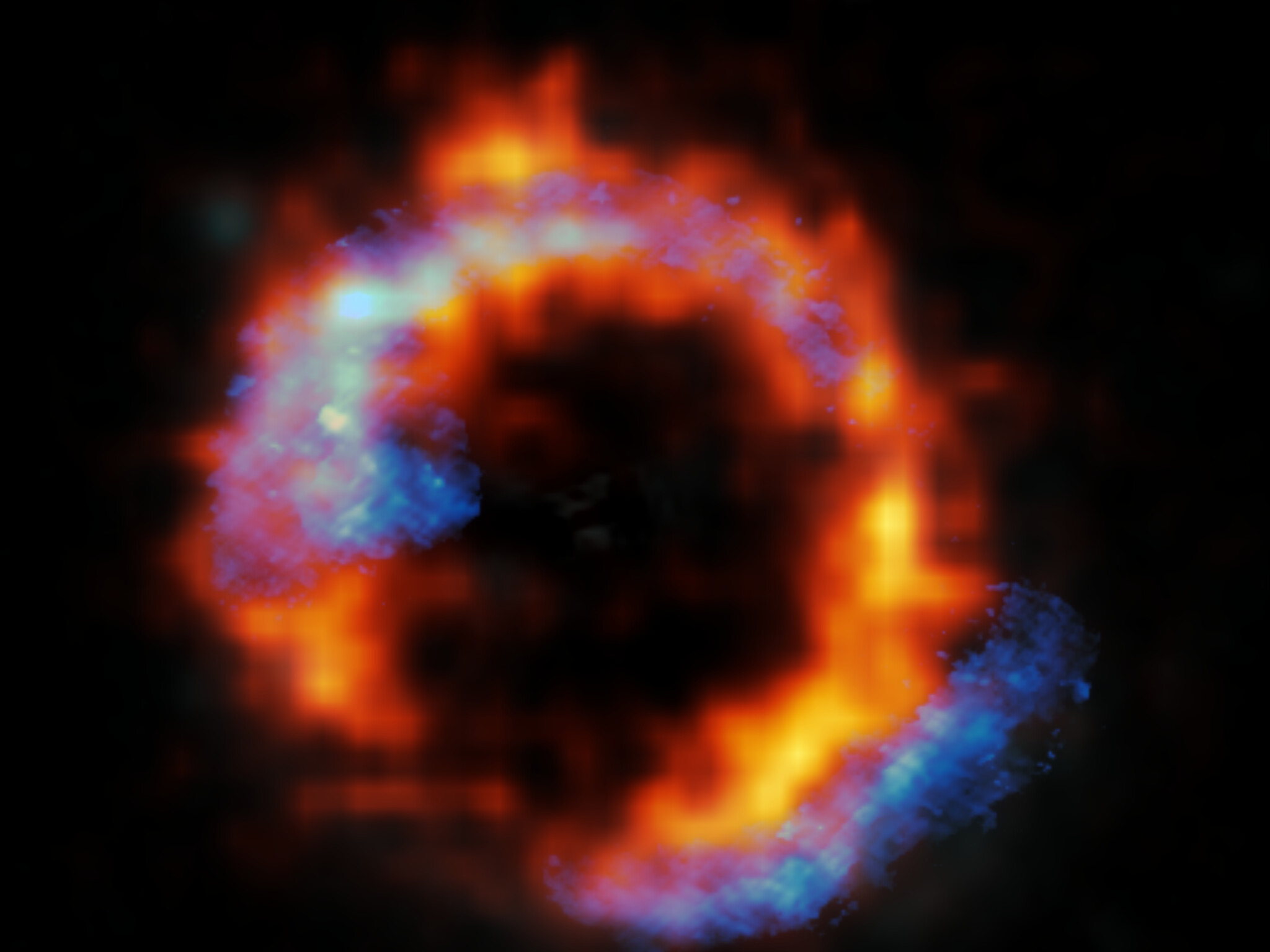
PJ0116-24 Credit: ALMA (ESO/NAOJ/NRAO)/ESO/D. Liu et al.
This
Picture of the Week shows the distant galaxy PJ0116-24, a so-called
Hyper Luminous Infrared Galaxy (HyLIRG). HyLIRGs are incredibly bright
galaxies, lit up by the extremely rapid star formation within them. But
what triggers this?
Previous studies suggested that such extreme galaxies must result from galaxy mergers. These galaxy collisions are thought to create dense gas regions in
which rapid star formation is triggered. But isolated galaxies could
also become HyLIRGs via internal processes alone, if star-forming gas is
rapidly funneled towards the galaxy’s centre
In a new paper led by Daizhong Liu (Max-Planck Institute for Extraterrestrial
Physics), observations from ESO’s Very Large Telescope (VLT) and the Atacama Large Millimetre/submillimetre Array (ALMA)
were combined to study the motion of gas within PJ0116-24. ALMA traces
cold gas, seen here in blue, whereas the VLT, with its new Enhanced
Resolution Imager and Spectrograph (ERIS),
traces warm gas, shown in red. Thanks to these detailed observations,
the team discovered that the gas in this extreme galaxy was rotating in
an organised fashion, rather than in the chaotic way expected after a
galactic collision –– a surprising result! This shows convincingly that
mergers aren’t always needed for a galaxy to become a HyLIRG.
PJ0116-24 is so far away that its light took about 10 billion years to reach us.
Luckily, a foreground galaxy (not shown here) acted as a gravitational lens, bending and magnifying the light of PJ0116-24 behind it into the Einstein ring
seen here. This precise cosmic alignment allows astronomers to zoom in
on very distant objects and see them in a level of detail that would
otherwise be very hard to achieve.
Illustration of the various OH bonding scenarios observed in the dark cloud Cha I with JWST. Three spectral features corresponding to three OH bonding environments are revealed in spectra along lines of sight towards Cha I. In the interstellar icy dust grain represented here, each OH bonding environment is represented by a “cutout” in the ice and its corresponding spectral absorption feature indicated. Environment one (right hand side) corresponds to OH stretches of H2O molecules fully bound to neighbouring H2O molecules in the ice, predominantly responsible for the intense H2O absorption feature at ∼3 μm. Environments two (left hand side) and three (centre) correspond to OH stretches of H2O molecules not fully bound to neighbouring water molecules i.e. dangling OH. Environment two (left hand side) illustrates dangling OH in a predominantly water ice environment, but not fully bound to the surrounding water molecules (2.703 μm), while environment three (centre) illustrates dangling OH in interaction with other molecular species in the ice (2.753 μm). This cartoon is intended to be illustrative of the various possible ice environments that contribute to the observed dangling OH absorption features, and we do not sketch the full distribution of chemical composition between grains nor the homogeneity of grains along the observed line of sight. Background image of Cha I.
Using the JWST, a team of researchers including Paola Caselli, Barbara Michela Giuliano and Basile Husquinet from MPE, have probed deep into dense cloud cores, revealing details of interstellar ice that were previously unobservable. The study focuses on the Chamaeleon I region, using JWST’s NIRCam to measure spectroscopic lines toward hundreds of stars behind the cloud. For the first time, weak spectroscopic features known as ‘dangling OH’ have been detected, indicating water molecules are not fully bound in the ice. These features could trace the porosity and modification of icy grains as they evolve from molecular clouds to protoplanetary disks. This discovery enhances our understanding of ice grain structure and its role in planet formation.
Thanks to the unprecedented sensitivity of the JWST, we are able to probe ices deep within dense cloud cores, where extinction is so high that they eluded previous observatories. These lines of sight are the missing link between the initial formation of ices on dust grain surfaces in molecular clouds and the aggregation of icy grains into icy planetesimals, a still little-understood process that occurs in the protoplanetary disk surrounding a new star. Peeking deep into the birthplace of stars will give new clues to these modifications of icy grains.
In the Ice Age program targeting the Chamaeleon I region, a dense cloud region close to us in the Milky Way, observations of the densest part of the cloud with JWST’s NIRCam instrument have allowed simultaneous spectroscopic measurements of lines of sight towards hundreds of stars behind the cloud. The light emitted by these stars interacts with icy grains as it cross the cloud before being captured by the JWST’s large mirror and detected. Up until now, we have been able to measure the major, intense absorption features linked with major species in the ice, namely water, carbon dioxide, carbon monoxide, methanol, and ammonia. Thanks to the large size of the telescope’s mirror, we can now measure much weaker features. In-depth studies of the positions and profiles of weak spectroscopic features reveal some of the physical conditions of the object. Here, we have made the first detection of a particular set of very weak bands linked to only a small fraction of the water molecules in the ice. The spectroscopic features, named ‘dangling OH’ by laboratory astrophysicists who have measured them in laboratory ices for decades, correspond to water molecules that are not fully bound into the ice, and could trace surfaces and interfaces within the icy grains, or when the water is intimately mixed with other molecular species in the ice.
The ‘dangling OH’ features lie in a spectral region that is inaccessible from the ground and so, while they have been actively searched for since the 1990s, the previous space observatories covering that spectral range lacked the combination of spectral resolution and sensitivity required to detect them providing only upper limits. Now in the JWST era, we can use these signatures to trace icy grain modification on the journey to planet formation. It has long been anticipated that, if detected, these signatures could be used to trace the porosity of the ices, i.e. their presence would signal ‘fluffy’ grains with high porosity while their absence would signal compaction and aggregation. Although this simple interpretation remains under debate, the successful detection of these signatures now means that we can search for them in different environments and at different times during the star formation process to determine whether or not they can be used as a tracer of how the ice evolves under different conditions.
"The detection of the water dangling bond feature in the ice mantles demonstrates the importance of laboratory astrophysics to interpret JWST data”, says Barbara Michela Giuliano, one of the authors. “Detailed information on the physical properties of the observed ices still requires extensive support from the laboratory to disentangle the spectral properties observed within dense regions of the interstellar medium and protoplanetary disks. Here at CAS we are happy to provide such support.”, she adds.
“The high sensitivity of JWST, together with impressive advancements in laboratory astrophysics, is finally allowing us to study in detail the physical structure and chemical composition of interstellar ices. This is crucial to provide stringent constraints on chemical/dynamical modeling, needed to reconstruct our astrochemical history, from interstellar clouds to protoplanetary disks to stellar systems like our own. It is exciting to be part of this endeavor.”, says Paola Caselli, who - together with her PhD student Basile Husquinet - also contributed to the paper.
This study shows that, in the cloud, potentially ‘fluffy’ icy grains are present, impacting the chemistry that can occur in these regions and thus the degree of chemical complexity that can build up. The discovery also opens a new window on studying planet formation since, ultimately, these spectral features allow us to build up an idea of the spatial distribution and variation of ices as well as how they evolve on their journey from molecular clouds to protoplanetary disks to planets.
Prof. Dr. Paola Caselli
Director of the CAS group at MPE
tel:+49 89 30000-3400
Fax:+49 89 30000-3399 caselli@mpe.mpg.de Max Planck Institute for Extraterrestrial Physics, Garching
Dr. Barbara Michela Giuliano
scientist in CAS group
tel:+49 89 30000-3317 giuliano@mpe.mpg.de Max Planck Institute for Extraterrestrial Physics
Basile Husquinet
PhD-student CAS group
tel:+49 89 30000-3553 bhusquin@mpe.mpg.de Max Planck Institute for Extraterrestrial Physics
Original Publication
Noble et al.
Detection of the elusive dangling OH ice features at ∼ 2.7 μm in Chamaeleon I with JWST NIRCam.
Nature Astronomy 2024
An international team of astronomers have used the NASA/ESA/Webb James Webb Space Telescope to study the disc around a young and very low-mass star. The results reveal the richest hydrocarbon chemistry seen to date in a protoplanetary disc (including the first extrasolar detection of ethane) and contribute to our evolving understanding of the diversity of planetary systems. (June 07, 2024)
A comparison between the observed XMM-Newton image of the kilonova 1181
with an IRAS-derived schematic of infrared contours (presumably of the
dust ring) around the resulting white dwarf. This kilonova occurred when
two white dwarfs collided and were observed in 1181. Courtesy Ko, et
al, 2024.
What happens when aging white dwarf stars come together? Observers in
feudal Japan in the year 1181 had a front-row view of the superpowerful
kilonova created by such a merger. Their records show that a rare
“guest star” flared up and then faded. It took until 2021 for
astronomers to find the place in the sky where it occurred.
“There are many accounts of this temporary guest star in historical
records from Japan, China, and Korea. At its peak, the star’s brightness
was comparable to Saturn’s. It remained visible to the naked eye for
about 180 days, until it gradually dimmed out of sight. The remnant of
the SN 1181 explosion is now very old, so it is dark and difficult to
find,” said Takatoshi Ko, a doctoral student from the Department of
Astronomy at the University of Tokyo. Ko led a team that analyzed
observations and did computer modeling to relocate this ancient stellar
disaster.
This explosion site of the kilonova is still active some 1,800 years
later. Astronomers now see a white dwarf embedded in a nebula in
Cassiopeia. The star appears to have just started blowing high-speed
winds from its surface in the past few decades.
Anatomy of a White Dwarf Kilonova
The original “guest star” is called SN 1181, surrounded by a remnant
(SNR 1181) of the explosion. It formed when two very dense, Earth-sized
white dwarfs collided. The result was a very rare type of supernova
explosion, labeled Type 1ax. The explosion blew away rings of material
from both stars. At the center of the merger remained a very bright,
very hot, fast-rotating white dwarf called WD J00531. It’s surrounded by
an infrared nebula called IRAS 00500+6713.
When a merger of white dwarfs takes place, astronomers expect that both should explode and disappear. Instead, this one created a new white dwarf. It’s pinning rapidly and blowing off a strong stellar wind at a velocity of 15,000 km/sec. It’s also experiencing a high mass-loss rate via that wind.
Usually, kilonova explosions occur when two neutron stars or a neutron star and a black hole collide. So, for one to occur between white dwarfs says a lot about the progenitors. Given those characteristics, astronomers think this one is a “super-” or “near-Chandrasekahr limit” white dwarf. To get that kind of weirdo stellar corpse, the progenitors had to be double-degenerate white dwarfs. In other words, they are at or above the Chandrasekhar limit. That’s the mass above which electron degeneracy pressure in the star’s core isn’t enough to balance its self-gravity. In this case, when these two oddball white dwarfs combined, they made a newer, weirder version.
Rings around the White Dwarf
SN 1181 lies about 10,100 light-years from Earth—so not close enough to affect us. Nonetheless, kilonovae can be pretty catastrophic.
Experts estimate that if you were within a dozen or so light-years away
from one, it could affect life as the gamma rays and other radiation
slam into a planet.
The resulting remnant of the kilonova is itself somewhat weird. It contains two shock regions in addition to that superfast wind. The outer region is bright in X-rays and is the interface between material ejected from the merger and material in interstellar space. The inner one is a more recent creation. It appears to have begun blowing around 1990 and is dust-rich. “If the wind had started blowing immediately after SNR 1181’s formation, we couldn’t reproduce the observed size of the inner shock region,” said Ko.
“However, by treating the wind’s onset time as variable, we succeeded in explaining all of the observed features of SNR 1181 accurately and unraveling the mysterious properties of this high-speed wind. We were also able to simultaneously track the time evolution of each shock region, using numerical calculations.”
What’s Happening Now?
The team thinks the resulting white dwarf has started to burn again. That’s possibly due to matter thrown out by the kilonova explosion witnessed in 1181 falling back to its surface. When that happens, the density of the surface area and the temperature both increase enough to restart burning.
The team deduced this from computer models based on X-ray observations by the Chandra X-ray Observatory, XMM-Newton, and IRAS in the infrared. Now they’ll focus on further observations of SN 1181 using the Very Large Array radio telescope and the Subaru Telescope in Hawai’i. This should allow scientists to probe the history of this event more deeply.
“The ability to determine the age of supernova remnants or the brightness at the time of their explosion through archaeological perspectives is a rare and invaluable asset to modern astronomy,” said Ko. “Such interdisciplinary research is both exciting and highlights the immense potential for combining diverse fields to uncover new dimensions of astronomical phenomena.”
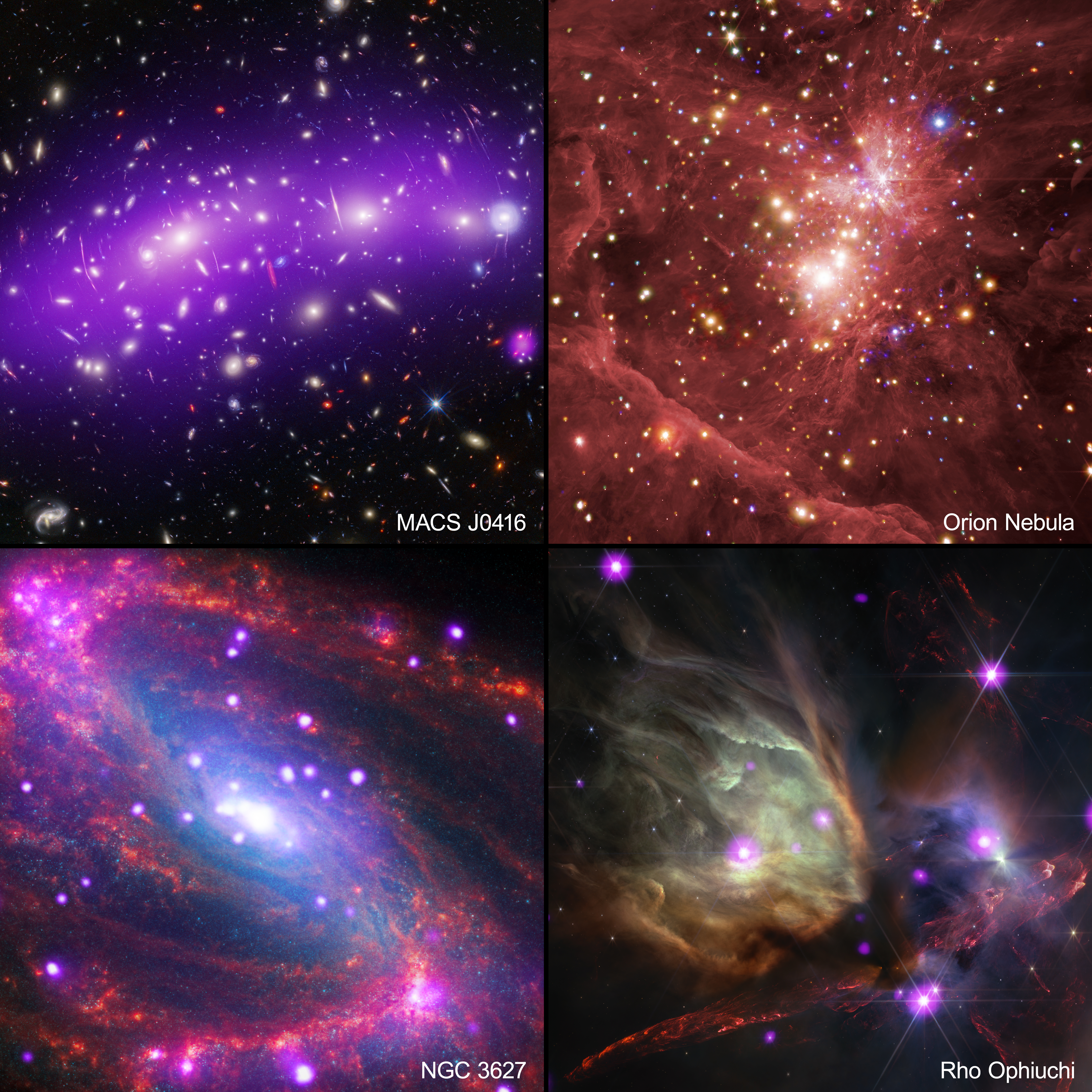
It’s time to take a cosmic road trip
using light as the highway and visit four stunning destinations across
space. The vehicles for this space get-away are NASA’s Chandra X-ray
Observatory and James Webb Space Telescope.
In each of the images, which add Chandra
data to previously released Webb images, the colors represent different
wavelengths of X-ray, optical, or infrared light.
The
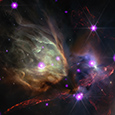
first stop on this tour is the closest, Rho Ophiuchi, at a distance of
about 390 light-years from Earth. Rho Ophiuchi is a cloud complex filled
with gas and stars of different sizes and ages. Being one of the
closest star-forming regions, Rho Ophiuchi is a great place for
astronomers to study young stars. In this image, X-rays from Chandra are
purple and reveal the hot, outer atmospheres of infant stars. Infrared
data from Webb is red, yellow, cyan, light blue, and darker blue and provides views of the spectacular regions of gas and dust.
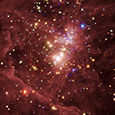
The
next destination is the Orion Nebula, a giant cloud where stars are
forming. Still located in the Milky Way galaxy, this region is a little
bit farther from our home planet at about 1,500 light-years away. If you
look just below the middle of the three stars that make up the “belt”
in the constellation of Orion, you may be able to see this nebula
through a small telescope. With Chandra and Webb, however, we get to see
so much more. Chandra reveals young stars that glow brightly in X-rays,
colored in red, green, and blue, while Webb shows the gas and dust in
darker red that will help build the next generation of stars here.
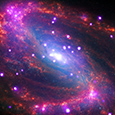
It's
time to leave our galaxy and visit another at a much greater distance
of some 36 million light-years away. Like the Milky Way, NGC 3627 is a
spiral galaxy that we see at a slight angle. NGC 3627 is known as a
“barred” spiral galaxy because of the rectangular shape of its central
region. From our vantage point, we can also see two distinct spiral arms
that appear as arcs. X-rays from Chandra in purple show evidence for a
supermassive black hole in its center as well as other dense objects
like neutron stars and black holes pulling in matter. Meanwhile Webb
finds the dust, gas, and stars throughout the galaxy in red, green, and
blue. This image also contains optical data from NASA’s Hubble Space
Telescope in red, green, and blue.
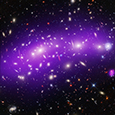
Our
final landing place on this trip is the biggest and the farthest at a
distance of about 4.3 billion light-years from Earth. MACS J0416 is a
galaxy cluster, which are the largest objects in the universe held
together by gravity. Galaxy clusters like this can contain hundreds or
even thousands of individual galaxies all immersed in massive amounts of
superheated gas that Chandra can detect. In this view, Chandra’s X-rays
in purple show this reservoir of hot gas while Hubble and Webb pick up
the individual galaxies in red, green, and blue. The long thin lines are
caused by matter in the cluster distorting the light from galaxies
behind MACS J0416 in a process known as gravitational lensing.
NASA's Marshall Space Flight Center
manages the Chandra program. The Smithsonian Astrophysical Observatory's
Chandra X-ray Center controls science from Cambridge Massachusetts and
flight operations from Burlington, Massachusetts.
This release features four distinct composite images from NASA’s Chandra X-ray Observatory and the James Webb Space Telescope, presented in a two-by-two grid.
At our lower right is Rho Ophiuchi, a cloud complex filled with gas, and dotted with stars. The murky green and gold cloud resembles a ghostly head in profile, swooping down from the upper left, trailing tendrils of hair. Cutting across the bottom edge and lower righthand corner of the image is a long, narrow, brick red cloud which resembles the ember of a stick pulled from a fire. Several large white stars dot the image. Many are surrounded by glowing neon purple rings, and gleam with diffraction spikes.
At our upper right of the grid is a peek into the heart of the Orion Nebula, which blankets the entire image. Here, the young star nursery resembles a dense, stringy, dusty rose cloud, peppered with thousands of glowing golden, white, and blue stars. Layers of cloud around the edges of the image, and a concentration of bright stars at its distant core, help convey the depth of the nebula.
In the lower left of the two-by-two grid is a hazy image of a spiral galaxy known as NGC 3627. Here, the galaxy appears pitched at an oblique angle, tilted from our upper left down to our lower right. Much of its face is angled toward us, making its spiral arms, composed of red and purple dots, easily identifiable. Several bright white dots ringed with neon purple speckle the galaxy. At the galaxy’s core, where the spiral arms converge, a large white and purple glow identified by Chandra provides evidence of a supermassive black hole.
At the upper left of the grid is an image of the distant galaxy cluster known as MACS J0416. Here, the blackness of space is packed with glowing dots and tiny shapes, in whites, purples, oranges, golds, and reds, each a distinct galaxy. Upon close inspection (and with a great deal of zooming in!) the spiraling arms of some of the seemingly tiny galaxies are revealed in this highly detailed image. Gently arched across the middle of the frame is a soft band of purple; a reservoir of superheated gas detected by Chandra.
Fast Facts for Rho Ophiuchi:
Credit: X-ray: NASA/CXC/MIT/C. Canizares; IR: NASA/ESA/CSA/STScI/K. Pontoppidan; Image Processing: NASA/ESA/STScI/Alyssa Pagan, NASA/CXC/SAO/L. Frattare and J. Major
Scale: About 6.4 arcmin (0.7 light-years) across. Category:Normal Stars and Star Clusters Coordinates (J2000): RA: 16h 25m 35.1s | Dec: -23° 26' 49.9" Constellation:Ophiuchus Observation Date(s): 10 observations from Mar 21, 2022 to July 30, 2022 Observation Time: 53 hours (2 days 5 hours) Obs. IDs: 24672, 24759-24763, 26367, 26406, 26416, 26481 Instrument:ACIS Color Code: X-ray: purple (Chandra), light blue (IXPE); Optical: yellow (Hubble) Distance Estimate: About 390 light-years from Earth
Fast Facts for Orion (M42):
Credit: X-ray: NASA/CXC/SAO/E. Feigelson; IR: NASA/ESA/CSA/STScI; Image Processing:NASA/CXC/SAO/L. Frattare and J. Major
Scale: About 6.5 arcmin (2.8 light-years) across Category:Normal Stars and Star Clusters Coordinates (J2000): RA: 05h 35m 14.3s | Dec: -05° 23´ 37.9" Constellation:Orion Observation Date(s): 6 observations from Jan 8, 2003 to Jan 21, 2003 Observation Time: 233 hours (9 days and 17 hours) Obs. IDs: 3498, 3744, 4373, 4374, 4395, 4396 Instrument:ACIS Color Code: X-ray: red, green, blue; IR: red Distance Estimate: About 1,500 light-years from Earth
Scale: Image is about 3.4 arcmin (about 33,000 light-years) across Category:Normal Galaxies Coordinates (J2000): RA: 11h 20m 15.0s | Dec +12° 59' 30" Constellation: Leo Observation Date(s): March 31, 2008 Observation Time: 14 hours 10 min Obs. IDs: 9548 Instrument:ACIS Color Code: X-ray: purple/white; Optical: red, green, blue; Infrared: red, green, blue Distance Estimate: About 34 million light-years
Facts for MACS J0416.1-2403:
Credit: X-ray: NASA/CXC/SAO/G. Ogrean et al.; Optical/Infrared: (Hubble) NASA/ESA/STScI; IR: (JWST) NASA/ESA/CSA/STScI/Jose M. Diego (IFCA), Jordan C. J. D'Silva (UWA), Anton M. Koekemoer (STScI), Jake Summers (ASU), Rogier Windhorst (ASU), Haojing Yan (University of Missouri)
Scale: Image is 3.4 arcmin across (About 3.6 million light-years) Category:Groups & Clusters of Galaxies Coordinates (J2000): RA: 04h 16m 9.9s | Dec: -24° 3' 58.0" Constellation: Eridanus Observation Date(s): 6 pointings between June 2009 and December 2014 Observation Time: 90 hours (3 days 18 hours 5 min) Obs. IDs: 10446, 16236, 16237, 16304, 16523, 17313 Instrument:ACIS
Color Code: X-ray: purple; Optical/Infrared: (Hubble) blue, cyan, green; IR: (JWST) green, yellow, orange, red
Two for two! A duo of interacting galaxies commemorates the second science anniversary of NASA's James Webb Space Telescope, which takes constant observations, including images and highly detailed data known as spectra. Its operations have led to a “parade” of discoveries by astronomers around the world.
“Since President Biden and Vice President Harris unveiled the first image from the James Webb Space Telescope two years ago, Webb has continued to unlock the mysteries of the universe,” said NASA Administrator Bill Nelson. “With remarkable images from the corners of the cosmos, going back nearly to the beginning of time, Webb’s capabilities are shedding new light on our celestial surroundings and inspiring future generations of scientists, astronomers, and explorers.”
“In just two years, Webb has transformed our view of the universe, enabling the kind of world-class science that drove NASA to make this mission a reality,” said Mark Clampin, director of the Astrophysics Division at NASA Headquarters in Washington. “Webb is providing insights into longstanding mysteries about the early universe and ushering in a new era of studying distant worlds, while returning images that inspire people around the world and posing exciting new questions to answer. It has never been more possible to explore every facet of the universe.”
The telescope’s specialization in capturing infrared light — which is beyond what our own eyes can detect — shows these galaxies, collectively known as Arp 142, locked in a slow cosmic dance. Webb’s observations, which combine near- and mid-infrared light from Webb’s NIRCam (Near-Infrared Camera) and MIRI (Mid-Infrared Instrument), respectively, clearly show that they are joined by a haze represented in blue that is a mix of stars and gas, a result of their mingling.
Their ongoing interaction was set in motion between 25 and 75 million years ago, when the Penguin (individually cataloged as NGC 2936) and the Egg (NGC 2937) completed their first pass. They will go on to shimmy and sway, completing several additional loops before merging into a single galaxy hundreds of millions of years from now.
Let’s Dance!
Before their first approach, the Penguin held the shape of a spiral. Today, its galactic center gleams like an eye, its unwound arms now shaping a beak, head, backbone, and fanned-out tail.
Like all spiral galaxies, the Penguin is still very rich in gas and dust. The galaxies’ “dance” gravitationally pulled on the Penguin’s thinner areas of gas and dust, causing them to crash in waves and form stars. Look for those areas in two places: what looks like a fish in its “beak” and the “feathers” in its “tail.”
Surrounding these newer stars is smoke-like material that includes carbon-containing molecules, known as polycyclic aromatic hydrocarbons, which Webb is exceptional at detecting. Dust, seen as fainter, deeper orange arcs also swoops from its beak to tail feathers.
In contrast, the Egg’s compact shape remains largely unchanged. As an elliptical galaxy, it is filled with aging stars, and has a lot less gas and dust that can be pulled away to form new stars. If both were spiral galaxies, each would end the first “twist” with new star formation and twirling curls, known as tidal tails.
Another reason for the Egg’s undisturbed appearance: These galaxies have approximately the same mass or heft, which is why the smaller-looking elliptical wasn’t consumed or distorted by the Penguin.
It is estimated that the Penguin and the Egg are about 100,000 light-years apart — quite close in astronomical terms. For context, the Milky Way galaxy and our nearest neighbor, the Andromeda Galaxy, are about 2.5 million light-years apart. They too will interact, but not for about 4 billion years.
Now, look to the top right to spot a galaxy that is not at this party. This edge-on galaxy, cataloged PGC 1237172, is 100 million light-years closer to Earth. It’s also quite young, teeming with new, blue stars.
Want one more party trick? Switch to Webb’s mid-infrared-only image to see PGC 1237172 practically disappear. Mid-infrared light largely captures cooler, older stars and an incredible amount of dust. Since the galaxy’s stellar population is so young, it “vanishes” in mid-infrared light.
Also take a moment to scan the background. Webb’s image is overflowing with distant galaxies. Some take spiral and oval shapes, like those threaded throughout the Penguin’s “tail feathers,” while others scattered throughout are shapeless dots. This is a testament to the sensitivity and resolution of the telescope’s infrared instruments. (Compare Webb’s view to the 2018 observation
that combines infrared light from NASA’s retired Spitzer Space Telescope and near-infrared and visible light from NASA’s Hubble Space Telescope.) Even though these observations only took a few hours, Webb revealed far more distant, redder, and dustier galaxies than previous telescopes – one more reason to expect Webb to continue to expand our understanding of everything in the universe.
Want more? Take a tour through the image, “fly through” it in a visualization, and compare Webb’s image to the Hubble Space Telescope’s.
Arp 142 lies 326 million light-years from Earth in the constellation Hydra.
The James Webb Space Telescope is the world’s premier space science observatory. Webb is solving mysteries in our solar system, looking beyond to distant worlds around other stars, and probing the mysterious structures and origins of our universe and our place in it. Webb is an international program led by NASA with its partners, ESA (European Space Agency) and CSA (Canadian Space Agency).
Credits: Science: NASA, ESA, Eduardo Vitral (STScI), Roeland van der Marel (STScI), Sangmo Tony Sohn (STScI), DSS. Image Processing: Joseph DePasquale (STScI)
The qualities and behavior of dark matter, the invisible "glue" of the universe, continue to be shrouded in mystery. Though galaxies are mostly made of dark matter, understanding how it is distributed within a galaxy offers clues to what this substance is, and how it's relevant to a galaxy's evolution.
While computer simulations suggest dark matter should pile up in a galaxy's center, called a density cusp, many previous telescopic observations have indicated that it is instead more evenly dispersed throughout a galaxy. The reason for this tension between model and observation continues to puzzle astronomers, reinforcing the mystery of dark matter.
A team of astronomers has turned toward NASA's Hubble Space Telescope to try and clarify this debate by measuring the dynamic motions of stars within the Draco dwarf galaxy, a system located roughly 250,000 light-years from Earth. Using observations that spanned 18 years, they succeeded in building the most accurate three-dimensional understanding of stars' movements within the diminutive galaxy. This required scouring nearly two decades of Hubble archival observations of the Draco galaxy.
"Our models tend to agree more with a cusp-like structure, which aligns with cosmological models," said Eduardo Vitral of the Space Telescope Science Institute (STScI) in Baltimore and lead author of the study. "While we cannot definitively say all galaxies contain a cusp-like dark matter distribution, it's exciting to have such well measured data that surpasses anything we've had before."
Charting the Movements of Stars
To learn about dark matter within a galaxy, scientists can look to its stars and their movements that are dominated by the pull of dark matter. A common approach to measure the speed of objects moving in space is by the Doppler Effect – an observed change of the wavelength of light if a star is approaching or receding from Earth. Although this line-of-sight velocity can provide valuable insight, only so much can be gleaned from this one-dimensional source of information.
Besides moving closer or further away from us, stars also move across the sky, measured as their proper motion. By combining line-of-sight velocity with proper motions, the team created an unprecedented analysis of the stars' 3D movements.
"Improvements in data and improvements in modeling usually go hand in hand," explained Roeland van der Marel of STScI, a co-author of the paper who initiated the study more than 10 years ago. "If you don't have very sophisticated data or only one-dimensional data, then relatively straightforward models can often fit. The more dimensions and complexity of data you gather, the more complex your models need to be to truly capture all the subtleties of the data."
A Scientific Marathon (Not a Sprint)
Since dwarf galaxies are known to have a higher proportion of dark matter content than other types of galaxies, the team honed in on the Draco dwarf galaxy, which is a relatively small and spheroidal nearby satellite of the Milky Way galaxy.
"When measuring proper motions, you note the position of a star at one epoch and then many years later measure the position of that same star. You measure the displacement to determine how much it moved," explained Sangmo Tony Sohn of STScI, another co-author of the paper and the principal investigator of the latest observational program. "For this kind of observation, the longer you wait, the better you can measure the stars shifting."
The team analyzed a series of epochs spanning from 2004 to 2022, an extensive baseline that only Hubble could offer, due to the combination of its sharp stable vision and record time in operation. The telescope's rich data archive helped decrease the level of uncertainty in the measurement of the stars' proper motions. The precision is equivalent to measuring an annual shift a little less than the width of a golf ball as seen on the Moon from Earth.
With three dimensions of data, the team reduced the amount of assumptions applied in previous studies and considered characteristics specific to the galaxy – such as its rotation, and distribution of its stars and dark matter – in their own modeling efforts.
An Exciting Future
The methodologies and models developed for the Draco dwarf galaxy can be applied to other galaxies in the future. The team is already analyzing Hubble observations of the Sculptor dwarf galaxy and the Ursa Minor dwarf galaxy.
Studying dark matter requires observing different galactic environments, and also entails collaboration across different space telescope missions. For example, NASA's upcoming Nancy Grace Roman Space Telescope will help reveal new details of dark matter's properties among different galaxies thanks to its ability to survey large swaths of the sky.
"This kind of study is a long-term investment and requires a lot of patience," reflected Vitral. "We're able to do this science because of all the planning that was done throughout the years to actually gather these data. The insights we've collected are the result of a larger group of researchers that has been working on these things for many years."
The Hubble Space Telescope has been operating for over three decades and continues to make ground-breaking discoveries that shape our fundamental understanding of the universe. Hubble is a project of international cooperation between NASA and ESA (European Space Agency). NASA's Goddard Space Flight Center in Greenbelt, Maryland, manages the telescope and mission operations. Lockheed Martin Space, based in Denver, Colorado, also supports mission operations at Goddard. The Space Telescope Science Institute (STScI) in Baltimore, Maryland, which is operated by the Association of Universities for Research in Astronomy, conducts Hubble science operations for NASA.
Most known black holes are either extremely massive, like the supermassive black holes that lie at the cores of large galaxies, or relatively lightweight, with a mass of under 100 times that of the Sun. Intermediate-mass black holes (IMBHs) are scarce, however, and are considered rare "missing links" in black hole evolution.
Now, an international team of astronomers has used more than 500 images from NASA's Hubble Space Telescope — spanning two decades of observations — to search for evidence of an intermediate-mass black hole by following the motion of seven fast-moving stars in the innermost region of the globular star cluster Omega Centauri.
Omega Centauri consists of roughly 10 million stars that are gravitationally bound. The cluster is about 10 times as massive as other big globular clusters — almost as massive as a small galaxy.
Among the many questions scientists want to answer: Are there any IMBHs, and if so, how common are they? Does a supermassive black hole grow from an IMBH? How do IMBHs themselves form? Are dense star clusters their favored home?
The astronomers have now created an enormous catalog for the motions of these stars, measuring the velocities for 1.4 million stars gleaned from the Hubble images of the cluster. Most of these observations were intended to calibrate Hubble's instruments rather than for scientific use, but they turned out to be an ideal database for the team's research efforts.
"We discovered seven stars that should not be there," explained Maximilian Häberle of the Max Planck Institute for Astronomy in Germany, who led this investigation. "They are moving so fast that they would escape the cluster and never come back. The most likely explanation is that a very massive object is gravitationally pulling on these stars and keeping them close to the center. The only object that can be so massive is a black hole, with a mass at least 8,200 times that of our sun."
Several studies have suggested the presence of an IMBH in Omega Centauri. However, other studies proposed the mass could be contributed by a central cluster of stellar-mass black holes, and had suggested the lack of fast-moving stars above the necessary escape velocity made an IMBH less likely in comparison.
"This discovery is the most direct evidence so far of an IMBH in Omega Centauri," added team lead Nadine Neumayer of the Max Planck Institute for Astronomy in Germany, who initiated the study, together with Anil Seth from the University of Utah, Salt Lake City. "This is exciting because there are only very few other black holes known with a similar mass. The black hole in Omega Centauri may be the best example of an IMBH in our cosmic neighborhood."
If confirmed, at a distance of 17,700 light-years the candidate black hole resides closer to Earth than the 4.3-million-solar-mass black hole in the center of the Milky Way, located 26,000 light-years away.
Omega Centauri is visible from Earth with the naked eye and is one of the favorite celestial objects for stargazers living in the southern hemisphere. Located just above the plane of the Milky Way, the cluster appears almost as large as the full Moon when seen from a dark rural area. It was first listed in Ptolemy’s catalog nearly 2,000 years ago as a single star. Edmond Halley reported it as a nebula in 1677. In the 1830s the English astronomer John Herschel was the first to recognize it as a globular cluster.
The discovery paper led by Häberle et al. is published online today in the journal Nature.
The Hubble Space Telescope has been operating for over three decades and continues to make ground-breaking discoveries that shape our fundamental understanding of the universe. Hubble is a project of international cooperation between NASA and ESA (European Space Agency). NASA's Goddard Space Flight Center in Greenbelt, Maryland, manages the telescope and mission operations. Lockheed Martin Space, based in Denver, Colorado, also supports mission operations at Goddard. The Space Telescope Science Institute in Baltimore, Maryland, which is operated by the Association of Universities for Research in Astronomy, conducts Hubble science operations for NASA.
An artist's impression of the first stars in the universe going supernova.
Credit:NAOJ,CC BY 4.0
JWST image of the galaxy RX J2129–z8He II, which is gravitationally lensed by the foreground galaxy cluster RX J2129. Credit: Wang et al. 2024
The galaxy RX J2129–z8He II is remarkable for its high redshift, sloped spectrum, and strong emission lines. New research suggests that the elusive first stars could be responsible for the galaxy’s properties.
The Hunt for the First Stars
Long ago, the universe was substantially less picturesque than it is today; neutral hydrogen gas absorbed all visible light and rendered the universe opaque. When the first stars glimmered into existence and assembled into the first galaxies, they began to chip away at the opaque universe, carving out increasingly large bubbles of transparent gas.
The nature of the first stars, also called Population III stars, is of great interest to astronomers, but tracking them down is easier said than done. While galaxies composed only of the first generation of stars may be out of reach, shielded from view by clouds of neutral gas, galaxies in which Population III stars mingle with later stellar generations might be easier to spot.
Thirteen Billion Years Ago in a Galaxy Far, Far Away
Recently, a research team led by Xin Wang (University of Chinese Academy of Sciences) may have identified such a galaxy. Using images from JWST, Wang and collaborators picked out the galaxy RX J2129–z8He II, which even in the eyes of the world’s most powerful infrared telescope is a barely discernible red smudge. JWST spectra of this galaxy place it at a redshift of z = 8.1623, just 613 million years after the Big Bang. At this time, stars and galaxies were still busily ionizing the universe, transforming it from opaque to transparent.
RX J2129–z8He II’s spectrum is tilted sharply toward short wavelengths, more so than any other known galaxy beyond a redshift of z = 7, and it’s marked by several prominent emission lines, including one from singly ionized helium atoms. These factors suggest that the galaxy contains a powerful source of ultraviolet radiation. In the local universe, emission from singly ionized helium is somewhat rare, arising from massive stars that have lost their atmospheres, binary systems containing a star and either a black hole or a neutron star, and galaxies with accreting supermassive black holes. None of these sources are likely to be the cause of the galaxy’s helium emission line. Instead, Wang’s team posits, massive Population III stars could be the source of the ionizing ultraviolet photons.
JWST spectrum of RX J2129–z8He II, with an inset image showing the He II line. The flux increases toward shorter wavelengths before being attenuated by the intergalactic medium (IGM). Credit: Wang et al. 2024
Are Population III Stars Responsible?
To test this theory, Wang’s team used photoionization models to simulate the properties of a galaxy containing Population III stars as well as stars from later generations. They found that a collection of Population III stars with a total mass of 780,000 solar masses could reproduce the observed emission lines in the galaxy’s spectrum. Previous modeling suggests that this quantity of Population III stars is reasonable for a galaxy at that time period.
As for how a galaxy could host Population III stars alongside their stellar descendants, Wang’s team suggests that new Population III stars could form belatedly in pockets of pristine gas that weren’t swept up into stars in the first round of star formation, or in gas that spilled into the galaxy from the surrounding circumgalactic medium.
This study marks a promising advance in the search for the first generation of stars. In addition to identifying RX J2129–z8He II as a possible home for Population III stars, Wang’s team gained a better sense for the spectral signatures of these stars, which can be used to identify other galaxies that may host them.
“A Strong He II λ1640 Emitter with an Extremely Blue UV Spectral Slope at z = 8.16: Presence of Population III Stars?” Xin Wang et al 2024 ApJL 967 L42.doi:10.3847/2041-8213/ad4ced
A spiral galaxy seen almost face-on. Large spiral arms whirl out from
its centre, filling the scene. They glow faintly blue from the stars
within, with some small bright patches of blue and pink marking areas of
star formation. They are overlaid with thin filaments of dark reddish
dust that block light. The galaxy’s centre shines brightly white. Credit: ESA/Hubble & NASA, D. Sand, R. J. Foley
Measuring the distance to truly remote objects like galaxies, quasars and galaxy clusters is a crucial task in astrophysics, particularly
when it comes to studying the early Universe, but it’s a difficult one.
Only in the case of a few nearby objects like the Sun, planets
and some nearby stars can we measure their distances directly. Beyond
that, various indirect methods need to be used; one of the most
important is by examining Type Ia supernovae, and this is where the
NASA/ESA Hubble Space Telescope comes in.
NGC 3810, the galaxy featured in this image, was the host of a Type Ia supernova
in 2022. In early 2023 Hubble focused on this and a number of other
galaxies to closely examine recent Type Ia supernovae. This kind of
supernova results from a white dwarf
exploding, and they all have a very consistent brightness. That allows
them to be used to measure distances: we know how bright a Type Ia
supernova should be, so we can tell how far away it must be from how dim
it appears. One uncertainty in this method is that intergalactic dust
in between Earth and a supernova blocks some of its light. How do you
know how much of the reduction in light is caused by distance, and how
much by dust? With the help of Hubble, there’s a clever workaround: take
images of the same Type Ia supernovae in ultraviolet light, which is
almost completely blocked by dust, and in infrared light, which passes
through dust almost unaffected. By carefully noting how much light comes
through at each wavelength, the relationship between supernova
brightness and distance can be calibrated to account for dust. Hubble
can observe both these wavelengths of light in great detail with the
same instrument. That makes it the perfect tool for this experiment, and
indeed, some of the data used to make this beautiful image of NGC 3810
were focused on its 2022 supernova. You can see it as a point of light
just below the galactic nucleus, or in the annotated image here.
There are many ways to measure cosmic distances; because Type Ia
supernovae are so bright, they are one of the most useful and accurate
tools, when they’re spotted. Many other methods must be used as well,
either as an independent check against other distance measurements or to
measure at much closer or farther distances. One such method that also
works for galaxies is comparing their rotation speed to their
brightness; based on that method, NGC 3810 is found to be 50 million
light-years from Earth.