Showing posts with label Rho Ophiuchi. Show all posts

Saturday, November 21, 2026

New Album of Baby Star Sounds Shared by NASA's Chandra


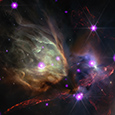
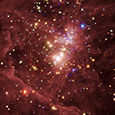
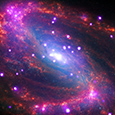
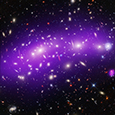
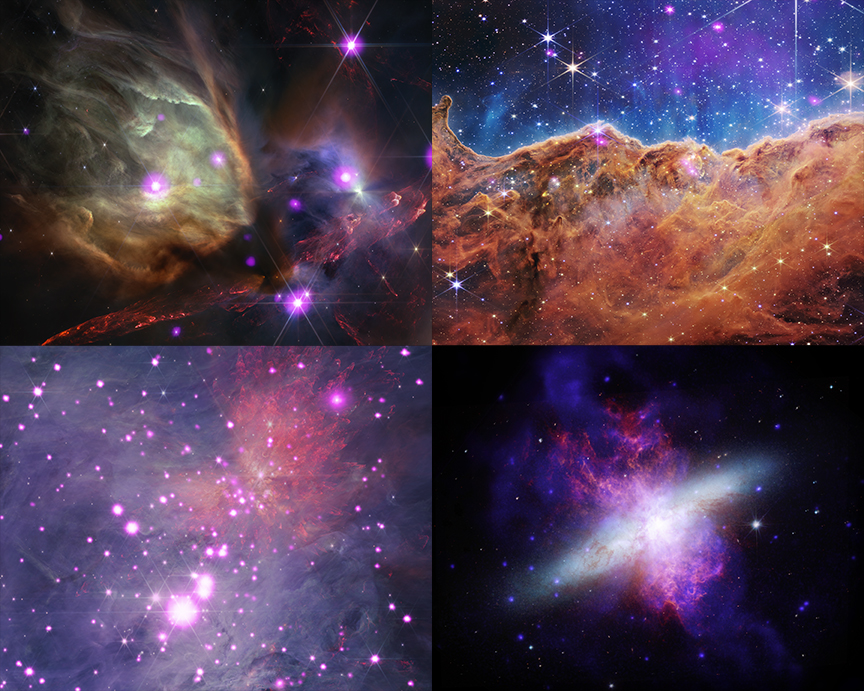
Rho Ophiuchi - Carina Nebula - Orion Nebula - M82
Sonification Credit: NASA/CXC/SAO/K.Arcand, SYSTEM Sounds (M. Russo, A. Santaguida)


JPEG (585.7 kb) - Large JPEG (19.1 MB)-Tiff (50 MB)-More Images

Tour: New NASA Sonifications Listen to the Universe's Past- More Videos


  • NASA’s Chandra has released four new sonifications of star-forming regions that include X-ray and other types of data.

  • Sonification is the process of translating data into sound, allowing people to experience this information from space differently.

  • X-rays from Chandra reveal powerful winds and outbursts that many young and massive stars emit.

  • The four newly-sonified objects are the Messier 82 (M82), the Orion Nebula, the “Cosmic Cliffs” in the Carina Nebula and Rho Ophiuichi.


A new album from NASA’s Chandra X-ray Observatory collects snapshots of baby stars across the galaxy and beyond and transforms that data into sound.

Four new sonifications use data of stars that are actively forming, captured by Chandra and other NASA telescopes By studying places in the universe where stars are currently being born and young stars are present, astronomers can better understand the lifecycle of all stars, including our own Sun.

M82:
The galaxy Messier 82 (M82) is called a starburst galaxy because stars are forming there at a rate tens or even hundreds of times higher than in our Milky Way galaxy. This stellar birth boom may be due to a collision with another galaxy in the past. Today, Chandra sees giant plumes of hot gas that are the byproduct of young, giant stars that quickly explode and other star formation activity. One of the new sonifications combines Chandra’s data with optical data from NASA’s Hubble Space Telescope, as well as infrared views from NASA’s James Webb and retired Spitzer space telescopes. The sonification of the three types of light begins with a radar-like scan that is louder where sources are brighter. The X-ray data is mapped to the highest range of frequencies heard. Infrared data is heard as a low drone plus plucked sounds, while the optical data turns into a range of musical pitches and textures.M82)

Orion Nebula:
One of the closest and busiest star formation regions to Earth is the Orion Nebula (visible just below the belt in the Orion constellation with a small telescope and dark skies). Chandra sees more than a thousand stars in this area that are very energetic and active in their infancy. In the sonified version of the Chandra data, these stars are twinkling sounds, while the diffuse X-ray emission is mapped to pure high tones. An infrared image from NASA’s James Webb Space Telescope reveals the raw material of dust and gas used to build these new stars, and its data is heard as lower musical tones, distorted string instruments, and a digital harp.

>Carina Nebula, “Cosmic Cliffs”:
A portion of the Carina Nebula, another star formation region, is nicknamed the “Cosmic Cliffs” because of its spectacular structure seen in infrared by NASA’s Webb. Chandra also looks at this region, seeing through the dust and gas, and detects individual baby stars — which are turned into short string sounds in the sonification. A diffuse X-ray glow throughout the region has longer strings notes assigned to it. The nebula in the Webb data is mapped to a sustained sound, punctuated by other instruments to denote features like stars and ridges.

Rho Ophiuchi:
Rho Ophiuchi is a striking star-forming cloud, filled with gas and stars of different sizes and ages. Chandra reveals infant stars that violently flare and produce X-rays. Infrared data from Webb provides views of the cloud’s regions of gas and dust. When this data is made audible, Chandra’s X-rays become high-pitched glassy tones, along with other sustained sounds to mark the appearance of extended bright sources. The clouds in Webb’s infrared data are mapped as differently pitched sounds, and stars are played as metallic plucks. There is a gap in the middle of the piece due to dark dust clouds that emit very little light.

NASA's Marshall Space Flight Center in Huntsville, Alabama, manages the Chandra program. The Smithsonian Astrophysical Observatory's Chandra X-ray Center controls science operations from Cambridge, Massachusetts, and flight operations from Burlington, Massachusetts.

The sonification program is led by the Chandra X-ray Center (CXC). The collaboration was driven by visualization scientist Kimberly Arcand (CXC), Matt Russo, astrophysicist, and Andrew Santaguida, musician (SYSTEM Sounds), along with Christine Malec, consultant. More sonifications can be found at chandra.si.edu/sound.

Visual Description:

This release features four data sonifications, focusing on stellar formation. The sonifications are presented as soundtracks to short videos. Each video features a composite image and an activation line. As the activation line sweeps across the image, it encounters visual elements. These elements are translated into sound, or sonified, according to parameters established by Chandra's sonification team.

Top left, Rho Ophiuchi. This image from NASA’s Chandra X-ray Observatory and the James Webb Space Telescope, shows Rho Ophiuchi, a cloud complex filled with gas, and dotted with stars. The murky green and gold cloud resembles a ghostly head in profile, swooping down from the upper left, trailing tendrils of hair. Cutting across the bottom edge and lower righthand corner of the image is a long, narrow, brick red cloud which resembles the ember of a stick pulled from a fire. Several large white stars dot the image. Many are surrounded by glowing neon purple rings, and gleam with diffraction spikes.

Top right, Carina Nebula. Data from NASA'a Chandra X-ray Observatory and the James Webb Space Telescope are combined to create this image of the Carina Nebula, which resembles a rust brown mountain range backed by a hazy blue night sky.

Bottom left, Orion Nebula.
In this composite image, a collection of neon pink and white stars gleam through a haze of wispy clouds. The young stars range in size from tiny specks to plump circles. Many have white cores and are surrounded by neon pink rings, identifying stars detected by Chandra. Some display long, ruler-straight diffraction spikes. Near the upper right of the image is a burst of red cloud that resembles a thick shock of hair. Both the red burst and the collection of stars are muted by hazy clouds, as if viewed through wafting smoke rising out of a campfire.

Bottom right, M82. Images from three of NASA's Great Observatories were combined to create this spectacular multiwavelength view of the starburst galaxy M82. Optical light from the Hubble Space Telescope shows stars (yellow-green) and the disk of a modest-sized, apparently normal galaxy. Another Hubble observation designed to image 10,000 degree Celsius hydrogen gas is in orange, and reveals a startlingly different picture of matter blasting out of the galaxy. The Spitzer Space Telescope infrared image colored in red shows that cool gas and dust are also being ejected. Chandra's X-ray image in blue reveals gas that has been heated to millions of degrees by the violent outflow. The eruption can be traced back to the central regions of the galaxy where stars are forming at a furious rate, some 10 times faster than in the Milky Way galaxy. Together, the slices of light make the galaxy appear as a bright, glowing structure in the center of the image, like a gigantic cosmic firework, with shades of red, purple, blue, and orange emanating from its core. The flat disk of the galaxy cuts across the central region, tilted at an angle to the upper right, in white-yellow to light greens.
.


Fast Facts for: M82:

Credit: X-ray: NASA/CXC/SAO; Optical: NASA/ESA/STScI; Infrared: NASA/JPL-Caltech; Image Processing: NASA/CXC/SAOv/L. Frattare, J. Major, and K. Arcand; Sonification: NASA/CXC/SAO/K.Arcand, SYSTEM Sounds (M. Russo, A. Santaguida)
Release Date: November 17, 2026
Scale: Image is about 10 arcminutes (35,000 light-years) across.
Category: Normal Galaxies & Starburst Galaxies
Coordinates (J2000): RA: 09h 55m 50.70s | Dec: +69° 40′ 37.00"
Constellation:
Ursa Major
Observation Date(s): 22 pointings from 20 Sep 1999 to 03 Feb 2014
Observation Time: 272 hours 26 minutes (9 days 12 hours 26 minutes)
Obs. IDs: 361, 378-380, 1302, 2933, 5644, 6097, 6361, 8190, 10025-10027, 10542-10545, 10925, 11104, 11800, 13796, 15616
Instrument:
ACIS
Color Code: X-ray: blue; Optical: red, green, blue; Infrared: red, green, blue
Distance Estimate: About 12 million light-years from Earth


Fast Facts for: Orion Nebula:

Credit: X-ray: NASA/CXC/SAO; Infrared: NASA/ESA/CSA/STScI/M. Mccaughrean, S. Pearson; Image Processing: NASA/CXC/SAO/K. Arcand and J. Major; Sonification: NASA/CXC/SAO/K.Arcand, SYSTEM Sounds (M. Russo, A. Santaguida)
Release Date: November 17, 2026
Scale: Image is about 3.25 arcmin (1.3 light-years) across.
Category:  Normal Stars and Star Clusters
Coordinates (J2000): RA: 5h 35m 14.3s | Dec: -5° 23' 37.9"
Constellation:
Orion
Observation Date(s): 6 pointings between Jan 8 and Jan 21, 2003
Observation Time: 232 hours 49 minutes (9 days 16 hours 49 minutes)
Obs. IDs: 3498, 3744, 4373, 4374, 4395, 4396
Instrument:
ACIS
Color Code: X-ray: magenta; Infrared: red, green, blue
Distance Estimate: About 1,310 light-years from Earth


Fast Facts for Carina Nebula, "Cosmic Cliffs":

Credit: X-ray: NASA/CXC/Univ. Observ. Munich/T. Preibisch et al.; IR: NASA/ESA/CSA/STScI; Sonification: NASA/CXC/SAO/K.Arcand, SYSTEM Sounds (M. Russo, A. Santaguida), Cello by Johnny Mok
Release Date:: November 17, 2026
Scale: Image is about 7.3 arcmin (16 light-years) across
Category: Normal Stars & Star Clusters
Coordinates (J2000): RA 10h 36m 48.0s | Dec -58° 37' 35.0"
Constellation:
Carina
Observation Dates: Oct 08, 2012
Observation Time: 19 hours 8 minutes
Obs. IDs: 13613
Instrument:
ACIS
Color Code: X-ray: purple; IR: red, orange, yellow, green, cyan, blue
Distance Estimate About 7,670 light-years


Fast Facts for Rho Ophiuchi:

Credit: X-ray: NASA/CXC/MIT/C. Canizares; IR: NASA/ESA/CSA/STScI/K. Pontoppidan; Image Processing: NASA/ESA/STScI/Alyssa Pagan, NASA/CXC/SAO/L. Frattare and J. Major; Sonification: NASA/CXC/SAO/K.Arcand, SYSTEM Sounds (M. Russo, A. Santaguida)
Release Date: November 17, 2026
Scale: About 6.4 arcmin (0.7 light-years) across.
Category 
Normal Stars and Star Clusters
Coordinates (J2000): RA: 16h 25m 35.1s | Dec: -23° 26' 49.9"
Constellation:
Ophiuchus
Observation Date(s): 10 observations from Mar 21, 2022 to July 30, 2022
Observation Time: 53 hours (2 days 5 hours)
Obs. IDs: 24672, 24759-24763, 26367, 26406, 26416, 26481
IInstrument:
ACIS
Color Code: X-ray: purple (Chandra), light blue (IXPE); Optical: yellow (Hubble)
Distance Estimate: About 390 light-years from Earth


Sunday, September 14, 2025

NASA’s Webb Observes Immense Stellar Jet on Outskirts of Our Milky Way

NASA's James Webb Space Telescope recently imaged an extremely large and symmetric protostellar jet at the outskirts of our Milky Way galaxy in the forming cluster Sh2-284. From tip to tip, this protostellar jet is 8 light-years across, about double the distance from our Sun to its closest neighboring star system, Alpha Centauri.

Its detection provides evidence that protostellar jets scale with the mass of their parent star—the more massive the stellar engine driving the plasma, the larger the resulting jet—and thus for a universal mechanism for star formation from low to high masses. Credits/Image: NASA, ESA, CSA, STScI, Yu Cheng (NAOJ) - Image Processing: Joseph DePasquale (STScI)

This image of the protostellar jet in Sh2-284, captured by NASA’s James Webb Space Telescope’s NIRCam (Near-Infrared Camera), shows compass arrows, scale bar, and color key for reference.

The north and east compass arrows show the orientation of the image on the sky. Note that the relationship between north and east on the sky (as seen from below) is flipped to the direction arrows on a map of the ground (as seen from above).

The scale bar is labeled in light-years, which is the distance that light travels in one Earth-year, and arcsec (It takes 1.1 years for light to travel a distance equal to the length of the scale bar.) One light-year is equal to about 5.88 trillion miles or 9.46 trillion kilometers.

This image shows invisible near-infrared wavelengths of light that have been translated into visible-light colors. The color key shows which NIRCam filters were used when collecting the light. The color of each filter name is the visible light color used to represent the infrared light that passes through that filter. Credits/Image: NASA, ESA, CSA, STScI, Yu Cheng (NAOJ) - Image Processing: Joseph DePasquale (STScI)

This video shows the relative size of two different protostellar jets imaged by NASA’s James Webb Space Telescope. The first image shown is an extremely large protostellar jet located in Sh2-284, 15,000 light-years away from Earth. The outflows from the massive central protostar, which weighs 10 times our Sun, span about 8 light-years across. In comparison, a jet imaged by Webb in the nearby low-mass star-forming region of Rho Ophiuchi is just one light-year long. Credits/Image: NASA, ESA, CSA, STScI, Yu Cheng (NAOJ) - Animation: Joseph DePasquale (STScI)


A blowtorch of seething gasses erupting from a volcanically growing monster star has been captured by NASA’s James Webb Space Telescope. Stretching across 8 light-years, the length of the stellar eruption is approximately twice the distance between our Sun and the next nearest stars, the Alpha Centauri system. The size and strength of this particular stellar jet, located in a nebula known as Sharpless 2-284 (Sh2-284 for short), qualifies it as rare, say researchers.

Streaking across space at hundreds of thousands of miles per hour, the outflow resembles a double-bladed dueling lightsaber from the Star Wars films. The central protostar, weighing as much as ten of our Suns, is located 15,000 light-years away in the outer reaches of our galaxy.

The Webb discovery was serendipitous. “We didn’t really know there was a massive star with this kind of super-jet out there before the observation. Such a spectacular outflow of molecular hydrogen from a massive star is rare in other regions of our galaxy,” said lead author Yu Cheng of the National Astronomical Observatory of Japan.

This unique class of stellar fireworks are highly collimated jets of plasma shooting out from newly forming stars. Such jetted outflows are a star’s spectacular “birth announcement” to the universe. Some of the infalling gas building up around the central star is blasted along the star’s spin axis, likely under the influence of magnetic fields.

Today, while hundreds of protostellar jets have been observed, these are mainly from low-mass stars. These spindle-like jets offer clues into the nature of newly forming stars. The energetics, narrowness, and evolutionary time scales of protostellar jets all serve to constrain models of the environment and physical properties of the young star powering the outflow.

“I was really surprised at the order, symmetry, and size of the jet when we first looked at it,” said co-author Jonathan Tan of the University of Virginia in Charlottesville and Chalmers University of Technology in Gothenburg, Sweden.

Its detection offers evidence that protostellar jets must scale up with the mass of the star powering them. The more massive the stellar engine propelling the plasma, the larger the gusher’s size.

The jet’s detailed filamentary structure, captured by Webb’s crisp resolution in infrared light, is evidence the jet is plowing into interstellar dust and gas. This creates separate knots, bow shocks, and linear chains.

The tips of the jet, lying in opposite directions, encapsulate the history of the star’s formation. “Originally the material was close into the star, but over 100,000 years the tips were propagating out, and then the stuff behind is a younger outflow,” said Tan.

Outlier

At nearly twice the distance from the galactic center as our Sun, the host proto-cluster that’s home to the voracious jet is on the periphery of our Milky Way galaxy.

Within the cluster, a few hundred stars are still forming. Being in the galactic hinterlands means the stars are deficient in heavier elements beyond hydrogen and helium. This is measured as metallicity, which gradually increases over cosmic time as each passing stellar generation expels end products of nuclear fusion through winds and supernovae. The low metallicity of Sh2-284 is a reflection of its relatively pristine nature, making it a local analog for the environments in the early universe that were also deficient in heavier elements.

“Massive stars, like the one found inside this cluster, have very important influences on the evolution of galaxies. Our discovery is shedding light on the formation mechanism of massive stars in low metallicity environments, so we can use this massive star as a laboratory to study what was going on in earlier cosmic history,” said Cheng.

Unrolling Stellar Tapestry

Stellar jets, which are powered by the gravitational energy released as a star grows in mass, encode the formation history of the protostar.

“Webb’s new images are telling us that the formation of massive stars in such environments could proceed via a relatively stable disk around the star that is expected in theoretical models of star formation known as core accretion,” said Tan. “Once we found a massive star launching these jets, we realized we could use the Webb observations to test theories of massive star formation. We developed new theoretical core accretion models that were fit to the data, to basically tell us what kind of star is in the center. These models imply that the star is about 10 times the mass of the Sun and is still growing and has been powering this outflow.”

For more than 30 years, astronomers have disagreed about how massive stars form. Some think a massive star requires a very chaotic process, called competitive accretion.

In the competitive accretion model, material falls in from many different directions so that the orientation of the disk changes over time. The outflow is launched perpendicularly, above and below the disk, and so would also appear to twist and turn in different directions.

“However, what we’ve seen here, because we’ve got the whole history – a tapestry of the story – is that the opposite sides of the jets are nearly 180 degrees apart from each other. That tells us that this central disk is held steady and validates a prediction of the core accretion theory,” said Tan.

Where there’s one massive star, there could be others in this outer frontier of the Milky Way. Other massive stars may not yet have reached the point of firing off Roman-candle-style outflows. Data from the Atacama Large Millimeter Array in Chile, also presented in this study, has found another dense stellar core that could be in an earlier stage of construction.

The paper has been accepted for publication in The Astrophysical Journal.

The James Webb Space Telescope is the world’s premier space science observatory. Webb is solving mysteries in our solar system, looking beyond to distant worlds around other stars, and probing the mysterious structures and origins of our universe and our place in it. Webb is an international program led by NASA with its partners, ESA (European Space Agency) and CSA (Canadian Space Agency).


About This Release

Credits:

Media Contact:

Ray Villard
Space Telescope Science Institute, Baltimore

Christine Pulliam
Space Telescope Science Institute, Baltimore

Permissions: Content Use Policy

Contact Us: Direct inquiries to the News Team.

Related Links and Documents


Monday, July 15, 2024

Take a Summer Road Trip Through Images with NASA's Chandra, Webb

MACS J0416.1-2403 - Orion Nebula - NGC 3627 - Rho Ophiuchi


It’s time to take a cosmic road trip using light as the highway and visit four stunning destinations across space. The vehicles for this space get-away are NASA’s Chandra X-ray Observatory and James Webb Space Telescope.

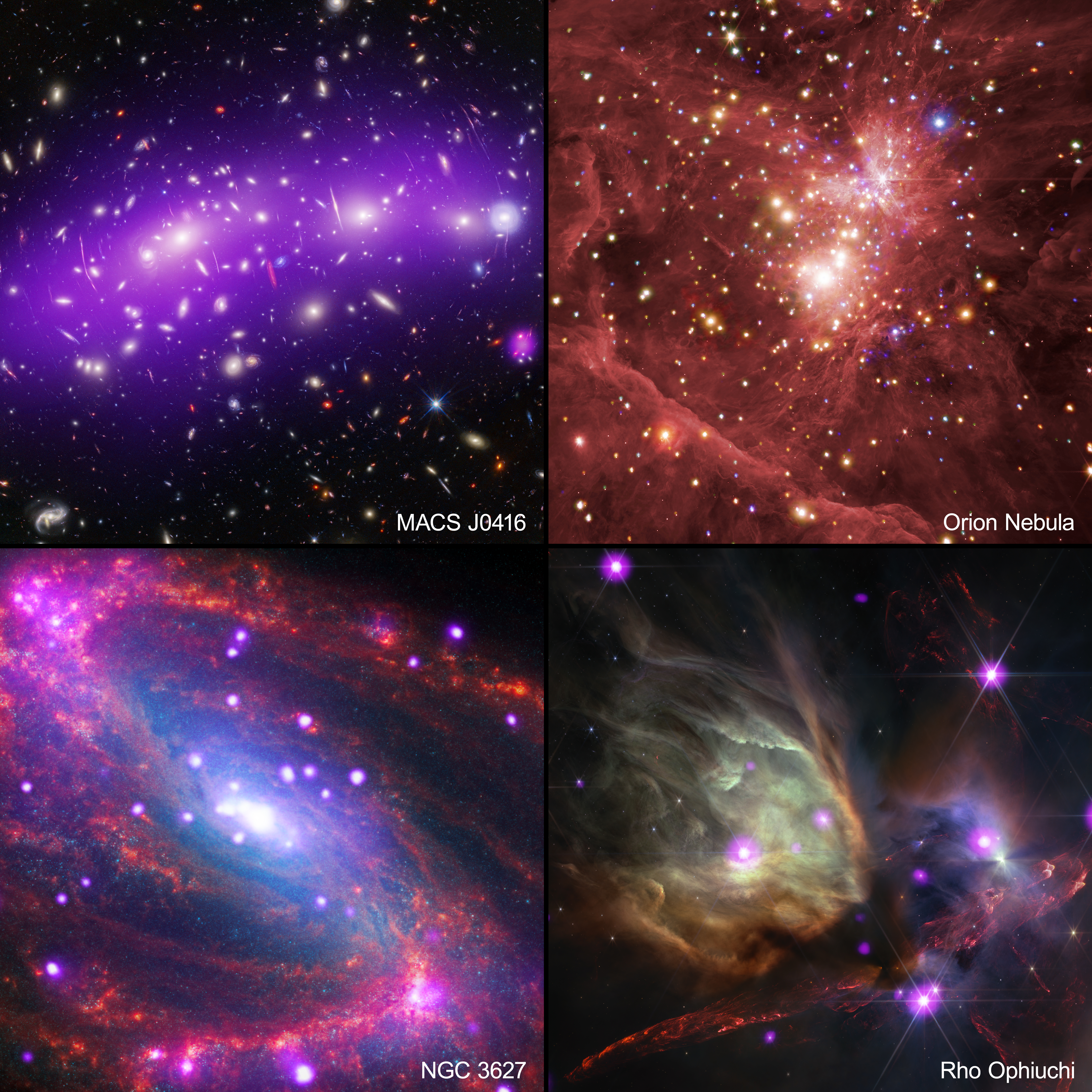
In each of the images, which add Chandra data to previously released Webb images, the colors represent different wavelengths of X-ray, optical, or infrared light.

Composite image of Rho OphiuchiThe first stop on this tour is the closest, Rho Ophiuchi, at a distance of about 390 light-years from Earth. Rho Ophiuchi is a cloud complex filled with gas and stars of different sizes and ages. Being one of the closest star-forming regions, Rho Ophiuchi is a great place for astronomers to study young stars. In this image, X-rays from Chandra are purple and reveal the hot, outer atmospheres of infant stars. Infrared data from Webb is red, yellow, cyan, light blue, and darker blue and provides views of the spectacular regions of gas and dust.

Composite image of the Orion NebulaThe next destination is the Orion Nebula, a giant cloud where stars are forming. Still located in the Milky Way galaxy, this region is a little bit farther from our home planet at about 1,500 light-years away. If you look just below the middle of the three stars that make up the “belt” in the constellation of Orion, you may be able to see this nebula through a small telescope. With Chandra and Webb, however, we get to see so much more. Chandra reveals young stars that glow brightly in X-rays, colored in red, green, and blue, while Webb shows the gas and dust in darker red that will help build the next generation of stars here.

Composite image of NGC 3627It's time to leave our galaxy and visit another at a much greater distance of some 36 million light-years away. Like the Milky Way, NGC 3627 is a spiral galaxy that we see at a slight angle. NGC 3627 is known as a “barred” spiral galaxy because of the rectangular shape of its central region. From our vantage point, we can also see two distinct spiral arms that appear as arcs. X-rays from Chandra in purple show evidence for a supermassive black hole in its center as well as other dense objects like neutron stars and black holes pulling in matter. Meanwhile Webb finds the dust, gas, and stars throughout the galaxy in red, green, and blue. This image also contains optical data from NASA’s Hubble Space Telescope in red, green, and blue.

Composite image of MACS J0416Our final landing place on this trip is the biggest and the farthest at a distance of about 4.3 billion light-years from Earth. MACS J0416 is a galaxy cluster, which are the largest objects in the universe held together by gravity. Galaxy clusters like this can contain hundreds or even thousands of individual galaxies all immersed in massive amounts of superheated gas that Chandra can detect. In this view, Chandra’s X-rays in purple show this reservoir of hot gas while Hubble and Webb pick up the individual galaxies in red, green, and blue. The long thin lines are caused by matter in the cluster distorting the light from galaxies behind MACS J0416 in a process known as gravitational lensing.

NASA's Marshall Space Flight Center manages the Chandra program. The Smithsonian Astrophysical Observatory's Chandra X-ray Center controls science from Cambridge Massachusetts and flight operations from Burlington, Massachusetts.


Visual Description:

This release features four distinct composite images from NASA’s Chandra X-ray Observatory and the James Webb Space Telescope, presented in a two-by-two grid.

At our lower right is Rho Ophiuchi, a cloud complex filled with gas, and dotted with stars. The murky green and gold cloud resembles a ghostly head in profile, swooping down from the upper left, trailing tendrils of hair. Cutting across the bottom edge and lower righthand corner of the image is a long, narrow, brick red cloud which resembles the ember of a stick pulled from a fire. Several large white stars dot the image. Many are surrounded by glowing neon purple rings, and gleam with diffraction spikes.

At our upper right of the grid is a peek into the heart of the Orion Nebula, which blankets the entire image. Here, the young star nursery resembles a dense, stringy, dusty rose cloud, peppered with thousands of glowing golden, white, and blue stars. Layers of cloud around the edges of the image, and a concentration of bright stars at its distant core, help convey the depth of the nebula.

In the lower left of the two-by-two grid is a hazy image of a spiral galaxy known as NGC 3627. Here, the galaxy appears pitched at an oblique angle, tilted from our upper left down to our lower right. Much of its face is angled toward us, making its spiral arms, composed of red and purple dots, easily identifiable. Several bright white dots ringed with neon purple speckle the galaxy. At the galaxy’s core, where the spiral arms converge, a large white and purple glow identified by Chandra provides evidence of a supermassive black hole.

At the upper left of the grid is an image of the distant galaxy cluster known as MACS J0416. Here, the blackness of space is packed with glowing dots and tiny shapes, in whites, purples, oranges, golds, and reds, each a distinct galaxy. Upon close inspection (and with a great deal of zooming in!) the spiraling arms of some of the seemingly tiny galaxies are revealed in this highly detailed image. Gently arched across the middle of the frame is a soft band of purple; a reservoir of superheated gas detected by Chandra.


Fast Facts for Rho Ophiuchi:

Credit: X-ray: NASA/CXC/MIT/C. Canizares; IR: NASA/ESA/CSA/STScI/K. Pontoppidan; Image Processing: NASA/ESA/STScI/Alyssa Pagan, NASA/CXC/SAO/L. Frattare and J. Major
Scale: About 6.4 arcmin (0.7 light-years) across.
Category: Normal Stars and Star Clusters
Coordinates (J2000): RA: 16h 25m 35.1s | Dec: -23° 26' 49.9"
Constellation: Ophiuchus
Observation Date(s): 10 observations from Mar 21, 2022 to July 30, 2022
Observation Time: 53 hours (2 days 5 hours)
Obs. IDs: 24672, 24759-24763, 26367, 26406, 26416, 26481
Instrument: ACIS
Color Code: X-ray: purple (Chandra), light blue (IXPE); Optical: yellow (Hubble)
Distance Estimate: About 390 light-years from Earth


Fast Facts for Orion (M42):

Credit: X-ray: NASA/CXC/SAO/E. Feigelson; IR: NASA/ESA/CSA/STScI; Image Processing:NASA/CXC/SAO/L. Frattare and J. Major
Scale: About 6.5 arcmin (2.8 light-years) across
Category: Normal Stars and Star Clusters
Coordinates (J2000): RA: 05h 35m 14.3s | Dec: -05° 23´ 37.9"
Constellation: Orion
Observation Date(s): 6 observations from Jan 8, 2003 to Jan 21, 2003
Observation Time: 233 hours (9 days and 17 hours)
Obs. IDs: 3498, 3744, 4373, 4374, 4395, 4396
Instrument: ACIS
Color Code: X-ray: red, green, blue; IR: red
Distance Estimate: About 1,500 light-years from Earth


Facts for NGC 3627:

Credit: X-ray: NASA/CXC/SAO; Optical: NASA/ESO/STScI, ESO/WFI; Infrared: NASA/ESA/CSA/STScI/JWST; Image Processing: NASA/CXC/SAO/J. Major
Scale: Image is about 3.4 arcmin (about 33,000 light-years) across
Category: Normal Galaxies
Coordinates (J2000): RA: 11h 20m 15.0s | Dec +12° 59' 30"
Constellation: Leo
Observation Date(s): March 31, 2008
Observation Time: 14 hours 10 min
Obs. IDs: 9548
Instrument: ACIS
Color Code: X-ray: purple/white; Optical: red, green, blue; Infrared: red, green, blue
Distance Estimate: About 34 million light-years


Facts for MACS J0416.1-2403:

Credit: X-ray: NASA/CXC/SAO/G. Ogrean et al.; Optical/Infrared: (Hubble) NASA/ESA/STScI; IR: (JWST) NASA/ESA/CSA/STScI/Jose M. Diego (IFCA), Jordan C. J. D'Silva (UWA), Anton M. Koekemoer (STScI), Jake Summers (ASU), Rogier Windhorst (ASU), Haojing Yan (University of Missouri)
Scale: Image is 3.4 arcmin across (About 3.6 million light-years)
Category: Groups & Clusters of Galaxies
Coordinates (J2000): RA: 04h 16m 9.9s | Dec: -24° 3' 58.0"
Constellation: Eridanus
Observation Date(s): 6 pointings between June 2009 and December 2014
Observation Time: 90 hours (3 days 18 hours 5 min)
Obs. IDs: 10446, 16236, 16237, 16304, 16523, 17313
Instrument: ACIS
Color Code: X-ray: purple; Optical/Infrared: (Hubble) blue, cyan, green; IR: (JWST) green, yellow, orange, red
Distance Estimate: 4.3 billion light-years (z=0.396)


Thursday, June 20, 2024

It’s Twins! Astronomers Discover Parallel Disks and Jets Erupting From a Pair of Young Stars

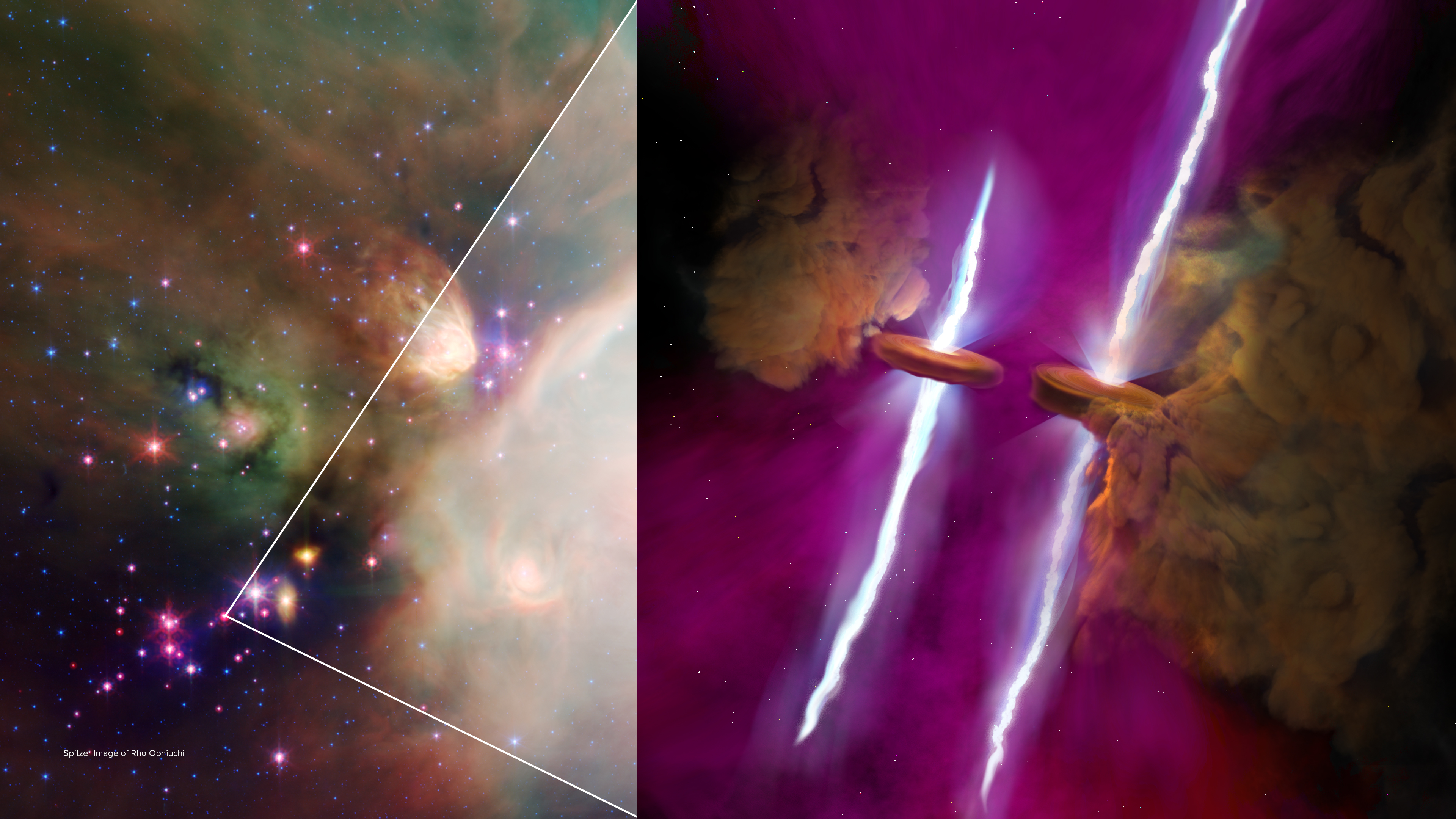
At left, a mid-infrared image of the rho Ophiuchi molecular cloud complex by NASA’s Spitzer Space Telescope, the focus pointing to star system WL20. At right, WL20 expands to reveal an artist’s impression of this new discovery. Astronomers couldn't believe their luck when observations across multiple radio and infrared wavelengths from ALMA and JWST revealed twin disks and jets erupting from a pair of young binary stars in WL20. Credit: U.S. NSF/ NSF NRAO/B. Saxton.; NASA/JPL-Caltech/Harvard-Smithsonian CfA. Hi-Res File

These brightly colored shapes represent astronomical data collected by NRAO's ALMA and NASA's JWST telescopes. At left, a composite image overlaps ALMA and JWST data revealing the discs and parallel jets emitting from the pair of binary stars in WL20. At right, the breakdown of the separate ALMA data, and JWST data representing various chemical compositions, is shown. Credit: U.S. NSF/ NSF NRAO/ ALMA(ESO/NAOJ/NRAO)/ NASA/ JPL-Caltech/ JWST/ B. Saxton. Hi-Res File


Telescopes from the U.S. National Science Foundation’s National Radio Astronomy Observatory and NASA’s Jet Propulsion Laboratory discover dynamic duo

Most of the Universe is invisible to the human eye. The building blocks of stars are only revealed in wavelengths that are outside of the visible spectrum. Astronomers recently used two very different, and very powerful, telescopes to discover twin disks—and twin parallel jets—erupting from young stars in a multiple star system. This discovery was unexpected, and unprecedented, given the age, size, and chemical makeup of the stars, disks, and jets. Their location in a known, well-studied part of the Universe adds to the thrill.

Observations from the U.S. National Science Foundation’s (NSF) National Radio Astronomy Observatory’s (NRAO) Atacama Large Millimeter/submillimeter Array (ALMA) and NASA’s James Webb Space Telescope’s (JWST) Mid-Infrared Instrument (MIRI) were combined for this research.

ALMA and JWST’s MIRI observe very different parts of the electromagnetic spectrum. Using them together allowed astronomers to discover these twins, hidden in radio and infrared wavelengths in star system WL20, located in the nearby rho Ophiuchi molecular cloud complex, over 400 light years away from the Earth’s Solar System.

“What we discovered was absolutely wild,” shares astronomer Mary Barsony, “We’ve known about star system WL20 for a long time. But what caught our attention is that one of the stars in the system appeared much younger than the rest. Using MIRI and ALMA together, we actually saw that this ONE star was TWO stars right next to each other. Each of these stars was surrounded by a disk, and each disc was emitting jets parallel to the other.”

ALMA spotted the discs, while MIRI found the jets. Co-author Valentin J.M. Le Gouellec of NASA-ARC retrieved and reduced ALMA archival data to reveal the discs’ composition, while Lukasz Tychoniec of Leiden Observatory provided high-resolution images, revealing the discs massive size, approximately 100 times the distance between the Earth and the Sun. Another co-author, Martijn L. van Gelder, provided resources to process the data collected by MIRI, revealing the chemical makeup of the jets.
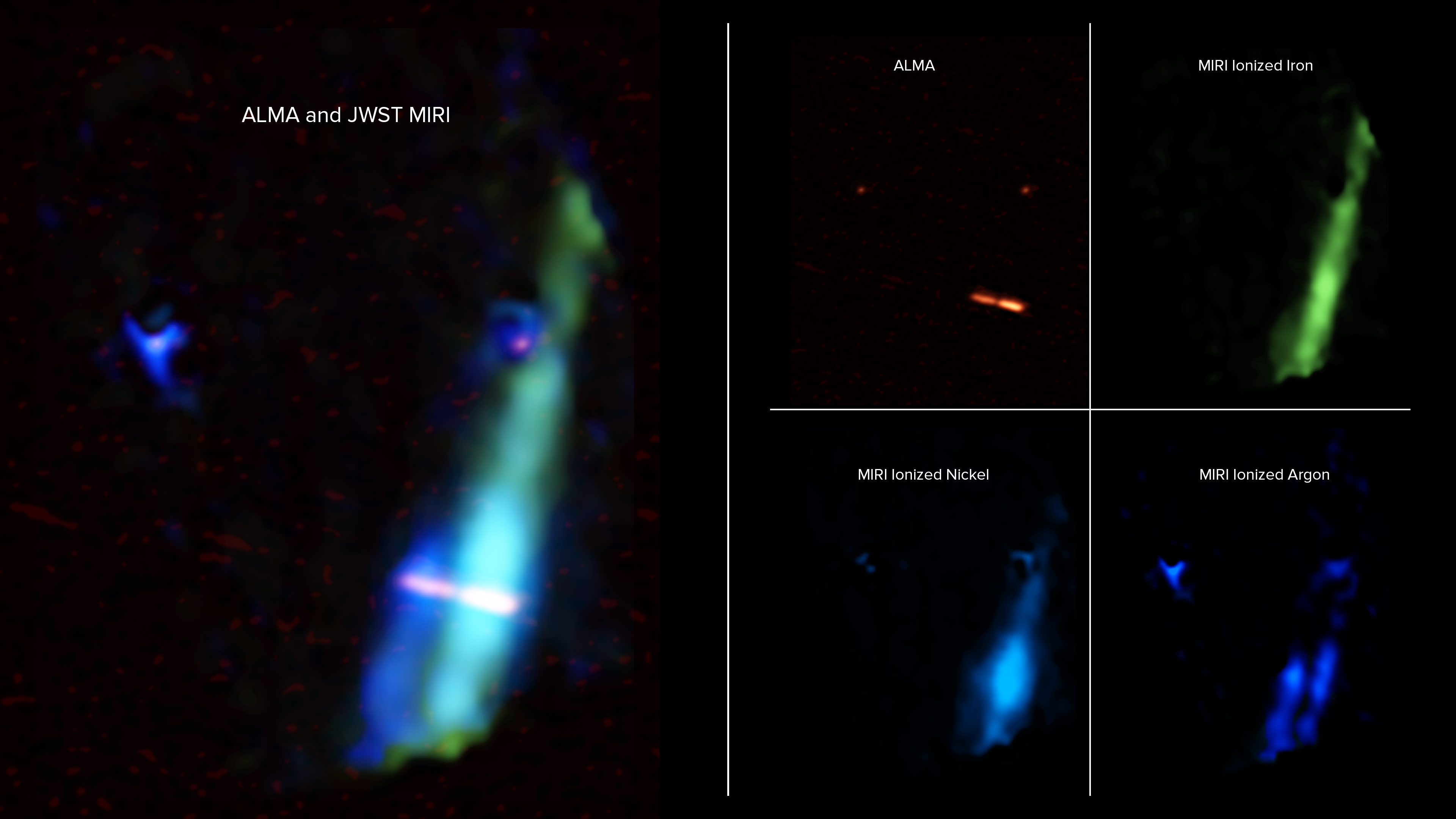
Adds Barsony, “So if it weren’t for MIRI, we wouldn’t even know that these jets existed, which is amazing.” ALMA’s high resolution observations of the disks surrounding the two newly observed stars revealed the disks’ structure, as Barsony explains,“Someone looking at this ALMA data not knowing there were twin jets would think, oh, it’s a large edge on disk with a central hole, instead of two edge on disks and two jets. That’s pretty remarkable.”

Another remarkable thing about this discovery is that it may never have had the opportunity to happen. Explains JPL scientist Michael Ressler, “A lot of the research about binary protostars focuses on a few nearby star forming regions. I had been awarded some observing time of my own with JWST, and I chose to split it into a few small projects. For one project, I decided to study binaries in the Perseus star forming region. However, I had been studying WL20, which is in the rho Ophiuchus region in nearly the opposite part of the sky, for nearly 30 years, and I thought, ‘why not sneak it in? I’m never going to get another chance, even if it doesn’t quite fit with the others.’ We had a very fortunate accident with what we found, and the results are stunning.”

By combining multi-wavelength data from ALMA and JWST, these new findings shed light on the complex processes involved in the formation of multiple star systems. Astronomers plan to utilize ALMA’s future upgraded capabilities, like the Wideband Sensitivity Upgrade, to continue unraveling the mysteries surrounding the birth of stars and planetary systems.


About ALMA & NRAO

The Atacama Large Millimeter/submillimeter Array (ALMA), an international astronomy facility, is a partnership of the European Southern Observatory (ESO), the U.S. National Science Foundation (NSF) and the National Institutes of Natural Sciences (NINS) of Japan in cooperation with the Republic of Chile. ALMA is funded by ESO on behalf of its Member States, by NSF in cooperation with the National Research Council of Canada (NRC) and the National Science and Technology Council (NSTC) in Taiwan and by NINS in cooperation with the Academia Sinica (AS) in Taiwan and the Korea Astronomy and Space Science Institute (KASI).

ALMA construction and operations are led by ESO on behalf of its Member States; by the National Radio Astronomy Observatory (NRAO), managed by Associated Universities, Inc. (AUI), on behalf of North America; and by the National Astronomical Observatory of Japan (NAOJ) on behalf of East Asia. The Joint ALMA Observatory (JAO) provides the unified leadership and management of the construction, commissioning and operation of ALMA.

The NRAO is a facility of the U.S. National Science Foundation, operated under cooperative agreement by Associated Universities, Inc.

About JWST

The James Webb Space Telescope is the world’s premier space science observatory. Webb is solving mysteries in our solar system, looking beyond to distant worlds around other stars, and probing the mysterious structures and origins of our universe and our place in it. Webb is an international program led by NASA with its partners, ESA (European Space Agency) and CSA (Canadian Space Agency).


Thursday, July 13, 2023

Webb Celebrates First Year of Science With Close-up on Birth of Sun-like Stars

Rho Ophiuchi (NIRCam Image)
Credits Image: NASA, ESA, CSA, STScI, Klaus Pontoppidan (STScI)
Image Processing: Alyssa Pagan (STScI)


From our cosmic backyard in the solar system to distant galaxies near the dawn of time, NASA’s James Webb Space Telescope has delivered on its promise of revealing the universe like never before in its first year of science operations. To celebrate the completion of a successful first year, NASA has released Webb’s image of a small star-forming region in the Rho Ophiuchi cloud complex.

“In just one year, the James Webb Space Telescope has transformed humanity’s view of the cosmos, peering into dust clouds and seeing light from faraway corners of the universe for the very first time. Every new image is a new discovery, empowering scientists around the globe to ask and answer questions they once could never dream of,” said NASA Administrator Bill Nelson. “Webb is an investment in American innovation but also a scientific feat made possible with NASA’s international partners that share a can-do spirit to push the boundaries of what is known to be possible. Thousands of engineers, scientists, and leaders poured their life’s passion into this mission, and their efforts will continue to improve our understanding of the origins of the universe – and our place in it.”

The new Webb image released today features the nearest star-forming region to us. Its proximity at 390 light-years allows for a highly detailed close-up, with no foreground stars in the intervening space.

“On its first anniversary, the James Webb Space Telescope has already delivered upon its promise to unfold the universe, gifting humanity with a breathtaking treasure trove of images and science that will last for decades,” said Nicola Fox, associate administrator of NASA’s Science Mission Directorate in Washington. “An engineering marvel built by the world’s leading scientists and engineers, Webb has given us a more intricate understanding of galaxies, stars, and the atmospheres of planets outside of our solar system than ever before, laying the groundwork for NASA to lead the world in a new era of scientific discovery and the search for habitable worlds.”

Webb’s image shows a region containing approximately 50 young stars, all of them similar in mass to the Sun, or smaller. The darkest areas are the densest, where thick dust cocoons still-forming protostars. Huge bipolar jets of molecular hydrogen, represented in red, dominate the image, appearing horizontally across the upper third and vertically on the right. These occur when a star first bursts through its natal envelope of cosmic dust, shooting out a pair of opposing jets into space like a newborn first stretching her arms out into the world. In contrast, the star S1 has carved out a glowing cave of dust in the lower half of the image. It is the only star in the image that is significantly more massive than the Sun.

“Webb’s image of Rho Ophiuchi allows us to witness a very brief period in the stellar lifecycle with new clarity. Our own Sun experienced a phase like this, long ago, and now we have the technology to see the beginning of another star’s story,” said Klaus Pontoppidan, who served as Webb project scientist at the Space Telescope Science Institute in Baltimore, Maryland, since before the telescope’s launch and through the first year of operations.

Some stars in the image display tell-tale shadows indicating protoplanetary disks – potential future planetary systems in the making. Discover more details in the image video tour, or explore yourself in the zoomable image.

A Full Year, Across the Full Sky

From its very first deep field image , unveiled by President Joe Biden, Vice President Kamala Harris, and Nelson live at the White House, Webb has delivered on its promise to show us more of the universe than ever before. However, Webb revealed much more than distant galaxies in the early universe.

“The breadth of science Webb is capable of exploring really becomes clear now, when we have a full year’s worth of data from targets across the sky,” said Eric Smith, associate director for research in the Astrophysics Division at NASA Headquarters and Webb program scientist. “Webb’s first year of science has not only taught us new things about our universe, but it has revealed the capabilities of the telescope to be greater than our expectations, meaning future discoveries will be even more amazing.” The global astronomy community has spent the past year excitedly poring over Webb’s initial public data and getting a feel for how to work with it.

Beyond the stunning infrared images, what really has scientists excited are Webb’s crisp spectra – the detailed information that can be gleaned from light by the telescope’s spectroscopic instruments. Webb’s spectra have confirmed the distances of some of the farthest galaxies ever observed, and have discovered the earliest, most distant supermassive black holes. They have identified the compositions of planet atmospheres (or lack thereof) with more detail than ever before, and have narrowed down what kinds of atmospheres may exist on rocky exoplanets for the first time. They also have revealed the chemical makeup of stellar nurseries and protoplanetary disks, detecting water, organic carbon-containing molecules, and more. Already, Webb observations have resulted in hundreds of scientific papers answering longstanding questions and raising new ones to address with Webb.

The breadth of Webb science is also apparent in its observations of the region of space we are most familiar with – our own solar system. Faint rings of gas giants appear out of the darkness, dotted by moons, while in the background Webb shows distant galaxies. By comparing detections of water and other molecules in our solar system with those found in the disks of other, much younger planetary systems, Webb is helping to build up clues about our own origins – how Earth became the ideal place for life as we know it.

"With a year of science under our belts, we know exactly how powerful this telescope is, and have delivered a year of spectacular data and discoveries,” said Webb senior project scientist Jane Rigby of the Goddard Space Flight Center. “We've selected an ambitious set of observations for year two that builds on everything we've learned so far. Webb's science mission is just getting started – there's so much more to come."

The James Webb Space Telescope is the world's premier space science observatory. Webb is solving mysteries in our solar system, looking beyond to distant worlds around other stars, and probing the mysterious structures and origins of our universe and our place in it. Webb is an international program led by NASA with its partners, ESA (European Space Agency) and the Canadian Space Agency.


About This Release

Credits:

Media Contact:

Leah Ramsay
Space Telescope Science Institute, Baltimore, Maryland

Christine Pulliam
Space Telescope Science Institute, Baltimore, Maryland

Permissions: Content Use Policy

Contact Us:
Direct inquiries to the News Team.


Tuesday, April 12, 2022

Taking a Closer Look at SPRITEs with Hubble


Infrared images, like this one of Messier 81 from the Spitzer Space Telescope, can give us a glimpse into the cool, dusty regions of galaxies near and far. Credit: NASA/JPL-Caltech


An infrared survey of nearby galaxies revealed outbursting objects that defied existing classifications. Now, new optical observations with Hubble investigate whether these unusual objects are more than meets the (infrared) eye.


Young stellar objects in dusty nebulae, like those in the Rho Ophiuchi cloud complex shown here, are a potential source of the SPRITEs discovered by SPIRITS. Credits:
NASA/JPL-Caltech/UCLA

A Spirited Survey

From 2014 to 2019, a team of astronomers carried out the first large-scale survey of variable objects at infrared wavelengths in nearby galaxies. The SPitzer InfraRed Intensive Transients Survey (SPIRITS) discovered a curious class of outbursting objects, dubbed eSPecially Red Intermediate-luminosity Transient Events (SPRITEs), which are more luminous than novae but less luminous than supernovae and have outbursts that last anywhere from days to years.

Unlike other types of infrared transients, which flare into view at optical wavelengths during an outburst, SPRITEs remain hidden or extremely faint at wavelengths shorter than infrared even when they’re at their brightest. What might these SPRITEs be — supernovae cloaked in clouds of dust, young stars in natal nebulae, or something else entirely?


Spitzer light curves for three of the objects studied. Blue symbols indicate 4.5-micron measurements and red symbols indicate 3.6-micron measurements. The remaining symbols indicate upper limits.  Credit: Adapted from Bond et al. 2022


Diving Deep with Hubble

In a new publication led by Howard Bond (Penn State University and Space Telescope Science Institute), a team of astronomers performed deep optical and near-infrared imaging with the Hubble Space Telescope to take a closer look at 21 SPIRITS targets, most of which were classified as SPRITEs. Their goal was to detect optical counterparts for these infrared transients and characterize their environments in order to identify the source of the outbursts.

Many of the targets were still not detected in the Hubble observations, but observations of their surroundings yielded new insights into their identities. What’s more, the team continued to monitor the targets with Spitzer, leading to entirely new classifications for many of the objects: of the 21 supposed transients, only three retained that moniker, while a dozen others were discovered to have periodic behavior, and six were found to vary irregularly. How has this affected our understanding of the SPIRITS targets and SPRITEs specifically?


Hubble images of the site of SPRITE 17fe, which is marked with a red cross in the top image. The middle row shows a zoomed-in view of the site years before the outburst in three different wavelength bands. The bottom row shows the same field during an outburst — 0.8 years after the peak — in two near-infrared bands. Credits: Bond et al. 2022


From Transient to Periodic

Two of the three remaining SPRITEs were located in star-forming regions, suggesting that they are associated with massive stars, though one was found in a region with predominantly old stars and is like

ly a classical nova shrouded in dust. Thus, SPRITEs can have many causes; merging massive stars, dusty supernovae, and eruptions of bright variable stars are all possibilities. The objects found to vary periodically did so over extremely long timescales (from 670 to more than 2,100 days) and tended to be found near star-forming regions. Comparison with known types of variable stars indicates that these slowly varying sources are likely dusty, evolved giant stars with masses in the 5–10 solar-mass range. The irregular variables detected in Hubble images might be pulsating red supergiants, while the redder variables undetected at Hubble wavelengths might be associated with mass-loss events of extremely dusty luminous blue variable stars.

There’s still much to learn about the dusty objects identified by SPIRITS. Infrared spectroscopy is likely to illuminate the nature of these sources and luckily, JWST and future observatories like the Roman Space Telescope should be more than equal to the task. For a detailed discussion of each target studied by Bond and collaborators, be sure to check out the full article cited below!

Citation

“Hubble Space Telescope Imaging of Luminous Extragalactic Infrared Transients and Variables from the Spitzer Infrared Intensive Transients Survey,” Howard E. Bond et al 2022 ApJ 928 158. doi:10.3847/1538-4357/ac5832


Thursday, December 23, 2021

ESO telescopes help uncover largest group of rogue planets yet

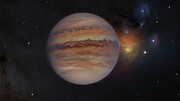
Artist’s impression of a rogue planet in Rho Ophiuchi 
 
The faint red glow of a rogue planet
 
PR Image eso2120c
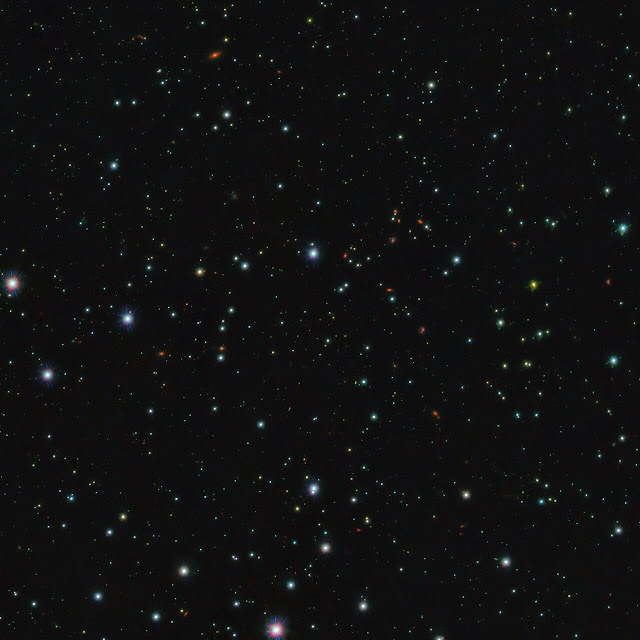
Locations of the rogue planets found


Videos

Rogue planets uncovered (ESOcast 249 Light)
Rogue planets uncovered (ESOcast 249 Light) 
 
Artist’s animation of a rogue planet in Rho Ophiuchi
Artist’s animation of a rogue planet in Rho Ophiuchi 
 
Zooming into a rogue planet


Rogue planets are elusive cosmic objects that have masses comparable to those of the planets in our Solar System but do not orbit a star, instead roaming freely on their own. Not many were known until now, but a team of astronomers, using data from several European Southern Observatory (ESO) telescopes and other facilities, have just discovered at least 70 new rogue planets in our galaxy. This is the largest group of rogue planets ever discovered, an important step towards understanding the origins and features of these mysterious galactic nomads.

“We did not know how many to expect and are excited to have found so many,” says Núria Miret-Roig, an astronomer at the Laboratoire d’Astrophysique de Bordeaux, France and the University of Vienna, Austria, and the first author of the new study published today in Nature Astronomy.

Rogue planets, lurking far away from any star illuminating them, would normally be impossible to image. However, Miret-Roig and her team took advantage of the fact that, in the few million years after their formation, these planets are still hot enough to glow, making them directly detectable by sensitive cameras on large telescopes. They found at least 70 new rogue planets with masses comparable to Jupiter’s in a star-forming region close to our Sun, located within the Scorpius and Ophiuchus constellations [1].

To spot so many rogue planets, the team used data spanning about 20 years from a number of telescopes on the ground and in space. “We measured the tiny motions, the colours and luminosities of tens of millions of sources in a large area of the sky,” explains Miret-Roig. “These measurements allowed us to securely identify the faintest objects in this region, the rogue planets.”

The team used observations from ESO’s Very Large Telescope (VLT), the Visible and Infrared Survey Telescope for Astronomy (VISTA), the VLT Survey Telescope (VST) and the MPG/ESO 2.2-metre telescope located in Chile, along with other facilities. “The vast majority of our data come from ESO observatories, which were absolutely critical for this study. Their wide field of view and unique sensitivity were keys to our success,” explains Hervé Bouy, an astronomer at the Laboratoire d’Astrophysique de Bordeaux, France, and project leader of the new research. “We used tens of thousands of wide-field images from ESO facilities, corresponding to hundreds of hours of observations, and literally tens of terabytes of data.”

The team also used data from the European Space Agency’s Gaia satellite, marking a huge success for the collaboration of ground- and space-based telescopes in the exploration and understanding of our Universe.

The study suggests there could be many more of these elusive, starless planets that we have yet to discover. “There could be several billions of these free-floating giant planets roaming freely in the Milky Way without a host star,” Bouy explains.

By studying the newly found rogue planets, astronomers may find clues to how these mysterious objects form. Some scientists believe rogue planets can form from the collapse of a gas cloud that is too small to lead to the formation of a star, or that they could have been kicked out from their parent system. But which mechanism is more likely remains unknown.

Further advances in technology will be key to unlocking the mystery of these nomadic planets. The team hopes to continue to study them in greater detail with ESO’s forthcoming Extremely Large Telescope (ELT), currently under construction in the Chilean Atacama Desert and due to start observations later this decade. “These objects are extremely faint and little can be done to study them with current facilities,” says Bouy. “The ELT will be absolutely crucial to gathering more information about most of the rogue planets we have found.”


Notes

[1] The exact number of rogue planets found by the team is hard to pin down because the observations don’t allow the researchers to measure the masses of the probed objects. Objects with masses higher than about 13 times the mass of Jupiter are most likely not planets, so they cannot be included in the count. However, since the team didn’t have values for the mass, they had to rely on studying the planets’ brightness to provide an upper limit to the number of rogue planets observed. The brightness is, in turn, related to the age of the planets themselves, as the older the planet, the longer it has been cooling down and reducing in brightness. If the studied region is old, then the brightest objects in the sample are likely above 13 Jupiter masses, and below if the region is on the younger side. Given the uncertainty in the age of the study region, this method gives a rogue planet count of between 70 and 170. 


More Information

This research was presented in the paper “A rich population of free-floating planets in the Upper Scorpius young stellar association” to appear in Nature Astronomy (DOI: 10.1038/s41550-021-01513-x). It has received funding from the European Research Council (ERC) under the European Union’s Horizon 2020 research and innovation programme (grant agreement No 682903, P.I. H. Bouy), and from the French State in the framework of the ”Investments for the Future” Program, IdEx Bordeaux, reference ANR-10-IDEX-03-02.

The team is composed of Núria Miret-Roig (Laboratoire d’Astrophysique de Bordeaux, Univ. Bordeaux, CNRS, France [LAB]; University of Vienna, Department of Astrophysics, Austria), Hervé Bouy (LAB), Sean N. Raymond (LAB), Motohide Tamura (Department of Astronomy, Graduate School of Science, The University of Tokyo, Japan; Astrobiology Center, National Institutes of Natural Sciences, Tokyo, Japan [ABC-NINS]), Emmanuel Bertin (CNRS, UMR 7095, Institut d’Astrophysique de Paris,France [IAP]; Sorbonne Université, IAP, France) David Barrado (Centro de Astrobiología [CSIC-INTA], Depto. de Astrofísica, ESAC Campus, Spain), Javier Olivares (LAB), Phillip Galli (LAB), Jean-Charles Cuillandre (AIM, CEA, CNRS, Université Paris-Saclay, Université de Paris, France), Luis Manuel Sarro (Depto. de Inteligencia Artificial, UNED, Spain) Angel Berihuete (Depto. Estadística e Investigación Operativa, Universidad de Cádiz, Spain) & Nuria Huélamo (CSIC-INTA).

The European Southern Observatory (ESO) enables scientists worldwide to discover the secrets of the Universe for the benefit of all. We design, build and operate world-class observatories on the ground — which astronomers use to tackle exciting questions and spread the fascination of astronomy — and promote international collaboration in astronomy. Established as an intergovernmental organisation in 1962, today ESO is supported by 16 Member States (Austria, Belgium, the Czech Republic, Denmark, France, Finland, Germany, Ireland, Italy, the Netherlands, Poland, Portugal, Spain, Sweden, Switzerland and the United Kingdom), along with the host state of Chile and with Australia as a Strategic Partner. ESO’s headquarters and its visitor centre and planetarium, the ESO Supernova, are located close to Munich in Germany, while the Chilean Atacama Desert, a marvellous place with unique conditions to observe the sky, hosts our telescopes. ESO operates three observing sites: La Silla, Paranal and Chajnantor. At Paranal, ESO operates the Very Large Telescope and its Very Large Telescope Interferometer, as well as two survey telescopes, VISTA working in the infrared and the visible-light VLT Survey Telescope. Also at Paranal ESO will host and operate the Cherenkov Telescope Array South, the world’s largest and most sensitive gamma-ray observatory. Together with international partners, ESO operates APEX and ALMA on Chajnantor, two facilities that observe the skies in the millimetre and submillimetre range. At Cerro Armazones, near Paranal, we are building “the world’s biggest eye on the sky” — ESO’s Extremely Large Telescope. From our offices in Santiago, Chile we support our operations in the country and engage with Chilean partners and society.


Links
Contacts:

Núria Miret-Roig
Department of Astrophysics, University of Vienna
Vienna, Austria
Tel: +43 1427753845
Email:
nuria.miret.roig@univie.ac.at

Hervé Bouy
Laboratoire d'Astrophysique de Bordeaux, Université de Bordeaux
Pessac, France
Tel: +33 5 40 00 32 94
Email:
herve.bouy@u-bordeaux.fr

Bárbara Ferreira
ESO Media Manager
Garching bei München, Germany
Tel: +49 89 3200 6670
Cell: +49 151 241 664 00
Email:
press@eso.org


Source: ESO/News


Tuesday, October 03, 2017

ALMA and Rosetta Detect Freon-40 in Space

ALMA and Rosetta Detect Freon-40 in Space

ROSINA on Rosetta finds Freon-40 at Comet 67P/Churyumov–Gerasimenko

IRAS 16293-2422 in the constellation of Ophiuchus

The Rho Ophiuchi star formation region in the constellation of Ophiuchus

ALMA and Rosetta Detect Freon-40 in Space


Videos
 
Zooming in on the Rho Ophiuchi star formation region


 Dashing Hopes that Molecule May be Marker of Life

Observations made with the Atacama Large Millimeter/submillimeter Array (ALMA) and ESA’s Rosetta mission, have revealed the presence of the organohalogen Freon-40 in gas around both an infant star and a comet. Organohalogens are formed by organic processes on Earth, but this is the first ever detection of them in interstellar space. This discovery suggests that organohalogens may not be as good markers of life as had been hoped, but that they may be significant components of the material from which planets form. This result, which appears in the journal Nature Astronomy, underscores the challenge of finding molecules that could indicate the presence of life beyond Earth.

Using data captured by ALMA in Chile and from the ROSINA instrument on ESA’s Rosetta mission, a team of astronomers has found faint traces of the chemical compound Freon-40 (CH3Cl), also known as methyl chloride and chloromethane, around both the infant star system IRAS 16293-2422 [1], about 400 light-years away, and the famous comet 67P/Churyumov-Gerasimenko (67P/C-G) in our own Solar System. The new ALMA observation is the first detection ever of a stable organohalogen in interstellar space [2].

Organohalogens consist of halogens, such as chlorine and fluorine, bonded with carbon and sometimes other elements. On Earth, these compounds are created by some biological processes — in organisms ranging from humans to fungi —  as well as by industrial processes such as the production of dyes and medical drugs [3].

This new discovery of one of these compounds, Freon-40, in places that must predate the origin of life, can be seen as a disappointment, as earlier research had suggested that these molecules could indicate the presence of life.

“Finding the organohalogen Freon-40 near these young, Sun-like stars was surprising,” said Edith Fayolle, a researcher with the Harvard-Smithsonian Center for Astrophysics in Cambridge, Massachusetts in the USA, and lead author of the new paper. “We simply didn't predict its formation and were surprised to find it in such significant concentrations. It’s clear now that these molecules form readily in stellar nurseries, providing insights into the chemical evolution of planetary systems, including our own.”

Exoplanet research has gone beyond the point of finding planets — more than 3000 exoplanets are now known — to looking for chemical markers that might indicate the potential presence of life. A vital step is determining which molecules could indicate life, but establishing reliable markers remains a tricky process.

“ALMA’s discovery of organohalogens in the interstellar medium also tells us something about the starting conditions for organic chemistry on planets. Such chemistry is an important step toward the origins of life,” adds Karin Öberg, a co-author on the study. “Based on our discovery, organohalogens are likely to be a constituent of the so-called ‘primordial soup’, both on the young Earth and on nascent rocky exoplanets.”

This suggests that astronomers may have had things around the wrong way; rather than indicating the presence of existing life, organohalogens may be an important element in the little-understood chemistry involved in the origin of life.

Co-author Jes Jørgensen from the Niels Bohr Institute at University of Copenhagen adds: "This result shows the power of ALMA to detect molecules of astrobiological interest toward young stars on scales where planets may be forming. Using ALMA we have previously found precursors to sugars and amino acids around different stars. The additional discovery of Freon-40 around Comet 67P/C-G strengthens the links between the pre-biological chemistry of distant protostars and our own Solar System."

The astronomers also compared the relative amounts of Freon-40 that contain different isotopes of chlorine in the infant star system and the comet — and found similar abundances. This supports the idea that a young planetary system can inherit the chemical composition of its parent star-forming cloud and opens up the possibility that organohalogens could arrive on planets in young systems during planet formation or via comet impacts.

“Our results shows that we still have more to learn about the formation of organohalogens,” concludes Fayolle. “Additional searches for organohalogens around other protostars and comets need to be undertaken to help find the answer.”


Notes


[1] This protostar is a binary star system surrounded by a molecular cloud in the Rho Ophiuchi star-forming region, which makes it an excellent target for ALMA’s millimetre/submillimetre view.

[2] The data used were from the ALMA Protostellar Interferometric Line Survey (PILS). The aim of this survey is to chart the chemical complexity of IRAS 16293-2422 by imaging the full wavelength range covered by ALMA in the 0.8-millimetre atmospheric window on very small scales, equivalent to the size of the Solar System.

The species CF+, which could be considered as an organohalogen, had already been detected, but is not stable.

[3] Freons were widely used as a refrigerants (hence the name) but are now banned as they have a destructive effect on the Earth’s protective ozone layer.


More Information

This research was presented in a paper “Protostellar and Cometary Detections of Organohalogens” by E. Fayolle et al., to appear in Nature Astronomy on 2 October 2017.


The team is composed of Edith C. Fayolle (Harvard-Smithsonian Center for Astrophysics, USA), Karin I. Öberg (Harvard-Smithsonian Center for Astrophysics, USA),  Jes K. Jørgensen (University of Copenhagen, Denmark), Kathrin Altwegg (University of Bern, Switzerland),  Hannah Calcutt (University of Copenhagen, Denmark), Holger S. P. Müller (Universität zu Köln, Germany), Martin Rubin (University of Bern, Switzerland), Matthijs H. D. van der Wiel (The Netherlands Institute for Radio Astronomy, The Netherlands), Per Bjerkeli (Onsala Space Observatory, Sweden), Tyler L. Bourke (Jodrell Bank Observatory, UK), Audrey Coutens (University College London, UK), Ewine F. van Dishoeck (Leiden University, The Netherlands; Max-Planck-Institut für extraterrestrische Physik, Germany), Maria N. Drozdovskaya (University of Bern, Switzerland), Robin T. Garrod (University of Virginia, USA), Niels F. W. Ligterink (Leiden University, The Netherlands), Magnus V. Persson (Onsala Space Observatory, Sweden), Susanne F. Wampfler (University of Bern, Switzerland) and the ROSINA team.


The Atacama Large Millimeter/submillimeter Array (ALMA), an international astronomy facility, is a partnership of ESO, the U.S. National Science Foundation (NSF) and the National Institutes of Natural Sciences (NINS) of Japan in cooperation with the Republic of Chile. ALMA is funded by ESO on behalf of its Member States, by NSF in cooperation with the National Research Council of Canada (NRC) and the National Science Council of Taiwan (NSC) and by NINS in cooperation with the Academia Sinica (AS) in Taiwan and the Korea Astronomy and Space Science Institute (KASI).


ALMA construction and operations are led by ESO on behalf of its Member States; by the National Radio Astronomy Observatory (NRAO), managed by Associated Universities, Inc. (AUI), on behalf of North America; and by the National Astronomical Observatory of Japan (NAOJ) on behalf of East Asia. The Joint ALMA Observatory (JAO) provides the unified leadership and management of the construction, commissioning and operation of ALMA.


ESO is the foremost intergovernmental astronomy organisation in Europe and the world’s most productive ground-based astronomical observatory by far. It is supported by 16 countries: Austria, Belgium, Brazil, the Czech Republic, Denmark, France, Finland, Germany, Italy, the Netherlands, Poland, Portugal, Spain, Sweden, Switzerland and the United Kingdom, along with the host state of Chile. ESO carries out an ambitious programme focused on the design, construction and operation of powerful ground-based observing facilities enabling astronomers to make important scientific discoveries. ESO also plays a leading role in promoting and organising cooperation in astronomical research. ESO operates three unique world-class observing sites in Chile: La Silla, Paranal and Chajnantor. At Paranal, ESO operates the Very Large Telescope and its world-leading Very Large Telescope Interferometer as well as two survey telescopes, VISTA working in the infrared and the visible-light VLT Survey Telescope. ESO is also a major partner in two facilities on Chajnantor, APEX and ALMA, the largest astronomical project in existence. And on Cerro Armazones, close to Paranal, ESO is building the 39-metre Extremely Large Telescope, the ELT, which will become “the world’s biggest eye on the sky”.


Links


Contacts

Edith Fayolle
Harvard-Smithsonian Center for Astrophysics
Cambridge, Massachusetts, USA
Email: fayolle@cfa.harvard.edu

Jes K. Jørgensen
Niels Bohr Institute, University of Copenhagen
Copenhagen, Denmark
Tel: +45 4250 9970
Email: jeskj@nbi.dk

Ewine van Dishoeck
Leiden Observatory
Leiden, Netherlands
Tel: +31 71 5275814
Email: ewine@strw.leidenuniv.nl

Richard Hook
ESO Public Information Officer
Garching bei München, Germany
Tel: +49 89 3200 6655
Cell: +49 151 1537 3591
Email: rhook@eso.org


Source: ESO/News