Showing posts with label Doppler Effect. Show all posts

Saturday, July 13, 2024

NASA's Hubble Traces Dark Matter in Dwarf Galaxy Using Stellar Motions

Draco Dwarf Spheroidal
Credits: Science: NASA, ESA, Eduardo Vitral (STScI), Roeland van der Marel (STScI), Sangmo Tony Sohn (STScI), DSS. Image Processing: Joseph DePasquale (STScI)


The qualities and behavior of dark matter, the invisible "glue" of the universe, continue to be shrouded in mystery. Though galaxies are mostly made of dark matter, understanding how it is distributed within a galaxy offers clues to what this substance is, and how it's relevant to a galaxy's evolution.

While computer simulations suggest dark matter should pile up in a galaxy's center, called a density cusp, many previous telescopic observations have indicated that it is instead more evenly dispersed throughout a galaxy. The reason for this tension between model and observation continues to puzzle astronomers, reinforcing the mystery of dark matter.

A team of astronomers has turned toward NASA's Hubble Space Telescope to try and clarify this debate by measuring the dynamic motions of stars within the Draco dwarf galaxy, a system located roughly 250,000 light-years from Earth. Using observations that spanned 18 years, they succeeded in building the most accurate three-dimensional understanding of stars' movements within the diminutive galaxy. This required scouring nearly two decades of Hubble archival observations of the Draco galaxy.

"Our models tend to agree more with a cusp-like structure, which aligns with cosmological models," said Eduardo Vitral of the Space Telescope Science Institute (STScI) in Baltimore and lead author of the study. "While we cannot definitively say all galaxies contain a cusp-like dark matter distribution, it's exciting to have such well measured data that surpasses anything we've had before."

Charting the Movements of Stars

To learn about dark matter within a galaxy, scientists can look to its stars and their movements that are dominated by the pull of dark matter. A common approach to measure the speed of objects moving in space is by the Doppler Effect – an observed change of the wavelength of light if a star is approaching or receding from Earth. Although this line-of-sight velocity can provide valuable insight, only so much can be gleaned from this one-dimensional source of information.

Besides moving closer or further away from us, stars also move across the sky, measured as their proper motion. By combining line-of-sight velocity with proper motions, the team created an unprecedented analysis of the stars' 3D movements.

"Improvements in data and improvements in modeling usually go hand in hand," explained Roeland van der Marel of STScI, a co-author of the paper who initiated the study more than 10 years ago. "If you don't have very sophisticated data or only one-dimensional data, then relatively straightforward models can often fit. The more dimensions and complexity of data you gather, the more complex your models need to be to truly capture all the subtleties of the data."

A Scientific Marathon (Not a Sprint)

Since dwarf galaxies are known to have a higher proportion of dark matter content than other types of galaxies, the team honed in on the Draco dwarf galaxy, which is a relatively small and spheroidal nearby satellite of the Milky Way galaxy.

"When measuring proper motions, you note the position of a star at one epoch and then many years later measure the position of that same star. You measure the displacement to determine how much it moved," explained Sangmo Tony Sohn of STScI, another co-author of the paper and the principal investigator of the latest observational program. "For this kind of observation, the longer you wait, the better you can measure the stars shifting."

The team analyzed a series of epochs spanning from 2004 to 2022, an extensive baseline that only Hubble could offer, due to the combination of its sharp stable vision and record time in operation. The telescope's rich data archive helped decrease the level of uncertainty in the measurement of the stars' proper motions. The precision is equivalent to measuring an annual shift a little less than the width of a golf ball as seen on the Moon from Earth.

With three dimensions of data, the team reduced the amount of assumptions applied in previous studies and considered characteristics specific to the galaxy – such as its rotation, and distribution of its stars and dark matter – in their own modeling efforts.

An Exciting Future

The methodologies and models developed for the Draco dwarf galaxy can be applied to other galaxies in the future. The team is already analyzing Hubble observations of the Sculptor dwarf galaxy and the Ursa Minor dwarf galaxy.

Studying dark matter requires observing different galactic environments, and also entails collaboration across different space telescope missions. For example, NASA's upcoming Nancy Grace Roman Space Telescope will help reveal new details of dark matter's properties among different galaxies thanks to its ability to survey large swaths of the sky.

"This kind of study is a long-term investment and requires a lot of patience," reflected Vitral. "We're able to do this science because of all the planning that was done throughout the years to actually gather these data. The insights we've collected are the result of a larger group of researchers that has been working on these things for many years."

These results are published today in The Astrophysical Journal.

The Hubble Space Telescope has been operating for over three decades and continues to make ground-breaking discoveries that shape our fundamental understanding of the universe. Hubble is a project of international cooperation between NASA and ESA (European Space Agency). NASA's Goddard Space Flight Center in Greenbelt, Maryland, manages the telescope and mission operations. Lockheed Martin Space, based in Denver, Colorado, also supports mission operations at Goddard. The Space Telescope Science Institute (STScI) in Baltimore, Maryland, which is operated by the Association of Universities for Research in Astronomy, conducts Hubble science operations for NASA.


About This Release

Credits:

Media Contact:

Abigail Major
Space Telescope Science Institute, Baltimore, Maryland

Ray Villard
Space Telescope Science Institute, Baltimore, Maryland

Science Contact:

Eduardo Vitral
Space Telescope Science Institute, Baltimore, Maryland

Roeland van der Marel
Space Telescope Science Institute, Baltimore, Maryland

Sangmo Tony Sohn
Space Telescope Science Institute, Baltimore, Maryland

Permissions: Content Use Policy

Contact Us: Direct inquiries to the News Team.

Related Links and Documents


Friday, April 09, 2021

Caught Speeding: Clocking the Fastest-Spinning Brown Dwarfs

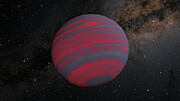
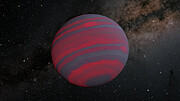
Brown Dwarf Illustration


Videos

CosmoView Episode 25: Caught Speeding: Clocking the Fastest-Spinning Brown Dwarfs
CosmoView Episode 25: Caught Speeding: Clocking the Fastest-Spinning Brown Dwarfs 
 
Animation Comparing Rotation Rates of Jupiter, Saturn, and Brown Dwarf 2MASS J0348-6022
Animation Comparing Rotation Rates of Jupiter, Saturn, and Brown Dwarf 2MASS J0348-6022 
 
CosmoView Episodio 25: Astrónomos descubren rotaciones extremas en Enanas Marrones


Gemini North observations help set rotational speed limit for brown dwarfs
 

Astronomers at Western University have discovered the most rapidly rotating brown dwarfs known. They found three brown dwarfs that each complete a full rotation roughly once every hour. That rate is so extreme that if these “failed stars” rotated any faster, they could come close to tearing themselves apart. Identified by NASA’s Spitzer Space Telescope, the brown dwarfs were then studied by ground-based telescopes including Gemini North, which confirmed their surprisingly speedy rotation.

Three brown dwarfs have been discovered spinning faster than any other found before. Astronomers at Western University in Canada first measured the rotation speeds of these brown dwarfs using NASA’s Spitzer Space Telescope and confirmed them with follow-up observations with the Gemini North telescope on Maunakea in Hawai‘i and the Carnegie Institution for Science’s Magellan Baade telescope in Chile. Gemini North is one of the pair of telescopes that make up the international Gemini Observatory, a Program of NSF’s NOIRLab.

“We seem to have come across a speed limit on the rotation of brown dwarfs,” said Megan Tannock, the Western University physics and astronomy graduate student who led the discovery. “Despite extensive searches, by our own team and others, no brown dwarfs have been found to rotate any faster. In fact, faster spins may lead to a brown dwarf tearing itself apart.”

Brown dwarfs are, simply put, failed stars. They form like stars but are less massive and more like giant planets [1].

Tannock and Western University astronomer Stanimir Metchev worked with international collaborators to find three rapidly rotating brown dwarfs spinning around their axes once every hour. This is approximately 10 times faster than normal [2], and about 30 percent faster than the most rapid rotations previously measured in such objects.

The astronomers used large ground-based telescopes, Gemini North in Hawai‘i and Magellan Baade in Chile, to confirm the rapid rotations. They did this by measuring alterations in the brown dwarfs’ light caused by the Doppler effect and using a computer model to match those alterations to spin rates [3]. The researchers found that these brown dwarfs spin with speeds of about 350,000 kilometers per hour (around 220,000 miles per hour) at their equator, which is 10 times faster than Jupiter. 

“These unusual brown dwarfs are spinning at dizzying speeds,” said Sandy Leggett, an astronomer at Gemini North who studies brown dwarfs. “At about 350,000 kilometers per hour, the relatively weak gravity of the brown dwarfs is barely holding them together. This exciting discovery by the Tannock team has identified rotational limits beyond which these objects may not exist.”

The team first identified the rapid rotation rates by using NASA’s Spitzer Space Telescope to measure how quickly the brightness of the objects varied. “Brown dwarfs, like planets with atmospheres, can have large weather storms that affect their visible brightness,” explained Metchev. “The observed brightness variations show how frequently the same storms are seen as the object spins, which reveals the brown dwarf’s spin period.”  

The team’s results will appear in an upcoming issue of The Astronomical Journal.


Notes

[1] There are four known giant planets in the Solar System: Jupiter, Saturn, Uranus, and Neptune.

[2] Stars, brown dwarfs, and planets generally spin around their axis once every 10 hours or more slowly. For example, Earth spins around its axis once every 24 hours while Jupiter and Saturn take about 10 hours. The Sun spins around its axis on average every 27 days. The Sun’s rotation rate varies with latitude, with its equatorial regions completing a rotation in about 25 days and the polar regions rotating once in approximately 35 days.

[3] As each brown dwarf rotates, light from the hemisphere turning toward us appears blueshifted while light from the hemisphere turning away from us appears redshifted because of the Doppler effect. This causes absorption lines in the brown dwarf’s spectrum to appear broadened (stretched both toward the red end of the spectrum and the blue end of the spectrum). By matching this broadening to a computer model, the astronomers determined how fast each brown dwarf is spinning.


More Information

This research will be presented in the paper Weather on Other Worlds. V. The Three Most Rapidly Rotating Ultra-Cool Dwarfs, to appear in The Astronomical Journal.

The team is composed of Megan Tannock (Western University), Stanimir Metchev (Western University and American Museum of Natural History), Aren Heinze (University of Hawai‘i), Paulo A. Miles-Páez (European Southern Observatory), Jonathan Gagné (Planétarium Rio Tinto Alcan and Université de Montréal), Adam Burgasser (University of California, San Diego), Mark S. Marley (NASA Ames Research Center), Dániel Apai (University of Arizona), Genaro Suárez (Western University), and Peter Plavchan (George Mason University).

NSF’s NOIRLab (National Optical-Infrared Astronomy Research Laboratory), the US center for ground-based optical-infrared astronomy, operates the international Gemini Observatory (a facility of NSF, NRC–Canada, ANID–Chile, MCTIC–Brazil, MINCyT–Argentina, and KASI–Republic of Korea), Kitt Peak National Observatory (KPNO), Cerro Tololo Inter-American Observatory (CTIO), the Community Science and Data Center (CSDC), and Vera C. Rubin Observatory (in cooperation with DOE’s SLAC National Accelerator Laboratory). It is managed by the Association of Universities for Research in Astronomy (AURA) under a cooperative agreement with NSF and is headquartered in Tucson, Arizona. The astronomical community is honored to have the opportunity to conduct astronomical research on Iolkam Du’ag (Kitt Peak) in Arizona, on Maunakea in Hawaiʻi, and on Cerro Tololo and Cerro Pachón in Chile. We recognize and acknowledge the very significant cultural role and reverence that these sites have to the Tohono O'odham Nation, to the Native Hawaiian community, and to the local communities in Chile, respectively.


Links

Megan Tannock
Western University
Email:
mtannock@uwo.ca

Stanimir Metchev
Canada Research Chair in Extrasolar Planets
Institute for Earth and Space Exploration, Western University
Email:
smetchev@uwo.ca

Amanda Kocz
Press and Internal Communications Officer
NSF’s NOIRLab
Cell: +1 626 524 5884
Email:
amanda.kocz@noirlab.edu

Saturday, August 01, 2020

Johns Hopkins astrophysicists observe long-theorized quantum phenomena By Saralyn Cruickshank


A team led by students probes the mass-radius relation of white dwarf stars, observing in their data evidence of quantum mechanics and Einstein's theory of general relativity

At the heart of every white dwarf star—the dense stellar object that remains after a star has burned away its fuel reserve of gases as it nears the end of its life cycle—lies a quantum conundrum: as white dwarfs add mass, they shrink in size, until they become so small and tightly compacted that they cannot sustain themselves, collapsing into a neutron star.

This puzzling relationship between a white dwarf's mass and size, called the mass-radius relation, was first theorized by Nobel Prize-winning astrophysicist Subrahmanyan Chandrasekhar in the 1930s. Now, a team of Johns Hopkins astrophysicists has developed a method to observe the phenomenon itself using astronomical data collected by the Sloan Digital Sky Survey and a recent dataset released by the Gaia Space Observatory. The combined datasets provided more than 3,000 white dwarfs for the team to study.

A report of their findings, led by Hopkins senior Vedant Chandra, is now in press in Astrophysical Journal and available online on arXiv.

"The mass-radius relation is a spectacular combination of quantum mechanics and gravity, but it's counterintuitive for us—we think that as an object gains mass, it should get bigger," says Nadia Zakamska, an associate professor in the Department of Physics and Astronomy who supervised the student researchers. "The theory has existed for a long time, but what's notable is that the dataset we used is of unprecedented size and unprecedented accuracy. These measurement methods, which in some cases were developed years ago, all of a sudden work so much better and these old theories can finally be probed."


The team obtained their results using a combination of measurements, including primarily the gravitational redshift effect, which is the change of wavelengths of light from blue to red as light moves away from an object. It is a direct result of Einstein's theory of general relativity.

"To me, the beauty of this work is that we all learn these theories about how light will be affected by gravity in school and in textbooks, but now we actually see that relationship in the stars themselves," says fifth-year graduate student Hsiang-Chih Hwang, who proposed the study and first recognized the gravitational redshift effect in the data.

The team also had to account for how a star's movement through space might affect the perception of its gravitational redshift. Similar to how a fire engine siren changes pitch according to its movement in relation to the person listening, light frequencies also change depending on movement of the light-emitting object in relation to the observer. This is called the Doppler effect, and is essentially a distracting "noise" that complicates the measurement of the gravitational redshift effect, says study contributor Sihao Cheng, a fourth-year graduate student.

To account for the variations caused by the Doppler effect, the team classified white dwarfs in their sample set by radius. They then averaged the redshifts of stars of a similar size, effectively determining that no matter where a star itself is located or where it's moving in relation to Earth, it can be expected to have an intrinsic gravitational redshift of a certain value. Think of it as taking an average measurement of all the pitches of all fire engines moving around in a given area at a given time—you can expect that any fire engine, no matter which direction it's moving, will have an intrinsic pitch of that average value.

These intrinsic gravitational redshift values can be used to study stars that are observed in future datasets. The researchers say that upcoming datasets that are larger and more accurate will allow for further fine-tuning of their measurements, and that this data may contribute to the future analysis of white dwarf chemical composition.

They also say their study represents an exciting advance from theory to observed phenomena.

"Because the star gets smaller as it gets more massive, the gravitational redshift effect also grows with mass," Zakamska says. "And this is a bit easier to comprehend—it's easier to get out of a less dense, bigger object than it is to get out of a more massive, more compact object. And that's exactly what we saw in the data."

The team is even finding captive audiences for their research at home—where they've conducted their work amid the coronavirus pandemic.

"The way I extolled it to my granddad is, you're basically seeing quantum mechanics and Einstein's theory of general relativity coming together to produce this result," Chandra says. "He was very excited when I put it that way."

 By Saralyn Cruickshank

Source: Johns Hopkins University


Thursday, November 15, 2018

Super-Earth Orbiting Barnard’s Star

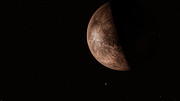
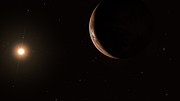
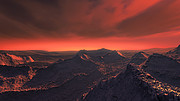
Artist’s impression of the surface of a super-Earth orbiting Barnard’s Star

Artist’s impression of super-Earth orbiting Barnard’s Star

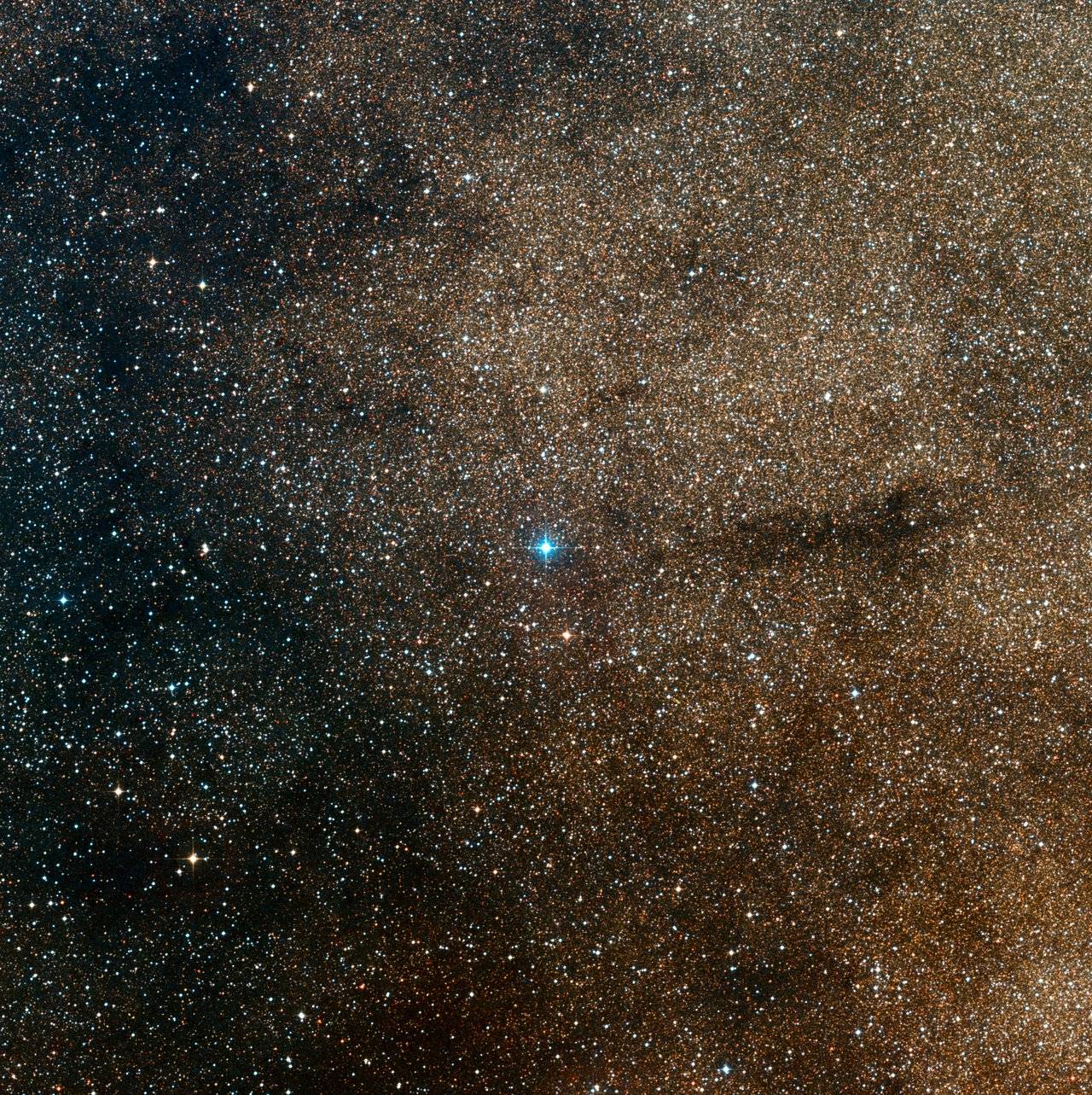
Barnard’s Star in the constellation Ophiuchus

Widefield image of the sky around Barnard’s Star showing its motion


Videos

ESOcast 184 Light: Super-Earth Orbiting Barnard’s Star (4K UHD)

Artist’s impression of Barnard’s Star and its super-Earth

Exploring the surface of a super-Earth orbiting Barnard’s Star (Artist’s impression)

Barnard’s Star in the Solar neighborhood


Red Dots campaign uncovers compelling evidence of exoplanet around closest single star to Sun

The nearest single star to the Sun hosts an exoplanet at least 3.2 times as massive as Earth — a so-called super-Earth. One of the largest observing campaigns to date using data from a world-wide array of telescopes, including ESO’s planet-hunting HARPS instrument, have revealed this frozen, dimly lit world. The newly discovered planet is the second-closest known exoplanet to the Earth. Barnard’s star is the fastest moving star in the night sky.

A planet has been detected orbiting Barnard’s Star, a mere 6 light-years away. This breakthrough — announced in a paper published today in the journal Nature — is a result of the Red Dots and CARMENES projects, whose search for local rocky planets has already uncovered a new world orbiting our nearest neighbour, Proxima Centauri.

The planet, designated Barnard's Star b, now steps in as the second-closest known exoplanet to Earth [1]. The gathered data indicate that the planet could be a super-Earth, having a mass at least 3.2 times that of the Earth, which orbits its host star in roughly 233 days. Barnard’s Star, the planet’s host star, is a red dwarf, a cool, low-mass star, which only dimly illuminates this newly-discovered world. Light from Barnard’s Star provides its planet with only 2% of the energy the Earth receives from the Sun.

Despite being relatively close to its parent star — at a distance only 0.4 times that between Earth and the Sun — the exoplanet lies close to the snow line, the region where volatile compounds such as water can condense into solid ice. This freezing, shadowy world could have a temperature of –170 ℃, making it inhospitable for life as we know it.

Named for astronomer E. E. Barnard, Barnard’s Star is the closest single star to the Sun. While the star itself is ancient — probably twice the age of our Sun — and relatively inactive, it also has the fastest apparent motion of any star in the night sky [2]. Super-Earths are the most common type of planet to form around low-mass stars such as Barnard’s Star, lending credibility to this newly discovered planetary candidate. Furthermore, current theories of planetary formation predict that the snow line is the ideal location for such planets to form.

Previous searches for a planet around Barnard’s Star have had disappointing results — this recent breakthrough was possible only by combining measurements from several high-precision instruments mounted on telescopes all over the world [3].

“After a very careful analysis, we are 99% confident that the planet is there,” stated the team’s lead scientist, Ignasi Ribas (Institute of Space Studies of Catalonia and the Institute of Space Sciences, CSIC in Spain). “However, we’ll continue to observe this fast-moving star to exclude possible, but improbable, natural variations of the stellar brightness which could masquerade as a planet.”

Among the instruments used were ESO’s famous planet-hunting HARPS and UVES spectrographs. “HARPS played a vital part in this project. We combined archival data from other teams with new, overlapping, measurements of Barnard’s star from different facilities,” commented Guillem Anglada Escudé (Queen Mary University of London), co-lead scientist of the team behind this result [4]. “The combination of instruments was key to allowing us to cross-check our result.”

The astronomers used the Doppler effect to find the exoplanet candidate. While the planet orbits the star, its gravitational pull causes the star to wobble. When the star moves away from the Earth, its spectrum redshifts; that is, it moves towards longer wavelengths. Similarly, starlight is shifted towards shorter, bluer, wavelengths when the star moves towards Earth.

Astronomers take advantage of this effect to measure the changes in a star’s velocity due to an orbiting exoplanet — with astounding accuracy. HARPS can detect changes in the star’s velocity as small as 3.5 km/h — about walking pace. This approach to exoplanet hunting is known as the radial velocity method, and has never before been used to detect a similar super-Earth type exoplanet in such a large orbit around its star.

“We used observations from seven different instruments, spanning 20 years of measurements, making this one of the largest and most extensive datasets ever used for precise radial velocity studies.” explained Ribas. ”The combination of all data led to a total of 771 measurements — a huge amount of information!”

“We have all worked very hard on this breakthrough,” concluded Anglada-Escudé. “This discovery is the result of a large collaboration organised in the context of the Red Dots project, that included contributions from teams all over the world.


Notes

[1] The only stars closer to the Sun make up the triple star system Alpha Centauri. In 2016, astronomers using ESO telescopes and other facilities found clear evidence of a planet orbiting the closest star to Earth in this system, Proxima Centauri. That planet lies just over 4 light-years from Earth, and was discovered by a team led by Guillem Anglada Escudé.

[2] The total velocity of Barnard’s Star with respect to the Sun is about 500 000 km/h. Despite this blistering pace, it is not the fastest known star. What makes the star’s motion noteworthy is how fast it appears to move across the night sky as seen from the Earth, known as its apparent motion. Barnard’s Star travels a distance equivalent to the Moon's diameter across the sky every 180 years — while this may not seem like much, it is by far the fastest apparent motion of any star.

[3] The facilities used in this research were: HARPS at the ESO 3.6-metre telescope; UVES at the ESO VLT; HARPS-N at the Telescopio Nazionale Galileo; HIRES at the Keck 10-metre telescope; PFS at the Carnegie’s Magellan 6.5-m telescope; APF at the 2.4-m telescope at Lick Observatory; and CARMENES at the Calar Alto Observatory. Additionally, observations were made with the 90-cm telescope at the Sierra Nevada Observatory, the 40-cm robotic telescope at the SPACEOBS observatory, and the 80-cm Joan Oró Telescope of the Montsec Astronomical Observatory (OAdM).

[4] The story behind this discovery will be explored in more detail in this week’s ESOBlog.


More Information

This research was presented in the paper A super-Earth planet candidate orbiting at the snow-line of Barnard’s star published in the journal Nature on 15 November.

The team was composed of I. Ribas (Institut de Ciències de l’Espai, Spain & Institut d’Estudis Espacials de Catalunya, Spain), M. Tuomi (Centre for Astrophysics Research, University of Hertfordshire, United Kingdom), A. Reiners (Institut für Astrophysik Göttingen, Germany), R. P. Butler (Department of Terrestrial Magnetism, Carnegie Institution for Science, USA), J. C. Morales (Institut de Ciències de l’Espai, Spain & Institut d’Estudis Espacials de Catalunya, Spain), M. Perger (Institut de Ciències de l’Espai, Spain & Institut d’Estudis Espacials de Catalunya, Spain), S. Dreizler (Institut für Astrophysik Göttingen, Germany), C. Rodríguez-López (Instituto de Astrofísica de Andalucía, Spain), J. I. González Hernández (Instituto de Astrofísica de Canarias Spain & Universidad de La Laguna, Spain), A. Rosich (Institut de Ciències de l’Espai, Spain & Institut d’Estudis Espacials de Catalunya, Spain), F. Feng (Centre for Astrophysics Research, University of Hertfordshire, United Kingdom), T. Trifonov (Max-Planck-Institut für Astronomie, Germany), S. S. Vogt (Lick Observatory, University of California, USA), J. A. Caballero (Centro de Astrobiología, CSIC-INTA, Spain), A. Hatzes (Thüringer Landessternwarte, Germany), E. Herrero (Institut de Ciències de l’Espai, Spain & Institut d’Estudis Espacials de Catalunya, Spain), S. V. Jeffers (Institut für Astrophysik Göttingen, Germany), M. Lafarga (Institut de Ciències de l’Espai, Spain & Institut d’Estudis Espacials de Catalunya, Spain), F. Murgas (Instituto de Astrofísica de Canarias, Spain & Universidad de La Laguna, Spain), R. P. Nelson (School of Physics and Astronomy, Queen Mary University of London, United Kingdom), E. Rodríguez (Instituto de Astrofísica de Andalucía, Spain), J. B. P. Strachan (School of Physics and Astronomy, Queen Mary University of London, United Kingdom), L. Tal-Or (Institut für Astrophysik Göttingen, Germany & School of Geosciences, Tel-Aviv University, Israel), J. Teske (Department of Terrestrial Magnetism, Carnegie Institution for Science, USA & Hubble Fellow), B. Toledo-Padrón (Instituto de Astrofísica de Canarias, Spain & Universidad de La Laguna, Spain), M. Zechmeister (Institut für Astrophysik Göttingen, Germany), A. Quirrenbach (Landessternwarte, Universität Heidelberg, Germany), P. J. Amado (Instituto de Astrofísica de Andalucía, Spain), M. Azzaro (Centro Astronómico Hispano-Alemán, Spain), V. J. S. Béjar (Instituto de Astrofísica de Canarias, Spain & Universidad de La Laguna, Spain), J. R. Barnes (School of Physical Sciences, The Open University, United Kingdom), Z. M. Berdiñas (Departamento de Astronomía, Universidad de Chile), J. Burt (Kavli Institute, Massachusetts Institute of Technology, USA), G. Coleman (Physikalisches Institut, Universität Bern, Switzerland), M. Cortés-Contreras (Centro de Astrobiología, CSIC-INTA, Spain), J. Crane (The Observatories, Carnegie Institution for Science, USA), S. G. Engle (Department of Astrophysics & Planetary Science, Villanova University, USA), E. F. Guinan (Department of Astrophysics & Planetary Science, Villanova University, USA), C. A. Haswell (School of Physical Sciences, The Open University, United Kingdom), Th. Henning (Max-Planck-Institut für Astronomie, Germany), B. Holden (Lick Observatory, University of California, USA), J. Jenkins (Departamento de Astronomía, Universidad de Chile), H. R. A. Jones (Centre for Astrophysics Research, University of Hertfordshire, United Kingdom), A. Kaminski (Landessternwarte, Universität Heidelberg, Germany), M. Kiraga (Warsaw University Observatory, Poland), M. Kürster (Max-Planck-Institut für Astronomie, Germany), M. H. Lee (Department of Earth Sciences and Department of Physics, The University of Hong Kong), M. J. López-González (Instituto de Astrofísica de Andalucía, Spain), D. Montes (Dep. de Física de la Tierra Astronomía y Astrofísica & Unidad de Física de Partículas y del Cosmos de la Universidad Complutense de Madrid, Spain), J. Morin (Laboratoire Univers et Particules de Montpellier, Université de Montpellier, France), A. Ofir (Department of Earth and Planetary Sciences, Weizmann Institute of Science. Israel), E. Pallé (Instituto de Astrofísica de Canarias, Spain & Universidad de La Laguna, Spain), R. Rebolo (Instituto de Astrofísica de Canarias, Spain, & Consejo Superior de Investigaciones Científicas & Universidad de La Laguna, Spain), S. Reffert (Landessternwarte, Universität Heidelberg, Germany), A. Schweitzer (Hamburger Sternwarte, Universität Hamburg, Germany), W. Seifert (Landessternwarte, Universität Heidelberg, Germany), S. A. Shectman (The Observatories, Carnegie Institution for Science, USA), D. Staab (School of Physical Sciences, The Open University, United Kingdom), R. A. Street (Las Cumbres Observatory Global Telescope Network, USA), A. Suárez Mascareño (Observatoire Astronomique de l'Université de Genève, Switzerland & Instituto de Astrofísica de Canarias Spain), Y. Tsapras (Zentrum für Astronomie der Universität Heidelberg, Germany), S. X. Wang (Department of Terrestrial Magnetism, Carnegie Institution for Science, USA), and G. Anglada-Escudé (School of Physics and Astronomy, Queen Mary University of London, United Kingdom & Instituto de Astrofísica de Andalucía, Spain).

ESO is the foremost intergovernmental astronomy organisation in Europe and the world’s most productive ground-based astronomical observatory by far. It has 16 Member States: Austria, Belgium, the Czech Republic, Denmark, France, Finland, Germany, Ireland, Italy, the Netherlands, Poland, Portugal, Spain, Sweden, Switzerland and the United Kingdom, along with the host state of Chile and with Australia as a Strategic Partner. ESO carries out an ambitious programme focused on the design, construction and operation of powerful ground-based observing facilities enabling astronomers to make important scientific discoveries. ESO also plays a leading role in promoting and organising cooperation in astronomical research. ESO operates three unique world-class observing sites in Chile: La Silla, Paranal and Chajnantor. At Paranal, ESO operates the Very Large Telescope and its world-leading Very Large Telescope Interferometer as well as two survey telescopes, VISTA working in the infrared and the visible-light VLT Survey Telescope. ESO is also a major partner in two facilities on Chajnantor, APEX and ALMA, the largest astronomical project in existence. And on Cerro Armazones, close to Paranal, ESO is building the 39-metre Extremely Large Telescope, the ELT, which will become “the world’s biggest eye on the sky”.


Links


Contact

Ignasi Ribas (Lead Scientist)
Institut d’Estudis Espacials de Catalunya and the Institute of Space Sciences, CSIC
Barcelona, Spain
Tel: +34 93 737 97 88 (ext 933027)
Email: iribas@ice.cat

Guillem Anglada-Escudé
Queen Mary University of London
London, United Kingdom
Tel: +44 (0)20 7882 3002
Email: g.anglada@qmul.ac.uk

Calum Turner
ESO Public Information Officer
Garching bei München, Germany
Tel: +49 89 3200 6670
Cell: +49 151 1537 3591
Email: pio@eso.org

Source: ESO/News


Wednesday, June 13, 2018

ALMA Discovers Trio of Infant Planets around Newborn Star

ALMA Discovers Trio of Infant Planets

Planets in the making 

The young star HD 163296 in the constellation of Sagittarius

Surroundings of the young star HD 163296

ALMA Discovers Trio of Infant Planets


Videos

ESOcast 164 Light: ALMA Discovers Trio of Infant Planets (4K UHD)

Zooming in on the young star HD 163296


Two independent teams of astronomers have used ALMA to uncover convincing evidence that three young planets are in orbit around the infant star HD 163296. Using a novel planet-finding technique, the astronomers identified three disturbances in the gas-filled disc around the young star: the strongest evidence yet that newly formed planets are in orbit there. These are considered the first planets to be discovered with ALMA.

The Atacama Large Millimeter/submillimeter Array (ALMA) has transformed our understanding of protoplanetary discs — the gas- and dust-filled planet factories that encircle young stars. The rings and gaps in these discs provide intriguing circumstantial evidence for the presence of protoplanets [1]. Other phenomena, however, could also account for these tantalising features.

But now, using a novel planet-hunting technique that identifies unusual patterns in the flow of gas within a planet-forming disc around a young star, two teams of astronomers have each confirmed distinct, telltale hallmarks of newly formed planets orbiting an infant star [2].

“Measuring the flow of gas within a protoplanetary disc gives us much more certainty that planets are present around a young star,” said Christophe Pinte of Monash University in Australia and Institut de Planétologie et d'Astrophysique de Grenoble (Université de Grenoble-Alpes/CNRS) in France, and lead author on one of the two papers. “This technique offers a promising new direction to understand how planetary systems form.”

To make their respective discoveries, each team analysed ALMA observations of HD 163296, a young star about 330 light-years from Earth in the constellation of Sagittarius (The Archer) [3]. This star is about twice the mass of the Sun but is just four million years old — just a thousandth of the age of the Sun.

“We looked at the localised, small-scale motion of gas in the star’s protoplanetary disc. This entirely new approach could uncover some of the youngest planets in our galaxy, all thanks to the high-resolution images from ALMA,” said Richard Teague, an astronomer at the University of Michigan and principal author on the other paper.

Rather than focusing on the dust within the disc, which was clearly imaged in earlier ALMA observations, the astronomers instead studied carbon monoxide (CO) gas spread throughout the disc. Molecules of CO emit a very distinctive millimetre-wavelength light that ALMA can observe in great detail. Subtle changes in the wavelength of this light due to the Doppler effect reveal the motions of the gas in the disc.

The team led by Teague identified two planets located approximately 12 billion and 21 billion kilometres from the star. The other team, led by Pinte, identified a planet at about 39 billion kilometres from the star [4].

The two teams used variations on the same technique, which looks for anomalies in the flow of gas — as evidenced by the shifting wavelengths of the CO emission — that indicate the gas is interacting with a massive object [5].

The technique used by Teague, which derived averaged variations in the flow of the gas as small as a few percent, revealed the impact of multiple planets on the gas motions nearer to the star. The technique used by Pinte, which more directly measured the flow of the gas, is better suited to studying the outer portion of the disc. It allowed the authors to more accurately locate the third planet, but is restricted to larger deviations of the flow, greater than about 10%.

In both cases, the researchers identified areas where the flow of the gas did not match its surroundings — a bit like eddies around a rock in a river. By carefully analysing this motion, they could clearly see the influence of planetary bodies similar in mass to Jupiter.

This new technique allows astronomers to more precisely estimate protoplanetary masses and is less likely to produce false positives. “We are now bringing ALMA front and centre into the realm of planet detection,” said coauthor Ted Bergin of the University of Michigan.
Both teams will continue refining this method and will apply it to other discs, where they hope to better understand how atmospheres are formed and which elements and molecules are delivered to a planet at its birth.


Notes

[1] Although thousands of exoplanets have been discovered in the last two decades, detecting protoplanets remains at the cutting edge of science and there have been no unambiguous detections before now. The techniques currently used for finding exoplanets in fully formed planetary systems — such as measuring the wobble of a star or the dimming of starlight due to a transiting planet — do not lend themselves to detecting protoplanets.

[2] The motion of gas around a star in the absence of planets has a very simple, predictable pattern (Keplerian rotation) that is nearly impossible to alter both coherently and locally, so that only the presence of a relatively massive object can create such disturbances.

[3] ALMA’s stunning images of HD 163296 and other similar systems have revealed intriguing patterns of concentric rings and gaps within protoplanetary discs. These gaps may be evidence that protoplanets are ploughing the dust and gas away from their orbits, incorporating some of it into their own atmospheres. A previous study of this particular star’s disc shows that the gaps in the dust and gas overlap, suggesting that at least two planets have formed there.

These initial observations, however, merely provided circumstantial evidence and could not be used to accurately estimate the masses of the planets.

[4] These correspond to 80, 140 and 260 times the distance from the Earth to the Sun.

[5] This technique is similar to the one that led to the discovery of the planet Neptune in the nineteenth century. In that case anomalies in the motion of the planet Uranus were traced to the gravitational effect of an unknown body, which was subsequently discovered visually in 1846 and found to be the eighth planet in the Solar System.


More Information

This research was presented in two papers to appear in the same edition of the Astrophysical Journal Letters. The first is entitled “Kinematic evidence for an embedded protoplanet in a circumstellar disc”, by C. Pinte et al. and the second “A Kinematic Detection of Two Unseen Jupiter Mass Embedded Protoplanets”, by R. Teague et al.

The Pinte team is composed of: C. Pinte (Monash University, Clayton, Victoria, Australia; Univ. Grenoble Alpes, CNRS, IPAG, Grenoble, France), D. J. Price (Monash University, Clayton, Victoria, Australia), F. Ménard (Univ. Grenoble Alpes, CNRS, IPAG, Grenoble, France), G. Duchêne (University of California, Berkeley California, USA; Univ. Grenoble Alpes, CNRS, IPAG, Grenoble, France), W.R.F. Dent (Joint ALMA Observatory, Santiago, Chile), T. Hill (Joint ALMA Observatory, Santiago, Chile), I. de Gregorio-Monsalvo (Joint ALMA Observatory, Santiago, Chile), A. Hales (Joint ALMA Observatory, Santiago, Chile; National Radio Astronomy Observatory, Charlottesville, Virginia, USA) and D. Mentiplay (Monash University, Clayton, Victoria, Australia).

The Teague team is composed of: Richard D. Teague (University of Michigan, Ann Arbor, Michigan, USA), Jaehan Bae (Department of Terrestrial Magnetism, Carnegie Institution for Science, Washington, DC, USA), Edwin A. Bergin (University of Michigan, Ann Arbor, Michigan, USA), Tilman Birnstiel (University Observatory, Ludwig-Maximilians-Universität München, Munich, Germany) and Daniel Foreman- Mackey (Center for Computational Astrophysics, Flatiron Institute, New York, USA).

The Atacama Large Millimeter/submillimeter Array (ALMA), an international astronomy facility, is a partnership of ESO, the U.S. National Science Foundation (NSF) and the National Institutes of Natural Sciences (NINS) of Japan in cooperation with the Republic of Chile. ALMA is funded by ESO on behalf of its Member States, by NSF in cooperation with the National Research Council of Canada (NRC) and the National Science Council of Taiwan (NSC) and by NINS in cooperation with the Academia Sinica (AS) in Taiwan and the Korea Astronomy and Space Science Institute (KASI). ALMA construction and operations are led by ESO on behalf of its Member States; by the National Radio Astronomy Observatory (NRAO), managed by Associated Universities, Inc. (AUI), on behalf of North America; and by the National Astronomical Observatory of Japan (NAOJ) on behalf of East Asia. The Joint ALMA Observatory (JAO) provides the unified leadership and management of the construction, commissioning and operation of ALMA. ESO is the foremost intergovernmental astronomy organisation in Europe and the world’s most productive ground-based astronomical observatory by far. It has 15 Member States: Austria, Belgium, the Czech Republic, Denmark, France, Finland, Germany, Italy, the Netherlands, Poland, Portugal, Spain, Sweden, Switzerland and the United Kingdom, along with the host state of Chile and with Australia as a strategic partner. ESO carries out an ambitious programme focused on the design, construction and operation of powerful ground-based observing facilities enabling astronomers to make important scientific discoveries. ESO also plays a leading role in promoting and organising cooperation in astronomical research. ESO operates three unique world-class observing sites in Chile: La Silla, Paranal and Chajnantor. At Paranal, ESO operates the Very Large Telescope and its world-leading Very Large Telescope Interferometer as well as two survey telescopes, VISTA working in the infrared and the visible-light VLT Survey Telescope. ESO is also a major partner in two facilities on Chajnantor, APEX and ALMA, the largest astronomical project in existence. And on Cerro Armazones, close to Paranal, ESO is building the 39-metre Extremely Large Telescope, the ELT, which will become “the world’s biggest eye on the sky”.


Links


Contacts

Christophe Pinte
Monash University
Clayton, Victoria, Australia
Tel: +61 4 90 30 24 18
Email:
christophe.pinte@univ-grenoble-alpes.fr

Richard Teague
University of Michigan
Ann Arbor, Michigan, USA
Tel: +1 734 764 3440
Email:
rteague@umich.edu

Calum Turner
ESO Assistant Public Information Officer
Garching bei München, Germany
Tel: +49 89 3200 6670
Email: calum.turner@eso.org

Source: ESO/News

Friday, December 08, 2017

Massive Primordial Galaxies Found Swimming in Vast Ocean of Dark Matter

Artist impression of a pair of galaxies from the very early universe.
Credit: NRAO/AUI/NSF; D. Berry

To correct for the effects of gravitational lensing in these galaxies, the ALMA data (left panel) is compared to a lensing-distorted model image (second panel from left). The difference is shown in the third panel from the left. The structure of the galaxy, after removing the lensing effect, is shown at right. This image loops through the different velocity ranges within the galaxy, which appear at different frequencies to ALMA due to the Doppler effect.Credit: ALMA (ESO/NAOJ/NRAO); D. Marrone et al.

A composite image showing ALMA data (red) of the two galaxies of SPT0311-58. These galaxies are shown over a background from the Hubble Space Telescope (blue and green). The ALMA data show the two galaxies' dusty glow. The image of the galaxy on the right is distorted by gravitational lensing. The nearer foreground lensing galaxy is the green object between the two galaxies imaged by ALMA.Credit: ALMA (ESO/NAOJ/NRAO), Marrone, et al.; B. Saxton (NRAO/AUI/NSF); NASA/ESA Hubble 


Astronomers expect that the first galaxies, those that formed just a few hundred million years after the Big Bang, would share many similarities with some of the dwarf galaxies we see in the nearby universe today. These early agglomerations of a few billion stars would then become the building blocks of the larger galaxies that came to dominate the universe after the first few billion years.

Ongoing observations with the Atacama Large Millimeter/submillimeter Array (ALMA), however, have discovered surprising examples of massive, star-filled galaxies seen when the cosmos was less than a billion years old. This suggests that smaller galactic building blocks were able to assemble into large galaxies quite quickly.

The latest ALMA observations push back this epoch of massive-galaxy formation even further by identifying two giant galaxies seen when the universe was only 780 million years old, or about 5 percent its current age. ALMA also revealed that these uncommonly large galaxies are nestled inside an even-more-massive cosmic structure, a halo of dark matter several trillion times more massive than the sun.

The two galaxies are in such close proximity — less than the distance from the Earth to the center of our galaxy — that they will shortly merge to form the largest galaxy ever observed at that period in cosmic history. This discovery provides new details about the emergence of large galaxies and the role that dark matter plays in assembling the most massive structures in the universe.

The researchers report their findings in the journal Nature.

“With these exquisite ALMA observations, astronomers are seeing the most massive galaxy known in the first billion years of the universe in the process of assembling itself,” said Dan Marrone, associate professor of astronomy at the University of Arizona in Tucson and lead author on the paper.

Astronomers are seeing these galaxies during a period of cosmic history known as the Epoch of Reionization, when most of intergalactic space was suffused with an obscuring fog of cold hydrogen gas. As more stars and galaxies formed, their energy eventually ionized the hydrogen between the galaxies, revealing the universe as we see it today.

“We usually view that as the time of little galaxies working hard to chew away at the neutral intergalactic medium,” said Marrone. “Mounting observational evidence with ALMA, however, has helped to reshape that story and continues to push back the time at which truly massive galaxies first emerged in the universe.”

The galaxies that Marrone and his team studied, collectively known as SPT0311-58, were originally identified as a single source by the  South Pole Telescope. These first observations indicated that this object was very distant and glowing brightly in infrared light, meaning that it was extremely dusty and likely going through a burst of star formation. Subsequent observations with ALMA revealed the distance and dual nature of the object, clearly resolving the pair of interacting galaxies.

To make this observation, ALMA had some help from a gravitational lens, which provided an observing boost to the telescope. Gravitational lenses form when an intervening massive object, like a galaxy or galaxy cluster, bends the light from more distant galaxies. They do, however, distort the appearance of the object being studied, requiring sophisticated computer models to reconstruct the image as it would appear in its unaltered state.

This “de-lensing” process provided intriguing details about the galaxies, showing that the larger of the two is forming stars at a rate of 2,900 solar masses per year. It also contains about 270 billion times the mass of our sun in gas and nearly 3 billion times the mass of our sun in dust. “That’s a whopping large quantity of dust, considering the young age of the system,” noted Justin Spilker, a recent graduate of the University of Arizona and now a postdoctoral fellow at the University of Texas at Austin.

The astronomers determined that this galaxy’s rapid star formation was likely triggered by a close encounter with its slightly smaller companion, which already hosts about 35 billion solar masses of stars and is increasing its rate of starburst at the breakneck pace of 540 solar masses per year.

The researchers note that galaxies of this era are “messier” than the ones we see in the nearby universe. Their more jumbled shapes would be due to the vast stores of gas raining down on them and their ongoing interactions and mergers with their neighbors.

The new observations also allowed the researchers to infer the presence of a truly massive dark matter halo surrounding both galaxies. Dark matter provides the pull of gravity that causes the universe to collapse into structures (galaxies, groups and clusters of galaxies, etc.).

“If you want to see if a galaxy makes sense in our current understanding of cosmology, you want to look at the dark matter halo — the collapsed dark matter structure — in which it resides,” said Chris Hayward, associate research scientist at the Center for Computational Astrophysics at the Flatiron Institute in New York City. “Fortunately, we know very well the ratio between dark matter and normal matter in the universe, so we can estimate what the dark matter halo mass must be.”

By comparing their calculations with current cosmological predictions, the researchers found that this halo is one of the most massive that should exist at that time.

“There are more galaxies discovered with the South Pole Telescope that we’re following up on,” said Joaquin Vieira of the University of Illinois at Urbana-Champaign, “and there is a lot more survey data that we are just starting to analyze. Our hope is to find more objects like this, possibly even more distant ones, to better understand this population of extreme dusty galaxies and especially their relation to the bulk population of galaxies at this epoch.”

“In any case, our next round of ALMA observations should help us understand how quickly these galaxies came together and improve our understanding of massive galaxy formation during reionization,” added Marrone.

The National Radio Astronomy Observatory is a facility of the National Science Foundation, operated under cooperative agreement by Associated Universities, Inc.


This research is presented in a paper titled “’Galaxy growth in a massive halo in the first billion years of cosmic history,” by D. Marrone, et al., which appears in Advance Online Publication for Nature. [http://www.nature.com/nature].

The Atacama Large Millimeter/submillimeter Array (ALMA), an international astronomy facility, is a partnership of the European Organisation for Astronomical Research in the Southern Hemisphere (ESO), the U.S. National Science Foundation (NSF) and the National Institutes of Natural Sciences (NINS) of Japan in cooperation with the Republic of Chile. ALMA is funded by ESO on behalf of its Member States, by NSF in cooperation with the National Research Council of Canada (NRC) and the Ministry of Science and Technology (MOST) in Taiwan and by NINS in cooperation with the Academia Sinica (AS) in Taiwan and the Korea Astronomy and Space Science Institute (KASI).

ALMA construction and operations are led by ESO on behalf of its Member States; by the National Radio Astronomy Observatory (NRAO), managed by Associated Universities, Inc. (AUI), on behalf of North America; and by the National Astronomical Observatory of Japan (NAOJ) on behalf of East Asia. The Joint ALMA Observatory (JAO) provides the unified leadership and management of the construction, commissioning and operation of ALMA.


Contact:

Charles Blue, Public Information Officer
(434) 296-0314;
cblue@nrao.edu


Thursday, September 21, 2017

Ageing Star Blows Off Smoky Bubble

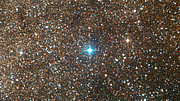
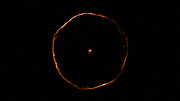
Delicate bubble of expelled material around the cool red star U Antliae

The star U Ant in the constellation of Antlia (The Air Pump)

Wide-field image of the sky around U Antliae

PR Image eso1730d
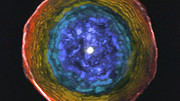
ALMA view of the motions of material in the shell around U Antliae


Videos

ESOcast 127 Light: Ageing Star Blows Off Smoky Bubble

Flying from the Earth to the star U Antliae

Tomography of a cosmic bubble


Astronomers have used ALMA to capture a strikingly beautiful view of a delicate bubble of expelled material around the exotic red star U Antliae. These observations will help astronomers to better understand how stars evolve during the later stages of their life-cycles.

In the faint southern constellation of Antlia (The Air Pump) the careful observer with binoculars will spot a very red star, which varies slightly in brightness from week to week. This very unusual star is called U Antliae and new observations with the Atacama Large Millimeter/submillimeter Array (ALMA) are revealing a remarkably thin spherical shell around it.

U Antliae [1] is a carbon star, an evolved, cool and luminous star of the asymptotic giant branch type. Around 2700 years ago, U Antliae went through a short period of rapid mass loss. During this period of only a few hundred years, the material making up the shell seen in the new ALMA data was ejected at high speed. Examination of this shell in further detail also shows some evidence of thin, wispy gas clouds known as filamentary substructures.

This spectacular view was only made possible by the unique ability to create sharp images at multiple wavelengths that is provided by the ALMA radio telescope, located on the Chajnantor Plateau in Chile’s Atacama Desert. ALMA can see much finer structure in the U Antliae shell than has previously been possible.

The new ALMA data are not just a single image; ALMA produces a three-dimensional dataset  (a data cube) with each slice being observed at a slightly different wavelength. Because of the Doppler Effect, this means that different slices of the data cube show images of gas moving at different speeds towards or away from the observer. This shell is also remarkable as it is very symmetrically round and also remarkably thin. By displaying the different velocities we can cut this cosmic bubble into virtual slices just as we do in computer tomography of a human body.

Understanding the chemical composition of the shells and atmospheres of these stars, and how these shells form by mass loss, is important to properly understand how stars evolve in the early Universe and also how galaxies evolved. Shells such as the one around U Antliae show a rich variety of chemical compounds based on carbon and other elements. They also help to recycle matter, and contribute up to 70% of the dust between stars.


Notes

[1] The name U Antliae reflects the fact that it is the fourth star that changes its brightness to be found in the constellation of Antlia (The Air Pump). The naming of such variable stars followed a complicated sequence as more and more were found and is explained here . 


More Information

This research was presented in a paper entitled “Rings and filaments. The remarkable detached CO shell of U Antliae”, by F. Kerschbaum et al., to appear in the journal Astronomy & Astrophysics.

The team is composed of F. Kerschbaum (University of Vienna, Austria), M. Maercker (Chalmers University of Technology, Onsala Space Observatory, Sweden), M. Brunner (University of Vienna, Austria), M. Lindqvist (Chalmers University of Technology, Onsala Space Observatory, Sweden), H. Olofsson (Chalmers University of Technology, Onsala Space Observatory, Sweden), M. Mecina (University of Vienna, Austria), E. De Beck (Chalmers University of Technology, Onsala Space Observatory, Sweden), M. A. T. Groenewegen (Koninklijke Sterrenwacht van België, Belgium), E. Lagadec (Observatoire de la Côte d’Azur, CNRS, France), S. Mohamed (University of Cape Town, South Africa), C. Paladini (Université Libre de Bruxelles, Belgium), S. Ramstedt (Uppsala University, Sweden), W. H. T. Vlemmings (Chalmers University of Technology, Onsala Space Observatory, Sweden), and M. Wittkowski (ESO)

The Atacama Large Millimeter/submillimeter Array (ALMA), an international astronomy facility, is a partnership of ESO, the U.S. National Science Foundation (NSF) and the National Institutes of Natural Sciences (NINS) of Japan in cooperation with the Republic of Chile. ALMA is funded by ESO on behalf of its Member States, by NSF in cooperation with the National Research Council of Canada (NRC) and the National Science Council of Taiwan (NSC) and by NINS in cooperation with the Academia Sinica (AS) in Taiwan and the Korea Astronomy and Space Science Institute (KASI).
ALMA construction and operations are led by ESO on behalf of its Member States; by the National Radio Astronomy Observatory (NRAO), managed by Associated Universities, Inc. (AUI), on behalf of North America; and by the National Astronomical Observatory of Japan (NAOJ) on behalf of East Asia. The Joint ALMA Observatory (JAO) provides the unified leadership and management of the construction, commissioning and operation of ALMA.

ESO is the foremost intergovernmental astronomy organisation in Europe and the world’s most productive ground-based astronomical observatory by far. It is supported by 16 countries: Austria, Belgium, Brazil, the Czech Republic, Denmark, France, Finland, Germany, Italy, the Netherlands, Poland, Portugal, Spain, Sweden, Switzerland and the United Kingdom, along with the host state of Chile. ESO carries out an ambitious programme focused on the design, construction and operation of powerful ground-based observing facilities enabling astronomers to make important scientific discoveries. ESO also plays a leading role in promoting and organising cooperation in astronomical research. ESO operates three unique world-class observing sites in Chile: La Silla, Paranal and Chajnantor. At Paranal, ESO operates the Very Large Telescope and its world-leading Very Large Telescope Interferometer as well as two survey telescopes, VISTA working in the infrared and the visible-light VLT Survey Telescope. ESO is also a major partner in two facilities on Chajnantor, APEX and ALMA, the largest astronomical project in existence. And on Cerro Armazones, close to Paranal, ESO is building the 39-metre Extremely Large Telescope, the ELT, which will become “the world’s biggest eye on the sky”.


Links


Contacts

Franz Kerschbaum
University of Vienna
Vienna, Austria
Tel: +43 1 4277-51856
Email:
franz.kerschbaum@univie.ac.at

Richard Hook
ESO Public Information Officer
Garching bei München, Germany
Tel: +49 89 3200 6655
Cell: +49 151 1537 3591
Email:
rhook@eso.org


Source: ESO/News