Showing posts with label intermediate-mass black hole (IMBH). Show all posts

Thursday, July 16, 2026

NASA’s Hubble Discovers First of Star Cluster’s Missing Black Holes

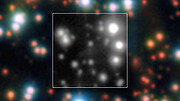
Astronomers found ’s first stellar-mass black hole, which has a visible star companion that is shown in greater detail. They used 20-plus years of data from NASA’s Hubble Space Telescope and recent data from NASA’s James Webb Space Telescope to make the discovery. Credit Image: ESA, NASA, Maximilian Häberle (MPIA), Joseph DePasquale (STScI)

The precise data collected by NASA’s Hubble and James Webb space telescopes enabled a team of astronomers to chart the visible star’s orbital path over a 20 year-plus period. Credit Animation: NASA, ESA, Matthew Whitaker (U of Utah), Joseph Olmsted (STScI)


The massive globular star cluster Omega Centauri has puzzled astronomers for decades. It should be filled with black holes left behind by exploding stars, yet evidence for them is scarce. Now, astronomers using archival data from NASA’s Hubble Space Telescope and supportive observations from NASA’s James Webb Space Telescope have finally located their first stellar-mass black hole in this cluster. Discovering the first of this missing black hole population will help refine current theories on black hole formation within environments such as Omega Centauri. The team’s findings published Monday in The Astrophysical Journal Letters.

Omega Centauri is composed of 10 million gravitationally bound stars. Though the astronomical community previously found evidence with Hubble that an intermediate-mass black hole lurks at its center, models suggest this star cluster should also contain about 10,000 smaller, stellar-mass black holes. This notable population of black holes evaded detection in previous observational studies, which used the radial velocity method or looked for radio and X-ray emission from material falling onto black holes.

This new discovery features a different approach, known as astrometry, to measure very small movements of stars over time. By sifting through more than 20 years of Hubble archival data and pulling in recent Webb data to further refine their astrometric measurements, the team located a star orbiting an invisible object so hefty that it has to be a black hole. Dubbed oMEGACat BH-2, it is the first stellar-mass black hole detected in Omega Centauri, and it has some surprising qualities. oMEGACat BH-2 has a lower-than-expected mass and, with its visible star companion, the black hole-star duo has the longest orbital period of any black hole binary system known to date.

“With Hubble and Webb data, we were able to see the motion of the visible main sequence star that is part of this binary, which is about 18,000 light-years away in the dense environment of Omega Centauri,” said Matthew Whitaker of the University of Utah, Salt Lake City, lead author of the paper. “The precision of these measurements is incredible, down to a fraction of a pixel on Hubble and Webb’s detectors. It would not have been possible to find this black hole without these two space telescopes.”

Long time coming


Based on the precise data from Hubble and Webb, the team could chart he star’s path over 20-plus years, during its closest approach to its black hole companion when it moved the fastest across the sky. From the extensive data, the team determined that the visible star orbits oMEGACat BH-2 once every 94 years, making it the longest-period black hole binary ever known.

Its long orbital period also gives a clue to the origin of this binary system. It was probably dynamically formed, meaning the star and its black hole companion did not start out together but rather found each other in this cluster. The researchers calculated that a system like oMEGACat BH-2 will survive for less than a billion years before it is torn apart by encounters with nearby stars, a much shorter span than the age of the cluster (approximately 12 billion years old).

“It's important to understand black hole populations in globular clusters because there's uncertainty about their physics and formation,” said Seth. “More specifically, understanding the process of forming black holes and then dynamically forming binaries is vital, because it affects our ability to interpret and understand gravitational wave events. Environments like Omega Centauri are the primary places where we think binaries are merging and creating these waves.”

The team’s discovery of stellar-mass black hole oMEGACat BH-2 with the Hubble-Webb dataset is just the start of finding these evasive black hole populations in globular star clusters.

“With Hubble and Webb, we can continue to look at Omega Centauri and expand our search for similar systems within other clusters,” said Whitaker. “We’re also very excited for the launch of NASA’s Nancy Grace Roman Space Telescope because it will image the crowded galactic bulge, including the galactic center, very regularly with Hubble-like resolution and with a much wider field of view. We’re hoping we’ll be able to find black hole binary systems like this one because of the regular cadence of Roman’s observations.”

The Hubble Space Telescope has been operating for over three decades and continues to make ground-breaking discoveries that shape our fundamental understanding of the universe. Hubble is a project of international cooperation between NASA and ESA (European Space Agency). NASA’s Goddard Space Flight Center in Greenbelt, Maryland, manages the telescope and mission operations. Lockheed Martin Space, based in Denver, also supports mission operations at Goddard. The Space Telescope Science Institute in Baltimore, which is operated by the Association of Universities for Research in Astronomy, conducts Hubble science operations for NASA.


Details

Last Updated: Jul 13, 2026
Editor: Andrea Gianopoulos
Location:
NASA Goddard Space Flight Center

Contact Media:

Claire Andreoli
NASA’s Goddard Space Flight Center
Greenbelt, Maryland

claire.andreoli@nasa.gov


Wednesday, December 10, 2025

Gemini and Blanco Telescopes Unlock Clues to Origin of Longest Gamma-ray Burst Ever Observed

PR Image noirlab2531a
Artist’s illustration of GRB 250702B

PR Image noirlab2531b
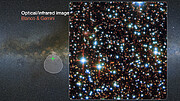
GRB 250702B collage

PR Image noirlab2531c
Field around GRB 250702B

PR Image noirlab2531d
GRB 250702B host galaxy


Videos

Zooming in on GRB 250702B
PR Video GRB-zoom
Zooming in on GRB 250702B

Localizing GRB250802B
PR Video noirlab2531a
Localizing GRB250802B

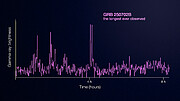
GRB250802B timescale
PR Video noirlab2531b
GRB250802B timescale


Data acquired with multiple NSF NOIRLab facilities indicate gamma-ray burst lasting over seven hours resides in a massive, extremely dusty galaxy

Astronomers have observed the longest-ever gamma-ray burst — a powerful, extragalactic explosion that lasted over seven hours. Rapid follow-up observations with the U.S. Department of Energy-fabricated Dark Energy Camera and the International Gemini Observatory, funded in part by the U.S. National Science Foundation and operated by NSF NOIRLab, provided crucial information about the possible origin of this extraordinary event and the galaxy that hosts it.

Gamma-ray bursts (GRBs) are among the most powerful explosions in the Universe, second only to the Big Bang. The majority of these bursts are observed to flash and fade within a few seconds to minutes. But on 2 July 2025, astronomers were alerted to a GRB source that was exhibiting repeating bursts and would end up lasting over seven hours. This event, dubbed GRB 250702B, is the longest gamma-ray burst humans have ever witnessed.

GRB 250702B was first identified by NASA’s Fermi Gamma-ray Space Telescope (Fermi). Shortly after space-based telescopes detected the initial bursts in gamma-rays and pinpointed its on-sky location in X-rays, astronomers around the world launched campaigns to observe the event in additional wavelengths of light.

One of the first revelations about this event came when infrared observations acquired by ESO's Very Large Telescope (VLT) established that the source of GRB 250702B is located in a galaxy outside of ours, which until then had remained a question.

Following this, a team of astronomers led by Jonathan Carney, graduate student at the University of North Carolina at Chapel Hill, set out to capture the event’s evolving afterglow, or the fading light emissions that follow the initial, extremely bright flash of gamma-rays. The properties of these emissions can provide clues about the type of event that caused the GRB.

To better understand the nature of this record-breaking event, the team used three of the world’s most powerful ground-based telescopes: the NSF Víctor M. Blanco 4-meter Telescope and the twin 8.1-meter International Gemini Observatory telescopes [1]. This trio observed GRB 250702B starting roughly 15 hours after the first detection until about 18 days later. The team presents their findings in a paper published on 26 November in The Astrophysical Journal Letters.

The Blanco telescope is located in Chile at NSF Cerro Tololo Inter-American Observatory (CTIO), a Program of NSF NOIRLab. The International Gemini Observatory consists of the Gemini North telescope in Hawai‘i and the Gemini South telescope in Chile. It is partly funded by NSF and operated by NSF NOIRLab.

“The ability to rapidly point the Blanco and Gemini telescopes on short notice is crucial to capturing transient events such as gamma-ray bursts,” says Carney. “Without this ability, we would be limited in our understanding of distant events in the dynamic night sky.”

The team used a suite of instruments for their investigation: the NEWFIRM wide-field infrared imager and the 570-megapixel DOE-fabricated Dark Energy Camera (DECam), both mounted on the Blanco telescope, and the Gemini Multi-Object Spectrographs (GMOS) mounted on Gemini North and Gemini South.

Analysis of the observations revealed that GRB 250702B could not be seen in visible light, partly due to interstellar dust in our own Milky Way Galaxy, but more so due to dust in the GRB’s host galaxy. In fact, Gemini North, which provided the only close-to-visible-wavelength detection of the host galaxy, required nearly two hours of observations to capture the faint signal from beneath the swaths of dust.

Carney and his team then combined these data with new observations taken with the Keck I Telescope at W. M. Keck Observatory, the Magellan Baade Telescope, and the Fraunhofer Telescope at Wendelstein Observatory, as well as publicly available data from VLT, NASA’s Hubble Space Telescope (HST), and X-ray and radio observatories. They then compared this robust dataset with theoretical models, which are frameworks that explain the behavior of astronomical phenomena. Models can be used to make predictions that can then be tested against observational data to refine scientists' understanding.

The team’s analysis established that the initial gamma-ray signal likely came from a narrow, high-speed jet of material crashing into the surrounding material, known as a relativistic jet. The analysis also helped characterize the environment around the GRB and the host galaxy overall. They found that there is a large amount of dust surrounding the location of the burst, and that the host galaxy is extremely massive compared to most GRB hosts. The data support a picture in which the GRB source resides in a dense, dusty environment, possibly a thick lane of dust present in the host galaxy along the line-of-sight between Earth and the GRB source. These details about the environment of GRB 250702B provide important constraints on the system that produced the initial outburst of gamma-rays.

Of the roughly 15,000 GRBs observed since the phenomenon was first recognized in 1973, only a half dozen come close to the length of GRB 250702B. Their proposed origins range from the collapse of a blue supergiant star, a tidal disruption event, or a newborn magnetar. GRB 250702B, however, doesn’t fit neatly into any known category.

From the data obtained so far, scientists have a few ideas of possible origin scenarios: (1) a black hole falling into a star that’s been stripped of its hydrogen and is now almost purely helium, (2) a star (or sub-stellar object such as a planet or brown dwarf) being disrupted during a close encounter with a stellar compact object, such as a stellar black hole or a neutron star, in what is known as a micro-tidal disruption event, (3) a star being torn apart as it falls into an intermediate-mass black hole — a type of black hole with a mass ranging from one hundred to one hundred thousand times the mass of our Sun that is believed to exist in abundance, but has so far been very difficult to find. If it is the latter scenario, this would be the first time in history that humans have witnessed a relativistic jet from an intermediate mass black hole in the act of consuming a star.

While more observations are needed to conclusively determine the cause of GRB 250702B, the data acquired so far remain consistent with these novel explanations.

“This work presents a fascinating cosmic archaeology problem in which we’re reconstructing the details of an event that occurred billions of light-years away,” says Carney. “The uncovering of these cosmic mysteries demonstrates how much we are still learning about the Universe's most extreme events and reminds us to keep imagining what might be happening out there.”


Notes

[1] This study uses data obtained from several sources, including:


More information

This research was presented in a paper titled “Optical/infrared observations of the extraordinary GRB 250702B: a highly obscured afterglow in a massive galaxy consistent with multiple possible progenitors” to appear in The Astrophysical Journal Letters. DOI: 10.3847/2041-8213/ae1d67

The team is composed of J. Carney (University of North Carolina at Chapel Hill, USA), I. Andreoni (University of North Carolina at Chapel Hill, USA), B. O'Connor (Carnegie Mellon University, USA), J. Freeburn (University of North Carolina at Chapel Hill, USA), H. Skobe (Carnegie Mellon University, USA), L. Westcott (University of Manchester, UK), M. Busmann (Ludwig Maximilian University of Munich, Germany), A. Palmese (Carnegie Mellon University, USA), X. J. Hall (Carnegie Mellon University, USA), R. Gill (National Autonomous University of Mexico, Mexico/The Open University of Israel, Israel), P. Beniamini (The Open University of Israel, Israel/The George Washington University, USA), E. R. Coughlin (Syracuse University, USA), C. D. Kilpatrick (Northwestern University, USA), A. Anumarlapudi (University of North Carolina at Chapel Hill, USA), N. M. Law (University of North Carolina at Chapel Hill, USA), H. Corbett (University of North Carolina at Chapel Hill, USA), T. Ahumada (California Institute of Technology, USA), P. Chen (Zhejiang University, China), C. Conselice (University of Manchester, UK), G. Damke (NSF NOIRLab, USA), K. K. Das (California Institute of Technology, USA), A. Gal-Yam (Weizmann Institute of Science, Israel), D. Gruen (Ludwig Maximilian University of Munich, Germany/Excellence Cluster ORIGINS, Germany), S. Heathcote (NSF NOIRLab, USA), L. Hu (Carnegie Mellon University, USA), V. Karambelkar (California Institute of Technology, USA), M. Kasliwal (California Institute of Technology, USA), K. Labrie (NSF NOIRLab, USA), D. Pasham (Eureka Scientific, USA/The George Washington University, USA), A. Riffeser, M. Schmidt, K. Sharma, S. Wilke (Ludwig Maximilian University of Munich, Germany), & W. Zang (Center for Astrophysics | Harvard & Smithsonian, USA).

NSF NOIRLab, the U.S. National Science Foundation center for ground-based optical-infrared astronomy, operates the International Gemini Observatory (a facility of NSF, NRC–Canada, ANID–Chile, MCTIC–Brazil, MINCyT–Argentina, and KASI–Republic of Korea), NSF Kitt Peak National Observatory (KPNO), NSF Cerro Tololo Inter-American Observatory (CTIO), the Community Science and Data Center (CSDC), and NSF–DOE Vera C. Rubin Observatory (in cooperation with DOE’s SLAC National Accelerator Laboratory). It is managed by the Association of Universities for Research in Astronomy (AURA) under a cooperative agreement with NSF and is headquartered in Tucson, Arizona.

The scientific community is honored to have the opportunity to conduct astronomical research on I’oligam Du’ag (Kitt Peak) in Arizona, on Maunakea in Hawai‘i, and on Cerro Tololo and Cerro Pachón in Chile. We recognize and acknowledge the very significant cultural role and reverence of I’oligam Du’ag to the Tohono O’odham Nation, and Maunakea to the Kanaka Maoli (Native Hawaiians) community.

The Dark Energy Camera was designed specifically for the Dark Energy Survey (DES). It was funded by the U.S. Department of Energy (DOE) and was built and tested at DOE's Fermilab.


Links


Contacts:

Jonathan Carney
Graduate Student
University of North Carolina at Chapel Hill
Email:
jcarney@unc.edu

Josie Fenske
Public Information Officer
NSF NOIRLab
Email:
josie.fenske@noirlab.edu


Monday, February 24, 2025

DESI Uncovers 300 New Intermediate-Mass Black Holes Plus 2500 New Active Black Holes in Dwarf Galaxies

PR Image noirlab2508a
Artist’s illustration of dwarf galaxy with active galactic nucleus

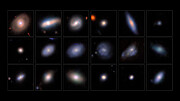
PR Image noirlab2508b
Dwarf Galaxy AGN Candidates

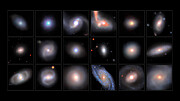
PR Image noirlab2508c
Intermediate Black Hole Candidates

PR Image noirlab2508d
Dwarf AGN Candidates Scatter Plot


Cosmoview Episode 94: DESI Uncovers 300 New Intermediate-Mass Black Holes Plus 2500 New Active Black Holes in Dwarf Galaxies

Cosmoview Episodio 94: DESI descubre un tesoro de 300 nuevos agujeros negros de masa intermedia y 2.500 agujeros negros activos en galaxias enanasin English only

Pan across dwarf AGN illustration
PR Video noirlab2508c
Pan across dwarf AGN illustration

Pan across Dwarf AGN candidates
PR Video noirlab2508d
Pan across Dwarf AGN candidates

Pan across IMBH candidates
PR Video noirlab2508e
Pan across IMBH candidates


The Dark Energy Spectroscopic Instrument discovers a treasure trove of active black holes in dwarf galaxies and reveals that surprisingly few are of intermediate mass

Within the Dark Energy Spectroscopic Instrument’s early data, scientists have uncovered the largest samples ever of intermediate-mass black holes and dwarf galaxies hosting an active black hole, more than tripling the existing census of both. These large statistical samples will allow for more in-depth studies of the dynamics between dwarf galaxy evolution and black hole growth, and open up vast discovery potential surrounding the evolution of the Universe’s earliest black holes.

Using early data from the Dark Energy Spectroscopic Instrument (DESI), a team of scientists have compiled the largest sample ever of dwarf galaxies that host an actively feeding black hole, as well as the most extensive collection of intermediate-mass black hole candidates to date. This dual achievement not only expands scientists’ understanding of the black hole population in the Universe, but also sets the stage for further explorations regarding the formation of the first black holes to form in the Universe and their role in galaxy evolution.

DESI is a state-of-the-art instrument that can capture light from 5000 galaxies simultaneously. It was constructed, and is operated, with funding from the Department of Energy (DOE) Office of Science. DESI is mounted on the U.S. National Science Foundation (NSF) Nicholas U. Mayall 4-meter Telescope at the NSF Kitt Peak National Observatory, a Program of NSF NOIRLab. The program is now in its fourth of five years surveying the sky and is set to observe roughly 40 million galaxies and quasars by the time the project ends.

The DESI project is an international collaboration of more than 900 researchers from over 70 institutions around the world and is managed by DOE’s Lawrence Berkeley National Laboratory (Berkeley Lab).

With DESI’s early data [1], which include survey validation and 20% of the first year of operations, the team, led by University of Utah postdoctoral researcher Ragadeepika Pucha, was able to obtain an unprecedented dataset that includes the spectra of 410,000 galaxies [2], including roughly 115,000 dwarf galaxies — small, diffuse galaxies containing thousands to several billions of stars and very little gas. This extensive set would allow Pucha and her team to explore the complex interplay between black hole evolution and dwarf galaxy evolution.

While astrophysicists are fairly confident that all massive galaxies, like our Milky Way, host black holes at their centers, the picture becomes unclear as you move toward the low-mass end of the spectrum. Finding black holes is a challenge in itself, but identifying them in dwarf galaxies is even more difficult, owing to their small sizes and the limited ability of our current instruments to resolve the regions close to these objects. An actively feeding black hole, however, is easier to spot.

“When a black hole at the center of a galaxy starts feeding, it unleashes a tremendous amount of energy into its surroundings, transforming into what we call an active galactic nucleus,” says Pucha. “This dramatic activity serves as a beacon, allowing us to identify hidden black holes in these small galaxies.”

From their search the team identified an astonishing 2500 candidate dwarf galaxies hosting an active galactic nucleus (AGN) — the largest sample ever discovered. The significantly higher fraction of dwarf galaxies hosting an AGN (2%) relative to previous studies (about 0.5%) is an exciting result and suggests scientists have been missing a substantial number of low-mass, undiscovered black holes.

In a separate search through the DESI data, the team identified 300 intermediate-mass black hole candidates — the most extensive collection to date. Most black holes are either lightweight (less than 100 times the mass of our Sun) or supermassive (more than one million times the mass of our Sun). The black holes in between the two extremes are poorly understood, but are theorized to be the relics of the very first black holes formed in the early Universe, and the seeds of the supermassive black holes that lie at the center of large galaxies today. Yet they remain elusive, with only around 100–150 intermediate-mass black hole candidates known until now. With the large population discovered by DESI, scientists now have a powerful new dataset to use to study these cosmic enigmas.

“The technological design of DESI was important for this project, particularly its small fiber size, which allowed us to better zoom in on the center of galaxies and identify the subtle signatures of active black holes,” says Stephanie Juneau, associate astronomer at NSF NOIRLab and co-author of the paper. “With other fiber spectrographs with larger fibers, more starlight from the galaxy's outskirts comes in and dilutes the signals we’re searching for. This explains why we managed to find a higher fraction of active black holes in this work relative to previous efforts.”

Typically, black holes found in dwarf galaxies are expected to be within the intermediate-mass regime. But intriguingly, only 70 of the newly discovered intermediate-mass black hole candidates overlap with dwarf AGN candidates. This adds another layer of excitement to the findings and raises questions about black hole formation and evolution within galaxies.

“For example, is there any relationship between the mechanisms of black hole formation and the types of galaxies they inhabit?” Pucha said. “Our wealth of new candidates will help us delve deeper into these mysteries, enriching our understanding of black holes and their pivotal role in galaxy evolution.


Notes

[1] DESI early data is available as files via the DESI collaboration and as searchable databases of catalogs and spectra via the
 Astro Data Lab and SPARCL at the Community Science and Data Center, a Program of NSF NOIRLab.

[2] DESI's early data contain nearly 3.5 million unique galaxy spectra. The sample used in this work was selected based on redshift (distance) and accurate detection of emission lines.


More information

This research was presented in a paper titled “Tripling the Census of Dwarf AGN Candidates Using DESI Early Data” to appear in The Astrophysical Journal. DOI: 10.3847/1538-4357/adb1dd. The study can be found ahead of publication here.

The team is composed of Ragadeepika Pucha (University of Utah, University of Arizona), S. Juneau (NSF NOIRLab), Arjun Dey (NSF NOIRLab), M. Siudek (Institute of Space Sciences (ICE-CSIC), Instituto de Astrof´ısica de Canarias), M. Mezcua (ICE-CSIC, Institut d’Estudis Espacials de Catalunya (IEEC)), J. Moustakas (Siena College), S. BenZvi (University of Rochester), K. Hailine (University of Arizona), R. Hviding (Max Planck Institute for Astronomy, University of Arizona), Yao-Yuan Mao (University of Utah), D. M. Alexander (Durham University), R. Alfarsy (University of Portsmouth), C. Circosta (European Space Agency (ESA), University College London), Wei-Jian Guo (National Astronomical Observatories, Chinese Academy of Sciences), V. Manwadkar (Stanford University, SLAC National Accelerator Laboratory), P. Martini (The Ohio State University), B. A. Weaver (NSF NOIRLab), J. Aguilar (Lawrence Berkeley National Laboratory), S. Ahlen (Boston University), D. Bianchi (Università degli Studi di Milano), D. Brooks (University College London), R. Canning (University of Portsmouth), T. Claybaugh (Lawrence Berkeley National Laboratory) K. Dawson (University of Utah), A. de la Macorra (Universidad Nacional Autónoma de México), Biprateep Dey (University of Toronto, University of Pittsburgh), P. Doel (University College London), A. Font-Ribera (University College London, The Barcelona Institute of Science and Technology), J. E. Forero-Romero (Universidad de los Andes), E. Gaztañaga (IEEC, University of Portsmouth, ICE-CSIC), S. Gontcho A Gontcho (Lawrence Berkeley National Laboratory), G. Gutierrez (Fermi National Accelerator Laboratory), K. Honscheid (The Ohio State University), R. Kehoe (Southern Methodist University), S. E. Koposov (University of Edinburgh, University of Cambridge), A. Lambert (Lawrence Berkeley National Laboratory), M. Landriau (Lawrence Berkeley National Laboratory), L. Le Guillou (Sorbonne Université, CNRS/IN2P3), A. Meisner (NSF NOIRLab), R. Miquel (Institució Catalana de Recerca i Estudis Avançats, The Barcelona Institute of Science and Technology), F. Prada (Instituto de Astrofísica de Andalucía (CSIC)), G. Rossi (Sejong University), E. Sanchez (CIEMAT), D. Schlegel (Lawrence Berkeley National Laboratory) M. Schubnell (University of Michigan), H. Seo (Ohio University), D. Sprayberry (NSF NOIRLab), G. Tarlé (University of Michigan), and H. Zou (National Astronomical Observatories, Chinese Academy of Sciences).

This research is supported by the Director, Office of Science, Office of High Energy Physics of the U.S. Department of Energy, and by the National Energy Research Scientific Computing Center, a DOE Office of Science User Facility; additional support for DESI is provided by the U.S. National Science Foundation, Division of Astronomical Sciences; the Science and Technology Facilities Council of the United Kingdom; the Gordon and Betty Moore Foundation; the Heising-Simons Foundation; the French Alternative Energies and Atomic Energy Commission (CEA); the National Council of Humanities, Science and Technology of Mexico (CONAHCYT); the Ministry of Science, Innovation and Universities of Spain (MICIU/AEI/10.13039/501100011033), and by the DESI Member Institutions. The authors are honored to be permitted to conduct scientific research on I’oligam Du’ag (Kitt Peak), a mountain with particular significance to the Tohono O’odham Nation.

Current DESI Member Institutions include: Aix-Marseille University; Argonne National Laboratory; Barcelona-Madrid Regional Participation Group; Brookhaven National Laboratory; Boston University; Brazil Regional Participation Group; Carnegie Mellon University; CEA-IRFU, Saclay; China Participation Group; Cornell University; Durham University; École Polytechnique Fédérale de Lausanne; Eidgenössische Technische Hochschule, Zürich; Fermi National Accelerator Laboratory; Granada-Madrid-Tenerife Regional Participation Group; Harvard University; Kansas State University; Korea Astronomy and Space Science Institute; Korea Institute for Advanced Study; Lawrence Berkeley National Laboratory; Laboratoire de Physique Nucléaire et de Hautes Energies; Ludwig Maximilians University; Max Planck Institute; Mexico Regional Participation Group; National Taiwan University; New York University; NSF’s National Optical-Infrared Astronomy Research Laboratory; Ohio University; Perimeter Institute; Shanghai Jiao Tong University; Siena College; SLAC National Accelerator Laboratory; Southern Methodist University; Swinburne University; The Ohio State University; Universidad de los Andes; University of Arizona; University of Barcelona; University of California, Berkeley; University of California, Irvine; University of California, Santa Cruz; University College London; University of Florida; University of Michigan at Ann Arbor; University of Pennsylvania; University of Pittsburgh; University of Portsmouth; University of Queensland; University of Rochester; University of Toronto; University of Utah; University of Waterloo; University of Wyoming; University of Zurich; UK Regional Participation Group; Yale University. For more information, visit desi.lbl.gov.

Lawrence Berkeley National Laboratory addresses the world’s most urgent scientific challenges by advancing sustainable energy, protecting human health, creating new materials, and revealing the origin and fate of the universe. Founded in 1931, Berkeley Lab’s scientific expertise has been recognized with 13 Nobel prizes. The University of California manages Berkeley Lab for the U.S. Department of Energy’s Office of Science. For more, visit
http://www.lbl.gov.

DOE’s Office of Science is the single largest supporter of basic research in the physical sciences in the United States, and is working to address some of the most pressing challenges of our time. For more information, please visit
science.energy.gov.

NSF NOIRLab, the U.S. National Science Foundation center for ground-based optical-infrared astronomy, operates the International Gemini Observatory (a facility of NSF, NRC–Canada, ANID–Chile, MCTIC–Brazil, MINCyT–Argentina, and KASI–Republic of Korea), NSF Kitt Peak National Observatory (KPNO), NSF Cerro Tololo Inter-American Observatory (CTIO), the Community Science and Data Center (CSDC), and NSF–DOE Vera C. Rubin Observatory (in cooperation with DOE’s SLAC National Accelerator Laboratory). It is managed by the Association of Universities for Research in Astronomy (AURA) under a cooperative agreement with NSF and is headquartered in Tucson, Arizona.

The scientific community is honored to have the opportunity to conduct astronomical research on I’oligam Du’ag (Kitt Peak) in Arizona, on Maunakea in Hawai‘i, and on Cerro Tololo and Cerro Pachón in Chile. We recognize and acknowledge the very significant cultural role and reverence of I’oligam Du’ag (Kitt Peak) to the Tohono O’odham Nation, and Maunakea to the Kanaka Maoli (Native Hawaiians) community.

The National Science Foundation (NSF) is an independent federal agency created by Congress in 1950 to promote the progress of science. NSF supports basic research and people to create knowledge that transforms the future. Please refer to
www.nsf.gov.

Established in 2007 by Mark Heising and Elizabeth Simons, the Heising-Simons Foundation (www.heisingsimons.org) is dedicated to advancing sustainable solutions in the environment, supporting groundbreaking research in science, and enhancing the education of children.

The Gordon and Betty Moore Foundation, established in 2000, seeks to advance environmental conservation, patient care and scientific research. The Foundation’s Science Program aims to make a significant impact on the development of provocative, transformative scientific research, and increase knowledge in emerging fields. For more information, visit
www.moore.org.

The Science and Technology Facilities Council (STFC) of the United Kingdom coordinates research on some of the most significant challenges facing society, such as future energy needs, monitoring and understanding climate change, and global security. It offers grants and support in particle physics, astronomy and nuclear physics, visit
www.stfc.ac.uk.


Links


Contacts

Ragadeepika Pucha
University of Utah
Postdoctoral Researcher
Email:
dr.raga.pucha@gmail.com

Stephanie Juneau
Associate Astronomer
NSF NOIRLab
Email:
stephanie.juneau@noirlab.edu

Josie Fenske
Jr. Public Information Officer
Email:
josie.fenske@noirlab.edu

Friday, July 12, 2024

NASA's Hubble Finds Strong Evidence for Intermediate-Mass Black Hole in Omega Centauri

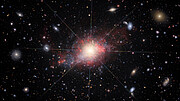
Omega Centauri
Credits: Image: ESA/Hubble, NASA, Maximilian Häberle (MPIA)

IMBH Candidate in Omega Centauri
Credits: Image: ESA/Hubble, NASA, Maximilian Häberle (MPIA)

Omega Centauri (cropped)
Credits: Image: ESA/Hubble, NASA, Maximilian Häberle (MPIA)


Most known black holes are either extremely massive, like the supermassive black holes that lie at the cores of large galaxies, or relatively lightweight, with a mass of under 100 times that of the Sun. Intermediate-mass black holes (IMBHs) are scarce, however, and are considered rare "missing links" in black hole evolution.

Now, an international team of astronomers has used more than 500 images from NASA's Hubble Space Telescope — spanning two decades of observations — to search for evidence of an intermediate-mass black hole by following the motion of seven fast-moving stars in the innermost region of the globular star cluster Omega Centauri.

These stars provide new compelling evidence for the presence of the gravitational pull from an intermediate-mass black hole tugging on them. Only a few other IMBH candidates have been found to date.

Omega Centauri consists of roughly 10 million stars that are gravitationally bound. The cluster is about 10 times as massive as other big globular clusters — almost as massive as a small galaxy.

Among the many questions scientists want to answer: Are there any IMBHs, and if so, how common are they? Does a supermassive black hole grow from an IMBH? How do IMBHs themselves form? Are dense star clusters their favored home?

The astronomers have now created an enormous catalog for the motions of these stars, measuring the velocities for 1.4 million stars gleaned from the Hubble images of the cluster. Most of these observations were intended to calibrate Hubble's instruments rather than for scientific use, but they turned out to be an ideal database for the team's research efforts.

"We discovered seven stars that should not be there," explained Maximilian Häberle of the Max Planck Institute for Astronomy in Germany, who led this investigation. "They are moving so fast that they would escape the cluster and never come back. The most likely explanation is that a very massive object is gravitationally pulling on these stars and keeping them close to the center. The only object that can be so massive is a black hole, with a mass at least 8,200 times that of our sun."

Several studies have suggested the presence of an IMBH in Omega Centauri. However, other studies proposed the mass could be contributed by a central cluster of stellar-mass black holes, and had suggested the lack of fast-moving stars above the necessary escape velocity made an IMBH less likely in comparison.

"This discovery is the most direct evidence so far of an IMBH in Omega Centauri," added team lead Nadine Neumayer of the Max Planck Institute for Astronomy in Germany, who initiated the study, together with Anil Seth from the University of Utah, Salt Lake City. "This is exciting because there are only very few other black holes known with a similar mass. The black hole in Omega Centauri may be the best example of an IMBH in our cosmic neighborhood."

If confirmed, at a distance of 17,700 light-years the candidate black hole resides closer to Earth than the 4.3-million-solar-mass black hole in the center of the Milky Way, located 26,000 light-years away.

Omega Centauri is visible from Earth with the naked eye and is one of the favorite celestial objects for stargazers living in the southern hemisphere. Located just above the plane of the Milky Way, the cluster appears almost as large as the full Moon when seen from a dark rural area. It was first listed in Ptolemy’s catalog nearly 2,000 years ago as a single star. Edmond Halley reported it as a nebula in 1677. In the 1830s the English astronomer John Herschel was the first to recognize it as a globular cluster.

The discovery paper led by Häberle et al. is published online today in the journal Nature.

The Hubble Space Telescope has been operating for over three decades and continues to make ground-breaking discoveries that shape our fundamental understanding of the universe. Hubble is a project of international cooperation between NASA and ESA (European Space Agency). NASA's Goddard Space Flight Center in Greenbelt, Maryland, manages the telescope and mission operations. Lockheed Martin Space, based in Denver, Colorado, also supports mission operations at Goddard. The Space Telescope Science Institute in Baltimore, Maryland, which is operated by the Association of Universities for Research in Astronomy, conducts Hubble science operations for NASA.


About This Release

Credits:

Media Contact:

Ray Villard
Space Telescope Science Institute, Baltimore, Maryland

Bethany Downer
ESA/Hubble.org

Science Contact:

Maximilian Häberle
Max Planck Institute for Astronomy, Heidelberg, Germany

Permissions: Content Use Policy

Contact Us: Direct inquiries to the News Team.

Related Links and Documents