Thursday, March 14, 2024

Ghostly Stellar Tendrils Captured in Largest DECam Image Ever Released

PR Image noirlab2406a
Ghostly Stellar Tendrils of the Vela Supernova Remnant

PR Image noirlab2406b
Vela Supernova Remnant Excerpts

PR Image noirlab2406c
Open Star Cluster [FSR2007] 1410

PR Image noirlab2406d
Planetary Nebula PNG 262.4-01.9

PR Image noirlab2406e
Globular Star Cluster CI Ferrero 54

PR Image noirlab2406f
Supernova Remnant Puppis A

PR Image noirlab2406g
Dark Nebula TGU H1674

PR Image noirlab2406h
Background Galaxy Found in Image of Vela Supernova Remnant


Videos

Cosmoview Episode 77: Ghostly Stellar Tendrils Captured in Largest DECam Image Ever Released 
 PR Video noirlab2406a
Cosmoview Episode 77: Ghostly Stellar Tendrils Captured in Largest DECam Image Ever Released

Cosmoview Episodio 77: Filamentos estelares fantasmales capturados con la imagen de DECam más grande jamás publicada  
PR Video noirlab2406b
Cosmoview Episodio 77: 
Filamentos estelares fantasmales capturados con la imagen de DECam más grande jamás publicada
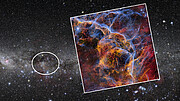
Pan on the Vela Supernova Remnant  
PR Video noirlab2406c
Pan on the Vela Supernova Remnant

Zooming into the Vela Supernova Remnant  
PR Video noirlab2406d
Zooming into the Vela Supernova Remnant


Dark Energy Camera captures remains of a massive star that exploded nearly 11,000 years ago in huge gigapixel image

With the powerful, 570-megapixel Department of Energy-fabricated Dark Energy Camera (DECam), astronomers have constructed a massive 1.3-gigapixel image showcasing the central part of the Vela Supernova Remnant, the cosmic corpse of a gigantic star that exploded as a supernova. DECam is one of the highest-performing wide-field imaging instruments in the world and is mounted on the US National Science Foundation's Víctor M. Blanco 4-meter Telescope at Cerro Tololo Inter-American Observatory, a Program of NSF’s NOIRLab.

This colorful web of wispy gas filaments is the Vela Supernova Remnant, an expanding nebula of cosmic debris left over from a massive star that exploded about 11,000 years ago. Located around 800 light-years away in the constellation Vela (the Sails), this nebula is one of the nearest supernova remnants to Earth. Though the unnamed star ended its life thousands of years ago, the shockwave its death produced is still propagating into the interstellar medium, carrying glowing tendrils of gas with it.

This image is one of the biggest ever made of this object and was taken with the state-of-the-art wide-field Dark Energy Camera (DECam), built by the Department of Energy and mounted on the US National Science Foundation's Víctor M. Blanco 4-meter Telescope at Cerro Tololo Inter-American Observatory in Chile, a Program of NSF’s NOIRLab. The striking reds, yellows, and blues in this image were achieved through the use of three DECam filters that each collect a specific color of light. Separate images were taken in each filter and then stacked on top of each other to produce this high-resolution color image that showcases the intricate web-like filaments snaking throughout the expanding cloud of gas. This is also the largest DECam image ever released publicly, containing an astounding 1.3 gigapixels [1].

The Vela Supernova Remnant is merely the ghost of a massive star that once was. When the star exploded 11,000 years ago, its outer layers were violently stripped away and flung into the surrounding region, driving the shockwave that is still visible today. As the shockwave expands into the surrounding region, the hot, energized gas flies away from the point of detonation, compressing and interacting with the interstellar medium to produce the stringy blue and yellow filaments seen in the image. The Vela Supernova Remnant is a gigantic structure, spanning almost 100 light-years and extending to twenty times the diameter of the full Moon in the night sky.

Despite the dramatics of the star’s final moments, it wasn’t entirely wiped from existence. After shedding its outer layers, the core of the star collapsed into a neutron star — an ultra-dense ball consisting of protons and electrons that have been smashed together to form neutrons. The neutron star, named the Vela Pulsar, is now an ultra-condensed object with the mass of a star like the Sun contained in a sphere just a few kilometers across. Located in the lower left region of this image, the Vela Pulsar is a relatively dim star that is indistinguishable from its thousands of celestial neighbors. Still reeling from its explosive death, the Vela Pulsar spins rapidly on its own axis and possesses a powerful magnetic field. These properties result in twin beams of radiation that sweep the sky 11 times per second, just like the consistent blips of a rotating lighthouse bulb.

This high-quality image demonstrates the incredible deep and wide capabilities of DECam. From its vantage point in the Chilean Andes, the Blanco telescope receives light that has traveled across the Universe. After entering the telescope’s tube, the light is reflected by a mirror 4-meters (13-feet) wide — a massive, aluminum-coated and precisely shaped piece of glass roughly the weight of a semi-truck. The light is then guided into the optical innards of DECam, passing through a corrective lens nearly a meter (3.3 feet) across before falling on a grid of 62 charge-coupled devices (CCDs), which act like the ‘eyes’ of the camera. The incoming light is then converted into electrical signals which are read out as pixels.

A single image taken with DECam has 570 megapixels, so with multiple exposures stacked on top of one another, the amount of detail that can be captured is truly remarkable. Owing to DECam’s large mosaic of CCDs, astronomers are able to create mesmerizing images of faint astronomical objects, such as the Vela Supernova Remnant, that offer a limitless starscape to explore.


Notes

[1] For comparison, the pixel count of an image taken with the camera in a standard smartphone can range from 12 to 48 megapixels. This image contains a total of 35786 x 35881 pixels, or 1.28 gigapixels.


More information

NSF’s NOIRLab (National Optical-Infrared Astronomy Research Laboratory), the US center for ground-based optical-infrared astronomy, operates the international Gemini Observatory (a facility of NSF, NRC–Canada, ANID–Chile, MCTIC–Brazil, MINCyT–Argentina, and KASI–Republic of Korea), Kitt Peak National Observatory (KPNO), Cerro Tololo Inter-American Observatory (CTIO), the Community Science and Data Center (CSDC), and Vera C. Rubin Observatory (in cooperation with DOE’s SLAC National Accelerator Laboratory). It is managed by the Association of Universities for Research in Astronomy (AURA) under a cooperative agreement with NSF and is headquartered in Tucson, Arizona. The astronomical community is honored to have the opportunity to conduct astronomical research on Iolkam Du’ag (Kitt Peak) in Arizona, on Maunakea in Hawai‘i, and on Cerro Tololo and Cerro Pachón in Chile. We recognize and acknowledge the very significant cultural role and reverence that these sites have to the Tohono O'odham Nation, to the Native Hawaiian community, and to the local communities in Chile, respectively.


Links


Contacts:

Josie Fenske
Jr. Public Information Officer
NSF’s NOIRLab
Email:
josie.fenske@noirlab.edu


Wednesday, March 13, 2024

Cheers! NASA's Webb Finds Ethanol, Other Icy Ingredients for Worlds

Parallel Field to Protostar IRAS 23385 (MIRI Image)
Credits: Image: NASA, ESA, CSA, W.R.M. Rocha (LEI)

Complex Organic Molecules of NGC 1333 IRAS 2A Protostar (MIRI)
Credits: Illustration: NASA, ESA, CSA, Leah Hustak (STScI)


What do margaritas, vinegar, and ant stings have in common? They contain chemical ingredients that NASA’s James Webb Space Telescope has identified surrounding two young protostars known as IRAS 2A and IRAS 23385. Although planets are not yet forming around those stars, these and other molecules detected there by Webb represent key ingredients for making potentially habitable worlds.

An international team of astronomers used Webb’s MIRI (Mid-Infrared Instrument) to identify a variety of icy compounds made up of complex organic molecules like ethanol (alcohol) and likely acetic acid (an ingredient in vinegar). This work builds on previous Webb detections of diverse ices in a cold, dark molecular cloud.

“This finding contributes to one of the long-standing questions in astrochemistry,” said team leader Will Rocha of Leiden University in the Netherlands. “What is the origin of complex organic molecules, or COMs, in space? Are they made in the gas phase or in ices? The detection of COMs in ices suggests that solid-phase chemical reactions on the surfaces of cold dust grains can build complex kinds of molecules.”

As several COMs, including those detected in the solid phase in this research, were previously detected in the warm gas phase, it is now believed that they originate from the sublimation of ices. Sublimation is to change directly from a solid to a gas without becoming a liquid. Therefore, detecting COMs in ices makes astronomers hopeful about improved understanding of the origins of other, even larger molecules in space.

Scientists are also keen to explore to what extent these COMs are transported to planets at much later stages of protostellar evolution. COMs in cold ices are thought to be easier to transport from molecular clouds to planet-forming disks than warm, gaseous molecules. These icy COMs can therefore be incorporated into comets and asteroids, which in turn may collide with forming planets, delivering the ingredients for life to possibly flourish.

The science team also detected simpler molecules, including formic acid (which causes the burning sensation of an ant sting), methane, formaldehyde, and sulfur dioxide. Research suggests that sulfur-containing compounds like sulfur dioxide played an important role in driving metabolic reactions on the primitive Earth.

Of particular interest is that one of the sources investigated, IRAS 2A, is characterized as a low-mass protostar. IRAS 2A may therefore be similar to the early stages of our own solar system. As such, the chemicals identified around this protostar were likely present in the first stages of development of our solar system and later delivered to the primitive Earth.

“All of these molecules can become part of comets and asteroids and eventually new planetary systems when the icy material is transported inward to the planet-forming disk as the protostellar system evolves,” said Ewine van Dishoeck of Leiden University, one of the coordinators of the science program. “We look forward to following this astrochemical trail step-by-step with more Webb data in the coming years.”

These observations were made for the JOYS+ (James Webb Observations of Young ProtoStars) program. The team dedicated these results to team member Harold Linnartz, who unexpectedly passed away in December 2023, shortly after the acceptance of this paper.

This research has been accepted for publication in the journal Astronomy & Astrophysics.

The James Webb Space Telescope is the world's premier space science observatory. Webb is solving mysteries in our solar system, looking beyond to distant worlds around other stars, and probing the mysterious structures and origins of our universe and our place in it. Webb is an international program led by NASA with its partners, ESA (European Space Agency) and the Canadian Space Agency.


About This Release

Credits:

Media Contact:

Bethany Downer
ESA/Webb, Baltimore, Maryland

Christine Pulliam
Space Telescope Science Institute, Baltimore, Maryland

Science: W.R.M. Rocha (LEI)

Permissions: Content Use Policy

Contact Us: Direct inquiries to the News Team.

Related Links and Documents


Tuesday, March 12, 2024

NASA's Webb, Hubble Telescopes Affirm Universe's Expansion Rate, Puzzle Persists

NGC 5468 (Webb NIRCam + Hubble WFC3)
Credits: Image: NASA, ESA, CSA, STScI, Adam G. Riess (JHU, STScI)

Cepheid Variable Star P42 in NGC 5468
Credits: Image: NASA, ESA, CSA, STScI, Adam G. Riess (JHU, STScI)


When you are trying to solve one of the biggest conundrums in cosmology, you should triple check your homework. The puzzle, called the "Hubble Tension," is that the current rate of the expansion of the universe is faster than what astronomers expect it to be, based on the universe's initial conditions and our present understanding of the universe’s evolution.

Scientists using NASA's Hubble Space Telescope and many other telescopes consistently find a number that does not match predictions based on observations from ESA's (European Space Agency's) Planck mission. Does resolving this discrepancy require new physics? Or is it a result of measurement errors between the two different methods used to determine the rate of expansion of space?

Hubble has been measuring the current rate of the universe’s expansion for 30 years, and astronomers want to eliminate any lingering doubt about its accuracy. Now, Hubble and NASA’s James Webb Space Telescope have tag-teamed to produce definitive measurements, furthering the case that something else – not measurement errors – is influencing the expansion rate.

“With measurement errors negated, what remains is the real and exciting possibility we have misunderstood the universe,” said Adam Riess, a physicist at Johns Hopkins University in Baltimore. Riess holds a Nobel Prize for co-discovering the fact that the universe’s expansion is accelerating, due to a mysterious phenomenon now called “dark energy.”

As a crosscheck, an initial Webb observation in 2023 confirmed that Hubble measurements of the expanding universe were accurate. However, hoping to relieve the Hubble Tension, some scientists speculated that unseen errors in the measurement may grow and become visible as we look deeper into the universe. In particular, stellar crowding could affect brightness measurements of more distant stars in a systematic way.

The SH0ES (Supernova H0 for the Equation of State of Dark Energy) team, led by Riess, obtained additional observations with Webb of objects that are critical cosmic milepost markers, known as Cepheid variable stars, which now can be correlated with the Hubble data.

“We’ve now spanned the whole range of what Hubble observed, and we can rule out a measurement error as the cause of the Hubble Tension with very high confidence,” Riess said.

The team’s first few Webb observations in 2023 were successful in showing Hubble was on the right track in firmly establishing the fidelity of the first rungs of the so-called cosmic distance ladder.

Astronomers use various methods to measure relative distances in the universe, depending upon the object being observed. Collectively these techniques are known as the cosmic distance ladder – each rung or measurement technique relies upon the previous step for calibration.

But some astronomers suggested that, moving outward along the “second rung,” the cosmic distance ladder might get shaky if the Cepheid measurements become less accurate with distance. Such inaccuracies could occur because the light of a Cepheid could blend with that of an adjacent star – an effect that could become more pronounced with distance as stars crowd together and become harder to distinguish from one another.

The observational challenge is that past Hubble images of these more distant Cepheid variables look more huddled and overlapping with neighboring stars at ever farther distances between us and their host galaxies, requiring careful accounting for this effect. Intervening dust further complicates the certainty of the measurements in visible light. Webb slices though the dust and naturally isolates the Cepheids from neighboring stars because its vision is sharper than Hubble’s at infrared wavelengths.

“Combining Webb and Hubble gives us the best of both worlds. We find that the Hubble measurements remain reliable as we climb farther along the cosmic distance ladder,” said Riess.

The new Webb observations include five host galaxies of eight Type Ia supernovae containing a total of 1,000 Cepheids, and reach out to the farthest galaxy where Cepheids have been well measured – NGC 5468 – at a distance of 130 million light-years. “This spans the full range where we made measurements with Hubble. So, we've gone to the end of the second rung of the cosmic distance ladder,” said co-author Gagandeep Anand of the Space Telescope Science Institute in Baltimore, which operates the Webb and Hubble telescopes for NASA.

Hubble and Webb’s further confirmation of the Hubble Tension sets up other observatories to possibly settle the mystery. NASA’s upcoming Nancy Grace Roman Space Telescope will do wide celestial surveys to study the influence of dark energy, the mysterious energy that is causing the expansion of the universe to accelerate. ESA's Euclid observatory, with NASA contributions, is pursuing a similar task.

At present it’s as though the distance ladder observed by Hubble and Webb has firmly set an anchor point on one shoreline of a river, and the afterglow of the big bang observed by Planck’s measurement from the beginning of the universe is set firmly on the other side. How the universe’s expansion was changing in the billions of years between these two endpoints has yet to be directly observed. “We need to find out if we are missing something on how to connect the beginning of the universe and the present day,” said Riess.

These findings were published in the February 6, 2024 issue of The Astrophysical Journal Letters.

The Hubble Space Telescope has been operating for over three decades and continues to make ground-breaking discoveries that shape our fundamental understanding of the universe. Hubble is a project of international cooperation between NASA and ESA. NASA's Goddard Space Flight Center in Greenbelt, Maryland, manages the telescope. Goddard also conducts mission operations with Lockheed Martin Space in Denver, Colorado. The Space Telescope Science Institute (STScI) in Baltimore, Maryland, conducts Hubble and Webb science operations for NASA.

The James Webb Space Telescope is the world's premier space science observatory. Webb is solving mysteries in our solar system, looking beyond to distant worlds around other stars, and probing the mysterious structures and origins of our universe and our place in it. Webb is an international program led by NASA with its partners, ESA (European Space Agency) and the Canadian Space Agency.


About This Release

Credits:

Media Contact:

Ray Villard
Space Telescope Science Institute, Baltimore, Maryland

Christine Pulliam
Space Telescope Science Institute, Baltimore, Maryland


Permissions: Content Use Policy

Contact Us: Direct inquiries to the  News Team.

Related Links and Documents


Monday, March 11, 2024

Peering Into the Tendrils of NGC 604 with NASA's Webb

NGC 604 (NIRCam Image)
Credits: Image: NASA, ESA, CSA, STScI

NGC 604 (MIRI Image)
Credits: Image: NASA, ESA, CSA, STScI


The formation of stars and the chaotic environments they inhabit is one of the most well-studied, but also mystery-shrouded, areas of cosmic investigation. The intricacies of these processes are now being unveiled like never before by NASA’s James Webb Space Telescope.

Two new images from Webb’s NIRCam (Near-Infrared Camera) and MIRI (Mid-Infrared Instrument) showcase star-forming region NGC 604, located in the Triangulum galaxy (M33), 2.73 million light-years away from Earth. In these images, cavernous bubbles and stretched-out filaments of gas etch a more detailed and complete tapestry of star birth than seen in the past.

Sheltered among NGC 604’s dusty envelopes of gas are more than 200 of the hottest, most massive kinds of stars, all in the early stages of their lives. These types of stars are B-types and O-types, the latter of which can be more than 100 times the mass of our own Sun. It’s quite rare to find this concentration of them in the nearby universe. In fact, there’s no similar region within our own Milky Way galaxy.

This concentration of massive stars, combined with its relatively close distance, means NGC 604 gives astronomers an opportunity to study these objects at a fascinating time early in their life.

In Webb’s near-infrared NIRCam image, the most noticeable features are tendrils and clumps of emission that appear bright red, extending out from areas that look like clearings, or large bubbles in the nebula. Stellar winds from the brightest and hottest young stars have carved out these cavities, while ultraviolet radiation ionizes the surrounding gas. This ionized hydrogen appears as a white and blue ghostly glow.

The bright orange-colored streaks in the Webb near-infrared image signify the presence of carbon-based molecules known as polycyclic aromatic hydrocarbons, or PAHs. This material plays an important role in the interstellar medium and the formation of stars and planets, but its origin is a mystery. As you travel farther from the immediate clearings of dust, the deeper red signifies molecular hydrogen. This cooler gas is a prime environment for star formation.

Webb’s exquisite resolution also provides insights into features that previously appeared unrelated to the main cloud. For example, in Webb’s image, there are two bright, young stars carving out holes in dust above the central nebula, connected through diffuse red gas. In visible-light imaging from NASA’s Hubble Space Telescope, these appeared as separate splotches.

Webb’s view in mid-infrared wavelengths also illustrates a new perspective into the diverse and dynamic activity of this region. In the MIRI view of NGC 604, there are noticeably fewer stars. This is because hot stars emit much less light at these wavelengths, while the larger clouds of cooler gas and dust glow. Some of the stars seen in this image, belonging to the surrounding galaxy, are red supergiants – stars that are cool but very large, hundreds of times the diameter of our Sun. Additionally, some of the background galaxies that appeared in the NIRCam image also fade. In the MIRI image, the blue tendrils of material signify the presence of PAHs.

NGC 604 is estimated to be around 3.5 million years old. The cloud of glowing gases extends to some 1,300 light-years across.

The James Webb Space Telescope is the world's premier space science observatory. Webb is solving mysteries in our solar system, looking beyond to distant worlds around other stars, and probing the mysterious structures and origins of our universe and our place in it. Webb is an international program led by NASA with its partners, ESA (European Space Agency) and the Canadian Space Agency.


About This Release

Credits:

Media Contact:

Hannah Braun
Space Telescope Science Institute, Baltimore, Maryland

Christine Pulliam
Space Telescope Science Institute, Baltimore, Maryland

Permissions: Content Use Policy

Contact Us: Direct inquiries to the News Team.


Sunday, March 10, 2024

What Are Hubble and Webb Observing Right Now? NASA Tool Has the Answer

NASA's Hubble Space Telescope/NASA's James Webb Space Telescope


It’s not hard to find out what NASA’s Hubble and James Webb space telescopes have observed in the past. Barely a week goes by without news of a cosmic discovery made possible using images, spectra, and other data captured by NASA’s prolific astronomical observatories.

But what are Hubble and Webb looking at right this minute? A shadowy pillar harboring nascent stars? A pair of colliding galaxies? The atmosphere of a distant planet? Galactic light, stretched and distorted on a 13-billion-year journey across space?

NASA’s Space Telescope Live, a web application originally developed in 2016 to deliver real-time updates on Hubble targets, now affords easy access to up-to-date information on current, past, and upcoming observations from both Hubble and Webb.

Designed and developed for NASA by the Space Telescope Science Institute in Baltimore, this exploratory tool offers the public a straightforward and engaging way to learn more about how astronomical investigations are carried out.

With its redesigned user interface and expanded functionality, users can find out not only what planet, star, nebula, galaxy, or region of deep space each telescope is observing at the moment, but also where exactly these targets are in the sky; what scientific instruments are being used to capture the images, spectra, and other data; precisely when and how long the observations are scheduled to occur; the status of the observation; who is leading the research; and most importantly, what the scientists are trying to find out.

Information for observations from approved science programs is available via the Mikulski Archive for Space Telescopes. NASA’s Space Telescope Live offers easy access to this information – not only the current day’s targets, but the entire catalog of past observations as well – with Webb records dating back to its first commissioning targets in January 2022, and Hubble records all the way back to the beginning of its operations in May 1990.

The zoomable sky map centered on the target’s location was developed using the Aladin Sky Atlas, with imagery from ground-based telescopes to provide context for the observation. (Because the Hubble and Webb data must go through preliminary processing, and in many cases preliminary analysis, before being released to the public and astronomy community, real-time imagery is not available in this tool for either telescope.)

Details such as target name and coordinates, scheduled start and end times, and the research topic, are pulled directly from the observation scheduling and proposal planning databases. Links within the tool direct users to the original research proposal, which serves as a gateway to more technical information.

While this latest version of NASA’s Space Telescope Live constitutes a significant transformation from the previous release, the team is already gathering feedback from users and planning additional enhancements to provide opportunities for deeper exploration and understanding.

NASA’s Space Telescope Live is designed to work on desktop and mobile devices, and is accessible via NASA’s official Hubble and Webb websites. Additional details about the content, including public-friendly explanations of the information displayed in the tool, can be found in the User Guide.

The James Webb Space Telescope is the world's premier space science observatory. Webb is solving mysteries in our solar system, looking beyond to distant worlds around other stars, and probing the mysterious structures and origins of our universe and our place in it. Webb is an international program led by NASA with its partners, ESA (European Space Agency) and the Canadian Space Agency.

The Hubble Space Telescope has been operating for over three decades and continues to make ground-breaking discoveries that shape our fundamental understanding of the universe. Hubble is a project of international cooperation between NASA and ESA. NASA's Goddard Space Flight Center in Greenbelt, Maryland, manages the telescope. Goddard also conducts mission operations with Lockheed Martin Space in Denver, Colorado. The Space Telescope Science Institute (STScI) in Baltimore, Maryland, conducts Hubble and Webb science operations for NASA.


About This Release

Credits:

Media Contact:

Margaret W. Carruthers
Space Telescope Science Institute, Baltimore, Maryland

Christine Pulliam
Space Telescope Science Institute, Baltimore, Maryland

Permissions: Content Use Policy

Contact Us: Direct inquiries to the News Team.

Related Links and Documents


Saturday, March 09, 2024

Featured Image: Minidisks in Massive Binaries


From millions of light-years away, how can we tell if a galaxy contains one supermassive black hole or two? It’s a tricky problem: the gas around single supermassive black holes glows across the electromagnetic spectrum and varies on timescales from hours to years, and it’s not obvious how adding a second black hole changes these behaviors. As a step toward differentiating the two scenarios, a team led by John Ryan Westernacher-Schneider (Leiden University and Clemson University) simulated the gas surrounding pairs of black holes. When binary black hole systems ensnare gas from their surroundings, the gas collects in a large accretion disk around both black holes and in smaller disks around the individual black holes. These smaller disks are called minidisks. Each frame above shows a simulated minidisk with different physical parameters. Because of instabilities, the simulated minidisks sometimes become extremely elongated, and if future work suggests that this elongation is likely to happen in real disks, it may provide a way to interpret variations in the light from distant sources and pinpoint binary black holes. To learn more about these minidisk simulations, be sure to check out the full article linked below.

By Kerry Hensley

Citation

“Eccentric Minidisks in Accreting Binaries,” John Ryan Westernacher-Schneider et al 2024 ApJ962 76.
doi:10.3847/1538-4357/ad1a17


Friday, March 08, 2024

A matter of perspective

A broad spiral galaxy is seen edge-on, so that its spiral arms can’t be seen. Visible dust and stars trace the disc of the galaxy, surrounded by a glowing halo above and below. The colour of the galaxy changes smoothly between the outer disc at the ends and the bulge in the centre. A few bright stars surround the galaxy on a dark background. Credit: ESA/Hubble & NASA, M. Sun

Here we see NGC 4423, a galaxy that lies about 55 million light-years away in the constellation Virgo. In this image NGC 4423 appears to have quite an irregular, tubular form, so it might be surprising to find out that it is in fact a spiral galaxy. Knowing this, we can make out the denser central bulge of the galaxy, and the less crowded surrounding disc (the part that comprises the spiral arms).

If NGC 4423 were viewed face-on it would resemble the shape that we most associate with spiral galaxies: the spectacular curving arms sweeping out from a bright centre, interspersed with dimmer, darker, less populated regions. But when observing the skies we are constrained by the relative alignments between Earth and the objects that we are observing: we cannot simply reposition Earth so that we can get a better face-on view of NGC 4423!

Of course, celestial objects do not remain sedentary in space, but often move at extremely rapid velocities relative to one another. This might suggest that, should a galaxy be moving in a fortuitous direction relative to Earth, we might be able to view it from a substantially different perspective once it has moved far enough. This is theoretically possible, but the reality is that the distances in space are simply far too big, and human lifetimes far too short, for a noticeable difference in relative alignment to occur. In other words, this is more-or-less the view of NGC 4423 that we will always have!


Thursday, March 07, 2024

Groundbreaking survey reveals secrets of planet birth around dozens of stars

PR Image eso2405a
Planet-forming discs in three clouds of the Milky Way

PR Image eso2405b
Planet-forming discs in the Orion cloud

PR Image eso2405c
Planet-forming discs in the Taurus cloud

PR Image eso2405d
Planet-forming discs in the Chamaeleon cloud

PR Image eso2405e
The MWC 758 planet-forming disc as seen by SPHERE and ALMA


Videos

Survey reveals secrets of planet birth around dozens of stars | ESOcast Light


In a series of studies, a team of astronomers has shed new light on the fascinating and complex process of planet formation. The stunning images, captured using the European Southern Observatory's Very Large Telescope (ESO’s VLT) in Chile, represent one of the largest ever surveys of planet-forming discs. The research brings together observations of more than 80 young stars that might have planets forming around them, providing astronomers with a wealth of data and unique insights into how planets arise in different regions of our galaxy.

“This is really a shift in our field of study,” says Christian Ginski, a lecturer at the University of Galway, Ireland, and lead author of one of three new papers published today in Astronomy & Astrophysics. “We’ve gone from the intense study of individual star systems to this huge overview of entire star-forming regions.”

To date more than 5000 planets have been discovered orbiting stars other than the Sun, often within systems markedly different from our own Solar System. To understand where and how this diversity arises, astronomers must observe the dust- and gas-rich discs that envelop young stars — the very cradles of planet formation. These are best found in huge gas clouds where the stars themselves are forming.

Much like mature planetary systems, the new images showcase the extraordinary diversity of planet-forming discs. “Some of these discs show huge spiral arms, presumably driven by the intricate ballet of orbiting planets,” says Ginski. “Others show rings and large cavities carved out by forming planets, while yet others seem smooth and almost dormant among all this bustle of activity,” adds Antonio Garufi, an astronomer at the Arcetri Astrophysical Observatory, Italian National Institute for Astrophysics (INAF), and lead author of one of the papers.

The team studied a total of 86 stars across three different star-forming regions of our galaxy: Taurus and Chamaeleon I, both around 600 light-years from Earth, and Orion, a gas-rich cloud about 1600 light-years from us that is known to be the birthplace of several stars more massive than the Sun. The observations were gathered by a large international team, comprising scientists from more than 10 countries.

The team was able to glean several key insights from the dataset. For example, in Orion they found that stars in groups of two or more were less likely to have large planet-forming discs. This is a significant result given that, unlike our Sun, most stars in our galaxy have companions. As well as this, the uneven appearance of the discs in this region suggests the possibility of massive planets embedded within them, which could be causing the discs to warp and become misaligned.

While planet-forming discs can extend for distances hundreds of times greater than the distance between Earth and the Sun, their location several hundreds of light-years from us makes them appear as tiny pinpricks in the night sky. To observe the discs, the team employed the sophisticated Spectro-Polarimetric High-contrast Exoplanet REsearch instrument (SPHERE) mounted on ESO’s VLT. SPHERE’s state-of-the-art extreme adaptive optics system corrects for the turbulent effects of Earth’s atmosphere, yielding crisp images of the discs. This meant the team were able to image discs around stars with masses as low as half the mass of the Sun, which are typically too faint for most other instruments available today. Additional data for the survey were obtained using the VLT’s X-shooter instrument, which allowed astronomers to determine how young and how massive the stars are. The Atacama Large Millimeter/submillimeter Array (ALMA), in which ESO is a partner, on the other hand, helped the team understand more about the amount of dust surrounding some of the stars.

As technology advances, the team hopes to delve even deeper into the heart of planet-forming systems. The large 39-metre mirror of ESO’s forthcoming Extremely Large Telescope (ELT), for example, will enable the team to study the innermost regions around young stars, where rocky planets like our own might be forming.

For now, these spectacular images provide researchers with a treasure trove of data to help unpick the mysteries of planet formation. “It is almost poetic that the processes that mark the start of the journey towards forming planets and ultimately life in our own Solar System should be so beautiful,” concludes Per-Gunnar Valegård, a doctoral student at the University of Amsterdam, the Netherlands, who led the Orion study. Valegård, who is also a part-time teacher at the International School Hilversum in the Netherlands, hopes the images will inspire his pupils to become scientists in the future.

Source: ESO/News


More information

This research was presented in three papers to appear in Astronomy & Astrophysics. The data presented were gathered as part of the SPHERE consortium guaranteed time programme, as well as the DESTINYS (Disk Evolution Study Through Imaging of Nearby Young Stars) ESO Large Programme.
  1. “The SPHERE view of the Chamaeleon I star-forming region: The full census of planet-forming disks with GTO and DESTINYS programs” (https://www.aanda.org/10.1051/0004-6361/202244005)

The team is composed of C. Ginski (University of Galway, Ireland; Leiden Observatory, Leiden University, the Netherlands [Leiden]; Anton Pannekoek Institute for Astronomy, University of Amsterdam, the Netherlands [API]), R. Tazaki (API), M. Benisty (Univ. Grenoble Alpes, CNRS, IPAG, France [Grenoble]), A. Garufi (INAF, Osservatorio Astrofisico di Arcetri, Italy), C. Dominik (API), Á. Ribas (European Southern Observatory, Chile [ESO Chile]), N. Engler (ETH Zurich, Institute for Particle Physics and Astrophysics, Switzerland), J. Hagelberg (Geneva Observatory, University of Geneva, Switzerland), R. G. van Holstein (ESO Chile), T. Muto (Division of Liberal Arts, Kogakuin University, Japan), P. Pinilla (Max-Planck-Institut für Astronomie, Germany [MPIA]; Mullard Space Science Laboratory, University College London, UK), K. Kanagawa (Department of Earth and Planetary Sciences, Tokyo Institute of Technology, Japan), S. Kim (Department of Astronomy, Tsinghua University, China), N. Kurtovic (MPIA), M. Langlois (Centre de Recherche Astrophysique de Lyon, CNRS, UCBL, France), J. Milli (Grenoble), M. Momose (College of Science, Ibaraki University, Japan [Ibaraki]), R. Orihara (Ibaraki), N. Pawellek (Department of Astrophysics, University of Vienna, Austria), T. O. B. Schmidt (Hamburger Sternwarte, Germany), F. Snik (Leiden), and Z. Wahhaj (ESO Chile).
  1. “The SPHERE view of the Taurus star-forming region: The full census of planet-forming disks with GTO and DESTINYS programs” (https://www.aanda.org/10.1051/0004-6361/202347586)

The team is composed of A. Garufi (INAF, Osservatorio Astrofisico di Arcetri, Italy [INAF Arcetri]), C. Ginski (University of Galway, Ireland), R. G. van Holstein (European Southern Observatory, Chile [ESO Chile]), M. Benisty (Laboratoire Lagrange, Université Côte d’Azur, Observatoire de la Côte d’Azur, CNRS, France; Univ. Grenoble Alpes, CNRS, IPAG, France [Grenoble]), C. F. Manara (European Southern Observatory, Germany), S. Pérez (Millennium Nucleus on Young Exoplanets and their Moons [YEMS]; Departamento de Física, Universidad de Santiago de Chile, Chile [Santiago]), P. Pinilla (Mullard Space Science Laboratory, University College London, UK), A. Ribas (Institute of Astronomy, University of Cambridge, UK), P. Weber (YEMS, Santiago), J. Williams (Institute for Astronomy, University of Hawai‘i, USA), L. Cieza (Instituto de Estudios Astrofísicos, Facultad de Ingeniería y Ciencias, Universidad Diego Portales, Chile [Diego Portales]; YEMS), C. Dominik (Anton Pannekoek Institute for Astronomy, University of Amsterdam, the Netherlands [API]), S. Facchini (Dipartimento di Fisica, Università degli Studi di Milano, Italy), J. Huang (Department of Astronomy, Columbia University, USA), A. Zurlo (Diego Portales; YEMS), J. Bae (Department of Astronomy, University of Florida, USA), J. Hagelberg (Observatoire de Genève, Université de Genève, Switzerland), Th. Henning (Max Planck Institute for Astronomy, Germany [MPIA]), M. R. Hogerheijde (Leiden Observatory, Leiden University, the Netherlands; API), M. Janson (Department of Astronomy, Stockholm University, Sweden), F. Ménard (Grenoble), S. Messina (INAF - Osservatorio Astrofisico di Catania, Italy), M. R. Meyer (Department of Astronomy, The University of Michigan, USA), C. Pinte (School of Physics and Astronomy, Monash University, Australia; Grenoble), S. Quanz (ETH Zürich, Department of Physics, Switzerland [Zürich]), E. Rigliaco (Osservatorio Astronomico di Padova, Italy [Padova]), V. Roccatagliata (INAF Arcetri), H. M. Schmid (Zürich), J. Szulágyi (Zürich), R. van Boekel (MPIA), Z. Wahhaj (ESO Chile), J. Antichi (INAF Arcetri), A. Baruffolo (Padova), and T. Moulin (Grenoble).
  1. “Disk Evolution Study Through Imaging of Nearby Young Stars (DESTINYS): The SPHERE view of the Orion star-forming region” (https://www.aanda.org/10.1051/0004-6361/202347452)

The team is composed of P.-G. Valegård (Anton Pannekoek Institute for Astronomy, University of Amsterdam, the Netherlands [API]), C. Ginski (University of Galway, Ireland), A. Derkink (API), A. Garufi (INAF, Osservatorio Astrofisico di Arcetri, Italy), C. Dominik (API), Á. Ribas (Institute of Astronomy, University of Cambridge, UK), J. P. Williams (Institute for Astronomy, University of Hawai‘i, USA), M. Benisty (University of Grenoble Alps, CNRS, IPAG, France), T. Birnstiel (University Observatory, Faculty of Physics, Ludwig-Maximilians-Universität München, Germany [LMU]; Exzellenzcluster ORIGINS, Germany), S. Facchini (Dipartimento di Fisica, Università degli Studi di Milano, Italy), G. Columba (Department of Physics and Astronomy "Galileo Galilei" - University of Padova, Italy; INAF – Osservatorio Astronomico di Padova, Italy), M. Hogerheijde (API; Leiden Observatory, Leiden University, the Netherlands [Leiden]), R. G. van Holstein (European Southern Observatory, Chile), J. Huang (Department of Astronomy, Columbia University, USA), M. Kenworthy (Leiden), C. F. Manara (European Southern Observatory, Germany), P. Pinilla (Mullard Space Science Laboratory, University College London, UK), Ch. Rab (LMU; Max-Planck-Institut für extraterrestrische Physik, Germany), R. Sulaiman (Department of Physics, American University of Beirut, Lebanon), A. Zurlo (Instituto de Estudios Astrofísicos, Facultad de Ingeniería y Ciencias, Universidad Diego Portales, Chile; Escuela de Ingeniería Industrial, Facultad de Ingeniería y Ciencias, Universidad Diego Portales, Chile; Millennium Nucleus on Young Exoplanets and their Moons).

The European Southern Observatory (ESO) enables scientists worldwide to discover the secrets of the Universe for the benefit of all. We design, build and operate world-class observatories on the ground — which astronomers use to tackle exciting questions and spread the fascination of astronomy — and promote international collaboration for astronomy. Established as an intergovernmental organisation in 1962, today ESO is supported by 16 Member States (Austria, Belgium, Czechia, Denmark, France, Finland, Germany, Ireland, Italy, the Netherlands, Poland, Portugal, Spain, Sweden, Switzerland and the United Kingdom), along with the host state of Chile and with Australia as a Strategic Partner. ESO’s headquarters and its visitor centre and planetarium, the ESO Supernova, are located close to Munich in Germany, while the Chilean Atacama Desert, a marvellous place with unique conditions to observe the sky, hosts our telescopes. ESO operates three observing sites: La Silla, Paranal and Chajnantor. At Paranal, ESO operates the Very Large Telescope and its Very Large Telescope Interferometer, as well as survey telescopes such as VISTA. Also at Paranal ESO will host and operate the Cherenkov Telescope Array South, the world’s largest and most sensitive gamma-ray observatory. Together with international partners, ESO operates ALMA on Chajnantor, a facility that observes the skies in the millimetre and submillimetre range. At Cerro Armazones, near Paranal, we are building “the world’s biggest eye on the sky” — ESO’s Extremely Large Telescope. From our offices in Santiago, Chile we support our operations in the country and engage with Chilean partners and society.

The Atacama Large Millimeter/submillimeter Array (ALMA), an international astronomy facility, is a partnership of ESO, the U.S. National Science Foundation (NSF) and the National Institutes of Natural Sciences (NINS) of Japan in cooperation with the Republic of Chile. ALMA is funded by ESO on behalf of its Member States, by NSF in cooperation with the National Research Council of Canada (NRC) and the National Science and Technology Council (NSTC) in Taiwan and by NINS in cooperation with the Academia Sinica (AS) in Taiwan and the Korea Astronomy and Space Science Institute (KASI). ALMA construction and operations are led by ESO on behalf of its Member States; by the National Radio Astronomy Observatory (NRAO), managed by Associated Universities, Inc. (AUI), on behalf of North America; and by the National Astronomical Observatory of Japan (NAOJ) on behalf of East Asia. The Joint ALMA Observatory (JAO) provides the unified leadership and management of the construction, commissioning and operation of ALMA.


Links


Contacts

Christian Ginski
University of Galway
Galway, Ireland
Email:
christian.ginski@universityofgalway.ie

Antonio Garufi
INAF’s Arcetri Astrophysical Observatory
Florence, Italy
Email:
antonio.garufi@inaf.it

Per-Gunnar Valegård
University of Amsterdam
Email:
p.g.valegard@uva.nl

Bárbara Ferreira
ESO Media Manager
Garching bei München, Germany
Tel: +49 89 3200 6670
Cell: +49 151 241 664 00
Email:
press@eso.org


Wednesday, March 06, 2024

Webb Unlocks Secrets of One of the Most Distant Galaxies Ever Seen

GOODS-North Field (NIRCam Image)
Credits: Image: NASA, ESA, CSA, STScI, Brant Robertson (UC Santa Cruz), Ben Johnson (CfA), Sandro Tacchella (Cambridge), Marcia Rieke (University of Arizona), Daniel Eisenstein (CfA)

Pristine Gas Clump Near GN-z11
Credits: Illustration: NASA, ESA, CSA, Ralf Crawford (STScI)


Looking deeply into space and time, two teams using NASA’s James Webb Space Telescope have studied the exceptionally luminous galaxy GN-z11, which existed when our 13.8 billion-year-old universe was only about 430 million years old.

Initially detected with NASA’s Hubble Space Telescope, this galaxy — one of the youngest and most distant ever observed — is so bright that it is challenging scientists to understand why. Now, GN-z11 is giving up some of its secrets.

Vigorous Black Hole Is Most Distant Ever Found

A team studying GN-z11 with Webb found the first clear evidence that the galaxy is hosting a central, supermassive black hole that is rapidly accreting matter. Their finding makes this the farthest active supermassive black hole spotted to date.

“We found extremely dense gas that is common in the vicinity of supermassive black holes accreting gas,” explained principal investigator Roberto Maiolino of the Cavendish Laboratory and the Kavli Institute of Cosmology at the University of Cambridge in the United Kingdom. “These were the first clear signatures that GN-z11 is hosting a black hole that is gobbling matter.”

Using Webb, the team also found indications of ionized chemical elements typically observed near accreting supermassive black holes. Additionally, they discovered a very powerful wind being expelled by the galaxy. Such high-velocity winds are typically driven by processes associated with vigorously accreting supermassive black holes.

“Webb’s NIRCam (Near-Infrared Camera) has revealed an extended component, tracing the host galaxy, and a central, compact source whose colors are consistent with those of an accretion disk surrounding a black hole,” said investigator Hannah Übler, also of the Cavendish Laboratory and the Kavli Institute.

Together, this evidence shows that GN-z11 hosts a 2-million-solar-mass, supermassive black hole in a very active phase of consuming matter, which is why it's so luminous.

Pristine Gas Clump in GN-z11’s Halo Intrigues Researchers

A second team, also led by Maiolino, used Webb’s NIRSpec (Near-Infrared Spectrograph) to find a gaseous clump of helium in the halo surrounding GN-z11.

“The fact that we don't see anything else beyond helium suggests that this clump must be fairly pristine,” said Maiolino. “This is something that was expected by theory and simulations in the vicinity of particularly massive galaxies from these epochs — that there should be pockets of pristine gas surviving in the halo, and these may collapse and form Population III star clusters.”

Finding the never-before-seen Population III stars — the first generation of stars formed almost entirely from hydrogen and helium — is one of the most important goals of modern astrophysics. These stars are anticipated to be very massive, very luminous, and very hot. Their expected signature is the presence of ionized helium and the absence of chemical elements heavier than helium.

The formation of the first stars and galaxies marks a fundamental shift in cosmic history, during which the universe evolved from a dark and relatively simple state into the highly structured and complex environment we see today.

In future Webb observations, Maiolino, Übler, and their team will explore GN-z11 in greater depth, and they hope to strengthen the case for the Population III stars that may be forming in its halo.

The research on the pristine gas clump in GN-z11’s halo has been accepted for publication by Astronomy & Astrophysics. The results of the study of GN-z11’s black hole were published in the journal Nature on January 17, 2024. The data was obtained as part of the JWST Advanced Deep Extragalactic Survey (JADES), a joint project between the NIRCam and NIRSpec teams.

The James Webb Space Telescope is the world’s premier space science observatory. Webb is solving mysteries in our solar system, looking beyond to distant worlds around other stars, and probing the mysterious structures and origins of our universe and our place in it. Webb is an international program led by NASA with its partners, ESA (European Space Agency) and the Canadian Space Agency.


About This Release

Credits:

Media Contact:

Ann Jenkins
Space Telescope Science Institute, Baltimore, Maryland

Christine Pulliam
Space Telescope Science Institute, Baltimore, Maryland

Permissions: Content Use Policy

Contact Us: Direct inquiries to the News Team.

Related Links and Documents


Tuesday, March 05, 2024

Astronomers Measure Heaviest Black Hole Pair Ever Found

PR Image noirlab2405a
Artist’s Impression of Heaviest Supermassive Binary Black Hole


Data from Gemini North provide possible explanation for supermassive binary black hole’s halted merger

Using archival data from the Gemini North telescope, a team of astronomers have measured the heaviest pair of supermassive black holes ever found. The merging of two supermassive black holes is a phenomenon that has long been predicted, though never observed. This massive pair gives clues as to why such an event seems so unlikely in the Universe.

Nearly every massive galaxy hosts a supermassive black hole at its center. When two galaxies merge, their black holes can form a binary pair, meaning they are in a bound orbit with one another. It’s hypothesized that these binaries are fated to eventually merge, but this has never been observed [1]. The question of whether such an event is possible has been a topic of discussion amongst astronomers for decades. In a recently published paper in The Astrophysical Journal, a team of astronomers have presented new insight into this question.

The team used data from the Gemini North telescope in Hawai‘i, one half of the International Gemini Observatory operated by NSF’s NOIRLab, which is funded by the U.S. National Science Foundation, to analyze a supermassive black hole binary located within the elliptical galaxy B2 0402+379. This is the only supermassive black hole binary ever resolved in enough detail to see both objects separately [2], and it holds the record for having the smallest separation ever directly measured — a mere 24 light-years [3]. While this close separation foretells a powerful merger, further study revealed that the pair has been stalled at this distance for over three billion years, begging the question; what’s the hold-up?

To better understand the dynamics of this system and its halted merger the team looked to archival data from Gemini North’s Gemini Multi-Object Spectrograph (GMOS), which allowed them to determine the speed of the stars within the vicinity of the black holes. “The excellent sensitivity of GMOS allowed us to map the stars’ increasing velocities as one looks closer to the galaxy’s center,” said Roger Romani, Stanford University physics professor and co-author of the paper. “With that, we were able to infer the total mass of the black holes residing there.”

The team estimates the binary’s mass to be a whopping 28 billion times that of the Sun, qualifying the pair as the heaviest binary black hole ever measured. Not only does this measurement give valuable context to the formation of the binary system and the history of its host galaxy, but it supports the long-standing theory that the mass of a supermassive binary black hole plays a key role in stalling a potential merger [4].

“The data archive serving the International Gemini Observatory holds a gold mine of untapped scientific discovery," says Martin Still, NSF program director for the International Gemini Observatory. "Mass measurements for this extreme supermassive binary black hole are an awe-inspiring example of the potential impact from new research that explores that rich archive.”

Understanding how this binary formed can help predict if and when it will merge — and a handful of clues point to the pair forming via multiple galaxy mergers. The first is that B2 0402+379 is a ‘fossil cluster,’ meaning it is the result of an entire galaxy cluster’s worth of stars and gas merging into one single massive galaxy. Additionally, the presence of two supermassive black holes, coupled with their large combined mass, suggests they resulted from the amalgamation of multiple smaller black holes from multiple galaxies.

Following a galactic merger, supermassive black holes don’t collide head-on. Instead they begin slingshotting past each other as they settle into a bound orbit. With each pass they make, energy is transferred from the black holes to the surrounding stars. As they lose energy, the pair is dragged down closer and closer until they are just light-years apart, where gravitational radiation takes over and they merge. This process has been directly observed in pairs of stellar-mass black holes — the first ever recorded instance being in 2015 via the detection of gravitational waves — but never in a binary of the supermassive variety.

With new knowledge of the system’s extremely large mass, the team concluded that an exceptionally large number of stars would have been needed to slow the binary’s orbit enough to bring them this close. In the process, the black holes seem to have flung out nearly all the matter in their vicinity, leaving the core of the galaxy starved of stars and gas. With no more material available to further slow the pair’s orbit, their merger has stalled in its final stages.

“Normally it seems that galaxies with lighter black hole pairs have enough stars and mass to drive the two together quickly,” said Romani. “Since this pair is so heavy it required lots of stars and gas to get the job done. But the binary has scoured the central galaxy of such matter, leaving it stalled and accessible for our study.”

Whether the pair will overcome their stagnation and eventually merge on timescales of millions of years, or continue in orbital limbo forever, is yet to be determined. If they do merge, the resulting gravitational waves would be a hundred million times more powerful than those produced by stellar-mass black hole mergers. It’s possible the pair could conquer that final distance via another galaxy merger, which would inject the system with additional material, or potentially a third black hole, to slow the pair’s orbit enough to merge. However, given B2 0402+379’s status as a fossil cluster, another galactic merger is unlikely.

“We’re looking forward to follow-up investigations of B2 0402+379’s core where we’ll look at how much gas is present,” says Tirth Surti, Stanford undergraduate and the lead author on the paper. “This should give us more insight into whether the supermassive black holes can eventually merge or if they will stay stranded as a binary.”


Notes

[1] While there is evidence of supermassive black holes coming within a few light-years of each other, it seems none have been able to overcome that final distance. The question of whether such an event is possible is known as the final-parsec problem and has been a topic of discussion amongst astronomers for decades.

[2] Previous observations have been made of galaxies containing two supermassive black holes, but in these cases they are thousands of light-years apart — too far to be in a bound orbit with one another like the binary found in B2 0402+379.

[3] Other black hole-powered sources exist with possible smaller separations, though these have been inferred using indirect observations and therefore can best be classified as candidate binaries.

[4] This theory was first put forth in 1980 by Begelman et al. and has long been argued to occur based on decades of observations of the centers of galaxies.


More information

This research was presented in a paper accepted in The Astrophysical Journal. DOI: 10.3847/1538-4357/ad14fa

The team is composed of: Tirth Surti (Kavli Institute for Particle Astrophysics and Cosmology, Stanford University), Roger W. Romani (Kavli Institute for Particle Astrophysics and Cosmology, Stanford University), Julia Scharwächter (Gemini Observatory/NSF’s NOIRLab), Alison Peck (University of Maryland) and Greg B. Taylor (University of New Mexico, Albuquerque).

NSF’s NOIRLab (National Optical-Infrared Astronomy Research Laboratory), the US center for ground-based optical-infrared astronomy, operates the International Gemini Observatory (a facility of NSF, NRC–Canada, ANID–Chile, MCTIC–Brazil, MINCyT–Argentina, and KASI–Republic of Korea), Kitt Peak National Observatory (KPNO), Cerro Tololo Inter-American Observatory (CTIO), the Community Science and Data Center (CSDC), and Vera C. Rubin Observatory (operated in cooperation with the Department of Energy’s SLAC National Accelerator Laboratory). It is managed by the Association of Universities for Research in Astronomy (AURA ) under a cooperative agreement with NSF and is headquartered in Tucson, Arizona. The astronomical community is honored to have the opportunity to conduct astronomical research on Iolkam Du’ag (Kitt Peak) in Arizona, on Maunakea in Hawai‘i, and on Cerro Tololo and Cerro Pachón in Chile. We recognize and acknowledge the very significant cultural role and reverence that these sites have to the Tohono O’odham Nation, to the Native Hawaiian community, and to the local communities in Chile, respectively.


Links


Contacts:

Roger Romani
Stanford University
Email:
rwr@astro.stanford.edu

Josie Fenske
Jr. Public Information Officer
NSF’s NOIRLab
Email:
josie.fenske@noirlab.edu


Monday, March 04, 2024

A new spin on Betelgeuse’s boiling surface

A direct comparison of a computer simulation of a nonrotating red supergiant with ALMA observations of Betelgeuse. If not sufficiently resolved in telescopes, the large-scale convection can result in a dipolar velocity map. The top row shows intensity maps, the bottom row shows maps of the radial velocity. The left-hand column shows the simulation of the star in full resolution; the middle column shows mock observations with reduced resolution. The right column shows the actual ALMA observation. © MPA, Ma, Jing-Ze et al, 2024


Betelgeuse is a well-known red supergiant star in the constellation Orion. Recently it has gained a lot of attention, not only because variations in its brightness led to speculations that an explosion might be imminent, but also because observations indicated that it’s rotating much faster than expected. This latter interpretation is now put into question by an international team led by astronomers at Max Planck Institute for Astrophysics, who propose that Betelgeuse’s boiling surface can be mistaken for rotation even in the most advanced telescopes. Other astronomers are actively analyzing new observational data to test such hypotheses.

As one of the brightest stars in the northern hemisphere, Betelgeuse can be easily found by naked-eye in the constellation of Orion. Betelgeuse is one of the biggest stars known. With a diameter larger than a billion kilometers, it is almost 1000 times larger than the Sun. If it had been in our solar system, it would have engulfed Earth with its atmosphere reaching Jupiter. A star that large is not supposed to rotate fast. In their evolution, most stars expand and spin down to conserve angular momentum. However, recent observations suggested that Betelgeuse is rotating quite fast (at 5 km/s), two orders of magnitude faster than a single evolved star should spin.

The most prominent evidence for Betelgeuse’s rotation came from the Atacama Large Millimeter/submillimeter Array (ALMA). The 66 antennas at ALMA work together as though they were a single giant telescope. They use a technique known as interferometry, where two or more antennas pick up a signal from the Universe and join forces to analyze the signal and obtain information on its source of emission. Using this technique, astronomers discovered a dipolar radial velocity map on the outer layer of Betelgeuse: Half of the star appears to be approaching us, and the other half seems to be receding. This observation, along with previous studies, led to the interpretation that Betelgeuse is rapidly rotating.

This interpretation would have been a clear case, if Betelgeuse was a perfectly round sphere. However, the surface of Betelgeuse is a vibrant world, governed by a physical process called convection. We can observe convection in our daily life when we boil water, but in Betelgeuse, this process is much more violent: The boiling bubbles can be as large as Earth’s orbit around the Sun, covering a large fraction of Betelgeuse’s surface. They rise and fall at a speed of up to 30 km/s, faster than any crewed spacecraft.

Based on this physical picture, an international team led by Jing-Ze Ma, PhD student at the Max Planck Institute for Astrophysics now offers an alternative explanation to Betelgeuse’s dipolar velocity map: Betelgeuse’s boiling surface mimics rotation. A cluster of boiling bubbles rise on one side of the star, and another group of bubbles sink on the other side. Due to the limited resolution of the ALMA telescope, such convective motions would be blurred in actual observations, which would result in the dipolar velocity map.

The team developed a new post-processing package to produce synthetic ALMA images and submillimeter spectra from their 3D radiation hydrodynamic simulations of nonrotating red supergiant stars. In 90% of the simulations, the star would be interpreted as rotating at several km/s simply because of the large-scale boiling motions on the surface that are not clearly seen in the ALMA telescope.

Further observations are needed to better assess the rapid rotation of Betelgeuse, and the team made predictions for future observations with higher spatial resolution. Fortunately, other astronomers have already made higher-resolution observations of Betelgeuse in 2022. The new data is being analyzed right now, which will put the predictions to the test and help unveil the mask of Betelgeuse.

“Most stars are just tiny points of light in the night sky. Betelgeuse is so incredibly large and nearby that, with the very best telescopes, it is one of the very few stars where we actually observe and study its boiling surface. It still feels a bit like a Science Fiction movie, as if we have traveled there to see it up close”, says coauthor Selma de Mink (director at the Max Planck Institute for astrophysics). “And the results are so exciting. If Betelgeuse is rapidly rotating after all, then we think it must have been spun up after eating a small companion star that was orbiting it.”

“There is so much we still don’t understand about gigantic boiling stars like Betelgeuse.”, says co-author Andrea Chiavassa, astronomer at CNRS. “How do they really work? How do they lose mass? What molecules can form in their outflows? Why did Betelgeuse suddenly get less bright? We are working very hard to make our computer simulations better and better, but we really need the incredible data from telescopes like ALMA.”

Simulation of Betelgeuse’s boiling surface
This animation shows a simulation of how convection dominates the surface of a Betelgeuse-like star. It then shows how this would look like in actual ALMA observations, demonstrating that the boiling surface could be mistaken as signature for a rotation.


Author:

Jing-Ze Ma
PhD student
tel:2261

jingze@mpa-garching.mpg.de

Selma E. de Mink
Director
tel:2041

sedemink@mpa-garching.mpg.de

Original publication

Jing-Ze Ma, Andrea Chiavassa, Selma E. de Mink, et al.
Is Betelgeuse Really Rotating? Synthetic ALMA Observations of Large-scale Convection in 3D Simulations of Red Supergiants
2024 ApJL 962 L36


Source | DOI