Thursday, November 09, 2017

Hubble Movie Shows Movement of Light Echo Around Exploded Star

Light Echo around SN 2014J in M82  
Credits: NASA, ESA, and Y. Yang (Texas A&M University and Weizmann Institute of Science, Israel)
Acknowledgment: M. Mountain (AURA) and The Hubble Heritage Team (STScI/AURA)


Voices reverberating off mountains and the sound of footsteps bouncing off walls are examples of an echo. Echoes happen when sound waves ricochet off surfaces and return to the listener. 

Space has its own version of an echo. It’s not made with sound but with light, and occurs when light bounces off dust clouds. 

The Hubble telescope has just captured one of these cosmic echoes, called a “light echo,” in the nearby starburst galaxy M82, located 11.4 million light-years away. A movie assembled from more than two years’ worth of Hubble images reveals an expanding shell of light from a supernova explosion sweeping through interstellar space three years after the stellar blast was discovered. The “echoing” light looks like a ripple expanding on a pond. The supernova, called SN 2014J, was discovered on Jan. 21, 2014.

A light echo occurs because light from the stellar blast travels different distances to arrive at Earth. Some light comes to Earth directly from the supernova blast. Other light is delayed because it travels indirectly. In this case, the light is bouncing off a huge dust cloud that extends 300 to 1,600 light-years around the supernova and is being reflected toward Earth.
So far, astronomers have spotted only 15 light echoes around supernovae outside our Milky Way galaxy. Light echo detections from supernovae are rarely seen because they must be nearby for a telescope to resolve them.


Related Links
This site is not responsible for content found on external links
 
Contact


Donna Weaver / Ray Villard
Space Telescope Science Institute, Baltimore, Maryland
410-338-4493 / 410-338-4514

dweaver@stsci.edu / villard@stsci.edu

Yi Yang
Weizmann Institute of Science, Rehovot, Israel
972-8-934-6505

yi.yang@weizmann.ac.il


Shocking Results of Galaxy-Cluster Collisions

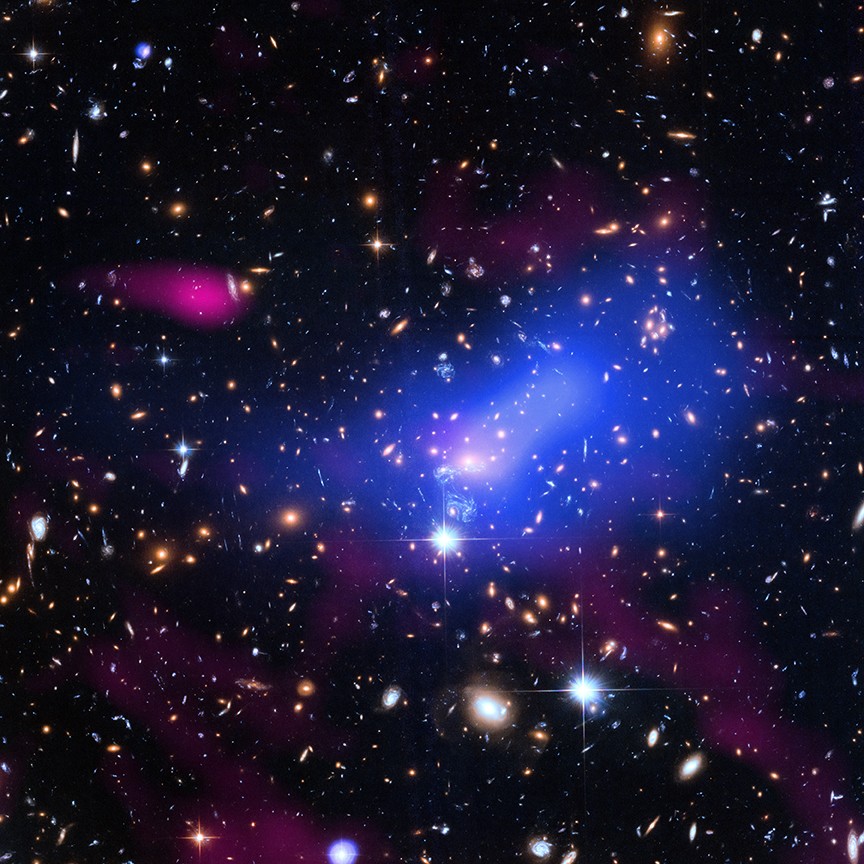
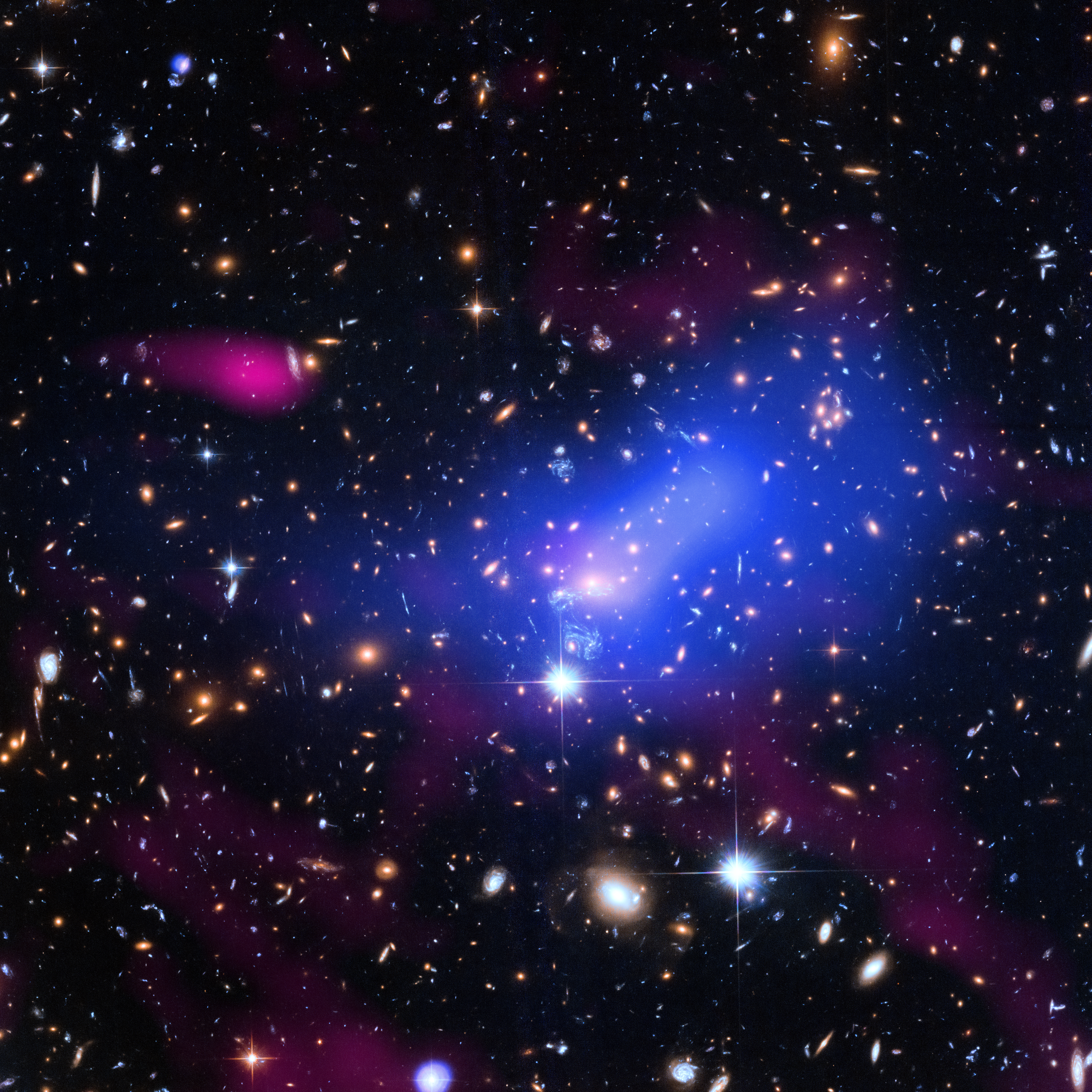
Composite image of Abell 2744 region, with radio, X-Ray, and optical (visible light) data combined. Credit: Pearce et al.; Bill Saxton, NRAO/AUI/NSF; Chandra, Subaru; ESO. Hi-res image

Radio-only image of Abell 2744 region, showing radio-emitting features caused by subatomic particles accelerated to high speeds by the collisions of giant clusters of galaxies.  Credit: Pearce et al., NRAO/AUI/NS. Hi-res image

Animated GIF cycles through the individual images (radio, X-ray, optical) of Abell 2744. 
Credit: Pearce et al.; Bill Saxton, NRAO/AUI/NSF; Chandra; Subaru; ESO. Hi-res image


A giant collision of several galaxy clusters, each containing hundreds of galaxies, has produced this spectacular panorama of shocks and energy. The collisions generated shock waves that set off a celestial fireworks display of bright radio emission, seen as red and orange. In the center of the image, the purple indicates X-rays caused by extreme heating.

The region is collectively known as Abell 2744, some 4 billion light-years from Earth. The radio portion of the image comes from new observations made with the National Science Foundation’s Karl G. Jansky Very Large Array (VLA), and is combined with earlier data from NASA’s Chandra X-ray observatory. Both are overlaid on an image at visible-light wavelengths made with data from the Subaru telescope and the Very Large Telescope (VLT). The new VLA observations revealed previously undetected regions where shocks accelerated subatomic particles, causing radio emission.

Astronomers are studying the combined image in an attempt to decipher the sequence of galaxy-cluster collisions. Currently, they said, evidence indicates a North-South (top-bottom in the image) collision of subclusters and an East-West (left-right in the image) collision. There is a possible third collision, and the astronomers continue to analyze their data to uncover more details about the region’s complex history of collisions and their aftermath.

The scientists reported their findings in a paper in the Astrophysical Journal by Connor Pearce, of the Harvard-Smithsonian Center for Astrophysics and the University of Southampton in the UK, and an international team of colleagues.

The National Radio Astronomy Obser vatory is a facility of the National Science Foundation, operated under cooperative agreement by Associated Universities, Inc.

 
Media Contact:

Dave Finley, Public Information Officer
(575) 835-7302

dfinley@nrao.edu


Wednesday, November 08, 2017

The Dynamic Duo: Jupiter's Independently Pulsating X-ray Auroras

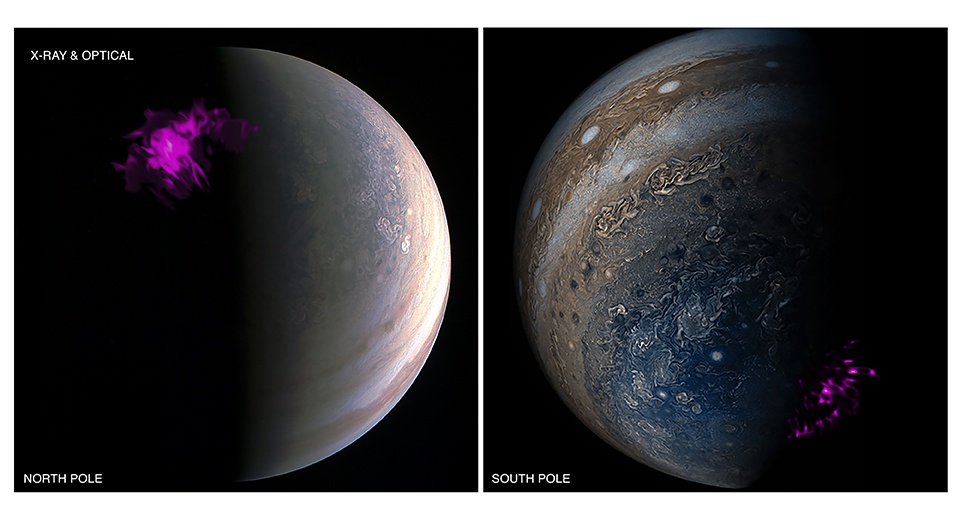
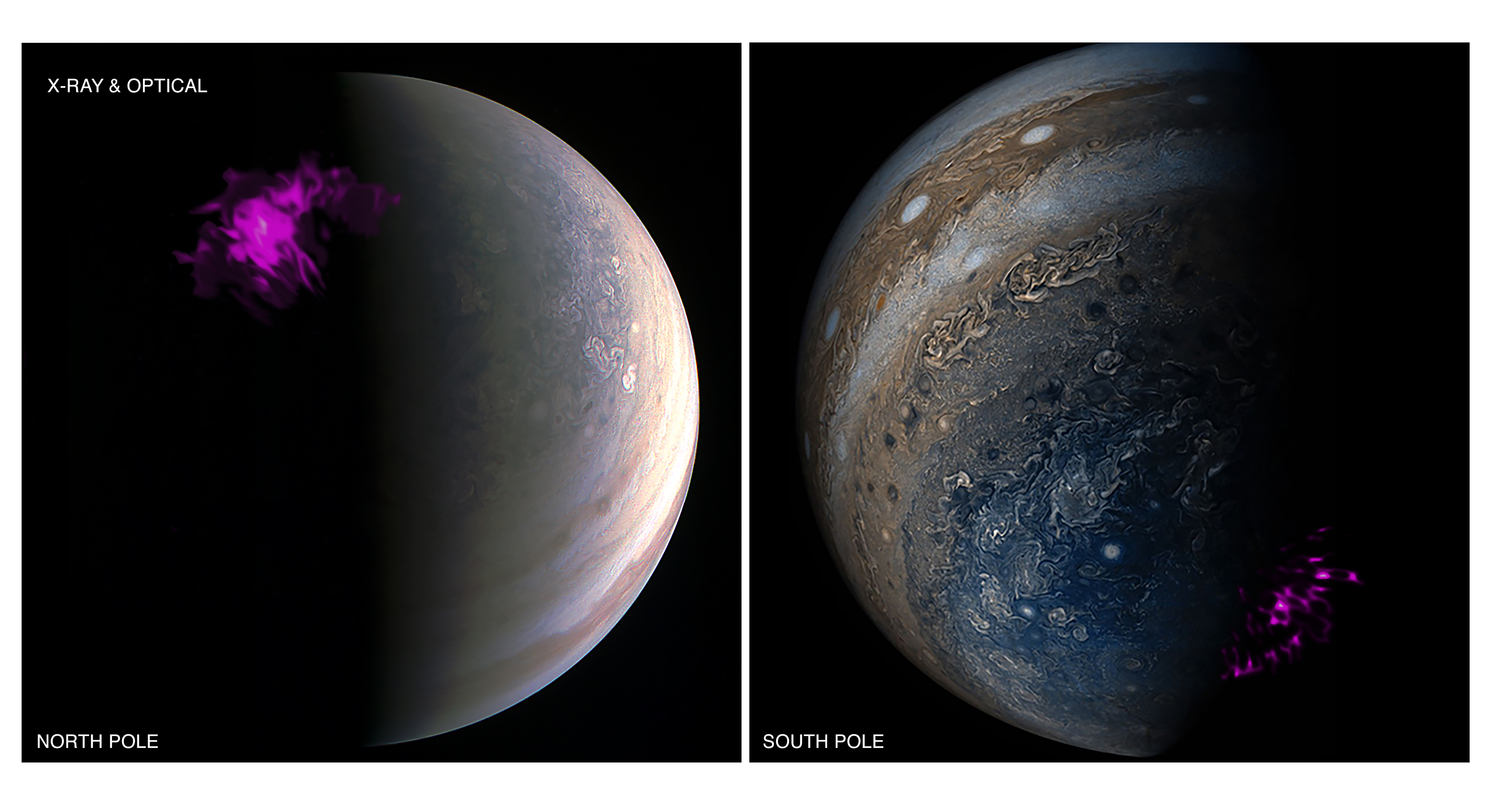
Jupiter's Aurora
Credit X-ray: NASA/CXC/UCL/W.Dunn et al, Optical: South Pole: NASA/JPL-Caltech/SwRI/MSSS/Gerald Eichstädt /Seán Doran; North Pole: NASA/JPL-Caltech/SwRI/MSSS


Jupiter's intense northern and southern lights, or auroras, behave independently of each other according to a new study using NASA's Chandra X-ray and ESA's XMM-Newton observatories.

Using XMM-Newton and Chandra X-ray observations from March 2007 and May and June 2016, a team of researchers produced maps of Jupiter's X-ray emissions and identified an X-ray hot spot at each pole. Each hot spot can cover an area equal to about half the surface of the Earth.

The team found that the hot spots had very different characteristics. The X-ray emission at Jupiter's south pole consistently pulsed every 11 minutes, but the X-rays seen from the north pole were erratic, increasing and decreasing in brightness — seemingly independent of the emission from the south pole.

This makes Jupiter particularly puzzling. X-ray auroras have never been detected from our Solar System's other gas giants, including Saturn. Jupiter is also unlike Earth, where the auroras on our planet's north and south poles generally mirror each other because the magnetic fields are similar.

To understand how Jupiter produces its X-ray auroras, the team of researchers plans to combine new and upcoming X-ray data from Chandra and XMM-Newton with information from NASA's Juno mission, which is currently in orbit around the planet. If scientists can connect the X-ray activity with physical changes observed simultaneously with Juno, they may be able to determine the process that generates the Jovian auroras and by association X-ray auroras at other planets.

Illustration of Jupiter
Credit: NASA/CXC/M.Weiss


One theory that the X-ray and Juno observations may help to prove or disprove is that Jupiter's X-ray auroras are caused by interactions at the boundary between Jupiter's magnetic field, which is generated by electrical currents in the planet's interior, and the solar wind, a high-speed flow of particles streaming from the Sun. The interactions between the solar wind and Jupiter's magnetic field can cause the latter to vibrate and produce magnetic waves. Charged particles can surf these waves and gain energy. Collisions of these particles with Jupiter's atmosphere produce the bright flashes of X-rays observed by Chandra and XMM. Within this theory the 11-minute interval would represent the time for a wave to travel along one of Jupiter's magnetic field lines. 

The difference in behavior between the Jovian north and south poles may be caused by the difference in visibility of the two poles. Because the magnetic field of Jupiter is tilted, we are able to see much more of the northern aurora than the southern aurora. Therefore for the north pole we may be able to observe regions where the magnetic field connects to more than one location, with several different travel times, while for the south pole we can only observe regions where the magnetic field connects to one location. This would cause the behavior of the north pole to appear erratic compared to the south pole.

A larger question is how does Jupiter give the particles in its magnetosphere (the realm controlled by Jupiter's magnetic field) the huge energies needed to make X-rays? Some of the X-ray emission observed with Chandra can only be produced if Jupiter accelerates oxygen ions to such high energies that when they violently collide with the atmosphere all eight of their electrons are torn off. Scientists hope to determine what impact these particles, which crash into the planet's poles at thousands of kilometers per second, have on the planet itself. Do these high-energy particles affect the Jovian weather and the chemical composition of its atmosphere? Can they explain the anomalously high temperatures found in certain places in Jupiter's atmosphere? These are the questions that Chandra, XMM-Newton, and Juno may be able to help answer in the future.

A paper describing these results appeared in the October 30th issue of Nature Astronomy, led by William Dunn of the University College London. NASA's Marshall Space Flight Center in Huntsville, Alabama, manages the Chandra program for NASA's Science Mission Directorate in Washington. The Smithsonian Astrophysical Observatory in Cambridge, Massachusetts, controls Chandra's science and flight operations.


 Fast Facts for Jupiter:

Scale: This image is about 37 arcsec across (139,822 km = Jupiter's diameter) as viewed from Earth
Category: Solar System
Observation Date: May 24 & Jun 01, 2016
Observation Time: 22 hours
Obs. ID: 18608 & 18609
Instrument: HRC
References: Dunn, W.R. et al, 2017, Nature Astronomy, 1, 758
Color Code: X-ray (purple), optical (pseudocolor)
Distance Estimate: About 793 million km (on date of Chandra observations)


Tuesday, November 07, 2017

MACS J1149.5+2233: A Fusion of Galaxy Clusters

MACS J1149.5+2233
Credit X-ray: NASA/CXC/SAO; Optical: NASA/STScI; Radio: NSF/NRAO/AUI/VLA


MACS J1149.5+2233 (MACS J1149 for short) is a system of merging galaxy clusters located about 5 billion light years from Earth. This galaxy cluster was one of six that have been studied as part of the "Frontier Fields" project. This research effort included long observations of galaxy clusters with powerful telescopes that detected different types of light, including NASA's Chandra X-ray Observatory.

Astronomers are using the Frontier Fields data to learn more about how galaxy clusters grow via collisions. Galaxy clusters are enormous collections of hundreds or even thousands of galaxies and vast reservoirs of hot gas embedded in massive clouds of dark matter, invisible material that does not emit or absorb light but can be detected through its gravitational effects.

This new image of MACS J1149 combines X-rays from Chandra (diffuse blue), optical data from Hubble (red, green, blue), and radio emission from the Very Large Array (pink). The image is about four million light years across at the distance of MACS J1149.

The Chandra data reveal gas in the merging clusters with temperatures of millions of degrees. The optical data show galaxies in the clusters and other, more distant, galaxies lying behind the clusters. Some of these background galaxies are highly distorted because of gravitational lensing, the bending of light by massive objects. This effect can also magnify the light from these objects, enabling astronomers to study background galaxies that would otherwise be too faint to detect. Finally, the structures in the radio data trace enormous shock waves and turbulence. The shocks are similar to sonic booms, and are generated by the mergers of smaller clusters of galaxies.

NASA's Marshall Space Flight Center in Huntsville, Alabama, manages the Chandra program for NASA's Science Mission Directorate in Washington. The Smithsonian Astrophysical Observatory in Cambridge, Massachusetts, controls Chandra's science and flight operations.


Fast Facts for MACS J1149.5+2233:

Scale: Image is 3.2 arcmin across (about 4.7 million light years)
Category: Groups & Clusters of Galaxies
Coordinates (J2000): RA 11h 49m 36.3s | Dec 22° 23´ 58.1"
Constellation: Leo
Observation Date: 8 pointings between Jun 2001 and Feb 2015
Observation Time: 101 hours 30 min (4 days 5 hours 30 min)
Obs. ID: 1656, 3589, 16238, 16239, 16306, 16582, 17595, 17596
Instrument: ACIS
Color Code: X-ray (Blue); Optical (Red, Green, Blue); Radio (Pink)
Distance Estimate: About 5 billion light years


Monday, November 06, 2017

Gemini Observatory Confirms Spiral Nature of Extremely Distant Lensed Galaxy

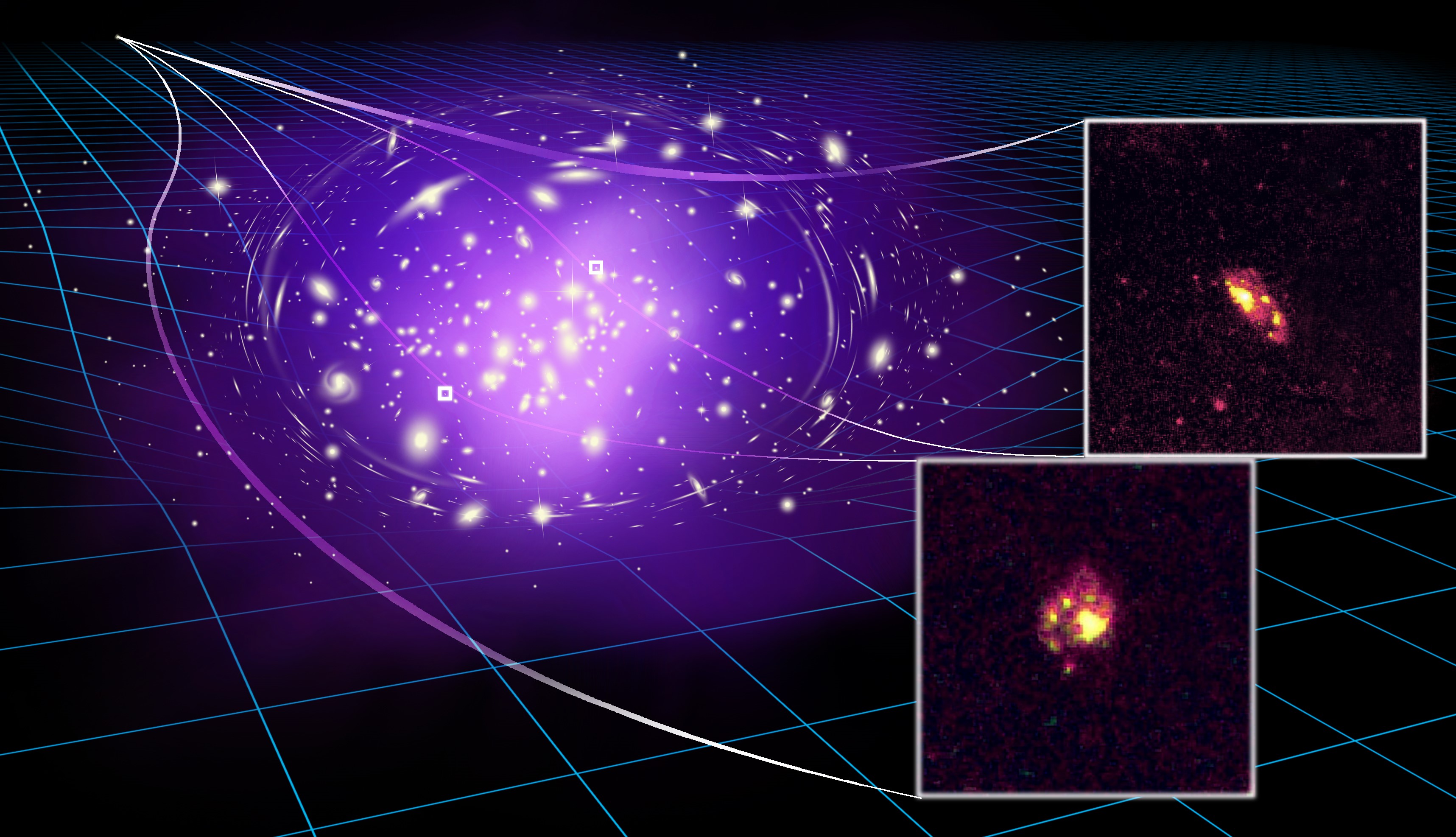
The massive galaxy cluster bends the light of the most ancient spiral galaxy behind it, producing two highly magnified images that allow astronomers to study the spiral structures in great details. Image credit: James Josephides. Full resolution JPEG


Gemini Observatory, using the Near-Infrared Integral Field Spectrograph on the Gemini North telescope in Hawai‘i, has confirmed the spiral nature of what is now the most distant known spiral galaxy. The galaxy's light, revealing how the galaxy looked some 11 billion years ago, is gravitationally lensed by a massive foreground cluster of galaxies to help reveal the distant pinwheel nature of the galaxy.

The following is a press release from Swinburne University of Technology in Australia.

The most ancient spiral galaxy discovered to date is revealing its secrets to a team of astronomers at Swinburne University of Technology and the Australian National University (ANU), both part of the Australian Research Council Centre of Excellence in All Sky Astrophysics in 3D (ASTRO 3D). The galaxy, known as A1689B11, existed 11 billion years in the past, just 2.6 billion years after the Big Bang, when the Universe was only one fifth of its present age. It is thus the most ancient spiral galaxy discovered so far.

The researchers used a powerful technique that combines gravitational lensing with the cutting-edge instrument, the Near-infrared Integral Field Spectrograph (NIFS) on the Gemini North telescope in Hawai‘i, to verify the vintage and spiral nature of this galaxy. NIFS is Australia’s first Gemini instrument that was designed and built by the late Peter McGregor at the ANU.

Gravitational lenses are Nature’s largest telescopes, created by massive clusters composed of thousands of galaxies and dark matter. The cluster bends and magnifies the light of galaxies behind it in a manner similar to an ordinary lens, but on a much larger scale. “This technique allows us to study ancient galaxies in high resolution with unprecedented detail,” says Swinburne astronomer Dr Tiantian Yuan, who led the research team.

“We are able to look 11 billion years back in time and directly witness the formation of the first, primitive spiral arms of a galaxy.” Co-author, Princeton University’s Dr Renyue Cen, says: “Studying ancient spirals like A1689B11 is a key to unlocking the mystery of how and when the Hubble sequence emerges.”

“Spiral galaxies are exceptionally rare in the early Universe, and this discovery opens the door to investigating how galaxies transition from highly chaotic, turbulent discs to tranquil, thin discs like those of our own Milky Way galaxy.”

Dr Yuan says the study shows some surprising features of A1689B11.

“This galaxy is forming stars 20 times faster than galaxies today – as fast as other young galaxies of similar masses in the early Universe. However, unlike other galaxies of the same epoch, A1689B11 has a very cool and thin disc, rotating calmly with surprisingly little turbulence. This type of spiral galaxy has never been seen before at this early epoch of the Universe!”

This research is an international collaboration including astrophysicists from the University of Lyon in France, Princeton University in the USA and Hebrew University in Israel. It has been accepted for publication in The Astrophysical Journal. A preprint version is available here.


Science Contacts:

Tiantian Yuan
Swinburne University of Technology
Email: tiantianyuan@swin.edu.au
Desk: +613 9214 5948
Cell: +61 404 029 550


Media Contacts:

Lea Kivivali
Swinburne University of Technology
Email: lkivivali@swin.edu.au
Desk: +613 9214 5428
Cell: +61 410 569 311

Peter Michaud
Public Information and Outreach Manager
Gemini Observatory
Hilo, Hawai‘i
Email: pmichaud@gemini.edu
Desk: 808 974-2510
Cell: 808 936-6643


Sunday, November 05, 2017

Minor Merger Kicks Supermassive Black Hole into High Gear

Figure 1:  The deep image of Messier 77 taken with the Hyper Suprime-Cam (HSC) mounted at the Subaru Telescope. The picture is created by adding the color information from the Sloan Digital Sky Survey (Note 1) to the monochromatic image acquired by the HSC. (Credit: NAOJ/SDSS/David Hogg/Michael Blanton. Image Processing: Ichi Tanaka)

The galaxy Messier 77 (M77) is famous for its super-active nucleus that releases enormous energy across the electromagnetic spectrum, ranging from x-ray to radio wavelengths. Yet, despite its highly active core, the galaxy looks like any normal quiet spiral. There's no visual sign of what is causing its central region to radiate so extensively. It has long been a mystery why only the center of M77 is so active. Astronomers suspect a long-ago event involving a sinking black hole, which could have kicked the core into high gear.

To test their ideas about why the central region of M77 beams massive amounts of radiation, a team of researchers at the National Astronomical Observatory of Japan and the Open University of Japan used the Subaru Telescope to study M77. The unprecedented deep image of the galaxy reveals evidence of a hidden minor merger billions of years ago. The discovery gives crucial evidence for the minor merger origin of active galactic nuclei.

The Mystery of Seyfert Galaxies

The galaxy Messier 77 (NGC 1068) is famous for harboring an active nucleus at its core that releases an enormous amount of energy. The existence of such active galaxies in the nearby universe was first noted by the American astronomer Carl Seyfert more than 70 years ago. Nowadays they are called the Seyfert galaxies (Note 2). Astronomers think that the source of such powerful activity is the gravitational energy released from superheated matter falling onto a supermassive black hole (SMBH) that resides in the center of the host galaxy. The estimated mass of such a SMBH for M77 is about 10 million times that of the Sun.

It takes a massive amount of gas dumped on the galaxy's central black hole to create such strong energies. That may sound like an easy task, but it's actually very difficult. The gas in the galactic disk will circulate faster and faster as it spirals into the vicinity of the SMBH. Then, at some point the "centrifugal force" balances with the gravitational pull of the SMBH. That actually prevents the gas from falling into the center. The situation is similar to water draining out of a bathtub. Due to the centrifugal force, the rapidly rotating water will not drain out rapidly. So, how can the angular momentum be removed from the gas circling near an active galactic nucleus? Finding the answer to that question is one of the big challenges for researchers today.

A Prediction Posed 18 Years Ago

In 1999, Professor Yoshiaki Taniguchi (currently at the Open University of Japan), the team leader of the current Subaru study, published a paper about the driving mechanism of the active nucleus of Seyfert galaxies such as M 77. He pointed out that a past event – a "minor merger" where the host galaxy ate up its "satellite" galaxy (a small low-mass galaxy orbiting it) – would be the key to activating the Seyfert nucleus (Note 3).

Usually, a minor merger event simply breaks up a low-mass satellite galaxy. The resulting debris is absorbed into the disk of the more massive host galaxy before it approaches the center. Therefore, it was not considered as the main driver of the nuclear activity. "However, the situation could be totally different if the satellite galaxy has a (smaller) SMBH in its center (Note 4)," Professor Taniguchi suggests, "because the black hole can never be broken apart. If it exists, it should eventually sink into the center of the host galaxy."

The sinking SMBH from the satellite galaxy would eventually create a disturbance in the rotating gas disk around the main galaxy's SMBH. Then, the disturbed gas would eventually rush into the central SMBH while releasing enormous gravitational energy. "This must be the main ignition mechanism of the active Seyfert nuclei," Taniguchi argued. "The idea can naturally explain the mystery about the morphology of the Seyfert galaxies," said Professor Taniguchi, pointing out the advantage of the model of normal-looking galaxies also being very active at their cores. (Note 5).

Probing the Theory Using the Subaru Telescope

Recent advances in observational technique allow the detection of the extremely faint structure around galaxies, such as loops or debris that are likely made by dynamical interactions with satellite galaxies.. The outermost parts of galaxies are often considered as relatively "quiet" with a longer dynamical timescale than anywhere inside. Simulations show that the faint signature of a past minor merger can remain several billion years after the event. "Such a signature can be a key test for our minor merger hypothesis for Seyfert galaxies. Now it is time to revisit M77," said Taniguchi.

The team's choice to look for 'the past case' was, of course, the Subaru Telescope and its powerful imaging camera, Hyper Suprime-Cam. The observing proposal was accepted and executed on Christmas night 2016. "The data was just amazing," said Dr. Ichi Tanaka, the primary investigator of the project. "Luckily, we could also retrieve the other data that was taken in the past and just released from the Subaru Telescope's data archive. Thus, the combined data we got finally is unprecedentedly deep."

Figure 2: (Left) The newly-discovered, extremely diffuse structures around M77. The innermost color part of the picture shows the bright part of the galaxy (from SDSS: see the center of Figure 1). The middle part in red-brown is the contrast-enhanced expression of the faint one-arm structure (labeled as "Banana") to the right, as well as the ripple structure (labeled as "Ripple") to the left. All the fore/background objects unrelated to M77 are removed during the process. The outermost monochrome part shows the faint ultra-diffuse structures in yellow circles (labelled as "UDO-SE", "UDO-NE", "UDO-SW"). A deep look at them indicates the latter two ("UDO-NE", "UDO-SW") constitute a part of the large loop-like structure. (Credit: NAOJ)

(Right) Artist's impression of M77. The illustration in the right is created and copyrighted by Mr. Akihiro Ikeshita. (Credit: Akihiro Ikeshita

Subaru's great photon-collecting power and the superb performance of the Hyper Suprime-Cam were crucial in the discovery of the extremely faint structures in M77. Their discovery reveals the normal-looking galaxy's hidden violent past.. "Though people may sometimes make a lie, galaxies never do. The important thing is to listen to their small voices to understand the galaxies," said Professor Taniguchi.

The team will expand its study to more Seyfert galaxies using the Subaru Telescope. Dr. Masafumi Yagi, who leads the next phase of the project said, "We will discover more and more evidences of the satellite merger around Seyfert host galaxies. We expect that the project can provide a critical piece for the unified picture for the triggering mechanism for active galactic nuclei."

The result is going to be published in the Volume 69 Issue 6 of the Publications of the Astronomical Society of Japan (I. Tanaka, M.Yagi & Y. Taniguchi 2017, "Morphological evidence for a past minor merger in the Seyfert galaxy NGC 1068"). The research is financially supported by the Basic Research A grant JP16H02166 by the Grant-in-Aid for Scientific Research progrram.


Notes

Note1: The color image by the Sloan Digital Sky Survey used for Figure 1 is under the copyright of David W. Hogg and Michael R. Blanton.

Note 2: Seyfert galaxies are actually a subclass of the active galactic nuclei. There are even more powerful active galactic nuclei called quasar in the universe. Usually quasars are found much farther away than M77.

Note 3: Satellite galaxies are common for large galaxies. For example, there are two bright satellite galaxies called Large and Small Magellanic Clouds associated with our Milky Way. The Andromeda galaxy, our nearest neighbor, also has two bright satellites called Messier 32 and NGC 205.

Note 4: Astronomers believe that most galaxies have an SMBH in their central regions, with its mass mysteriously scaled to the mass of the host galaxy. It is also known that some satellite galaxies also have smaller SMBH. For example, Messier 32 (satellite of the Andromeda galaxy) is likely to have a SMBH much heavier than a million times the mass of our Sun. It is however not easy to directly prove the existence of the SMBH for satellite galaxies due to its light weight.
Note 5: Y. Taniguchi 1999, ApJ, 524, 65, for the reference.

The research team:

  • Ichi Tanaka: Subaru Telescope, National Astronomical Observatory of Japan
  • Masafumi Yagi: National Astronomical Observatory of Japan
  • Yoshiaki Taniguchi: The Open University of Japan

Saturday, November 04, 2017

Reflection nebula NGC 1999

Copyright: NASA and The Hubble Heritage Team (STScI)


This spooky sight, imaged by the NASA/ESA Hubble Space Telescope, resembles fog lit by a streetlamp swirling around a curiously shaped hole – and there is some truth in that. While the ‘fog’ is dust and gas lit up by the star, the ‘hole’ really is an empty patch of sky.

When the dark patch was first imaged, it was assumed to be a very cold, dense cloud of gas and dust, so thick as to be totally opaque in visible light, and blocking all light behind it. In general, such globules are known to be small cocoons of forming stars, but thanks to ESA’s Herschel Space Observatory, which would have been able to see any hints of star formation at infrared wavelengths but did not, along with ground-based observations, it turned out to be a truly empty patch of sky.

Astronomers think that is was formed when jets of gas from some of the young stars in the wider region punctured the sheet of dust and gas that forms the surrounding nebula. The powerful radiation from a nearby mature star may also have helped to clear the hole.

The bright star seen here is V380 Orionis, a young star 3.5 times the mass of our own Sun. It appears white owing to its high surface temperature of about 10 000ºC – nearly twice that of the Sun. The star is so young that it is still surrounded by a cloud of material left over from its formation. This bright material in the area pictured here is only visible because of the light from the star; it does not emit any visible light of its own. This is the signature of a ‘reflection nebula’ – this one is known as NGC 1999.

This image was first published on the Hubble site in March 2000. The Herschel discovery was made in 2010.


Friday, November 03, 2017

ALMA Discovers Cold Dust Around Nearest Star

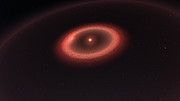
Artist’s impression of the dust belts around Proxima Centauri

Proxima Centauri in the southern constellation of Centaurus

The location of Proxima Centauri in the southern skies

The sky around Alpha Centauri and Proxima Centauri (annotated)


Videos

ESOcast 136 Light: ALMA Discovers Cold Dust Around Nearest Star (4K UHD)

Artist’s impression of the dust belts around Proxima Centauri


The ALMA Observatory in Chile has detected dust around the closest star to the Solar System, Proxima Centauri. These new observations reveal the glow coming from cold dust in a region between one to four times as far from Proxima Centauri as the Earth is from the Sun. The data also hint at the presence of an even cooler outer dust belt and may indicate the presence of an elaborate planetary system. These structures are similar to the much larger belts in the Solar System and are also expected to be made from particles of rock and ice that failed to form planets.

Proxima Centauri is the closest star to the Sun. It is a faint red dwarf lying just four light-years away in the southern constellation of Centaurus (The Centaur). It is orbited by the Earth-sized temperate world Proxima bdiscovered in 2016 and the closest planet to the Solar System. But there is more to this system than just a single planet. The new ALMA observations reveal emission from clouds of cold cosmic dust surrounding the star.

The lead author of the new study, Guillem Anglada [1], from the Instituto de Astrofísica de Andalucía (CSIC), Granada, Spain, explains the significance of this find: “The dust around Proxima is important because, following the discovery of the terrestrial planet Proxima b, it’s the first indication of the presence of an elaborate planetary system, and not just a single planet, around the star closest to our Sun.”

Dust belts are the remains of material that did not form into larger bodies such as planets. The particles of rock and ice in these belts vary in size from the tiniest dust grain, smaller than a millimetre across, up to asteroid-like bodies many kilometres in diameter [2].

Dust appears to lie in a belt  that extends a few hundred million kilometres from Proxima Centauri and has a total mass of about one hundredth of the Earth’s mass. This belt is estimated to have a temperature of about –230 degrees Celsius, as cold as that of the Kuiper Belt in the outer Solar System.

There are also hints in the ALMA data of another belt of even colder dust about ten times further out. If confirmed, the nature of an outer belt is intriguing, given its very cold environment far from a star that is cooler and fainter than the Sun. Both belts are much further from Proxima Centauri than the planet Proxima b, which orbits at just four million kilometres from its parent star [3].

Guillem Anglada explains the implications of the discovery: “This result suggests that Proxima Centauri may have a multiple planet system with a rich history of interactions that resulted in the formation of a dust belt. Further study may also provide information that might point to the locations of as yet unidentified additional planets.”

Proxima Centauri's planetary system is also particularly interesting because there are plans — the Starshot project — for future direct exploration of the system with microprobes attached to laser-driven sails. A knowledge of the dust environment around the star is essential for planning such a mission.

Co-author Pedro Amado, also from the Instituto de Astrofísica de Andalucía, explains that this observation is just the start: “These first results show that ALMA can detect dust structures orbiting around Proxima. Further observations will give us a more detailed picture of Proxima's planetary system. In combination with the study of protoplanetary discs around young stars, many of the details of the processes that led to the formation of the Earth and the Solar System about 4600 million years ago will be unveiled. What we are seeing now is just the appetiser compared to what is coming!”


Notes

[1] In a cosmic coincidence, the lead author of the study, Guillem Anglada shares his name with the astronomer who led the team that discovered Proxima Centauri b, Guillem Anglada-Escudé, himself a co-author of the paper in which this research is published, although the two are not related.

[2] Proxima Centauri is quite an old star, of similar age to the Solar System. The dusty belts around it are probably similar to the residual dust in the Kuiper Belt and the asteroid belt in the Solar System and the dust that creates the Zodiacal Light. The spectacular discs that ALMA has imaged around much younger stars, such as HL Tauri, contain much more material that is in the process of forming planets.

[3] The apparent shape of the very faint outer belt, if confirmed, would give astronomers a way to estimate the inclination of the Proxima Centauri planetary system. It would appear elliptical due to the tilt of what is assumed to be in reality a circular ring. This would in turn allow a better determination of the mass of the Proxima b planet, which is currently known only as a lower limit.


More Information 

 This research was presented in a paper entitled “ALMA Discovery of Dust Belts Around Proxima Centauri”, by Guillem Anglada et al., to appear in Astrophysical Journal Letters.

The team is composed of Guillem Anglada (Instituto de Astrofísica de Andalucía (CSIC), Granada, Spain [IAA-CSIC]), Pedro J. Amado (IAA-CSIC), Jose L. Ortiz (IAA-CSIC), José F. Gómez (IAA-CSIC), Enrique Macías (Boston University, Massachusetts, USA), Antxon Alberdi (IAA-CSIC), Mayra Osorio (IAA-CSIC), José L. Gómez (IAA-CSIC), Itziar de Gregorio-Monsalvo (ESO, Santiago, Chile; Joint ALMA Observatory, Santiago, Chile), Miguel A. Pérez-Torres (IAA-CSIC; Universidad de Zaragoza, Zaragoza, Spain), Guillem Anglada-Escudé (Queen Mary University of London, London, United Kingdom), Zaira M. Berdiñas (Universidad de Chile, Santiago, Chile; IAA-CSIC), James S. Jenkins (Universidad de Chile, Santiago, Chile), Izaskun Jimenez-Serra (Queen Mary University of London, London, United Kingdom), Luisa M. Lara (IAA-CSIC), Maria J. López-González (IAA-CSIC), Manuel López-Puertas (IAA-CSIC), Nicolas Morales (IAA-CSIC), Ignasi Ribas (Institut de Ciències de l’Espai (IEEC-CSIC), Bellaterra, Spain), Anita M. S. Richards (JBCA, University of Manchester, Manchester, United Kingdom), Cristina Rodríguez-López (IAA-CSIC) and Eloy Rodríguez (IAA-CSIC).

ESO is the foremost intergovernmental astronomy organisation in Europe and the world’s most productive ground-based astronomical observatory by far. It is supported by 16 countries: Austria, Belgium, Brazil, the Czech Republic, Denmark, France, Finland, Germany, Italy, the Netherlands, Poland, Portugal, Spain, Sweden, Switzerland and the United Kingdom, along with the host state of Chile and by Australia as a strategic partner. ESO carries out an ambitious programme focused on the design, construction and operation of powerful ground-based observing facilities enabling astronomers to make important scientific discoveries. ESO also plays a leading role in promoting and organising cooperation in astronomical research. ESO operates three unique world-class observing sites in Chile: La Silla, Paranal and Chajnantor. At Paranal, ESO operates the Very Large Telescope and its world-leading Very Large Telescope Interferometer as well as two survey telescopes, VISTA working in the infrared and the visible-light VLT Survey Telescope. ESO is also a major partner in two facilities on Chajnantor, APEX and ALMA, the largest astronomical project in existence. And on Cerro Armazones, close to Paranal, ESO is building the 39-metre Extremely Large Telescope, the ELT, which will become “the world’s biggest eye on the sky”.


Links 


Contacts

Guillem Anglada
Instituto de Astrofísica de Andalucía (CSIC)
Granada, Spain
Email: guillem@iaa.es

Pedro J. Amado
Instituto de Astrofísica de Andalucía (CSIC)
Granada, Spain
Email: pja@iaa.csic.es

Antxon Alberdi
Instituto de Astrofísica de Andalucía (CSIC)
Granada, Spain
Email: antxon@iaa.es

Enrique Macias
Boston University
Boston, USA
Email: emacias@bu.edu

Itziar de Gregorio-Monsalvo
ESO/ALMA
Santiago, Chile
Tel: +56 22 4676316
Email: idegrego@eso.org

Richard Hook 
ESO Public Information Officer 
Garching bei München, Germany 
Tel: +49 89 3200 6655 
Cell: +49 151 1537 3591 
Email: rhook@eso.org


Source: ESO

Abell’s richest cluster

Abell 655
Credit: ESA/Hubble & NASA


The Universe contains some truly massive objects. Although we are still unsure how such gigantic things come to be, the current leading theory is known as hierarchical clustering, whereby small clumps of matter collide and merge to grow ever larger. The 14-billion-year history of the Universe has seen the formation of some enormous cosmic structures, including galaxy groupsclusters, and superclusters — the largest known structures in the cosmos!

This particular cluster is called Abell 665. It was named after its discoverer, George O. Abell, who included it in his seminal 1958 cluster catalogue. Abell 665 is located in the well-known northern constellation of Ursa Major (The Great Bear). This incredible image combines visible and infrared light gathered by the NASA/ESA Hubble Space Telescope using two of its cameras: the Advanced Camera for Surveys and the Wide Field Camera 3

Abell 665 is the only galaxy cluster in Abell’s entire catalogue to be given a richness class of 5, indicating that the cluster contains at least 300 individual galaxies. Because of this richness, the cluster has been studied extensively at all wavelengths, resulting in a number of fascinating discoveries — among other research, Abell 665 has been found to host a giant radio halo, powerful shockwaves, and has been used to calculate an updated value for the Hubble constant (a measure of how fast the Universe is expanding).


Thursday, November 02, 2017

Bridging the Gap: From Massive Stars to Supernovae in 3D

A team of astrophysicists from Queen’s University Belfast, the Max Planck Institute for Astrophysics (MPA), and Monash University (Australia) has, for the first time, performed three-dimensional computer simulations that follow the evolution of a massive star from its final phase of nuclear burning, through the collapse of the stellar iron core, into the first seconds of the beginning explosion as a supernova. The simulations show that the large-scale violent convective motions that stir the oxygen burning layer at the onset of collapse can provide crucial support for the explosion of the star.

Oxygen shell burning
Figure 1: Overturn motions in the oxygen burning shell of an 18 solar mass star involving plumes of unburnt oxygen (green) and silicon ashes (red) around the silicon-iron core of the star (cyan). Part of the star is removed for better visibility. From Reference 1; copyright: American Physical Society.


Massive stars die catastrophic deaths. Once they have exhausted their nuclear fuel at the centre, the innermost part of the star, an iron core about 1.5 times as massive as the sun, succumbs to gravity and collapses to an ultra-dense neutron star within a fraction of a second. In the process, the outer layers of the star are expelled in a gigantic supernova explosion with velocities of thousands of kilometres per second.

Such supernovae are regularly observed in distant galaxies, and within the Milky Way we can still see the debris sits of many such explosions hundreds and thousands of years later. Much of the world around us is, in fact, ultimately debris from massive stars - from the oxygen we breathe to the calcium in our bones. But a puzzle remains: How is the collapse of the star turned into an explosion?

Stellar collapse with explosion (From Reference 2)
Figure 2a: Slices through the core of a massive star after collapse. The neutron star is visible as the dark-blue region in the centre, the neutrino-heated matter behind the supernova shock is shown in red. Due to the infall of the asymmetric oxygen-silicon layer, the shock starts to expand at around 0.3 seconds.


The most promising theory posits that extremely light and weakly interacting elementary particles, called neutrinos, are key in this process. These are emitted copiously from the surface of the young neutron star, which is a few thousand times hotter than the centre of the Sun. Part of these neutrinos are absorbed by matter falling onto the neutron star, heating it up. If the heating is sufficiently strong, the collapse is reversed, and the neutrino-heated matter drives an expanding shock wave through the star.

Theorists have long attempted to show that this idea works with the help of computer simulations. But even though one can now simulate the collapse of massive stars in three dimensions (3D), the computer models often still fail to explode. The international team of researchers including MPA scientists has now worked on a solution to this problem by invoking more realistic initial conditions. The team replaced the spherical stellar models, from which supernova calculations were previously started, by fully three-dimensional initial data.

Stellar collapse without explosion (From Reference 2)
Figure 2b (cont. from Fig. 2a): If the overturn motions in the oxygen burning shell are not taken into account, this does not happen.


Taking into account the asymmetries that exist in the progenitor star prior to its collapse enabled a neutrino-driven supernova explosion. The astrophysicists could follow the evolution of the expanding blast wave in a continuous, consistent 3D calculation for the longest period to date. This breakthrough in our understanding of the highly complex processes that lead to the explosion of massive stars has become possible by using supercomputers in Australia, Germany, and the UK.

For a successful explosion in 3D it is crucial that there are already violent overturn motions before collapse driven by nuclear fusion, which need to be stirred even more to trigger an explosion. To explore this possibility, the team simulated the fusion of oxygen to silicon in an 18 solar mass star for the last six minutes before the star reached the end of its stable evolution (see Figure 1). The researchers found that they could obtain a successful explosion only because the collapsing silicon-oxygen shell was perturbed by vigorous mass flows already. They then followed the beginning supernova for more than two seconds (see Figure 2).

Supernova shock wave (From Reference 2)
Figure 3: Expansion of the neutrino-heated matter (yellow/red) and the supernova shock wave (translucent cyan surface) during the explosion of an 18 solar mass star.


It still takes about a day until the shock front reaches the surface of the star and the stellar debris is expelled into the surrounding space; nevertheless the computer model already is able to tell that the explosion and the relic neutron star are starting to look like the ones observed: The explosion produces about 0.06 solar masses of iron-group elements. The neutron star is about 1.7 times as massive as the Sun. It rotates once every 20 milliseconds, and it is kicked away at a speed of 600 kilometres per second because the explosion is strongly asymmetric. This means that the simulations cough up a plausible explosion model – without tweaking.

Now that such successful stellar explosion simulations are feasible, the team will systematically explore how supernovae from different progenitor stars look like. More 3D calculations are needed to clarify which stars blow up by the crucial aid of pre-collapse perturbations in the convective burning shells around the stellar iron core.

Bernhard Müller, H.-Thomas Janka, Tobias Melson, Alexander Heger

Acknowledgments:

This project was partly funded by the European Research Council through grant ERC-AdG No. 341157-COCO2CASA and the Australian Research Council (FT120100363, FT120100363). Computing time was kindly provided by the Gauss Centre for Supercomputing on SuperMUC (GCS@LRZ, Germany) and by NCI Australia and the Pawsey Supercomputing Centre.


Authors

Bernhard Müller

Melson, Tobias
Postdoc
Phone: 2037
Email: melson@mpa-garching.mpg.de

Alexander Heger
Janka, Hans-Thomas Janka, Hans-Thomas
Scientific Staff
Phone: 2228
Email: thj@mpa-garching.mpg.de
Links: personal homepage (the institute is not responsible for the contents of personal homepages)


Original publications


1. B. Müller, M. Viallet, A. Heger, and H.-Th. Janka

The Last Minutes of Oxygen Shell Burning in a Massive Star

The Astrophysical Journal 833, 124 (2016)

Source

2. B. Müller, T. Melson, A. Heger and H.-Th. Janka

Supernova simulations from a 3D progenitor model - Impact of perturbations and evolution of explosion properties

Monthly Notices of the Royal Astronomical Society, Volume 472, p.491 (2017)

Source


Wednesday, November 01, 2017

New Exoplanet Survey Finds its First Planet

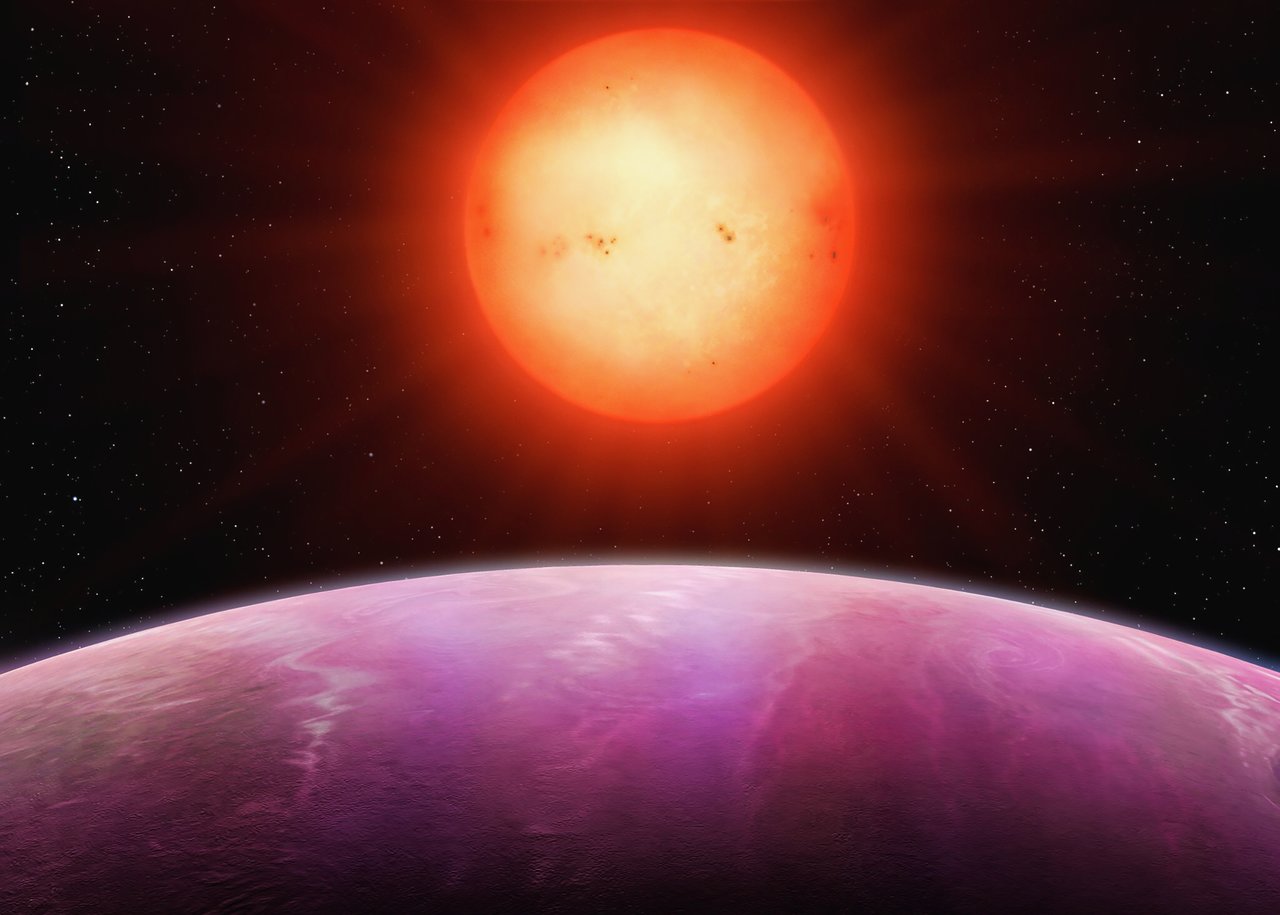
Artist's impression of the planet NGTS-1b

Artist's impression of the planet NGTS-1b


The Next Generation Transit Survey (NGTS) instrument at ESO’s Paranal Observatory in northern Chile has found its first exoplanet, a hot Jupiter orbiting an M-dwarf star [1] now named NGTS-1. The planet, NGTS-1b, is only the third gas giant to have been observed transiting an M-dwarf star, following Kepler-45b and HATS-6b. NGTS-1b is the largest and most massive of these three, with a radius of 130% and a mass of 80% those of Jupiter.

The NGTS uses an array of twelve 20-centimetre telescopes to search for the tiny dips in the brightness of a star caused when a planet in orbit around it passes in front of it (“transits”) and blocks some of its light. Once NGTS-1b had been discovered its existence was confirmed by follow-up observations at ESO’s La Silla Observatory: photometric observations with EulerCam on the 1.2-metre Swiss Leonhard Euler Telescope; and spectroscopic investigations with the HARPS instrument on ESO’s 3.6-metre telescope.

Small planets are relatively common around M-dwarf stars, whereas gas giants like NGTS-1b appear to be rarer around M-dwarfs than they are around stars more like the Sun. This is consistent with current theories of planet formation, but observations of more M-dwarfs are needed before a clear understanding of the numbers of giant planets around them can be arrived at. The NGTS is specifically designed to provide better data on planets around M-dwarf stars, and since they account for around 75% of stars in the Milky Way, studying them will help astronomers to understand the majority population of planets in the Galaxy.

The future could be very exciting for this exoplanet system as it has the potential to be studied in greater detail by the suite of instruments on board the NASA/ESA/CSA James Webb Space Telescope (JWST) which is due to be launched in 2019. 


Notes

[1] An M-dwarf is a small, faint star with approximately 8–50% of the mass of the Sun and with a surface temperature of less than 3700°C. 50 of the closest 60 stars to our Solar System are thought to be M-dwarfs, even though not a single one is bright enough to be visible from the Earth with the naked eye. 


More Information

This research is presented in a paper entitled “NGTS-1b: A hot Jupiter transiting an M-dwarf”, by D. Bayliss et al., to appear in the journal Monthly Notices of the Royal Astronomical Society.

The team is composed of: D. Bayliss (Université de Genève, Switzerland), E. Gillen (University of Cambridge, United Kingdom), P. Eigmüller (DLR, Germany), J. McCormac (University of Warwick, United Kingdom), R. Alexander (University of Leicester, United Kingdom), D. Armstrong (University of Warwick, United Kingdom), R. Booth (Queen's University Belfast, United Kingdom), F. Bouchy (Université de Genève, Switzerland), M. Burleigh, J. Cabrera (DLR, Germany), S. Casewell, A. Chaushev (University of Leicester, United Kingdom), B. Chazelas, S. Csizmadia, A. Erikson, F. Faedi (University of Warwick, United Kingdom), E. Foxwell (University of Warwick, United Kingdom), B. Gaensicke (University of Warwick, United Kingdom), M. Goad (University of Leicester, United Kingdom), A. Grange, M. Guenther (University of Cambridge, United Kingdom), S. Hodgkin (University of Cambridge, United Kingdom), J. Jackman, J. Jenkins (Universidad de Chile, Chile), G. Lambert (University of Cambridge), T. Louden (University of Warwick, United Kingdom), L. Metrailler (Université de Genève, Switzerland), M. Moyano (Universidad Católica del Norte, Chile), D. Pollacco (University of Warwick, United Kingdom), K. Poppenhaeger, (Queen's University Belfast, United Kingdom; Harvard-Smithsonian Center for Astrophysics, United States), D. Queloz (Université de Genève, Switzerland), R. Raddi (University of Warwick, United Kingdom), H. Rauer (DLR, Germany), L. Raynard (University of Leicester, United Kingdom), A. Smith, M. Soto (Universidad de Chile, Chile), A. Thompson (Queen’s University Belfast, United Kingdom), R. Titz-Weider (DLR, Germany), S. Udry (Université de Genève, Switzerland), S. Walker (University of Warwick, United Kingdom), C. Watson (Queen's University Belfast, United Kingdom), R. West (University of Warwick, United Kingdom) and P.J. Wheatley (University of Warwick, United Kingdom).


Links


Contacts

Daniel Bayliss
Department of Physics
University of Warwick
, UK
Tel: +44 (0) 24761 50342
Cell: +44 (0) 7514912757
Email: d.bayliss@warwick.ac.uk

Richard Hook
ESO Public Information Officer
Garching bei München, Germany
Tel: +49 89 3200 6655
Cell: +49 151 1537 3591
Email: rhook@eso.org