Showing posts with label red dwarfs. Show all posts

Monday, January 27, 2025

Exoplanets Need to be Prepared for Extreme Space Weather, Chandra Finds

Wolf 359
Credit: X-ray: NASA/CXC/SAO/S.Wolk, et al.; Illustration: NASA/CXC/SAO/M.Weiss; Image processing: NASA/CXC/SAO/N. Wolk


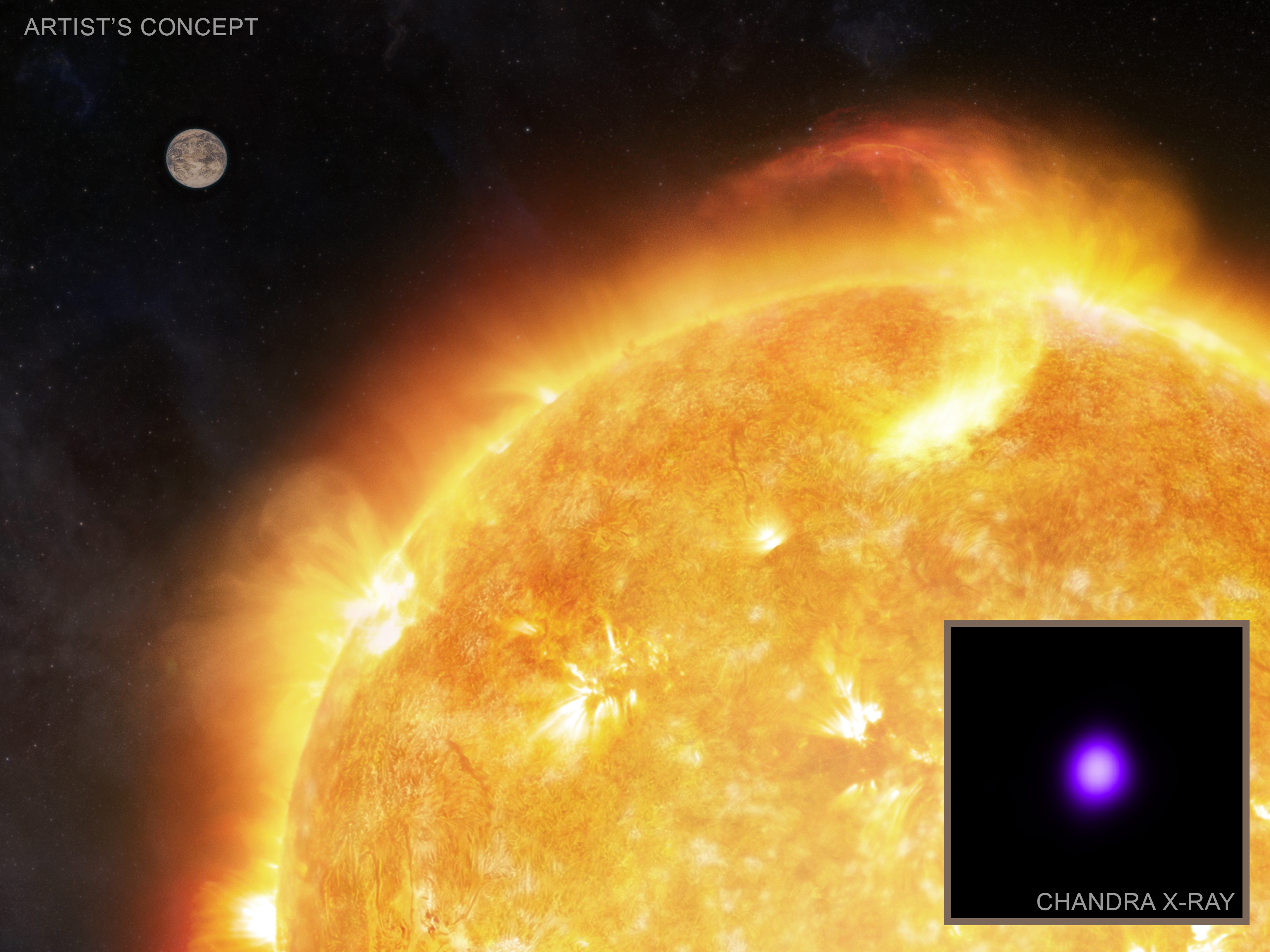
This artist’s illustration represents the results from a new study that examines the effects of X-ray and other high-energy radiation unleashed on potential exoplanets from a host star. As outlined in our latest press release, astronomers using NASA’s Chandra X-ray Observatory and ESA’s XMM-Newton observed Wolf 359, a red dwarf that is only 7.8 light-years from Earth, making it one of the closest stars to the Earth other than the Sun.

The artist’s rendering shows Wolf 359 in the foreground and a potential planet in orbit around it in the background. Red dwarfs are the most common type of star in the Universe. They are much smaller and dimmer than Sun-like stars, which allows them to last for trillions of years. This would give planets in orbit around them ample time for life to form and emerge, which makes them particularly interesting to scientists looking for life beyond the Solar System.

In the new study, researchers used Chandra and XMM to study the impact of steady X-ray and energetic ultraviolet (UV) radiation from Wolf 359 on the atmospheres of planets that might be orbiting the star. They found that only a planet with greenhouse gases like carbon dioxide in its atmosphere and at a relatively large distance away from Wolf 359 would have a chance to support life as we know it around a nearby star. The planet is depicted with the heavy cloud cover expected from the effects of greenhouse gases.

Animation of a Sun & Planet System
Animation Credit: NASA/CXC/SAO/A.Jubett)

Their work suggests that just being far enough away from the star’s harmful radiation would not be enough to allow a planet around Wolf 359 to sustain life. The team looked at the “habitable zone,” the region around a star where liquid water could exist on a planet’s surface, for Wolf 359. They found that an Earth-like planet in the middle of the habitable zone blanketed with greenhouse gases should be able to sustain an atmosphere for almost two billion years.

In addition to the dangers posed by the steady, everyday high-energy radiation from a star like Wolf 359, any orbiting planets would be subjected to occasional giant bursts of X-rays. Using observations with Chandra and XMM-Newton, astronomers discovered 18 X-ray flares, or outbursts, from Wolf 359 in under 4 days. Chandra data of Wolf 359 is shown in the inset. Extrapolating from these observed flares, the team expects that much more powerful and damaging flares would occur over longer periods of time. The combined effects of the steady X-ray and UV radiation and the flares means that any planet located in the habitable zone is unlikely to have a significant atmosphere long enough for multicellular life, as we know it on Earth, to form and survive. (Evidence suggests that it took at least 3 billion years for multicellular life to emerge on Earth.) The exception is the habitable zone's outer edge if a planet has a significant greenhouse effect.

The researchers used a special technique to estimate the energetic UV radiation from Wolf 359 using Chandra. The team looked at the difference in radiation measured with the High Resolution Camera (HRC) using two different filters: first, a thick filter that allows only X-rays to be detected, and second, a thinner filter that allows both X-rays and UV radiation to be detected. There are currently no specialized space missions for studying the most energetic ultraviolet radiation.

These results were presented at the 245th meeting of the American Astronomical Society in National Harbor, MD and are being prepared for publication in a journal. NASA's Marshall Space Flight Center manages the Chandra program. The Smithsonian Astrophysical Observatory's Chandra X-ray Center controls science operations from Cambridge, Massachusetts, and flight operations from Burlington, Massachusetts.


Visual Description:

This release features an artist's illustration of the red dwarf star Wolf 359, with a small orbiting planet in the distance. An inset image is included at our lower right.

Wolf 359 occupies much of the illustration. The fiery orange and yellow star fills the lower right corner of the image, extending well beyond the edges of the frame. The star's exterior appears to churn, with white hot flares bursting off the surface. A glowing yellow and orange haze surrounds the star, blanketing white flares and tendrils of hot gas.

In the distance, at our upper left, is an illustration of a small planet set against a black background dotted with faint specks of light. This represents one of two planets that may be in orbit around Wolf 359. Here, the orbiting planet has a blue-grey surface beneath a layer of swirling clouds. The water-like surface and cloudy atmosphere suggest that in this depiction, the planet is in Wolf 359's habitable zone, which may allow life to flourish.

Inset at our lower righthand corner is an X-ray image of Wolf 359. Here, the red dwarf star is a distant lavender dot glowing with purple haze, set against a pitch black background.


Fast Facts for Wolf 359:

Scale: Image is about 10 arcsec (3.8 billion km or 0.0004 light-years) across.
Category: Normal Stars & Star Clusters
Coordinates (J2000): RA 10h 56m 29s | Dec +07° 00´ 52"
Constellation: Leo
Observation Dates: 2 observations Nov 9-10, 2023
Observation Time: 244 hours 4 minutes (4 hours 4 minutes)
Obs. ID: 26490, 29051
Instrument: HRC
References: S. Wolk et al., 2025, 245th AAS meeting
Color Code: X-ray: purple
Distance Estimate: About 7.9 light-years


Thursday, October 06, 2022

A Day at the Beach for Life on Other Worlds

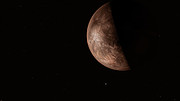
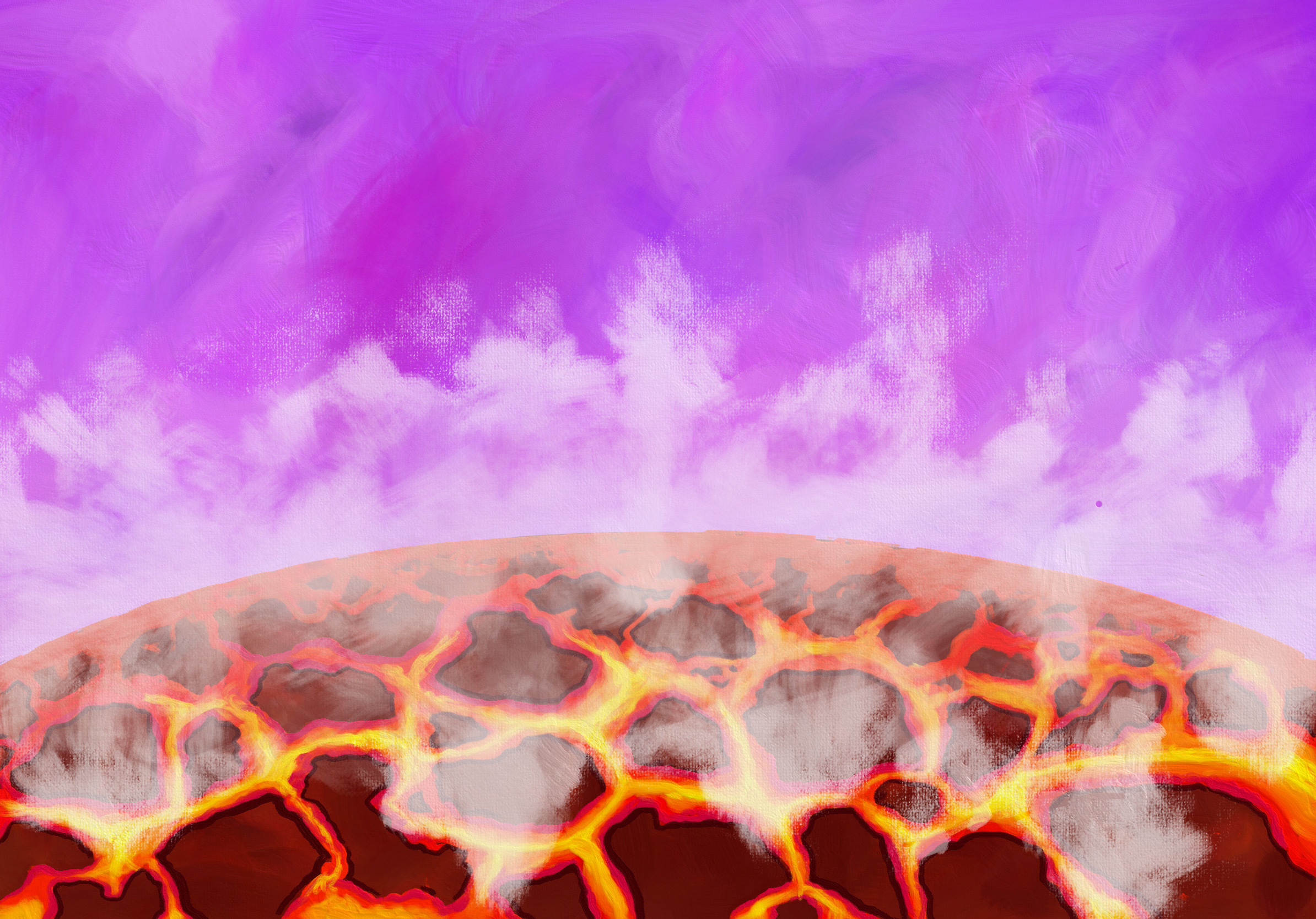
Artist’s impression of the molten surface of a young planet reacting with its atmosphere to form water vapor.
Credit: Tadahiro Kimura) Original size (1.2MB)

Science

New simulations show that truly Earth-like exoplanets with oceans and continents, and beaches along the boundaries, may be much more common around red dwarfs than previously expected. This means ongoing and future exoplanet survey missions can expect to find multiple Earth-analogs for further study before the end of the decade.

The “habitable zone” is defined as the range of orbits around a star where the temperature would be right for an exoplanet to have liquid water on its surface. This doesn’t necessarily mean that there is life or even water on the planet. In fact, for most exoplanets in the habitable zone, life on the planet would be “no day at the beach.” On Earth, both the oceans and the continents play vital roles in the geochemical carbon cycle which helps maintain a temperate climate where liquid water and life can exist. So to look for potentially habitable Earth-like planets, exactly what we need is “a day at the beach,” where the land and sea can coexist.

Previous research had warned that such beach-friendly planets could be extremely rare, even in the habitable zones around the most common types of stars (namely red dwarfs). This is because there is a distinct difference in the water content of rocky materials found in the inner and outer parts of a protoplanetary disk where planets form, leading to the formation of planets with either too much or too little water in most cases. But new numerical simulations conducted by Tadahiro Kimura from the University of Tokyo and Masahiro Ikoma from the National Astronomical Observatory of Japan provide a sunnier view. By taking into consideration water produced from interactions between the still molten surface of a young planet and its primordial atmosphere, the team found that a wide range in final water content is expected. And within that range, several percent of roughly-Earth-sized planets in habitable zones should have appropriate amounts of water for a temperate climate. This is a high enough percentage that ongoing and future exoplanet survey missions like TESS and PLATO can expect to find multiple examples of truly Earth-like exoplanets with beaches in the 2020s.

These results appeared as Kimura and Ikoma “Predicted diversity in water content of terrestrial exoplanets orbiting M dwarfs” in Nature Astronomy on September 29, 2022.

Related Links


Thursday, January 09, 2020

Goldilocks Stars Are Best Places to Look for Life

Comparison of G, K, and M Stars for Habitability
Credits: NASA, ESA, and Z. Levy (STScI) 
Science: NASA , ESA , and E. Guinan (Villanova University)


Orange Dwarf Stars Most Likely to Host Planets

To date astronomers have discovered over 4,000 planets orbiting other stars. Statistically, there should be over 100 billion planets in our Milky Way galaxy. They come in a wide range of sizes and characteristics, largely unimagined before exoplanets were first discovered in the mid-1990s. The biggest motivation for perusing these worlds is to find "Genesis II," a planet where life has arisen and evolved beyond microbes. The ultimate payoff would be finding intelligent life off the Earth.

A major step in searching for habitable planets is finding suitable stars that could foster the emergence of complex organisms. Because our Sun has nurtured life on Earth for nearly 4 billion years, conventional wisdom would suggest that stars like it would be prime candidates. But stars like our Sun represent only about 10% of the Milky Way population. What's more, they are comparatively short-lived. Our Sun is halfway through its estimated 10 billion-year lifetime.

Complex organisms arose on Earth only 500 million years ago. And, the modern form of humans has been here only for the blink of an eye on cosmological timescales: 200,000 years. The future of humanity is unknown. But what is for certain is that Earth will become uninhabitable for higher forms of life in a little over 1 billion years, as the Sun grows warmer and desiccates our planet.

Therefore, stars slightly cooler than our Sun — called orange dwarfs — are considered better hang-outs for advanced life. They can burn steadily for tens of billions of years. This opens up a vast timescape for biological evolution to pursue an infinity of experiments for yielding robust life forms. And, for every star like our Sun there are three times as many orange dwarfs in the Milky Way.

The only type of star that is more abundant are red dwarfs. But these are feisty little stars. They are so magnetically active they pump out 500 times as much radiation in the form of X-rays and ultraviolet light as our Sun does. Planets around these stars take a beating. They would be no place to call home for organisms like us.

An emerging idea, bolstered by stellar surveys performed by Hubble and other telescopes, is that the orange dwarfs are "Goldilocks stars" — not too hot, not too cool, and above all, not too violent to host life-friendly planets over a vast horizon of cosmic time.

In the search for life beyond Earth, astronomers look for planets in a star's "habitable zone" — sometimes nicknamed the "Goldilocks zone" — where temperatures are just right for liquid water to exist on a planet's surface to nurture life as we know it.

An emerging idea, bolstered by a three-decade-long set of stellar surveys, is that there are "Goldilocks stars" — not too hot, not too cool, and above all, not too violent to host life-friendly planets.

Because our Sun has nurtured life on Earth for nearly 4 billion years, conventional wisdom would suggest that stars like it would be prime candidates in the search for other potentially habitable worlds. In reality, stars slightly cooler and less luminous than our Sun, classified as K dwarfs, are the true "Goldilocks stars," said Edward Guinan of Villanova University, Villanova, Pennsylvania. "K-dwarf stars are in the 'sweet spot,' with properties intermediate between the rarer, more luminous, but shorter-lived solar-type stars (G stars) and the more numerous red dwarf stars (M stars). The K stars, especially the warmer ones, have the best of all worlds. If you are looking for planets with habitability, the abundance of K stars pump up your chances of finding life."

For starters, there are three times as many K dwarfs in our galaxy as stars like our Sun. Roughly 1,000 K stars lie within 100 light-years of our Sun as prime candidates for exploration. These so-called orange dwarfs live from 15 billion to 45 billion years. By contrast, our Sun, now already halfway through its lifetime, lasts for only 10 billion years. Its comparatively rapid rate of stellar evolution will leave the Earth largely uninhabitable in just another 1 or 2 billion years. "Solar-type stars limit how long a planet's atmosphere can remain stable," Guinan said. That's because a billion or so years from now, Earth will orbit inside the hotter (inner) edge of the Sun's habitable zone, which moves outward as the Sun grows warmer and brighter. As a result, the Earth will be desiccated as it loses its present atmosphere and oceans. By an age of 9 billion years the Sun will have swelled up to become a red giant that could engulf the Earth.

Despite their small size, the even more abundant red dwarf stars, also known as M dwarf stars, have even longer lifetimes and appear to be hostile to life as we know it. Planets that are located in a red dwarf's comparatively narrow habitable zone, which is very close to the star, are exposed to extreme levels of X-ray and ultraviolet (UV) radiation, which can be up to hundreds of thousands of times more intense than what Earth receives from the Sun. A relentless fireworks show of flares and coronal mass ejections bombard planets with a dragon's breath of seething plasma and showers of penetrating high-energy particles. Red dwarf habitable-zone planets can be baked bone dry and have their atmospheres stripped away very early in their lives. This could likely prohibit the planets from evolving to be more hospitable a few billion years after red dwarf outbursts have subsided. "We're not so optimistic anymore about the chances of finding advanced life around many M stars," Guinan said.

The K dwarfs do not have intensely active magnetic fields that power strong X-ray and UV emissions and energetic outbursts, and therefore they shoot off flares much less frequently, based on Guinan's research. Accompanying planets would get about 1/100th as much deadly X-ray radiation as those orbiting the close-in habitable zones of magnetically-active M stars.

In a program called the "GoldiloKs" Project, Guinan and his Villanova colleague Scott Engle, are working with undergraduate students to measure the age, rotation rate, and X-ray and far-ultraviolet radiation in a sampling of mostly cool G and K stars.They are using NASA's Hubble Space Telescope, Chandra X-ray Observatory, and the European Space Agency's XMM-Newton satellite for their observations. Hubble's sensitive ultraviolet-light observations of radiation from hydrogen were used to assess the radiation from a sample of about 20 orange dwarfs. "Hubble is the only telescope that can do this kind of observation," Guinan said.

Guinan and Engle found that the levels of radiation were much more benign to any accompanying planets than those found around red dwarfs. K stars also have longer lifetimes and therefore slower migration of the habitable zone. Therefore, K dwarfs seem like the ideal place to go looking for life, and these stars would allow time for highly evolved life to develop on planets. Over the Sun's entire lifetime — 10 billion years — K stars only increase their brightness by about 10-15%, giving biological evolution a much longer timespan to evolve advanced life forms than on Earth.

Guinan and Engle looked at some of the more interesting K stars hosting planets, including Kepler-442, Tau Ceti, and Epsilon Eridani. (The latter two were early targets of the late 1950s Project Ozma — the first attempt to detect radio transmissions from extraterrestrial civilizations.)

"Kepler-442 is noteworthy in that this star (spectral classification, K5) hosts what is considered one of the best Goldilocks planets, Kepler-442b, a rocky planet that is a little more than twice Earth's mass. So the Kepler-442 system is a Goldilocks planet hosted by a Goldilocks star!" said Guinan.

Over the last 30 years Guinan and Engle and their students have observed a variety of stellar types. Based on their studies, the researchers have determined relationships among stellar age, rotation rate, X-ray-UV emissions and flare activity. These data have been utilized to investigate the effects of high-energy radiation on planet atmospheres and possible life.

The results are being presented at the 235th meeting of the American Astronomical Society in Honolulu, Hawaii.

The Hubble Space Telescope is a project of international cooperation between NASA and ESA (European Space Agency). NASA's Goddard Space Flight Center in Greenbelt, Maryland, manages the telescope. The Space Telescope Science Institute (STScI) in Baltimore, Maryland, conducts Hubble science operations. STScI is operated for NASA by the Association of Universities for Research in Astronomy in Washington, D.C.


Contact:

Ray Villard
Space Telescope Science Institute, Baltimore, Maryland
410-338-4514
villard@stsci.edu

Edward Guinan
Villanova University, Villanova, Pennsylvania
edward.guinan@villanova.edu

Related Links: NASA's Hubble Portal


Tuesday, December 03, 2019

Astronomers Propose a Novel Method of Finding Atmospheres on Rocky Worlds

This artist’s impression shows a rocky exoplanet with a wispy, cloudy atmosphere orbiting a red dwarf star. Astronomers have identified a new method that could allow Webb to detect an exoplanet’s atmosphere in just a few hours of observing time. Credits: L. Hustak and J. Olmsted (STScI)

When NASA’s James Webb Space Telescope launches in 2021, one of its most anticipated contributions to astronomy will be the study of exoplanets — planets orbiting distant stars. Among the most pressing questions in exoplanet science is: Can a small, rocky exoplanet orbiting close to a red dwarf star hold onto an atmosphere?

In a series of four papers in the Astrophysical Journal, a team of astronomers proposes a new method of using Webb to determine whether a rocky exoplanet has an atmosphere. The technique, which involves measuring the planet’s temperature as it passes behind its star and then comes back into view, is significantly faster than more traditional methods of atmospheric detection like transmission spectroscopy.

“We find that Webb could easily infer the presence or absence of an atmosphere around a dozen known rocky exoplanets with less than 10 hours of observing time per planet,” said Jacob Bean of the University of Chicago, a co-author on three of the papers.

Astronomers are particularly interested in exoplanets orbiting red dwarf stars for a number of reasons. These stars, which are smaller and cooler than the Sun, are the most common type of star in our galaxy. Also, because a red dwarf is small, a planet passing in front of it will appear to block a larger fraction of the star's light than if the star were larger, like our Sun. This makes the planet orbiting a red dwarf easier to detect through this "transit" technique.

Red dwarfs also produce a lot less heat than our Sun, so to enjoy habitable temperatures, a planet would need to orbit quite close to a red dwarf star. In fact, to be in the habitable zone — the area around the star where liquid water could exist on a planet's surface — the planet has to orbit much closer to the star than Mercury is to the Sun. As a result, it will transit the star more frequently, making repeated observations easier.

But a planet orbiting so close to a red dwarf is subjected to harsh conditions. Young red dwarfs are very active, blasting out huge flares and plasma eruptions. The star also emits a strong wind of charged particles. All of these effects could potentially scour away a planet’s atmosphere, leaving behind a bare rock.

“Atmospheric loss is the number one existential threat to the habitability of planets,” said Bean.

Another key characteristic of exoplanets orbiting close to red dwarfs is central to the new technique: They are expected to be tidally locked, meaning they have a permanent dayside and nightside. As a result, we see different phases of the planet at different points in its orbit. When it crosses the face of the star, we see only the planet’s nightside. But when it is about to cross behind the star (an event known as a secondary eclipse), or is just emerging from behind the star, we can observe the dayside.

If a rocky exoplanet lacks an atmosphere, its dayside would be very hot, just as we see with the Moon or Mercury. However if a rocky exoplanet has an atmosphere, the presence of that atmosphere is expected to lower the dayside temperature that Webb would measure. It could do this in two ways. A thick atmosphere could transport heat from the dayside to the nightside through winds. A thinner atmosphere could still host clouds, which reflect a portion of the incoming starlight thereby lowering the temperature of the planet's dayside.

“Whenever you add an atmosphere, you’re going to lower the temperature of the dayside. So if we see something cooler than bare rock, we would infer it’s likely a sign of an atmosphere,” explained Daniel Koll of the Massachusetts Institute of Technology (MIT), the lead author on two of the papers.

Webb is ideally suited for making these measurements because it has a much larger mirror than other telescopes such as NASA's Hubble or Spitzer space telescopes, which allows it to collect more light, and it can target the appropriate infrared wavelengths.

The team’s calculations show that Webb should be able to detect the heat signature of a planet's atmosphere in one to two secondary eclipses – just a few hours of observing time. In contrast, detecting an atmosphere through spectroscopic observations would typically require eight or more transits for these same planets.

Transmission spectroscopy, which studies starlight filtered through the planet’s atmosphere, also suffers from interference due to clouds or hazes, which can mask the molecular signatures of the atmosphere. In that case the spectral plot, rather than showing pronounced absorption lines due to molecules, would be essentially flat.

“In transmission spectroscopy, if you get a flat line, it doesn’t tell you anything. The flat line could mean the universe is full of dead planets that don’t have an atmosphere, or that the universe is full of planets that have a whole range of diverse, interesting atmospheres, but they all look the same to us because they’re cloudy,” said Eliza Kempton of the University of Maryland, a co-author on three of the papers.

“Exoplanet atmospheres without clouds and hazes are like unicorns – we just haven’t seen them yet, and they may not exist at all,” she added.

The team emphasized that a cooler than expected dayside temperature would be an important clue, but it would not absolutely confirm an atmosphere exists. Any remaining doubts about the presence of an atmosphere can be ruled out with follow-up studies using other methods like transmission spectroscopy.

The new technique’s true strength will be in determining what fraction of rocky exoplanets likely have an atmosphere. Approximately a dozen exoplanets that are good candidates for this method were detected during the past year. More are likely to be found by the time Webb is operational.

“The Transiting Exoplanet Survey Satellite , or TESS, is finding piles of these planets,” stated Kempton.

The secondary eclipse method has one key limitation: it works best on planets that are too hot to be located in the habitable zone. However, determining whether or not these hot planets host atmospheres holds important implications for habitable-zone planets.

“If hot planets can hold onto an atmosphere, cooler ones should be able to at least as well,” said Koll.

The James Webb Space Telescope will be the world's premier space science observatory when it launches in 2021. Webb will solve mysteries in our solar system, look beyond to distant worlds around other stars, and probe the mysterious structures and origins of our universe and our place in it. Webb is an international project led by NASA with its partners, ESA (European Space Agency) and the Canadian Space Agency.


Contact:

Christine Pulliam
Space Telescope Science Institute, Baltimore, Maryland
410-338-4366
cpulliam@stsci.edu


Related Links:


Wednesday, January 09, 2019

Young Planets Orbiting Red Dwarfs May Lack Ingredients for Life

AU Microscopii
Credits: NASA, ESA, J. Wisniewski (University of Oklahoma), C. Grady (Eureka Scientific), and G. Schneider (Steward Observatory). Released images

AU Microscopii 2018 Detail
Credits: NASA, ESA, J. Wisniewski (University of Oklahoma), C. Grady (Eureka Scientific), and G. Schneider (Steward Observatory).

Rocky planets orbiting red dwarf stars may be bone dry and lifeless, according to a new study using NASA's Hubble Space Telescope. Water and organic compounds, essential for life as we know it, may get blown away before they can reach the surface of young planets.

This hypothesis is based on surprising observations of a rapidly eroding dust-and-gas disk encircling the young, nearby red dwarf star AU Microscopii (AU Mic) by Hubble and the European Southern Observatory's Very Large Telescope (VLT) in Chile. Planets are born in disks like this one.

Red dwarfs, which are smaller and fainter than our Sun, are the most abundant and longest-lived stars in the galaxy.

Fast-moving blobs of material appear to be ejecting particles from the AU Mic disk. If the disk continues to dissipate at this rapid pace, it will be gone in about 1.5 million years. In that short time, icy material from comets and asteroids could be cleared out of the disk. Comets and asteroids are important because they are believed to have seeded rocky planets such as Earth with water and organic compounds, the chemical building blocks for life. If this same transport system is needed for planets in the AU Mic system, then they may end up "dry" and dusty — inhospitable for life as we know it.

"The Earth, we know, formed 'dry,' with a hot, molten surface, and accreted atmospheric water and other volatiles for hundreds of millions of years, being enriched by icy material from comets and asteroids transported from the outer solar system," said co-investigator Glenn Schneider of Steward Observatory in Tucson, Arizona.

The observations are led by John Wisniewski of the University of Oklahoma in Norman, whose team is composed of 14 astronomers from the U.S. and Europe.

If the activity around AU Mic is typical of the planet-birthing process among red dwarfs, it could further reduce prospects of habitable worlds across our galaxy. Previous observations suggest that a torrent of ultraviolet light from young red dwarf stars quickly strips away the atmosphere of any orbiting planets. This particular star is only 23 million years old.

Surveys have shown that terrestrial planets are common around red dwarfs. In fact, they should contain the bulk of our galaxy's planet population, which could number tens of billions of worlds. Planets have been found within the habitable zone of several nearby red dwarfs, but their physical characteristics are largely unknown.

Blown Out by Blobs

Observations by Hubble's Space Telescope Imaging Spectrograph (STIS) and the VLT show that the AU Mic circumstellar disk is being excavated by fast-moving blobs of circumstellar material, which are acting like a snowplow by pushing small particles — possibly containing water and other volatiles — out of the system. Researchers don't yet know how the blobs were launched. One theory is that powerful mass ejections from the turbulent star expelled them. Such energetic activity is common among young red dwarfs.

"These observations suggest that water-bearing planets might be rare around red dwarfs because all the smaller bodies transporting water and organics are blown out as the disk is excavated," explained Carol Grady of Eureka Scientific in Oakland, California, co-investigator on the Hubble observations.

Conventional theory holds that billions of years ago Earth formed as a comparatively dry planet. Gravitationally perturbed asteroids and comets, rich in water from the cooler outer solar system, bombarded Earth and seeded the surface with ice and organic compounds. "However, this process may not work in all planetary systems," Grady said.

The team determined the disk's lifespan by using an estimated mass of the disk from an independent study, as well as calculating the mass of the escaping blobs in their STIS visible-light data. The mass of each blob is about four ten-millionths the mass of Earth. The disk's mass — about 1.7 times more massive than Earth — is based on data taken by the Atacama Large Millimeter/submillimeter Array (ALMA).

Although the mass of the wayward blobs seems tiny, the diameter of each blob could stretch at least from the Sun to Jupiter. At present, the team has spotted six outbound blobs, but it is possible that there is a continuous stream of them. Groups of blobs careening through the disk could sweep out material fairly quickly.

"The fast dissipation of the disk is not something I would have expected," Grady said. "Based on the observations of disks around more luminous stars, we had expected disks around fainter red dwarf stars to have a longer time span. In this system, the disk will be gone before the star is 25 million years old." She added that AU Mic likely started out with an outer rim of small icy bodies, like the Kuiper belt found within our own solar system. If the disk weren't being eroded, it would have provided ices to any dry inner planets.

Probing the Blob Mystery

Hubble astronomers spotted the blobs in STIS visible-light images taken in 2010-2011. As a follow-up to the Hubble study, the SPHERE (Spectro-Polarimetric High-contrast Exoplanet Research) instrument mounted on the European Southern Observatory's Very Large Telescope in Chile, made near-infrared observations. Features in the disk were hinted at in observations taken in 2004 by ground-based telescopes and Hubble’s Advanced Camera for Surveys.

So far, the team has uncovered blobs on the disk's southeast side, with estimated ejection speeds between 9,000 miles per hour and 27,000 miles per hour, fast enough to escape the star's gravitational clutches. They currently range in distance from roughly 930 million miles to more than 5.5 billion miles from the star.

Hubble is also showing that these blobs may not just be giant balls of dusty debris. The telescope has resolved substructure in one of the blobs, including a mushroom-shaped cap above the plane of the disk itself and a complex "loop-like" structure below the disk. "These structures could yield clues to the mechanisms that drive these blobs," Schneider said.

The system resides 32 light-years away in the southern constellation Microscopium.

"AU Mic is ideally placed," Schneider said. "But it is only one of about three or four red-dwarf systems with known starlight-scattering disks of circumstellar debris. The other known systems are typically about six times farther away, so it's challenging to conduct a detailed study of the types of features in those disks that we see in AU Mic."

However, astronomers are beginning to identify some possibly similar activity in these other systems. "It shows that AU Mic is not unique," Grady said. "In fact, you could argue that because it is one of the nearest systems of this type, it would be unlikely that it would be unique."

The AU Mic observations show the importance of a star's disk environment on planet formation and evolution. "What we have learned is that disks seem to be a normal part of the history of planetary systems," Grady said. "If you don't understand a star's disk, you don't have a good understanding of the resulting planetary system."

Grady will present the team's results at a press conference Jan. 8, 2019, at the 233rd meeting of the American Astronomical Society in Seattle, Washington.

The Hubble Space Telescope is a project of international cooperation between NASA and ESA (European Space Agency). NASA's Goddard Space Flight Center in Greenbelt, Maryland, manages the telescope. The Space Telescope Science Institute (STScI) in Baltimore, Maryland, conducts Hubble science operations. STScI is operated for NASA by the Association of Universities for Research in Astronomy in Washington, D.C.


Related Links

This site is not responsible for content found on external links


Contact

Donna Weaver / Ray Villard
Space Telescope Science Institute, Baltimore, Maryland
410-338-4493 / 410-338-4514
dweaver@stsci.edu / villard@stsci.edu

Carol Grady
Eureka Scientific, Oakland, California
carol.a.grady@nasa.gov

Glenn Schneider
Steward Observatory, Tucson, Arizona
gschneider@as.arizona.edu

John Wisniewski
University of Oklahoma, Norman, Oklahoma
wisniewski@ou.edu


Thursday, November 15, 2018

Super-Earth Orbiting Barnard’s Star

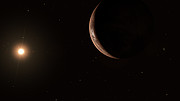
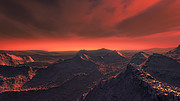
Artist’s impression of the surface of a super-Earth orbiting Barnard’s Star

Artist’s impression of super-Earth orbiting Barnard’s Star

Barnard’s Star in the constellation Ophiuchus

Widefield image of the sky around Barnard’s Star showing its motion


Videos

ESOcast 184 Light: Super-Earth Orbiting Barnard’s Star (4K UHD)

Artist’s impression of Barnard’s Star and its super-Earth

Exploring the surface of a super-Earth orbiting Barnard’s Star (Artist’s impression)

Barnard’s Star in the Solar neighborhood


Red Dots campaign uncovers compelling evidence of exoplanet around closest single star to Sun

The nearest single star to the Sun hosts an exoplanet at least 3.2 times as massive as Earth — a so-called super-Earth. One of the largest observing campaigns to date using data from a world-wide array of telescopes, including ESO’s planet-hunting HARPS instrument, have revealed this frozen, dimly lit world. The newly discovered planet is the second-closest known exoplanet to the Earth. Barnard’s star is the fastest moving star in the night sky.

A planet has been detected orbiting Barnard’s Star, a mere 6 light-years away. This breakthrough — announced in a paper published today in the journal Nature — is a result of the Red Dots and CARMENES projects, whose search for local rocky planets has already uncovered a new world orbiting our nearest neighbour, Proxima Centauri.

The planet, designated Barnard's Star b, now steps in as the second-closest known exoplanet to Earth [1]. The gathered data indicate that the planet could be a super-Earth, having a mass at least 3.2 times that of the Earth, which orbits its host star in roughly 233 days. Barnard’s Star, the planet’s host star, is a red dwarf, a cool, low-mass star, which only dimly illuminates this newly-discovered world. Light from Barnard’s Star provides its planet with only 2% of the energy the Earth receives from the Sun.

Despite being relatively close to its parent star — at a distance only 0.4 times that between Earth and the Sun — the exoplanet lies close to the snow line, the region where volatile compounds such as water can condense into solid ice. This freezing, shadowy world could have a temperature of –170 ℃, making it inhospitable for life as we know it.

Named for astronomer E. E. Barnard, Barnard’s Star is the closest single star to the Sun. While the star itself is ancient — probably twice the age of our Sun — and relatively inactive, it also has the fastest apparent motion of any star in the night sky [2]. Super-Earths are the most common type of planet to form around low-mass stars such as Barnard’s Star, lending credibility to this newly discovered planetary candidate. Furthermore, current theories of planetary formation predict that the snow line is the ideal location for such planets to form.

Previous searches for a planet around Barnard’s Star have had disappointing results — this recent breakthrough was possible only by combining measurements from several high-precision instruments mounted on telescopes all over the world [3].

“After a very careful analysis, we are 99% confident that the planet is there,” stated the team’s lead scientist, Ignasi Ribas (Institute of Space Studies of Catalonia and the Institute of Space Sciences, CSIC in Spain). “However, we’ll continue to observe this fast-moving star to exclude possible, but improbable, natural variations of the stellar brightness which could masquerade as a planet.”

Among the instruments used were ESO’s famous planet-hunting HARPS and UVES spectrographs. “HARPS played a vital part in this project. We combined archival data from other teams with new, overlapping, measurements of Barnard’s star from different facilities,” commented Guillem Anglada Escudé (Queen Mary University of London), co-lead scientist of the team behind this result [4]. “The combination of instruments was key to allowing us to cross-check our result.”

The astronomers used the Doppler effect to find the exoplanet candidate. While the planet orbits the star, its gravitational pull causes the star to wobble. When the star moves away from the Earth, its spectrum redshifts; that is, it moves towards longer wavelengths. Similarly, starlight is shifted towards shorter, bluer, wavelengths when the star moves towards Earth.

Astronomers take advantage of this effect to measure the changes in a star’s velocity due to an orbiting exoplanet — with astounding accuracy. HARPS can detect changes in the star’s velocity as small as 3.5 km/h — about walking pace. This approach to exoplanet hunting is known as the radial velocity method, and has never before been used to detect a similar super-Earth type exoplanet in such a large orbit around its star.

“We used observations from seven different instruments, spanning 20 years of measurements, making this one of the largest and most extensive datasets ever used for precise radial velocity studies.” explained Ribas. ”The combination of all data led to a total of 771 measurements — a huge amount of information!”

“We have all worked very hard on this breakthrough,” concluded Anglada-Escudé. “This discovery is the result of a large collaboration organised in the context of the Red Dots project, that included contributions from teams all over the world.


Notes

[1] The only stars closer to the Sun make up the triple star system Alpha Centauri. In 2016, astronomers using ESO telescopes and other facilities found clear evidence of a planet orbiting the closest star to Earth in this system, Proxima Centauri. That planet lies just over 4 light-years from Earth, and was discovered by a team led by Guillem Anglada Escudé.

[2] The total velocity of Barnard’s Star with respect to the Sun is about 500 000 km/h. Despite this blistering pace, it is not the fastest known star. What makes the star’s motion noteworthy is how fast it appears to move across the night sky as seen from the Earth, known as its apparent motion. Barnard’s Star travels a distance equivalent to the Moon's diameter across the sky every 180 years — while this may not seem like much, it is by far the fastest apparent motion of any star.

[3] The facilities used in this research were: HARPS at the ESO 3.6-metre telescope; UVES at the ESO VLT; HARPS-N at the Telescopio Nazionale Galileo; HIRES at the Keck 10-metre telescope; PFS at the Carnegie’s Magellan 6.5-m telescope; APF at the 2.4-m telescope at Lick Observatory; and CARMENES at the Calar Alto Observatory. Additionally, observations were made with the 90-cm telescope at the Sierra Nevada Observatory, the 40-cm robotic telescope at the SPACEOBS observatory, and the 80-cm Joan Oró Telescope of the Montsec Astronomical Observatory (OAdM).

[4] The story behind this discovery will be explored in more detail in this week’s ESOBlog.


More Information

This research was presented in the paper A super-Earth planet candidate orbiting at the snow-line of Barnard’s star published in the journal Nature on 15 November.

The team was composed of I. Ribas (Institut de Ciències de l’Espai, Spain & Institut d’Estudis Espacials de Catalunya, Spain), M. Tuomi (Centre for Astrophysics Research, University of Hertfordshire, United Kingdom), A. Reiners (Institut für Astrophysik Göttingen, Germany), R. P. Butler (Department of Terrestrial Magnetism, Carnegie Institution for Science, USA), J. C. Morales (Institut de Ciències de l’Espai, Spain & Institut d’Estudis Espacials de Catalunya, Spain), M. Perger (Institut de Ciències de l’Espai, Spain & Institut d’Estudis Espacials de Catalunya, Spain), S. Dreizler (Institut für Astrophysik Göttingen, Germany), C. Rodríguez-López (Instituto de Astrofísica de Andalucía, Spain), J. I. González Hernández (Instituto de Astrofísica de Canarias Spain & Universidad de La Laguna, Spain), A. Rosich (Institut de Ciències de l’Espai, Spain & Institut d’Estudis Espacials de Catalunya, Spain), F. Feng (Centre for Astrophysics Research, University of Hertfordshire, United Kingdom), T. Trifonov (Max-Planck-Institut für Astronomie, Germany), S. S. Vogt (Lick Observatory, University of California, USA), J. A. Caballero (Centro de Astrobiología, CSIC-INTA, Spain), A. Hatzes (Thüringer Landessternwarte, Germany), E. Herrero (Institut de Ciències de l’Espai, Spain & Institut d’Estudis Espacials de Catalunya, Spain), S. V. Jeffers (Institut für Astrophysik Göttingen, Germany), M. Lafarga (Institut de Ciències de l’Espai, Spain & Institut d’Estudis Espacials de Catalunya, Spain), F. Murgas (Instituto de Astrofísica de Canarias, Spain & Universidad de La Laguna, Spain), R. P. Nelson (School of Physics and Astronomy, Queen Mary University of London, United Kingdom), E. Rodríguez (Instituto de Astrofísica de Andalucía, Spain), J. B. P. Strachan (School of Physics and Astronomy, Queen Mary University of London, United Kingdom), L. Tal-Or (Institut für Astrophysik Göttingen, Germany & School of Geosciences, Tel-Aviv University, Israel), J. Teske (Department of Terrestrial Magnetism, Carnegie Institution for Science, USA & Hubble Fellow), B. Toledo-Padrón (Instituto de Astrofísica de Canarias, Spain & Universidad de La Laguna, Spain), M. Zechmeister (Institut für Astrophysik Göttingen, Germany), A. Quirrenbach (Landessternwarte, Universität Heidelberg, Germany), P. J. Amado (Instituto de Astrofísica de Andalucía, Spain), M. Azzaro (Centro Astronómico Hispano-Alemán, Spain), V. J. S. Béjar (Instituto de Astrofísica de Canarias, Spain & Universidad de La Laguna, Spain), J. R. Barnes (School of Physical Sciences, The Open University, United Kingdom), Z. M. Berdiñas (Departamento de Astronomía, Universidad de Chile), J. Burt (Kavli Institute, Massachusetts Institute of Technology, USA), G. Coleman (Physikalisches Institut, Universität Bern, Switzerland), M. Cortés-Contreras (Centro de Astrobiología, CSIC-INTA, Spain), J. Crane (The Observatories, Carnegie Institution for Science, USA), S. G. Engle (Department of Astrophysics & Planetary Science, Villanova University, USA), E. F. Guinan (Department of Astrophysics & Planetary Science, Villanova University, USA), C. A. Haswell (School of Physical Sciences, The Open University, United Kingdom), Th. Henning (Max-Planck-Institut für Astronomie, Germany), B. Holden (Lick Observatory, University of California, USA), J. Jenkins (Departamento de Astronomía, Universidad de Chile), H. R. A. Jones (Centre for Astrophysics Research, University of Hertfordshire, United Kingdom), A. Kaminski (Landessternwarte, Universität Heidelberg, Germany), M. Kiraga (Warsaw University Observatory, Poland), M. Kürster (Max-Planck-Institut für Astronomie, Germany), M. H. Lee (Department of Earth Sciences and Department of Physics, The University of Hong Kong), M. J. López-González (Instituto de Astrofísica de Andalucía, Spain), D. Montes (Dep. de Física de la Tierra Astronomía y Astrofísica & Unidad de Física de Partículas y del Cosmos de la Universidad Complutense de Madrid, Spain), J. Morin (Laboratoire Univers et Particules de Montpellier, Université de Montpellier, France), A. Ofir (Department of Earth and Planetary Sciences, Weizmann Institute of Science. Israel), E. Pallé (Instituto de Astrofísica de Canarias, Spain & Universidad de La Laguna, Spain), R. Rebolo (Instituto de Astrofísica de Canarias, Spain, & Consejo Superior de Investigaciones Científicas & Universidad de La Laguna, Spain), S. Reffert (Landessternwarte, Universität Heidelberg, Germany), A. Schweitzer (Hamburger Sternwarte, Universität Hamburg, Germany), W. Seifert (Landessternwarte, Universität Heidelberg, Germany), S. A. Shectman (The Observatories, Carnegie Institution for Science, USA), D. Staab (School of Physical Sciences, The Open University, United Kingdom), R. A. Street (Las Cumbres Observatory Global Telescope Network, USA), A. Suárez Mascareño (Observatoire Astronomique de l'Université de Genève, Switzerland & Instituto de Astrofísica de Canarias Spain), Y. Tsapras (Zentrum für Astronomie der Universität Heidelberg, Germany), S. X. Wang (Department of Terrestrial Magnetism, Carnegie Institution for Science, USA), and G. Anglada-Escudé (School of Physics and Astronomy, Queen Mary University of London, United Kingdom & Instituto de Astrofísica de Andalucía, Spain).

ESO is the foremost intergovernmental astronomy organisation in Europe and the world’s most productive ground-based astronomical observatory by far. It has 16 Member States: Austria, Belgium, the Czech Republic, Denmark, France, Finland, Germany, Ireland, Italy, the Netherlands, Poland, Portugal, Spain, Sweden, Switzerland and the United Kingdom, along with the host state of Chile and with Australia as a Strategic Partner. ESO carries out an ambitious programme focused on the design, construction and operation of powerful ground-based observing facilities enabling astronomers to make important scientific discoveries. ESO also plays a leading role in promoting and organising cooperation in astronomical research. ESO operates three unique world-class observing sites in Chile: La Silla, Paranal and Chajnantor. At Paranal, ESO operates the Very Large Telescope and its world-leading Very Large Telescope Interferometer as well as two survey telescopes, VISTA working in the infrared and the visible-light VLT Survey Telescope. ESO is also a major partner in two facilities on Chajnantor, APEX and ALMA, the largest astronomical project in existence. And on Cerro Armazones, close to Paranal, ESO is building the 39-metre Extremely Large Telescope, the ELT, which will become “the world’s biggest eye on the sky”.


Links


Contact

Ignasi Ribas (Lead Scientist)
Institut d’Estudis Espacials de Catalunya and the Institute of Space Sciences, CSIC
Barcelona, Spain
Tel: +34 93 737 97 88 (ext 933027)
Email: iribas@ice.cat

Guillem Anglada-Escudé
Queen Mary University of London
London, United Kingdom
Tel: +44 (0)20 7882 3002
Email: g.anglada@qmul.ac.uk

Calum Turner
ESO Public Information Officer
Garching bei München, Germany
Tel: +49 89 3200 6670
Cell: +49 151 1537 3591
Email: pio@eso.org

Source: ESO/News


Friday, November 03, 2017

ALMA Discovers Cold Dust Around Nearest Star

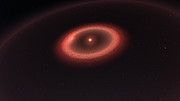
Artist’s impression of the dust belts around Proxima Centauri

Proxima Centauri in the southern constellation of Centaurus

The location of Proxima Centauri in the southern skies

The sky around Alpha Centauri and Proxima Centauri (annotated)


Videos

ESOcast 136 Light: ALMA Discovers Cold Dust Around Nearest Star (4K UHD)

Artist’s impression of the dust belts around Proxima Centauri


The ALMA Observatory in Chile has detected dust around the closest star to the Solar System, Proxima Centauri. These new observations reveal the glow coming from cold dust in a region between one to four times as far from Proxima Centauri as the Earth is from the Sun. The data also hint at the presence of an even cooler outer dust belt and may indicate the presence of an elaborate planetary system. These structures are similar to the much larger belts in the Solar System and are also expected to be made from particles of rock and ice that failed to form planets.

Proxima Centauri is the closest star to the Sun. It is a faint red dwarf lying just four light-years away in the southern constellation of Centaurus (The Centaur). It is orbited by the Earth-sized temperate world Proxima b, discovered in 2016 and the closest planet to the Solar System. But there is more to this system than just a single planet. The new ALMA observations reveal emission from clouds of cold cosmic dust surrounding the star.

The lead author of the new study, Guillem Anglada [1], from the Instituto de Astrofísica de Andalucía (CSIC), Granada, Spain, explains the significance of this find: “The dust around Proxima is important because, following the discovery of the terrestrial planet Proxima b, it’s the first indication of the presence of an elaborate planetary system, and not just a single planet, around the star closest to our Sun.”

Dust belts are the remains of material that did not form into larger bodies such as planets. The particles of rock and ice in these belts vary in size from the tiniest dust grain, smaller than a millimetre across, up to asteroid-like bodies many kilometres in diameter [2].

Dust appears to lie in a belt  that extends a few hundred million kilometres from Proxima Centauri and has a total mass of about one hundredth of the Earth’s mass. This belt is estimated to have a temperature of about –230 degrees Celsius, as cold as that of the Kuiper Belt in the outer Solar System.

There are also hints in the ALMA data of another belt of even colder dust about ten times further out. If confirmed, the nature of an outer belt is intriguing, given its very cold environment far from a star that is cooler and fainter than the Sun. Both belts are much further from Proxima Centauri than the planet Proxima b, which orbits at just four million kilometres from its parent star [3].

Guillem Anglada explains the implications of the discovery: “This result suggests that Proxima Centauri may have a multiple planet system with a rich history of interactions that resulted in the formation of a dust belt. Further study may also provide information that might point to the locations of as yet unidentified additional planets.”

Proxima Centauri's planetary system is also particularly interesting because there are plans — the Starshot project — for future direct exploration of the system with microprobes attached to laser-driven sails. A knowledge of the dust environment around the star is essential for planning such a mission.

Co-author Pedro Amado, also from the Instituto de Astrofísica de Andalucía, explains that this observation is just the start: “These first results show that ALMA can detect dust structures orbiting around Proxima. Further observations will give us a more detailed picture of Proxima's planetary system. In combination with the study of protoplanetary discs around young stars, many of the details of the processes that led to the formation of the Earth and the Solar System about 4600 million years ago will be unveiled. What we are seeing now is just the appetiser compared to what is coming!”


Notes

[1] In a cosmic coincidence, the lead author of the study, Guillem Anglada shares his name with the astronomer who led the team that discovered Proxima Centauri b, Guillem Anglada-Escudé, himself a co-author of the paper in which this research is published, although the two are not related.

[2] Proxima Centauri is quite an old star, of similar age to the Solar System. The dusty belts around it are probably similar to the residual dust in the Kuiper Belt and the asteroid belt in the Solar System and the dust that creates the Zodiacal Light. The spectacular discs that ALMA has imaged around much younger stars, such as HL Tauri, contain much more material that is in the process of forming planets.

[3] The apparent shape of the very faint outer belt, if confirmed, would give astronomers a way to estimate the inclination of the Proxima Centauri planetary system. It would appear elliptical due to the tilt of what is assumed to be in reality a circular ring. This would in turn allow a better determination of the mass of the Proxima b planet, which is currently known only as a lower limit.


More Information 

 This research was presented in a paper entitled “ALMA Discovery of Dust Belts Around Proxima Centauri”, by Guillem Anglada et al., to appear in Astrophysical Journal Letters.

The team is composed of Guillem Anglada (Instituto de Astrofísica de Andalucía (CSIC), Granada, Spain [IAA-CSIC]), Pedro J. Amado (IAA-CSIC), Jose L. Ortiz (IAA-CSIC), José F. Gómez (IAA-CSIC), Enrique Macías (Boston University, Massachusetts, USA), Antxon Alberdi (IAA-CSIC), Mayra Osorio (IAA-CSIC), José L. Gómez (IAA-CSIC), Itziar de Gregorio-Monsalvo (ESO, Santiago, Chile; Joint ALMA Observatory, Santiago, Chile), Miguel A. Pérez-Torres (IAA-CSIC; Universidad de Zaragoza, Zaragoza, Spain), Guillem Anglada-Escudé (Queen Mary University of London, London, United Kingdom), Zaira M. Berdiñas (Universidad de Chile, Santiago, Chile; IAA-CSIC), James S. Jenkins (Universidad de Chile, Santiago, Chile), Izaskun Jimenez-Serra (Queen Mary University of London, London, United Kingdom), Luisa M. Lara (IAA-CSIC), Maria J. López-González (IAA-CSIC), Manuel López-Puertas (IAA-CSIC), Nicolas Morales (IAA-CSIC), Ignasi Ribas (Institut de Ciències de l’Espai (IEEC-CSIC), Bellaterra, Spain), Anita M. S. Richards (JBCA, University of Manchester, Manchester, United Kingdom), Cristina Rodríguez-López (IAA-CSIC) and Eloy Rodríguez (IAA-CSIC).

ESO is the foremost intergovernmental astronomy organisation in Europe and the world’s most productive ground-based astronomical observatory by far. It is supported by 16 countries: Austria, Belgium, Brazil, the Czech Republic, Denmark, France, Finland, Germany, Italy, the Netherlands, Poland, Portugal, Spain, Sweden, Switzerland and the United Kingdom, along with the host state of Chile and by Australia as a strategic partner. ESO carries out an ambitious programme focused on the design, construction and operation of powerful ground-based observing facilities enabling astronomers to make important scientific discoveries. ESO also plays a leading role in promoting and organising cooperation in astronomical research. ESO operates three unique world-class observing sites in Chile: La Silla, Paranal and Chajnantor. At Paranal, ESO operates the Very Large Telescope and its world-leading Very Large Telescope Interferometer as well as two survey telescopes, VISTA working in the infrared and the visible-light VLT Survey Telescope. ESO is also a major partner in two facilities on Chajnantor, APEX and ALMA, the largest astronomical project in existence. And on Cerro Armazones, close to Paranal, ESO is building the 39-metre Extremely Large Telescope, the ELT, which will become “the world’s biggest eye on the sky”.


Links 


Contacts

Guillem Anglada
Instituto de Astrofísica de Andalucía (CSIC)
Granada, Spain
Email: guillem@iaa.es

Pedro J. Amado
Instituto de Astrofísica de Andalucía (CSIC)
Granada, Spain
Email: pja@iaa.csic.es

Antxon Alberdi
Instituto de Astrofísica de Andalucía (CSIC)
Granada, Spain
Email: antxon@iaa.es

Enrique Macias
Boston University
Boston, USA
Email: emacias@bu.edu

Itziar de Gregorio-Monsalvo
ESO/ALMA
Santiago, Chile
Tel: +56 22 4676316
Email: idegrego@eso.org

Richard Hook 
ESO Public Information Officer 
Garching bei München, Germany 
Tel: +49 89 3200 6655 
Cell: +49 151 1537 3591 
Email: rhook@eso.org


Source: ESO

Friday, June 17, 2016

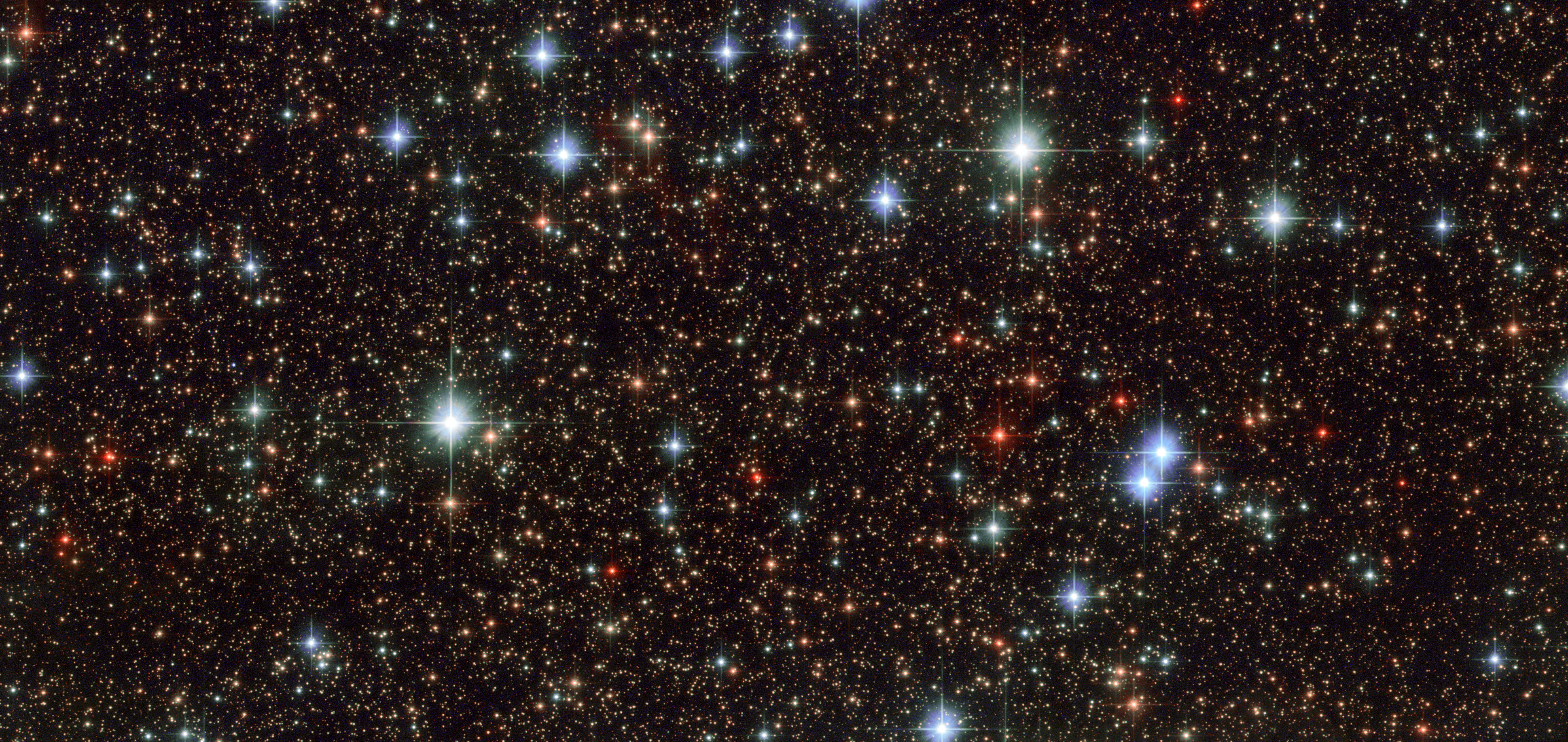
Scattered stars in Sagittarius

 
Credit: ESA/Hubble & NASA


This colourful and star-studded view of the Milky Way galaxy was captured when the NASA/ESA Hubble Space Telescope pointed its cameras towards the constellation of Sagittarius (The Archer). Blue stars can be seen scattered across the frame, set against a distant backdrop of red-hued cosmic companions. This blue litter most likely formed at the same time from the same collapsing molecular cloud.

The colour of a star can reveal many of its secrets. Shades of red indicate a star much cooler than the Sun, so either at the end of its life, or much less massive. These lower-mass stars are called red dwarfs and are thought to be the most common type of star within the Milky Way. Similarly, brilliant blue hues indicate hot, young, or massive stars, many times the mass of the Sun.

A star’s mass decides its fate; more massive stars burn brightly over a short lifespan, and die young after only tens of millions of years. Stars like the Sun typically have more sedentary lifestyles and live longer, burning for approximately ten billion years. Smaller stars, on the other hand, live life in the slow lane and are predicted to exist for trillions of years, well beyond the current age of the Universe.