Thursday, June 19, 2025

Astronomers capture most detailed thousand-colour image of a galaxy

PR Image eso2510a
MUSE view of the Sculptor Galaxy

PR Image eso2510b
MUSE view of ionised gas in the Sculptor Galaxy

PR Image eso2510c
Digitized Sky Survey image of NGC 253

PR Image eso2510d
The galaxy NGC 253 in the constellation of Sculptor


Videos


Astronomers capture galaxy in thousands of colours | ESO News
PR Video eso2510a
Astronomers capture galaxy in thousands of colours | ESO News

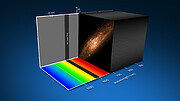
Zooming into a thousand-colour image of the Sculptor Galaxy
PR Video eso2510b
Zooming into a thousand-colour image of the Sculptor Galaxy

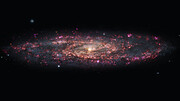
The Sculptor Galaxy in a myriad of colours
PR Video eso2510c
The Sculptor Galaxy in a myriad of colours

Animation of the rotation of the Sculptor Galaxy
PR Video eso2510d
Animation of the rotation of the Sculptor Galaxy


Astronomers have created a galactic masterpiece: an ultra-detailed image that reveals previously unseen features in the Sculptor Galaxy. Using the European Southern Observatory’s Very Large Telescope (ESO’s VLT), they observed this nearby galaxy in thousands of colours simultaneously. By capturing vast amounts of data at every single location, they created a galaxy-wide snapshot of the lives of stars within Sculptor.

"Galaxies are incredibly complex systems that we are still struggling to understand," says ESO researcher Enrico Congiu, who led a new Astronomy & Astrophysics study on Sculptor. Reaching hundreds of thousands of light-years across, galaxies are extremely large, but their evolution depends on what’s happening at much smaller scales. “The Sculptor Galaxy is in a sweet spot,” says Congiu. “It is close enough that we can resolve its internal structure and study its building blocks with incredible detail, but at the same time, big enough that we can still see it as a whole system.”

A galaxy’s building blocks — stars, gas and dust — emit light at different colours. Therefore, the more shades of colour there are in an image of a galaxy, the more we can learn about its inner workings. While conventional images contain only a handful of colours, this new Sculptor map comprises thousands. This tells astronomers everything they need to know about the stars, gas and dust within, such as their age, composition, and motion.

To create this map of the Sculptor Galaxy, which is 11 million light-years away and is also known as NGC 253, the researchers observed it for over 50 hours with the Multi Unit Spectroscopic Explorer (MUSE) instrument on ESO’s VLT. The team had to stitch together over 100 exposures to cover an area of the galaxy about 65 000 light-years wide.

According to co-author Kathryn Kreckel from Heidelberg University, Germany, this makes the map a potent tool: “We can zoom in to study individual regions where stars form at nearly the scale of individual stars, but we can also zoom out to study the galaxy as a whole.”
In their first analysis of the data, the team uncovered around 500 planetary nebulae, regions of gas and dust cast off from dying Sun-like stars, in the Sculptor Galaxy. Co-author Fabian Scheuermann, a doctoral student at Heidelberg University, puts this number into context: “Beyond our galactic neighbourhood, we usually deal with fewer than 100 detections per galaxy.”

Because of the properties of planetary nebulae, they can be used as distance markers to their host galaxies. “Finding the planetary nebulae allows us to verify the distance to the galaxy — a critical piece of information on which the rest of the studies of the galaxy depend,” says Adam Leroy, a professor at The Ohio State University, USA, and study co-author.

Future projects using the map will explore how gas flows, changes its composition, and forms stars all across this galaxy. “How such small processes can have such a big impact on a galaxy whose entire size is thousands of times bigger is still a mystery,” says Congiu.

Source: ESO/News


More information

This research was presented in a paper accepted for publication in Astronomy & Astrophysics.

The team is composed of E. Congiu (European Southern Observatory, Chile [ESO Chile]), F. Scheuermann (Astronomisches Rechen-Institut, Zentrum für Astronomie der Universität Heidelberg, Germany [ARI-ZAH]), K. Kreckel (ARI-ZAH), A. Leroy (Department of Astronomy and Center for Cosmology and Astroparticle Physics, The Ohio State University [OSU], USA), E. Emsellem (European Southern Observatory, Germany [ESO Garching] and Univ. Lyon, Univ. Lyon1, ENS de Lyon, CNRS, Centre de Recherche Astrophysique de Lyon, France), F. Belfiore (INAF – Osservatorio Astrofisico di Arcetri, Italy), J. Hartke (Finnish Centre for Astronomy with ESO [FINCA] and Tuorla Observatory, Department of Physics and Astronomy [Tuorla], University of Turku, Finland), G. Anand (Space Telescope Science Institute, USA), O. V. Egorov (ARI-ZAH), B. Groves (International Centre for Radio Astronomy Research, University of Western Australia, Australia), T. Kravtsov (Tuorla and FINCA), D. Thilker (Department of Physics and Astronomy, The Johns Hopkins University, USA), C. Tovo (Dipartimento di Fisica e Astronomia ‘G. Galilei’, Universit‘a di Padova, Italy), F. Bigiel (Argelander-Institut für Astronomie, Universität Bonn, Germany), G. A. Blanc (Observatories of the Carnegie Institution for Science, USA, and Departamento de Astronomía, Universidad de Chile, Chile), A. D. Bolatto and S. A. Cronin (Department of Astronomy, University of Maryland, USA), D. A. Dale (Department of Physics and Astronomy, University of Wyoming, USA), R. McClain (OSU), J. E. Méndez-Delgado (Instituto de Astronomía, Universidad Nacional Autónoma de México, Mexico), E. K. Oakes (Department of Physics, University of Connecticut, USA), R. S. Klessen (Universität Heidelberg, Zentrum für Astronomie, Institut für Theoretische Astrophysik and Interdisziplinäres Zentrum für Wissenschaftliches Rechnen, Germany, Center for Astrophysics Harvard & Smithsonian, USA, and Elizabeth S. and Richard M. Cashin Fellow at the Radcliffe Institute for Advanced Studies at Harvard University, USA) E. Schinnerer (Max-Planck-Institut für Astronomie, Germany), T. G. Williams (Sub-department of Astrophysics, Department of Physics, University of Oxford, UK).

The European Southern Observatory (ESO) enables scientists worldwide to discover the secrets of the Universe for the benefit of all. We design, build and operate world-class observatories on the ground — which astronomers use to tackle exciting questions and spread the fascination of astronomy — and promote international collaboration for astronomy. Established as an intergovernmental organisation in 1962, today ESO is supported by 16 Member States (Austria, Belgium, Czechia, Denmark, France, Finland, Germany, Ireland, Italy, the Netherlands, Poland, Portugal, Spain, Sweden, Switzerland and the United Kingdom), along with the host state of Chile and with Australia as a Strategic Partner. ESO’s headquarters and its visitor centre and planetarium, the ESO Supernova, are located close to Munich in Germany, while the Chilean Atacama Desert, a marvellous place with unique conditions to observe the sky, hosts our telescopes. ESO operates three observing sites: La Silla, Paranal and Chajnantor. At Paranal, ESO operates the Very Large Telescope and its Very Large Telescope Interferometer, as well as survey telescopes such as VISTA. Also at Paranal ESO will host and operate the Cherenkov Telescope Array South, the world’s largest and most sensitive gamma-ray observatory. Together with international partners, ESO operates ALMA on Chajnantor, a facility that observes the skies in the millimetre and submillimetre range. At Cerro Armazones, near Paranal, we are building “the world’s biggest eye on the sky” — ESO’s Extremely Large Telescope. From our offices in Santiago, Chile we support our operations in the country and engage with Chilean partners and society.


Links


Contacts:

Enrico Congiu
European Southern Observatory (ESO)
Santiago, Chile
Email:
econgiu@eso.org

Kathryn Kreckel
Heidelberg University
Heidelberg, Germany
Tel: +49 6221 54-1859
Email
: kathryn.kreckel@uni-heidelberg.de

Adam Leroy
The Ohio State University
Columbus, Ohio, USA
Tel: +1 614 292-1765
Email:
leroy.42@osu.edu

Fabian Scheuermann
Heidelberg University
Heidelberg, Germany
Email:
f.scheuermann@uni-heidelberg.de

Bárbara Ferreira
ESO Media Manager
Germany, Germany
Tel: +49 89 3200 6670
Cell: +49 151 241 664 00
Email: press@eso.org


Caution: Planets under construction

Astronomers may have caught a still-forming planet on camera, hidden somewhere in this stellar snapshot.
Credit: ESO/C. Ginski et al.

Today’s Picture of the Week is a clos,e-up of the star RIK 113, seen here surrounded by a cloud of gas and dust called a protoplanetary disc. These discs are a common feature around young stars, containing all the building blocks needed to make a new planet. Over time, these dusty discs will fragment and condense under the influence of gravity, forming larger objects like protoplanets. These planetary embryos carve out gaps in the dust around them, forming the intricate, ring-like structures that we can see in this disc.

The true complexity of this protoplanetary disc was first uncovered by the Atacama Large Millimeter/submillimeter Array (ALMA) in a study published last year. These results showed the presence of a gap, which hinted at a planet-like object embedded within it.

This prompted another team of astronomers, led by Christian Ginski at the University of Galway, Ireland, to follow up with observations from ESO’s Very Large Telescope (VLT). Using the SPHERE instrument they found that the inner ring has intriguing spiral features. A detailed analysis of the data uncovered not just one, but two potential signals from planets around RIK 113, not far from the original detection with ALMA.

For now, these signals are still more of a suggestion than a direct confirmation. However, with two separate studies from both ALMA and the VLT indicating the presence of at least one planet, these results are extremely promising for a future discovery.

Link
Source: ESO/potw


Wednesday, June 18, 2025

Following Photons Through Curved Spacetimes


Today’s featured image is a beautiful representation of how simulated images of active black holes are made. In a recent research article, a team led by Aniket Sharma (Indian Institute of Science Education and Research Mohali) introduced Mahakala, a new ray-tracing algorithm that expertly tracks photons as they navigate the warped spacetimes surrounding black holes. Mahakala is named for the Egyptian deity who, as Sharma and collaborators describe, is “believed to be the depiction of absolute black, and the one who has the power to dissolve time and space into himself.” The image above shows a simulated accreting black hole at a wavelength of 1.3 millimeters, which is the same wavelength used by the Event Horizon Telescope to view the supermassive black holes at the center of the Milky Way and the galaxy Messier 87. The dotted lines streaming off to the right represent the paths that photons took on their way to the viewer as they curved around the black hole, which is visible among the forest of lines. In this representation, the color of each dot shows the synchrotron emission generated at that point in three-dimensional space. The team hopes that Mahakala, which can be run quickly and easily from a Python Jupyter notebook, helps make the complex world of general relativistic magnetohydrodynamics simulations more accessible. You can try it for yourself or learn more from the article linked below.

By Kerry Hensley

Citation

“Mahakala: A Python-Based Modular Ray-Tracing and Radiative Transfer Algorithm for Curved Spacetimes,” Aniket Sharma et al 2025 ApJ 985 40. doi:10.3847/1538-4357/adc104


Tuesday, June 17, 2025

Small but mighty

This Hubble image shows the galaxy
NGC 4449. The field is dominated by dust that appears in dark red, with scattered brighter regions of star formation as bright pink globules. The background shows countless blue stars peeking around the dusty regions. Credit: ESA/Hubble & NASA, E. Sabbi, D. Calzetti, A. Aloisi

This portrait from the NASA/ESA Hubble Space Telescope puts the nearby galaxy NGC 4449 in the spotlight. The galaxy is situated just 12.5 million light-years away in the constellation Canes Venatici (The Hunting Dogs). It is a member of the M94 galaxy group, which is near the Local Group of galaxies to which the Milky Way belongs.

NGC 4449 is a dwarf galaxy, which means that it is far smaller and contains fewer stars than the Milky Way. But don’t let its small size fool you — NGC 4449 packs a punch when it comes to making stars! This galaxy is currently forming new stars at a much faster rate than expected for its size, which makes it known as a starburst galaxy. Most starburst galaxies churn out stars mainly in their centres, but NGC 4449 is alight with brilliant young stars throughout. Researchers believe that this global burst of star formation came about because of NGC 4449’s interactions with its galactic neighbours. Because NGC 4449 is so close, it provides an excellent opportunity for Hubble to study how interactions between galaxies can influence the formation of new stars.

A Hubble image of NGC 4449 was previously released in 2007. This new version incorporates several additional wavelengths of light that Hubble collected for multiple observing programmes. These programmes encompass an incredible range of science, from a deep dive into NGC 4449’s star-formation history to the mapping of the brightest, hottest, and most massive stars in more than two dozen nearby galaxies.

The NASA/ESA/CSA James Webb Space Telescope has also observed NGC 4449, revealing in intricate detail the galaxy’s tendrils of dusty gas, glowing from the intense starlight radiated by the flourishing young stars.


Monday, June 16, 2025

Another First: NASA Webb Identifies Frozen Water in Young Star System

For the first time, researchers confirmed the presence of crystalline water ice in a dusty debris disk that orbits a Sun-like star, using NASA’s James Webb Space Telescope. All the frozen water detected by Webb is paired with fine dust particles throughout the disk. The majority of the water ice observed is found where it’s coldest and farthest from the star. The closer to the star the researchers looked, the less water ice they found. Credits/Artwork: NASA, ESA, CSA, STScI, Ralf Crawford (STScI)


Is frozen water scattered in systems around other stars? Astronomers have long expected it is, partially based on previous detections of its gaseous form, water vapor, and its presence in our own solar system.

Now there is definitive evidence: Researchers confirmed the presence of crystalline water ice in a dusty debris disk that orbits a Sun-like star 155 light-years away using detailed data known as spectra from NASA’s James Webb Space Telescope. (The term water ice specifies its makeup, since many other frozen molecules are also observed in space, such as carbon dioxide ice, or “dry ice.”) In 2008, data from NASA’s retired Spitzer Space Telescope hinted at the possibility of frozen water in this system.

“Webb unambiguously detected not just water ice, but crystalline water ice, which is also found in locations like Saturn’s rings and icy bodies in our solar system’s Kuiper Belt,” said Chen Xie, the lead author of the new paper and an assistant research scientist at Johns Hopkins University in Baltimore, Maryland.

All the frozen water Webb detected is paired with fine dust particles throughout the disk — like itsy-bitsy “dirty snowballs.” The results published Wednesday in the journal Nature.

Astronomers have been waiting for this definitive data for decades. “When I was a graduate student 25 years ago, my advisor told me there should be ice in debris disks, but prior to Webb, we didn’t have instruments sensitive enough to make these observations,” said Christine Chen, a co-author and an astronomer at the Space Telescope Science Institute in Baltimore. “What’s most striking is that this data looks similar to the telescope’s other recent observations of Kuiper Belt objects in our own solar system.”

Water ice is a vital ingredient in disks around young stars — it heavily influences the formation of giant planets and may also be delivered by small bodies like comets and asteroids to fully formed rocky planets. Now that researchers have detected water ice with Webb, they have opened the door for all researchers to study how these processes play out in new ways in many other planetary systems.

Rocks, Dust, Ice Rushing Around

The star, cataloged HD 181327, is significantly younger than our Sun. It’s estimated to be 23 million years old, compared to the Sun’s more mature 4.6 billion years. The star is slightly more massive than the Sun, and it’s hotter, which led to the formation of a slightly larger system around it.

Webb’s observations confirm a significant gap between the star and its debris disk — a wide area that is free of dust. Farther out, its debris disk is similar to our solar system’s Kuiper Belt, where dwarf planets, comets, and other bits of ice and rock are found (and sometimes collide with one another). Billions of years ago, our Kuiper Belt was likely similar to this star’s debris disk.

“HD 181327 is a very active system,” Chen said. “There are regular, ongoing collisions in its debris disk. When those icy bodies collide, they release tiny particles of dusty water ice that are perfectly sized for Webb to detect.”

Frozen Water — Almost Everywhere

Water ice isn’t spread evenly throughout this system. The majority is found where it’s coldest and farthest from the star. “The outer area of the debris disk consists of over 20% water ice,” Xie said.

The closer in the researchers looked, the less water ice they found. Toward the middle of the debris disk, Webb detected about 8% water ice. Here, it’s likely that frozen water particles are produced slightly faster than they are destroyed. In the area of the debris disk closest to the star, Webb detected almost none. It’s likely that the star’s ultraviolet light vaporizes the closest specks of water ice. It’s also possible that rocks known as planetesimals have “locked up” frozen water in their interiors, which Webb can’t detect.

This team and many more researchers will continue to search for — and study — water ice in debris disks and actively forming planetary systems throughout our Milky Way galaxy. “The presence of water ice helps facilitate planet formation,” Xie said. “Icy materials may also ultimately be ‘delivered’ to terrestrial planets that may form over a couple hundred million years in systems like this.”

The researchers observed HD 181327 with Webb’s NIRSpec (Near-Infrared Spectrograph), which is super-sensitive to extremely faint dust particles that can only be detected from space.

The James Webb Space Telescope is the world’s premier space science observatory. Webb is solving mysteries in our solar system, looking beyond to distant worlds around other stars, and probing the mysterious structures and origins of our universe and our place in it. Webb is an international program led by NASA with its partners, ESA (European Space Agency) and CSA (Canadian Space Agency).

To learn more about Webb, visit: https://science.nasa.gov/webb


About This Release

Credits:

Media Contact:

Claire Blome
Space Telescope Science Institute, Baltimore

Christine Pulliam
Space Telescope Science Institute, Baltimore

Permissions: Content Use Policy

Contact Us: Direct inquiries to the News Team.

Related Links and Documents


Sunday, June 15, 2025

Record-Breaking Cosmic Structure Discovered in Colossal Galaxy Cluster

This new composite image made with X-rays from NASA’s Chandra X-ray Observatory (blue and purple), radio data from the MeerKAT radio telescope (orange and yellow), and an optical image from PanSTARRS (red, green, and blue) shows PLCK G287.0+32.9. This massive galaxy cluster, located about 5 billion light-years from Earth, was first detected by astronomers in 2011. Credit: X-ray: NASA/CXC/CfA/K. Rajpurohit et al.; Optical: PanSTARRS; Radio: SARAO/MeerKAT; Image processing: NASA/CXC/SAO/N. Wolk.
High Resolution Image


A CfA astronomer and her team have imaged the largest known cloud of energetic particles surrounding a galaxy cluster, and raised new questions about what powers and re-energizes particles in the Universe over time.

Cambridge, MA - Astronomers have discovered the largest known cloud of energetic particles surrounding a galaxy cluster— spanning nearly 20 million light-years. The finding challenges long-standing theories about how particles stay energized over time. Instead of being powered by nearby galaxies, this vast region seems to be energized by giant shockwaves and turbulence moving through the hot gas between galaxies.

The results of the new study, led by scientists at the Center for Astrophysics | Harvard & Smithsonian (CfA), were presented today in a press conference at the 246th meeting of the American Astronomical Society (AAS).

Located five billion light-years from Earth, PLCK G287.0+32.9 is a massive galaxy cluster that has piqued the interest of astronomers since it was first detected in 2011. Earlier studies spotted two bright relics— giant shockwaves that lit up the cluster's edges. But they missed the vast, faint radio emission that fills the space between them. New radio images reveal that the entire cluster is wrapped in a faint radio glow, nearly 20 times the diameter of the Milky Way, suggesting that something much larger and more powerful is at work.

"We expected a bright pair of relics at the cluster's edges, which would have matched prior observations, but instead we found the whole cluster glowing in radio light," said lead author, Dr. Kamlesh Rajpurohit, a Smithsonian astronomer at the CfA. "A cloud of energetic particles this large has never been observed in this galaxy cluster or any other." The prior record holder, Abell 2255, spans roughly 16.3 million light-years.

Deep in the cluster's central region, the team detected a radio halo approximately 11.4 million light-years across, the first of its size seen at 2.4 GHz, a radio frequency where halos this large are usually not visible. The findings raise questions for the team because they provide strong evidence for the presence of cosmic ray electrons and magnetic fields stretched out to the periphery of clusters. However, it remains unclear how these electrons accelerated over such large distances.

"Very extended radio halos are mostly only visible at lower frequencies because the electrons that produce them have lost energy — they're old and have cooled over time," said Rajpurohit. "With the discovery of this enormous size halo we are now seeing radio emission extending all the way between the giant shocks and beyond, filling the entire cluster. That suggests something is actively accelerating, or re-accelerating the electrons, but none of the usual suspects apply. We think that giant shockwaves or turbulence could be responsible, but we need more theoretical models to find a definitive answer." The discovery provides researchers a new way to study cosmic magnetic fields— one of the major unanswered questions in astrophysics— that could help scientists understand how magnetic fields shape the Universe on the largest scales.

"We're starting to see the Universe in ways we never could before," said Rajpurohit. "And that means rethinking how energy and matter move through its largest structures." Observations with NASA's Chandra X-ray Observatory, operated by the Smithsonian Astrophysical Observatory, reveal a box-shaped structure, a comet-like tail, and several other distinct features in the cluster's hot gas, suggesting that the cluster is highly disturbed. Some of these X-ray features coincide with radio-detected structures, suggesting giant shocks and turbulence driven by mergers accelerating or re-accelerating electrons. In the center of the cluster, some of these features may be caused by a merger of two smaller galaxy clusters, or from outbursts produced by a supermassive black hole, or both.


Media Contact:

Amy C. Oliver
Public Affairs Officer
Center for Astrophysics | Harvard & Smithsonian

amy.oliver@cfa.harvard.edu


Resources

K. Rajpurohit et al."Diffuse Radio Emission Spanning 6 Mpc in the Highly Disturbed Galaxy Cluster PLCK G287.0+32.9," pending submission

K. Rajpurohit et al. "Radial Profiles of Radio Halos in Massive Galaxy Clusters: Diffuse Giants Over 2 Mpc" submitted to ApJ, preprint is
here


About the Center for Astrophysics | Harvard & Smithsonian

The Center for Astrophysics | Harvard & Smithsonian is a collaboration between Harvard and the Smithsonian designed to ask—and ultimately answer—humanity's greatest unresolved questions about the nature of the universe. The Center for Astrophysics is headquartered in Cambridge, MA, with research facilities across the U.S. and around the world.


Cellular Coordinate System Reveals Secrets of Active Matter

Left: Active matter composed of filaments and motors. Center: Active matter overlaid with a fluorescence-cancelling grid, creating a coordinate system to measure deformation. Right: As the system contracts, the coordinate system deforms as well. Credit: Courtesy of S. Hirokawa


An example of bioengineered microtubules being directed by light
Credit: Caltech


All humans who have ever lived were once each an individual cell, which then divided countless times to produce a body made up of around 10 trillion cells. These cells have busy lives, executing all kinds of dynamic movement: contracting every time we flex a muscle, migrating toward the site of an injury, and rhythmically beating for decades on end.

Cells are an example of active matter. As inanimate matter must burn fuel to move, like airplanes and cars, active matter is similarly animated by its consumption of energy. The basic molecule of cellular energy is adenosine triphosphate (ATP), which catalyzes chemical reactions that enable cellular machinery to work.

Caltech researchers have now developed a bioengineered coordinate system to observe the movement of cellular machinery. The research enables a better understanding of how cells create order out of chaos, such as during embryonic development or in the organized movements of chromosomes that are a prerequisite to faithful cell division.

The work was conducted in the laboratories of Rob Phillips, the Fred and Nancy Morris Professor of Biophysics, Biology, and Physics, and Matt Thomson, Professor of Computational Biology and Heritage Medical Research Institute Investigator. A paper describing the study appears in the journal Proceedings of the National Academy of Sciences.

The basic units of cellular machinery are motors and filaments made of proteins, which act like the muscles and skeleton of the cell. These structures self-assemble, like little protein robots, to enable cells to move. In 2018, former graduate student Tyler Ross (PhD '21) engineered a system of these components that can be controlled by light in a lab setting, enabling researchers to observe and experiment upon their movements. Each experimental system is only the width of a human hair, containing thousands of individual motors and filaments.

In the new work, led by former graduate student Soichi Hirokawa (PhD '23), the team developed additional light patterns that create a grid, or coordinate system, upon the mixture of motors and filaments. To understand this, imagine a sheet of rubber with a grid patterned on it—as the rubber stretches and deforms, the grid does as well. Once a set of regularly spaced squares, the grid's deformation gives a measure of which regions are being stretched or squeezed and by how much. In this way, the team can track the movements of a collection of filaments and motors—they are too small to be seen themselves, but the light-patterned grid, each square about 12-by-12 micrometers, is visible with a microscope.

"The system allows us to observe how these biomolecules reorganize as they collectively form a structure," says Hirokawa. "With it, we can distinguish the processes that contribute to the deformations that we observe on these squares."

This new system enabled the team to measure the competing dynamics of active shrinking and a process that influences cellular self-assembly, called diffusion. Taking a mixture of motors and filaments, the researchers triggered the components to contract inward, like a shrinking circle. But each component naturally still experiences some random movement, or diffusion, jiggling every which way as the whole contracts. The deforming coordinate system enabled the team to watch this competition between active contraction and random diffusion, and characterize it. Interestingly, they found that the more ATP is in the system, the more the molecules randomly diffuse.

"The formation of patterns and structure in biology has to fight against this randomness," says Phillips. "The system is able to organize despite the forces of chaos."

The dynamic coordinate system introduced here could be used in other contexts as well.

"Order is particularly important in processes like embryonic development," says staff scientist and co-author Heun Jin Lee. "An early embryo gastrulates, folding into a tube that ultimately becomes the digestive tract. You could imagine decorating the surface of an embryo with a coordinate system that stretches as the embryo folds."

The paper is titled "Motor-driven microtubule diffusion in a photobleached dynamical coordinate system." In addition to Hirokawa, Lee, Thomson, and Phillips, Caltech co-authors are former graduate student Rachel Banks (PhD '22), graduate student Ana Duarte, and postdoctoral scholar Bibi Najma. Funding was provided by the Maximizing Investigators Research Awards and the Foundational Questions Institute. Matt Thomson is an affiliated faculty member with the Tianqiao and Chrissy Chen Institute for Neuroscience at Caltech.

Written by Lori Dajose

Source: Caltech/News


Saturday, June 14, 2025

Unusual stellar nurseries near our galaxy’s center puzzle scientists

Credit: These images are made from data from the Stratospheric Observatory for Infrared Astronomy (SOFIA), the Spitzer Space Telescope, and the Herschel Space Observatory. Image credit: J. De Buizer (SETI) / SOFIA / Spitzer / Herschel


New research led by Dr. James De Buizer at the SETI Institute and Dr. Wanggi Lim at IPAC at Caltech revealed surprising results about the rate at which high-mass stars form in the galactic center of the Milky Way. The researchers based their study primarily on observations from NASA’s now-retired SOFIA airborne observatory, and using data from the U.S. National Science Foundation Very Large Array archive, and focuses on three star-forming regions—Sgr B1, Sgr B2, and Sgr C—located at the heart of the galaxy.

This science was presented at the 246th American Astronomical Society Conference in Anchorage, Alaska on Monday, June 9, 2025, 2:15 PM AK. You can read the full release from SETI here.


About NRAO

The National Radio Astronomy Observatory (NRAO) is a facility of the U.S. National Science Foundation, operated under cooperative agreement by Associated Universities, Inc.


Friday, June 13, 2025

ALMA Reveals Lives of Planet-Forming Disks Press Releases ALMA Reveals Lives of Planet-Forming Disks

Artist’s concept of protoplanetary disk, like the thirty studied for the ALMA AGE-PRO survey. The lifetime of the gas within the disk determines the timescale for planetary growth. Credit: NSF/AUI/NSF NRAO/S.Dagnello

An artist’s illustration of gas disk evolution as revealed by the AGE-PRO program. The AGE-PRO program observed 30 protoplanetary disks around Sun-like stars to measure how the mass of gas disks changes with age. The top row illustrates the previously known trend: the fraction of young stars with disks declines over time. The AGE-PRO study, for the first time, shows that the median gas disk mass of the surviving disks also decreases with age. Disks younger than 1 Myr typically have several Jupiter masses of gas, but this drops rapidly to below 1 Jupiter mass in older systems. Interestingly, the surviving disks in the 1–3 Myr and 2–6 Myr age ranges appear to maintain similar median gas masses. Credit: Age-Pro collaboration, C. Agurto-Gangas


Observations of 30 disks reshape our understanding of how gas evolves in the birthplaces of planets

An international team of astronomers has unveiled groundbreaking findings about the disks of gas and dust surrounding nearby young stars using the Atacama Large Millimeter/submillimeter Array (ALMA). These results, published in 12 papers in a special issue of The Astrophysical Journal, are part of an ALMA Large Program known as AGE-PRO (ALMA Survey of Gas Evolution of PROtoplanetary Disks).

AGE-PRO observed 30 protoplanetary disks around Sun-like stars to measure gas disk masses at different stages of evolution. The study revealed that gas and dust in these disks evolve at different rates. “AGE-PRO provides the first systematic measurements of gas disk masses and sizes across the lifetime of planet-forming disks,” said Ke Zhang, Principal Investigator of the program from the University of Wisconsin–Madison.

A protoplanetary disk surrounds its host star for several million years, during which time its gas and dust evolve and dissipate. This sets the timeline for the formation of giant planets. The initial mass, size, and angular momentum of the disk strongly influence the kind of planets that can form—whether gas giants, icy giants, or mini-Neptunes—and their potential migration paths.

ALMA’s unique sensitivity enabled the team to detect faint molecular lines, which allowed them to probe the cold gas within the disks. AGE-PRO targeted 30 disks of different ages, ranging from less than one million to over five million years old, located in three star-forming regions: Ophiuchus, Lupus, and Upper Scorpius. The survey captured key tracers of gas and dust masses, building a legacy dataset for studying the full lifecycle of planet-forming environments.

While carbon monoxide (CO) is the most widely used tracer in protoplanetary disks, AGE-PRO also employed the molecular ion N₂H⁺ to improve the accuracy of gas mass estimates. Additionally, ALMA’s sensitivity enabled the serendipitous detection of other molecular lines, including H₂CO, DCN, DCO⁺, N₂D⁺, and CH₃CN. “This is the first large-scale chemical survey of its kind, targeting 30 disks spanning a broad age range to characterize gas masses,” said John Carpenter, ALMA Observatory Scientist and co-lead of the program.

The findings reveal that gas and dust are consumed at different rates as disks age, with a distinct “swing” in the gas-to-dust mass ratio over time. Zhang explains, “The most surprising finding is that although most disks dissipate after a few million years, those that survive retain more gas than we expected. This fundamentally alters our understanding of how and when planets acquire their final atmospheres.”

Among the collaborators in AGE-PRO was a prominent Chilean team from the University of Chile, led by astrophysicist Laura Pérez, along with postdoctoral researchers Carolina Agurto and Aníbal Sierra, all of whom affiliated with the Center for Astrophysics and Associated Technologies (CATA). Pérez emphasized the value of the survey in providing a much-needed view of gas evolution: “Until now, most of what we knew about disk evolution was based on solids. With AGE-PRO, we finally have direct, consistent measurements of how the gas evolves throughout the disk’s lifetime—crucial for understanding how giant planets form.”

Carolina Agurto led the analysis of Upper Scorpius, a region known for hosting more evolved disks. Her work delivered critical insights into the final stages of these systems, showing that disks that persist longer contain significantly more gas than previously thought. Meanwhile, Aníbal Sierra focused on one of the brightest and oldest disks in the sample—2MASS J16120668-3010270—where he identified signs of two forming planets: one revealed by the surrounding dust and another inferred from gravitational perturbations. Follow-up observations with the James Webb Space Telescope (JWST) are already being planned to directly detect exoplanets.

Several undergraduate and graduate students in Chile also contributed to AGE-PRO: Benjamín Cabrera, who worked on determining stellar masses; José Mondaca, who analyzed the youngest disks in Ophiuchus; and Camila Pulgarés, who focused on the evolutionary study of dust in all 30 disks.

“The advancement of science is a truly collaborative endeavor, driven by people from different countries and backgrounds, each contributing their unique perspective to push the boundaries of discovery,” said Ilaria Pascucci, co-Principal Investigator from the University of Arizona.

Additional Information

The original press release was published by the National Radio Astronomical Observatory (NRAO) of the U.S.A., an ALMA partner on behalf of North America.

The Atacama Large Millimeter/submillimeter Array (ALMA), an international astronomy facility, is a partnership of the European Southern Observatory (ESO), the U.S. National Science Foundation (NSF), and the National Institutes of Natural Sciences (NINS) of Japan in cooperation with the Republic of Chile. ALMA is funded by ESO on behalf of its Member States, by NSF in cooperation with the National Research Council of Canada (NRC) and the National Science and Technology Council (NSTC) in Taiwan, and by NINS in cooperation with the Academia Sinica (AS) in Taiwan and the Korea Astronomy and Space Science Institute (KASI).

ALMA construction and operations are led by ESO on behalf of its Member States; by the National Radio Astronomy Observatory (NRAO), managed by Associated Universities, Inc. (AUI), on behalf of North America; and by the National Astronomical Observatory of Japan (NAOJ) on behalf of East Asia. The Joint ALMA Observatory (JAO) provides the unified leadership and management of ALMA's construction, commissioning, and operation.


Contacts

Nicolás Lira
Education and Public Outreach Coordinator
Phone:
tel:+56 2 2467 6519
Cel: +56 9 9445 7726
Email: nicolas.lira@alma.cl

Laura Pérez
Department of Astronomy, University of Chile
Santiago, Chile
Cel:
+5699494640
Email: lperez@das.uchile.cl

Jill Malusky
Public Information Officer
NRAO
Phone:
tel: +1 304-456-2236
Email: jmalusky@nrao.edu

Yuichi Matsuda
ALMA EA-ARC Staff Member
NAOJ
Email:
yuichi.matsuda@nao.ac.jp

Bárbara Ferreira
ESO Media Manager
Garching bei München, Germany
Phone:
tel: +49 89 3200 6670
Email: press@eso.org


Thursday, June 12, 2025

NASA's Roman to Peer Into Cosmic 'Lenses' to Better Define Dark Matter

This image shows a simulated observation from NASA’s Nancy Grace Roman Space Telescope with an overlay of its Wide Field Instrument’s field of view. More than 20 gravitational lenses, with examples shown at left and right, are expected to pop out in every one of Roman’s vast observations. A journal paper led by Bryce Wedig, a graduate student at Washington University in St. Louis, Missouri, estimates that of those Roman detects, about 500 from the telescope’s High-Latitude Wide-Area Survey will be suitable for dark matter studies. By examining such a large population of gravitational lenses, the researchers hope to learn a lot more about the mysterious nature of dark matter. Credits/Science: NASA, Bryce Wedig (Washington University in St. Louis), Tansu Daylan (Washington University in St. Louis). Image: Joseph DePasquale (STScI)


A funky effect Einstein predicted, known as gravitational lensing — when a foreground galaxy magnifies more distant galaxies behind it — will soon become common when NASA’s Nancy Grace Roman Space Telescope begins science operations in 2027 and produces vast surveys of the cosmos.

A particular subset of gravitational lenses, known as strong lenses, is the focus of a new paper published in the Astrophysical Journal led by Bryce Wedig, a graduate student at Washington University in St. Louis. The research team has calculated that over 160,000 gravitational lenses, including hundreds suitable for this study, are expected to pop up in Roman’s vast images. Each Roman image will be 200 times larger than infrared snapshots from NASA’s Hubble Space Telescope, and its upcoming “wealth” of lenses will vastly outpace the hundreds studied by Hubble to date.

Roman will conduct three core surveys, providing expansive views of the universe. This science team’s work is based on a previous version of Roman’s now fully defined High-Latitude Wide-Area Survey. The researchers are working on a follow-up paper that will align with the final survey’s specifications to fully support the research community.

“The current sample size of these objects from other telescopes is fairly small because we’re relying on two galaxies to be lined up nearly perfectly along our line of sight,” Wedig said. “Other telescopes are either limited to a smaller field of view or less precise observations, making gravitational lenses harder to detect.”

Gravitational lenses are made up of at least two cosmic objects. In some cases, a single foreground galaxy has enough mass to act like a lens, magnifying a galaxy that is almost perfectly behind it. Light from the background galaxy curves around the foreground galaxy along more than one path, appearing in observations as warped arcs and crescents. Of the 160,000 lensed galaxies Roman may identify, the team expects to narrow that down to about 500 that are suitable for studying the structure of dark matter at scales smaller than those galaxies.

“Roman will not only significantly increase our sample size — its sharp, high-resolution images will also allow us to discover gravitational lenses that appear smaller on the sky,” said Tansu Daylan, the principal investigator of the science team conducting this research program. Daylan is an assistant professor and a faculty fellow at the McDonnell Center for the Space Sciences at Washington University in St. Louis. “Ultimately, both the alignment and the brightness of the background galaxies need to meet a certain threshold so we can characterize the dark matter within the foreground galaxies.”

What Is Dark Matter?

Not all mass in galaxies is made up of objects we can see, like star clusters. A significant fraction of a galaxy’s mass is made up of dark matter, so called because it doesn’t emit, reflect, or absorb light. Dark matter does, however, possess mass, and like anything else with mass, it can cause gravitational lensing.

When the gravity of a foreground galaxy bends the path of a background galaxy’s light, its light is routed onto multiple paths. “This effect produces multiple images of the background galaxy that are magnified and distorted differently,” Daylan said. These “duplicates” are a huge advantage for researchers — they allow multiple measurements of the lensing galaxy’s mass distribution, ensuring that the resulting measurement is far more precise.

Roman’s 300-megapixel camera, known as its Wide Field Instrument, will allow researchers to accurately determine the bending of the background galaxies’ light by as little as 50 milliarcseconds, which is like measuring the diameter of a human hair from the distance of more than two and a half American football fields or soccer pitches.

The amount of gravitational lensing that the background light experiences depends on the intervening mass. Less massive clumps of dark matter cause smaller distortions. As a result, if researchers are able to measure tinier amounts of bending, they can detect and characterize smaller, less massive dark matter structures — the types of structures that gradually merged over time to build up the galaxies we see today.

With Roman, the team will accumulate overwhelming statistics about the size and structures of early galaxies. “Finding gravitational lenses and being able to detect clumps of dark matter in them is a game of tiny odds. With Roman, we can cast a wide net and expect to get lucky often,” Wedig said. “We won’t see dark matter in the images — it’s invisible — but we can measure its effects.”

“Ultimately, the question we’re trying to address is: What particle or particles constitute dark matter?” Daylan added. “While some properties of dark matter are known, we essentially have no idea what makes up dark matter. Roman will help us to distinguish how dark matter is distributed on small scales and, hence, its particle nature.”

Preparations Continue

Before Roman launches, the team will also search for more candidates in observations from ESA’s (the European Space Agency’s) Euclid mission and the upcoming ground-based Vera C. Rubin Observatory in Chile, which will begin its full-scale operations in a few weeks. Once Roman’s infrared images are in hand, the researchers will combine them with complementary visible light images from Euclid, Rubin, and Hubble to maximize what’s known about these galaxies.

“We will push the limits of what we can observe, and use every gravitational lens we detect with Roman to pin down the particle nature of dark matter,” Daylan said.

The Nancy Grace Roman Space Telescope is managed at NASA’s Goddard Space Flight Center in Greenbelt, Maryland, with participation by NASA's Jet Propulsion Laboratory in Southern California; Caltech/IPAC in Pasadena, California; the Space Telescope Science Institute in Baltimore; and a science team comprising scientists from various research institutions. The primary industrial partners are BAE Systems, Inc. in Boulder, Colorado; L3Harris Technologies in Melbourne, Florida; and Teledyne Scientific & Imaging in Thousand Oaks, California.


About This Release

Credits:

Media Contact:

Claire Blome
Space Telescope Science Institute, Baltimore

Christine Pulliam
Space Telescope Science Institute, Baltimore

Permissions: Content Use Policy

Related Links and Documents


From Stardust to Stone: Windswept Grains Hold Clues to Planet’s Beginnings

Large dust grains observed surrounding outflows of young protostellar binary system L1551 IRS5.
Credit: B. Saxton U.S. National Science Foundation/NSF National Radio Astronomy Observatory

Astronomers discover that stellar winds help dust grains grow into planet-building pebbles, offering fresh insight into the origins of rocky planets like Earth

The Atacama Large Millimeter/submillimeter Array (ALMA) has uncovered a key piece of the puzzle in how rocky planets, such as Earth, form around young stars. For decades, scientists have struggled to explain how dust grains in the disks around newborn stars grow from tiny dust grains to planet-building “pebbles” without either spiraling into the star or shattering in collisions—a challenge known as the “meter-size barrier.”

A team of more than 50 astronomers and chemists from the world’s leading scientific institutes used ALMA for this large program of research, known as the “Fifty AU STudy of the chemistry in the disk/envelope systems of Solar-like protostars” or FAUST. The team studies the chemistry of the dense molecular gas in the envelopes of a representative sample of Solar-like protostars, and now, for the first time ever, have directly observed millimeter-sized dust grains—about 10,000 times larger than typical interstellar dust—embedded in the walls of a protostellar outflow cavity. These grains appear to have been lifted from the dense inner protostellar disk by winds and then deposited farther out, away from where they can fall back onto the disk, and continue growing. This process gives the grains more time and space to stick together, potentially overcoming a long-standing barrier to planet formation.

Astronomers directly observed these millimeter-sized dust grains in the walls of the protostellar outflow cavity of the young L1551 IRS5 binary system, showing these grains can grow much larger than previously thought in the early stages of planet formation. These findings offer new insight into the processes that may have led to the formation of our own Solar System and highlight a previously underestimated pathway for planet formation.

“This discovery not only provides a new mechanism for building planets but also offers a glimpse into how our own Solar System may have formed,” said Giovanni Sabatini, a scientist with the National Institute for Astrophysics (INAF) at the Arcetri Astrophysical Observatory in Florence, and leader of this research. “The findings open exciting new questions about the diversity of planetary systems in our galaxy and bring us closer to understanding our cosmic origins,” adds Claire Chandler, NSF NRAO scientist and a co-PI of the FAUST collaboration.


About NRAO

TThe National Radio Astronomy Observatory (NRAO) is a facility of the U.S. National Science Foundation, operated under cooperative agreement by Associated Universities, Inc.

About ALMA

TThe Atacama Large Millimeter/submillimeter Array (ALMA), an international astronomy facility, is a partnership of the European Southern Observatory (ESO), the U.S. National Science Foundation (NSF) and the National Institutes of Natural Sciences (NINS) of Japan in cooperation with the Republic of Chile. ALMA is funded by ESO on behalf of its Member States, by NSF in cooperation with the National Research Council of Canada (NRC) and the National Science and Technology Council (NSTC) in Taiwan and by NINS in cooperation with the Academia Sinica (AS) in Taiwan and the Korea Astronomy and Space Science Institute (KASI).

ALMA construction and operations are led by ESO on behalf of its Member States; by the National Radio Astronomy Observatory (NRAO), managed by Associated Universities, Inc. (AUI), on behalf of North America; and by the National Astronomical Observatory of Japan (NAOJ) on behalf of East Asia. The Joint ALMA Observatory (JAO) provides the unified leadership and management of the construction, commissioning and operation of ALMA.


Wednesday, June 11, 2025

Dark Energy Camera Captures Sparse Pockets of Light Amongst Dark Clouds of Chamaeleon I

PR Image noirlab2519a
The Ominous Chamaeleon I Dark Cloud


Videos

Pan on the Chamaeleon I Dark Cloud
PR Video noirlab2519a
Pan on the Chamaeleon I Dark Cloud

Zooming into the Chamaeleon I Dark Cloud
PR Video noirlab2519b
Zooming into the Chamaeleon I Dark Cloud

Cosmoview Episode 99: Dark Energy Camera Captures Sparse Pockets of Light Amongst Dark Clouds of Chamaeleon I (horizontal)
PR Video noirlab2519c
Cosmoview Episode 99: Dark Energy Camera Captures Sparse Pockets of Light Amongst Dark Clouds of Chamaeleon I (horizontal)

Cosmoview Episode 99: Dark Energy Camera Captures Sparse Pockets of Light Amongst Dark Clouds of Chamaeleon I (vertical)

Episodio 99 de Cosmoview: Cerro Tololo descubre pequeñas fuentes de luz dispersas entre una densa nube molecular cercana a la Tierra (horizontal)  
Episodio 99 de Cosmoview: Cerro Tololo descubre pequeñas fuentes de luz dispersas entre una densa nube molecular cercana a la Tierra (horizontal) in English only
 
Episodio 99 de Cosmoview: Cerro Tololo descubre pequeñas fuentes de luz dispersas entre una densa nube molecular cercana a la Tierra (vertical)  
Episodio 99 de Cosmoview: Cerro Tololo descubre pequeñas fuentes de luz dispersas entre una densa nube molecular cercana a la Tierra (vertical)


From within the inky black plumes of the Chamaeleon I dark cloud, the light from three reflection nebulae breaks through

The ominous Chamaeleon I dark cloud, the nearest star-forming region to Earth, is captured in this image taken with the 570-megapixel Department of Energy-fabricated Dark Energy Camera mounted on the U.S. National Science Foundation Víctor M. Blanco 4-meter Telescope at Cerro Tololo Inter-American Observatory, a Program of NSF NOIRLab. Chamaeleon I is one portion of the larger Chamaeleon Complex and is home to three reflection nebulae that are brightly illuminated by nearby newly formed stars.

The origin of our Sun, and all the planets, comets and asteroids that orbit it, can be traced back to their birthplace inside a massive cloud of cold gas and dust, not unlike the billowing molecular cloud featured in this image. Found within these cool regions of highly condensed interstellar material are stellar nurseries where young stars are emerging from the swirling gaseous plumes. These regions are also home to nebulae that shine bright with the reflected light of newly formed stars.

This image was captured with the 570-megapixel Department of Energy-fabricated Dark Energy Camera (DECam) mounted on the U.S. National Science Foundation Víctor M. Blanco 4-meter Telescope at Cerro Tololo Inter-American Observatory, a Program of NSF NOIRLab. It showcases the atramentous molecular cloud known as the Chamaeleon I dark cloud. Located about 500 light-years away, Chamaeleon I is the nearest active star-forming region to Earth. This dark cloud is estimated to be around two billion years old and is home to about 200–300 stars.

Chamaeleon I is just a small component of the larger Chamaeleon Complex, an enormous active stellar birthplace that occupies almost the entirety of the southern constellation Chamaeleon, even overlapping into Apus, Musca, Carina and Octans. The Chamaeleon Complex also includes the Chamaeleon II and Chamaeleon III dark clouds, which show little and no active star formation, respectively.

Near the center of this image, brightly glowing from within the thick cosmic dust, is one of Chamaeleon I’s notable features, the stunning reflection nebula Cederblad 111. Reflection nebulae are clouds of gas and dust that do not create their own light, but instead shine by reflecting the light from nearby stars. This happens in the surroundings of newly formed stars that are not hot enough to excite the hydrogen atoms of the cloud, as is the case for emission nebulae. Instead, their light bounces off of the particles within the cloud.

Cederblad 110, a second reflection nebula within Chamaeleon I, can be seen just above Cederblad 111 with its recognizable C-shape. Like Cederblad 111, Cederblad 110 lies close to an active low-mass star forming region where the light of young stars is scattered by the nebula’s dust particles. This reflection creates a bright pocket of light amongst the otherwise opaque clouds.

Below the pair of reflection nebulae is the orange-tinted Chamaeleon Infrared Nebula. Resembling the wings of an ethereal cosmic aviator, this nebula is the product of streams of fast-moving gas that are being ejected from a newly formed low-mass star at the core of the nebula. These streams have carved a tunnel through the interstellar cloud where the young star was born. The infrared and visible light emitted by the nascent star escapes along this tunnel and scatters off its walls, giving rise to the wispy reflection nebula.

Embedded throughout Chamaeleon I, astronomers have also found numerous Herbig-Haro objects — bright patches of nebulosity that form when ionized jets of gas ejected from newly born stars collide with slow-moving gas in the surrounding cloud. One of these objects can be spotted as a tiny, faint red patch lying in the dusty realm between Cederblad 111 and Cederblad 110

More information

NSF NOIRLab, the U.S. National Science Foundation center for ground-based optical-infrared astronomy, operates the International Gemini Observatory(a facility of NSF,NRC–Canada,ANID–ChileMCTIC–Brazil,;MINCyT–Argentina, andKASI–Republic of Korea), NSF Kitt Peak National Observatory (KPNO), NSF Cerro Tololo Inter-American Observatory (CTIO), the Community Science and Data Center (CSDC), and NSF–DOE Vera C. Rubin Observatory (in cooperation withDOESLACNational Accelerator Laboratory). It is managed by the Association of Universities for Research in Astronomy (AURA) under a cooperative agreement with NSF and is headquartered in Tucson, Arizona.

The scientific community is honored to have the opportunity to conduct astronomical research on I’oligam Du’ag (Kitt Peak) in Arizona, on Maunakea in Hawai‘i, and on Cerro Tololo and Cerro Pachón in Chile. We recognize and acknowledge the very significant cultural role and reverence of I’oligam Du’ag to the Tohono O’odham Nation, and Maunakea to the Kanaka Maoli (Native Hawaiians) community.

The Dark Energy Camera was designed specifically for DES. It was funded by the Department of Energy (DOE) and was built and tested at DOE's Fermilab.


Links


Contacts

Josie Fenske
Public Information Officer
NSF NOIRLab
Email:
josie.fenske@noirlab.edu


Tuesday, June 10, 2025

Frigid Exoplanet in Strange Orbit Imaged by NASA’s Webb

This image of exoplanet 14 Herculis c was taken by NASA’s James Webb Space Telescope’s NIRCam (Near-Infrared Camera). A star symbol marks the location of the host star 14 Herculis, whose light has been blocked by a coronagraph on NIRCam (shown here as a dark circle outlined in white). Credit: NASA, ESA, CSA, STScI, W. Balmer (JHU), D. Bardalez Gagliuffi (Amherst College


A planetary system described as abnormal, chaotic, and strange by researchers has come into clearer view with NASA’s James Webb Space Telescope. Using Webb’s NIRCam (Near-Infrared Camera), researchers have successfully imaged one of two known planets surrounding the star 14 Herculis, located 60 light-years away from Earth in our own Milky Way galaxy.

The exoplanet, 14 Herculis c, is one of the coldest imaged to date. While there are nearly 6,000 exoplanets that have been discovered, only a small number of those have been directly imaged, most of those being very hot (think hundreds or even thousands of degrees Fahrenheit). The new data suggests 14 Herculis c, which weighs about 7 times the planet Jupiter, is as cool as 26 degrees Fahrenheit (minus 3 degrees Celsius).

The team’s results covering 14 Herculis c have been accepted for publication in The Astrophysical Journal Letters and were presented in a press conference Tuesday at the 246th meeting of the American Astronomical Society in Anchorage, Alaska.

“The colder an exoplanet, the harder it is to image, so this is a totally new regime of study that Webb has unlocked with its extreme sensitivity in the infrared,” said William Balmer, co-first author of the new paper and graduate student at Johns Hopkins University. “We are now able to add to the catalog of not just hot, young exoplanets imaged, but older exoplanets that are far colder than we’ve directly seen before Webb.”

Webb’s image of 14 Herculis c also provides insights into a planetary system unlike most others studied in detail with Webb and other ground- and space-based observatories. The central star, 14 Herculis, is almost Sun-like – it is similar in age and temperature to our own Sun, but a little less massive and cooler.

There are two planets in this system – 14 Herculis b is closer to the star, and covered by the coronagraphic mask in the Webb image. These planets don’t orbit the host star on the same plane like our solar system. Instead, they cross each other like an ‘X’, with the star being at the center. That is, the orbital planes of the two planets are inclined relative to one another at an angle of about 40 degrees. The planets tug and pull at one another as they orbit the star.
This is the first time an image has ever been snapped of an exoplanet in such a mis-aligned system.

Scientists are working on several theories for just how the planets in this system got so “off track.” One of the leading concepts is that the planets scattered after a third planet was violently ejected from the system early in its formation.

“The early evolution of our own solar system was dominated by the movement and pull of our own gas giants,” added Balmer. “They threw around asteroids and rearranged other planets. Here, we are seeing the aftermath of a more violent planetary crime scene. It reminds us that something similar could have happened to our own solar system, and that the outcomes for small planets like Earth are often dictated by much larger forces.”

Understanding the Planet’s Characteristics With Webb

Webb’s new data is giving researchers further insights into not just the temperature of 14 Herculis c, but other details about the planet’s orbit and atmosphere.

Findings indicate the planet orbits around 1.4 billion miles from the host star in a highly elliptical, or football-shaped orbit, closer in than previous estimates. This is around 15 times farther from the Sun than Earth. On average, this would put 14 Herculis c between Saturn and Uranus in our solar system.

The planet’s brightness at 4.4 microns measured using Webb’s coronagraph, combined with the known mass of the planet and age of the system, hints at some complex atmospheric dynamics at play.

“If a planet of a certain mass formed 4 billion years ago, then cooled over time because it doesn't have a source of energy keeping it warm, we can predict how hot it should be today,” said Daniella C. Bardalez Gagliuffi of Amherst College, co-first author on the paper with Balmer. “Added information, like the perceived brightness in direct imaging, would in theory support this estimate of the planet’s temperature.”

However, what researchers expect isn’t always reflected in the results. With 14 Herculis c, the brightness at this wavelength is fainter than expected for an object of this mass and age. The research team can explain this discrepancy, though. It’s called carbon disequilibrium chemistry, something often seen in brown dwarfs.

“This exoplanet is so cold, the best comparisons we have that are well-studied are the coldest brown dwarfs,” Bardalez Gagliuffi explained. “In those objects, like with 14 Herculis c, we see carbon dioxide and carbon monoxide existing at temperatures where we should see methane. This is explained by churning in the atmosphere. Molecules made at warmer temperatures in the lower atmosphere are brought to the cold, upper atmosphere very quickly.”

Researchers hope Webb’s image of 14 Herculis c is just the beginning of a new phase of investigation into this strange system.

While the small dot of light obtained by Webb contains a plethora of information, future spectroscopic studies of 14 Herculis could better constrain the atmospheric properties of this interesting planet and help researchers understand the dynamics and formation pathways of the system.

The James Webb Space Telescope is the world’s premier space science observatory. Webb is solving mysteries in our solar system, looking beyond to distant worlds around other stars, and probing the mysterious structures and origins of our universe and our place in it. Webb is an international program led by NASA with it,s partners, ESA (European Space Agency) and CSA (Canadian Space Agency).

To learn more about Webb, visit: https://science.nasa.gov/webb


About This Release

Credits:

Media Contact:

Hannah Braun
Space Telescope Science Institute, Baltimore

Christine Pulliam
Space Telescope Science Institute, Baltimore

Permissions: Content Use Policy

Contact Us: Direct inquiries to the News Team.