Showing posts with label protoplanets. Show all posts

Sunday, November 09, 2025

Astronomers reveal tasty insights into exoplanet formation using SPAM

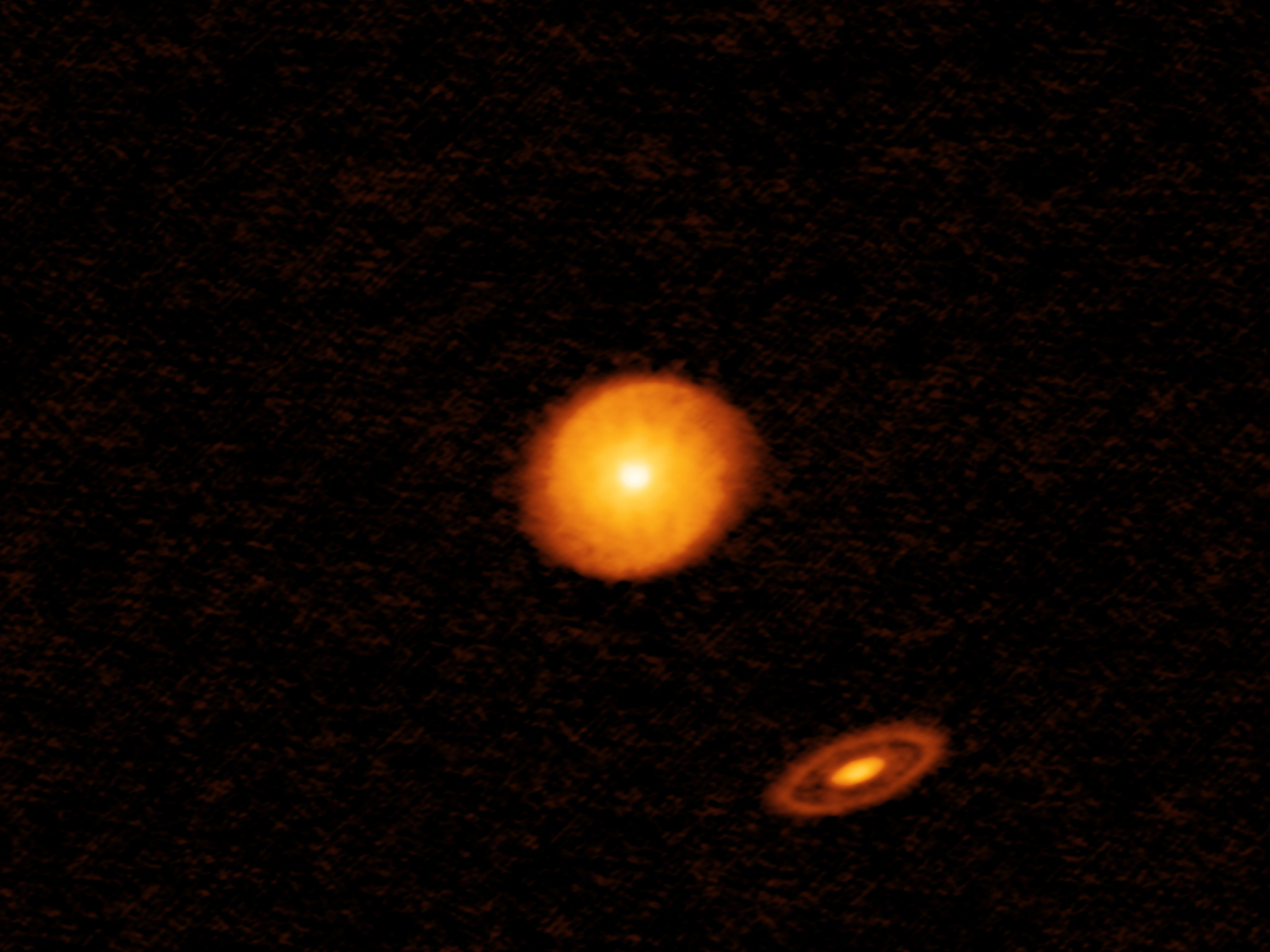
The NIRC2 image of dust around a young star named HD34282 (left) produced using an algorithm to construct images from aperture masking interferometry data. The light from the star is removed and its location is marked with a star symbol in all panels. The model that reproduces the data (middle) includes a circular inner structure around the star, which may be an envelope of dust. There is also a large protoplanetary disk around both the star and the inner structure. Between the inner structure and the protoplanetary disk is a ~40 AU gap, where planets may be forming. On the right is the image of the model after it is passed through the algorithm used on the left. This is done to test if the model can visually reproduce the data. Credit: Christina Vides / University of California Irvine / W. M. Keck Observatory.

The name SPAM is a registered trademark of Hormel Foods, LLC. This release and image are not sponsored or endorsed by Hormel Foods. Credit: W. M. Keck Observatory / Ilihia Gionson.


Study serves up the closest-ever view of a planet-forming disk around young star HD 34282

Maunakea, Hawaiʻi – Astronomers using W. M. Keck Observatory on Maunakea, Hawaiʻi Island have taken the closest-ever look at the dusty regions where planets form, offering new insight into the earliest stages of planetary birth.

HD 34282 is one of thirty objects observed thus far as part of The Search for Protoplanets with Aperture Masking, affectionately referred to as SPAM.

“We all want to know where we came from and how our solar system formed,” said Christina Vides, a graduate student at the University of California Irvine and lead author of the study published in The Astrophysical Journal. “By studying systems like this, we can watch planet formation in action and learn what conditions give rise to worlds like our own.”

Peering Into Planet Nurseries

The team used Keck Observatory’s Near-Infrared Camera (NIRC2) which enables astronomers to see closer to a star than traditional imaging methods permit.

Their target, HD 34282, is a young star about 400 light-years away, surrounded by a thick ring of dust and gas—a “transition disk” thought to be sculpted by growing planets.

With Keck Observatory’s advanced instrumentation and adaptive optics, Vides and the team captured the most detailed view yet of the inner regions of HD 34282’s disk, revealing clumpy structures and brightness patterns that hint at possible planet-forming activity.

Although no confirmed protoplanet was detected, the observations provided the closest constraints yet on where a young planet could be hiding, as well as estimates of the star’s mass and accretion rate—key clues for modeling how its surrounding material might evolve into planets.

The Rarest of Discoveries

Early detection of protoplanets is exceptionally rare and technically challenging.

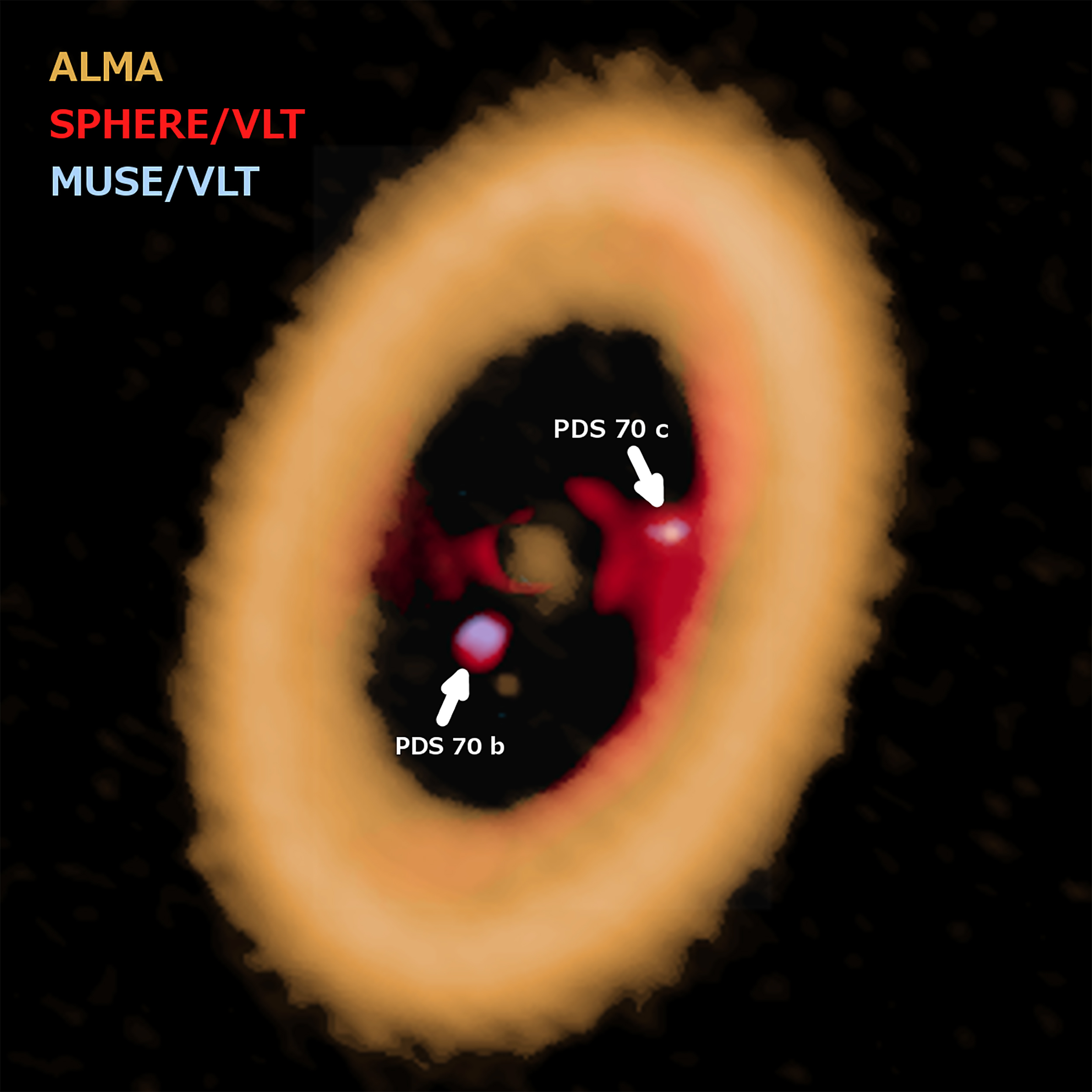
PDS 70 b and PDS 70 c are the only two confirmed protoplanets that have ever been imaged directly. Both were discovered in 2020 by Caltech observers also using Keck Observatory’s NIRC2 instrument.

Each new observation builds on that legacy, bringing astronomers closer to understanding how planetary systems emerge from swirling disks of gas and dust.

“This work is pushing the boundaries of what we can see,” said Vides. “Keck’s adaptive optics and masking capabilities make it possible to resolve features just a few astronomical units from the star—regions that are otherwise completely invisible.”

What’s Next

The team will continue using Keck’s advanced instruments to study other young stars with promising disks and compile more data for SPAM. The team is also preparing for observations using future instrumentation like SCALES, a next-generation high-contrast imager now being developed for Keck Observatory, which will expand the search for protoplanets in unprecedented detail.

“Every new system we study helps us understand a little more about how planets form and evolve,” said Vides. “It’s incredible that we can point a telescope at a young star hundreds of light-years away and actually see the conditions that could give rise to new worlds.”


Thursday, June 19, 2025

Caution: Planets under construction

Astronomers may have caught a still-forming planet on camera, hidden somewhere in this stellar snapshot.
Credit: ESO/C. Ginski et al.

Today’s Picture of the Week is a clos,e-up of the star RIK 113, seen here surrounded by a cloud of gas and dust called a protoplanetary disc. These discs are a common feature around young stars, containing all the building blocks needed to make a new planet. Over time, these dusty discs will fragment and condense under the influence of gravity, forming larger objects like protoplanets. These planetary embryos carve out gaps in the dust around them, forming the intricate, ring-like structures that we can see in this disc.

The true complexity of this protoplanetary disc was first uncovered by the Atacama Large Millimeter/submillimeter Array (ALMA) in a study published last year. These results showed the presence of a gap, which hinted at a planet-like object embedded within it.

This prompted another team of astronomers, led by Christian Ginski at the University of Galway, Ireland, to follow up with observations from ESO’s Very Large Telescope (VLT). Using the SPHERE instrument they found that the inner ring has intriguing spiral features. A detailed analysis of the data uncovered not just one, but two potential signals from planets around RIK 113, not far from the original detection with ALMA.

For now, these signals are still more of a suggestion than a direct confirmation. However, with two separate studies from both ALMA and the VLT indicating the presence of at least one planet, these results are extremely promising for a future discovery.

Link
Source: ESO/potw


Sunday, February 11, 2024

New research finds that young planets are flattened structures rather than spherical

Simulated young planet as viewed from the top (left) and from the side (right)
Credit: arXiv (2024). DOI: 10.48550/arxiv.2402.01432


Astrophysicists from the University of Central Lancashire (UCLan) have found that planets have flattened shapes like smarties just after they form rather than being spherical as previously thought.

The research, accepted for publication in Astronomy & Astrophysics Letters, shows that protoplanets, which are very young planets recently formed around stars, are flattened structures called oblate spheroids. The paper can currently be accessed on the arXiv preprint server.

The team, from UCLan's Jeremiah Horrocks Institute for Mathematics, Physics and Astronomy, used computer simulations to model the formation of planets according to the theory of disk-instability, which suggests that protoplanets form in short timescales from the breaking up of large rotating disks of dense gas orbiting around young stars.

The team, from UCLan's Jeremiah Horrocks Institute for Mathematics, Physics and Astronomy, used computer simulations to model the formation of planets according to the theory of disk-instability, which suggests that protoplanets form in short timescales from the breaking up of large rotating disks of dense gas orbiting around young stars.

Taking this approach, the team determined planet properties, compared them with observations and examined the formation mechanism of gas giant planets. They focused on investigating the shapes of young planets and on how these planets may grow to become large gas giant planets, even larger than Jupiter. They also examined the properties of planets forming in a variety of physical conditions, such as ambient temperature and gas density.

Dr. Adam Fenton, a recently graduated Ph.D. student, led the research. He said, "Many exoplanets, which are planets that orbit stars in other solar systems outside of our own, have been discovered in the last three decades. Despite observing many thousands of them, how they form remains unexplained.

"It is believed that they either form through 'core accretion,' which is a gradual growth of dust particles that stick together to form progressively larger and larger objects on long timescales, or directly by the breaking up of large rotating protostellar disks around young stars in short timescales, which is what we call the theory of disk-instability.

"This theory is appealing due to the fact that large planets can form very quickly at large distances from their host star, explaining some exoplanet observations.

"It was an extremely demanding computational project requiring half a million CPU hours on the UK's DiRAC High Performance Computing Facility. But the results were amazing and worth the effort."

Computer simulation of planets forming in a protostellar disc
Credit: arXiv (2024). DOI: 10.48550/arxiv.2402.01432

Dr. Dimitris Stamatellos, Reader in Astrophysics at UCLan and co-investigator, said, "We have been studying planet formation for a long time but never before had we thought to check the shape of the planets as they form in the simulations. We had always assumed that they were spherical.

"We were very surprised that they turned out to be oblate spheroids, pretty similar to smarties."

Observational confirmation of the flattened shape of young planets may answer the critical question about how planets form, pointing towards the currently less-favored disk-instability model rather than the standard planet formation theory of core accretion.

The researchers also discovered that new planets grow as material falls onto them, predominately from their poles rather than their equators.

These findings have important implications for observations of young planets as they suggest that the way planets appear through a telescope depends on the viewing angle. Such observations of young planets are important in order to understand the planet formation mechanism.

The researchers are following up this discovery with improved computational models to examine how the shape of these planets is affected by the environment in which they form, and to determine their chemical composition to compare with future observations from the James Webb Space Telescope (JWST).

Observations of young planets have become possible in the last few years with observing facilities such as the Atacama Large Millimeter Array (ALMA) and the Very Large Telescope (VLT)

Provided by Astronomy & Astrophysics

Source: PHys.org


More information: Adam Fenton et al, The 3D structure of disc-instability protoplanets, arXiv (2024).
DOI: 10.48550/arxiv.2402.01432


Tuesday, July 25, 2023

Webb Detects Water Vapor in Rocky Planet-forming Zone

PDS 70 Inner Disk (Artist Concept)
Credits: Image: NASA, ESA, CSA, Joseph Olmsted (STScI)

Water in Protoplanetary Disk of PDS 70 (MIRI Emission Spectrum)
Credits: Illustration: NASA, ESA, CSA, Joseph Olmsted (STScI)


Water is essential for life as we know it. However, scientists debate how it reached the Earth and whether the same processes could seed rocky exoplanets orbiting distant stars. New insights may come from the planetary system PDS 70, located 370 light-years away. The star hosts both an inner disk and outer disk of gas and dust, separated by a 5 billion-mile-wide (8 billion kilometer) gap, and within that gap are two known gas-giant planets.

New measurements by NASA’s James Webb Space Telescope’s MIRI (Mid-Infrared Instrument) have detected water vapor in the system’s inner disk, at distances of less than 100 million miles (160 million kilometers) from the star – the region where rocky, terrestrial planets may be forming. (The Earth orbits 93 million miles from our Sun.) This is the first detection of water in the terrestrial region of a disk already known to host two or more protoplanets.

“We’ve seen water in other disks, but not so close in and in a system where planets are currently assembling. We couldn’t make this type of measurement before Webb,” said lead author Giulia Perotti of the Max Planck Institute for Astronomy (MPIA) in Heidelberg, Germany.

“This discovery is extremely exciting, as it probes the region where rocky planets similar to Earth typically form,” added MPIA director Thomas Henning, a co-author on the paper. Henning is co-principal investigator of Webb’s MIRI (Mid-Infrared Instrument), which made the detection, and the principal investigator of the MINDS (MIRI Mid-Infrared Disk Survey) program that took the data.

A Steamy Environment for Forming Planets

PDS 70 is a K-type star, cooler than our Sun, and is estimated to be 5.4 million years old. This is relatively old in terms of stars with planet-forming disks, which made the discovery of water vapor surprising.

Over time, the gas and dust content of planet-forming disks declines. Either the central star’s radiation and winds blow out such material, or the dust grows into larger objects that eventually form planets. As previous studies failed to detect water in the central regions of similarly aged disks, astronomers suspected it might not survive the harsh stellar radiation, leading to a dry environment for the formation of any rocky planets.

Astronomers haven’t yet detected any planets forming within the inner disk of PDS 70. However, they do see the raw materials for building rocky worlds in the form of silicates. The detection of water vapor implies that if rocky planets are forming there, they will have water available to them from the beginning.

“We find a relatively high amount of small dust grains. Combined with our detection of water vapor, the inner disk is a very exciting place,” said co-author Rens Waters of Radboud University in The Netherlands.

What is the Water’s Origin?

The discovery raises the question of where the water came from. The MINDS team considered two different scenarios to explain their finding.

One possibility is that water molecules are forming in place, where we detect them, as hydrogen and oxygen atoms combine. A second possibility is that ice-coated dust particles are being transported from the cool outer disk to the hot inner disk, where the water ice sublimates and turns into vapor. Such a transport system would be surprising, since the dust would have to cross the large gap carved out by the two giant planets.

Another question raised by the discovery is how water could survive so close to the star, when the star’s ultraviolet light should break apart any water molecules. Most likely, surrounding material such as dust and other water molecules serves as a protective shield. As a result, the water detected in the inner disk of PDS 70 could survive destruction. Ultimately, the team will use two more of Webb’s instruments, NIRCam (Near-Infrared Camera) and NIRSpec (Near-Infrared Spectrograph) to study the PDS 70 system in an effort to glean an even greater understanding.

These observations were taken as part of Guaranteed Time Observation program 1282. This finding has been published in the journal Nature.

The James Webb Space Telescope is the world’s premier space science observatory. Webb is solving mysteries in our solar system, looking beyond to distant worlds around other stars, and probing the mysterious structures and origins of our universe and our place in it. Webb is an international program led by NASA with its partners, ESA (European Space Agency) and the Canadian Space Agency.


About This Release Credits:

Media Contact:

Christine Pulliam
Space Telescope Science Institute, Baltimore, Maryland

Markus Nielbock
Max Planck Institute for Astronomy, Heidelberg, Germany


Permissions: Content Use Policy

Contact Us: Direct inquiries to the News Team.

Related Links and Documents


Tuesday, May 19, 2020

Astronomers Confirm Existence of Two Giant Newborn Planets in PDS 70 System

A direct image of pds 70 protoplanets b and planet c (labeled with white arrows) with the circumstellar disk removed. the image was captured using w. m. keck observatory’s recently upgraded adaptive optics system. Image Credit: J. Wang, Caltech.


New Direct Images Captured with W. M. Keck Observatory’s Upgraded Adaptive Optics System Lead to First Independent Confirmation of PDS 70 Protoplanets

Maunakea, Hawaii – New evidence shows the first-ever pictures capturing the birth of a pair of planets orbiting the star PDS 70 are in fact authentic.

Using a new infrared pyramid wavefront sensor for adaptive optics (AO) correction at W. M. Keck Observatory on Maunakea in Hawaii, a Caltech-led team of astronomers applied a new method of taking family photos of the baby planets, or protoplanets, and confirmed their existence.

The team’s results are published in today’s issue* of The Astronomical Journal.

PDS 70 is the first known multiplanetary system where astronomers can witness planet formation in action. The first direct image of one of its planets, PDS 70b, was taken in 2018 followed by multiple images taken at different wavelengths of its sibling, PDS 70c, in 2019. Both Jupiter-like protoplanets were discovered by the European Southern Observatory’s Very Large Telescope (VLT).

“There was some confusion when the two protoplanets were first imaged,” said Jason Wang, a Heising-Simons Foundation 51 Pegasi b Fellow at Caltech and lead author of the study. “Planet embryos form from a disk of dust and gas surrounding a newborn star. This circumstellar material accretes onto the protoplanet, creating a kind of smokescreen that makes it difficult to differentiate the dusty, gaseous disk from the developing planet in an image.”

To help provide clarity, Wang and his team developed a method to disentangle the image signals from the circumstellar disk and the protoplanets.

“We know the disk’s shape should be a symmetrical ring around the star whereas a planet should be a single point in the image,” said Wang. “So even if a planet appears to sit on top of the disk, which is the case with PDS 70c, based on our knowledge of how the disk looks throughout the whole image, we can infer how bright the disk should be at the location of the protoplanet and remove the disk signal. All that’s left over is the planet’s emission.”

Artist’s impression of the PDS 70 system. The two planets are seen clearing a gap in the protoplanetary disk from which they were born. The planets are heated by infalling material that they are actively accreting and are glowing red. Note that the planets and star are not to scale and would be much smaller in size compared to their relative separations. Image Credit: W. M. Keck Observatory/Adam Makarenko


The team snapped images of PDS 70 with the Near-Infrared Camera (NIRC2) on the Keck II telescope, marking first science for a vortex coronagraphp installed in NIRC2 as part of a recent upgrade, combined with the Observatory’s upgraded AO system consisting of a new infrared pyramid wavefront sensor and real-time control computer.

“The new infrared detector technology used in our pyramid wavefront sensor has dramatically improved our ability to study exoplanets, especially those around low-mass stars where planet formation is actively occurring,” said Sylvain Cetre, software engineer at Keck Observatory and one of the lead developers of the AO upgrade. “It will also allow us to improve the quality of our AO correction for harder to image targets like the center of our galaxy.”

This project benefited from the innovative infrared sensor that measures distortions in light caused by the Earth’s atmosphere. “New technology is a science multiplier,” says Peter Kurczynski, program director at the National Science Foundation, which contributed funding to this project. “It enables investigations that were never before possible.”

AO is a technique used to remove the atmospheric blurring that distorts astronomical images. With the new infrared pyramid wavefront sensor and real-time controller installed, Keck Observatory’s AO system is able to deliver sharper, more detailed images.

“The PDS 70 imagery Jason’s team captured was among the first tests of the scientific quality produced by Keck’s pyramid wavefront sensor,” said AO scientist Charlotte Bond, who played a key role in the design and installation of the technology. “It’s exciting to see just how precise the new AO system corrects for the atmospheric turbulence of dusty objects like the young stars where protoplanets are expected to reside, allowing for the clearest, sharpest view of baby versions of our solar system.”

The W. M. Keck Observatory Adaptive Optics Near-Infrared Pyramid Wavefront Sensor development was supported by a grant from the National Science Foundation Advanced Telescopes and Instrumentation program and conducted in collaboration with the University of Hawaii and Caltech, as well as colleages from the Subaru Telescope, Arcetri Astrophysical Observatory, and the Laboratoire d’Astrophysique de Marseille.

*Posted May 18, 2020


;About Adaptive Optics

W. M. Keck Observatory is a distinguished leader in the field of adaptive optics (AO), a breakthrough technology that removes the distortions caused by the turbulence in the Earth’s atmosphere. Keck Observatory pioneered the astronomical use of both natural guide star (NGS) and laser guide star adaptive optics (LGS AO) and current systems now deliver images three to four times sharper than the Hubble Space Telescope. Keck AO has imaged the four massive planets orbiting the star HR8799, measured the mass of the giant black hole at the center of our Milky Way Galaxy, discovered new supernovae in distant galaxies, and identified the specific stars that were their progenitors.

The original Keck II AO system was built with funding from the W. M. Keck Foundation and NASA. The new RTC will build on a laser guide star facility upgrade completed in 2016 with the generous financial support of the Gordon and Betty Moore Foundation, W. M. Keck Foundation, the National Science Foundation, and other Friends of Keck including The Bob and Renee Parsons Foundation, Change Happens Foundation, Mt. Cuba Astronomical Foundation, and Sanford and Jeanne Robertson.

About NIRC2

The Near-Infrared Camera, second generation (NIRC2) works in combination with the Keck II adaptive optics system to obtain very sharp images at near-infrared wavelengths, achieving spatial resolutions comparable to or better than those achieved by the Hubble Space Telescope at optical wavelengths. NIRC2 is probably best known for helping to provide definitive proof of a central massive black hole at the center of our galaxy. Astronomers also use NIRC2 to map surface features of solar system bodies, detect planets orbiting other stars, and study detailed morphology of distant galaxies.

About W. M. Keck Observatory

The W. M. Keck Observatory telescopes are among the most scientifically productive on Earth. The two, 10-meter optical/infrared telescopes on the summit of Maunakea on the Island of Hawaii feature a suite of advanced instruments including imagers, multi-object spectrographs, high-resolution spectrographs, integral-field spectrometers, and world-leading laser guide star adaptive optics systems. Some of the data presented herein were obtained at Keck Observatory, which is a private 501(c) 3 non-profit organization operated as a scientific partnership among the California Institute of Technology, the University of California, and the National Aeronautics and Space Administration. The Observatory was made possible by the generous financial support of the W. M. Keck Foundation. The authors wish to recognize and acknowledge the very significant cultural role and reverence that the summit of Maunakea has always had within the Native Hawaiian community. We are most fortunate to have the opportunity to conduct observations from this mountain.

About The National Science Foundation

The U.S. National Science Foundation propels the nation forward by advancing fundamental research in all fields of science and engineering. NSF supports research and people by providing facilities, instruments and funding to support their ingenuity and sustain the U.S. as a global leader in research and innovation. With a fiscal year 2020 budget of $8.3 billion, NSF funds reach all 50 states through grants to nearly 2,000 colleges, universities and institutions. Each year, NSF receives more than 40,000 competitive proposals and makes about 11,000 new awards. Those awards include support for cooperative research with industry, Arctic and Antarctic research and operations, and U.S. participation in international scientific efforts.


Friday, July 12, 2019

‘Moon-forming’ Circumplanetary Disk Discovered in Distant Star System

Artist impression of the circumplanetary disk recently discovered around a young planet in the PDS 70 star system. Credit: NRAO/AUI/NSF, S. Dagnello. Hi-Res File

ALMA image of the dust in PDS 70, a star system located approximately 370 light-years from Earth. Two faint smudges in the gap region of this disk are associated with newly formed planets. One such concentration of dust is a circumplanetary disk, the first such feature ever detected around a distant star. Credit: ALMA (ESO/NAOJ/NRAO); A. Isella. Hi-Res File

Composite image of PDS 70. Comparing new ALMA data to earlier VLT observations, astronomers determined that the young planet designated PDS 70 c has a circumplanetary disk, a feature that is strongly theorized to be the birthplace of moons. Credit: ALMA (ESO/NAOJ/NRAO) A. Isella; ESO. Hi-Res File


Astronomers using the Atacama Large Millimeter/submillimeter Array (ALMA) have made the first-ever observations of a circumplanetary disk, the planet-girding belt of dust and gas that astronomers strongly theorize controls the formation of planets and gives rise to an entire system of moons, like those found around Jupiter.

Atacama Large Millimeter/submillimeter Array (ALMA)Funded by the U.S. National Science Foundation and its international partners (NRAO/ESO/NAOJ), ALMA is among the most complex and powerful astronomical observatories on Earth or in space. The telescope is an array of 66 high-precision dish antennas in northern Chile.

This never-before-seen feature was discovered around one of the planets in PDS 70, a young star located approximately 370 light-years from Earth. Recently, astronomers confirmed the presence of two massive, Jupiter-like planets there. This earlier discovery was made with the European Southern Observatory’s Very Large Telescope (VLT), which detected the warm glow naturally emitted by hydrogen gas accreting onto the planets.

The new ALMA observations instead image the faint radio waves given off by the tiny (about one tenth of a millimeter across) particles of dust around the star.

The ALMA data, combined with the earlier optical and infrared VLT observations, provide compelling evidence that a dusty disk capable of forming multiple moons surrounds the outermost known planet in the system.

“For the first time, we can conclusively see the telltale signs of a circumplanetary disk, which helps to support many of the current theories of planet formation,” said Andrea Isella, an astronomer at Rice University in Houston, Texas, and lead author on a paper published in the Astrophysical Journal, Letters.

“By comparing our observations to the high-resolution infrared and optical images, we can clearly see that an otherwise enigmatic concentration of tiny dust particles is actually a planet-girding disk of dust, the first such feature ever conclusively observed,” he said. According to the researchers, this also is the first time that a planet has been clearly seen in these three distinct bands of light.

Unlike the icy rings of Saturn, which likely formed by the crashing together of comets and rocky bodies relatively recently in the history of our solar system, a circumplanetary disk is the lingering remains of the planet-formation process.

The ALMA data also revealed two distinct differences between the two newly discovered planets. The closer in of the two, PDS 70 b, which is about the same distance from its star as Uranus is from the Sun, has a trailing mass of dust behind it resembling a tail. “What this is and what it means for this planetary system is not yet known,” said Isella. “The only conclusive thing we can say is that it is far enough from the planet to be an independent feature.”

The second planet, PDS 70 c, resides in the exact same location as a clear knot of dust seen in the ALMA data. Since this planet is shining so brightly in the infrared and hydrogen bands of light, the astronomers can convincingly say that a fully formed planet is already in orbit there and that nearby gas continues to be syphoned onto the planet’s surface, finishing its adolescent growth spurt.

This outer planet is located approximately 5.3 billion kilometers from the host star, about the same distance as Neptune from our Sun. Astronomers estimate that this planet is approximately 1 to 10 times the mass of Jupiter. “If the planet is on the larger end of that estimate, it’s quite possible there might be planet-size moons in formation around it,” noted Isella.

The ALMA data also add one more important element to these observations.

Optical studies of planetary systems are notoriously challenging. Since the star is so much brighter than the planets, it is difficult to filter out the glare, much like trying to spot a firefly next to a search light. ALMA observations, however, don’t have that limitation since stars emit comparatively little light at millimeter and submillimeter wavelengths.

“This means we’ll be able to come back to this system at different time periods and more easily map the orbit of the planets and the concentration of dust in the system,” concluded Isella. “This will give us unique insights into the orbital properties of solar systems in their very earliest stages of development.”

The National Radio Astronomy Observatory is a facility of the National Science Foundation, operated under cooperative agreement by Associated Universities, Inc.


Contact:

Charles E. Blue: Public Information Officer
cblue@nrao.edu;
434-296-0314


Reference: 

“Detection of continuum submillimeter emission associated with candidate protoplanets,” A. Isella, et al., the Astrophysical Journal Letters: apjl.aas.org; Preprint: https://arxiv.org/abs/1906.06308

The Atacama Large Millimeter/submillimeter Array (ALMA), an international astronomy facility, is a partnership of the European Organisation for Astronomical Research in the Southern Hemisphere (ESO), the U.S. National Science Foundation (NSF) and the National Institutes of Natural Sciences (NINS) of Japan in cooperation with the Republic of Chile. ALMA is funded by ESO on behalf of its Member States, by NSF in cooperation with the National Research Council of Canada (NRC) and the Ministry of Science and Technology (MOST) and by NINS in cooperation with the Academia Sinica (AS) in Taiwan and the Korea Astronomy and Space Science Institute (KASI).

ALMA construction and operations are led by ESO on behalf of its Member States; by the National Radio Astronomy Observatory (NRAO), managed by Associated Universities, Inc. (AUI), on behalf of North America; and by the National Astronomical Observatory of Japan (NAOJ) on behalf of East Asia. The Joint ALMA Observatory (JAO) provides the unified leadership and management of the construction, commissioning and operation of ALMA.


Wednesday, February 13, 2019

Safe havens for young planets

Credit: ALMA (ESO/NAOJ/NRAO), S. Andrews et al.; NRAO/AUI/NSF, S. Dagnello


This week’s Picture of the Week focuses on one of twenty protoplanetary discs explored and imaged by ALMA’s first Large Program, known as the Disk Substructures at High Angular Resolution Project (DSHARP). The disc is called AS 209, and its substructures are particularly pronounced thanks to its thin, high-contrast rings and almost face-on orientation towards us.

Though concentric rings — shown here in particularly beautiful clarity — are a common substructure among such discs, their widths, separations, and number can vary greatly. It’s still unclear how these substructures form, and how planets emerge from them. Quantifying and studying these similarities and differences was a motivator for constructing ALMA, and was the main objective of DSHARP. These details may hold clues to the type of planetary system that will eventually emerge.

One interpretation is that there may be a rapid and complex interplay between young protoplanets and the disc itself far earlier in the evolution of the planetary system than previously thought. A leading theory of planet formation requires dust within these discs to clump into grains, then pebbles, and eventually planetesimals. This theory has always been stumped, however, by the fact that once an object reaches a certain mass, the dynamics of these discs would cause it to be sucked into the host star at the centre, thus halting its growth into a true planet. The results from the DSHARP program suggest that disc substructures may perturb these dynamics and provide safe havens where young planetesimals can continue growing — making the substructures observed here crucial to our own existence.

Next week’s picture will be the final instalment in the DSHARP series, and will showcase another of the twenty images: this time a multiple star system.

Source: ESO/Potw


Wednesday, June 13, 2018

ALMA Discovers Trio of Infant Planets around Newborn Star

ALMA Discovers Trio of Infant Planets

Planets in the making 

The young star HD 163296 in the constellation of Sagittarius

Surroundings of the young star HD 163296

ALMA Discovers Trio of Infant Planets


Videos

ESOcast 164 Light: ALMA Discovers Trio of Infant Planets (4K UHD)

Zooming in on the young star HD 163296


Two independent teams of astronomers have used ALMA to uncover convincing evidence that three young planets are in orbit around the infant star HD 163296. Using a novel planet-finding technique, the astronomers identified three disturbances in the gas-filled disc around the young star: the strongest evidence yet that newly formed planets are in orbit there. These are considered the first planets to be discovered with ALMA.

The Atacama Large Millimeter/submillimeter Array (ALMA) has transformed our understanding of protoplanetary discs — the gas- and dust-filled planet factories that encircle young stars. The rings and gaps in these discs provide intriguing circumstantial evidence for the presence of protoplanets [1]. Other phenomena, however, could also account for these tantalising features.

But now, using a novel planet-hunting technique that identifies unusual patterns in the flow of gas within a planet-forming disc around a young star, two teams of astronomers have each confirmed distinct, telltale hallmarks of newly formed planets orbiting an infant star [2].

“Measuring the flow of gas within a protoplanetary disc gives us much more certainty that planets are present around a young star,” said Christophe Pinte of Monash University in Australia and Institut de Planétologie et d'Astrophysique de Grenoble (Université de Grenoble-Alpes/CNRS) in France, and lead author on one of the two papers. “This technique offers a promising new direction to understand how planetary systems form.”

To make their respective discoveries, each team analysed ALMA observations of HD 163296, a young star about 330 light-years from Earth in the constellation of Sagittarius (The Archer) [3]. This star is about twice the mass of the Sun but is just four million years old — just a thousandth of the age of the Sun.

“We looked at the localised, small-scale motion of gas in the star’s protoplanetary disc. This entirely new approach could uncover some of the youngest planets in our galaxy, all thanks to the high-resolution images from ALMA,” said Richard Teague, an astronomer at the University of Michigan and principal author on the other paper.

Rather than focusing on the dust within the disc, which was clearly imaged in earlier ALMA observations, the astronomers instead studied carbon monoxide (CO) gas spread throughout the disc. Molecules of CO emit a very distinctive millimetre-wavelength light that ALMA can observe in great detail. Subtle changes in the wavelength of this light due to the Doppler effect reveal the motions of the gas in the disc.

The team led by Teague identified two planets located approximately 12 billion and 21 billion kilometres from the star. The other team, led by Pinte, identified a planet at about 39 billion kilometres from the star [4].

The two teams used variations on the same technique, which looks for anomalies in the flow of gas — as evidenced by the shifting wavelengths of the CO emission — that indicate the gas is interacting with a massive object [5].

The technique used by Teague, which derived averaged variations in the flow of the gas as small as a few percent, revealed the impact of multiple planets on the gas motions nearer to the star. The technique used by Pinte, which more directly measured the flow of the gas, is better suited to studying the outer portion of the disc. It allowed the authors to more accurately locate the third planet, but is restricted to larger deviations of the flow, greater than about 10%.

In both cases, the researchers identified areas where the flow of the gas did not match its surroundings — a bit like eddies around a rock in a river. By carefully analysing this motion, they could clearly see the influence of planetary bodies similar in mass to Jupiter.

This new technique allows astronomers to more precisely estimate protoplanetary masses and is less likely to produce false positives. “We are now bringing ALMA front and centre into the realm of planet detection,” said coauthor Ted Bergin of the University of Michigan.
Both teams will continue refining this method and will apply it to other discs, where they hope to better understand how atmospheres are formed and which elements and molecules are delivered to a planet at its birth.


Notes

[1] Although thousands of exoplanets have been discovered in the last two decades, detecting protoplanets remains at the cutting edge of science and there have been no unambiguous detections before now. The techniques currently used for finding exoplanets in fully formed planetary systems — such as measuring the wobble of a star or the dimming of starlight due to a transiting planet — do not lend themselves to detecting protoplanets.

[2] The motion of gas around a star in the absence of planets has a very simple, predictable pattern (Keplerian rotation) that is nearly impossible to alter both coherently and locally, so that only the presence of a relatively massive object can create such disturbances.

[3] ALMA’s stunning images of HD 163296 and other similar systems have revealed intriguing patterns of concentric rings and gaps within protoplanetary discs. These gaps may be evidence that protoplanets are ploughing the dust and gas away from their orbits, incorporating some of it into their own atmospheres. A previous study of this particular star’s disc shows that the gaps in the dust and gas overlap, suggesting that at least two planets have formed there.

These initial observations, however, merely provided circumstantial evidence and could not be used to accurately estimate the masses of the planets.

[4] These correspond to 80, 140 and 260 times the distance from the Earth to the Sun.

[5] This technique is similar to the one that led to the discovery of the planet Neptune in the nineteenth century. In that case anomalies in the motion of the planet Uranus were traced to the gravitational effect of an unknown body, which was subsequently discovered visually in 1846 and found to be the eighth planet in the Solar System.


More Information

This research was presented in two papers to appear in the same edition of the Astrophysical Journal Letters. The first is entitled “Kinematic evidence for an embedded protoplanet in a circumstellar disc”, by C. Pinte et al. and the second “A Kinematic Detection of Two Unseen Jupiter Mass Embedded Protoplanets”, by R. Teague et al.

The Pinte team is composed of: C. Pinte (Monash University, Clayton, Victoria, Australia; Univ. Grenoble Alpes, CNRS, IPAG, Grenoble, France), D. J. Price (Monash University, Clayton, Victoria, Australia), F. Ménard (Univ. Grenoble Alpes, CNRS, IPAG, Grenoble, France), G. Duchêne (University of California, Berkeley California, USA; Univ. Grenoble Alpes, CNRS, IPAG, Grenoble, France), W.R.F. Dent (Joint ALMA Observatory, Santiago, Chile), T. Hill (Joint ALMA Observatory, Santiago, Chile), I. de Gregorio-Monsalvo (Joint ALMA Observatory, Santiago, Chile), A. Hales (Joint ALMA Observatory, Santiago, Chile; National Radio Astronomy Observatory, Charlottesville, Virginia, USA) and D. Mentiplay (Monash University, Clayton, Victoria, Australia).

The Teague team is composed of: Richard D. Teague (University of Michigan, Ann Arbor, Michigan, USA), Jaehan Bae (Department of Terrestrial Magnetism, Carnegie Institution for Science, Washington, DC, USA), Edwin A. Bergin (University of Michigan, Ann Arbor, Michigan, USA), Tilman Birnstiel (University Observatory, Ludwig-Maximilians-Universität München, Munich, Germany) and Daniel Foreman- Mackey (Center for Computational Astrophysics, Flatiron Institute, New York, USA).

The Atacama Large Millimeter/submillimeter Array (ALMA), an international astronomy facility, is a partnership of ESO, the U.S. National Science Foundation (NSF) and the National Institutes of Natural Sciences (NINS) of Japan in cooperation with the Republic of Chile. ALMA is funded by ESO on behalf of its Member States, by NSF in cooperation with the National Research Council of Canada (NRC) and the National Science Council of Taiwan (NSC) and by NINS in cooperation with the Academia Sinica (AS) in Taiwan and the Korea Astronomy and Space Science Institute (KASI). ALMA construction and operations are led by ESO on behalf of its Member States; by the National Radio Astronomy Observatory (NRAO), managed by Associated Universities, Inc. (AUI), on behalf of North America; and by the National Astronomical Observatory of Japan (NAOJ) on behalf of East Asia. The Joint ALMA Observatory (JAO) provides the unified leadership and management of the construction, commissioning and operation of ALMA. ESO is the foremost intergovernmental astronomy organisation in Europe and the world’s most productive ground-based astronomical observatory by far. It has 15 Member States: Austria, Belgium, the Czech Republic, Denmark, France, Finland, Germany, Italy, the Netherlands, Poland, Portugal, Spain, Sweden, Switzerland and the United Kingdom, along with the host state of Chile and with Australia as a strategic partner. ESO carries out an ambitious programme focused on the design, construction and operation of powerful ground-based observing facilities enabling astronomers to make important scientific discoveries. ESO also plays a leading role in promoting and organising cooperation in astronomical research. ESO operates three unique world-class observing sites in Chile: La Silla, Paranal and Chajnantor. At Paranal, ESO operates the Very Large Telescope and its world-leading Very Large Telescope Interferometer as well as two survey telescopes, VISTA working in the infrared and the visible-light VLT Survey Telescope. ESO is also a major partner in two facilities on Chajnantor, APEX and ALMA, the largest astronomical project in existence. And on Cerro Armazones, close to Paranal, ESO is building the 39-metre Extremely Large Telescope, the ELT, which will become “the world’s biggest eye on the sky”.


Links


Contacts

Christophe Pinte
Monash University
Clayton, Victoria, Australia
Tel: +61 4 90 30 24 18
Email:
christophe.pinte@univ-grenoble-alpes.fr

Richard Teague
University of Michigan
Ann Arbor, Michigan, USA
Tel: +1 734 764 3440
Email:
rteague@umich.edu

Calum Turner
ESO Assistant Public Information Officer
Garching bei München, Germany
Tel: +49 89 3200 6670
Email: calum.turner@eso.org

Source: ESO/News

Saturday, October 29, 2016

How planets like Jupiter form

Core accretion: A 10 Jupiter-mass planet is formed and is placed at 50 AU from the star. 
The planet has opened a gap in the circumstellar disk. 
Image: J. Szulagyi, JUPITER code

Gravitational instability simulation: Two snapshots in the early and late stage of the simulation at 780 years and 1942 years. 
The second snapshot shows only 4 clumps remaining among those initially formed. 
Image: Lucio Mayer & T. Quinn, ChaNGa code


Animation by J. Szulagyi, L. Mayer, T. Quinn and C. Gheller/ETH Zurich/University of Zurich/CSCS.


Young giant planets are born from gas and dust. Researchers of ETH Zürich and the Universities of Zürich and Bern simulated different scenarios relying on the computing power of the Swiss National Supercomputing Centre (CSCS) to find out how they exactly form and evolve. They compared their results with observations and were able to show amongst others a big difference between the postulated formation mechanisms.

Astronomers set up two theories explaining how gaseous giant planets like Jupiter or Saturn could be born. A bottom-up formation mechanism states that first, a solid core is aggregated of roughly ten times the size of the Earth. «Then, this core is massive enough to attract a significant amount of gas and keep it,» explains Judit Szulágyi, post-doctoral fellow at the ETH Zürich and member of the Swiss NCCR PlanetS. The second theory is a top-down formation scenario: Here the gaseous disk around the young star is so massive, that due to self-gravity of the gas-dust, spiral arms are forming with clumps inside. Then, these clumps collapse via their own gravity directly into a gaseous planet, similar to how stars form. The first mechanism is called «core-accretion», the second one «disk instability». In both cases, a disk forms around the gas-giants, called the circumplanetary disk, which will serve as a birth-nest for satellites to form.

To find out which mechanism actually takes place in the Universe, Judit Szulágyi and Lucio Mayer, Professor at the University of Zürich, simulated the scenarios on Piz Daint supercomputer at the Swiss National Supercomputing Centre (CSCS) in Lugano. «We pushed our simulations to the limits in terms of the complexity of the physics added to the models,» explains Judit Szulágyi: «And we achieved higher resolution than anybody before.» In their studies published in the «Monthly Notices of the Royal Astronomical Society» the researchers found a big difference between the two formation mechanisms: In the disk instability scenario the gas in the planet’s vicinity remained very cold, around 50 Kelvins, whereas in the core accretion case the circumplanetary disk was heated to several hundreds of Kelvins. «The disk instability simulations are the first that can resolve the circumplanetary disk around multiple protoplanets, using tens of millions of resolution elements in the computational domain. We exploited Piz Daint to accelerate the calculations using Graphics Processing Units (GPUs)” adds Mayer.

This huge temperature difference is easily observable. «When astronomers look into new forming planetary systems, just measuring the temperatures in the planet’s vicinity will be enough to tell which formation mechanism built the given planet,» explains Judit Szulágyi. A first comparison of the calculated and observed data seems to favour the core accretion theory. Another difference that was expected didn’t show up in the computer simulation. Before, astrophysics thought that the circumplanetary disk significantly differs in mass in the two formation scenarios. «We showed that this is not true,» says the PlanetS member.

Luminous shock front detected

Regarding the size of the new born planet, observations can be misleading as the astrophysicist found in a second study together with Christoph Mordasini, Professor at the University of Bern. In the core accretion model the researchers had a closer look at the disk around planets with masses three to ten times bigger than Jupiter’s. The computer simulations showed that gas falling on the disk from the outside heats up and creates a very luminous shock front on the disk’s upper layer. This significantly alters the observational appearance of young, forming planets.

«When we see a luminous spot inside a circumplanetary disk, we cannot be sure whether we see the planet luminosity, or also the surrounding disk luminosity,» says Judit Szulágyi. This may lead to an overestimation of the planet’s mass of up to four times. «So maybe an observed planet has only the same mass as Saturn instead of some Jupiter masses,» concludes the scientist.

In their simulations the astrophysicists mimicked the formation processes by using the basic physical laws such as gravity or the hydrodynamical equations of the gas. Because of the complexity of the physical models the simulations were very time consuming, even on Europe’s fastest supercomputer at CSCS: «On the order of nine months running time on hundreds to several thousands of computing cores» estimates Judit Szulágyi: «This means that on one computing core it would have taken longer than my entire lifetime.»

Yet there are still challenges ahead. Simulations of disk instability still do not cover a long timescale. It is possible that after the protoplanet has collapsed to the density of Jupiter its disk will heat up more like in core-accretion. Likewise, the hotter gas found in the core-accretion case would be partially ionized, a favourable environment for effects of magnetic fields, completely neglected so far. Running even more expensive simulations with a richer description of the physics will be the next step. (bva)


Publications:

Szulagyi; L. Mayer; T. Quinn: Circumplanetary disks around young giant planets: a comparison between core-accretion and disk instability, Monthly Notices of the Royal Astronomical Society 2016;

Szulagyi; C. Mordasini: Thermodynamics of Giant Planet Formation: Shocking Hot Surfaces on Circumplanetary Disks, Monthly Notices of the Royal Astronomical Society: Letters 2016;


Contact:

Dr. Judit Szulágyi
ETH Zürich, Switzerland
Phone +41 44 633 76 75
judit.szulagyi@phys.ethz.ch