Wednesday, September 12, 2018

Almost 500 Explosions Found in Galaxy Cores

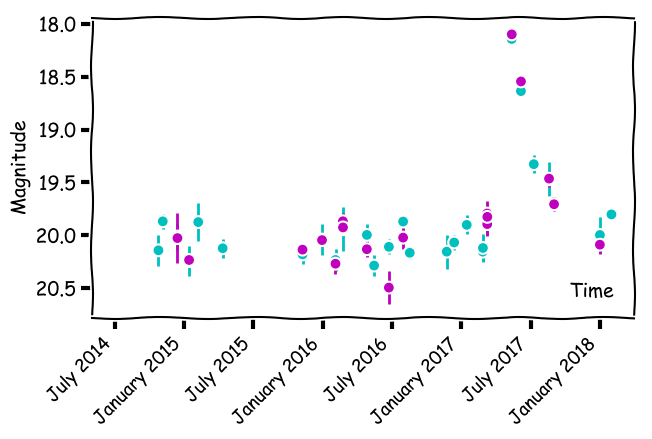
This light curve shows the change in brightness of a transient named GNTJ233855.86+433916.86. The colours of the data points indicate which of Gaia's two fields of view is used. Credit: Zuzanna Kostrzewa-Rutkowska. Large format: [ PNG ]. 


Apart from a billion Milky Way stars, ESA's Gaia spacecraft also observes extragalactic objects. Its automated alert system notifies astronomers whenever Gaia spots a transient event. A team of astronomers from SRON, Radboud University and the University of Cambridge have found out that by tweaking the existing automated system, Gaia can be used to detect hundreds of peculiar transients in the centres of galaxies. They found about 480 transients over a period of about a year. Their new method will be implemented in the system as soon as possible allowing astronomers to determine the nature of these events. 

In 2013, ESA launched its Gaia spacecraft to measure the location of a billion stars in our Milky Way and tens of millions of galaxies. Each position on the sky enters Gaia's view once every month, for a total of about seventy times during the mission. This allows the spacecraft to spot transient events, such as supermassive black holes ripping stars apart or stars exploding as a supernova. Gaia will notice a change in brightness when it returns to the same patch of sky a month later. 

Astronomers Zuzanna Kostrzewa-Rutkowska, Peter Jonker, Simon Hodgkin and others searched the Gaia database for transient events around the nuclei of galaxies in the period between July 2016 and June 2017. They used a galaxy catalogue – from the Sloan Digital Sky Survey Release 12 – and a custom-made mathematical tool. The new tool allows the researchers to identify rare luminous events coming from galactic centers. Of the 480 events found, only five had been picked up previously by the alert system. 

Rapidly alerting the astronomical community is key for following up many of the events found. For about one hundred transients nothing out of the ordinary was observed by Gaia during the months before and after detection, indicating that the event leading to the enhanced emission of light was short. 

"Such events have great value because they could allow astronomers to study for a brief period previously invisible supermassive black holes", says Jonker. "Especially the short-duration events could point us to the location of the so far elusive intermediate-mass black holes ripping stars apart." 

The leading explanation for most events is that supermassive black holes residing in the nuclei of galaxies suddenly become much more active as the amount of gas falling into the black hole surges and lights up the close environment of the black hole. This fresh fuel may be extracted from a star which is ripped apart by the enormous gravitational pull of the black hole. 

Zuzanna Kostrzewa-Rutkowska and Peter Jonker have recently started a dense campaign to decipher the nature of the 480 new transients using the William Herschel Telescope.

More information:

Z. Kostrzewa-Rutkowska, P.G. Jonker, S.T. Hodgkin, L. Wyrzykowski, M. Fraser, D.L. Harrison, G. Rixon, A. Yoldas, F. van Leeuwen, A. Delgado, M. van Leeuwen, S. E. Koposov, 2018, "Gaia transients in galactic nuclei", MNRAS, 481, 307 [ ADS ].


Tuesday, September 11, 2018

Fierce Winds Quench Wildfire-like Starbirth in Far-flung Galaxy

ALMA imaged the outflow, or "wind," from a galaxy seen when the universe was only one billion years old. The ALMA image (circle call out) shows the location of hydroxyl (OH) molecules. The background star field (Blanco Telescope Dark Energy Survey) shows the location of the galaxy. The circular, double-lobe shape of the distant galaxy is due to the distortion caused by the cosmic magnifying effect of an intervening galaxy. (Image: ALMA [ESO/NAOJ/NRAO], Spilker; NRAO/AUI/NSF, S. Dagnello; AURA/NSF). Hi -res image

Artist impression of an outflow of molecular gas from an active star-forming galaxy.
Credit: NRAO/AUI/NSF, D. Berry


ALMA observes most distant galactic outflow 

Some galaxies, like the Milky Way and Andromeda, have relatively slow and measured rates of starbirth, with about one new star igniting each year. Other galaxies, known as starburst galaxies, forge 100s or even 1000s of stars each year. This furious pace, however, cannot be maintained indefinitely.

To avoid burning out in a short-lived blaze of glory, some galaxies throttle back their runaway starbirth by ejecting – at least temporarily – vast stores of gas into their expansive halos, where the gas either escapes entirely or slowly rains back in on the galaxy, triggering future bursts of star formation.

Up to now, however, astronomers have been unable to directly observe these powerful outflows in the very early universe, where such mechanisms are essential to prevent galaxies from growing too big, too fast.

New observations with the Atacama Large Millimeter/submillimeter Array (ALMA), show – for the first time — a powerful galactic “wind” of molecules in a galaxy seen when the universe was only one billion years old. This result provides insights into how certain galaxies in the early universe were able to self-regulate their growth so they could continue forming stars across cosmic time.

“Galaxies are complicated, messy beasts, and we think outflows and winds are critical pieces to how they form and evolve, regulating their ability to grow,” said Justin Spilker, an astronomer at the University of Texas at Austin and lead author on a paper appearing in the journal Science.

Astronomers have observed winds with the same size, speed, and mass in nearby starbursting galaxies, but the new ALMA observation is the most distant unambiguous outflow ever seen in the early universe.

The galaxy, known as SPT2319-55, is more than 12 billion light-years away. It was discovered by the National Science Foundation’s South Pole Telescope.

ALMA was able to observe this object at such tremendous distance with the aid of a gravitational lens provided by a different galaxy that sits almost exactly along the line of sight between Earth and SPT2319-55. Gravitational lensing – the bending of light due to gravity — magnifies the background galaxy to make it appear brighter, which allows the astronomers to observe it in more detail than they would otherwise be able to. Astronomers use specialized computer programs to “unscramble” the effects of gravitational lensing to reconstruct an accurate image of the more-distant object.

This lens-aided view revealed a powerful “wind” of star-forming gas exiting the galaxy at nearly 800 kilometers per second. Rather than a constant, gentle breeze, the wind is hurtling away in discrete clumps, removing the star-forming gas just as quickly as the galaxy can turn that gas into new stars.

The outflow was detected by the millimeter-wavelength signature of a molecule called hydroxyl (OH), which appeared as an absorption line: essentially, the shadow of an OH fingerprint in the galaxy’s bright infrared light.

As new, dust-enshrouded stars form, that dust heats up and glows brightly in infrared light. But, the galaxy is also launching a wind, and some of it is blowing in our direction. As the infrared light passes through the wind on its journey toward Earth, the OH molecules in the wind absorb some of the infrared light at a very particular wavelength that ALMA can observe.

“That’s the absorption signature that we detected, and from that we can also tell how fast the wind is moving, and get a rough idea of how much material is contained in the outflow,” said Spilker. ALMA is able to detect this infrared light because it has been stretched to millimeter wavelengths on its journey to Earth by the ongoing expansion of the Universe.

Molecular winds are an efficient way for galaxies to self-regulate their growth, the researchers note. These winds are likely triggered by either the combined effect of all the supernova explosions that go along with rapid, massive star formation, or by a powerful release of energy as some of the gas in the galaxy falls down onto the supermassive black hole at its center.

“So far, we have only observed one galaxy at such a remarkable cosmic distance, but we’d like to know if winds like these are also present in other galaxies to see just how common they are,” concluded Spilker. “If they occur in basically every galaxy, we know that molecular winds are both ubiquitous and also a really common way for galaxies to self-regulate their growth.”

“This ALMA observation demonstrates how nature coupled with exquisite technology can give us insights into distant astronomical objects,” said Joe Pesce, NSF Program Director for NRAO/ALMA, “and the frequency range accessible to ALMA meant it was able to the detect the redshifted spectral feature from this important molecule.”

The National Radio Astronomy Observatory is a facility of the National Science Foundation, operated under cooperative agreement by Associated Universities, Inc.


Contact:

Charles Blue, 

Public Information Officer
(434) 296-0314; 

cblue@nrao.edu

This research is presented in a paper titled “Fast Molecular Outflow from a Dusty Star-Forming Galaxy in the Early Universe,” by J.S. Spilker et al. in the journal Science.  [http://www.sciencemag.org]

The Atacama Large Millimeter/submillimeter Array (ALMA), an international astronomy facility, is a partnership of the European Organisation for Astronomical Research in the Southern Hemisphere (ESO), the U.S. National Science Foundation (NSF) and the National Institutes of Natural Sciences (NINS) of Japan in cooperation with the Republic of Chile. ALMA is funded by ESO on behalf of its Member States, by NSF in cooperation with the National Research Council of Canada (NRC) and the National Science Council of Taiwan (NSC) and by NINS in cooperation with the Academia Sinica (AS) in Taiwan and the Korea Astronomy and Space Science Institute (KASI).


ALMA construction and operations are led by ESO on behalf of its Member States; by the National Radio Astronomy Observatory (NRAO), managed by Associated Universities, Inc. (AUI), on behalf of North America; and by the National Astronomical Observatory of Japan (NAOJ) on behalf of East Asia. The Joint ALMA Observatory (JAO) provides the unified leadership and management of the construction, commissioning and operation of ALMA.

Thursday, September 06, 2018

AM 0644-741: Cosmic Collision Forges Galactic One Ring -- in X-rays

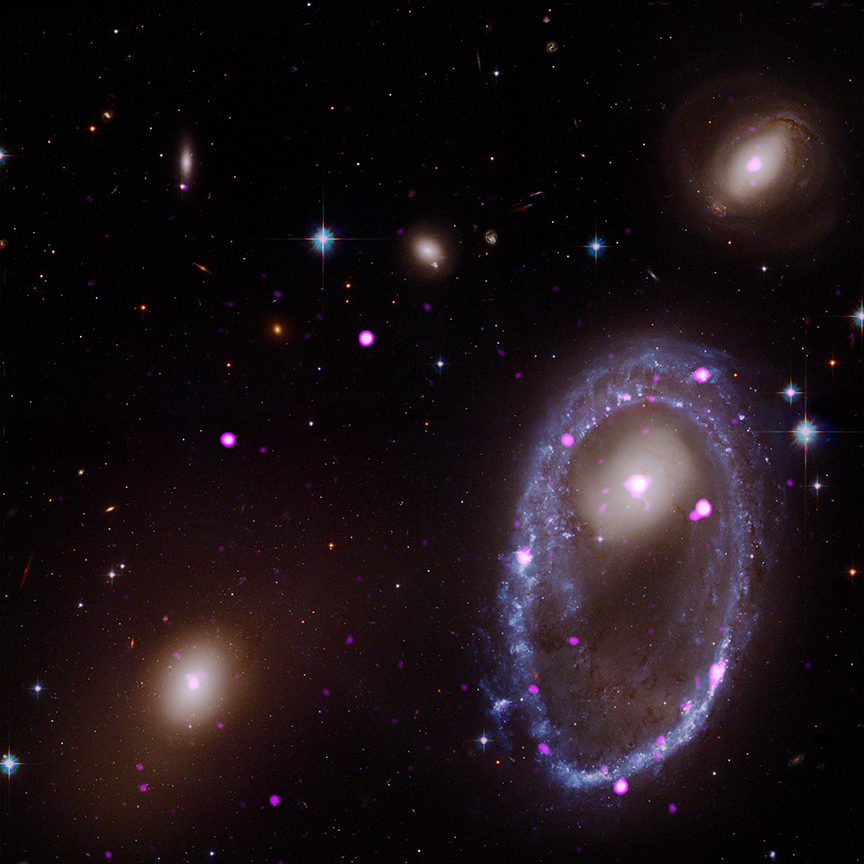
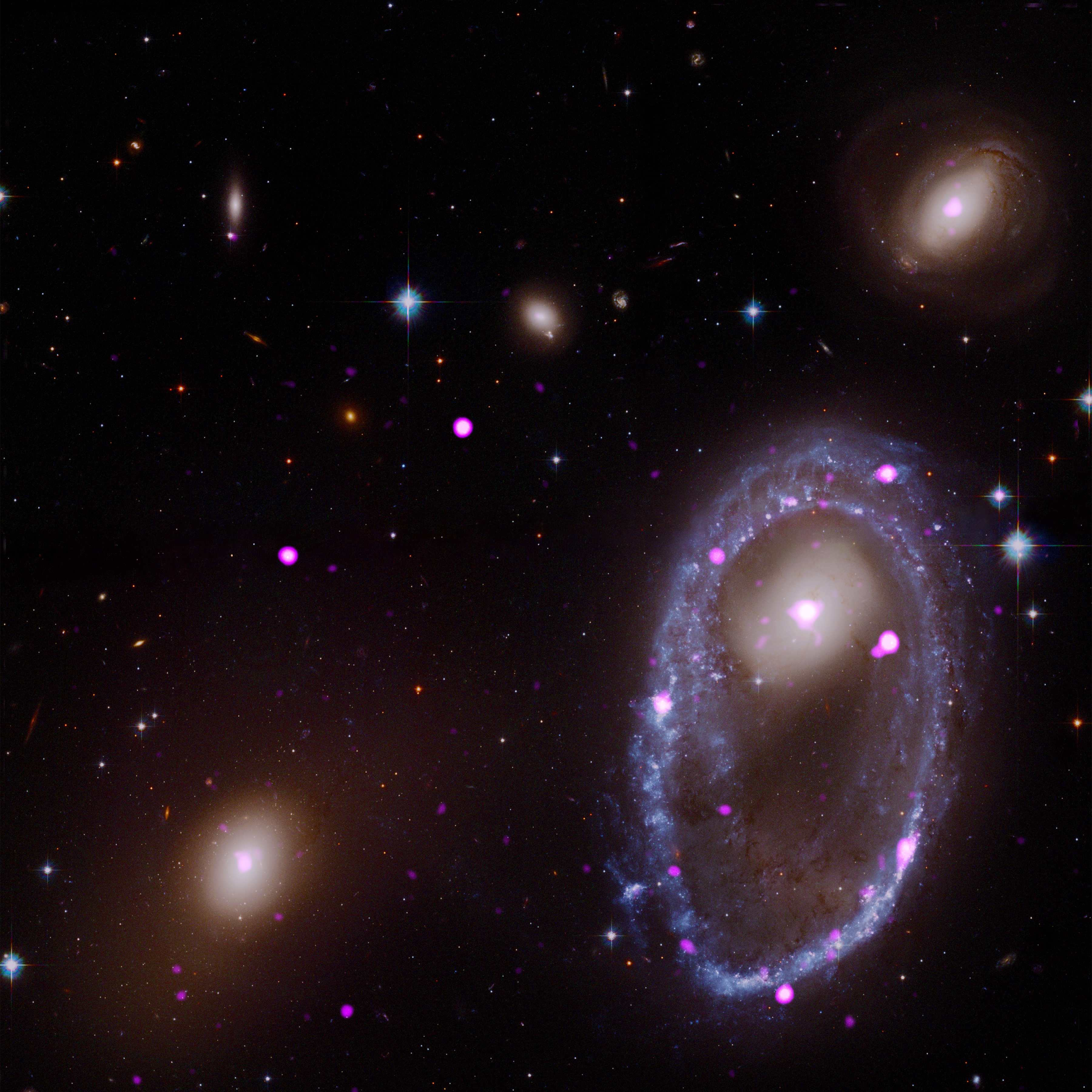
 AM 0644-741
Credit X-ray: NASA/CXC/INAF/A. Wolter et al; Optical: NASA/STScI


Astronomers have used NASA's Chandra X-ray Observatory to discover a ring of black holes or neutron stars in a galaxy 300 million light years from Earth.

This ring, while not wielding power over Middle Earth, may help scientists better understand what happens when galaxies smash into one another in catastrophic impacts.

In this new composite image of the galaxy AM 0644-741 (AM 0644 for short), X-rays from Chandra (purple) have been combined with optical data from NASA's Hubble Space Telescope (red, green, and blue). The Chandra data reveal the presence of very bright X-ray sources, most likely binary systems powered by either a stellar-mass black hole or neutron star, in a remarkable ring. The results are reported in a new paper led by Anna Wolter from INAF-Osservatorio Astronomico di Brera in Milano, Italy.

Where did the ring of black holes or neutron stars in AM 0644 come from? Astronomers think that it was created when one galaxy was pulled into another galaxy by the force of gravity. The first galaxy generated ripples in the gas of the second galaxy, AM 0644, located in the lower right. These ripples then produced an expanding ring of gas in AM 0644 that triggered the birth of new stars. The first galaxy is possibly the one located in the lower left of the image.

The most massive of these fledgling stars will lead short lives — in cosmic terms — of millions of years. After that, their nuclear fuel is spent and the stars explode as supernovas leaving behind either black holes with masses typically between about five to twenty times that of the Sun, or neutron stars with a mass approximately equal to that of the Sun.

Some of these black holes or neutron stars have close companion stars, and siphon gas from their stellar partner. This gas falls towards the black hole or neutron star, forming a spinning disk like water circling a drain, and becomes heated by friction. This superheated gas produces large amounts of X-rays that Chandra can detect.

While a ring of black holes or neutron stars is intriguing in itself, there is more to the story of AM 0644. All of the X-ray sources detected in the ring of AM 0644 are bright enough to be classified as ultraluminous X-ray sources (ULXs). This is a class of objects that produce hundreds to thousands of times more X-rays than most "normal" binary systems in which a companion star is in orbit around a neutron star or black hole. Until recently most astronomers thought that ULXs generally contained stellar-mass black holes, with the possible presence in some cases of intermediate-mass black holes (IMBHs) that contain over a hundred times the mass of the Sun. However, this thinking was overturned when a few ULXs in other galaxies, including M82 and M51, were found to contain neutron stars.

Several other explanations besides IMBHs have been suggested for the intense X-ray emission of ULXs. They include unusually rapid growth of the black hole or neutron star, or geometrical effects arising from the funneling of infalling material along magnetic field lines. 

The identity of the individual ULXs in AM 0644 is currently unknown. They may be a mixture of black holes and neutron stars, and it is also possible that they are all black holes or all neutron stars.

Not all of the X-ray sources in the image are located in the ring of AM 0644. One of the sources is a rapidly growing black hole that's located well behind the galaxy at a distance of 9.1 billion light years from Earth. Another intriguing source detected by Chandra is a growing supermassive black hole located at the center of the galaxy. In the new study, the researchers also used Chandra observations to study six other ring galaxies in addition to AM 0644. A total of 63 sources were detected in the seven galaxies, and 50 of them are ULXs. The authors see a larger average number of ULXs per galaxy in these ring galaxies than in other types of galaxies. Ring galaxies have stimulated the interest of astronomers because they are ideal testbeds for examining models of how double stars form, and understanding the origin of ULXs.

The paper describing the study of AM 0644 and its sister ring galaxies appeared in the August 10, 2018 issue of the Astrophysical Journal and is available online. The co-authors of the paper are Antonella Fruscione from the Harvard-Smithsonian Center for Astrophysics in Cambridge, Mass., and Michela Mapelli from INAF-Osservatorio Astronomico di Padova in Padova, Italy.

NASA's Marshall Space Flight Center in Huntsville, Alabama, manages the Chandra program for NASA's Science Mission Directorate in Washington. The Smithsonian Astrophysical Observatory in Cambridge, Massachusetts, controls Chandra's science and flight operations.


Fast Facts for AM 0644-741:

Scale: Image is about 3.25 arcmin (280,000 light years) across
Category: Normal Galaxies & Starburst Galaxies, Black Holes
Coordinates (J2000): RA 06h 43m 06.1s | Dec -74° 13´ 35
Constellation: Volans
Observation Date: November 17, 2003
Observation Time: 10 hours
Obs. ID: 3969
Instrument: ACIS
References: Wolter, A. et al, 2018, ApJ, 863,43; arXiv:1806.02746
Color Code: X-ray: purple; Optical: red, green, blue
Distance Estimate: About 300 million light years


Wednesday, September 05, 2018

Radio Observations Confirm Superfast Jet of Material From Neutron Star Merger

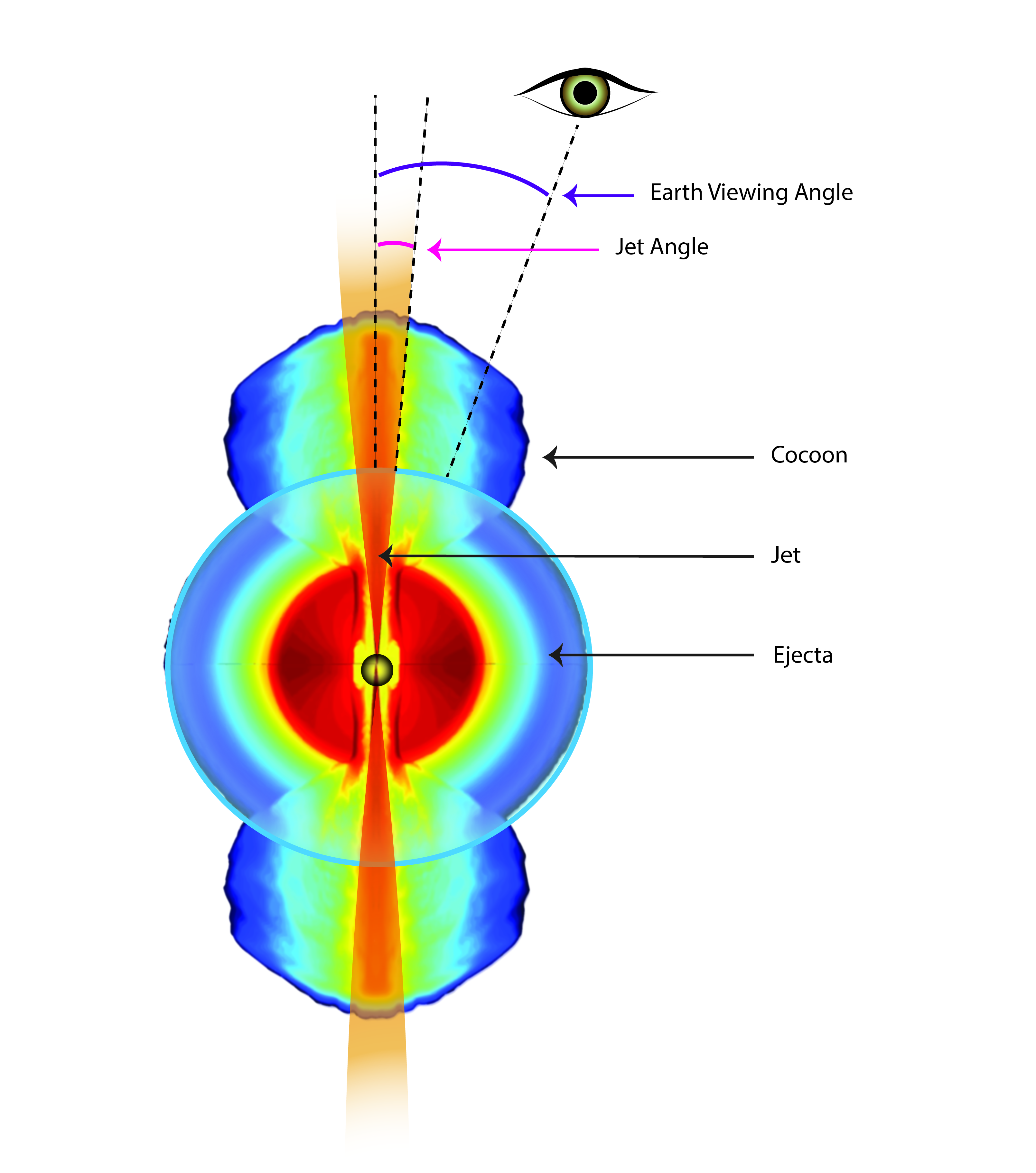
Aftermath of the merger of two neutron stars. Ejecta from an initial explosion formed a shell around the black hole formed from the merger. A jet of material propelled from a disk surrounding the black hole first interacted with the ejecta material to form a broad "cocoon." Later, the jet broke through to emerge into interstellar space, where its extremely fast motion became apparent. Credit: Sophia Dagnello, NRAO/AUI/NSF.  Hi-Res File

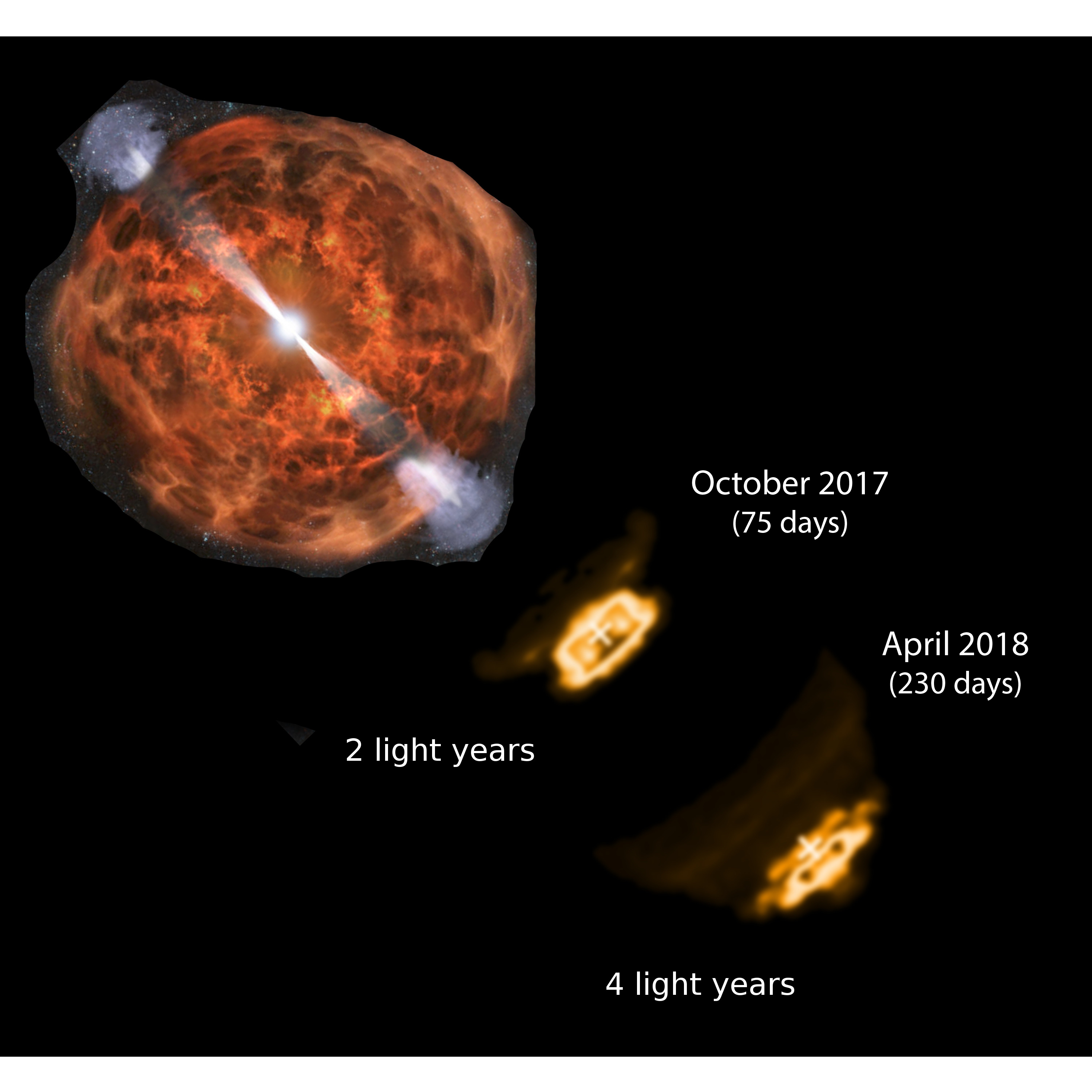
As the jet from the neutron-star merger event emerged into space, simulated radio images in this artist's conception illustrate its extremely fast motion. In the 155 days between two observations, the jet appeared to move two light-years, a distance that would require it to travel four times faster than light. This "superluminal motion" is an illusion created as the jet is pointed nearly toward the Earth and it is actually moving more than 97 percent of light speed. (Not to Scale.) Credit: D. Berry, O. Gottlieb, K. Mooley, G. Hallinan, NRAO/AUI/NSF.  Hi-Res File


Jet appeared to move four times faster than light

Precise measurement using a continent-wide collection of National Science Foundation (NSF) radio telescopes has revealed that a narrow jet of particles moving at nearly the speed of light broke out into interstellar space after a pair of neutron stars merged in a galaxy 130 million light-years from Earth. The merger, which occurred in August of 2017, sent gravitational waves rippling through space. It was the first event ever to be detected both by gravitational waves and electromagnetic waves, including gamma rays, X-rays, visible light, and radio waves.

The aftermath of the merger, called GW170817, was observed by orbiting and ground-based telescopes around the world. Scientists watched as the characteristics of the received waves changed with time, and used the changes as clues to reveal the nature of the phenomena that followed the merger.

One question that stood out, even months after the merger, was whether or not the event had produced a narrow, fast-moving jet of material that made its way into interstellar space. That was important, because such jets are required to produce the type of gamma ray bursts that theorists had said should be caused by the merger of neutron-star pairs.

The answer came when astronomers used a combination of the NSF’s Very Long Baseline Array (VLBA), the Karl G. Jansky Very Large Array (VLA), and the Robert C. Byrd Green Bank Telescope (GBT) and discovered that a region of radio emission from the merger had moved, and the motion was so fast that only a jet could explain its speed.

“We measured an apparent motion that is four times faster than light. That illusion, called superluminal motion, results when the jet is pointed nearly toward Earth and the material in the jet is moving close to the speed of light,” said Kunal Mooley, of the National Radio Astronomy Observatory (NRAO) and Caltech.

The astronomers observed the object 75 days after the merger, then again 230 days after.

“Based on our analysis, this jet most likely is very narrow, at most 5 degrees wide, and was pointed only 20 degrees away from the Earth’s direction,” said Adam Deller, of the Swinburne University of Technology and formerly of the NRAO. “But to match our observations, the material in the jet also has to be blasting outwards at over 97 percent of the speed of light,” he added.

The scenario that emerged is that the initial merger of the two superdense neutron stars caused an explosion that propelled a spherical shell of debris outward. The neutron stars collapsed into a black hole whose powerful gravity began pulling material toward it. That material formed a rapidly-spinning disk that generated a pair of jets moving outward from its poles.

As the event unfolded, the question became whether the jets would break out of the shell of debris from the original explosion. Data from observations indicated that a jet had interacted with the debris, forming a broad “cocoon” of material expanding outward. Such a cocoon would expand more slowly than a jet.

“Our interpretation is that the cocoon dominated the radio emission until about 60 days after the merger, and at later times the emission was jet dominated,” said Ore Gottlieb, of the Tel Aviv University, a leading theorist on the study.

“We were lucky to be able to observe this event, because if the jet had been pointed much farther away from Earth, the radio emission would have been too faint for us to detect,” said Gregg Hallinan of Caltech.

The detection of a fast-moving jet in GW170817 greatly strengthens the connection between neutron star mergers and short-duration gamma-ray bursts, the scientists said. They added that the jets need to be pointed relatively closely toward the Earth for the gamma ray burst to be detected.

“Our study demonstrates that combining observations from the VLBA, the VLA and the GBT is a powerful means of studying the jets and physics associated with gravitational wave events,” Mooley said.

“The merger event was important for a number of reasons, and it continues to surprise astronomers with more information,” said Joe Pesce, NSF Program Director for NRAO. “Jets are enigmatic phenomena seen in a number of environments, and now these exquisite observations in the radio part of the electromagnetic spectrum are providing fascinating insight into them, helping us understand how they work.”

Mooley and his colleagues reported their findings in the September 5 online version of the journal Nature.

The National Radio Astronomy Observatory is a facility of the National Science Foundation, operated under cooperative agreement by Associated Universities, Inc.

###

Media Contact:

Dave Finley, Public Information Officer
(575) 835-7302
dfinley@nrao.edu


Monday, September 03, 2018

The formation of the most diffuse giant galaxy cores in the Universe

Fig. 1: These images show the stellar density distribution in the centres of merging elliptical galaxies. About 30 million years before the final coalescence of the galactic nuclei the supermassive black holes (black dots) are still surrounded by a concentration of stars (upper left panel). When the black holes form a tight binary most of these stars have been ejected, leaving behind a low-density core (upper right panel). A core does not form if the galaxies do not have supermassive black holes (bottom panels). © MPA

Supermassive black holes (SMBH) of up to tens of billon solar masses are hiding in the centers of giant elliptical galaxies. At the same time, these galaxies have ‘missing’ nuclear light as the stellar densities at their cores are much lower than in other giant galaxies. A team of researchers at the University of Helsinki and the astronomical Max Planck Institutes in Garching have used a newly developed simulation technique to investigate the origin of this ‘missing’ light with realistic galaxy models. When two massive elliptical galaxies merge, many central stars are expelled during the final coalescence of the stellar nuclei and their SMBHs. This new model can explain the simultaneous formation of the most diffuse giant galaxy cores as well as other observed core properties such as decoupled rotation and anisotropic stellar velocity distributions.

Massive elliptical galaxies are not just the largest – with up to 1013 solar masses – they also have markedly different properties than their smaller siblings. At their centres they harbour supermassive black holes (SMBHs) with typical masses of 0.1% of the total stellar mass of the galaxy – i.e. these SMBHs can easily exceed billions of solar masses. Also the properties of the stars in the centres of these galaxies are very special. The observed surface densities are much lower than for other giant galaxies, and instead of steep central cusps, these galaxies have very flat density cores. In addition, in many cases the stars in the central regions are predominantly moving on circular orbits, with a conspicuous lack of stars on more radial orbits. Furthermore, the central region as a whole is often rotating quite disconnected from the rest of the galaxy – a property termed decoupled rotation.

The reason behind these differing properties might be merger events - merging elliptical galaxies can be commonly observed in the sky. Already, numerical models have indicated that low-density cores can form when two elliptical galaxies merge. The coalescing nuclei with the SMBHs eject stars from the galaxy centres in a process called ‘SMBH scouring’. Reliable models for this process require very accurate simulation codes in order to correctly resolve the small-scale gravitational interaction of the forming binary black holes with the surrounding stars and the final merger of the SMBHs. Earlier studies so far have typically been limited to relatively low particle numbers as well as idealized galaxy models, and often did not simulate the final merger of the two SMBHs.

Fig. 2: Surface brightness distribution of 7 elliptical galaxy merger simulations with increasing masses of the central SMBHs (various colours, from top to bottom). The magenta line shows the simulation without SMBHs. For increasingly more massive black holes, the central surface brightness is systematically reduced and a larger region of the central core is affected. The models can even explain the observed surface brightness distribution of NGC1600 (open circles), a galaxy with an unusually massive SMBH. © MPA

A team of researchers from the University of Helsinki and MPA/MPE have developed a novel simulation method called KETJU – the Finnish word for chain. This simulation technique allows for much larger and more accurate simulations. The KETJU code combines a hierarchical tree method on large-scales with a modern regularization procedure on small-scales. This allows for the accurate computation of the gravitational forces on kilo-parsec scales in the galactic halo down to the milli-parsec scales where the binary SMBHs emit gravitational waves and finally merge. The simulated elliptical galaxy mergers are also more realistic, as they now include the massive and extended dark matter halo component, in addition to the central stellar component.

The study demonstrates that a central low-density core can form rapidly on a timescale of ~ 30 Myr – but only in cases where merging binary SMBHs are found in the centre of the galaxy. Over this timescale, stars with a total mass similar to the combined mass of the two SMBHs are ejected from the galaxy. In the absence of central SMBHs the central region keeps its high stellar density and no stars are ejected (Fig. 1). The ejection process is stronger for more massive black holes, in good agreement with observations. The simulations can even explain the very extended core region of the very massive galaxy NGC1600 (Fig. 2). For its stellar mass this galaxy has an unusually massive black hole with an accompanying very large low-density core region.

Fig. 3: Velocity maps for simulations with no black hole (top) and a supermassive black Hole (SMBH with 17 × 109 solar masses, bottom). Blue coloured regions are moving towards the observer, red coloured regions are moving away from the observer. A counter-rotating region of the size of the diffuse core is forming in the centre if the SMBH is very massive– very much like in observed giant elliptical galaxies. The contours indicate constant surface density. © MPA

However, the merging black holes affect not only the stellar density of the cores but also the kinematics of the stars in the central region. After the ejection process, the remaining stars are mostly moving on circular orbits and do not come close to the central SMBH binary. Stars on more radial orbits have already before experienced strong interactions with the central SMBH binary and have been kicked out as a result. Again, this process is found to be stronger for more massive SMBHs and agrees well with observational estimates. Finally, the study also shows that massive SMBH binaries can give rise to rotation of the core region. In the case presented here the core is even counter-rotating (Fig. 3). This type of decoupled or misaligned rotation is commonly observed in many massive elliptical galaxies with both SMBHs and low density cores.

The team was able to demonstrate that all major photometric and kinematic properties of the centres of massive elliptical galaxies, such as low density cores, velocity anisotropies, and decoupled rotation, can be explained by a single process: the dynamical evolution and eventual coalescence of SMBHs in a galaxy merger. This process can explain the origin of even the most diffuse galaxy cores in the Universe. In a follow-up study the researchers will investigate the gravitational wave emission signals from the final stages of the SMBH mergers.

Thorsten Naab for the research team:

Antti Rantala & Peter Johansson (University of Helsinki, Finland)

Thorsten Naab & Matteo Frigo (Max Planck Institute for Astrophysics, Garching, Germany)

Jens Thomas (Max Planck Institute for extraterrestrial Physics, Garching, Germany)

We acknowledge support from the Finnish supercomputing center: CSC-IT Center for Science and the Max Planck Supercomputing and Data Facility.


Author

Naab, Thorsten
Scientific Staff
Phone: 2295
Email: tnaab@mpa-garching.mpg.de
Room: 123

Links:

personal homepage (the institute is not responsible for the contents of personal homepages)


Original Publications

1. Rantala, Antti; Pihajoki, Pauli; Johansson, Peter H.; Naab, Thorsten; Lahén, Natalia; Sawala, Till Post-Newtonian Dynamical Modeling of Supermassive Black Holes in Galactic-scale Simulations

ApJ, 840, 53

Source | DOI

2. Rantala, Antti; Johansson, Peter H.; Naab, Thorsten; Thomas, Jens; Frigo, Matteo The formation of extremely diffuse galaxy cores by merging supermassive black holes

Submitted to ApJ

Source


Saturday, September 01, 2018

A novel 3D technique to study the kinematics of lensed galaxies


This schematic view shows lensed images in the top row and the source plane in the bottom row. Lensed data are shown for three representative velocity channels of the data cube; the respective grid on the image plane is regular. For each velocity channel, the position of a pixel in the image plane corresponds to a position on the source plane (lower panel), determined by the lens equation. The points form the vertices of a triangular adaptive grid on the source plane. The source grid automatically adapts with the lensing magnification, so that there is a high pixel density in the high-magnification regions close to the caustics. © MPA

Gravitational lensing offers the possibility to study faint, far-away galaxies. MPA researchers have now developed the first three dimensional lens modelling method, which allows not only the reconstruction of the mass distribution of the foreground galaxy but also the kinematics of the background galaxy. Consequently, the matter content can now be studied also in young galaxies.

In the standard model of cosmology, galaxies form as the baryonic gas cools at the centre of dark matter halos. They subsequently grow through accretion and mergers, leading to the hierarchical build-up of galaxy mass. While this general picture is well known, there are numerous physical mechanisms determining the relative contribution of baryons and dark matter within a galaxy and several open questions remain: What are the most important physical mechanisms that lead to the variety of galaxies we observe today? How do these mechanisms influence the matter content within galaxies? The answer to these questions is one of the significant challenges of modern astrophysics.

The study of galaxy kinematics has played a key role in this context. For example, in the local universe, the flatness of observed rotation curves is a well-established fact. The outer parts of the observed rotation curves cannot be explained by the mass predicted from the observed stellar and gas distribution and this discrepancy has been interpreted as evidence for the presence of a "dark matter" halo. Within high redshift galaxies, however, the relative content of baryons and dark matter is poorly known and also its evolution with cosmic time is not well understood. Neither current numerical simulations nor observational studies were able to produce consistent results on the fraction of dark matter within young galaxies.

Data and modelling for one simulated 3D dataset. The rows show three representative channel maps, corresponding to three velocities. Column 1 shows the input source, a rotating disc with its approaching (first row) and receding side (third row); the middle row shows the component which is at rest relative to the observer. Each row is then lensed forward to obtain the mock lensed data in Column 2. The model obtained with the 3D-lens modelling method is shown in column 3 and the residuals (difference of the data and the model) in column 4. From this model, both the source (column 5) and its kinematics (column 6) can be reconstructed. © MPA

The diverging results on the kinematics of high-redshift galaxies - and in consequence on their matter content - can be ascribed to the different methods used to overcome the observational limitations. The study of kinematics is mainly hampered by two factors: low spatial resolution and low signal-to-noise ratio.

These observational limitations can be successfully overcome by targeting galaxies for which the line of sight lies very close to a foreground galaxy. The gravitational field of the foreground galaxy then deflects the light from the distant background galaxy, producing distorted, magnified, and even multiple images of the background object. This effect is known as strong gravitational lensing and it offers the opportunity to study the background galaxies at high physical resolution and with good signal-to-noise. Furthermore, the magnifying power of gravitational lensing opens the possibility to study faint galaxies with low stellar masses, which are not easily accessible by surveys targeting unlensed galaxies.

The gravitational lensing group at MPA developed the first three dimensional lens modelling method (see Figure 1). This can be applied to 3D (IFU or radio) data, characterized by two spatial dimensions and one spectral dimension (velocity, frequency or wavelength), to simultaneously reconstruct both the mass distribution of the foreground galaxy and the kinematics of the background galaxy (see Figure 2).

For different mock background galaxies, these plots show the velocity fields (upper panels) and rotation curves (bottom panels). The velocity field is colour coded (see bar on the side) with red areas moving away from the observer and blue areas moving towards the observer. The original rotation curves are shown in blue and the best fit kinematic model is shown in red. The orange band shows the possible errors from uncertainties of the parameters that defined the rotation curves.

The mock data M1-M3 have input rotation curves described by functional forms, while for M4-M6 the rotation curves were taken from real galaxies. The rotation curves of M1 and M4 are typical of dwarf galaxies, the rotation curves of M2 and M5 are prototypes of spirals, while those of M3 and M6 are typical of massive spirals with a prominent bulge. © MPA 

Our method represents a significant improvement over those used until now, since it does not require the use of high-resolution imaging data for the derivation of the lens parameters, as these are derived from the same 3D data used for the kinematics of the background galaxy. Moreover, the latter is not obtained by fitting on the source plane, but directly the lensed data. This is achieved in a hierarchical Bayesian fashion, where the kinematics on the source plane is essentially a hyper-parameter of the model (i.e. a parameter defining the prior). We are thus able to study the possible degeneracies between the lens and kinematic parameters and estimate the uncertainties consistently.

With our technique we are able to recover both the lens and the kinematics parameters with great accuracy under different observational conditions. Furthermore, we have successfully tested the capability of this new method in recovering a variety of rotation curves with shapes which are prototypes of different morphological galaxy types, from dwarf to massive spiral galaxies (see Figure 3).


Authors

Rizzo, Francesca

PhD student
Phone: 2019
Email: frizzo@mpa-garching.mpg.de
Room: 107

Vegetti, Simona
Scientific Staff
Phone: 2285
Email: svsvegetti@mpa-garching.mpg.de
Room: 10


Original Publication

1. Rizzo F., Vegetti S., Fraternali F., Di Teodoro E.

A novel 3D technique to study the kinematics of lensed galaxies

Submitted to MNRAS in June 2018


Friday, August 31, 2018

Hubble observes energetic lightshow at Saturn’s north pole

PR Image heic1815a
Saturn’s northern auroras

PR Image heic1815b
Saturn’s northern auroras


Videos

Animation of Saturn’s northern auroras

Closeup of Saturn's auroras


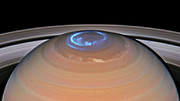
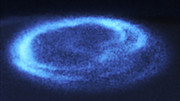
Astronomers using the NASA/ESA Hubble Space telescope have taken a series of spectacular images featuring the fluttering auroras at the north pole of Saturn. The observations were taken in ultraviolet light and the resulting images provide astronomers with the most comprehensive picture so far of Saturn’s northern aurora.

In 2017, over a period of seven months, the NASA/ESA Hubble Space Telescope took images of auroras above Saturn’s north pole region using the Space Telescope Imaging Spectrograph. The observations were taken before and after the Saturnian northern summer solstice. These conditions provided the best achievable viewing of the northern auroral region for Hubble.

On Earth, auroras are mainly created by particles originally emitted by the Sun in the form of solar wind. When this stream of electrically charged particles gets close to our planet, it interacts with the magnetic field, which acts as a gigantic shield. While it protects Earth’s environment from solar wind particles, it can also trap a small fraction of them. Particles trapped within the magnetosphere — the region of space surrounding Earth in which charged particles are affected by its magnetic field — can be energised and then follow the magnetic field lines down to the magnetic poles. There, they interact with oxygen and nitrogen atoms in the upper layers of the atmosphere, creating the flickering, colourful lights visible in the polar regions here on Earth [1].

However, these auroras are not unique to Earth. Other planets in our Solar System have been found to have similar auroras. Among them are the four gas giants Jupiter, Saturn, Uranus and Neptune.

Because the atmosphere of each of the four outer planets in the Solar System is — unlike the Earth — dominated by hydrogen, Saturn’s auroras can only be seen in ultraviolet wavelengths; a part of the electromagnetic spectrum which can only be studied from space.

Hubble allowed researchers to monitor the behaviour of the auroras at Saturn's north pole over an extended period of time. The Hubble observations were coordinated with the “Grand Finale” of the Cassini spacecraft, when the spacecraft simultaneously probed the auroral regions of Saturn [2]. The Hubble data allowed astronomers to learn more about Saturn’s magnetosphere, which is the largest of any planet in the Solar System other than Jupiter.

The images show a rich variety of emissions with highly variable localised features. The variability of the auroras is influenced by both the solar wind and the rapid rotation of Saturn, which lasts only about 11 hours. On top of this, the northern aurora displays two distinct peaks in brightness — at dawn and just before midnight. The latter peak, unreported before, seems specific to the interaction of the solar wind with the magnetosphere at Saturn’s solstice.

The main image presented here is a composite of observations made of Saturn in early 2018 in the optical and of the auroras on Saturn’s north pole region, made in 2017, demonstrating the size of the auroras along with the beautiful colours of Saturn.

Hubble has studied Saturn's auroras in the past. In 2004, it studied the southern auroras shortly after the southern solstice (heic0504) and in 2009 it took advantage of a rare opportunity to record Saturn when its rings were edge-on (heic1003). This allowed Hubble to observe both poles and their auroras simultaneously.


Notes

[1] The auroras here on Earth have different names depending on which pole they occur at. Aurora Borealis, or the northern lights, is the name given to auroras around the north pole and Aurora Australis, or the southern lights, is the name given for auroras around the south pole.


[2] Cassini was a collaboration between NASA, ESA and the Italian Space Agency. It spent 13 years orbiting Saturn, gathering information and giving astronomers a great insight into the inner workings of Saturn. Cassini took more risks at the end of its mission, travelling through the gap between Saturn and its rings. No spacecraft had previously done this, and Cassini gathered spectacular images of Saturn as well as new data for scientists to work with. On 15 September 2017 Cassini was sent on a controlled crash into Saturn.


More Information

The Hubble Space Telescope is a project of international cooperation between ESA and NASA.
Image credit: NASA, ESA & L. Lamy


Links


Contacts

Laurent Lamy
Observatoire de Paris
Paris, France
Tel: +33 145 077668
Email: laurent.lamy@obspm.fr

Mathias Jäger
ESA/Hubble, Public Information Officer
Garching, Germany
Tel: +49 176 62397500
Email: mjaeger@partner.eso.org


Wednesday, August 29, 2018

Stars v. Dust in the Carina Nebula

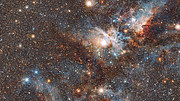
The Carina Nebula in infrared ligh
A wider view of the Carina Nebula

Digitized Sky Survey image of Eta Carinae Nebula

The Carina Nebula in the constellation of Carina


Videos
 
ESOcast 175 Light: Stars and Dust in the Carina Nebula (4K UHD)

3D view of the Carina Nebula

Zoom into the Carina Nebula

Pan across the Carina Nebula


VISTA gazes into one of the largest nebulae in the Milky Way in infrared

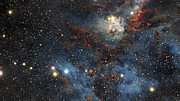
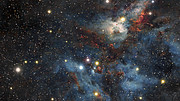
The Carina Nebula, one of the largest and brightest nebulae in the night sky, has been beautifully imaged by ESO’s VISTA telescope at the Paranal Observatory in Chile. By observing in infrared light, VISTA has peered through the hot gas and dark dust enshrouding the nebula to show us myriad stars, both newborn and in their death throes.

About 7500 light-years away, in the constellation of Carina, lies a nebula within which stars form and perish side-by-side. Shaped by these dramatic events, the Carina Nebula is a dynamic, evolving cloud of thinly spread interstellar gas and dust.

The massive stars in the interior of this cosmic bubble emit intense radiation that causes the surrounding gas to glow. By contrast, other regions of the nebula contain dark pillars of dust cloaking newborn stars. There’s a battle raging between stars and dust in the Carina Nebula, and the newly formed stars are winning — they produce high-energy radiation and stellar winds which evaporate and disperse the dusty stellar nurseries in which they formed.

Spanning over 300 light-years, the Carina Nebula is one of the Milky Way's largest star-forming regions and is easily visible to the unaided eye under dark skies. Unfortunately for those of us living in the north, it lies 60 degrees below the celestial equator, so is visible only from the Southern Hemisphere.

Within this intriguing nebula, Eta Carinae takes pride of place as the most peculiar star system. This stellar behemoth — a curious form of stellar binary— is the most energetic star system in this region and was one of the brightest objects in the sky in the 1830s. It has since faded dramatically and is reaching the end of its life, but remains one of the most massive and luminous star systems in the Milky Way.

Eta Carinae can be seen in this image as part of the bright patch of light just above the point of the “V” shape made by the dust clouds. Directly to the right of Eta Carinae is the relatively small Keyhole Nebula — a small, dense cloud of cold molecules and gas within the Carina Nebula — which hosts several massive stars, and whose appearance has also changed drastically over recent centuries.

The Carina Nebula was discovered from the Cape of Good Hope by Nicolas Louis de Lacaille in the 1750s and a huge number of images have been taken of it since then. But VISTA — the Visible and Infrared Survey Telescope for Astronomy — adds an unprecedentedly detailed view over a large area; its infrared vision is perfect for revealing the agglomerations of young stars hidden within the dusty material snaking through the Carina Nebula. In 2014, VISTA was used to pinpoint nearly five million individual sources of infrared light within this nebula, revealing the vast extent of this stellar breeding ground. VISTA is the world’s largest infrared telescope dedicated to surveys and its large mirror, wide field of view and exquisitely sensitive detectors enable astronomers [1] to unveil a completely new view of the southern sky.


Notes
[1] The Principal Investigator of the observing proposal which led to this spectacular image was Jim Emerson (School of Physics & Astronomy, Queen Mary University of London, UK). His collaborators were Simon Hodgkin and Mike Irwin (Cambridge Astronomical Survey Unit, Cambridge University, UK). The data reduction was performed by Mike Irwin and Jim Lewis (Cambridge Astronomical Survey Unit, Cambridge University, UK).


More Information

ESO is the foremost intergovernmental astronomy organisation in Europe and the world’s most productive ground-based astronomical observatory by far. It has 15 Member States: Austria, Belgium, the Czech Republic, Denmark, France, Finland, Germany, Italy, the Netherlands, Poland, Portugal, Spain, Sweden, Switzerland and the United Kingdom, along with the host state of Chile and with Australia as a strategic partner. ESO carries out an ambitious programme focused on the design, construction and operation of powerful ground-based observing facilities enabling astronomers to make important scientific discoveries. ESO also plays a leading role in promoting and organising cooperation in astronomical research. ESO operates three unique world-class observing sites in Chile: La Silla, Paranal and Chajnantor. At Paranal, ESO operates the Very Large Telescope and its world-leading Very Large Telescope Interferometer as well as two survey telescopes, VISTA working in the infrared and the visible-light VLT Survey Telescope. ESO is also a major partner in two facilities on Chajnantor, APEX and ALMA, the largest astronomical project in existence. And on Cerro Armazones, close to Paranal, ESO is building the 39-metre Extremely Large Telescope, the ELT, which will become “the world’s biggest eye on the sky”.


Links


Contacts

Jim Emerson
School of Physics & Astronomy, Queen Mary University of London
London, UK
Email: j.p.emerson@qmul.ac.uk

Calum Turner
Public Information Officer
Garching bei München, Germany
Tel: +49 89 3200 6670
Email: pio@eso.org


Source: ESO/News


Tuesday, August 28, 2018

Gemini Confirms the Most Distant Radio Galaxy


Top: Two-dimensional GMOS spectrum of the strong emission line observed in the radio galaxy TGSS J1530+1049. The size of the emission region is a bit less than one arcsec. Bottom: One-dimensional profile of the observed emission line. The asymmetry indicates that the line is Lyman-α at redshift of z = 5.72, making TGSS J1530+1049 the most distant radio galaxy known to date.

Using the Gemini North telescope in Hawai`i, an international team of astronomers from Brazil, Italy, the Netherlands, and the UK has discovered the most distant radio galaxy to date, at 12.5 billion light years, when the Universe was just 7% of its current age.

The team used spectroscopic data from the Gemini Multi-Object Spectrograph (GMOS-N) to measure a redshift of z = 5.72 for the radio galaxy identified as TGSS J1530+1049. This is the largest redshift of any known radio galaxy. The redshift of a galaxy tells astronomers its distance because galaxies at greater distances move away from us at higher speeds, and this motion causes the galaxy's light to shift farther into the red. Because light has a finite speed and takes time to reach us, more distant galaxies are also seen at earlier times in the history of the Universe.

The study was led by graduate students Aayush Saxena (Leiden Observatory, Netherlands) and Murilo Marinello (Observatório Nacional, Brazil), and the observations were obtained through Brazil's participation in Gemini. "In the Gemini spectrum of TGSS J1530+1049, we found a single emission line of hydrogen, known as the Lyman alpha. The observed shift of this line allowed us to estimate the galaxy's distance," explains Marinello.

The relatively small size of the radio emission region in TGSS J1530+1049 indicates that it is quite young, as expected at such early times. Thus, the galaxy is still in the process of assembling. The radio emission in this kind of galaxy is powered by a supermassive black hole that is sucking in material from the surrounding environment. This discovery of the most distant radio galaxy confirms that black holes can grow to enormous masses very quickly in the early Universe.

The measured redshift of TGSS J1530+1049 places it near the end of the Epoch of Reionization, when the majority of the neutral hydrogen in the Universe was ionized by high-energy photons from young stars and other sources of radiation. "The Epoch of Reionization is very important in cosmology, but it is still not well understood," said Roderik Overzier, also of Brazil's Observatorio Nacional, and the Principal Investigator of the Gemini program. "Distant radio galaxies can be used as tools to find out more about this period."

The research has been published by Monthly Notices of the Royal Astronomical Society. A preprint of the paper is available at astro-ph.


Tuesday, August 21, 2018

Infant exoplanet weighed by Hipparcos and Gaia

Copyright ESO/A-M. Lagrange et al.

The mass of a very young exoplanet has been revealed for the first time using data from ESA’s star mapping spacecraft Gaia and its predecessor, the quarter-century retired Hipparcos satellite. 

Astronomers Ignas Snellen and Anthony Brown from Leiden University, the Netherlands, deduced the mass of the planet Beta Pictoris b from the motion of its host star over a long period of time as captured by both Gaia and Hipparcos.

The planet is a gas giant similar to Jupiter but, according to the new estimate, is 9 to 13 times more massive. It orbits the star Beta Pictoris, the second brightest star in the constellation Pictor.

The planet was only discovered in 2008 in images captured by the Very Large Telescope at the European Southern Observatory in Chile. Both the planet and the star are only about 20 million years old – roughly 225 times younger than the Solar System. Its young age makes the system intriguing but also difficult to study using conventional methods.

“In the Beta Pictoris system, the planet has essentially just formed,” says Ignas. “Therefore we can get a picture of how planets form and how they behave in the early stages of their evolution. On the other hand, the star is very hot, rotates fast, and it pulsates.”

This behaviour makes it difficult for astronomers to accurately measure the star’s radial velocity – the speed at which it appears to periodically move towards and away from the Earth. Tiny changes in the radial velocity of a star, caused by the gravitational pull of planets in its vicinity, are commonly used to estimate masses of exoplanets. But this method mainly works for systems that have already gone through the fiery early stages of their evolution.

In the case of Beta Pictoris b, upper limits of the planet’s mass range had been arrived at before using the radial velocity method. To obtain a better estimate, the astronomers used a different method, taking advantage of Hipparcos’ and Gaia’s measurements that reveal the precise position and motion of the planet’s host star in the sky over time.

Copyright ESA 

“The star moves for different reasons,” says Ignas. “First, the star circles around the centre of the Milky Way, just as the Sun does. That appears from the Earth as a linear motion projected on the sky. 

We call it proper motion. And then there is the parallax effect, which is caused by the Earth orbiting around the Sun. Because of this, over the year, we see the star from slightly different angles.” 

And then there is something that the astronomers describe as ‘tiny wobbles’ in the trajectory of the star across the sky – minuscule deviations from the expected course caused by the gravitational pull of the planet in the star’s orbit. This is the same wobble that can be measured via changes in the radial velocity, but along a different direction – on the plane of the sky, rather than along the line of sight.

“We are looking at the deviation from what you expect if there was no planet and then we measure the mass of the planet from the significance of this deviation,” says Anthony. “The more massive the planet, the more significant the deviation.”

To be able to make such an assessment, astronomers need to observe the trajectory of the star for a long period of time to properly understand the proper motion and the parallax effect.

The Gaia mission, designed to observe more than one billion stars in our Galaxy, will eventually be able to provide information about a large amount of exoplanets. In the 22 months of observations included in Gaia’s second data release, published in April, the satellite has recorded the star Beta Pictoris about thirty times. That, however, is not enough.

“Gaia will find thousands of exoplanets, that’s still on our to-do list,” says Timo Prusti, ESA’s Gaia project scientist. “The reason that the exoplanets can be expected only late in the mission is the fact that to measure the tiny wobble that the exoplanets are causing, we need to trace the position of stars for several years.”

Combining the Gaia measurements with those from ESA’s Hipparcos mission, which observed Beta Pictoris 111 times between 1990 and 1993, enabled Ignas and Anthony to get their result much faster. This led to the first successful estimate of a young planet’s mass using astrometric measurements.

“By combining data from Hipparcos and Gaia, which have a time difference of about 25 years, you get a very long term proper motion,” says Anthony.

“This proper motion also contains the component caused by the orbiting planet. Hipparcos on its own would not have been able to find this planet because it would look like a perfectly normal single star unless we had measured it for a much longer time.

“Now, by combining Gaia and Hipparcos and looking at the difference in the long term and the short term proper motion, we can see the effect of the planet on the star.”

The result represents an important step towards better understanding the processes involved in planet formation, and anticipates the exciting exoplanet discoveries that will be unleashed by Gaia’s future data releases.

 Note for Editors

The mass of the young planet Beta Pictoris b through the astrometric motion of its host star,” by I. Snellen and A. Brown is published in Nature Astronomy, 20 August 2018.  

Source: ESA/GAIA


Monday, August 20, 2018

First Science with ALMA’s Highest-Frequency Capabilities

Illustration highlighting ALMA's high-frequency observing capabilities.
Credit: NRAO/AUI/NSF, S. Dagnello. Hi-res image

The upper blue portion of this graph shows the spectral lines ALMA detected in a star-forming region of the Cat's Paw Nebula. The lower black portion shows the lines detected by the European Space Agency's Herschel Space Observatory. The ALMA observations detected more than ten times as many spectral lines. Note that the Herschel data have been inverted for comparison. Two molecular lines are labeled for reference. Credit: NRAO/AUI/NSF, B. McGuire et al. Hi-res image

Composite ALMA image of NGC 6334I, a star-forming region in the Cat's Paw Nebula, taken with the Band 10 receivers, ALMA's highest-frequency vision. The blue component is heavy water (HDO) streaming away from either a single protostar or a small cluster of protostars. The orange region is the "continuum emission" in the same region, which scientists found is extraordinarily rich in molecular fingerprints, including glycolaldehyde , the simplest sugar-related molecule. Credit: ALMA (ESO/NAOJ/NRAO): NRAO/AUI/NSF, B. Saxton. Hi-res image

ALMA Band 10 image of heavy water (HDO) streaming away from NGC 6334I in the Cat's Paw Nebula. This image is the result of ALMA's highest-frequency observing capabilities, which push the limits of ground-based astronomy. Credit: ALMA (ESO/NAOJ/NRAO); NRAO/AUI/NSF, B. Saxton. Hi-res image
Pictured here is one of the cold cartridge assemblies of the Band 10 receiver, which gives ALMA its highest-frequency capabilities. Credit: ALMA (ESO/NAOJ/NRAO).  Hi-res image


Astronomers observe cosmic steam jets and molecules galore

The ALMA telescope in Chile has transformed how we see the universe, showing us otherwise invisible parts of the cosmos. This array of incredibly precise antennas studies a comparatively high-frequency sliver of radio light: waves that range from a few tenths of a millimeter to several millimeters in length. Recently, scientists pushed ALMA to its limits, harnessing the array’s highest-frequency (shortest wavelength) capabilities, which peer into a part of the electromagnetic spectrum that straddles the line between infrared light and radio waves.

“High-frequency radio observations like these are normally not possible from the ground,” said Brett McGuire, a chemist at the National Radio Astronomy Observatory in Charlottesville, Virginia, and lead author on a paper appearing in the Astrophysical Journal Letters. “They require the extreme precision and sensitivity of ALMA, along with some of the driest and most stable atmospheric conditions that can be found on Earth.”

Under ideal atmospheric conditions, which occurred on the evening of 5 April 2018, astronomers trained ALMA’s highest-frequency, submillimeter vision on a curious region of the Cat’s Paw Nebula (also known as NGC 6334I), a star-forming complex located about 4,300 light-years from Earth in the direction of the southern constellation Scorpius.

Previous ALMA observations of this region at lower frequencies uncovered turbulent star formation, a highly dynamic environment, and a wealth of molecules inside the nebula.

To observe at higher frequencies, the ALMA antennas are designed to accommodate a series of “bands” — numbered 1 to 10 — that each study a particular sliver of the spectrum. The Band 10 receivers observe at the highest frequency (shortest wavelengths) of any of the ALMA instruments, covering wavelengths from 0.3 to 0.4 millimeters (787 to 950 gigahertz), which is also considered to be long-wavelength infrared light.

These first-of-their-kind ALMA observations with Band 10 produced two exciting results.

Jets of Steam from Protostar

One of ALMA’s first Band 10 results was also one of the most challenging, the direct observation of jets of water vapor streaming away from one of the massive protostars in the region. ALMA was able to detect the submillimeter-wavelength light naturally emitted by heavy water (water molecules made up of oxygen, hydrogen and deuterium atoms, which are hydrogen atoms with a proton and a neutron in their nucleus).

“Normally, we wouldn’t be able to directly see this particular signal at all from the ground,” said Crystal Brogan, an astronomer at the NRAO and co-author on the paper. “Earth’s atmosphere, even at remarkably arid places, still contains enough water vapor to completely overwhelm this signal from any cosmic source. During exceptionally pristine conditions in the high Atacama Desert, however, ALMA can in fact detect that signal. This is something no other telescope on Earth can achieve.”

As stars begin to form out of massive clouds of dust and gas, the material surrounding the star falls onto the mass at the center. A portion of this material, however, is propelled away from the growing protostar as a pair of jets, which carry away gas and molecules, including water.

The heavy water the researchers observed is flowing away from either a single protostar or a small cluster of protostars. These jets are oriented differently from what appear to be much larger and potentially more-mature jets emanating from the same region. The astronomers speculate that the heavy-water jets seen by ALMA are relatively recent features just beginning to move out into the surrounding nebula.

These observations also show that in the regions where this water is slamming into the surrounding gas, low-frequency water masers – naturally occurring microwave versions of lasers — flare up. The masers were detected in complementary observations by the National Science Foundation’s Very Large Array.

ALMA Observes Molecules Galore

In addition to making striking images of objects in space, ALMA is also a supremely sensitive cosmic chemical sensor. As molecules tumble and vibrate in space, they naturally emit light at specific wavelengths, which appear as spikes and dips on a spectrum. All of ALMA’s receiver bands can detect these unique spectral fingerprints, but those lines at the highest frequencies offer unique insight into lighter, important chemicals, like heavy water. They also provide the ability to see signals from complex, warm molecules, which have weaker spectral lines at lower frequencies.

Using Band 10, the researchers were able to observe a region of the spectrum that is extraordinarily rich in molecular fingerprints, including glycolaldehyde , the simplest sugar-related molecule.

When compared to previous best-in-the-world observations of the same source with the European Space Agency’s Herschel Space Observatory, the ALMA observations detected more than ten times as many spectral lines.

“We detected a wealth of complex organic molecules surrounding this massive star-forming region,” said McGuire. “These results have been received with excitement by the astronomical community and show once again how ALMA will reshape our understanding of the universe.”

ALMA is able to take advantage of these rare windows of opportunity when the atmospheric conditions are “just right” by using dynamic scheduling. That means, the telescope operators and astronomers carefully monitor the weather and conduct those planned observations that best fit the prevailing conditions.

“There certainly are quite a few conditions that have to be met to conduct a successful observation using Band 10,” concluded Brogan. “But these new ALMA results demonstrate just how important these observations can be.”

“To remain at the forefront of discovery, observatories must continuously innovate to drive the leading edge of what astronomy can accomplish,” said Joe Pesce, the program director for the National Radio Astronomy Observatory at NSF. “That is a core element of NSF’s NRAO, and its ALMA telescope, and this discovery pushes the limit of what is possible through ground-based astronomy.”

The National Radio Astronomy Observatory is a facility of the National Science Foundation, operated under cooperative agreement by Associated Universities, Inc.


Contact:

Charles Blue, Public Information Officer
(434) 296-0314; 
cblue@nrao.edu


This research is presented in a paper titled “First results of an ALMA band 10 spectral line survey of NGC 6334I: Detections of glycolaldehyde (HC(O)CH2OH) and a new compact bipolar outflow in HDO and CS,” by B. McGuire et al. in the Astrophysical Journal Letters. [http://apjl.aas.org] Preprint: [ https://arxiv.org/abs/1808.05438]

The Atacama Large Millimeter/submillimeter Array (ALMA), an international astronomy facility, is a partnership of the European Organisation for Astronomical Research in the Southern Hemisphere (ESO), the U.S. National Science Foundation (NSF) and the National Institutes of Natural Sciences (NINS) of Japan in cooperation with the Republic of Chile. ALMA is funded by ESO on behalf of its Member States, by NSF in cooperation with the National Research Council of Canada (NRC) and the National Science Council of Taiwan (NSC) and by NINS in cooperation with the Academia Sinica (AS) in Taiwan and the Korea Astronomy and Space Science Institute (KASI).

ALMA construction and operations are led by ESO on behalf of its Member States; by the National Radio Astronomy Observatory (NRAO), managed by Associated Universities, Inc. (AUI), on behalf of North America; and by the National Astronomical Observatory of Japan (NAOJ) on behalf of East Asia. The Joint ALMA Observatory (JAO) provides the unified leadership and management of the construction, commissioning and operation of ALMA.