Showing posts with label supernova remnant (SNR). Show all posts

Thursday, October 01, 2026

A Cleaner Look at Our Galactic Center's Hot Mess

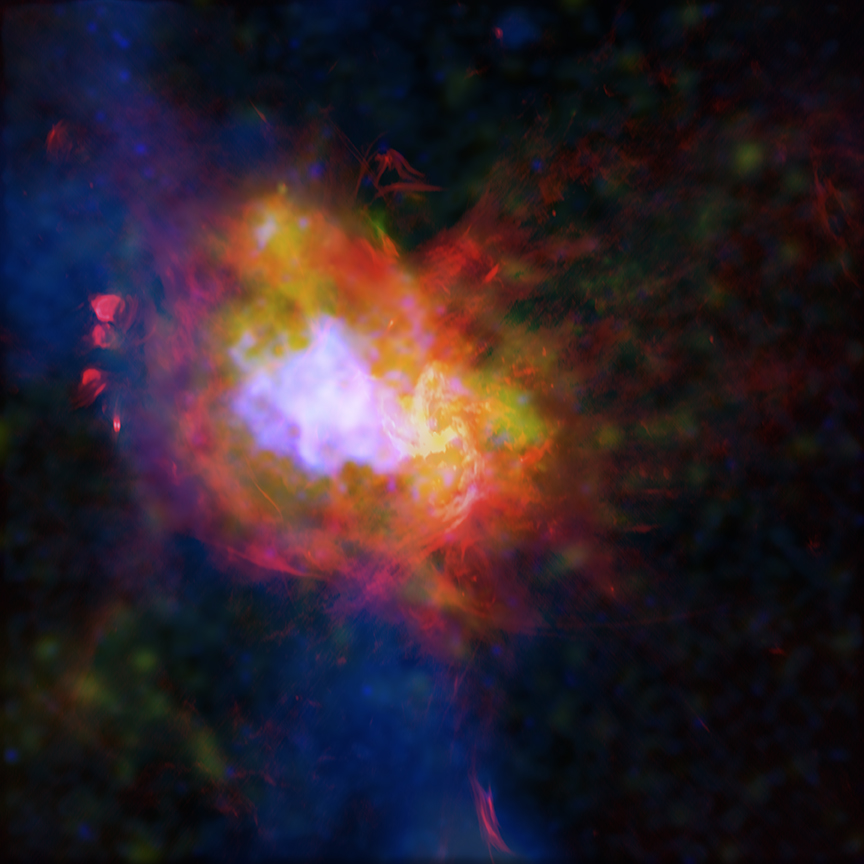
Sagittarius A East (Labeled)
Credit: X-ray: NASA/CXC/McGill Univ./M. Balakrishnan et al.;
Radio: NSF/NRAO/VLA; Sub-mm: EAO/James Clerk Maxwell Telecope;
Image Processing: NASA/CXC/SAO/P. Edmonds, N. Wolk


JPEG (352.3 kb) - Large JPEG (2 MB) - Tiff (74.1 MB) -More Images

Tour: NASA Connects Little Red Dots With Chandra, Webb (Video)


The center of the Milky Way galaxy is a chaotic place. In addition to the 4-million-solar mass black hole, known as Sagittarius A* (Sgr A*), the region is full of gas, dust, strong magnetic fields, and stars in various stages of life — from birth to death.

Now, astronomers have released the clearest view yet of the remains of an exploded star that sits amid this cluttered galactic environment. The supernova remnant is named Sagittarius A East, or Sgr A East, and it is the closest remnant to Sgr A* that astronomers know about.

Sgr A East emits light in many wavelengths, including X-rays that NASA’s Chandra X-ray Observatory can see. Supernova remnants like Sgr A East give off X-rays because powerful shock waves rumble outward into space after the explosion and the stellar debris is superheated to millions of degrees.

In this packed galactic landscape, it is difficult to tease out what light is coming from the Sgr A East supernova remnant and what emanates from other objects. Astronomers previously have identified the primary contributors. The two main sources of X-rays in this image, besides the supernova remnant itself, are colliding winds from a cluster of hot, massive stars and a diffuse commingled glow from many fainter overlapping X-ray sources. (This latter category is composed mainly of double star systems including stars like our Sun orbiting white dwarf stars.)

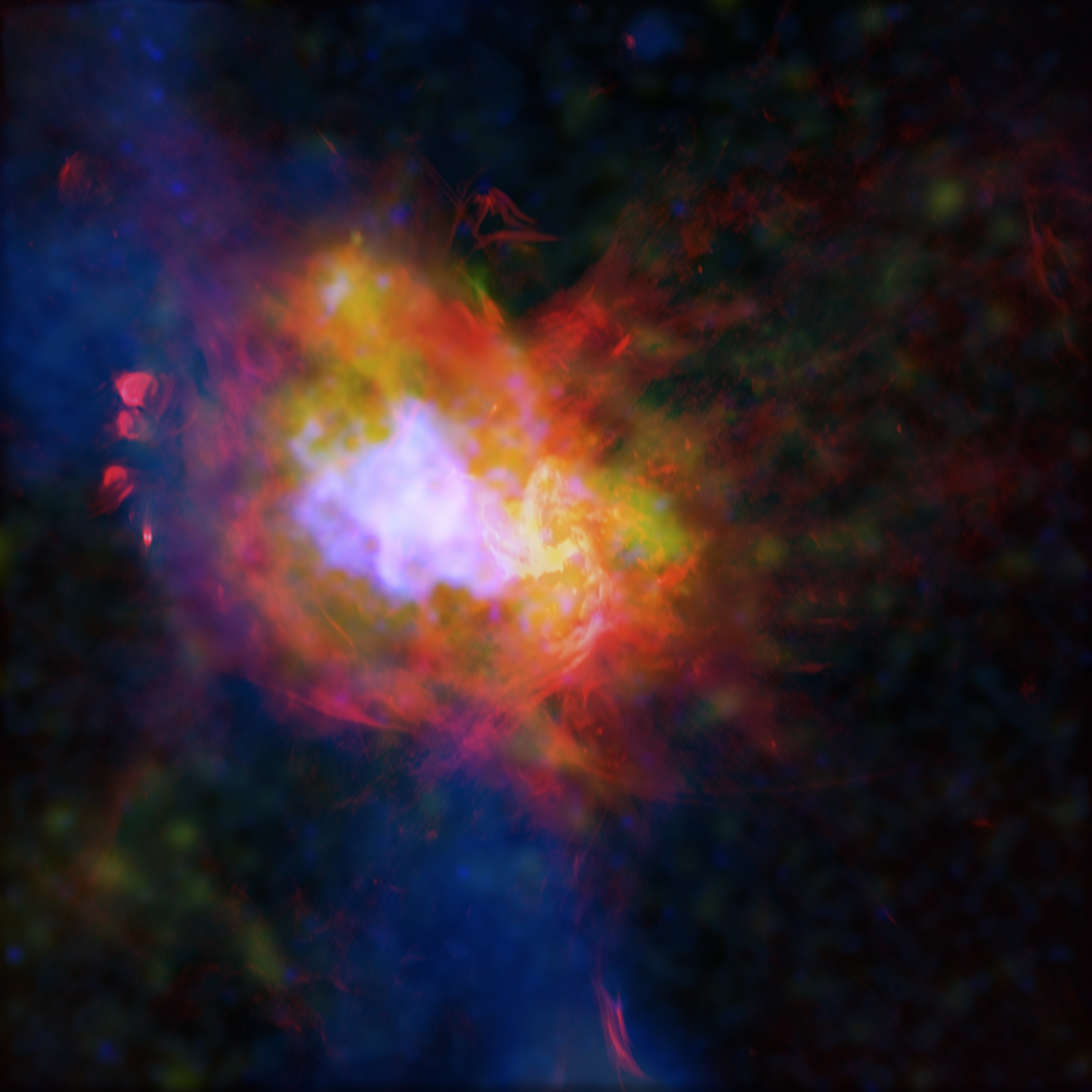
This new composite image of Sgr A East and the region around it contains X-rays from Chandra that are not — for the first time — contaminated by X-rays from other sources in this crowded field. A team of astronomers used a special technique to separate the three main sources of X-rays and create this new cleaner view of Sgr A East. This analysis also allowed the authors to make maps of the elements within the supernova remnant, including iron, sulfur, argon, and calcium.

The new image of Sgr A East shows lower-energy X-rays detected by Chandra in green and high-energy ones in light blue, which appear purple in the middle of the supernova remnant. The researchers removed the point-like sources of X-rays so they could study the diffuse emission in more detail. The X-ray data have been combined with radio data from the NSF’s Very Large Array in red and submillimeter-wavelength data from the James Clerk Maxwell Telescope in dark blue to complete this new composite view.

The bright radio emission surrounds X-rays from Sgr A East as well as the region around Sgr A*. The supermassive black hole is located at the center of the yellow spiral structure to the right of the purple X-rays from Sgr A East.

This new image will also allow scientists to examine how the winds from the stars in the nearby cluster have shaped the supernova remnant’s evolution. This could help reveal the identity of the star that exploded to create Sgr A East and whether the supernova remnant has triggered outbursts from Sgr A* in the past.

Because Sgr A East is so close to Sgr A*, astronomers have long wondered if they influence one another. The authors’ new work supports the idea that Sgr A East has played an active role in the black hole’s environment by injecting energy into the region and keeping the gas surrounding Sgr A* hot and turbulent over its lifetime of about 10,000 years, although its exact age remains uncertain. They have shown that Sgr A East has expanded into, compressed and heated the gas surrounding it, shaping its three-dimensional asymmetrical structure. A paper describing these results with these authors appeared in The Astrophysical Journal, and was led by Mayura Balakrishnan from McGill University in Montreal, Canada.

NASA's Marshall Space Flight Center in Huntsville, Alabama, manages the Chandra program. The Smithsonian Astrophysical Observatory's Chandra X-ray Center controls science operations from Cambridge, Massachusetts, and flight operations from Burlington, Massachusetts.


Visual Description:

This release features a composite image of a supermassive black hole and supernova remnant close to each other at the center of our Milky Way Galaxy. In a packed galactic landscape such as this, it is often difficult to discern what light emanates from which object. For this image, astronomers used a special technique to separate the glowing X-ray sources. The result is a picture with distinct elements, and an overall look not unlike an impressionist oil painting with patches of diffused color.

At the heart of the image is a light purple cloud and a spiraling, bright yellow tangle. The purple cloud represents X-rays from the center of the supernova remnant, Sagittarius A East. Inside the bright yellow tangle is the supermassive black hole, Sagittarius A*, which has the mass of 4-million suns. Surrounding the remnants of the exploded star and its black hole neighbor, is a neon red gas cloud with trails drifting toward our upper right. Here, red represents radio data from the NSF’s Very Large Array.

A faint, dark blue cloud, barely discernible when set against the blackness of space, begins at our upper left and exits the bottom of the frame. This is submillimeter-wavelength data from the James Clerk Maxwell Telescope. Mottled, faint patches of forest green stretch across the image from our lower left to our upper right. These are lower-energy X-rays detected by Chandra that are possibly linked to past outbursts from Sagittarius A*.


Fast Facts for Sagittarius A East

Credit: X-ray: NASA/CXC/McGill Univ./M. Balakrishnan et al.; Radio: NSF/NRAO/VLA; Sub-mm: EAO/James Clerk Maxwell Telecope; Image Processing: NASA/CXC/SAO/P. Edmonds, N. Wolk
Release Date: September 30, 2026
Scale: Image is about 7 arcmin (53 light-years) across.
Category:
Black Holes, Supernovas & Supernova Remnants
Coordinates (J2000): RA 17h 45m 40.0s | Dec -20° 00´ 28.1"
Constellation:
Sagittarius
Observation Dates: 35 observations from Sept 1999 to Aug 2020
Observation Time: 422 hours 51 minutes (5 days 6 hours 51 minutes)
Obs. ID: 242, 1561, 2943, 2951-2954, 3392, 3393, 3549, 3663, 3665, 4683, 4684, 5950-5954, 6363, 9169-9174, 10556, 11843, 13016, 13017, 14941, 14942, 22707, 22937, 23295
Instrument: ACIS
References: Balakrishnan, M, et al., 2026, ApJ, 1003,128.
Color Code: X-ray: green and cyan; Radio: red; Sub-mm: blue
Distance Estimate: About 26,000 light-years from Earth


Tuesday, September 01, 2026

A Pulsar in a Nebula in a Supernova Remnant

Featured Image: A Pulsar in a Nebula in a Supernova Remnant

When a massive star collapses, the subsequent supernova can leave behind the star’s condensed core in the form of a neutron star. Some neutron stars are also pulsars, which rotate at incredible speeds, emit beamed radio emission, and expel winds of charged particles. A pulsar’s relativistic charged-particle winds billow around the pulsar as it travels through space — often at a few hundreds of kilometers per second or faster, having received a “kick” when its progenitor star exploded. When these winds interact with the surrounding supernova ejecta or the interstellar medium, the interaction creates a detectable pulsar wind nebula. The image above combines data from the Australian Square Kilometre Array Pathfinder (orange) and Wide-field Infrared Survey Explorer (cyan) to show a pulsar wind nebula, indicated with a white rectangle, within a larger supernova remnant. Sanja Lazarević (Western Sydney University) and collaborators discovered this pulsar wind nebula, which they’ve named “Thunder” in a nod to the supernova remnant’s moniker, “Nimbus.” The cometary shape of the pulsar wind nebula suggests that the pulsar is moving quickly, traveling outward from the center of the explosion that occurred some 30,000–45,000 years ago. To learn more about the discovery and characterizati,bron of this pulsar wind nebula, check out the article linked below.

Citation

“EMU Discovery of Thunder: A Bow-Shock PWN Powered by PSR J1631–4722 Escaping the Nimbus SNR (G336.7+0.5),” S. Lazarević et al 2026 ApJ 1007 159. doi:10.3847/1538-4357/ae7f11


Monday, August 10, 2026

A Middle-Aged Supernova Remnant Stays Energetic

Combined X-ray observations of the Puppis A supernova remnant from Chandra and XMM-Newton, showing the shock waves of material expanding out into space. Low-energy X-rays are shown in red, medium-energy X-rays are in green and higher energy X-rays are colored blue. NuSTAR observations will be able to probe higher energies still. Image credit: NASA/CXC/IAFE/G.Dubner et al & ESA/XMM-Newton. Download Image


During the past week, NuSTAR observed the supernova remnant Puppis A, the expanding debris of a stellar explosion that occurred roughly 4,000 years ago. While supernova remnants are widely believed to be the primary accelerators of Galactic cosmic rays, clear evidence for ongoing production of very high-energy particles is usually found only in much younger systems. Recent X-ray observations, however, revealed a hint of an unexpected enhancement of hard X-rays in the eastern region of Puppis A, where the blast wave is interacting with dense interstellar clouds. These observations suggest the presence of a reflected shock — a secondary shock wave generated when the expanding remnant encounters surrounding material — that may be accelerating particles even today. The primary goal of the NuSTAR observation is to determine whether the newly discovered hard X-rays are produced by freshly accelerated electrons. If confirmed, Puppis A would provide one of the clearest and most remarkable examples of active particle acceleration in middle-aged supernova remnants. Given its age of about 4,000 years, finding signs of fresh acceleration would demonstrate that supernova remnants can continue to energize particles far longer than traditionally expected, offering a rare opportunity to study how cosmic-ray factories evolve long after the original stellar explosion. By measuring the high-energy X-ray spectrum up to energies of tens of keV, NuSTAR will determine how these particles are accelerated, estimate the maximum energies they can reach, and probe the magnetic environment within the shock. These measurements will provide new insight into the long-term evolution of shock acceleration and the origin of cosmic rays in our Galaxy.

Author: Hiromasa Suzuki (Assistant Professor, University of Miyazaki, Japan)


Thursday, August 06, 2026

eROSITA delivers the most comprehensive census of the high-energy Universe to date

The colour image shows X-ray sources in the western galactic hemisphere of the X-ray sky. The Galactic plane lies horizontally through the centre of the image. Sources in the eROSITA catalogue are plotted with their red, green and blue brightness showing their count rate in soft (0.5-1.0 keV), medium (0.5-1.0 keV) and hard (1.0-2.0 keV), respectively. The sky is plotted using an azimuthal equal area projection. © Jeremy Sanders / MPE

This figure compares the build-up of mass locked in super-massive black holes with the rescaled growth of the stellar population in inactive galaxies over cosmic time. The eROSITA X-ray census traces the fraction of super-massive black hole growth that is directly visible in the soft X-rays, while estimates including obscured sources show that much of the total growth is hidden from this view. The gap implies that roughly 70-90% of super-massive black holes' growth likely occurred in soft X-ray-suppressed phases. The shape similarity of all growth curves supports the claim that accreting super-massive black holes and galaxies evolved in lockstep, growing over broadly similar cosmic epochs. © William Roster / MPE

eROSITA DR2 Representation of the Active Galactic Nuclei (AGN)
This animation shows a representation of the active galactic nuclei (AGN) identified in the DR2 catalogue. Each dot shows a single object, where the distance from the three-dimensional centre increases with the source's redshift, i.e. how far away it is from us. We and our neighbouring objects lie at this centre. Sources at the same distance lie on shells, where the position of the dot on the shell is the position in the sky. The stationary circles, shown horizontally, represent the radii of the shells at redshifts of 0.5, 1.0, 1.5, 2.0, 2.5, 3.0, and 3.5. The animation rotates about the western Galactic hemisphere, highlighting the clumpy nature of structure in the universe.


To the Point
  • Catalogue contents, source types: DR2 lists over 1.9 million pointlike sources such as stars and supermassive black holes, plus about 64,000 extended sources including galaxy clusters and supernova remnants.

  • Survey depth, sensitivity: Combining data from three fullsky scans, DR2 detects fainter X-ray fluxes and reveals many previously unknown sources.

  • Multiwavelength identification: DR2 links X-ray detections to optical and infrared counterparts using six new catalogues, improving the understanding and classification of cosmic objects.

  • Collaboration with SDSS: The release coincides with the Sloan Digital Sky Survey's twentieth data release, enabling 3D mapping of active black holes and studies on their growth across cosmic time.


Second data release nearly doubles the previously known eROSITA X-ray sources to two million

The German eROSITA Consortium (eROSITA-DE), led by the Max Planck Institute for Extraterrestrial Physics (MPE), has released its second major public dataset, eROSITA Data Release 2 (DR2). The new catalogue comprises close to two million X-ray sources—approximately doubling the number of previously released eROSITA sources in the X-ray sky and marking a major step forward in mapping the high-energy Universe. Built from the first three all-sky scans of the eROSITA telescope aboard the Spectrum-Roentgen-Gamma (SRG) mission, DR2 provides the most comprehensive catalogue of the X-ray Universe currently available to the scientific community. By combining multiple passes over the sky, the release significantly increases the survey depth and reveals large populations of previously undetected sources.

The main DR2 catalogue contains nearly two million X-ray sources detected in the 0.2–2.3 keV band and includes more than 1.9 million point-like sources, primarily stars and actively accreting supermassive black holes, as well as around 64,000 extended sources such as galaxy clusters, nearby galaxies, and supernova remnants. Compared to the first data release, the number of detected sources has roughly doubled.
v A complementary hard-band catalogue adds nearly 15,000 sources detected at higher energies (2.3–5.0 keV), tracing heavily obscured and intrinsically energetic systems that are often missed at softer X-ray energies. Together, these catalogues capture the full diversity of the X-ray sky, from nearby stellar coronae to distant supermassive black holes and massive galaxy clusters. Many of these objects are newly identified in X-rays, while others can now be studied with substantially improved precision.

After the start of operations in December 2019, eROSITA surveyed the entire sky every six months, progressively increasing depth and sensitivity. DR2 combines data collected over the mission’s first 556 days, spanning three full sky surveys (eRASS1–3). By stacking these observations, the survey reaches significantly fainter fluxes than the first release, enabling the large increase in detected sources.

“DR2 is the best inventory of the X-ray sky we have to date and opens the door to robust statistical studies of cosmic populations,” says Miriam E. Ramos-Ceja, Ground Segment Manager of the eROSITA instrument and lead author of the DR2 publication.

Linking X-rays to the broader Universe

To enable physical interpretation, DR2 includes multi-wavelength information that associates the X-ray detections with their most likely optical and infrared counterparts. Based on this information, roughly 88% are extragalactic, dominated by accreting supermassive black holes.

“X-ray detection is only the first step,” explains Mara Salvato, eROSITA spokesperson and chair of the follow-up working group. “By linking X-ray sources to their counterparts at other wavelengths, we can work out what these objects are, where they sit on the cosmic distance ladder, and build clean, well-defined samples on an unprecedented scale.”

A joint milestone with SDSS

The release coincides with the twentieth data release of the Sloan Digital Sky Survey (SDSS), which includes extensive optical spectroscopy of eROSITA-DE sources. Together, these datasets represent the culmination of nearly a decade of collaboration between the German eROSITA Consortium and the SDSS collaboration. By combining SDSS spectroscopy with eROSITA’s X-ray data, researchers can build three-dimensional maps of active black holes across the sky, revealing how these rapidly growing objects are distributed and evolve across cosmic time.

Combining eROSITA’s X-ray catalogue with spectroscopic and photometric redshifts enabled one of the largest and most detailed studies of accreting supermassive black holes to date. These elusive objects formed surprisingly early in the history of the Universe, and eROSITA has provided a new census of their growth at high redshift. “The most luminous black holes at high redshift are like needles in a haystack. Thanks to DR2 we found more needles than expected, suggesting that rapidly growing black holes were more abundant in the early Universe than previously thought” says William Roster, lead author of the corresponding study.

A focused, catalogue-driven release

In contrast to the first public data release, DR2 is a catalogue-focused release. It provides rigorously validated source lists derived from the combined eRASS:3 observations, along with an updated upper-flux-limit service that allows researchers to quantify non-detections across the sky.

The data cover the western Galactic hemisphere, reflecting the agreed data-sharing arrangement between the German and Russian eROSITA consortia. Within this region, DR2 represents the largest and most homogeneous public X-ray dataset currently available.

Enabling the next wave of discoveries

“This is a dataset of unprecedented scale and completeness, now in the hands of the global astronomical community,” says eROSITA Principal Investigator Andrea Merloni. “With nearly 2 million sources, DR2 provides a unique foundation for discoveries ranging from rare objects to large-scale population studies.” MPE Director Kirpal Nandra adds: “eROSITA just set another world record in terms of X-ray source numbers – and it won’t be the last.”

The eROSITA-DE DR2 catalogues, upper-flux-limit server, and full documentation are publicly accessible via the eROSITA-DE Science Data Archive.


Contacts:

Dr. Miriam Ramos-Ceja
Postdoc High-Energy Astrophysics
Tel:
+49 89 30000-3603
Email: mramos@mpe.mpg.de
Max Planck Institute for Extraterrestrial Physics, Garching

William Roster
PhD-Student High-Energy Astrophysics
Tel:
+49 89 30000-3879
Email: wroster@mpe.mpg.de
Max Planck Institute for Extraterrestrial Physics, Garching

Dr. Andrea Merloni
Senior Scientist High-Energy Astrophysics; PI eROSITA
Tel:
+49 89 30000-3893
Email: am@mpe.mpg.de
Max Planck Institute for Extraterrestrial Physics

Dr. Mara Salvato
Senior Scientist High-Energy Astrophysics
Tel:
+49 89 30000-3815
Email: mara@mpe.mpg.de
Max Planck Institute for Extraterrestrial Physics, Garching

Dr. Jeremy Sanders
Scientist High-Energy Astrophysics
Tel:
+49 89 30000-3340
Email: jsanders@mpe.mpg.de
Max Planck Institute for Extraterrestrial Physics, Garching

Prof. Dr. Kirpal Nandra
Director of the High-Energy Astrophysics
Tel:
+49 89 30000-3401
Email: knandra@mpe.mpg.de
Max-Planck-Institut für extraterrestrische Physik, Garching


Original publication

1. Ramos-Ceja, M.E., G. Lamer, M. Salvato, A. Merloni, J.S. Sanders et al. The SRG/eROSITA All-Sky Survey DR2: Cumulative X-ray catalogues from the first three surveys and multi-wavelength counterparts in the western Galactic hemisphere
A&A


Source | DOI

2. Roster, W., J. Buchner, M. Salvato, R. Shirley, A. Merloni et al.
Accrete, shine, repeat: AGN X-ray luminosity function
The SRG/eROSITA All-Sky Survey DR2
A & A


Source | DOI


Further Information

eROSITA website of the MPE

The X-ray sky opens to the world

With about 900 000 distinct sources, the first eROSITA All-Sky Survey (eRASS1) has yielded the largest X-ray catalogue ever published. Based on just the first six months of observations, eROSITA has already detected more sources than had previously been known in the 60-year history of X-ray astronomy.

eROSITA relaxes cosmological tension

February 14, 2024
Results from the first X-ray sky survey resolve the previous inconsistency between competing measurements of the structure of the Universe

Baryons at the Edge: SRG/eROSITA Survey Detects “Missing” Cosmic Gas at the Outskirts of Galaxy Clusters

May 05, 2026
Missing baryons found in galaxy cluster outskirts.
Research uncovers 90% of missing baryonic matter in galaxy cluster outskirts, enhancing cosmic structure understanding.


Monday, July 20, 2026

ALMA Discovers Chemically Rich Stellar Cradles Inside a Supernova Remnant

Artist’s impression of hot cores —warm cradles of molecular gas surrounding a newborn star—discovered within a supernova remnant. Blue represents high-energy particles and photons produced by the supernova explosion, while brown indicates the surrounding interstellar medium. Credit: Takashi Shimonishi (Niigata University), based on observation results, with illustration support from generative A


Highlights
  • ALMA has detected hot molecular cores inside a supernova remnant for the first time.

  • The discovery was made in RX J1713.7−3946, the remnant of a massive star that exploded about 1,600 years ago.

  • The two hot cores are warm, dense cocoons of molecular gas surrounding new born stars.

  • Both hot cores contain a wide variety of organic molecules.

  • The chemical composition of one core is remarkably similar to that of hot cores in ordinary star-forming regions.

  • The result suggests that newborn stars can remain protected within their natal cocoons, preserving molecular complexity even in the face of intense supernova feedback.


The first detection of hot molecular cores in a supernova remnant suggests that newborn stars can preserve complex organic molecules even in the harsh aftermath of a stellar explosion

Using the Atacama Large Millimeter/submillimeter Array (ALMA), astronomers have discovered warm, dense stellar cocoons rich in organic molecules inside a supernova remnant. The finding marks the first detection of hot molecular cores in such an extreme environment and suggests that the chemical ingredients associated with star and planet formation can survive even in the aftermath of a nearby stellar explosion.

The research team, led by Takashi Shimonishi of Niigata University, used ALMA to observe RX J1713.7−3946, the remnant of a massive star that exploded about 1,600 years ago. Supernovae are among the most energetic events in the universe. They forge heavy elements, accelerate cosmic rays, generate powerful shock waves, and can reshape nearby clouds of gas and dust. Yet their impact on the chemistry of the material from which new stars and planets form has remained uncertain.

Hot molecular cores are compact regions of warm, dense molecular gas surrounding newborn stars. They are important laboratories for astrochemistry because they contain molecules that can form on the surfaces of cold dust grains and later evaporate into gas when heated by a young star. Some of these molecules are complex organic molecules, considered important tracers of the chemical richness available during the formation of stars and planets.

ALMA’s sensitivity and high angular resolution allowed the team to identify two hot cores within the supernova remnant. Both objects show rich molecular emission, including a wide variety of organic molecules. A detailed analysis of one of the hot cores revealed that the relative abundances of its complex organic molecules are remarkably similar to those found in hot cores in ordinary star-forming regions that have not experienced nearby supernova explosions.

“These observations indicate that even in the harsh environment of a supernova remnant, newborn stars can remain well protected within their natal cocoons, preserving their rich molecular composition,” says Takashi Shimonishi, an astronomer at Niigata University, Japan, and the paper’s lead author. “The environments capable of harboring complex organic molecules—potential building blocks of prebiotic chemistry—may be more diverse than previously recognized,” Shimonishi adds.

The result suggests that the molecules in these hot cores have not been significantly destroyed, despite their location in a region affected by supernova feedback. The researchers propose several possible explanations. One is that the hot cores may have only recently begun to experience the effects of the supernova, leaving too little time for energetic particles to significantly alter their chemistry. Another possibility is that strong magnetic fields amplified by the supernova shock may help shield the dense molecular gas by suppressing the penetration of cosmic rays.

The discovery may also help astronomers investigate the early environment of our own Solar System. Analyses of primitive Solar System materials suggest that the Sun and planets may have formed in a region influenced by a nearby supernova explosion. The chemically rich hot cores found in RX J1713.7−3946 may therefore provide a valuable analogy for studying how supernova feedback affects the raw materials of future stars and planets.

Although the newly discovered hot cores have retained their molecular richness, it remains unclear whether this is a common outcome in regions affected by supernovae. Future observations with radio and infrared telescopes will help reveal the physical and chemical properties of stellar cradles and protoplanetary disks shaped by supernova feedback, and may provide new insights into whether the environment in which the Solar System formed was typical or exceptional.

Additional Information

This research was presented in “Survival of Molecular Complexity under Recent Supernova Feedback: Detection of Hot Cores in RX J1713.7−3946,” by Takashi Shimonishi, Hidetoshi Sano, Kenji Furuya, and Yoko Oya, published in The Astrophysical Journal. DOI: 10.3847/1538-4357/ae6fba.

This article is based on a press release by the National Astronomical Observatory of Japan (NAOJ), an ALMA partner on behalf of East Asia.

The Atacama Large Millimeter/submillimeter Array (ALMA), an international astronomy facility, is a partnership of the European Southern Observatory (ESO), the U.S. National Science Foundation (NSF) and the National Institutes of Natural Sciences (NINS) of Japan in cooperation with the Republic of Chile. ALMA is funded by ESO on behalf of its Member States, by NSF in cooperation with the National Research Council of Canada (NRC) and the National Science and Technology Council (NSTC) in Taiwan and by NINS in cooperation with the Academia Sinica (AS) in Taiwan and the Korea Astronomy and Space Science Institute (KASI).

ALMA construction and operations are led by ESO on behalf of its Member States; by the National Radio Astronomy Observatory (NRAO), managed by Associated Universities, Inc. (AUI), on behalf of North America; and by the National Astronomical Observatory of Japan (NAOJ) on behalf of East Asia. The Joint ALMA Observatory (JAO) provides the unified leadership and management of the construction, commissioning and operation of ALMA.


Contacts:

Nicolás Lira
Education and Public Outreach Officer
Joint ALMA Observatory, Santiago - Chile>
Phone:
+56 2 2467 6519
Cel: +56 9 9445 7726
Email: nicolas.lira@alma.cl

Seiichiro Naito
NAOJ EPO Lead
Email:
naito.seiichiro@nao.ac.jp

Jill Malusky
Public Information Officer
NRAO
Phone:
+1 304-456-2236
Email: jmalusky@nrao.edu

Bárbara Ferreira
ESO Media Manager
Garching bei München, Germany
Phone:
+49 89 3200 6670
Email: press@eso.org


Wednesday, June 24, 2026

NASA's Chandra Finds Unexpected Fireworks in Aftermath of Stellar Explosions


  • Astronomers have uncovered a population of supernova remnants in a nearby galaxy that are unexpectedly changing in X-ray brightness.

  • Using Chandra data spanning 14 years, researchers found 22 supernova remnants that brighten and dim dramatically in X-rays.

  • Typically, supernova remnants over a hundred years old just steadily decrease their X-ray output over time.

  • The researchers think this unusual behavior comes from stellar companions to the supernovas that survived the explosions.


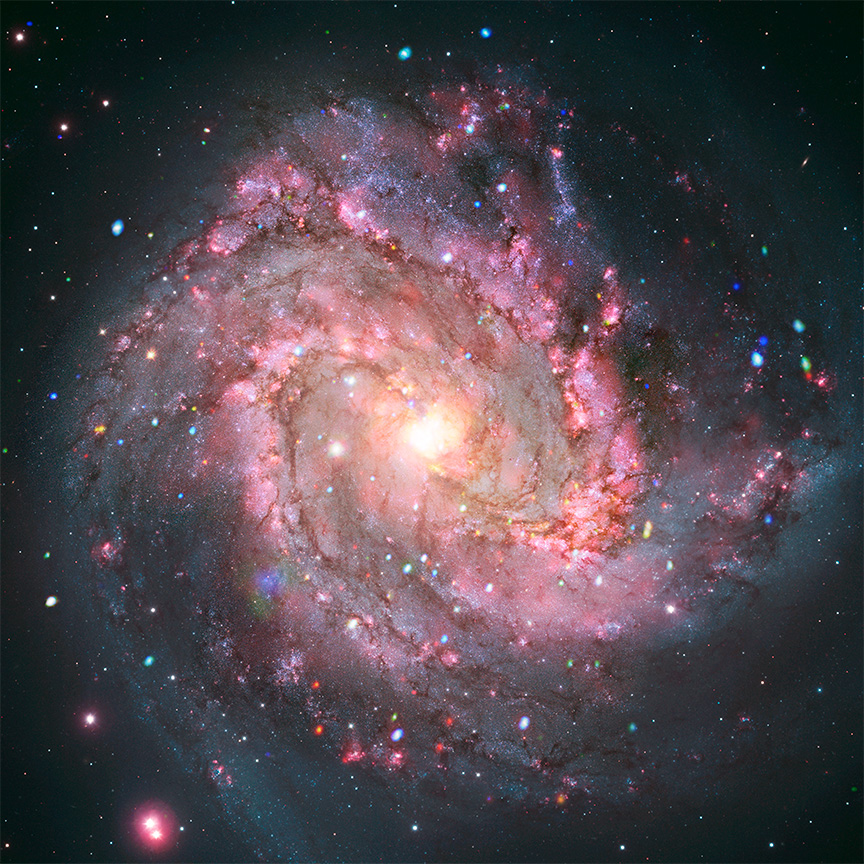
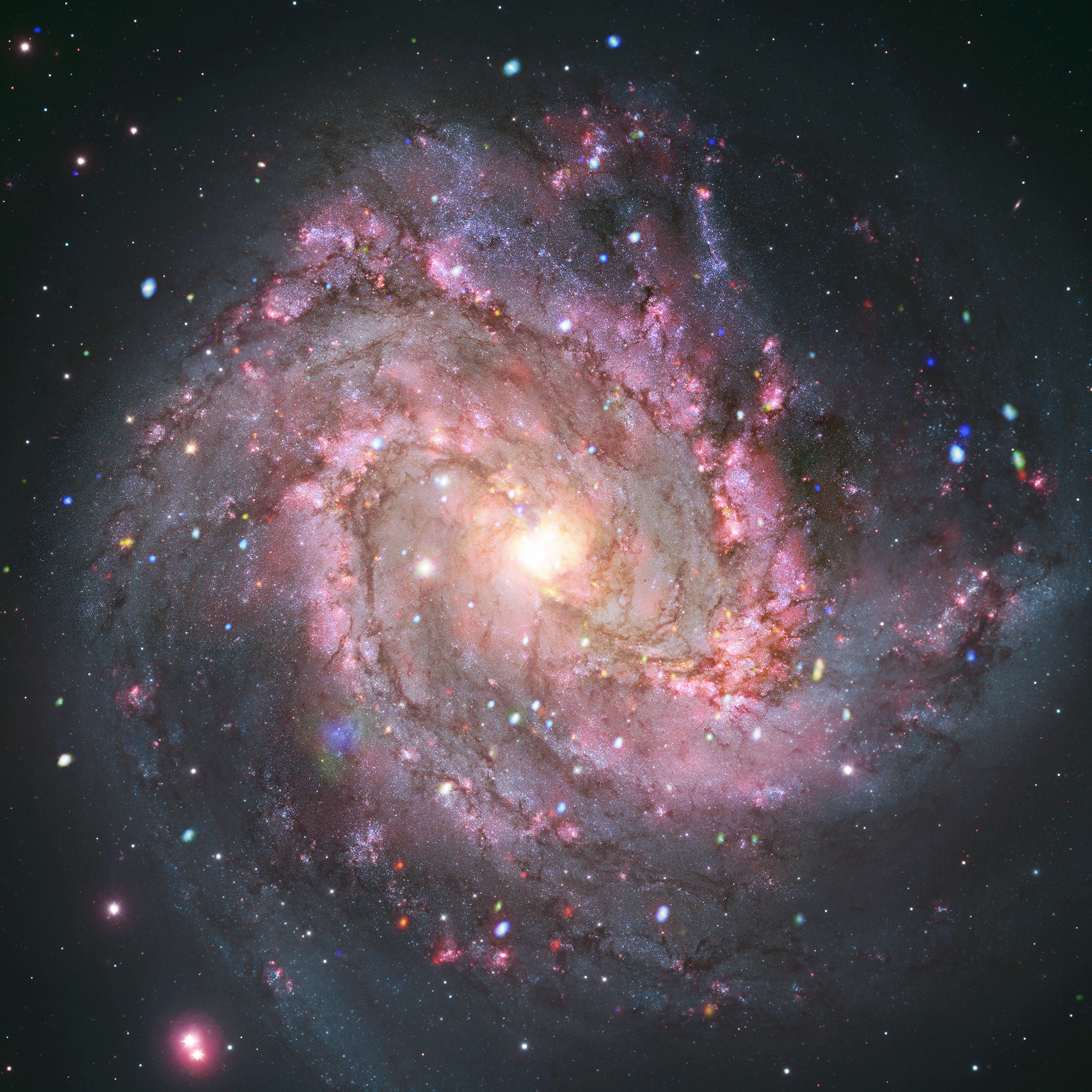
This graphic shows two of the X-ray sources in a nearby galaxy that are changing their brightness in surprising ways as described in our latest press release. By analyzing data from NASA’s Chandra X-ray Observatory that span over 14 years, researchers found over 20 previously identified supernova remnants — remains from stars that exploded — that vary unexpectedly in X-ray brightness in Messier 83 (M83). These represent roughly half of the X-ray sources associated with supernova remnants in their sample in M83.

The panel on the left contains a composite image of M83 with X-rays from Chandra (red, green, and blue) and optical light data from NASA’s Hubble Space Telescope (red, green, and blue). The two varying Chandra sources are circled in the composite image and close-up timelapse images of these sources are shown in the panels on the right.

This collection of varying sources is surprising because astronomers expect that about a hundred years after the explosion that created them, supernova remnants do not change their brightness dramatically. Rather, they typically fade in X-rays slowly over time. It would be unusual for M83 to have so many explode less than a century ago.

The most likely explanation given by the research team is that they uncovered a population of stellar survivors — stars that lived through their partner's destruction in a supernova explosion. In this scenario, each variable X-ray source began as a pair of massive stars orbiting each other. The more massive star collapsed and exploded as a supernova, leaving behind a black hole or ultra-dense neutron star. Its companion survived.

Galaxy M83 in X-ray and Optical Light. Credit: X-ray: NASA/CXC/SAO; Optical: NASA/ESA/AURA/STScI, Hubble Heritage Team, W. Blair (STScI/Johns Hopkins University) and R. O'Connell (University of Virginia); Image Processing: NASA/CXC/SAO/A. Jubett, L. Frattare and P. Edmonds

Chandra detects X-rays produced by infalling material that becomes superheated by the intense gravitational pull of the compact object. Such systems — known as high-mass X-ray binaries (HMXBs) — are among the most variable X-ray sources in the universe and may be the cause of the variations seen in M83’s supernova remnants. At the distance of M83, the supernova remnants appear as point sources even though they are much larger than the HMXBs they contain, implying that the two sources of X-rays cannot be separated in images.

Astronomers have known about HMXBs for decades, but the difference with this group in M83 is their connection to supernova remnants. Previously only a handful of supernova remnants associated with HMXBs were known across observations of all galaxies and so it is unprecedented to find more than twenty strong candidates in just one galaxy.

Galaxy M51 in X-ray and Optical Light. This is a composite image of the galaxy M51 combining data from NASA's Chandra X-ray Observatory (purple) with optical data (red, green and blue) taken with ground-based telescopes by a team of astrophotographers. A surprisingly high number of X-ray sources associated with supernova remnants in M51 show large changes in brightness, similar to the behavior seen in M83. Credit: Chandra X-ray Data: NASA/CXC/SAO; Astrobin/Optical Groundbased: C.Björk, T.Bähnck, S.Donoso, J.Gentillon, A. and D.Grelin, S.Guberski, R. Hall, T.Heuberger, J.Jacks, P.Kent, Br.Meyers, W.Ostling, N.Puig, T.Schaeffer, F.Schöfbänker, M.Vasilev

There is another possible explanation for the variability seen in the Chandra sources in M83. Rather than feeding off a companion star, the black hole or neutron star may be recapturing some of the material blasted outward in the original explosion. In a possible example of cosmic recycling, debris from the explosion falls back onto the very object the supernova created. The researchers suggest that both explanations could be happening in M83 with different sources in our sample having different origins.

These results were presented at the 248th meeting of the American Astronomical Society meeting in Pasadena, CA. In addition, a paper describing these results, led by Andrea Prestwich (Catholic University, Washington, DC), has been published in The Astrophysical Journal.

NASA's Marshall Space Flight Center in Huntsville, Alabama, manages the Chandra program. The Smithsonian Astrophysical Observatory's Chandra X-ray Center controls science operations from Cambridge, Massachusetts, and flight operations from Burlington, Massachusetts.

Quick Look: NASA's Chandra Finds Unexpected Fireworks in Aftermath of Stellar Explosions


Visual Description:

This release features a composite image of the nearby galaxy Messier 83, and short timelapse videos of two curious supernova remnants hidden inside.

In the composite image, Messier 83, or M83, is shown to have a spiral structure, viewed straight on. At the center is a brilliant white and yellow pool of light. From that light, spiral arms of hot pink cloud corkscrew out in wide, sweeping arches. The galaxy is covered in a faint grey haze, and flecked with red, green, blue, white, and yellow dots.

In an annotated version of the composite image, two tiny dots to our lower right of center are highlighted by white circles. These are two of the supernova remnants being considered by researchers. Each is examined further in a separate timelapse video.

Over a 14-year period from 2000 to 2014, astronomers pointed NASA’s X-ray observatory at the M83 galaxy. They discovered that about half of the X-ray sources believed to be supernova remnants, the aftermath of stellar explosions, were exhibiting dramatic changes in brightness. This result was entirely unexpected.

Those changes in brightness are highlighted in the timelapse videos. In each video, a series of static images flashes by, focused on one of the two X-ray sources once believed to be supernova remnants. In the videos, the X-ray sources appear as bright blue blobs with glowing cores. But in each image, taken months or years apart, the shapes change, as does the intensity of the blue color, and the brightness of the core. By presenting the substantively different images of the same objects one after another in quick succession, short timelapse videos are created.

The most likely explanation for the changes in brightness is that the team has uncovered a population of stellar survivors, stars that lived through an orbiting partner’s destruction in a supernova explosion. Material is being pulled from the surviving star onto the black hole or neutron star that formed in the supernova, a process known to cause rapid changes in X-ray brightness.


Fast Facts for M83:

Credit: X-ray: NASA/CXC/SAO; Optical: NASA/ESA/AURA/STScI, Hubble Heritage Team, W. Blair (STScI/Johns Hopkins University) and R. O'Connell (University of Virginia); Image Processing: NASA/CXC/SAO/A. Jubett, L. Frattare and P. Edmonds
Release Date: June 15, 2026
Scale: Image is about 9.5 arcmin (41,000 light-years) across.
Category:
Normal Galaxies & Starburst Galaxies, Supernovas & Supernova Remnants
Coordinates (J2000): RA 13h 37m 00.80s | Dec -29° 51´ 58.60"
Constellation:
Hydra
Observation Dates: 13 pointings between April 2000 and June 2014
Observation Time: 228 hours 2 minutes (9 days 12 hours 2 minutes)
Obs. ID: 793, 2064, 12992-12996, 13202, 13241, 13248, 14332, 14342, 16024
Instrument:
ACIS
Also Known As: NGC 5236
References: Prestwich, A. et al., 2026,
ApJ, 1004, 154.
Color Code: X-ray: red, green, blue; Optical: red, green, blue


Wednesday, June 17, 2026

'Crisis averted' as experts confirm universe's expansion IS accelerating

Studying Type Ia supernovae – violent, luminous white dwarf star explosions – led to the Nobel Prize-winning discovery that the universe's expansion is accelerating. This image combines data from four space telescopes to create a multi-wavelength view of all that remains of RCW 86, the oldest documented example of a supernova. Credit: X-ray: NASA/CXC/SAO & ESA; Infared: NASA/JPL-Caltech/B. Williams (NCSU)
Licence type: Attribution (CC BY 4.0)


Our universe's expansion is still accelerating despite recent claims suggesting otherwise, an international team of astrophysicists say.

They refuted a study published last year claiming the growth of the universe is slowing and insist there is no flaw in the widely-accepted theory that a mysterious force known as dark energy is driving the expanding cosmos.

The researchers, who include two Nobel Laureates and represent institutions worldwide, say the debate that followed last November’s revelations was the result of a scientific misunderstanding rather than a cosmic grenade threatening to blow apart everything we know about the universe.

Their paper has been published today in Monthly Notices of the Royal Astronomical Society.

It is a direct rebuttal of a study by a team of South Korean researchers that made the erroneous claim the universe's expansion may have entered a deceleration phase, caused by the influence of dark energy – which acts as a kind of anti-gravity – weakening over time.

"The previous and well accepted measurements were, in fact, fine and our current understanding of the fate of the universe remains robust," said lead author Dr Phil Wiseman, from the University of Southampton.

"Thankfully we have averted this crisis, but the mystery about why the rate of expansion of the universe is still accelerating remains.

"By proving our measurements are correct, we can get back to trying to understand what this dark energy actually is, rather than wondering if it exists at all."

The international team of researchers involved in the new study included Professor Adam Riess and Professor Brian Schmidt, who won the 2011 Nobel Prize in Physics alongside Professor Saul Perlmutter.

The trio studied Type Ia supernovae – violent, luminous white dwarf star explosions – and determined that more distant objects appeared to move faster, leading to their conclusion that the universe's expansion was accelerating.

This has been the globally-accepted theory ever since, although last year's research by the South Korean team threatened to upset the apple cart. It claimed that, as the universe aged, these supernovae had different maximum brightnesses, tricking astronomers into thinking the cosmos was accelerating when it was in fact slowing.

But the University of Southampton-led researchers found an error in how the age of these stars was estimated. They say the previous findings incorrectly assumed the age of a galaxy was the same as the age of the star that exploded.

The experts also said the South Korean paper failed to account for the mass of host galaxies, a standard correction used in modern cosmology to prove accuracy.

Professor Riess added: "Extraordinary claims require especially careful testing.

"What we find is that when we calibrate these supernovae, accounting for different host environments and populations, the evidence for cosmic acceleration remains remarkably consistent."

Professor Mark Sullivan, also from the University of Southampton, said challenging accepted theories and observations was fundamental to science.

"This is how progress is made. Although this idea did not turn out to be correct, it has opened up new ways of thinking about how supernovae explode and how we can measure dark energy more accurately," he added.

Fellow co-author Dr Brodie Popovic agreed. "We've recently been really focused on astrophysics of the explosions and how they impact cosmology," he said.

"This was a good opportunity to go back and go over all of our assumptions – it turns out, yes, we do understand this stuff and we're accounting for it in our cosmology measurement."


Media contacts:

Sam Tonkin
Royal Astronomical Society
Mob: +44 (0)7802 877 700
Email:
press@ras.ac.uk

James Haigh
University of Southampton
Mob: +44 (0)7584 368684
Email:
J.haigh@soton.ac.uk

Science contacts:

Dr Phil Wiseman
University of Southampton
Email:
P.S.Wiseman@soton.ac.uk

Dr Brodie Popovic
University of Southampton
Email:
B.A.Popovic@soton.ac.uk


Images & video

Supernova

Caption: Studying Type Ia supernovae – violent, luminous white dwarf star explosions – led to the Nobel Prize-winning discovery that the universe's expansion is accelerating. This image combines data from four space telescopes to create a multi-wavelength view of all that remains of RCW 86, the oldest documented example of a supernova. Credit: X-ray: NASA/CXC/SAO & ESA; Infared: NASA/JPL-Caltech/B. Williams (NCSU)

Type Ia supernova animation

Caption: This animation shows the explosion of a Type Ia supernova, where the white dwarf's gravity steals material away from a nearby stellar companion until it can no longer sustain its own weight and blows up. Credit: NASA/JPL-Caltech


Further information

The paper '
Still Accelerating: Type Ia supernova cosmology is robust to host galaxy age evolution' by Wiseman et al. has been published in >Monthly Notices of the Royal Astronomical Society. DOI: 10.1093/mnras/stag797.


Notes for editors

About the Royal Astronomical Society

The Royal Astronomical Society (RAS), founded in 1820, encourages and promotes the study of astronomy, solar-system science, geophysics and closely related branches of science.

The RAS organises scientific meetings, publishes international research journals, recognises outstanding achievements by the award of medals and prizes, maintains an extensive library, supports education through grants and outreach activities and represents UK astronomy nationally and internationally. Its more than 4,000 members (Fellows), a third based overseas, include scientific researchers in universities, observatories and laboratories as well as historians of astronomy and others.

The RAS accepts papers for its journals based on the principle of successful peer review, following which experts on the Editorial Boards accept the papers for publication. The Society issues press releases based on a similar principle, but the organisations and scientists concerned have overall responsibility for their content.

Keep up with the RAS on Instagram, Bluesky, LinkedIn, Facebook and YouTube.

Download the RAS Supermassive podcast

Submitted by Sam Tonkin on Thu, 11/06/2026 - 00:01


Tuesday, January 13, 2026

Supernova Remnant Video From NASA's Chandra Is Decades in Making


Kepler's Supernova Remnant
Credit: X-ray: NASA/CXC/SAO; Optical: Pan-STARRS

JPEG (226.7 kb)-Large JPEG (4.3 MB) - Tiff (109 MB) - More Images

A Tour of MSH 15-52 - More Videos


A new video shows changes in Kepler’s Supernova Remnant using data from NASA’s Chandra X-ray Observatory captured over more than two and a half decades with observations taken in 2000, 2004, 2006, 2014, and 2025. In this video, which is the longest-spanning one ever released by Chandra, X-rays (blue) from the telescope have been combined with an optical image (red, green, and blue) from Pan-STARRS.

Kepler’s Supernova Remnant, named after the German astronomer Johannes Kepler, was first spotted in the night sky in 1604. Today, astronomers know that a white dwarf star exploded when it exceeded a critical mass, after pulling material from a companion star, or merging with another white dwarf. This kind of supernova is known as a Type Ia and scientists use it to measure the expansion of the Universe.

Supernova remnants, the debris fields left behind after a stellar explosion, often glow strongly in X-ray light because the material has been heated to millions of degrees from the blast. Kepler’s Supernova Remnant is located in the Milky Way galaxy about 17,000 light-years from Earth. Although this is relatively close in cosmic terms, only Chandra, with its sharp X-ray images and longevity, can see changes like those seen here.

The video allows astronomers to watch as the remains from this shattered star expand and crash into material already thrown out into space. The researchers found that the fastest parts of the remnant are traveling at about 13.8 million miles per hour — or about 2% of the speed of light — moving towards the bottom of the image. Meanwhile, the slowest parts are traveling towards the top at about 4 million miles per hour. This is a large difference in speed, and astronomers think it comes from the fact that the gas that the remnant is plowing into towards the top of the image is denser than the gas towards the bottom. This gives scientists information about the environments into which this star exploded.

Supernova explosions and the elements they hurl into space are the lifeblood of new stars and planets. Understanding exactly how they behave is crucial to knowing our cosmic history.

Jessye Gassel (George Mason University) presented the new Chandra video and the associated research at the 247th meeting of the American Astronomical Society (AAS) meeting in Phoenix, AZ. Quotes from Gassel and co-author Brian Williams from NASA’s Goddard Space Flight Center are provided in our press release.

NASA's Marshall Space Flight Center in Huntsville, Alabama, manages the Chandra program. The Smithsonian Astrophysical Observatory's Chandra X-ray Center controls science operations from Cambridge, Massachusetts, and flight operations from Burlington, Massachusetts


Visual Description:

This release features a ten second silent video of Kepler's expanding Supernova Remnant, located in our own galaxy, about 17,000 light-years from Earth. The video was created using X-ray data gathered in 2000, 2004, 2006, 2014, and 2025. Those distinct datasets were turned into highly-detailed visuals, creating a 25-year timelapse-style video of the growing remnant.

Kepler's Supernova Remnant was once a white dwarf star that exploded when it exceeded its critical mass. Here, in X-ray light, the remnant resembles a cloudy neon blue ring with a diagonal cross line stretching from our upper right down to our lower left. The ring appears thinner and wispier at the bottom, with a band of white arching across the top.

As the video plays, cycling through the 5 datasets, the ring subtly, but clearly, expands, like a slowly inflating balloon. In the video, this sequence is replayed several times with dates included at our lower right, to give sighted learners time to absorb the visual information. Upon close inspection, researchers have determined that the bottom of the remnant is expanding fastest; about 13.8 million miles per hour, or 2% of the speed of light. The top of the ring appears to be expanding the slowest; about 4 million miles per hour, or 0.5% of the speed of light. The large difference in speed is because the gas that the remnant is plowing into towards the top of the image is denser than the gas towards the bottom.

Collecting and interpreting this data over decades has provided information about the environment into which the white dwarf star exploded, and has helped scientists understand how remnants change with time.


Fast Facts for Kepler's Supernova Remnant:

Release Date: January 6, 2026
Scale: Image is about 7.2 arcmin (36 light-years) across.
Category: Supernovas & Supernova Remnants
Coordinates (J2000): RA 17h 30m 40.80s | Dec -21° 29´ 11.00"
Constellation: Ophiuchus
Observation Dates: 18 pointings between June 2000 and July 2025
Observation Time: 298 hours 21.5 minutes (12 days 10 hours 21.5 minutes)
Obs. ID: 116,4650,6714-6718, 7366, 16004, 16614, 29846, 30138, 30140, 30950-30951, 30969-30970, 30986
Instrument: ACIS
Also Known As: SN 1604, G004.5+06.8, V 843 Ophiuchi
References: J. Gassel et al., 2026, 247th AAS meeting
Color Code: X-ray: blue; Optical: red, green, and blue
Distance Estimate: About 17,000 light-years from Earth


Thursday, January 08, 2026

Stars That Die Off the Beaten Path

This artist's impression of the M33 galaxy, with data inset from ALMA and the NSF VLA, shows the supernova remnant astronomers believe to be caused by a supernova explosion some 10,000 years ago. This new reserach suggests that the Wolf-Rayet may explode as a supernova in the next 0.5-1 million years. Credit: NSF/AUI/NRAO/B.Saxton. Hi-Res File


By tracking thousands of massive, dying stars in nearby galaxy M33, astronomers have drawn the first large‑scale map of potential supernova blast sites

Astronomers have created a detailed forecast of where they expect to observe future stellar explosions in a nearby galaxy, opening a new window into how exploding stars shape the cosmos. Focusing on M33, a spiral galaxy about 2.7 million light‑years away, this research combined new maps of cold atomic hydrogen gas from the U.S. National Science Foundation Very Large Array (NSF VLA) with millimeter‑wave observations of molecular gas from the Atacama Large Millimeter/submillimeter Array (ALMA).

Massive stars end their lives in titanic supernova explosions. These blasts influence how galaxies grow by stirring gas, driving winds, and seeding space with heavy elements. How much impact a single explosion has depends on where it happens: a blast inside a dense cloud of gas behaves very differently than one in a relatively empty region. Until now, astronomers have had few opportunities to observe this problem, because supernovae are rare, and typically too far away to study in detail.

This new study offers a solution to this problem, by shifting telescopes to observe future supernova sites instead. The team mapped the gas, at various wavelengths, around thousands of evolved, massive stars in M33. These are stars that are expected to explode as core‑collapse supernovae within a few million years. On top of these gas maps, the team overlaid catalogs of three types of objects: red supergiants, Wolf–Rayet stars, and supernova remnants. Red supergiants are bloated, dying massive stars that are known progenitors of most Type II supernovae, while Wolf–Rayet stars are hotter, more massive, and shorter‑lived, and are linked to stripped‑envelope explosions and some gamma‑ray bursts. Supernova remnants mark locations where massive stars have already exploded in the past 10,000–100,000 years.

By shifting their focus, these astronomers have assembled the first large, quantitative census of the environments in which massive stars will eventually end their existence. “What we found was surprising,” shares Sumit Sarbadhicary, of Johns Hopkins University, and lead author of this research. “A large fraction of these future supernovae are expected to explode outside of the dense molecular clouds.” Only about 30–40 percent of red supergiants and a similar fraction of supernova remnants sit in regions where molecular hydrogen is detected, while the remaining majority lie in lower‑density, primarily atomic gas. Even among the youngest, most massive Wolf–Rayet stars, roughly 45 percent show no detectable molecular gas at their exact locations.

At the same time, almost all of these stars do reside somewhere within the broader disk of cold gas: more than 90% are found in regions with detectable atomic hydrogen. This means that many supernovae will not explode inside of dense, star‑forming clouds, but in the surrounding, more diffuse intercloud medium. In those environments, supernova blast waves can travel farther before cooling, changing how and where they inject energy and momentum into the galaxy.

When the team sorted stars by their estimated birth masses, a clear trend emerged: the higher the mass of the star, the denser its surrounding gas. More massive red supergiants, and especially Wolf–Rayet stars, are statistically more likely to be found close to peaks in the molecular gas distribution than their lower‑mass counterparts. This is consistent with the idea that the most massive, shortest‑lived stars explode before they have time to drift far from their birth clouds or before those clouds have fully dispersed.

Still, the study finds that even these massive stars often inhabit complex surroundings. In one detailed zoom using ultra‑high‑resolution ALMA data, a Wolf–Rayet star that appears to sit in a dense cloud at coarse resolution is actually embedded in a small, roughly 10‑light‑year‑wide cavity carved out of the molecular gas. That cavity was likely created by intense radiation, stellar winds, or a previous supernova, and it will strongly influence how the Wolf–Rayet star’s own explosion interacts with nearby gas.

The data used in this research is part of the Local Group L-Band Survey, a radio survey at 1-2 GHz of Local Group galaxies, including Triangulum (referenced here), Andromeda, and four other dwarf galaxies (NGC 6822, WLM, IC 1613 and IC10). Team members essential to gathering and assembling this data include Eric Koch of the NSF NRAO, Adam Leroy of Ohio State University, and Erik Rosolowsky of the University of Alberta, Canada. The maps created in this survey will become the most sensitive maps of atomic hydrogen in these galaxies, with preliminary versions being used in Sarbadhicary’s current paper.

Because large computer simulations of galaxies must approximate where supernovae occur, this new census offers a way to check these projections against reality. Galaxy simulations (including those used in research projects like FIRE, Illustris, TIGRESS, SILCC) are the only way in which astronomers can study millions, and billions, of years of galaxy evolution. However, the simulations must to approximate the physics at the scales of individual stars and molecular clouds. Observations such as these will be vital, and much needed, for these simulations to benchmark the sub-scale (or subgrid) physics from stars, in order to accurately capture how these stars disperse gas, drive winds and regulate the overall star-formation in galaxies. The Local Group L-Band Survey will capture the highest resolution maps of gas around stars to understand this longstanding mystery of how efficiently stars form and disperse the cold gas reservoir in galaxies.

This comparison flagged how simulations treat radiation, winds, clustering, and runaway stars, suggesting they may need refinement to better match observed environments. The team argues that similar comparisons, extended to more galaxies and higher‑resolution gas maps, can help narrow down which feedback models most faithfully reproduce how real supernovae sculpt the interstellar medium.

“As this research continues, we’re aiming to expand this collection by sampling another 80 star-forming galaxies,” adds Sarbadhicary. “We also have upcoming maps of M33 from ALMA, led by team members Eric Koch and Erik Rosolowsky, that will be significantly sharper than the present study, revealing even more detailed, complex environments like the Wolf-Rayet star mentioned earlier.” By treating evolved massive stars and recent remnants as signposts of present and future explosion sites, astronomers continue to grow their understanding of how those explosions will continue to shape galaxies like M33, and our own Milky Way. Sarbadhicary and the nearby galaxy research community are directing their efforts to produce the sharpest maps of interstellar gas with instruments like NSF VLA, ALMA, and NASA’s JWST, and in future with the NSF NRAO’s proposed Next Generation Very Large Array. Stars form from gas, but stars also destroy. These maps are crucial to understand how this curious contradiction, yet vital process, drives the evolution of galaxies.


Links:

Scientific Paper
Local Group L-Band Survey


About ALMA

The Atacama Large Millimeter/submillimeter Array (ALMA), an international astronomy facility, is a partnership of the European Southern Observatory (ESO), the U.S. National Science Foundation (NSF) and the National Institutes of Natural Sciences (NINS) of Japan in cooperation with the Republic of Chile. ALMA is funded by ESO on behalf of its Member States, by NSF in cooperation with the National Research Council of Canada (NRC) and the National Science and Technology Council (NSTC) in Taiwan and by NINS in cooperation with the Academia Sinica (AS) in Taiwan and the Korea Astronomy and Space Science Institute (KASI).

ALMA construction and operations are led by ESO on behalf of its Member States; by the National Radio Astronomy Observatory (NRAO), managed by Associated Universities, Inc. (AUI), on behalf of North America; and by the National Astronomical Observatory of Japan (NAOJ) on behalf of East Asia. The Joint ALMA Observatory (JAO) provides the unified leadership and management of the construction, commissioning and operation of ALMA.

About NRAO

The National Radio Astronomy Observatory (NRAO) is a facility of the U.S. National Science Foundation, operated under cooperative agreement by Associated Universities, Inc.


Friday, January 02, 2026

Veritas explores the nature of a mysterious gamma-ray emitter

Significance map of region around HESS J1857+026 in 0.3–1 TeV (left) and in 1–10 TeV (right). The white contours represent significance values of 5, 6, and 7 𝜎. The blue dot marks the location of PSR J1856+0245. Credit: Chen et al., 2025
.


Astronomers have employed the Very Energetic Radiation Imaging Telescope Array System (VERITAS) to observe a mysterious gamma-ray emitting source designated HESS J1857+026. Results of the observational campaign, published December 19 on the pre-print server arXiv, shed more light on the nature of this source.

Sources emitting gamma radiation with photon energies between 100 GeV and 100 TeV are called very high energy (VHE) gamma-ray sources. Observations show that these sources are often blazars or binary star systems containing a compact object. However, the nature of many VHE gamma-ray sources is still not well understood.

The nature of HESS J1857+026 perplexes astronomers

Discovered in 2008 with the High Energy Stereoscopic System (HESS), HESS J1857+026 is one of such VHE gamma-ray sources. It has been the target of multiple observations in high-energy and very-high energy bands, however its true nature still remains a mystery.

Despite the detection of a nearby pulsar, designated PSR J1856+0245, there have been no confirmed counterparts, like a supernova remnant (SNR) shell or other extended structure, in X-ray or other wavelengths.

That is why a team of astronomers led by Yu Chen of the University of California, Los Angeles (UCLA) decided to take a closer look at HESS J1857+026 with VERITAS, which is an array of four imaging atmospheric Cherenkov telescopes located at the Fred Lawrence Whipple Observatory in Arizona. VERITAS is sensitive to gamma rays in the energy range of 100 GeV to above 30 TeV and has an angular resolution of below 0.1 degrees at 1 TeV.

"VERITAS has observed the region of HESS J1857+026 from 2008 to 2016, including serendipitous observation of other targets, e.g., the supernova remnant W44, in the FOV [field-of-view]. After quality selection requiring good weather and a stable trigger rate, about 30 hours of data are used in this analysis," the researchers explain.

Where do these gamma-rays come from?

According to the paper, the significance map of the region around HESS J1857+026 in 0.3–1 TeV and in 1–10 TeV shows that the pulsar PSR J1856+0245 is clearly displaced from the VHE emission center. This supports previous suggestions that the gamma-ray emission seen from HESS J1857+026 is potentially produced by a pulsar wind nebula (PWN) powered by PSR J1856+0245.

Furthermore, the observations identified a northern component, which shows up at energies above 1 TeV. This additional structure could indicate a separate source or it could originate from the expanse of the source itself due to faster diffusion of electrons with higher energies. Therefore, additional observations are required to make any further conclusions.

Moreover, based on the collected data, the astronomers calculate that HESS J1857+026 has a diffusion length of about 321 light years. They estimate that the cooling time for the electron population responsible for the gamma rays are on the order of tens of thousand years, thus larger or comparable to the age of the pulsar. These calculations point to a diffusion an order of magnitude lower than the galactic average.

In concluding remarks, the authors of the paper underline that HESS J1857+026 has an extended nature and its morphology seems to indicate an expansion of the source region or an unrelated source with increased energy.


Written for you by our author Tomasz Nowakowski, edited by Sadie Harley, and fact-checked and reviewed by Andrew Zinin—this article is the result of careful human work. We rely on readers like you to keep independent science journalism alive. If this reporting matters to you, please consider a donation (especially monthly). You'll get an ad-free account as a thank-you.


More information: Y. Chen, A VERITAS view of HESS J1857+026 within a multi-wavelength analysis, arXiv (2025). DOI: 10.48550/arxiv.2512.17184

Journal information: arXiv

© 2025 Science X Network


Explore further

Study sheds more light on the nature of HESS J1857+026