Showing posts with label accretion disks. Show all posts

Saturday, July 18, 2026

Light-bending by extreme gravity

An artist's impression of an accretion disk of material swirling into a black hole, with a hot corona illustrated by a purple haze. The apparent warping of the disk is due to the extreme gravity of the black hole bending the light paths around it. Image credit: NASA/Caltech-IPAC/Robert Hurt -
Download Image

During the past week, NuSTAR performed a 5-day long observation of the nearby active galaxy MCG-06-30-15 in coordination with JAXA/NASA/ESA’s XRISM observatory and NASA’s IXPE observatory. For nearly three decades, this source has been a premier X-ray target for studying the extreme environment around a supermassive black hole. One long-standing puzzle is the dramatic variability of direct X-ray emission from the hot corona—the compact cloud of energetic particles near the central engine—while reflected X-rays off the accretion disk vary much less. One possible explanation is relativistic light-bending by the supermassive black hole: changes in the geometry of the corona, particularly its height above the black hole, will strongly affect X-ray photon paths. MCG-06-30-15 naturally cycles through bright and faint states on timescales of only a few hours, so a 5-day observation should track this evolution in real time. NuSTAR’s unique sensitivity to high-energy X-rays allows it to track both the primary coronal emission and reflected X-rays across flux states, while XRISM's unprecedented spectral resolution simultaneously measures changes in iron emission line from the accretion disk. Together, these observations will provide one of the most direct tests yet of whether relativistic light bending drives the observed X-ray variability, while revealing how the geometry of the corona evolves as the source changes brightness. Simultaneous X-ray polarization measurements from NASA’s IXPE observatory will also provide an independent probe of the coronal geometry, offering a powerful complementary test of this picture.

Author: Indrani Pal (Postdoctoral Fellow, Clemson University)


Saturday, July 11, 2026

Hidden Jet from a “Missing-Link” Black Hole Lights Up the Radio Sky

Artist's conception illustrating the aftermath of an intermediate-mass black hole tearing apart a passing star, resulting in an accretion disk and narrow relativistic jet (top left). The dotted line indicates our line of sight from Earth. The jet's off-axis afterglow only became visible once the expanding radio emission (bottom right) had grown wide enough to sweep into our line of sight, causing that emission to brighten dramatically years after the initial event. Credit: NSF/AUI/NSF NRAO/M.Weiss
. Hi-Res File


Astronomers using the U.S. National Science Foundation Very Large Array (NSF VLA) have detected an extraordinary burst of radio light from a rare cosmic event in which an intermediate-mass black hole tears apart a star, revealing what appears to be the off-axis afterglow of a powerful jet.

Unusual Observations of AT2019ijn
The event, known as AT2019ijn, first appeared as a bright blue flash in optical surveys, rising to peak brightness in just a few days before fading much more slowly than similar transients usually do. When astronomers later examined radio observations, they found something even more unusual: the radio emission kept brightening for nearly two years and reached a luminosity far beyond that seen in typical stellar explosions at similar phases, followed by a slow decay over at least four years.

The researchers concluded that the most likely explanation is a tidal disruption event, which happens when a star strays too close to a black hole and is pulled apart by gravity. In this case, the fast rise in the optical brightness indicates an intermediate-mass black hole, a long-sought class that falls between stellar-mass black holes formed by collapsing stars and the supermassive black holes found in the centers of galaxies. These middleweight black holes have been difficult to find, and astronomers have been eager for new ways to identify them.

AT2019ijn offers one such path: if an intermediate-mass black hole launches a jet that is not aimed directly at Earth, the event may look modest at first, then become dramatically brighter in radio light later as the jet slows and its afterglow emission spreads into view. That delayed brightening is one of the most striking features of this discovery. At 3 gigahertz, the radio signal reached a luminosity more than 100 times brighter than radio emission seen from known fast blue optical transients or supernovae at similar stages.

Multi-Facility Observations and Modeling
To piece together the event, the team combined optical survey data with radio observations from the NSF VLA, including the Very Large Array Sky Survey, and additional measurements from ASKAP in Australia and the upgraded Giant Metrewave Radio Telescope in India. That broad radio coverage let the researchers track how the signal changed over time and test models for an expanding outflow powered by a tidal disruption event. Their modeling suggests the radio emission came from material moving at a significant fraction of the speed of light. The data are best explained by a narrow relativistic jet viewed from well off to the side, rather than head-on, which naturally accounts for why the radio flare appeared so late.

Scientific Significance
This discovery is especially significant because it expands the way astronomers can search for hidden black holes and the extreme jets they launch. It also suggests that some unusual optical transients may be part of a broader family of black-hole-powered events that have been missed because their radio peaks arrive long after the initial flash. As new sky surveys repeatedly scan the heavens in both visible light and radio waves, astronomers expect to find more events like AT2019ijn. Each new detection could help reveal how intermediate-mass black holes form, how often they tear apart stars, and under what conditions they produce powerful jets.

The results are reported in a paper accepted for publication in The Astrophysical Journal Letters. You can read the full publication at the included link.


Links: Scientific Paper


Press Contacts:

Corrina Jaramillo Feldman
Sr. Public Information Officer

Email | Phone


About NRAO

The National Radio Astronomy Observatory is a major facility of the U.S. National Science Foundation, operated under cooperative agreement by Associated Universities, Inc.)


Friday, July 03, 2026

NASA’s Webb Reveals Stars Sparking to Life in Cosmic Celebration

In infrared light, NASA’s James Webb Space Telescope reveals bright protostars in star system FS Tau and a tapestry of background galaxies. FS Tau B, the orange protostar slightly right of center, is thought to be responsible for the orange outflows amid the dusty region. Credit Image: NASA, ESA, CSA, STScI; Image Processing: Alyssa Pagan (STScI)

A comparison between the observations of FS Tau by NASA’s Hubble and James Webb space telescopes. Hubble’s visible-light view shows the star-forming region mostly obscured by thick dust. Webb sees through the dust, revealing how the protostars are shaping their surroundings. Credit Image: NASA, ESA, CSA, STScI; Image Processing: Alyssa Pagan (STScI)

An image of FS Tau captured by Webb’s NIRCam (Near-Infrared Camera), with compass arrows, scale bar, and color key for reference. Credit Image: NASA, ESA, CSA, STScI; Image Processing: Alyssa Pagan (STScI)


NASA’s James Webb Space Telescope has captured the infrared light of numerous features that previously were impossible to see beyond the thick dust of the FS Tau star system. In addition to myriad background galaxies that burst into view like fireworks for the United States’ 250th anniversary celebrations, this image flickers with a number of protostars, or baby stars that are formed from dense pockets of gas and dust. These hot, clumpy, and low-mass objects eventually will become full-fledged stars capable of burning hydrogen in their cores, like our Sun. The protostars of FS Tau are about 1 to 3 million years old, which is relatively young in cosmic scales. Our Sun, by contrast, is 4.6 billion years old.

Low-mass stars emit less radiation and have less energetic stellar winds than those with larger masses, which means they disrupt their environment at a much lower level. This makes the FS Tau region incredibly useful for studying low-mass star evolution without the same level of environmental interference seen near higher-mass stars. A pair of protostars that creates the largest diffraction pattern seen slightly to the left of center in the image, called FS Tau A, is about half the mass of our Sun.

Even though these objects are young and low-mass, they still can impact their surroundings, partially due to the outflows they emit. These outflows, seen as orange and red wisps and wide sheets, are theorized to come from FS Tau B, the protostar slightly to the right of center that has an orange diffraction pattern. As FS Tau B feeds on the surrounding dust and gas to grow, it ejects some of that matter outward. The wider outflows are thought to come from the interaction between the protostar’s magnetic field and superheated matter closest to the protostar within its accretion disk. The disk is seen as a dark band that cuts across at a 30-degree angle.

The gaps between the outflows, newly discovered in this Webb observation, add to growing evidence that protostars accrete matter in discrete episodes. In the periods where protostars gather material and increase in mass, they also eject superheated matter in different directions. In between these episodes, they are relatively quiet.

As protostars eject these outflows, they shape their surroundings. This is best shown by the prominent light-blue ridges of dust and gas near FS Tau B. These thicker regions were likely created as outflows struck and compressed matter together. The brightness of these light-blue ridges shows that the nearby protostar’s light is reflected. Moreover, Webb’s sensitivity reveals the varying textures of dust and gas across the entire region.

The range of colors seen in this observation also provides a wealth of information, specifically about where dust is and how much of it obscures the region. Light with bluer wavelengths is absorbed and scattered by dust, while redder-wavelength light is able to slip through. Therefore, background galaxies behind thicker foreground dust appear redder. Alternatively, yellow galaxies have much less dust obscuring them. The few white stars visible in this image are likely in the foreground.

The James Webb Space Telescope is the world’s premier space science observatory. Webb is solving mysteries in our solar system, looking beyond to distant worlds around other stars, and probing the mysterious structures and origins of our universe and our place in it. Webb is an international program led by NASA with its partners, ESA (European Space Agency) and CSA (Canadian Space Agency).


Details:

Last Updated: Jul 02, 2026
Location:
NASA Goddard Space Flight Center

Contact Media:

Laura Betz
NASA’s Goddard Space Flight Center
Greenbelt, Maryland

laura.e.betz@nasa.gov

Matthew Brown
Space Telescope Science Institute
Baltimore, Maryland


Abigail Major
Space Telescope Science Institute
Baltimore, Maryland


Thursday, April 30, 2026

NuSTAR and XRISM coordinate to investigate 3C390.3


Ingredients of an Active Galactic Nucleus
Credit: Rebull, IPAC, Caltech

Download Image


During this week, NuSTAR performed an observation of the nearby radio galaxy 3C390.3 coordinated with the JAXA/NASA/ESA XRISM observatory. This target is a classic example of an Active Galactic Nucleus (AGN) where evidence of relativistic motion is observed in the spectrum of emission lines from material in and around an accretion disk close to a supermassive black hole. 3C290.3 is an ideal target for studying AGN variability, accretion disk structure, and the geometry of multi-temperature plasmas surronding the black hole through reverberation mapping campaigns. Data from the simultaneous XRISM and NuSTAR observations offers an unprecedented look at the structure of the accretion flow. Combining the high spectral resolution of XRISM and the broad X-ray energy sensitivity of NuSTAR provides detailed constraints on the intrinsic radiation emission and the reprocessing by the gas that surrounds, and is accreting onto, the black hole. This will lead to a clean, broadband benchmark to map the AGN structure in this prototypical radio galaxy.

Last week, members of the NuSTAR Calibration Team hosted one of our semi-regular “calibration coffees” with the NuSTAR science user community. During this meeting the focus was on understanding the transition between “on-sky” science data and “occulted by the Earth” science data, specifically for bright X-ray sources. In addition, the NuSTAR team updated the science users on the continued monitoring of the science impact of the suspected tears in the MLI covers on both of the NuSTAR telescopes. The Calibration Coffee was attended by over twenty members of the science community and all of the calibration slides are now available to the large science community via the NuSTAR public GitHub pages.

Author: Elias Kammoun, Postdoctoral Scholar, Caltech

Monday, April 13, 2026

Black hole X-ray binary becomes bright (again)

Artistic impression of a stellar mass black hole accreting from a binary companion and the winds emitted from the accretion disk. Credit: Gabriel Pérez Díaz, SMM (IAC). Download Image

During the past week, NuSTAR performed an observation coordinated with the JAXA/NASA/ESA XRISM observatory of the accreting stellar-mass black hole (BH) AT2019wey. AT2019wey is a low-mass X-ray binary (LMXB) system harboring a rapidly spinning BH seen at a low inclination. AT2019wey was first discovered in 2019 as an optical outburst, followed by an X-ray brightening about six months later. Unlike most BH LMXBs which fade on a timescale of a few months to a year, the outburst of AT2019wey remained bright for several years, decaying around the end of 2025. However, around the beginning of 2026, the system started to rebrighten, approaching the similar flux levels as during the original outburst. Despite being observed numerous times by NuSTAR since its first discovery, this joint XRISM-NuSTAR campaign offers a unique probe of this unusual system. In particular the observing program aims to probe tentative claims of X-ray absorption in the Fe band (around 7 keV). Such features are believed to be caused by equatorial ionized outflows (winds) originating from the accretion disk in the system. The novelty of the program comes from the fact that such features are not expected to be observed in low-inclination systems, such as AT2019wey. This study will expand the understanding of the geometry of ionized outflows in X-ray binaries, and of their impact on accretion. Furthermore, by simultaneously leveraging the high-resolution capabilities of XRISM with the broad pass band and sensitivity of NuSTAR, this study will test the impact of the variability of coronal activity on disk winds, and it will enhance the ability to measure properties of the system such as the BH spin, the inclination of the system, elemental abundances, and the ionization and density of the atmosphere of the accretion disk.

Author: Dr. Paul Draghis, Kavli Postdoctoral Fellow at the MIT Kavli Institute for Astrophysics and Space Research.


Sunday, December 28, 2025

Astronomers challenge 50-year-old quasar law

An artist’s impression of a bright quasar almost outshining its host galaxy. Credit: Dimitrios Sakkas (tomakti), Antonis Georgakakis, Angel Ruiz, Maria Chira (NOA)
Licence type: Attribution (CC BY 4.0)

Compelling evidence that the structure of matter surrounding supermassive black holes has changed over cosmic time has been uncovered by an international team of astronomers. If true, the research led by the National Observatory of Athens and published today in Monthly Notices of the Royal Astronomical Society would challenge a fundamental law which has existed for almost five decades.

Quasars – first identified in the 1960s – are some of the brightest objects in the universe. They are powered by supermassive black holes as matter, pulled by strong gravity, spirals inwards, forming a rotating disc-like structure which eventually plunges into the black hole.

This disc is extremely hot because of the friction between matter particles as they revolve around the black hole. It produces 100 to 1,000 times as much light as an entire galaxy containing 100 billion stars, generating a glow that outshines its host galaxy and everything in it. This vast amount of ultraviolet light can be observed by telescopes, allowing astronomers to find quasars at the edge of the universe.

The ultraviolet light of the disc is also believed to be the fuel for the much more energetic X-ray light produced by quasars: the ultraviolet light rays as they travel through space intercept clouds of highly energetic particles very close to the black hole, a structure also known as the “corona”.

As they bounce off these energetic particles, the ultraviolet rays are boosted in energy and generate intense X-ray light that our detectors can also spot.

eROSITA real image of a region of the X-ray sky centered at one of the quasars used in the new research. Credit: Angel Ruiz (NOA) based on maps created by Jeremy Sanders (MPE)
Licence type: Attribution (CC BY 4.0)

Because of their shared history, the X-ray and ultraviolet emissions of quasars are tightly connected – brighter ultraviolet light typically means stronger X-ray intensity. This correlation, discovered nearly 50 years ago, provides fundamental insights into the geometry and physical conditions of the material close to supermassive black holes and has been the focus of intense research for decades.

The latest research adds a new twist to previous studies by challenging the universality of the correlation – a fundamental assumption that implies that the structure of matter around black holes is similar throughout the universe.

It shows that when the universe was younger – about half its present age – the correlation between the X-ray and ultraviolet light of quasars was significantly different from that observed in the nearby universe. The discovery suggests that the physical processes linking the accretion disc and the corona around supermassive black holes may have changed over the last 6.5 billions of years of cosmic history.

“Confirming a non-universal X-ray-to-ultraviolet relation with cosmic time is quite surprising and challenges our understanding of how supermassive black holes grow and radiate,” said Dr Antonis Georgakakis, one of the study’s authors.

“We tested the result using different approaches, but it appears to be persistent.”

The study combines new X-ray observations from eROSITA X-ray telescope and archival data from the XMM-Newton X-ray observatory of the European Space Agency to explore the relation between X-ray and ultraviolet light intensity of an unprecedentedly large sample of quasars. The new eROSITA’s wide and uniform X-ray coverage proved decisive, enabling the team to study quasar populations on a scale never before possible.

An artist’s impression of matter spiralling inwards, pulled by the strong gravity of a central supermassive black hole, forming an “accretion disk”. Friction heats the infalling material to high temperatures producing intense ultraviolet light. This is reprocessed by hot plasma (extremely high temperature matter) believed to exist very close to the black hole — the “corona” — to produce energetic X-ray light. Credit: Dimitrios Sakkas (tomakti), Antonis Georgakakis, Angel Ruiz, Maria Chira (NOA)
Licence type: Attribution (CC BY 4.0)

The universality of the UV-to-X-ray relation underpins certain methods that use quasars as "standard candles" to measure the geometry of the universe and ultimately probe the nature of dark matter and dark energy. This new result highlights the necessity for caution, demonstrating that the assumption of unchanging black hole structure across cosmic time must be rigorously re-examined.

“The key advance here is methodological,” said postdoctoral researcher Maria Chira, of the National Observatory of Athens, who is the paper’s lead author.

“The eROSITA survey is vast but relatively shallow – many quasars are detected with only a few X-ray photons. By combining these data in a robust Bayesian statistical framework, we could uncover subtle trends that would otherwise remain hidden.”

The full set of eROSITA all-sky scans will soon allow astronomers to probe even fainter and more distant quasars. Future analyses using these data – together with next-generation X-ray and multiwavelength surveys – will help reveal whether the observed evolution reflects a genuine physical change or simply selection effects.

Such studies will bring new insight into how supermassive black holes power the most luminous objects in the universe, and how their behaviour has evolved over cosmic time.


Media contacts:

Sam Tonkin
Royal Astronomical Society
Mob: +44 (0)7802 877 700

press@ras.ac.uk

Dr Robert Massey
Royal Astronomical Society
Mob: +44 (0)7802 877 699

press@ras.ac.uk


Science contacts:

Maria Chira
National Observatory of Athens

mchira@noa.gr


Further information

The paper ‘Revisiting the X-ray–to–UV relation of Quasars in the era of all-sky surveys’ by Maria Chira et al. has been published in Monthly Notices of the Royal Astronomical Society. DOI: 10.1093/mnras/staf1551.


Notes for editors

About the Royal Astronomical Society

The Royal Astronomical Society (RAS), founded in 1820, encourages and promotes the study of astronomy, solar-system science, geophysics and closely related branches of science.

The RAS organises scientific meetings, publishes international research and review journals, recognises outstanding achievements by the award of medals and prizes, maintains an extensive library, supports education through grants and outreach activities and represents UK astronomy nationally and internationally. Its more than 4,000 members (Fellows), a third based overseas, include scientific researchers in universities, observatories and laboratories as well as historians of astronomy and others.

The RAS accepts papers for its journals based on the principle of peer review, in which fellow experts on the editorial boards accept the paper as worth considering. The Society issues press releases based on a similar principle, but the organisations and scientists concerned have overall responsibility for their content.

Keep up with the RAS on
Instagram, Bluesky, LinkedIn,, Facebook,and YouTube.

Submitted by
Sam Tonkin on Thu, 11/12/2025 - 08:00


Friday, September 26, 2025

NuSTAR Observes a Neutron Star X-ray Binary

An artist's impression of an
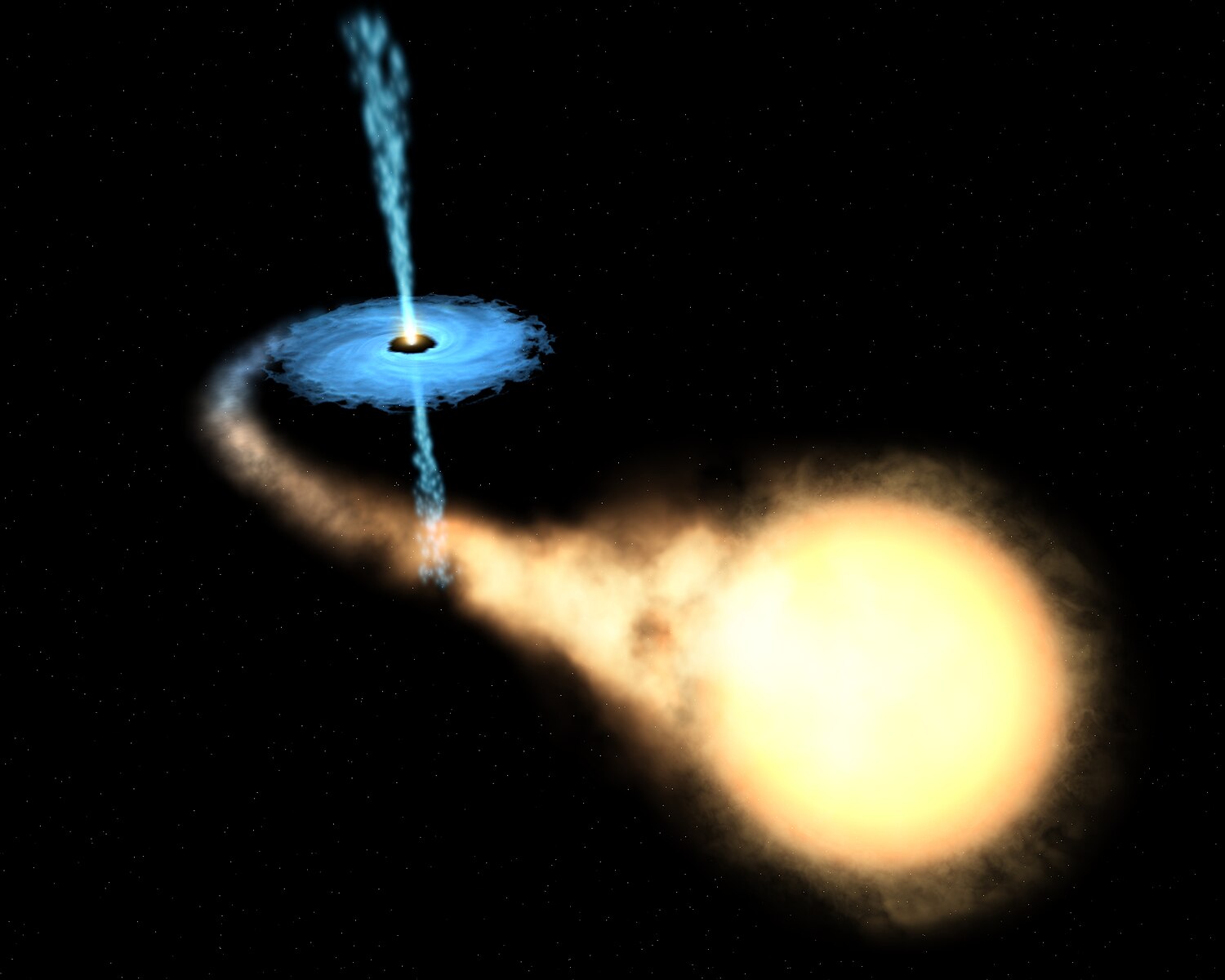
X-ray binary, in which a compact object like the neutron star in GX 13+1 accretes matter from a low-mass stellar companion. Image credit: NASA. Download Image

Over the past week, NuSTAR observed the X-ray binary GX 13+1 in coordination with an observation by NASA’s Imaging X-ray Polarimetry Explorer (IXPE). This is a peculiar star system in which a neutron star accretes matter from a companion having mass smaller than the Sun through a disk of plasma. X-ray emission from this system originates near the neutron star, where the accretion flow of material terminates in "boundary/spreading" layers, impacting on the surface of the neutron star. A wind of gas above the accretion disk is also sometimes observed in this system forming a cloud of high energy electrons in an extended corona above the disk. The nature and the geometry of such an extended accretion disk corona are not yet fully understood. Previous IXPE observations of GX 13+1 have provided measurements of the corona during periodic dipping periods in which the total X-ray flux is lower when the central region is obscured by the accretion stream and the X-ray emission is then dominated by the contribution from an extended corona. The simultaneous NuSTAR observation of GX 13+1 last week was crucial to obtain high-resolution observations at energies above 6 keV, outside the capabilities of IXPE. This was a missing piece from two previous IXPE observations, and will provide a more accurate probe into the accretion disk and corona geometry.

Authors: Alessandro Di Marco (Researcher, National Institute for Astrophysics, Italy)


Saturday, September 20, 2025

NuSTAR Observes a Cataclysmic Variable

An artist's impression of an
intermediate polar system, in which a white dwarf is accreting matter from a companion star. Close to the white dwarf, the magnetic field disrupts the accretion disk and draws matter along the magnetic poles. Image credit: Mark Garlick (Space-art). Download Image

During the past week, NuSTAR observed IGR J19713+0747, a variable high-energy X-ray source. Optical studies show that the source has a very short orbital period of 13 minutes and that it is likely a Cataclysmic Variable (CV) of an intermediate polar (IP) type. X-ray emission from these highly magnetized white dwarf stars is thought to be powered by accretion of matter from a companion star. However, this source also has another star close by with a measured consistent proper motion. This means that the nearby star could be another companion to the CV, making the source a rare triple system. The primary goal of this NuSTAR observation is to verify if the hard X-ray source is a bona fide intermediate polar CV and measure the mass of the white dwarf. The NuSTAR hard X-ray spectrum will also look for potential effects of the tertiary star on the CV system.

Authors: Sol Bin Yun (Graduate Student, Caltech)


Sunday, April 13, 2025

From boring to bursting: a giant black hole awakens

A bright disc of purplish, white and gold lines surrounds a black ellipse-shaped area, that looks like a hole in space. A ball of shining material pierces through the disc; an eruption of bright white-to-gold rays encircles the small hole in the disc provoked by the passage of the shining ball. Credit: ESA Acknowlegenebts: ATG Europe
Licence:CC BY-SA 3.0 IGO or ESA Standard Licence (content can be used under either licence)

The European Space Agency's XMM-Newton is playing a crucial role in investigating the longest and most energetic bursts of X-rays seen from a newly awakened black hole. Watching this strange behaviour unfold in real time offers a unique opportunity to learn more about these powerful events and the mysterious behaviour of massive black holes.

Although we know that supermassive black holes (millions of times the mass of our Sun) lurk at the centre of most galaxies, their very nature makes them difficult to spot and study. In contrast to the popular idea of black holes constantly ‘gobbling up’ matter, these gravitational monsters can spend long periods of time in a dormant, inactive phase.

This was true of the black hole at the heart of SDSS1335+0728, a distant and unremarkable galaxy 300 million light-years away in the constellation of Virgo. After being inactive for decades, it suddenly lit up and recently began producing unprecedented flashes of X-ray light.

The first signs of activity appeared in late 2019, when the galaxy unexpectedly began shining brightly, attracting the attention of astronomers. After studying it for several years, they concluded that the unusual changes they saw were probably the result of the black hole suddenly ‘switching on’ – entering an active phase. The bright, compact, central region of the galaxy is now classified as an active galactic nucleus, nicknamed ‘Ansky’.

“When we first saw Ansky light up in optical images, we triggered follow-up observations using NASA’s Swift X-ray space telescope, and we checked archived data from the eROSITA X-ray telescope, but at the time we didn’t see any evidence of X-ray emissions,” says Paula Sánchez Sáez, a researcher at the European Southern Observatory, Germany, and leader of the team that first explored the black hole’s activation.

XMM-Newton
Credit: ESA-C. Carreau
Licence:CC BY-SA 3.0 IGO or ESA Standard Licence (content can be used under either licence)

Ansky wakes up

Then, in February 2024, a team led by Lorena Hernández-García, a researcher at the Valparaiso University, Chile, began to see bursts of X-rays from Ansky at nearly regular intervals.

“This rare event provides an opportunity for astronomers to observe a black hole’s behaviour in real time, using X-ray space telescopes XMM-Newton and NASA’s NICER, Chandra and Swift. This phenomenon is known as a quasiperiodic eruption, or QPE. QPEs are short-lived flaring events. And this is the first time we have observed such an event in a black hole that seems to be waking up,” explains Lorena.

“The first QPE episode was discovered in 2019, and since then we’ve only detected a handful more. We don’t yet understand what causes them. Studying Ansky will help us to better understand black holes and how they evolve.”

“XMM-Newton played a pivotal role in our study. It is the only X-ray telescope sensitive enough to detect the fainter X-ray background light between the bursts. With XMM-Newton we could measure how dim Ansky gets, which enabled us to calculate how much energy Ansky releases when it lights up and starts flashing.”

Credit: European Space Agency, NASA and Felix Mirabel (the French Atomic Energy Commission & the Institute for Astronomy and Space Physics/Conicet of Argentina)
Licence: ESA Standard Licence

Unravelling puzzling behaviour

The gravity of a black hole captures matter that gets too close and can rip it apart. The matter from a captured star, for example, would be spread into a hot, bright, rapidly spinning disc called an accretion disc. Current thinking is that QPEs are caused by an object (that could be a star or a small black hole) interacting with this accretion disc and they have been linked to the destruction of a star. But there is no evidence that Ansky has destroyed a star.

The extraordinary characteristics of Ansky’s recurring bursts prompted the research team to consider other possibilities. The accretion disc could be formed by gas captured by the black hole from its neighbourhood, and not a disintegrated star. In this scenario, the X-ray flares would be coming from highly energetic shocks in the disc, provoked by a small celestial object travelling through and disrupting the orbiting material, repeatedly.

“The bursts of X-rays from Ansky are ten times longer and ten times more luminous than what we see from a typical QPE,” says Joheen Chakraborty, a team member and PhD student at the Massachusetts Institute of Technology, USA.

“Each of these eruptions is releasing a hundred times more energy than we have seen elsewhere. Ansky’s eruptions also show the longest cadence ever observed, of about 4.5 days. This pushes our models to their limits and challenges our existing ideas about how these X-ray flashes are being generated.”

Watching a black hole in action

Being able to watch Ansky evolving in real time is an unprecedented opportunity for astronomers to learn more about black holes and the energetic events they power.

“For QPEs, we’re still at the point where we have more models than data, and we need more observations to understand what's happening,” says ESA Research Fellow and X-ray astronomer, Erwan Quintin.

“We thought that QPEs were the result of small celestial objects being captured by much larger ones and spiralling down towards them. Ansky’s eruptions seem to be telling us a different story. These repetitive bursts are also likely associated with gravitational waves that ESA’s future mission LISA might be able to catch.”

“It’s crucial to have these X-ray observations that will complement the gravitational wave data and help us solve the puzzling behaviour of massive black holes.”

LISA-inspired artwork
Credit: ESA
Licence: CC BY-SA 3.0 IGO or ESA Standard Licence (content can be used under either licence)


Notes for editors

Discovery of extreme Quasi-Periodic Eruptions in a newly accreting massive black hole by L. Hernandez-García et al. is published today in Nature Astronomy. DOI 10.1038/s41550-025-02523-9

Dr Lorena Hernandez-Garcia is also a researcher at the
Millennium Institute of Astrophysics and Millennium Nucleus TITANS, Chile.

SDSS1335+0728: The awakening of a ∼106 M⊙ black hole by P. Sánchez-Sáez et al. was published in the August 2024 edition of Astronomy & Astrophysics.


Contact:

ESA Media relations

media@esa.int


Monday, January 13, 2025

Seeing an Active Galactic Nucleus with 20/20 X-Ray Vision with XRISM

This multiwavelength image shows X-rays (blue), optical light (yellow), and radio waves (red) from the galaxy NGC 4151, which hosts an active galactic nucleus. Credit:
X-ray: NASA/CXC/CfA/J.Wang et al.; Optical: Isaac Newton Group of Telescopes, La Palma/Jacobus Kapteyn Telescope, Radio: NSF/NRAO/VLA

Title: XRISM Spectroscopy of the Fe Kα Emission Line in the Seyfert Active Galactic Nucleus NGC 4151 Reveals the Disk, Broad-line Region, and Torus
Authors: XRISM Collaboration
Status: Published in ApJL

Today we’re going to be taking a high-resolution look at X-rays from close to a supermassive black hole! But before we get into the astrophysics of today’s article, we first need to discuss the instruments that were built to do this science. More than 50 years ago now, charge-coupled devices (CCDs) began revolutionizing astronomy, and they continue to be one of the most commonly used detectors on telescopes. CCDs rely on the photoelectric effect, through which an incoming photon can liberate electrons in some material (semiconductors in the case of CCDs). These electrons are trapped by strong potential wells and electric charge can be applied to move the charge along and read this signal (check out this Astrobite for more details). CCDs are particularly powerful in the X-ray band, where the number of electrons trapped in each pixel scales roughly with the photon energy. This means that you get energy information (i.e., a spectrum) for free with CCDs! However, CCDs have limited spectral resolution, meaning they can’t determine this energy very precisely and therefore cannot resolve and unlock the power of narrow emission and absorption lines.

Figure 1: Schematic showing how a microcalorimeter works. An X-ray photon with energy E will produce a spike in the temperature of the absorber of E/C, where C is the heat capacity of the absorber. The thermometer is extremely sensitive to small changes in temperature, which means that we can get very accurate energies for each of the incoming X-ray photons. Therefore, a microcalorimeter can produce an X-ray spectrum with the best energy resolution of any current instrumentation. Credit:
NASA

X-Ray Microcalorimetry and 20/20 Vision

There are other ways to get better spectral resolution in the X-ray, including using gratings that will disperse your spectrum, as is commonly done with optical spectroscopy. However, even these techniques can’t reach the high spectral resolution needed; instead, new technology called a microcalorimeter has been engineered to solve this long-standing issue. As the name suggests, this instrument detects incoming photons by measuring tiny (micro) changes to the temperature (calorimetry) of the detector. Figure 1 shows the basic set-up of a microcalorimeter and how the energy of the photon is encoded in the strength of the resulting temperature fluctuation. In order to detect tiny changes to the temperature, microcalorimeters need to be extremely cold, 50 millikelvin to be precise! This is a huge engineering feat, but one that has recently been achieved by the X-ray Imaging and Spectroscopy Mission (XRISM)! XRISM is a JAXA/NASA collaborative mission, and it has two instruments on board: a CCD camera called Xtend and a microcalorimeter called Resolve. It was launched in September 2023, and its first science results are just starting to roll in!

Now, XRISM isn’t actually the first X-ray microcalorimeter to fly, but it’s the first to live through its commissioning phase! Although the X-ray microcalorimeter has been in the works since the 1990s, previous X-ray microcalorimeters have been cut from missions, lost to launch failures, and left unable to operate due to loss of coolant for the detector. In 2016, JAXA successfully launched and operated the first X-ray microcalorimeter on the Hitomi Satellite. However, unfortunately, shortly after taking a beautiful spectrum of the Perseus Cluster, one of the best-studied galaxy clusters in the local universe, communication was lost with the satellite and never recovered. XRISM’s Resolve instrument has been the most successful X-ray microcalorimeter so far, and it has allowed us to start looking at the universe with 20/20 X-ray vision!

Figure 2: XRISM Resolve spectra of NGC 4151. The left panels show the spectrum in the 5.8-7.2 keV range from two separate observations, with the data in black and the best fit total model in red. The right panels show a zoom in on the iron Kα 6.4 keV line with the three different components for the line also shown. The magenta model corresponds to the widest line, arising potentially from a warped disk, the dark blue model corresponds to the intermediate width line coming from the inner edge of the broad line region (BLR), and the cyan model corresponds to the most narrow line that arises from the inner edge of the dusty torus. Credit: XRISM Collaboration et al. 2024 universe with 20/20 X-ray vision!

Supermassive Science with XRISM

Today we’re going to put on our high-resolution X-ray spectroscopy glasses to look at one of the first XRISM targets: NGC 4151, one of the most well-known active galactic nuclei in the local universe. An active galactic nucleus consists of a supermassive black hole that is gobbling down gas from its surroundings through a process known as accretion. While we’ve known about active galactic nuclei for more than 50 years now, we still don’t really understand how they are fueled and what the structure is around them. XRISM can unlock this information indirectly by resolving some of the key X-ray emission and absorption lines. In particular, the most prominent emission line in the X-ray spectrum of an active galactic nucleus is a neutral iron Kα line at 6.4 kiloelectronvolts (keV), which arises from material around the supermassive black hole being illuminated by the light from the accretion process. This line holds the keys to probing the structure of the surrounding gas, as its dynamics can tell us about the structure of the accretion disk and trace gas in the torus that is thought to connect the local host galaxy to the accretion flow.

Figure 2 shows the XRISM Resolve spectrum of NGC 4151 from two separate observations. The spectrum shows a prominent 6.4 keV line that is resolved, meaning that the measured width of the line is greater than the instrument’s resolution limit. Additionally, the line cannot be fit with a single emission line and instead requires multiple lines, signaling multiple physical scales contributing to this emission line. The right panels of this figure highlight that there are three distinct components to this emission line with broad (magenta), intermediate (dark blue), and narrow (cyan) widths. Since gas that is closer to the black hole will be moving faster than more distant gas, the authors can use these line widths to estimate where this gas is located. They find that these three lines range from about 100 gravitational radii (about 100 times the size of the black hole) to about 10,000 gravitational radii. Determining the multi-scale nature of this line has been extraordinarily difficult to detect with other instruments due to their limited energy resolution!

Together these three components to the iron Kα line provide a compelling picture for the nuclear structure, which is shown in Figure 3. There are some additional pieces of evidence from the data that support this model as well. For example, the broadest line (magenta) shows variability on timescales of less than a day. This timescale corresponds roughly to the distance light could travel before reaching the magenta part of this figure, supporting the idea that there is a broad component associated with the disk. In addition to the location of the emitting gas, the dynamics and density can be constrained using the energy and shape of the line, respectively. In this source, the line is at the rest-frame energy and the shape is relatively symmetric, which together suggest that the emission comes from relatively optically thin gas that has not been accelerated to high velocities. Together, these diagnostics give one of the most in-depth pictures of supermassive black hole environments to date and will be crucial for testing our models of black hole feeding!

Figure 3: Schematic highlighting where each of the iron Kα emission lines arise from. The magenta component corresponds to the broadest line, potentially from a warp in the disk. The dark blue component corresponds to the intermediate-width line and arises from the inner edge of the broad line region (BLR). The cyan component corresponds to the narrowest line and arises from the inner edge of the active galactic nucleus torus. Credit: XRISM Collaboration et al. 2024

What’s Next?

These XRISM observations are rich with information, and today’s article focused only on the 6.4 keV emission line. The authors are planning a series of further articles, including on the active galactic nucleus winds traced by the absorption lines (i.e., the major dips seen at ~6.7 and ~7 keV in the left panels of Figure 2), comparisons of the emission lines with optical emission lines, and looking for faint evidence of broader emission from even closer to the supermassive black hole. The next obvious steps are also to observe more active galactic nuclei to test whether this multi-zone emission is a common occurrence in active galactic nuclei. One thing’s for sure, this 20/20 vision is sure to reveal new secrets about the lives and environments of supermassive black holes!

Original astrobite edited by Roel Lefever


Editor’s Note: Astrobites is a graduate-student-run organization that digests astrophysical literature for undergraduate students. As part of the partnership between the AAS and astrobites, we occasionally repost astrobites content here at AAS Nova. We hope you enjoy this post from astrobites; the original can be viewed at astrobites.org.


About the author, Megan Masterson:

I’m a 4th-year PhD student at MIT studying transient accretion events around supermassive black holes, including tidal disruption events and changing-look active galactic nuclei. I primarily use multi-wavelength observations to study from the inner accretion flow to the obscuring material in these transients. In my free time, you’ll find me hiking, reading, and watching women’s soccer.


Monday, November 25, 2024

NASA's Hubble Finds Sizzling Details About Young Star FU Orionis

This is an artist's concept of the early stages of the young star FU Orionis (FU Ori) outburst, surrounded by a disk of material. A team of astronomers has used the Hubble Space Telescope's ultraviolet capabilities to learn more about the interaction between FU Ori's stellar surface and the accretion disk that has been dumping gas onto the growing star for nearly 90 years. They found that the inner disk, touching the star, is much hotter than expected—16,000 kelvins—nearly three times our Sun's surface temperature. That sizzling temperature is nearly twice as hot as previously believed.Credits/Artwork: NASA-JPL, Caltech


In 1936, astronomers saw a puzzling event in the constellation Orion: the young star FU Orionis (FU Ori) became a hundred times brighter in a matter of months. At its peak, FU Ori was intrinsically 100 times brighter than our Sun. Unlike an exploding star though, it has declined in luminosity only languidly since then.

Now, a team of astronomers has wielded NASA's Hubble Space Telescope's ultraviolet capabilities to learn more about the interaction between FU Ori's stellar surface and the accretion disk that has been dumping gas onto the growing star for nearly 90 years. They find that the inner disk touching the star is extraordinarily hot—which challenges conventional wisdom.

The observations were made with the telescope's COS (Cosmic Origins Spectrograph) and STIS (Space Telescope Imaging Spectrograph) instruments. The data includes the first far-ultraviolet and new near-ultraviolet spectra of FU Ori.

"We were hoping to validate the hottest part of the accretion disk model, to determine its maximum temperature, by measuring closer to the inner edge of the accretion disk than ever before," said Lynne Hillenbrand of Caltech in Pasadena, California, and a co-author of the paper. "I think there was some hope that we would see something extra, like the interface between the star and its disk, but we were certainly not expecting it. The fact we saw so much extra — it was much brighter in the ultraviolet than we predicted — that was the big surprise."

A Better Understanding of Stellar Accretion

Originally deemed to be a unique case among stars, FU Ori exemplifies a class of young, eruptive stars that undergo dramatic changes in brightness. These objects are a subset of classical T Tauri stars, which are newly forming stars that are building up by accreting material from their disk and the surrounding nebula. In classical T Tauri stars, the disk does not touch the star directly because it is restricted by the outward pressure of the star's magnetic field.

The accretion disks around FU Ori objects, however, are susceptible to instabilities due to their enormous mass relative to the central star, interactions with a binary companion, or infalling material. Such instability means the mass accretion rate can change dramatically. The increased pace disrupts the delicate balance between the stellar magnetic field and the inner edge of the disk, leading to material moving closer in and eventually touching the star’s surface.

The enhanced infall rate and proximity of the accretion disk to the star make FU Ori objects much brighter than a typical T Tauri star. In fact, during an outburst, the star itself is outshined by the disk. Furthermore, the disk material is orbiting rapidly as it approaches the star, much faster than the rotation rate of the stellar surface. This means that there should be a region where the disk impacts the star and the material slows down and heats up significantly.

"The Hubble data indicates a much hotter impact region than models have previously predicted," said Adolfo Carvalho of Caltech and lead author of the study. "In FU Ori, the temperature is 16,000 kelvins [nearly three times our Sun's surface temperature]. That sizzling temperature is almost twice the amount prior models have calculated. It challenges and encourages us to think of how such a jump in temperature can be explained."

To address the significant difference in temperature between past models and the recent Hubble observations, the team offers a revised interpretation of the geometry within FU Ori's inner region: The accretion disk's material approaches the star and once it reaches the stellar surface, a hot shock is produced, which emits a lot of ultraviolet light.

Planet Survival Around FU Ori

Understanding the mechanisms of FU Ori's rapid accretion process relates more broadly to ideas of planet formation and survival.

"Our revised model based on the Hubble data is not strictly bad news for planet evolution, it's sort of a mixed bag," explained Carvalho. "If the planet is far out in the disk as it's forming, outbursts from an FU Ori object should influence what kind of chemicals the planet will ultimately inherit. But if a forming planet is very close to the star, then it's a slightly different story. Within a couple outbursts, any planets that are forming very close to the star can rapidly move inward and eventually merge with it. You could lose, or at least completely fry, rocky planets forming close to such a star."

Additional work with the Hubble UV observations is in progress. The team is carefully analyzing the various spectral emission lines from multiple elements present in the COS spectrum. This should provide further clues on FU Ori's environment, such as the kinematics of inflowing and outflowing gas within the inner region.

"A lot of these young stars are spectroscopically very rich at far ultraviolet wavelengths," reflected Hillenbrand. "A combination of Hubble, its size and wavelength coverage, as well as FU Ori's fortunate circumstances, let us see further down into the engine of this fascinating star-type than ever before."

These findings have been published in The Astrophysical Journal Letters.

The observations were taken as part of General Observer program 17176.

The Hubble Space Telescope has been operating for over three decades and continues to make ground-breaking discoveries that shape our fundamental understanding of the universe. Hubble is a project of international cooperation between NASA and ESA (European Space Agency). NASA's Goddard Space Flight Center in Greenbelt, Maryland, manages the telescope and mission operations. Lockheed Martin Space, based in Denver, also supports mission operations at Goddard. The Space Telescope Science Institute in Baltimore, which is operated by the Association of Universities for Research in Astronomy, conducts Hubble science operations for NASA.


About This Release

Credits:

Media Contact:

Abigail Major
Space Telescope Science Institute, Baltimore, Maryland

Ray Villard
Space Telescope Science Institute, Baltimore, Maryland

Permissions: Content Use Policy

Contact Us: Direct inquiries to the News Team.

Related Links and Documents


Monday, October 28, 2024

Gemini North Captures Galactic Archipelago Entangled In a Web Of Dark Matter

PR Image noirlab2426a
NGC 1270: A Galactic Archipelago


Videos

Cosmoview Episode 88: Gemini North Captures Galactic Archipelago Entangled In a Web Of Dark Matter
PR Video noirlab2426a
Cosmoview Episode 88: Gemini North Captures Galactic Archipelago Entangled In a Web Of Dark Matter

Pan on NGC 1270
PR Video noirlab2426b
Pan on NGC 1270

Zooming into NGC 1270
PR Video noirlab2426c
Zooming into NGC 1270

Cosmoview Episodio 88: Un archipiélago galáctico en un mar de materia oscura
PR Video noirlab2426d
Cosmoview Episodio 88: Un archipiélago galáctico en un mar de materia oscura


One century after astronomers proved the existence of galaxies beyond the Milky Way, enormous galaxy clusters are offering clues to today’s cosmic questions

10 years ago Edwin Hubble discovered decisive evidence that other galaxies existed far beyond the Milky Way. This image, captured by the Gemini North telescope, one half of the International Gemini Observatory, features a portion of the enormous Perseus Cluster, showcasing its ‘island Universes’ in awe-inspiring detail. Observations of these objects continue to shed light not only on their individual characteristics, but also on cosmic mysteries such as dark matter.

Among the many views of the Universe that modern telescopes offer, some of the most breathtaking are images like this. Dotted with countless galaxies — each one of incomprehensible size — they make apparent the tremendous scale and richness of the cosmos. Taking center stage here, beguiling in its seeming simplicity, the elliptical galaxy NGC 1270 radiates an ethereal glow into the surrounding darkness. And although it may seem like an island adrift in the deep ocean of space, this object is part of something much larger than itself.

NGC 1270 is just one member of the Perseus Cluster, a group of thousands of galaxies that lies around 240 million light-years from Earth in the constellation Perseus. This image, taken with the Gemini Multi-Object Spectrograph (GMOS) on the Gemini North telescope, one half of the International Gemini Observatory — supported in part by the U.S. National Science Foundation and operated by NSF NOIRLab — captures a dazzling collection of galaxies in the central region of this enormous cluster.

Looking at such a diverse array, shown here in spectacular clarity, it’s astonishing to think that when NGC 1270 was first discovered in 1863 it was not widely accepted that other galaxies even existed. Many of the objects that are now known to be galaxies were initially described as nebulae, owing to their cloudy, amorphous appearance. The idea that they are entities of a similar size to our own Milky Way, or ‘island Universes’ as Immanuel Kant called them, was speculated on by several astronomers throughout history, but was not proven. Instead, many thought they were smaller objects on the outskirts of the Milky Way, which many believed to comprise most or all of the Universe.

The nature of these mysterious objects and the size of the Universe were the subjects of astronomy’s famous Great Debate, held in 1920 between astronomers Heber Curtis and Harlow Shapley. The debate remained unsettled until 1924 when Edwin Hubble, using the Hooker Telescope at Mount Wilson Observatory, observed stars within some of the nebulae to calculate how far they were from Earth. The results were decisive; they were far beyond the Milky Way. Astronomers’ notion of the cosmos underwent a dramatic shift, now populated with innumerable strange, far-off galaxies as large and complex as our own.

As imaging techniques have improved, piercing ever more deeply into space, astronomers have been able to look closer and closer at these ‘island Universes’ to deduce what they might be like. For instance, researchers have observed powerful electromagnetic energy emanating from the heart of NGC 1270, suggesting that it harbors a frantically feeding supermassive black hole. This characteristic is seen in around 10% of galaxies and is detectable via the presence of an accretion disk — an intense vortex of matter swirling around and gradually being devoured by the central black hole.

It’s not only the individual galaxies that astronomers are interested in; hints at many ongoing mysteries lie in their relationship to and interactions with one another. For example, the fact that huge groups like the Perseus Cluster exist at all points to the presence of the enigmatic substance we call dark matter [1]. If there were no such invisible, gravitationally interactive material, then astronomers believe galaxies would be spread more or less evenly across space rather than collecting into densely populated clusters. Current theories suggest that an invisible web of dark matter draws galaxies together at the intersections between its colossal tendrils, where its gravitational pull is strongest.

Although dark matter is invoked to explain observed cosmic structures, the nature of the substance itself remains elusive. As we look at images like this one, and consider the strides made in our understanding over the past century, we can sense a tantalizing hint of just how much more might be discovered in the decades to come. Perhaps hidden in images like this are clues to the next big breakthrough. How much more will we know about our Universe in another century?


Notes

[1] The discovery of dark matter in galaxies is in-part attributed to American astronomer Vera C. Rubin, who used the rotation of galaxies to infer the presence of an invisible, yet gravitationally interactive, material holding them together. She is also the name inspiration for NSF–DOE Vera C. Rubin Observatory, currently under construction in Chile, which will begin operations in 2025.


More information

NSF NOIRLab (U.S. National Science Foundation National Optical-Infrared Astronomy Research Laboratory), the U.S. center for ground-based optical-infrared astronomy, operates the International Gemini Observatory (a facility of NSF, NRC–Canada, ANID–Chile, MCTIC–Brazil, MINCyT–Argentina, and KASI–Republic of Korea), Kitt Peak National Observatory (KPNO), Cerro Tololo Inter-American Observatory (CTIO), the Community Science and Data Center (CSDC), and Vera C. Rubin Observatory (operated in cooperation with the Department of Energy’s SLAC National Accelerator Laboratory). It is managed by the Association of Universities for Research in Astronomy (AURA) under a cooperative agreement with NSF and is headquartered in Tucson, Arizona. The astronomical community is honored to have the opportunity to conduct astronomical research on I’oligam Du’ag (Kitt Peak) in Arizona, on Maunakea in Hawai‘i, and on Cerro Tololo and Cerro Pachón in Chile. We recognize and acknowledge the very significant cultural role and reverence that these sites have to the Tohono O’odham Nation, to the Native Hawaiian community, and to the local communities in Chile, respectively.


Links


Contacts:

Josie Fenske
Jr. Public Information Officer
NSF NOIRLab
Email:
josie.fenske@noirlab.edu