Showing posts with label Sagittarius A*. Show all posts

Monday, August 24, 2026

Stellar spin may explain why repeated black hole flares grow dimmer


A hydrodynamical simulation of a star being ripped apart by the tidal forces of a supermassive black hole.
Credit: NASA/ S. Gezari (JHU)/ J. Guillochon (UCSC)


At the center of most galaxies lies a supermassive black hole, with a mass millions to billions of times that of our sun and some of the most extreme gravity in the universe.

Some stars that venture too close to such black holes live to tell the tale. Rather than being completely destroyed, they survive to make repeated close passes, producing a new flare of light each time.

These repeating partial tidal disruption events (rpTDEs) give astronomers the opportunity to watch the same star and black hole interaction unfold again and again, thanks to wide-field time-domain surveys that repeatedly scan large areas of the sky for objects that change in brightness.

But in several cases, researchers have noticed a puzzling pattern: The successive flares grow progressively dimmer. For years, theoretical models couldn't explain why.

Now, a team of astrophysicists at Syracuse University has shown that the answer may lie in a previously overlooked factor—the star's spin.

The study, published in The Astrophysical Journal, was led by doctoral student Ananya Bandopadhyay, working with postdoctoral researcher Benjamin Amend and associate professor Eric Coughlin—all in the Department of Physics—as well as colleagues at other institutions.

When stars meet black holes

In a typical tidal disruption event (TDE), a black hole's tidal force—the difference in gravitational pull across a nearby star—tears the star completely apart.

As the disrupted stellar debris falls toward, or "accretes" onto, the black hole, it loses energy that is emitted in the form of light over the course of days to months.

While black holes themselves emit no light, TDEs provide a short-lived supply of fuel that lights up the surrounding region, allowing astronomers to study these otherwise invisible objects indirectly.

If a star orbiting a black hole does not come close enough to be completely ripped apart, it can, however, lose a fraction of its mass, resulting in a partial TDE. In a repeating partial TDE, the surviving core continues orbiting the black hole, losing more material with each new close pass, a few months to several years apart.

The dimming mystery

How much material a star loses during repeated encounters depends partly on its internal structure. Bandopadhyay compares a low-mass star to a fluffy meringue, which can become increasingly vulnerable to the black hole's tidal forces.

By contrast, a higher-mass star has a more centrally concentrated, onion-like structure and can shed its outer layers while its dense core remains relatively unaffected, losing decreasing amounts of mass over time.

Those differences can help explain why rpTDEs don't all behave the same way. But one pattern in particular has mystified researchers. Of the roughly 10 repeating systems identified to date, four have produced flares that grow progressively dimmer.

Decreasing mass loss might seem like an obvious explanation. But previous hydrodynamical simulations showed that, surprisingly, even as the material lost decreased with each encounter, the predicted flares retained roughly the same brightness.

"We were puzzled by this for two years," Bandopadhyay says.

Their previous work had revealed another effect of the black hole's tidal forces. In addition to stripping material from the star, they exert a torque that causes the star to spin faster with each close encounter. As a result, although less material falls back toward the black hole, it returns over a shorter period of time, helping to keep the predicted flare at roughly the same brightness.

To reproduce the dimming astronomers were actually observing, the researchers needed what Bandopadhyay called "a new ingredient"—a star that was already spinning rapidly before its first encounter with the black hole.

The new study found that this initial rotation prevents the star from being significantly spun up during each passage. Without that additional spin-up, the timescale over which the stripped material falls back remains relatively constant. As the star loses less material with each encounter, the peak fallback rate—and the predicted brightness of the flare—can finally decline.

Tracing the star's past

But why would the star already be spinning so rapidly?

"It is also extremely difficult to 'bind' a star to a supermassive black hole so tightly that it orbits the black hole in a matter of months, and yet they seem to do so in rpTDEs," Coughlin says.

The so-called Hills mechanism may explain both. Under this scenario, a pair of closely orbiting stars passes near a supermassive black hole, which tears the binary apart, ejecting one star and capturing the other.

In a close binary, the stars can become tidally locked, causing each to rotate on its axis at the same rate that the pair orbits each other. The tighter the binary, the shorter that orbital period and the faster a tidally locked star spins. The binaries capable of leaving a captured star on the short orbit observed in rpTDEs would have to be extremely tight—also leaving a tidally locked star spinning rapidly before its capture.

"Ananya's work demonstrates that each of these peculiarities can be explained by the same underlying phenomenon: the tidal destruction of a binary system and the capture of one of the stars," Coughlin says. "From a theoretical standpoint, this is a major step forward in our understanding of the physics at play in these systems."

Zooming out, Coughlin notes that Hills capture may also have produced some of the stars orbiting Sagittarius A*, the supermassive black hole at the center of the Milky Way. The new findings could therefore help explain some of the properties of stars in what he calls "our own cosmological backyard."

by Olivia Hall, Syracuse University

edited by Sadie Harley, reviewed by Robert Egan

Source: Phys.org


Publication details

Ananya Bandopadhyay et al, The Role of Stellar Spin in Repeating Partial Tidal Disruption Events, The Astrophysical Journal (2026). DOI: 10.3847/1538-4357/ae8f31

Journal information: Astrophysical Journal


Provided by Syracuse University


Friday, August 21, 2026

Milky Way's fastest star orbits our supermassive black hole so closely it feels its spin

PR Image eso2612a
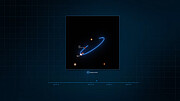
VLT images of the S301 star orbiting Sagittarius A*

PR Image eso2612b
VLT images of the S301 star orbiting Sagittarius A* (square layout)

PR Image eso2612c
VLT images of S301 and other S-stars orbiting Sagittarius A*

PR Image eso2612d
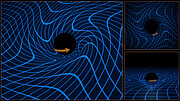
Illustration of the Lense-Thirring effect

PR Image eso2612e
Effect of a spinning black hole on the orbit of the S301 star

PR Image eso2612f
Wide-field view of the centre of the Milky Way

PR Image eso2612g
Sagittarius A* in the constellation of Sagittarius

PR Image eso2612h
New look at the stars around the Milky Way's centre


PR Image eso2612i
Four lasers for the VLTI


Videos

Does the Milky Way central black hole rotate? This star could tell us | ESO Chasing Starlight
PR Video eso2612a
Does the Milky Way central black hole rotate? This star could tell us | ESO Chasing Starlight

Time-lapse of the S301 star orbiting Sagittarius A*
PR Video eso2612b
Time-lapse of the S301 star orbiting Sagittarius A*

Effect of a spinning black hole on the orbit of the S301 star
PR Video eso2612c
Effect of a spinning black hole on the orbit of the S301 star

Animation of the Lense-Thirring effect

PR Video eso2612d
Animation of the Lense-Thirring effect

Disruption of a binary star close to a black hole
PR Video eso2612e
Disruption of a binary star close to a black hole


Astronomers have discovered the fastest known star in our galaxy, the Milky Way, orbiting the black hole at its centre. The star, named S301, was detected with the European Southern Observatory’s Very Large Telescope Interferometer (ESO’s VLTI) and reaches speeds of 25 000 km/s as it travels around the four-million-Solar-mass black hole. It comes closer to it than any other observed before, so close that it feels the effects of the black hole’s rotation.

“Decades carefully tracking stars orbiting our galaxy’s central black hole, Sagittarius A*, have led to this breakthrough discovery of a very promising star. Because it orbits so close to Sagittarius A*, S301 opens a new window to the fundamental properties of spacetime in this extreme black-hole environment,” says Nobel Prize winner Reinhard Genzel, Director at the Max Planck Institute for Extraterrestrial Physics (MPE) in Garching, Germany, and founding member of the collaboration that made the new observations.

“What is special about this star is that it’s orbiting Sagittarius A* on a very tight orbit, taking just 8.7 years to complete it, and is approaching the black hole at a mere 12 times the distance of Earth to the Sun. That is unprecedented,” says Felix Mang, PhD student at MPE and author of the study published today in Nature

During its closest passage to the black hole, the star travels at around 25 000 kilometres per second — 100 000 times faster than a commercial plane, or over 8% of the speed of light — making it the record holder for the fastest star in the Milky Way. S301 also comes closer to Sagittarius A* than any other star observed so far, approaching the black hole at around the distance of Saturn to the Sun. [1] Because S301 comes so close to Sagittarius A*, it is the first star known that could be used to directly measure the rotation of a black hole.

Like most things in our Universe, astronomers predict that Sagittarius A* spins. According to Einstein’s general theory of relativity, a spinning black hole drags spacetime along with it and twists it, which impacts the orbits of surrounding stars. The effect is felt more strongly for objects orbiting fast-rotating black holes at close range.

“With this star we hope to measure, within the next 10 years, the spin of the black hole," says Mang. MPE researcher Stefan Gillessen, who also had a leading role in the new study, adds: “For the first time, we would actually be able to measure very directly the spin of a massive black hole, which would be a key test of Einstein’s theory.” Juan Osorno, an astronomer at LIRA Observatoire de Paris–PSL, France, who also had a key role in the study adds: “Without this star, we would need to measure the motion of other stars for several more decades to get anywhere close to measuring the spin of the black hole.”

Finding S301, which appears two billion times fainter than Betelgeuse (the orange star in the constellation Orion) in the sky, was no easy feat. The team used the VLTI, a facility at ESO’s Paranal Observatory in Chile and its GRAVITY instrument, now known as GRAVITY+ following an infrastructure upgrade. [2] The VLTI’s superpower lies in its ability to combine the light from four 8-metre telescopes to create a ‘virtual’ telescope with 15 times the spatial resolution of a single 8-metre telescope.

“Worldwide, Paranal is the only place where you can do this type of observations because no other observatory in the world has four 8-metre telescopes that can act together as an interferometer,” says co-author Frank Eisenhauer, GRAVITY+ Principal Investigator and Director at MPE.

With GRAVITY, and later with GRAVITY+, the team managed to catch a first glimpse of the new star in spring 2023 and have followed it since to constrain its orbit. They could also trace S301’s orbital history back to 2017, finding that it last made its closest approach to the central black hole in early 2023. S301’s orbital properties, and the fact that stars cannot form so close to a massive black hole, indicate that the star was likely part of a binary pair that was torn apart by the tidal forces of Sagittarius A*. In the process, S301 became trapped by the black hole’s gravity while its companion star was kicked out with high velocity, most likely enough to leave the galaxy altogether.

Follow-up observations with GRAVITY+, and with the MICADO instrument on ESO’s upcoming Extremely Large Telescope (ELT), will be crucial for tracing S301’s path over the next decade, as it makes its next closest passage in 2031. Observing at least two complete orbits of S301 allows its trajectory to be constrained with high enough precision to enable the team to directly determine the spin of Sagittarius A* for the first time. “That would be a dream come true,” says Mang.

Source: ESO/News


Notes

[1] At its closest approach, the star passes just 1.78 billion km from the black hole, around 12 times the Sun-Earth distance or just 20% larger than the Sun-Saturn distance.

[2] Following decades mapping stars orbiting the Milky Way’s centre using different ESO facilities, the team has been using the GRAVITY instrument on the VLTI for this purpose interferometer, called GRAVITY+, has been implemented gradually over the last few years, and has allowed them to find increasingly fainter objects.


More information

This research was presented in a GRAVITY+ Collaboration paper titled “Discovery of a star sensitive to the spin of Sgr A*” to appear in Nature (doi: 10.1038/s41586-026-10894-w).

The team is composed of: K. Abd El Dayem (LIRA, Observatoire de Paris, Universitê PSL, CNRS, Sorbonne Université, Université de Paris, France), R. Abuter (European Southern Observatory, Garching, Germany [ESO Germany]), N. Aimar (Faculdade de Engenharia, Universidade do Porto, Portugal [FEUP], and Centro de Astrofísica e Gravitação, IST, Universidade de Lisboa, Portugal [CENTRA]), P. Amaro-Seoane (Universitat Politècnica de València, Spain and Max Planck Institute for Extraterrestrial Physics, Garching, Germany [MPE]), A. Berdeu (ESO and LIRA), J. P. Berger (Univ. Grenoble Alpes, CNRS, Grenoble, France [IPAG]), G. Bourdarot (MPE), W. Brandner (Max Planck Institute for Astronomy, Heidelberg, Germany [MPIA]), A. Burkert (University Observatory, Faculty of Physics, Ludwig-Maximilians-Universität, Munich, Germany [LMU] and MPE), D. Calderon (Max Planck Institute for Astrophysics [MPA], Garching, Germany), C. Correia (FEUP and CENTRA), J. Cuadra (Universidad Adolfo Ibañez, Viña del Mar, Chile and Millennium Nucleus on Transversal Research and Technology to Explore Supermassive Black Holes [TITANS], Chile), R. Davies (MPE), D. Defrère (Institute of Astronomy, KU Leuven, Belgium [KU Leuven]), L. Delit (LIRA), A. Drescher (IPAG and MPE), F. Eisenhauer (MPE and Department of Physics, Technical University of Munich, Germany [TUM]), L. Esteras Otal (ESO Germany), M. Fabricius (MPE), H. Feuchtgruber (MPE), N. M. Förster Schreiber (MPE), A. Foschi (LIRA), P. Garcia (FEUP and CENTRA), R. Garcia Lopez (School of Physics, University College Dublin, Ireland), A. Generozov Astronomy Dept. and Oden Institute, University of Texas at Austin, USA), R. Genzel (MPE and Departments of Physics Astronomy, Le Conte Hall, University of California, Berkeley, USA) S. Gillessen (MPE), F. Gonté (ESO Germany), X. Haubois (European Southern Observatory, Santiago, Chile [ESO Chile]), S. F. Hönig (School of Physics & Astronomy, University of Southampton, United Kingdom [Southampton]), M. Houllé (IPAG), S. Joharle (MPE), A. Kaufer (ESO Chile), J. Kammerer (ESO Germany), P. Kervella (LIRA), J. Kolb (ESO Germany), L. Kreidberg (MPIA), R. Laugier (KU Leuven), S. Lacour (LIRA), O. Lai (Université Côte d’Azur, Observatoire de la Côte d’Azur, CNRS, Laboratoire Lagrange [Lagrange]), J.-B. Le Bouquin (IPAG), J. Leftley (Southampton) B. Lopez (Lagrange), D. Lutz (MPE), F. Mang (MPE and TUM), A. Mérand (ESO Germany), F. Millour (Lagrange), M. Montargès (LIRA), N. Morujão (FEUP and CENTRA), H. Nowacki (Lagrange), M. Nowak (LIRA), S. Oberti (ESO Germany), J. Osorno (LIRA), T. Ott (MPE), T. Paumard (LIRA), C. Paladini (ESO Chile), H. B. Perets (Physics department, Technion - Israel Institute of Technology, Haifa, Israel), K. Perraut (IPAG), G. Perrin (LIRA), R. Petrov (Lagrange) P. O. Petrucci (IPAG), T. Piran (Racah Institute of Physics, The Hebrew University of Jerusalem, Israel [Racah]), N. Pourré (IPAG), S. Rabien (MPE), D. C. Ribeiro (MPE), S.Robbe-Dubois (Lagrange), M. Sadun Bordoni (MPE), J. Sánchez Bermúdez (Instituto de Astronomía, National Autonomous University of Mexico, Mexico), D. Santos (MPE), R. Sari (Racah) J. Sauter (MPIA), S. Scheithauer (MPIA), J. Scigliuto (Lagrange) J. Shangguan (MPE), T. T. Shimizu (MPE), F. Soulez (Univ. Lyon, Univ. Lyon 1, ENS de Lyon, CNRS, Centre de Recherche Astrophysique de Lyon, France), J. Stadler (LMU), C. Straubmeier (1st Institute of Physics, University of Cologne, Germany), E. Sturm (MPE), M. Subroweit (Cologne), C. Sykes (Southampton), L. J. Tacconi (MPE), P. Thévenet (LIRA), I. Urso (LIRA), F. Vincent (LIRA), J. Woillez (ESO Germany), G. Zins (ESO Chile).

The European Southern Observatory (ESO) enables scientists worldwide to discover the secrets of the Universe for the benefit of all. We design, build and operate world-class observatories on the ground — which astronomers use to tackle exciting questions and spread the fascination of astronomy — and promote international collaboration for astronomy. Established as an intergovernmental organisation in 1962, today ESO is supported by 16 Member States (Austria, Belgium, Czechia, Denmark, France, Finland, Germany, Ireland, Italy, the Netherlands, Poland, Portugal, Spain, Sweden, Switzerland and the United Kingdom), along with the host state of Chile and with Australia as a Strategic Partner. ESO’s headquarters and its visitor centre and planetarium, the ESO Supernova, are located close to Munich in Germany, while the Chilean Atacama Desert, a marvellous place with unique conditions to observe the sky, hosts our telescopes. ESO operates three observing sites: La Silla, Paranal and Chajnantor. At Paranal, ESO operates the Very Large Telescope and its Very Large Telescope Interferometer, as well as survey telescopes such as VISTA. Also at Paranal, ESO will host and operate the south array of the Cherenkov Telescope Array Observatory, the world’s largest and most sensitive gamma-ray observatory. Together with international partners, ESO operates ALMA on Chajnantor, a facility that observes the skies in the millimetre and submillimetre range. At Cerro Armazones, near Paranal, we are building “the world’s biggest eye on the sky” — ESO’s Extremely Large Telescope. From our offices in Santiago, Chile we support our operations in the country and engage with Chilean partners and society.


Links


Contacts:

Felix Mang
Max Planck Institute for Extraterrestrial Physics
Garching bei München, Germany
Tel: +49 89 30000-3713
Email:
fmang@mpe.mpg.de

Stefan Gillessen
Max Planck Institute for Extraterrestrial Physics
Garching bei München, Germany
Tel: +49 89 30000 3839
Cell: +49 176 99 66 41 39
Email:
ste@mpe.mpg.de

Juan Osorno
Laboratory for Instrumentation and Research in Astrophysics (LIRA), Observatoire de Paris, PSL University
Meudon, France
Email:
Juan.Osorno@observatoiredeparis.psl.eu


Director, Max Planck Institute for Extraterrestrial Physics
Garching bei München, Germany
Tel: +49 89 30000-3100
Email:
eisenhau@mpe.mpg.de

Reinhard Genzel
Director, Max Planck Institute for Extraterrestrial Physics
Garching bei München, Germany
Tel: +49 89 30000 3281
Email:
genzel@mpe.mpg.de

Xavier Haubois (for questions on VLTI)
European Southern Observatory
Paranal Observatory, Atacama Desert, Chile
Email:
Xavier.Haubois@eso.org

Bárbara Ferreira
ESO Media Manager
Garching bei München, Germany
Tel: +49 89 3200 6670 (unavailable before 17 August)
Cell: +49 151 241 664 00 (unavailable before 17 August)
Email:
press@eso.org


Thursday, August 20, 2026

Even Near a Supermassive Black Hole, Stars Enrich the Interstellar Medium

The JWST used NIRCam and MIRI to capture this region near the Milky Way's SMBH. The star IRS 3 is in this field. It's an AGB star, and researchers are studying it to investigate the connection between material cast off from these types of stars and the interstellar medium. The researchers were surprised to find water and dust here, even though powerful radiation from the SMBH inhibit them. Image Credit: ESA/Webb, NASA & CSA, F. Peißker, J. Lu, F. Yusef-Zadeh, N. B. Sabha, C. Chan. Licence: CC BY 4.0 INT or ESA Standard Licence

The Milky Way's galactic center is dominated by its supermassive black hole (SMBH) Sagittarius A-star (Sgr. A*). It doesn't just dominate with its massive gravititional pull. It also overpowers the region with radiation that should destroy dust and other molecules.

New research shows that water and dust exist around a star near Sgr. A*. These materials were shed from a star near the SMBH, and they exist there despite the overwhelming radiation coming from the SMBH.

The star is named IRS 3, and it's a highly-evolved AGB star only about 0.55 light years from the massive SMBH. The star has about 6 solar masses and is about 72 million years old. Astronomers are interested in the connection between these stars and the interstellar medium (ISM). AGB stars can lose up to 70% of their mass during this phase, and that material has a powerful effect on the composition of the ISM.

In new research published in Astronomy and Astrophysics, astronomers used the JWST to observe IRS 3 and the area around it. Their work is titled "Dust production in the harsh environment of Sgr A*," and the lead author is Florian Peißker. Peißker is a post-doctoral researcher in the Institute of Physics at the University of Cologne in Germany.

"Studies of the interstellar medium (ISM) have frequently revealed signatures of the dust produced in the envelopes of asymptotic giant branch (AGB) stars, demonstrating a connection between the dust composition of the ISM and that of AGB stellar envelopes," the researchers write. "Investigating this relationship in the extreme, radiation-dominated environment surrounding Sgr A*, the center of our own galaxy, reveals how such conditions might influence dust composition and the recycling of material in galactic centers."

The Milky Way's galactic center is known for the intense radiation coming from Sgr. A*, including powerful x-ray flaring and gamma radiation. The researchers used the JWST's NIRCam to image the region, and its Mid-Infrared Instrument (MIRI) and its medium resolution spectrometer to study IRS3. "We aim to conduct a comprehensive spectral analysis to more tightly constrain the dust composition and line-emitting species within the envelope of IRS 3 in the immediate vicinity of Sgr A*," the researchers write.

This is a mid-infrared image of the region around IRS 3 from the research. A yellow × marks the SMBH Sgr A, and IRS 3 is labelled inside its callout box. The distance between Sgr A* and IRS 3 is about 0.17 parsecs. "The emission from IRS 3 is dominated by the extended envelope of the AGB star," the authors explain. Image Credit: Peißker et al. 2026. A&A.*

To their surprise, they found that alumina and amorphous silicates are present in the dust. They also found water, another surprise. "For the first time, we find clear signs of water in the envelope of IRS 3," they write.

“Galactic centres are among the most extreme environments, so understanding whether stars can continue enriching their surroundings there is an important question,” said lead author Peißker in a press release. “With Webb, we can directly observe how stars behave under these conditions and see that dust production remains remarkably resilient.”

Astronomers' interest in IRS 3 goes back decades. It's one of the brightest mid-IR sources in the galactic center, and the researchers describe it as the "most prominent AGB star within the inner parsec of the Milky Way." The star sits inside a massive gaseous cocoon that extends an estimate 10,000 astronomical units. Based on the JWST's spectroscopic data, the star's dusty envelope has a shell-like distribution shaped by a temperature gradient. The temperature changes from approximately 1200 Kelvin close to the star, to about 100 Kelvin in the outer regions.

AGB stars shape the ISM's composition with the types of dust they inject into it. "Analysis of the MIRI MRS spectrum reveals the presence of amorphous silicates, Al2O3, and H2O," the authors write.

But the amount of dust matters, too, and the researchers studied the star's bow shock to determine IRS 3's mass loss rate. They determined that it's shedding about 20 Earth masses per year, or one Earth mass every 18 days. They say that this is "characteristic of the superwind phase of an O-rich AGB star."

This image from the research shows the estimated stand-off distance between the IRS 3 and its bow shock. "The stand-off distance is a measure of the ambient ISM and the ram pressure of the star," the authors explain. Understanding this distance helps the researchers determine the star's mass loss rate. In this image, the green x marks the position of IRS 3 and the green circle marks the apex of the bow shock. Image Credit: Peißker et al. 2026. A&A.


“This discovery was possible because of Webb’s highly capable infrared instruments,” said Macarena Garcia Marin of ESA, a co-author of the study and PI of the MICONIC programme. “This is the first time a continuous mid-infrared spectrum has been collected for this star, allowing us to detect the features from the silicate dust and uncover the star’s true chemical identity.”

“The detection of water is especially exciting because it shows that molecular material can survive in an environment dominated by intense radiation,” said Macarena. “This tells us that even close to a supermassive black hole, stars can continue contributing material back into their surroundings.”

By Evan Gough - August 18, 2026 08:03 PM UTC | Stars

Source: Universe Today


Evan Gough

Evan Gough is a science-loving guy with no formal education who loves Earth, forests, hiking, and heavy music. He's guided by Carl Sagan's quote: "Understanding is a kind of ecstasy."


Wednesday, June 10, 2026

ALMA Finally Catches the Milky Way's Black Hole “Breathing”

This composite image overlays data from the Atacama Large Millimeter/submillimeter Array and NASA’s Chandra X-Ray Observatory. It shows evidence for a wind blowing away from Sagittarius A* (Sgr A*), the supermassive black hole in the center of our galaxy. The white dot in the center of the image shows Sgr A*. In orange is data from ALMA radio telescopes in Chile, mapping the location of cold gas composed of carbon monoxide in the image. In blue is X-ray data from NASA’s Chandra X-ray Observatory. A large cone-shaped cavity, visible as an absence of cold gas in the ALMA data, is filled by hot X-ray-emitting gas in the Chandra data. Researchers think a hot, energetic wind blowing from Sgr A* created this,br structure by sweeping the cold gas away or heating it up. Image Credit: Northwestern Univ./M. Gorski; X-ray: NASA/CXC/SAO; Radio: ESO/NAOJ/NRAO/ALMA


By creating the most detailed map ever of cold gas around Sagittarius A*, astronomers have provided compelling evidence for a long-sought black-hole wind

Astronomers using the Atacama Large Millimeter/submillimeter Array (ALMA) have finally found clear evidence that the supermassive black hole at the center of the Milky Way, Sagittarius A*(Sgr A*), is blowing a hot cosmic wind – something scientists have been hunting for over 50 years. Astronomical theory says that when a black hole feeds on gas, it should also blow some material back out as winds or jets. Until now, the wind coming from our own Galaxy’s black hole had never been seen clearly. Using several years of highly detailed ALMA observations, astronomers mapped cold gas within just a few light‑years of Sgr A*. After carefully removing the black hole’s bright radio glow, they uncovered a giant, cone‑shaped hole in the cold gas, pointing straight at the black hole – the unmistakable imprint of a large, hot, active wind launched from Sgr A*.

With over five years of ALMA observations (made at a wavelength of 1.3 milimeters) astronomers mapped emission from carbon monoxide (CO) molecules, a classic tracer of cold molecular gas, within only about three light‑years of Sgr A*. By carefully modeling and subtracting the black hole’s own rapidly varying radio emission, they were able to reveal extremely faint, intricate structures in the surrounding gas. Data from NASA’s Chandra X-Ray Observatory show hot gas filling the same region, confirming that this is a black hole–powered outflow, not something caused by nearby stars.

The resulting map is roughly 100 times more sensitive and 80 times higher in angular resolution than previous CO maps of the region, making it the most sensitive, highest‑resolution map of cold gas within three light‑years of Sgr A* ever obtained. This discovery relied not only on years of ALMA observations but also innovative data‑processing techniques to model and subtract Sgr A*’s rapidly variable emission, revealing fainter structures in the surr,brounding gas.

The team estimates this wind has been blowing for at least 20,000 years, but it’s relatively gentle compared to the dramatic jets seen in other galaxies. By revealing this long‑sought wind, ALMA (and Chandra) have helped solve a decades‑old mystery and given scientists their clearest view yet of how a supermassive black hole can both feed on and reshape its surroundings at the heart of our Milky Way Galaxy.

Additional Information

The study appears as “The Discovery of a Large Active Wind from the Milky Way's Central Black Hole” by M. Gorsky and E. Murchikova in The Astrophysical Journal Letters.

This article is based on the original press release by the U.S. National Science Foundation National Radio Astronomy Observatory (NRAO), an ALMA partner on behalf of North America.

The Atacama Large Millimeter/submillimeter Array (ALMA), an international astronomy facility, is a partnership of the European Southern Observatory (ESO), the U.S. National Science Foundation (NSF) and the National Institutes of Natural Sciences (NINS) of Japan in cooperation with the Republic of Chile. .ALMA is funded by ESO on behalf of its Member States, by NSF in cooperation with the National Research Council of Canada (NRC) and the National Scie,brnce and Technology Council (NSTC) in Taiwan and by NINS in cooperation with the Academia Sinica (AS) in Taiwan and the Korea Astronomy and Space Sci.ence Institute (KASI).
ALMA c.onstruction and operations are led by ESO on behalf of its Member States; by the National Radio Astronomy Observatory (NRAO), managed by Asso,brciated Universities, Inc. (AUI), on behalf of North America; and by the National Astronomical Observatory of Japan (NAOJ) on behalf of East Asia. The. Joint ALMA Observatory (JAO) provides the unified leadership and management of the construction, commissioning and operation of ALMA.


Contacts:

Nicolás Lira
Education and Public Outreach Officer
Joint ALMA Observatory, Santiago - Chile
Phone:
+56 2 2467 6519
Cel: +56 9 9445 7726
Email: nicolas.lira@alma.cl

Jill Malusky
Public Information Officer
NRAO
Phone:
+1 304-456-2236
Email: jmalusky@nrao.edu

Seiichiro Naito
NAOJ EPO Lead
Email:
naito.seiichiro@nao.ac.jp

Bárbara Ferreira
ESO Media Manager
Garching bei München, Germany
Phone:
+49 89 3200 6670
Email: press@eso.org


Sunday, May 17, 2026

Astronomers Directly Detect How Turbulence Between Stars Distorts Light

Radio light from quasar TXS 2005+403 travels roughly 10 billion light-years to reach Earth, traversing the Cygnus region, one of the most turbulent and scattering environments in the Milky Way Galaxy. On the left, this artist's conception shows the quasar as it truly appears, with a bright accretion disk and jets blasting into the galaxy like a beacon through the darkness. On the right, we see how turbulent gas distorts scientists' view of the quasar in much the same way heat haze from a fire warps our view of the objects behind it. In a new study led by astronomers from the Center for Astrophysics | Harvard & Smithsonian (CfA), scientists have for the first time directly detected how interstellar turbulence distorts light from a distant quasar, revealing the structure of that turbulence. Credit: Melissa Weiss/CfA


Using a distant quasar as a beacon, researchers identified the tiny, turbulence-driven ripples imprinted on the quasar’s radio signal as it passed through a particularly chaotic region of the Milky Way.

Cambridge, MA (May 13, 2026) — Astronomers led by the Center for Astrophysics | Harvard & Smithsonian (CfA) have made the first direct detection of turbulence distorting light in the interstellar medium. The findings will help scientists achieve clearer imaging of the supermassive black hole at the center of the Milky Way Galaxy.

The article was published today in The Astrophysical Journal Letters.

The space between stars in our galaxy, known as the interstellar medium, is churning with clouds of ionized gas and electrons. When waves of radio light from distant objects pass through this turbulent material, they are bent and distorted in the same way heat haze rising above a fire distorts our view of everything behind it.

That distortion has long allowed astronomers to infer that the turbulence exists, but understanding its structure has remained out of reach until now.

To measure the turbulence, astronomers set their sights on quasar TXS 2005+403, a bright radio source powered by a supermassive black hole that is located roughly 10 billion light-years away from Earth in the constellation Cygnus. As radio light from the quasar travels toward Earth, it passes through the Cygnus region of the galaxy, one of the most turbulent and strongly scattering environments in the Milky Way, causing the radio waves to be deflected and distorted.

“Most of what we see in the radio data isn’t coming from the quasar itself, it’s coming from the scattering caused by the turbulence in this region of the Milky Way,” said Alexander Plavin, an astronomer at the CfA’s Black Hole Initiative and lead author of the new paper.

“That scattering and the distortions that come with it are what allows us to study the turbulence and better understand and infer its structure.”

To get a better look at the effects of turbulence on light from the quasar, scientists analyzed nearly a decade of archival observations from the U.S. National Science Foundation’s Very Long Baseline Array (NSF VLBA). Operated by NSF’s National Radio Astronomy Observatory (NSF NRAO), the NSF VLBA is a network of ten radio telescopes spread across the country.

Scientists expected that when radio light from TXS 2005+403 passed though the Milky Way, it would spread out into a smooth blur and fade away. Instead, they found persistent, distinct patterns, producing structured, patchy distortions in the light that could only have come from turbulence. “The most distant pairs of telescopes should not have seen the quasar image, but to our surprise, they clearly detected its signal, or faint glow,” Plavin said. “It can’t be explained by simple blurring or by the quasar itself, and it behaves the way turbulence is expected to, which is how we know we’re seeing the effects of interstellar turbulence.”

Plavin added that the scattering properties along this line of sight through the galaxy remain persistent over time.

The findings have significant implications for future astronomical research. The turbulence detected here exists at scales roughly the size of our solar system. Understanding it helps explain how energy moves through the galaxy and how gas behaves before collapsing to form new stars.

The findings may also directly inform efforts to sharpen images of black holes. The Event Horizon Telescope's images of Sagittarius A*, the supermassive black hole at the center of the Milky Way, are degraded by this same interstellar scattering. Studying how turbulence scatters radio light over time and different frequencies provides a path toward removing its effects from those images.

The team has begun a follow-up observing campaign with the NSF VLBA running through 2026, with an aim to measure the specific properties of the screen created by this turbulence and track how it changes as the gas moves relative to Earth.


About the Center for Astrophysics | Harvard & Smithsonian

The Center for Astrophysics | Harvard & Smithsonian is a collaboration between Harvard and the Smithsonian designed to ask, and ultimately answer, humanity's greatest unresolved questions about the nature of the universe. The CfA is headquartered in Cambridge, MA, with research facilities across the U.S. and around the world.


Tuesday, May 12, 2026

Hubble Survey Sets Up Roman’s Future Look Near Milky Way’s Center


About this image: This near-infrared image from the ground-based VISTA VVV Survey shows the galactic bulge near Sagittarius A* (pronounced “A star”), the black hole at the Milky Way’s center. The region, outlined in white, shows five stacked fields of view from NASA’s Nancy Grace Roman Space Telescope that will be observed as part of its Galactic Bulge Time-Domain Survey, one of its three core community surveys. (Roman will also observe a sixth field at the galactic center that is not shown here.) Prior to Roman’s launch, a team of researchers sought to use Hubble to capture the same regions in preparation for potential microlensing events.

These events cause the light from a more distant object to warp as a mass precisely aligns in front of that object. These masses, therefore, act like lenses, bending the light from objects behind them like background stars. In this case, the glow from the densely packed stars within the galactic bulge would be the distant light source. Having these Hubble observations allows us to capture the moments before these microlensing events happen, providing astronomers a way to clearly characterize objects (stars, planets, and even stellar-mass black holes) that cause microlensing by passing in front of stars within the galactic bulge.

The colored lines representing the Hubble survey area are stylized and represent a large number of individual pointings.

Credits Image: NASA, Alyssa Pagan (STScI) - Acknowledgment: VISTA, Dante Minniti (UNAB), Ignacio Toledo (ALMA), Martin Kornmesser (ESO) //imag

A follow-up observation by NASA’s Hubble Space Telescope shows a field containing a microlensing event that was captured by the Optical Gravitational Lensing Experiment (OGLE) in 2013. This provides an example of how a Hubble image could be used to analyze future microlensing events spotted by NASA’s Nancy Grace Roman Space Telescope.

In gravitational microlensing, the gravity of a foreground object acts as a lens, magnifying and distorting the light of a background star when the two objects align in the sky. Credits Image: NASA, ESA, Sean Terry (UMD), Jay Anderson (STScI) - Image Processing: Alyssa Pagan (STScI)

This graphic illustrates a microlensing event, which occurs when the light from a distant object warps as a mass, such as a star (depicted here) or a stellar-mass black hole, precisely aligns in front of that object. In this image, a red, foreground star intervenes between the telescope, acting as the “lens,” bending, and magnifying the light of the yellow background star. Unlike some gravitational lensing events, which occur at the scale of galaxies or galaxy clusters, microlensing events occur on a much smaller scale, such as that of individual stars. The lensing effect is, therefore, much smaller.

This image also provides a representation of what the background star would look like to a telescope in a microlensing event. Because of the curvature of space around the background star (represented by the white arrows that curve around it in the image), the background star appears to increase in brightness as the event begins before decreasing in apparent brightness as it falls out of alignment. The graph at bottom plots the apparent brightness of the background star over time. Credits Illustration: NASA, STScI, Joyce Kang (STScI)

This video shows a zoom into the Milky Way’s galactic bulge near the galactic center. As it zooms in, the view changes from the near-infrared 2MASS survey to the VISTA VVV survey (both ground-based). At the conclusion of the zoom, part of the region of the galactic bulge that will be surveyed by Roman’s Galactic Bulge Time-Domain Survey is highlighted with five stacked fields of view. (Roman will also observe a sixth field at the galactic center that is not shown here.)

Prior to Roman’s launch, a team of researchers are using NASA’s Hubble Space Telescope to observe the same regions to enable better analysis of microlensing events detected by Roman. The colored lines representing the Hubble survey area are stylized and represent a large number of individual pointings. The video also labels Sagittarius A* (pronounced “A star”), the black hole at the Milky Way’s center. Credits Video: NASA, Alyssa Pagan (STScI) - Acknowledgment: VISTA, Caltech, Caltech/IPAC, Sean Terry (UMD), Jay Anderson (STScI), Dante Minniti (UNAB), Ignacio Toledo (ALMA), Martin Kornmesser (ESO), 2MASS


The Milky Way’s galactic bulge, the bulbous region that surrounds the galactic center, contains a dense collection of stars, planets, and other free-floating objects. This region has been studied for decades with numerous ground-based and space-based telescopes, including NASA’s Hubble and James Webb space telescopes. Soon, NASA’s Nancy Grace Roman Space Telescope will be the first to make studying the galactic bulge a part of its core science objectives, building on the data collected from all observatories before it. Roman’s field of view will cover more area at a far faster cadence than previous space telescopes, allowing it to survey millions of stars and find thousands of new exoplanets.

To support Roman in characterizing numerous stars and planets, astronomers sought to use Hubble to observe many of the same areas of the galactic bulge that Roman will observe in its core Galactic Bulge Time-Domain Survey. By comparing Hubble data taken months or years earlier to new Roman data, astronomers will be better able to interpret Roman’s forthcoming observations. The Roman telescope team is targeting as soon as early September 2026 for launch.

“A top priority of our Hubble survey is to cover as much sky area as possible,” said Sean Terry, project lead and assistant research scientist from the University of Maryland, College Park and NASA’s Goddard Space Flight Center in Greenbelt.

A paper about the team’s work published May 11, 2026 in the Astrophysical Journal.

‘Small’ lenses, large discoveries

Many planetary systems within the Milky Way evolve much like our solar system did, beginning with the collapse of a cosmic gas cloud, the growth of a star, and the formation of surrounding planets. However, in some systems, different events can result in a planet being ejected from the system where it formed. Hundreds of these “rogue planets” will be detected by Roman’s Galactic Bulge Time-Domain Survey, in addition to previously unseen, isolated neutron stars, and even black holes with masses similar to our Sun.

This survey consists of six 72-day observing seasons during which Roman will take a snapshot every 12 minutes of a large portion of the bulge (approximately 1.7 square degrees of the region, or the area of 8.5 full moons). While it will detect a variety of targets, the survey is optimized to look for a specific type of event known as microlensing.

Microlensing events, a type of gravitational lensing event, occur when the light from a more distant object is warped by the mass of a closer object along the line of sight. These events occur on a much smaller scale than larger lensing events (on the order of individual stars instead of galaxies or galaxy clusters) and allow us to search for exoplanets between us and the densely packed stars within the galactic bulge.

“The great thing about microlensing is that we’ll be able to do a complete census of objects as small as Mars that are moving between us and these fields in the bulge, no matter what it is,” said co-author Jay Anderson of the Space Telescope Science Institute in Baltimore.

For Roman, from Hubble

When a telescope observes a lensing object, such as a bright star, aligning with a star in the galactic bulge, it can be difficult for astronomers to decipher which of the two the starlight comes from. Therefore, timing is a key consideration. If astronomers can identify light sources separately before a microlensing event occurs, it becomes far easier to disentangle them.

To collect this pre-Roman data, astronomers used the Hubble Space Telescope to conduct a large-scale survey, which began in the spring of 2025, covering much of the same area that Roman will observe in the Galactic Bulge Time-Domain Survey. The size of this program is even larger than two previous surveys (each around 0.5 square degrees) that led to Hubble’s largest mosaic, that of our neighboring Andromeda galaxy, which took over 10 years to assemble.

“The main goal of these observations is to be able to identify objects that participate in lensing events during the Roman survey, catching them before they undergo the lensing event,” said Anderson. “When, in a couple of years, an event happens during Roman's long stare at the field, we can go back and say, ‘This was a red star, this was a blue star, and the event happened when the red star went in front of the blue star.’”

The data from Hubble also will help shape the analysis of the lensing objects themselves. The microlensing event itself measures only a ratio of the masses of a host star and its planet. With data from stars before or after their microlensing events, however, scientists would be able to measure the stars’ individual masses, echoing the way Hubble previously determined the mass of a star and its planet in the Milky Way. This method turns a more opaque measurement of the relationship between a star and its planet into one far more certain.

“Instead of estimating a mass ratio of a planet that's orbiting a star, we can say that we're confident it's a Saturn-mass planet orbiting a star that's 0.8 solar masses, for example,” Terry said. “So with the help of precursor imaging from Hubble you can hope to get direct measurements of the masses as opposed to indirect mass ratios.”

Next leap in magnitude

While exoplanet discovery is a large part of Roman’s Galactic Bulge Time-Domain Survey, observing such a large area with Hubble also can help identify areas of extinction, dense pockets of dust and gas that absorb or scatter light, allowing us to create maps detailing where we can see stars and where we can’t.

Hubble’s survey also has provided the crucial beginning of a brand-new catalog of stars, which will help astronomers characterize the host stars of exoplanets discovered by Roman. The research team predicts Roman will add to Hubble’s star catalog by an order of magnitude.

“This Hubble survey will build a catalog of 20 to 30 million point sources,” said Terry. “But, by the end of the Galactic Bulge Time-Domain Survey, Roman may measure about 200 to 300 million, and it will produce, essentially, some of the deepest images ever taken of any part of the sky.”

The data from the most recent Hubble survey is available in the Mikulski Archive for Space Telescopes.

The Hubble Space Telescope has been operating for over three decades and continues to make ground-breaking discoveries that shape our fundamental understanding of the universe. Hubble is a project of international cooperation between NASA and ESA (European Space Agency). NASA Goddard manages the telescope and mission operations. Lockheed Martin Space, based in Denver, also supports mission operations at Goddard. The Space Telescope Science Institute in Baltimore, which is operated by the Association of Universities for Research in Astronomy, conducts Hubble science operations for NASA.

The Nancy Grace Roman Space Telescope is managed at NASA Goddard with participation by NASA's Jet Propulsion Laboratory in Southern California; Caltech/IPAC in Pasadena, California; the Space Telescope Science Institute; and a science team comprising scientists from various research institutions. The primary industrial partners are BAE Systems, Inc. in Boulder, Colorado; L3Harris Technologies in Melbourne, Florida; and Teledyne Scientific & Imaging in Thousand Oaks, California.


About This Release

Credits

Media Contact:

Matthew Brown
Space Telescope Science Institute, Baltimore

Christine Pulliam
Space Telescope Science Institute, Baltimore

Permissions:
Content Use Policy

Related Links and Documents


Thursday, May 07, 2026

Milky Way supermassive black hole archeology

NuSTAR image of the Galactic center region. Sgr A* is the position of supermassive black hole at the center of the Milky Way galaxy. Green dashed ellipses show the areas of giant molecular clouds. The distance from the Bridge to Sgr A* is 200 light years. Credit: Mori 2015.  Download Image

At the center of our Milky Way galaxy is a black hole with a mass more than a million times the mass of the Sun, called Sgr A*. This has been directly confirmed by detailed radio imaging of material close to the black hole by the event horizon telescope as well as the motions of stars in the center of the galaxy effected by the gravitational pull of this supermassive black hole. The low luminosity of Sgr A* indicates that the system is in a relatively quiescent state compared to Active Galactic Nuclei (AGN) in other galaxies which may harbor more massive black holes. However, this has not always been the case, and evidence of higher luminosity in the past is indicated by the increasing X-ray brightness of giant molecular clouds near Sgr A*. Over the past four years observations by NuSTAR of regions close to the center of our galaxy have confirmed that X-ray emission from one of these clouds, called “The Bridge” has been increasing and is likely due to reflection of X-rays from a past Sgr A* outburst approximately 200 years ago. NuSTAR observations last week of The Bridge will add to the detailed investigation of the full profile of this Sgr A* illumination event. Characterizing past Sgr A* outbursts is a necessary step towards understanding the physical mechanisms that triggered major outbursts from a quiescent supermassive black hole, possibly similar to a tidal disruption event seen in other AGN. Observations of The Bridge will continue in 2027, for a proposal selected to be part of cycle 12 of the NuSTAR General Observer program.


Saturday, April 18, 2026

Tracing the Origins of Mysterious Gas Clouds near the Galactic Center

The picture shows the dynamic environment around the supermassive black hole at the Milky Way's center, featuring the newly discovered gas cloud G2t alongside previously known clouds G1 and G2, whose similar orbits suggest a common origin from the star system IRS16SW. © ESO/D. Ribeiro for the MPE GC team

The integration team after successfully mounting ERIS to the Cassegrain focus of UT4 at the VLT. Adhering to the restrictions associated with pandemic, both for travel and while at the observatory, make the whole process of integration and testing much more arduous than in normal times. © MPE/ESO/ERIS


New observations and simulations by a team of researchers led by MPE reveal that a massive binary star near our Galaxy’s center is responsible for creating a series enigmatic gas clouds — compact gas clumps that help feed the supermassive black hole Sagittarius A*.

The center of our Milky Way is a remarkably dense and dynamic region. At its heart lies the supermassive black hole Sagittarius A* (Sgr A*), surrounded by stars, gas, and dust moving under extreme gravitational forces. These surroundings provide a natural laboratory for studying how matter behaves close to a black hole and how such objects are supplied with new material.

Over the last twenty years, astronomers have discovered several compact gas clouds near Sgr A* using infrared observations. These “clumps” are important clues to understanding how gas may eventually reach the black hole. Yet their exact origin and the physical processes that shape them have remained uncertain.

The G‑Clouds: A Growing Family

In 2012, astronomers identified a first, compact, ionized gas cloud named G2. It has a mass of a few Earths and emits light from hydrogen and helium, typical for hot, dusty gas. G2 follows an elongated orbit around Sgr A* and shows a faint trailing structure, G2t. Revisiting earlier observations revealed shortly after a similar object, G1, moving along a comparable orbit.

G1, G2, and G2t were proposed to be denser clumps within a common stream of gas. Moderate density fluctuations can lead to a clumpy appearance because a cloud’s brightness increases with the square of its density. Recently, researchers found that gas from G2’s tail has condensed into a third compact clump moving along a similar path, which one now could call G3, except that this name had by now already been given to a different object. Together, these objects form a coherent structure — the G1–2–3 streamer— tracing material that flows through the Galactic Center.

Calculations show that the infall of one such clump, roughly one Earth mass every decade, could provide enough material to sustain Sgr A*’s current activity. Understanding how these clumps form is therefore key to explaining how the black hole is fuelled.

Searching for the Source

Several origins have been proposed: stellar winds from massive stars, explosive events such as novae, or tidal stripping by Sgr A*. To test these ideas, an international team led by MPE used adaptive-optics-assisted spectrographs SINFONI and ERIS, which enable sharp infrared spectroscopy. Focusing on the hydrogen Brackett‑γ emission line, they reconstructed the orbits of the three clouds from their positions and velocities.

The analysis revealed that G1, G2, and G2t travel on orbits with almost identical orientation and shape. The chance that three unrelated objects share such specific orbital parameters is vanishingly small. This indicates a common origin for all three clumps.

A Binary Star as the Creator

By tracing the motions of the gas streamer backward in space and radial velocity, the researchers identified a viable source: the massive contact binary star IRS 16SW, located in the clockwise disk of young stars orbiting Sgr A*. The small differences between the G‑cloud orbits can be explained by the binary’s own orbital motion.

Hydrodynamical simulations further support this conclusion. They show that gas clumps can form where the stellar winds from the binary collide with the surrounding medium, producing a shock between the two stars. There, gas accumulates and becomes compressed, eventually detaching as individual clumps that travel inward — like what is observed in the G1–2–3 streamer.

What does it mean?

These findings suggest that stellar winds from massive stars in the Galactic Center can continually supply material to the black hole. The result connects stellar evolution, gas dynamics, and black‑hole feeding into one consistent picture — showing how star formation and black‑hole growth may be linked even in our own Galaxy.


Contacts:

Dr. Stefan Gillessen
Scientist Infrared-Group
Tel.:
+49 89 30000-3839
Email: Stefan.gillessen@mpe.mpg.de
Max-Planck-Institut für extraterrestrische Physik, Garching

Prof. Dr. Frank Eisenhauer
Direktor der Infrarot-Gruppe am MPE
Tel.:
+49 89 30000-3100
Fax.: +49 89 30000-3102
Email:
eisenhau@mpe.mpg.de
Max-Planck-Institut für extraterrestrische Physik, Garching

Prof. Dr. Reinhard Genzel
Direktor der Infrarot-Gruppe am MPE
Tel.:
+49 89 30000-3280
Fax.: +49 89 30000-3601
Email:
genzel@mpe.mpg.de
Max-Planck-Institut für extraterrestrische Physik, Garching


Original Publication

S. Gillessen, F. Eisenhauer, J. Cuadra, R. Genzel, et al.
The gas streamer G1–2–3 in the Galactic center
A&A, 707 (2026) A79


Source | DOI


Further Information

Series: Paper of the Month

The series “Paper of the month” features a scientific highlight of MPE researchers.


Sharper infrared eyes for the VLT: ERIS sees first light

November 23, 2022

The Enhanced Resolution Imager and Spectrograph (ERIS), a science instrument which was built by a consortium under the leadership of the Max Planck Institute for Extraterrestrial Physics, has successfully completed its first test observations. One of them exposed the heart of the galaxy NGC 1097 in mesmerising detail.


A look deep into the early universe: First infrared interferometry of a quasar at redshift 4

September 17, 2025

New GRAVITY+ and ERIS observations uncover surprising black hole properties and powerful gas outflows in the early cosmos. 


Hyper-luminous, Yet Surprisingly Organized

July 15, 2024

Members of the Infrared Group at the Max Planck Institute for Extraterrestrial Physics (MPE), including Daizhong Liu and Natascha M. Förster Schreiber, and other international institutes, showed that a Hyper-luminous Infrared Galaxy (HyLIRG) can also arise in a massive turbulent rotating disk within a single galaxy, where the gas is organized in a structured way, rather than by collisions of several galaxies. 


Wednesday, February 11, 2026

'Dark matter, not a black hole, could power Milky Way's heart'

Artistic representation of the Milky Way, where the innermost stars move at near relativistic speeds (defined as velocities that constitute a significant fraction of the speed of light, typically considered to be 10% or more) around a dense core of dark matter, with no black hole at the centre. At greater distances, the halo part of the same invisible dark matter distribution continues to shape the motions of stars in the outskirts of our galaxy, tracing the characteristic rotation curve. Credit: Valentina Crespi et al.
Licence type: Attribution (CC BY 4.0)

Our Milky Way galaxy may not have a supermassive black hole at its centre but rather an enormous clump of mysterious dark matter exerting the same gravitational influence, astronomers say.

They believe this invisible substance – which makes up most of the universe's mass – can explain both the violent dance of stars just light-hours (often used to measure distances within our own solar system) away from the galactic centre and the gentle, large-scale rotation of the entire matter in the outskirts of the Milky Way.

The new study has been published today in Monthly Notices of the Royal Astronomical Society (MNRAS)

It challenges the leading theory that Sagittarius A* (Sgr A*), a proposed black hole at the heart of our galaxy, is responsible for the observed orbits of a group of stars, known as the S-stars, which whip around at tremendous speeds of up to a few thousand kilometres per second.

The international team of researchers have instead put forward an alternative idea – that a specific type of dark matter made up of fermions, or light subatomic particles, can create a unique cosmic structure that also fits with what we know about the Milky Way's core.

It would in theory produce a super-dense, compact core surrounded by a vast, diffuse halo, which together would act as a single, unified entity.

The inner core would be so compact and massive that it could mimic the gravitational pull of a black hole and explain the orbits of S-stars that have been observed in previous studies, as well as the orbits of the dust-shrouded objects known as G-sources which also exist nearby.

Of particular importance to the new research is the latest data from the European Space Agency's GAIA DR3 mission, which has meticulously mapped the rotation curve of the Milky Way's outer halo, showing how stars and gas orbit far from the centre.

It observed a slowdown of our galaxy's rotation curve, known as the Keplerian decline, which the researchers say can be explained by their dark matter model's outer halo when combined with the traditional disc and bulge mass components of ordinary matter.

This, they add, strengthens the 'fermionic' model by highlighting a key structural difference. While traditional Cold Dark Matter halos spread out following an extended 'power law' tail, the fermionic model predicts a tighter structure, leading to more compact halo tails.

The research has been carried out by an international collaboration involving the Institute of Astrophysics La Plata in Argentina, International Centre for Relativistic Astrophysics Network and National Institute for Astrophysics in Italy, Relativity and Gravitation Research Group in Colombia and Institute of Physics University of Cologne in Germany.

"This is the first time a dark matter model has successfully bridged these vastly different scales and various object orbits, including modern rotation curve and central stars data," said study co-author Dr Carlos Argüelles, of the Institute of Astrophysics La Plata.

"We are not just replacing the black hole with a dark object; we are proposing that the supermassive central object and the galaxy's dark matter halo are two manifestations of the same, continuous substance."

Crucially, this fermionic dark matter model had already passed a significant test. A previous study by Pelle et al. (2024), also published in MNRAS, showed that when an accretion disk illuminates these dense dark matter cores, they cast a shadow-like feature strikingly similar to the one imaged by the Event Horizon Telescope (EHT) collaboration for Sgr A*.

"This is a pivotal point," said lead author Valentina Crespi, of the Institute of Astrophysics La Plata.

"Our model not only explains the orbits of stars and the galaxy's rotation but is also consistent with the famous 'black hole shadow' image. The dense dark matter core can mimic the shadow because it bends light so strongly, creating a central darkness surrounded by a bright ring."

The researchers statistically compared their fermionic dark matter model to the traditional black hole model.

They found that while current data for the inner stars cannot yet decisively distinguish between the two scenarios, the dark matter model provides a unified framework that explains the galactic centre (central stars and shadow), and the galaxy at large.

The new study paves the way for future observations. More precise data from instruments such as the GRAVITY interferometer, on the Very Large Telescope in Chile, and thesearch for the unique signature of photon rings – a key feature of black holes and absent in the dark matter core scenario – will be crucial to test the predictions of this new model, the authors say.

The outcome of these findings could potentially reshape our understanding of the fundamental nature of the cosmic behemoth at the heart of the Milky Way.


Media contacts:

Sam Tonkin
Royal Astronomical Society
Mob: +44 (0)7802 877 700

press@ras.ac.uk

Science contacts:

Lic Valentina Crespi
Institute of Astrophysics La Plata

valentinacrespi@fcaglp.fcaglp.unlp.edu.ar

Dr Carlos R. Argüelles
Institute of Astrophysics La Plata

valentinacrespi@fcaglp.fcaglp.unlp.edu.a


Further information

The paper 'The dynamics of S-stars and G-sources orbiting a supermassive compact object made of fermionic dark matter'by V. Crespi et al. has been published in Monthly Notices of the Royal Astronomical Society. DOI: 10.1093/mnras/staf1854.


Notes for editors

About the Royal Astronomical Society

The Royal Astronomical Society (RAS), founded in 1820, encourages and promotes the study of astronomy, solar-system science, geophysics and closely related branches of science.

The RAS organises scientific meetings, publishes international research and review journals, recognises outstanding achievements by the award of medals and prizes,maintains an extensive library, supports education through grants and outreach activities and represents UK astronomy nationally and internationally. Its more than 4,000 members (Fellows), a third based overseas, include scientific researchers in universities, observatories and laboratories as well as historians of astronomy and others.

The RAS accepts papers for its journals based on the principle of peer review, in which fellow experts on the editorial boards accept the paper as worth considering. The Society issues press releases based on a similar principle, but the organisations and scientists concerned have overall responsibility for their content.

Keep up with the RAS on Instagram, Bluesky, LinkedIn, Facebook and YouTube.

Download the RAS Supermassive podcast

Submitted by Sam Tonkin on