Showing posts with label tidal disruption events (TDEs). Show all posts

Sunday, August 02, 2026

A bright X-ray flare from a tidal disruption event

An artist's i,br,brmpression of a tidal disruption event in an active galaxy, in which a star is torn up by the gravitational force from a nearby supermassive.. black hole. Image credit: NASA/CXC/M.Weiss. -
Download Image


This week's significant event is from Maya Nunez, a rising sophomore at California State University, Long Beach, who is doing a Summer Undergraduate Research Fellowship (SURF) with the NuSTAR group at Caltech. Maya is working with Murray Brightman, a NuSTAR Staff Scientist, on transient X-ray sources—that is, X-ray sources that rapidly change in brightness, such as new X-ray sources that suddenly appear in the sky. X-ray transients can be caused by a wide variety of astrophysical processes, including Tidal Disruption Events (TDEs), which occur when a star passes too close to a supermassive black hole and is torn apart. Maya identified a bright X-ray flare from a galaxy hosting an actively accreting supermassive black hole, i.e., an active galaxy. Back in 2019, this galaxy had hosted the bright optical and infrared transient AT2019fdr, whose origin has been under much debate. AT2019fdr is hypothesized to be either a superluminous supernova, a flare from a supermassive black hole, or a TDE. Maya led an approved NuSTAR Director's Discretionary Time proposal to observe this source, and the observations, obtained last week, detected the source in the 3–8 keV NuSTAR energy band. The NuSTAR data provide a late-time X-ray detection from AT2019fdr which, in combination with recent literature, solidifies AT2019fdr’s categorization as a TDE as opposed to a superluminous supernova, since late-time X-ray emission is not common for such supernovae. A flare from a supermassive black hole is also less probable, but not completely ruled out. These new data and findings will expand our understanding of TDEs, particularly TDEs in galaxies with actively accreting supermassive black holes, which have not been as well-studied as TDEs in inactive or quiescent galaxies.


Thursday, July 16, 2026

NASA’s Roman Telescope Will Spot Distant Black Holes That Shred Stars

This artist’s concept portrays a Sun-like star being shredded by a supermassive black hole — a phenomenon known as a tidal disruption event. During these events, the region around a black hole can brighten and become visible across great distances. NASA’s Nancy Grace Roman Space Telescope will be able to spot and study tidal disruption events that occurred early in the universe’s history. By characterizing an earlier population of supermassive black holes, astronomers can learn about their origins. Credit: NASA, Ralf Crawford (STScI)


This visualization shows the average number of tidal disruption events NASA’s Nancy Grace Roman Space Telescope is predicted to detect in a year, based on simulations. Roman is expected to record about 100 such events in a year. Video: NASA, STScI. Visualization: Christian Nieves (STScI). Sound: Christian Nieves (STScI). Designer: Dani Player (STScI). Animation: Greg Bacon (STScI). Link Video 


Black holes are best studied by looking for the light emitted from their accretion disk — the matter that swirls around them before being consumed. Lighter supermassive black holes are challenging to observe because they tend to be less luminous due to less accretion. But occasionally, they shred and consume an entire star, brightening to outshine their entire host galaxy — known as a tidal disruption event (TDE). By characterizing that population of early supermassive black holes and how they evolve and grow for billions of years, Roman will provide clues to the ultimate origin of these behemoths.

“The Roman Space Telescope is going to be transformative for transient science,” said lead author Mitchell Karmen of the Johns Hopkins University, a graduate student and National Science Foundation Graduate Research Fellow. “Thanks to Roman’s high sensitivity, we can find multiple tidal disruption events out to greater distances and earlier cosmic times than ever before.”

A paper about this research published Tuesday in The Astrophysical Journal.

Shredding Stars

Roman’s High-Latitude Time-Doman Survey, one of three core community surveys, is particularly well suited to find and study TDEs in the early universe. This survey will cover about 18 square degrees on the sky, an area equivalent to 90 full moons, at a regular cadence. By revisiting the same regions repeatedly, astronomers can find large numbers of transient events like TDEs.

Tidal disruption events are phenomena unique to lighter supermassive black holes. Heftier black holes weighing more than 1 billion Suns will swallow incoming stars whole. But lighter black holes of about 100,000 to 100 million Suns can shred a star before consuming it, creating a beacon that brightens over a couple of weeks before gradually fading away.

The rate of TDEs fluctuates over cosmic time. Previous work predicted that the rate of TDEs would decrease with increasing distance because most young black holes were too light to generate a TDE. However, this new research takes into account numerous factors that evolve over time, like the frequency of galaxy (and hence black hole) mergers as well as the number of stars within the core of each galaxy and how closely packed they are.

Karmen and his colleagues modeled these and other effects to predict how many tidal disruption events Roman could observe, as well as other observatories like the ground-based National Science Foundation-Department of Energy Vera C. Rubin Observatory and NASA’s James Webb Space Telescope. The team forecasts that astronomers will see the rate of TDEs increase as Roman probes greater distances and earlier times until “cosmic noon,” about 11 to 12 billion years ago when star formation peaked throughout the universe, before decreasing again.

Complementary Observations

Roman will observe near-infrared wavelengths of light. Light from distant TDEs becomes stretched to longer wavelengths by the expansion of the universe, a phenomenon known as cosmological redshift. As a result, Roman is inherently optimized to detect TDEs whose light traveled anywhere from 8 billion to 11 billion years to reach us.

The Rubin Observatory also will scan large swaths of the sky and pick up many new TDEs. However, it will observe visible light, which limits it to closer TDEs than Roman.

The research by Karmen’s team finds that Rubin will detect thousands to tens of thousands of TDEs per year. While Roman is expected to find up to 100 TDEs per year, those black holes will be much more distant, within the realm of cosmic history that is most important for distinguishing among black hole origin scenarios.

“Just by counting the number of TDEs as a function of redshift, you can put meaningful constraints on the population of million-solar-mass black holes,” said co-author Suvi Gezari, an associate professor of astronomy at the University of Maryland. “Roman will be transformative in that it can probe tidal disruption events out to greater distances, so you can look at how the rate of TDEs evolves over time.”

Origins of supermassive black holes

Astronomers have observed truly gargantuan black holes very early in the history of the universe — so early that theories struggle to explain how they could have become so large, so quickly. They must have started smaller and grown over time, but how much smaller?

One theory, known as “light seeds,” begins with black holes that are created from the deaths of massive stars. Such black holes might weigh up to a few hundred times our Sun. These black holes then would merge over time, as well as consume surrounding gas at an astonishing rate. In this scenario, every young galaxy would be expected to have a massive black hole at its center.

A second theory, known as “heavy seeds,” suggests that a black hole could be born with a much higher mass, up to a million times our Sun, through a process such as the direct collapse of a gas cloud. This process should be less common, though, which would result in supermassive black holes being much rarer in early galaxies.

“Tidal disruption events help us probe the population of light supermassive black holes, which can help us discriminate between these models,” Karmen said.

Ultimately, Roman’s tally of tidal disruption events will help researchers trace global effects that impact the black hole population over time.

Once Roman and Rubin begin regular science operations, the team looks forward to comparing their forecasts to the actual detections those observatories make.

“Just like Webb has transformed our understanding of distant, high-redshift galaxies, Roman is poised to transform our understanding of high-redshift transients,” Gezari said.

The Nancy Grace Roman Space Telescope is managed at NASA’s Goddard Space Flight Center in Greenbelt, Maryland, with participation by NASA’s Jet Propulsion Laboratory in Southern California; Caltech/IPAC in Pasadena, California; the Space Telescope Science Institute in Baltimore; and a science team comprising scientists from various research institutions. The primary industrial partners are BAE Systems, Inc. in Boulder, Colorado; L3Harris Technologies in Melbourne, Florida; and Teledyne Scientific & Imaging in Thousand Oaks, California.


By Christine Pulliam
Space Telescope Science Institute, Baltimore, Md.


Media Contact:

Claire Andreoli

NASA’s Goddard Space Flight Center, Greenbelt, Md.
301-286-1940


Thursday, February 19, 2026

Supermassive black hole heartbeat hosts surprising mini-flares in new X-ray discovery

When a star passes too close to a supermassive black hole, the enormous tidal forces can tear it apart, creating a temporary disk of glowing gas. Such tidal disruption events offer a fleeting opportunity to study otherwise invisible black holes. In recent years, X-ray observatories have revealed that some of these events display repeating bursts of X-rays — known as quasi-periodic eruptions (QPEs). These intense and regular pulses occur only in a handful of known sources and remain an open mystery in high-energy astrophysics. They have quasi-periodicities ranging from a few hours to a few days. In a new study led by MPE PhD student Pietro Baldini, astronomers report that J2344 exhibits QPE-like eruptions— but with unprecedented behaviour uncovered thanks to follow-up observations with the Einstein Probe and XMM-Newton satellites. “Quasi-periodic eruptions are extremely rare, so I was already excited when I saw the Einstein Probe light curve,” says Pietro Baldini. “But when the XMM-Newton data came in, my jaw dropped: not only had we discovered a new QPE source, but its behaviour was completely unprecedented.”

Zoom on the features of the XMM-Newton lightcurve of J2344: A crest of narrow flares can be distinctively observed over the broader modulations (the QPEs)

Astronomers have uncovered a rare and unexpectedly complex pattern of X-ray eruptions in the source eRASSt J2344, the most luminous tidal disruption event discovered by SRG/eROSITA. Follow-up observations with Einstein Probe and XMM-Newton reveal powerful outbursts repeating every twelve hours - the hallmark of quasi-periodic eruptions (QPEs) - but with an unprecedented addition: shorter, hotter mini-flares embedded within them. This layered behavior challenges current models of how matter behaves in the closest regions around supermassive black holes.

Cosmic ECG of J2344
Animation of the X-ray lightcurve of J2344. The sequence is sped up by a factor of 10,000, revealing rhythmic eruptions and brief, intense mini-flares appearing at the beginning, middle, and end of the lightcurve – like a cosmic electrocardiogram.

The observations revealed a sequence of main X-ray eruptions lasting about two hours and recurring every twelve hours, a typical pattern for known QPEs. However, J2344 also produced a series of much shorter and hotter flares, lasting only a few minutes — a feature never observed before in such systems. The leading explanation for QPEs involves a smaller object, such as a star, orbiting the supermassive black hole and interacting periodically with its accretion disk. While this model explains the regular main eruptions, it cannot account for the additional rapid flares seen in J2344. Their presence indicates that the physics of matter near black holes may be more complex than previously thought. To better understand the mechanisms at work, the team has been awarded additional observation time to monitor J2344 over longer timescales and explore how the two types of flares are connected.

Since its launch in January 2024, the Einstein Probe (EP) has been continuously surveying the variable X-ray sky. Its wide-field optics and high-cadence observations, together with its sensitive follow-up X-ray telescopes. make it uniquely capable of capturing rare and transient events such as QPEs. “Since launch, Einstein Probe has opened an entirely new discovery space in X-ray astronomy,” says Arne Rau (MPE). “This result is just a first glimpse of the kind of rare and unexpected phenomena we expect to find, and we are very excited about what comes next.” As Einstein Probe continues its mission, astronomers expect to uncover more of these enigmatic systems, providing fresh insights into the dynamic behaviour of supermassive black holes — and the extreme environments around them.


Contacts:

Pietro Baldini
PhD-student
Tel:
+49 89 30000-3269
Email: baldini@mpe.mpg.de

Arne Rau
scientist
Tel:
+49 89 30000-3851
Fax: +49 89 30000-3569
Email: arau@mpe.mpg.de

Kirpal Nandra
managing director
Tel:
+49 89 30000-3401
Fax:
+49 89 30000-3569
knandra@mpe.mpg.de


Publication

P. Baldini, A. Rau, A. Merloni, B. Trakhtenbrot, R. Arcodia, M. Giustini, G. Miniutti, S. J. Brennan, M. Freyberg, P. Sánchez-Sáez, I. Grotova, Z. Liu, T. Lian, K. Nandra
Discovery of crested quasi-periodic eruptions following the most luminous SRG/eROSITA tidal disruption event
https://doi.org/10.1051/0004-6361/202558241


Wednesday, December 10, 2025

Gemini and Blanco Telescopes Unlock Clues to Origin of Longest Gamma-ray Burst Ever Observed

PR Image noirlab2531a
Artist’s illustration of GRB 250702B

PR Image noirlab2531b
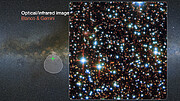
GRB 250702B collage

PR Image noirlab2531c
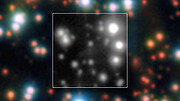
Field around GRB 250702B

PR Image noirlab2531d
GRB 250702B host galaxy


Videos

Zooming in on GRB 250702B
PR Video GRB-zoom
Zooming in on GRB 250702B

Localizing GRB250802B
PR Video noirlab2531a
Localizing GRB250802B

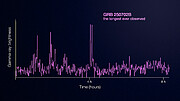
GRB250802B timescale
PR Video noirlab2531b
GRB250802B timescale


Data acquired with multiple NSF NOIRLab facilities indicate gamma-ray burst lasting over seven hours resides in a massive, extremely dusty galaxy

Astronomers have observed the longest-ever gamma-ray burst — a powerful, extragalactic explosion that lasted over seven hours. Rapid follow-up observations with the U.S. Department of Energy-fabricated Dark Energy Camera and the International Gemini Observatory, funded in part by the U.S. National Science Foundation and operated by NSF NOIRLab, provided crucial information about the possible origin of this extraordinary event and the galaxy that hosts it.

Gamma-ray bursts (GRBs) are among the most powerful explosions in the Universe, second only to the Big Bang. The majority of these bursts are observed to flash and fade within a few seconds to minutes. But on 2 July 2025, astronomers were alerted to a GRB source that was exhibiting repeating bursts and would end up lasting over seven hours. This event, dubbed GRB 250702B, is the longest gamma-ray burst humans have ever witnessed.

GRB 250702B was first identified by NASA’s Fermi Gamma-ray Space Telescope (Fermi). Shortly after space-based telescopes detected the initial bursts in gamma-rays and pinpointed its on-sky location in X-rays, astronomers around the world launched campaigns to observe the event in additional wavelengths of light.

One of the first revelations about this event came when infrared observations acquired by ESO's Very Large Telescope (VLT) established that the source of GRB 250702B is located in a galaxy outside of ours, which until then had remained a question.

Following this, a team of astronomers led by Jonathan Carney, graduate student at the University of North Carolina at Chapel Hill, set out to capture the event’s evolving afterglow, or the fading light emissions that follow the initial, extremely bright flash of gamma-rays. The properties of these emissions can provide clues about the type of event that caused the GRB.

To better understand the nature of this record-breaking event, the team used three of the world’s most powerful ground-based telescopes: the NSF Víctor M. Blanco 4-meter Telescope and the twin 8.1-meter International Gemini Observatory telescopes [1]. This trio observed GRB 250702B starting roughly 15 hours after the first detection until about 18 days later. The team presents their findings in a paper published on 26 November in The Astrophysical Journal Letters.

The Blanco telescope is located in Chile at NSF Cerro Tololo Inter-American Observatory (CTIO), a Program of NSF NOIRLab. The International Gemini Observatory consists of the Gemini North telescope in Hawai‘i and the Gemini South telescope in Chile. It is partly funded by NSF and operated by NSF NOIRLab.

“The ability to rapidly point the Blanco and Gemini telescopes on short notice is crucial to capturing transient events such as gamma-ray bursts,” says Carney. “Without this ability, we would be limited in our understanding of distant events in the dynamic night sky.”

The team used a suite of instruments for their investigation: the NEWFIRM wide-field infrared imager and the 570-megapixel DOE-fabricated Dark Energy Camera (DECam), both mounted on the Blanco telescope, and the Gemini Multi-Object Spectrographs (GMOS) mounted on Gemini North and Gemini South.

Analysis of the observations revealed that GRB 250702B could not be seen in visible light, partly due to interstellar dust in our own Milky Way Galaxy, but more so due to dust in the GRB’s host galaxy. In fact, Gemini North, which provided the only close-to-visible-wavelength detection of the host galaxy, required nearly two hours of observations to capture the faint signal from beneath the swaths of dust.

Carney and his team then combined these data with new observations taken with the Keck I Telescope at W. M. Keck Observatory, the Magellan Baade Telescope, and the Fraunhofer Telescope at Wendelstein Observatory, as well as publicly available data from VLT, NASA’s Hubble Space Telescope (HST), and X-ray and radio observatories. They then compared this robust dataset with theoretical models, which are frameworks that explain the behavior of astronomical phenomena. Models can be used to make predictions that can then be tested against observational data to refine scientists' understanding.

The team’s analysis established that the initial gamma-ray signal likely came from a narrow, high-speed jet of material crashing into the surrounding material, known as a relativistic jet. The analysis also helped characterize the environment around the GRB and the host galaxy overall. They found that there is a large amount of dust surrounding the location of the burst, and that the host galaxy is extremely massive compared to most GRB hosts. The data support a picture in which the GRB source resides in a dense, dusty environment, possibly a thick lane of dust present in the host galaxy along the line-of-sight between Earth and the GRB source. These details about the environment of GRB 250702B provide important constraints on the system that produced the initial outburst of gamma-rays.

Of the roughly 15,000 GRBs observed since the phenomenon was first recognized in 1973, only a half dozen come close to the length of GRB 250702B. Their proposed origins range from the collapse of a blue supergiant star, a tidal disruption event, or a newborn magnetar. GRB 250702B, however, doesn’t fit neatly into any known category.

From the data obtained so far, scientists have a few ideas of possible origin scenarios: (1) a black hole falling into a star that’s been stripped of its hydrogen and is now almost purely helium, (2) a star (or sub-stellar object such as a planet or brown dwarf) being disrupted during a close encounter with a stellar compact object, such as a stellar black hole or a neutron star, in what is known as a micro-tidal disruption event, (3) a star being torn apart as it falls into an intermediate-mass black hole — a type of black hole with a mass ranging from one hundred to one hundred thousand times the mass of our Sun that is believed to exist in abundance, but has so far been very difficult to find. If it is the latter scenario, this would be the first time in history that humans have witnessed a relativistic jet from an intermediate mass black hole in the act of consuming a star.

While more observations are needed to conclusively determine the cause of GRB 250702B, the data acquired so far remain consistent with these novel explanations.

“This work presents a fascinating cosmic archaeology problem in which we’re reconstructing the details of an event that occurred billions of light-years away,” says Carney. “The uncovering of these cosmic mysteries demonstrates how much we are still learning about the Universe's most extreme events and reminds us to keep imagining what might be happening out there.”


Notes

[1] This study uses data obtained from several sources, including:


More information

This research was presented in a paper titled “Optical/infrared observations of the extraordinary GRB 250702B: a highly obscured afterglow in a massive galaxy consistent with multiple possible progenitors” to appear in The Astrophysical Journal Letters. DOI: 10.3847/2041-8213/ae1d67

The team is composed of J. Carney (University of North Carolina at Chapel Hill, USA), I. Andreoni (University of North Carolina at Chapel Hill, USA), B. O'Connor (Carnegie Mellon University, USA), J. Freeburn (University of North Carolina at Chapel Hill, USA), H. Skobe (Carnegie Mellon University, USA), L. Westcott (University of Manchester, UK), M. Busmann (Ludwig Maximilian University of Munich, Germany), A. Palmese (Carnegie Mellon University, USA), X. J. Hall (Carnegie Mellon University, USA), R. Gill (National Autonomous University of Mexico, Mexico/The Open University of Israel, Israel), P. Beniamini (The Open University of Israel, Israel/The George Washington University, USA), E. R. Coughlin (Syracuse University, USA), C. D. Kilpatrick (Northwestern University, USA), A. Anumarlapudi (University of North Carolina at Chapel Hill, USA), N. M. Law (University of North Carolina at Chapel Hill, USA), H. Corbett (University of North Carolina at Chapel Hill, USA), T. Ahumada (California Institute of Technology, USA), P. Chen (Zhejiang University, China), C. Conselice (University of Manchester, UK), G. Damke (NSF NOIRLab, USA), K. K. Das (California Institute of Technology, USA), A. Gal-Yam (Weizmann Institute of Science, Israel), D. Gruen (Ludwig Maximilian University of Munich, Germany/Excellence Cluster ORIGINS, Germany), S. Heathcote (NSF NOIRLab, USA), L. Hu (Carnegie Mellon University, USA), V. Karambelkar (California Institute of Technology, USA), M. Kasliwal (California Institute of Technology, USA), K. Labrie (NSF NOIRLab, USA), D. Pasham (Eureka Scientific, USA/The George Washington University, USA), A. Riffeser, M. Schmidt, K. Sharma, S. Wilke (Ludwig Maximilian University of Munich, Germany), & W. Zang (Center for Astrophysics | Harvard & Smithsonian, USA).

NSF NOIRLab, the U.S. National Science Foundation center for ground-based optical-infrared astronomy, operates the International Gemini Observatory (a facility of NSF, NRC–Canada, ANID–Chile, MCTIC–Brazil, MINCyT–Argentina, and KASI–Republic of Korea), NSF Kitt Peak National Observatory (KPNO), NSF Cerro Tololo Inter-American Observatory (CTIO), the Community Science and Data Center (CSDC), and NSF–DOE Vera C. Rubin Observatory (in cooperation with DOE’s SLAC National Accelerator Laboratory). It is managed by the Association of Universities for Research in Astronomy (AURA) under a cooperative agreement with NSF and is headquartered in Tucson, Arizona.

The scientific community is honored to have the opportunity to conduct astronomical research on I’oligam Du’ag (Kitt Peak) in Arizona, on Maunakea in Hawai‘i, and on Cerro Tololo and Cerro Pachón in Chile. We recognize and acknowledge the very significant cultural role and reverence of I’oligam Du’ag to the Tohono O’odham Nation, and Maunakea to the Kanaka Maoli (Native Hawaiians) community.

The Dark Energy Camera was designed specifically for the Dark Energy Survey (DES). It was funded by the U.S. Department of Energy (DOE) and was built and tested at DOE's Fermilab.


Links


Contacts:

Jonathan Carney
Graduate Student
University of North Carolina at Chapel Hill
Email:
jcarney@unc.edu

Josie Fenske
Public Information Officer
NSF NOIRLab
Email:
josie.fenske@noirlab.edu


Sunday, January 05, 2025

Two luminous flares detected from a nearby tidal disruption event

Broad-band (0.3-10.0 keV) merged Swift XRT observations of ASASSN-22ci during the second flare. The green circle marks the location of ASASSN-22ci. Credit: arXiv (2024). DOI: 10.48550/arxiv.2412.15326


Two luminous flares detected from a nearby tidal disruption event

A group of astronomers from numerous institutions have investigated a recently discovered nearby tidal disruption event known as ASASSN-22ci. They detected two luminous flares from this event. The finding was reported in a paper published Dec. 19 on the preprint server arXiv.

Tidal disruption events (TDEs) are astronomical phenomena that occur when a star passes close enough to a supermassive black hole and is pulled apart by the black hole's tidal forces, causing the process of disruption.

Such tidally disrupted stellar debris starts raining down on the black hole and radiation emerges from the innermost region of accreting debris, which is an indicator of the presence of a TDE. All in all, the debris stream–stream collision causes an energy dissipation, which may lead to the formation of an accretion disk.

Therefore, TDEs are perceived by astronomers as potentially important probes of strong gravity and accretion physics, providing answers about the formation and evolution of supermassive black holes.

ASASSN-22ci (also known as AT2022dbl) is a TDE discovered by the All-Sky Automated Survey for Supernovae (ASAS-SN) in February 2022. It occurred in the nucleus of a galaxy designated WISEA J122045.05+493304.7, at a redshift of approximately 0.0284.

Shortly after the discovery, a team of astronomers led by University of Hawaii's Jason T. Hinkle commenced spectroscopic and photometric follow-up observations of ASASSN-22ci with the Zwicky Transient Facility (ZTF), Asteroid Terrestrial Impact Last Alert System (ATLAS), and ASAS-SN. This resulted in the detection of two flares from the source.

According to the paper, each of the two flares has a temperature of about 30,000 K, a rising time of approximately 30 days, and a peak bolometric luminosity at a level of 200–1,000 tredecillion erg/s. They also showcase a blue optical spectrum with broad hydrogen, helium, and nitrogen lines. The second flare occurred some 720 days after the first one. The astronomers noted that pre-discovery survey observations of ASASSN-22ci rule out the existence of earlier flares within the past 6,000 days, which suggests that the discovery of this TDE likely coincides with the first flare. They predict that the next flare of ASASSN-22ci should occur near February 4, 2026.

The discovery made by Hinkle's team makes ASASSN-22ci one of only five TDEs that have been reported to experience multiple flares. The researchers added that its two flares have good coverage with multiwavelength photometry and high signal-to-noise optical spectroscopy, when compared to other multiple-flaring TDEs.

"We have now observed five optically-selected TDEs that exhibit multiple flares, some of which are likely to be repeating partial tidal disruptions. Although small, this sample is nevertheless sufficient to begin exploring the theoretical implications of the observed trends among these events," the authors of the paper concluded.

By Tomasz Nowakowski , Phys.org


More information: Jason T. Hinkle et al, On the Double: Two Luminous Flares from the Nearby Tidal Disruption Event ASASSN-22ci (AT2022dbl) and Connections to Repeating TDE Candidates, arXiv (2024). DOI: 10.48550/arxiv.2412.15326

Journal information: arXiv

© 2025 Science X Network


Explore further


Saturday, May 06, 2023

The Bizarre Behavior of Black Holes


Researchers at Caltech study all manner of odd black hole behaviors. In honor of Black Hole Week, here are a few of them, from gobbling up stars to dancing and chirping.

By Whitney Clavin

Black holes are strewn across the universe, from our own galaxy to the farthest reaches of the cosmos. Made of matter so dense that it twists the fabric of space and time, these dark beasts are called black because even light cannot escape the grasp of their gravity. Some contain just a few times the mass of our sun, though the behemoths at the centers of galaxies can hold up to tens of billions of times more mass than our star. Black holes can, at times, lie dormant and unmoving like sea urchins in a cosmic ocean, but they can also be ferocious eaters.


Ripped to Shreds


Black Hole Tidal Disruption Event

When stars wander too close, black holes can shred them to pieces. Called tidal disruption events, or TDEs, these cosmic cataclysms happen when the gravitational pull of a black hole rips apart the doomed star and creates a glow of light telescopes can detect.

In 2021 and 2022, several telescopes—including the Caltech-led Zwicky Transient Facility (ZTF) operating from Palomar Observatory and the Caltech-led NuSTAR (Nuclear Spectroscopic Telescope Array)— saw a TDE in a galaxy 250 million light-years from Earth, one of the closest TDE encounters seen to date.


Comparing "Chirps" from Black Holes

Many black holes are found in pairs that orbit each other like ice dancers. Eventually they collide, merge, and coalesce into one giant body. The National Science Foundation-funded LIGO (Laser Interferometer Gravitational-wave Observatory) detects ripples in space and time called gravitational waves that emanate from pairs of merging stellar-mass black holes. When researchers translate the gravitational waves into sound waves and shift up the frequency to better suit human ears, they hear a distinct “chirp.” Compare the chirps from different black hole mergers here.


Flash in the Dark


Some scientists think that colliding black holes might also emanate flashes of light waves, but only when the black holes in question are embedded in thick disks swirling around a more massive black hole. On May 21, 2019, LIGO and partner observatory Virgo detected gravitational waves from a pair of merging, jiggling black holes, while, around the same time, ZTF caught a flare of optical light from the same location. The scientists speculate that the two events could be correlated and have since found other similar scenarios. They think that two smaller merging black holes are plowing through gas surrounding a much more massive one, creating the brilliant flares.


When Titans Collide


Even the supermassive black holes that lie in the hearts of galaxies can spiral around each other and merge. In one Caltech-led study that analyzed 45 years of radio observations, astronomers found direct evidence of two supermassive black holes locked in a two-year dance at the heart of a galaxy 9 billion light-years away.


Camera Ready


A couple of black holes have reached celebrity status. With the help of radio telescopes across the globe and some clever image processing, the Event Horizon Telescope (EHT) project took the first photograph of the supermassive black hole at the center of a galaxy called Messier 87 in 2019. The photograph shows not the black hole itself, but the shadow it cast on a ring of glowing material that encircles it. In 2022, EHT took the first-ever picture of the black hole lying at the heart of our own galaxy, called Sagittarius *A (seen below). This black hole is much less massive than M87’s, and material is swirling around it at a faster rate, making it even harder to image.

Source: Caltech/News


Sunday, August 30, 2020

New observations of black hole devouring a star reveal rapid disk formation

This image from a computer simulation shows the rapid formation of an accretion disk during the disruption of a star by a supermassive black hole. (Image credit: Jamie Law-Smith and Enrico Ramirez-Ruiz)

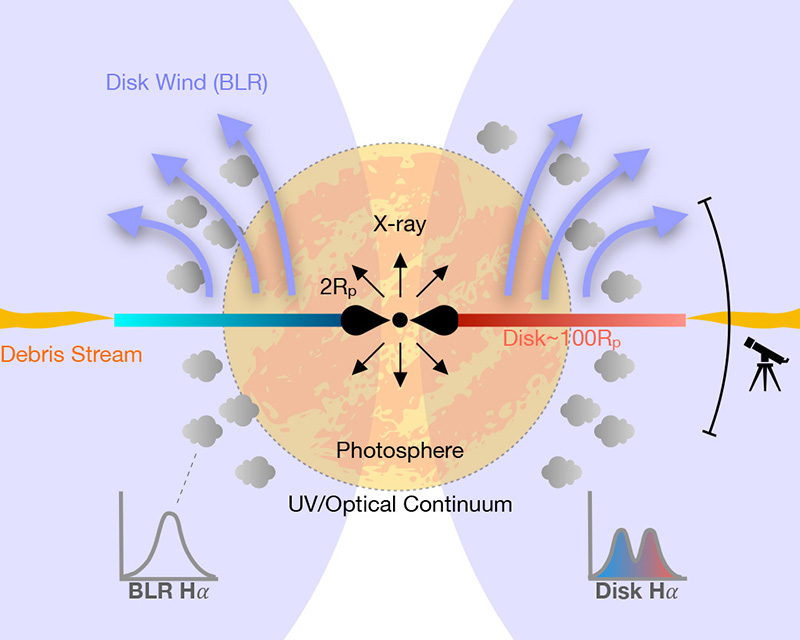
A model of ultraviolet and optical emission from the tidal disruption event AT 2018hyz is shown in this schematic diagram. As an accretion disk forms quickly after the TDE, it generates x-ray emission (black arrows) at small radii, which is only visible through the vertical funnel. In other directions, x-rays are reprocessed by the photosphere or wind, powering the ultraviolet and optical emissions. Hydrogen emission is produced at two distinct sites outside of the photosphere: a large elliptical disk (color-coded by velocity to show rotation) joined by the fallback material, and a broad emission line region (BLR) that is likely created by a radiation-driven wind (purple shaded area). See larger image. (Image credit: Tiara Hung)

First clear confirmation of accretion disk formation in a tidal disruption event without x-ray emissions supports theoretical predictions

When a star passes too close to a supermassive black hole, tidal forces tear it apart, producing a bright flare of radiation as material from the star falls into the black hole. Astronomers study the light from these “tidal disruption events” (TDEs) for clues to the feeding behavior of the supermassive black holes lurking at the centers of galaxies.

New TDE observations led by astronomers at UC Santa Cruz now provide clear evidence that debris from the star forms a rotating disk, called an accretion disk, around the black hole. Theorists have been debating whether an accretion disk can form efficiently during a tidal disruption event, and the new findings, accepted for publication in the Astrophysical Journal and available online, should help resolve that question, said first author Tiara Hung, a postdoctoral researcher at UC Santa Cruz.

“In classical theory, the TDE flare is powered by an accretion disk, producing x-rays from the inner region where hot gas spirals into the black hole,” Hung said. “But for most TDEs, we don’t see x-rays—they mostly shine in the ultraviolet and optical wavelengths—so it was suggested that, instead of a disk, we’re seeing emissions from the collision of stellar debris streams.”

Coauthors Enrico Ramirez-Ruiz, professor of astronomy and astrophysics at UCSC, and Jane Dai at the University of Hong Kong developed a theoretical model, published in 2018, that can explain why x-rays are usually not observed in TDEs despite the formation of an accretion disk. The new observations provide strong support for this model.

“This is the first solid confirmation that accretion disks form in these events, even when we don’t see x-rays,” Ramirez-Ruiz said. “The region close to the black hole is obscured by an optically thick wind, so we don’t see the x-ray emissions, but we do see optical light from an extended elliptical disk.”

 Telltale evidence

The telltale evidence for an accretion disk comes from spectroscopic observations. Coauthor Ryan Foley, assistant professor of astronomy and astrophysics at UCSC, and his team began monitoring the TDE (named AT 2018hyz) after it was first detected in November 2018 by the All Sky Automated Survey for SuperNovae (ASAS-SN). Foley noticed an unusual spectrum while observing the TDE with the 3-meter Shane Telescope at UC’s Lick Observatory on the night of January 1, 2019.

“My jaw dropped, and I immediately knew this was going to be interesting,” he said. “What stood out was the hydrogen line—the emission from hydrogen gas—which had a double-peaked profile that was unlike any other TDE we’d seen.”

Foley explained that the double peak in the spectrum results from the Doppler effect, which shifts the frequency of light emitted by a moving object. In an accretion disk spiraling around a black hole and viewed at an angle, some of the material will be moving toward the observer, so the light it emits will be shifted to a higher frequency, and some of the material will be moving away from the observer, its light shifted to a lower frequency.

“It’s the same effect that causes the sound of a car on a race track to shift from a high pitch as the car comes toward you to a lower pitch when it passes and starts moving away from you,” Foley said. “If you’re sitting in the bleachers, the cars on one turn are all moving toward you and the cars on the other turn are moving away from you. In an accretion disk, the gas is moving around the black hole in a similar way, and that’s what gives the two peaks in the spectrum.”

The team continued to gather data over the next few months, observing the TDE with several telescopes as it evolved over time. Hung led a detailed analysis of the data, which indicates that disk formation took place relatively quickly, in a matter of weeks after the disruption of the star. The findings suggest that disk formation may be common among optically detected TDEs despite the rarity of double-peaked emission, which depends on factors such as the inclination of the disk relative to observers.

“I think we got lucky with this one,” Ramirez-Ruiz said. “Our simulations show that what we observe is very sensitive to the inclination. There is a preferred orientation to see these double-peak features, and a different orientation to see x-ray emissions.”

He noted that Hung’s analysis of multi-wavelength follow-up observations, including photometric and spectroscopic data, provides unprecedented insights into these unusual events. “When we have spectra, we can learn a lot about the kinematics of the gas and get a much clearer understanding of the accretion process and what is powering the emissions,” Ramirez-Ruiz said.

In addition to Hung, Foley, Ramirez-Ruiz, and other members of the UCSC team, the coauthors of the paper also include scientists at the Niels Bohr Institute in Copenhagen (where Ramirez-Ruiz holds a Niels Bohr Professorship); University of Hong Kong; University of Melbourne, Australia; Carnegie Institution for Science; and Space Telescope Science Institute.

Observations were obtained at Lick Observatory, the W. M. Keck Observatory, the Southern Astrophysical Research (SOAR) telescope, and the Swope Telescope at Las Campanas Observatory in Chile. This work was supported in part by the National Science Foundation, the Gordon and Betty Moore Foundation, the David and Lucile Packard Foundation, and the Heising-Simons Foundation.

 By

 Source: US Santa Cruz