Showing posts with label exoplanet. Show all posts

Saturday, July 18, 2026

Faintest planet ever imaged from Earth found after more than 10 years of hide-and-seek

PR Image eso2609a
VLT image of the Beta Pictoris d exoplanet

PR Image eso2609b
The Beta Pictoris d exoplanet observed over the years

PR Image eso2609c
Map of the sky around Beta Pictoris

PR Image eso2609d
Around Beta Pictoris


Videos

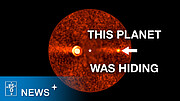
New exoplanet had been hiding for more than 10 years | ESO News
PR Video eso2609a
New exoplanet had been hiding for more than 10 years | ESO News
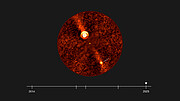
Time-lapse of exoplanet Beta Pictoris d orbiting around its host star
PR Video eso2609b
Time-lapse of exoplanet Beta Pictoris d orbiting around its host star


A team of astronomers have discovered a third planet orbiting the star Beta Pictoris. The new planet, Beta Pictoris d, is 100 times fainter than Beta Pictoris b — the first planet discovered in the same system — and is among the lightest exoplanets ever to be imaged from the ground. After spotting the planet using the European Southern Observatory’s Very Large Telescope (ESO’s VLT), the team found it had been hiding in archive observations spanning more than a decade.

This was a serendipitous discovery,” says Ben Sutlieff, co-lead of the study published today in The Astrophysical Journal Letters and astronomer at the University of Edinburgh, United Kingdom. “We initially wanted to look more at a known planet in the system, Beta Pictoris b, to see how it changed over time,” he adds. However, when the team went to analyse their images of the system, they noticed something else, separated from Beta Pictoris b, that led them down an entirely new path.

“‘There’s something else there, did you see it?’” Markus Bonse, ESO astronomer in Germany and the other co-lead of the study, recalls saying when looking at the data. To confirm the nature of their detection, the team looked through the ESO archive, a catalogue of past observations made with ESO facilities. They found a new planet, Beta Pictoris d, in multiple images dating back as far as 11 years ago, including one where it was only just visible against the glare of its larger neighbour Beta Pictoris b. “Planet d, it seems, has been playing a game of hide-and-seek with us for over a decade and only now can we say ‘found you!’” says Jayne Birkby, co-author of the study and astronomer at the University of Oxford, United Kingdom.

The newly discovered planet, like the two others in the system, is a gas giant like Jupiter or Saturn. However, Beta Pictoris d has a much wider orbit than the planets Beta Pictoris b and Beta Pictoris c. Moreover, while the first two planets are each around ten times the mass of Jupiter, the new planet is only 2.4 times more massive than Jupiter, making it one of the lightest ever imaged from the ground. The planet is also relatively cold and, hence, extremely faint relative to its host star.

Direct imaging, where the light from an object is captured as in a photograph, only works for planets bright enough to show up next to their much brighter host stars. Taking a direct image of a planet as faint as Beta Pictoris d, therefore, represents a significant achievement. “The new planet is 100 times fainter than Beta Pictoris b, the famous planet in the same system, making it the faintest exoplanet ever imaged directly from Earth,” explains Bonse [1].

This first clear detection of Beta Pictoris d, which is 63 light-years away from us, was made with the ERIS instrument on the VLT by Sutlieff, Bonse and their team. An independent team led by Aidan Gibbs at the University of California, US, also discovered the same planet using the James Webb Space Telescope (JWST), a facility of the US, European and Canadian space agencies. Their results are also published today in The Astrophysical Journal Letters.

To confirm a planet’s discovery from a detection, astronomers usually have to make follow-up observations. However, this system had been extensively studied, with several images stored in the ESO and JWST science archives. “To our joy, out it popped in previous SPHERE observations,” says Birkby, referring to another VLT instrument previously used to observe the Beta Pictoris system. The planet was also spotted in archival observations from NIRCam, a JWST instrument. Now that the team knew where to look for the potential new planet, “it turns out it was hiding in the data all along!” says Birkby. Co-author Valentin Christiaens, researcher at CEA Paris-Saclay, France, adds: “The detections in the archival SPHERE data are not only very exciting on their own, but also because they suggest a number of treasures are still hidden in the archives of VLT instruments!

Beta Pictoris is now the second system, after HR 8799, where more than two planets have been directly imaged. “Systems with multiple directly imaged exoplanets are the ‘holy grails’ of discoveries, because they can teach us a lot about what different exoplanets are like in the same formation environment,” says Sutlieff [2]. Beta Pictoris d also clears up a mystery in its planetary system, as it has exactly the right mass and position to explain the particular shape of the surrounding debris disc, made of the leftovers of planet formation.

The discovery of Beta Pictoris d in this way encourages further direct imaging of planetary systems where faint planets may have been hiding in plain sight, including with ESO’s upcoming Extremely Large Telescope (ELT). “Planets seem to have friends,” says Beth Biller, also a co-author of the paper and astronomer at the University of Edinburgh, “many of the famous directly imaged exoplanet systems seem to have multiple giant planets in the same system, and likely there are even more lower mass planets hiding in these systems that might be revealed with instruments on the ELT.”


Source: ESO/News


Notes

[1] Beta Pictoris d is the faintest exoplanet ever imaged from Earth when corrected for the distance to the system — faintest in absolute magnitude (owing to its size and temperature only) not in apparent magnitude (where distance also contributes to faintness).

[2] Beta Pic is part of a group of stars all with the same age, and some of them have planets too. Beta Pic d seems to be almost a twin of one of these planets, 51 Eri b, meaning astronomers can use them both to anchor their models of how planets evolve and grow over time.


More information

This research was presented in a paper to appear in The Astrophysical Journal Letters (https://doi.org/10.3847/2041-8213/ae80a0).

This paper, co-led by B. J. Sutlieff and M. J. Bonse, involves over 90 authors from around the world, including Belgium, France, Germany, Ireland, Italy, the Netherlands, Switzerland, the United Kingdom and Chile.

The European Southern Observatory (ESO) enables scientists worldwide to discover the secrets of the Universe for the benefit of all. We design, build and operate world-class observatories on the ground — which astronomers use to tackle exciting questions and spread the fascination of astronomy — and promote international collaboration for astronomy. Established as an intergovernmental organisation in 1962, today ESO is supported by 16 Member States (Austria, Belgium, Czechia, Denmark, France, Finland, Germany, Ireland, Italy, the Netherlands, Poland, Portugal, Spain, Sweden, Switzerland and the United Kingdom), along with the host state of Chile and with Australia as a Strategic Partner. ESO’s headquarters and its visitor centre and planetarium, the ESO Supernova, are located close to Munich in Germany, while the Chilean Atacama Desert, a marvellous place with unique conditions to observe the sky, hosts our telescopes. ESO operates three observing sites: La Silla, Paranal and Chajnantor. At Paranal, ESO operates the Very Large Telescope and its Very Large Telescope Interferometer, as well as survey telescopes such as VISTA. Also at Paranal, ESO will host and operate the south array of the Cherenkov Telescope Array Observatory, the world’s largest and most sensitive gamma-ray observatory. Together with international partners, ESO operates ALMA on Chajnantor, a facility that observes the skies in the millimetre and submillimetre range. At Cerro Armazones, near Paranal, we are building “the world’s biggest eye on the sky” — ESO’s Extremely Large Telescope. From our offices in Santiago, Chile we support our operations in the country and engage with Chileanpartners and society.


Links


Contacts:

Ben Sutlieff
Institute for Astronomy, University of Edinburgh
Edinburgh, United Kingdom
Email:
ben.sutlieff@roe.ac.uk

Markus Bonse
European Southern Observatory (ESO)
Garching bei München, Germany
Email:
Markus.Bonse@eso.org

Jayne Birkby
Department of Physics, University of Oxford
Oxford, United Kingdom
Email:
jayne.birkby@physics.ox.ac.uk

Valentin Christiaens
CEA Paris-Saclay, Université Paris-Saclay, Université Paris Cité, CEA, CNRS
Paris, France
Tel: +33169083661
Email:
valentin.christiaens@cea.fr

Beth Biller
Institute for Astronomy, University of Edinburgh
Edinburgh, United Kingdom
Tel: +44 (0)131 668 8349
Email:
bbiller@ed.ac.uk

Bárbara Ferreira
ESO Media Manager
Garching bei München, Germany
Tel: +49 89 3200 6670
Cell: +49 151 241 664 00
Email
: press@eso.org

Press and Public Relations
University of Edinburgh
Edinburgh, United Kingdom
Tel: +44(0)7979 446 209
Email:
press.office@ed.ac.uk


Thursday, July 02, 2026

NASA’s Webb Studies How Planet Survived Death of its Star

Exoplanet WD 1856 b, shown in this artist’s concept, is a gas giant that orbits its star at a distance 50 times closer than Earth orbits the Sun. Observations by NASA’s James Webb Space Telescope determined the planet’s temperature and detected molecules in its atmosphere. Credit Artwork: NASA, ESA, CSA, Ralf Crawford (STScI)

NASA’s James Webb Space Telescope measured the constituents of exoplanet WD 1856 b as it passed in front of its star, finding signs of methane. WD 1856 b orbits a white dwarf star the size of Earth. As a result, the planet blocks more than half of the star’s light. Credit Illustration: NASA, ESA, CSA, Joseph Olmsted (STScI)


NASA’s James Webb Space Telescope is giving us new insight into the far-future of solar systems like our own, as the agency continues to reveal the secrets of the universe and our place in it. Billions of years ago, a Sun-like star nearing the end of its life swelled tremendously in size to become a red giant before ejecting its outer layers, leaving a hot, remnant core known as a white dwarf. As a red giant, the star should have engulfed and destroyed any nearby planets. Yet astronomers have found a Jupiter-sized exoplanet orbiting the white dwarf every 34 hours at a separation of less than 2 million miles (3 million kilometers).

To solve the mystery of how this exoplanet survived, an international team of astronomers used NASA’s James Webb Space Telescope to watch the Jupiter-sized exoplanet WD 1856 b transit its host star, measuring the planet’s temperature and detecting molecules in its atmosphere. They found the planet is significantly warmer than expected and determined how it most likely reached its very tight orbit around the white dwarf star. The results are a window into the future of planets like Jupiter after the death of the Sun, billions of years into the future.

The results published Wednesday in the journal Nature.

WD 1856 b was discovered in 2020 by scientists using NASA’s TESS (Transiting Exoplanet Survey Satellite) and the retired Spitzer Space Telescope. It orbits the white dwarf WD 1856+534, which is located about 80 light-years from Earth. “The planet is about the size of Jupiter, but the white dwarf it orbits is the size of Earth, so the planet is seven times larger than its star," said lead author Ryan MacDonald of the University of St. Andrews in the United Kingdom.

WD 1856 b orbits extremely close to its host star, a distance 50 times closer than Earth orbits the Sun. If WD 1856 b had originally been orbiting at that distance, it would have been obliterated while the star was a red giant. How did it survive the death of its host star and end up in its current position?

How big, how hot

The new study used Webb to watch the planet passing in front of its star. This transit yielded unique information about the planet’s mass, which is between four and eleven times the mass of Jupiter.

The team also was able to determine the planet’s temperature. During the transit, light from the star was partly blocked, but infrared light was reduced less than other wavelengths. The difference was infrared light emitted by the planet from its own heat. The data indicated that the planet has a temperature of about 260 degrees Fahrenheit (126 degrees Celsius) — significantly hotter than it would be if its only source of heat was the light from the white dwarf. This puzzling discovery turned out to be the key fact that proved how the planet must have reached its current orbit.

Christopher O’Connor of Northwestern University in Illinois, a co-author on the paper, was responsible for tracing the temperature of the planet back in time. O’Connor said, “The big question is how WD 1856 b ended up where it is today, and there are two theories. One is that the planet was swallowed by the host star as it was dying, and managed to survive on the inside. The other is that migration took place due to the gravitational effect of other objects in the system. The white dwarf is part of a triple star system, and the companion stars could have influenced WD 1856 b’s orbit.”

The researchers realized that there was no source of energy present to generate that heat today, so it must be residual energy from an earlier time when the planet was heated. Using models of how sub-stellar objects like WD 1856 b cool down over time, coupled with the new data from Webb, the team was able to project its temperature back in time and deduce how long ago the heating must have happened. The timing is key to determining whether the heating was from being engulfed by the red giant or occurred during an inward migration.

They concluded that the heating most likely happened between 3 and 5.5 billion years after the star became a white dwarf. In this scenario, the planet was on a wide orbit that kept it safe from the star during its destructive red giant phase, and only migrated to its present location later on. “As the planet moved inward, its interactions with the strong gravity of the white dwarf will have caused it to warm up considerably, and it has been cooling ever since,” said O’Connor.

Light from the star passing through the planet’s atmosphere also picked up information about its chemical composition. “We saw the telltale signatures of small cloud particles and hydrocarbons, most likely methane, which is the first time we have seen an atmosphere on a planet transiting a dead star,” said co-author Victoria Boehm of Cornell University. “We recently observed four more transits of WD 1856 b with Webb to take a deeper look into its atmospheric chemistry and can’t wait to see the results.”

Solar system’s possible future

In approximately five billion years, the Sun will run out of hydrogen fuel in its core and swell up more than 100 times larger than it is now into a red giant star. It will then shed its outer layers and end its life as a white dwarf star. Mercury, Venus, and possibly the Earth will be destroyed by the red giant. However, the fate of the more distant planets, particularly the gas giants, is unclear. Finding and studying planets in orbit around the remnants of Sun-like stars after their death is a means of learning what might happen in our own solar system in the far future.

“We’re used to looking back in time when we use telescopes, but this is the first time we have been able to look forward to what might happen to the outer planets around the remnant of a Sun-like star,” said MacDonald. “It’s like using a time machine to peer into the distant future of our solar system.”

The James Webb Space Telescope is the world’s premier space science observatory. Webb is solving mysteries in our solar system, looking beyond to distant worlds around other stars, and probing the mysterious structures and origins of our universe and our place in it. Webb is an international program led by NASA with its partners, ESA (European Space Agency) and CSA (Canadian Space Agency).


Details:

Last Updated: Jul 01, 2026
Location:
NASA Goddard Space Flight Center

Contact Media:

Laura Betz
NASA’s Goddard Space Flight Center
Greenbelt, Maryland

laura.e.betz@nasa.gov

Bethany Downer
ESA/Webb
Baltimore, Maryland
Christine Pulliam Space Telescope Science Institute Baltimore, Maryland


Saturday, June 20, 2026

NASA Webb, Hubble Reveal History of Relic of Milky Way’s Formation

This artist’s concept shows exoplanet HD 80606 b being “roasted” as its orbit approaches periastron, the point at which it is closest to its host star, which is similar to our Sun. Artwork: NASA, ESA, CSA, Joseph Olmsted (STScI)


One well-done gas giant, coming right up! That’s the latest from researchers analyzing NASA’s James Webb Space Telescope’s observations of HD 80606 b, an exoplanet four times the mass of Jupiter with an extremely elliptical orbit that sweeps close by its Sun-like star. The research team is presenting their study and preliminary findings Tuesday at the 248th meeting of the American Astronomical Society in Pasadena, California.

“Hot Jupiters are already considered some of the most extreme exoplanets we know of, but even among that population, HD 80606 b is one of the most extreme,” said Tiffany Kataria, the study’s principal investigator at NASA's Jet Propulsion Laboratory in Southern California. “We typically think of hot Jupiters as hot gas giants sitting right next to their stars, but this planet’s highly eccentric orbit creates a completely different beast.”

As the planet plunges close to its star, Webb shows its temperature skyrockets by 1,100 degrees Fahrenheit. Previous studies have shown that radical temperature swings can cause an exoplanet's chemistry and clouds to change in real time. According to the research team, the dynamic conditions of HD 80606 b make the planet an ideal target to observe these changes with Webb’s powerful instruments.

“Observing a planet like HD 80606 b is actually very efficient because its unusual orbit, with the corresponding swings in temperature and chemical composition, allow us to gather data under varying conditions in just hours and apply those findings to other hot Jupiters or more conventional exoplanets,” said Laura C. Mayorga, co-investigator on the study and an exoplanet astronomer at the Johns Hopkins Applied Physics Laboratory in Laurel, Maryland.

Measurements of temperature and chemical composition were done with spectroscopy, a technique scientists use to break light into its component colors to reveal information about the composition, temperature, motion, and physical properties of objects in space. The team used Webb’s MIRI (Mid-Infrared Instrument) for an extended observation of HD 80606 b before, during, and after its periastron, or closest pass by its star. During periastron, the planet also passed behind the star from Webb’s perspective in what’s known as a secondary eclipse. The observation was years in the planning, as scheduling the time to catch the planet at this point was complex given its extremely elliptical 111-day orbit, and Webb’s own restrictions on where it can look during specific times of the year, based on Earth’s position in orbit around the Sun.

Researchers say they have only begun to peel back the layers of an incredibly rich dataset, but they can clearly see a dramatic shift in the exoplanet’s temperature. “Webb has shown that the planet’s increase in temperature was even more extreme than we anticipated based on Spitzer data,” said Kataria.

In fact, the planet had already been dubbed the “roasted exoplanet” and even got its own poster in NASA’s popular series. NASA’s now-retired Spitzer Space Telescope laid the groundwork of infrared observations of HD 80606 b, showing that more detailed spectroscopic data from Webb would be especially compelling.

“Spitzer did amazing work on this exoplanet, and now Webb is building on that legacy by enabling us to drill down to distinguish specific chemical signatures like methane and carbon dioxide, which is just amazing progress,” said Ryan Challener, co-author and research associate at the Cornell Center for Astrophysics and Planetary Science. “There’s so much to learn from this one dataset here — we really are just getting started deciphering what Webb has to tell us.”

The James Webb Space Telescope is the world’s premier space science observatory. Webb is solving mysteries in our solar system, looking beyond to distant worlds around other stars, and probing the mysterious structures and origins of our universe and our place in it. Webb is an international program led by NASA with its partners, ESA (European Space Agency) and CSA (Canadian Space Agency).


Details:

Last Updated: Jun 16, 2026
Location:
NASA Goddard Space Flight Center

Contact Media:

Laura Betz
NASA’s Goddard Space Flight Center
Greenbelt, Maryland

laura.e.betz@nasa.gov

Leah Ramsay
Space Telescope Science Institute
Baltimore, Maryland


Hannah Braun
Space Telescope Science Institute
Baltimore, Maryland


From Dusk Till Dawn

Artist's impression of the exoplanet WASP-121 b. It belongs to the class of hot Jupiters. Due to its proximity to the central star, the planet's rotation is tidally locked to its orbit around it. As a result, one of WASP-121 b's hemispheres always faces the star, heating it to temperatures of up to 2500 degrees Celsius. The night side is always oriented towards cold space, which is why it is 1775 degrees Celsius cooler there. © Patricia Klein and MPIA


To the point:
  • Ultrahot exoplanet, atmospheric differences: Researchers discovered clear differences in the atmosphere between the morning and evening sides of the ultrahot gas planet WASP-121 b using the James Webb Space Telescope (JWST).

  • Temperature and chemical variations: The evening side absorbs more infrared light due to higher temperatures caused by strong winds moving heat eastward, while water molecules decrease in the evening terminator due to high temperatures breaking them apart.

  • Planetary rotation and observation method: WASP-121 b’s synchronous rotation reveals different atmospheric regions during transit, allowing scientists to analyse changes in light absorption over time and longitude.


Astronomers find variations between the morning and the evening conditions of an ultra-hot exoplanet.

Astronomers have revealed distinct differences in atmospheric conditions between the morning and evening transition zones of the ultra-hot gas planet WASP-121 b, which separate day from night, commonly called terminators. This achievement was only possible due to the unmatched sensitivity of the James Webb Space Telescope (JWST). Led by Cyril Gapp, a PhD student at the Max Planck Institute for Astronomy (MPIA) in Heidelberg, Germany, a team of researchers detected this phenomenon, which had previously been predicted by theoretical computations.

Confirmation of variations between dusk and dawn

The discovery corresponds to an asymmetry in the absorption of infrared light received from the host star, which is partially filtered through the planet’s atmosphere during its transit. The researchers interpret this as the result of non-uniform temperatures and chemical compositions in the exoplanet’s atmosphere.

With its unprecedented observational quality, JWST gives us the most detailed glimpses into distant planets to date: By measuring how star light absorption changes as WASP-121 b rotates, we probe its atmosphere longitude by longitude. Cyril Gapp, MPIA

The data indicate that the evening terminator absorbs more light than the morning side, consistent with the commonly accepted picture of powerful winds that transport intense heat from the day to the night side. Hot winds follow the planet’s rotation eastward, which heats the evening zone. With rising temperatures, this region is bound to expand, increasing the planet’s cross-section and allowing it to absorb stellar radiation more efficiently.

Besides a general slight reduction in brightness towards the end of the transit, the data obtained by JWST’s NIRSpec (Near-infrared spectrograph) instrument also reveal an increase in the carbon monoxide (CO) signal. However, this appears to be a temperature effect, not related to an increase in carbon monoxide molecules.

In contrast, the amount of water (H2O) in the atmosphere appears to drop, which the astronomers interpret as a real decrease in water molecules. The temperatures in the upper atmosphere are high enough to break water molecules into their constituents. This result again corroborates the existence of hot winds heating the evening terminator region.

Top view of the orbit of the exoplanet WASP-121 b around its star. The planet’s rotation is synchronized to its orbit, both taking about 30 hours to complete. As a result, the planet constantly faces the star with the same side producing distinct day and night sides. The transition zones between those hemispheres are the morning and evening regions. Due to the planet’s proximity to the central star of only 1.9 stellar diameters, the planet rotates by about 30 degrees during its transit. © MPIA (CC BY 4.0)

Two extreme sides of an ultra-hot planet

To detect these minute variations, the astronomers exploited a peculiar behaviour of hot gas planets. The proximity to their host stars slowly synchronizes their spin and orbital motion via tidal forces,such that eventually one rotation takes as long as one revolution. Finally, these planets exhibit two distinct hemispheres: a hot side constantly facing the star and an opposite, darker and cooler side.

“WASP-121 b is particularly extreme, with average temperatures on the dayside hemisphere being around 2770 Kelvin, while those on the nightside are closer to about 1000 Kelvin,” co-author Tom Evans-Soma from the University of Newcastle, Australia, explains. He previously determined the planet’s temperature range and is also affiliated with MPIA. These values translate to almost 2500 degrees Celsius, or about 4525 degrees Fahrenheit, on the dayside, and approximately 725 degrees Celsius, or 1340 degrees Fahrenheit, at night.

When astronomers observe such a planet transiting in front of a star, the planet rotates slightly between the points of ingress and egress, revealing different fractions of its atmosphere. While the planet mostly presents its night side, our point of view permits glimpses beyond the dusk and dawn towards the bright dayside, depending on the transit’s progress. The zone leading the planet’s orbit corresponds to the morning side, and the one trailing is the evening side.

Apart from recording the measured brightness variation over time, spectrographs break light into smaller components, which physicists call a spectrum, much as a prism produces a rainbow-like distribution of colours. Since atmospheric gases absorb light at distinct colours or wavelengths, a detailed analysis reveals their chemical composition.

Elapsed time converts to longitude

Hence, the variation along the direction of rotation translates into a time-dependent change of the filtered signal. In the case of WASP-121 b the rotation angle during a full transit amounts to about 30 degrees, which is sufficient to probe the morning (dawn) and evening (dusk) terminators with high precision in longitude.

Astronomers usually average the measurements over the entire transit to achieve a clearer signal. However, to determine how the signal changes during the planet’s trajectory across the star, Gapp and his colleagues allowed for a temporal variation while the planet rotates. By applying statistical methods, they found that their procedure provides a significantly better fit to the data, indicating that they indeed detected a significant variation.

Notable gaps in atmospheric models

To verify the measured temperatures that would cause local expansion, the astronomers ran models simulating heat distribution in the upper layers of a gas planet, depending on the planet's properties and the constellation of the planet and its host star. While these atmospheric models confirmed the asymmetric effect caused by spatial temperature variations, the data revealed a larger signal amplitude than the models predicted.

The astronomers suspected that cooling mechanisms at the morning terminator might be at work that the models didn’t account for. Previous studies have indicated that clouds may be present, albeit composed not of water droplets but of minerals such as silicates. Clouds can efficiently shield infrared light emitted from hot gaseous layers below, mimicking lower temperatures. Infamously, simulating the physics of clouds, condensation, and evaporation in a dynamic environment is hard. Therefore, physical models commonly applied to exoplanet atmospheres, such as the one used in this study, do not account for clouds, which can yield unrealistic results.

After tweaking the simulation to better approximate the effect of clouds on infrared radiation from deeper layers, the results were more consistent with observations. However, only more sophisticated models will be able to confidently confirm the presence of clouds.

A blueprint for future studies

Model updates will also improve future investigations using this method. The astronomers have already identified additional suitable targets within the required temperature range and rotation speed to successfully probe the terminator regions. This will help them establish a sample of ultrahot gas planets, revealing their longitudinal structure, and potentially discover similarities and differences among these extreme worlds.

Additional information

MPIA astronomers involved in this study were Cyril Gapp (also Heidelberg University), Thomas M. Evans-Soma (also University of Newcastle, Australia), and Eva-Maria Ahrer.

Other researchers were: Aurélien Falco (Sorbonne Université, Paris, France), David K. Sing (Johns Hopkins University, Baltimore, USA), Shashank Dholakia (University of Queensland, St. Lucia, Australia), Vivien Parmentier (Université de la Côte d’Azur, Nice, France), Jérémy Leconte (Université Bordeaux, France), and Guangwei Fu (Johns Hopkins University).

The JWST observations used in this study were conducted as part of GO program #1729 (PI: Thomas Evans-Soma, Co-PI: Tiffany Kataria) titled “A NIRSpec Phase Curve for the ultrahot Jupiter WASP-121b” and GTO program #1201 (PI: David Lafreniere) labelled “NIRISS Exploration of the Atmospheric diversity of Transiting exoplanets (NEAT).”

NIRSpec (Near Infrared Spectrograph) was built by European industry to the European Space Agency’s (ESA) specifications and managed by the ESA JWST Project at ESTEC (European Space Research and Technology Centre), the Netherlands. The prime contractor was Airbus Defence and Space in Ottobrunn, Germany. MPIA contributed to the development and manufacture of NIRSpec’s filter and grating wheels. The NIRSpec detector and micro-shutter array subsystems were provided by NASA’s Goddard Space Flight Center (GSFC).

The James Webb Space Telescope is the world’s leading observatory for space research. It is an international programme led by NASA and its partners ESA and CSA (Canadian Space Agency).


Contacs:

Dr. Markus Nielbock
Press and outreach officer
Tel:
+49 6221 528-134
Email: pr@mpia.de
MPIA press team
Max Planck Institute for Astronomy, Heidelberg, Germany

Cyril Gapp
Tel:
+49 6221 528-328
Email: gapp@mpia.de
Cyril Gapp / MPIA
Max Planck Institute for Astronomy, Heidelberg, Germany

Dr. Thomas M. Evans-Soma
Tel:
+61 2 4055-3229
Email: tom.evans-soma@newcastle.edu.au
Homepage Thomas Evans-Soma
School of Information and Physical Sciences, The University of Newcastle, Callaghan, Australia
Max-Planck-Institut für Astronomie, Heidelberg, Deutschland


Original publication

Cyril Gapp, Aurélien Falco, Thomas M. Evans-Soma, et al. (incl. Eva-Maria Ahrer)
Atmospheric asymmetries in WASP-121 b revealed by rotational transits detected with JWST
Nature Astronomy (2026). DOI: 10.1038/s41550-026-02887-6


Source


Orbit of WASP-121 b around its host star (Video)
This animation illustrates the orbit of the exoplanet WASP-121 b around its host star, as well as its tidal locking. The perspective shifts from a top-down view of the orbit to the alignment during observation. During the transit, it becomes apparent that at the beginning and the end of the passage, a portion of the planet's illuminated dayside appears as a narrow crescent. T. Müller (MPIA/HdA)


Downloads

mpia-pm_wasp121b_2026_animation1080p (8.3 MB)

mpia-pm_wasp121b_2026_animation4k 21.22 MB

mpia-pm_wasp121b_2026_fig1_de 455.47 kB

mpia-pm_wasp121b_2026_fig1_en 455.92 kB

mpia-pr_wasp-121b_mikal-evans_2022_teaser 1.6 MB


Friday, May 08, 2026

Astronomers Explore the Surface Composition of a Nearby Super-Earth

This high-resolution photo of the planet Mercury probably resembles the rocky exoplanet LHS 3844 b. Results from JWST observations favour an airless rocky planet with a dark, basalt-like surface, likely space-weathered by irradiation and meteorite impacts. © NASA/Johns Hopkins University Applied Physics Laboratory/Carnegie Institution of Washington (cropped)

Infrared spectrum of LHS 3844 b’s hot dayside derived from the brightness contrast to its host star in ppm (parts per million = 0.0001%) at different wavelengths. The observational data obtained from the James Webb and Spitzer Space Telescopes are consistent with mantle or lava rock, whereas they rule out an Earth-like crust. © Sebastian Zieba et al./MPIA

A close-up view of an astronaut’s boot print in the fine-powdered lunar regolith, during the Apollo 11 extravehicular activity (EVA) on the Moon. Similar conditions may exist on the exoplanet LHS 3844 b due to prolonged space weathering by stellar irradiation and meteorite impacts. © NASA


To the point:

  • JWST Observations: The James Webb Space Telescope analysed the rocky exoplanet LHS 3844 b, revealing a dark, hot surface without an atmosphere.

  • Surface Composition: The analysis indicates the planet's surface is likely composed of basalt or mantle rock, ruling out a composition similar to Earth's silicate-rich crust.

  • Geological Activity: The findings suggest that LHS 3844 b may have undergone prolonged geological inactivity, as no signs of volcanic gases were detected.


Using MIRI (Mid Infrared Instrument) on board the James Webb Space Telescope (JWST), a team of researchers led by former MPIA (Max Planck Institute for Astronomy, Heidelberg, Germany) PhD student Sebastian Zieba (Center for Astrophysics | Harvard & Smithsonian, Cambridge, USA) and Laura Kreidberg, MPIA Director and study PI (principal investigator), analysed the surface composition of the rocky exoplanet LHS 3844 b. Beyond characterizing exoplanetary atmospheres, this kind of deciphering the geological properties of planets orbiting distant stars is the next step in unveiling their nature. The results of this investigation are now published in the journal Nature Astronomy. A dark and airless rocky super-Earth

A dark and airless rocky super-Earth

LHS 3844 b is a rocky planet 30% bigger than Earth and orbits a cool red dwarf star once within roughly 11 hours. Whirling just three stellar diameters above the host star’s surface, the planet is tidally locked to its orbit. This means one rotation takes just as long as one revolution. As a result, the same hemisphere of LHS 3844 b always faces its star, producing a constant dayside with an average temperature of about 1000 Kelvin (approximately 725 Degrees Celsius or 1340 Degrees Fahrenheit). The LHS 3844 system is only 48.5 light-years (14.9 parsecs) away from Earth.

“Thanks to the amazing sensitivity of JWST, we can detect light coming directly from the surface of this distant rocky planet. We see a dark, hot, barren rock, devoid of any atmosphere. Laura Kreidberg, MPIA”

With its dark surface, LHS 3844 b may resemble a larger version of the Moon or the planet Mercury. This conclusion is based on analysing the infrared radiation received from the planet’s hot dayside. However, when measuring this radiation, we cannot see the planet directly; instead, we register the repeating change in brightness we receive from the star and the orbiting planet combined.

MIRI divided a portion of the planet’s infrared emission, ranging from 5 to 12 micrometres, into smaller wavelength sections and measured the brightness per wavelength bin. This is what astronomers call a spectrum, a rainbow-like distribution of the light’s components. Another data point, obtained from observations with the Spitzer Space Telescope and published a few years ago, augmented the analysis.

Constraining geological activity

Instead, the dark surface points to a composition reminiscent of terrestrial or lunar basalt, or of Earth’s mantle material. However, the astronomers attempted an even more detailed characterization.

A statistical analysis of how well this spectrum fits various mineral mixtures and configurations revealed that extended solid areas of basalt or magmatic rock best match the observations. They are rich in magnesium and iron and can include olivine. Crushed material, such as rocks or gravel, also fits fairly well, whereas grains or powders are inconsistent with the observations due to their brighter appearance, at least at first glance.

Without a protective atmosphere, planets are subjected to space weathering, predominantly driven by hard, energetic radiation from the host star and impacts from meteorites of various sizes.

“It turns out, these processes not only slowly dissolve hard rocks into regolith, a layer of fine grains or powder as found on the Moon,” explains Zieba. “They also darken the layer by adding iron and carbon, making the regolith’s properties more consistent with the observations.”

What can we deduce about an exoplanet's rocky surface?

Instead, the dark surface points to a composition reminiscent of terrestrial or lunar basalt, or of Earth’s mantle material. However, the astronomers attempted an even more detailed characterization.

A statistical analysis of how well this spectrum fits various mineral mixtures and configurations revealed that extended solid areas of basalt or magmatic rock best match the observations. They are rich in magnesium and iron and can include olivine. Crushed material, such as rocks or gravel, also fits fairly well, whereas grains or powders are inconsistent with the observations due to their brighter appearance, at least at first glance.

Without a protective atmosphere, planets are subjected to space weathering, predominantly driven by hard, energetic radiation from the host star and impacts from meteorites of various sizes.

“It turns out, these processes not only slowly dissolve hard rocks into regolith, a layer of fine grains or powder as found on the Moon,” explains Zieba. “They also darken the layer by adding iron and carbon, making the regolith’s properties more consistent with the observations.”

Geologically fresh or weathered? Two possible scenarios

This assessment left the astronomers with two scenarios for the planet’s surface that match the data equally well. One involves a surface dominated by dark, solid rock composed of basaltic or magmatic minerals. Compared to geological timescales, space weathering alters its properties quickly. Therefore, the astronomers conclude that, in this scenario, the surface should be relatively fresh, produced by recent geological activity, such as widespread volcanism.

The second scenario also proposes a dark surface, comparable to the Moon or Mercury. Still, it accounts for prolonged space weathering, which leads to extended regions covered by a darkened regolith layer, a fine powder also present on the Moon, as evidenced by the iconic photos of the astronauts’ footprints. This alternative relies on longer periods of geological inactivity, thereby requiring conditions opposite to the first scenario.

Attempts to resolve the ambiguity

These two alternatives differ in the degree of recent geological activity required. On Earth and other active objects in the Solar System, a typical phenomenon during such activity is outgassing. Sulphur dioxide (SO2) is a gas commonly connected to volcanism. If present on LHS 3844 b in reasonable amounts, MIRI should have detected it. Still, it found nothing. Therefore, a recent period of activity seems unlikely, which leads the astronomers to favour the second scenario. If correct, LHS 3844 b may truly look much like Mercury indeed.

In order to test their idea, Zieba, Kreidberg, and their colleagues are already pursuing a more direct approach. They have obtained additional JWST observations, which should enable them to discern surface conditions by exploiting small differences in how solid slabs and powders emit or reflect light. The distribution of emission angles depends on surface roughness, which affects the amount of radiation received at a given viewing angle. This concept is successfully applied to characterizing asteroids in the Solar System. “We are confident the same technique will allow us to clarify the nature of LHS 3844 b’s crust and, in the future, other rocky exoplanets,” concludes Kreidberg.

Additional information

Laura Kreidberg is the only MPIA astronomer involved in this study.

Other researchers were: Sebastian Zieba (Center for Astrophysics | Harvard & Smithsonian, Cambridge, USA), Brandon P. Coy (Department of the Geophysical Sciences, University of Chicago, USA), Aaron Bello-Arufe (Jet Propulsion Laboratory, California Institute of Technology, Pasadena, USA [JPL]), Kimberly Paragas (Division of Geological and Planetary Sciences, California Institute of Technology, Pasadena, USA), Xintong Lyu (Peking University, Beijing, China), Renyu Hu (The Pennsylvania State University, University Park, USA and JPL), Aishwarya Iyer (NASA Goddard Space Flight Center, Greenbelt, USA), Kay Wohlfarth (Technische Universität Dortmund, Germany)

The JWST observations used in this study were conducted as part of GO program #1846 (PI: Laura Kreidberg, co-PI: Renyu Hu) titled “A Search for Signatures of Volcanism and Geodynamics on the Hot Rocky Exoplanet LHS 3844 b.”

The MIRI consortium comprises the ESA (European Space Agency) member states: Belgium, Denmark, France, Germany, Ireland, the Netherlands, Spain, Sweden, Switzerland, and the United Kingdom. National science organisations fund the consortium’s work – in Germany, the Max Planck Society (MPG) and the German Aerospace Center (DLR). Participating German institutions include the Max Planck Institute for Astronomy in Heidelberg, the University of Cologne, and Hensoldt AG in Oberkochen, formerly Carl Zeiss Optronics.

The James Webb Space Telescope is the world’s leading observatory for space research. It is an international programme led by NASA and its partners ESA and CSA (Canadian Space Agency)..
The Spitzer Space Telescope was operated by the Jet Propulsion Laboratory, California Institute of Technology, under a contract with NASA.
Similar to how exoplanetary atmosphere research has benefited from climate science, this emerging field of exoplanetary geology draws on Earth-based geologic knowledge. Zieba, Kreidberg, and their collaborators ran models and accessed template libraries of rocks and minerals known from Earth, the Moon, and Mars to see what infrared signatures they would produce under the conditions on LHS 3844 b. Comparing observation-based data with these computations confidently ruled out a composition comparable to Earth’s crust, typically silicate-rich rocks such as granite.

Although this result is not very surprising – even in the Solar System, Earth is the only planet with such a crust – it may reveal details on LHS 3844 b’s geological history. Earth-like silicate-rich crusts are thought to form through a prolonged refinement process that requires tectonic activity and typically relies on water as a lubricant. The rocky material repeatedly melts and solidifies as it is mixed with mantle material, leaving the lighter minerals on the surface.

“Since LHS 3844 b lacks such a silicate crust, one may conclude that Earth-like plate tectonics does not apply to this planet, or it is ineffective,” says Sebastian Zieba. “This planet likely only contains little water.”


Contacs:

Dr. Markus Nielbock
Press and outreach officer
Tel:
+49 6221 528-134
Email: pr@mpia.de
MPIA press team
Max Planck Institute for Astronomy, Heidelberg, Germany

Prof. Dr. Laura Kreidberg
Director
Tel:
+49 6221 528-215
Email: kreidberg@mpia.de
Laura Kreidberg / MPIA
Max Planck Institute for Astronomy, Heidelberg, Germany

Dr. Sebastian Zieba
NASA Sagan Fellow
Email:
sebastian.zieba@cfa.harvard.edu
Sebastian Zieba / Harvard
Center for Astrophysics | Harvard & Smithsonian, Cambridge, MA, USA


Original publication

Sebastian Zieba, Laura Kreidberg, et al.
The dark and featureless surface of rocky exoplanet LHS 3844 b from JWST mid-infrared spectroscopy
Nature Astronomy (2026)


Source | DOI


Links

JWST/MIRI observing program information">JWST/MIRI observing program information


Downloads

mpia-pm_lhs3844b_2026_fig2_en_large 2.9 MB

mpia-pm_lhs3844b_lunar_footprint 9.44 MB

mpia-pm_lhs3844b_mercury_nasa 3.27 MB


Related Articles

From Heidelberg into outer space

December 20, 2021

The James Webb Space Telescope launches into space with equipment developed and built at the Max Planck Institute for Astronomy.


Friday, April 24, 2026

Astronomers find an exo-Jupiter, and it seems to have clouds

Artist's impression of the planet Epsilon Indi Ab, with water clouds atop its ammonia-dominated atmosphere.
© E. C. Matthews, MPIA / T. Müller, HdA
. Download image


To the point

  • New observations: Astronomers have used the James Webb Space Telescope to study the atmosphere of a massive Jupiter-analogue.

  • Evidence for clouds: Surprisingly, the observations indicate the presence of water-ice clouds – previous models had been too simple!

  • Part of a larger search: Observations and analysis provide a test run for certain challenges of observing a “second Earth”


A team of astronomers led by Elisabeth Matthews at the Max Planck Institute for Astronomy (MPIA) has made a discovery that highlights the limits of most current models of exoplanet atmospheres: water-ice clouds on a distant Jupiter-like exoplanet called Epsilon Indi Ab. The way the observations were made has broader implications for exoplanet research: as an interesting immediate step on the path towards eventually finding and characterizing an Earth-analogue exoplanet.

Step by step towards a second Earth

Exoplanet research has an ambitious long-term goal: at some time within the next few decades, astronomers hope to be able to detect traces of life on an exoplanet. On the path towards that goal, exoplanet research has gone through several stages. In the first stage of research, from 1995 to about 2022, the main focus of exoplanet researchers was on detecting more and more exoplanets, using indirect methods that gave them information about the masses of some exoplanets, the diameters of others, and in some cases both mass and diameter.

When the James Webb Space Telescope (JWST) began operating in earnest in 2022, exoplanet research entered a second stage: High-quality, detailed information about the atmospheres of many exoplanets became available for a considerable number of planets, and researchers began to reconstruct the properties of such atmospheres in some detail. This is still at least one stage removed from realistic searches for life on exoplanets, which are expected to require the next generation of space telescopes.

With the new study, the astronomers are exploring some aspects of these next-level methods – although not yet for a planet like Earth. Elisabeth Matthews (Max Planck Institute for Astronomy), the study’s lead author, says: “JWST is finally allowing us to study solar-system analogue planets in detail. If we were aliens, several light years away, and looking back at the Sun, JWST is the first telescope that would allow us to study Jupiter in detail. For studying Earth in detail, we would need much more advanced telescopes, though.”

Elusive exo-Jupiters But as amazing as results from JWST about exoplanet atmospheres are, studying the analogues of our Solar System’s Jupiter has proven surprisingly difficult. Almost all gas giants studied with JWST so far differ from Jupiter in that they are much, much hotter – for the most common method of studying exoplanet atmospheres to work, the planet needs to pass in front of its host star from the perspective of an observer on Earth, and the probability for that configuration is much higher when the planet is closer to its star, which in turns makes the planet comparatively hot. The new study by Elisabeth Matthews and her colleagues uses a different technique. This is the closest observers have come to studying a Jupiter-analogue – and it has provided at least one surprise!

Matthews and her colleagues used JWST’s mid-infrared instrument MIRI to obtain direct images of the planet Epsilon Indi Ab. Naming conventions for exoplanets are such that this designation indicates the first planet discovered to orbit the star Epsilon Indi A in the constellation Indus (in the southern sky). Bhavesh Rajpoot, a PhD student at the Max Planck Institute for Astronomy who contributed to the study, says: “This planet has a considerably greater mass than Jupiter – the new study fixes its mass at 7.6 Jupiter masses – but the diameter is about the same as for its solar-system cousin.”

A more massive, slightly warmer Jupiter

Epsilon Indi Ab is about four times as distant from its central star as Jupiter is from the Sun. The star Epsilon Indi A itself is a bit less massive and a bit less hot than our Sun. This makes the surface temperature of Epsilon Indi Ab very low, at about 200 to 300 Kelvin (between –70 and +20 degrees Celsius). The reason the planet is slightly warmer than Jupiter (140 K) is that there is still a lot of heat remaining from the planet formation phase. Over the next billions of years, Epsilon Indi Ab will steadily cool down, eventually becoming colder than Jupiter. The astronomers used the coronagraph of the MIRI instrument to block out the central star’s light, which would otherwise outshine the planet’s much dimmer light. They then took an image through a very particular filter: 11.3 μm, which is just outside the wavelength region close to 10.6 μm that is characteristic for ammonia molecules NH3. The comparison with images at 10.6 μm that Matthews and her team had already taken in 2024 enabled the astronomers to estimate the amount of ammonia present. (Incidentally, both the mechanical filter wheels placing the coronagraph and the filter in front of the MIRI camera were constructed at MPIA, one of the German contributions to the JWST.)

Surprising evidence for clouds

For Jupiter, both ammonia gas and ammonia clouds dominate the upper layers of the atmosphere that are visible in observations. Given its properties, Epsilon Indi Ab was thought to have massive amounts of ammonia gas as well, although not ammonia clouds. Surprisingly, the photometric comparison showed somewhat less ammonia than expected. The best explanation Matthews and her colleagues found for this deficit was the presence of thick but patchy water-ice clouds, similar to the high-altitude cirrus clouds in Earth’s atmosphere – an unexpected complication!

In interpreting observations of this kind, astronomers compare their data to simulations of planetary atmospheres. But most of the published models neglect to include clouds, as the presence of clouds makes the computation that much more complicated – clearly something theorists will need to fix! James Mang (University of Texas at Austin), a co-author of the study, says: “It’s a great problem to have, and it speaks to the immense progress we’re making thanks to JWST. What once seemed impossible to detect is now within reach, allowing us to probe the structure of these atmospheres, including the presence of clouds. This reveals new layers of complexity that our models are now beginning to capture, and opens the door to even more detailed characterization of these cold, distant worlds.”

An opportunity for the Roman Space Telescope

On the upside, there is an upcoming opportunity for observing the water-ice clouds, which are very reflective directly: NASA’s Nancy Grace Roman Space Telescope, where MPIA is a partner, is slated for launch in 2026–2027, and should be suitable for exactly that kind of observation. In the meantime, Matthews and her colleagues are applying for JWST observation time to target additional cold Jupiter-analogues. And at the same time that Matthews and other astronomers are learning more about cold exo-Jupiters, their observational techniques are laying the groundwork that, if all goes well, will help future observers target earthlike planets, in search of life.

Background information

The results described here have been published as E. C. Matthews et al., “A second visit to Eps Ind Ab with JWST: new photometry confirms ammonia and suggests thick clouds in the exoplanet atmosphere of the closest super-Jupiter” in the Astrophysical Journal Letters.

The MPIA researchers involved are Elisabeth Matthews and Bhavesh Rajpoot, in collaboration with James Mang and Caroline Morley (University of Texas at Austin), Aarynn Carter and Mathilde Mâlin (Space Telescope Science Institute), and others.


Contacts:

Dr. Markus Pössel
Head of press relations and outreach
Tel:
 +49 6221 528-261
pr@mpia.de
Max Planck Institute for Astronomy, Heidelberg

Dr. Elisabeth Matthews
Tel:
+49 6221 528-102
matthews@mpia.de
Max Planck Institute for Astronomy, Heidelberg


Original publication

Elisabeth C. Matthews, James Mang, Aarynn L. Carter, Mathlide Mâlin, Caroline V. Morley, Bhavesh Rajpoot, Leindert A. Boogaard, Jennifer A. Burt, Ian J. M. Crossfield, Fabo Feng, Anne-Marie Lagrange, Mark W Phillips
A second visit to Eps Ind Ab with JWST: new photometry confirms ammonia and suggests thick clouds in the exoplanet atmosphere of the closest super-Jupiter
Astrophysical Journal Letters (2026)

Source | DOI


Friday, April 17, 2026

NASA’s Webb Redefines Dividing Line Between Planets, Stars

Astronomers used NASA’s James Webb Space Telescope to directly image 29 Cygni b, which weighs 15 times Jupiter. They found evidence for heavy chemical elements like carbon and oxygen, which strongly suggests it formed like a planet by accretion within a protoplanetary disk. Credit Image: NASA, ESA, CSA, William Balmer (JHU, STScI), Laurent Pueyo (STScI); Image Processing: Alyssa Pagan (STScI)
>
Exoplanet 29 Cygni b, seen in this artist’s concept, is a gas giant weighing about 15 times the mass of Jupiter. Astronomers studied 29 Cygni b with NASA’s James Webb Space Telescope. They determined that it likely formed from accretion rather than disk fragmentation. Credit Illustration: NASA, ESA, CSA, Joseph Olmsted (STScI)


Planets, like those in our solar system, form in a bottom-up process where small bits of rock and ice clump together and grow larger over time. But the heftier the planet, the harder it is to explain its formation that way.

Astronomers used NASA’s James Webb Space Telescope to examine 29 Cygni b, an object about 15 times as massive as Jupiter orbiting a nearby star. They found multiple lines of evidence that 29 Cygni b indeed formed from this bottom-up process, bringing new insights into how the heftiest planets come to be. A paper describing these findings published Tuesday in The Astrophysical Journal Letters.

The planet formation process is broadly understood to occur within gigantic disks of gas and dust around stars through a process called accretion. Dust gloms together into pebbles, which collide and grow larger and larger, forming protoplanets and eventually planets. The largest then collect gas to become giants like Jupiter. Since it takes more time for gas giants to form, and the disk of planet-forming material eventually evaporates and disappears, planetary systems end up with many more small planets than large planets.

In contrast, stars form when a vast cloud of gas fragments and each piece collapses under its own gravity, growing smaller and denser. A similar fragmentation process could theoretically occur within protoplanetary disks as well. That could explain why some very massive objects are found billions of miles from their host stars, in regions where the protoplanetary disk should have been too tenuous for accretion to occur.

29 Cygni b sits on the dividing line between what can be explained by these two different mechanisms. It weighs 15 times Jupiter and orbits its star at an average distance of 1.5 billion miles (2.4 billion kilometers), about the same as Uranus in our solar system. The research team targeted it because it could potentially result from either process.

“In computer models, it’s very easy for fragmentation in a disk to run away to much higher masses than 29 Cygni b. This is the lowest mass you could plausibly get. But at the same time, it’s about the highest mass you could get from accretion,” said lead author William Balmer of the Johns Hopkins University and the Space Telescope Science Institute, both in Baltimore.

Balmer’s observing program used Webb’s NIRCam (Near-Infrared Camera) in its coronagraphic mode to directly image 29 Cygni b. This planet was the first of four objects targeted by the program, all of which are known to weigh between 1 and 15 times as much as Jupiter. The team also required their targets to orbit within about 9 billion miles (15 billion kilometers) of their stars.

The planets were all young and still hot from their formation, ranging in temperature from about 1,000 to 1,900 degrees Fahrenheit (530 to 1,000 degrees Celsius). This would ensure their atmospheric chemistry was similar to the planets of HR 8799, whose system Balmer studied previously.

By choosing appropriate filters, the team was able to look for signs of light being absorbed by carbon dioxide (CO2) and carbon monoxide (CO), which allowed them to determine the amount of those heavier chemical elements, which astronomers collectively call metals.

They found strong evidence that 29 Cygni b is enriched in metals relative to its host star, which is similar to our Sun in its composition. Given the planet’s mass, the amount of heavy elements it contains is equivalent to about 150 Earths. This suggests that it accreted large amounts of metal-enriched solids from a protoplanetary disk.

The team also used a ground-based optical telescope array called CHARA (Center for High Angular Resolution Astronomy) to determine if the planet’s orbit is aligned with the spin of the star. They confirmed that alignment, which would be expected for an object that formed from a protoplanetary disk.

“We were able to update the planet’s orbit, and also observed the host star to determine its orientation with respect to that orbit,” said Ash Messier, co-author and a graduate student at Johns Hopkins University. “We showed that the inclination of the planet is well-aligned with the spin axis of the star, which is similar to what we see for the planets of our solar system.”

“Put together, this evidence strongly suggests that 29 Cygni b formed within a protoplanetary disk through rapid accretion of metal-rich material, rather than through gas fragmentation,” said Balmer. “In other words, it formed like a planet and not like a star.”

As the team gathers data on the other three targets within their program, they plan to look for evidence of compositional differences between the lower-mass and higher-mass planets. This should provide additional insights into their formation mechanisms.

The James Webb Space Telescope is the world’s premier space science observatory. Webb is solving mysteries in our solar system, looking beyond to distant worlds around other stars, and probing the mysterious structures and origins of our universe and our place in it. Webb is an international program led by NASA with its partners, ESA (European Space Agency) and CSA (Canadian Space Agency).


Details:

Last Updated: Apr 14, 2026
Location:
NASA Goddard Space Flight Center

Contact Media:

Laura Betz
NASA’s Goddard Space Flight Center
Greenbelt, Maryland

laura.e.betz@nasa.gov

Christine Pulliam
Space Telescope Science Institute
Baltimore, Maryland


Friday, March 27, 2026

A Solar System in the making? Two planets spotted forming in disc around young star

PR Image eso2604a
VLT images of two planets forming around the young star WISPIT 2

PR Image eso2604b
Composite VLT image of two planets around the WISPIT 2 star

PR Image eso2604c
Spectrum of the baby exoplanet WISPIT 2c

PR Image eso2604d
Wide-field view of the area around the WISPIT 2 star

PR Image eso2604e
The young star WISPIT 2 in the constellation Aquila


Videos

Two planets spotted forming around a young star | ESO News
PR Video eso2604a
Two planets spotted forming around a young star | ESO News

Zooming into the young planetary system around the WISPIT 2 star
PR Video eso2604b
Zooming into the young planetary system around the WISPIT 2 star


Astronomers have observed two planets forming in the disc around a young star named WISPIT 2. Having previously detected one planet, the team have now employed European Southern Observatory (ESO) telescopes to confirm the presence of another. These observations, and the unique structure of the disc around the star, indicate that the WISPIT 2 system could resemble a young Solar System.

WISPIT 2 is the best look into our own past that we have to date,” says Chloe Lawlor, PhD student at the University of Galway, Ireland, and lead author of the study published today in The Astrophysical Journal Letters.

The system is only the second known, after PDS 70, where two planets have been directly observed in the process of forming around their host star. Unlike PDS 70, however, WISPIT 2 has a very extended planet-forming disc with distinctive gaps and rings. "These structures suggest that more planets are currently forming, which we will eventually detect,” Lawlor says.

"WISPIT 2 gives us a critical laboratory not just to observe the formation of a single planet but an entire planetary system," says Christian Ginski, study co-author and researcher at the University of Galway. With such observations, astronomers aim to better understand how baby planetary systems develop into mature ones, like our own.

The first newborn planet found in the system — named WISPIT 2b — was detected last year, with a mass almost five times that of Jupiter and orbiting the central star at around 60 times the distance between Earth and the Sun. “This detection of a new world in formation really showed the amazing potential of our current instrumentation,” said Richelle van Capelleveen, PhD student at Leiden Observatory, the Netherlands, and leader of the previous study. After an additional object was identified near the star [1], measurements made with ESO’s Very Large Telescope (VLT) and the VLT Interferometer (VLTI) confirmed its planetary nature. The new planet — WISPIT 2c — is four times closer to the central star and is twice as massive as WISPIT 2b. Both planets are gas giants, like the outer planets in our Solar System.

To confirm the existence of WISPIT 2c the team employed the SPHERE instrument on ESO's VLT, which captured an image of the object. The team then used the GRAVITY+ instrument on the VLTI to confirm that the object was indeed a planet. "Critically our study made use of the recent upgrade to GRAVITY+ without which we would not have been able to get such a clear detection of the planet so close to its star," says Guillaume Bourdarot, study co-author and researcher at the Max Planck Institute for Extraterrestrial Physics, Garching, Germany.

Both planets in WISPIT 2 appear in clear gaps within the disc of dust and gas circling the young star. These gaps result from each planet's development: particles in the disc accumulate, their gravity pulling in more material until an embryo planet forms. The remaining material, around each gap, creates distinctive dust rings in the disc.

Besides the gaps that the two planets were found in, there is at least one smaller gap farther out in the WISPIT 2 disc. "We suspect there may be a third planet carving out this gap" says Lawlor, "potentially of Saturn mass owing to the gap’s being much narrower and shallower". The team are eager to make follow-up observations, with Ginski noting that “with ESO’s upcoming Extremely Large Telescope, we may be able to directly image such a planet.


Source: ESO/News


Notes

[1] The first hints of the presence of a second planet came from observations made with the University of Arizona's MagAO-X on the 6.5-metre Magellan Telescopes in Chile and the University of Virginia's LMIRcam on the Large Binocular Telescope Interferometer in the USA.


More information

This research was presented in a paper to appear in The Astrophysical Journal Letters (https://doi.org/10.3847/2041-8213/ae4b3b).

The team is composed of C. Lawlor (School of Natural Sciences, Centre for Astronomy and Ryan Institute, University of Galway, Ireland [Galway]), R. F. van Capelleveen (Leiden Observatory, Leiden University,The Netherlands [Leiden]), G. Bourdarot (Max Planck Institute for Extraterrestrial Physics, Garching, Germany [MPE]), C. Ginski (Galway and Center for Astronomical Adaptive Optics, Department of Astronomy, University of Arizona, Tucson, USA [CAAO]), M. A. Kenworthy (Leiden), T. Stolker (Leiden), L. Close (CAAO), A. J. Bohn (Leiden), F. Eisenhauer (MPE and Department of Physics, Technical University of Munich, Garching, Germany), P. Garcia (Faculdade de Engenharia, Universidade do Porto, Portugal and CENTRA – Centro de Astrofísica e Gravitação, IST, Universidade de Lisboa, Portugal), S. F. Honig (School of Physics and Astronomy, University of Southampton, United Kingdom), J. Kammerer (European Southern Observatory, Garching Germany), L. Kreidberg (Max Planck Institute for Astronomy, Heidelberg, Germany), S. Lacour (LIRA, Observatoire de Paris, Université PSL, CNRS, Sorbonne Université, Université de Paris, Meudon, France), J.-B. Le Bouquin (Univ. Grenoble Alpes, CNRS, IPAG, Grenoble, France), E. Mamajek (Jet Propulsion Laboratory, California Institute of Technology, Pasadena, California, USA), M. Nowak (LIRA), T. Paumard (LIRA), C. Straubmeier (1st Institute of Physics, University of Cologne, Germany), N. van der Marel (Leiden) and the exoGRAVITY Collaboration.

The European Southern Observatory (ESO) enables scientists worldwide to discover the secrets of the Universe for the benefit of all. We design, build and operate world-class observatories on the ground — which astronomers use to tackle exciting questions and spread the fascination of astronomy — and promote international collaboration for astronomy. Established as an intergovernmental organisation in 1962, today ESO is supported by 16 Member States (Austria, Belgium, Czechia, Denmark, France, Finland, Germany, Ireland, Italy, the Netherlands, Poland, Portugal, Spain, Sweden, Switzerland and the United Kingdom), along with the host state of Chile and with Australia as a Strategic Partner. ESO’s headquarters and its visitor centre and planetarium, the ESO Supernova, are located close to Munich in Germany, while the Chilean Atacama Desert, a marvellous place with unique conditions to observe the sky, hosts our telescopes. ESO operates three observing sites: La Silla, Paranal and Chajnantor. At Paranal, ESO operates the Very Large Telescope and its Very Large Telescope Interferometer, as well as survey telescopes such as VISTA. Also at Paranal, ESO will host and operate the south array of the Cherenkov Telescope Array Observatory, the world’s largest and most sensitive gamma-ray observatory. Together with international partners, ESO operates ALMA on Chajnantor, a facility that observes the skies in the millimetre and submillimetre range. At Cerro Armazones, near Paranal, we are building “the world’s biggest eye on the sky” — ESO’s Extremely Large Telescope. From our offices in Santiago,Chile we support our operations in the country and engage with Chilean partners and society.


Links


Contacts:

Chloe Lawlor
University of Galway
Galway, Ireland
Email:
c.lawlor13@universityofgalway.ie

Christian Ginski
University of Galway
Galway, Ireland
Email
: christian.ginski@universityofgalway.ie

Richelle van Capelleveen
Leiden Observatory, Leiden University
Leiden, the Netherlands
Email:
capelleveen@strw.leidenuniv.nl

Guillaume Bourdarot
Max Planck Institute for Extraterrestrial Physics
Garching, Germany
Tel: +498930000-3295
Email:
bourdarot@mpe.mpg.de

Bárbara Ferreira
ESO Media Manager
Garching bei München, Germany
Tel: +49 89 3200 6670
Cell: +49 151 241 664 00
Email:
press@eso.org