Wednesday, May 24, 2023

A Potential New Character in the Saga of HD 163296

This image shows the dust (pink) and carbon monoxide gas (blue) making up HD 163296's disk.
Credit:
ALMA (ESO/NAOJ/NRAO); A. Isella; B. Saxton (NRAO/AUI/NSF)

Title: A Gap-Sharing Planet Pair Shaping the Crescent in HD 163296: a Disk Sculpted by a Resonant Chain
Authors: Juan Garrido-Deutelmoser et al.
First Author’s Institution: Pontifical Catholic University of Chile and the Millennium Nucleus for Planet Formation
Status: Published in ApJL


Figure 1: The observed structure of the disk around HD 163296, as reported in Isella et al. (2018). The crescent-shaped region is visible at the bottom left of the inner gap, as indicated by the white box and as shown in the zoomed-in image (a). It appears to be a cloud of gas and dust within the gap, distinct from the overdense ring around it. Credit: Adapted from Isella et al. 2018

An extra protoplanet might be lurking in the dust around a nearby star.

The pre-main-sequence star HD 163296 plays host to an extensive circumstellar disk, with gas reaching out beyond 500 astronomical units (au). Observations of this disk have revealed it to be quite the playground for the young planets forming within — and these authors claim there are more planets than previously thought.

HD 163926’s disk has a series of rings — bumps and dips in surface brightness, corresponding to over- and under-densities of material at different distances from the host star (Figure 1). Observations of this sort of ringed structure have become common fare since the advent of high-precision millimeter imaging in the last 15 years. These rings imply the presence of protoplanets or other large substellar bodies, which can clear out gaps through their growth and alter what would otherwise be a smooth(er) profile.

Trying to figure out the exact setup of bodies that gives a disk its observed structure is an interesting problem — and in the case of HD 163296, it’s a problem that has proven a bit tricky.

It only took low-resolution images of this particular disk (like those taken with the Hubble Space Telescope at the turn of the century) for Grady et al. to suggest that a giant planet might be present in the outer reaches of this system. Jumping ahead to 2018, Teague et al. used rotation curves of observed gas to claim that there were likely two planets out there — both roughly as massive as Jupiter, at 87 and 113 au. Just a few months later, high-precision observations by the Atacama Large Millimeter/submillimeter Array (ALMA) revealed that the disk contains not just a series of gaps but also an intriguing substructure within the innermost one.

Today’s article focuses on this innermost gap, which extends from 38 to 62 au, and the crescent-shaped region near the edge of it that appears to have more material than it should (Figure 1).

The standard idea that gaps form along the orbit of a protoplanet doesn’t allow for this sort of uneven, crescent-shaped structure; the protoplanet should clear the material evenly all the way around the orbit, but it seems to have missed a spot. Modeling this gap, and the substructure within, would complete our current understanding of the HD 163296 system.

Luckily, the crescent has a fairly straightforward explanation. To understand it, though, we need to talk about Lagrange points.


Figure 2: A diagram of the Lagrange points of a star–planet system. Smaller objects, like asteroids and dust, often accumulate at L4 and L5 due to the long-term stability of these points. Credit: Mark Dodici


If you’ve taken a class on classical mechanics, you might remember that Lagrange points are sort of like gravitational islands. For any pair of massive bodies (say, a star with a protoplanet), there are five points where the gravitational forces of the bodies balance nearly perfectly to keep much-less-massive things at those points, fixed relative to the more massive bodies. Two of these (L4 and L5) are stable against small displacements, meaning smaller things like asteroids and dust often accumulate at or around these two points. L4 lies almost exactly on the orbit of the less-massive body, in front of it by ~60 degrees. L5 trails behind the less-massive body by the same angle (Figure 2).

In the HD 163296 system, this crescent-shaped region with extra dust and gas could perhaps be explained as a build-up of material in the L4 or L5 of some massive protoplanet, which had otherwise cleared out the gap. In 2021, Rodenkirch et al. simulated the interactions between a gap-clearing planet and the dust around it, and they showed that this could work: a Jupiter-mass planet orbiting the star at 48 AU would both open up the observed gap and trap a significant amount of dust at its trailing L5.

And so the system was solved. The crescent-shaped substructure in HD 163296’s disk was the result of a Jupiter-mass planet. The other gaps were caused by two other planets farther out.

And yet, today’s featured article came out just recently. Why?

It turns out there were two problems with the Lagrange point idea. First, the crescent is centered at a radial distance of 55 au, which requires a lot of dynamical hoop-jumping-through to make sense for a Jupiter-mass planet at 48 au. Second, a Jupiter-mass planet would open up a deep gap in the gaseous disk. Less than a year after the first submission of Rodenkirch et al., observations by Zhang et al. of the disk’s carbon monoxide (CO) surface density — a great tracer for the overall gas density throughout a disk — showed that the gas gap between 38 and 62 au is ten times shallower than it would be if it were carved by a Jupiter-mass planet.

Enter Garrido-Deutelmoser et al. Last year, they studied the effects of having two planets in the same gap in a protoplanetary disk. Through hydrodynamical simulations, they showed that if two sub-Jupiter-mass planets are close enough to each other, their gravitational interactions would create relatively stable “vortices” at L4 and L5 of either of the planets. These vortices could maintain over-densities of dust and gas for thousands of orbits — plenty of time for us to have observed one of them.

In today’s featured article, Garrido-Deutelmoser (and a slightly different) et al. applied this concept to HD 163296. They set up simulations of the system mostly matching those of Rodenkirch et al., with the two proposed outer planets and a smooth disk of gas and dust. But in place of one Jupiter-mass planet at 48 au, they implanted two planets with a few times the mass of Neptune in that region. Since these two combine for a much smaller mass than Jupiter, they would create a much shallower gap in the gas density profile — ideally matching that found in Zhang et al.


Figure 3: The radial gas density profile of HD 163296. Dark Purple: observed profile from Zhang et al. (2021). Magenta: simulated profile with one planet opening the 38–62 AU gap (the Rodenkirch et al. (2021) model). Orange: simulated profile with two planets opening said gap (this paper). Neither model fits well beyond ~85 AU, but the two-planet model matches the CO gap depth much more closely up to that point. Credit: Garrido-Deutelmoser et al. 2023


Figure 4: The observed structure of the disk around HD 163296 (left) and the faux-observed structure from this simulation (right). The proposed locations of the four protoplanets are labeled on the left panel. While the simulated disk isn’t a perfect replica, it recreates most of the important details of the interior portions of the observed disk. Credit: Garrido-Deutelmoser et al. 2023


Through trial and error, they found that planets at 46 and 54 au could, in fact, carve out the appropriate density profile for this gap in both dust and gas (Figure 3) over the course of a half-million-year simulation. And in line with expectations from their previous work, material congregated at L5 for the outer super-Neptune (though they note that this ebbed and flowed over time). They do point out that neither their model nor the Rodenkirch et al. captured the density profile accurately beyond ~85 au, which they explain might be an issue with gas dynamics beyond that point. Regardless, their two-planet model for the gap of interest seems to be a winner.

They close the article with a final proposition, suggesting where in their orbits one might find each of the protoplanets, based largely on the fact that they seem to be close to a mean motion resonance chain — that is, they seem to have orbital periods that are roughly integer multiples of each other. Using a relationship for the orbital angles of objects in such a resonance, along with the location of the crescent and observations of kinematic features in the gas, the authors infer the precise locations of each of the protoplanets within the disk (Figure 4).

In the end, this might provide one final check for this finicky system. If the protoplanets are where they say they are, we’re golden. If not, the saga of HD 163296 will go on.

Original Astrobite edited by Lucie Rowland and Zili Shen.

About the author, Mark Dodici:

Mark is a first-year PhD student in astronomy and astrophysics at the University of Toronto. His space-based interests include planetary systems, from their births to their varied deaths, as well as the dynamics of just about anything else. His Earth-based interests include coffee, photography, and a little bit of singing now and again. You can follow him on Twitter @MarkDodici.

Tuesday, May 23, 2023

NASA's Hubble Hunts for Intermediate-Sized Black Hole Close to Home


A Hubble Space Telescope image of the globular star cluster, Messier 4. The cluster is a dense collection of several hundred thousand stars. Astronomers suspect that an intermediate-mass black hole, weighing as much as 800 times the mass of our Sun, is lurking, unseen, at its core. Credits: Image: ESA/Hubble, NASA. Science: NASA, ESA, Eduardo Vitral (STScI)


Astronomers using NASA's Hubble Space Telescope have come up with what they say is some of their best evidence yet for the presence of a rare class of "intermediate-sized" black hole that may be lurking in the heart of the closest globular star cluster to Earth, located 6,000 light-years away.

Like intense gravitational potholes in the fabric of space, virtually all black holes seem to come in two sizes: small and humongous. It's estimated that our galaxy is littered with 100 million small black holes (several times the mass of our Sun) created from exploded stars. The universe at large is flooded with supermassive black holes, weighing millions or billions of times our Sun’s mass and found in the centers of galaxies.

A long-sought missing link is an intermediate-mass black hole, weighing in somewhere between 100 and 100,000 solar masses. How would they form, where would they hang out, and why do they seem to be so rare?

Astronomers have identified other possible intermediate-mass black holes through a variety of observational techniques. Two of the best candidates — 3XMM J215022.4−055108, which Hubble helped discover in 2020, and HLX-1, identified in 2009, reside in dense star clusters in the outskirts of other galaxies. Each of these possible black holes has the mass of tens of thousands of suns, and may have once been at the centers of dwarf galaxies. NASA’s Chandra X-ray observatory has also helped make many possible intermediate black hole discoveries, including a large sample in 2018.

Looking much closer to home, there have been a number of suspected intermediate-mass black holes detected in dense globular star clusters orbiting our Milky Way galaxy. For example, in 2008, Hubble astronomers announced the suspected presence of an intermediate-mass black hole in the globular cluster Omega Centauri. For a number of reasons, including the need for more data, these and other intermediate-mass black hole findings still remain inconclusive and do not rule out alternative theories.

Hubble's unique capabilities have now been used to zero in on the core of the globular star cluster Messier 4 (M4) to go black-hole hunting with higher precision than in previous searches. "You can't do this kind of science without Hubble," said Eduardo Vitral of the Space Telescope Science Institute in Baltimore, Maryland, lead author on a paper to be published in the Monthly Notices of the Royal Astronomical Society.

Vitral’s team has detected a possible intermediate-mass black hole of roughly 800 solar masses. The suspected object can't be seen, but its mass is calculated by studying the motion of stars caught in its gravitational field, like bees swarming around a hive. Measuring their motion takes time, and a lot of precision. This is where Hubble accomplishes what no other present-day telescope can do. Astronomers looked at 12 years' worth of M4 observations from Hubble and resolved pinpoint stars.

His team estimates that the black hole in M4 could be as much as 800 times our Sun's mass. Hubble's data tend to rule out alternative theories for this object, such as a compact central cluster of unresolved stellar remnants like neutron stars, or smaller black holes swirling around each other.

"We have good confidence that we have a very tiny region with a lot of concentrated mass. It's about three times smaller than the densest dark mass that we had found before in other globular clusters," said Vitral. "The region is more compact than what we can reproduce with numerical simulations when we take into account a collection of black holes, neutron stars, and white dwarfs segregated at the cluster's center. They are not able to form such a compact concentration of mass."

A grouping of close-knit objects would be dynamically unstable. If the object isn't a single intermediate-mass black hole, it would require an estimated 40 smaller black holes crammed into a space only one-tenth of a light-year across to produce the observed stellar motions. The consequences are that they would merge and/or be ejected in a game of interstellar pinball.

"We measure the motions of stars and their positions, and we apply physical models that try to reproduce these motions. We end up with a measurement of a dark mass extension in the cluster's center," said Vitral. "The closer to the central mass, more randomly the stars are moving. And, the greater the central mass, the faster these stellar velocities."

Because intermediate-mass black holes in globular clusters have been so elusive, Vitral cautions, "While we cannot completely affirm that it is a central point of gravity, we can show that it is very small. It's too tiny for us to be able to explain other than it being a single black hole. Alternatively, there might be a stellar mechanism we simply don't know about, at least within current physics."

The Hubble Space Telescope is a project of international cooperation between NASA and ESA. NASA's Goddard Space Flight Center in Greenbelt, Maryland, manages the telescope. The Space Telescope Science Institute (STScI) in Baltimore, Maryland, conducts Hubble and Webb science operations. STScI is operated for NASA by the Association of Universities for Research in Astronomy, in Washington, D.C.


About This Release

Credits:

Media Contact:

Ray Villard
Space Telescope Science Institute, Baltimore, Maryland

Science Contact:

Eduardo Vitral
Space Telescope Science Institute, Baltimore, Maryland
Paris Institute of Astrophysics, Paris, France

Permissions: Content Use Policy

Contact Us: Direct inquiries to the News Team.

Related Links and Documents


Monday, May 22, 2023

A jellyfish galaxy adrift

A spiral galaxy. It is large in the centre with a lot of detail visible. The core glows brightly and is surrounded by concentric rings of dark and light dust. The spiral arms are thick and puffy with grey dust and glowing blue areas of star formation. They wrap around the galaxy to form a ring. Part of the arm is drawn out into a dark thread above the galaxy, and dust from the arm trails off to the right. Hi-res image

The jellyfish galaxy JW39 hangs serenely in this image from the NASA/ESA Hubble Space Telescope. This galaxy lies over 900 million light-years away in the constellation Coma Berenices, and is one of several jellyfish galaxies that Hubble has been studying over the past two years.

Despite this jellyfish galaxy’s serene appearance, it is adrift in a ferociously hostile environment; a galaxy cluster. Compared to their more isolated counterparts, the galaxies in galaxy clusters are often distorted by the gravitational pull of larger neighbours, which can twist galaxies into a variety of weird and wonderful shapes. If that was not enough, the space between galaxies in a cluster is also pervaded with a searingly hot plasma known as the intracluster medium. While this plasma is extremely tenuous, galaxies moving through it experience it almost like swimmers fighting against a current, and this interaction can strip galaxies of their star-forming gas.

This interaction between the intracluster medium and the galaxies is called ram-pressure stripping, and is the process responsible for the trailing tendrils of this jellyfish galaxy. As JW39 has moved through the cluster the pressure of the intracluster medium has stripped away gas and dust into long trailing ribbons of star formation that now stretch away from the disc of the galaxy.

Astronomers using Hubble’s Wide Field Camera 3 studied these trailing tendrils in detail, as they are a particularly extreme environment for star formation. Surprisingly, they found that star formation in the ‘tentacles’ of jellyfish galaxies was not noticeably different from star formation in the galaxy disc.

Links


Friday, May 19, 2023

Scrutinising a star-studded cluster

NGC 6325
The dense cluster of bright stars. The core of the cluster is to the left and has a distinct group of blue stars. Surrounding the core are a multitude of stars in warmer colours. These stars are very numerous near the core and become more and more sparse, and more small and distant, out to the sides of the image. A few larger stars also stand in the foreground near the edges of the image. Credit: ESA/Hubble & NASA, E. Noyola, R. Cohen. Hi-res image

The densely packed globular cluster NGC 6325 glistens in this image from the NASA/ESA Hubble Space Telescope. This concentrated group of stars lies around 26 000 light years from Earth in the constellation Ophiuchus.

Globular clusters like NGC 6325 are tightly bound collections of stars with anywhere from tens of thousands to millions of members. They can be found in all types of galaxies, and act as natural laboratories for astronomers studying star formation. This is because the constituent stars of globular clusters tend to form at roughly the same time and with similar initial composition, meaning that astronomers can use them to fine-tune their theories of how stars evolve.

Astronomers inspected this particular cluster not to understand star formation, but to search for a hidden monster. Though it might look peaceful, astronomers suspect this cluster could contain an intermediate-mass black hole that is subtly affecting the motion of surrounding stars. Previous research found that the distribution of stars in some highly concentrated globular clusters — those with stars packed relatively tightly together — was slightly different from what astronomers expected.

This discrepancy suggested that at least some of these densely packed globular clusters — including perhaps NGC 6325 — could have a black hole lurking at the centre. To explore this hypothesis further, astronomers turned to Hubble’s Wide Field Camera 3 to observe a larger sample of densely populated globular clusters, which included this star-studded image of NGC 6325. Additional data from Hubble’s Advanced Camera for Surveys were also incorporated into this image.


Thursday, May 18, 2023

First Detection of Radio Waves from a Type Ia Supernova


Artist's rendition of SN 2020eyj, a white dwarf star that went supernova after pulling material from a helium companion star. Credit: W. M. Keck Observatory/Adam Makarenko


Maunakea, Hawaiʻi – A team of astronomers led by Stockholm University has discovered an unusual Type Ia supernova – or thermonuclear supernova – called SN 2020eyj. Not only did they make the first detection of such a supernova in radio waves, follow-up observations from W. M. Keck Observatory on Maunakea, Hawaiʻi Island also showed strong emission lines of helium.

This marks the first confirmed Type Ia supernova triggered by a white dwarf star that pulled material from a companion star with an outer layer consisting primarily of helium; normally, in the rare cases where the material stripped from the outer layers of the donor star could be detected in spectra, this was mostly hydrogen.

Type Ia supernovae are important for astronomers since they are used to measure the expansion of the universe. However, the origin of these explosions has remained an open question. While it is established that the explosion is caused by a compact white dwarf star that somehow accretes too much matter from a companion star, the exact process and the nature of the progenitor is not known.

The new discovery of supernova SN 2020eyj is evidence the companion star was a helium star that had lost much of its material just prior to the explosion of the white dwarf.

The study, which includes data from Keck Observatory’s Low Resolution Imaging Spectrometer (LRIS), is published in today’s issue of the journal Nature.


Artist’s impression of SN2020eyj, a double star system with a compact white dwarf star accreting matter from a helium-rich donor companion, surrounded by dense and dusty circumstellar material. It was the interaction of the exploded star and the material left over from this companion that gave rise to the strong radio signal and the conspicuous helium lines in the optical spectra of SN 2020eyj. Credit: W. M. Keck Observatory/Adam Makarenko

“Once we saw the signatures of strong interaction with the material from the companion, we tried to also detect it in radio emission,” says Erik Kool, a postdoc at Stockholm University’s Department of Astronomy and lead author of the paper. “The detection in radio is the first one of a Type Ia supernova – something astronomers have tried to do for decades.”

Supernova 2020eyj was first spotted by the Zwicky Transient Facility at Palomar Observatory near San Diego where the Oskar Klein Centre at Stockholm University are members.

“The Nordic Optical Telescope on La Palma was fundamental for following up this supernova,” says Jesper Sollerman, a professor at Stockholm University’s Department of Astronomy and co-author of the paper. “As were spectra from the large Keck telescope in Hawaiʻi that immediately revealed the very unusual helium-dominated material around the exploded star.”

“This is clearly a very unusual Type Ia supernova, but still related to the ones we use to measure the expansion of the universe,” adds co-author Joel Johansson from the Department of Physics at Stockholm University. “While normal Type Ia supernovae appear to always explode with the same brightness, this supernova tells us that there are many different pathways to a white dwarf star explosion.”


About LRIS

The Low Resolution Imaging Spectrometer (LRIS) is a very versatile and ultra-sensitive visible-wavelength imager and spectrograph built at the California Institute of Technology by a team led by Prof. Bev Oke and Prof. Judy Cohen and commissioned in 1993. Since then it has seen two major upgrades to further enhance its capabilities: the addition of a second, blue arm optimized for shorter wavelengths of light and the installation of detectors that are much more sensitive at the longest (red) wavelengths. Each arm is optimized for the wavelengths it covers. This large range of wavelength coverage, combined with the instrument’s high sensitivity, allows the study of everything from comets (which have interesting features in the ultraviolet part of the spectrum), to the blue light from star formation, to the red light of very distant objects. LRIS also records the spectra of up to 50 objects simultaneously, especially useful for studies of clusters of galaxies in the most distant reaches, and earliest times, of the universe. LRIS was used in observing distant supernovae by astronomers who received the Nobel Prize in Physics in 2011 for research determining that the universe was speeding up in its expansion.


About W. M. Keck Observatory

The W. M. Keck Observatory telescopes are among the most scientifically productive on Earth. The two 10-meter optical/infrared telescopes atop Maunakea on the Island of Hawaii feature a suite of advanced instruments including imagers, multi-object spectrographs, high-resolution spectrographs, integral-field spectrometers, and world-leading laser guide star adaptive optics systems. Some of the data presented herein were obtained at Keck Observatory, which is a private 501(c) 3 non-profit organization operated as a scientific partnership among the California Institute of Technology, the University of California, and the National Aeronautics and Space Administration. The Observatory was made possible by the generous financial support of the W. M. Keck Foundation. The authors wish to recognize and acknowledge the very significant cultural role and reverence that the summit of Maunakea has always had within the Native Hawaiian community. We are most fortunate to have the opportunity to conduct observations from this mountain.


Wednesday, May 17, 2023

NASA’s Webb Finds Water, and a New Mystery, in Rare Main Belt Comet

Artist's Concept of Comet 238P/Read
Credits: Illustration: NASA, ESA

Comet 238P/Read (NIRCam Image)
Credits: Image: NASA, ESA, CSA, Mike Kelley (UMD)
Image Processing: Henry Hsieh (PSI), Alyssa Pagan (STScI)

Comet Spectra Comparison
Credits: Illustration: NASA, ESA, CSA, Joseph Olmsted (STScI)

Release Images


NASA’s James Webb Space Telescope has enabled another long-sought scientific breakthrough, this time for solar system scientists studying the origins of Earth’s abundant water. Using Webb’s NIRSpec (Near-Infrared Spectrograph) instrument, astronomers have confirmed gas – specifically water vapor – around a comet in the main asteroid belt for the first time, indicating that water ice from the primordial solar system can be preserved in that region. However, the successful detection of water comes with a new puzzle: unlike other comets, Comet 238P/Read had no detectable carbon dioxide.

“Our water-soaked world, teeming with life and unique in the universe as far as we know, is something of a mystery – we’re not sure how all this water got here,” said Stefanie Milam, Webb deputy project scientist for planetary science and a co-author on the study reporting the finding. “Understanding the history of water distribution in the solar system will help us to understand other planetary systems, and if they could be on their way to hosting an Earth-like planet,” she added.

Comet Read is a main belt comet – an object that resides in the main asteroid belt but which periodically displays a halo, or coma, and tail like a comet . Main belt comets themselves are a fairly new classification, and Comet Read was one of the original three comets used to establish the category. Before that, comets were understood to reside in the Kuiper Belt and Oort Cloud, beyond the orbit of Neptune, where their ices could be preserved farther from the Sun. Frozen material that vaporizes as they approach the Sun is what gives comets their distinctive coma and streaming tail, differentiating them from asteroids. Scientists have long speculated that water ice could be preserved in the warmer asteroid belt, inside the orbit of Jupiter, but definitive proof was elusive – until Webb.

“In the past, we’ve seen objects in the main belt with all the characteristics of comets, but only with this precise spectral data from Webb can we say yes, it’s definitely water ice that is creating that effect,” explained astronomer Michael Kelley of the University of Maryland, lead author of the study.

“With Webb’s observations of Comet Read, we can now demonstrate that water ice from the early solar system can be preserved in the asteroid belt,” Kelley said.

The missing carbon dioxide was a bigger surprise. Typically, carbon dioxide makes up about 10 percent of the volatile material in a comet that can be easily vaporized by the Sun’s heat. The science team presents two possible explanations for the lack of carbon dioxide. One possibility is that Comet Read had carbon dioxide when it formed but has lost that because of warm temperatures.

“Being in the asteroid belt for a long time could do it – carbon dioxide vaporizes more easily than water ice, and could percolate out over billions of years,” Kelley said. Alternatively, he said, Comet Read may have formed in a particularly warm pocket of the solar system, where no carbon dioxide was available.

The next step is taking the research beyond Comet Read to see how other main belt comets compare, says astronomer Heidi Hammel of the Association of Universities for Research in Astronomy (AURA), lead for Webb’s Guaranteed Time Observations for solar system objects and co-author of the study. “These objects in the asteroid belt are small and faint, and with Webb we can finally see what is going on with them and draw some conclusions. Do other main belt comets also lack carbon dioxide? Either way it will be exciting to find out,” Hammel said.

Co-author Milam imagines the possibilities of bringing the research even closer to home. “Now that Webb has confirmed there is water preserved as close as the asteroid belt, it would be fascinating to follow up on this discovery with a sample collection mission, and learn what else the main belt comets can tell us.”

The study is published in the journal Nature.


About This Release

Credits:

Media Contact:

Leah Ramsay
Space Telescope Science Institute, Baltimore, Maryland

Christine Pulliam
Space Telescope Science Institute, Baltimore, Maryland

Science:

Mike Kelley (UMD)

Permissions:Content Use Policy

Contact Us: Direct inquiries to the News Team.

Related Links and Documents:


Tuesday, May 16, 2023

Direct Imaging of Gas Recycling around a Massive Galaxy in the Early Universe


Artistic impression of the gas cycle in the circumgalactic medium of a massive galaxy, as well as the setup of the main observations used in this work. The inset figures show the Keck telescope (bottom) used to acquire the data with the KCWI instrument (top), which is an integral field spectrograph and therefore obtains three-dimensional data-cubes (2 spatial dimensions + velocity). Such instruments are key in detecting large-scale diffuse gas, while simultaneously studying its kinematics. Copyright: Tsinghua University

Galaxies are the birthplace of most stars and black holes. However, scientists are still debating, how galaxies accrete the fuel to sustain their growth, and how they in turn pollute their environment with elements heavier than helium. An international team of astrophysicists has now directly observed the neighborhood of a massive galaxy in the early universe. They find that the gas all around the galaxy is enriched with heavy elements, which means it has been polluted by the galaxy itself and by embedded satellite galaxies. Furthermore, this gas is spiraling onto the massive galaxy, fueling further star formation.

According to the first models of galaxy formation, gas fell isotropically onto dark matter halos, was shock-heated to very high temperatures (millions of degrees), and subsequently cooled to form stars in the growing central galaxy. However, it is now clear that this so-called ‘hot-mode’ accretion accounts for only a small fraction of the fuel powering the violent star formation in massive galaxies in the early universe. Instead, cosmological hydrodynamical simulations indicate that a ‘cold-mode’ accretion (thousands of degrees) onto galaxies occurs along filaments. This accretion process is more efficient in transporting gas down to the galaxy, providing a natural mechanism to sustain the observed large star-formation rates.

In turn, stars pollute their surrounding environment with elements heavier than helium, globally referred to as “metals”. The most energetic phenomena (supernova explosions) are even able to generate galactic outflows, enriching the circumgalactic gas. Recent cosmological simulations indicate that this metal-enriched gas ejected by the galaxy could fall back, resulting in a further supply mechanism to sustain intense star-forming activity. Therefore, a massive galaxy will both recycle its metal-polluted gas and use pristine, inflowing gas. However, direct observational evidence for the presence of such recycled inflows had not been obtained so far.

An international team of astronomers has therefore targeted a massive system in the early universe, to get a first glimpse on how such galaxies accrete their gas. The chosen system, MAMMOTH-1, can be observed at an epoch corresponding to 11 billion years ago. It is a galaxy group embedded in large-scale cold circumgalactic gas, which shines bright in Lyman-alpha emission from hydrogen.

With data from the Keck Cosmic Web Imager (KCWI, Keck II telescope) and narrowband imaging from the Subaru telescope, the team detected circumgalactic line emission in hydrogen, helium, and carbon extending for 300 000 light years. An analysis of the line ratios allowed the team to obtain the gas properties throughout the halo. The results show that the circumgalactic gas has already been enriched to about solar metallicity, which is quite surprising at this early cosmic epoch.

Further, the KCWI data allowed the team to analyse the kinematics of the emitting gas in the observed region. A detailed comparison of the data with cosmological simulations developed at the Max Planck Institute for Astrophysics and with an analytical model can explain the observed velocity patterns, which are most likely due to recycled inflow gas. The kinematic model indicates that the gas accretion is occurring at a rate of about 700 solar masses per year, much more than the measured star-formation rate of the central galaxy (81 solar masses per year). The metal-enriched inflow could thus fully sustain the intense star formation in the massive galaxy. “Our observations give a first hint that recycled inflows might be an ubiquitous supply mechanism for massive star-forming galaxies in the early universe”, remarks Shiwu Zhang of Tsinghua University and first-author of the study.

MAMMOTH-1 with circumgalactic gas and satellite galaxies
This animation shows both the observation setup and the results of the analysis. The video starts with an artistic impression of the gas cycling around a massive galaxy as well as the data from the cosmological simulations (IllustrisTNG) developed at the Max Planck Institute for Astrophysics, which was used in the analysis. The light from this galaxy and its surroundings is collected by the KCWI instrument on the Keck II telescope. From this data, the scientists obtain velocity maps, with an example shown here for the Lyman-alpha emission from hydrogen. These data are used to constrain the gas flow depicted at the beginning.

In addition, the team also found that satellite galaxies in this galaxy group have the same motion as the circumgalactic gas, indicating that they are embedded in the inspiraling streams. Therefore, these satellite galaxies could interact with and pollute the circumgalactic gas. “This makes the galaxy-gas ecosystem even more complex, but also it makes more plausible that gas recycling is an important ingredient,” adds Zheng Cai of Tsinghua University and second-author of the study.

“We need a lot more sensitive observations of circumgalactic emission to give us more insights on the intricate ecosystem of galaxies”, points out Fabrizio Arrigoni Battaia, co-author and scientist at the Max Planck Institute for Astrophysics. “Our approach together with the upcoming exquisite datasets, such as from the MUSE/VLT, KCWI instruments, and JWST, allows us to directly study the circumgalactic gas in detail and thus better understand the physical processes governing the gas cycle around galaxies.”


Contact:

Fabrizio Arrigoni Battaia
Scientific Staff
tel: 2288
arrigoni@mpa-garching.mpg.de

Original Publication:

S. Zhang, Z. Cai, D. Xu, R. Shimakawa, F. Arrigoni Battaia, et al.
Inspiraling streams of enriched gas observed around a massive galaxy 11 billion years ago
Science, 5 May 2023

Monday, May 15, 2023

Astronomers Witness Star Devouring Planet: Possible Preview of the Ultimate Fate of Earth

Artist Impression of a Star Devouring One of Its Planets

Infographic of Star Engulfing a Planet 
 
Infografía de una Estrella devorando un Planeta


Videos

Astronomers Witness Star Devouring Planet: Possible Preview of the Ultimate Fate of Earth

Por primera vez astrónomos observan un planeta devorado por su estrella


Gemini South captures first direct evidence of an exoplanet being swallowed by an ancient Sun-like star

Astronomers using the Gemini South telescope in Chile, operated by NSF’s NOIRLab, have observed the first evidence of a dying Sun-like star engulfing an exoplanet. The “smoking gun” of this event was seen in a long and low-energy outburst from the star — the telltale signature of a planet skimming along a star’s surface. This never-before-seen process may herald the ultimate fate of Earth when our own Sun nears the end of its life in about five billion years.

By studying countless stars at various stages of their evolution, astronomers have been able to piece together an understanding of the life cycle of stars and how they interact with their surrounding planetary systems as they age. This research confirms that when a Sun-like star nears the end of its life, it expands anywhere from 100 to 1000 times its original size, eventually engulfing the system’s inner planets. Such events are estimated to occur only a few times each year across the entire Milky Way. Though past observations have confirmed the aftermath of planetary engulfments [1], astronomers have never caught one in the act, until now.

With the power of the Gemini South Adaptive Optics Imager (GSAOI) on Gemini South, one half of the International Gemini Observatory, operated by NSF’s NOIRLab, [2] astronomers have observed the first direct evidence of a dying star expanding to engulf one of its planets. Evidence for this event was found in a telltale “long and low-energy” outburst from a star in the Milky Way about 13,000 light-years from Earth. This event, the devouring of a planet by an engorged star, likely presages the ultimate fate of Mercury, Venus, and Earth when our Sun begins its death throes in about five billion years.

“These observations provide a new perspective on finding and studying the billions of stars in our Milky Way that have already consumed their planets,” says Ryan Lau, NOIRLab astronomer and co-author on this study, which is published in the journal Nature.

For most of its life, a Sun-like star fuses hydrogen into helium in its hot, dense core, which allows the star to push back against the crushing weight of its outer layers. When hydrogen in the core runs out, the star begins fusing helium into carbon, and hydrogen fusion migrates to the star’s outer layers, causing them to expand, and changing the Sun-like star into a red giant.

Such a transformation, however, is bad news for any inner-system planets. When the star's surface eventually expands to engulf one of its planets, their interaction would trigger a spectacular outburst of energy and material. This process would also put the brakes on the planet's orbital velocity, causing it to plunge into the star.

The first hints of this event were uncovered by optical images from the Zwicky Transient Facility. Archival infrared coverage from NASA’s Near-Earth Object Wide-field Infrared Survey Explorer (NEOWISE), which is able to peer into dusty environments in search of outbursts and other transient events, then confirmed the engulfment event, named ZTF SLRN-2020. “Our team’s custom reanalysis of all-sky infrared maps from NEOWISE exemplifies the vast discovery potential of archival survey data sets,” said NOIRLab astronomer Aaron Meisner, another co-author on the paper.

Distinguishing a planetary-engulfment outburst from other types of outbursts, such as solar-flare-type events and coronal-mass ejections, is difficult and requires high-resolution observations to pinpoint the location of an outburst and long-term measurements of its brightness without contamination from nearby stars.


More Information

Gemini South provided these essential data thanks to its adaptive-optics capabilities.

“Gemini South continues to expand our understanding of the Universe and these new observations support predictions for the future of our own planet,” said NSF Gemini Observatory program director Martin Still. “This discovery is a wonderful example of the feats we can accomplish when we combine world-class telescope operations and cutting-edge scientific collaboration.”

“With these revolutionary new optical and infrared surveys, we are now witnessing such events happen in real time in our own Milky Way — a testament to our almost certain future as a planet,” said Kishalay De, an astronomer at the Massachusetts Institute of Technology and lead author on the paper.

The outburst from the engulfment lasted approximately 100 days and the characteristics of its lightcurve, as well as the ejected material, gave astronomers insight into the mass of the star and that of its engulfed planet. The ejected material consisted of about 33
Earth masses of hydrogen and about 0.33 Earth masses of dust. “That's more star- and planet-forming material being recycled, or burped out, into the interstellar medium thanks to the star eating the planet,” said Lau. From this analysis, the team estimated that the progenitor star is about 0.8−1.5 times the mass of our Sun and the engulfed planet was 1−10 times the mass of Jupiter.

Now that the signatures of a planetary engulfment have been identified for the first time, astronomers have improved metrics they can use to search for similar events happening elsewhere in the cosmos. This will be especially important when
Vera C. Rubin Observatory comes on line in 2025. For instance, the observed effects of chemical pollution on the remnant star when seen elsewhere can hint that an engulfment has taken place. The interpretation of this event also provides evidence for a missing link in our understanding of the evolution and final fates of planetary systems, including our own.

“I think there's something pretty remarkable about these results that speaks to the transience of our existence,” says Lau. “After the billions of years that span the lifetime of our Solar System, our own end stages will likely conclude in a final flash that lasts only a few months.”


Links


Contacts:

Kishalay De
MIT Kavli Institute Postdoctoral Fellow
Email:
kde1@mit.edu
Charles Blue
NSF’s NOIRLab
Tel: +1 202 236 6324
Email:
charles.blue@noirlab.edu

Josie Fenske
NSF’s NOIRLab
Email:
josie.fenske@noirlab.edu


Sunday, May 14, 2023

Cosmic leviathan Cosmic leviathan


A cluster of large galaxies, surrounded by various stars and smaller galaxies on a dark background. The central cluster is mostly made of bright elliptical galaxies that are surrounded by a warm glow. Close to the cluster core is the stretched, distorted arc of a galaxy, gravitationally lensed by the cluster. Credit: ESA/Hubble & NASA, H. Ebeling. Hi-res image

A vast galaxy cluster lurks in the centre of this image from the NASA/ESA Hubble Space Telescope. Like a submerged sea monster causing waves on the surface, this cosmic leviathan can be identified by the distortions in spacetime around it. The mass of the cluster has caused the images of background galaxies to be gravitationally lensed; the galaxy cluster has caused a sufficient curvature of spacetime to bend the path of light and cause background galaxies to appear distorted into streaks and arcs of light. A host of other galaxies can be seen surrounding the cluster, and a handful of foreground stars with tell-tale diffraction spikes are scattered throughout the image.

This particular galaxy cluster is called eMACS J1823.1+7822, and lies almost nine billion light-years away in the constellation Draco. It is one of five exceptionally massive galaxy clusters explored by Hubble in the hopes of measuring the strengths of these gravitational lenses and providing insights into the distribution of dark matter in galaxy clusters. Strong gravitational lenses like eMACS J1823.1+7822 can help astronomers study distant galaxies by acting as vast natural telescopes which magnify objects that would otherwise be too faint or distant to resolve.

This multiwavelength image layers data from eight different filters and two different instruments: Hubble’s Advanced Camera for Surveys and Wide Field Camera 3. Both instruments have the ability to view astronomical objects in just a small slice of the electromagnetic spectrum using filters, which allow astronomers to image objects at precisely selected wavelengths. The combination of observations at different wavelengths lets astronomers develop a more complete picture of the structure, composition and behaviour of an object than visible light alone would reveal.


Saturday, May 13, 2023

Investigating a Bright Flare in a Nearby Galaxy

Could a radio flare in a nearby galaxy be a sign of a star being torn apart by a supermassive black hole?
Credit:ESO/M. Kornmesser

Astronomers have seen an extraordinarily bright, long-lasting radio flare in the center of a nearby galaxy. After investigating further they found evidence of a relativistic jet most likely caused by the immense gravitational pull of the galaxy’s supermassive black hole tearing a star apart.

The radio flare VT J0243 was discovered using the Karl G. Jansky Very Large Array, located in Socorro, NM.

Credit:
NRAO/AUI/NSF

An Unusual Signal

A team led by Jean Somalwar (California Institute of Technology) made the initial discovery by trawling through two archived radio surveys of the sky conducted decades apart. Between 1993 and 2018, a radio flare designated VT J0243 appeared in the nucleus of a nearby galaxy, growing one hundred times brighter over this time and continuing to brighten even now.

Intrigued, Somalwar and colleagues conducted a series of follow-up observations across multiple parts of the electromagnetic spectrum. Radio observations revealed the presence of a powerful relativistic jet. The spectrum of the jet revealed it to be young. Whatever caused it must have happened fairly recently.

X-ray analysis hinted at the presence of an accretion disk of material in the galactic center. Matter falling from this disk into the black hole could account for the radio flares, and material corralled by the black hole’s magnetic field could launch the jet.

Active galactic nuclei can light up the radio sky — but VT J0243 doesn’t quite fit with a typical active galaxy picture.
Credit:
NASA/JPL-Caltech

Exploring the Options

The team examined two main possibilities for what happened. The first suggests a long-standing accretion disk that existed long before the flare was fired — in other words, this galaxy is an active galactic nucleus. However, if this picture is correct, the team says it isn’t clear what caused the accretion rate to suddenly spike and generate the flare. The energy distribution across the radio spectrum also differs from most other active galactic nuclei with young jets. If it is an active galactic nucleus, it would be an unusual one.

The second option is that a star passed too close to the black hole and was ripped apart in what’s known as a tidal disruption event. However, there was no X-ray flare associated with this event — and astronomers have only seen one jetted tidal disruption event without such a flare before. It would also have taken an unusually long time for the radio emission to start after the tidal disruption event.

For now it remains a mystery, but this discovery is a clarion call for astronomers ahead of an influx of data from the Very Large Array Sky Survey (VLASS). Started in 2017 and due to finish in 2024, this survey is trawling 80% of the sky and is expected to catalog approximately 10 million radio sources. Among them should be many young jets like the one associated with VT J0243. Perhaps then astronomers will better understand the true triggers of such dramatic radio flares.

By Colin Stuart

Artist’s impression of a tidal disruption event — the ripping apart of a star by a black hole.
Credit:
NASA/JPL-Caltech

Citation

“A Candidate Relativistic Tidal Disruption Event at 340 Mpc,” Jean J. Somalwar et al 2023 ApJ 945 142. doi:10.3847/1538-4357/acbafc


Friday, May 12, 2023

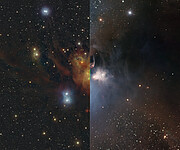
ESO telescope reveals hidden views of vast stellar nurseries

PR Image eso2307a
An infrared view of the L1688 region in Ophiuchus

PR Image eso2307b
An infrared view of the Lupus 2 region

PR Image eso2307c
An infrared view of the Lupus 3 region

PR Image eso2307d
An infrared view of the HH 909 A object in Chamaeleon

PR Image eso2307e
An infrared view of the IRAS 11051-7706 object in Chamaeleon

PR Image eso2307f
An infrared view of the region around the Coronet star cluster

PR Image eso2307g
The L1688 region in visible light

PR Image eso2307h
The Lupus 3 region in visible light

PR Image eso2307i
The Coronet region in visible light


Videos

Hidden views of vast stellar nurseries (ESOcast 262 Light)  


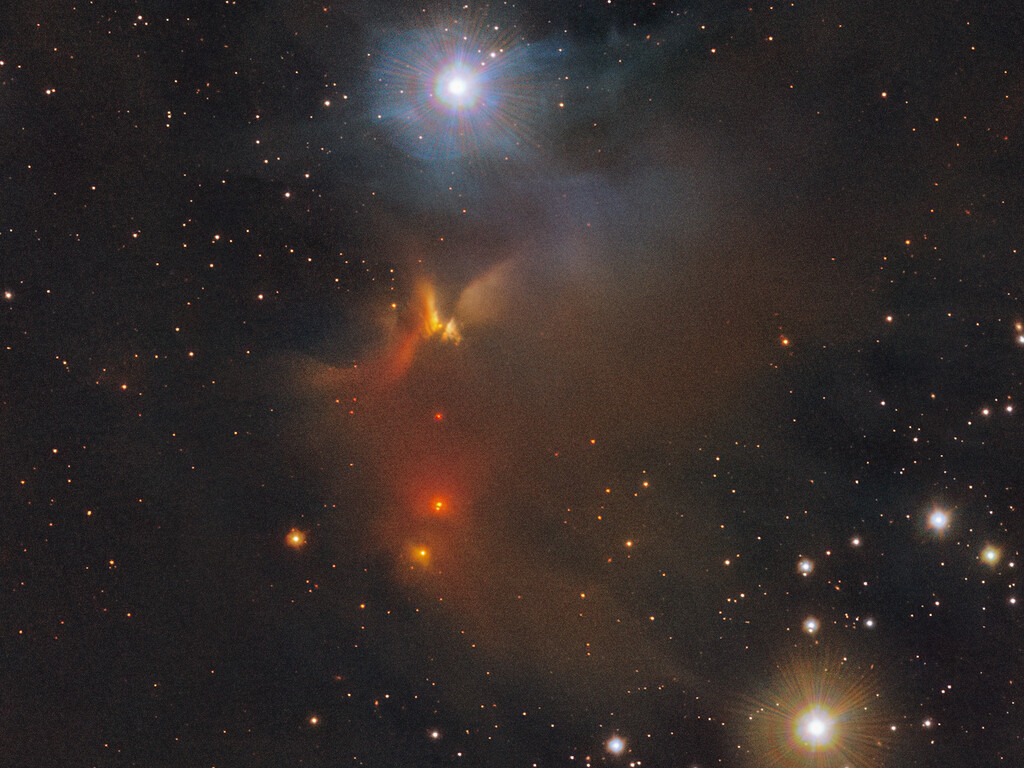
Using ESO’s Visible and Infrared Survey Telescope for Astronomy (VISTA), astronomers have created a vast infrared atlas of five nearby stellar nurseries by piecing together more than one million images. These large mosaics reveal young stars in the making, embedded in thick clouds of dust. Thanks to these observations, astronomers have a unique tool with which to decipher the complex puzzle of stellar birth.

“In these images we can detect even the faintest sources of light, like stars far less massive than the Sun, revealing objects that no one has ever seen before,” says Stefan Meingast, an astronomer at the University of Vienna in Austria and lead author of the new study published today in Astronomy & Astrophysics. “This will allow us to understand the processes that transform gas and dust into stars.”

Stars form when clouds of gas and dust collapse under their own gravity, but the details of how this happens are not fully understood. How many stars are born out of a cloud? How massive are they? How many stars will also have planets?

To answer these questions, Meingast’s team surveyed five nearby star-forming regions with the VISTA telescope at ESO’s Paranal Observatory in Chile. Using VISTA’s infrared camera VIRCAM, the team captured light coming from deep inside the clouds of dust. “The dust obscures these young stars from our view, making them virtually invisible to our eyes. Only at infrared wavelengths can we look deep into these clouds, studying the stars in the making,” explains Alena Rottensteiner, a PhD student also at the University of Vienna and co-author of the study.

The survey, called VISIONS, observed star-forming regions in the constellations of Orion, Ophiuchus, Chamaeleon, Corona Australis and Lupus. These regions are less than 1500 light-years away and so large that they span a huge area in the sky. The diameter of VIRCAM’s field of view is as wide as three full Moons, which makes it uniquely suited to map these immensely big regions.

The team obtained more than one million images over a period of five years. The individual images were then pieced together into the large mosaics released here, revealing vast cosmic landscapes. These detailed panoramas feature dark patches of dust, glowing clouds, newly-born stars and the distant background stars of the Milky Way.

Since the same areas were observed repeatedly, the VISIONS data will also allow astronomers to study how young stars move. “With VISIONS we monitor these baby stars over several years, allowing us to measure their motion and learn how they leave their parent clouds,” explains João Alves, an astronomer at the University of Vienna and Principal Investigator of VISIONS. This is not an easy feat, as the apparent shift of these stars as seen from Earth is as small as the width of a human hair seen from 10 kilometres away. These measurements of stellar motions complement those obtained by the European Space Agency’s Gaia mission at visible wavelengths, where young stars are hidden by thick veils of dust.

The VISIONS atlas will keep astronomers busy for years to come. “There is tremendous long-lasting value for the astronomical community here, which is why ESO steers Public Surveys like VISIONS,” says Monika Petr-Gotzens, an astronomer at ESO in Garching, Germany, and co-author of this study. Moreover, VISIONS will set the groundwork for future observations with other telescopes such as ESO’s Extremely Large Telescope (ELT), currently under construction in Chile and set to start operating later this decade. “The ELT will allow us to zoom into specific regions with unprecedented detail, giving us a never-seen-before close-up view of individual stars that are currently forming there,” concludes Meingast.


More Information

This research was presented in the paper “VISIONS: The VISTA Star Formation Atlas”, to appear in Astronomy & Astrophysics (doi: 10.1051/0004-6361/202245771)

The team is composed of Stefan Meingast (University of Vienna, Austria [Vienna]), João Alves (Vienna), Hervé Bouy (Université de Bordeaux, France [Bordeaux]), Monika G. Petr-Gotzens (European Southern Observatory, Germany [ESO]), Verena Fürnkranz (Max-Planck-Institut für Astronomie, Germany [MPIA]]), Josefa E. Großschedl (Vienna), David Hernandez (Vienna), Alena Rottensteiner (Vienna), Joana Ascenso (Universidade do Porto, Portugal [Porto]; Universidade de Lisboa, Portugal [Lisboa]), Amelia Bayo (ESO; Universidad de Valparaíso, Chile), Erik Brändli (Vienna), Anthony G. A. Brown (Leiden University, Netherlands), Jan Forbrich (University of Hertfordshire, UK [Hertfordshire]), Alyssa Goodman (Harvard-Smithsonian Center for Astrophysics, USA [CfA]), Alvaro Hacar (Vienna), Birgit Hasenberger (Vienna), Rainer Köhler (The CHARA Array of Georgia State University, USA), Karolina Kubiak (Lisboa), Michael Kuhn (Hertfordshire), Charles Lada (CfA), Kieran Leschinski (Vienna), Marco Lombardi (Università degli Studi di Milano, Italy), Diego Mardones (Universidad de Chile, Chile), Núria Miret-Roig (European Space Agency, European Space Research and Technology Centre, Netherlands [ESA]), André Moitinho (Lisboa), Koraljka Mužiiić (Porto; Lisboa), Martin Piecka (Vienna), Laura Posch (Vienna), Timo Prusti (ESA), Karla Peña Ramírez (Universidad de Antofagasta, Chile), Ronny Ramlau (Johannes Kepler University Linz, Austria; Johann Radon Institute for Computational and Applied Mathematics, Austria), Sebastian Ratzenböck (Vienna; Research Network Data Science at Uni Vienna), Germano Sacco (INAF – Osservatorio Astrofisico di Arcetri, Italy), Cameren Swiggum (Vienna), Paula Stella Teixeira (University of St Andrews, UK), Vanessa Urban (Vienna), Eleonora Zari (MPIA), and Catherine Zucker (Bordeaux).

The European Southern Observatory (ESO) enables scientists worldwide to discover the secrets of the Universe for the benefit of all. We design, build and operate world-class observatories on the ground — which astronomers use to tackle exciting questions and spread the fascination of astronomy — and promote international collaboration in astronomy. Established as an intergovernmental organisation in 1962, today ESO is supported by 16 Member States (Austria, Belgium, the Czech Republic, Denmark, France, Finland, Germany, Ireland, Italy, the Netherlands, Poland, Portugal, Spain, Sweden, Switzerland and the United Kingdom), along with the host state of Chile and with Australia as a Strategic Partner. ESO’s headquarters and its visitor centre and planetarium, the ESO Supernova, are located close to Munich in Germany, while the Chilean Atacama Desert, a marvellous place with unique conditions to observe the sky, hosts our telescopes. ESO operates three observing sites: La Silla, Paranal and Chajnantor. At Paranal, ESO operates the Very Large Telescope and its Very Large Telescope Interferometer, as well as survey telescopes such as VISTA. Also at Paranal ESO will host and operate the Cherenkov Telescope Array South, the world’s largest and most sensitive gamma-ray observatory. Together with international partners, ESO operates ALMA on Chajnantor, a facility that observes the skies in the millimetre and submillimetre range. At Cerro Armazones, near Paranal, we are building “the world’s biggest eye on the sky” — ESO’s Extremely Large Telescope. From our offices in Santiago, Chile we support our operations in the country and engage with Chilean partners and society.


Link


Contacts:

Stefan Meingast
University of Vienna
Vienna, Austria
Email:
stefan.meingast@univie.ac.at

Juan Carlos Muñoz Mateos
ESO Media Officer
Garching bei München, Germany
Tel: +49 89 3200 6176
Email
: press@eso.org

Source: ESO/News