Thursday, October 14, 2021

G344.7-0.1: When a Stable Star Explodes Quick Look: When a Stable Star Explodes


G344.7-0.1
Credit: X-ray: NASA/CXC/Tokyo Univ. of Science/K. Fukushima, et al.;
IR: NASA/JPL/Spitzer; Radio: CSIRO/ATNF/ATCA

 JPEG (225.7 kb) - Large JPEG (1.1 MB) - Tiff (37.5 MB) - More Images

Tour: Abell 1775 - More Animations


White dwarfs are among the most stable of stars. Left on their own, these stars that have exhausted most of their nuclear fuel — while still typically as massive as the Sun — and shrunk to a relatively small size can last for billions or even trillions of years.

However, a white dwarf with a nearby companion star can become a cosmic powder keg. If the companion's orbit brings it too close, the white dwarf can pull material from it until the white dwarf grows so much that it becomes unstable and explodes. This kind of stellar blast is called a Type Ia supernova.

While it is generally accepted by astronomers that such encounters between white dwarfs and "normal" companion stars are one likely source of Type Ia supernova explosions, many details of the process are not well understood. One way to investigate the explosion mechanism is to look at the elements left behind by the supernova in its debris or ejecta.

This new composite image shows G344.7-0.1, a supernova remnant created by a Type Ia supernova, through the eyes of different telescopes. X-rays from NASA's Chandra X-ray Observatory (blue) have been combined with infrared data from NASA's Spitzer Space Telescope (yellow and green) as well as radio data from the NSF's Very Large Array and the Commonwealth Scientific and Industrial Research Organisation's Australia Telescope Compact Array (red).

Chandra is one of the best tools available for scientists to study supernova remnants and measure the composition and distribution of "heavy" elements — that is, anything other than hydrogen and helium — they contain.

Astronomers estimate that G344.7-0.1 is about 3,000 to 6,000 years old in Earth's time frame. On the other hand, the most well-known and widely-observed Type Ia remnants, including Kepler, Tycho, and SN 1006, have all exploded within the last millennium or so as seen from Earth. Therefore, this deep look at G344.7-0.1 with Chandra gives astronomers a window into an important phase later in the evolution of a Type Ia supernova remnant.

Both the expanding blast wave and the stellar debris produce X-rays in supernova remnants. As the debris moves outward from the initial explosion, it encounters resistance from surrounding gas and slows down, creating a reverse shock wave that travels back toward the center of the explosion. This process is analogous to a traffic jam on a highway, where as times passes an increasing number of cars will stop or slow down behind the accident, causing the traffic jam to travel backwards. The reverse shock heats the debris to millions of degrees, causing it to glow in X-rays.

Type Ia remnants like Kepler, Tycho and SN 1006 are too young for the reverse shock to have time to plausibly travel backwards to heat all of the debris in the remnant's center. However, the relatively advanced age of G344.7-0.1 means that the reverse shock has moved back through the entire debris field.

A separate color version of only the Chandra data shows X-ray emission from iron (blue) and silicon (red) respectively, and X-rays produced by the acceleration of electrons as they are deflected by the nuclei of atoms that are positively charged (green). The region with the highest density of iron and the arc-like structures of silicon are labeled.


G344.7-0.13
3 Color X-Ray Composite (Labeled)

The Chandra image of G344.7-0.1 shows that the region with the highest density of iron (blue) is surrounded by arc-like structures (green) containing silicon. Similar arc-like structures are found for sulfur, argon, and calcium. The Chandra data also suggests that the region with the highest density iron has been heated by the reverse shock more recently than the elements in the arc-like structures, implying that it is located near the true center of the stellar explosion. These results support the predictions of models for Type Ia supernova explosions, which show that heavier elements are produced in the interior of an exploding white dwarf.

This three-color Chandra image also shows that the densest iron is located to the right of the supernova remnant's geometric center. This asymmetry is likely caused by gas surrounding the remnant being denser on the right than it is on the left.

A paper describing these results was published in the July 1st, 2020 issue of The Astrophysical Journal and is available online. The authors of the study are Kotaro Fukushima (Tokyo University of Science, Japan), Hiroya Yamaguchi (JAXA), Patrick Slane (Center for Astrophysics | Harvard & Smithsonian), Sangwook Park (University of Texas, Austin), Satoru Katsuda (Saitama University, Japan), Hidetoshi Sano (Nagoya University, Japan), Laura Lopez (The Ohio State University, Columbus), Paul Plucinsky (Center for Astrophysics), Shogo Kobayashi (Tokyo University of Science), and Kyoko Matsushita (Tokyo University of Science). The radio data were provided by Elsa Giacani from the Institute of Astronomy and Space Physics, who led a study of G344.7-0.1 published in 2011 in the journal Astronomy and Astrophysics.

NASA's Marshall Space Flight Center manages the Chandra program. The Smithsonian Astrophysical Observatory's Chandra X-ray Center controls science from Cambridge Massachusetts and flight operations from Burlington, Massachusetts.

Quick Look: When a Stable Star Explodes


Fast Facts for G344.7-0.1:

Scale: Image is about 17.6 arcmin (100 light years) across.
Category:
Supernovas & Supernova Remnants
Coordinates (J2000): RA 17h 03m 56s | Dec -41° 42´ 59"
Constellation:
Scorpius
Observation Date: 7 observations between May 12 and July 05, 2018
Observation Time: 33 hours 8.4 minutes (2 days, 9 hours, 8.4 minutes)
Obs. ID: 20308, 20309, 21093, 21094, 21095, 21096, 21117
Instrument:
ACIS
References: Fukushima, K., et al., 2020, ApJ, 897, 62. arXiv:2005.09664
Color Code: Multiwavelength Image: Radio (red), Infrared (green & yellow), X-ray (blue); X-ray 3 Color Image: Si (red), 3-6 keV (green), Fe (blue)
Distance Estimate: About 19,600 light years

Wednesday, October 13, 2021

Meet the 42: ESO images some of the biggest asteroids in our Solar System

 
PR Image eso2114a
42 asteroids imaged by ESO’s VLT (annotated)

Ceres and Vesta

PR Image eso2114c
Ausonia and Urania

PR Image eso2114d
Sylvia and Lamberta

PR Image eso2114e
Kalliope and Psyche

PR Image eso2114f
Poster of 42 asteroids in our Solar System and their orbits (black background)

PR Image eso2114g
Poster of 42 asteroids in our Solar System and their orbits (blue background)


Video

Meet 42 Asteroids in Our Solar System (ESOcast 243 Light)

Looking at the identity cards of eight asteroids in our Solar System
Looking at the identity cards of eight asteroids in our Solar System 
 
42 asteroids in our Solar System and their orbits
PR Video eso2114c
42 asteroids in our Solar System and their orbits


Using the European Southern Observatory’s Very Large Telescope (ESO’s VLT) in Chile, astronomers have imaged 42 of the largest objects in the asteroid belt, located between Mars and Jupiter. Never before had such a large group of asteroids been imaged so sharply. The observations reveal a wide range of peculiar shapes, from spherical to dog-bone, and are helping astronomers trace the origins of the asteroids in our Solar System.

The detailed images of these 42 objects are a leap forward in exploring asteroids, made possible thanks to ground-based telescopes, and contribute to answering the ultimate question of life, the Universe, and everything [1].

“Only three large main belt asteroids, Ceres, Vesta and Lutetia, have been imaged with a high level of detail so far, as they were visited by the space missions Dawn and Rosetta of NASA and the European Space Agency, respectively,” explains Pierre Vernazza, from the Laboratoire d’Astrophysique de Marseille in France, who led the asteroid study published today in Astronomy & Astrophysics. "Our ESO observations have provided sharp images for many more targets, 42 in total."

The previously small number of detailed observations of asteroids meant that, until now, key characteristics such as their 3D shape or density had remained largely unknown. Between 2017 and 2019, Vernazza and his team set out to fill this gap by conducting a thorough survey of the major bodies in the asteroid belt.

Most of the 42 objects in their sample are larger than 100 km in size; in particular, the team imaged nearly all of the belt asteroids larger than 200 kilometres, 20 out of 23. The two biggest objects the team probed were Ceres and Vesta, which are around 940 and 520 kilometres in diameter, whereas the two smallest asteroids are Urania and Ausonia, each only about 90 kilometres.

By reconstructing the objects’ shapes, the team realised that the observed asteroids are mainly divided into two families. Some are almost perfectly spherical, such as Hygiea and Ceres, while others have a more peculiar, “elongated” shape, their undisputed queen being the “dog-bone” asteroid Kleopatra.

By combining the asteroids’ shapes with information on their masses, the team found that the densities change significantly across the sample. The four least dense asteroids studied, including Lamberta and Sylvia, have densities of about 1.3 grams per cubic centimetre, approximately the density of coal. The highest, Psyche and Kalliope, have densities of 3.9 and 4.4 grammes per cubic centimetre, respectively, which is higher than the density of diamond (3.5 grammes per cubic centimetre).

This large difference in density suggests the asteroids’ composition varies significantly, giving astronomers important clues about their origin. “Our observations provide strong support for substantial migration of these bodies since their formation. In short, such tremendous variety in their composition can only be understood if the bodies originated across distinct regions in the Solar System,” explains Josef Hanuš of the Charles University, Prague, Czech Republic, one of the authors of the study. In particular, the results support the theory that the least dense asteroids formed in the remote regions beyond the orbit of Neptune and migrated to their current location.

These findings were made possible thanks to the sensitivity of the Spectro-Polarimetric High-contrast Exoplanet REsearch (SPHERE) instrument mounted on ESO’s VLT [2]. “With the improved capabilities of SPHERE, along with the fact that little was known regarding the shape of the largest main belt asteroids, we were able to make substantial progress in this field,” says co-author Laurent Jorda, also of the Laboratoire d'Astrophysique de Marseille.

Astronomers will be able to image even more asteroids in fine detail with ESO’s upcoming Extremely Large Telescope (ELT), currently under construction in Chile and set to start operations later this decade. “ELT observations of main-belt asteroids will allow us to study objects with diameters down to 35 to 80 kilometres, depending on their location in the belt, and craters down to approximately 10 to 25 kilometres in size,” says Vernazza. “Having a SPHERE-like instrument at the ELT would even allow us to image a similar sample of objects in the distant Kuiper Belt. This means we’ll be able to characterise the geological history of a much larger sample of small bodies from the ground.”


Notes
 
[1] In The Hitchhiker's Guide to the Galaxy by Douglas Adams, the number 42 is the answer to the "Ultimate Question of Life, the Universe, and Everything." Today, 12 October 2021, is the 42nd anniversary of the publication of the book.

[2] All observations were conducted with the Zurich IMaging POLarimeter (ZIMPOL), an imaging polarimeter subsystem of the SPHERE instrument that operates at visible wavelengths.


More Information

This research was presented in a paper to appear in Astronomy & Astrophysics (https://www.aanda.org/10.1051/0004-6361/202141781).

The team is composed of P. Vernazza (Aix Marseille University, CNRS, CNES, Laboratoire d’Astrophysique de Marseille, France [LAM]), M. Ferrais (LAM), L. Jorda (LAM), J. Hanuš (Institute of Astronomy, Faculty of Mathematics and Physics, Charles University, Prague, Czech Republic [CU]), B. Carry (Université Côte d’Azur, Observatoire de la Côte d’Azur, CNRS, Laboratoire Lagrange, France [OCA]), M. Marsset (Department of Earth, Atmospheric and Planetary Sciences, MIT, Cambridge, USA [MIT]),  M. Brož (CU), R. Fetick (French Areospace Lab [ONERA] and LAM), M. Viikinkoski (Mathematics & Statistics, Tampere University, Finland [TU]), F. Marchis (LAM and SETI Institute, Carl Sagan Center, Mountain View, USA),  F. Vachier (Institut de mécanique céleste et de calcul des éphémérides, Observatoire de Paris, PSL Research University, CNRS, Sorbonne Universités, UPMC University Paris 06 and Université de Lille, France [IMCCE]),  A. Drouard (LAM), T. Fusco (French Areospace Lab [ONERA] and LAM),  M. Birlan (IMCCE and Astronomical Institute of Romanian Academy, Bucharest, Romania [AIRA]),  E. Podlewska-Gaca (Faculty of Physics, Astronomical Observatory Institute, Adam Mickiewicz University, Poznan, Poland [UAM]), N. Rambaux (IMCCE), M. Neveu (University of Maryland College Park, NASA Goddard Space Flight Center, US [UMD]), P. Bartczak (UAM), G. Dudziński (UAM),  E. Jehin (Space sciences, Technologies and Astrophysics Research Institute, Université de Liège, Belgium [STAR]), P. Beck (Institut de Planetologie et d’Astrophysique de Grenoble, UGA-CNRS, France [OSUG]), J. Berthier (IMCCE), J. Castillo-Rogez (Jet Propulsion Laboratory, California Institute of Technology, Pasadena,USA [JPL]), F. Cipriani (European Space Agency, ESTEC - Scientific Support Office, Noordwijk, The Netherlands [ESTEC]​​), F. Colas (IMCCE), C. Dumas (Thirty Meter Telescope, Pasadena, USA [TMT]), J. Ďurech (CU),  J. Grice (Laboratoire Atmosphères, Milieux et Observations Spatiales, CNRS and Université de Versailles Saint-Quentin-en-Yvelines, Guyancourt, France [UVSQ] and School of Physical Sciences, The Open University, Milton Keynes, UK [OU]),  M. Kaasalainen (TU), A. Kryszczynska (UAM), P. Lamy (Departamento de Fisica, Ingeniería de Sistemas y Teoría de la Señal, Universidad de Alicante, Alicante, Spain), H. Le Coroller (LAM), A. Marciniak (UAM), T. Michalowski (UAM), P. Michel (OCA), T. Santana-Ros (Institut de Ciències del Cosmos, Universitat de Barcelona, Spain and European Southern Observatory, Santiago, Chile), P. Tanga (OCA), A. Vigan (LAM), O. Witasse (ESTEC), B. Yang (European Southern Observatory, Santiago, Chile), P. Antonini (Observatoire des Hauts Pays, Bédoin, France), M. Audejean (Observatoire de Chinon, Chinon, France), P. Aurard (AMU, Observatoire de Haute Provence, Institut Pythéas, Saint-Michel l’Observatoire, France [OHP]), R. Behrend (Geneva Observatory, Sauverny, Switzerland and High Energy Physics and Astrophysics Laboratory, Cadi Ayyad University, Marrakech, Morocco [UCA]), Z. Benkhaldoun (UCA), J. M. Bosch (B74, Avinguda de Catalunya 34, 25354 Santa Maria de Montmagastrell (Tarrega), Spain), A. Chapman (Cruz del Sur Observatory, San Justo city, Buenos Aires, Argentina), L. Dalmon (OHP), S. Fauvaud (Observatoire du Bois de Bardon, Taponnat, France and Association T60, Observatoire Midi-Pyrénées, Toulouse, France), Hiroko Hamanowa (Hong Kong Space Museum, Tsimshatsui, Hong Kong, PR China [HKSM]), Hiromi Hamanowa (HKSM), J. His (OHP), A. Jones (I64, SL6 1XE, Maidenhead, UK), D-H. Kim (Korea Astronomy and Space Science Institute, Daejeon, Korea [KASI] and Chungbuk National University, Chungdae-ro, Seowon-gu, Cheongju-si, Chungcheongbuk-do, Korea), M-J. Kim (KASI), J. Krajewski (Faculty of Physics, Astronomical Observatory Institute, Adam Mickiewicz University, Poznań, Poland), O. Labrevoir (OHP), A. Leroy (Observatoire OPERA, Saint Palais, France [OPERA] and Uranoscope, Gretz-Armainvilliers, France), F. Livet (Institut d’Astrophysique de Paris, Paris, France, UMR 7095 CNRS et Sorbonne Universités), D. Molina (Anunaki Observatory, Calle de los Llanos, Manzanares el Real, Spain), R. Montaigut (Club d’Astronomie de Lyon Ampere, Vaulx-en-Velin, France and OPERA), J. Oey (Kingsgrove, NSW, Australia), N. Payre (OHP), V. Reddy (Planetary Science Institute, Tucson, USA), P. Sabin (OHP), A. G. Sanchez (Rio Cofio Observatory, Robledo de Chavela, Spain), and L. Socha (Cicha 43, 44-144 Nieborowice, Poland).

ESO is the foremost intergovernmental astronomy organisation in Europe and the world’s most productive ground-based astronomical observatory by far. It has 16 Member States: Austria, Belgium, the Czech Republic, Denmark, France, Finland, Germany, Ireland, Italy, the Netherlands, Poland, Portugal, Spain, Sweden, Switzerland and the United Kingdom, along with the host state of Chile and with Australia as a Strategic Partner. ESO carries out an ambitious programme focused on the design, construction and operation of powerful ground-based observing facilities enabling astronomers to make important scientific discoveries. ESO also plays a leading role in promoting and organising cooperation in astronomical research. ESO operates three unique world-class observing sites in Chile: La Silla, Paranal and Chajnantor. At Paranal, ESO operates the Very Large Telescope and its world-leading Very Large Telescope Interferometer as well as two survey telescopes, VISTA working in the infrared and the visible-light VLT Survey Telescope. Also at Paranal ESO will host and operate the Cherenkov Telescope Array South, the world’s largest and most sensitive gamma-ray observatory. ESO is also a major partner in two facilities on Chajnantor, APEX and ALMA, the largest astronomical project in existence. And on Cerro Armazones, close to Paranal, ESO is building the 39-metre Extremely Large Telescope, the ELT, which will become “the world’s biggest eye on the sky”.


Links

Pierre Vernazza
Laboratoire d’Astrophysique de Marseille
Marseille, France
Tel: +33 4 91 05 59 11
Email:
pierre.vernazza@lam.fr

Josef Hanuš
Charles University
Prague, Czech Republic
Email:
josef.hanus@mff.cuni.cz

Laurent Jorda
Laboratoire d’Astrophysique de Marseille
Marseille, France
Tel: +33 4 91 05 69 06
Email:
laurent.jorda@lam.fr

Bárbara Ferreira
ESO Media Manager
Garching bei München, Germany
Tel: +49 89 3200 6670
Cell: +49 151 241 664 00
Email:
press@eso.org

 Source: ESO/News


Tuesday, October 12, 2021

Aurorae discovered on distant stars suggest hidden planets

Artist impression of a red-dwarf star’s magnetic interaction with its exoplanet
Credit to image: Danielle Futselaar (artsource.nl)


Using the world’s most powerful radio telescope, LOFAR, scientists have discovered stars unexpectedly blasting out radio waves, possibly indicating the existence of hidden planets.

Searching for red dwarfs

Leiden University’s Dr Joseph Callingham and his colleagues have been searching for aurorae from exoplanets using the Low Frequency Array (LOFAR), the world’s most powerful radio telescope. “We’ve discovered signals from 19 distant red dwarf stars, four of which are best explained by the existence of planets orbiting them,” Dr Callingham said. “We’ve long known that the planets of our own solar system emit powerful radio waves as their magnetic fields interact with the solar wind. This same process drives the beautiful aurorae we see at the poles of Earth.

“However, it is only with LOFAR have we had the sensitivity to find auroral emission outside our Solar System. This is an incredibly powerful tool to help find planets outside our Solar System and to determine their magnetic fields.” LOFAR was designed, built and is presently operated by ASTRON, the Netherlands Institute for Radio Astronomy, its core is situated in Exloo, the Netherlands.

A spectacle from lightyears away

Dr Harish Vedantham at ASTRON, the Netherlands Institute for Radio Astronomy, co-author of the paper, said that the team is confident these signals are coming from the magnetic connection of the stars and unseen orbiting planets, similar to the interaction between Jupiter and its moon Io. “Our own Earth has aurorae, commonly recognised here as the northern and southern lights. These beautiful aurorae also emit powerful radio waves – this is from the interaction of the planet’s magnetic field with the solar wind,” he said. “But in the case of aurorae from Jupiter, they’re much stronger as its volcanic moon Io is blasting material out into space, filling Jupiter’s environment with particles that drive unusually powerful aurorae.

“Our model for this radio light from our stars is a scaled-up version of Jupiter and Io, with an exoplanet enveloped in the magnetic field of a star, feeding material into vast currents that similarly power bright aurorae on the star itself.

“It’s a spectacle that has attracted our attention from lightyears away.”


The hunt for exo-aurora's
Video explaining aurorae on a star, video was made in 2020 when astronomers first detected aurorae on a star

Future observations with the Square Kilometre Array 
 
The team are now investigating the direct presence of the planets around the star using optical telescopes and searching for periodicity in the radio light. “The radio light should turn on and off like a lighthouse,” Dr Callingham said “and we hope to see that periodicity in new LOFAR data.” The discoveries with LOFAR are just the beginning, but the telescope only has the capacity to monitor stars that are relatively nearby, up to 165 lightyears away. With the next-generation Square Kilometre Array radio telescope finally under construction, switching on in 2029, the team predict they will be able to see hundreds of relevant stars out to much greater distances.

This work demonstrates that radio astronomy is on the cusp of revolutionising our understanding of planets outside our Solar System.

Scientific articles 
 
The population of M dwarfs observed at low radio frequencies. J.R. Callingham, H.K. Vedantham, T.W. Shimwell, B.J.S. Pope, I.E. Davis, P.N. Best, M.J. Hardcastle, H.J.A. Röttgering, J. Sabater, C. Tasse, R.J. van Weeren, W.L. Williams, P. Zarka, F. de Gasperin & A. Drabent. Accepted for publication in Nature Astronomy. https://www.nature.com/articles/s41550-021-01483-0

The TESS View of LOFAR Radio-Emitting Stars. Benjamin J.S. Pope, Joseph R. Callingham, Adina D. Feinstein, Maximilian N. Günther, Harish K. Vedantham, Megan Ansdell, & Timothy W. Shimwell. Accepted for publication in Astrophysical Journal Letters.
https://doi.org/10.3847/2041-8213/ac230c

LOFAR

The International LOFAR Telescope is a trans-European network of radio antennas, with a core located in Exloo in the Netherlands. LOFAR works by combining the signals from nearly 110,000 individual antenna dipoles, located in ‘antenna stations’ across the Netherlands and in partner European countries. The stations are connected by a high-speed fibre optic network, with powerful computers used to process the radio signals in order to simulate a trans-European radio antenna that stretches over 2000 kilometres. The International LOFAR Telescope is unique, given its sensitivity, wide field-of-view, and image resolution or clarity. The LOFAR data archive is the largest astronomical data collection in the world.

LOFAR was designed, built and is presently operated by ASTRON, the Netherlands Institute for Radio Astronomy. France, Germany, Ireland, Italy, Latvia, the Netherlands, Poland, Sweden and the UK are all partner countries in the International LOFAR Telescope.


Monday, October 11, 2021

The Blazing Sky: LAMOST Observations Reveal Nature of Unknown Gamma-ray Sources


Fig. 1 Artistic representation of an active galaxy jet
Image by M. Kornmesser/ESO


Fig. 2 Example of the completely featureless optical spectrum of the BL Lac known as J065046.49+250259.6
Image by Harold A. Peña Herazo

An international team of astronomers has unveiled the nature of hundreds of gamma-ray emitting sources, discovering that most of them belong to the class of active galaxies known as blazars. 

Their recent study was published in The Astronomical Journal.

One of the most intriguing challenges in modern gamma-ray astronomy is searching for low-energy counterparts of unidentified gamma-ray sources. Unidentified sources constitute about 1/3 of all celestial objects detected by the Fermi satellite to date, the most recent gamma-ray mission with unprecedented capabilities for observing the high energy sky.

Since the largest population of known gamma-ray sources are blazars, astronomers believe they can also classify most unidentified gamma-ray sources as blazars. However, they can completely understand their nature only by observing blazar candidates at visible frequencies.

Blazars are extremely rare, black hole-powered galaxies. They host a supermassive black hole in their central regions that sweep out matter at almost the speed of light in the form of a powerful jet pointing towards the Earth. Particles accelerated in these jets can emit light up to the most energetic gamma-rays, thus being visible by instruments onboard the Fermi satellite.

The team, led by Dr. Harold Peña Herazo from Mexico's National Institute of Astrophysics, Optics, and Electronics (INAOE), analyzed hundreds of optical spectra collected by the Large Sky Area Multi-Object Fabre Spectroscopic Telescope (LAMOST) at the Xinglong Station in China.

LAMOST is hosted by National Astronomical Observatories of Chinese Academy of Sciences. It provided a unique opportunity to unveil the nature of blazar-like sources that can potentially be counterparts of unidentified gamma-ray sources.

From the list of sources discovered by the Fermi satellite, the researchers selected a sample of Blazar Candidates of Uncertain type (BCUs), which share several properties in common with blazars. However, optical spectroscopic observations are necessary to determine their proper classification and confirm their nature.

Using spectroscopic data available in the LAMOST archive, the researchers were able to classify tens of BCUs as blazars. "LAMOST data also permitted verifying the nature of hundreds of additional blazars by searching for emission or absorption lines used to determine their cosmological distances," said Prof. GU Minfeng from Shanghai Astronomical Observatory of Chinese Academy of Sciences.

The vast majority of sources belong to the blazar class known as BL Lac objects and have a completely featureless optical spectrum. This makes measuring their cosmological distances an extremely challenging task. However, thanks to the LAMOST observations, a few more of them have luckily revealed visible signatures in their optical spectra.

"Our analysis showed great potential for the LAMOST survey and allowed us to discover a few changing-look blazars," said Dr. Peña Herazo, currently a postdoctoral fellow at the East Asian Observatory.

"It is worth noting that the possibility of using LAMOST observations to estimate blazar cosmological distances is critical to studying this population, its cosmological evolution, the imprint in the extragalactic gamma-ray background light in the gamma-ray spectra, and the blazar contribution to the extragalactic gamma-ray background," said Prof. Francesco Massaro from the University of Turin.

"I started working on this optical campaign and analyzing spectroscopic data in 2015, and nowadays, thanks to the observations available in LAMOST archive, we certainly made a significant step toward the identification of gamma-ray sources with blazars. Future perspectives achievable thanks to LAMOST datasets will definitively reveal the nature of hundreds of new blazars in the years to come," commented Dr. Federica Ricci at Bologna University and INAF-OAS.

The group’s previous study was also published in The Astronomical Journal. 


Contact:


Related Articles


Friday, October 08, 2021

First ALMA Animation of Circling Twin Young Stars


Artist’s impression of the young binary system XZ Tau. The two young stars in the system each have a protoplanetary disk around them that is tilted with respect to the other. The two young stars orbit in a plane different from that of either disk. Credit: ALMA (ESO/NAOJ/NRAO)


Orbital motion of the young binary XZ Tau system. The location of XZ Tau A (lower-left) is fixed in the image and the relative motion of XZ Tau B is shown. The distributions of the radio waves from the protoplanetary disks are shown in gray scale (2015), red contours (2016), and blue contours (2017). The location of each star is shown as a plus sign. Credit: ALMA (ESO/NAOJ/NRAO), T. Ichikawa et al.


Animated orbital motion of the young binary XZ Tau system. The location of XZ Tau A (lower-left) is fixed in the image and the relative motion of XZ Tau B is shown. The distributions of the radio waves from the protoplanetary disks are shown in gray scale and contours. The location of each star is shown as a plus sign. Credit: ALMA (ESO/NAOJ/NRAO), T. Ichikawa et al.

Researchers analyzed the accumulated data from the Atacama Large Millimeter/submillimeter Array (ALMA) and depicted the motion of a young twin star system XZ Tauri over three years. This first-ever “ALMA Animation” of twin stars sheds new light on the origins of the binary stars and the planets to be formed around them. 

“This achievement was made possible by the high resolution and rich archival data of ALMA,” says Takanori Ichikawa, the first author of the research paper and a former graduate student at Kagoshima University, Japan. “This research utilized three years of observation data. The results show the feasibility of a new research method using radio astronomical animations instead of conventional images. I hope that this method will help to clarify various astronomical phenomena in the future.”

The Sun is a single star, but the Universe is full of binary stars, which are two stars orbiting each other. During its youth, each young star in a binary system is surrounded by a protoplanetary disk composed of molecular gas and dust. This disk is known to be the site of planet formation. Many planets associated with binary stars have actually been detected, but how the disks are formed in binary star systems and how planets are formed in those systems is still a mystery.

“In order to study the formation of planets in binary star systems, it is important to accurately determine the orbital motion of the two stars and the tilt of the individual protoplanetary disks,” explains Shigehisa Takakuwa, a professor at Kagoshima University.

Researchers have suggested two formation mechanisms for binary systems; one is a breakup of a single large gaseous disk, and the other is fragmentation of the larger molecular cloud due to violent turbulence. In the former case, astronomers suppose that the orbit of the binary stars and the individual disks should be on the same plane. On the other hand, in the latter case, the orbital plane of the binary stars and the plane of the disks are expected to be different. This is a major issue that will affect the final orbits of the planets in binary systems.

The research team dug into the ALMA data archive and obtained the data for the young XZ Tau system taken in 2015, 2016, and 2017. They carefully analyzed the data and for the first time made an animation of the orbital motion of the binary stars, which shows that XZ Tau B moved 3.4 astronomical units (3.4 times the radius of Earth’s orbit) around XZ Tau A during these three years.

The team figured out the three-dimensional structure of the orbit. In addition, analyzing the doppler effect and the distribution of the radio waves from the disk around each star in the XZ Tau system, they found that those disks are significantly misaligned with respect to each other, and also not in the same plane as the binary orbit.

Previous observations with ALMA had found examples of young binary stars with protoplanetary disks tilted with respect to each other (Note). However, this is the first time that the orbital motion of a binary system has been clarified, showing that the inclination is different from those of the circumstellar disks. These results support the idea that the XZ Tau system was formed via molecular cloud fragmentation.

“This is a beautiful example of utilizing the rich ALMA archive,” says Takakuwa. “The archive paves the way for young researchers to start conducting cutting-edge research right away.” It is true for this study. “I am very honored to contribute to such interesting research as an undergraduate student,” says Miyu Kido at Kagoshima University, the second author of the research paper. “I hope to use this experience in my own future research.”

Note: Examples of misaligned disks around young binaries include HK Tau (“ALMA Finds Double Star with Weird and Wild Planet-forming Disks published on July 31, 2014) and IRAS 04191+1523 (“ALMA Reveals Turbulent Birth of Twin Baby Stars

Paper Information

These observation results were published as Takanori Ichikawa, et al. “Misaligned Circumstellar Disks and Orbital Motion of the Young Binary XZ Tau” in the Astrophysical Journal on September 23, 2021.

This research was supported by JSPS KAKENHI (No. JP18K03703, JP21H00048, JP21H04495, JP19K23463, JP20K04035, JP21H00057, JP18K13581, JP18H05437, JP21J23102).


Source:  Atacama Large Millimeter/submillimeter Array (ALMA)


Thursday, October 07, 2021

’Double’ Galaxy Mystifies Hubble Astronomers


This Hubble Space Telescope snapshot shows three magnified images of a distant galaxy embedded in a cluster of galaxies. These images are produced by a trick of nature called gravitational lensing. The galaxy cluster's immense gravity magnifies and distorts the light from the distant galaxy behind it, creating the multiple images. The galaxy cluster, catalogued as SDSS J223010.47-081017.8, is 7 billion light-years from Earth. Hubble has observed many gravitationally lensed galaxies. However, the images spotted in this Hubble snapshot are unique. Two of the magnified images, shown in the pull-out at bottom right, are exact copies of each other. The two bright ovals are the cores of the galaxy. This rare phenomenon occurs because the background galaxy straddles a ripple in the fabric of space. This “ripple” is an area of greatest magnification, caused by the gravity of dense amounts of dark matter, the unseen glue that makes up most of the universe's mass. As light from the faraway galaxy passes through the cluster along this ripple, two mirror images are produced, along with a third image that can be seen off to the side. A close-up of the third image is shown in the pull-out at top right. This image most closely resembles the remote galaxy, which is located more than 11 billion light-years away. Based on a reconstruction of this image, the researchers determined that the distant galaxy appears to an edge-on, barred spiral with ongoing, clumpy star formation. The mirror images are named “Hamilton’s Object" for the astronomer who discovered them. Credits: Joseph DePasquale (STScI).
Hi-res image

Astronomers have seen some pretty weird things scattered across our vast universe, from exploding stars to colliding galaxies. So, you'd think that when they see a strange celestial object, they would be able to identify it.

But NASA's Hubble Space Telescope uncovered what appears to be a pair of identical objects that look so weird it took astronomers several years to determine what they are.

"We were really stumped," said astronomer Timothy Hamilton of Shawnee State University in Portsmouth, Ohio.

The oddball objects consist of a pair of galaxy bulges (the central star-filled hub of a galaxy) and at least three nearly parallel split streaks. Hamilton spotted them by accident while using Hubble to survey a collection of quasars, the blazing cores of active galaxies.

After chasing dead-end theories, soliciting help from colleagues, and doing lots of head-scratching, Hamilton and the growing team, led by Richard Griffiths of the University of Hawaii in Hilo, finally put together all of the clues to solve the mystery.

The linear objects were the stretched images of a gravitationally lensed distant galaxy, located more than 11 billion light-years away. And, they appeared to be mirror images of each other.

The team discovered that the immense gravity of an intervening, and uncatalogued, foreground cluster of galaxies was warping space, magnifying, brightening, and stretching the image of a distant galaxy behind it, a phenomenon called gravitational lensing. Though Hubble surveys reveal a lot of these funhouse-mirror distortions caused by gravitational lensing, this object was uniquely perplexing.

In this case, a precise alignment between a background galaxy and a foreground galaxy cluster produces twin magnified copies of the same image of the remote galaxy. This rare phenomenon occurs because the background galaxy straddles a ripple in the fabric of space. This "ripple" is an area of greatest magnification, caused by the gravity of dense amounts of dark matter, the unseen glue that makes up most of the universe's mass. As light from the faraway galaxy passes through the cluster along this ripple, two mirror images are produced, along with a third image that can be seen off to the side.

Griffiths compares this effect to the bright wavy patterns seen on the bottom of a swimming pool. "Think of the rippled surface of a swimming pool on a sunny day, showing patterns of bright light on the bottom of the pool," he explained. "These bright patterns on the bottom are caused by a similar kind of effect as gravitational lensing. The ripples on the surface act as partial lenses and focus sunlight into bright squiggly patterns on the bottom."

In the gravitationally lensed distant galaxy, the ripple is greatly magnifying and distorting the light from the background galaxy that is passing through the cluster. The ripple acts like an imperfect curvy mirror that generates the dual copies.

Solving the Mistery 

But this rare phenomenon wasn't well-known when Hamilton spotted the strange linear features in 2013.

As he looked through the quasar images, the snapshot of the mirrored images and parallel streaks stood out. Hamilton had never seen anything like it before, and neither had other team members.

"My first thought was that maybe they were interacting galaxies with tidally stretched-out arms," Hamilton said. "It didn't really fit well, but I didn't know what else to think."

So Hamilton and the team began their quest to solve the mystery of these tantalizing straight lines, later dubbed Hamilton's Object for its discoverer. They showed the strange image to colleagues at astronomy conferences, which elicited a variety of responses, from cosmic strings to planetary nebulae.

But then Griffiths, who was not a member of the original team, offered the most plausible explanation when Hamilton showed him the image at a NASA meeting in 2015. It was a magnified and distorted image caused by a lensing phenomenon similar to those seen in Hubble images of other massive galaxy clusters that are amplifying images of very distant galaxies. Griffiths confirmed this idea when he learned of a similar linear object in one of Hubble's deep-cluster surveys.

The researchers, however, still had a problem. They couldn't identify the lensing cluster. Normally, astronomers who study galaxy clusters first see the foreground cluster that's causing the lensing, and then find the magnified images of distant galaxies within the cluster. A search of the Sloan Digital Sky Survey images revealed that a galaxy cluster resided in the same area as the magnified images, but it did not show up in any catalogued survey. Nevertheless, the fact that the strange images were at the center of a cluster made it clear to Griffiths that the cluster was producing the lensed images.

The researchers' next step was in determining whether the three lensed images were at the same distance, and therefore were all the distorted portraits of the same faraway galaxy. Spectroscopic measurements with the Gemini and W. M. Keck observatories in Hawaii helped the researchers make that confirmation, showing that the lensed images were from a galaxy located more than 11 billion light-years away.

The remote galaxy, based on a reconstruction of the third lensed image, appears to be an edge-on, barred spiral with ongoing, clumpy star formation.

Around the same time as the spectroscopic observations by Griffiths and undergraduates in Hilo, a separate group of researchers in Chicago identified the cluster and measured its distance using Sloan data. The cluster resides more than 7 billion light-years away.

But, with very little information about the cluster, Griffiths' team was still struggling with how to interpret these unusual lensing shapes. "This gravitational lens is very different from most of the lenses that were studied before by Hubble, particularly in the Hubble Frontier Fields survey of clusters," Griffiths explained. "You don’t have to stare at those clusters for long to find many lenses. In this object, this is the only lens we have. And we didn't even know about the cluster at first."

Mapping the Invisible

That's when Griffiths called an expert on gravitational lensing theory, Jenny Wagner of the University of Heidelberg in Germany. Wagner had studied similar objects and, with colleague Nicolas Tessore, now at the University of Manchester in England, developed computer software for interpreting unique lenses like this one. Their software helped the team figure out how all three lensed images came to be. They concluded that the dark matter around the stretched images had to be "smoothly" distributed in space at small scales.

"It's great that we only need two mirror images in order to get the scale of how clumpy or not dark matter can be at these positions," Wagner said. "Here, we don't use any lens models. We just take the observables of the multiple images and the fact they can be transformed into one another. They can be folded into one another by our method. This already gives us an idea of how smooth the dark matter needs to be at these two positions."

This result is important, Griffiths said, because astronomers still don't know what dark matter is, nearly a century after its discovery. "We know it's some form of matter, but we have no idea what the constituent particle is. So we don't know how it behaves at all. We just know that it has mass and is subject to gravity. The significance of the limits of size on the clumping or smoothness is that it gives us some clues as to what the particle might be. The smaller the dark matter clumps, the more massive the particles must be."

The team's paper appears in the September issue of The Monthly Notices of the Royal Astronomical Society.

The Hubble Space Telescope is a project of international cooperation between NASA and ESA (European Space Agency). NASA's Goddard Space Flight Center in Greenbelt, Maryland, manages the telescope. The Space Telescope Science Institute (STScI) in Baltimore, Maryland, conducts Hubble science operations. STScI is operated for NASA by the Association of Universities for Research in Astronomy in Washington, D.C.

Credits:

Writer: 

Donna Weaver
Space Telescope Science Institute, Baltimore, Maryland

Media Contacts:

Claire Andreoli
NASA's Goddard Space Flight Center
301-286-1940

Ray Villard
Space Telescope Science Institute, Baltimore, Maryland
410-338-4514

Science Contacts:

Richard E. Griffiths
University of Hawaii, Honolulu, Hawaii

Jenny Wagner
​Center for Astronomy of Heidelberg University, Heidelberg, Germany

Editor: Lynn Jenner 

Source: NASAS's Solar System and Beyond


Wednesday, October 06, 2021

Process leading to supernova explosions and cosmic radio bursts unearthed at PPPL

Physicist Kenan Qu with figures from his paper. 
(Photo of Qu by Elle Starkman/Office of Communications
Collage by Kiran Sudarsanan. Hi-res image

A promising method for producing and observing on Earth a process important to black holes, supernova explosions and other extreme cosmic events has been proposed by scientists at Princeton University’s Department of Astrophysical Sciences, SLAC National Acceleraor Laboratory, and the U.S. Department of Energy’s (DOE) Princeton Plasma Physics Laboratory (PPPL). The process, called quantum electrodynamic (QED) cascades, can lead to supernovas – exploding stars – and fast radio bursts that equal in milliseconds the energy the sun puts out in three days.

First demonstration

The researchers produced the first theoretical demonstration that colliding a laboratory laser with a dense electron beam can produce high-density QED cascades. “We show that what was thought to be impossible is in fact possible,” said Kenan Qu, lead author of a paper in Physical Review Letters (PRL) that describes the breakthrough demonstration. “That in turn suggests how previously unobserved collective effects can be probed with existing state-of-the-art laser and electron beam technologies.”

The process unfolds in a straightforward manner. Colliding a strong laser pulse with a high energy electron beam splits a vacuum into high-density electron-positron pairs that begin to interact with one another. This interaction creates what are called collective plasma effects that influence how the pairs respond collectively to electrical or magnetic fields.

Plasma, the hot, charged state of matter composed of free electrons and atomic nuclei, makes up 99 percent of the visible universe. Plasma fuels fusion reactions that power the sun and stars, a process that PPPL and scientists around the world are seeking to develop on Earth. Plasma processes throughout the universe are strongly influenced by electromagnetic fields.

The PRL paper focuses on the electromagnetic strength of the laser and the energy of the electron beam that the theory brings together to create QED cascades. “We seek to simulate the conditions that create electron-positron pairs with sufficient density that they produce measurable collective effects and see how to unambiguously verify these effects,” Qu said.

The tasks called for uncovering the signature of successful plasma creation through a QED process. Researchers found the signature in the shift of a moderately intense laser to a higher frequency caused by the proposal to send the laser against an electron beam. “That finding solves the joint problem of producing the QED plasma regime most easily and observing it most easily,” Qu said. “The amount of the shift varies depending on the density of the plasma and the energy of the pairs.”

Beyond current capabilities

Theory previously showed that sufficiently strong lasers or electric or magnetic fields could create QED pairs. But the required magnitudes are so high as to be beyond current laboratory capabilities.

However, “It turns out that current technology in lasers and relativistic beams [that travel near the speed of light], if co-located, is sufficient to access and observe this regime,” said physicist Nat Fisch, professor of astrophysical sciences and associate director for academic affairs at PPPL, and a co-author of the PRL paper and principal investigator of the project. “A key point is to use the laser to slow down the pairs so that their mass decreases, thereby boosting their contribution to the plasma frequency and making the collective plasma effects greater,” Fisch said. “Co-locating current technologies is vastly cheaper than building super-intense lasers,” he said. This work was funded by grants from the National Nuclear Security Administration and the Air Force Office of Scientific Research. Researchers now are gearing up to test the theoretical findings at SLAC at Stanford University, where a moderately strong laser is being developed and the source of electrons beams is already there. Physicist Sebastian Meuren, a co-author of the paper and a former post-doctoral visitor at PPPL who now is at SLAC, is centrally involved in this effort.

“Like most fundamental physics this research is to satisfy our curiosity about the universe,” Qu said. “For the general community, one big impact is that we can save billions of dollars of tax revenue if the theory can be validated.”

PPPL, on Princeton University's Forrestal Campus in Plainsboro, N.J., is devoted to creating new knowledge about the physics of plasmas — ultra-hot, charged gases — and to developing practical solutions for the creation of fusion energy. The Laboratory is managed by the University for the U.S. Department of Energy’s Office of Science, which is the single largest supporter of basic research in the physical sciences in the United States and is working to address some of the most pressing challenges of our time.

For more information, visit energy.gov/science

John Greenwald


Tuesday, October 05, 2021

Plunging into the Furnace

Galaxies in the Fornax Cluster


Videos

CosmoView Episode 33: Plunging into the Furnace
CosmoView Episode 33: Plunging into the Furnace 
 
Zoom in to the Fornax Cluster
 
CosmoView Episodio 33: Tololo captura una galaxia condenada a desaparecer


The Víctor M. Blanco Telescope in Chile captures a doomed galaxy falling into the heart of the Fornax Cluster

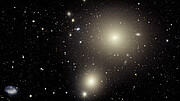
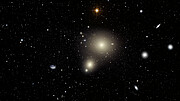
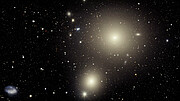
The denizens of the Fornax galaxy cluster populate this image from the Víctor M. Blanco 4-meter Telescope, located in Chile at Cerro Tololo Inter-American Observatory (CTIO), a Program of NSF’s NOIRLab. The irregular galaxy lurking in the bottom left corner of this Dark Energy Survey image is NGC 1427A, and its headlong plunge into the heart of the Fornax Cluster over millions of years will eventually result in the galaxy’s disruption.

The Fornax Cluster — which, as the name suggests, lies primarily in the constellation Fornax (the Furnace) — is a relatively nearby galaxy cluster, only about 60 million light-years from Earth. This means that it looms large in the night sky, stretching across an area more than 100 times larger than the full Moon. With over 600 member galaxies, the Fornax Cluster is the second “richest” (most populous) galaxy cluster within 100 million light-years of our galaxy (after the much larger Virgo Cluster).

Two elliptical galaxies dominate the center of this image — visible as the two large patches of diffuse light with bright cores. Such galaxies usually contain much older stars than the more picturesque spiral galaxies, and they tend to be found in galaxy clusters such as the Fornax Cluster. These elliptical galaxies — which are named NGC 1399 and NGC 1404 — are among the brightest members of the Fornax Cluster and are inexorably being drawn together by the force of gravity. This interaction is stripping gas from NGC 1404, the lower elliptical galaxy in this image.

In the bottom left corner of the image appears the irregular galaxy NGC 1427A. This ragged patch of light is a small, irregular collection of stars similar to the Large Magellanic Cloud. Similarly to NGC 1404, NGC 1427A is plunging toward the heart of the cluster at roughly 2.2 million kilometers (or 1.3 million miles) per hour. This headlong rush to destruction will eventually result in the galaxy being disrupted — pulled apart by gravitational interactions with other galaxies.

As with most astronomical observations, this image shows not only the intended target but also a menagerie of objects both close to home and at tremendous distances. The image is dotted with interloping objects from within our own Milky Way — bright stars with diffraction spikes [1]. At the other extreme, distant galaxies provide a colorful backdrop to this image: some are recognizable as spiral galaxies, while others are mere smudges. Despite appearing tiny in this image, each of the distant galaxies contains billions of stars.

This image was captured by the 570-megapixel Dark Energy Camera (DECam), one of the highest-performance, wide-field imagers in the world, as part of the Dark Energy Survey. Funded by the US Department of Energy (DOE) and built and tested at DOE’s Fermilab, DECam was operated by DOE and the National Science Foundation (NSF) between 2013 and 2019. Among its many accomplishments, DECam observations have helped astronomers discover nearly 300 previously unknown dwarf galaxies in the Fornax Cluster.

At present DECam is used for programs covering a huge range of science. Like other survey instruments, DECam captures images of large swaths of the night sky, allowing astronomers to understand structures in the Universe at large scales. Telescope surveys also help identify intriguing astronomical objects worthy of follow-up observation; the most powerful telescopes can only study a minute portion of the night sky at any given time, so astronomers often use surveys to find objects that are interesting enough to observe in detail. 

The analysis of data from the Dark Energy Survey is supported by DOE and the NSF, and the DECam science archive is curated by the Community Science and Data Center (CSDC) at NSF’s NOIRLab.


Notes

[1] Diffraction spikes are formed by light interacting with the inner structure of a telescope, and they can be used to tell something about the telescope that captured an image. Most professional telescopes have a secondary mirror suspended above the main mirror by several thin vanes. These vanes — which together form a structure known as a “spider” — interact with starlight to produce diffraction spikes, with the number of vanes determining the pattern of the resulting spikes.


More Information

NSF’s NOIRLab (National Optical-Infrared Astronomy Research Laboratory), the US center for ground-based optical-infrared astronomy, operates the international Gemini Observatory (a facility of NSF, NRC–Canada, ANID–Chile, MCTIC–Brazil, MINCyT–Argentina, and KASI–Republic of Korea), Kitt Peak National Observatory (KPNO), Cerro Tololo Inter-American Observatory (CTIO), the Community Science and Data Center (CSDC), and Vera C. Rubin Observatory (in cooperation with DOE’s SLAC National Accelerator Laboratory). It is managed by the Association of Universities for Research in Astronomy (AURA) under a cooperative agreement with NSF and is headquartered in Tucson, Arizona. The astronomical community is honored to have the opportunity to conduct astronomical research on Iolkam Du’ag (Kitt Peak) in Arizona, on Maunakea in Hawai‘i, and on Cerro Tololo and Cerro Pachón in Chile. We recognize and acknowledge the very significant cultural role and reverence that these sites have to the Tohono O'odham Nation, to the Native Hawaiian community, and to the local communities in Chile, respectively.

This work is supported in part by the US Department of Energy Office of Science. The Dark Energy Survey is a collaboration of more than 400 scientists from 26 institutions in seven countries. Funding for the DES Projects has been provided by the US Department of Energy Office of Science, US National Science Foundation, Ministry of Science and Education of Spain, Science and Technology Facilities Council of the United Kingdom, Higher Education Funding Council for England, ETH Zurich for Switzerland, National Center for Supercomputing Applications at the University of Illinois at Urbana-Champaign, Kavli Institute of Cosmological Physics at the University of Chicago, Center for Cosmology and AstroParticle Physics at Ohio State University, Mitchell Institute for Fundamental Physics and Astronomy at Texas A&M University, Financiadora de Estudos e Projetos, Fundação Carlos Chagas Filho de Amparo à Pesquisa do Estado do Rio de Janeiro, Conselho Nacional de Desenvolvimento Científico e Tecnológico and Ministério da Ciência e Tecnologia, Deutsche Forschungsgemeinschaft, and the collaborating institutions in the Dark Energy Survey.

NCSA at the University of Illinois at Urbana-Champaign provides supercomputing and advanced digital resources for the nation’s science enterprise. At NCSA, University of Illinois faculty, staff, students, and collaborators from around the globe use advanced digital resources to address research grand challenges for the benefit of science and society. NCSA has been advancing one-third of the Fortune 50® for more than 30 years by bringing industry, researchers, and students together to solve grand challenges at rapid speed and scale. 

Fermilab is America’s premier national laboratory for particle physics and accelerator research. A US Department of Energy Office of Science laboratory, Fermilab is located near Chicago, Illinois, and operated under contract by the Fermi Research Alliance LLC, a joint partnership between the University of Chicago and the Universities Research Association, Inc. 

The DOE Office of Science is the single largest supporter of basic research in the physical sciences in the United States and is working to address some of the most pressing challenges of our time.


Links


Contacts:

Vanessa Thomas
Public Information Officer
NSF’s NOIRLab
Tel: +1 520 318 8132

Email:
vanessa.thomas@noirlab.edu

Source: National Optical-Infrared Astronomy Research Laboratory (NFS'sNOIRLab)/News


Monday, October 04, 2021

Galaxy formation meets Reionization in the THESAN simulations


Composite image of the main Thesan simulation, showing six different simulated properties of the Universe in a slice through the center of the simulation. The two circular insets show how Thesan is able to predict how large telescopes such as ALMA and JWST will see the first galaxies. © MPA

Approximately 13 billion years ago, the radiation produced by the first galaxies completely transformed the Universe. The vast amount of hydrogen filling the space between galaxies was ionized in a process called cosmic reionization. Despite their intimate connection, the formation of the first galaxies and the reionization process are typically studied separately. An international team led by and including MPA researchers has now produced the first suite of simulations designed to simultaneously investigate these two processes during the infancy of the Universe, unveiling features of their connection. This new numerical effort – soon to be released publicly – provides a unique platform for investigating the young Universe and to fully exploit the forthcoming James Webb Space Telescope. The first results from THESAN have already shown that its unique combination of physical accuracy and simulated scales allows to reproduce most of the available data, including some that escaped previous numerical efforts.

After the Big Bang, the Universe went through its Dark Ages, a period of time when no sources of light were present. This ended when the first stars and – shortly after – the first galaxies formed. Their intense UV radiation transformed the neutral hydrogen gas in the inter-galactic medium between galaxies into a highly-ionized plasma; a process called ‘Cosmic Reionization’ that took place 13 billion years ago. Despite this strong relationship, the details of the connection between the first galaxies and Cosmic Reionization are still poorly understood, as it is extremely difficult to observe this very remote time in the history of the Universe. Thanks to a plethora of forthcoming telescopes, however, this obstacle will soon be overcome. The first one of them, the James Webb Space Telescope, is going to be launched at the end of 2021.

In order to take full advantage of these future observations, an international team led by Dr. Enrico Garaldi at MPA, Dr. Rahul Kannan at Harvard, and Dr. Aaron Smith at MIT, and including other MPA researchers, has developed a new unique suite of simulations – named Thesan – that pushes beyond the state of the art. Simulations are an essential entry in the astrophysicist’s toolbox, since the number and complexity of physical processes relevant in the formation of galaxies renders pen-and-paper studies impossible. Using knowledge about the conditions left behind by the Big Bang and the physics governing the Universe, numerical astrophysicists simulate the formation and evolution of vast regions of space. They can then not only witness and unfold how structures grow but also use the detailed picture obtained from simulations to interpret cryptic observations.

What makes the new Thesan simulation suite unique is the combination of a long list of state-of-the-art numerical techniques that come together to create an exquisite and unprecedented view of the infancy of the Universe. In particular, the Thesan simulations combine an extremely successful galaxy formation model, an accurate and efficient algorithm that simulates the propagation of light, a model for the creation and destruction of cosmic dust, and a novel technique that ensures that the simulated structures are as statistically representative of the Universe as possible. The galaxy formation model is that of Illustris-TNG, which is able to reproduce many properties of galaxies found in the Universe, and includes the effects of energy and matter released from stars and black holes during their life, magnetic fields, and individual elements. Following the propagation of light is required to properly simulate Cosmic Reionization and cosmic dust needs to be included as well, since the molecules produced within the first galaxies give us a lot of information about their properties. Additionally, Thesan also explores different theories for the nature of dark matter and the sources of the photons powering Cosmic Reionization.


Reionization process in the Thesan simulations

3D view of the reionization process in the Thesan simulations, showing the evolution of the HI fraction (left) and density of ionizing photons (right). The 2D plots highlight the evolution of these quantities with time. The visualization starts at a redshift of about 16 (13.5 billion years ago) and runs to z=5.5 (about 1 billion years ago), when the hydrogen in the simulation box is almost completely ionized.

It is the first time that all these different techniques are combined in a large cosmological simulation. In order to achieve this one-of-a-kind combination, researchers used one of the biggest supercomputers in the world, the SuperMUC-NG machine at the Leibniz-Rechenzentrum in Garching near Munich. There, the simulation was performed by simultaneously using approximately 60 000 computing cores, for a total of more than 50 million CPU-hours. If the same simulations were run on a normal computer, they would have required more than 5700 years to complete.

Unlike previous studies, the simulations in the Thesan suite were not tuned to match available observations of the reionization epoch. Rather, they build upon knowledge gathered over the years, in which MPA has played a pivotal role. Remarkably, the researchers have now demonstrated that the simulated galaxies and inter-galactic medium are in very good agreement with available data nevertheless.

The full analysis of the simulations will take many years, but bridging the gap between the formation of galaxies and Cosmic Reionization has already allowed researchers to reproduce for the first time the observed modulation of the radiation intensity around primeval galaxies. In order to allow the entire research community to benefit from this large effort, the researchers will make the simulation data freely available in the coming months. More information, visualization, and updates are available at https://thesan-project.com/


Thesan simulation fly-through


Flight through the main Thesan simulation, showing its different simulated properties. The animation then closes in on the largest galaxy in the simulated volume, reaching a final zoom factor of 420.

Author:

Dr. Enrico Garaldi
Postdoc
2255

More Information


Thesan project
More information, visualization, and updates are available at the webpages of the Thesan project.


Friday, October 01, 2021

Hubble views a galaxy with more than meets the eye

NGC 5728
Text credit: ESA (European Space Agency)
Image credit: ESA/Hubble, A. Riess et al., J. Greene

Meet NGC 5728, a spiral galaxy around 130 million light-years from Earth. This image was acquired using Hubble’s Wide Field Camera 3 (WFC3), which is extremely sensitive to visible and infrared light. Therefore, it beautifully captures the regions of NGC 5728 that are emitting light at those wavelengths. However, there are many other types of light that galaxies such as NGC 5728 emit, which WFC3 can’t see.

>In this image, NCG 5728 appears to be an elegant, luminous, barred spiral galaxy. What this image doesn’t show, is that NGC 5728 is also a monumentally energetic type of galaxy, known as a Seyfert galaxy. Powered by their active cores, Seyfert galaxies are an extremely energetic class of galaxies known as active galactic nuclei (AGNs). There are many different types of AGNs, but Seyfert galaxies are distinguished from other galaxies with AGNs because the galaxy itself is clearly seen. Other AGNs, such as quasars, emit so much radiation that it is almost impossible to observe the galaxy that houses them. As this image shows, NGC 5728 is clearly observable, and at visible and infrared wavelengths it looks quite normal. It is fascinating to know that the galaxy’s center is emitting vast amounts of light in parts of the electromagnetic spectrum that WFC3 just isn’t sensitive to! Just to complicate things, the AGN at NGC 5728’s core might actually be emitting some visible and infrared light – but it may be blocked by the dust surrounding the galaxy’s core.

Media Contact:

Claire Andreoli
NASA's Goddard Space Flight Center
301-286-1940

Editor: Lynn Jenner