Showing posts with label Galaxy formation. Show all posts

Wednesday, April 15, 2026

See and hear galaxies evolve from the dawn of the universe

The panel on the left shows the so-called cosmic web, where the colour encodes the projected density of gas and stars. The two panels on the right zoom into two of the many galaxies formed in the simulations. These images show the stellar light obscured by dust for a disc galaxy seen face-on (top right) and another disc galaxy seen edge-on (bottom right). Credit: Schaye et al. (2026)
Licence type: Attribution (CC BY 4.0)

The most realistic picture yet of how galaxies formed and then evolved from the beginning of time has been revealed in a suite of new and unique audiovisual simulations.)

This data, published today in Monthly Notices of the Royal Astronomical Society, shows that the standard cosmological model can successfully explain the observed growth of galaxies, from the first billion years after the Big Bang to the present day, when key physics is included.

Unlike earlier simulations, the COLIBRE 'virtual universes' model the cold gas and cosmic dust inside galaxies – the raw materials from which stars form and which strongly affect how galaxies look in telescopes.

By including these previously missing ingredients and using far more computing power than ever before, the simulations successfully reproduce real galaxies, both in the present-day universe and in the early universe as seen by the James Webb Space Telescope (JWST).

"Much of the gas inside real galaxies is cold and dusty, but most previous large simulations had to ignore this," said project leader Professor Joop Schaye, of Leiden University. "With COLIBRE, we finally bring these essential components into the picture."


The results show that our standard model of the universe can explain galaxy formation more accurately than previously thought, while also opening up powerful new ways to compare theory with observations and to explore a virtual universe through visuals, sound, and interactive tools.

Digital cold gas and dust grains

According to the international team of researchers, their COLIBRE simulations break new ground in several ways. Earlier simulations artificially prevented gas inside galaxies from cooling below about 10,000 degrees Fahrenheit – hotter than the surface of the Sun – because modelling colder gas was too complex. Yet, observations show that stars form in cold gas. COLIBRE includes the additional physical and chemical processes needed to model this cold interstellar gas directly.

COLIBRE also simulates small dust grains, which can greatly influence galactic gas. These solid particles can help hydrogen molecules to form, which dominate the cold gas content of galaxies. The dust also shields gas from harsh ultraviolet radiation and strongly affects how galaxies appear in telescopes. Dust absorbs ultraviolet and optical light from stars and re-emits it in the infrared, shaping many astronomical observations. By modelling dust directly, COLIBRE opens new ways to compare simulations with real data.

Thanks to advances in algorithms and supercomputing, COLIBRE uses up to 20 times more resolution elements than earlier simulations, allowing larger volumes to be simulated in greater detail and with better statistics.

A new laboratory

COLIBRE demonstrates that realistic treatments of cold gas, dust, and outflows driven by stars and black holes are crucial for understanding galaxy evolution, the researchers say. It provides a powerful new laboratory for testing theories, interpreting observations, and creating "virtual observations" to check how astronomers analyse real data.

The findings also show that the standard cosmological model remains consistent with observations of galaxy evolution, including some that were thought to be challenging, such as the masses of galaxies in the early universe.

"Some early JWST results were thought to challenge the standard cosmological model," said Dr Evgenii Chaikin, of Leiden University, lead author of several accompanying COLIBRE papers and co-author of the main study.

"COLIBRE shows that, once key physical processes are represented more realistically, the model is consistent with what we see."

Still, not everything has been explained yet. The enigmatic 'Little Red Dots' discovered by JWST, possibly the seeds of supermassive black holes, are not predicted by COLIBRE, which assumes such seeds already exist. Modelling their formation will require even higher resolution simulations and new physics, pointing the way for future work.

The simulations were run using the SWIFT simulation code on the COSMA8 supercomputer at the Institute for Computational Cosmology at Durham University, which is hosted on behalf of the DiRAC national facility in the UK. The largest simulation required 72 million CPU hours, and the full model took nearly 10 years to develop by an international team spanning Europe, Australia, and the United States.

Carlos Frenk, Ogden Professor of Fundamental Physics at the Institute for Computational at Durham University, and a core member of the COLIBRE team said: "It is exhilarating to see 'galaxies' come out of our computer that look indistinguishable from the real thing and share many of the properties that astronomers measure in real data such as their number, luminosities, colours and sizes.

"I like to tease my observer colleagues by asking 'which galaxy catalogue do you think these images came from?'"
He added: “What is most remarkable is that we are able to produce this synthetic universe purely by solving the relevant equations of physics in the expanding universe.”

The scientists point out that it will take years to analyse the data that has already been produced. Most simulations were completed in 2025, although some of the simulations with the highest resolution are still running and are expected to finish after the summer.

A universe you can see and hear

Beyond traditional data products, the team has developed new ways to explore the simulations. This includes "sonified videos", where sound encodes additional physical information, as well as interactive maps that allow users to explore the virtual universes.

"We're excited not just about the science, but also about creating new ways to explore it," said Dr James Trayford, of the University of Portsmouth, who led the development of COLIBRE's dust model and the sonification of its visualisations.

"These tools could provide new insights, make our field more accessible, and help us build intuition for how galaxies grow and evolve."


Media contacts:

Sam Tonkin
Royal Astronomical Society
Mob: +44 (0)7802 877 700

press@ras.ac.uk

Science contacts:

Joop Schaye
Leiden Observatory, Leiden University

schaye@strw.leidenuniv.nl

Evgenii Chaikin
Leiden Observatory, Leiden University

chaikin@strw.leidenuniv.nl

James Trayford
Institute of Cosmology and Gravitation, University of Portsmouth

james.trayford@port.ac.uk

Professor Carlos Frenk
Durham University

c.s.frenk@durham.ac.uk


Images & video

Images, videos, and interactive material from the COLIBRE simulations are available at:


https://colibre-simulations.org

Media, developed using COLIBRE, can be found here: sonified videos, interactive sliders, and interactive maps.


Further information

The paper ‘The COLIBRE project: cosmological hydrodynamical simulations of galaxy formation and evolution’ by Schaye et al. has been published in Monthly Notices of the Royal Astronomical Society. DOI: 10.1093/mnras/stag375.

The paper ‘COLIBRE: calibrating subgrid feedback in cosmological simulations that include a cold gas phase’ by Chaikin et al. has been published in Monthly Notices of the Royal Astronomical Society. DOI: 10.1093/mnras/stag300.


Notes for editors

About the COLIBRE collaboration

The COLIBRE collaboration is an international team led by Professor Joop Schaye, of Leiden University. It includes researchers from the UK (Durham University, Portsmouth, Hull, Liverpool John Moores, Nottingham), Austria (University of Vienna), Italy (University of Milano-Biococca), Australia (University of Western Australia), Belgium (University of Ghent) and the US (University of Pennsylvania).

A team of several Durham physicists at the Institute for Computational Cosmology contributed to the design and execution of the simulations and to the scientific analysis of the data. Members of this team wrote key elements of the software used for the simulations and helped run them on the "COSMA" supercomputer at Durham. Members of the team are leading major sub-projects analysing the simulation results and comparing them to observed data.

About NOVA

The Netherlands Research School for Astronomy (NOVA, www.astronomie.nl) is the alliance of the astronomical institutes of the universities of Amsterdam, Groningen, Leiden, and Nijmegen. The mission of Top Research School NOVA is to carry out frontline astronomical research in the Netherlands, to train young astronomers at the highest international level, and to share its new discoveries with society. The NOVA laboratories are specialised in building state-of-the-art optical/infrared and submillimeter instrumentation for the largest telescopes on earth.

About the Royal Astronomical Society

The Royal Astronomical Society (RAS), founded in 1820, encourages and promotes the study of astronomy, solar-system science, geophysics and closely related branches of science.

The RAS organises scientific meetings, publishes international research and review journals, recognises outstanding achievements by the award of medals and prizes, maintains an extensive library, supports education through grants and outreach activities and represents UK astronomy nationally and internationally. Its more than 4,000 members (Fellows), a third based overseas, include scientific researchers in universities, observatories and laboratories as well as historians of astronomy and others.

The RAS accepts papers for its journals based on the principle of peer review, in which fellow experts on the editorial boards accept the paper as worth considering. The Society issues press releases based on a similar principle, but the organisations and scientists concerned have overall responsibility for their content.


Keep up with the RAS on Instagram, Bluesky, LinkedIn, Facebook and YouTube.

Download the RAS Supermassive podcast

Submitted by Sam Tonkin on Mon, 13/04/2026 - 13:00


Sunday, March 01, 2026

Rare Giant Galaxies

AGC 192040 (left) and UGC 1382 (right)

Giant low-surface-brightness galaxies are rare and unusual members of the galactic menagerie. They host the largest galactic disks currently known, have baryonic masses of order 100 billion solar masses, and sport narrow, tightly wound spiral structures. The origins of these vast galaxies — they can be up to 10 times larger than the Milky Way — are unknown, though various theories involving mergers, accretion, and strange dark matter halos exist. Research also suggests that there may be a connection between these galaxies and compact ellipticals, which are small, dense, and contain old stars. In a recent article, a team led by Anna Saburova (Sternberg Astronomical Institute) investigated two giant low-surface-brightness galaxies with compact elliptical companions. In the image above, the colored circles represent the oxygen abundance at each location in AGC 192040 (left) and UGC 1382 (right). The red arrows point to the compact elliptical companions. Using the chemical abundance information to investigate possible formation mechanisms, Saburova and collaborators found that the two galaxies likely formed in different ways. UGC 1382 appears to be the result of multiple mergers, while AGC 192040 may have accreted gas from its halo or a galactic filament before undergoing a merger of its own. To learn more about this study of two rare galaxies, be sure to check out the full research article linked below!

By Kerry Hensley

Citation

“MUSE Study of Two Giant Low-Surface-Brightness Galaxies with Compact Satellites,” Anna S. Saburova et al 2026 ApJ 998 19. doi:10.3847/1538-4357/ae3139


Friday, May 24, 2024

Galaxies Actively Forming in Early Universe Caught Feeding on Cold Gas

Galaxy Forming in the Early Universe (Artist’s Concept)
Credits: Illustration: NASA, ESA, CSA, Joseph Olmsted (STScI)


Researchers analyzing data from NASA’s James Webb Space Telescope have pinpointed three galaxies that may be actively forming when the universe was only 400 to 600 million years old. Webb’s data show these galaxies are surrounded by gas that the researchers suspect to be almost purely hydrogen and helium, the earliest elements to exist in the cosmos. Webb’s instruments are so sensitive that they were able to detect an unusual amount of dense gas surrounding these galaxies. This gas will likely end up fueling the formation of new stars in the galaxies.

“These galaxies are like sparkling islands in a sea of otherwise neutral, opaque gas,” explained Kasper Heintz, the lead author and an assistant professor of astrophysics at the Cosmic Dawn Center (DAWN) at the University of Copenhagen in Denmark. “Without Webb, we would not be able to observe these very early galaxies, let alone learn so much about their formation.”

“We’re moving away from a picture of galaxies as isolated ecosystems. At this stage in the history of the universe, galaxies are all intimately connected to the intergalactic medium with its filaments and structures of pristine gas,” added Simone Nielsen, a co-author and PhD student also based at DAWN.

In Webb’s images, the galaxies look like faint red smudges, which is why extra data, known as spectra, were critical for the team’s conclusions. Those spectra show that light from these galaxies is being absorbed by large amounts of neutral hydrogen gas. “The gas must be very widespread and cover a very large fraction of the galaxy,” said Darach Watson, a co-author who is a professor at DAWN. “This suggests that we are seeing the assembly of neutral hydrogen gas into galaxies. That gas will go on to cool, clump, and form new stars.”

The universe was a very different place several hundred million years after the big bang during a period known as the Era of Reionization. Gas between stars and galaxies was largely opaque. Gas throughout the universe only became fully transparent around 1 billion years after the big bang. Galaxies’ stars contributed to heating and ionizing the gas around them, causing the gas to eventually become completely transparent.

By matching Webb’s data to models of star formation, the researchers also found that these galaxies primarily have populations of young stars. “The fact that we are seeing large gas reservoirs also suggests that the galaxies have not had enough time to form most of their stars yet,” Watson added.

This Is Only the Start

Webb is not only meeting the mission goals that drove its development and launch – it is exceeding them. “Images and data of these distant galaxies were impossible to obtain before Webb,” explained Gabriel Brammer, a co-author and associate professor at DAWN. “Plus, we had a good sense of what we were going to find when we first glimpsed the data – we were almost making discoveries by eye.”

There remain many more questions to address. Where, specifically, is the gas? How much is located near the centers of the galaxies – or in their outskirts? Is the gas pristine or already populated by heavier elements? Significant research lies ahead. “The next step is to build large statistical samples of galaxies and quantify the prevalence and prominence of their features in detail,” Heintz said.

The researchers’ findings were possible thanks to Webb’s Cosmic Evolution Early Release Science (CEERS) Survey, which includes spectra of distant galaxies from the telescope’s NIRSpec (Near-Infrared Spectrograph), and was released immediately to support discoveries like this as part of Webb’s Early Release Science (ERS) program.

This work has been published in the May 24, 2024 issue of the journal Science.

The James Webb Space Telescope is the world’s premier space science observatory. Webb is solving mysteries in our solar system, looking beyond to distant worlds around other stars, and probing the mysterious structures and origins of our universe and our place in it. Webb is an international program led by NASA with its partners, ESA (European Space Agency) and CSA (Canadian Space Agency).


About This Release

Credits:

Media Contact:

Claire Blome
Space Telescope Science Institute, Baltimore, Maryland

Christine Pulliam
Space Telescope Science Institute, Baltimore, Maryland

Permissions: Content Use Policy

Contact Us: Direct inquiries to the News Team.

Related Links and Documents


Thursday, January 18, 2024

Webb Shows Many Early Galaxies Looked Like Pool Noodles, Surfboards

Sample Shapes of Distant Galaxies Identified in Webb’s CEERS Survey (NIRCam Image)
Credits: Image: NASA, ESA, CSA, STScI, Steve Finkelstein (UT Austin), Micaela Bagley (UT Austin), Rebecca Larson (UT Austin)

3D Classifications for Distant Galaxies in Webb’s CEERS Survey (NIRCam Image)
Credits: Image: NASA, ESA, CSA, STScI, Steve Finkelstein (UT Austin), Micaela Bagley (UT Austin), Rebecca Larson (UT Austin)

Early Galaxy Shapes Detected by Webb (Artist Concept)
Illustration: NASA, ESA, CSA, Joseph Olmsted (STScI)
Science: Viraj Pandya (Columbia), Haowen Zhang (University of Arizona), Lucy Reading-Ikkanda (Simons Foundation)


Researchers analyzing images from NASA’s James Webb Space Telescope have found that galaxies in the early universe are often flat and elongated, like surfboards and pool noodles – and are rarely round, like volleyballs or frisbees. “Roughly 50 to 80% of the galaxies we studied appear to be flattened in two dimensions,” explained lead author Viraj Pandya, a NASA Hubble Fellow at Columbia University in New York. “Galaxies that look like pool noodles or surfboards seem to be very common in the early universe, which is surprising, since they are uncommon nearby.”

The team focused on a vast field of near-infrared images delivered by Webb, known as the Cosmic Evolution Early Release Science (CEERS), plucking out galaxies that are estimated to exist when the universe was 600 million to 6 billion years old.

While most distant galaxies look like surfboards and pool noodles, others are shaped like frisbees and volleyballs. The “volleyballs,” or sphere-shaped galaxies, appear the most compact type on the cosmic “ocean” and were also the least frequently identified. The frisbees were found to be as large as the surfboard- and pool noodle-shaped galaxies along the “horizon,” but become more common closer to “shore” in the nearby universe. (Compare them in this illustration.)

Which category would our Milky Way galaxy fall into if we were able to wind the clock back by billions of years? “Our best guess is that it might have appeared more like a surfboard,” said co-author Haowen Zhang, a PhD candidate at the University of Arizona in Tucson. This hypothesis is based partly on new evidence from Webb – theorists have “wound back the clock” to estimate the Milky Way’s mass billions of years ago, which correlates with shape at that time.

These distant galaxies are also far less massive than nearby spirals and ellipticals – they are precursors to more massive galaxies like our own. “In the early universe, galaxies had had far less time to grow,” said Kartheik Iyer, a co-author and NASA Hubble Fellow also at Columbia University. “Identifying additional categories for early galaxies is exciting – there’s a lot more to analyze now. We can now study how galaxies’ shapes relate to how they look and better project how they formed in much more detail.”

Webb’s sensitivity, high-resolution images, and specialization in infrared light allowed the team to make quick work of characterizing many CEERS galaxies, and model their 3D geometries. Pandya also says their work wouldn’t be possible without the extensive research astronomers have done using NASA’s Hubble Space Telescope.

For decades, Hubble has wowed us with images of some of the earliest galaxies, beginning with its first “deep field” in 1995 and continuing with a seminal survey known as Cosmic Assembly Near-infrared Deep Extragalactic Legacy Survey. Deep sky surveys like these led to far greater statistics, leading astronomers to create robust 3D models of distant galaxies over all of cosmic time. Today, Webb is helping to enhance these efforts, adding a bounty of distant galaxies beyond Hubble’s reach and revealing the early universe in far greater detail than previously possible.

Webb’s images of the early universe have acted like an ocean swell – delivering new waves of evidence. “Hubble has long showed an excess of elongated galaxies,” explained co-author Marc Huertas-Company, a faculty research scientist at the Institute of Astrophysics on the Canary Islands. But researchers still wondered: Would additional detail show up better with sensitivity to infrared light? “Webb confirmed that Hubble didn’t miss any additional features in the galaxies they both observed. Plus, Webb showed us many more distant galaxies with similar shapes, all in great detail.”

There are still gaps in our knowledge – researchers not only need an even larger sample size from Webb to further refine the properties and precise locations of distant galaxies, they will also need to spend ample time tweaking and updating their models to better reflect the precise geometries of distant galaxies. “These are early results,” said co-author Elizabeth McGrath, an associate professor at Colby College in Waterville, Maine. “We need to delve more deeply into the data to figure out what’s going on, but we’re very excited about these early trends.”

The James Webb Space Telescope is the world's premier space science observatory. Webb is solving mysteries in our solar system, looking beyond to distant worlds around other stars, and probing the mysterious structures and origins of our universe and our place in it. Webb is an international program led by NASA with its partners, ESA (European Space Agency) and the Canadian Space Agency.


About This Release

Credits:

Media Contact:

Claire Blome
Space Telescope Science Institute, Baltimore, Maryland

Christine Pulliam
Space Telescope Science Institute, Baltimore, Maryland

Permissions: Content Use Policy

Contact Us: Direct inquiries to the News Team.

Related Links and Documents


Tuesday, June 06, 2023

Early Universe Crackled With Bursts of Star Formation, Webb Shows

JWST Advanced Deep Extragalactic Survey (NIRCam Image)
Credits: Image: NASA, ESA, CSA, Brant Robertson (UC Santa Cruz), Ben Johnson (CfA), Sandro Tacchella (Cambridge), Marcia Rieke (University of Arizona), Daniel Eisenstein (CfA) Image Processing: Alyssa Pagan (STScI)


Among the most fundamental questions in astronomy is: How did the first stars and galaxies form? NASA’s James Webb Space Telescope is already providing new insights into this question. One of the largest programs in Webb’s first year of science is the JWST Advanced Deep Extragalactic Survey, or JADES, which will devote about 32 days of telescope time to uncover and characterize faint, distant galaxies. While the data are still coming in, JADES already has discovered hundreds of galaxies that existed when the universe was less than 600 million years old. The team also has identified galaxies sparkling with a multitude of young, hot stars.

“With JADES, we want to answer a lot of questions, like: How did the earliest galaxies assemble themselves? How fast did they form stars? Why do some galaxies stop forming stars?” said Marcia Rieke of the University of Arizona in Tucson, co-lead of the JADES program.

Star Factories

Ryan Endsley of the University of Texas at Austin led an investigation into galaxies that existed 500 to 850 million years after the big bang. This was a crucial time known as the Epoch of Reionization. For hundreds of millions of years after the big bang, the universe was filled with a gaseous fog that made it opaque to energetic light. By one billion years after the big bang, the fog had cleared and the universe became transparent, a process known as reionization. Scientists have debated whether active, supermassive black holes or galaxies full of hot, young stars were the primary cause of reionization.

As part of the JADES program, Endsley and his colleagues studied these galaxies to look for signatures of star formation – and found them in abundance. “Almost every single galaxy that we are finding shows these unusually strong emission line signatures indicating intense recent star formation. These early galaxies were very good at creating hot, massive stars,” said Endsley.

These bright, massive stars pumped out torrents of ultraviolet light, which transformed surrounding gas from opaque to transparent by ionizing the atoms, removing electrons from their nuclei. Since these early galaxies had such a large population of hot, massive stars, they may have been the main driver of the reionization process. The later reuniting of the electrons and nuclei produces the distinctively strong emission lines.

Endsley and his colleagues also found evidence that these young galaxies underwent periods of rapid star formation interspersed with quiet periods where fewer stars formed. These fits and starts may have occurred as galaxies captured clumps of the gaseous raw materials needed to form stars. Alternatively, since massive stars quickly explode, they may have injected energy into the surrounding environment periodically, preventing gas from condensing to form new stars.

The Early Universe Revealed

Another element of the JADES program involves the search for the earliest galaxies that existed when the universe was less than 400 million years old. By studying these galaxies, astronomers can explore how star formation in the early years after the big bang was different from what is seen in current times. The light from faraway galaxies is stretched to longer wavelengths and redder colors by the expansion of the universe – a phenomenon called redshift. By measuring a galaxy’s redshift, astronomers can learn how far away it is and, therefore, when it existed in the early universe. Before Webb, there were only a few dozen galaxies observed above a redshift of 8, when the universe was younger than 650 million years old, but JADES has now uncovered nearly a thousand of these extremely distant galaxies.

The gold standard for determining redshift involves looking at a galaxy’s spectrum, which measures its brightness at a myriad of closely spaced wavelengths. But a good approximation can be determined by taking photos of a galaxy using filters that each cover a narrow band of colors to get a handful of brightness measurements. In this way, researchers can determine estimates for the distances of many thousands of galaxies at once.

Kevin Hainline of the University of Arizona in Tucson and his colleagues used Webb’s NIRCam (Near-Infrared Camera) instrument to obtain these measurements, called photometric redshifts, and identified more than 700 candidate galaxies that existed when the universe was between 370 million and 650 million years old. The sheer number of these galaxies was far beyond predictions from observations made before Webb’s launch. The observatory’s exquisite resolution and sensitivity are allowing astronomers to get a better view of these distant galaxies than ever before.

“Previously, the earliest galaxies we could see just looked like little smudges. And yet those smudges represent millions or even billions of stars at the beginning of the universe,” said Hainline. “Now, we can see that some of them are actually extended objects with visible structure. We can see groupings of stars being born only a few hundred million years after the beginning of time.”

“We’re finding star formation in the early universe is much more complicated than we thought,” added Rieke.

These results are being reported at the 242nd meeting of the American Astronomical Society in Albuquerque, New Mexico.

The James Webb Space Telescope is the world's premier space science observatory. Webb will solve mysteries in our solar system, look beyond to distant worlds around other stars, and probe the mysterious structures and origins of our universe and our place in it. Webb is an international program led by NASA with its partners, ESA (European Space Agency), and CSA (Canadian Space Agency).


About This Release

Credits:

Media Contact:

Christine Pulliam
Space Telescope Science Institute, Baltimore, Maryland


Permissions: Content Use Policy

Contact Us: Direct inquiries to the News Team.

Related Links and Documents


Monday, October 04, 2021

Galaxy formation meets Reionization in the THESAN simulations


Composite image of the main Thesan simulation, showing six different simulated properties of the Universe in a slice through the center of the simulation. The two circular insets show how Thesan is able to predict how large telescopes such as ALMA and JWST will see the first galaxies. © MPA

Approximately 13 billion years ago, the radiation produced by the first galaxies completely transformed the Universe. The vast amount of hydrogen filling the space between galaxies was ionized in a process called cosmic reionization. Despite their intimate connection, the formation of the first galaxies and the reionization process are typically studied separately. An international team led by and including MPA researchers has now produced the first suite of simulations designed to simultaneously investigate these two processes during the infancy of the Universe, unveiling features of their connection. This new numerical effort – soon to be released publicly – provides a unique platform for investigating the young Universe and to fully exploit the forthcoming James Webb Space Telescope. The first results from THESAN have already shown that its unique combination of physical accuracy and simulated scales allows to reproduce most of the available data, including some that escaped previous numerical efforts.

After the Big Bang, the Universe went through its Dark Ages, a period of time when no sources of light were present. This ended when the first stars and – shortly after – the first galaxies formed. Their intense UV radiation transformed the neutral hydrogen gas in the inter-galactic medium between galaxies into a highly-ionized plasma; a process called ‘Cosmic Reionization’ that took place 13 billion years ago. Despite this strong relationship, the details of the connection between the first galaxies and Cosmic Reionization are still poorly understood, as it is extremely difficult to observe this very remote time in the history of the Universe. Thanks to a plethora of forthcoming telescopes, however, this obstacle will soon be overcome. The first one of them, the James Webb Space Telescope, is going to be launched at the end of 2021.

In order to take full advantage of these future observations, an international team led by Dr. Enrico Garaldi at MPA, Dr. Rahul Kannan at Harvard, and Dr. Aaron Smith at MIT, and including other MPA researchers, has developed a new unique suite of simulations – named Thesan – that pushes beyond the state of the art. Simulations are an essential entry in the astrophysicist’s toolbox, since the number and complexity of physical processes relevant in the formation of galaxies renders pen-and-paper studies impossible. Using knowledge about the conditions left behind by the Big Bang and the physics governing the Universe, numerical astrophysicists simulate the formation and evolution of vast regions of space. They can then not only witness and unfold how structures grow but also use the detailed picture obtained from simulations to interpret cryptic observations.

What makes the new Thesan simulation suite unique is the combination of a long list of state-of-the-art numerical techniques that come together to create an exquisite and unprecedented view of the infancy of the Universe. In particular, the Thesan simulations combine an extremely successful galaxy formation model, an accurate and efficient algorithm that simulates the propagation of light, a model for the creation and destruction of cosmic dust, and a novel technique that ensures that the simulated structures are as statistically representative of the Universe as possible. The galaxy formation model is that of Illustris-TNG, which is able to reproduce many properties of galaxies found in the Universe, and includes the effects of energy and matter released from stars and black holes during their life, magnetic fields, and individual elements. Following the propagation of light is required to properly simulate Cosmic Reionization and cosmic dust needs to be included as well, since the molecules produced within the first galaxies give us a lot of information about their properties. Additionally, Thesan also explores different theories for the nature of dark matter and the sources of the photons powering Cosmic Reionization.


Reionization process in the Thesan simulations

3D view of the reionization process in the Thesan simulations, showing the evolution of the HI fraction (left) and density of ionizing photons (right). The 2D plots highlight the evolution of these quantities with time. The visualization starts at a redshift of about 16 (13.5 billion years ago) and runs to z=5.5 (about 1 billion years ago), when the hydrogen in the simulation box is almost completely ionized.

It is the first time that all these different techniques are combined in a large cosmological simulation. In order to achieve this one-of-a-kind combination, researchers used one of the biggest supercomputers in the world, the SuperMUC-NG machine at the Leibniz-Rechenzentrum in Garching near Munich. There, the simulation was performed by simultaneously using approximately 60 000 computing cores, for a total of more than 50 million CPU-hours. If the same simulations were run on a normal computer, they would have required more than 5700 years to complete.

Unlike previous studies, the simulations in the Thesan suite were not tuned to match available observations of the reionization epoch. Rather, they build upon knowledge gathered over the years, in which MPA has played a pivotal role. Remarkably, the researchers have now demonstrated that the simulated galaxies and inter-galactic medium are in very good agreement with available data nevertheless.

The full analysis of the simulations will take many years, but bridging the gap between the formation of galaxies and Cosmic Reionization has already allowed researchers to reproduce for the first time the observed modulation of the radiation intensity around primeval galaxies. In order to allow the entire research community to benefit from this large effort, the researchers will make the simulation data freely available in the coming months. More information, visualization, and updates are available at https://thesan-project.com/


Thesan simulation fly-through


Flight through the main Thesan simulation, showing its different simulated properties. The animation then closes in on the largest galaxy in the simulated volume, reaching a final zoom factor of 420.

Author:

Dr. Enrico Garaldi
Postdoc
2255

More Information


Thesan project
More information, visualization, and updates are available at the webpages of the Thesan project.


Tuesday, September 21, 2021

A New Understanding of Galaxy Evolution with NASA's Roman Space Telescope


This portion of the Hubble GOODS-South field contains hundreds of visible galaxies. A representative sample of those galaxies on the right half of the image also have their spectra overlayed in a representation of slitless spectroscopy. By using slitless spectroscopy, a spectrum is obtained that contains both spatial and wavelength information. For example, the inset highlights a spiral galaxy that shines brightly in the emission line of hydrogen-alpha (Hα) as well as in broad starlight (the horizontal strip of light). Its spiral shape is traced by the Hα portion of the spectrum. By combining imaging and spectroscopy, astronomers can learn much more than from each technique alone. Credits: Image: NASA, ESA. Image Processing: Joseph DePasquale (STScI). Acknowledgment: University of Geneva, Pascal Oesch (University of Geneva), Mireia Montes (UNSW)


When NASA’s Nancy Grace Roman Space Telescope launches in the mid-2020s, it will revolutionize astronomy by providing a panoramic field of view at least 100 times greater than Hubble's at similar image sharpness, or resolution. The Roman Space Telescope will survey the sky up to thousands of times faster than can be done with Hubble. This combination of wide field, high resolution, and an efficient survey approach promises new understandings in many areas, particularly in how galaxies form and evolve over cosmic time. How did the largest structures in the universe assemble? How did our Milky Way galaxy come to be in its current form? These are among the questions that Roman will help answer.

Galaxies are conglomerations of stars, gas, dust, and dark matter. The largest can span hundreds of thousands of light-years. Many gather together in clusters containing hundreds of galaxies, while others are relatively isolated.

How galaxies change over time depends on many factors: for example, their history of star formation, how rapidly they formed stars over time, and how each generation of stars influenced the next through supernova explosions and stellar winds. To tease out these details, astronomers need to study large numbers of galaxies.

“Roman will give us the ability to see faint objects and to view galaxies over long intervals of cosmic time. That will allow us to study how galaxies assembled and transformed,” said Swara Ravindranath, an astronomer at the Space Telescope Science Institute (STScI) in Baltimore, Maryland.

While wide-field imaging will be important for galaxy studies, just as important are Roman’s spectroscopic capabilities. A spectrograph takes light from an object and spreads it into a rainbow of colors known as a spectrum. From this range of colors, astronomers can glean many details otherwise unavailable, like an object’s distance or composition. Roman’s ability to provide a spectrum of every object within the field of view, combined with Roman imaging, will enable astronomers to learn more about the universe than from either imaging or spectroscopy alone.

Revealing When and Where Stars Were Born Galaxies don’t form stars at a constant rate. They speed up and slow down—forming more or fewer stars—under the influence of a variety of factors, from collisions and mergers to supernova shock waves and galaxy-scale winds powered by supermassive black holes.

By studying a galaxy’s spectrum in detail, astronomers can explore the history of star formation. “Using Roman we can estimate how fast galaxies are making stars and find the most prolific galaxies that are producing stars at an enormous rate. More importantly, we can find out not only what’s happening in a galaxy at the moment we observe it, but what its history has been,” stated Lee Armus, an astronomer at IPAC/Caltech in Pasadena, California.

Some precocious galaxies birthed stars very rapidly for a short time, only to cease forming stars surprisingly early in the universe’s history, undergoing a rapid transition from lively to “dead.”

“We know galaxies shut off star formation, but we don’t know why. With Roman’s wide field of view, we stand a better chance of catching these galaxies in the act,” said Kate Whitaker, an astronomer at the University of Massachusetts in Amherst.

Growing the Cosmic Web

Even as galaxies themselves have grown over time, they also have gathered together in groups to form intricate structures billions of light-years across. Galaxies tend to collect into bubbles, sheets, and filaments, creating a vast cosmic web. By combining high-resolution imaging, which yields a galaxy’s position on the sky, with spectroscopy, which provides a distance, astronomers can map this web in three dimensions and learn about the universe’s large-scale structure.

The expansion of the universe stretches light from distant galaxies to longer, redder wavelengths—a phenomenon called redshift. The more distant a galaxy is, the greater its redshift. Roman’s infrared detectors are ideal for capturing light from those galaxies. More distant galaxies are also fainter and harder to spot. Combining this with the fact that that some galaxy types are rare, you have to search a larger area of the sky with a more sensitive observatory to find the objects that often have the most interesting stories to tell.

“Right now, with telescopes like Hubble we can sample tens of high-redshift galaxies. With Roman, we’ll be able to sample thousands,” explained Russell Ryan, an astronomer at STScI.

Seeking the Unknown

While astronomers can anticipate many of the discoveries of the Roman Space Telescope, perhaps most exciting is the possibility of finding things that no one could have predicted. Typical high-resolution observations from space-based observatories like Hubble, target specific objects for detailed investigation. Roman’s survey approach will cast a wide net, thereby opening up a new “discovery space.”

“Roman will excel in unknown unknowns. It will certainly find rare, exotic things that we don’t expect,” said Ryan.

“Roman’s combined imaging and spectroscopy surveys will gather the ‘gold nuggets’ that we never would have mined otherwise,” added Ravindranath.

NASA’s Goddard Space Flight Center in Greenbelt, Maryland, will provide Roman’s Mission Operations Center. The Space Telescope Science Institute in Baltimore, Maryland, will host Roman’s Science Operations Center and lead the data processing of Roman imaging. Caltech/IPAC in Pasadena, California, will house Roman’s Science Support Center and lead the data processing of Roman spectroscopy.

Credits:

Release: NASA

Media Contact:

Christine Pulliam
Space Telescope Science Institute, Baltimore, Maryland
 
Contact Us: Direct inquiries to the News Team.
 
Source: HubbleSite/News 


Monday, April 27, 2020

Hungry galaxies grow fat on the flesh of their neighbours

Simulation showing distribution of dark matter particles around the galaxy.
Credit: Gupta et al/ASTRO 3D/ IllustrisTNG collaboration

Simulation showing distribution of dark matter density overlayed with the gas density. This image cleanly shows the gas channels connecting the central galaxy with its neighbours. Credit: Gupta et al/ASTRO 3D/ IllustrisTNG collaboration. Hi-res Image

Modelling shows big galaxies get bigger by merging with smaller ones


Galaxies grow large by eating their smaller neighbours, new research reveals.

Exactly how massive galaxies attain their size is poorly understood, not least because they swell over billions of years. But now a combination of observation and modelling from researchers led by Dr Anshu Gupta from Australia’s ARC Centre of Excellence for All Sky Astrophysics in 3 Dimensions (ASTRO 3D) has provided a vital clue.

In a paper published in The Astrophysical Journal, the scientists combine data from an Australian project called the Multi-Object Spectroscopic Emission Line (MOSEL) survey with a cosmological modelling program running on some of the world’s largest supercomputers in order to glimpse the forces that create these ancient galactic monsters.

By analysing how gases within galaxies move, Dr Gupta said, it is possible to discover the proportion of stars made internally – and the proportion effectively cannibalised from elsewhere.

“We found that in old massive galaxies – those around 10 billion light years away from us – things move around in lots of different directions,” she said.

“That strongly suggests that many of the stars within them have been acquired from outside. In other words, the big galaxies have been eating the smaller ones.”

Because light takes time to travel through the universe, galaxies further away from the Milky Way are seen at an earlier point in their existence. Dr Gupta’s team found that observation and modelling of these very distant galaxies revealed much less variation in their internal movements.

“We then had to work out why ‘older’, closer big galaxies were so much more disordered than the ‘younger’, more distant ones,” said second author ASTRO 3D’s Dr Kim-Vy Tran, who like Dr Gupta, is based at the UNSW Sydney.

“The most likely explanation is that in the intervening billions of years the surviving galaxies have grown fat and disorderly through incorporating smaller ones. I think of it as big galaxies having a constant case of the cosmic munchies.”

The research team – which included scientists from other Australian universities plus institutions in the US, Canada, Mexico, Belgium and the Netherlands – ran their modelling on a specially designed set of simulations known as IllustrisTNG.

This is a multi-year, international project that aims to build a series of large cosmological models of how galaxies form. The program is so big that it has to run simultaneously on several of world’s most powerful supercomputers.

“The modelling showed that younger galaxies have had less time to merge with other ones,” said Dr Gupta.

“This gives a strong clue to what happens during an important stage of their evolution.”


Paper Details:

Title: MOSEL Survey: Tracking the Growth of Massive Galaxies at 2 < z < 4 Using Kinematics and the IllustrisTNG Simulation

Full Paper

DOI: 10.3847/1538-4357/ab7b6d


Authors:

Anshu Gupta1,2 , Kim-Vy Tran1,2,3, Jonathan Cohn3 , Leo Y. Alcorn3,4 , Tiantian Yuan2,5 , Vicente Rodriguez-Gomez6, Anishya Harshan1 , Ben Forrest7 , Lisa J. Kewley2,8 , Karl Glazebrook5 , Caroline M. Straatman9 , Glenn G. Kacprzak2,5, Themiya Nanayakkara10 , Ivo Labbé5 , Casey Papovich3,11 , and Michael Cowley12,13
  1. School of Physics, University of New South Wales, Sydney, NSW 2052, Australia;
  2. ARC Centre of Excellence for All Sky Astrophysics in 3 Dimensions (ASTRO 3D), Australia
  3. George P. and Cynthia Woods Mitchell Institute for Fundamental Physics and Astronomy, Texas A&M University, College Station, TX 77843-4242, USA
  4. Department of Physics and Astronomy, York University, 4700 Keele Street, Toronto, Ontario, MJ3 1P3, Canada
  5. Swinburne University of Technology, Hawthorn, VIC 3122, Australia
  6. Instituto de Radioastronomía y Astrofísica, Universidad Nacional Autónoma de México, A.P. 72-3, 58089 Morelia, Mexico
  7. Department of Physics & Astronomy, University of California, Riverside, 900 University Avenue, Riverside, CA 92521, USA
  8. Research School of Astronomy and Astrophysics, The Australian National University, Cotter Road, Weston Creek, ACT 2611, Australia
  9. Sterrenkundig Observatorium, Universiteit Gent, Krijgslaan 281 S9, B-9000 Gent, Belgium
  10. Leiden Observatory, Leiden University, P.O. Box 9513, NL 2300 RA Leiden, The Netherlands
  11. Department of Physics and Astronomy, Texas A&M University, College Station, TX 77843-4242, USA
  12. Centre for Astrophysics, University of Southern Queensland, West Street, Toowoomba, QLD 4350, Australia
  13. School of Chemistry, Physics and Mechanical Engineering, Queensland University of Technology, Brisbane, QLD 4001, Australia

Funded by:  ASTRO 3D, Australia Research Council, National Science Foundation, Nederlandse Organisatie voor Wetenschappelijk Onderzoek


More about ASTRO 3D:

ASTRO 3D is a seven-year $40 million Centre of Excellence project funded by the Australian Government through the Australian Research Council. The Centre began in June 2017 and will end in June 2024. It hosts around 200 investigators and professional staff, mostly based at six nodes: the Australian National University, Curtin University, Swinburne University of Technology, University of Melbourne, University of Sydney, and University of Western Australia. https://astro3d.org.au/ More about IllustrisTNG

The IllustrisTNG project is an ongoing series of large, cosmological magnetohydrodynamical simulations of galaxy formation. TNG aims to illuminate the physical processes that drive galaxy formation: to understand when and how galaxies evolve into the structures that are observed in the night sky, and to make predictions for current and future observational programs. The simulations use a state of the art numerical code which includes a comprehensive physical model and runs on some of the largest supercomputers in the world. TNG is a successor to the original Illustris simulation and builds on several years of effort by many people. The project description page contains an introduction to the motivations, techniques, and early science results of the TNG simulations. Presently, the project includes three primary runs spanning a range of volume and resolution; these are called TNG50, TNG100, and TNG300. https://www.tng-project.org/

More about the Multi-Object Spectroscopic Emission Line (MOSEL) survey

The MOSEL survey is an ongoing survey of star-forming galaxies around 12 billion light years away. The main objective is identify factors affecting the rise and fall of star formation activity in young galaxies.


Monday, December 02, 2019

Galaxy formation in separate universes

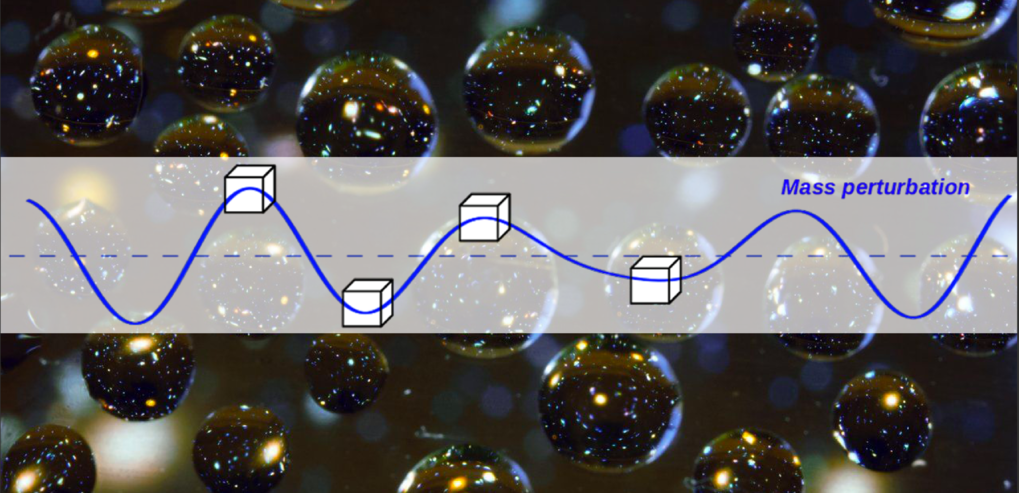
Summary sketch of the Separate Universe Formalism: structure formation in special regions of our Universe is equivalent to structure formation in appropriately modified/separate Universes. The blue line is a mass perturbation: regions above the dashed line have more mass than the average. © MPA, Background image: Tess Cholson, Hi-res image

Rather than trying to study special regions in large-volume simulations, scientists at MPA have used the IllustrisTNG model to create whole separate universes with a modified cosmology. Their study of these separate universes shows that when the baryon density (the density of ordinary matter) changes, the number of galaxies can increase or decrease depending on how this number is measured. Also, the large-scale distribution of matter is affected by the effects of baryons, with various measures reacting differently.

Imagine we are travelling across the Universe and want to measure some property such as the number of galaxies around us. This number is not going to be the same everywhere during our journey because various regions of the Universe are not equal. For example, in some regions, there was a slight excess of mass and energy at the beginning of the Universe, the Big Bang, which means there was more material to form galaxies, and so we would count more galaxies there. Astrophysicists need to take this variability into account when analysing observational data. In particular, it could be the case that the observed part of the Universe is special and not representative of the whole Universe. Such an analysis can be performed with the aid of so-called Response Functions, which tell us how a given statistical measurement of the Universe changes when the properties of the underlying region change.

Researchers at MPA have been interested in studying response functions and their applications for some time now. This can be done with the “Separate Universe Formalism”, which establishes that structures forming in our Universe in a special (e.g. over- or under-dense) region are the same as the structures that would form in a normal region of a different/separate Universe (see Fig. 1). Studying responses is easier in this formalism, because numerical simulations can easily be used to study structure formation in other Universes -- this is much easier than to simulate structure formation in special regions of our Universe. In the past, numerical studies of response functions were done with simulations that took into account only the effect of gravity. A team of researchers at MPA has recently gone beyond this limitation by running separate universe simulations with the IllustrisTNG galaxy formation model, which, for the first time, allowed them to study response functions including also important baryonic effects such as hydro- dynamical forces, gas cooling, star and black hole formation.

Galaxy formation with an excess of baryons

Sketch of a compensated isocurvature perturbation (CIP): the total matter stays the same, but in some regions, more baryons are compensated by less dark matter. © MPA

Matter in the Universe can broadly be divided into two types: (i) dark matter, which does not interact with light and comprises the majority of the mass (80 %), and (ii) all the rest. This rest is made up of the particles detected in particle physics experiments, which are called baryons. While dark matter is the dominant source of gravitational energy that drives structure formation, stars and galaxies are made up of baryons. Therefore the number of galaxies should depend on the amount of baryons available inside some observed region. In other words, the number of galaxies responds to the baryonic density.

A few theoretical models of the very early Universe (also known as the period of Inflation) predict that there should be regions in the Universe with an excess of baryons that is exactly compensated by a suppression in the number of dark matter particles; these are called compensated isocurvature perturbations (CIP), see Fig. 2. Researchers at MPA have studied how the number of galaxies responds to these perturbations using the separate universe formalism by simulating galaxy formation in Universes with different total amounts of baryons and dark matter.

The results of this study showed that, indeed, the number of galaxies depends strongly on the amount of baryonic matter. More interestingly, however, the sign of this dependency depends also on the quantity used to classify the galaxies. If the number of galaxies is measured as a function of total mass (dark matter + baryons), the response to CIP perturbations is negative, i.e., there are fewer galaxies with a given total mass. However, if the number of galaxies is measured as a function of the mass in stars (not the total mass), the response now displays the opposite trend, i.e. there are more galaxies with a given stellar mass. The MPA researchers traced back the origin of this change of sign to the modifications that the CIP perturbations induce on the relation between total mass and stellar mass in the galaxies.

This study provided the first ever prediction of the impact of CIP perturbations on the observed number of galaxies, which can now be incorporated in theoretical models of the distribution of galaxies in the Universe. This in turn will allow astronomers to use the statistics of galaxies to look for important signatures from the early Universe.

Using responses to predict weak gravitational lensing

The top image shows a simulated weak-lensing map of the sky, as well as 2-, 3- and 4-point functions drawn on top. The lower panel shows the percentage impact of the baryonic effects on the N-point functions. The quantity on the x-axis is inversely proportional to distance: large scales on the left, smaller scales on the right. The vertical dashed lines correspond to those scales, where the effect of baryons exceed 1%. All N-point functions are affected by baryonic effects on small scales, but they all respond differently. © MPA

The separate universe formalism can also be applied to large-scale maps of the total matter distribution. The light emitted by distant galaxies travels towards Earth along trajectories that are perturbed by the gravitational effect of the intervening matter. This effect, known as weak gravitational lensing, distorts the observed images of the distant galaxies and can be used to construct sky maps of the total mass between Earth and the galaxies, see Fig. 3. These maps contain information about the physics of our Universe and a popular way to organize this information is in N-point correlation functions: how does the matter density correlate between N points.

For quite some time, cosmologists have considered only the effect of gravity to obtain theoretical predictions for these statistics, but recently the community became aware of the critical importance of baryonic effects. For example, the heating and ejection of gas by black holes at the centre of massive galaxies can significantly alter the total distribution of the mass that weak lensing observations are sensitive to. The impact of baryonic effects on higher-order functions has remained largely unexplored, but researchers at MPA have recently made progress on this front. Specifically, separate universe simulations of galaxy formation were used to measure the impact of baryonic effects on the response of the 2-point function, which was in turn used in theoretical models to predict the impact of baryons on 3- and 4-point functions.

The fractional impact of the baryonic effects on 2-, 3- and 4-point correlation functions is shown in Fig. 3.All statistics display a suppression of their amplitude of approximately 5%-20% on the smallest scales (right part). This is as expected from the impact of black hole activity, which makes the density field smoother and the correlation of perturbations weaker. A key aspect revealed by this study was the fact that, quantitatively, the various N-point functions are affected differently by the same black hole activity. This work by the MPA researchers opens up a new window to study important effects on galaxy formation (like black hole activity) using combined analysis of different weak-lensing N-point functions.

Source: Max Planck Institute for Astrophysics


Author

Postdoc
Tel.: 2241

for the team: Alexandre Barreira, Giovanni Cabass, Dylan Nelson, Rüdiger Pakmor, Fabian Schmidt and Volker Springel


Original publications

1. A. Barreira, G. Cabass, D. Nelson, F. Schmidt
Baryon-CDM isocurvature galaxy bias with IllustrisTNG
Submitted to JCAP

2. A. Barreira, D. Nelson, A. Pillepich, V. Springel, F. Schmidt, R. Pakmor, L. Hernquist, M. Vogelsberger Separate Universe Simulations with IllustrisTNG: baryonic effects on power spectrum responses and higher-order statistics MNRAS, Volume 488, Issue 2, September 2019, Pages 2079–2092,  


Monday, March 25, 2019

NASA’s Webb to Explore Galaxies from Cosmic Dawn to Present Day

Abell 2744, nicknamed Pandora's Cluster, is a giant pile-up of four smaller galaxy clusters. The cluster is so massive that its powerful gravity bends the light from galaxies far behind it, making the background objects appear larger and brighter in a phenomenon called gravitational lensing. Shown in this Hubble image, the mammoth Abell 2744 cluster is located about 3.5 billion light-years away. Credits: NASA, ESA, and J. Lotz, M. Mountain, A. Koekemoer, and the HFF Team (STScI). Hi-res images

How did the first galaxies in the universe form, and did they make the universe transparent to light? How did later galaxies produce and disperse into the universe the heavier elements that are the building blocks of stars, planets, and even humans? These are questions astronomers will address in some of the first observations made by NASA’s James Webb Space Telescope, slated to launch in March 2021. Astronomers hope the answers will lead to a better understanding of the origins and evolution of the universe. 

Through the combined power of NASA’s James Webb Space Telescope and gravity creating “natural telescopes” in space, astronomers hope to answer two science questions that are fundamental to understanding the origins and evolution of the universe:

- How did the first galaxies in the universe form, and did they make the universe transparent to light?

- How did later galaxies produce and disperse into the universe the heavier elements that are the building blocks of stars, planets, and even humans?

These questions will be addressed in some of the first observations made by the Webb telescope, slated to launch in March 2021. These observations will be part of the Director’s Discretionary-Early Release Science program, which provides time to selected projects early in the telescope’s mission. This program allows the astronomical community to quickly learn how best to use Webb’s capabilities, while also yielding robust science.

An international team led by Tommaso Treu of the University of California, Los Angeles, has been investigating how Webb can tackle these two key questions about the universe in the Early Release Science program.

Treu and his team will study the earliest, most distant galaxies to investigate their origins. After the big bang, the universe cooled down. As it cooled, protons and electrons combined to form neutral hydrogen atoms, until the universe became filled with hydrogen and opaque to light. Then at some point, the first galaxies formed, and scientists think these first galaxies emitted enough ultraviolet light to destroy the neutral hydrogen atoms and make the universe transparent to light. This is called the end of the “dark ages.”

“We’re not exactly sure when this happens, and we think it’s galaxies making the universe transparent, but we are not totally sure,” Treu said. “One of the things our proposal will try to do is establish whether indeed galaxies are the ones that are making the universe transparent — ending the cosmic dark ages — and what kind of galaxies they are, what are their properties, and when this happens.”

Using Gravity as a “Natural Telescope”

To see the faintest, farthest galaxies, the team will combine the power of Webb with the magnification of a “natural telescope” in space. The phenomenon, called gravitational lensing, occurs when a huge amount of matter, such as a cluster of galaxies, creates a gravitational field that distorts and magnifies the light from distant galaxies that are behind it, but in the same line of sight. The effect allows researchers to study the details of early galaxies too far away to be seen with current technology and telescopes.

One gravitational lens is Abell 2744, an enormous cluster of four smaller galaxy clusters. Also known as Pandora’s Cluster, this giant collection of galaxies has been well studied, including by NASA’s Hubble Space Telescope. Abell 2744 is one of many clusters that scientists can use in combination with Webb to peer back into the universe’s distant past.

“It’s a cluster that we know very well,” Treu said. “The fact that we know it so well means that we can calculate very precisely the properties of the lens. Using our models, we can compute very accurately how the background images have been distorted. Then we can invert that to figure out the intrinsic properties of the objects as they would look without the lens in front."

Simultaneously, the team will take deep images in the near and medium infrared of two fields offset from the cluster. “We will use those to count galaxies in the very early universe and figure out how many there are,” explained Treu. “Those are the sources that are suspected to eventually produce the ionizing photons that end the dark ages.”

Forming the Universe’s Heavier Elements

The big bang only formed hydrogen, helium, and traces of other light elements. Heavier elements like iron, oxygen, and carbon, which are made in stars, eventually ended up in the universe — but scientists don’t know exactly how this process happened.

“In astronomy, we think of hydrogen and helium as the light elements, and everything else we call a ‘metal,’” explained team member Alaina Henry of the Space Telescope Science Institute in Baltimore, Maryland. “We want to measure the metals that are produced by the first stars in the first supernovae. This tells us how the stars evolve, and how many end their lives as supernovae, where the heaviest elements — such as iron — are made.”

Identifying the “Fingerprints” of Elements in the Light

Answering both questions requires the unique spectroscopic capabilities of the Webb telescope. Spectroscopy separates an object’s light into its component colors, allowing scientists to see the “fingerprints” of different elements. By analyzing these spectral fingerprints, astronomers can determine the physical properties of that object, including its temperature, mass, luminosity, and composition.

Treu and his team will use two different spectrographs on Webb, each with different strengths and functions. Comparing and contrasting these capabilities is an important technical goal of their program.

Webb’s Near Infrared Imager and Slitless Spectrograph (NIRISS) gives observers spatial information, so they can determine how a spectrum changes across the sky. However, it has relatively low spectral resolution, meaning it is harder to differentiate between very similar colors.

The telescope’s Near Infrared Spectrograph (NIRSpec) has a quarter of a million tiny microshutters, each as wide as a human hair. These shutters can be opened or closed individually to isolate the light from a particular object. “In exchange for that, you lose spatial information,” said Treu, “but you get much higher spectral information. You can see the motion of the gas, both within galaxies and flowing in and out of them.”

“Webb will effectively be a much more capable spectrograph than we have ever had in space,” Treu added. “It will have multiple instruments to disperse the light. We need to understand the strengths of each one and how they complement each other.”

Expectations

Looking deep into the cosmos, Treu and his team expect to get a very good idea of the opacity of the universe, and also learn how ionizing photons — particles of light — escaped from the very early galaxies. They will also observe nearer galaxies at later times, when the galaxies are forming stars very vigorously. “We will get the best view ever of this process of gas flowing in, forming stars, and then being blown out by super-winds,” Treu said.

“It would be really fun if we found spectral features that we hadn’t seen very often, or maybe not at all before,” added Henry.

The James Webb Space Telescope will be the world’s premier space science observatory when it launches in 2021. Webb will solve mysteries of our solar system, look beyond to distant worlds around other stars, and probe the mysterious structures and origins of our universe and our place in it. Webb is an international project led by NASA with its partners, ESA (European Space Agency) and the Canadian Space Agency.