Wednesday, February 12, 2014

NASA Spacecraft Get a 360-Degree View of Saturn's Auroras

Ultraviolet and infrared images from NASA's Cassini spacecraft and Hubble Space Telescope show active and quiet auroras at Saturn's north and south poles. Full caption 

The dark region seen on the face of the sun at the end of March 2013 is a coronal hole (just above and to the right of the middle of the picture), which is a source of fast solar wind leaving the sun.  Image Credit: NASA/SDO/AIA. Full image and caption

While the curtain-like auroras we see at Earth are green at the bottom and red at the top, NASA's Cassini spacecraft has shown us similar curtain-like auroras at Saturn that are red at the bottom and purple at the top. Image Credit: NASA/JPL-Caltech/SSI.  Full image and caption

NASA trained several pairs of eyes on Saturn as the planet put on a dancing light show at its poles. While NASA's Hubble Space Telescope, orbiting around Earth, was able to observe the northern auroras in ultraviolet wavelengths, NASA's Cassini spacecraft, orbiting around Saturn, got complementary close-up views in infrared, visible-light and ultraviolet wavelengths. Cassini could also see northern and southern parts of Saturn that don't face Earth.

The result is a kind of step-by-step choreography detailing how the auroras move, showing the complexity of these auroras and how scientists can connect an outburst from the sun and its effect on the magnetic environment at Saturn.

"Saturn's auroras can be fickle -- you may see fireworks, you may see nothing," said Jonathan Nichols of the University of Leicester in England, who led the work on the Hubble images. "In 2013, we were treated to a veritable smorgasbord of dancing auroras, from steadily shining rings to super-fast bursts of light shooting across the pole."

The Hubble and Cassini images were focused on April and May of 2013. Images from Cassini's ultraviolet imaging spectrometer (UVIS), obtained from an unusually close range of about six Saturn radii, provided a look at the changing patterns of faint emissions on scales of a few hundred miles (kilometers) and tied the changes in the auroras to the fluctuating wind of charged particles blowing off the sun and flowing past Saturn.

"This is our best look yet at the rapidly changing patterns of auroral emission," said Wayne Pryor, a Cassini co-investigator at Central Arizona College in Coolidge, Ariz. "Some bright spots come and go from image to image. Other bright features persist and rotate around the pole, but at a rate slower than Saturn's rotation."

The UVIS images, which are also being analyzed by team associate Aikaterini Radioti at the University of Liege, Belgium, also suggest that one way the bright auroral storms may be produced is by the formation of new connections between magnetic field lines. That process causes storms in the magnetic bubble around Earth. The movie also shows one persistent bright patch of the aurora rotating in lockstep with the orbital position of Saturn's moon Mimas. While previous UVIS images had shown an intermittent auroral bright spot magnetically linked to the moon Enceladus, the new movie suggests another Saturn moon can influence the light show as well.

The new data also give scientists clues to a long-standing mystery about the atmospheres of giant outer planets.

"Scientists have wondered why the high atmospheres of Saturn and other gas giants are heated far beyond what might normally be expected by their distance from the sun," said Sarah Badman, a Cassini visual and infrared mapping spectrometer team associate at Lancaster University, England. "By looking at these long sequences of images taken by different instruments, we can discover where the aurora heats the atmosphere as the particles dive into it and how long the cooking occurs."

The visible-light data have helped scientists figure out the colors of Saturn's auroras. While the curtain-like auroras we see at Earth are green at the bottom and red at the top, Cassini's imaging cameras have shown us similar curtain-like auroras at Saturn that are red at the bottom and purple at the top, said Ulyana Dyudina, an imaging team associate at the California Institute of Technology, Pasadena, Calif.

The color difference occurs because Earth's auroras are dominated by excited nitrogen and oxygen molecules, and Saturn's auroras are dominated by excited hydrogen molecules.

"While we expected to see some red in Saturn's aurora because hydrogen emits some red light when it gets excited, we also knew there could be color variations depending on the energies of the charged particles bombarding the atmosphere and the density of the atmosphere," Dyudina said. "We were thrilled to learn about this colorful display that no one had seen before."

Scientists hope additional Cassini work will illuminate how clouds of charged particles move around the planet as it spins and receives blasts of solar material from the sun.

"The auroras at Saturn are some of the planet's most glamorous features – and there was no escaping NASA's paparazzi-like attention”, said Marcia Burton, a Cassini fields and particles scientist at NASA's Jet Propulsion Laboratory, Pasadena, Calif., who is helping to coordinate these observations. "As we move into the part of the 11-year solar cycle where the sun is sending out more blobs of plasma, we hope to sort out the differences between the effects of solar activity and the internal dynamics of the Saturn system."

There is still more work to do. A group of scientists led by Tom Stallard at the University of Leicester is busy analyzing complementary data taken during the same time window by two ground-based telescopes in Hawaii -- the W.M. Keck Observatory and NASA's Infrared Telescope Facility. The results will help them understand how particles are ionized in Saturn's upper atmosphere and will help them put a decade of ground-based telescope observations of Saturn in perspective, because they can see what disturbance in the data comes from Earth's atmosphere.


Jia-Rui Cook 818-354-0850
Jet Propulsion Laboratory, Pasadena, Calif.

jccook@jpl.nasa.gov


Tuesday, February 11, 2014

Connecting the formation of monster black holes to streaming motions in the early Universe

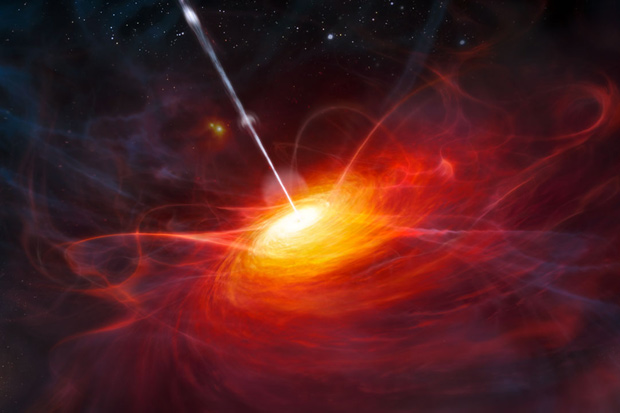
Fig. 1: Artist’s rendering of a quasar ingesting matter from its surroundings. Such a supermassive black hole shines very brightly and can therefore be observed at vast distances. Image credit: ESO/UKIDSS/SDSS

Fig. 2: A schematic cartoon of how the first structures form without (top) and with (bottom) streaming motions. Dark matter is represented by grey circles, while ordinary matter is represented by orange ones. If there are streaming motions (represented by arrows) between ordinary and dark matter, the clumps of ordinary matter form less quickly, resulting in a delay in the formation of the very first stars (depicted as blue symbols). 

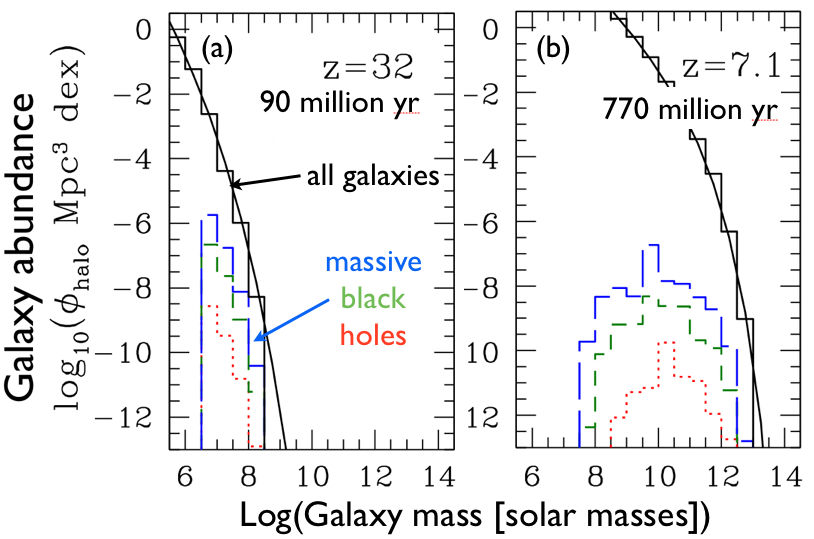
Fig. 3: The plot on the left shows the theoretical abundances of all galaxies (black lines) and only those galaxies with massive black holes (coloured histograms) when the universe was just 90 million years old. Streaming motions could help to form massive black holes much earlier than previously thought. (The different colours represent different interpretations of high-resolution simulations on how effectively the streaming motions delay star formation.)

The plot on the right is similar to the one on the left but at a later epoch. With the new scenario involving streaming motions, the prediction for the abundance of massive black holes is roughly consistent with the observed value (about 10-9 per cubic Megaparsec).

The origin of supermassive black holes in the centres of large galaxies is one of the most interesting unsolved problems in astrophysics. Recently, scientists at MPA investigated how the motions between ordinary matter and dark matter in the early Universe could have affected the formation of supermassive black holes alongside the first galaxies. 

A supermassive black hole with a mass several million or even billion times the mass of the Sun lies at the centre of every massive galaxy. Observations of quasars — supermassive black holes in luminous, gas-eating states — show that they must have formed at around the same time as the first stars and galaxies, during the first few hundred million years after the Big Bang. The origin of these gravitational monsters remains one of the major unsolved problems in astrophysics (see Research Highlight July 2012). 

The first stars and galaxies formed more than 13 billion years ago, when the mixture of primordial gas (mostly hydrogen and helium) and dark matter in the early Universe started to build up in dense pockets. There, the gas formed hydrogen molecules, and collapsed due to its own gravity to form the first stars. 

Astrophysicists believe that the first super-sized black holes formed shortly afterwards, by one of two possible processes. The first possibility is that massive stars left behind black holes when they ran out of fuel. These then consumed matter from their surroundings and fused together with each other until they became supermassive. The second possibility is that extra-massive black holes formed from the direct collapse of very massive clumps of hot gas (about 8000 Kelvin, hotter than the surface of the Sun) that did not form hydrogen molecules — gas without hydrogen molecules would not have collapsed into ordinary stars, but instead much more massive objects. 

As mentioned above, galaxies formed from — and consist of — a mixture of dark and ordinary matter. While ordinary matter is made of the familiar protons, electrons and neutrons, the dark matter interacts with normal, atomic matter only gravitationally. Actually, most of the mass inside a galaxy is in the form of this mysterious component. In a typical galaxy today, the union of the two types of matter — ordinary and dark — is peaceful, but this was not the case at the time when the first stars and galaxies formed. 

Recent studies have shown that in the early Universe, ordinary matter and dark matter did not move in unison — much as fish do not always swim with the current of water. Because of the fact that there were relative motions between ordinary and dark matter — that they “streamed” against each other — they cannot have gravitationally collapsed in the same way. The dark matter, being more abundant, collapsed first, and gravity pulled in the ordinary matter only after the motions had slowed down. This means that because of the primordial streaming motions, the first stars and galaxies formed somewhat later than previously thought (Figure 2). 

Recently, a collaboration between scientists at the Max Planck Institute of Astrophysics and the Columbia University (New York, USA) investigated the effects of these streaming motions on the formation of the first supermassive black holes. 

As stated above, one of the main effects of the streaming between two kinds of matter is that stars form later than previously believed. If monster black holes are descended from these first stars, then their rise in the Universe would also be delayed. Future telescopes such as the planned James Webb Space Telescope by NASA might be able to detect black holes at these early epochs, some 400 to 500 million years after the Big Bang. Models including streaming motions would predict as much as 10 times fewer massive black holes than previously expected. 

A second study found that in rare cases, primordial streaming motions could also help to make extra-large black holes directly. Such events could occur in rare places in the Universe where the streaming is especially vigorous, and also where large amounts of dark matter begin to accumulate exceptionally early. Under such conditions, large pockets of gas hotter than 8000 Kelvin can assemble before ever forming hydrogen molecules and stars, and therefore collapse into massive black holes much earlier than previously thought (Figure 3). It is uncertain how often this rare combination of conditions actually resulted in the formation of massive black holes. However, as it turns out, this mechanism could explain the abundance of the most luminous quasars observed when the Universe was 800 million to 1 billion years old — regardless of whether extreme streaming motions successfully formed massive black holes less than 1 per cent or nearly 100 per cent of the time. 

These studies reveal that primordial motions between ordinary mater and dark matter influence both scenarios proposed for the formation of supermassive black holes. These new insights could give valuable clues for the interpretation of future observations of the universe at early epochs.

Takamitsu Tanaka, Miao Li and Zoltán Haiman


References:

Takamitsu Tanaka, Miao Li & Zoltán Haiman, “The effect of baryonic streaming motions on the formation of the first supermassive black holes”, 2013, MNRAS, 435, 3559

Takamitsu Tanaka & Miao Li, "The formation of massive black holes in z~30 dark matter haloes with large baryonic streaming velocities", 2014, MNRAS, in press. 


Monday, February 10, 2014

Watching Gas Clouds Move

The young star AFGL 2591 star is expelling gas and dust as seen in the infrared. Amidst the nebulosity and rings of activity are clumps emitting as water vapor masers. New measurements have tracked the motions of these masers over a ten year period, and find them moving at velocities of about 45,000 mph. Credit: C. Aspin et al., NIRI, Gemini Obs., NSF. Large image

A maser, like a laser, is a source of bright electromagnetic radiation, with the difference being that maser radiation is not optical light but rather longer wavelength, microwave radiation. Small, dense molecular clouds in interstellar space sometimes produce natural masers; water vapor in clouds undergoing active star formation generates some of the most spectacular such masers. In the most dramatic cases, a water vapor maser can radiate more energy at a single wavelength than does the Sun over its entire visible spectrum. 

Masers are interesting in their own right, but also because their bright emission provides a powerful diagnostic probe of regions where massive star formation is still underway. CfA astronomer Nimesh Patel and his colleagues have used a coordinated set of widely separated radio telescopes (an interferometer) to study a dramatic region of star formation about ten thousand light-years away, achieving a spatial resolution of only a few hundred astronomical units (one AU is the average distance of the Earth from the Sun). This spectacular precision is possible because the masers are so bright.

The star formation region was known to have several clumps of young, high mass stars accompanied by phenomena typically associated with such star birth like powerful outflows and shocks. The astronomers combined relatively recent and archival observations of masers in the region spanning a period of about ten years, starting in 1999; the precision of the data enabled them to detect the masers motion over this period. The maser clusters, which are distributed over about a thousand AU, had some clumps seen to move as much as fifty AU, corresponding to velocities of about twenty kilometers per second (forty-five thousand mph). 

In the case of one bright region, the measurements over ten years found that the material is tracing the shell of an outward-moving shock, presumably propelled by radiation from the young star forming at the center. The results confirm and extend detailed models of how newly born massive stars affect their environment.

Reference: 
"Multi-epoch VLBA H2O Maser Observations Towards the Massive YSOs AFGL 2591 VLA 2 and VLA 3," J. M. Torrelles, M. A. Trinidad, S. Curiel, R. Estalella, N. A. Patel, J. F. Gomez, G. Anglada, C. Carrasco-Gonz´alez, J. Canto, A. Raga and L. F. Rodrıguez, MNRAS 437, 3803, 2014.


Red skies discovered on extreme brown dwarf

An artist’s impression of ULAS J222711-004547. This newly discovered brown dwarf is characterized by an unusually thick layer of clouds, made of mineral dust. These thick clouds give ULAS J222711-004547 its extremely red colour, distinguishing it from “normal” brown dwarfs. Credit: Neil J Cook, Centre for Astrophysics Research, University of Hertfordshire

A peculiar example of a celestial body, known as a brown dwarf, with unusually red skies has been discovered by a team of astronomers from the University of Hertfordshire’s Centre for Astrophysics Research. The scientists publish their results in the journal Monthly Notices of the Royal Astronomical Society.
Brown dwarfs straddle the line between stars and planets. They are too big to be considered as planets; yet they do not have sufficient material to fuse hydrogen in their cores to fully develop into stars. They are midway in mass between stars, like our Sun, and giant planets, like Jupiter and Saturn. Sometimes described as failed stars, they do not have an internal source of energy – so they are cold and very faint, and keep on cooling over time.

The brown dwarf, named ULAS J222711-004547, caught the researchers’ attention for its extremely red appearance compared to “normal” brown dwarfs. Further observations with the Very Large Telescope (VLT) in Chile and the use of an innovative data analysis technique have shown that the reason for its peculiarity is the presence of a very thick layer of clouds in its upper atmosphere. 

Federico Marocco, who led the research team from the University of Hertfordshire, said: “These are not the type of clouds that we are used to seeing on Earth. The thick clouds on this particular brown dwarf are mostly made of mineral dust, like enstatite and corundum.

“Not only have we been able to infer their presence, but we have also been able to estimate the size of the dust grains in the clouds.”

The size of the dust grains influences the colour of the sky. In a similar way that the old saying of “Red sky at night, shepherd's delight. Red sky in the morning, shepherd's warning” is used at sunrise and sunset to indicate the changing weather, a red sky on the brown dwarf suggests an atmosphere loaded with dust and moisture particles. If our morning skies are red, it is because clear skies to the east permit the sun to light the undersides of moisture-bearing clouds coming in from the west. Conversely, in order to see red clouds in the evening, sunlight must have a clear path from the west in order to illuminate moisture-bearing clouds moving off to the east.  However, the recently discovered brown dwarf ULAS J222711-004547 has a very different atmosphere where the sky is always red.

The giant planets of the Solar System, like Jupiter and Saturn, show various cloud layers including ammonia and hydrogen sulphide as well as water vapour. The atmosphere observed in this particular brown dwarf is hotter - with water vapour, methane and probably some ammonia but, unusually, it is dominated by clay-sized mineral particles.

Getting a good understanding of how such an extreme atmosphere works will help us to better understand the range of atmospheres that can exist.

Dr Avril Day-Jones, from the University of Hertfordshire’s Centre for Astrophysics Research, who contributed to the discovery and analysis said: “Being one of the reddest brown dwarfs ever observed, ULAS J222711-004547 makes an ideal target for multiple observations to understand how the weather is in such an extreme atmosphere.”

“By studying the composition and variability in luminosity and colours of objects like this, we can understand how the weather works on brown dwarfs and how it links to other giant planets.”

Part of this work was carried out under the Marie Curie 7th European Community Framework Programme grant no. 247593, Interpretation and Parameterization of Extremely Red COOL dwarfs (IPERCOOL) International Research Staff Exchange Scheme.


Media contact (for interviews with Federico Marocco)

Julie Cooper
University of Hertfordshire Press Office
Tel: +44 (0)1707 284095

j.cooper5@herts.ac.uk


Further information:


The new work appears in The extremely red L dwarf ULAS J222711−004547 - dominated by dust”, F. Marocco, A. C. Day-Jones, P. W. Lucas, H. R. A. Jones, R. L. Smart, Z. H. Zhang,  J. I. Gomes, B. Burningham, D. J. Pinfield, R. Raddi and L. Smith, Monthly Notices of the Royal Astronomical Society. A preprint of the paper is also available.


Image and caption:


Notes for editors:


The University of Hertfordshire is the UK’s leading business-facing university and an exemplar in the sector. It is innovative and enterprising and challenges individuals and organisations to excel. The University of Hertfordshire is one of the region’s largest employers with over 2,650 staff and a turnover of almost £233 million. With a student community of over 27,200 including more than 2,800 students from eighty-five different countries, the University has a global network of over 175,000 alumni. It is also one of the top 100 universities in the world under 50 years old, according to the new Times Higher Education 100 under 50 rankings 2012. Research is at the core of the University’s strategy to facilitate far-reaching engagement with business, community and national and international partners. The University’s research is world-leading and has been recognised by the 2008 Research Assessment Exercise (RAE).


For more information, please visit www.herts.ac.uk

The Royal Astronomical Society (RAS, www.ras.org.uk),  founded in 1820, encourages and promotes the study of astronomy, solar-system science, geophysics and closely related branches of science. The RAS organizes scientific meetings, publishes international research and review journals, recognizes outstanding achievements by the award of medals and prizes, maintains an extensive library, supports education through grants and outreach activities and represents UK astronomy nationally and internationally. Its more than 3800 members (Fellows), a third based overseas, include scientific researchers in universities, observatories and laboratories as well as historians of astronomy and others.


Follow the RAS on Twitter via @royalastrosoc

Saturday, February 08, 2014

Hubble and Spitzer space telescopes “spy” one of the youngest galaxies in the Universe

Deep image of the galaxy cluster Abell 2744 obtained with the Hubble Space Telescope. The zoomed image shows the region around the galaxy Abell2744_Y1, one of the most distant galaxies in the Universe. Credit: NASA, ESA, and J. Lotz, M. Mountain, A. Koekemoer, and the HFF Team (STScI); Nicolas Laporte et al. (IAC); Gabriel Pérez – SMM (IAC)

Researchers from the Instituto de Astrofísica de Canarias and La Laguna University lead the international team that has analyzed the images

An international team led by astronomers from the Instituto de Astrofísica de Canarias (IAC) and La Laguna University (ULL) has just completed the first analysis of the observations of the Abell 2744 cluster of galaxies,  a coordinated program of the Hubble and Spitzer Space Telescopes. The first result of this study is the discovery of one of the most distant galaxies known to date, which clearly shows the potential of the HST Frontier Fields project. These  results will be published in the scientific journal Astronomy and Astrophysics Letters.

This work involves also researchers from France (Institut de Recherche en Astrophysique et Planétologie de Toulouse and Centre de Recherche Astrophysique de Lyon), Switzerland (Geneva University and Ecole Polytechnique Federal de Lausanne), and  United States (University of Arizona).

Thanks to the high data quality of the Hubble (in the optical and near-infrared) and Spitzer (infrared) data, these astrophysicists have determined the properties of this young galaxy with a better precision than previous studies of other samples at similar cosmic epochs. This galaxy, named Abell2744_Y1, is about 30 times smaller than our Galaxy, the Milky Way, but is producing at least 10 times more stars. From the Earth, this object is seen as she was 650 million years after the Big-Bang. Her light has travelled about 13000 million years to reach the telescopes, being one of the brightest galaxies discovered at such distances. In Astronomy, the further one object is, the longer it takes for the light to reach us, and therefore the Frontier Fields allow the astronomers to push the limits of the observable Universe. This study provides new constraints on the density and properties of the galaxies in the early Universe.

“Frontier Fields”

Last month, during the meeting of the American Astronomical Society held at Washington D.C. (USA), the Space Telescope Science Institute presented its flagship project for the next 3 years: the “Hubble Frontier Fields". In the framework of this program, three of the most powerful space telescopes to date - Hubble, Spitzer and Chandra - will dedicate a large amount of their observing time to observe six galaxies clusters, who act as additional lenses and amplify the light from background sources, including very faint galaxies to the edge of the observable Universe. This will allow astronomers to study for the first time fainter and smaller galaxies in the first billion years of the Universe.

The first long exposure image of the cluster Abell 2744, obtained in the last months, is the deepest one obtained so far of a cluster of galaxies and is comparable to the previous Hubble Ultra Deep Field, which is a blank region of the sky.  All the Frontier Fields clusters have been carefully selected and are the best ones for this kind of study.

Thanks to the gravitational lensing by the cluster, the light of the background galaxies can be magnified by a large amount. This effect converts in practice the Hubble Space Telescope into an equivalent telescope with a collecting area several hundred times larger.

Nicolas Laporte, post-doctoral researcher at the IAC and expert in the search for very distant galaxies, welcomes the high quality of the Hubble images:  “we expected to find very distant galaxies close to the cluster core, where the light amplification is maximum. However, this galaxy is very close to the edge of the Hubble image where the light is not strongly amplified. We are really lucky that we could find it in the small field of view of Hubble. In a related study led by Hakim Atek (EPFL, Lausanne) more galaxies are analyzed but none is more distant than Abell2744_Y1.”

The analysis of the observations of this cluster carried out with the Spitzer Space Telescope has been crucial to estimate the properties of Abell2744_Y1. Alina Streblyanska, post-doctoral researcher at the IAC, comments that the Spitzer observations combined with the Hubble ones provide a good estimate of the distance to this galaxy. “They also suggest that Abell2744_Y1 contains not only stars but  also a large amount of gas”.

Ismael Pérez-Fournon, professor at the La Laguna University and head of the IAC group, points out that last year his group contributed to the discovery of an exceptional star factory in the early Universe, called HFLS3, with the Herschel Space Observatory. “HFLS3 has extreme properties in the far-infrared, observed 880 million years after the Big-Bang. Abell2744_Y1 is a smaller galaxy, less massive but more distant and much more representative of the early Universe. Both types of galaxies are equally important to understand how galaxies formed and evolved.”

In coordination with the Hubble observations, the Spitzer Space Telescope and Chandra X-ray Observatory are taking very deep exposures of the Frontier Fields. Since the end of 2013, the data of the first cluster obtained by the first two telescopes are available to the whole scientific community.

Observations of the Frontier Fields by Hubble, Spitzer and Chandra are in an early stage but have already shown the exceptional potential of this new project to study the first luminous objects in the Universe. As it happnened with other Hubble initiatives on deep fields, many other observatories all over the world and in space will join the effort with additional observations of the Frontier Fields. An unprecedented scientific legacy for future studies with the present large telescopes as the Gran Telescopio Canarias (GTC), and the future extremely large telescopes as the E-ELT and the James Webb Space Telescope, is expected.

Publications:
More information on the Hubble Frontier Fields: Hubble Space Telescope Frontier Fields

Contacts:
Vídeo / Preview:
Title: Abell2744_Y1 galaxy
Description: Abell2744_Y1 is of the most distant galaxies in the early Universe discovered in the Hubble Frontier Fields.  Credit: Gabriel Pérez – SMM (IAC)


Friday, February 07, 2014

A nursery for unruly young stars

Credit: NASA & ESA.Acknowledgements: Kevin Luhman (Pennsylvania State University),  and Judy Schmidt

This striking new image, captured by the NASA/ESA Hubble Space Telescope, reveals a star in the process of forming within the Chamaeleon cloud. This young star is throwing off narrow streams of gas from its poles — creating this ethereal object known as HH 909A. These speedy outflows collide with the slower surrounding gas, lighting up the region.

When new stars form, they gather material hungrily from the space around them. A young star will continue to feed its huge appetite until it becomes massive enough to trigger nuclear fusion reactions in its core, which light the star up brightly.

Before this happens, new stars undergo a phase during which they violently throw bursts of material out into space. This material is ejected as narrow jets that streak away into space at breakneck speeds of hundreds of kilometres per second, colliding with nearby gas and dust and lighting up the region. The resulting narrow, patchy regions of faintly glowing nebulosity are known as Herbig-Haro objects. They are very short-lived structures, and can be seen to visibly change and evolve over a matter of years (heic1113) — just the blink of an eye on astronomical timescales.

These structures are very common within star-forming regions like the Orion Nebula, or the Chameleon I molecular cloud — home to the subject of this image. The Chameleon cloud is located in the southern constellation of Chameleon, just over 500 light-years from Earth. Astronomers have found numerous Herbig-Haro objects embedded in this stellar nursery, most of them emanating from stars with masses similar to that of the Sun. A few are thought to be tied to less massive objects such as brown dwarfs, which are "failed" stars that did not hit the critical mass to spark reactions in their centres.

A version of this image was entered into the Hubble's Hidden Treasures image processing competition by contestant Judy Schmidt.


First star shine for Gaia

Copyright: ESA, Airbus DS 

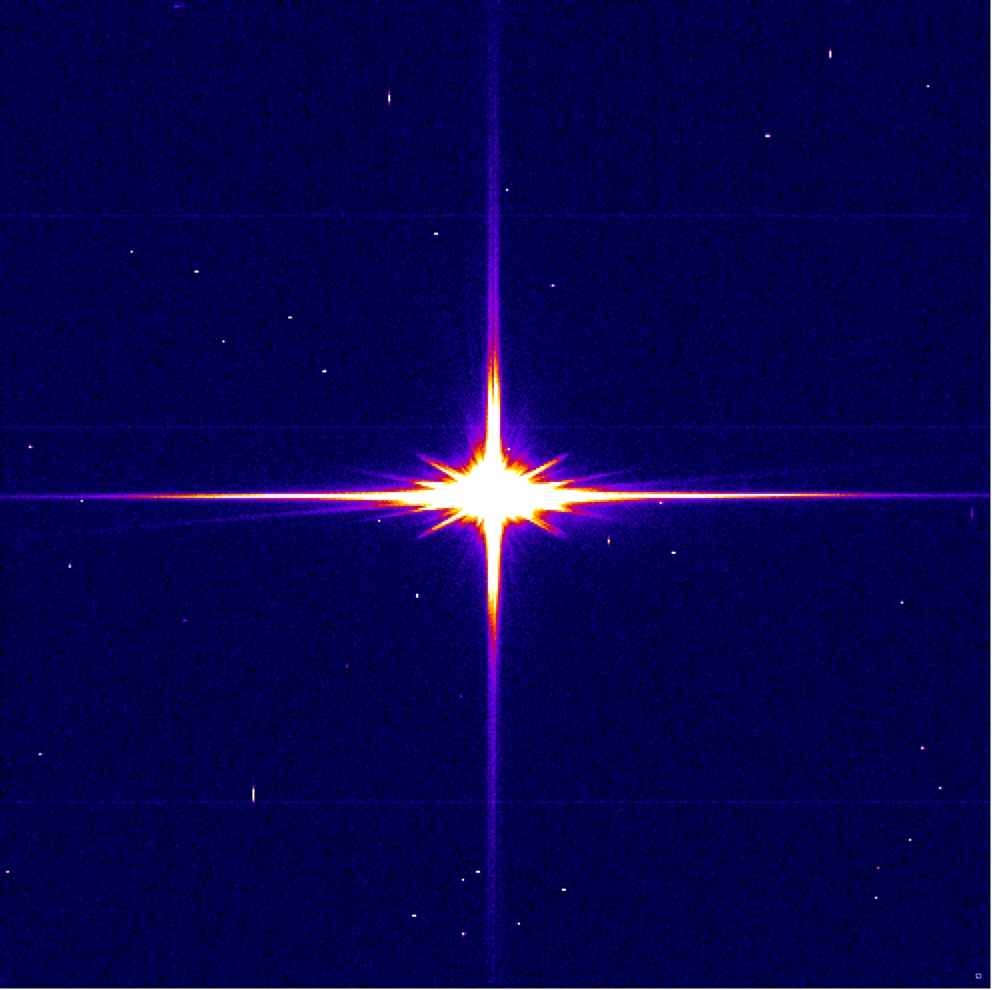
This image shows Sadalmelik, a bright star in the constellation Aquarius and one of the first stars to be acquired by ESA's Gaia satellite.

Gaia was launched on 19 December 2013 from ESA's spaceport in French Guiana. On 14 January 2014, Gaia finalised its entry into operational orbit around the Lagrange point L2, a gravitationally stable virtual point in the Sun-Earth (with Moon) system, located 1.5 million km from our planet. From this vantage point, Gaia will survey the sky continuously for the next five years.

On 8 January, en route to L2, Gaia completed another milestone by observing its first batch of stars – about 18 000 in less than 3 hours. These observations were performed while the satellite was in near-operational mode for the first time, although attitude system control and optical system calibration are yet to be finely tuned as part of the routine planned commissioning activities.

Hipparcos data give a parallax value for Sadalmelik, also known as Alpha Aquarii, of 6.23 ± 0.19 mas, corresponding to a distance of 161 ± 5 pc. The Gaia error bar will be 30 times smaller, resulting in a distance measurement that will be 30 times more precise.

Sadalmelik was one of the first stars to be observed and processed. This image, while being saturated at the centre and showing that the mirrors are not yet focussed, gives us a first taste of the massive census of stars that Gaia is about to perform.


Source: ESA/Gaia 


Thursday, February 06, 2014

Gaia comes into focus

ESA's billion-star surveyor Gaia is slowly being brought into focus. This test image shows a dense cluster of stars in the Large Magellanic Cloud, a satellite galaxy of our Milky Way.

Once Gaia starts making routine measurements, it will generate truly enormous amounts of data. To maximise the key science of the mission, only small 'cut-outs' centred on each of the stars it detects will be sent back to Earth for analysis.

This test picture, taken as part of commissioning the mission to 'fine tune' the behaviour of the instruments, is one of the first proper 'images' to be seen from Gaia, but ironically, it will also be one of the last, as Gaia's main scientific operational mode does not involve sending full images back to Earth.

NGC 1818 - part of a test image taken during commissioning of the Gaia payload. Copyright: ESA/DPAC/Airbus DS

Gaia was launched on 19 December 2013, and is orbiting around a virtual point in space called L2, 1.5 million kilometres from Earth.

Gaia's goal is to create the most accurate map yet of the Milky Way. It will make precise measurements of the positions and motions of about 1per cent of the total population of roughly 100 billion stars in our home Galaxy to help answer questions about its origin and evolution.

Repeatedly scanning the sky, Gaia will observe each of its billion stars an average of 70 times each over five years. In addition to positions and motions, Gaia will also measure key physical properties of each star, including its brightness, temperature and chemical composition.

To achieve its goal, Gaia will spin slowly, sweeping its two telescopes across the entire sky and focusing the light from their separate fields simultaneously onto a single digital camera – the largest ever flown in space, with nearly a billion pixels.

But first, the telescopes must be aligned and focused, along with precise calibration of the instruments, a painstaking procedure that will take several months before Gaia is ready to enter its five-year operational phase.

As part of that process, the Gaia team have been using a test mode to download sections of data from the camera, including this image of NGC1818, a young star cluster in the Large Magellanic Cloud. The image covers an area less than 1per cent of the full Gaia field of view.

The team is making good progress, but there is still work to be done to understand the full behaviour and performance of the instruments.

While all one billion of Gaia’s target stars will have been observed during the first six months of operations, repeated observations over five years will be needed to measure their tiny movements to allow astronomers to determine their distances and motions through space.

As a result, Gaia’s final catalogue will not be released until three years after the end of the nominal five-year mission. Intermediate data releases will be made, however, and if rapidly changing objects such as supernovae are detected, alerts will be released within hours of data processing.

Eventually, the Gaia data archive will exceed a million Gigabytes, equivalent to about 200 000 DVDs of data. The task of producing this colossal treasure trove of data for the scientific community lies with the Gaia Data Processing and Analysis Consortium, comprising more than 400 individuals at institutes across Europe.


For more information, please contact:

Markus Bauer
ESA Science and Robotic Exploration Communication Officer
Tel: +31 71 565 6799
Mob: +31 61 594 3 954


Giuseppe Sarri
Gaia Project Manager
Email:
giuseppe.sarri@esa.int


Timo Prusti
Gaia Project Scientist
Email:
timo.prusti@esa.int


Source: ESA/Gaia


The Anatomy of an Asteroid

Schematic view of asteroid (25143) Itokawa

Asteroid (25143) Itokawa seen in close-up

Asteroid (25143) Itokawa seen in close-up

Asteroid (25143) Itokawa seen in close-up

***********************************

Videos

Artist’s impression of asteroid (25143) Itokawa

Artist’s impression of asteroid (25143) Itokawa


ESO’s New Technology Telescope (NTT) has been used to find the first evidence that asteroids can have a highly varied internal structure. By making exquisitely precise measurements astronomers have found that different parts of the asteroid Itokawa have different densities. As well as revealing secrets about the asteroid’s formation, finding out what lies below the surface of asteroids may also shed light on what happens when bodies collide in the Solar System, and provide clues about how planets form.

Using very precise ground-based observations, Stephen Lowry (University of Kent, UK) and colleagues have measured the speed at which the near-Earth asteroid (25143) Itokawa spins and how that spin rate is changing over time. They have combined these delicate observations with new theoretical work on how asteroids radiate heat.

This small asteroid is an intriguing subject as it has a strange peanut shape, as revealed by the Japanese spacecraft Hayabusa in 2005. To probe its internal structure, Lowry’s team used images gathered from 2001 to 2013, by ESO’s New Technology Telescope (NTT) at the La Silla Observatory in Chile among others [1], to measure its brightness variation as it rotates. This timing data was then used to deduce the asteroid’s spin period very accurately and determine how it is changing over time. When combined with knowledge of the asteroid’s shape this allowed them to explore its interior — revealing the complexity within its core for the first time [2].

This is the first time we have ever been able to to determine what it is like inside an asteroid,” explains Lowry. “We can see that Itokawa has a highly varied structure — this finding is a significant step forward in our understanding of rocky bodies in the Solar System.”

The spin of an asteroid and other small bodies in space can be affected by sunlight. This phenomenon, known as the Yarkovsky-O’Keefe-Radzievskii-Paddack (YORP) effect, occurs when absorbed light from the Sun is re-emitted from the surface of the object in the form of heat. When the shape of the asteroid is very irregular the heat is not radiated evenly and this creates a tiny, but continuous, torque on the body and changes its spin rate [3], [4].


Lowry’s team measured that the YORP effect was slowly accelerating the rate at which Itokawa spins. The change in rotation period is tiny — a mere 0.045 seconds per year. But this was very different from what was expected and can only be explained if the two parts of the asteroid’s peanut shape have different densities.

This is the first time that astronomers have found evidence for the highly varied internal structure of asteroids. Up until now, the properties of asteroid interiors could only be inferred using rough overall density measurements. This rare glimpse into the diverse innards of Itokawa has led to much speculation regarding its formation. One possibility is that it formed from the two components of a double asteroid after they bumped together and merged.


Lowry added, “Finding that asteroids don’t have homogeneous interiors has far-reaching implications, particularly for models of binary asteroid formation. It could also help with work on reducing the danger of asteroid collisions with Earth, or with plans for future trips to these rocky bodies.
This new ability to probe the interior of an asteroid is a significant step forward, and may help to unlock many secrets of these mysterious objects.

Notes

[1] As well as the NTT, brightness measurements from the following telescopes were also used in this work: Palomar Observatory 60-inch Telescope (California, USA), Table Mountain Observatory (California, USA), Steward Observatory 60-inch Telescope (Arizona, USA), Steward Observatory 90-inch Bok Telescope (Arizona, USA), 2-metre Liverpool Telescope (La Palma, Spain), 2.5-metre Isaac Newton Telescope (La Palma, Spain) and the Palomar Observatory 5-metre Hale Telescope (California, USA).

[2] The density of the interior was found to vary from 1.75 to 2.85 grammes per cubic centimetre. The two densities refer to Itokawa’s two distinct parts.

[3] As a simple and rough analogy for the YORP effect, if one were to shine an intense enough light beam on a propeller it would slowly start spinning due to a similar effect
.
[4] Lowry and colleagues were the first to observe the effect in action on a small asteroid known as 2000 PH5 (now known as 54509 YORP, see eso0711). ESO facilities also played a crucial role in this earlier study.

More information

This research was presented in a paper “The Internal Structure of Asteroid (25143) Itokawa as Revealed by Detection of YORP Spin-up”, by Lowry et al., to appear in the journal Astronomy & Astrophysics.


The team is composed of S.C Lowry (Centre for Astrophysics and Planetary Science, School of Physical Sciences (SEPnet), The University of Kent, UK), P.R. Weissman (Jet Propulsion Laboratory, California Institute of Technology, Pasadena, USA [JPL]), S.R. Duddy (Centre for Astrophysics and Planetary Science, School of Physical Sciences (SEPnet), The University of Kent, UK), B.Rozitis (Planetary and Space Sciences, Department of Physical Sciences, The Open University, Milton Keynes, UK), A. Fitzsimmons (Astrophysics Research Centre, University Belfast, Belfast, UK), S.F. Green (Planetary and Space Sciences, Department of Physical Sciences, The Open University, Milton Keynes, UK), M.D. Hicks (Jet Propulsion Laboratory, California Institute of Technology, Pasadena, USA), C. Snodgrass (Max Planck Institute for Solar System Research, Katlenburg-Lindau, Germany), S.D. Wolters (JPL), S.R. Chesley (JPL), J. Pittichová (JPL) and P. van Oers (Isaac Newton Group of Telescopes, Canary Islands, Spain).


ESO is the foremost intergovernmental astronomy organisation in Europe and the world’s most productive ground-based astronomical observatory by far. It is supported by 15 countries: Austria, Belgium, Brazil, the Czech Republic, Denmark, France, Finland, Germany, Italy, the Netherlands, Portugal, Spain, Sweden, Switzerland and the United Kingdom. ESO carries out an ambitious programme focused on the design, construction and operation of powerful ground-based observing facilities enabling astronomers to make important scientific discoveries. ESO also plays a leading role in promoting and organising cooperation in astronomical research. ESO operates three unique world-class observing sites in Chile: La Silla, Paranal and Chajnantor. At Paranal, ESO operates the Very Large Telescope, the world’s most advanced visible-light astronomical observatory and two survey telescopes. VISTA works in the infrared and is the world’s largest survey telescope and the VLT Survey Telescope is the largest telescope designed to exclusively survey the skies in visible light. ESO is the European partner of a revolutionary astronomical telescope ALMA, the largest astronomical project in existence. ESO is currently planning the 39-metre European Extremely Large optical/near-infrared Telescope, the E-ELT, which will become “the world’s biggest eye on the sky”.

Links

Contacts

Stephen C. Lowry
The University of Kent
Canterbury, United Kingdom
Tel: +44 1227 823584
Email:
s.c.lowry@kent.ac.uk

Richard Hook
ESO, Public Information Officer
Garching bei München, Germany
Tel: +49 89 3200 6655
Cell: +49 151 1537 3591
Email:
rhook@eso.org

Katie Scoggins
Press Officer, Corporate Communications Office, University of Kent
Canterbury, United Kingdom
Tel: +44 1227 823581
Email:
K.Scoggins@kent.ac.uk


Wednesday, February 05, 2014

Kepler Finds a Very Wobbly Planet

This illustration shows the unusual orbit of planet Kepler-413b around a close pair of orange and red dwarf stars. The planet's 66-day orbit is tilted 2.5 degrees with respect to the plane of the binary star's orbit. The orbit of the planet wobbles around the central stars over 11 years, an effect called precession. This planet is also very unusual in that it can potentially precess wildly on its spin axis, much like a child's top. Image Credit: NASA, ESA, and A. Feild (STScI)

Imagine living on a planet with seasons so erratic you would hardly know whether to wear Bermuda shorts or a heavy overcoat. That is the situation on a weird, wobbly world found by NASA's planet-hunting Kepler space telescope.

The planet, designated Kepler-413b, precesses, or wobbles, wildly on its spin axis, much like a child's top. The tilt of the planet's spin axis can vary by as much as 30 degrees over 11 years, leading to rapid and erratic changes in seasons. In contrast, Earth's rotational precession is 23.5 degrees over 26,000 years. Researchers are amazed that this far-off planet is precessing on a human timescale.

Kepler 413-b is located 2,300 light-years away in the constellation Cygnus. It circles a close pair of orange and red dwarf stars every 66 days. The planet's orbit around the binary stars appears to wobble, too, because the plane of its orbit is tilted 2.5 degrees with respect to the plane of the star pair's orbit. As seen from Earth, the wobbling orbit moves up and down continuously.

Kepler finds planets by noticing the dimming of a star or stars when a planet transits, or travels in front of them. Normally, planets transit like clockwork. Astronomers using Kepler discovered the wobbling when they found an unusual pattern of transiting for Kepler-413b.

"Looking at the Kepler data over the course of 1,500 days, we saw three transits in the first 180 days -- one transit every 66 days -- then we had 800 days with no transits at all. After that, we saw five more transits in a row," said Veselin Kostov, the principal investigator on the observation. Kostov is affiliated with the Space Telescope Science Institute and Johns Hopkins University in Baltimore, Md. The next transit visible from Earth's point of view is not predicted to occur until 2020. This is because the orbit moves up and down, a result of the wobbling, in such a great degree that it sometimes does not transit the stars as viewed from Earth.

Astronomers are still trying to explain why this planet is out of alignment with its stars. There could be other planetary bodies in the system that tilted the orbit. Or, it could be that a third star nearby that is a visual companion may actually be gravitationally bound to the system and exerting an influence.

"Presumably there are planets out there like this one that we're not seeing because we're in the unfavorable period," said Peter McCullough, a team member with the Space Telescope Science Institute and Johns Hopkins University. "And that's one of the things that Veselin is researching: Is there a silent majority of things that we're not seeing?"

Even with its changing seasons, Kepler-413b is too warm for life as we know it. Because it orbits so close to the stars, its temperatures are too high for liquid water to exist, making it inhabitable. It also is a super Neptune -- a giant gas planet with a mass about 65 times that of Earth -- so there is no surface on which to stand.

NASA's Ames Research Center at Moffett Field, Calif., is responsible for the Kepler mission concept, ground system development, mission operations and science data analysis. NASA's Jet Propulsion Laboratory in Pasadena, Calif., managed Kepler mission development. Ball Aerospace & Technologies Corp. in Boulder, Colo., developed the Kepler flight system and supports mission operations with the Laboratory for Atmospheric and Space Physics at the University of Colorado in Boulder. The Space Telescope Science Institute in Baltimore archives, hosts and distributes Kepler science data. Kepler is NASA's 10th Discovery mission and was funded by the agency's Science Mission Directorate.

For images and more information about Kepler-413b, visit: http://hubblesite.org/news/2014/12

For more information about the Kepler space telescope, visit: http://www.nasa.gov/kepler

J.D. Harrington
Headquarters, Washington
202-358-5241

j.d.harrington@nasa.gov

Ann Jenkins / Ray Villard
Space Telescope Science Institute, Baltimore, Md.
410-338-4488 / 410-338-4514

dweaver@stsci.edu / villard@stsci.edu


Starbursting in the Galaxy M82

M82 - Zoom
Credit: Josh Marvil (NM Tech/NRAO), Bill Saxton (NRAO/AUI/NSF), NASAClick to Download High-Resolution TIFF 
Messier 82, seen in radio frequencies by the Karl G. Jansky Very Large Array. 
Credit: Josh Marvil (NM Tech/NRAO), Bill Saxton (NRAO/AUI/NSF), NASA 

Messier 82 (M82), the galaxy in which the nearest supernova in decades recently exploded, also is the closest galaxy that is undergoing a rapid burst of star formation, known as a starburst. About 12 million light-years away, it is seen nearly edge-on, as shown in the larger, visible-light image from the Hubble Space Telescope.

The inset is a new radio image, made with the Karl G. Jansky Very Large Array (VLA), that reveals fresh information about the central 5200 light-years of the galaxy. The radio emission seen here is produced by ionized gas and by fast-moving electrons interacting with the interstellar magnetic field.

The bright dots are a mix of star-forming regions and supernova remnants, the debris from stellar explosions; analysis of the VLA data tells scientists which of these are which. Scientists also are studying the faint, wispy features, many of which were previously unseen, to investigate their relationship with this galaxy's starburst-driven superwind. Supernova 2014J is located outside the inset, to the right. VLA observations to date show that, like all other supernovae of its particular type, SN 2014J has not yet been found to be emitting radio waves.

Contact:

Dave Finley, Public Information Officer
(575) 835-7302

dfinley@nrao.edu


The National Radio Astronomy Observatory is a facility of the National Science Foundation, operated under cooperative agreement by Associated Universities, Inc.


Tuesday, February 04, 2014

Sun Spits Out Mid-Level Solar Flare

A mid-level solar flare erupted on the sun late on Feb. 3, 2014, peaking at midnight EST. This image, captured by NASA's Solar Dynamics Observatory, shows the bright flare near the center of the sun. Image Credit: NASA/SDO
This image of an M5.2-class solar flare that occurred late on Feb. 3, 2014, was captured by NASA’s Solar Dynamics Observatory. The solar flare can be seen as the bright flash near the center of the sun. The image shows light in the 304 Angstrom wavelength, which is typically colorized in red. Image Credit: NASA/SDO

Solar flares are powerful bursts of radiation. Harmful radiation from a flare cannot pass through Earth's atmosphere to physically affect humans on the ground, however -- when intense enough -- they can disturb the atmosphere in the layer where GPS and communications signals travel.

To see how this event may impact Earth, please visit NOAA's Space Weather Prediction Center at http://spaceweather.gov, the U.S. government's official source for space weather forecasts, alerts, watches and warnings.

This flare is classified as an M5.2 flare. Updates will be provided as needed.


Karen C. Fox
NASA's Goddard Space Flight Center, Greenbelt, Md.


X-Ray Emission from Star-Forming Galaxies

The star forming galaxy NGC 694 as seen in the X-ray (blue) and optical. The X-ray emission is due in large part to processes associated with star formation, and astronomers have figured out how to determine the star formation rate from the measured X-ray flux. Credit: X-ray: NASA/CXC/CfA/R. Tuellmann et al.; Optical: NASA/AURA/STScI

Star formation lights up a galaxy because many newly formed stars are massive, hot and bright. These young stars are made in dusty clouds of material that obscure their visible light, and so luminous galaxies in our universe are often optically dim. But the dust absorbs the light and re-radiates it at infrared wavelengths, and astronomers can use the infrared from galaxies to infer the rate of star formation activity underway, even without seeing those stars. The method does not always work well, however: other processes can heat up dust and lead to an overestimate of the star formation rate, for example an active black hole at the nucleus; on the other hand sometimes the dust does not effectively absorb all of the light, leading to an underestimate of the rate.

There are three dominant sources of X-ray emission in galaxies: very hot interstellar gas, massive compact binary stars that emit X-rays (both of these a result of star formation), and accretion that heats material around a black hole nucleus. Astronomers would like to use X-ray emission as an alternate measure of star birth activity because of the issues arising with infrared dust emission, but the problem is addressing contamination from nuclear emission.

CfA astronomer Stefano Mineo and four colleagues have been able to calibrate the strength of X-ray emission against star formation rate and find a very good correlation. To solve the nuclear contamination problem, they limited their study to a sample of sixty-six nearby galaxies with no signature of activity in the nucleus, as confirmed by their low X-ray fluxes. In these objects they report finding a linear relation between the amount of X-ray emission and the star formation rate. Moreover, they determine that about 66% of the X-ray brightness comes from the X-ray binary phenomenon, and the rest mostly from the hot ISM. The result provides astronomers with an alternate method to infrared for estimating star formation activity. The astronomers also report that their findings appear not to depend on the distance (cosmic epoch) of a galaxy, at least in the not-too-remote universe, making these fainter and harder-to- analyze galaxies amenable to this new diagnostic.

Reference: 
"X-ray Emission from Star-Forming Galaxies – III. Calibration of the LX−SFR Relation Up to Redshift z ≈ 1.3," S. Mineo, M. Gilfanov, B. D. Lehmer,G. E. Morrison and R. Sunyaev, MNRAS 437, 1698, 2014.


Monday, February 03, 2014

Churning atmosphere on Saturn

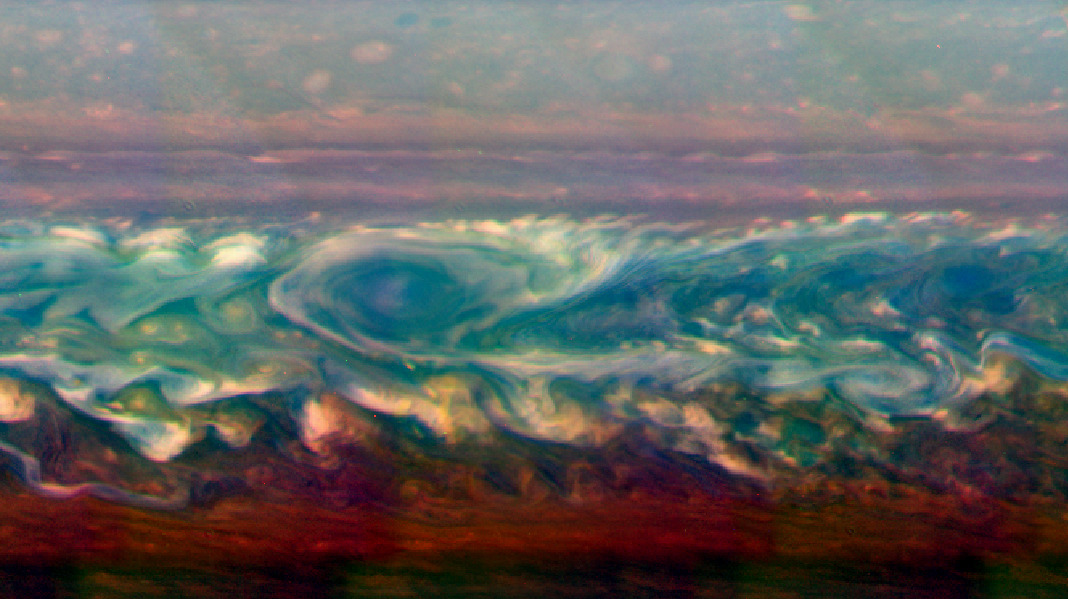
Churning atmosphere on Saturn
Copyright: NASA/JPL-Caltech/SSI/Hampton University
Download Hi-Res JPG / TIF

Like a swirl from a paintbrush being dipped in water, this image from the Cassini orbiter shows the progress of a massive storm on Saturn. The storm first developed in December 2010, and this mosaic captures how it appeared on 6 March 2011.

The head of the storm is towards the left of the image, where the most turbulent activity is shown in white, but towards the centre you can also see the trace of a spinning vortex in the wake of the storm.

This image, centred at about 0º longitude and 35º N latitude, has had its colours enhanced to help reveal the complex processes in Saturn’s weather. The white corresponds to the highest cloud tops, but to the human eye the storm would appear more as a bright area against a yellow background.

Cassini also monitored the temperature of the storm, showing a rapid spike as energy was released into the atmosphere.

The storm grew so large that on Earth it would easily cover all of Europe. Atmospheric disturbances of this size can be expected once during each of Saturn’s orbits around the Sun, which takes 30 Earth years. However, this particular event surprised scientists by occurring during the northern hemisphere spring, rather than the more typically stormy Saturnian summer.

The Cassini–Huygens mission is a cooperative project of NASA, ESA and Italy’s ASI space agency. The Jet Propulsion Laboratory, a division of the California Institute of Technology in Pasadena, manages the mission for NASA’s Science Mission Directorate, Washington, DC.


Asteroid Diversity Points to a "Snow Globe" Solar System

However, the true history of the solar system is more riotous. Giant planets migrated in and out, tossing interplanetary flotsam and jetsam far and wide. New clues to this tumultuous past come from the asteroid belt.

"We found that the giant planets shook up the asteroids like flakes in a snow globe," says lead author Francesca DeMeo, a Hubble postdoctoral fellow at the Harvard-Smithsonian Center for Astrophysics.

Millions of asteroids circle the Sun between the orbits of Mars and Jupiter, in a region known as the main asteroid belt. Traditionally, they were viewed as the pieces of a failed planet that was prevented from forming by the influence of Jupiter's powerful gravity. Their compositions seemed to vary methodically from drier to wetter, due to the drop in temperature as you move away from the Sun.

That traditional view changed as astronomers recognized that the current residents of the main asteroid belt weren't all there from the start. In the early history of our solar system the giant planets ran amok, migrating inward and outward substantially. Jupiter may have moved as close to the Sun as Mars is now. In the process, it swept the asteroid belt nearly clean, leaving only a tenth of one percent of its original population.

As the planets migrated, they stirred the contents of the solar system. Objects from as close to the Sun as Mercury, and as far out as Neptune, all collected in the main asteroid belt.

"The asteroid belt is a melting pot of objects arriving from diverse locations and backgrounds," explains DeMeo.

Using data from the Sloan Digital Sky Survey, DeMeo and co-author Benoit Carry (Paris Observatory) examined the compositions of thousands of asteroids within the main belt. They found that the asteroid belt is more diverse than previously realized, especially when you look at the smaller asteroids.

This finding has interesting implications for the history of Earth. Astronomers have theorized that long-ago asteroid impacts delivered much of the water now filling Earth's oceans. If true, the stirring provided by migrating planets may have been essential to bringing those asteroids.

This raises the question of whether an Earth-like exoplanet would also require a rain of asteroids to bring water and make it habitable. If so, then Earth-like worlds might be rarer than we thought.

The paper describing these findings appears in the January 30, 2014 issue of Nature.

Headquartered in Cambridge, Mass., the Harvard-Smithsonian Center for Astrophysics (CfA) is a joint collaboration between the Smithsonian Astrophysical Observatory and the Harvard College Observatory. CfA scientists, organized into six research divisions, study the origin, evolution and ultimate fate of the universe.

For more information, contact:

David A. Aguilar
Director of Public Affairs
Harvard-Smithsonian Center for Astrophysics
617-495-7462

daguilar@cfa.harvard.edu

Christine Pulliam
Public Affairs Specialist
Harvard-Smithsonian Center for Astrophysics
617-495-7463

cpulliam@cfa.harvard.edu